Category: Environment

It’s very quiet out there!

A deeply fascinating essay from an individual at the University of Oxford.

I have long read the daily output from The Conversation. It’s a very useful way of keeping one’s brain cells functioning in some sort of fashion.

Yesterday morning I read an essay put out by  a PhD Candidate at the University of Oxford.

It was fascinating and I am republishing it here.

Now it’s not for everyone. It is also long and it also has a number of videos to watch. And there’s not a dog mentioned!

But if you are interested in where we, as in human beings, are ‘going’, so to speak, then this is for you.

And I’m ready to admit that it may be an age thing; something that is of much interest to me because I shall be 75 in November  and one naturally wonders about the end of life. Both individually and of society!

ooOOoo

The end of the world: a history of how a silent cosmos led humans to fear the worst.

By
PhD Candidate, University of Oxford

August 7th, 2019

It is 1950 and a group of scientists are walking to lunch against the majestic backdrop of the Rocky Mountains. They are about to have a conversation that will become scientific legend. The scientists are at the Los Alamos Ranch School, the site for the Manhattan Project, where each of the group has lately played their part in ushering in the atomic age.

They are laughing about a recent cartoon in the New Yorker offering an unlikely explanation for a slew of missing public trash cans across New York City. The cartoon had depicted “little green men” (complete with antenna and guileless smiles) having stolen the bins, assiduously unloading them from their flying saucer.

By the time the party of nuclear scientists sits down to lunch, within the mess hall of a grand log cabin, one of their number turns the conversation to matters more serious. “Where, then, is everybody?”, he asks. They all know that he is talking – sincerely – about extraterrestrials.

The question, which was posed by Enrico Fermi and is now known as Fermi’s Paradox, has chilling implications.

Bin-stealing UFOs notwithstanding, humanity still hasn’t found any evidence of intelligent activity among the stars. Not a single feat of “astro-engineering”, no visible superstructures, not one space-faring empire, not even a radio transmission. It has been argued that the eerie silence from the sky above may well tell us something ominous about the future course of our own civilisation.

Such fears are ramping up. Last year, the astrophysicist Adam Frank implored an audience at Google that we see climate change – and the newly baptised geological age of the Anthropocene – against this cosmological backdrop. The Anthropocene refers to the effects of humanity’s energy-intensive activities upon Earth. Could it be that we do not see evidence of space-faring galactic civilisations because, due to resource exhaustion and subsequent climate collapse, none of them ever get that far? If so, why should we be any different?

A few months after Frank’s talk, in October 2018, the Intergovernmental Panel on Climate Change’s update on global warming caused a stir. It predicted a sombre future if we do not decarbonise. And in May, amid Extinction Rebellion’s protests, a new climate report upped the ante, warning: “Human life on earth may be on the way to extinction.”

Meanwhile, NASA has been publishing press releases about an asteroid set to hit New York within a month. This is, of course, a dress rehearsal: part of a “stress test” designed to simulate responses to such a catastrophe. NASA is obviously fairly worried by the prospect of such a disaster event – such simulations are costly.

Space tech Elon Musk has also been relaying his fears about artificial intelligence to YouTube audiences of tens of millions. He and others worry that the ability for AI systems to rewrite and self-improve themselves may trigger a sudden runaway process, or “intelligence explosion”, that will leave us far behind – an artificial superintelligence need not even be intentionally malicious in order to accidentally wipe us out.

In 2015, Musk donated to Oxford’s Future of Humanity Institute, headed up by transhumanist Nick Bostrom. Nestled within the university’s medieval spires, Bostrom’s institute scrutinises the long-term fate of humanity and the perils we face at a truly cosmic scale, examining the risks of things such as climate, asteroids and AI. It also looks into less well-publicised issues. Universe destroying physics experiments, gamma-ray bursts, planet-consuming nanotechnology and exploding supernovae have all come under its gaze.

So it would seem that humanity is becoming more and more concerned with portents of human extinction. As a global community, we are increasingly conversant with increasingly severe futures. Something is in the air.

But this tendency is not actually exclusive to the post-atomic age: our growing concern about extinction has a history. We have been becoming more and more worried for our future for quite some time now. My PhD research tells the story of how this began. No one has yet told this story, yet I feel it is an important one for our present moment.

I wanted to find out how current projects, such as the Future of Humanity Institute, emerge as offshoots and continuations of an ongoing project of “enlightenment” that we first set ourselves over two centuries ago. Recalling how we first came to care for our future helps reaffirm why we should continue to care today.

Extinction, 200 years ago

In 1816, something was also in the air. It was a 100-megaton sulfate aerosol layer. Girdling the planet, it was made up of material thrown into the stratosphere by the eruption of Mount Tambora, in Indonesia, the previous year. It was one of the biggest volcanic eruptions since civilisation emerged during the Holocene.

Mount Tambora’s crater. Wikimedia Commons/NASA

Almost blotting out the sun, Tambora’s fallout caused a global cascade of harvest collapse, mass famine, cholera outbreak and geopolitical instability. And it also provoked the first popular fictional depictions of human extinction. These came from a troupe of writers including Lord Byron, Mary Shelley and Percy Shelley.

The group had been holidaying together in Switzerland when titanic thunderstorms, caused by Tambora’s climate perturbations, trapped them inside their villa. Here they discussed humanity’s long-term prospects.

Clearly inspired by these conversations and by 1816’s hellish weather, Byron immediately set to work on a poem entitled “Darkness”. It imagines what would happen if our sun died:

I had a dream, which was not all a dream
The bright sun was extinguish’d, and the stars
Did wander darkling in the eternal space
Rayless, and pathless, and the icy earth
Swung blind and blackening in the moonless air

Detailing the ensuing sterilisation of our biosphere, it caused a stir. And almost 150 years later, against the backdrop of escalating Cold War tensions, the Bulletin for Atomic Scientists again called upon Byron’s poem to illustrate the severity of nuclear winter.

Two years later, Mary Shelley’s Frankenstein (perhaps the first book on synthetic biology) refers to the potential for the lab-born monster to outbreed and exterminate Homo sapiens as a competing species. By 1826, Mary went on to publish The Last Man. This was the first full-length novel on human extinction, depicted here at the hands of pandemic pathogen.

Boris Karloff plays Frankenstein’s monster, 1935. Wikimedia Commons

Beyond these speculative fictions, other writers and thinkers had already discussed such threats. Samuel Taylor Coleridge, in 1811, daydreamed in his private notebooks about our planet being “scorched by a close comet and still rolling on – cities men-less, channels riverless, five mile deep”. In 1798, Mary Shelley’s father, the political thinker William Godwin, queried whether our species would “continue forever”?

While just a few years earlier, Immanuel Kant had pessimistically proclaimed that global peace may be achieved “only in the vast graveyard of the human race”. He would, soon after, worry about a descendent offshoot of humanity becoming more intelligent and pushing us aside.

Earlier still, in 1754, philosopher David Hume had declared that “man, equally with every animal and vegetable, will partake” in extinction. Godwin noted that “some of the profoundest enquirers” had lately become concerned with “the extinction of our species”.

In 1816, against the backdrop of Tambora’s glowering skies, a newspaper article drew attention to this growing murmur. It listed numerous extinction threats. From global refrigeration to rising oceans to planetary conflagration, it spotlighted the new scientific concern for human extinction. The “probability of such a disaster is daily increasing”, the article glibly noted. Not without chagrin, it closed by stating: “Here, then, is a very rational end of the world!”

Tambora’s dust-cloud created ominous sunsets, such as this one painted by Turner, c. 1830–5. © Tate, CC BY-NC-ND

Before this, we thought the universe was busy

So if people first started worrying about human extinction in the 18th century, where was the notion beforehand? There is enough apocalypse in scripture to last until judgement day, surely. But extinction has nothing to do with apocalypse. The two ideas are utterly different, even contradictory.

For a start, apocalyptic prophecies are designed to reveal the ultimate moral meaning of things. It’s in the name: apocalypse means revelation. Extinction, by direct contrast, reveals precisely nothing and this is because it instead predicts the end of meaning and morality itself – if there are no humans, there is nothing humanly meaningful left.

And this is precisely why extinction matters. Judgement day allows us to feel comfortable knowing that, in the end, the universe is ultimately in tune with what we call “justice”. Nothing was ever truly at stake. On the other hand, extinction alerts us to the fact that everything we hold dear has always been in jeopardy. In other words, everything is at stake.

Extinction was not much discussed before 1700 due to a background assumption, widespread prior to the Enlightenment, that it is the nature of the cosmos to be as full as moral value and worth as is possible. This, in turn, led people to assume that all other planets are populated with “living and thinking beings” exactly like us.

Although it only became a truly widely accepted fact after Copernicus and Kepler in the 16th and 17th centuries, the idea of plural worlds certainly dates back to antiquity, with intellectuals from Epicurus to Nicholas of Cusa proposing them to be inhabited with lifeforms similar to our own. And, in a cosmos that is infinitely populated with humanoid beings, such beings – and their values – can never fully go extinct.

Star cluster Messier 13 in Hercules, 1877. Wikimedia Commons

In the 1660s, Galileo confidently declared that an entirely uninhabited or unpopulated world is “naturally impossible” on account of it being “morally unjustifiable”. Gottfried Leibniz later pronounced that there simply cannot be anything entirely “fallow, sterile, or dead in the universe”.

Along the same lines, the trailblazing scientist Edmond Halley (after whom the famous comet is named) reasoned in 1753 that the interior of our planet must likewise be “inhabited”. It would be “unjust” for any part of nature to be left “unoccupied” by moral beings, he argued.

Around the same time Halley provided the first theory on a “mass extinction event”. He speculated that comets had previously wiped out entire “worlds” of species. Nonetheless, he also maintained that, after each previous cataclysm “human civilisation had reliably re-emerged”. And it would do so again. Only this, he said could make such an event morally justifiable.

Later, in the 1760s, the philosopher Denis Diderot was attending a dinner party when he was asked whether humans would go extinct. He answered “yes”, but immediately qualified this by saying that after several millions of years the “biped animal who carries the name man” would inevitably re-evolve.

This is what the contemporary planetary scientist Charles Lineweaver identifies as the “Planet of the Apes Hypothesis”. This refers to the misguided presumption that “human-like intelligence” is a recurrent feature of cosmic evolution: that alien biospheres will reliably produce beings like us. This is what is behind the wrong-headed assumption that, should we be wiped out today, something like us will inevitably return tomorrow.

Back in Diderot’s time, this assumption was pretty much the only game in town. It was why one British astronomer wrote, in 1750, that the destruction of our planet would matter as little as “Birth-Days or Mortalities” do down on Earth.

This was typical thinking at the time. Within the prevailing worldview of eternally returning humanoids throughout an infinitely populated universe, there was simply no pressure or need to care for the future. Human extinction simply couldn’t matter. It was trivialised to the point of being unthinkable.

For the same reasons, the idea of the “future” was also missing. People simply didn’t care about it in the way we do now. Without the urgency of a future riddled with risk, there was no motivation to be interested in it, let alone attempt to predict and preempt it.

It was the dismantling of such dogmas, beginning in the 1700s and ramping up in the 1800s, that set the stage for the enunciation of Fermi’s Paradox in the 1900s and leads to our growing appreciation for our cosmic precariousness today.

But then we realised the skies are silent

In order to truly care about our mutable position down here, we first had to notice that the cosmic skies above us are crushingly silent. Slowly at first, though soon after gaining momentum, this realisation began to take hold around the same time that Diderot had his dinner party.

One of the first examples of a different mode of thinking I’ve found is from 1750, when the French polymath Claude-Nicholas Le Cat wrote a history of the earth. Like Halley, he posited the now familiar cycles of “ruin and renovation”. Unlike Halley, he was conspicuously unclear as to whether humans would return after the next cataclysm. A shocked reviewer picked up on this, demanding to know whether “Earth shall be re-peopled with new inhabitants”. In reply, the author facetiously asserted that our fossil remains would “gratify the curiosity of the new inhabitants of the new world, if there be any”. The cycle of eternally returning humanoids was unwinding.

In line with this, the French encyclopaedist Baron d’Holbach ridiculed the “conjecture that other planets, like our own, are inhabited by beings resembling ourselves”. He noted that precisely this dogma – and the related belief that the cosmos is inherently full of moral value – had long obstructed appreciation that the human species could permanently “disappear” from existence. By 1830, the German philosopher F W J Schelling declared it utterly naive to go on presuming “that humanoid beings are found everywhere and are the ultimate end”.
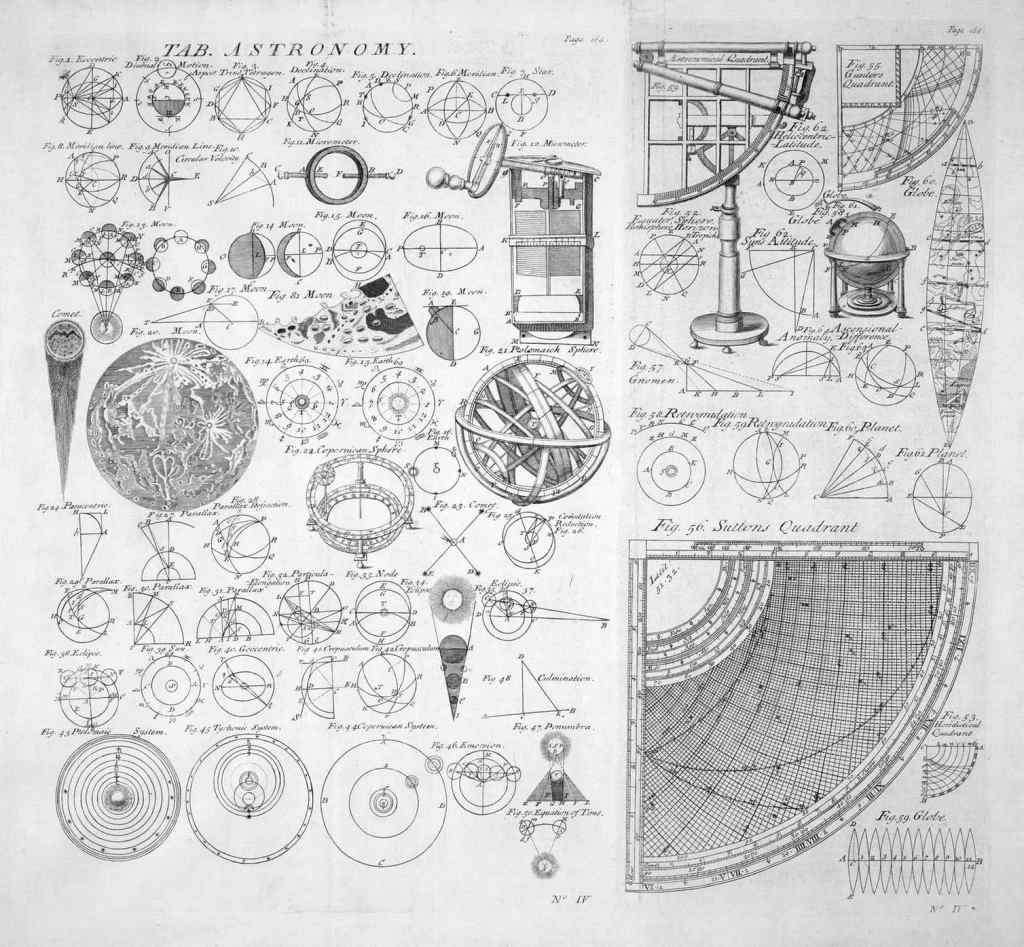
Figures illustrating articles on astronomy, from the 1728 Cyclopaedia. Wikimedia Commons

And so, where Galileo had once spurned the idea of a dead world, the German astronomer Wilhelm Olbers proposed in 1802 that the Mars-Jupiter asteroid belt in fact constitutes the ruins of a shattered planet. Troubled by this, Godwin noted that this would mean that the creator had allowed part of “his creation” to become irremediably “unoccupied”. But scientists were soon computing the precise explosive force needed to crack a planet – assigning cold numbers where moral intuitions once prevailed. Olbers calculated a precise timeframe within which to expect such an event befalling Earth. Poets began writing of “bursten worlds”.

The cosmic fragility of life was becoming undeniable. If Earth happened to drift away from the sun, one 1780s Parisian diarist imagined that interstellar coldness would “annihilate the human race, and the earth rambling in the void space, would exhibit a barren, depopulated aspect”. Soon after, the Italian pessimist Giacomo Leopardi envisioned the same scenario. He said that, shorn of the sun’s radiance, humanity would “all die in the dark, frozen like pieces of rock crystal”.

Galileo’s inorganic world was now a chilling possibility. Life, finally, had become cosmically delicate. Ironically, this appreciation came not from scouring the skies above but from probing the ground below. Early geologists, during the later 1700s, realised that Earth has its own history and that organic life has not always been part of it. Biology hasn’t even been a permanent fixture down here on Earth – why should it be one elsewhere? Coupled with growing scientific proof that many species had previously become extinct, this slowly transformed our view of the cosmological position of life as the 19th century dawned.

Copper engraving of a pterodactyl fossil discovered by the Italian scientist Cosimo Alessandro Collini in 1784. Wikimedia Commons

Seeing death in the stars

And so, where people like Diderot looked up into the cosmos in the 1750s and saw a teeming petri dish of humanoids, writers such as Thomas de Quincey were, by 1854, gazing upon the Orion nebula and reporting that they saw only a gigantic inorganic “skull” and its lightyear-long rictus grin.

The astronomer William Herschel had, already in 1814, realised that looking out into the galaxy one is looking into a “kind of chronometer”. Fermi would spell it out a century after de Quincey, but people were already intuiting the basic notion: looking out into dead space, we may just be looking into our own future.
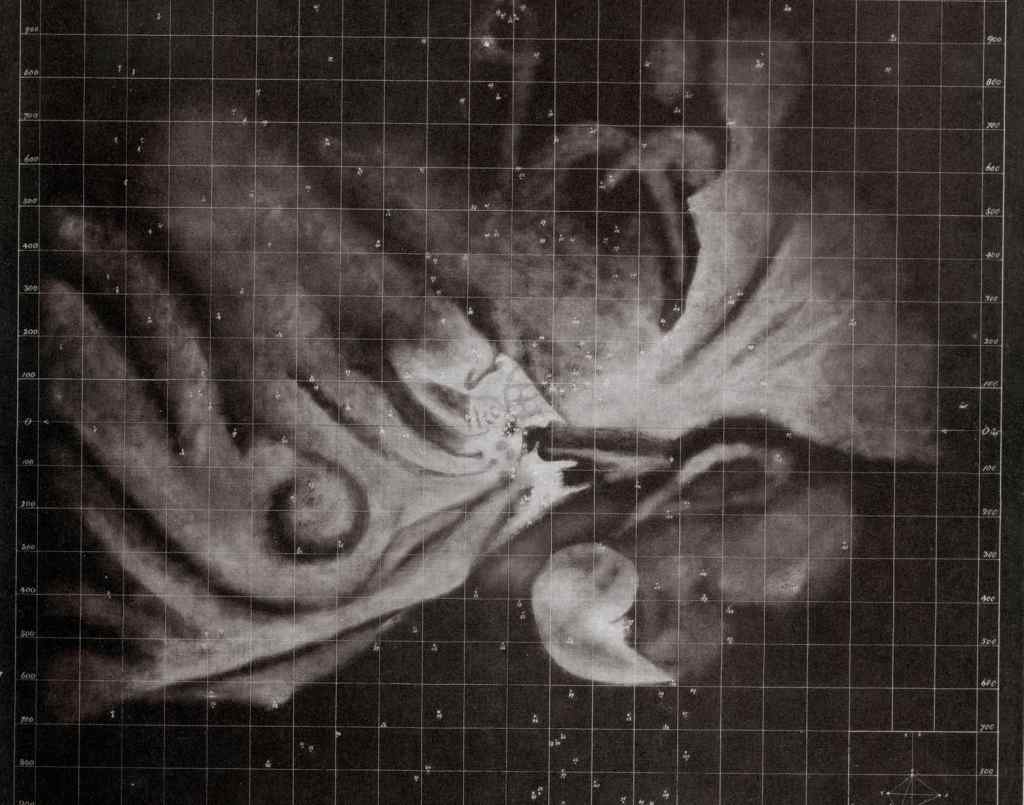
Early drawings of Orion’s nebula by R.S. Newall, 1884. © Cambridge University, CC BY

People were becoming aware that the appearance of intelligent activity on Earth should not be taken for granted. They began to see that it is something distinct – something that stands out against the silent depths of space. Only through realising that what we consider valuable is not the cosmological baseline did we come to grasp that such values are not necessarily part of the natural world. Realising this was also realising that they are entirely our own responsibility. And this, in turn, summoned us to the modern projects of prediction, preemption and strategising. It is how we came to care about our future.

As soon as people first started discussing human extinction, possible preventative measures were suggested. Bostrom now refers to this as “macrostrategy”. However, as early as the 1720s, the French diplomat Benoît de Maillet was suggesting gigantic feats of geoengineering that could be leveraged to buffer against climate collapse. The notion of humanity as a geological force has been around ever since we started thinking about the long-term – it is only recently that scientists have accepted this and given it a name: “Anthropocene”.

Will technology save us?

It wasn’t long before authors began conjuring up highly technologically advanced futures aimed at protecting against existential threat. The eccentric Russian futurologist Vladimir Odoevskii, writing in the 1830s and 1840s, imagined humanity engineering the global climate and installing gigantic machines to “repulse” comets and other threats, for example. Yet Odoevskii was also keenly aware that with self-responsibility comes risk: the risk of abortive failure. Accordingly, he was also the very first author to propose the possibility that humanity might destroy itself with its own technology.

Acknowledgement of this plausibility, however, is not necessarily an invitation to despair. And it remains so. It simply demonstrates appreciation of the fact that, ever since we realised that the universe is not teeming with humans, we have come to appreciate that the fate of humanity lies in our hands. We may yet prove unfit for this task, but – then as now – we cannot rest assured believing that humans, or something like us, will inevitably reappear – here or elsewhere.

Beginning in the late 1700s, appreciation of this has snowballed into our ongoing tendency to be swept up by concern for the deep future. Current initiatives, such as Bostrom’s Future of Humanity Institute, can be seen as emerging from this broad and edifying historical sweep. From ongoing demands for climate justice to dreams of space colonisation, all are continuations and offshoots of a tenacious task that we first began to set for ourselves two centuries ago during the Enlightenment when we first realised that, in an otherwise silent universe, we are responsible for the entire fate of human value.

It may be solemn, but becoming concerned for humanity’s extinction is nothing other than realising one’s obligation to strive for unceasing self-betterment. Indeed, ever since the Enlightenment, we have progressively realised that we must think and act ever better because, should we not, we may never think or act again. And that seems – to me at least – like a very rational end of the world.

ooOOoo

I hope you have read it all. There’s much to engage one. And the message to me is very clear: We have to regard this race, correction: our race, as unique. As is put in the penultimate paragraph:

Enlightenment when we first realised that, in an otherwise silent universe, we are responsible for the entire fate of human value.

Now there’s a thought for an atheist on a Saturday morning!
From Montana!

One of my most favourite blog sites!

There is a blog site, primarily for all those interested in photography. It is called Ugly Hedgehog! Seriously! But UHH, as it is known, also has room for general non-photographic chat so it really does cater for all.

I have been a member since July, 2017, and have been amazed at how quickly the time has gone.

Anyway, the home page of Ugly Hedgehog is here, it’s free, and if you have any interest in photography I strongly recommend it.

This item came in a couple of weeks ago and I’m taking the liberty of sharing it with you.

ooOOoo

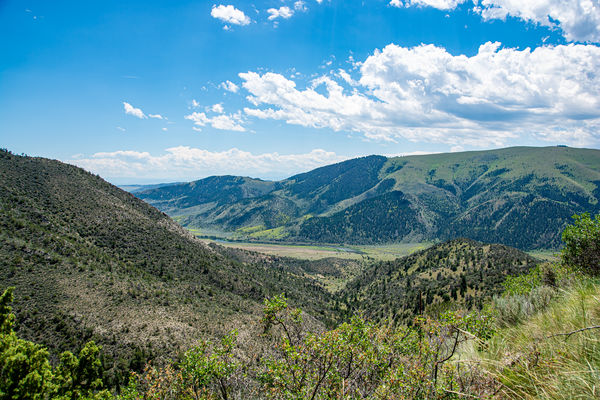
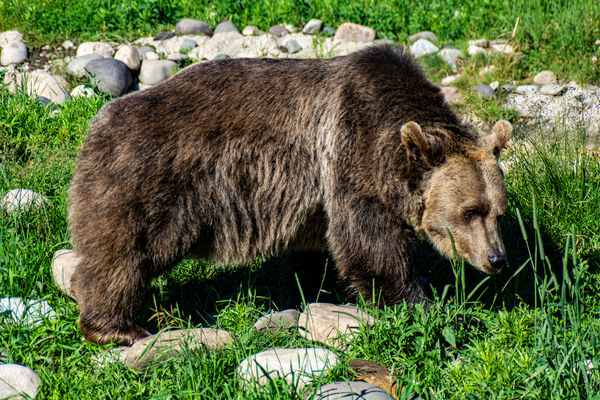
Spent a few days in Bozeman Montana visiting my youngest son and daughter in law before heading out to Southern California. A couple of images from my trip to Montana…

ooOOoo

Incredible country!

Oregon wolf pups!

A good news story of recent days!

I will go straight to the story!

ooOOoo

6 wolf pups caught on trail cam in Mount Hood area

Posted Jul 11, 2019

Two wolf pups were observed on the Warm Springs reservation in early August, marking the first time the wolves have successfully bred in Oregon’s northern Cascades since the animals returned to the state.

MOUNT HOOD — Officials say six wolf pups have been born this year to Oregon’s White River wolf pack in the Mount Hood area. Biologists with the Confederated Tribes of Warm Springs posted footage of the pups from a trail camera that was shared on Facebook by the U.S. Fish and Wildlife Service/Oregon.

The White River Pack is located just southeast of Mount Hood and east of Timothy Lake. With five members in 2018, it was one of the few confirmed packs in Western Oregon, along with southwest Oregon’s Rogue Pack.

Oregon Department of Fish and Wildlife carnivore biologist Derek Broman told The Statesman Journal that the current size of the White River pack is 11 animals.

The latest wolf count shows Oregon is home to a minimum of 137 wolves. The majority are clustered in northeast Oregon.
— The Associated Press

ooOOoo

Now it’s a great shame but the video of the young pups, evident if you go to this link, I cannot put into a WordPress blog, namely Learning from Dogs.

What if Reporters Covered the Climate Crisis

Like Murrow Covered World War II?

The new Covering Climate Now project will help media “tell the story so people get it.”

This is how the speech by Bill Moyers is introduced in this issue of The Nation:

The following is an abridged version of the speech by the iconic TV newsman Bill Moyers, as prepared for delivery at a conference at the Columbia Journalism School on April 30. A video of the speech can be seen at TheNation.com/moyers-speech.

Well, we have the advantage of going straight to the video.

What is journalism for, if not to awaken the world to looming catastrophes?

This is so beautiful!

Another gorgeous story from The Dodo.

I make no apologies for featuring so quickly another article from The Dodo.

It’s just so beautiful and another example of the special characteristics of dogs.

Just see for yourself.

ooOOoo

Rescue Dog Won’t Let Orphaned Foal Sleep Alone

The foal knew that the dog was trying to help him.

BY
PUBLISHED ON 06/27/2019

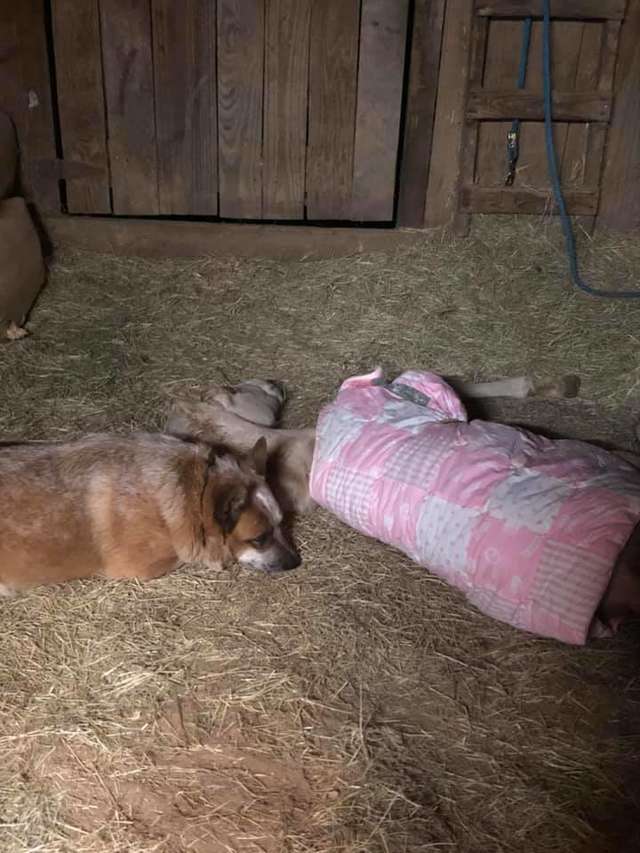
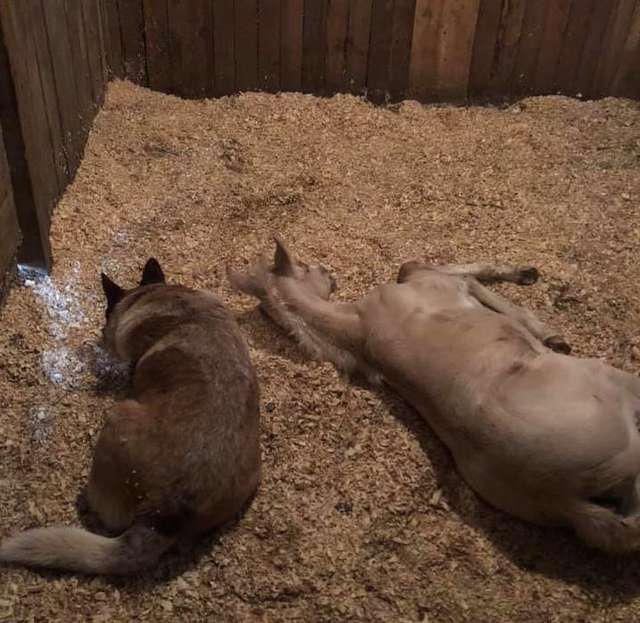
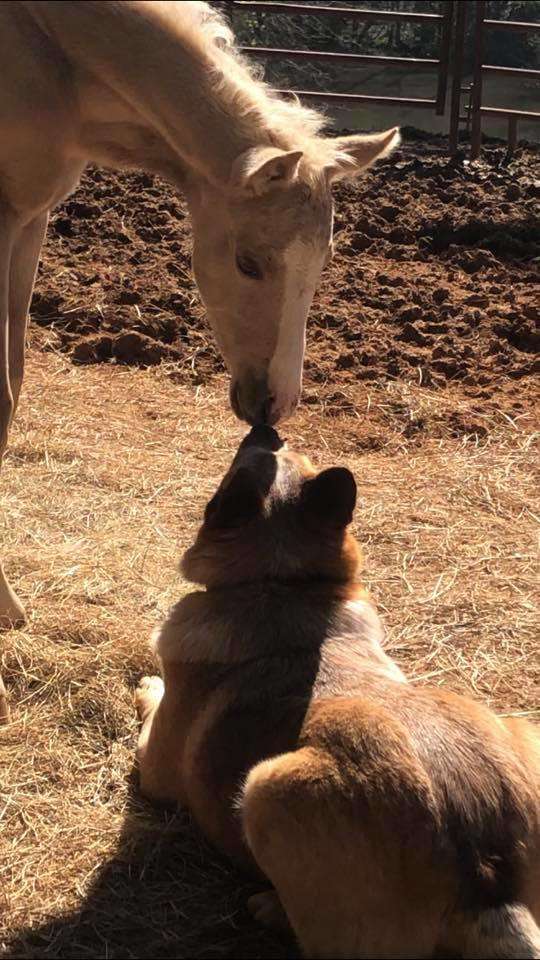
At only 9 days old, a foal named Tye lost his mother. But that same night he gained an unexpected friend — an Australian cattle dog named Zip.
Zip had never shown much interest in his horse siblings. “We raise foals every year, and he would kind of look in the door and just look at them,” Karla Swindle, Zip’s mom, told The Dodo.

But on that fateful night in March, it was as if the 5-year-old rescue dog could tell he was needed.

Facebook/Karla Swindle

Tye’s mother became sick days after giving birth, and despite treatment, quickly went downhill. When things looked their bleakest for the mother and baby, Swindle stayed by their side. As always, Zip tagged along after his owner.

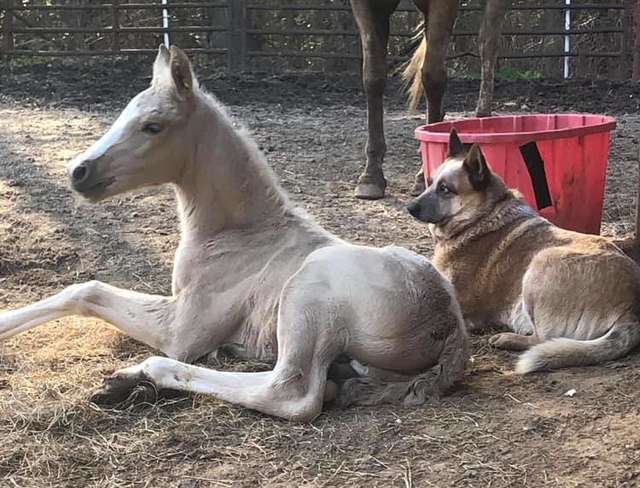
“I spent the night at the barn taking care of the mama horse, hoping that I could pull her through,” Swindle said. “Zip stayed with me in the alley of the barn all night — the foal was laying in the alley, and he just lay there beside the foal.”
“He was whining,” Swindle added. “You could tell that Zip knew something was wrong that night.”

The next morning, Tye lost his mother, but he wasn’t alone.

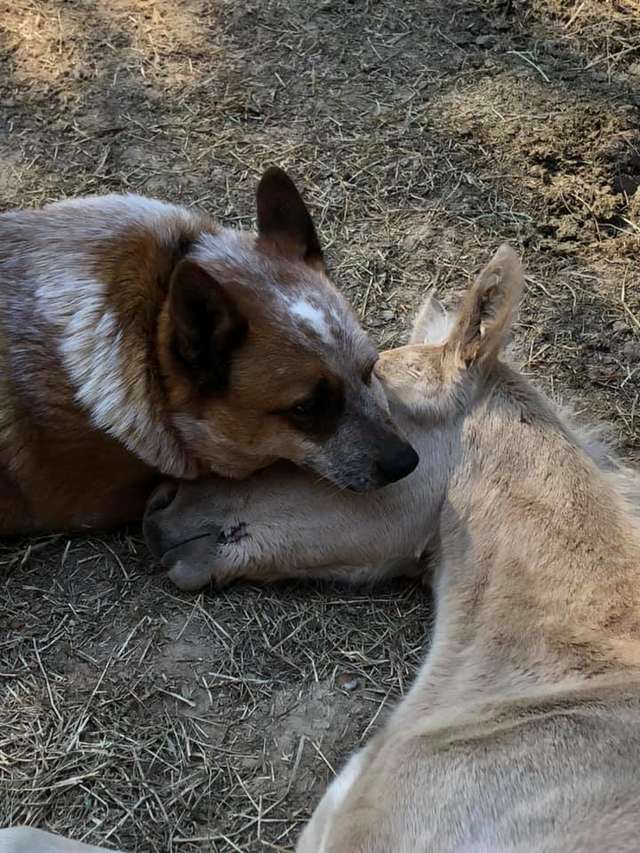
Zip insisted on keeping the newborn horse company, comforting the little animal with his presence. When Zip was around, Tye was relaxed and happy. “It seemed to me that the foal knew that the dog was trying to help him,” Swindle said, “which is so sweet.”

Facebook/Karla Swindle

For six weeks, Zip wouldn’t let Tye out of his sight. Whenever Swindle went to feed the foal, Zip was first in line to greet the little horse. “Every time I would take off to the barn, Zip would run to the stall, and stand in front of the stall and wait for me to get there,” Swindle said. “He would beat me to the barn every time.”

“As soon as I opened the door, he would about knock me down before I could get in there,” she added. “If the foal was laying down, he would go over there and lay his head on him.”

Facebook/Karla Swindle

As months passed, Tye quickly put on weight, growing into a healthy young horse — in part, thanks to his adoptive dad.

Now, Tye spends most days out in the pasture with his older sister, who is teaching him the ins and outs of being a horse. And while Zip still accompanies Swindle to the barn, he doesn’t beg to go in the stall with Tye anymore.

Facebook/Karla Swindle

“The foal is a little rough now,” Swindle said, “raring up, trying to play, so Zip kind of stays away from him now.”

The proud dad understands that Tye needs to test his independence, and it doesn’t make their relationship any less special.

“You could tell that when the foal needed Zip, Zip was there for him,” Swindle said. “And now Zip knows that the foal is OK, so they kind of went their separate ways.”

Facebook/Karla Swindle

But it seems the little horse has opened up room in the older dog’s heart — space that he has since filled with another baby.

“He loves my granddaughter,” Swindle said. “Whenever she comes over here, he goes directly to her. He treats her like he did the foal. He just loves to be around her.”

ooOOoo

We have mentioned it time and time before. That dogs are so special. And then one comes across an account of something that is even more special.

All of the photographs are delightful but that third one shows the intimacy that is in the relationship. The caring that is being shown by Zip!

I have said it before and no doubt will say it many times more: Dogs are incredibly wonderful.

Picture Parade Two Hundred and Ninety-Four

About as far away from dogs as one can get!

ooOOoo

Best photos of the Mercury-Mars conjunction

Posted by in ASTRONOMY ESSENTIALS | TODAY’S IMAGE June 23, 2019

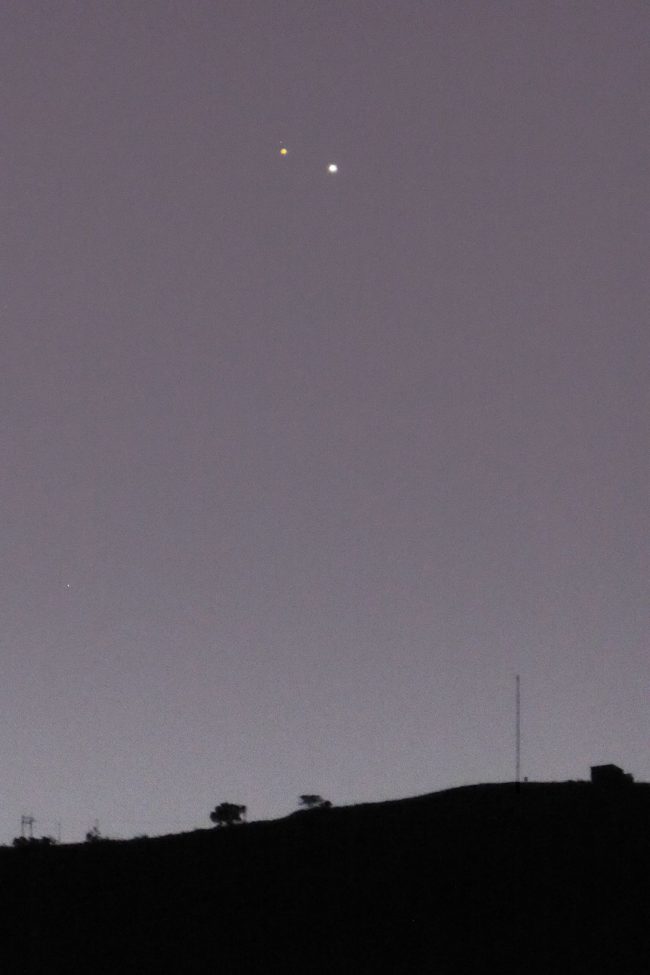
It was the closest conjunction of 2 planets in 2019, between Mercury and Mars. It happened low in the evening twilight – and was best seen from Earth’s Southern Hemisphere. Check out these photos from EarthSky Community members.

Dr Ski in Valencia, Philippines, caught Mars and Mercury on the day following their conjunction, June 19, 2019. The nearby stars Castor and Pollux in the constellation Gemini are a great comparison. Those 2 stars are noticeable for being bright and close together. Mercury and Mars were much closer! Thanks, Dr Ski!
Wow! You can really see the color difference between red Mars (on the left) and Mercury in this photo from the day of the conjunction – June 18, 2019 – by Peter Lowenstein in Mutare, Zimbabwe. Thanks, Peter!
Here’s a June 17 photo from Jose Lagos in Vaals, Netherlands. He wrote, “This was the last image I could get before June 18, when it was too cloudy near the horizon, but you can see that the conjunction is nearly perfected. It was beautiful to behold even this much of it. Thank you for your time and your great work at Earth Sky.” Thank you for your photo and kind words, Jose!
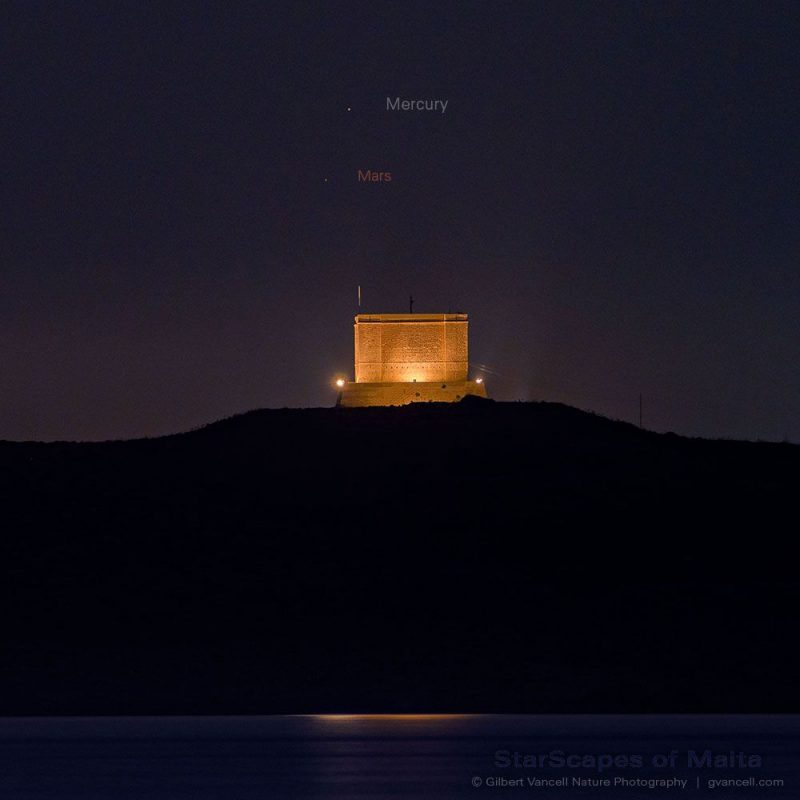
Gilbert Vancell caught the planets on June 18, too, and wrote: “Mercury (top) and Mars setting behind Comino Tower. Shot from Armier, Malta.”
Helio C. Vital captured in Rio de Janeiro, Brazil, on June 18, 2019. He wrote, “Despite the fact that many clouds were floating over my western horizon this evening, I could get some photos of Mercury and Mars only 14 arcminutes apart over Rio de Janeiro at dusk (from 17:45 to 18:30 UTC-3h, June 18, 2019).Forming a beautiful close pair through binoculars, Mercury was an easy naked-eye target while Mars (4.4 times dimmer) required the use of averted vision to be briefly spotted. Hope my images can help give you an idea of what the interesting event looked like.”

Bottom line: Photos from the night of and around the June 18, 2019, conjunction of Mercury and Mars, closest conjunction of two planets this year.

ooOOoo

I hope a few of you enjoyed today’s Picture Parade.

Here’s to July!

The power of a photograph

No words to say how I feel!

The bodies of Salvadoran migrant Oscar Alberto Martínez Ramírez and his daughter lie on the bank of the Rio Grande in Matamoros, Mexico. AP Photo/Julia Le Duc

This is a terrible photograph. It has been widely shown but that doesn’t make it any less terrible.

Patrice Ayme recently wrote about the tragedy but for today I am republishing the article in The Conversation.

ooOOoo

How much power can one image actually have?

By

Associate Professor, School of Journalism and Communication, University of Oregon

Professor of Psychology, University of Oregon

When the Associated Press published Julia Le Duc’s photograph of a drowned Salvadoran man, Óscar Alberto Martínez Ramírez, and his 23-month old daughter Valeria, it sparked outrage on social media. According to Le Duc, Ramírez had attempted to cross the Rio Grande after realizing he couldn’t present himself to U.S. authorities to request asylum.

But beyond raising awareness via Twitter and Facebook feeds, does an image like this one have the power to sway public opinion or spur politicians to take action?

As journalism and psychology scholars interested in the effects of imagery, we study the ability of jarring photos and videos to move people from complacency to action. While graphic imagery can have an immediate impact, the window of action – and caring – is smaller than you’d think.

A political catalyst?

Photographs and videos – through their perceived authenticity – can have an effect on people.

Research suggests that the graphic photo of slain Emmett Till in his open casket served as a “political catalyst” in mobilizing Americans to action in the civil rights movement. Similarly, news images have been credited as playing an important role in ending the Vietnam War.

But not all scholars agree. A recent article argued that it was a “myth” that the iconic “napalm girl” photo swayed public opinion and hastened the end of the Vietnam War.

Did the ‘napalm girl’ significantly shift public opinion on the Vietnam War? manhhai/flickr, CC BY

We must also look to psychology to understand the impacts of emotional news content. Research demonstrates that audiences need an emotional connection – and not merely a “just-the-facts” reporting approach – as “prerequisite for political action” when it comes to appreciating the importance of distant mass suffering. And imagery can trigger this emotional connection by overcoming the psychic numbing that occurs when casualties mount, images blur and lost lives become merely dry statistics.

Images from Syria

In April 2017, gut-wrenching images seem to have awakened the world to the human atrocities happening in Syria. Following a chemical bomb attack in the town of Khan Sheikhoun, graphic photos and videos documented the horrific effects of the banned nerve agent sarin. Millions bore witness to excruciating human suffering: gasping, choking, writhing and dying. More than 500 people were injured, with at least 86 deaths, including 28 children.

The vivid, closeup images of sarin attack victims were resonant enough to break through the complacency of people and politicians accustomed to bad news emerging from the war-torn nation. In President Trump’s response – which included a retaliatory missile strike – he seemed to recognize the value of the Syrian lives depicted in the horrific photos and videos.

Syrian doctors treat a child following a suspected chemical attack in the town of Khan Sheikhoun, northern Idlib province, Syria. Edlib Media Center, via AP, File

“When you kill innocent children,” he said during a news conference, “that crosses many, many lines, beyond a red line – many, many lines.”

The limits of an image

Nonetheless, even though the attacks may have briefly heightened U.S. concerns over the wars in Syria, the photographic documentation of the suffering in Syria wasn’t new.

The 2015 photos of a tiny Syrian boy’s lifeless body resting face down in the sand similarly stirred the world’s collective consciousness. Within hours of its release, the photo had reached 20 million people through Twitter, with many more millions seeing it on the front pages of newspapers the next day. Afterwards, government restrictions on accepting refugees were loosened while private donations to organizations like the Red Cross spiked dramatically.

A year later haunting images of a young boy in the back of an ambulance, caked in dirt and blood, galvanized the world.

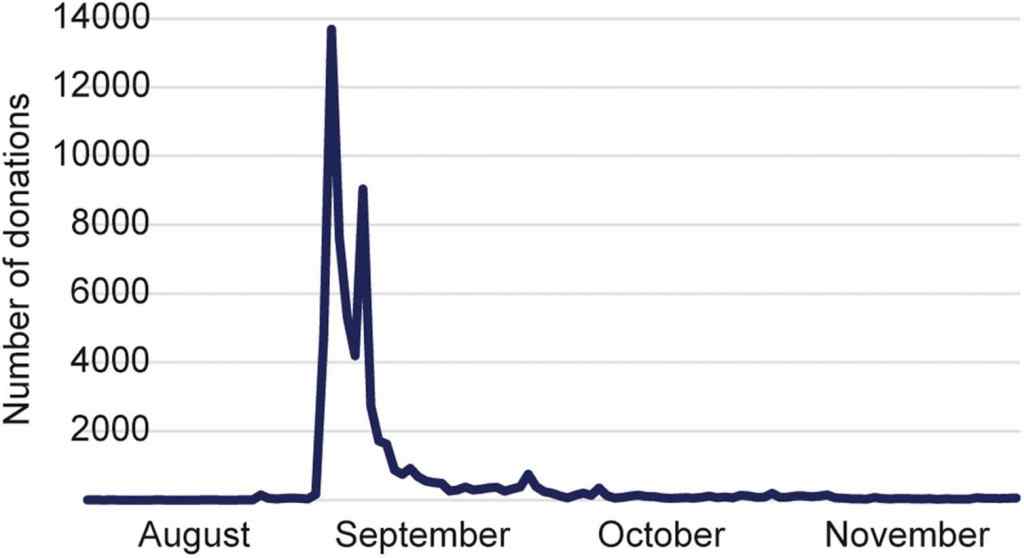
But the emotional and compassionate responses to both photographs were short-lived. The bombing of civilians in Syria continued. Refugees continued risking their lives to escape the war zone.

After a photograph of a dead Syrian boy went viral in 2015, the number of daily donations to a Swedish Red Cross campaign designated specifically for aiding Syrian refugees spiked dramatically – but only for a brief window. Proceedings of the National Academy of Sciences of the United States of America, CC BY-SA

Since the publication of Le Duc’s photo of the dead migrants, supportive politicians may feel emboldened to sound the alarm on the plight of Central American migrants. Donations to immigrant aid organizations might briefly spike.

But it seems that a photograph, no matter how emotionally devastating, can only do so much.

Yes, it can create a window of time when we’re motivated to act, and we’ll usually do so if we have effective options to pursue. This could mean a charitable donation at the individual level or, collectively, a surge of political will. However, psychology research from the “arithmetic of compassion” suggests that sympathy for distant human suffering declines when we’re presented with rising body counts. Sometimes we’re discouraged by the scope of the problem and this stops us from doing things that actually make a difference – even if partial solutions can save lives. Other times, if the options for helping others seem too narrow or ineffective, we’ll turn away and stop caring.

Images can alert us to the horrors of violence, mass migration and poverty. But as we have seen time and again, photographs and news footage of human suffering generally precipitate a short-term emotional reaction, rather than a sustained humanitarian response.

ooOOoo

As one reads the article it is much more than a comment on a single image despite how terrible that photograph may be.

The two scientists set out to show that the period that we are alarmed or terrified or just plain sad at the state of nations is rather short.

Maybe it’s the self-protective nature of our species that does this.

But it still doesn’t diminish the horror of that top photograph.

How a dog saved a family

This is a story of a very real emergency.

I have taken it from BoredPanda, not a site that I frequent, but this is such a marvellous account of how dogs make, every day, a real difference to the lives of people.

It’s been taken from a Twitter account so my apologies for the ‘staccato’ effect.

ooOOoo

Man Shares A Heartwarming Story About How His Dog Saved His House From Burning Down

Dogs… if only there was a word that would show how much we adore these adorable creatures that we get to call our most loyal friends and also beloved family members. Here at Bored Panda, dogs (amongst other animals) have a very special place, despite the fact that they can do the worst things, we still adore them. Also, today’s story teaches us that just because your puppy did something wrong, don’t be too quick to punish them since they might compensate it by doing something truly heroic.

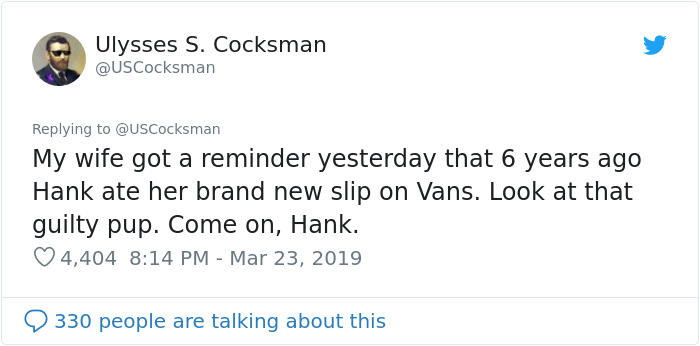
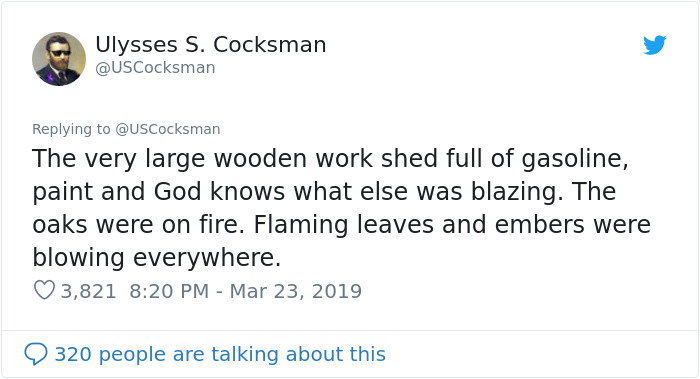
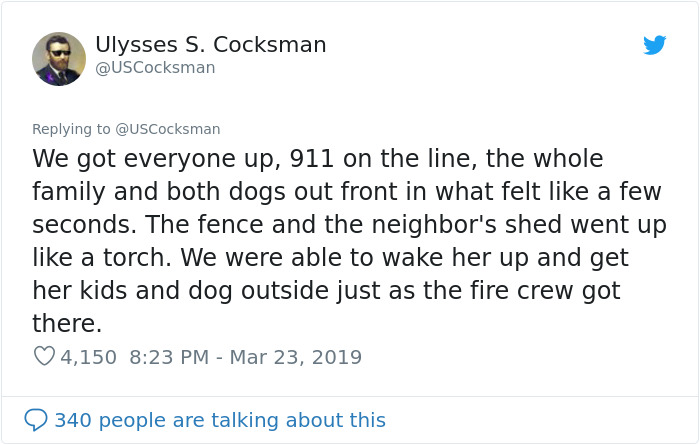
Recently, one Twitter user shared a heartwarming story about his dog Hank saving his entire family from fire

Hank even got some presents dedicated to his heroic act

People online were not only touched by this story, but they also think Hank deserves to chew all of the shoes in the world.

ooOOoo

What would we do without our dear dogs!

32,000 years ago!

A wolf became buried.

This is a wonderful story and one that I shall go straight into. Reason I have software problems that I’m trying to fix today!

This article was first published by The Smithsonian magazine.

ooOOoo

A Perfectly Preserved 32,000-Year-Old Wolf Head Was Found in Siberian Permafrost

Given the head’s state of preservation, researchers are hopeful that they can extract viable DNA and use it to sequence the wolf’s genome.

Screen Shot 2019-06-14 at 11.38.50 AM.png
The specimen is the first (partial) carcass of an adult Pleistocene steppe wolf—an extinct lineage distinct from modern wolves—ever found (Courtesy of Dr. Tori Herridge)
smithsonian.com

Last summer, a mammoth tusk hunter exploring the shores of the Tirekhtyak River in Siberia’s Yakutia region unearthed the fully intact head of a prehistoric wolf. Preserved by the region’s permafrost, or permanently frozen ground, for some 32,000 years, the specimen is the first partial carcass of an adult Pleistocene steppe wolf—an extinct lineage distinct from modern wolves—ever found.

The discovery, first reported by the Siberian Times, is poised to help researchers better understand how steppe wolves compared with their contemporary counterparts, as well as why the species eventually died out.

As Marisa Iati writes for the Washington Post, the wolf in question was fully grown, likely aged 2 to 4 years old, at the time of its death. Although photographs of the severed head, still boasting clumps of fur, fangs and a well-preserved snout, place its size at 15.7 inches long—the modern gray wolf’s head, in comparison, measures 9.1 to 11 inchesLove Dalén, an evolutionary geneticist at the Swedish Museum of Natural History who was filming a documentary in Siberia when the tusk hunter arrived on the scene with the head in tow, says that media reports touting the find as a “giant wolf” are inaccurate.

“It is not that much bigger than a modern wolf if you discount the frozen clump of permafrost stuck to where the neck would [normally] have been,” Dalén explains to Smithsonian.com.

According to CNN, a Russian team led by Albert Protopopov of the Republic of Sakha’s Academy of Sciences is currently building a digital model of the animal’s brain and the interior of its skull.

David Stanton, a researcher at the Swedish Museum of Natural History who is leading genetic analysis of the remains, tells Smithsonian.com that given the head’s state of preservation, he and his colleagues are hopeful that they can extract viable DNA and use it to sequence the wolf’s genome. This work, expected to last at least another year, will eventually be published in a peer-reviewed scientific journal.

A Russian team is currently building a digital model of the animal’s brain and the interior of its skull
A Russian team is currently building a digital model of the animal’s brain and the interior of its skull (Albert Protopopov)

For now, it remains unclear exactly how the wolf’s head became separated from the rest of its body. Speaking with Smithsonian.com, Tori Herridge, an evolutionary biologist at London’s Natural History Museum who was part of the team filming in Siberia at the time of the discovery, says that a colleague, Dan Fisher of the University of Michigan, thinks scans of the animal’s head may reveal evidence of it being deliberately severed by humans—perhaps “contemporaneously with the wolf dying.” If so, Herridge notes, the find would offer “a unique example of human interaction with carnivores.” Still, she concludes in a post on Twitter, “I am reserving judgment until more investigation [is] done.”

Dalén echoes Herridge’s hesitancy, saying that he has “seen no evidence convincing” him that humans cut off the head. After all, it’s not uncommon to find partial sets of remains in the Siberian permafrost. If an animal was only partially buried and subsequently frozen, for example, the rest of its body could have decomposed or been eaten by scavengers. Alternatively, it’s possible that shifts within the permafrost over thousands of years led the carcass to break into multiple pieces.

According to Stanton, steppe wolves were “probably slightly larger and more robust than modern wolves.” The animals had a strong, wide jaw equipped for hunting large herbivores such as woolly mammoths and rhinos, and as Stanton tells USA Today’s N’dea Yancey-Bragg, went extinct between 20,000 to 30,000 years ago, or roughly the time when modern wolves first arrived on the scene. If the researchers successfully extract DNA from the wolf’s head, they will attempt to use it to determine whether the ancient wolves mated with modern ones, how inbred the older species was, and if the lineage had—or lacked—any genetic adaptations that contributed to its demise.

To date, the Siberian permafrost has yielded an array of well-preserved prehistoric creatures: among others, a 42,000-year-old foal, a cave lion cub, an “exquisite ice bird complete with feathers,” as Herridge notes, and “even a delicate Ice Age moth.” According to Dalén, these finds can largely be attributed to a surge in mammoth tusk hunting and increased melting of permafrost linked with global warming.

Speaking with Smithsonian.com, Stanton concludes, “The warming climate … means that more and more of these specimens are likely to be found in the future.”

At the same time, he points out, “It is also likely that many of [them] will thaw out and decompose (and therefore be lost) before anyone can find … and study them.”

ooOOoo

It’s an ill wind that blows no-one any good. That saying comes to mind when I read about the warming climate and more specimens being found.

Fascinating!

Reflections on the future

Father’s Day ….

….. was OK in the morning but for some reason I was in a dark mood in the afternoon.

(And if you want to skip today’s post I don’t blame you at all. This is not my usual style albeit it is important.)

I was reflecting on the state of the world. Global population was well in excess of seven billion people. The longevity of those people was increasing. That’s good news. The health standards were increasing. That’s also good news.

However, the pressure on farming is intense. More and more land is required. The natural world is under supreme pressure. Extinction rates of many natural species are soaring.

Planet Earth has far too many people!

OK, maybe in time the population level will come down but right now it is too high.

Then in came Tom Engelhardt’s latest essay. I read it and reflected. Is it too dark to post? Then Jeannie said that if you really want to share it then publish it.

Here it is, published with Tom’s kind permission.

ooOOoo

Tomgram: Engelhardt, Trump Change

Posted by Tom Engelhardt at 4:23pm, June 16, 2019.
Follow TomDispatch on Twitter @TomDispatch.

If Donald Trump Is the Symptom…
Then What’s the Disease?

By Tom Engelhardt
Don’t try to deny it! The political temperature of this country is rising fast. Call it Trump change or Trump warming, if you want, but grasp one thing: increasingly, you’re in a different land and, whatever happens to Donald Trump, the results down the line are likely to be ever less pretty. Trump change isn’t just an American phenomenon, it’s distinctly global. After all, from Australia to India, the Philippines to Hungary, Donald Trumps and their supporters keep getting elected or reelected and, according to a recent CNN poll, a majority of Americans think Trump himself will win again in 2020 (though, at the moment, battleground-state polls look grim for him).

Still, whether or not he gets a second term in the White House, he only seems like the problem, partially because no president, no politician, no one in history has ever gotten such 24/7 media coverage of every twitch, tweet, bizarre statement, falsehood, or fantasy he expresses (or even the clothes he wears). Think of it this way: we’re in a moment in which the only thing the media can’t imagine saying about Donald Trump is: “You’re fired!” And believe me, that’s just one sign of a media — and a country — with a temperature that’s anything but 98.6.

Since you-know-who is always there, always being discussed, always @(un)realdonaldtrump, it’s easy enough to imagine that everything that’s going wrong — or, if you happen to be part of his famed base, right (even if that right isn’t so damned hot for you) — is due to him. When we’re gripped by such thinking and the temperature’s rising, it hardly matters that just about everything he’s “done” actually preceded him. That includes favoring the 1%, deporting record numbers of illegal immigrants, and making war (unsuccessfully) or threatening to do so across significant parts of the planet.

Here, then, is the question of the day, the sort you’d ask about any patient with a rising temperature: If Donald Trump is only the symptom, what’s the disease?

Blowback Central

Let me say that the late Chalmers Johnson would have understood President Trump perfectly. The Donald clearly arrived on the scene as blowback — the CIA term of tradecraft Johnson first put into our everyday vocabulary — from at least two things: an American imperium gone wrong with its never-ending wars, ever-rising military budgets, and ever-expanding national security state, and a new “gilded age” in which three men (Bill Gates, Jeff Bezos, and Warren Buffett) have more wealth than the bottom half of society and the .01% have one of their own, a billionaire, in the Oval Office. (If you want to add a third blowback factor, try a media turned upside down by new ways of communicating and increasingly desperate to glue eyes to screens as ad revenues, budgets, and staffs shrank and the talking heads of cable news multiplied.)

Now, I don’t mean to sell Donald Trump short in any way. Give that former reality TV star credit. Unlike either Hillary Clinton or any of his Republican opponents in the 2016 election campaign, he sensed that there were voters in profusion in the American heartland who felt that things were not going well and were eager for a candidate just like the one he was ready to become. (There were, of course, other natural audiences for a disruptive, self-promoting billionaire as well, including various millionaires and billionaires ready to support him, the Russians, the Saudis… well, you know the list). His skill, however, never lay in what he could actually do (mainly, in these years, cut taxes for the wealthy, impose tariffs, and tweet his head off). It lay in his ability to catch the blowback mood of that moment in a single slogan — Make America Great Again, or MAGA — that he trademarked in November 2012, only days after Mitt Romney lost his bid for the presidency to Barack Obama.

Yes, four years later in the 2016 election, others began to notice the impact of that slogan. You couldn’t miss the multiplying MAGA hats, after all. Hillary Clinton’s advisers even briefly came up with the lamest response imaginable to it: Make America Whole Again, or MAWA. But what few at the time really noted was the crucial word in that phrase: “again.” Politically speaking, that single blowback word might then have been the most daring in the English language. In 2016, Donald Trump functionally said what no other candidate or politician of any significance in America dared to say: that the United States was no longer the greatest, most indispensable, most exceptionable nation or superpower or hyper-power ever to exist on Planet Earth.

That represented a groundbreaking recognition of reality. At the time, it didn’t matter whether you were Barack Obama, Hillary Clinton, or Marco Rubio, you had to acknowledge some version of that formula of exceptionalism. Trump didn’t and, believe me, that rang a bell in the American heartland, where lots of people had felt, however indirectly, the blowback from all those years of taxpayer-funded fruitless war, while not benefitting from infrastructure building or much of anything else. They experienced blowback from a country in which new billionaires were constantly being created, while the financial distance between CEO salaries and those of workers grew exponentially vaster by the year, and the financing of the political system became a 1% affair.

With that slogan, The Donald caught the spirit of a moment in which both imperial and economic decline, however unacknowledged by the Washington political elite, had indeed begun. In the process, as I wrote at that time, he crossed a psychologically taboo line and became America’s first declinist candidate for president. MAGA captured a feeling already at large that tomorrow would be worse than today, which was already worse than yesterday. As it turned out, it mattered not at all that the billionaire conman spouting that trademarked phrase had long been part of the problem, not the solution.

He caught the essence of the moment, in other words, but certainly didn’t faintly cause it in the years when he financed Trump Tower, watched his five Atlantic City casinos go bankrupt, and hosted The Apprentice. In that election campaign, he captured a previously forbidden reality of the twenty-first century. For example, I was already writing this in June 2016, five months before he was elected president:

“In its halcyon days, Washington could overthrow governments, install Shahs or other rulers, do more or less what it wanted across significant parts of the globe and reap rewards, while (as in the case of Iran) not paying any price, blowback-style, for decades, if at all. That was imperial power in the blaze of the noonday sun. These days, in case you hadn’t noticed, blowback for our imperial actions seems to arrive as if by high-speed rail (of which by the way, the greatest power on the planet has yet to build a single mile, if you want a quick measure of decline).

“Despite having a more massive, technologically advanced, and better funded military than any other power or even group of powers on the planet, in the last decade and a half of constant war across the Greater Middle East and parts of Africa, the U.S. has won nothing, nada, zilch. Its unending wars have, in fact, led nowhere in a world growing more chaotic by the second.”

Mind you, three years later the United States remains a staggeringly powerful imperial force, with hundreds of military bases still scattered across the globe, while its economic clout — its corporations control about half the planet’s wealth — similarly remains beyond compare. Yet, even in 2016, it shouldn’t have been hard to see that the American Century was indeed ending well before its 100 years were up. It shouldn’t have been hard to grasp, as Donald Trump intuitively did, that this country, however powerful, was already both a declining empire — thank you, George W. Bush for invading Iraq! Mission Accomplished! — and a declining economic system (both of which still looked great indeed, if you happened to be profiting from them). That intuition and that slogan gave Trump his moment in… well, dare I call it “the afternoon sun”? They made him president.

MTPGA

In a sense, all of this should have been expectable enough. Despite the oddity of Donald Trump himself, there was little new in it, even for the imperial power that its enthusiasts once thought stood at “the end of history.” You don’t need to look far, after all, for evidence of the decline of empires. You don’t even have to think back to the implosion of the Soviet Union in 1991, almost three decades ago in what now seems like the Stone Age. (Admittedly, Russian President Vladimir Putin, a brilliant imagineer, has brought back a facsimile of the old Soviet Union, even if, in reality, Russia is now a rickety, fraying petro-state.)

Just take a glance across the Atlantic at Great Britain at this moment. And imagine that three-quarters of a century ago, that modest-sized island nation still controlled all of India, colonies across the planet, and an impressive military and colonial service. Go back even further and you’ll find yourself in a time when it was the true superpower of planet Earth. What a force it was — industrially, militarily, colonially — until, of course, it wasn’t.

If you happen to be looking for imperial lessons, you could perhaps say that some empires end not with a bang but with a Brexit. Despite all the pomp and circumstance (tweeting and insults) during the visit of the Trump royal family (Donald, Melania, Ivanka, Jared, Donald Jr., Eric, and Tiffany) to the British royals, led by a queen who, at 93, can remember better days, here’s something hard to deny: with Brexit (no matter how it turns out), the Earth’s former superpower has landed in the sub-basement of history. Great Britain? Obviously that adjective has to change.

In the meantime, across the planet, China, another once great imperial power, perhaps the greatest in the long history of this planet, is clearly on the rise again from another kind of sub-basement. That, in turn, is deeply worrying the leadership, civilian and military, of the planet’s “lone superpower.” Its president, in response, is wielding his weapon of choice — tariffs — while the U.S. military prepares for an almost unimaginable future war with that upstart nation, possibly starting in the South China Sea.

Meanwhile, the still-dominant power on the planet is, however incrementally, heading down. It’s nowhere near that sub-basement, of course — anything but. It’s still a rich, immensely powerful land. Its unsuccessful wars, however, go on without surcease, the political temperature rises, and democratic institutions continue to fray — all of which began well before Donald Trump entered the Oval Office and, in fact, helped ensure that he would make it there in the first place.

And yet none of this, not even imperial decline itself, quite captures the “disease” of which The Donald is now such an obvious symptom. After all, while the rise and fall of imperial powers has been an essential part of history, the planetary context for that process is now changing in an unprecedented way. And that’s not just because, since the 1945 atomic bombings of Hiroshima and Nagasaki, growing numbers of countries have come to possess the power to take the planet down in a cataclysm of fire and ice (as in nuclear winter). It’s also because history, as we’ve known it, including the rise and fall of empires, is now, in a sense, melting away.

Trump change, the rising political temperature stirred by the growing populist right, is taking place in the context of (and, worse yet, aiding and abetting) record global temperatures, the melting of ice across the planet, the rise of sea levels and the future drowning of coastlines (and cities), the creation of yet more refugees, the increasing fierceness of fires and droughts, and the intensification of storms. In the midst of it all, an almost unimaginable wave of extinctions is occurring, with a possible million plant and animal species, some crucial to human existence, already on the verge of departure.

Never before in history has the rise and decline of imperial powers taken place in the context of the decline of the planet itself. Try, for instance, to imagine what a “risen” China will look like in an age in which one of its most populous regions, the north China plain, may by century’s end be next to uninhabitable, given the killing heat waves of the future.

In the context of both Trump change and climate change, we’re obviously still awaiting our true transformative president, the one who is not a symptom of decline, but a factor in trying to right this country and the Earth before it’s too late. You know, the one who will take as his or her slogan, MTPGA (Make The Planet Great Again).

Tom Engelhardt is a co-founder of the American Empire Project and the author of a history of the Cold War, The End of Victory Culture. He runs TomDispatch.com and is a fellow of the Type Media Center. His sixth and latest book is A Nation Unmade by War (Dispatch Books).

Follow TomDispatch on Twitter and join us on Facebook. Check out the newest Dispatch Books, John Feffer’s new dystopian novel (the second in the Splinterlands series) Frostlands,Beverly Gologorsky’s novel Every Body Has a Story, and Tom Engelhardt’s A Nation Unmade by War, as well as Alfred McCoy’s In the Shadows of the American Century: The Rise and Decline of U.S. Global Power and John Dower’s The Violent American Century: War and Terror Since World War II.

Copyright 2019 Tom Engelhardt

ooOOoo

I’m 74. I don’t know how long I’ve got.

Part of me wants to live for a long time. That’s why I am vegan and trying to stay as fit as I can. (I’m also aware that Jeannie’s Parkinson’s Disease is a terminal disease and that in the latter stages she will need me to look after her.)

But then again I’m not sure I want to live in a world that continues to degrade especially continues to degrade in natural ways.

What’s the answer?

What do others who are on or around my age think about it?

What is the disease?