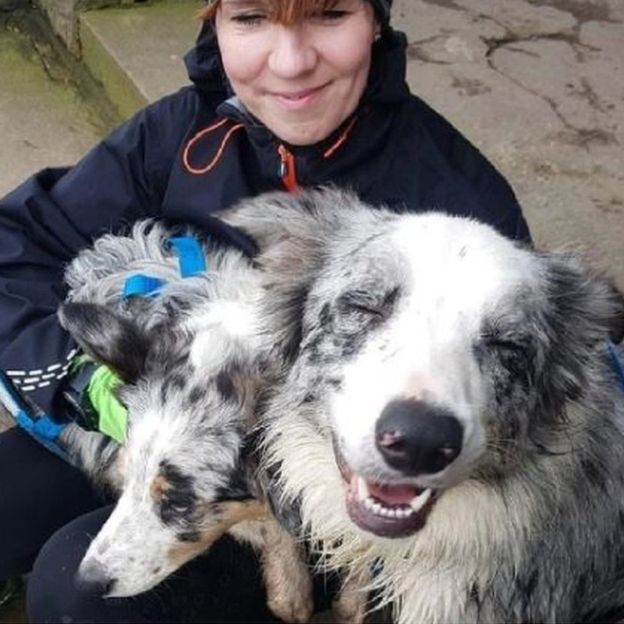
Buddy and Merlyn behaved like a “tag team”, Pita Oates said
A runner who broke her leg on remote moorland was rescued after her dogs raised the alarm.
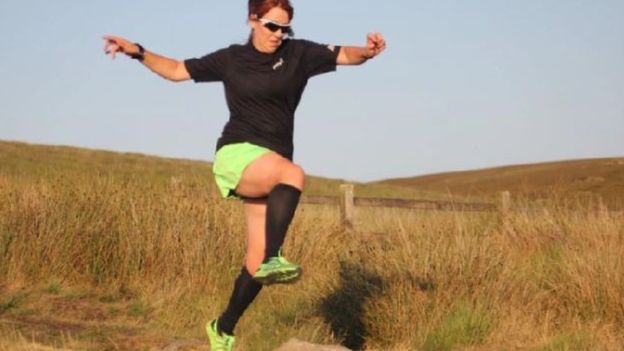
Pita Oates, 48, was left unable to stand after she fell on a three-mile run in Lancashire with her blue collies Buddy and Merlyn.
One of the dogs stayed with her as she inched down the hill, while the other ran around barking for help.
This attracted the attention of another dog walker who contacted emergency services.
Ms Oates, from Leyland, said: “They were like a tag team, Buddy never left me while Merlyn went for help.
“I would have died without a doubt, I wouldn’t have lasted the night.”
When help arrived Ms Oates, who had left her mobile phone in her camper van, was drifting in and out of consciousness and starting to suffer the effects of hypothermia.
She said: “It was the tail-end of Storm Gareth, it was freezing and I was soaking wet. The winds were horrendous.”
Ms Oates said she could have died on the moors without her dogs’ help
Ms Oates broke the femur behind her left knee and tore her anterior and cruciate ligaments on the run on Great Hill near Chorley on 12 March.
“I couldn’t stand up, I was having to bum-shuffle all the way down,” she said.
“Every time my leg touched the ground I was in pain so I rigged up a sling using the dog’s lead to keep my leg up.”
It took her 90 minutes to get down the hill by which time it had gone dark.
“Buddy never left me and Merlyn kept barking back at him – when this man came with his dog he knew something wasn’t right,” she said.
Paramedics and members of the Bowland Mountain Rescue Team, as well as two from Bolton Mountain Rescue, arrived to help rescue Ms Oates.
She spent eight days in hospital and had a titanium plate fitted but still needs another operation.
Pita Oates was on a three-mile run when she was injured
ooOOoo
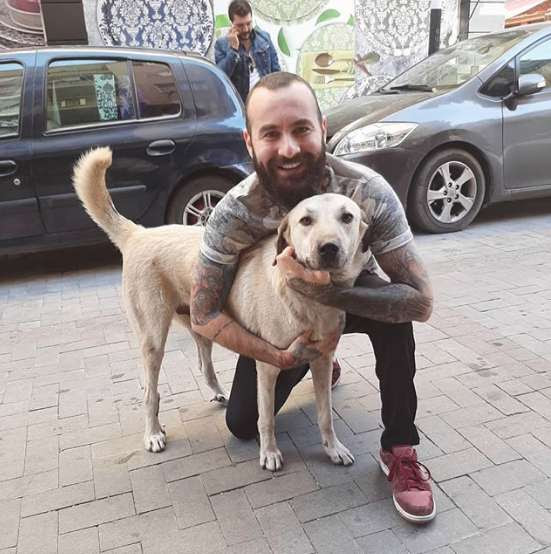
Part of me is not surprised at the behaviour of Ms Oates’ dogs. Dogs show their care and attention in so many ways. But then again I was surprised because these two dogs knew exactly what to do. One to stay and one to seek help. Which is what they did.
It was a close-run thing (pardon the pun) as Pita was starting to fade away when help arrived.
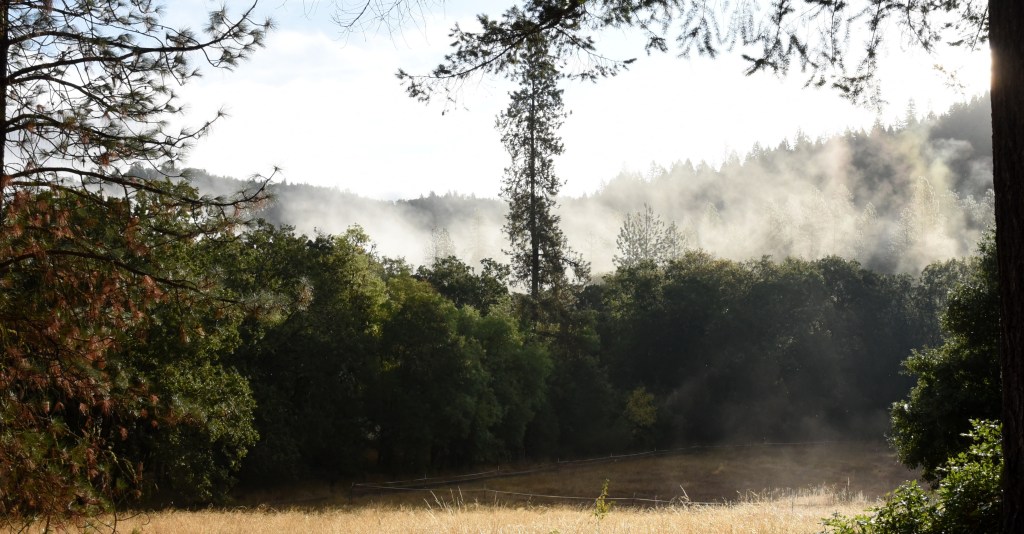
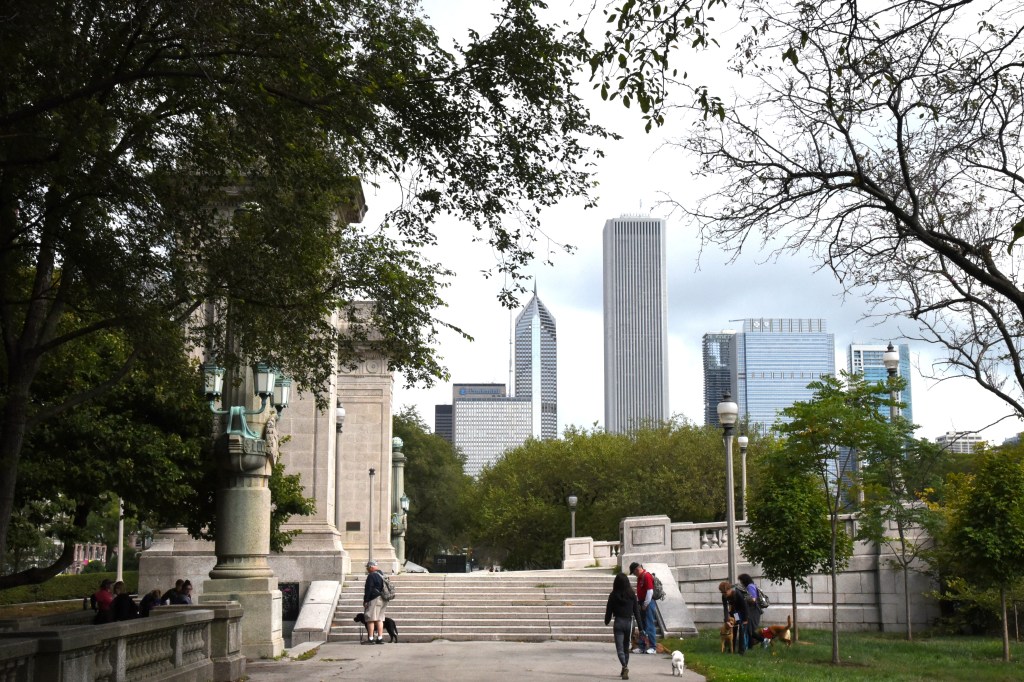
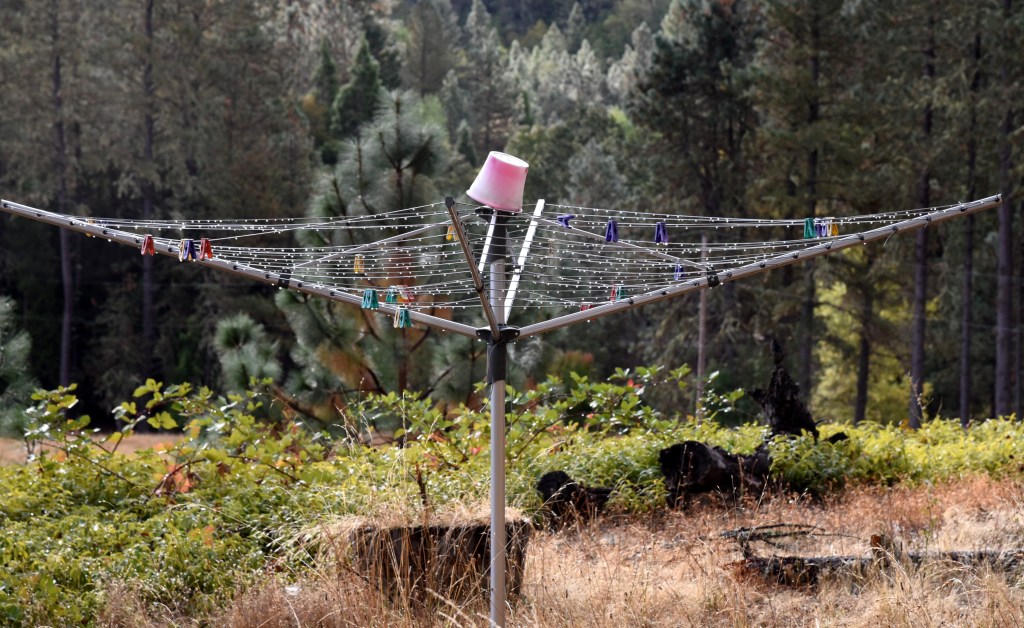
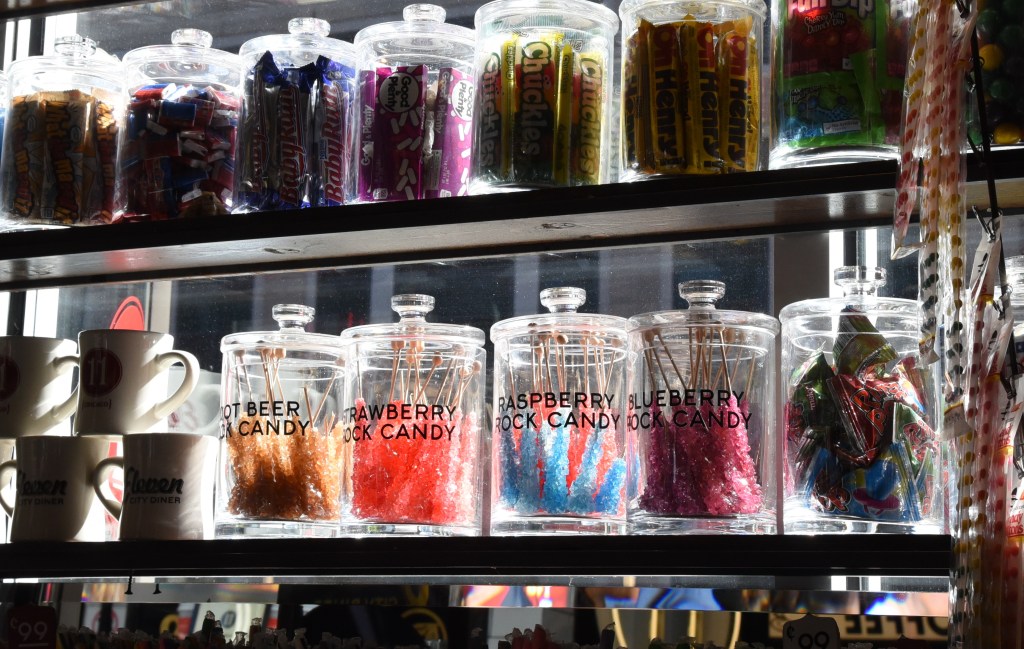
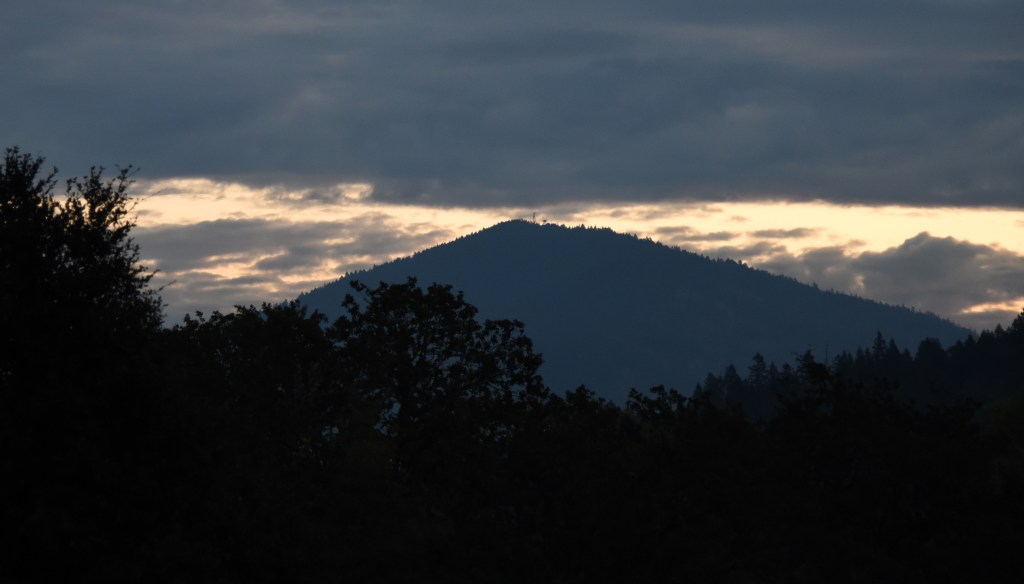
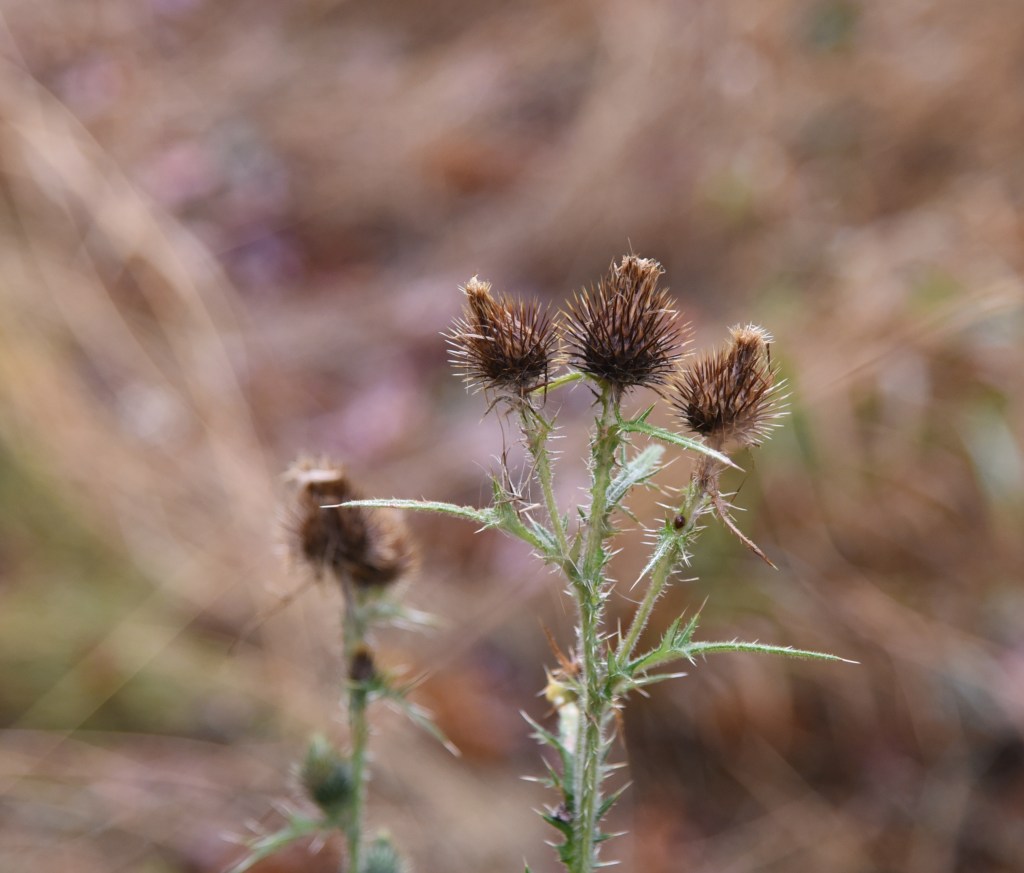
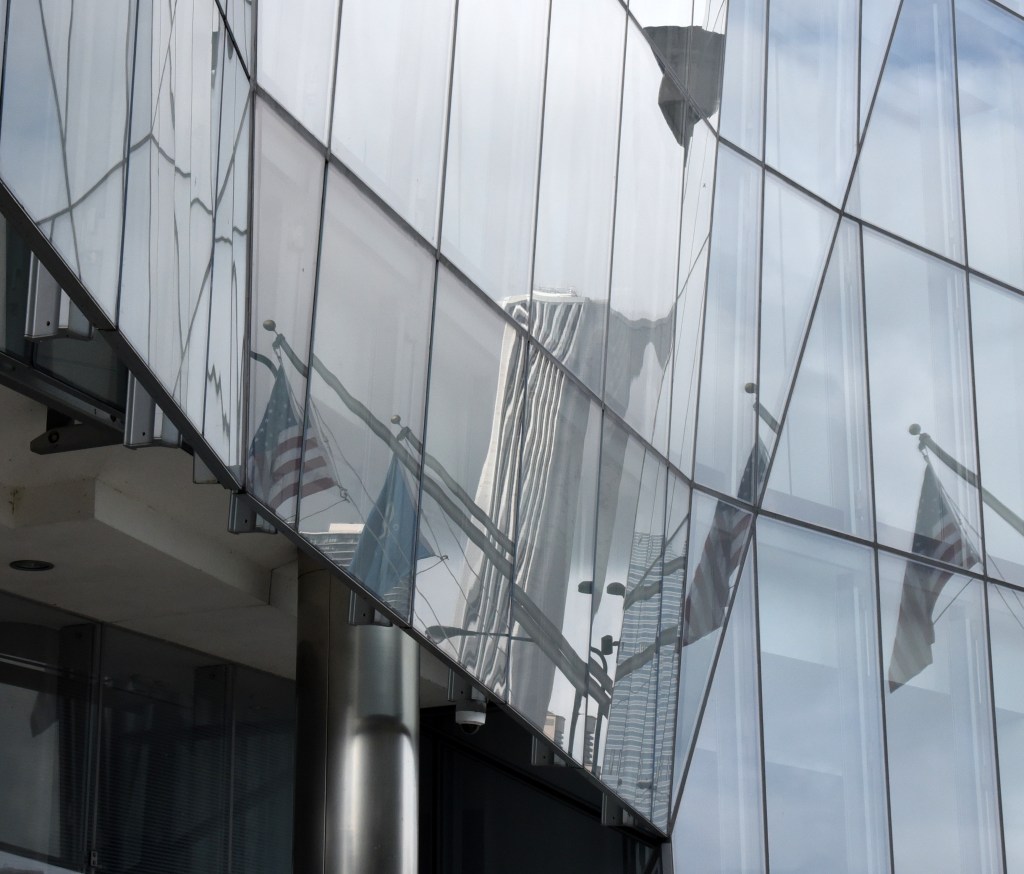
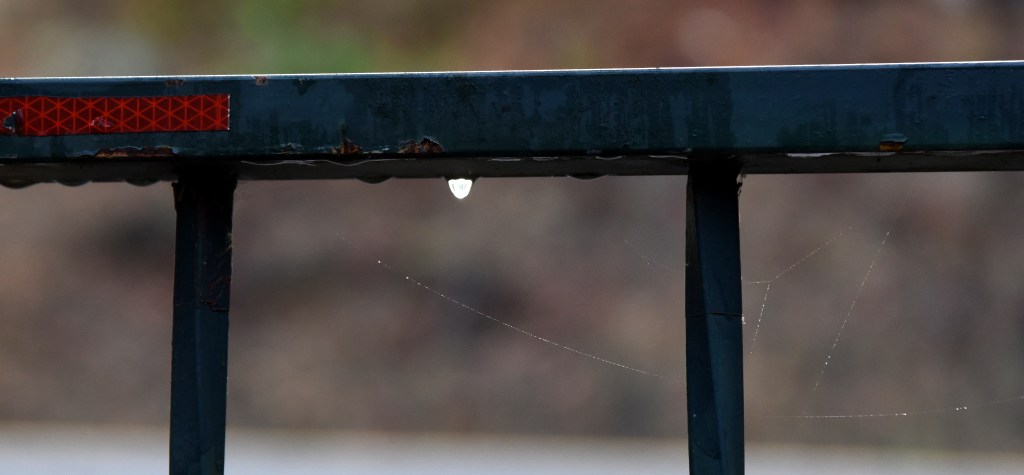
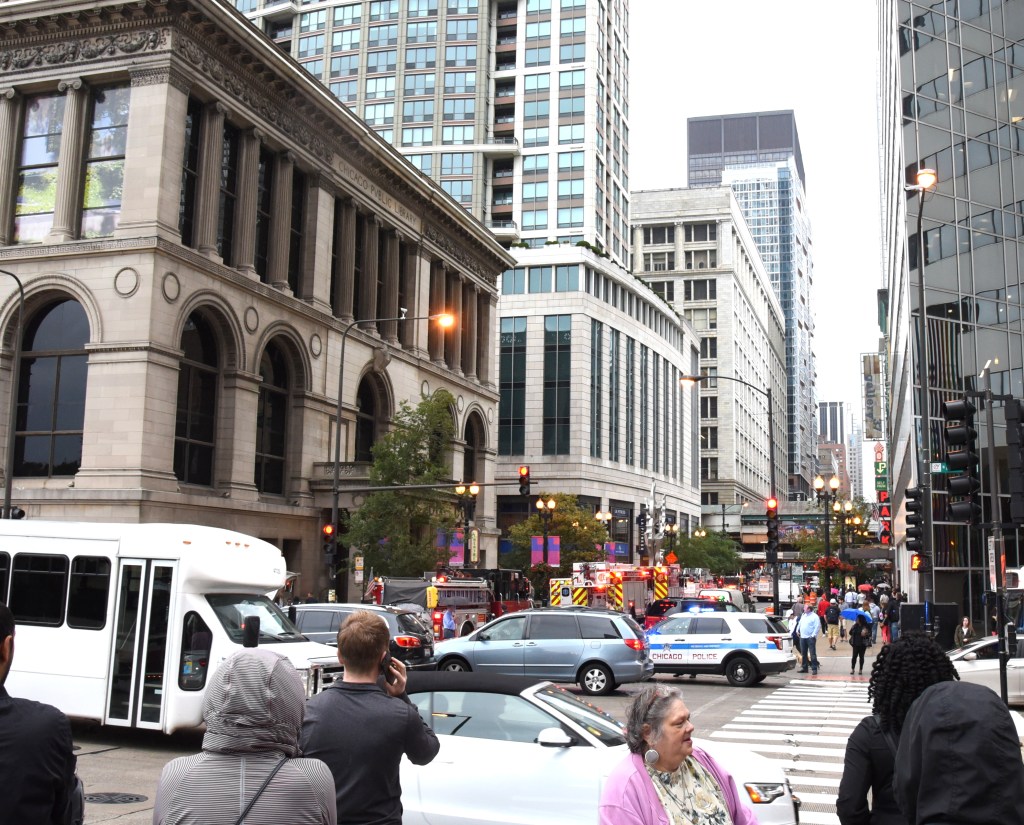
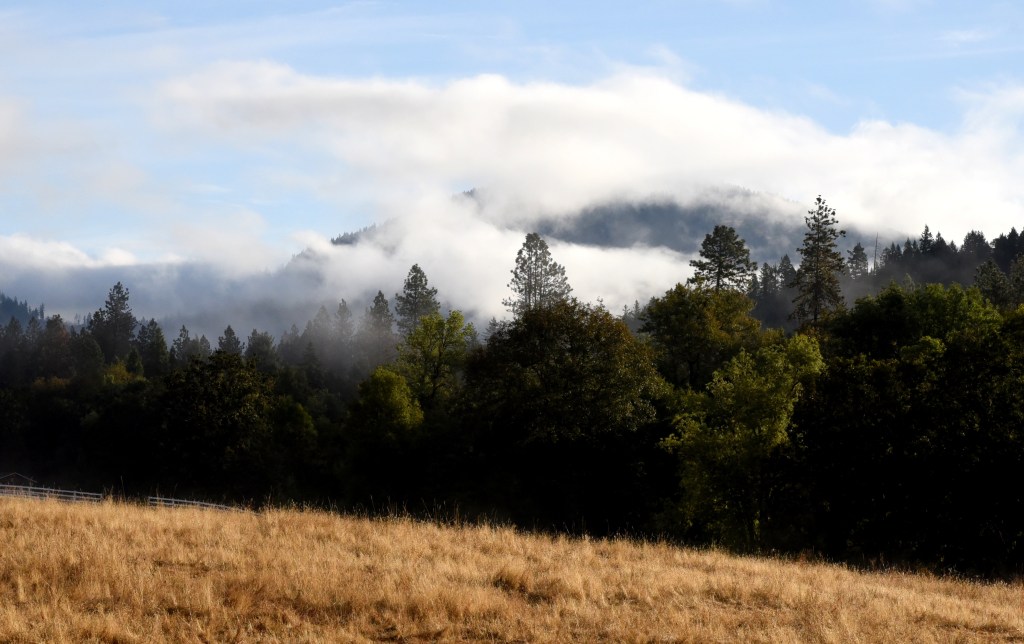
The first weekend of this month saw Jeannie and me in Chicago. Then back home in Merlin, earlier this week, half-an-inch of rain fell to break a long spell of dry weather. I went out last Thursday morning to capture some sights of the first misty morning of Autumn. The contrast between our rural home and Chicago was dramatic; to say the least! Enjoy!
(P.S. I sensed there was no need to describe each photograph in terms of which one was taken in Merlin or in Chicago!)
On Monday when Jeannie and I went to our regular session at Club Northwest, Jean to her Rock Steady class, and me to spend 45 minutes with Austin Raymond, one of the fitness coaches, he and I were speaking of health in general and veganism in particular. Austin, Jean and I are vegans.
Austin mentioned had we watched the film The Game Changers on Netflix? I replied that we had not but we were subscribers to Netflix and would watch it in the evening.
Well what an incredible film! I mean really incredible!
P.S. If you are a Netflix subscriber then you may watch it without any fuss.
(So I taken time out from book writing to publish this post; I’m over 9,000 words already written in November!)
Here’s a YouTube trailer to the film:
Have you ever seen an ox eating meat!
But apart from the solid science that we never were meat-eaters were the facts about illness being so much prevalent in those eating meat compared to vegans. That was just one aspect of the film that grabbed our attention! There were many more.
Back to fundamentals!
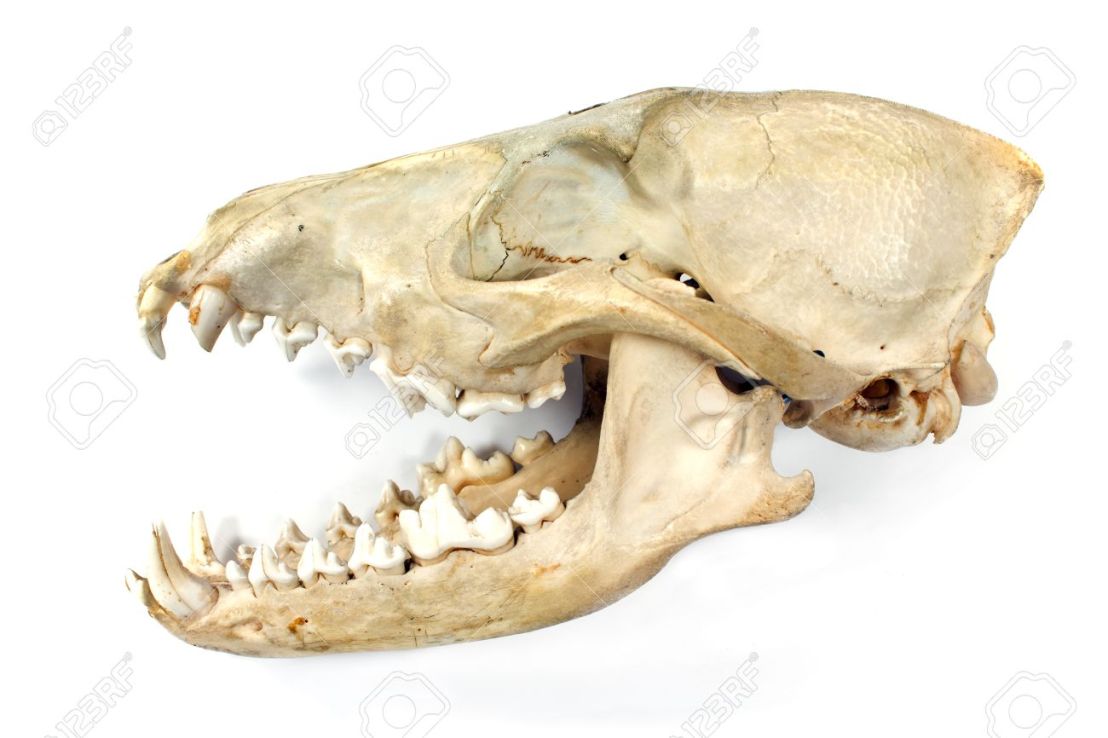
Let’s examine one fact, the jaw shape.
Here’s the jaw of a dog.
Dog skull and jaw isolated on white
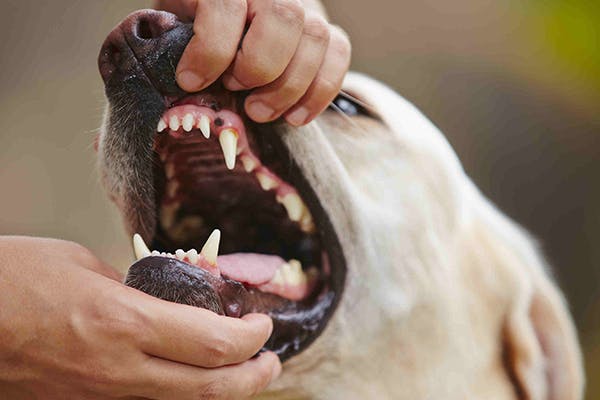
and here’s another:
That is a mouth that has evolved to tear meat from an animal.
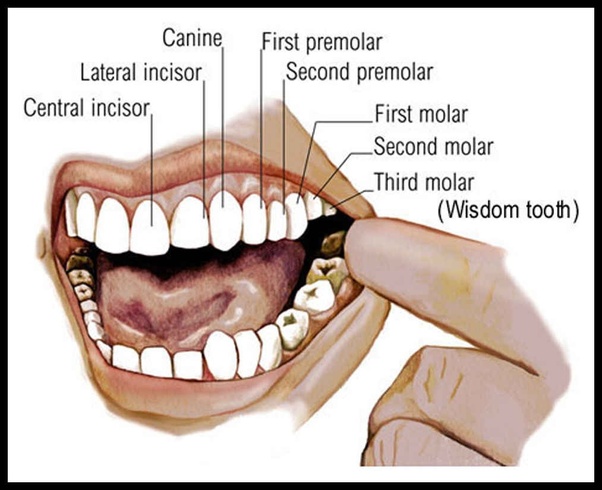
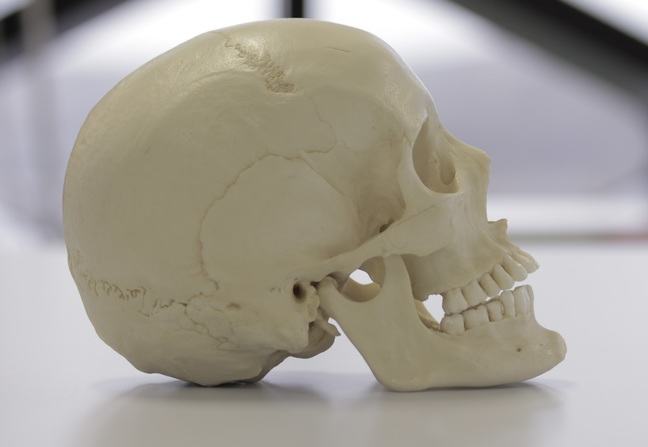
And here’s the jaw of a human:
and the picture of the whole skull.
Notice that the teeth have always been adapted to eat fruit and vegetables.
And that’s before we think how much land has been converted from natural land and forest to grazing land for cattle and sheep!
Now I don’t know how long the full documentary will remain for free on YouTube but here it is:
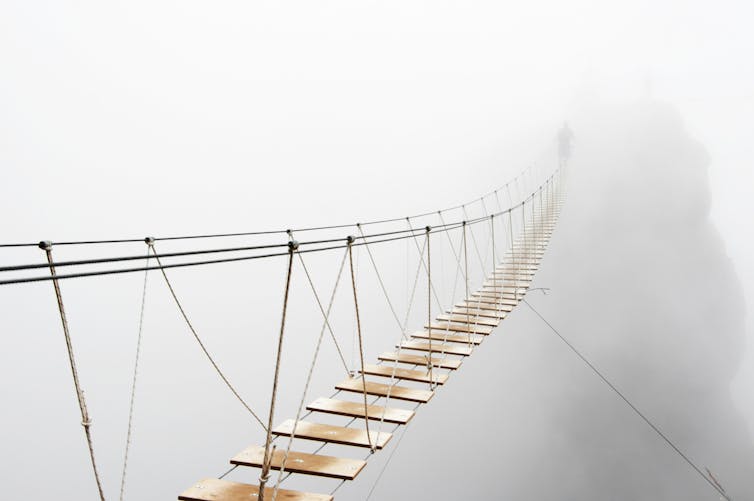
The problem with coming up to the age of 75, and aware that I am close to the average life expectancy in the US, is that one increasingly worries about stuff. Such as it seems like the world is becoming more unsettled. But then it is put down to age!
But this article does imply that it is a more unsettled world and we should take notice. Republished with permission.
ooOOoo
5 tips for surviving in an increasingly uncertain world
What does the future hold – and how will you handle what comes next? Svetlana Lukienko/Shutterstock.com
The U.S. presidential impeachment inquiry has added another layer of uncertainty to an already unstable situation that includes political polarization and the effects of climate change.
As a clinical psychologist in the Washington, D.C. area, I hear people report being stressed, anxious, worried, depressed and angry. Indeed, an American Psychological Association 2017 survey found that 63% of Americans were stressed by “the future of our nation,” and 57% by the “current political climate.”
Humans dislike uncertainty in most situations, but some deal with it better than others. Numerous studies link high intolerance of uncertainty to anxiety and anxiety disorders, obsessive-compulsive disorder, depression, PTSD and eating disorders.
While no one person can reduce the uncertainty of the current political situation, you can learn to decrease intolerance of uncertainty by implementing these scientifically sound strategies.
When unsure how to best proceed with a work assignment, you might either immediately seek help, over-research or procrastinate. As you prepare for the day, uncertainty about the weather or traffic is quickly short-circuited by checking a phone. Similarly, inquiries about family or friends’ whereabouts or emotions can be instantly gratified by texting or checking social media.
Tolerance for uncertainty is like a muscle that weakens if not used. So, work that muscle next time you face uncertainty.
Start gradually: Resist the urge to reflexively check your GPS the next time you are lost and aren’t pressured for time. Or go to a concert without Googling the band beforehand. Next, try to sit with the feelings of uncertainty for a while before you pepper your teenager with texts when he is running late. Over time, the discomfort will diminish.
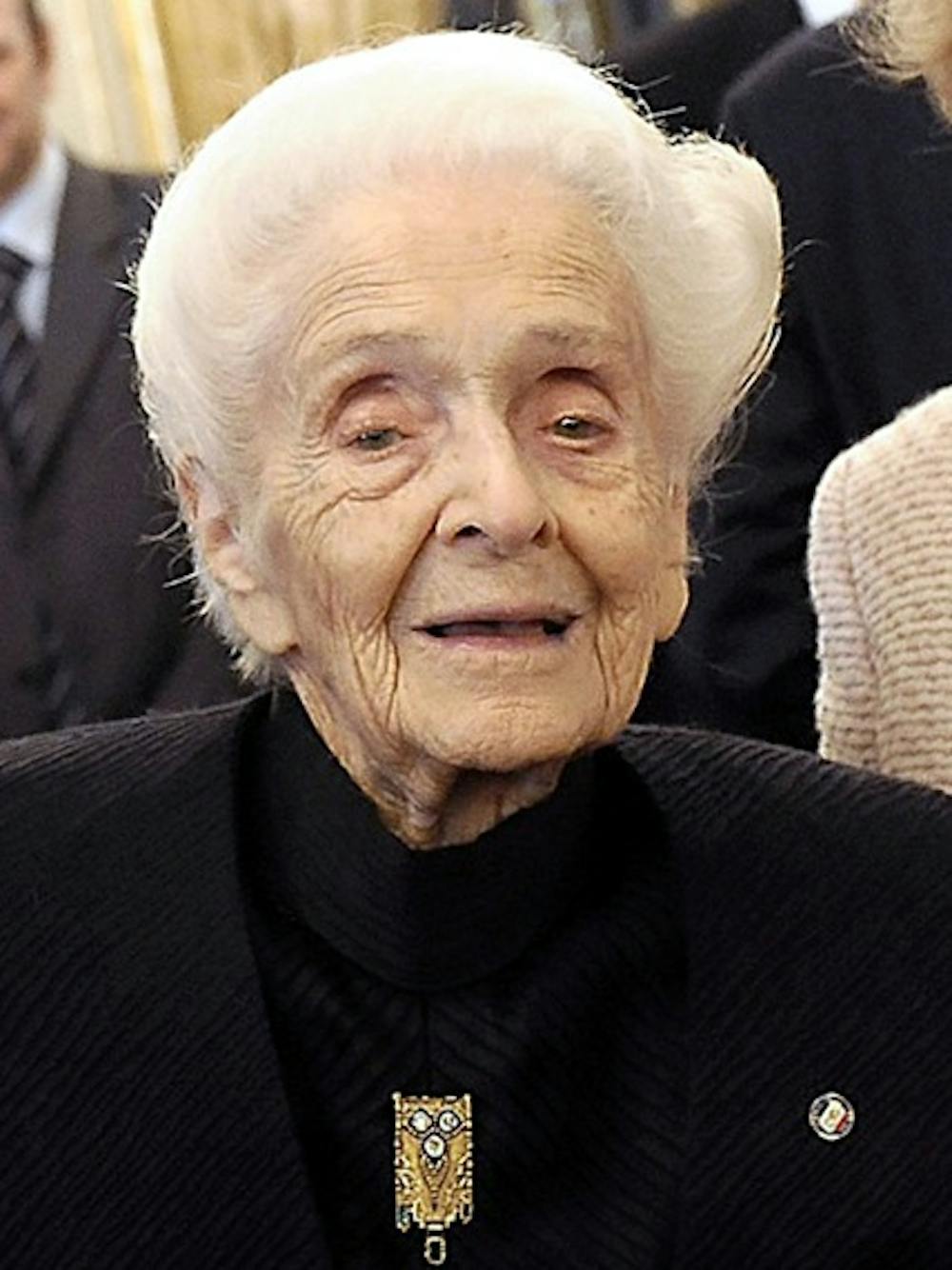
Rita Levi-Montalcini was a promising young Jewish scientist when fascists came to power in Italy and she had to go into hiding. As World War II was raging, she set up a secret lab in her parents’ bedroom, studying cell growth. She would later say that the meaning that she derived from her work helped her to deal with the evil outside and with the ultimate uncertainty of whether she would be discovered.
Focusing on what can transcend finite human existence – whether it is religion, spirituality or dedication to a cause – can decrease uncertainty-driven worry and depression.
3. Don’t underestimate your coping ability
You might hate uncertainty because you fear how you would fare if things went badly. And you might distrust your ability to cope with the negative events that life throws your way.
It turns out that humans are generally resilient, even in the face of very stressful or traumatic events. If a feared outcome materializes, chances are you will deal with it better than you could now imagine. Remember that the next time uncertainty rears its head.
4. Bolster resilience by increasing self-care
You have probably heard it many times by now: Sleep well, exercise and prioritize social connections if you want to have a long and happy life.
Possibly the best tool for coping with uncertainty is making sure that you have an active and meaningful social life. Loneliness fundamentally undermines a person’s sense of safety
and makes it very hard to deal with the unpredictable nature of life.
In spite of civilization’s great progress, the fantasy of humankind’s absolute control over its environment and fate is still just that – a fantasy. So, I say to embrace the reality of uncertainty and enjoy the ride.
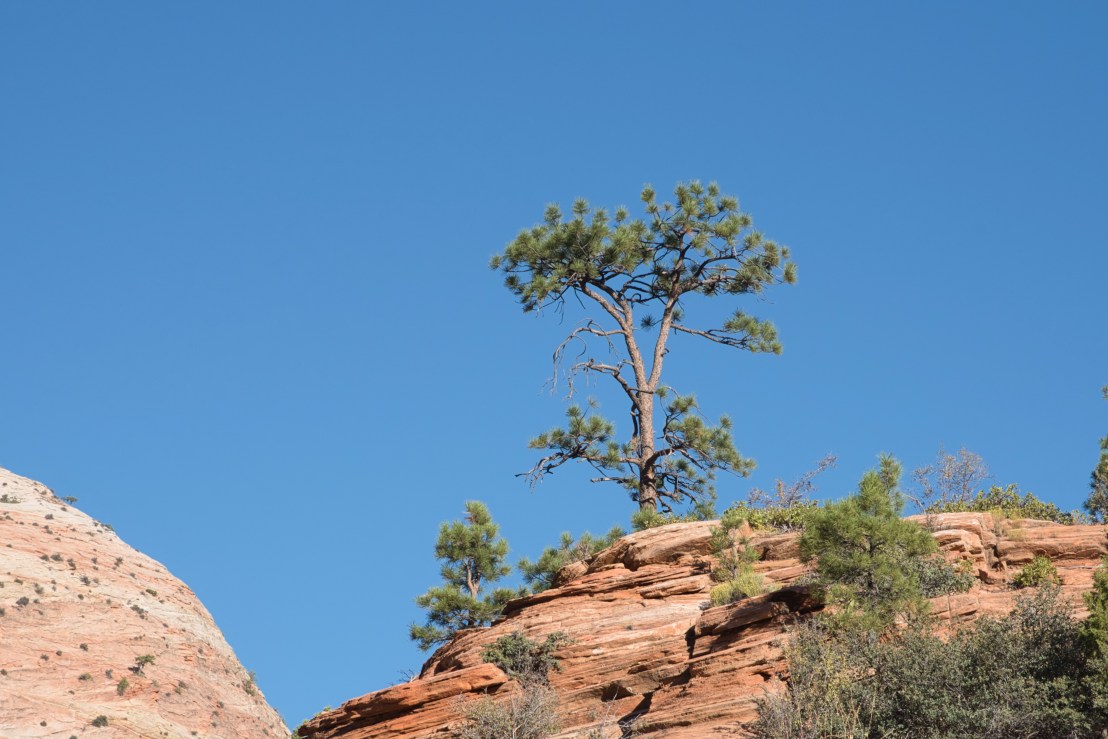
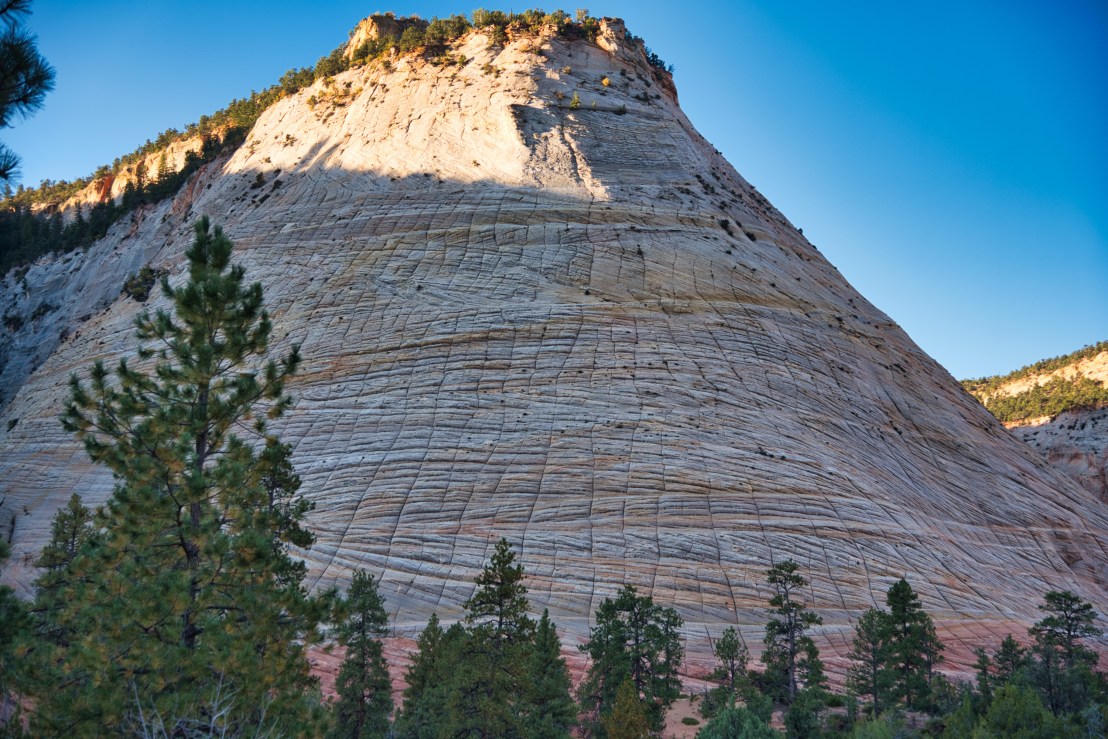
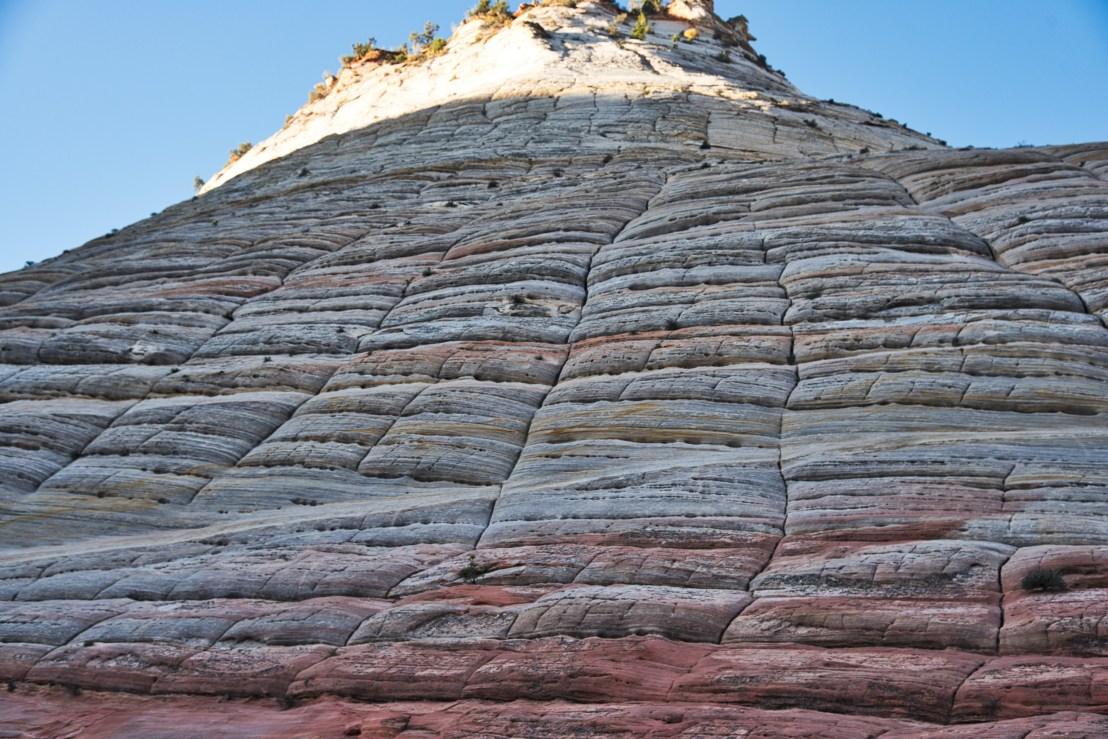
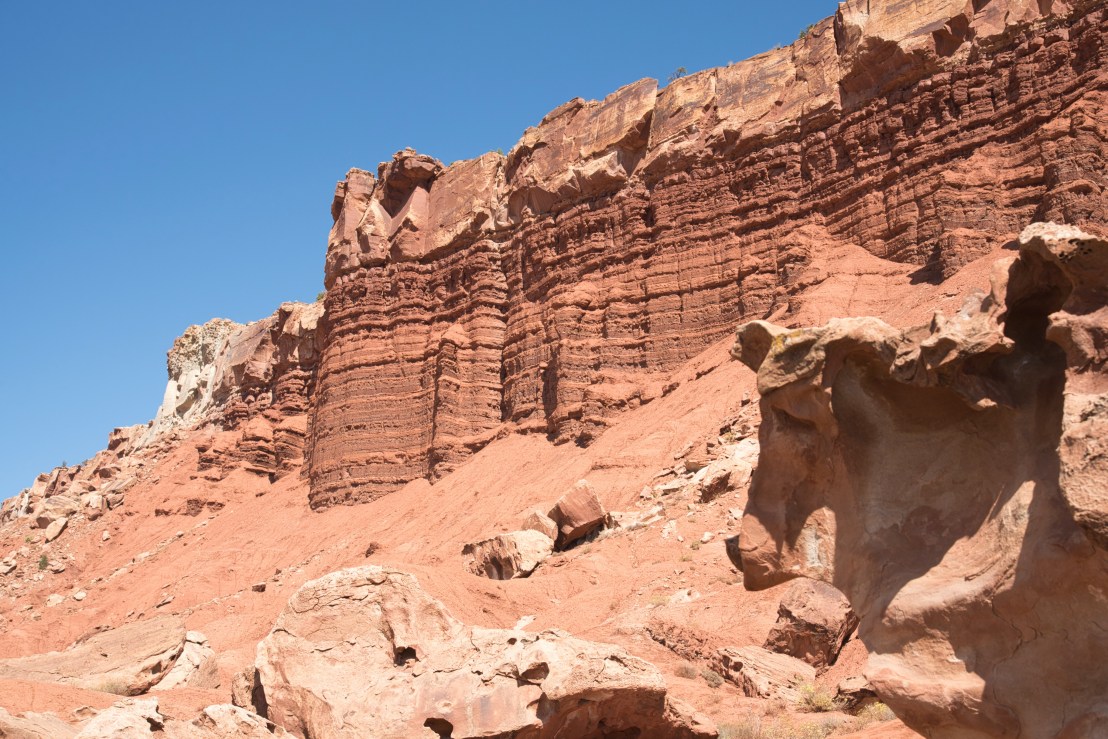
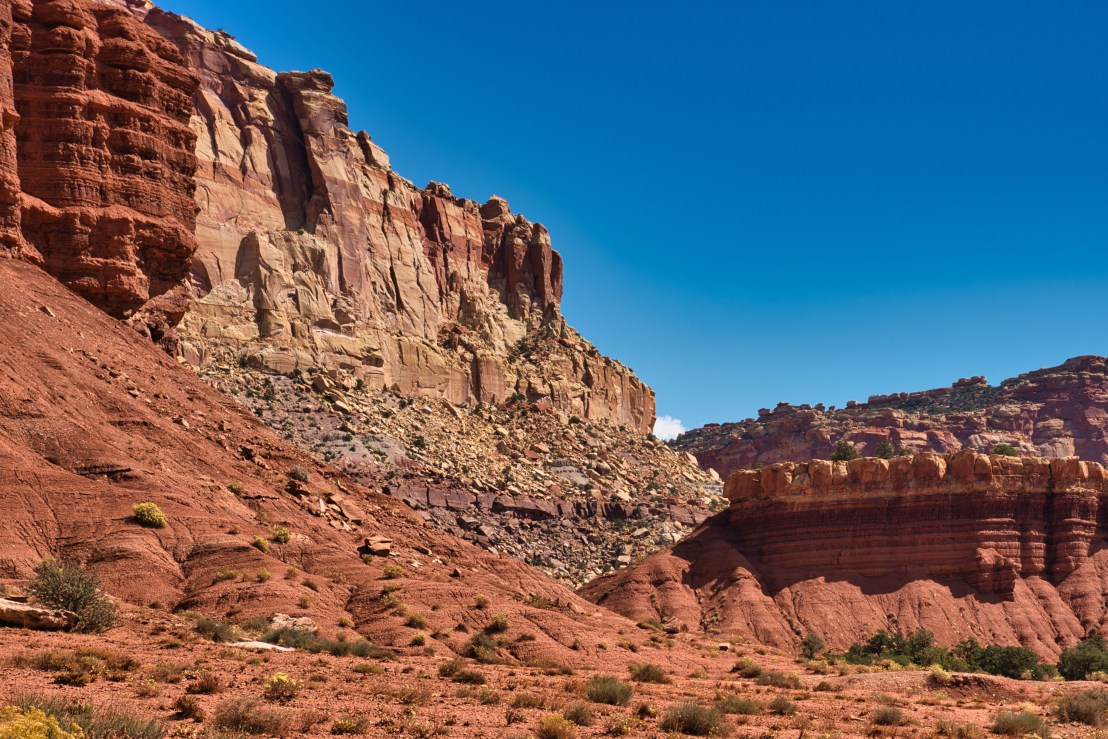
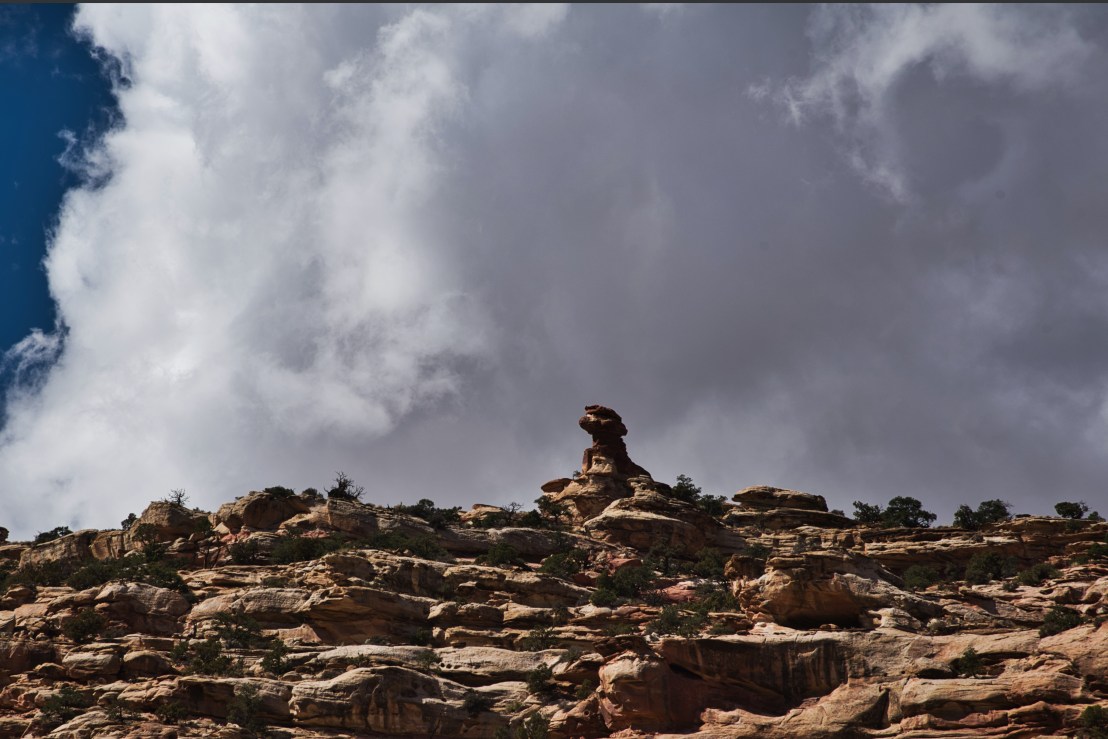
The picture below is primarily of the different rock type that is laid crossways on the top of the ridge. It was the closest that we could get without a major climb.
oooo
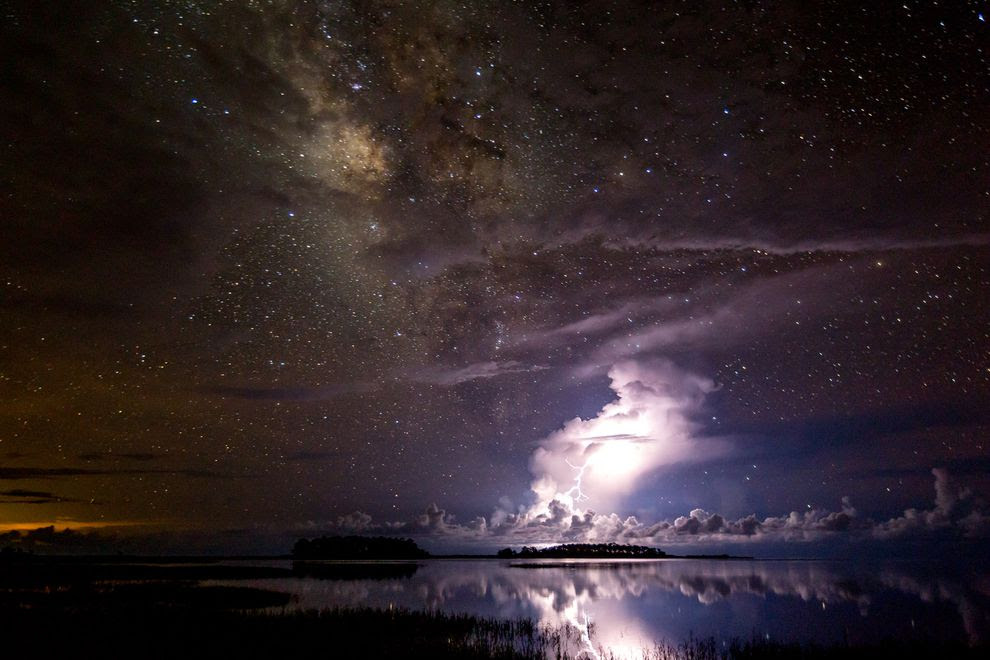
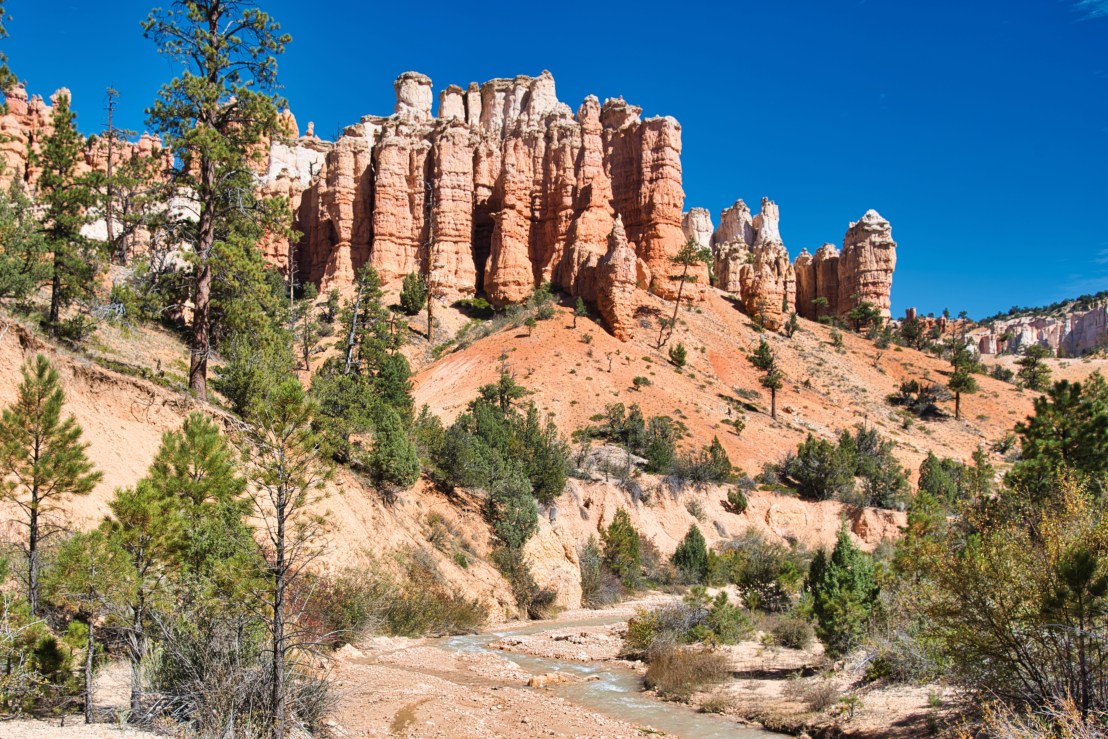
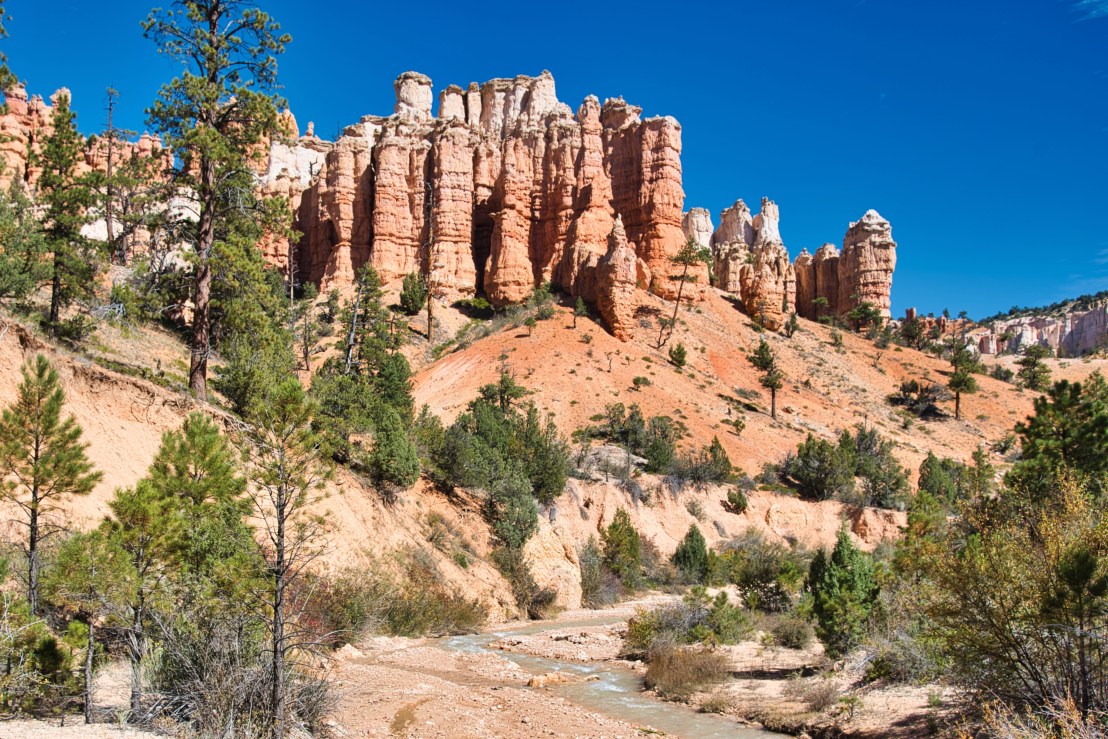
I think this is Zion National Park. The pillars above and the stream below.
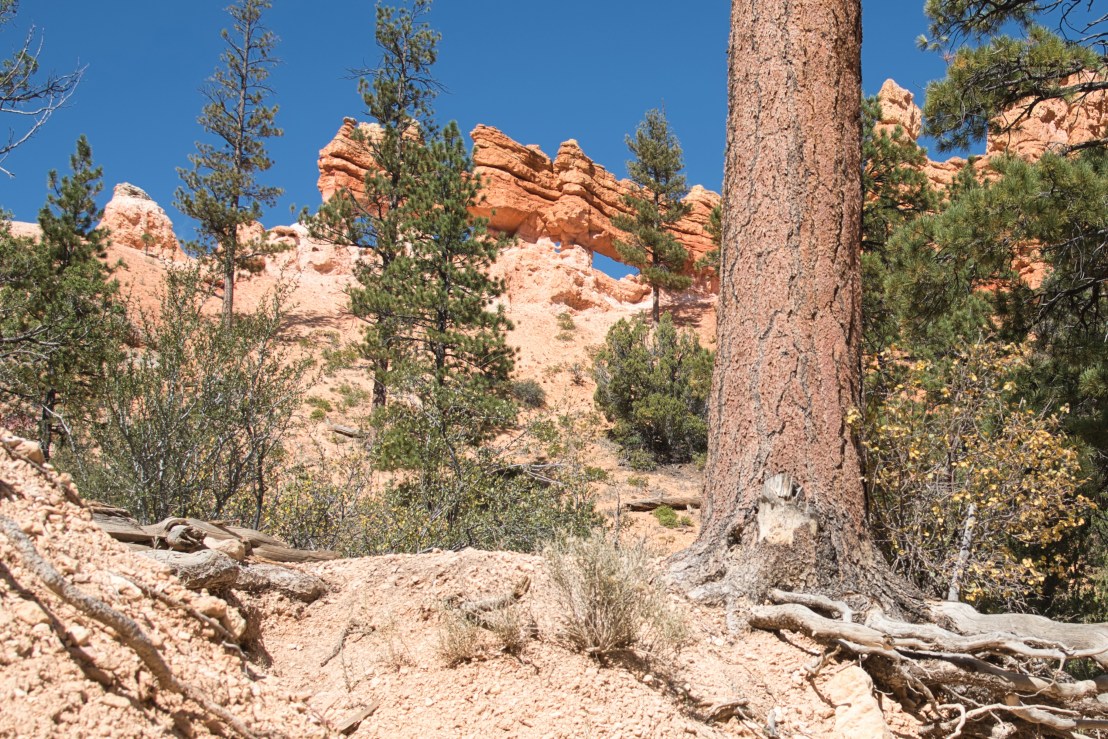
I’m sure that there’s only so much you can take of our trip to Utah and back. So I have selected the more interesting photographs and will share them with you today and the next two days.
Saturday, 28th September
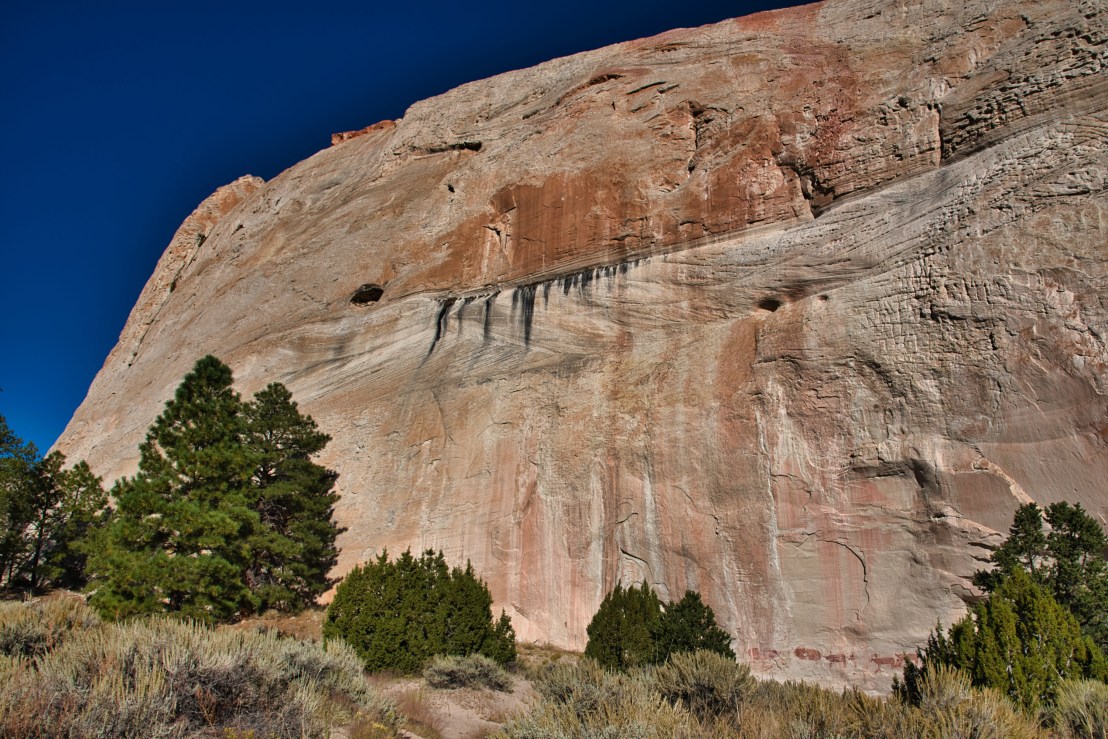
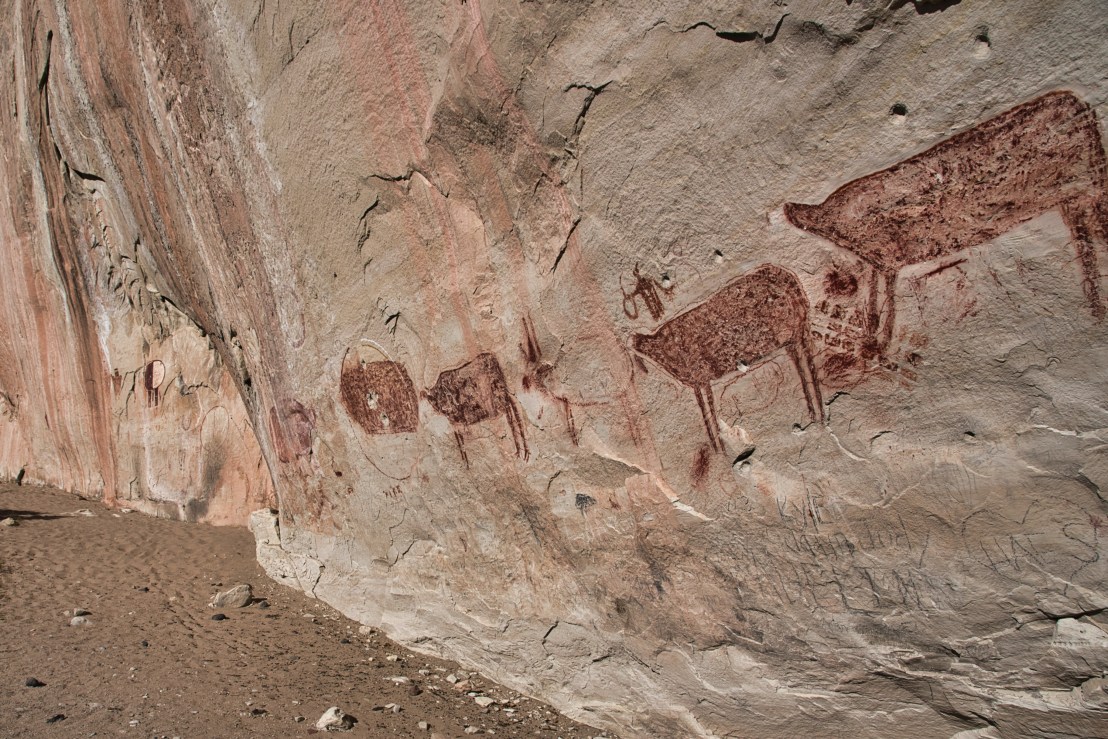
Vance, of The Flute Shop, gave us directions to some ancient petroglyphs that were painted on a rock wall quite close to where we were staying.
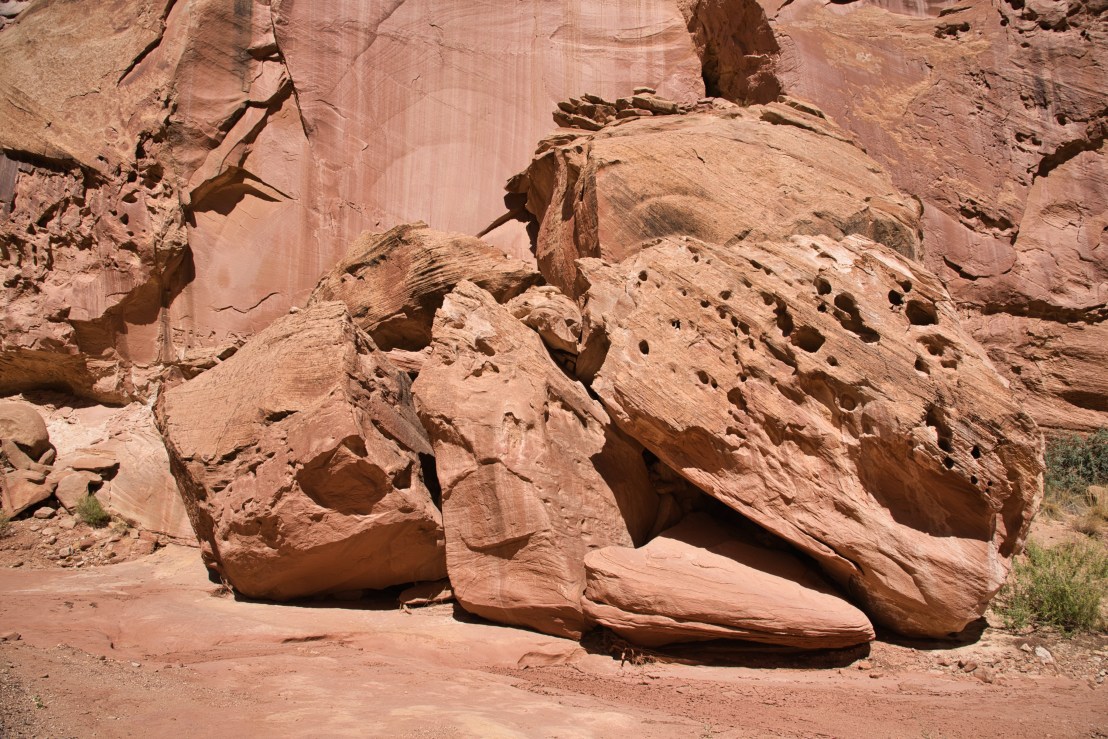
First, that rock wall. The petroglyphs can be seen at the bottom of the rock face.
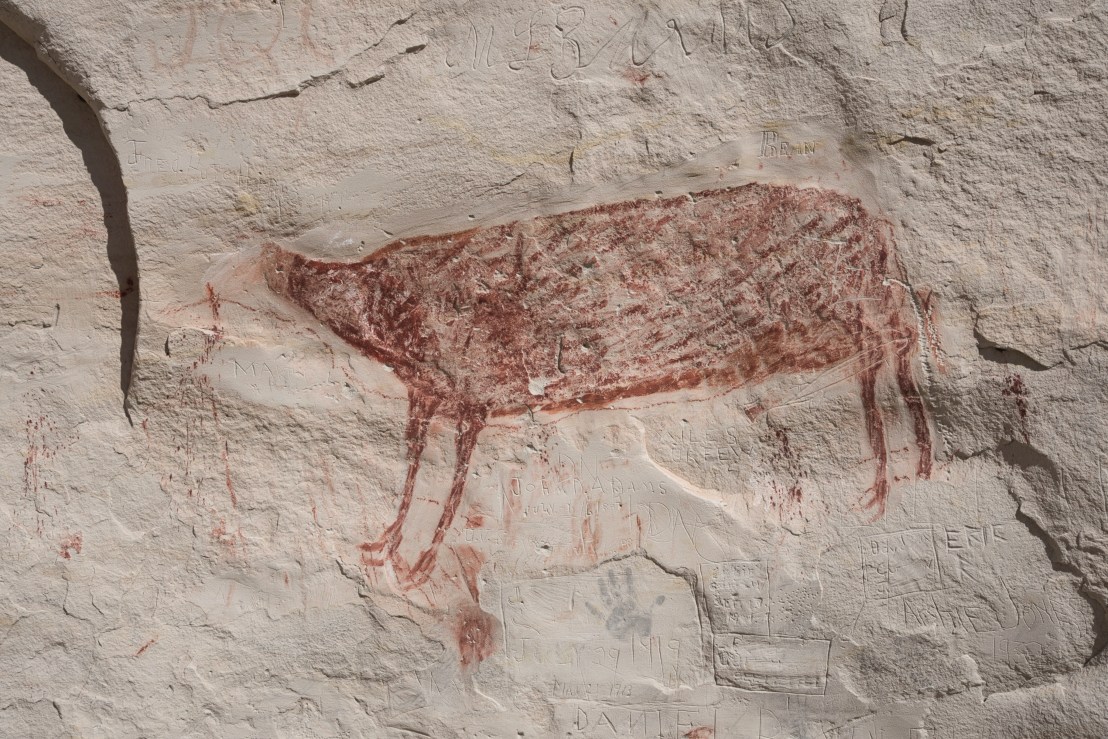
Then a close up. It was amazing that although there was a great deal of name carving close by there was none on the petroglyph images themselves.
They were about 700 years old.
Sunday, 29th September
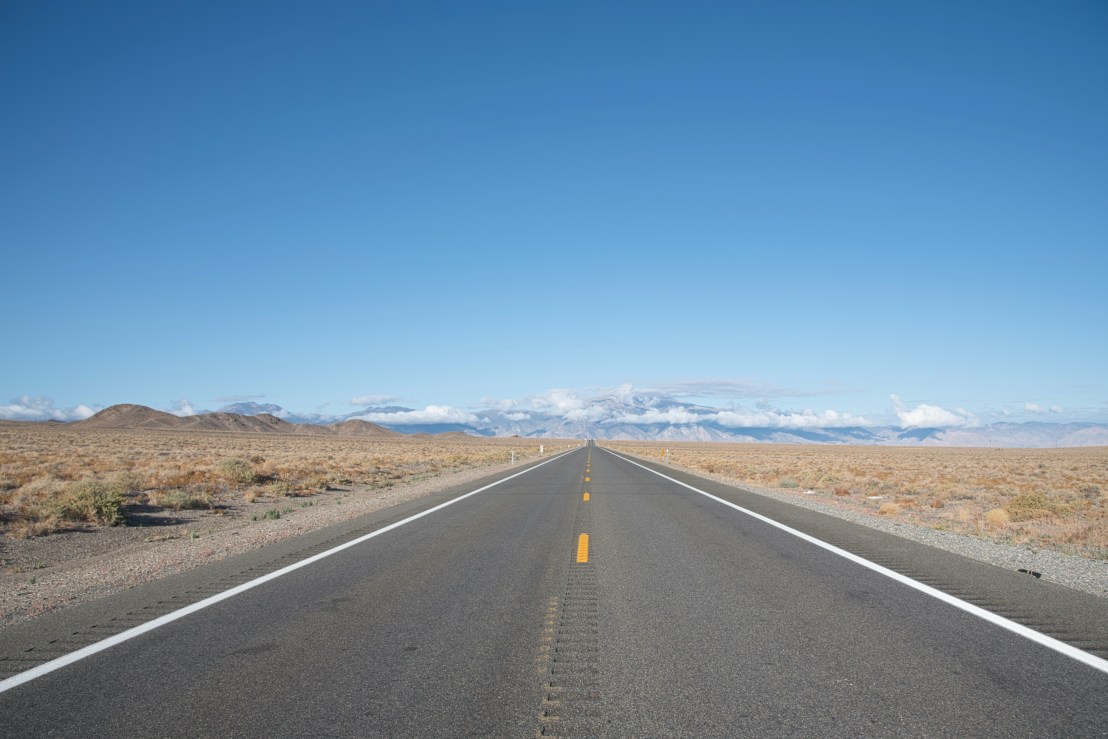
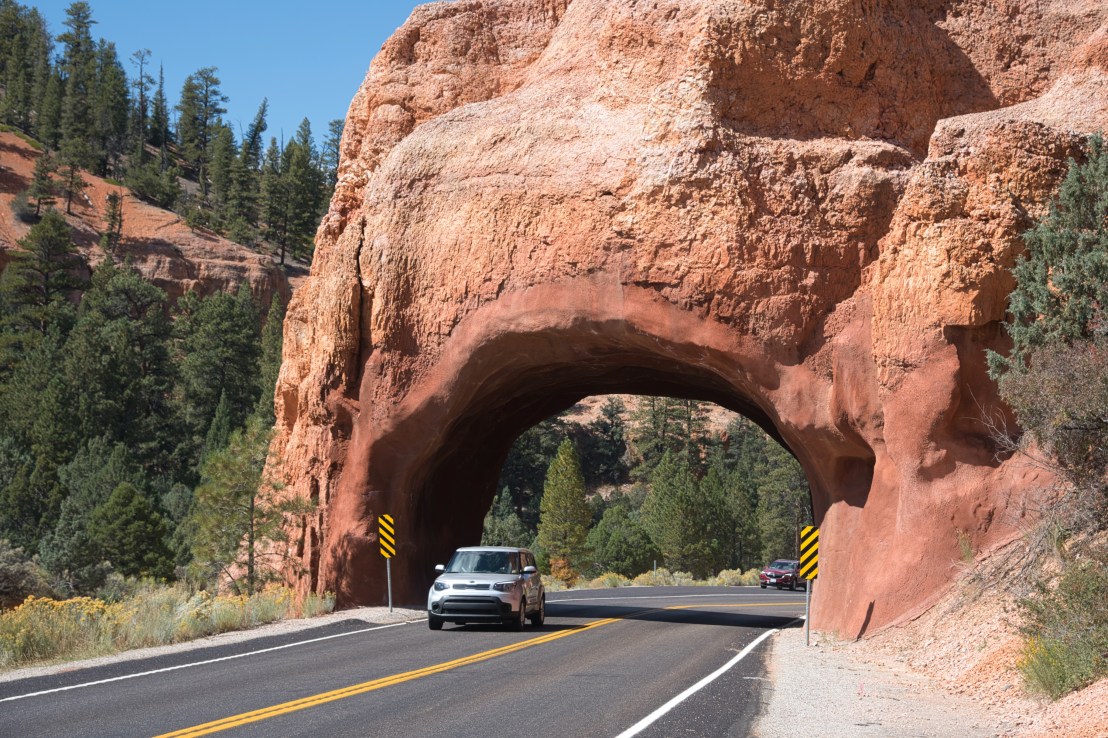
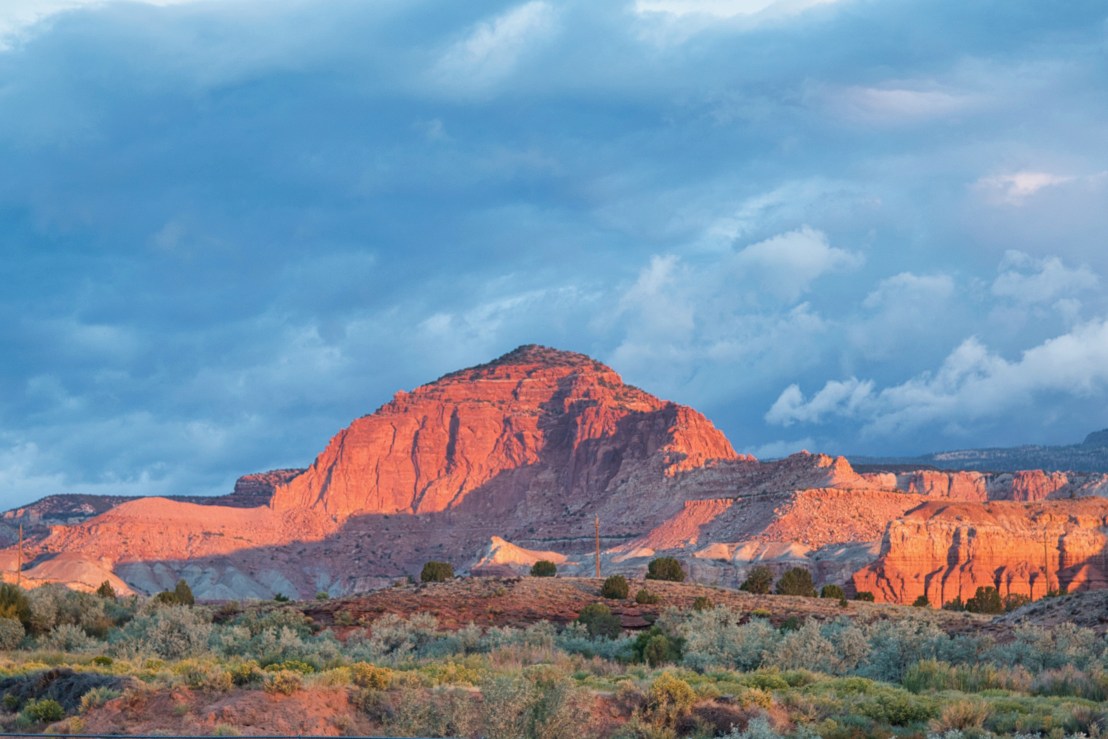
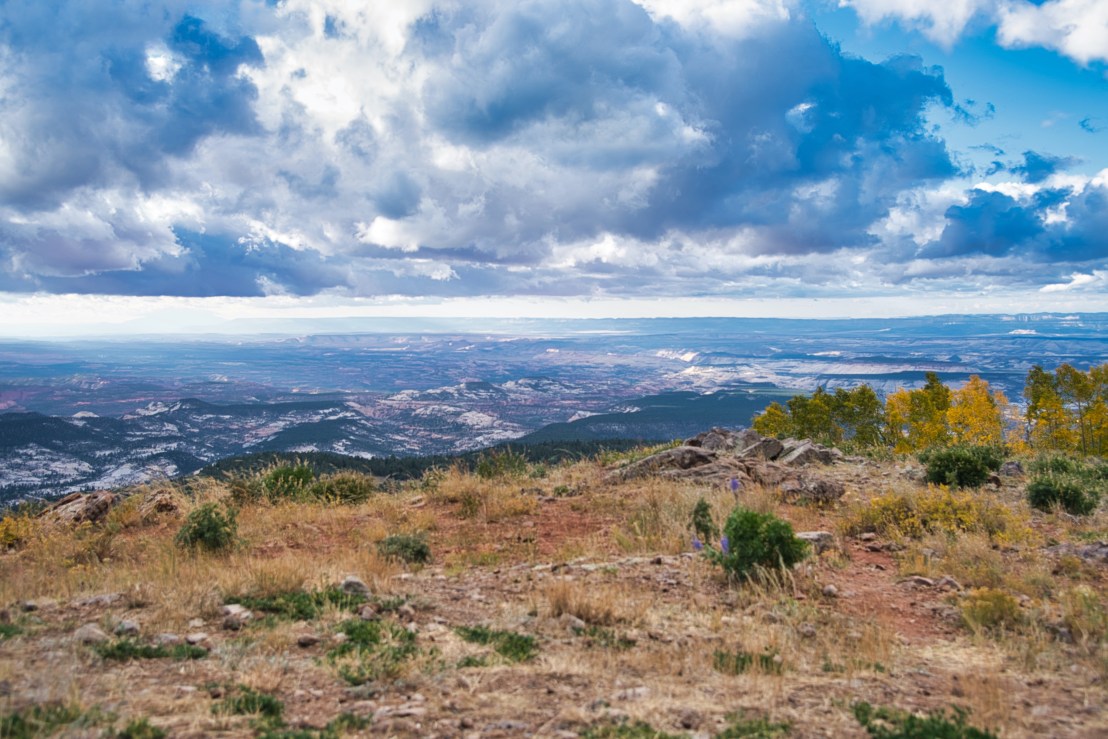
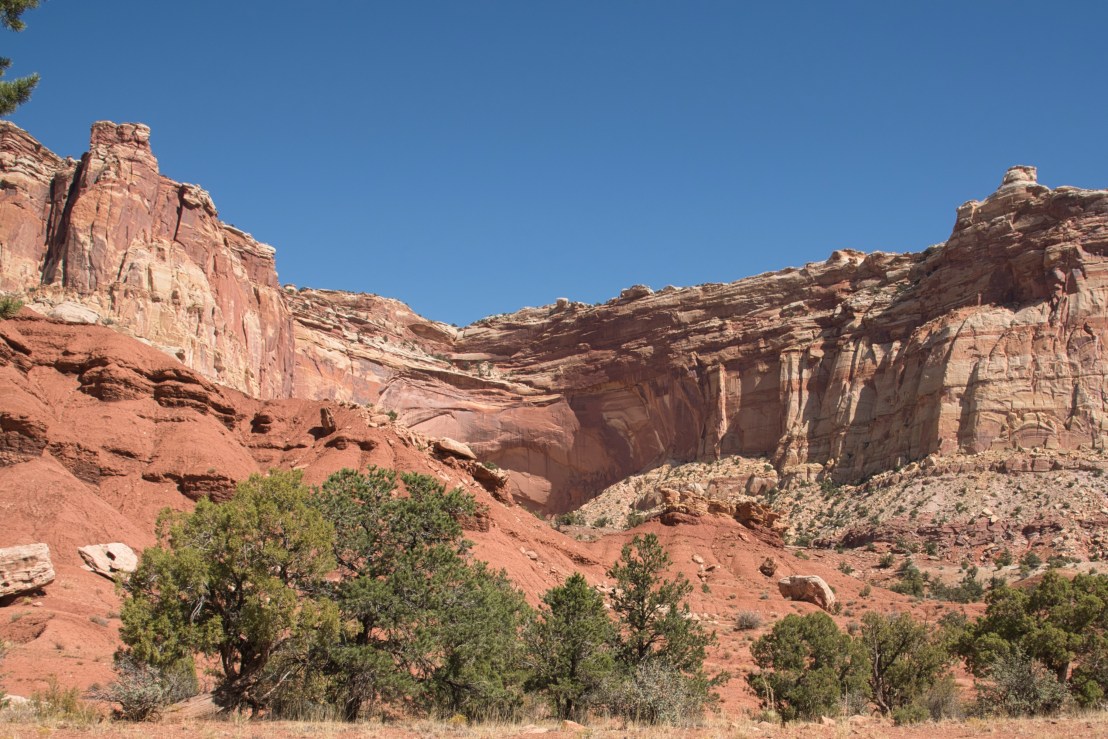
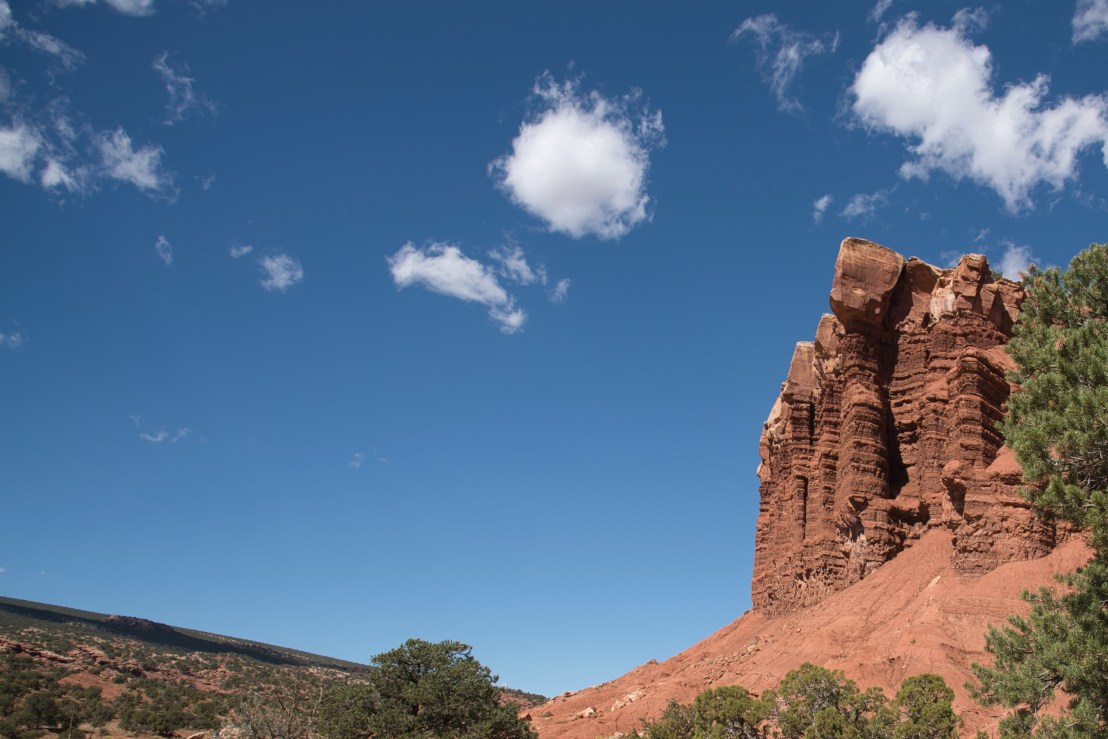
Today it was the long drive down to Kanab, about 200 miles, but we stopped frequently to take photographs of the never-ending marvels that we saw.
We have had a taste of this a week-and-a-half ago.
We were truly alone when we went to Utah.
But then again, one of the privileges of being on 13 acres, 13 very rural acres, here in Southern Oregon is that being alone is not that far away!
I don’t want to underplay the importance of this posting, republished from The Conversation website (with permission), because we live in so busy times.
Written by three professors, it’s a very wise and profound article.
ooOOoo
Spending time alone in nature is good for your mental and emotional health
Associate Professor of Outdoor Education, Montreat College
Today Americans live in a world that thrives on being busy, productive and overscheduled. Further, they have developed the technological means to be constantly connected to others and to vast options for information and entertainment through social media. For many, smartphones demand their attention day and night with constant notifications.
As a result, naturally occurring periods of solitude and silence that were once commonplace have been squeezed out of their lives. Music, reality TV shows, YouTube, video games, tweeting and texting are displacing quiet and solitary spaces. Silence and solitude are increasingly viewed as “dead” or “unproductive” time, and being alone makes many Americans uncomfortable and anxious.
We study and teach outdoor education and related fields at several colleges and organizations in North Carolina, through and with other scholars at 2nd Nature TREC, LLC, a training, research, education and consulting firm. We became interested in the broader implications of alone time after studying intentionally designed solitude experiences during wilderness programs, such as those run by Outward Bound. Our findings reveal that time alone in nature is beneficial for many participants in a variety of ways, and is something they wish they had more of in their daily life.
On an average day in 2015, individuals aged 15 and over spent more than half of their leisure time watching TV. Bureau of Labor Statistics, Americans Time Use Survey
Reflection and challenge
We have conducted research for almost two decades on Outward Bound and undergraduate wilderness programs at Montreat College in North Carolina and Wheaton College in Illinois. For each program, we studied participants’ experiences using multiple methods, including written surveys, focus group interviews, one-on-one interviews and field notes. In some cases, we asked subjects years later to look back and reflect on how the programs had affected them. Among other questions, our research looked at participant perceptions of the value of solo time outdoors.
Our studies showed that people who took part in these programs benefited both from the outdoor settings and from the experience of being alone. These findings build on previous research that has clearly demonstrated the value of spending time in nature.
Scholars in fields including wilderness therapy and environmental psychology have shown that time outdoors benefits our lives in many ways. It has a therapeutic effect, relieves stress and restores attention. Alone time in nature can have a calming effect on the mind because it occurs in beautiful, natural and inspirational settings.
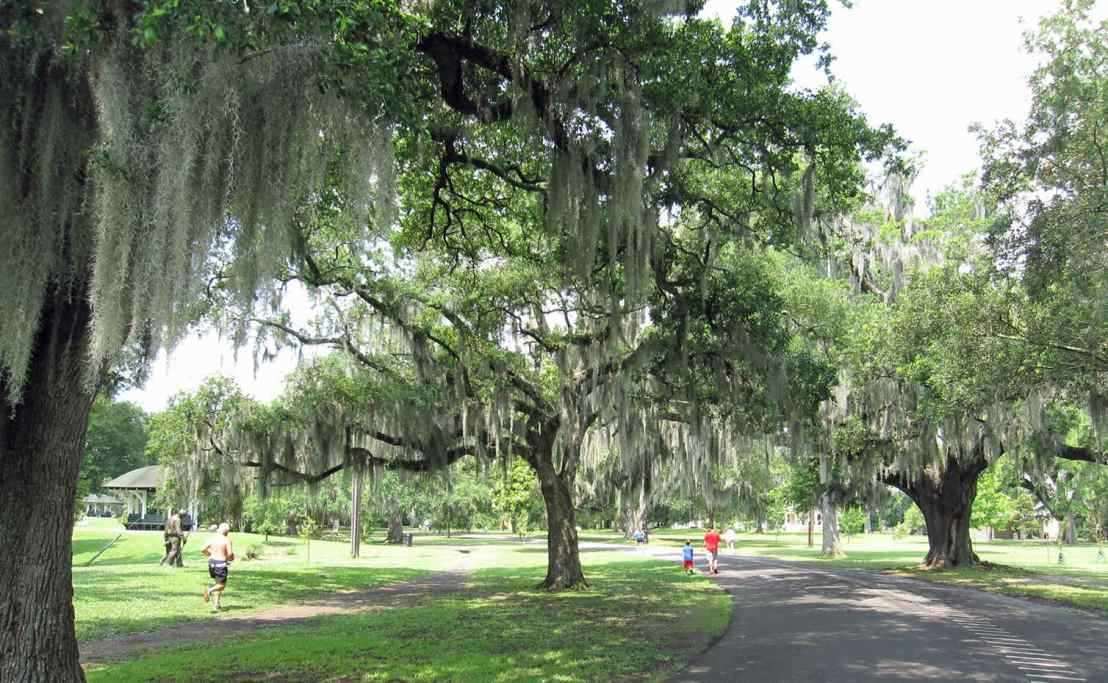
Spending time in city parks like Audubon Park in New Orleans provides some of the same benefits as time in wilderness areas, including reduced stress levels and increased energy levels. InSapphoWeTrust, CC BY-SA
Nature also provides challenges that spur individuals to creative problem-solving and increased self-confidence. For example, some find that being alone in the outdoors, particularly at night, is a challenging situation. Mental, physical and emotional challenges in moderation encourage personal growth that is manifested in an increased comfort with one’s self in the absence of others.
Being alone also can have great value. It can allow issues to surface that people spend energy holding at bay, and offer an opportunity to clarify thoughts, hopes, dreams and desires. It provides time and space for people to step back, evaluate their lives and learn from their experiences. Spending time this way prepares them to re-engage with their community relationships and full work schedules.
Putting it together: The outdoor solo
Participants in programmed wilderness expeditions often experience a component known as “Solo,” a time of intentional solitude lasting approximately 24-72 hours. Extensive research has been conducted on solitude in the outdoors because many wilderness education programs have embraced the educational value of solitude and silence.
Solo often emerges as one of the most significant parts of wilderness programs, for a variety of reasons. Alone time creates a contrasting experience to normal living that enriches people mentally, physically and emotionally. As they examine themselves in relation to nature, others, and in some cases, God, people become more attuned to the important matters in their lives and in the world of which they are part.
Solo, an integral part of Outward Bound wilderness trips, can last from a few hours to 72 hours. The experience is designed to give participants an opportunity to reflect on their own thoughts and critically analyze their actions and decisions.
Solitary reflection enhances recognition and appreciation of key personal relationships, encourages reorganization of life priorities, and increases appreciation for alone time, silence, and reflection. People learn lessons they want to transfer to their daily living, because they have had the opportunity to clarify, evaluate and redirect themselves by setting goals for the future.
For some participants, time alone outdoors provides opportunity to consider the spiritual and/or religious dimension of life. Reflective time, especially in nature, often enhances spiritual awareness and makes people feel closer to God. Further, it encourages their increased faith and trust in God. This often occurs through providing ample opportunities for prayer, meditation, fasting, Scripture-reading, journaling and reflection time.
Retreating to lead
As Thomas Carlyle has written, “In (solitary) silence, great things fashion themselves together.” Whether these escapes are called alone time, solitude or Solo, it seems clear that humans experience many benefits when they retreat from the “rat race” to a place apart and gather their thoughts in quietness.
In order to live and lead effectively, it is important to be intentional about taking the time for solitary reflection. Otherwise, gaps in schedules will always fill up, and even people with the best intentions may never fully realize the life-giving value of being alone.
ooOOoo
I would modify that advice from Thomas Carlyle and that is to include a dog.
For in my experience when one is in the mood for a bit of solitary reflection your dog seems to sense it as well.



















 Learning from Dogs
