Imagine a healthy forest, home to a variety of species: Birds are flitting between tree branches, salamanders are sliding through leaf litter, and wolves are tracking the scent of deer through the understory. Each of these animals has a role in the forest, and most ecologists would argue that losing any one of these species would be bad for the ecosystem as a whole.
As an ecologist, I’m curious about what these changes mean for ecosystems – can these newly arrived species functionally replace the species that used to be there? I studied this process in eastern North America, where some top predators have disappeared and a new predator has arrived.
A primer on predators
Wolves used to roam across every state east of the Mississippi River. But as the land was developed, many people viewed wolves as threats and wiped most of them out. These days, a mix of gray wolves and eastern wolves persist in Canada and around the Great Lakes, which I collectively refer to as northeastern wolves. There’s also a small population of red wolves – a distinct and smaller species of wolf – on the coast of North Carolina.
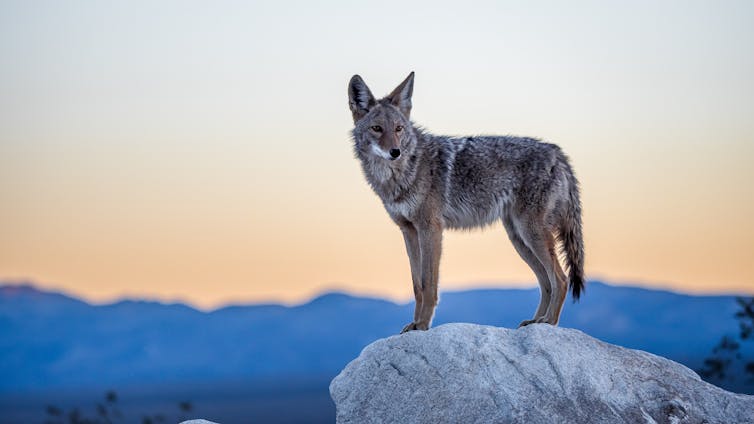
The disappearance of wolves may have given coyotes the opportunity they needed. Starting around 1900, coyotes began expanding their range east and have now colonized nearly all of eastern North America.
Coyotes colonized most of eastern North America in the wake of wolf extirpation. Jensen 2025, CC BY
So are coyotes the new wolf? Can they fill the same ecological role that wolves used to? These are the questions I set out to answer in my paper published in August 2025 in the Stacks Journal. I focused on their role as predators – what they eat and how often they kill big herbivores, such as deer and moose.
What’s on the menu?
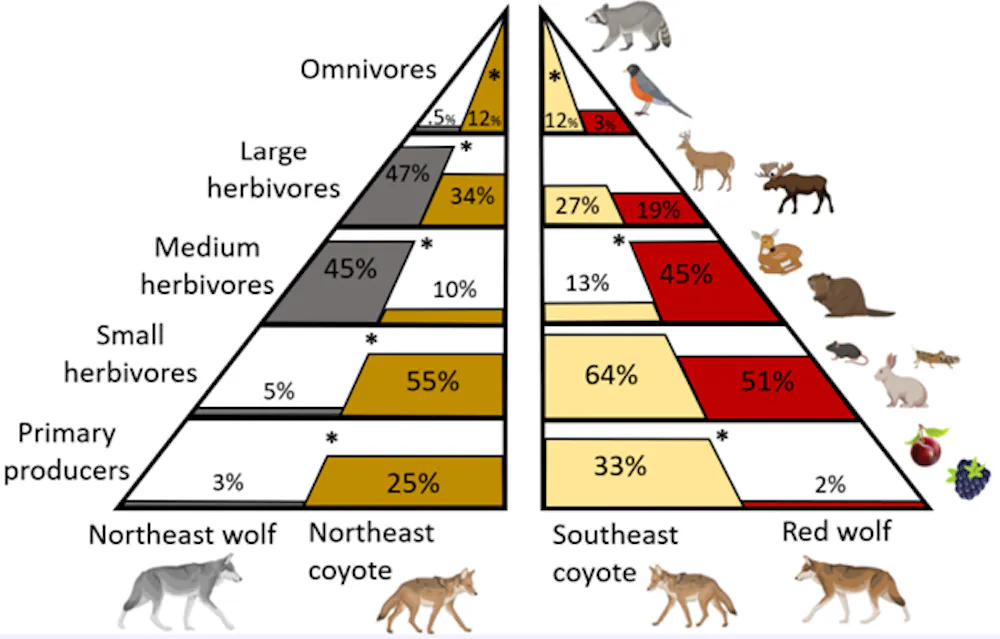
I started by reviewing every paper I could find on wolf or coyote diets, recording what percent of scat or stomach samples contained common food items such as deer, rabbits, small rodents or fruit. I compared northeastern wolf diets to northeastern coyote diets and red wolf diets to southeastern coyote diets.
I found two striking differences between wolf and coyote diets. First, wolves ate more medium-sized herbivores. In particular, they ate more beavers in the northeast and more nutria in the southeast. Both of these species are large aquatic rodents that influence ecosystems – beaver dam building changes how water moves, sometimes undesirably for land owners, while nutria are non-native and damaging to wetlands.
Second, wolves have narrower diets overall. They eat less fruit and fewer omnivores such as birds, raccoons and foxes, compared to coyotes. This means that coyotes are likely performing some ecological roles that wolves never did, such as dispersing fruit seeds in their poop and suppressing populations of smaller predators.
Grouping food items by size and trophic level revealed some clear differences between wolf and coyote diets. Percents are the percent of samples containing each level, and stars indicate a statistically significant difference. Alex Jensen, CC BY
Killing deer and moose
But diet studies alone cannot tell the whole story – it’s usually impossible to tell whether coyotes killed or scavenged the deer they ate, for example. So I also reviewed every study I could find on ungulate mortality – these are studies that tag deer or moose, track their survival, and attribute a cause of death if they die.
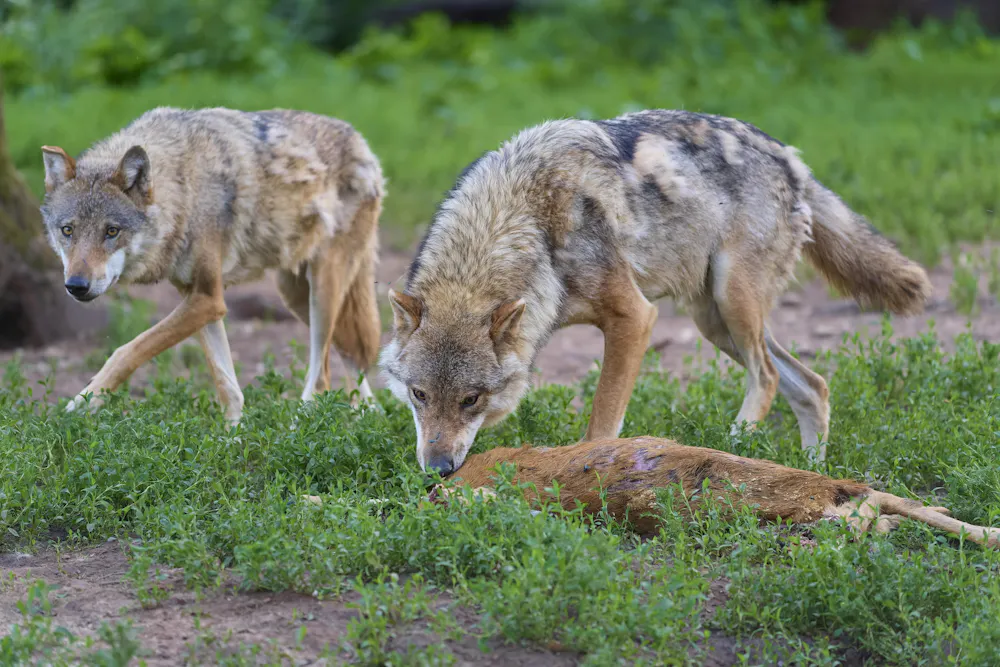
These studies revealed other important differences between wolves and coyotes. For example, wolves were responsible for a substantial percentage of moose deaths – 19% of adults and 40% of calves – while none of the studies documented coyotes killing moose. This means that all, or nearly all, of moose in coyote diets is scavenged.
Coyotes are adept predators of deer, however. In the northeast, they killed more white-tailed deer fawns than wolves did, 28% compared to 15%, and a similar percentage of adult deer, 18% compared to 22%. In the southeast, coyotes killed 40% of fawns but only 6% of adults.
Rarely killing adult deer in the southeast could have implications for other members of the ecological community. For example, after killing an adult ungulate, many large predators leave some of the carcass behind, which can be an important source of food for scavengers. Although there is no data on how often red wolves kill adult deer, it is likely that coyotes are not supplying food to scavengers to the same extent that red wolves do.
So what does this all mean? It means that although coyotes eat some of the same foods, they cannot fully replace wolves. Differences between wolves and coyotes were particularly pronounced in the northeast, where coyotes rarely killed moose or beavers. Coyotes in the southeast were more similar to red wolves, but coyotes likely killed fewer nutria and adult deer.
The return of wolves could be a natural solution for regions where wildlife managers desire a reduction in moose, beaver, nutria or deer populations.
Yet even with the aid of reintroductions, wolves will likely never fully recover their former range in eastern North America – there are too many people. Coyotes, on the other hand, do quite well around people. So even if wolves never fully recover, at least coyotes will be in those places partially filling the role that wolves once had.
Indeed, humans have changed the world so much that it may be impossible to return to the way things were before people substantially changed the planet. While some restoration will certainly be possible, researchers can continue to evaluate the extent to which new species can functionally replace missing species.
So there is a big difference between the Eastern seaboard and the Western States of the USA. We live in the forested part of Southern Oregon but I have never seen a wolf despite Alex Jensen writing that they inhabit this area.
The wolf is a magnificent animal, the forerunner of the dog. I would love to see a wolf!
An incredible fact, as in the truth, that almost nobody will accept.
Until the 22nd November, 2025, that is last Saturday, I believed this lie. A lie that spoke of the dangers, the hazards, the imminent end of the world as I believed it; as in Climate Change!
Very few of you will change your minds, of that I’m sure.
Nonetheless, I am going to republish a long article that was sent to me by my buddy, Dan Gomez.
ooOOoo
Latest Science Further Exposes Lies About Rising Seas
By Vijay Jayaraj
It’s all too predictable: A jet-setting celebrity or politician wades ceremoniously into hip-deep surf for a carefully choreographed photo op, while proclaiming that human-driven sea-level rise will soon swallow an island nation. Of course, the water is deeper than the video’s pseudoscience, which is as shallow as the theatrics.
The scientific truth is simple: Sea levels are rising, but the rate of rise has not accelerated. A new peer-reviewed study confirms what many other studies have already shown – that the steady rise of oceans is a centuries-long process, not a runaway crisis triggered by modern emissions of carbon dioxide (CO2).
For the past 12,000 years, during our current warm epoch known as the Holocene, sea levels have risen and fallen dramatically. For instance, during the 600-year Little Ice Age, which ended in the mid-19th century, sea levels dropped quite significantly.
The natural warming that began in the late 1600s got to a point around 1800 where loss of glacial ice in the summer began to exceed winter accumulation and glaciers began to shrink and seas to rise. By 1850, full-on glacial retreat was underway.
Thus, the current period of gradual sea-level increase began between 1800-1860, preceding any significant anthropogenic CO2 emissions by many decades. The U.S. Department of Energy’s 2025 critical review on carbon dioxide and climate change confirms this historical perspective.
“There is no good, sufficient or convincing evidence that global sea level rise is accelerating –there is only hypothesis and speculation. Computation is not evidence and unless the results can be practically viewed and measured in the physical world, such results must not be presented as such,” notes Kip Hansen, researcher and former U.S. Coast Guard captain.
New Study Confirms No Crisis
While activists speak of “global sea-level rise,” the ocean’s surface does not behave like water in a bathtub. Regional currents, land movements, and local hydrology all influence relative sea level. This is why local tide gauge data is important. As Hansen warns, “Only actually measured, validated raw data can be trusted. … You have to understand exactly what’s been measured and how.”
In addition, local tide-gauge data cannot be extrapolated to represent global sea level. This is because the geographic coverage of suitable locations for gauges is often poor, with the majority concentrated in the Northern Hemisphere. Latin America and Africa are severely under-represented in the global dataset. Hansen says, “The global tide gauge record is quantitatively problematic, but individual records can be shown as qualitative evidence for a lack of sea-level rise acceleration.”
A new 2025 study provides confirmation. Published in the Journal of Marine Science and Engineering, the study systematically dismantles the narrative of accelerating sea-level rise. It analyzed empirically derived long-term rates from datasets of sufficient length – at least 60 years – and incorporated long-term tide signals from suitable locations.
The startling conclusion: Approximately 95% of monitoring locations show no statistically significant acceleration of sea-level rise. It was found that the steady rate of sea-level rise – averaging around 1 to 2 millimeters per year globally – mirrors patterns observed over the past 150 years.
The study suggests that projections by the Intergovernmental Panel on Climate Change (IPCC), which often predicts rates as high as 3 to 4 millimeters per year by 2100, overestimate the annual rise by approximately 2 millimeters.
This discrepancy is not trivial. It translates into billions of dollars in misguided infrastructure investments and adaptation policies, which assume a far worse scenario than what the data support. Because we now know that local, non-climatic phenomena are a plausible cause of the accelerated sea level rise measured locally.
Rather than pursuing economically destructive initiatives to reduce greenhouse gas emissions on the basis of questionable projections and erroneous climate science, money and time should be invested in supporting coastal communities with accurate data for practical planning to adapt to local sea level rise.
Successful adaptation strategies have existed for centuries in regions prone to flooding and sea-level variations. The Netherlands is an excellent example of how engineering solutions can protect coastal populations even living below sea level.
Rising seas are real but not a crisis. What we have is a manageable, predictable phenomenon to which societies have adapted for centuries. To inflate it into an existential threat is to mislead, misallocate, and ultimately harm the communities that policymakers claim to protect.
This commentary was first published by PJ Media on September 10, 2025.
Vijay Jayaraj is a Science and Research Associate at the CO₂ Coalition, Fairfax, Virginia. He holds an M.S. in environmental sciences from the University of East Anglia and a postgraduate degree in energy management from Robert Gordon University, both in the U.K., and a bachelor’s in engineering from Anna University, India.
ooOOoo
I shall be returning to this important topic soon. Probably by republishing that 2025 Study referred to in the above article.
This world of blogging opens up incredible connections!
Recently I had a ‘Like’ from someone that I hadn’t come across before. As is my response to such events, I went across to their blog site to thank them by adding a ‘Like’ to their blog site. Then I found it was about street dogs and I started reading their posts. I was blown away by the integrity of the author and he was blogging from Kabul!
I am only going to republish three of the stories today but will be coming back with more.
Panagah Amn
A humanitarian project in Kabul dedicated to building a safe shelter for stray and injured animals.
The shelter is in its early stages, and with your support, we can bring it to life.
Our goal is to provide food, medical care, and protection.
Panagah Amn is a small but passionate initiative dedicated to helping stray and injured animals in Kabul, Afghanistan. Our shelter was born from a deep sense of compassion and responsibility toward the many dogs and cats suffering in the streets without food, medical care, or shelter.
We welcome support from individuals and organizations who share our vision. Together, we can build a safer world for all living beings.
Staying with their website, I want to share these pictures with you.
He Died Waiting for Kindness
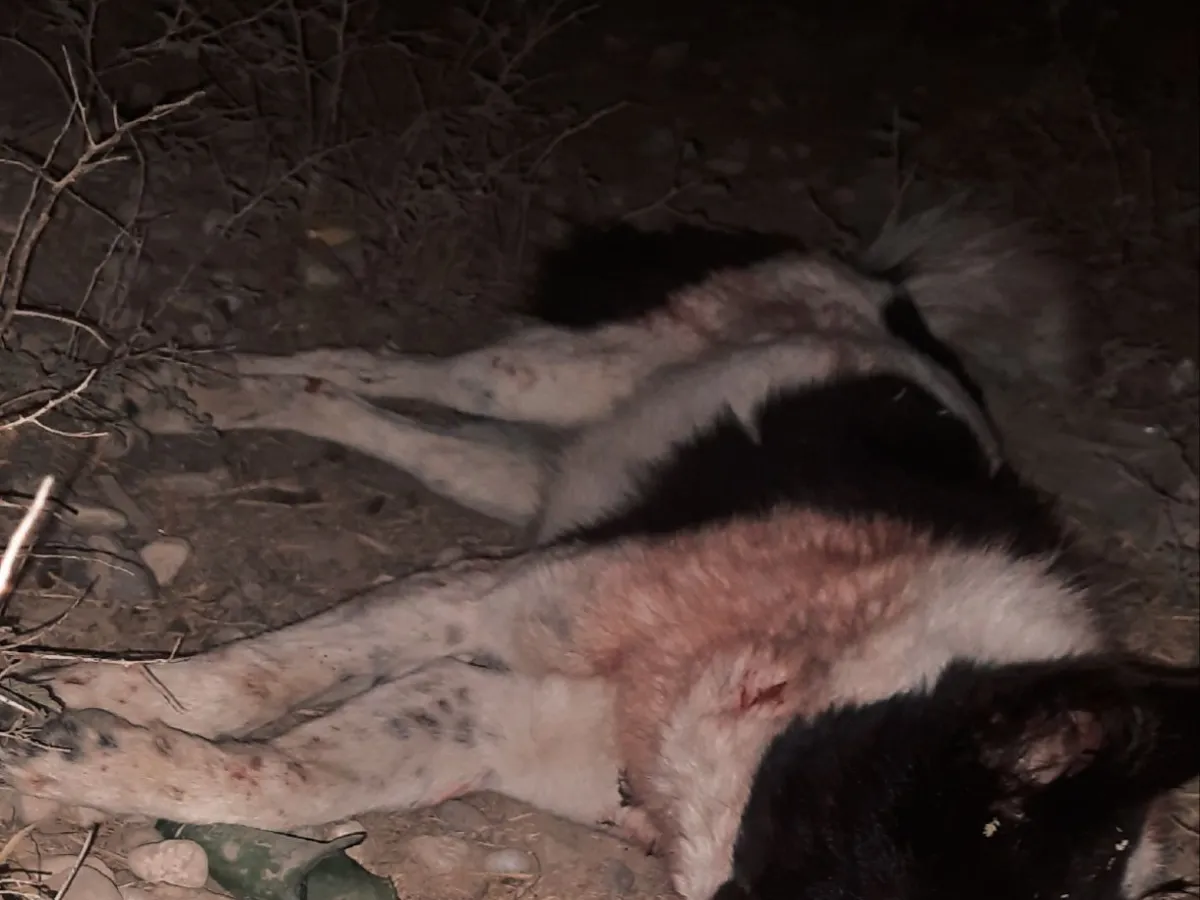
He had no name… Perhaps because no one had ever paused for even a moment to ask him: “What is your name, silent little angel?” The cold of the night had settled over the road, and the car lights passed one after another beside his blood‑stained body… No one slowed down. No one turned their head to see his pain. As if he were invisible — like a dry leaf pushed aside by the wind. But he was not invisible… He felt the pain, he felt the fear, and with every fading breath, he swallowed the loneliness. His body lay on the gravel, his eyes half‑open, as if he was still waiting… Waiting for someone who, just once, would look at him with kindness. When I arrived, the blood was still fresh… If I had reached just 20 minutes earlier, maybe… Maybe I could have saved him. Maybe I could have whispered: “You are not alone… I am here.” But it was too late. He had already chosen to leave the pain of this earth and return to the sky… To the arms of the angels — where no cars would ever drive past his heart again. No one was even willing to lift his tiny body from the road… As if he had no worth. As if a life filled with silence and waiting meant nothing. But to me, he mattered. I lifted him from the road… Not as a stray dog, but as a soul who deserved to be farewelled with dignity. I buried him… With shaking hands, yet with a heart that wanted — at least once — for someone to be kind to him. In that moment, he taught me something… Despite his wounds, despite his pain, his eyes were still full of kindness. His gaze seemed to say: “I wish everyone were like you…” But the truth is: I wish everyone were like him non‑judgmental, gentle, with a heart that remained free of hatred, even in the final breath.
If this story touched your heart… please don’t stay silent. For him, it’s already too late… But there are still hundreds of “him” breathing on our streets, and each one needs just one kind human for their life to change. Please…
Be the voice of these silent angels.
oooo
I wish everyone was like you.
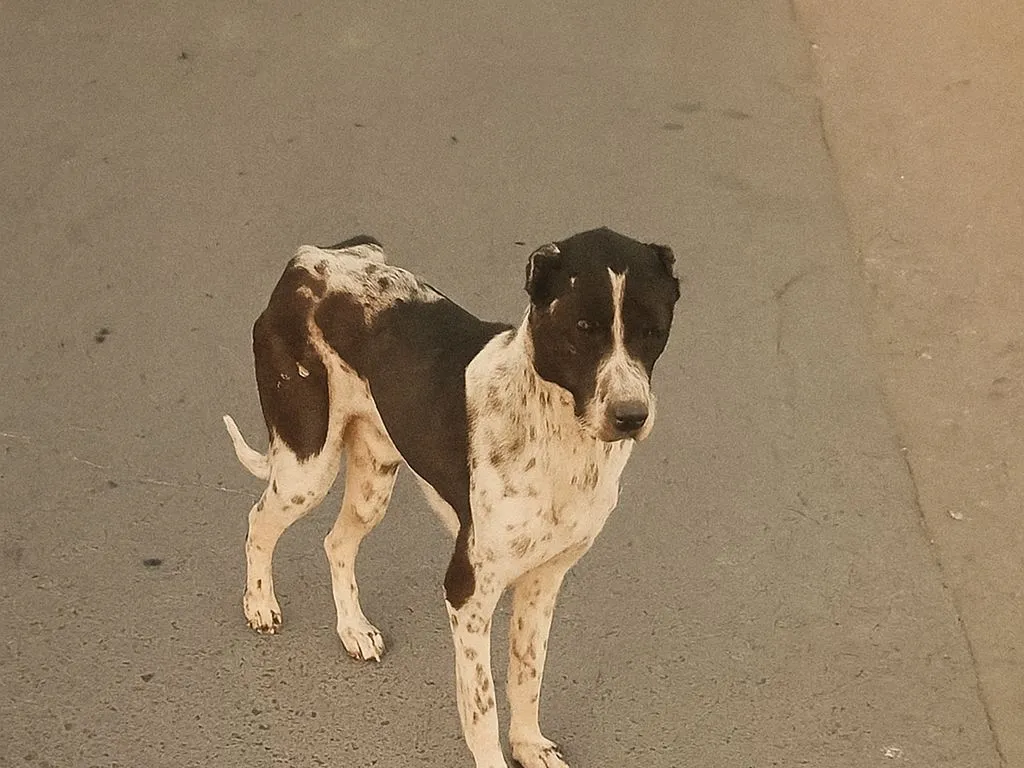
It was Friday… As every week, I set out with an 8-kilogram bag of food to visit those whom the world has forgotten, yet I have never been able to forget them… From afar, the scene I saw made my heart tremble. Little puppies ran toward me with excitement and hope, so happy as if the entire world had become kind to them with just this one meal. Some were so hungry they could barely run, yet with shining eyes, they looked at me, as if saying: “You came… today we are saved.” Amid all the sounds, joy, and excitement, my eyes fell on one—a gaze silent yet screaming a thousand cries… A dog, thin, wounded, and trembling… standing in the middle of the road, afraid, yet hopeful. Fear kept him from approaching… as if he had come close to kindness many times before, only to be met with stones, kicks, and cruelty. And he had every right to be afraid… truly. As I stepped closer, I saw something no animal lover ever forgets: his ears were gone… both torn off. The scars on his head were still visible… and his leg was injured, probably struck by stones multiple times. Yet… despite all this pain, despite all the suffering… he was still calm. He didn’t bark, growl, or attack… he just looked. He had been hurt by humans… yet he still had hope in them. I gently placed the food on the ground. He took a step back… fearful, hesitant. Then, with utmost caution, he came forward, took a bite, and stepped back again, as if saying: “Forgive me… I’m not used to someone treating me kindly.” I wished I could approach, clean his wounds, and show him that not all humans are cruel. But he ran away… not from me, but from memories that resembled “me.” But that gaze… that final look that still lingers in my heart like a dagger… eyes full of tears, untold words, gratitude, and fear… as if saying: “Thank you… for a meal. Maybe today is not my last day.” As he walked away, his legs trembled… not only from hunger, but from life… from loneliness… from being forgotten. On my way back, this question kept turning in my mind like a painful melody: Until when? Until when must voiceless animals suffer from human cruelty? Until when will every meal be their only hope for survival? Until when will we just watch? In Kabul, there are hundreds of animals like him. Some die from hunger, some from stones thrown by children and adults, and some like him… with wounds never healed, yet when they see a morsel of food, gratitude shines in their eyes. I am alone… but my dream is big. I want to build a shelter: a place where no animal dies from hunger, cold, disease, or violence. A place where they can learn once more that humans can be kind. But this is impossible without your support. We need a sponsor, a foreign donor, or a compassionate organization to take the first step. Perhaps you know someone… perhaps your introduction could save a life. If you can help, collaborate, or want to get in touch with us, please contact us via the email on our website. You can be the hope for an animal’s tomorrow… with a subscription, a referral, or a small step of support. Sometimes, saving the world is impossible… but saving “a world” for one animal is possible. And perhaps today, it is our turn to change the world for one of them.
oooo
ooOOoo
Dogs are so precious. What some humans do is beyond Jean and me, and, thankfully many thousands of other people.
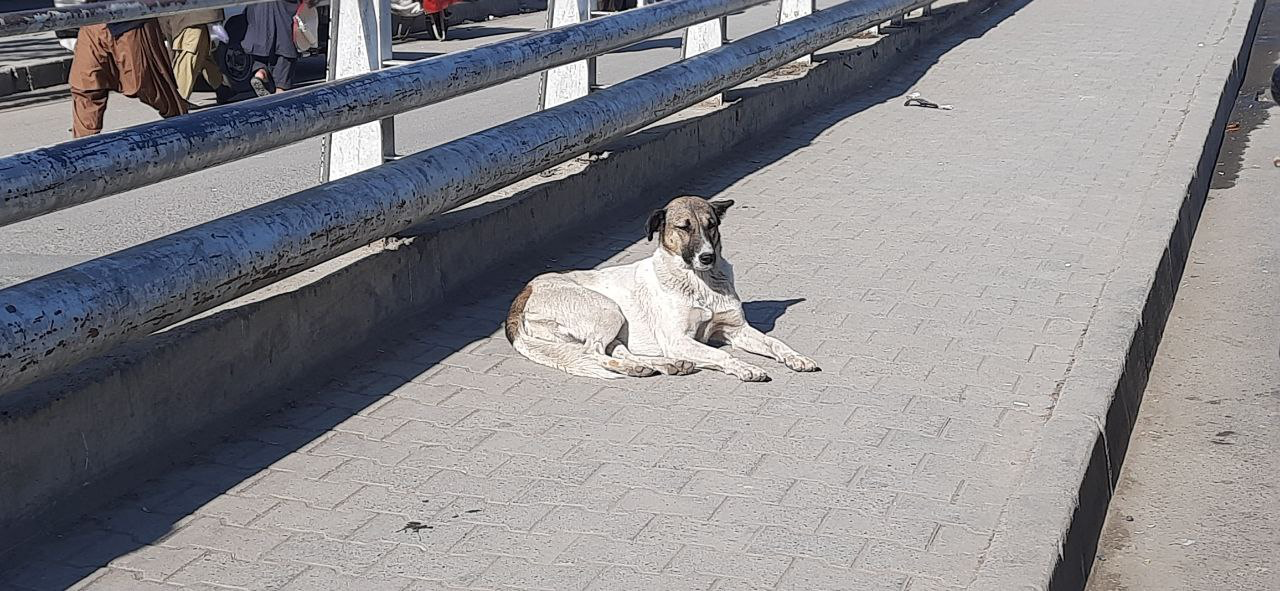
But that doesn’t alter the fact that stray street dogs exist.
I won’t pontificate but the message is clear.
Thank you, Dr. Mateullah Abrahemi.
Let me copy some more text about the founder:
Dr. Mateullah Abrahemi, the founder of Panagai Amn in Kabul, is a committed and compassionate advocate for stray animals, especially street dogs. With a deep belief in the right to life and welfare of these vulnerable beings, he strives to provide them with a safe shelter, food, medical care, and kindness.
His efforts are not limited to dreams and ideas; rather, he takes practical, well-planned steps to improve the living conditions of these animals. With valuable experience in animal care, Dr. Abrahemi has now launched the Panagai Amn project, aiming to expand his efforts into a comprehensive support center.
He meticulously handles financial and logistical planning, designs a multilingual website via WordPress, manages resources, produces video content, and builds international communication bridges to attract more support for the cause.
Throughout this challenging journey, when many of his requests for assistance from organizations remained unanswered or were met with rejection,
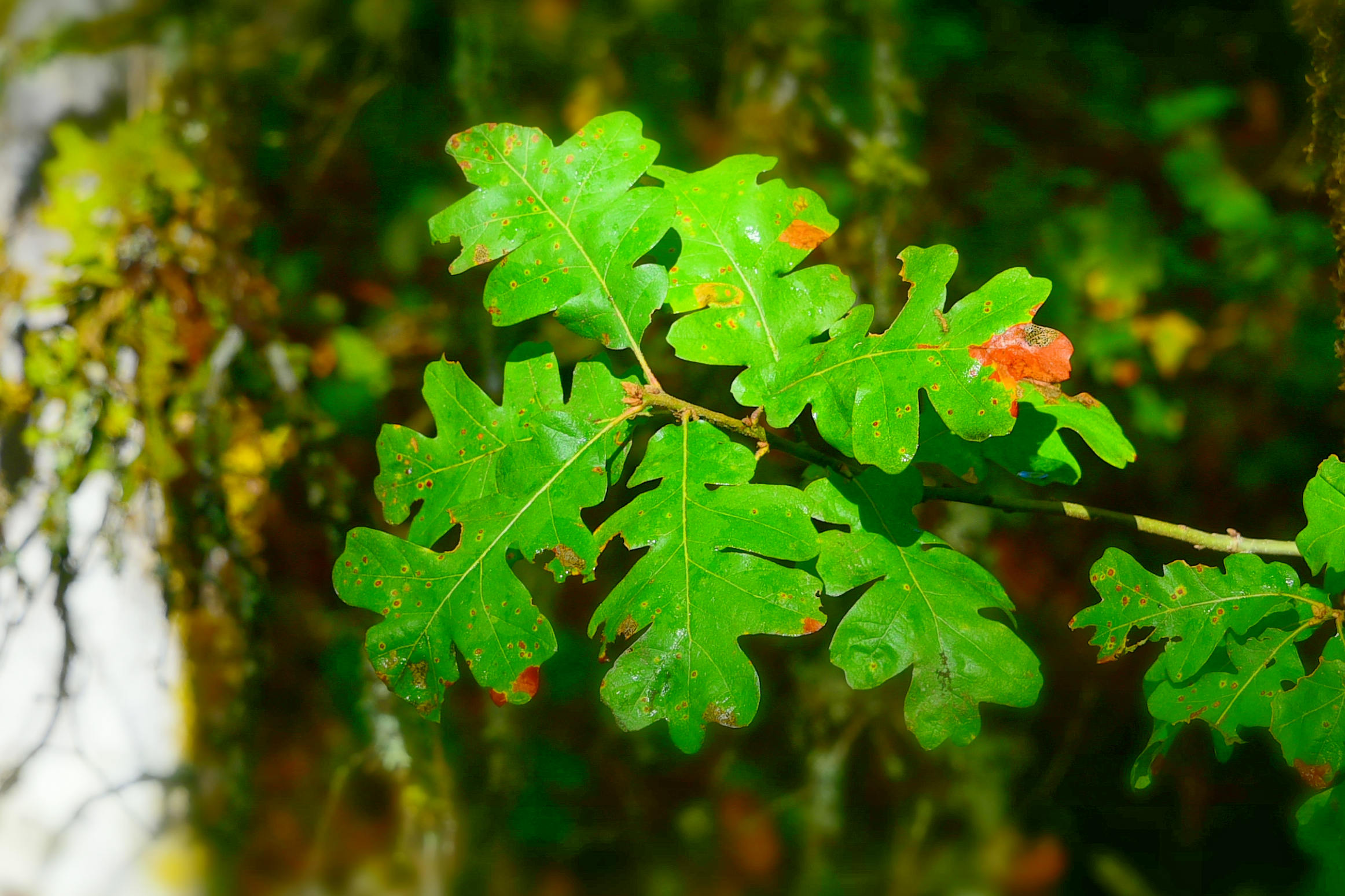
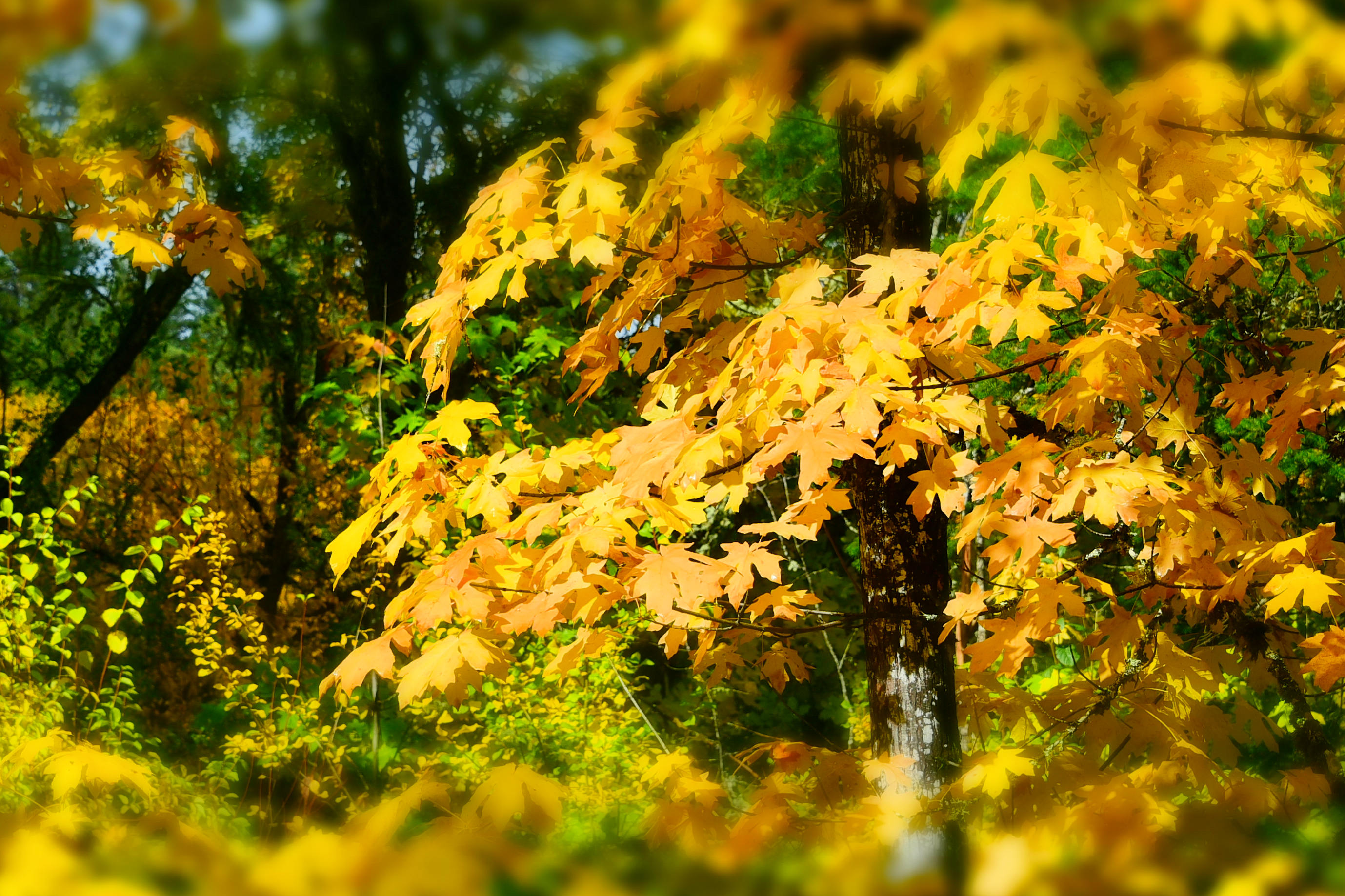
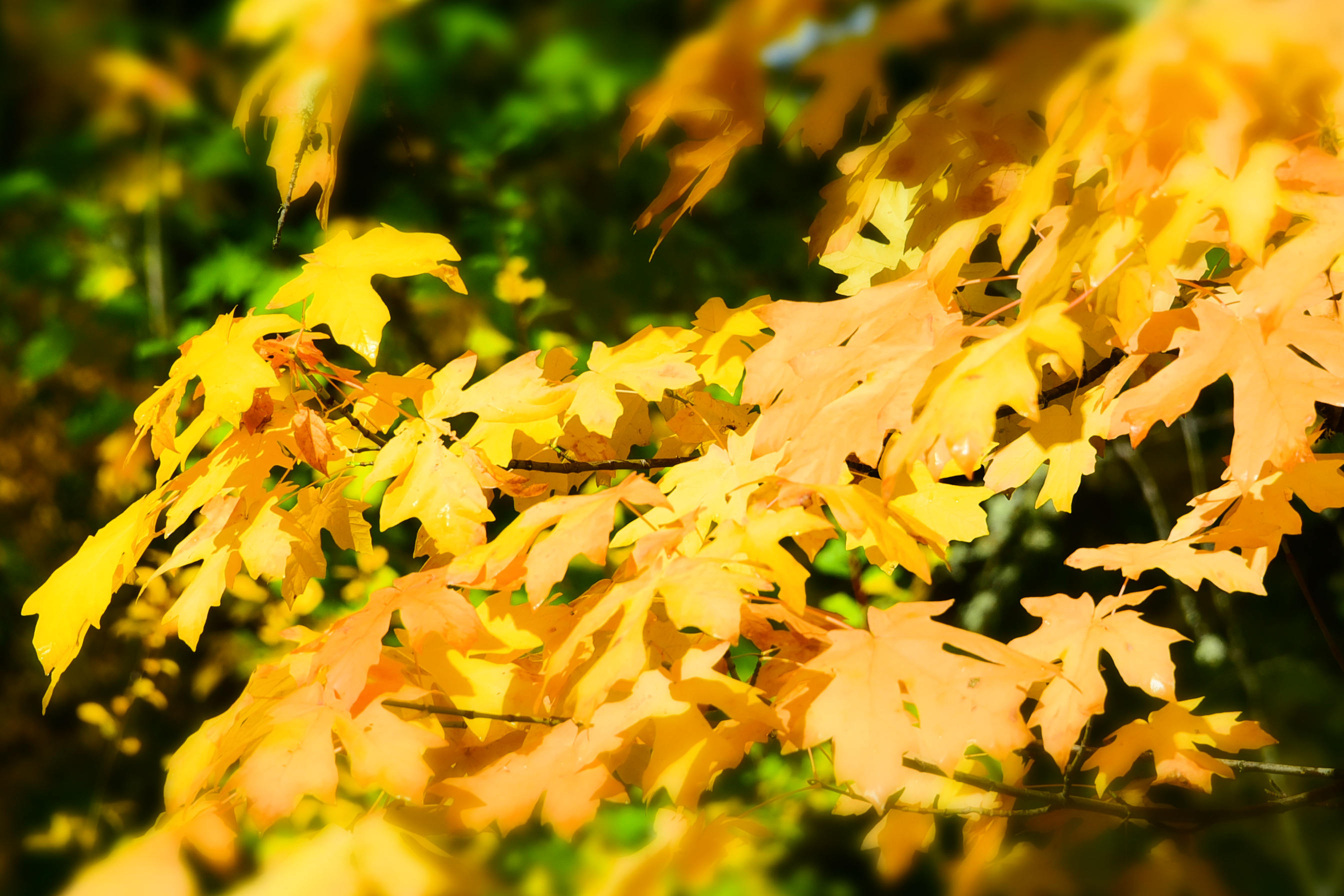
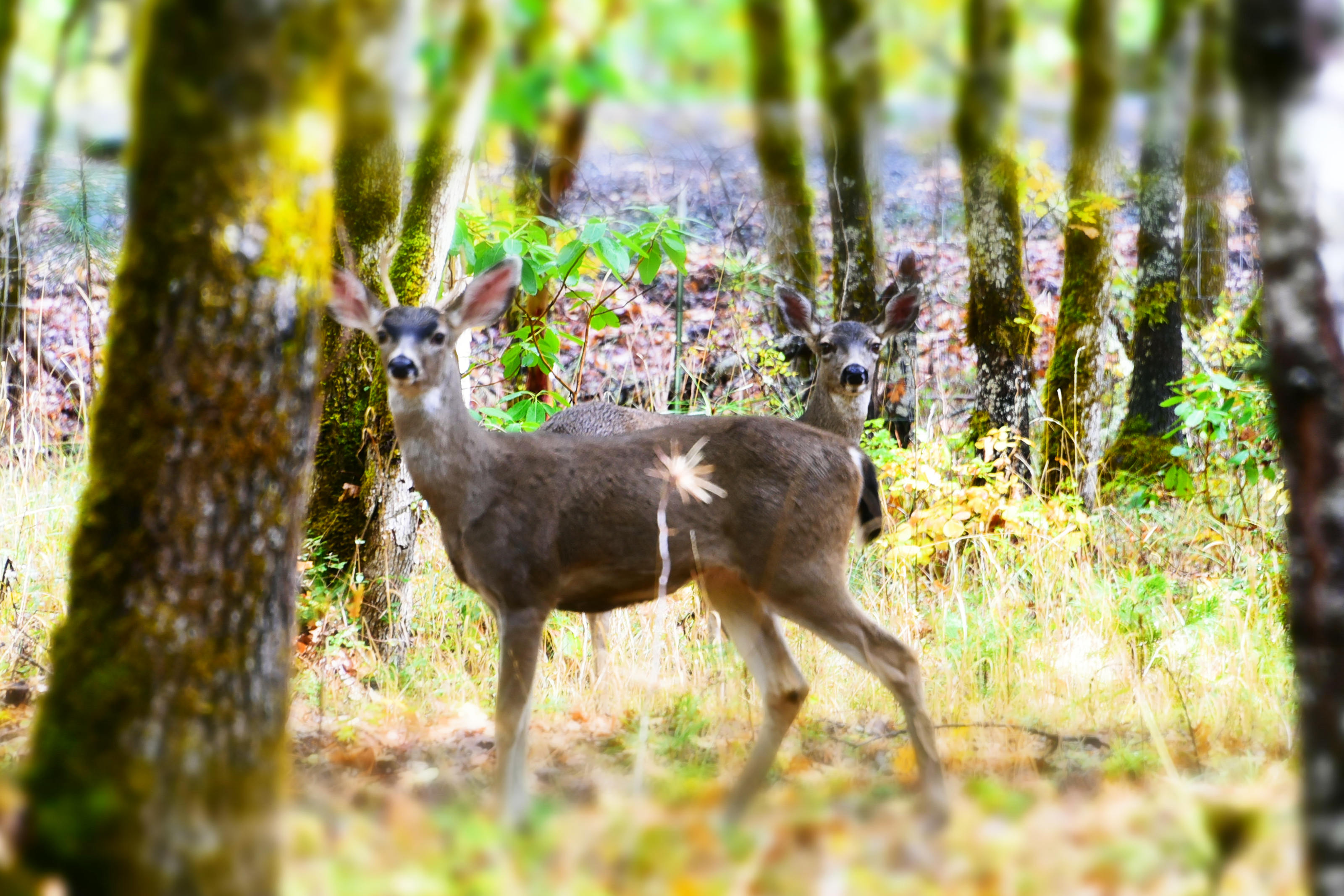
As previously mentioned, I am going to share these images on, I hope, a weekly basis.
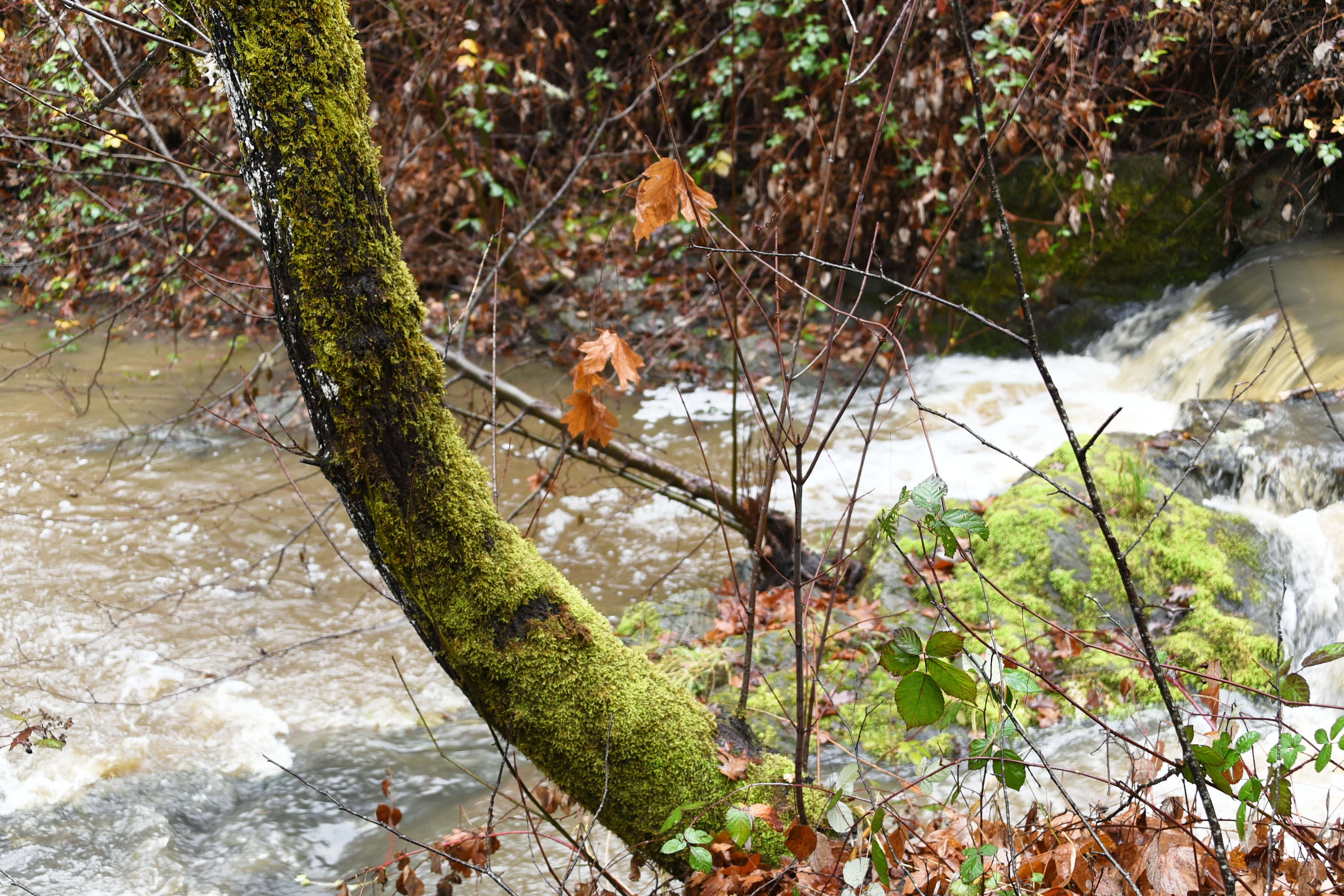
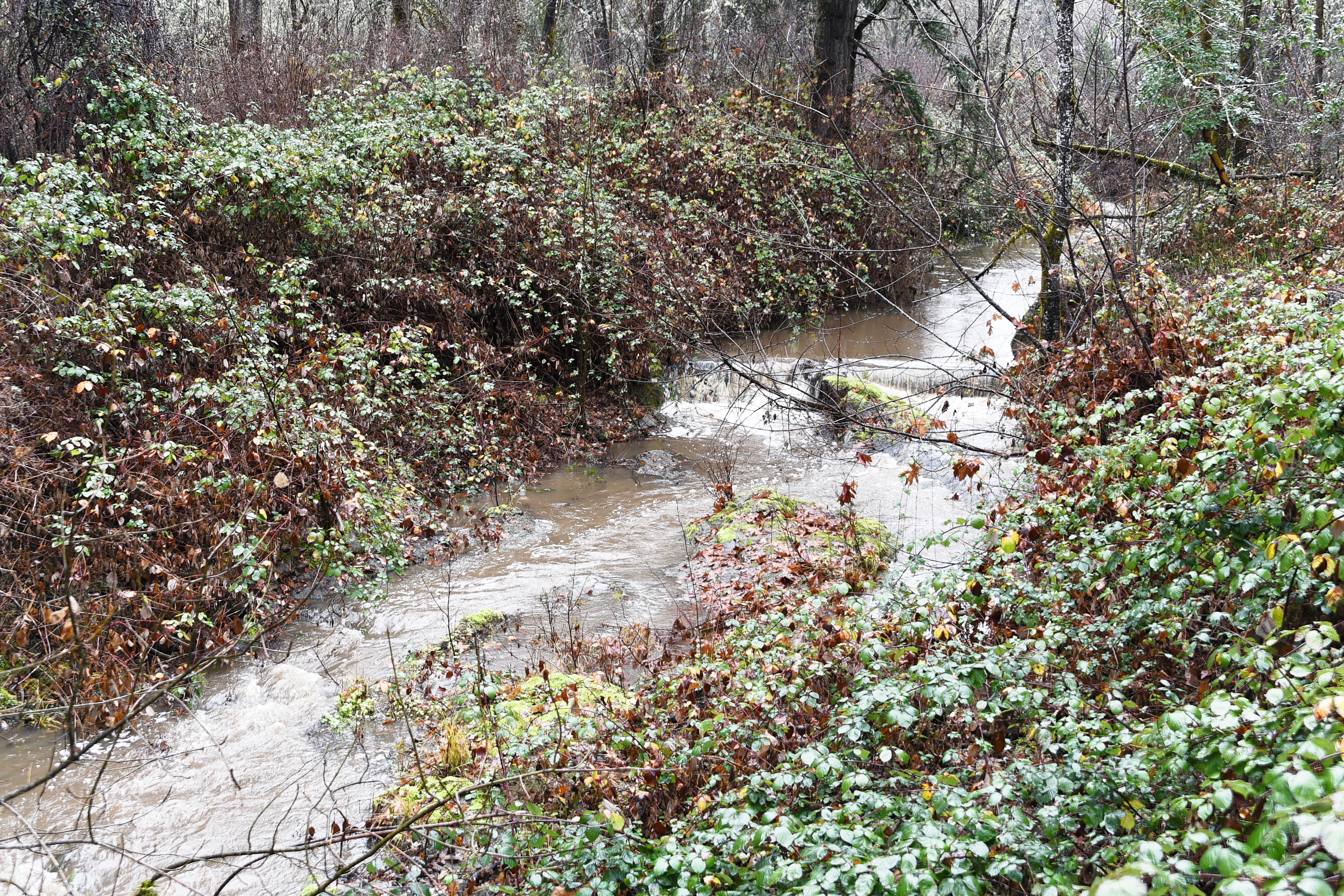
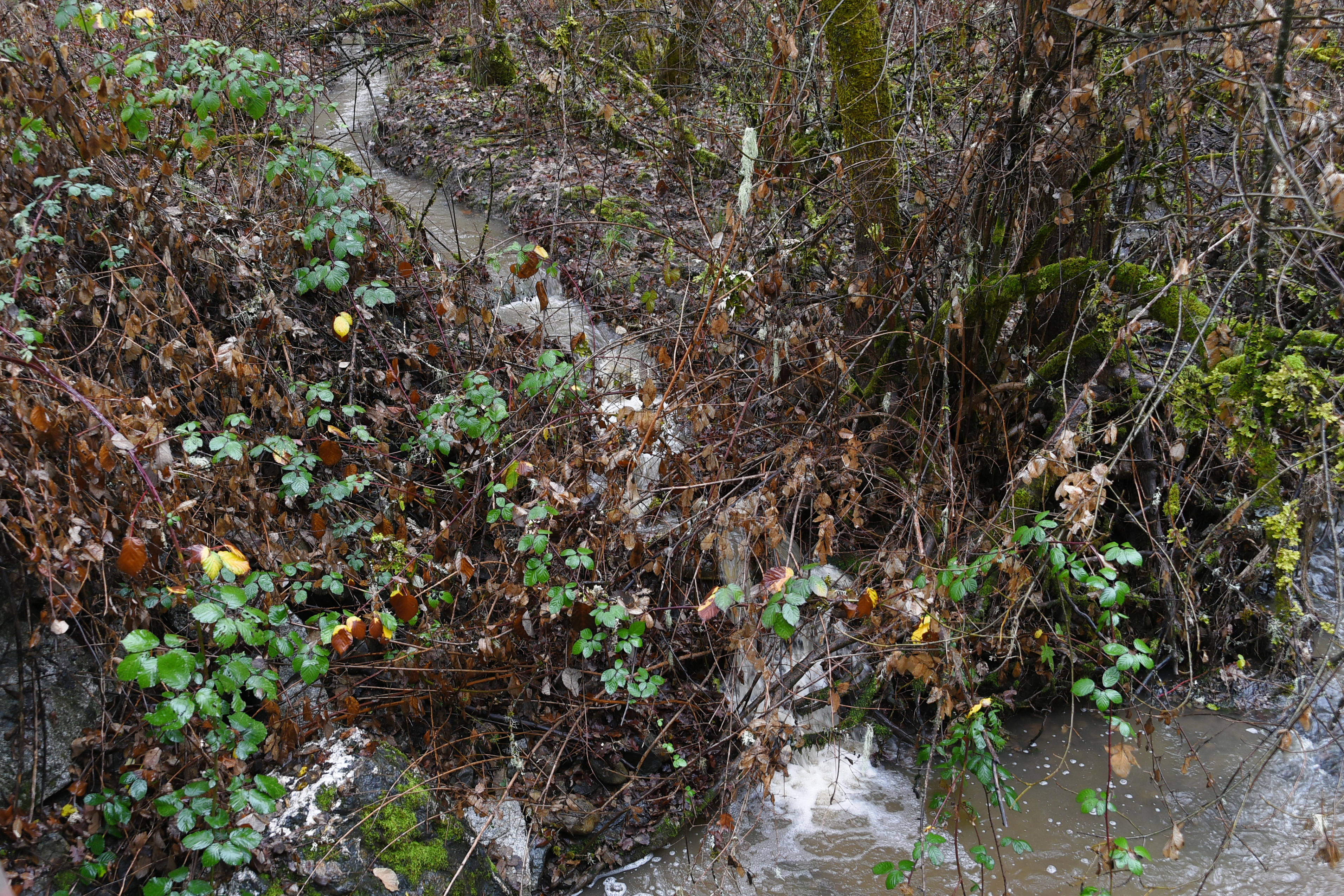
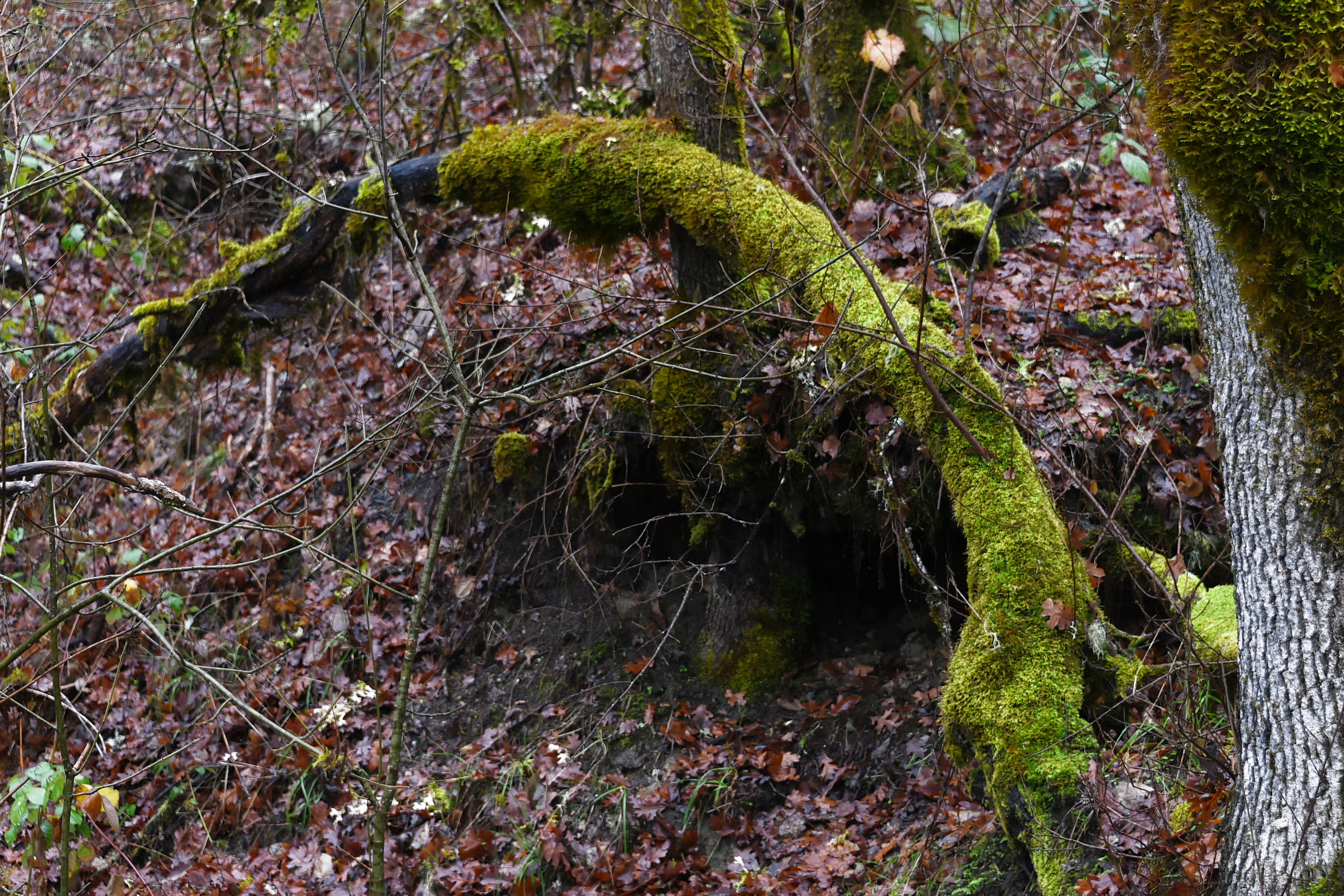
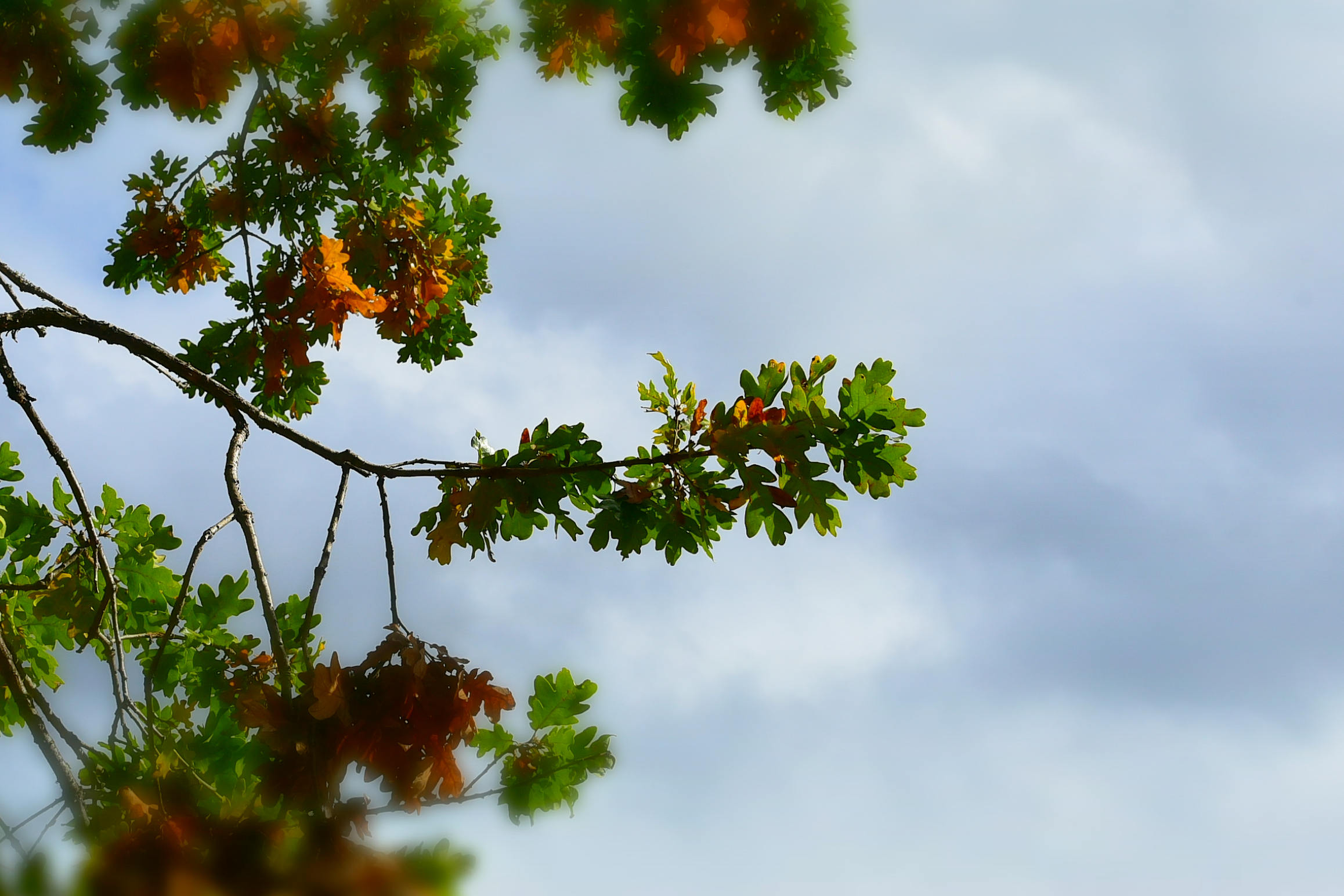
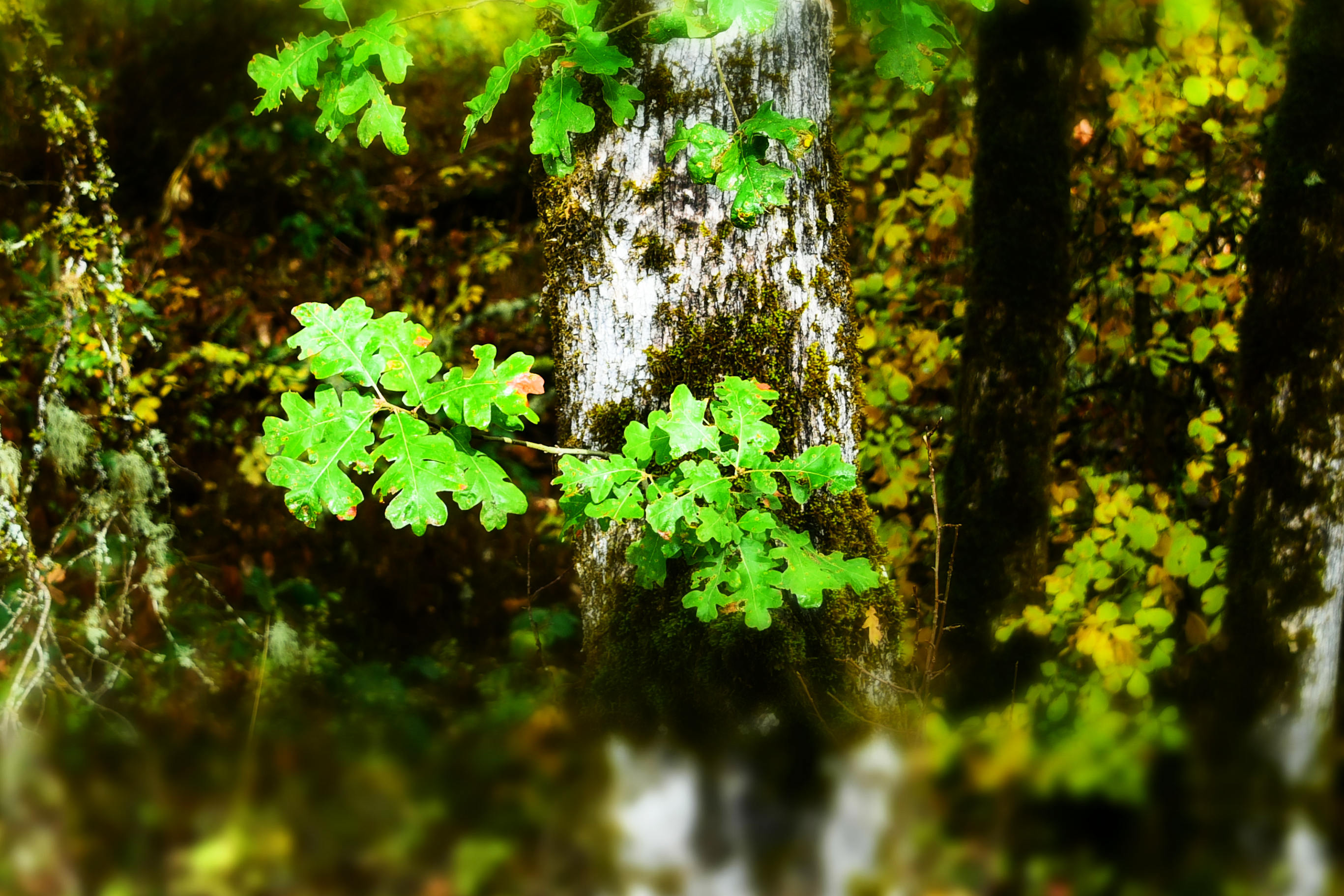
They were all taken walking down the driveway to the mailbox.
oooo
oooo
oooo
oooo
oooo
And the last one that is not autumn colours!
I’m not a photographer, unlike my son, Alex, who is (Alex Handover on Instagram) and captures the most wonderful bird photos, but occasionally I grab my camera and take pictures of whatever captures my eye. And before the heavy rains came in that weekend, I saw the beautiful leaves and their colours, and that last photo of the two wild black-tailed deer.
Every morning I feed the deer down by the stables.
We all live in the Quantenary period. From Wikipedia I quote a small piece:
It follows the Neogene Period and spans from 2.6 million years ago to the present.
I don’t know about you but 2.6 million years ago (Ma) seems like a very long time. But then the prior period was the Neogene that went from 2.6 Ma to 23 Ma.
But if one wants to think ‘old’ then try the Ordovician period:
The Ordovician spans 41.6 million years from the end of the Cambrian Period 486.85 Ma (million years ago) to the start of the Silurian Period 443.1 Ma.
****
Just to put us humans into context, human evolution is very much shorter. I have it from six million years onwards. But here are two videos, courtesy of YouTube. The first one is a short one:
Scientists use fossils to reconstruct the evolutionary history of hominins—the group that includes modern humans, our immediate ancestors, and other extinct relatives. Today, our closest living relatives are chimpanzees, but extinct hominins are even closer. Where and when did they live? What can we learn about their lives? Why did they go extinct? Scientists look to fossils for clues.
The second video is a 54-minute one from PBS.
They have both been watched thousands of times.
Now on to today’s post.
ooOOoo
Giant ground sloths’ fossilized teeth reveal their unique roles in the prehistoric ecosystem
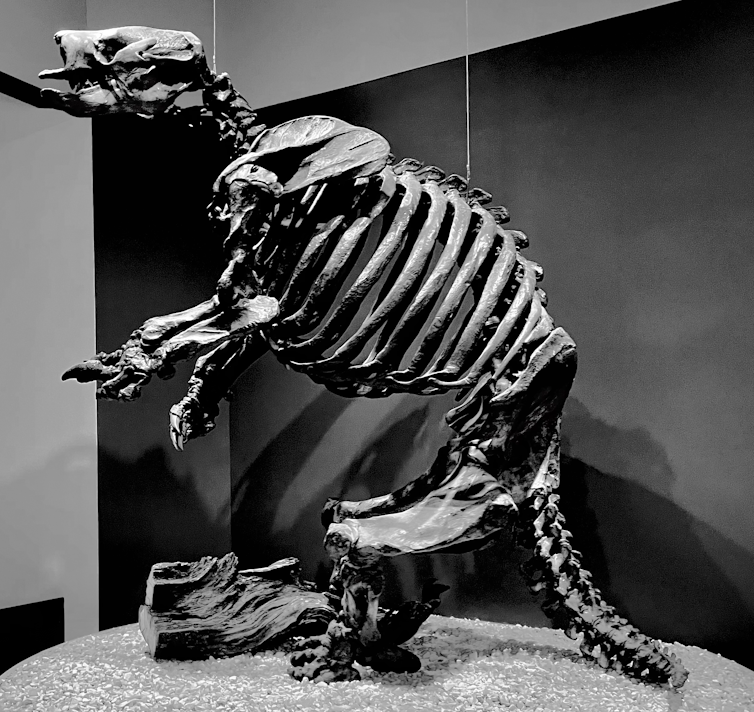
Harlan’s ground sloth fossil skeleton excavated and displayed at the La Brea Tar Pits in Los Angeles. Larisa DeSantis
A two-toed sloth at the Nashville Zoo. Larisa R. G. DeSantis
Imagine a sloth. You probably picture a medium-size, tree-dwelling creature hanging from a branch. Today’s sloths – commonly featured on children’s backpacks, stationery and lunch boxes – are slow-moving creatures, living inconspicuously in Central American and South American rainforests.
But their gigantic Pleistocene ancestors that inhabited the Americas as far back as 35 million years ago were nothing like the sleepy tree huggers we know today. Giant ground sloths – some weighing thousands of pounds and standing taller than a single-story building – played vital and diverse roles in shaping ecosystems across the Americas, roles that vanished with their loss at the end of the Pleistocene.
In our new study, published in the journal Biology Letters, we aimed to reconstruct the diets of two species of giant ground sloths that lived side by side in what’s now Southern California. We analyzed remains recovered from the La Brea Tar Pits of what are colloquially termed the Shasta ground sloth (Nothrotheriops shastensis) and Harlan’s ground sloth (Paramylodon harlani). Our work sheds light on the lives of these fascinating creatures and the consequences their extinction in Southern California 13,700 years ago has had on ecosystems.
Dentin dental challenges
Studying the diets of extinct animals often feels like putting together a jigsaw puzzle with only a portion of the puzzle pieces. Stable isotope analyses have revolutionized how paleoecologists reconstruct the diets of many ancient organisms. By measuring the relative ratios of light and heavy carbon isotopes in tooth enamel, we can figure out what kinds of foods an animal ate – for instance, grasses versus trees or shrubs.
Drilling teeth provides a sample for stable isotope analyses. Aditya Kurre
But the teeth of giant ground sloths lack enamel, the highly inorganic and hard outer layer on most animal teeth – including our own. Instead, sloth teeth are made primarily of dentin, a more porous and organic-rich tissue that readily changes its chemical composition with fossilization.
Stable isotope analyses are less dependable in sloths because dentin’s chemical composition can be altered postmortem, skewing the isotopic signatures.
Another technique researchers use to glean information about an animal’s diet relies on analyzing the microscopic wear patterns on its teeth. Dental microwear texture analysis can infer whether an animal mostly ate tough foods such as leaves and grass or hard foods such as seeds and fruit pits. This technique is also tricky when it comes to sloths’ fossilized teeth because signs of wear may be preserved differently in the softer dentin than in harder enamel.
Prior to studying fossil sloths, we vetted dental microwear methods in modern xenarthrans, a group of animals that includes sloths, armadillos and anteaters. This study demonstrated that dentin microwear can reveal dietary differences between leaf-eating sloths and insect-consuming armadillos, giving us confidence that these tools could reveal dietary information from ground sloth fossils.
Distinct dietary niches revealed
Previous research suggested that giant ground sloths were either grass-eating grazers or leaf-eating browsers, based on the size and shape of their teeth. However, more direct measures of diet – such as stable isotopes or dental microwear – were often lacking.
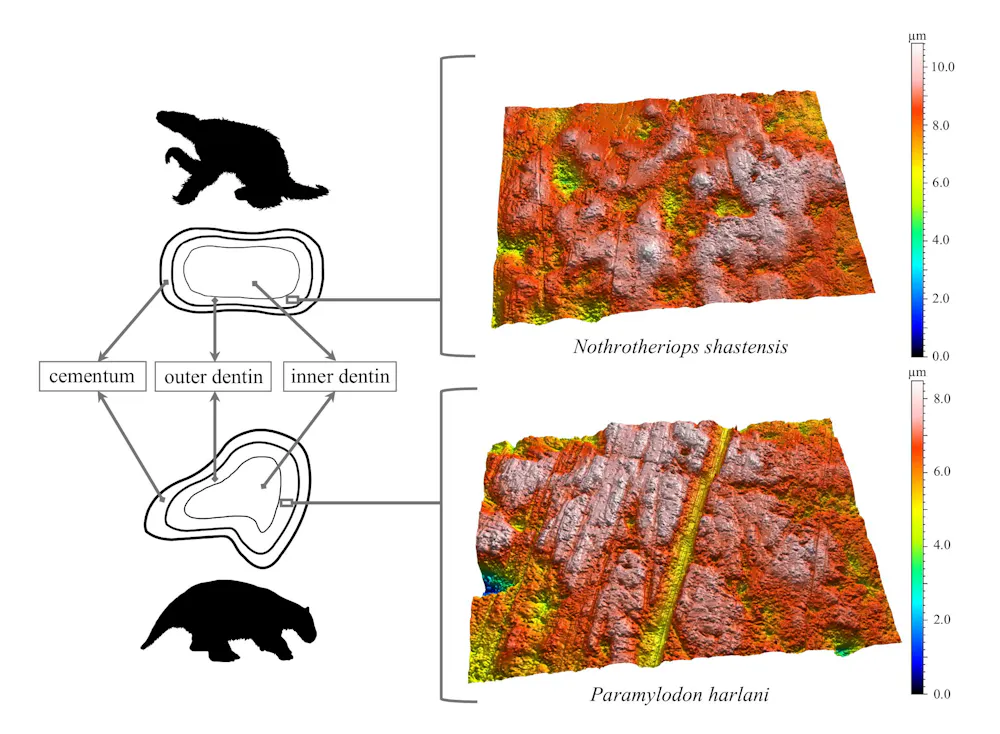
Our new analyses revealed contrasting dental wear signatures between the two co-occurring ground sloth species. The Harlan’s ground sloth, the larger of the two, had microwear patterns dominated by deep pitlike textures. This kind of wear is indicative of chewing hard, mechanically challenging foods such as tubers, seeds, fungi and fruit pits. Our new evidence aligns with skeletal adaptations that suggest powerful digging abilities, consistent with foraging foods both above and below ground.
The fossil teeth of the Harlan’s ground sloth typically showed deeper pitlike textures, bottom, while the Shasta ground sloth teeth had shallower wear patterns, top. DeSantis and Kurre, Biology Letters 2025
In contrast, the Shasta ground sloth exhibited dental microwear textures more akin to those in leaf-eating and woody plant-eating herbivores. This pattern corroborates previous studies of its fossilized dung, demonstrating a diet rich in desert plants such as yucca, agave and saltbush.
Next we compared the sloths’ microwear textures to those of ungulates such as camels, horses and bison that lived in the same region of Southern California. We confirmed that neither sloth species’ dietary behavior overlapped fully with other herbivores. Giant ground sloths didn’t perform the same ecological functions as the other herbivores that shared their landscape. Instead, both ground sloths partitioned their niches and played complementary ecological roles.
Extinctions brought ecological loss
The Harlan’s ground sloth was a megafaunal ecosystem engineer. It excavated soil and foraged underground, thereby affecting soil structure and nutrient cycling, even dispersing seed and fungal spores over wide areas. Anecdotal evidence suggests that some anachronistic fruits – such as the weird, bumpy-textured and softball-size Osage orange – were dispersed by ancient megafauna such as giant ground sloths. When the Pleistocene megafauna went extinct, the loss contributed to the regional restriction of these plants, since no one was around to spread their seeds.
The broader consequence is clear: Megafaunal extinctions erased critical ecosystem engineers, triggering cascading ecological changes that continue to affect habitat resilience today. Our results resonate with growing evidence that preserving today’s living large herbivores and understanding the diversity of their ecological niches is crucial for conserving functional ecosystems.
Studying the teeth of lost giant ground sloths has illuminated not only their diets but also the enduring ecological legacies of their extinction. Today’s sloths, though charming, only hint at the profound environmental influence of their prehistoric relatives – giants that shaped landscapes in ways we are only beginning to appreciate.
Anyone proposing to offer a master class on changing the world for the better, without becoming negative, cynical, angry or narrow-minded in the process, could model their advice on the life and work of pioneering animal behavior scholar Jane Goodall.
Goodall’s life journey stretches from marveling at the somewhat unremarkable creatures – though she would never call them that – in her English backyard as a wide-eyed little girl in the 1930s to challenging the very definition of what it means to be human through her research on chimpanzees in Tanzania. From there, she went on to become a global icon and a United Nations Messenger of Peace.
Until her death on Oct. 1, 2025 at age 91, Goodall retained a charm, open-mindedness, optimism and wide-eyed wonder that are more typical of children. I know this because I have been fortunate to spend time with her and to share insights from my own scientific career. To the public, she was a world-renowned scientist and icon. To me, she was Jane – my inspiring mentor and friend.
Despite the massive changes Goodall wrought in the world of science, upending the study of animal behavior, she was always cheerful, encouraging and inspiring. I think of her as a gentle disrupter. One of her greatest gifts was her ability to make everyone, at any age, feel that they have the power to change the world. https://www.youtube.com/embed/rcL4jnGTL1U?wmode=transparent&start=0 Jane Goodall documented that chimpanzees not only used tools but make them – an insight that altered thinking about animals and humans.
Discovering tool use in animals
In her pioneering studies in the lush rainforest of Tanzania’s Gombe Stream Game Reserve, now a national park, Goodall noted that the most successful chimp leaders were gentle, caring and familial. Males that tried to rule by asserting their dominance through violence, tyranny and threat did not last.
I also am a primatologist, and Goodall’s groundbreaking observations of chimpanzees at Gombe were part of my preliminary studies. She famously recorded chimps taking long pieces of grass and inserting them into termite nests to “fish” for the insects to eat, something no one else had previously observed.
It was the first time an animal had been seen using a tool, a discovery that altered how scientists differentiated between humanity and the rest of the animal kingdom.
Renowned anthropologist Louis Leakey chose Goodall to do this work precisely because she was not formally trained. When she turned up in Leakey’s office in Tanzania in 1957, at age 23, Leakey initially hired her as his secretary, but he soon spotted her potential and encouraged her to study chimpanzees. Leakey wanted someone with a completely open mind, something he believed most scientists lost over the course of their formal training.
Because chimps are humans’ closest living relatives, Leakey hoped that understanding the animals would provide insights into early humans. In a predominantly male field, he also thought a woman would be more patient and insightful than a male observer. He wasn’t wrong.
Six months in, when Goodall wrote up her observations of chimps using tools, Leakey wrote, “Now we must redefine tool, redefine Man, or accept chimpanzees as human.”
Goodall spoke of animals as having emotions and cultures, and in the case of chimps, communities that were almost tribal. She also named the chimps she observed, an unheard-of practice at the time, garnering ridicule from scientists who had traditionally numbered their research subjects.
One of her most remarkable observations became known as the Gombe Chimp War. It was a four-year-long conflict in which eight adult males from one community killed all six males of another community, taking over their territory, only to lose it to another, bigger community with even more males.
Confidence in her path
Goodall was persuasive, powerful and determined, and she often advised me not to succumb to people’s criticisms. Her path to groundbreaking discoveries did not involve stepping on people or elbowing competitors aside.
Rather, her journey to Africa was motivated by her wonder, her love of animals and a powerful imagination. As a little girl, she was entranced by Edgar Rice Burroughs’ 1912 story “Tarzan of the Apes,” and she loved to joke that Tarzan married the wrong Jane.
When I was a 23-year-old former NFL cheerleader, with no scientific background at that time, and looked at Goodall’s work, I imagined that I, too, could be like her. In large part because of her, I became a primatologist, co-discovered a new species of lemur in Madagascar and have had an amazing life and career, in science and on TV, as a National Geographic explorer. When it came time to write my own story, I asked Goodall to contribute the introduction. She wrote:
“Mireya Mayor reminds me a little of myself. Like me she loved being with animals when she was a child. And like me she followed her dream until it became a reality.”
In a 2023 interview, Jane Goodall answers TV host Jimmy Kimmel’s questions about chimpanzee behavior.
Storyteller and teacher
Goodall was an incredible storyteller and saw it as the most successful way to help people understand the true nature of animals. With compelling imagery, she shared extraordinary stories about the intelligence of animals, from apes and dolphins to rats and birds, and, of course, the octopus. She inspired me to become a wildlife correspondent for National Geographic so that I could share the stories and plights of endangered animals around the world.
Goodall inspired and advised world leaders, celebrities, scientists and conservationists. She also touched the lives of millions of children.
Jane Goodall and primatologist Mireya Mayor with Mayor’s book ‘Just Wild Enough,’ a memoir aimed at young readers. Mireya Mayor, CC BY-ND
Through the Jane Goodall Institute, which works to engage people around the world in conservation, she launched Roots & Shoots, a global youth program that operates in more than 60 countries. The program teaches children about connections between people, animals and the environment, and ways to engage locally to help all three.
Along with Goodall’s warmth, friendship and wonderful stories, I treasure this comment from her: “The greatest danger to our future is our apathy. Each one of us must take responsibility for our own lives, and above all, show respect and love for living things around us, especially each other.”
It’s a radical notion from a one-of-a-kind scientist.
This article has been updated to add the date of Goodall’s death.
That comment by Jane that was treasured by Mireya is so important. “The greatest danger to our future is our apathy. Each one of us must take responsibility for our own lives, and above all, show respect and love for living things around us, especially each other.”
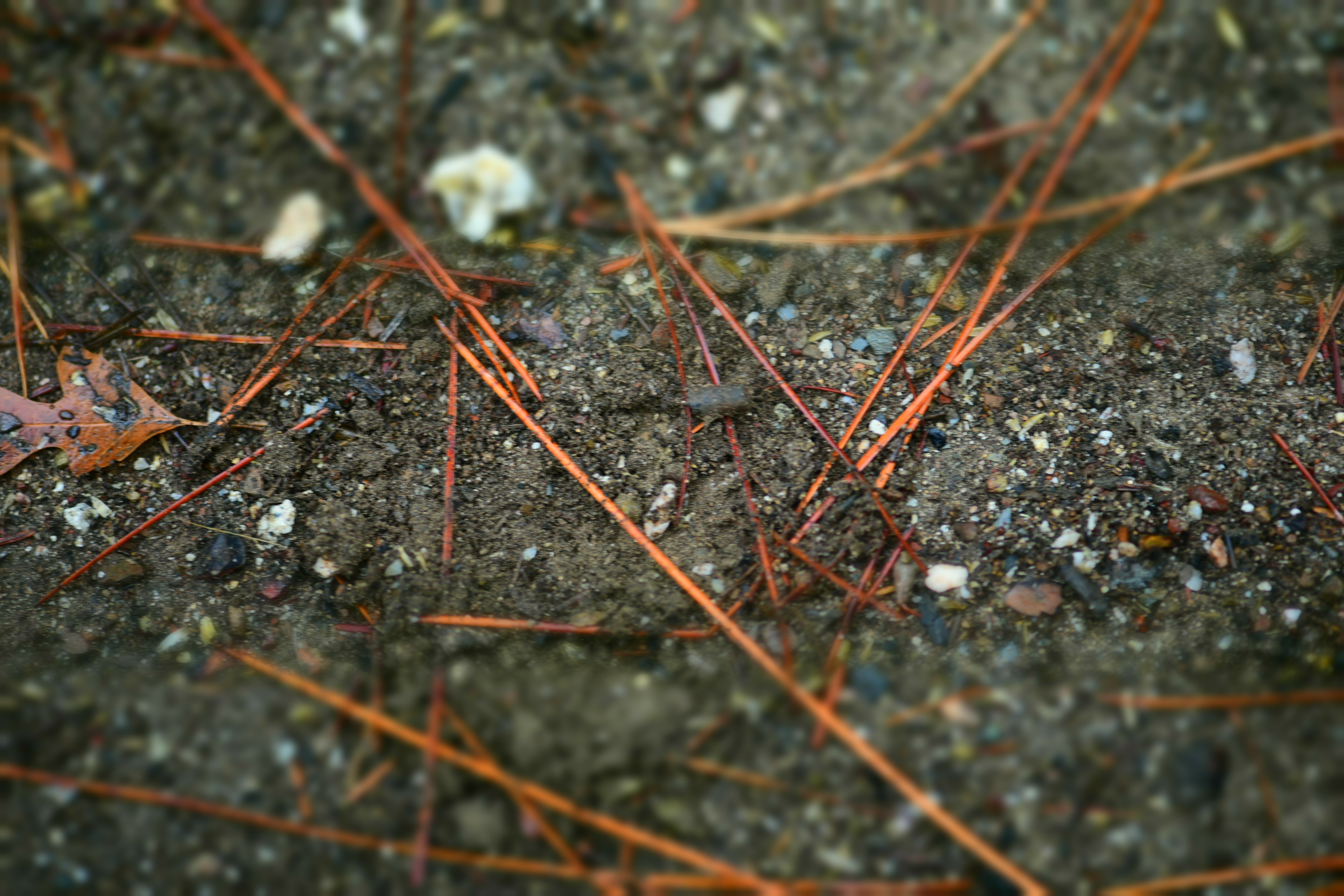
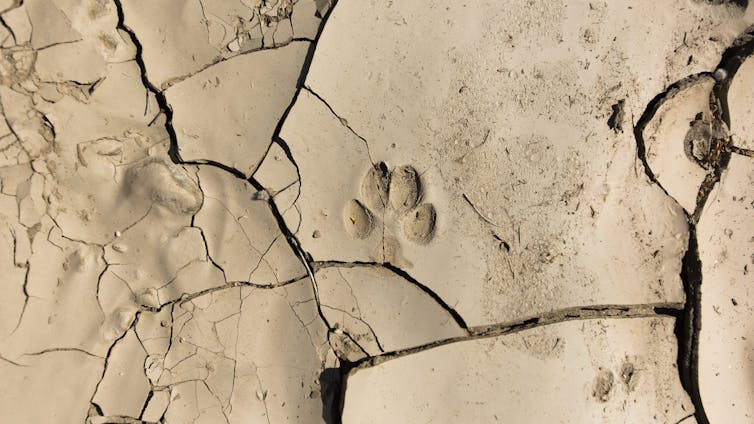
Every morning I go outside to feed the wild deer, as I have said before. However this morning, the 1st October, the rain had softened the ground and I saw animal footprints close to where I put out the COB for the deer.
Here’s a photograph albeit it is almost impossible to distinguish.
Anyway, to the post.
ooOOoo
How to identify animal tracks, burrows and other signs of wildlife in your neighborhood
Your neighborhood is home to all sorts of amazing animals, from racoons, squirrels and skunks to birds, bugs and snails. Even if you don’t see them, most of these creatures are leaving evidence of their activities all around you.
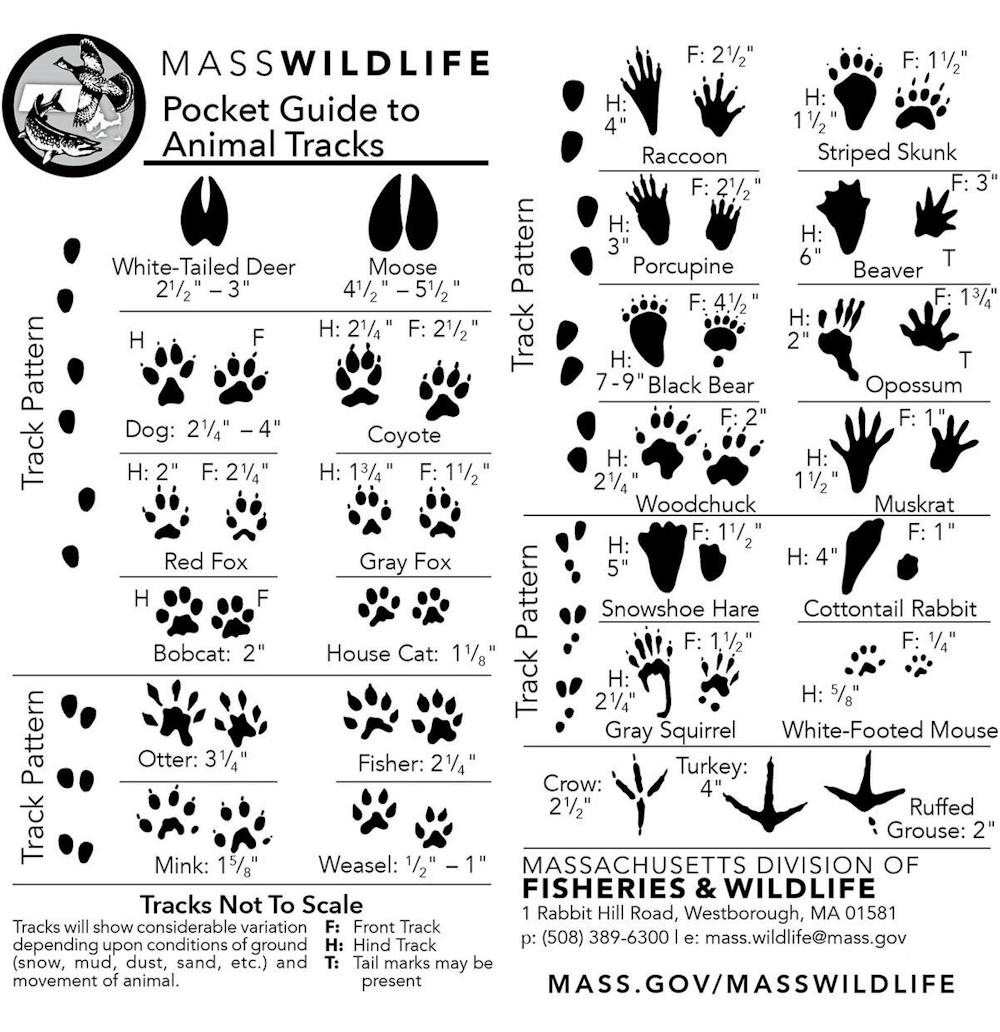
Paw prints in different shapes and sizes are clues to the visitors who pass through. The shapes of tunnels and mounds in your yard carry the mark of their builders.
Even the stuff animals leave behind, whether poop or skeletons, tells you something about the wilder side of the neighborhood.
Tree squirrels can excavate small holes all over a yard to hide seeds and nuts or when searching for them. Ground squirrels also create burrows. Snowmanradio/Wikimedia Commons, CC BY
I’m a zoologist and director of the Hefner Museum of Natural History at Miami University of Ohio, where we work with all kinds of wildlife specimens. With a little practice, you’ll soon notice a lot more evidence of your neighborhood friends when you step outside.
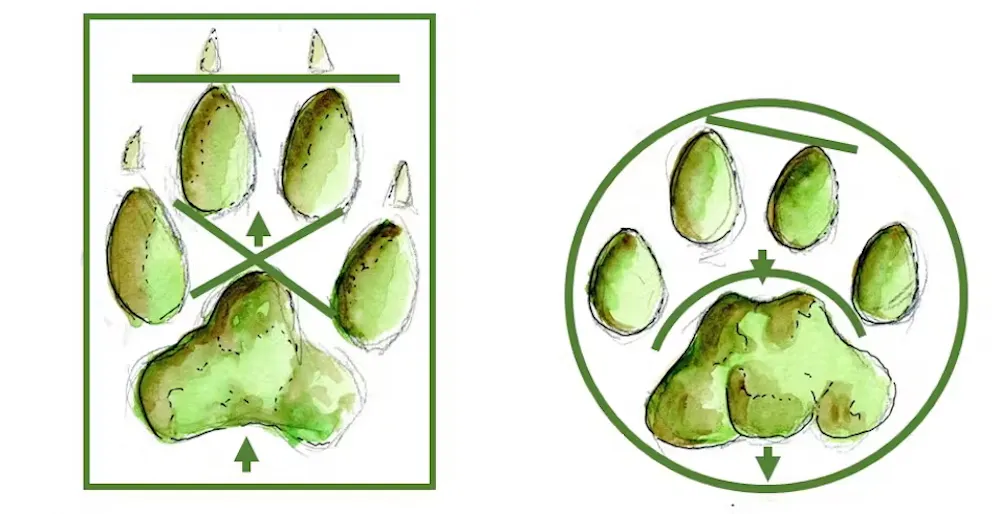
The dog family, including coyotes and foxes, can be differentiated from the cat family by the shape of their palm pads — triangular for dogs, two lobes at the peak for cats.
Canid tracks, left, are roughly rectangular, with the tips of the middle two toes aligned. They often, but don’t always, show claw marks. The pad has an indentation on the back and a projection on the front, with the space between the pad and the toes forming an X. Felid tracks, right, are roughly circular, with the tip of one toe extending slightly farther than all other toes. They seldom show claw marks. The pad has three lobes on the back and an indentation on the front, with the space between the pad and toes forming a curve. Steven Sullivan, CC BY-NC-ND
Both opossums and raccoons leave prints that look like those of a tiny human, but the opossum thumb is held at nearly right angles to the rest of the fingers.
Opossum, left, and raccoon tracks. Like humans, opossums have opposable thumbs. Steven Sullivan
Not all prints are so clear, however.
Invasive rats and native squirrels have prints that often look pretty similar to each other. Water erosion of a skunk print left in mud might connect the toe tips to the palm, making it look more like a raccoon. And prints left in winter slush by the smallest dog in the neighborhood can grow through freezing and thawing to proportions that make people wonder whether wolves have returned to their former haunts.
Often, it’s easiest to figure out which animal left a paw print by correlating its tracks with other evidence.
If what look like squirrel prints lead to a hole in the ground, then it wasn’t a tree squirrel. Stuff a handful of leaves or newspaper in the hole. If it gets pushed out during the day, the hole is probably inhabited by a ground squirrel, such as a chipmunk. But if the plug is pushed out at night, you probably have a rat.
I once noticed a faint trail in the soil near my porch. Using the hole-stuffing method, I determined that something spent most days under the wooden stairs that people constantly, and often loudly, traversed. When I was pretty sure my newly discovered neighbor was home, I used a mirror and flashlight to investigate the opening without exposing myself to a protective resident. Sure enough, there was a cute little skunk staring back at me. https://www.youtube.com/embed/6fCFy29aHbY?wmode=transparent&start=0 Animals that excavate in search of food or to create shelter leave different types of holes. Gardening Latest.
Skunks, and many other local animals, often leave obvious excavations in lawns.
Lawns are biological deserts where few species can live, but those that can survive there often reach high numbers. Lawn grubs – the milk-white, C-shaped caterpillars of a few beetle species – particularly love the lack of competition found in a carpet of grass. Polka dots of dead thatch are one sign of these grubs, but if you have a biodiverse neighborhood, many animals will consume this high-calorie treat before you ever notice them.
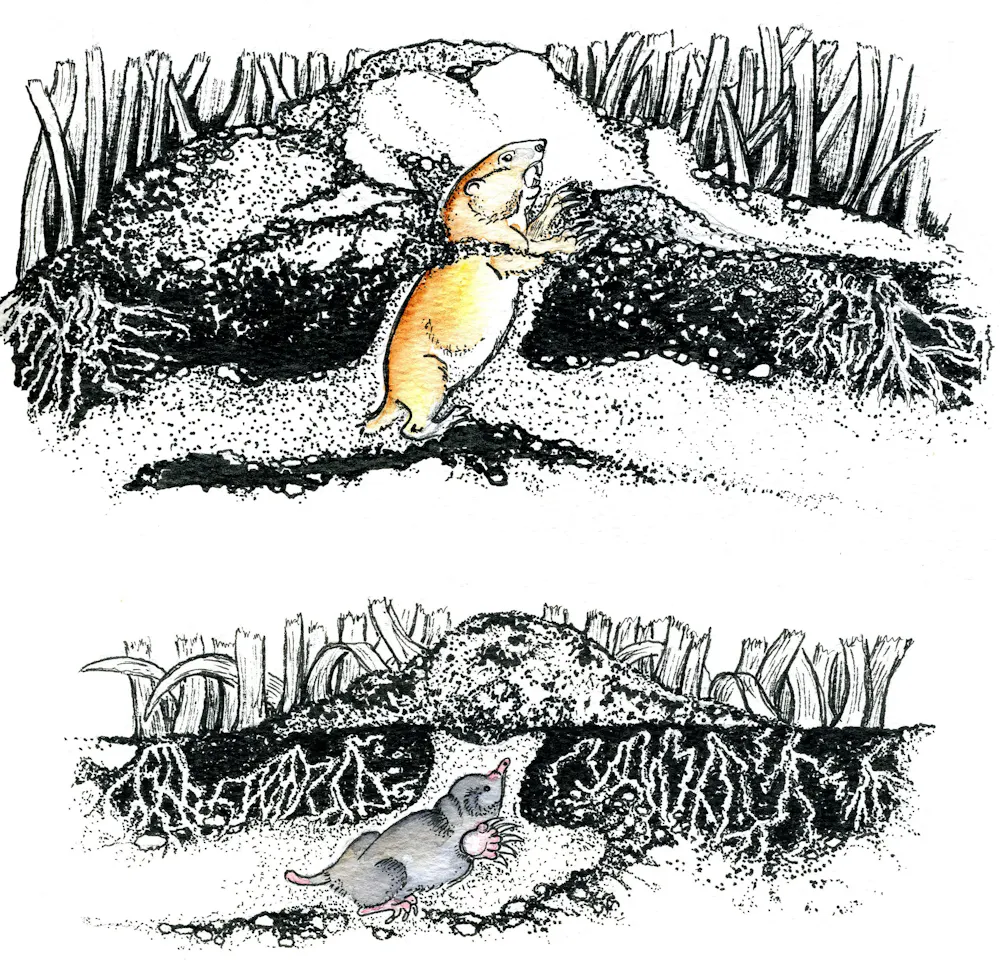
Skunks and raccoons will dig up each grub individually, leaving a small hole that healthy grass can refill quickly. Moles – fist-size insectivores more closely related to bats than rodents – live underground where they virtually swim through soil, leaving slightly raised trails visible in mowed lawns. In spring and fall, moles make volcano-shaped mounds with no visible opening.
Left to right, mole, vole and gopher skulls show clear differences: Moles are insectivores with lots of pointy teeth; voles are rodents the size of mice, and gophers are also rodents but bigger. Steven Sullivan
Gophers, on the other hand, are herbivorous rodents – they eat plants rather than grubs. They also leave tunnels and mounds, but the tunnels are usually very visible and their mounds are crescent-shaped, often with a visible opening.
Voles, not to be confused with moles, are also herbivorous rodents. They’re mouse-size, with tiny, furry ears and short tails. They may dig small holes, but more obviously they leave thatch-lined runways on the surface.
Gophers, top – long-toothed, long-nailed rodents – tunnel and gnaw their way through soil and roots, creating C-shaped mounds that open on the inside of the C. The opening may be big enough for a golf ball or plugged with soil. Moles, bottom – insectivorous, smooth-furred, nearly eyeless and earless – swim through the soil with paddle-shaped forelimbs, occasionally making a volcano-shaped mound with no obvious opening. Steven Sullivan
Even the cicadas singing loudly in the trees in my yard this summer left pinky-size holes in the ground as they emerged 17 years after hatching. The boom-bust cycle of cicadas has brought more moles, squirrels and birds to my neighborhood this year to munch on the nutrient-rich insects.
Think about a dog marking its territory. Sometimes it seems they can’t go for more than a few feet before reading the pee-mail left on every prominent post. Urine, feces and gland oil act like social media posts, conveying each individual’s identity, health, height and reproductive status, the availability and quality of prey, and the extent of their territory. https://www.youtube.com/embed/-3JU_y-uI5E?wmode=transparent&start=0 Different types of animal feces from around the world.
Though most of the smell communication is lost on humans, the contents of the feces can tell a lot about the inhabitants of a neighborhood.
Domestic dog poop is usually just a big, homogeneous lump because they eat processed food, but wild canid feces is often full of bones and fur. Coyote feces is usually lumpy and larger than fox feces, which has pointy ends. Once it has weathered a bit, it’s easy to break open to find identifiable remains such as vole, rat and rabbit. Use care when inspecting feces, since it may transmit parasites.
Depending on time of year, the contents and shape of feces can vary considerably. Raccoon feces lacks the pointy ends and is often filled with seeds, but wild canids may eat lots of seeds, too. Deer feces is usually small, fibrous pellets, but those pellets may form clumps.
If you are lucky, you might find a pellet of bone and fur regurgitated by an owl near the base of a tree. Carefully break it apart and there’s a good chance you’ll find the skull of a vole or rat.
The items inside an owl pellet can tell you something about the smaller animals in the neighborhood, as well as the owls. Andy Reago & Chrissy McClarren, CC BY
Look closely at living and dead trees to find evidence of even smaller neighbors. A fine, uniform, granular sawdust pushed from tiny holes in bark can indicate beetle larvae feces, or “frass.” A large mass of frass at the base of a tree likely indicates carpenter ants.
In contrast to dusty frass, aphids slurp sap so rich in sugar that their feces coats surrounding surfaces in, essentially, maple syrup.
All of these insects attract many species of birds. Woodpeckers are hard to miss as they loudly hammer holes into trees. But don’t blame them for tree decline – they eat the things that are killing the tree.
Look for dead trees
Dead trees are a key feature of wildlife habitat, like a bus stop, and host different occupants throughout the day and over the year.
Dead and dying trees are useful for many animals, from woodpeckers that excavate holes to eagles, crows and other birds that build nests in them. This acorn woodpecker creates holes to store acorns. Eric Phelps via Wikimedia Commons, CC BY
For example, a tree buzzing with cicadas in my yard this summer is quite healthy but has one big, dead branch that has been an important way station for wildlife over the past 20 years.
A decayed cavity at the base of the branch is polished smooth with the activity of generations of squirrels, while the tip is a favorite perch of all the neighborhood birds. By night, it is visited by a great horned owl, who, I somewhat sadly note, may be scanning for my porch skunk.
Decomposers: The neighborhood cleaning crew
This brings us to the decomposers. Animal carcasses are evidence of the neighborhood’s wild population, too, but they typically don’t last long. Insects make quick work of dead animals, often consuming the soft parts of a carcass before it is even noticed by humans.
Long after most activity around the carcass has ceased, exoskeletons left behind by the decomposers will remain in the soil. Dermestids, including the carpet beetles often found in our homes, leave fuzzy larval exoskeletons. Fly pupae look like brown pills. And sometimes adult carrion beetles keep a home underneath partially buried bones for years.
Earthworms, feasting on nutrient-soaked soil, may leave a squirt of mud like a string of hot glue, while ants will leave piles of uniformly sorted sand. Snails will visit carcasses periodically to eat the bones, leaving trails that sparkle like thin, impossibly long ribbons in the morning sun.
From snails to skunks, squirrels to cicadas, most of our neighbors are quiet and seldom interact with us, but they play important roles in the world.
As we get to know them better, through their digging, eating and decomposing, and sometimes by watching them in action, we can better understand the animals that make our own lives possible and, maybe, understand ourselves a little better, too.
Steven Sullivan in that last paragraph poses an interesting question “….. and sometimes by watching them in action, we can better understand the animals that make our own lives possible and, maybe, understand ourselves a little better, too.“

























 Learning from Dogs
.jpg)


.jpg)