The title to today’s post may be a tad misleading, for it doesn’t offer a guide to both aspects of the post.
But first to what prompted the title.
Earlier yesterday, Neil Kelly, friend from my days when I was living in South Devon, sent me a link to a recent BBC News item. Here’s the story:
Maggie the dog made honorary primary school teacher
28 December 2015 Last updated at 04:31 GMT
A dog has become so successful in helping children to read, that she has become an honorary member of staff at a school in the West Midlands.
The idea of getting pupils to read to dogs in order to improve their literacy was first tried out in the UK five years ago, but Maggie, a 10-year-old Shih Tzu, has become so successful that she now has her own staff badge at Earls High school in Halesowen.
Phil Mackie went along to meet Maggie, and Grace, another Shih Tzu, who is training to take over when Maggie retires.
Teaching Assistant Toni Gregory spoke on behalf of the two literary pups.
Unfortunately, the short video of Toni Gregory speaking hasn’t yet made it to YouTube so I can’t include that in the post. But do go across to here and watch the short interview with Toni. Here’s a picture of Maggie.
Moving on!
It’s difficult not to see the connection between Maggie offering teaching services in a UK school and this recent essay from Richard Murphy of the Tax Research UK blog. It is republished in full with Richard’s very kind permission.
Ninety three per cent of all children in the UK are taught in state schools. The parents of the other seven per cent may wish to pretend otherwise but the truth is that the prosperity, well being and future of the UK is dependent upon the ability of state schools to deliver the education our young people need. But, as the Guardian has reported, that is in jeopardy:
Britain’s leading expert on school recruitment has warned that a shortage of trainee teachers is reaching crisis levels in some of the most important subjects in the curriculum.
In evidence submitted to the parliamentary education select committee, TeachVac, an independent vacancy-matching and monitoring service for education professionals, said that it had identified a “woeful” lack of new teachers in several key secondary school subjects.
This is not a minor issue. As they note:
[TeachVac] has identified an 85% shortfall in the number of trainee teachers needed to fill vacancies in both business studies and social sciences. The number of new teachers for design and technology is also more than a third below what it needs to be and there is a 10% shortfall in the number of IT teachers required.
These are core subjects at the heart of the skill base the UK needs. And we may not be able to teach them.
There are three reasons for that. First, when the government portrays any job in the state sector as parasitical – and large parts of the media join in – any recruitment programme is going to be hard.
Second, student debt is crippling for those on what is thought to be middle pay, which is what many teachers can, at best, hope to earn.
And third, pay is just not good enough.
All of those are the direct result of policy. The first is ideological. The second is born of the desire to economically enslave people though debt which underpins neoliberalism. The third is the austerity mantra.
Put them together and this country will be crippled by denying an education to those who need and deserve it.
We need a new narrative.
The need to supply high quality education has to be at the core of that narrative.
I hope parents of those ten and younger realise what is going to happen to their children. It is not good, and they need to get angry, now.
ooOOoo
It strikes me that we need new narratives on so many issues ‘both sides of the pond’. Maybe, just maybe, 2016 kicks some of these new narratives into play.
Now I am sure that I share with countless others a poor understanding of what IVF is. Here’s a Wikipedia extract:
In vitro fertilization or fertilisation (IVF) is a process by which an egg is fertilised by sperm outside the body: in vitro (“in glass”). The process involves monitoring and stimulating a woman’s ovulatory process, removing an ovum or ova (egg or eggs) from the woman’s ovaries and letting sperm fertilise them in a liquid in a laboratory. The fertilised egg (zygote) is cultured for 2–6 days in a growth medium and is then implanted in the same or another woman’s uterus, with the intention of establishing a successful pregnancy.
Obviously that applies to women.
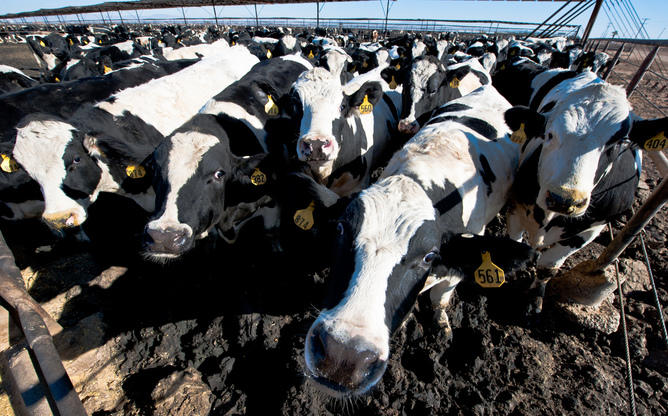
A quick web search revealed that the IVF procedure is commonly used in livestock. Here’s a graphic example of that (literally):
All of which leads nicely in to the Science Alert story.
ooOOoo
These are the world’s first puppies born through IVF
Cutest science ever.
PETER DOCKRILL 11 DEC 2015
The world’s first litter of puppies born through in vitro fertilisation (IVF) represents the culmination of decades of research and has resulted in seven adorable pups called Cannon, Red, Green, Cornelia, Buddy, Kiwi and Ivy le Fleur.
But the achievement goes beyond almost intolerable cuteness. The researchers say successfully breeding puppies via IVF opens the door for saving endangered canid species and using gene-editing techniques to eradicate heritable diseases in dogs.
“Since the mid–1970s, people have been trying to do this in a dog and have been unsuccessful,” said Alex Travis, a reproductive biologist from Cornell University.
To develop the litter of pups, the researchers had to fertilise eggs from donor mothers with sperm from donor fathers in the lab, before transferring the embryos to a host female. 19 embryos were transferred to the host female in total, who gave birth to seven healthy pups.
Credit: Cornell University
Two of the pups came from a beagle mother donor and a cocker spaniel father donor, and the other five came from two pairings of beagle mothers and fathers.
The team had to overcome a number of challenges to make the process work. Picking the right time to collect mature eggs from the female oviduct proved difficult, as dogs’ reproductive cycles occur only twice per year typically. The researchers found delaying the egg collection by one day resulted in greater fertilisation than previous attempts.
An additional barrier was preparing the sperm for fertilisation, which is normally performed by the female tract. But the researchers found they could simulate these conditions by adding magnesium to the cell culture. “We made those two changes, and now we achieve success in fertilisation rates at 80 to 90 percent,” said Travis.
The researchers’ IVF process, described in PLOS One, will enable conservationists to store the semen and eggs of endangered canids and also help protect rare dog breeds.
Credit: Cornell University
“We can freeze and bank sperm, and use it for artificial insemination,” said Travis. “We can also freeze oocytes, but in the absence of in vitro fertilisation, we couldn’t use them. Now we can use this technique to conserve the genetics of endangered species.”
The IVF process should also lead to better genome-editing techniques in the future. This issue is particularly pertinent in light of the way that humans have bred dogs over many centuries. With the paired selection of mates for desired traits leading to detrimental genetic baggage due to inbreeding, this gives researchers a chance to eliminate diseases that certain breeds are now predisposed to.
“With a combination of gene-editing techniques and IVF, we can potentially prevent genetic disease before it starts,” said Travis.
We don’t always hear a lot about endangered canid species, but here are five candidates that this research will helpfully be able to help sooner rather than later.
ooOOoo
If you are like me and rarely follow the links in online stories then let me alert you to the last one. It’s an article in Scientific American that opens, thus:
The 5 Most Endangered Canine Species
By John R. Platt on May 9, 2013
Domesticated dogs are some of the most popular animals on the planet, but their cousins in the wild aren’t always as beloved. For thousands of years humans have persecuted wolves, jackals, dingoes, foxes and other members of the family Canidae, pushing many species into or close to extinction. Here are five of the most endangered canine species and subspecies, three of which only continue to exist because a few people and organizations have taken extraordinary efforts to save them.
I don’t have copyright permission to offer more. So all I will do is to list the names of those five most endangered species:
We humans take self-awareness for granted. The key measure, as I understand it, is our ability to recognise ourselves, as in a mirror or photograph, for example.
I have more than once mentioned in posts in this place, that the evolutionary journey for us humans and our canine companions has resulted in the two species now sharing a number of psychological and physical ailments.
But what has been implicitly understood is that the one thing that dogs and us do not share is self-awareness. Hitherto, it has been believed that dogs do not recognise themselves in the mirror test.
All of which is an introduction to an item that was recently posted on the ScienceAlert website and was brought to my attention by dear friend Dan Gomez.
ooOOoo
Guise Barbiani, Flickr
Dogs show signs of self-consciousness in new ‘sniff test’ We knew it!
BEC CREW 10 DEC 2015
Self-awareness might seem like the most basic part of life to us humans, but it’s a surprisingly rare concept when it comes to other animals. While great apes, dolphins, orcas, rhesus macaques, Eurasian magpies, and a single Asiatic elephant have all passed the self-recognition test, everything from pandas and pigeons to sea lions, gorillas, and several species of monkey have failed to show signs of consciousness.
Dogs were also on that list of failures – until now. Traditionally, self-consciousness is evaluated via the ‘mirror test’. If an animal uses its own reflection to examine or touch a red mark that’s been applied to its body without its knowledge, scientists can confirm that they possess some sense of self. But what if the animal isn’t that visually oriented?
“I believed that because dogs are much less sensitive to visual stimuli with respect to what, for example, humans and many apes are, it is likely that the failure of this and of other species in the mirror test is mainly due to the sensory modality chosen by the investigator to test the self-awareness and not, necessarily, to the absence of this latter,” says evolutionary biologist Roberto Cazzolla Gatti from Tomsk State University in Russia.
Gatti was prompted into this line of thinking by the fact that in past mirror tests, dogs have shown no interest in looking at their reflection in the mirror, but they will go ahead and sniff the area and possibly even urinate around it. While this got them a big old “fail” in previous studies, Gatti thought the behaviour warranted a closer look.
Back in 2001, renowned animal behaviour expert, Marc Bekoff, investigated the ‘mirror sniffing’ phenomenon via an experiment dubbed the ‘yellow snow test’. Yep it’s exactly what it sounds like. Over a five-year period, Bekoff took his dog Jethro on walks during the winter months, and timed how long he would sniff clumps of snow soaked in his own or other dogs’ urine.
“Bekoff would wait until Jethro or other known female and male dogs urinated on snow, and then scoop up the clump of yellow snow as soon as Jethro was elsewhere and did not see him pick it up or move it (Bekoff used clean gloves each time and took other precautions to minimise odour and visual cues).
Bekoff then moved the yellow snow varying distances down the path so that Jethro would run across the displaced urine: (i) within about 10 seconds, (ii) between 10 and 120 seconds later, or (iii) between 120 and 300 seconds later. After Jethro arrived, Bekoff recorded how long he sniffed at the yellow snow, whether he urinated over it using the typical male raised-leg posture, and whether urination immediately followed the sniffing (‘scent marking’).”
Not surprisingly, Jethro paid a lot less attention to his own urine than he did to that of other dogs, so Bekoff concluded that his pet had to have some sense of self to be able to distinguish between scents. But with a sample size of one, the experiment wasn’t exactly going to set the scientific community on fire.
Gatti decided to come up with something a little more convincing. Called the Sniff Test of Self-Recognition (STSR), the experiment involved collecting urine samples from four stray dogs and systematically exposing them to the scents. He repeated this four times a year at the beginning of every season.
“I placed within a fence five urine samples containing the scent of each of the four dogs and a ‘blank sample’, filled only with cotton wool odourless,” he says. “The containers were then opened and each dog was individually introduced to the inside of the cage and allowed to freely move for 5 minutes. The time taken by each dog to sniff each sample was recorded.”
Just like Jethro, each dog spent way more time smelling the urine samples of other dogs than their own, which supports the hypothesis that they know their own scent and aren’t that interested in it. The result was stronger the older the dog, which suggests that self-awareness develops with age.
It might seem obvious that dogs would know their own scent, but if you’ve ever seen a dog bark at its own reflection, or completely ignore it – totally unaware of its own appearance and movements – you can see the significance.
“I demonstrated that even when applying it to multiple individuals living in groups and with different ages and sexes, this test provides significant evidence of self-awareness in dogs and can play a crucial role in showing that this capacity is not a specific feature of only great apes, humans, and a few other animals, but it depends on the way in which researchers try to verify it,” says Gatti.
Now, I know what you’re thinking: that sample size of four is pretty crap. And yep, it is, so we can’t really call this an official “pass” just yet. But the fact that we may well need to rethink the mirror test and figure out how to better align it with how certain species see the world is certainly worthy of a proper investigation. Certain behaviours such as empathy have been linked to self-awareness, and thanks to the ‘yawn test’, there’s evidence that dogs feel empathy towards their owners.
We’ll just have to wait and see if scientists are prepared to conduct a giant yellow snow test to put this conundrum to bed once and for all. In the meantime, here’s dolphins passing the mirror test adorably:
ooOOoo
Speaking of self-awareness, today, December 12th, is the centenary of the birth of Frank Sinatra.
Photo of Frank SINATRA, posed, c.early 1960s (Photo by GAB Archive/Redferns)
What clues does your dog’s spit hold for human mental health?
This is not a spoof. Apparently the closeness of the relationship between dogs and humans holds real scientific value.
Just my way of introducing a most fascinating and interesting item that recently appeared on The Conversation blogsite. (And see my note at the end of today’s post.)
ooOOoo
What clues does your dog’s spit hold for human mental health?
December 2, 2015
Elixir Karlsson, Assistant Professor of Bioinformatics and Integrative Biology, University of Massachusetts Medical School
There goes some precious DNA…. Graeme Bird, CC BY-NC-ND
Dogs were the first animals people domesticated, long before the earliest human civilizations appeared. Today, tens of thousands of years later, dogs have an unusually close relationship with us. They share our homes and steal our hearts – and have even evolved to love us back. Sadly, they also suffer from many of the same difficult-to-treat psychiatric and neurological diseases we do.
I learned this firsthand about six years ago, when my sister Adria adopted Beskow, a beautiful,
Beskow, in fine spirits. Elinor Karlsson, CC BY-ND
boisterous, black and white mutt. Beskow became my constant companion on my morning runs along the Charles River. Her joy in running was obvious to everyone we passed, and she kept me going mile after mile.
When not running, though, Beskow suffered from constant anxiety that left her stressed and unhappy – on edge around other dogs and prone to aggressive behavior. Beskow had trouble even playing outdoors, since she was compelled to attend to every sound and movement. Working one-on-one with skilled behaviorists and trainers helped immensely, but poor Beskow still never seemed able to relax. Eventually, Adria combined the intensive training with medication, which finally seemed to give Beskow some relief.
Beskow’s personality – her intelligence, her focus and her anxiety – was shaped not only by her own life experiences, but by thousands of years of evolution. Have you ever known a dog who would retrieve the same ball over and over again, for hours on end? Or just wouldn’t stay out of the water? Or wasn’t interested in balls, or water, but just wanted to follow her nose? These dogs are the result of hundreds of generations of artificial selection by human beings. By favoring useful behaviors when breeding dogs, we made the genetic changes responsible more common in their gene pool.
When a particular genetic change rapidly rises in prevalence in a population, it leaves a “signature of selection” that we can detect by sequencing the DNA of many individuals from the population. Essentially, around a selected gene, we find a region of the genome where one particular pattern of DNA – the variant linked to the favored version of the gene – is far more common than any of the alternative patterns. The stronger the selection, the bigger this region, and the easier it is to detect this signature of selection.
In dogs, genes shaping behaviors purposely bred by humans are marked with large signatures of selection. It’s a bit like evolution is shining a spotlight on parts of the dog genome and saying, “Look here for interesting stuff!” To figure out exactly how a particular gene influences a dog’s behavior or health, though, we need lots more information.
To try to unravel these connections, my colleagues and I are launching a new citizen science research project we’re calling Darwin’s Dogs. Together with animal behavior experts, we’ve put together a series of short surveys about everything from diet (does your dog eat grass?) to behavior (is your dog a foot sitter?) to personality (is your dog aloof or friendly?).
Any dog can participate in Darwin’s Dogs, including purebred dogs, mixed breed dogs, and mutts of no particular breed – our study’s participants will be very genetically diverse. We’re combining new DNA sequencing technology, which can give us much more genetic information from each dog, with powerful new analysis methods that can control for diverse ancestry. By including all dogs, we hope to be able to do much larger studies, and home in quickly on the important genes and genetic variants.
A beagle considers making the saliva donation. Stephen Schaffner, CC BY-ND
Once an owner has filled out the survey, there’s a second, crucial step. We send an easy-to-use kit to collect a small dog saliva sample we can use for DNA analysis. There’s no cost, and we’ll share any information we find.
Our plan is to combine the genetic data from many dogs and look for changes in DNA that correlate with particular behaviors. It won’t be easy to match up DNA with an obsession with tennis balls, for instance. Behavior is a complex trait that relies on many genes. Simple Mendelian traits, like Beskow’s black and white coat, are controlled by a single gene which determines the observable characteristic. This kind of inherited trait is comparatively easy to map. Complex traits, on the other hand, may be shaped by tens or even hundreds of different genetic changes, each of which on its own only slightly alters the individual carrying it.
Adding to the complexity, environment often plays a big role. For example, Beskow may not have been as anxious if she’d lived with Adria from puppyhood, even though her genetics would be unchanged.
Darwin’s Dogs team member Jesse McClure extracts DNA from a sample. Elinor Karlsson, CC BY-ND
To succeed, we need a lot of dogs to sign up. Initially, we’re aiming to enroll 5,000 dogs. If successful, we’ll keep growing. With bigger sample sizes, we’ll be able to tackle even more complex biological puzzles.
Understanding the biology underlying a disease is the first step in developing more effective treatments – of both the canine and human variety. For example, genetic studies of narcolepsy in Doberman pinschers found the gene mutation causing the disease – but only in this one dog population. Researching the gene’s function, though, led to critical new insights into the molecular biology of sleep, and, eventually, to new treatment options for people suffering from this debilitating disease.
Darwin’s Dogs is investigating normal canine behaviors as well as diseases. We hypothesize that finding the small genetic changes that led to complex behaviors, like retrieving, or even personality characteristics, like playfulness, will help us figure out how brains work. We need this mechanistic understanding to design new, safe and more effective therapies for psychiatric diseases.
And Beskow? Six years later, she is as wonderful as ever. While still anxious some of the time, the
Beskow with one of her loving family members. Adria Karlsson, CC BY-ND
medication and training have paid off, and she enjoys her daily walks, training and playtime. She still gets very nervous around other dogs, but is a gentle, playful companion for my sister’s three young children.
We are now sequencing her genome. In the next few months, we should have our first glimpse into Beskow’s ancestry. We know she is a natural herder, so we’re curious to find out how much her genome matches up to herding breeds, and which genes are in that part of the genome.
This is an incredibly interest research project with far-reaching implications for us humans. I have written to Professor Karlsson to double-check that anyone who reads this can participate, even if living outside the USA, and will update this post as soon as I hear back from her.
Do share this as far and wide as you can for the benefits for us humans are clear and obvious.
Not a week goes by without me gaining more and deeper understanding of just how wonderful and fabulous our dogs are.
Your dog can cue to you open the door by ringing a bell, but how about taking it to the next level and teaching your dog to open the door by himself? In fact, there’s a handy trick built into this that we will introduce later on! This video walks you through all the steps to opening doors and drawers:
Hold an object
If your dog likes to play fetch or tug, it may be a great idea to teach him how to hold and carry an object. It’s a new way for a dog to think about holding a toy, since once the dog has a grip on it, he needs to wait for you to give the cue to release it. This trick is also included in a more complicated trick, which is next on our list. But first, here’s a video that shows you how to master this trick:
Fetch something from the fridge or cupboard
When you have the training down for touch, opening the door, knowing the names of objects, and holding an object, it’s just a matter of putting the steps together to teach your dog to fetch an item from somewhere in the house. A popular version of this trick is of course to fetch a beer from the fridge! But maybe start out with a less fizzy drink option, just in case.
Back up
An interesting trick to teach your senior dog is how to walk backwards. It’s a great one to help with getting him to think about using his body a little differently. Most dogs aren’t really aware of where their hind end is — it’s just the part that follows their front end. By teaching your dog to walk backward, you’re teaching him to be aware of where his back legs are going. It’s great for both mental and physical agility.
Find it
Keep life interesting for your dog by creating a game around using his nose to find a reward. This is a great trick especially for dogs whose hearing or sight has diminished with age. The trick teaches them to use their noses even more purposefully, using scent work to find the hidden treat or toy. Once you teach your dog how to find it, you can have the “it” be something different every time you play to keep your dog at the top of his game. This video shows an older Labrador learning the steps to the “find it” game and having fun playing:
Tuck himself in bed
It’s surprising how much fun you can have with a trick that only requires your dog to grab a blanket and roll over. This adorable trick is great for dogs of any age, and is an easy (and cozy) trick for your senior dog to learn. You simply teach your dog to lie down on a blanket, grab and hold the corner of it, and roll over so he tucks himself into bed. For senior dogs who like to snooze in extra warm blankets, this is a dream trick. Here’s how it works:
ooOOoo
So there you are. Plenty to keep you and your senior dogs engaged for a long time. Once again, if you missed part one then that was published yesterday.
The household here in Oregon has a number of seniors, both dogs and humans. And while I’m pretty sure that this senior human is practically past the point of learning new tricks, apparently it doesn’t apply to our old dogs.
So enjoy this recent article that appeared on Mother Nature News.
oooooh
Teaching an old dog new tricks is not only possible, but a lot of fun!
By: Jaymi Heimbuch, November 30, 2015
Old dogs can learn new tricks with ease! (Photo: Annette Shaff/Shutterstock)
The old saying goes that you can’t teach an old dog new tricks, but we know a lot of old sayings are wrong — this one included. Of course we can teach old dogs new tricks! In fact, it’s a great way to keep your dog mentally stimulated and having fun throughout his life.
One important thing to keep in mind about teaching senior dogs new tricks and behaviors is the dog’s level of physical ability. Many senior dogs are perfectly able, but if your dog is getting achy in the joints or has other limitations that come with age, keep these in mind. Older dogs may have joint pain or arthritis and have a harder time jumping or even sitting for long periods. They may also have dental issues which may limit the tricks they can do using their mouths. And they may also have hearing or vision problems which alter not only what kinds of tricks you want to teach them but also the way in which you teach them. So it’s important to know what your dog’s physical limitations are when you’re thinking up new tricks, and not push him to the point of possible injury.
While your dog may be past the days of learning to jump through hoops or leap over walls, there is a huge range of tricks that keep mobility issues in mind, and which senior dogs will have a lot of fun learning. Some of the tricks listed here build on each other and gain complexity, so you can keep things interesting for your dog for weeks at a time while training.
Touch
This is such a great trick to use as a foundation for other tricks, from flipping light switches on or off to coming back to your side. And it’s incredibly easy for your dog to learn and do. This is great for older dogs because you can make it really simple at first and build complexity into it after your dog has it down. To start out, you train your dog to do hand targeting. Here’s a video that shows not only how to train your dog to touch your hand, but many of the uses of the behavior:
Teaching your dog to yawn is all about “capturing behavior” with clicker training. It’s much like training your dog “touch” but this time, you have to wait for your dog to offer the behavior and capture it when it happens. Click — or say a key word like “Yes” — whenever you catch your dog yawning, and then reward him with treats or a game with a toy. After awhile, your dog begins to associate the yawn as being a trick that earns a reward. Here’s a video that demonstrates capturing different behaviors that you can turn into cute tricks, including yawning on command:
Even when you’re a grown-up, you have to pick up your toys when you’re done playing. Teaching your dog this tidy behavior will keep him or her a little more active in a low-key way, and thus help loosen up those stiff joints and muscles without putting a strain on their body. Plus, it’s a fun game that you can play over and over, not just on clean-up duty.
Stretch your dog’s mental abilities by teaching him the name of different objects or toys. This is a great way to teach your dog to fetch certain items from the toy box or even various objects from around house. You can start off with a few items from the toy box or simply get rolling with items you may want him to fetch for you, including hats, keys, shoes, blankets and so on.
Though it may take a while for your dog to truly grasp the name for each item at first, soon he will catch on to what the name game is all about and will likely grasp names faster when introduced to new objects.
Here’s a video that shows how to begin teaching a dog the name of an item, and how to add more items into the mix:
Your senior dog may be house-trained, but is he also trained to tell you precisely when he wants or needs to go out? You can give your older dog a great tool to tell you what he needs by teaching him to ring a bell as a cue to go outside. This video shows the progression of teaching a dog to touch the bell, and then eventually transition to learning that ringing the bell means their human opens the door for them.
One of the classic lessons we can learn from our dearest dogs.
In yesterday’s post, towards the end of the essay by Russell McLendon was the following paragraph:
All this may seem like an esoteric quest for neuroscientists, but it’s about more than just academic curiosity. By knowing which parts of the human brain generate our sensation of happiness, we might develop more accurate ways to test methods of becoming happier, like travel, exercise or meditation.
I have written before on the subject of stillness and how important it is for us humans. That was a post back in August where I shared an interesting talk by Pico Iyer The Art of Stillness.
Anyway, back to yesterday’s post and the essay that was linked to from the word “meditation”. An essay that I am going to republish in full, within the terms of Mother Nature Network.
ooOOoo
Russell Simmons says meditation is the key to greater happiness
Business magnate shares the benefits and practice of daily meditation in his new book ‘Success Through Stillness.’
For those wondering if the daily practice of meditation really works, Russell Simmons has both a succinct response and a more in-depth answer totaling more than 220 pages.
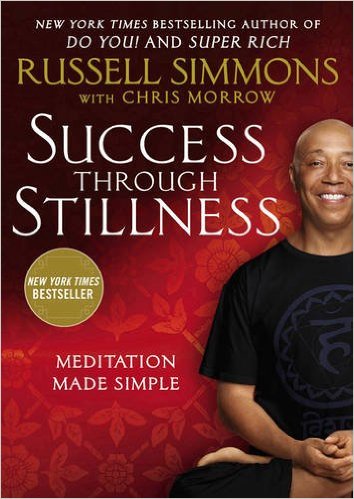
“Today my new book ‘Success Through Stillness: Meditation Made Simple’ comes out,” he recently wrote in a blog post. “As the title suggests, it is a very straight-forward, easy-to-digest guide on how to get past whatever misconceptions or apprehensions you might have about meditation and learn how to use this simple yet incredibly effective tool.
“As I move around talking about the book, one question I seem to get asked over and over again is, ‘Does meditaion really work?’ And my answer is always an unequivocal ‘YES!'”
The 56-year-old vegan and healthy living guru, who has built a net worth estimated at more than $340 million, says he was skeptical at first that 40 minutes of daily meditation could do anything to stem the anxiety he was feeling.
“The idea of being still and operating from a calm place is one that I never would’ve thought would’ve suited my lifestyle or my goals or the way that I pursue life, ’cause I pursue everything with a vigor,” he told Yahoo! News.
Simmons explains that he practices mantra-based meditation, in which one repeats a word or sound for a period of 20 minutes. Simmons repeats the word “Rum” over and over, a process he says has led him to greater happiness.
“I come out of meditation, and sometimes I just start giggling, I feel so happy, right in the mornings,” he shares.
According to a study released earlier this year, while feelings of happiness may not necessarily occur for all practitioners of meditation, reductions in anxiety, depression and possibly pain are possible.
“Meditation helps young people and adults to get control of the noise,” says Simmons. “The noise is the cause of almost all sickness and sadness. If we can calm the noise, our relationship with the world benefits tremendously.”
ooOOoo
If you would like to buy a copy of Simmons’ book, in Kindle, Hardback or Paperback formats, then do click on the link below.
Chapter 8 of my book is entitled: Behaviours and Relationships. It opens thus:
“It is all to do with relationships.”
I heard this many years before the idea of writing this book came to me. Heard it from J, who was referred to in the previous chapter. J was speaking of what makes for happy people in all walks of life. It’s one of those remarks that initially comes over as such an obvious statement, akin to water being wet or the night being dark, that it is easy to miss the incredible depth of meaning behind those seven words.
Humans are fascinating. Every aspect of who we are can be seen in our relationships. How we relate to people around us, whether it be a thirty-second exchange with a stranger or a long natter with friends whom we have known for decades, including our partners and family relations. The core relationship, of course, the relationship that drives so many of our behaviours is the relationship that we have with ourself. That being rooted in our relationship experiences with the adults around us when we were young people.
When one looks at the performance of successful companies one often sees, nay one always sees, people being valued. The directors and managers of those companies understand that if people are valued then a myriad of benefits flow from that approach to relationships. Moving out of the workplace, the relationships that people have are always stronger and happier if those individual persons know they are valued. Moving beyond people, our dogs, and many other animals, are always stronger and happier if they feel valued. It’s the difference between empathy and sympathy.
Recently over on Mother Nature Network there was an essay presented by Russell McLendon who is science editor for MNN. It is about happiness.
ooOOoo
Happiness is all in your head
Scientists say they’ve found where happiness happens in the brain. What does that mean?
By: Russell McLendon, November 24, 2015
Understanding how our brains generate happiness could help make it less elusive, researchers say. (Photo: Andrew Vargas/Flickr)
Everyone wants to be happy. Yet despite all our efforts in pursuit of this prized emotion, it can be a surprisingly nebulous goal. What is “happiness,” exactly?
That question has puzzled philosophers for thousands of years, and it’s still tricky for anyone to tackle. But recent advances in neuroscience have finally begun to shed light on it, and now a new study claims to have found an answer. Being told happiness is “all in your head” may seem both obvious and dismissive, but in this case the specifics are also empowering. The more we know about how (and where) happiness happens, the less helpless we’ll be to summon it when we need it.
By comparing magnetic resonance imaging (MRI) with questionnaires about emotional states, researchers from Kyoto University in Japan say they’ve traced the experience of happiness to a specific part of the human brain. Overall happiness, they conclude, occurs when positive emotions combine with a sense of life satisfaction in the precuneus, a region of the medial parietal lobe that’s linked to important brain tasks like episodic memory, self-reflection and consciousness.
Psychologists already distinguish between broad life satisfaction and “subjective well-being,” since happiness often seems to fade during bad moods without necessarily plunging us into deeper existential despair. But by revealing the neural mechanics of how these feelings combine to create overall happiness, the authors of the new study hope to make it easier to objectively quantify this mysterious and elusive emotion.
“Over history, many eminent scholars like Aristotle have contemplated what happiness is,” lead author Wataru Sato says in a press release. “I’m very happy that we now know more about what it means to be happy.”
Scientists used MRI brain scans to identify happiness in a brain region known as the precuneus. (Photo: Kyoto University)
To pinpoint the location of happiness, Sato and his colleagues first used MRI to scan the brains of their study subjects. Those participants then took a survey, which asked about their general sense of happiness, the intensity of their emotions and the degree of their overall life satisfaction.
After analyzing the data, the researchers discovered that those who scored higher on the happiness survey also had more gray matter mass in the precuneus. That means this brain region is larger in people who feel happiness more intensely, feel sadness less intensely and who are better able to find meaning in life.
“To our knowledge, our study is the first to show that the precuneus is associated with subjective happiness,” the researchers write in the journal Scientific Reports.
Complex phenomena like happiness rarely boil down to a single brain region, but other recent research also points to an outsized role for the precuneus. A study published this month links impaired connectivity in the precuneus to depression, for example, and a 2014 study suggests the region is a “distinct hub” in the brain’s default-mode network, which is active during self-reflection and daydreaming.
All this may seem like an esoteric quest for neuroscientists, but it’s about more than just academic curiosity. By knowing which parts of the human brain generate our sensation of happiness, we might develop more accurate ways to test methods of becoming happier, like travel, exercise or meditation.
“Several studies have shown that meditation increases grey matter mass in the precuneus,” Sato says. “This new insight on where happiness happens in the brain will be useful for developing happiness programs based on scientific research.”
ooOOoo
It’s an unscientific opinion from me but I truly believe that humans have a bias towards happiness. And if there’s one animal that we can learn happiness from, it’s the dog!
Published on Nov 6, 2015
Another try at a slow motion video of Abbey shaking the water off after a bath
Published on Apr 24, 2014
Stunning, Perfection, Breathtaking – just a few words that describe this 3 minute surfing clip that shows Ian Walsh catching huge waves and making it look effortless.
Well over two million viewings.
Music: Versailles
Warner // Chappell Production Music
Published on Oct 22, 2014
This is a clip from our movie “THE SECRET LIFE OF TREES”.
More on www.homan.pl
Finally, back to slow animal shakes! (And I must acknowledge Mother Nature News for the idea for today’s picture parade.)
Published on Mar 21, 2013
Why do wet furry mammals shake? Si and Sam give some of their favourite animals a shower to uncover the science behind the ‘wet dog shake’. Sam caught up with Andrew Dickerson from Georgia Institute of Technology to find out more about the science… we’ll have the full interview for you soon.
Locavore or vegetarian? What’s the best way to reduce climate impact of food?
With Thanksgiving Day just behind us and Christmas just around the corner, this is the season of feasting.
Just last Monday I published an essay written by George Monbiot, Pregnant Silence, that highlighted the impact on our climate of modern food production. Here are a couple of paragraphs from that essay:
Freshwater life is being wiped out across the world by farm manure. In England, as I reported last week, the system designed to protect us from the tide of crap has comprehensively broken down. Dead zones now extend from many coasts, as farm sewage erases ocean life across thousands of square kilometres.
Livestock farming causes around 14% of the world’s greenhouse gas emissions: slightly more than the output of the world’s cars, lorries, buses, trains, ships and planes. If you eat soya, your emissions per unit of protein are 20 times lower than eating pork or chicken, and 150 times lower than eating beef.
Thus it seemed both timely and appropriate to republish a further essay on the topic. This one published in The Conversation by Elliott Campbell, who is Associate Professor, Environmental Engineering, at the University of California. It is republished here under the terms of essays published in The Conversation.
ooOOoo
Locavore or vegetarian? What’s the best way to reduce climate impact of food?
This year’s Thanksgiving feast falls only a few days before the start of the global climate summit in Paris. Although the connections are not always obvious, the topic of food – and what you choose to eat – has a lot to do with climate change.
Our global agriculture system puts food on the table but it also puts greenhouse gases (GHG) in the air, which represent a huge portion of global emissions. GHG emissions come directly from farms such as methane from cows and nitrous oxide from fertilized fields, while other emissions come from the industries that support agriculture, such as fertilizer factories that consume fossil fuels.
Still other emissions come from natural lands, which have massive stocks of natural carbon stored in plants and soils. When natural lands are cleared to make room for more food production, the carbon in those natural pools is emitted to the atmosphere as carbon dioxide.
Adding all these emissions together makes agriculture responsible for between roughly one fifth and one third of all global anthropogenic, or man-made, greenhouse gas emissions.
Undoubtedly, broad emissions reductions must come from political action and industry commitments. Nevertheless, an enlightened consumer can also help achieve meaningful reductions in GHG emissions, particularly for the case of food. The trick is to understanding what food means for your personal carbon footprint and how to effectively shrink this footprint.
On par with electricity
Zooming in from the global picture on emissions to a single home reveals how important our personal food choices are for climate change. You can use carbon footprint calculators, such as the University of California CoolClimate Tool, to get an idea of how important food is in relation to choices we make about commuting, air travel, home energy use, and consumption of other goods and services.
For the average U.S. household, food consumption will be responsible for about the same GHG emissions as home electricity consumption for the average US household.
Measuring the greenhouse gas impact of different foods is complex but in general, it’s commonly agreed that plant-based diets have a lower carbon footprint. davidwoliver/flickr, CC BY-NC
That’s a significant portion of an individual’s GHG footprint but it could be seen as a blessing in disguise. While you may be stuck with your home or your vehicle for some time and their associated GHG emissions, food is something we purchase with great frequency. And every trip to the grocery store or farmer’s market is another opportunity for an action that has a significant and lasting impact on our climate.
Making concrete decisions, though, is not always straight-forward. Many consumers are faced with a perplexing array of options from organic to conventional foods, supermarkets to farmers markets, and genetically modified organisms to more traditional varieties.
And in truth, the carbon footprint of many food options is disputed in the scientific literature. Despite the need for more research, there appears to be a very clear advantage for individuals to chose a more plant-based diet. A meat-intensive diet has more than twice the emissions of a vegan diet. Reducing the quantity of meat (particularly red meat) and dairy on the table can go a long way to reducing the carbon footprint of your food.
Food miles and water recycling
Local food systems are popularly thought to reduce GHG emissions through decreased food transport or food miles. But in many cases food miles turn out to be a meaningful but small piece of the overall GHG emissions from food.
For example, a broad analysis of the US food supply suggests that food miles may be responsible for less than 10% of the GHG emissions associated with food. This general trend suggests that where you get your food from is much less important than first-order issues, such as shifting to a more plant-based diet.
A little-appreciated way of reducing the carbon footprint of food is to recycle nearby water rather than pump it long distances. The Pajaro Valley Water Management Agency (PVWMA) Water Resources Center in California sanitizes wastewater for direct use or blending with ground (well) water. US Department of Agriculture, CC BY
Where, then, does this leave a rapidly emerging local food movement?
For starters, there are some cases where food miles have greater importance. For example, food miles can play a big part in the carbon footprint of foods when airplanes or refrigeration are required during transport.
There is, however, untapped potential for locally produced food to deliver carbon savings around water and fertilizers.
When water is pumped long distances, it can add to food’s carbon footprint. Re-use of purified urban wastewater for irrigating crops represents one strategy for addressing this challenge but is only economically and environmentally feasible when food production is in close proximity to cities.
Using fossil fuels to produce fertilizers, such as ammonia, can also be a big piece of the carbon footprint of food. Nutrients in reclaimed wastewater and urban compost may provide a low-carbon alternative to fossil fuel-based fertilizers. But similar to water re-use, reusing nutrients is most easily done when there is a short distance between food production and consumption.
To be sure, buying local food doesn’t imply that food or nutrient recycling has happened. But developing local food systems could certainly be a first step towards exploring how to close the water and nutrient loop.
ooOOoo
I am sure many, as with me, tend not to follow through on all the links in an online essay. But there was one that really caught my eye. It was the CoolClimate Calculator on the Berkeley Edu website. It allows one to fill in a number of figures in terms of living, travel, food and more, and determine one’s total tons CO2/year emitted and how that compares with other people in your neighbourhood. Unfortunately, it only calculates CO2/year for US locations. Does anyone know of similar calculators online in, say, the United Kingdom? Would love to know.
 Moving on!




 I truly envy a dog’s ability to be still so easily!



 Learning from Dogs