Category: Education

What to say to the kids.

Reflections on what we leave behind.

I included in yesterday’s post the interview with Bill Kotke and his concern that humanity’s greed, and that’s the correct term in my view, focusing on each generation having more, howsoever one defines ‘more’, was utterly at odds with a sustainable future on the only home we have: Planet Earth.  A finite planet in a finite solar system.

On Monday I was chatting with Roger D. back in the old country. It was Roger who introduced me to gliding back in the late 70s. Later we were in business together in Colchester, Essex and we still keep in touch.

Anyway, Roger was bemoaning the current state of affairs in the UK regarding Brexit and went on to say that every economic strategy offered by this or that UK Government was about growth. Whether we are talking economic growth, improvement in living standards or population growth why are there no leading figures in any leading government standing up and saying this can’t go on! Because it can’t!

world_population_1050_to_2050We are presently a global population of 7.5 billion. This year alone, as of today, there have been 56,000,000 deaths. But also, as of today, there have been 133,000,000 births. (I rounded the figures but what difference does it make!) That’s a growth of 77 million persons in this one year. It cannot go on!

Bill Kotke also spoke of soil loss. Just last Sunday there was a Care2 item about soil loss. From which I extract:

Could soil ever actually run out?

Yes. If we continue to harm and degrade topsoil at the current rate, it’s estimated that the world could lose all its topsoil within 60 years.

Topsoil is the uppermost layer of soil on the surface of the earth. It’s the most fertile type of soil that typically contains lots of nutrient-rich organic matter from broken down plants and other organisms. Topsoil is also alive with beneficial microbes, fungi and critters like earth worms, which feed on the organic matter.

The deeper layers of soil beneath the topsoil are not nearly as rich. They are primarily made up of decomposing rock that provides the raw material for future topsoil as well as a substrate for deeply rooted plants to anchor in.

If the delicate ecosystem within topsoil is disrupted, it will essentially die. Plants can’t grow in topsoil that doesn’t have abundant organic matter and thriving populations of microbes.

Yes, there are street protests about this political action or that political action but why aren’t we seeing tens of thousands on the streets protesting about the loss of our topsoil!!

Moving on.

There was a recent essay from Patrice Ayme in which he wrote about the Australian Asthma Thunderstorm. Just read this long extract from that essay:

(November 29th, 2016 Italics are from the story as presented in the New York Times)

Mr. McGann was one of thousands of people in Melbourne having an attack of thunderstorm asthma. About 8,500 people went to hospitals. Eight have died, and one remains in intensive care more than a week after a thunderstorm surged across Melbourne, carrying pollen that strong winds and rain broke into tiny fragments.

Perennial ryegrass seeds were swept up in whorls of wind and carried from four million hectares of pasturelands (about 9.9 million acres) that lie to Melbourne’s north and west. If broken into fragments, they are so fine that they can be inhaled.” 

Actually what also lie north and west of Melbourne are giant fields of canola. Consider the following propaganda picture:

Mr. McGann did not end up in the hospital.  “Every breath I took made the next breath harder,” he said, adding that he had no family history of asthma. “I just didn’t realize it could have the effect it had.”

Grass pollen is the primary source of allergies in southern Australia, and tracking the data allowed scientists to forecast high levels of grass seeds in the atmosphere on Nov. 21. Still, Ms. Hennessy said, the government was taken by surprise.”

Surprise, indeed, this did not happen before, by two orders of magnitude. How come so much more severity?

My lawyer’s theory is different.  It evolved from my own observations and theories of why asthma and allergies, let alone weird cancers, have been augmenting spectacularly. There are around 150,000 artificial, man-made chemical products in use. By medical drug standards, they are untested (in earlier essays, I mentioned 80,000, which is the number brandished in the USA; however, French specialists talk about 150,000 untested chemicals.).

Canola (or rapeseed), Brassica napus, is an oilseed crop which is cultivated for its high quality edible oil used in many foods (eg. margarines and cooking oil) and seed meal (the fibrous material left after the oil pressing process), which has a high protein content. That makes it highly desirable as a stock feed.

In 2010-11, the Australian state of Victoria, where Melbourne is located,  produced 476 thousand tonnes of canola with a gross value of $293 million.

Control of weeds, particularly weeds from the Brassicaceae family (broadleaf), through herbicide application during the canola-growing season, significantly improves the quantity of the grain produced. Weeds compete for space, nutrients and sunlight. (African countries have dismissed that the quality of GMO seed is higher, in contradistinction with US propaganda; quite the opposite, they say)

Two genetically modified (GM) canola varieties have been developed in Australia, Roundup Ready® (by Monsanto Australia Ltd) and InVigor® (by Bayer CropSciences Pty Ltd). For maximum effect, each GM variety has been developed to be tolerant to and hence used with, a specific herbicide. The result is the mass poisoning of the planet, horizon to horizon.

The same poisoning trick is used for insecticides. To boot, the poison resistance spreads, demanding even higher doses of poison to be used in the grand outdoors..

In other words, massive quantities of poisons are put in the soil, and from there, are kicked up, in the air.

Exposed to this life destroying poisons, the body reacts by shutting down all pores. Asthma.

It cannot go on!

It is time for you and me and millions of others to be the change we want to see. Whether it’s the little things like recycling, or car sharing, or the bigger things like moving to an eco village we have to make a difference.

We have to learn from those communities that for thousands of years lived harmonious and sustainable lives on the planet. Doing so many thousands of years before farming man came on to the scene

In 1969 I spent a year in the outback of Australia as a correspondent for KotiPosti; a Finnish magazine. While I was out in the wilderness looking for Finns to write about it was impossible not to be drawn into the history of the aboriginal Australian.

ABORIGINAL AUSTRALIANS ARE descendents of the first people to leave Africa up to 75,000 years ago, a genetic study has found, confirming they may have the oldest continuous culture on the planet.
Professor Eske Willerslev of the University of Copenhagen, who led the study, says Aboriginal Australians were the first modern humans to traverse unknown territory in Asia and Australia. “It was a truly amazing journey that must have demanded exceptional survival skills and bravery,” he says.
A century-old lock of hair, given by a West Australian indigenous man to an anthropologist, has led to the discovery that ancestors of Aboriginal Australians reached Asia at least 24,000 years before another wave of migration that populated Europe and Asia.

It was back then that I truly understood the relationship that those early Australians had with the earth; with their planet. Forget religions and churches, the Aborigines had a spiritual relationship with the planet that sustained them.

I will never forget exploring quietly, just me and my wife of those days, the caves and darker recesses around the base of Ayers Rock, better called Uluru, the most amazing monolith right out there in the middle of the desert. The unmistakable signs of so many of those quiet recesses being spiritual places for those ancient people.
home-1Uluru, or Ayers Rock, is a massive sandstone monolith in the heart of the Northern Territory’s arid “Red Centre”. The nearest large town is Alice Springs, 450km away. Uluru is sacred to indigenous Australians and is thought to have started forming around 550 million years ago. It’s within Uluru-Kata Tjuta National Park, which also includes the 36 red-rock domes of the Kata Tjuta (colloquially “The Olgas”) formation.

It is just he same for the North American Indians. They have a spiritual relationship with the land.

Back to Bill Kotke’s talk. He spoke of how when each of us was the product of the fertilisation of the egg by the sperm in utero we grow first as a fish, then as a mammal and, finally, emerge as a human: “We are connected to the earth!

As you all know I am a secular humanist. But that doesn’t mean that I don’t have deep, as in spiritual, feelings for the lands and the oceans and for the wildlife of this planet

So let me close by repeating what I said at that meeting where Bill was presenting. For Bill spoke of being connected, in a heartfelt manner, with the planet. For if one is so connected then it is natural for one to want to love and protect the planet.

This is what I said:

Bill,

In 1991 I departed Gibraltar Harbour solo on my yacht Songbird of Kent heading West out across the Atlantic.

After I had settled in to the routine of being at sea, better described as settling in to being connected to the ocean, I loved watching the dolphins come up to the boat, give it the once over, raise their heads and offer me a brief eye contact and then slip away.

Then I became aware that when I was laying down on my bunk in the cabin I could sense when the dolphins were close to my hull. Each time I had that sense I would come up to the deck, briefly pausing to clip on my safety harness lest I truly joined the dolphins, and one or two of those dolphins were always by my boat.

I called this post What To Say To The Kids. Not just my son and daughter, now both mature adults, but my grandson Morten son to my daughter and her husband.

Because I feel so strongly that waiting for our leaders and politicians to lead humanity in protecting our planet is pointless. They are driven by other values.

It cannot go on!

I want to be measured by my son and my daughter, and by my grandson in due time, as a person who made a difference; even just a small one.

For I truly believe that showing love for our planet will make a difference and that is what I want to say to my kids.

We have to return to community living;  a twenty-first century version of such living. Even in the giant populations of big cities we have to reach out and form local communities. Groups of people who are driven by the imperative to curtail population growth, eager to share in as many ways as possible and totally committed to taking no more from the planet than they put in.

Because It cannot go on!

This is what I want to say to my kids.


I remember everything …

except the things I forget!

Taken in the round I don’t think I’m ageing too badly. But there is one aspect of my world that does drive me bonkers from time to time. That is a decline (and that’s putting it politely) in my short-term memory. Everything from forgetting what it was I wanted to say to Jeannie to still being unsure of finding regularly visited places in Grants Pass, our local city. To put that last point into context we moved here to Merlin, some 12 miles from Grants Pass, back in September, 2012.

Turning to the cognitive skills of our wonderful dogs it is clear to me that we can only go so far in understanding how our dogs think and how much of their world is dealing with the present supported by their memories of previous events. (Frankly, in writing the last sentence I realised how even that premise was more of a guess than a known fact.)

A recent study at Eotvos Lorand University in Budapest about the memories of dogs has been widely referred to across many news outlets. So when it appeared on the Care2 site it was a natural to republish it for all you good people.

ooOOoo

New Study Finds Dogs Remember a Whole Lot

3195202-largeBy: Laura Goldman December 2, 2016

About Laura

My doorbell has been broken for a few years, but every time my 9-year-old dog, Leroy, hears one chiming on a TV show, he looks at the front door.

Many pet owners have similar tales to tell about their dogs being able to remember long-ago experiences and events. And now we have proof that this really is possible. A new study found that dogs may have a more complex form of memory than most other nonhuman animals (sorry, elephants).

“Every move you make, every step you take, I’ll be watching you,” Sting once sang, and these lyrics could apply to our dogs, too. They’re not only watching us, but they’re remembering what they’re observing, no matter how trivial it may seem to us.

In the study at Eotvos Lorand University in Budapest, published Nov. 23 in Current Biology, 17 dogs were taught a training method called “Do As I Do.” The dogs would watch their owners perform an action. When the dogs were told, “Do it” and imitated their owners’ action, they were rewarded with a treat.

Next, the owners performed various actions but told the dogs to lie down instead of “Do it.” After a while, the dogs began lying down without being told to do so. The study’s authors noted that this showed the dogs had lost the expectation that they would be given the “Do it” command to imitate their owners.

Finally, the owners performed various actions, and when their dogs would lie down, the owners would wait either a minute or an hour and then give them the “Do it” command.

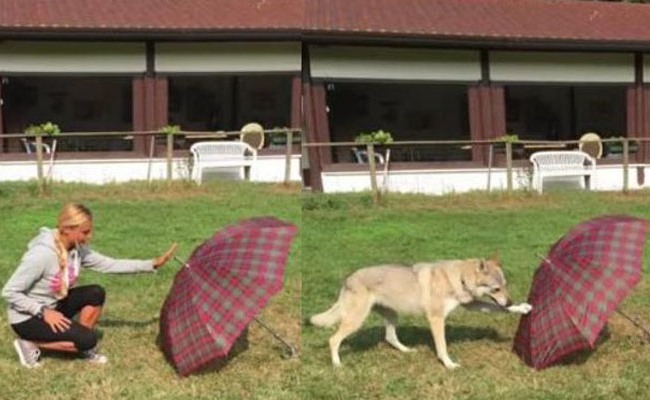
Some of the actions were unfamiliar to the dogs, such as their owners tapping on an open umbrella. The dogs would be led behind a partition, and a minute to an hour later would be led back to the umbrella and given the “Do it” command.

The dogs were able to remember what their owners had done, and tapped the umbrella with their paws.

“We cannot directly investigate what is in the dog’s mind,” psychologist Claudia Fugazza, an author of the study and owner of a Czechoslovakian Wolfdog who participated, told the Washington Post. “So we have to find behavioral evidence of what they expect or not.”

Remembering events in our lives is known as episodic memory. Until recently, only humans were thought to have this ability, but studies have found evidence that rats, monkeys and birds also have it, and so do dogs.

However, the researchers said the dogs don’t have full-fledged episodic memory, which would give them self awareness. Fugazza told NPR she didn’t think there was a method available to test whether dogs are self aware.

Victoria Templer, a behavioral neuroscientist at Providence College who wasn’t involved in the study, told NPR the results could be useful in helping scientists understand how episodic memory developed in humans and how it’s helped us to survive.

One interesting possibility Templer suggested is that “we evolved the ability to relive the past in order to imagine the future.”

ooOOoo

Of course what would be a marvelous aspect of a dog’s memory is being able to take note and remember where his male human companion left items around the house!

Behavioral issues in dogs

The most frequent strange and unwanted behavior in dogs

Delighted to offer all you good people a guest post for today. It came about as a result of an email sent to me by Alex. This is what that email said; in part:

I am writing to you on behalf of Premier Pups, one of the main partners of Doctorpup.com. We have read your materials and we found them very interesting for dog lovers.
We have made a complex and detailed article based on Dr. Gary Rybka’s knowledge and experience (from Doctorpup.com – one of the most reputable veterinarians from Ohio) and we consider that our article will bring new information for your audience. The topic of the article is related to the most frequent strange or undesirable behaviors of dogs and their main causes. In addition, Doctor Rybka offers solutions for a great part of these behaviors.
Alex
Now there’s always a balance in my mind between expert information that should be shared with you good people and any guest article not coming over as a ‘soft sell’. Clearly, Doctorpup.com is a commercial operation but their website does clearly state their Vision:
At doctorpup we welcome your questions. Our articles and videos provide a foundation for your questions and each question gives us the opportunity to provide answers specific to your pet and situation. You can present your questions through the doctorpup Forum Q & A, the live interactive chat or through our personal and emergency phone consultation options. You can upgrade your membership at anytime to allow more opportunity to benefit you and your puppy.
So this was accepted by me because of the useful information it offers but at the same time I must tell you that a) I receive no benefit, financial or otherwise, from the publication of this guest post, and b) I can offer no warranties about the accuracy or validity of the information the guest article contains. Hope that doesn’t come across as too negative; it’s not intended to so do.
ooOOoo

The most frequent strange and unwanted behavior in dogs

3ce60861-5e2d-4815-b33e-4fd721f3ffe8

Undesirable or strange behaviors exhibited by dogs during puppyhood and adolescence are known as pediatric behavior problems and it is important to address them as early as possible with behavioral modification methods. There are also adult dogs that display strange behavior, but their acceptance depend on the effects.

According to DoctorPup.com, one of the most important cause of behavioral problems is the living in urban areas where the level of exercise and play is limited.

We have made a list of the most frequent behavioral problems of dogs and potential solutions for them:

  1. How to stop destructive chewing?

Dog destructive chewing consisting in chewing and damaging the furniture or household stuff can be caused by a poor nutrition or inadequate food provisions, presence of mice or other small animals in the walls or flooring, spilled food on carpet or furniture or uninteresting toys. It is recommended to give your dog various toys and look for his interests, to hide forbidden objects or to close the doors and interrupt this unwanted behavior with a loud “no”.

  1. Dogs playing or fighting?

Play biting or play fighting can become unpleasant due to your dog’s teeth that are sharp and can cause you injuries. The behavior can be generated by teasing and rough play, long confinement periods or excited greetings. It is recommended to exercise your pup, use appropriate toys to distract him, avoid games that encourage the behavior, socialize it properly and ignore the unwanted behavior such as barking, whining or pawing for attention.

  1. Training dogs not to bite

Biting everything in his way can also become a serious problem. There has to be a consequence to be remembered by your dog, for example, talk loud and say “no” and then pretend your dog doesn’t exist, look at him with a menacing stare and use a few words with the same tone. Your dog has to know you don’t like him anymore. You can also put him in another room or use a leash to restrain him where he can see you but cannot interact with you.

  1. Dog jumping on people

Jumping on people and placing paws on visitors or family members is caused by excitement or by an acute need for attention. It is helpful to teach your pup to sit on command, avoid games and play that encourage it to jump, and use a loud and sharp voice when it jumps.

  1. Why do dogs chase their tails

Dogs that are chasing their tails are likely to have a discomfort in that area. It may seem a funny behavior and it can be caused by an excess of energy. But, if you notice that the behavior is displayed constantly, check the tail to see if you find any crusts, scaly or sensitive areas. The tail contains many nerve endings. If you find any suspicious areas, you should scrub them gently with antibacterial shampoo or soap, dry it and use an antibiotic. Tail chasing and biting can also be caused by flea allergy dermatitis or overfilled anal glands or it can be a sign of obsessive-compulsive disorder.

  1. Why does my dog lick me?

If you notice your dog licks you, it may be due to his affection or his need to getting your attention. Licking is also a sensory tool for dogs, similar to reaching out and touching something. Another explanation consists in the fact the canine mothers lick their puppies for grooming and social reasons and this behavior continues into adulthood.

  1. How to get a dog stop barking when I leave the room/house

If your dog begins to bark immediately after you leave the room, he may suffer from separation anxiety. It is recommended to tell it to sit and give him praise before leaving the house. If he stays, give him a treat or a favorite toy with praise. Try this method until you can leave the house and your dog remains there without making a sound. It is possible to take a few weeks, but it is worth. Your dog will be better at emotional self-control. It is also possible that your dog become overexcited and pee when he meets or greets you or someone else or to begin barking excessively when you arrive home. This is because he is very happy to see you or the person he greets and it is his way to show his love.

  1. Dogs love to chase their food and roll on

This behavior is caused by the fact that your dog considers the food is a prey and he wants to ensure it is dead before eating. You can give him a command to take his food to his bowl in order to understand you do not tolerate this behavior.

  1. Why do dogs tilt their heads

If your pup tilts his head, it is possible that he wants to make sense of what he hears, to identify the location of a sound or to find if he’ll get something fun or rewarding.

  1. Coprophagy in dogs

An unpleasant habit of some puppies consists in eating poop also called coprophagy and the phenomenon can appear because your dog is hungry, likes the smell and taste, is missing certain nutrients from his diet or simply thinks it is fun.

  1. Why Do Dogs Howl?

Another pups get used to howl as an instinctive or rewarding behavior while others hump on other dogs, on people’ legs in their search for seeking attention or excitement, without sexual reasons.

  1. Why does my dog stare at me?

If you notice that your dog is staring at you he probably expects to receive a treat or to show him praise and affection. Dogs generally consider direct eye contact threatening, so ensure it is not a sign of fear or aggression.

  1. Why do dogs walk in circles before lying down?

There are moments when your dog walks in circles before lying down as an inherited ritual from the wolf-like dogs that used to spot to pat down the leaves or grass to make a nesting spot.

  1. Why do dogs sniff each other’s butts?

Another unusual habit of your pup consists in sniffing other dogs’ butts as a sign to greet them or in trashing his toys that they consider as a killing action due to his primal instincts.

  1. Did you notice that your dog hate other dogs?

It is probably because he wasn’t well socialized in puppyhood or he didn’t have positive experiences with other dogs during this period.

  1. Got an aggressive puppy?

If your pup shows signs of aggression it is possible to notice that the aggression disappear when you take it out of his comfort zone. That’s why, exposing him to a wide range of experiences could help teach him to adapt to the rules you want. It is also important to not tolerate his aggression.

Some behavioral issues are due to inadequate supervision, control, training, exercise and or general environment. Your response has to be immediate, consistent and result in some sacrifice for your puppy if you want to repair his behavior.

Short Bio:

Alex is the Director of Communications for Premier Pups, a purebred & designer dog breeder that offers the best selection in Texas of certified pure bred and mixed breed designer puppies. Alex has a Master degree in Communication from Michigan State University and loves so much his dog he rescued from a shelter a few years ago.

ooOOoo

Hope you found this of interest. As for me, it was just another reminder that we are never too old to learn something new. As in the word “coprophagy” that I hadn’t come across before.

To which I would close by saying that your feedback as to the value of such guest articles would be most welcome.

English as she is spoken!

Difficult to avoid the irony!

(Of an Englishman helping Americans to ‘Ramp Up Their English’! 😉

Good followers of this place will recall that in March I published a ‘thank-you’ piece showing my appreciation for Rogue Valley TV and John Letz.  Here’s how I opened that post:

Huge thank you to Producer John Letz and the whole crew.

A week ago last Saturday Jean and I travelled down to Ashland and to the studios of Rogue Valley Community Television (RVTV). This is how RVTV describe themselves:

Based at the Southern Oregon Digital Media Center, RVTV provides access television and streaming media services for the citizens and local governments of Jackson and Josephine Counties. Please visit rvtv.sou.edu for more information.

John Letz, the Producer for Adventures in Education and Ramping Up your English, had read my book and thought it might make a good programme.

Anyway, leaving the irony to one side, John recently sent me a link to the 30-minute episode that is included below.

To be honest if you are comfortable with your English then I strongly recommend that you skip this video unless you can’t live another minute without peeking into the Handover household and our dogs.

Mind you, even if you want to skip the video I can’t let you get away entirely Scot free. For at the 3:30 minute mark in the video John sets out the definition of pet:

PET: A dependent animal with a close emotional connection to the pet-owner.

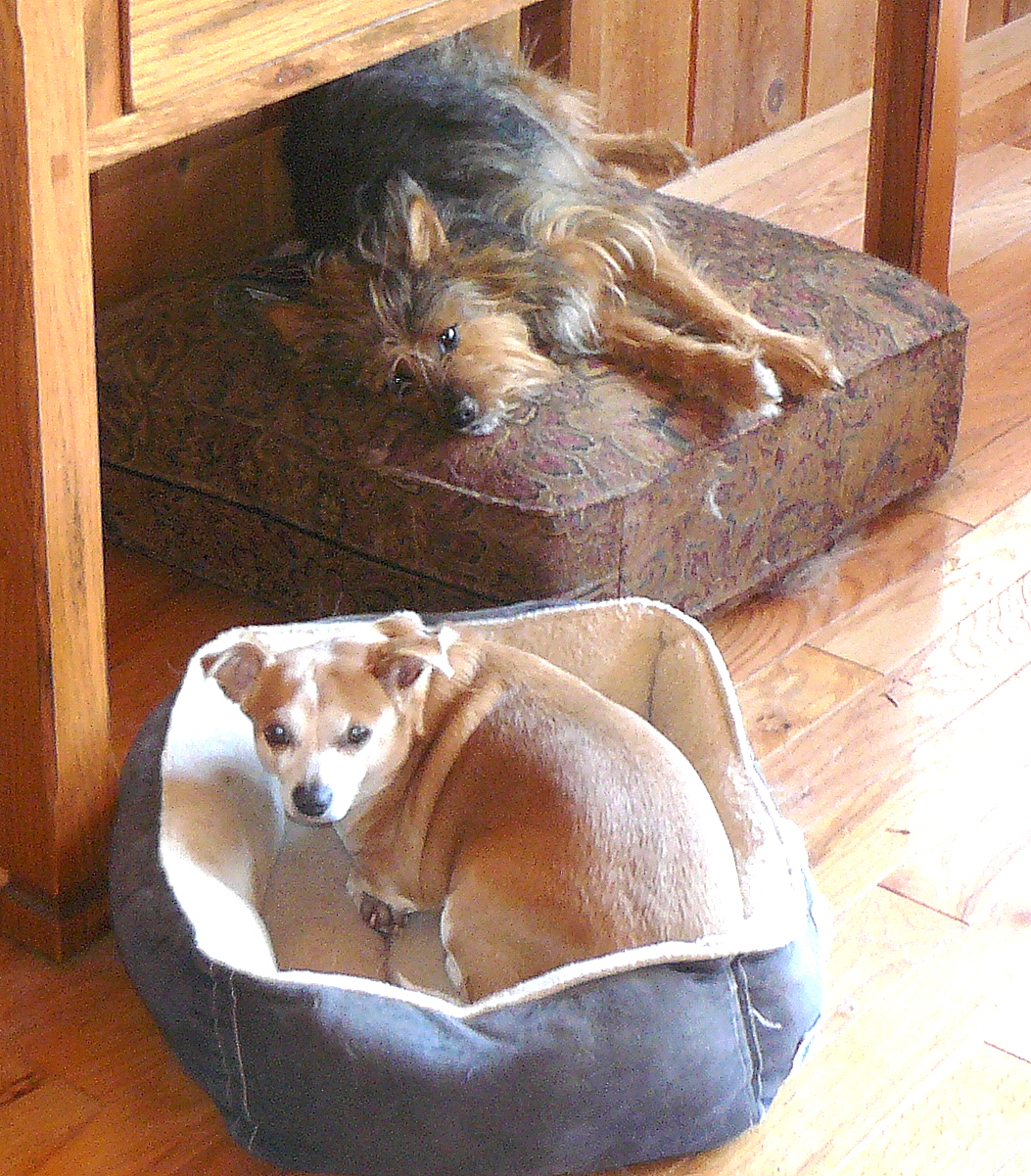
I wonder if John had this in mind (photos taken yesterday morning in our bedroom):

p1160542oooo

p1160543oooo

p1160547Please give all your dogs out there a big hug! Now! 🙂

Taking a holiday with your loved one!

(That’s your loved pet in case you wondered where I was coming from 😉 )

I have only ever flown once with a pet. That was back in 2008 when I flew one-way from London to Los Angeles on a British Airways flight when coming to live with Jeannie. Yes, I was alone in the cabin but I was not alone in the aircraft. For in a special part of the hold devoted to carrying animals rode Pharaoh.

I will never forget that day when I had to travel to the unit at London Heathrow Airport where dogs, and other pets, were dropped off about an hour before I was due to check-in to the same flight.

For this reason.

Every other time that Pharaoh had been left by me at the kennels when I was going away on business, or some other journey, Pharaoh had always barked in sadness at being left. I always got back in my car feeling a traitor for having something to go to that didn’t involve dogs.

So in this instance I was fully expecting Pharaoh to really sound out how unhappy he was at being left. For it was a very unfamiliar place on an unfamiliar airfield and he was being ‘processed’ in a manner that he had never experienced before.

So the time came that the attendant had Pharaoh in the flight cage and I had to turn my back and walk out of the area where some thirty minutes before Pharaoh and I had entered. I was expecting terrible sad howls. But not a single sound came from Pharaoh. To this day I like to think that he knew that he and I were on our way to the greatest and most wonderful life-changing event of our whole lives. Going to live with Jeannie and all her animals!

OK! Got that off my chest!

I love guest posts for all sorts of reasons but most importantly of all because you dear readers also like guest posts.

I was approached by Brenda Leary with her offer of writing a guest post for Learning from Dogs. She gave me a choice from a number of essay titles and, as you might expect from my introduction, I chose an article from Brenda about flying with your pet.

Enjoy!

ooOOoo

Tips to Flying With your Dog

Or

Flying With Your Pet Made Easier


Jetting out for a well-deserved vacation? If you plan to go with your furry friend, we have great news for you. While traveling with pets may evoke tension and constant hair pulling, find out how to travel with a dog on a plane with these excellent tips.

Select the airline

Not all airlines allow their passengers to travel with their pets. The first step is identifying pet-friendly airlines and their pet limit. Once you get an affirmative answer, make the reservations immediately before you lose the seat.

Obviously, you cannot have your dog sit a few rows behind or in front of you; make sure to book two seats adjacent to each other. Depending on the airlines you choose, you could fork up to $100 for a one-way trip.

Compare different rates from various carriers and select the most affordable one. Alternatively, leave your pet with a sitter or a family member while you vacation.

Health checks

Similar to humans, pets need a full medical check- up before boarding a flight. Make an appointment with your veterinarian at least ten days before the trip. Have your dog vaccinated and give him any extra shots that he needs.

Obtain a health certificate and be sure to bring it to the check-in counter. Your vet will suggest packing a first aid kit with gauze and pet medications in case of emergencies. If you are traveling overseas, investigate the health care requirements of your destination.

Buy a dog carrier

When traveling with your pet, you need to keep him as comfortable as you possibly can to calm his nerves long enough until you land. Find a carrier that is spacious enough, so your dog or cat has some wiggle room to stretch during the flight.

The recommended size of a pet carrier is sixteen to nineteen inches long, and ten inches tall. Test out your carrier days before the trip and observe how your puppy behaves when he is locked in. If he shows signs of anxiety, try a different carrier until you find one that pleases him. If your dog weighs more than fifteen pounds, the airline will advise that he travels in a hard-sided kennel in the plane’s stowaway.

Pack wisely

When traveling with your kids or alone, packing is a crucial step that can make all the difference between a smooth or long flight. Similarly, pets behave like children and we gladly oblige and treat them as so.

Bring your pet’s favorite toys to keep him entertained (read: distracted), during the flight. You cannot underestimate the power of a dog bone on a trans-Atlantic flight! Airlines do not provide in-flight menus for pets. Pack enough food and water to last the duration of the trip.

Remember, traveling with your puppy counts as a carry on which leaves you with one carry on. Put your creatures of comfort in your bag and utilize the space on the pet carrier such as side pockets.

Arrive early

If you are traveling alone, you can expedite the check-in process by using mobile boarding passes. This convenience is not possible when traveling with your furry animal.

Traveling with your pet means additional time spent at the security desk while checking in. Pets do not go through x-ray machines; you will need to carry the dog through the metal detector and have the dog cage inspected separately.

To avoid last minute rush and a near-miss of your flight, arrive the airport earlier by at least one hour so you can comfortably go through these procedures without frowning.

Leash your dog
As we mentioned earlier, pets do not go through x-ray scans so you will have to remove him from the carrier for a separate inspection through the metal detector. If your pet is already showing signs of anxiety, they may attempt to make a run for it upon release from the cage.  Make sure to have a leash on their collar to prevent this from happening. Besides being a total nuisance to other travelers, running after a pet across the airport is hardly something you wish to do. Tag the leash and carrier with your dog’s name on it and your contact details. You can also insert a microchip in your puppy days leading up to the journey. When traveling with your dog, planning ahead gives you ample time to research on how to travel with a dog on a plane. Make a list of luggage items for your pet and other travel companions and counter-check before leaving the house. Buckle down and enjoy a smooth flight.

ooOOoo

I asked Brenda to let us know a little about herself. This is what she said:

brenda-learyI’m Brenda Leary. I have a passion for dogs. My ambition is to found a community for dogaholics that everyone could share useful knowledge about dogs.
I’m here to break down all the complex dog’s tips/advices and try my best to give you the stuff that is actually useful and works!
Follow my steps at Cuddle Your Dogs to discover dogs’ daily routines, tips and advices on caring for a dog/puppy and many, many things about this wonderful world.

Our smaller ones!

Are smaller dogs more difficult to care for?

Of the nine dogs that we have here at home two would be classified as small dogs: Sweeny and Pedy.

To my mind they are no more different from the other dogs than are our two German Shepherds; Pharaoh and Cleo.

But that still didn’t stop me from noting a recent article over on the Care2 site under the heading of Everyday Issues for People With Small Dog Breeds. Here it is for you good people.

ooOOoo

Everyday Issues for People With Small Dog Breeds

1391153-largeBy: Vetstreet.com October 10, 2016

About Vetstreet.com

I never thought of myself as a small-dog person. When I was growing up, I much preferred my dad’s German Shepherds to my stepmom’s Toy Poodles. The first dog I acquired as an adult was a retired racing Greyhound. But although Greyhounds are wonderful apartment and condo dogs, we have stairs, and it became difficult to get Savanna up and down them after she lost a leg to bone cancer.

The next dog, we decided, would be smaller. That’s how we ended up with Cavalier King Charles Spaniels (and one Chihuahua mix). But although they are more portable, small dogs come with their own set of issues. If you are considering acquiring a small-breed dog because you think one will be easier to live with, here’s what you should know.

It Ain’t Easy Being Small

Small dogs are, well, small. It’s easy to step on them, no matter how careful you try to be. It’s not so bad with the larger Toy breeds such as Pugs and Cavaliers — at least, not once they reach adult size — but smaller dogs such as Chihuahuas, Papillons and Yorkies run the risk of getting stepped on or kicked not just by the humans in the home but also by other pets. We frequently joke about attaching a balloon on a long string to the collar of our Chihuahua mix so we’ll be more likely to notice where she is.

Other pets may bully them. Lots of small dogs rule the roost, but when they have a gentle personality, their size can work against them. Esmeralda, a Papillon, was stalked by her owner’s much larger cat, who seemed to view the small, fluffy dog as a toy at best, potential dinner at worst. It was a painful dilemma for the owner, who finally ended up placing her cat in a new home to save her dog’s life.

Little dogs can hurt themselves jumping on and off furniture. It’s an especially common problem with breeds such as Italian Greyhounds, who have long, thin legs, or Japanese Chin, who often enjoy being on high places such as the back of the sofa. This is more common in young dogs, who are not only still growing but also tend to be fearless, but any small dog can suffer a broken bone if he lands the wrong way jumping off the furniture, is stepped on by an errant guest or is dropped to the floor by a child.

For this reason, it is often necessary to buy steps so small dogs can get off furniture safely and easily (getting up on their own can be an issue, too). It’s better to teach them this habit at an early age than to risk a broken bone.

Tiny dogs often think they’re bigger than they actually are. In their head, they’re just as big and badass as that Rottweiler down the street. It’s not uncommon to see a Yorkshire Terrier, Chihuahua or Miniature Pinscher take his life in his hands by challenging a bigger dog. Owners must always be prepared to keep their small dogs out of harm’s way — especially when their dogs try to bring it on themselves.

Too Cute To Train?

Little dogs can be just as smart as big ones — sometimes more so. But people often don’t make the effort to train them. That’s a shame, because small dogs are just as much in need of manners as large ones.

There are a couple of issues with training small dogs. One is that they’re so low to the ground it can be difficult to get their attention or to reach down and reward them with treats.

Another is that some can be slow to learn house training. But it doesn’t have to be that way. As with any other dog, perseverance and consistency win the day.

By Kim Campbell Thornton | Vetstreet.com

ooOOoo

I’m not completely sure whether I totally agree with everything that Kim writes about: what do you think?

So far as me and Jean are concerned our Sweeny and Pedy are adorable and at this time of the year are most welcome as all-night sleepers on our bed!

Pedy in front of Sweeny. Picture taken yesterday afternoon.

Divorcing one’s Vet!

A practical and informative guest post.

Back in September, I received an email from a Paige Johnson. He offered to write a guest post for Learning from Dogs. Now I love guest posts simply because I think that different perspectives are always valuable, and let’s face it you get enough of me ‘rabbiting on’ most days.

This is what Paige’s email said:

I reached out to your recently with a guest article offer and just wanted to send a quick note to follow up.

I’ve had my dog, GG, since my early 20s, and though it wasn’t easy — in fact, it was quite the trial and error process for both of us! — I’m happy to report that she has become a well-trained pup, great with kids, adults, and other animals.

That said, GG and I are about to face another challenge together. Moving. I know that uprooting her from the only home she’s ever known won’t be easy for her so I’ve been doing some research on how to make the process go as smoothly as possible for both of us.

I run LearnFit.org with some friends, and collectively, we love helping readers find balance in their life. Adding a dog to the mix definitely brings happiness, but it can be a tough adjustment, especially when you face another big life event, like moving or having a child.

Who wouldn’t warm to that approach!

So here is Paige’s guest post.

ooOOoo

4 Tips for New Dog Owners Who Need to Break Up with Your Vet

dog-91765_1280When you become a new dog owner, you worry about what to feed him, how often to bathe him, the best type of flea and tick treatment to use to protect him, and a litany of other things involved in caring for him. You also need to make sure that your veterinarian is on the same page with you so that you are comfortable with relying on him to deliver the best quality care for him and advice for you. Sometimes, however, you need to break up with your vet for one reason or another. If you are a new dog owner who needs to break up with your vet, we offer four tips to help you do it as quickly and painlessly as possible.

1. Consider all of the interactions you have had with your veterinarian

If you are having a difficult time deciding whether to leave your veterinarian, think about how you have been treated by the vet and his office staff and how your new dog has been cared for at the office. If your vet has been pushing you to purchase pet food and care products from him, or he has a policy that you must board your dog only at his office when you go out of town, you most likely are justified in thinking that it is time to break up with him. Vets who try to monopolize services unfortunately are in the business more for making money than for providing quality animal care.

As a new dog owner, you need to be aware of your right to feed your dog whatever food you feel is best for his nutrition and health and not just what your vet sells. You also have the right to choose a dog boarding provider who will provide one-to-one care for your dog while you are out of town, rather than put your dog in an impersonal kennel at the vet’s office. When you leave the vet, you should consider all of the interactions you have had with him, and if you feel that you are being pushed into choosing products and services that he offers without having a freedom of choice, you should break up with him.

2. Break up sooner, rather than later

As soon as you feel that you need to break up with your vet, you should take action. Breaking up with your vet sooner rather than later will make the process much easier on you. Prolonging your relationship with your vet when you are considering cutting ties with him will increase your uneasiness and make an awkward situation even more uncomfortable.

You especially need to break up with your vet as soon as your instincts tell you to do so if you are concerned that he is not providing adequate care for your dog. The last thing you want is to put your dog’s health in jeopardy because you are afraid to break up with your vet. As a new dog owner, it is your responsibility to put your dog’s health above everything else when you deal with your veterinarian and make decisions regarding his treatment and care.

3. Ask office personnel to transfer your records to a new veterinarian

You want to be sure you have a new veterinarian on board with your new dog before you leave your old vet’s office, so that your dog’s health is never at risk during the transition. Call your current veterinarian’s office and politely ask office personnel to transfer your records to your new vet. Even if you have had issues with office staff before, it is well within your rights as a pet owner to switch vets and have your records sent to the vet of your choice. The staff should treat you with professional courtesy as long as you are straightforward and polite as well during the interaction.

4. Explain the situation to your veterinarian if you are leaving because of extenuating circumstances

Sometimes, even people who love their veterinarians need to break up with them because of extenuating circumstances. For example, you may be moving to a new town and cannot take the time to drive to your current vet’s office from your new home. If you have been happy with the care from your veterinarian and are sad to leave his care, explain the situation to him and ask for some recommendations for your new area. Your vet may be able to refer you to a new office that shares his level of care and commitment to your new dog. Your vet also may be able to refer you to other services for your dog in your new area, such as reputable dog walkers or accommodating dog parks.

Breaking up with your veterinarian is not a fun thing to do for new dog owners, especially if you love your vet and don’t want to leave his care. However, you need to put your dog’s health first, and if your current veterinarian cannot meet your dog’s needs, it is time to break up and go elsewhere. Our four tips will make the process easier for you.

Image via Pixabay by tpsdave

ooOOoo

 Yes, we always “need to put your dog’s health first” and Paige offers some valuable advice for ensuring that is always our top priority.

Thank you, Paige!

Cesar Dog Food Recall

Please share!

This was issued yesterday.

ooOOoo

Cesar Dog Food Recall of October 2016

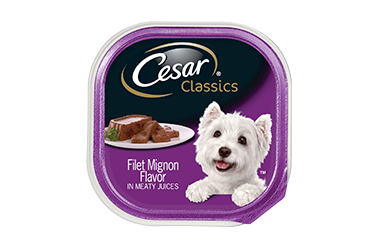
October 7, 2016 — Mars Petcare has announced it has initiated a voluntary recall of a limited number of Cesar Filet Mignon Flavor wet dog food due to a potential choking risk from small pieces of plastic which entered the food during the production process.

cesar-classic-filet-mignonWhat’s Recalled?

Cesar Classics Filet Mignon can be purchased individually as well as in flavor variety multipacks.

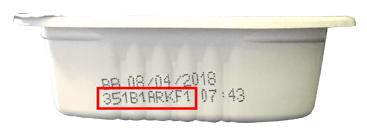
The affected dog food can be identified by checking the Best Before and Lot Code on the product lid.

Each product will have a lot code printed on the side of the tray that begins with 631FKKC or 631GKKC and best before date that falls between 08/04/18 and 08/05/18.

The Cesar Classics Filet Mignon Flavor can also be found in variety packs with the following lot codes:

  • 632D14JC
  • 633B24JC
  • 634A14JC
  • 634A24JC
  • 634B14JC
  • 634B24JC
  • 634E14JC
  • 635A24JC
  • 635B14JC
  • 636D24JC
  • 636E14JC

Lot Code is indicated by the red box below:

cesar-recall-lot-codeThe Lot Codes listed above are the only affected products. All other Cesar products can be safely consumed.

Why the Recall?

Select packages of this product may contain small pieces of plastic, which entered the food during the production process.

What to Do?

Mars Petcare encourages consumers who have purchased affected product to discard the food or return it to the retailer for a full refund or exchange.

While a small number of consumers have reported finding the plastic pieces, we have not received any reports of injury or illness associated with the affected product.

At Mars Petcare, we take our responsibility to pets and their owners seriously and are working with all of our distributors and retail customers to ensure the recalled products are no longer sold and are removed from inventory.

Consumers can reach the company at 800-421-6456.

U.S. citizens can report complaints about FDA-regulated pet food products by calling the consumer complaint coordinator in your area.

Or go to http://www.fda.gov/petfoodcomplaints.

Canadians can report any health or safety incidents related to the use of this product by filling out the Consumer Product Incident Report Form.

Get Dog Food Recall Alerts by Email

Get free dog food recall alerts sent to you by email. Subscribe to The Dog Food Advisor’s recall notification list.

ooOOoo

Hope no dog that you know is affected by this potential problem. Come to that, hope no dog anywhere is affected!

Mouthing it canine fashion.

Another fascinating insight into the behaviours of dogs.

Every dog owner knows how dogs appear to have their mouths directly linked to their emotions. From licking to growling, from dribbling to holding stuff, we humans don’t really have a clue as to the role of the canine mouth over and above eating food.

Which is why this recent item over on the Care2 site caught my eye (not my mouth!) and I wanted to share it with you.

ooOOoo

Why Does My Dog Grab Something in His Mouth When He’s Excited?

1390782-largeBy Vetstreet.com September 26, 2016

About Vetstreet.com Follow Vetstreet.com at @vetstreet

Some dogs seem to love to entertain. When guests come to the door, these dogs become delighted hosts, racing to greet their visitors with something — anything — they find to put in their mouths.

What’s behind this amusing behavior?

Vetstreet checked in with Dr. Wailani Sung, a veterinary animal behaviorist, to find out.

There are several different reasons your dog might be doing this, she says. Among them: They’re offering a gift, they’re looking for attention or they want to show us they’re happy.

“I think some dogs are so excited to see a visitor because it may represent a new person who will play with him/her, so the dog grabs a toy to try to entice the person to play, whether it is tug or throwing the object,” Dr. Sung explains.

A Welcome Distraction?

For other dogs, it may be a behavior that the owners taught them or encouraged to give them something more appropriate to do in place of jumping on people or barking.

“Other owners have recognized that their dogs may appear anxious or worried, but if they get the dog engaged with their toys, they appear less concerned about new visitors in the house,” she says. “Some dogs may naturally grab a toy on their own, whether to solicit play or to have something to do.”

The dog may also be reacting to your own excitement and responding in kind.

Dr. Sung has seen the behavior mainly in Retrievers but said it’s something any breed might exhibit.

Avoiding an Embarrassing Moment

In some cases, owners report some rather embarrassing situations — like when the first thing their pooch spotted to grab was dirty laundry or other “unmentionables.”

Dr. Sung says it’s best to be sure those things are out of the dog’s reach. But if the arrival is a surprise and the dog does get something he shouldn’t have, the owner should try to keep calm and get the dog to exchange the contraband for another toy or treat.

“They should distract the dog, redirect to a more appropriate behavior, such as come and sit, and then ask the dog to drop it,” Dr. Sung said. “Sometimes people forget and raise their voices or go chasing after their dog and it becomes a game to the dog. Then the next time visitors arrive, the dog remembers how much fun he had last time people arrived and grabbed an item.”

It can be flattering to be the source of a canine host’s excitement — unless he’s so thrilled, he’s jumping or running into people. In those cases, Dr. Sung recommends putting him in another room or in his kennel or bed while guests arrive to try to avoid the excitement.

By Amy Sinatra Ayres | Vetstreet.com

ooOOoo

Anyone got any wonderful stories about what their dog has put in their mouth? (That you would like to share!!)

Toys and Treats, Part Two

Top 5 Homemade Treats and Dog Toys for Powerful Chewers

Continuing Sarah’s guest post. Part One was yesterday.

ooOOoo

Here Are Some Heavy Duty Dog Toys You Can Make Yourself

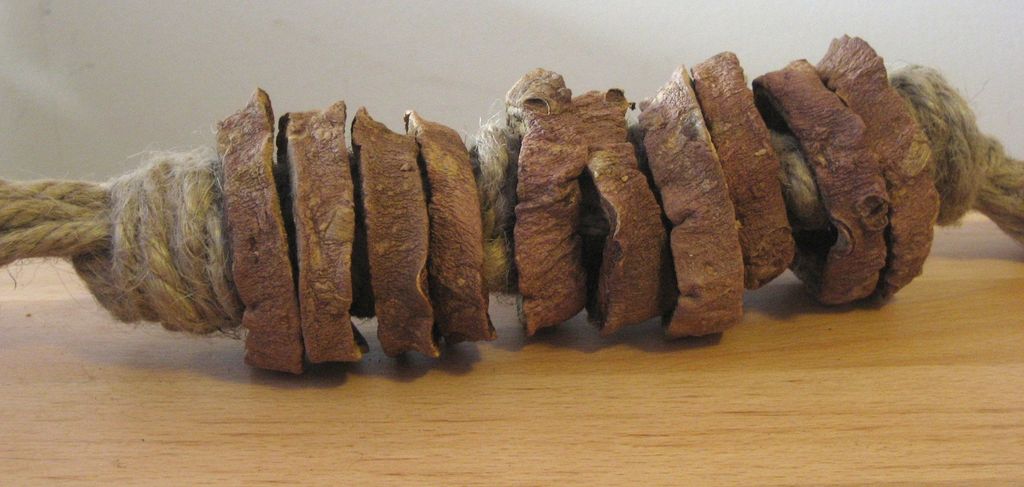
#1: “Indestructible Dog Toy (Made with Dried Sweet Potato)

sweet-potato-ring-toy-6
I love this toy because it’s both healthy for my dog and has no unnecessary additives. It’s a great chew toy and treat all in one.

Shesparticular on instructibles.com came up with this idea for a DIY chew toy for her mom’s dog. Her mom’s dog, Molly, loves to play. She says when Molly plays it “usually involves rounding up all her toys and ripping them to shreds.”

In Shesparticular’s pictures of Molly, you can tell she’s a little dog. It may seem surprising, but little dogs can do just as much damage as big ones. So this recipe she’s come up with is pure genius if you want to make strong dog toys that are healthy for your dog.

Here’s what you’ll need and instructions on how to make this toy at home:

  • Hemp or jute rope. Nine 2 1/2 foot ropes braided together to make a larger rope works for medium sized dogs. You’ll need to adjust the length of the rope based on your dog’s size.
  • Sweet potatoes or yams. One potato for a smaller toy, two for a medium toy and three to four for a larger toy
  • Sheet pan and parchment or foil
  • A sharp knife
  • Round cookie cutter a bit larger than the diameter of your rope
  • Vegetable peeler (optional)

Instructions:

  1. Preheat your oven to 250 degrees Fahrenheit
  2. Wash your sweet potatoes well. Peeling them isn’t necessary unless you prefer it.
  3. Slice the sweet potato into rounds approximately 1/2″ thick 
  4. Using the cookie cutter, remove the center of each round
  5. Place rounds on cookie sheet and bake for 2 1/2 hours then flip them over and bake for another 2 1/2 hours.
  6. They’re done when they’re dried out and hard. If there are any soft parts, bake them longer and check them every 30 minutes.
  7. Once they’re done, allow them to cool. 
These sweet potato rings look like hollowed out dog bones, without the risk of splintering

Once your sweet potato rings have cooled, you can start making your toy.

Start by tying a knot at the end of your hemp rope. If you’re using many thinner pieces, braid them together. This will make it easier to string the sweet potato pieces on. 

String two potato rings onto your rope then tie a knot in the rope. Continue adding two rings at a time and tying a knot after each pair until you reach the end of the rope.

When you’ve finished, hand this toy over to your dog and watch them chew for hours.

# 2: Knotted Hand Towel Toy

I have so many old hand towels that I didn’t know what to do with until I saw this clever idea.

This toy’s so easy to make, even a dog could do it. Taylor Martin from cnet.com came up with this simple way to repurpose old linens and make a great dog toy. 

All you have to do is take an old, tattered hand towel and tie a knot in the middle. You can even use a full sized towel and make several knots. 

My dog is a Pitbull mix, so though this is a tough toy, he would likely still rip it to shreds. The good news is, it doesn’t cost a cent. So even if it only lasts a few days, you didn’t lose any money on it.

#3: Ring Dog Toy

Just looking at this toy, you can tell it’s tough. No way my Pitt mix will be able to destroy this.

A user called J3443RY at instructables.com designed this indestructible dog toy. This is just a basic rope knot toy. 

If you know how to tie a crown knot, all you need to do is create two lengths of rope by tying 4 lengths of rope in crown knots. All you need to make this toy is some nylon repelling rope. 

Here are some step by step instructions for creating this toy

  1. Cut 4 equal lengths of rope. You can adjust the size of the toy based on the size of your dog. 4 Inches of rope is equal to 1 inch of the finished toy. For example; for a 6 inch finished knot you would need 24 inches of rope to start.
  2. Use 2 of the 4 ropes to create a 7″ long finished crown knot. 
  3. For step three, the user has included an instructional video. This will help you to combine the two finished knots into one ring.

When you’re finished with this toy, you will have a nearly chew proof dog toy that your dog can enjoy for hours.

For more advice on caring for your dog and other great recipes, visit metroeastrba.com.

Now Check Out Some Cool Doggy Dental Treats

#4: Darla Cook’s Homemade Greenies

I can’t get over how adorable these little tooth brush shapes are.

Darla Cook is a blogger and a lover of culinary arts. She is a student at The Culinary Institute of America, so you know her recipes must be the best.

Darla’s blog focuses on general cooking and there aren’t many dog recipes on her blog. But I found a pretty great recipe there for homemade Greenies for dogs. She calls these adorable toothbrush shaped treats Franks Breath Brushes.

If you’re a pet owner, you know that Greenies are a great dental treat for your dog, but they’re expensive to buy. 

If you want to save money and have more control over what goes into your dog’s treats, make them yourself at home.

Here is Darla’s recipe.

Franks Breath Brushes

Ingredients:

  • 3 1/2 brown rice flour plus 2 cups more (rice flour for crunch)
  • 1 tablespoon of activated charcoal (I opened 12 capsules for 1 tablespoon.)
  • 4Tbsp. Vegetable Oil
  • 1 egg
  • 1/2 cup packed fresh mint
  • 1/2 cup packed fresh Italian parsley
  • 1 cup chicken broth
  • Liquid chlorophyll (whole foods/health food store)

Instructions: 

Preheat over to 400F. Line your baking sheet with parchment paper.
Combine the charcoal with 3 1/2 cups brown rice flour and set it aside.

Put parsley, mint oil and 1/4 cup of broth or water into food processor. Process until chopped, like pesto. Add 3-4 droppers full of chlorophyll. Pulse a few times to mix. Add this green paste to flour mixture and mix well. Beat egg and mix in. Knead adding the rest of water/broth. By this time you should have a sticky dough ball. Flour the work surface and knead dough until an even green color. Divide dough into workable portions and roll out to about 1/4 inch thick. Add flour to the work surface and dough surface as needed to take away stickiness as you work. Cut out with your favorite shapes, and dock with a fork to keep puffiness down. Bake for 25 or 20 minutes. Cool and store in an airtight container in the fridge.

I will be trying these treats on my dog, for sure. I feel much more confident in the treats I feed my dog when I can make them myself and I know what's in them. 
I will be trying these treats on my dog, for sure. I feel much more confident in the treats I feed my dog when I can make them myself and I know what’s in them.

#5 DIY Doggy Breath Mints

These treats look good enough for even humans to eat.

I’ve found yet another great dog breath freshening recipe. This recipe, by Clifford Genece at skinnyms.com, has something in common with Darla’s recipe. It doesn’t contain any wheat flour.

It is so important to avoid giving your dog anything that contains wheat flour. Many dogs are allergic to wheat products. It can cause some pretty intense itching and skin irritation.

Rather than using flower at all, this recipe calls for oatmeal. This recipe also calls for eggs. So Clifford even provides advice for people whose dogs are allergic to poultry products. 

Here’s Clifford’s simple recipe for these yummy treats.

Ingredients:

  • 2 1/2 cups old-fashioned oats
  • 1/2 cup fresh parsley, finely chopped
  • 1/2 cup fresh mint, finely chopped
  • 1 large egg
  • 1/4 cup of water, plus 1 teaspoon
  • 3 tablespoons coconut oil (unrefined extra-virgin is best)

Directions:

Preheat the oven to 325° F

Add oats to a blender and pulse to a flour like consistency. In a large bowl whisk together diced parsley and mint, egg, water, and oil. Add oat flour and stir to combine. Knead dough a few times then turn out onto a lightly floured surface.

Using your hands or a rolling pin, flatten dough to about 1/8″ thick. Using a cookie cutter or knife cut out approximately 40 (1-inch mints) mints. Place mints about 1/4-inch apart on a parchment lined or non-stick cookie sheet. Bake 35-40 minutes, or until golden and crispy.

Allow mints to cool completely before serving. Store in an airtight container.

Tip: For dogs with allergies to chicken products, substitute one large egg with 1/4 cup unsweetened applesauce.

These are some of my favorite DIY dental treats and dog toys for powerful chewers. These treats and toys are a great way to keep your dog’s jaws strong and breath fresh. Don’t forget to take a look in your dog’s mouth every now and then and make sure their teeth are in good condition. 

Description: Dental treats and dog toys for powerful chewers can be expensive, so why not make your own at home? Give these helpful recipes and DIY dog toys a try.

ooOOoo

 Don’t know about you but we think this has been a very valuable and useful article from Sarah!

We must do the best for our beloved dogs!