Category: Education

Visiting the Vet – Kenya’s itch.

Practical ways of treating Kenya’s itchy skin.

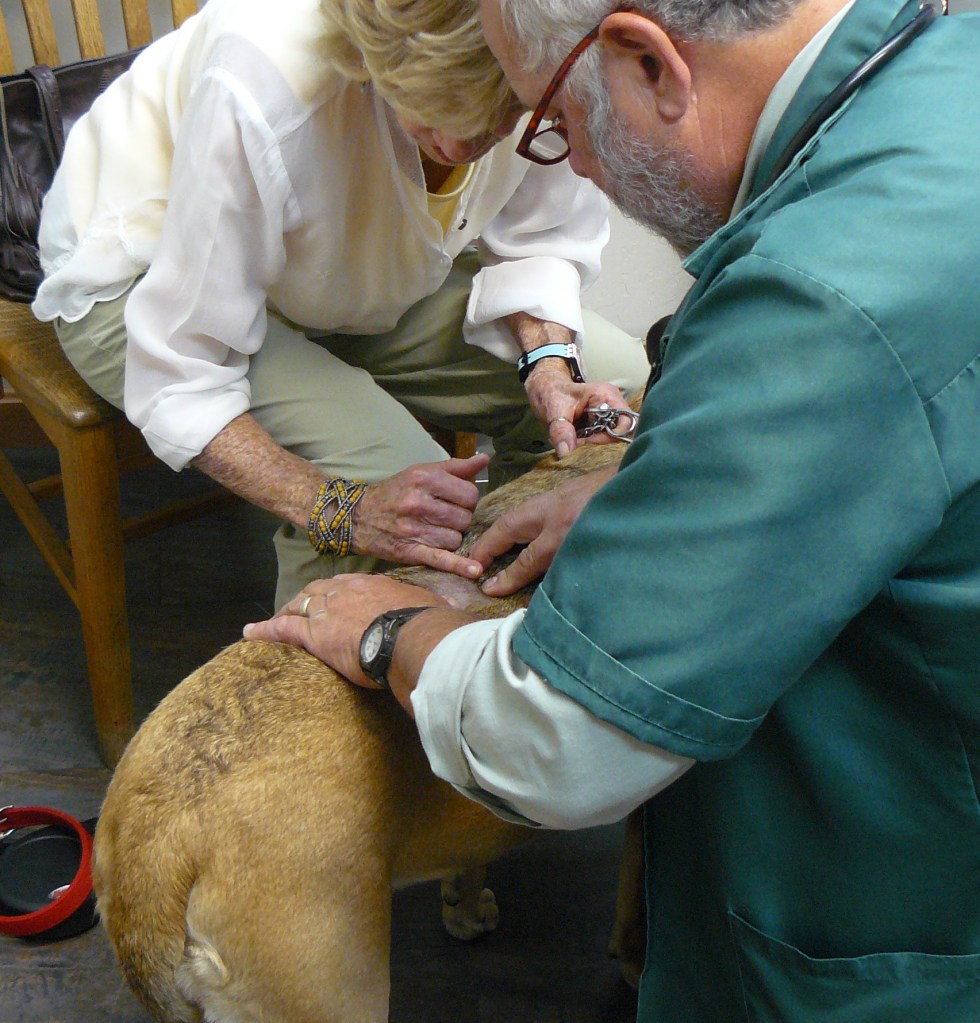
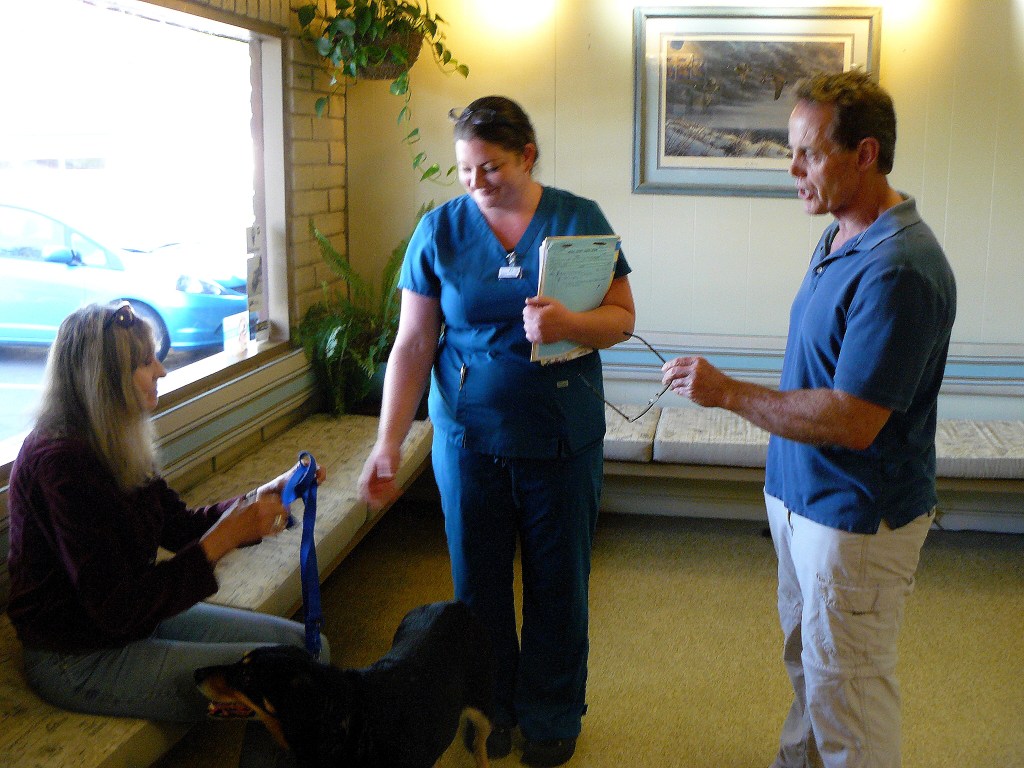
10:45 Next along was Kenya and his ‘Mum’.

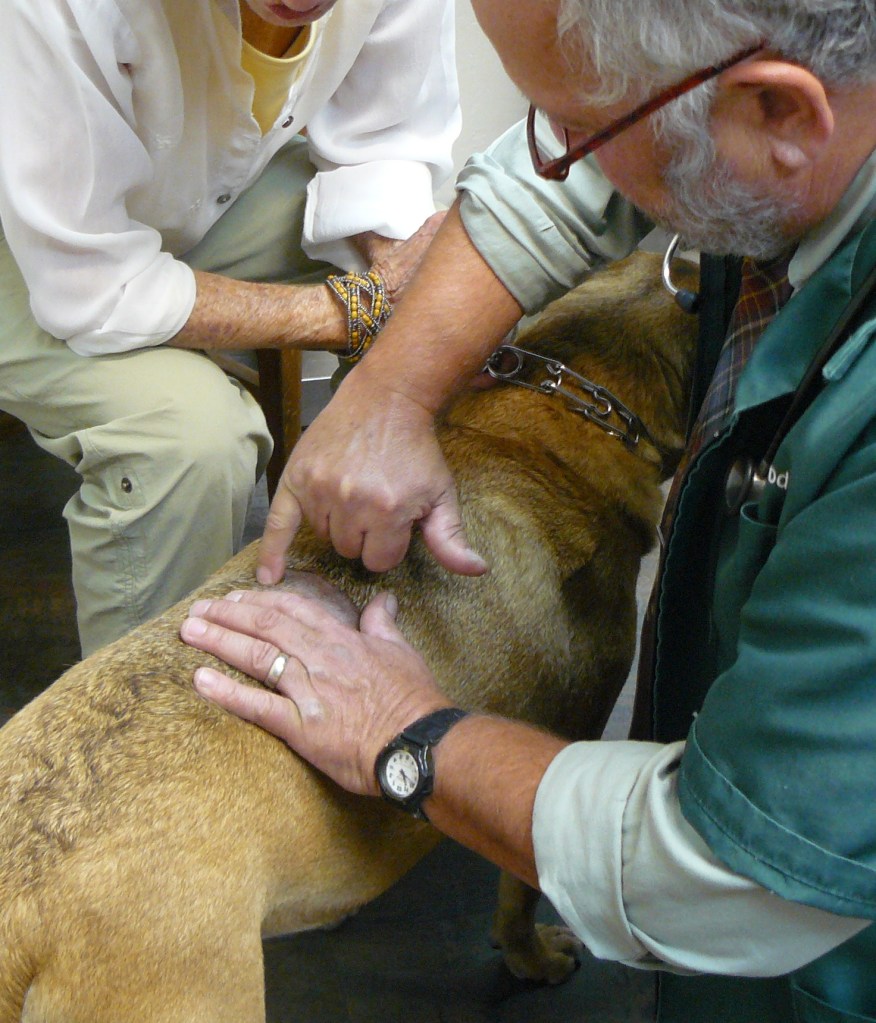
The story was that after a raw patch had appeared on Kenya’s back it had then become very itchy for the brave dog.

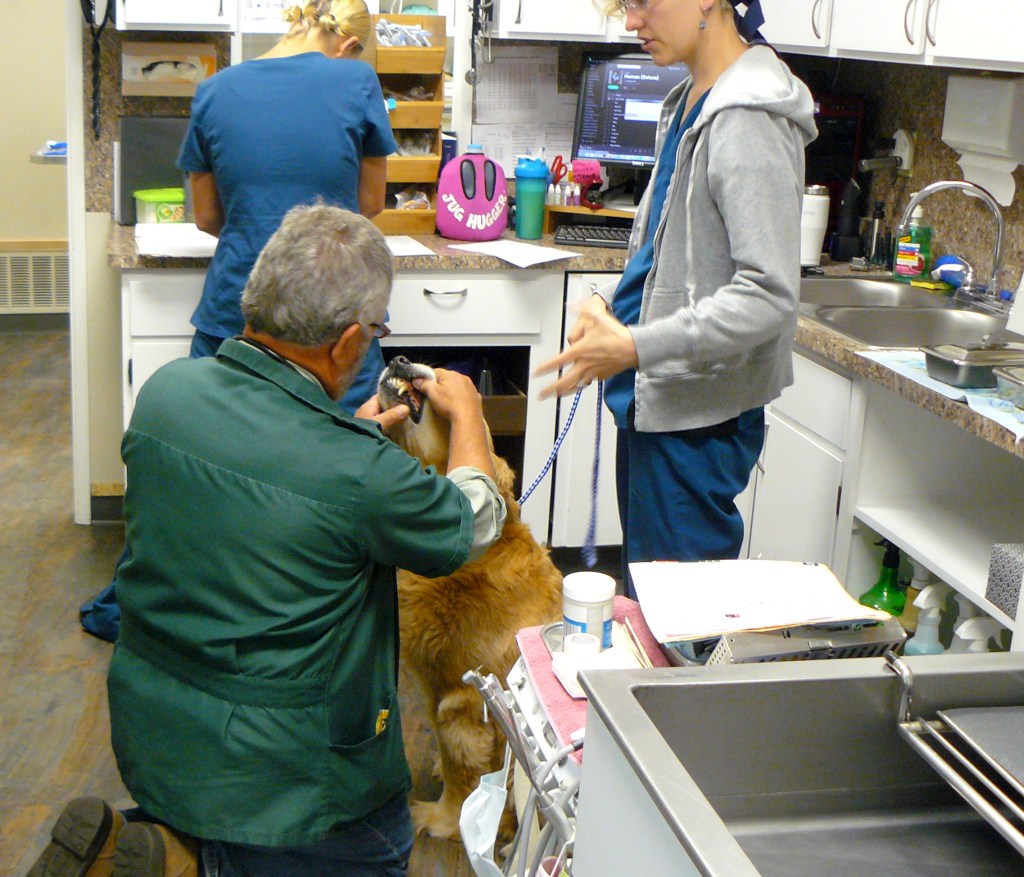
Jim shaved the area clear of fur and cleaned the skin to aid a closer examination.

Jim then explained that the challenge in these sorts of cases is that it is very easy to throw a lot of money at the problem without any guarantee of success.  Not only were there cost considerations but also the question of whether to go down the route of injections or administer pills.

As an observer I was struck, but not surprised knowing Jim as a friend, to see how an open and honest assessment of the problem came way before any commercial implications.

Jim’s view was to leave it for the time being but he did recommend using a hypoallergenic shampoo. There were a number to choose from but Jim supported the shampoo manufactured by Bayer and sold under the brand name of Hylyt Shampoo.

There are a number of online sources for this shampoo. I chose, more or less at random, the one at Allvet Supply.

That website describes the shampoo, thus:

HyLyt Shampoo is a hypoallergenic dog shampoo and is perfect for routine use in bathing dogs and cats. The shampoo is safe for normal, dry or sensitive skin types and may be used in conjunction with topical therapeutics.

HyLyt shampoo contains a light fragrance that will leave your pets smelling clean and fresh. The gentle shampoo formula is ideal for bathing both dogs and cats. The soap-free formula is pH balanced and will not dry out delicate skin or fur.

In addition to the gentle formula, HyLyt shampoo also contains special emollients for moisturizing and proteins for conditioning. The hypoallergenic dog shampoo also contains fatty acids to reduce scaling and flaking of the skin. If your pet suffers from seasonal or acute dryness, HyLyt shampoo will help restore their skin and coat to optimal health and beauty.

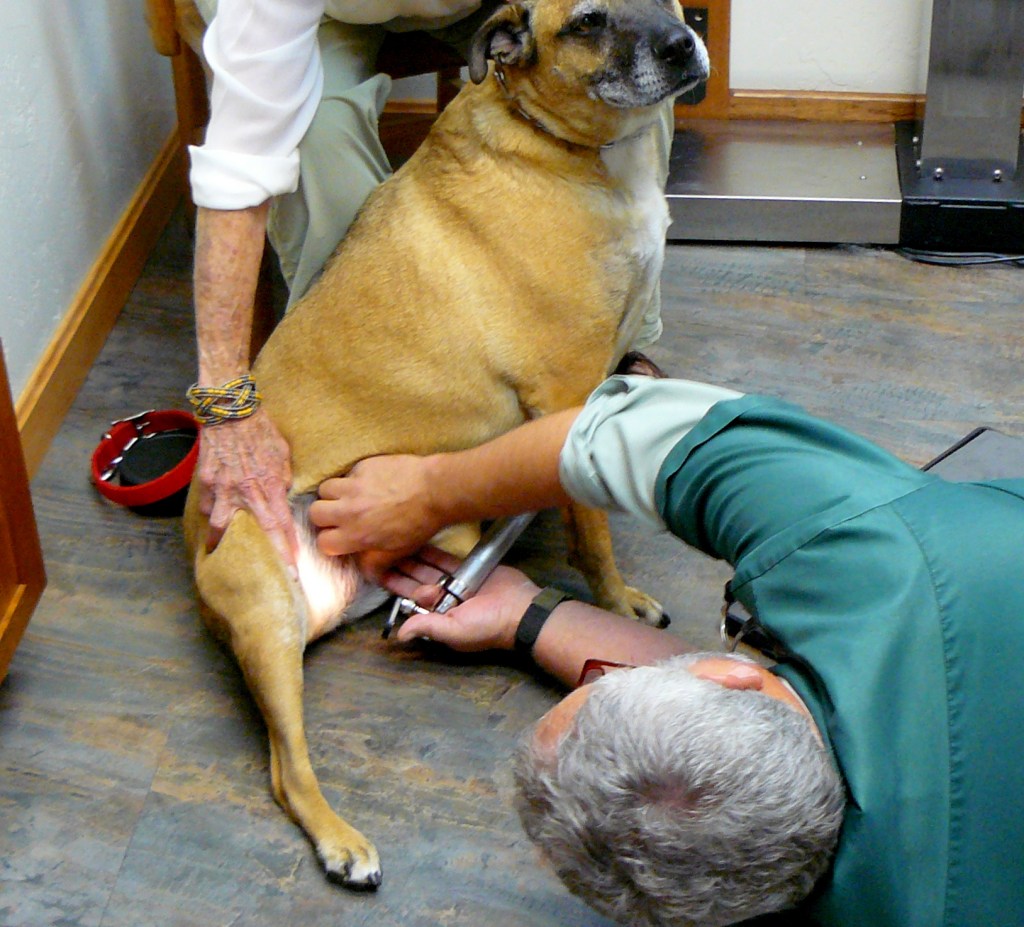
Then it was time for a quick checkup underneath Kenya, so to speak, and that was it!

11:00 All done!

I am having trouble getting my head around the fact that I have only been watching proceedings for two-and-a-half hours! So much knowledge on show. So much experience. So much compassion for our beloved pets!

To be continued:

(Please note: These observations are mine alone and because of the busy environment it must be assumed that my interpretation of what was taking place might not be totally accurate. Nothing in this blog post should be used by a reader to make any medical judgment about an animal. If you have any concern about an animal do make an appointment to see a properly qualified veterinarian doctor.)

The implications of inequality

What on earth has inequality to do with dogs!

A fair question one might think. Because this blog is primarily about what we humans should be learning from our dogs. Well, I do see a connection, a message of learning for us. Stay with me for a while.

But first, here’s how I open up Chapter 18 Sharing in my book – Learning from Dogs.

Here’s a silly story that made me laugh when I first came across it.

A man in a casino walks past three men and a dog playing poker.
“Wow!” he says, “That’s a very clever dog.“
“He’s not that clever,” replies one of the other players.
“Every time he gets a good hand he wags his tail.“

This clever dog couldn’t hide his happiness and had to share it by wagging his tail. OK, it was a little bit of fictional fun but we all recognise that inherent quality in our dogs, how they share so much of themselves in such an easy and natural fashion.

Now if one was being pedantic one would say that sharing is not the same as equality. Yet I see them as two separate seats in life’s common carriage.

Many lovers of dogs know that when they lived a life in the wild, slowly evolving from the grey wolf, they replicated, naturally, the pack characteristics of wolves. As in the pack size was around 25 to 30 animals. Yes, there was a hierarchy in the pack but that really only presented itself in the status of three animals: the female ‘alpha’ dog; the male ‘beta’ dog; the ‘omega’ dog that could be of either gender. Ninety percent of the pack were animals on equal standing. If only that was how we humans lived.

A few days ago there was an essay published on The Conversation blogsite under the title of Why poverty is not a personal choice, but a reflection of society.

It opened with this photograph.

A homeless camp in Los Angeles, where homelessness has risen 23 percent in the past year, in May 2017. AP Photo/Richard Vogel

Let me emphasize this: “A homeless camp in Los Angeles, where homelessness has risen 23 percent in the past year, in May 2017.”

Here are two small extracts from that article:

Research Investigator of Psychiatry, Public Health, and Poverty Solutions, University of Michigan


As someone who studies poverty solutions and social and health inequalities, I am convinced by the academic literature that the biggest reason for poverty is how a society is structured. Without structural changes, it may be very difficult if not impossible to eliminate disparities and poverty.


About 13.5 percent of Americans are living in poverty. Many of these people do not have insurance, and efforts to help them gain insurance, be it through Medicaid or private insurance, have been stymied. Medicaid provides insurance for the disabled, people in nursing homes and the poor.

Four states recently asked the Centers for Medicare and Medicaid Services for permission to require Medicaid recipients in their states who are not disabled or elderly to work.

This request is reflective of the fact that many Americans believe that poverty is, by and large, the result of laziness, immorality and irresponsibility.

In yesterday’s post celebrating July 4th, where I shared that lovely picture sent to me by Neil Kelly from my Devon days, there was an exchange of comments between me and author Colin Chappell. Colin is the author of the book Who Said I Was Up For Adoption.

First, in response to Colin saying “That pic really says it all doesn’t it!”, I replied:

No question. Indeed, one might ‘read’ that picture at many levels. From the level of providing a smile for the day all the way through to a very profound observation on life itself.

Colin then replied to me:

I ‘ll go straight for the profound perspective! As I recently noted on another blog, I cannot recall anybody from history who became famous for their material possessions. In fact, I recently read an article written after an individual had surveyed a few thousand gravestones… and they drew the same conclusion. There was not a single epitaph which alluded to a material possession. Dogs know all that intuitively, so why does our superior (?) mind have trouble grasping such a simple perspective?

I then responded by saying that I thought it would make a fabulous introduction to today’s post. The heart of which I am now coming to.

Here in our local city, Grants Pass, there is a Freethinkers and Humanists group. They meet once a month. Jerry Reed from that group some time ago recommended to me reading the book The Spirit Level authored by Richard Wilkinson and Kate Pickett.

Jerry and I were exchanging emails in the last couple of days and he reminded me of that book.

There it was sitting on my bookshelf with a bookmark in at page 62. For reasons that escape me, I had become distracted and forgotten to stay with the book. Despite me being very interested in the proposition.

I said as much in an email reply to Jerry. He then replied to my email with this:

Hey, that happens to me a lot too, very frequently. So, I frequently settle for a video that might capture the essence of the book in considerably less time, while also maintaining my attention much better.

So, if you want a video about what Wilkinson has to say, here’s the one I recommend:

Here is that video. It is a little under 17 minutes long. Please watch it.

Published on Oct 24, 2011

http://www.ted.com We feel instinctively that societies with huge income gaps are somehow going wrong. Richard Wilkinson charts the hard data on economic inequality, and shows what gets worse when rich and poor are too far apart: real effects on health, lifespan, even such basic values as trust.

I haven’t got anything profound to say by way of closing today’s post.

But what I will say is that if our societies, especially in certain countries not a million miles from home, more closely emulated the sharing and caring that we see in our dogs then that really would be wonderful.

Image seen on this website: http://enlightendogs.com/about/testimonials-2/

Visiting the Vet – Hunt the Foxtail

Yet another interesting case for Dr. Jim.

As soon as it was time to say ‘goodbye’ to Ace the cat then in came an entirely different case.

1020 – Back to dogs!

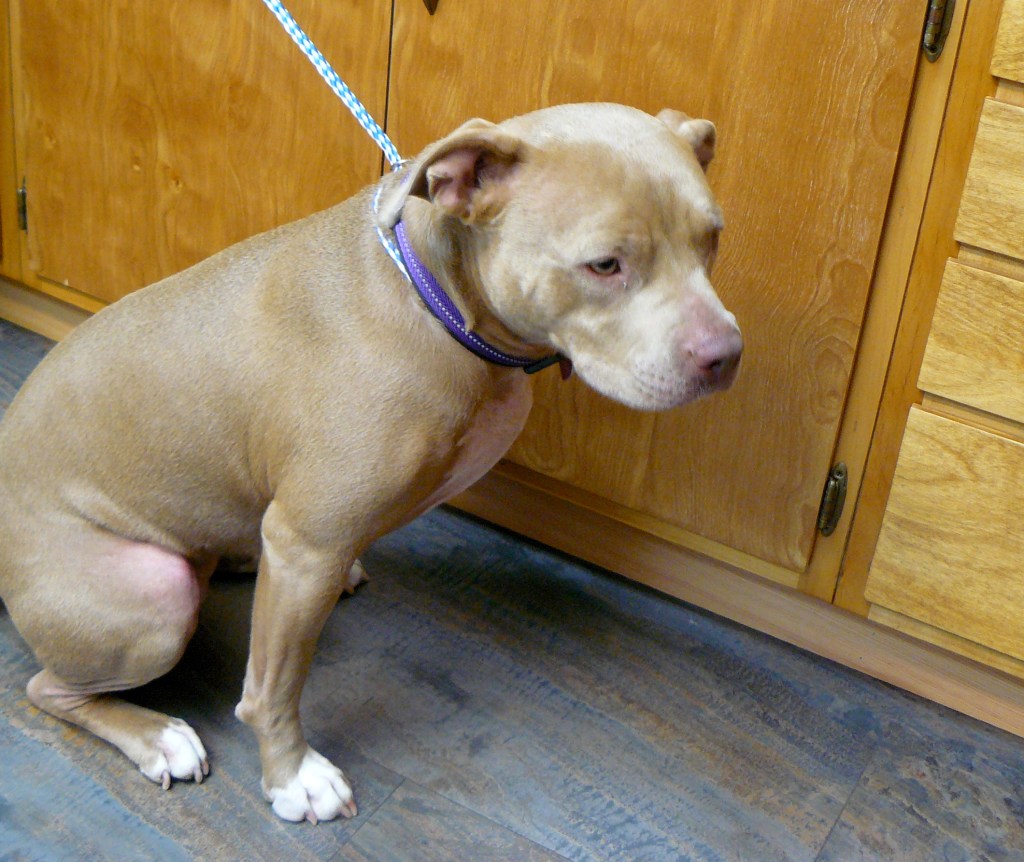
This was Millie, a pit mix, who had been dropped off at the Clinic earlier on. Millie’s owner said that there appeared to be something troubling Millie’s ears. Millie was, indeed, shaking her head a great deal.

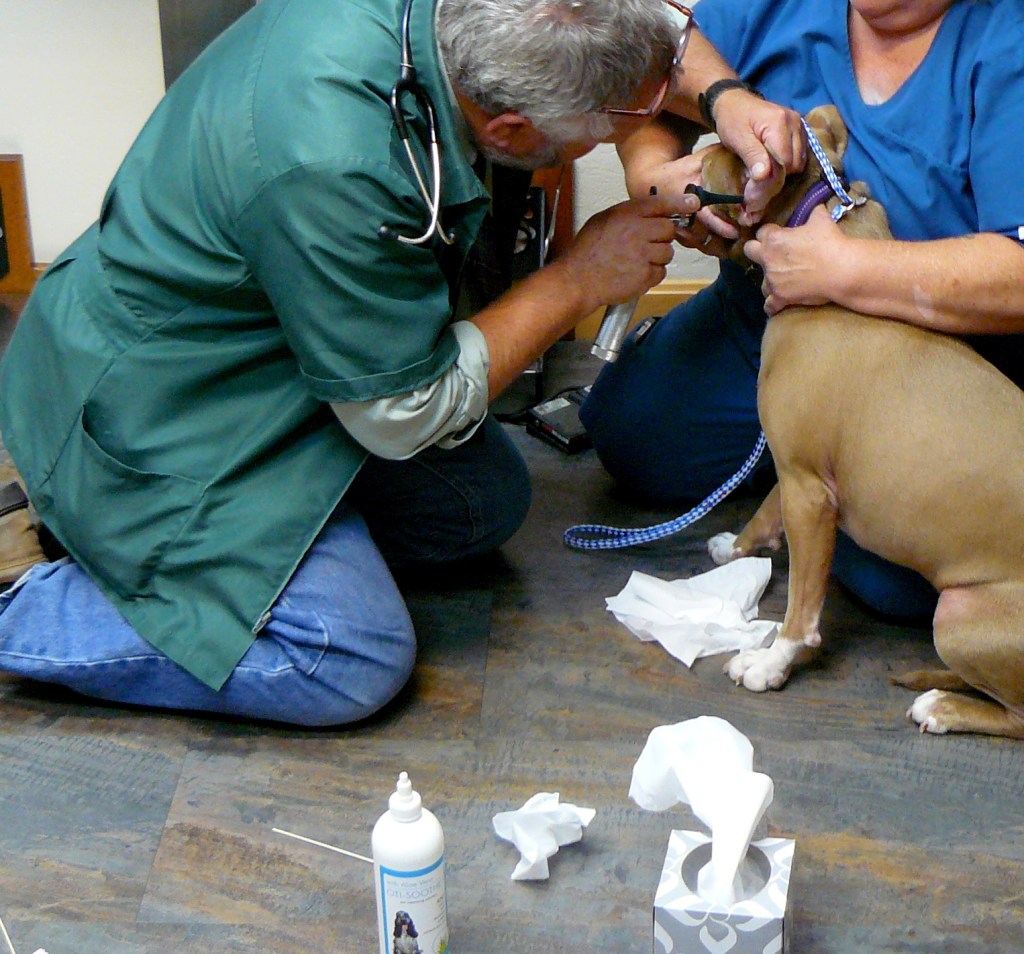
Jim established that it was Millie’s left ear that was the source of the irritation. This was immediately obvious since Millie cried as soon as Jim touched that left ear.

The first examination didn’t identify anything that might be the cause. But apparently the endoscope had such a narrow field of view that it was easy to miss an irritant. Time for another, more extensive examination using that same endoscope.

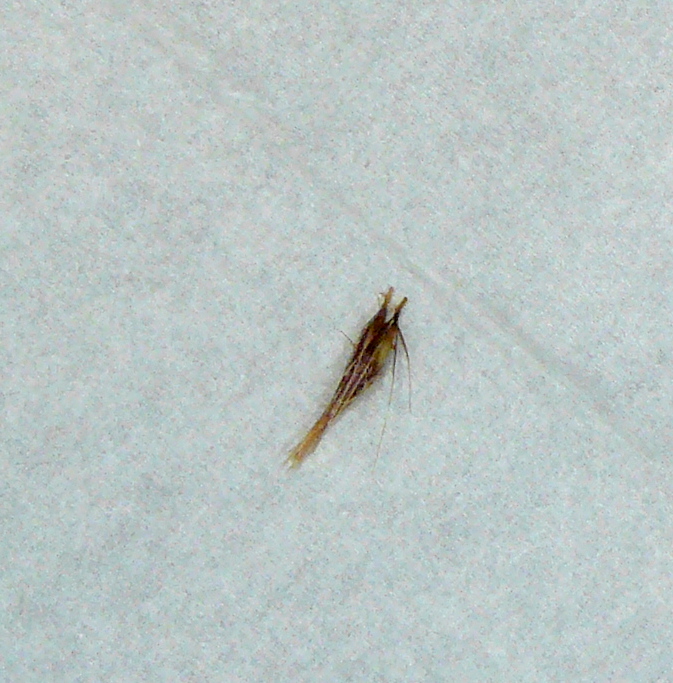
This time the problem was identified. A foxtail that had penetrated Millie’s ear so deeply that the seed-head had pierced Millie’s eardrum.

Carefully, oh so carefully, Jim pulled the foxtail out from Millie’s ear. I couldn’t believe just how large it was.

About an inch (2.5 cm) long.

I was unable to grab a photograph of Millie’s face once the foxtail had been removed. Trust me it was a face full of doggie smiles.

But I can’t move on to the next patient without remarking how Millie was so beautifully behaved. How maligned the Pitbull and Pitbull Mixes are!

10:45 All done with Millie!

To be continued:

(Please note: These observations are mine alone and because of the busy environment it must be assumed that my interpretation of what was taking place might not be totally accurate. Nothing in this blog post should be used by a reader to make any medical judgment about an animal. If you have any concern about an animal do make an appointment to see a properly qualified veterinarian doctor.)

Visiting The Vet – Cats

The morning at Lincoln Road progresses.

(This is a continuation from here.)

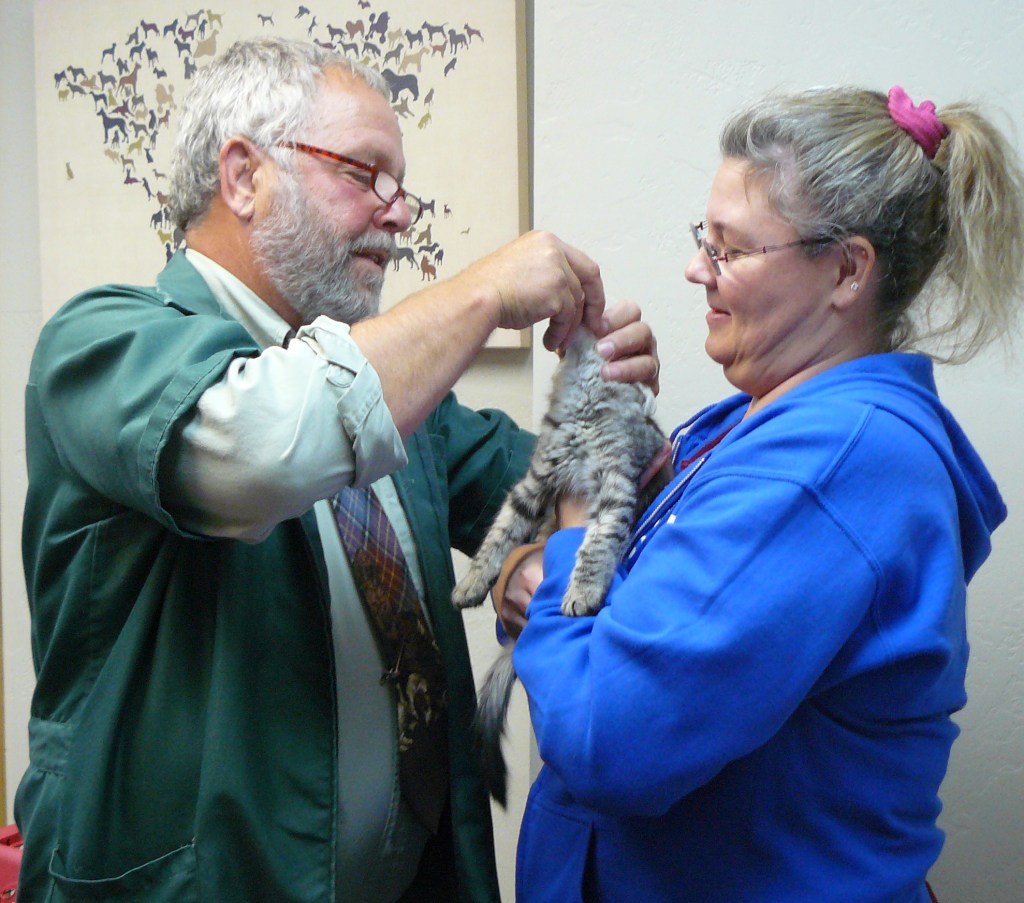
It’s 09:00 and the next animals to be brought in to see Dr. Jim are a couple of cats requiring vaccination.

The kittens are named Grace and Frankie and both were adopted from the Nevada Humane Society although I wasn’t familiar with the circumstances surrounding that adoption.

But great to see them being cared for by the two women and the degree of professional service that I saw in Jim’s briefing of these new cat owners.

That care included giving one of the kittens the necessary pills by mouth.

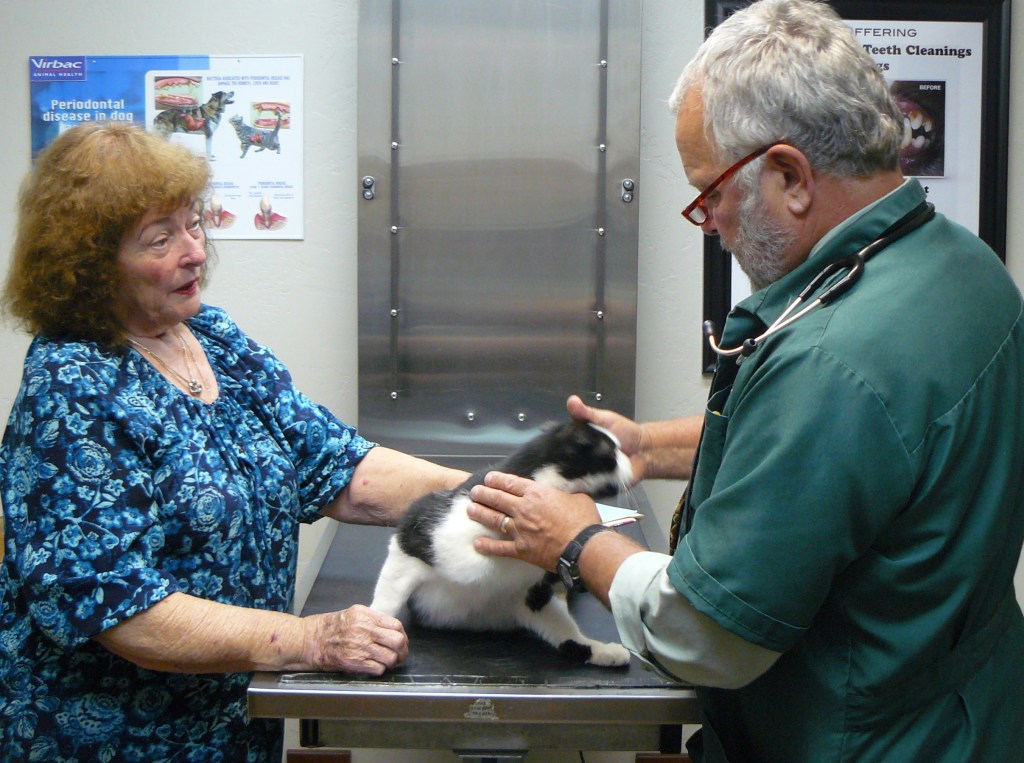
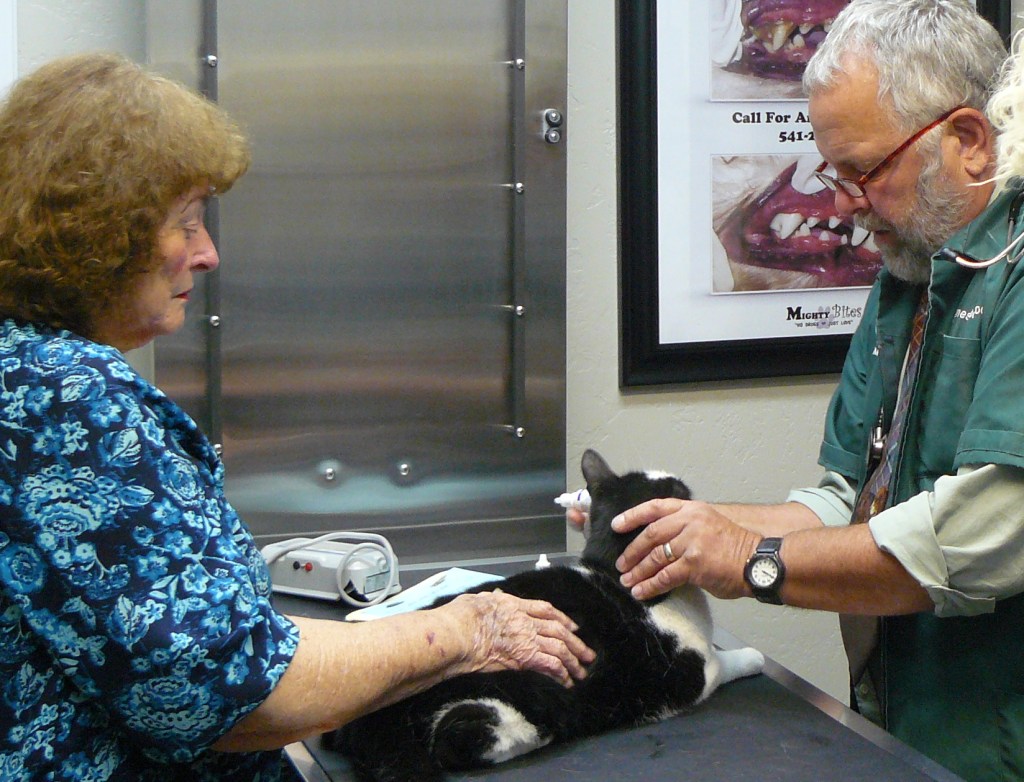
It is now 09:25 and the next case for Jim is another cat. In this case a cat, named Ace, that the owner thinks is having trouble seeing out of it’s right eye.

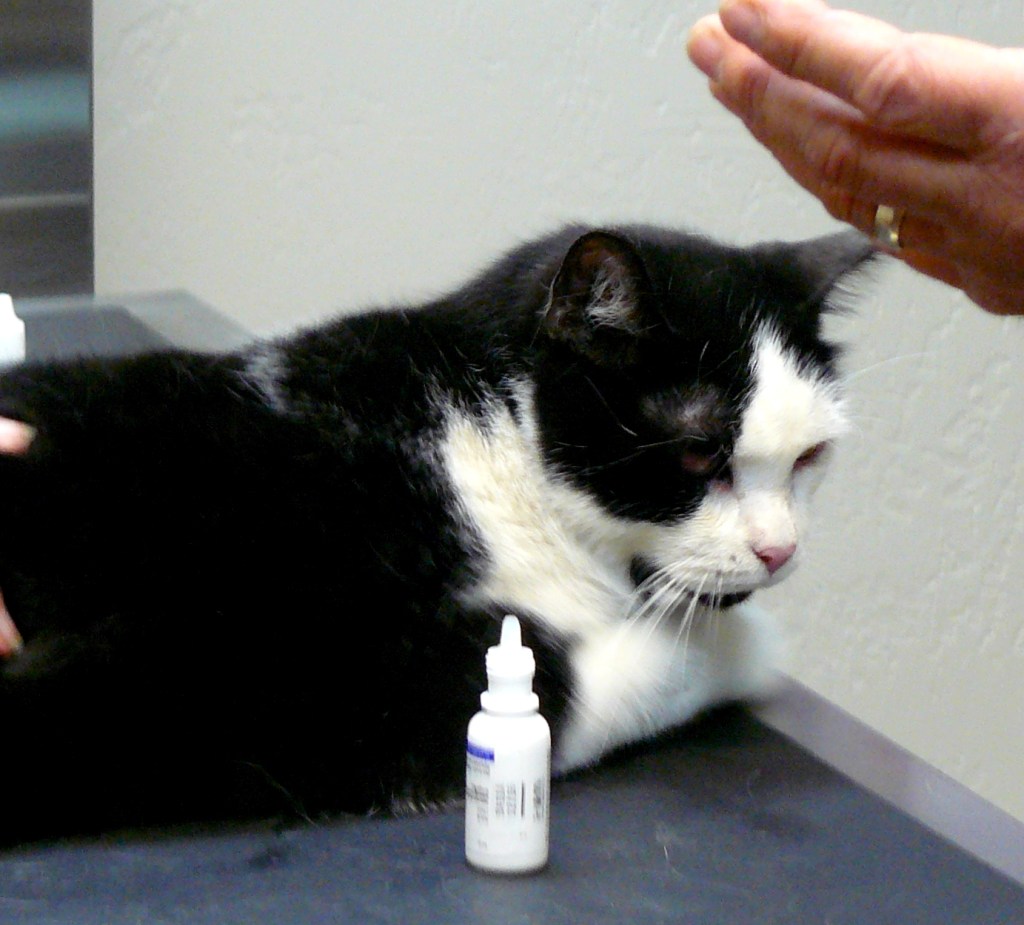
Jim applies a fluorescent stain to the Ace’s eye that then enables Jim to use a special UV lamp to determine the degree of damage to the eye.

It is determined that the pressure in Ace’s eyeball is normal and Jim is pretty certain that Ace has no sight at all in that right eye. He recommends giving the cat some antibiotics and explains to the owner that cat’s can function perfectly adequately with just one eye. Indeed, if necessary the eyeball could be removed, something that would not be a disadvantage for Ace.

The lady owner of Ace takes note of Jim’s advice and is clearly grateful for what has been explained to her.

It is 10:10.

To be continued:

(Please note: These observations are mine alone and because of the busy environment it must be assumed that my interpretation of what was taking place might not be totally accurate. Nothing in this blog post should be used by a reader to make any medical judgment about an animal. If you have any concern about an animal do make an appointment to see a properly qualified veterinarian doctor.)

Visiting The Vet – Arrival

First impressions.

I arrived a little before 8:30 to find both receptionists busy on the telephone. They signaled for me to wait in the reception area until Dr. Jim came out to meet me.

As I waited it quickly became clear that Janice, one of persons behind the front desk, was speaking to someone who was having to make the decision to euthanize their dog. I hadn’t bargained for how that made me feel since it was so recently that Jean and I had trodden the same path. I had to give myself a stern reminder that I was here as the quiet, unobtrusive observer and that my own feelings had to be tucked out of sight.

Shortly thereafter, with Janice still on the telephone patiently and compassionately speaking with that dog’s owner,  someone came in with Daisy who was here for teeth cleaning. Jim came out to meet her and advise the owner that one of the team would be doing Daisy’s teeth not himself.

Then it was time for me to go back with Jim and start the day with him. (Jim had arrived at 8:20am.)

Jim’s first case was Ginger. Ginger, a female Golden Retriever, had been brought in earlier on because she had lost weight, was lethargic and was generally off-color.

Jim started to examine Ginger assisted by Cianna, a veterinary technician at the clinic.

It was immediately clear to Jim when he listened to Ginger’s heart that it was racing; Jim thought at something like 200 beats per minute. Jim continued to check Ginger over although, as he told me later, he had an idea that Ginger’s medical problem was a cardiac issue. Jim arranged for Ginger to be given an X-ray as well as blood work.

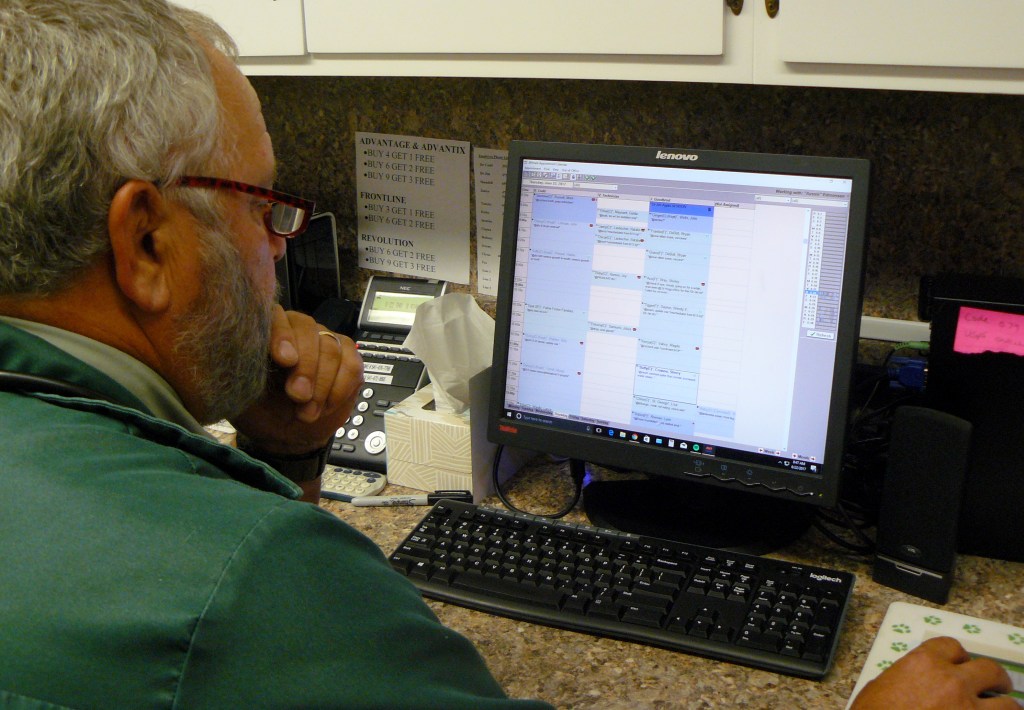
It would take a few minutes for the results of Ginger’s X-ray to come through so Jim showed me the primary software program used in the clinic to record all the details of each patient and all the individual medical details. The software was called AVImark.

I was impressed, very much so, but then again not surprised. For the veterinary business is big business in many countries. For instance, the American Veterinary Medical Association (AVMA) reports that in 2016 there were 107,995 veterinarians in the USA. Of course, there would be a wide range of software tools for the industry.

Back to Ginger’s status.

Her X-ray having been taken, the digital image of her heart was transferred electronically to Dr. Jim’s computer. It showed an extremely enlarged heart. Jim said that the owners of Ginger would be facing a potentially complex analysis but in the interim Ginger should be put on one of the ‘pril’ drugs to reduce the very high stress on Ginger’s heart: Lisinopril; Enalapril; Benazepril. That was arranged then and there. (I didn’t make a note of which drug was given to Ginger.)

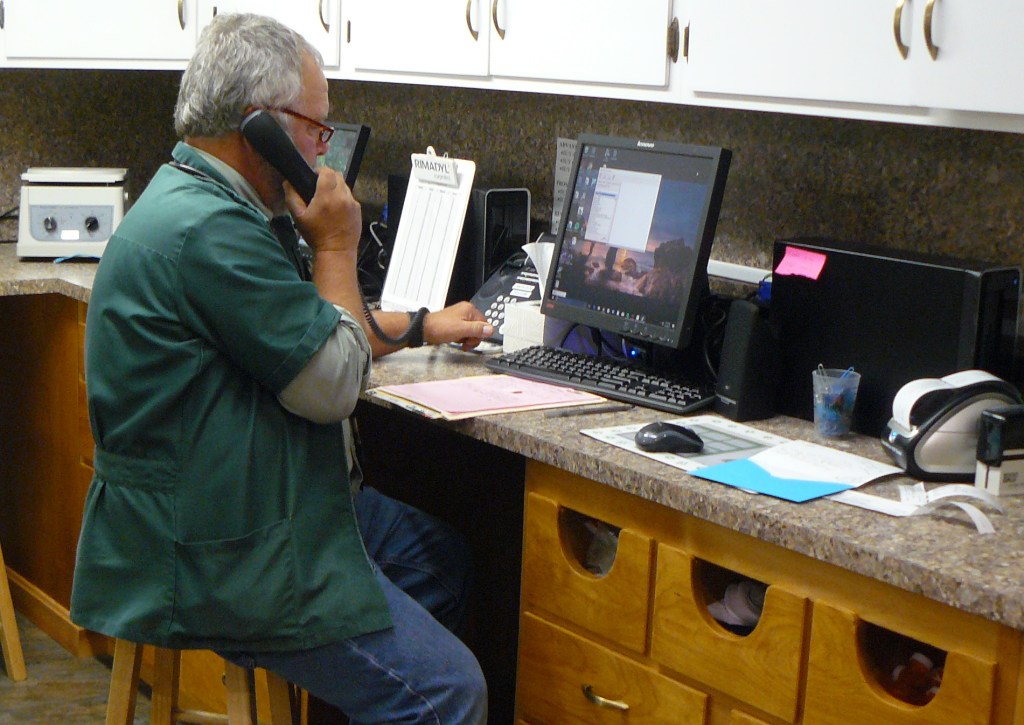
Time to call Ginger’s owners and report the findings.

The owners said that they would be in to collect Ginger at 12:30.

I looked at my watch. It was 8:58!

Already the next patient is ready to be seen by the good Doctor.

To be continued:

(Please note: These observations are mine alone and because of the busy environment it must be assumed that my interpretation of what was taking place might not be totally accurate. Nothing in this blog post should be used by a reader to make any medical judgment about an animal. If you have any concern about an animal do make an appointment to see a properly qualified veterinarian doctor.)

A new feature.

Opening up the world of a busy veterinary practice.

Like the majority of pet owners, our experiences of taking a cat or a dog to the local vet clinic are gained entirely in regard to those particular animals. The only small difference between this household and most others is that we have the distinct privilege of having Jim and Janet Goodbrod as close friends just a short distance away. Jim is a Doctor of Veterinary Medicine (DVM) and thank goodness for that as it was more than wonderful that Jim was able to be on hand a week ago when it came to Pharaoh’s last few moments.

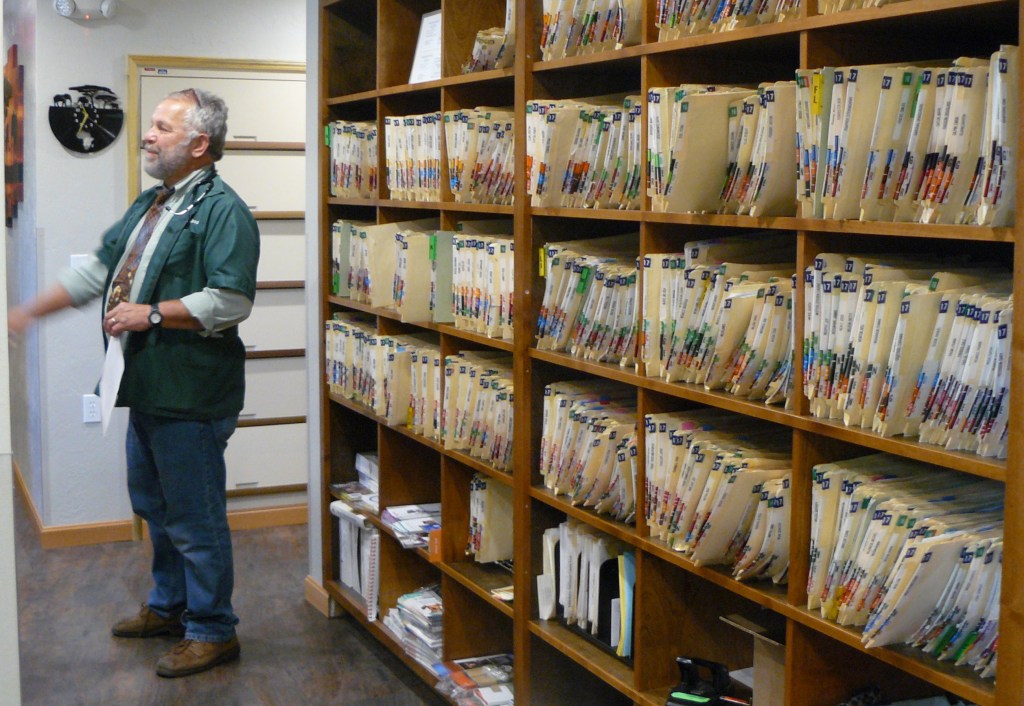
Jim is a regular DVM working at Lincoln Road Veterinary Practice in nearby Grants Pass. That practice is run by Dr. Russel Codd.

Dr. Russel Codd (RHS) speaking with Jean at the Clinic back in the days of our dear Hazel.

Some time ago, when we were visiting Lincoln Road, it struck me that the detail of what takes place ‘behind the counter’ of a busy vet clinic is most likely not commonly appreciated by those that visit said clinic.

I asked Russel one day if I might be allowed to spend time watching and listening to what goes on behind the scenes; so to speak. Russel said that he would be delighted for me to do that.

So it came to pass that last Thursday, June 22nd, I did just that.

It was a day when Dr. Jim worked a half-day at the clinic and I spent the thick end of six hours listening and observing what took place. I had a camera with me but as was only fit and proper was very sensitive to what photographs were taken. Likewise, I didn’t interrupt the proceedings with my questions although each pet owner had specifically said it was alright for me to be in the same room. In other words, what I will be writing in each post is much more my impressions of the workings of a day in the life of a veterinary clinic.

So tomorrow I will publish the first of my articles and at regular intervals report more from my day at Lincoln Road.

They will be published under the overall heading of Visiting The Vet.

I do hope you enjoy them.

Calming for dogs.

Slowly we are all moving on.

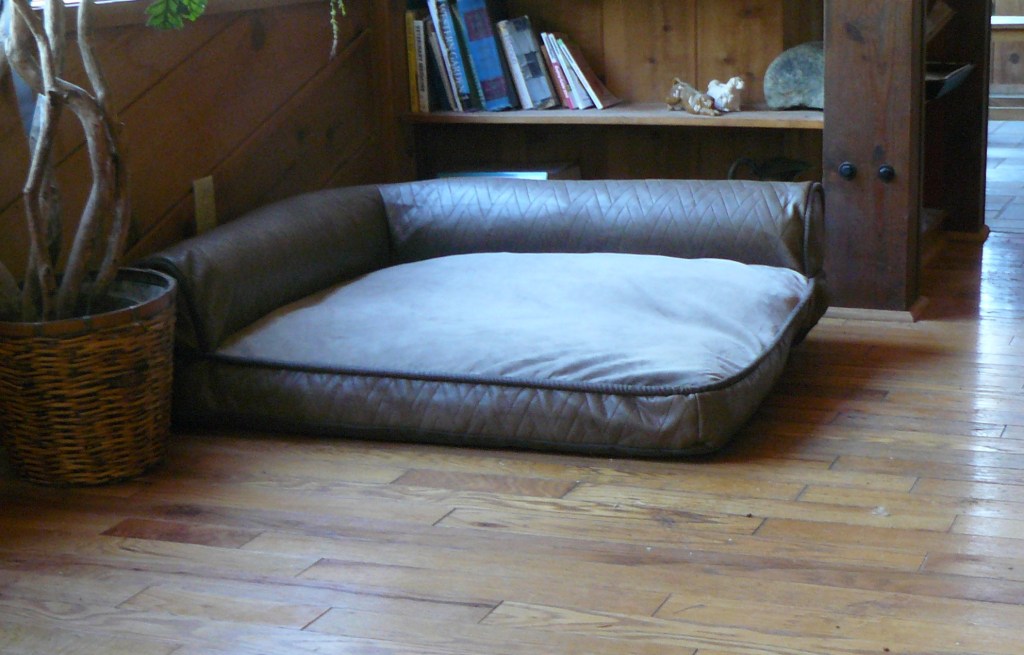
You will all recall the shock of me seeing Pharaoh’s empty bed that first morning after he had died. This picture:

Not only was it difficult to look at but not one of our other dogs went near it. This was despite the fact that Jean had washed and cleaned the whole bed.

One could almost imagine the dogs understanding that it would not have respected their memory of Pharaoh to immediately takeover his rather nice bed.

But life has to move on!

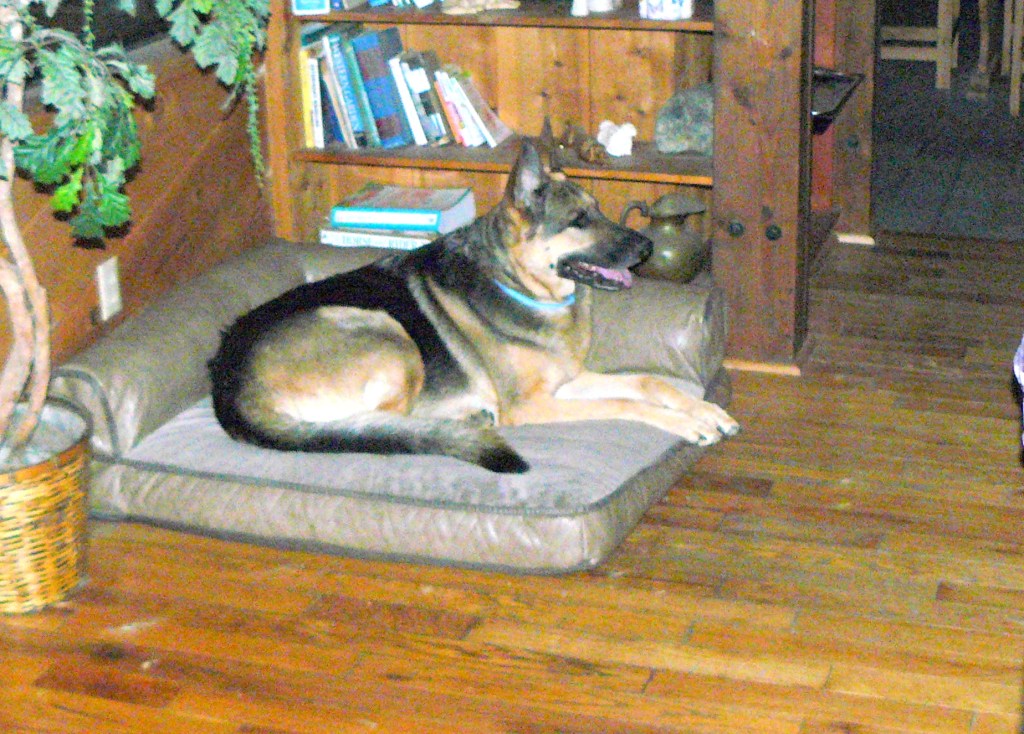
Yesterday evening, just as Jean and I were getting everyone ready for bedtime, Cleo signaled that she was moving on.

She had settled herself down on the bed.

That was so good to see and was another step in the right direction in settling me down as well!

So on the theme of being calm, especially in these hot summer months, do read this recent article that was published on the Care2 site.

ooOOoo

7 Ways to Calm a Dog During Thunderstorms

By: Becky Striepe June 21, 2017

About Becky Follow Becky at @glueandglitter

My dogs are both terrified of thunderstorms. These are some of the tricks that vets and trainers have recommended to help our poor babes when stormy weather rolls in.

Our lab mix, Jenna, trembles in the corner when it thunders, while our 60-pound dog, Bandit, tries to leap into my lap. These are some of the ways to calm a dog during thunderstorms that we’ve tried.

Every dog is different, so what works for one may not work for another. Jenna is terrified of the Thundershirt, for example, but many people I know swear by it. Chances are, not all of these calming techniques will help your dog during a thunderstorm. You’re basically throwing spaghetti at the wall to see what sticks.

Ways to Calm a Dog During Thunderstorms

Lavender and massage oil on a old wooden background

1. Lavender Oil

You don’t want your dog to ingest lavender oil, so put a few drops on her collar when a storm is freaking her out. The soothing scent can help calm some dogs’ nerves, and the smell is a distraction from what’s going on in the sky.

2. Massage

Just like humans, dogs find massage soothing. The video above shows a calming massage that you can use on your dog during a thunderstorm. You can also try an ear massage, which Jenna responds to really well. Basically, you gently run your hand up the dog’s ear, from where the ear meets the head to the tip of the ear. When you reach the tip, gently massage for a second, then repeat. Like in the video, it seems to work best if I also talk to her in a soothing voice while massaging.

3. A Hand on the Back

Sometimes, your dog just needs to know that you are there and in control of the situation. This trick works well on our dog, Bandit, who is definitely boss dog in our house. During a storm, a hand on his back helps him feel like he can step back from being the pack leader, which helps him feel secure and safe. Talking in a soothing voice helps here, too.

4. Training Exercises

You may feel like it’s mean to start bossing your scared dog around, but practicing her sit/stay/shake is a great way to distract your dog from the storm and remind her that you’ve got this under control. This one works well on both of my dogs.

5. Thundershirt

These wrap shirts help soothe a lot of dogs during thunderstorms, and they’re available at any pet store. Many friends with dogs have recommended the Thundershirt to me. It made Jenna more anxious, but she is clearly in the minority in this situation.

6. White Noise

If your dog can’t hear the storm, your dog won’t be so scared. Dogs can feel the shift in pressure from a storm, even when they can’t hear it, so this technique seems to work best in conjunction with other calming techniques, like massage or lavender oil. Bring your dog to her favorite room, turn down the lights, and turn up the white noise. If you don’t have a white noise machine, you can find free white noise tracks on YouTube, like the one above.

7. Rescue Remedy for Pets

Rescue Remedy is a blend of plant extracts. They make homeopathic drops and gummies for humans, and they have drops for pets, as well. The site recommends putting the drops into water, but I’ve also had good luck putting them onto a treat or into a glob of peanut butter, if my dogs aren’t too scared from the storm to take a treat.

As I mentioned above, different natural remedies will work for different dogs, so don’t be discouraged if the first thing you try doesn’t work out. Sometimes, especially for high anxiety dogs, you’ll have the best results combining a few of these ways to calm a dog during a thunderstorm.

ooOOoo

I don’t know about tips for calming dogs, some of these sound great for yours truly!

Dealing with painful losses

The other side of the life-saving bond coin!

Yesterday, I shared an article about what flowed from the bond between ex-shelter dogs and special needs children. It underlined what so many dog lovers instinctively understand: The magic that flows from the relationship of a dog to a person, disadvantaged or otherwise.

However, or perhaps better said inevitably, the obverse face of that life-saving bond practically guarantees that the loss of that bond results in huge stress and emotional turmoil for the dog.

In other words helping our beloved dog cope with the loss of a family member is something else that we can be helped with by others.

That leads me neatly on to a comment left by ‘Small Talk’ to my Putting A Smile On Your Dog’s Face post last week.

Very good article…check out this article I wrote about dog depression… cheers!

https://animalwellnessmagazine.com/helping-dog-adjust-loss-separation/

I liked the article and asked for permission to share it with you here. That permission was promptly given.

ooOOoo

Helping Your Dog Adjust To Loss or Separation

by Jennifer Hinders
Whether it’s a death in the family, a child leaving home, or a divorce, your dog will notice that one of his “pack” members is missing. Learn to help him deal with his grief.

Grief has many forms, and can arise from many situations besides the death of a loved one. A relationship breakup, a child leaving home, even a prolonged business trip or hospital stay are all examples of family changes that can cause feelings of loss and grief in those remaining at home. That grief can be felt even more keenly by your dog, who doesn’t understand where the missing person is and when or even if s/he will be back.

My own dog became extremely sad when my husband left for an extended trip. Every time I sat down, he jumped in my lap (no small task since he weighs 50 pounds), lay his head on my arm and sighed pathetically. He poked around the house with his head drooping like a deflated balloon.

I asked veterinary behaviorist Dr. Nicholas Dodman about my dog’s behavior. “Dogs can get into a funk or lose interest in life because of separation,” he told me, adding that even short absences can cause changes in behavior. “For instance, if a man goes out to play a game of golf for five hours, the dog will feel temporary loss, but will be relieved when the owner returns.

“With long term separation or loss, dogs suffer bereavement and get depressed, not unlike humans,” Dr. Dodman adds. “Dogs have a difficult time adjusting to an owner or family member being removed from the household. This is especially the case if the person is someone to whom the dog is close — for example, a dog sleeps in someone’s room and then suddenly that person is out of the picture. The dog can’t understand why that person has disappeared.” 

Symptoms of bereavement or loss

Here are some common symptoms that indicate your dog is grieving over a separation or loss:

  • He seems down and depressed.
  • He has lost interest in things he formerly liked to do.
  • He’s listless, not playing with toys.
  • His appetite changes – typically, a grieving dog eats less and may lose weight.
  • He shows signs of anxiety.
  • His energy seems low when he’s out for walks.

In extreme cases, bereavement can cause compulsive behaviors like incessant licking.

How to cheer him up

Many separations and losses in life are inevitable, which means you have to help your dog adjust to the absence of the missing family member. If you’re also grieving, it might be easy to overlook your dog’s feelings; but one of the best ways to help both of you is to try and find ways to make life happy and interesting again.

  1. Act in an upbeat way around your dog; sympathy will actually make his depression worse because he’ll pick up on your own emotions. Dog behaviorist Bill Campbell calls this the “Jolly Routine”: when you act happy or jolly, it helps lift the dog’s mood. An old proverb states that “a cheerful heart is good medicine”. Being upbeat, fun and positive is good medicine for your dog (and for you).
  2. Give your dog lots of attention — treats, new toys, extra walks or play sessions. Throw a ball. Let him play with other dogs. Consider getting him a new friend in the form of a puppy, if circumstances allow. When you go back to work after the loss or separation, don’t leave your dog at home alone. If your workplace allows, take him with you, or have him stay with a friend or family member he knows well.

The good news is that your dog’s grief will ease over time. He may feel low for a few weeks, but it’s generally temporary. As his owner, being aware of his suffering and taking the necessary actions to help him through it will speed his (and your) recovery and adjustment. 

Losing a dog buddy is also hard on him

Dogs don’t just grieve when people in their lives die or go away. It’s also common for a dog to grieve over the loss of another dog he was closely bonded with. Dogs in the same household may play together, sleep together, operate as a pack, so the loss of one has a deep impact on the other.

Here’s one dramatic example involving two dogs in the same home. The older dog became terminally ill and needed to be put to sleep. The owner arranged for his healthy dog to go for a long run while the other was euthanized. Back home, the owner buried the older dog in the garden, covering the grave completely so it was basically indistinguishable from the surrounding area.

When the healthy dog was brought back from his outing, he ran around the house looking for his buddy, then begged to go outside. He immediately went to his friend’s grave and lay on it for three days.

ooOOoo

A few words of reflection from me following Jennifer Hinders useful article.

Death is inevitable. For both our beloved pets and, for that pet, their beloved humans. As they say about death and taxes!

But for that pet the loss of their beloved human can come about for other reasons apart from death.

Yet in the midst of say a divorce, or a loved young person leaving home to make their own life, it must be all too easy for people to lose the focus on what that means for the family pet, especially the family dog.

Stay connected good people!

Returning to animal communication skills.

As in how a primate chooses to communicate with humans.

In recent times there have been a couple of posts in this place about the science of communication between dogs and humans.

What about other animals?

What about a gorilla?

If you drop across to the YouTube site and search for Koko the Talking Gorilla you will be astounded by how many videos are to be seen.

Try this one:

A very moving account from Robin Williams.

If we then want more background information on this remarkable animal, Wikipedia is there to oblige (in part):

Hanabiko “Koko” (born July 4, 1971) is a female western lowland gorilla who is known for having learned a large number of hand signs from a modified version of American Sign Language (ASL).

Her instructor and caregiver, animal psychologist Francine “Penny” Patterson, reports that Koko is able to understand more than 1,000 signs of what Patterson calls “Gorilla Sign Language” (GSL).[2] In contrast to other experiments attempting to teach sign language to non-human primates, Patterson simultaneously exposed Koko to spoken English from an early age. Reports state that Koko understands approximately 2,000 words of spoken English, in addition to the signs.[3] Koko’s life and learning process has been described by Patterson and some of her collaborators in a number of books, peer reviewed articles, and on a website.

Then, naturally, Koko has her own website, The Gorilla Foundation, where one can watch more videos, enjoy photographs and even drop in to Koko’s very one blog site!

Time for another video from YouTube.

Published on Oct 13, 2015

Koko got her birthday wish this July 4th — not only did one kitten come to visit, but a whole litter. Koko fell in love with one, and the other fell in love with her. Koko has adopted these two kittens into her family, and it has energized her world.
Not only have Koko’s maternal and play instincts kicked in, but she is signing more to her caregivers and generating new content everyday that can be used by The Gorilla Foundation to create empathy for great apes. This can have significant benefits to both endangered free-living great apes and those in captive environments, by encouraging the development of 2-way communication with their caregivers (which Koko has had since she was a baby).
The Gorilla Foundation is now working on a multimedia sequel to the classic book, “Koko’s Kitten,” which has already reached millions of children worldwide, and has the power to motivate millions more to learn how to make the world a better place for all of its conscious inhabitants.
You can support The Gorilla Foundation mission of Conservation through Communication by visiting http://www.koko.org

Thank you!

Will close with this photograph seen ‘on the web’.

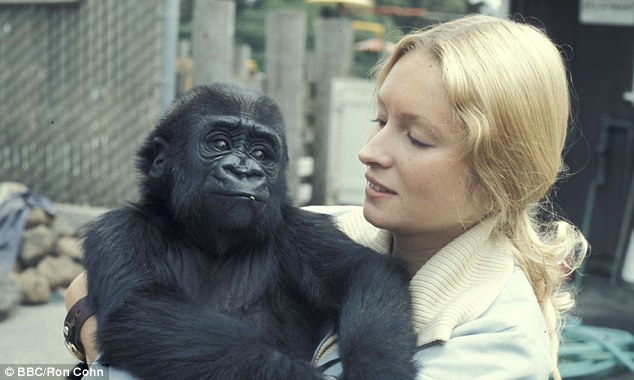
Graduate student Penny Paterson with a young Koko on her back not long after they met in 1971 in San Francisco. (The Daily Mail newspaper 2nd June, 2016.)

The science of love.

Yes, really!

Here’s a photograph of Pharaoh taken on the 3rd December, 2005. Taken in my home in Harberton, Devon, some two years before I met Jeannie.
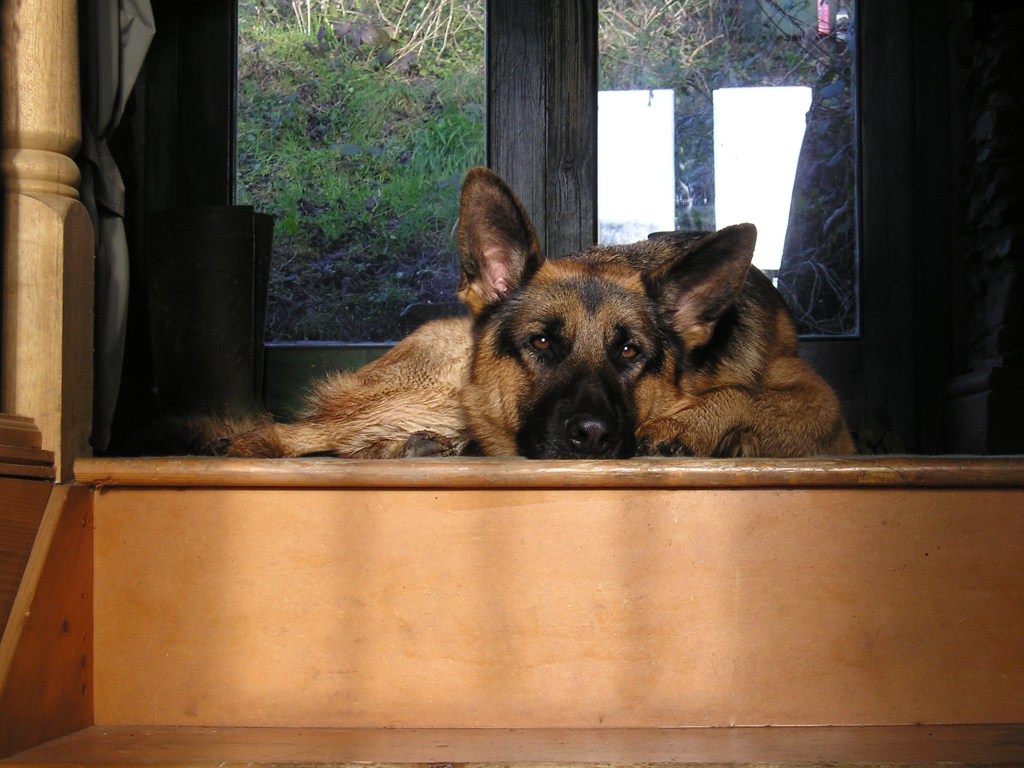
It’s not the world’s best photograph but I start today’s post with it simply because there is a look in Pharaoh’s eyes that spells out love to me in capital letters. Always has since the day I took that photograph.

Here’s an enlargement of the photo offering a closer look at Pharaoh’s expression in those eyes.

Right from the very first moment that I held Pharaoh I sensed the start of a loving bond. Did I choose to love Pharaoh? Well, of course I did! Was it a conscious decision? I don’t think so!

All of which is my introduction to a fascinating essay about the science of love that recently appeared on the Care2 site.

Enjoy!

ooOOoo

Can You Choose to Love? Science Suggests You Can

By: Zoe Blarowski June 2, 2017

About Zoe

Love may often feel spontaneous and sometimes even out of control. But is it, really? Research is starting to show that you can change the intensity of love you feel towards others. Similar to emotions like fear or sadness, love can be influenced simply by how you think about a situation.

Is love under your control?

One study looked at altering love feelings in people who were either in a romantic relationship or had recently broken up from one. Each participant started by viewing pictures of their current lover or their ex-partner to bring up their current feelings towards them.

Then, researchers asked them to think about positive aspects of their partner, relationship or possible future scenarios. Their feelings towards their current or previous partners were assessed again.

The second part of the study asked participants to think of negative things about their partner, such as what’s wrong with them or their relationship.

Perhaps it’s not surprising that participants reported having greater love feelings after thinking positive thoughts. Whereas, they reported decreased lovingness after the negative thoughts. It was the same for everyone, whether they were in a relationship or had recently broken up.

Researchers felt this shows great potential for people to take more control of their emotional world, which could in turn benefit their lives and relationships.

Interestingly, thoughts also appeared to affect everyone’s overall mood and feelings about life in general. The positive thoughts improved people’s mood and disposition, whereas the negative thoughts brought everyone down.

This may highlight the importance of how positive and negative thoughts in general can affect our mental health.

How can you put this to use?

You can likely think of times in your own life when it would be helpful to either decrease or increase your love for another person.

Have you ever had an unwanted crush on someone? For instance, obsessing over a celebrity you’ll likely never meet can cause more frustration than joy in your life. Or maybe you’ve fallen for someone who’s not available, either physically or emotionally.

These are times when it’s in your best interest to end your attachment to the person and move on.

In addition, research has shown that thinking negatively about an ex-partner or your previous relationship helps you get over a break-up. The reverse is also true – if you think positively about an ex, it’s more difficult to heal and move on.

Keep this in mind if you’re going through a break-up, or need to reduce your feelings towards someone for another reason.

Try asking yourself questions like these:

  • What annoys me about this person?
  • Did we ever have a fight?
  • Why were we a bad match for each other?
  • What didn’t work in our relationship?
  • What could go wrong if we stayed together?

Reframing your thoughts is also a much healthier way to try to get over someone than taking self-destructive action to distract yourself, such as drinking too much.

On the other hand, the world always needs a lot more love to go around. Increasing your love towards others is often one of the best things you can do to help yourself and everyone in your life.

Unfortunately, the top reason married couples give for getting a divorce is growing apart and falling out of love. It’s true the intensity of love feelings usually fluctuates throughout a long-term relationship, but a decrease in feelings doesn’t have to mean the end.

If you’re starting to question whether or not you should stay in a long-standing relationship, take a closer look at your situation before making a final decision. Do you still respect and care for your partner? Do you still have lots in common? Is it possible you’re just in a temporary slump?

Questions like these may help to re-frame how you feel about your relationship:

  • What are some of your partner’s best qualities?
  • Why did you get together in the first place?
  • Are there things you’d like to do with your partner in the future?
  • What makes you a good match for each other?
  • Do you enjoy spending time with your partner?

Romantic partners who view each other in a positive light have been shown to actually have happier relationships. This is likely true for all relationships. Choosing more positive thoughts can go a long way towards creating greater harmony with all your loved ones.

Sharing your thoughts and telling others why you love them is even better.

ooOOoo

As my dearest Jeannie will confirm, I have never been the most comfortable person in terms of verbalising my love for her, despite Jean being the dream loving partnership of my life. Jean, on the other hand, expresses her love for me many times each day.

Maybe this essay offers an insight into the different ways we love?

For Jean also tells the dogs individually many times each day that she loves them. I feel the same but don’t say it anything like as often.

So is science showing us why the difference between Jean and me? I think so.

Yet another thing that we learn from dogs. Or more specifically that I have to learn from dogs!

Tell them every day how much I love them!