Taken from the world’s most smartest dogs.

oooo

oooo

oooo

oooo

oooo

oooo

oooo

oooo

Onward and upwards to another set.
Dogs are animals of integrity. We have much to learn from them.
Category: Education
Taken from the world’s most smartest dogs.
oooo
oooo
oooo
oooo
oooo
oooo
oooo
oooo
Onward and upwards to another set.
The last in this recent series on me examining my navel!
Dear Mr. Cosmos,
Clearly, I have no idea how many letters you receive from us funny inhabitants on Planet Earth. Can’t imagine you get floods of them but then neither can I imagine that this is the first one you have ever received.
Why can I not imagine this is to be your first? Simply, because us funny folk on this incredible planet of yours have been around for quite a while. I mean that over in that country we folk call Israel there has been found evidence of “control of fire by humans nearly 790,000 years ago.”
Whoops!
Just realised that me saying “quite a while” and writing of “790,000 years ago” will be utterly meaningless, in terms of scale, to how you describe your past. Just as it is utterly meaningless for me to contemplate that in cosmological terms the ‘Big Bang”, generally recognised as the start of your Universe, was, give or take, some 13.8 billion years ago.
I wish I could really get an idea of what a million years feels like, let alone a billion years. Ah well!
Let me stay with this notion of stuff being meaningless.
My dear, long-time friend Dan Gomez sent me a link to an item that had been published on the Science Alert website. It was about how the NASA Hubble space telescope had recently embarked on a new mission. Or in the words of that article:
Hubble Just Revealed Thousands of Hidden Galaxies in This Jaw-Dropping Photo
By Michelle Starr, September 13th, 2018
Hubble has embarked on a new observation mission: to study the farthest reaches of the Universe, using some of the most massive objects in the Universe – galaxy clusters.
And this newly released picture shows how.
At the centre is Abell 370, a cluster of a few hundred galaxies located around 4 billion light-years from Earth. And arrayed around it, never seen before, are thousands of galaxies, out even farther in the depths of space.
The reason we can see them now is because of Abell 370. All those hundreds of galaxies, clustered so close together, and the associated dark matter, create an immense field of gravity.
When the light behind that field passes through it, the gravitational force is so strong that it bends the path of the light. This creates a magnifying effect called gravitational lensing, allowing us to see objects we usually can’t.
Abell 370 is the first of these clusters.
Here is one of those photographs,

And an explanation of what we are looking at:
In the image, you can see the galaxies in Abell 370. The brightest yellowish white ones are huge, containing hundreds of billions of stars. The bluer ones are smaller, spiral galaxies, like the Milky Way, with younger populations of stars. And the dimmer, yellower galaxies are older, with ageing star populations.
The galaxies behind Abell 370 appear as smeared lines of light. The most spectacular, to the lower left of the centre, is nicknamed the Dragon (possibly for its resemblance to a Chinese dragon), with its head to the left. It’s made up of five images of the same spiral galaxy, magnified and stretched by the gravitational lens.
Mr. Cosmos, you know a little earlier I was remarking about how it is impossible to comprehend the age of the Universe. Well, dear Sir, it’s just as impossible to comprehend your distances.
Take Abell 370 out there some 4 billion light years from Planet Earth! I really wanted to have a go at understanding that distance.
First, I looked up the distance in miles that is represented by one light-year. Answer: one light year is a tad under six trillion miles.
Just one, let alone some 4 billion of them!
Next, I looked up the distance of our very familiar Big Dipper constellation. You must have heard of it? This one!

Turns out that even this very familiar sight in our night sky ranges from 78 to 123 light years away. Average that as 100 light years and, bingo, you are looking at this familiar cluster of stars that is 590 trillion miles away!
So, dear Mr. Cosmos, that puts your Abell 370 constellation about a distance that is 10 million times more distant than our Big Dipper!
I wrote above that “I really wanted to understand that distance.” In reference to how far that Abell 370 constellation truly was. My conclusion is that I will never, ever understand that distance.
Anyone able to help?
Tomorrow, Mr. Cosmos, the closing page two of my letter to you.
A wonderful postscript to my letter to Mr. Neptune!
The following was published last Wednesday and appeared on The Conversation site.
I found it very interesting and wanted to share it with you.
ooOOoo
September 26, 2018
By Professor Suzanne O’Connell, Professor of Earth & Environmental Sciences, Wesleyan University

It’s stunning but true that we know more about the surface of the moon than about the Earth’s ocean floor. Much of what we do know has come from scientific ocean drilling – the systematic collection of core samples from the deep seabed. This revolutionary process began 50 years ago, when the drilling vessel Glomar Challenger sailed into the Gulf of Mexico on August 11, 1968 on the first expedition of the federally funded Deep Sea Drilling Project.
I went on my first scientific ocean drilling expedition in 1980, and since then have participated in six more expeditions to locations including the far North Atlantic and Antaractica’s Weddell Sea. In my lab, my students and I work with core samples from these expeditions. Each of these cores, which are cylinders 31 feet long and 3 inches wide, is like a book whose information is waiting to be translated into words. Holding a newly opened core, filled with rocks and sediment from the Earth’s ocean floor, is like opening a rare treasure chest that records the passage of time in Earth’s history.
Over a half-century, scientific ocean drilling has proved the theory of plate tectonics, created the field of paleoceanography and redefined how we view life on Earth by revealing an enormous variety and volume of life in the deep marine biosphere. And much more remains to be learned.
Technological innovations
Two key innovations made it possible for research ships to take core samples from precise locations in the deep oceans. The first, known as dynamic positioning, enables a 471-foot ship to stay fixed in place while drilling and recovering cores, one on top of the next, often in over 12,000 feet of water.
Anchoring isn’t feasible at these depths. Instead, technicians drop a torpedo-shaped instrument called a transponder over the side. A device called a transducer, mounted on the ship’s hull, sends an acoustic signal to the transponder, which replies. Computers on board calculate the distance and angle of this communication. Thrusters on the ship’s hull maneuver the vessel to stay in exactly the same location, countering the forces of currents, wind and waves.
Another challenge arises when drill bits have to be replaced mid-operation. The ocean’s crust is

composed of igneous rock that wears bits down long before the desired depth is reached.
When this happens, the drill crew brings the entire drill pipe to the surface, mounts a new drill bit and returns to the same hole. This requires guiding the pipe into a funnel shaped re-entry cone, less than 15 feet wide, placed in the bottom of the ocean at the mouth of the drilling hole. The process, which was first accomplished in 1970, is like lowering a long strand of spaghetti into a quarter-inch-wide funnel at the deep end of an Olympic swimming pool.
Confirming plate tectonics
When scientific ocean drilling began in 1968, the theory of plate tectonics was a subject of active debate. One key idea was that new ocean crust was created at ridges in the seafloor, where oceanic plates moved away from each other and magma from earth’s interior welled up between them. According to this theory, crust should be new material at the crest of ocean ridges, and its age should increase with distance from the crest.

The only way to prove this was by analyzing sediment and rock cores. In the winter of 1968-1969, the Glomar Challenger drilled seven sites in the South Atlantic Ocean to the east and west of the Mid-Atlantic ridge. Both the igneous rocks of the ocean floor and overlying sediments aged in perfect agreement with the predictions, confirming that ocean crust was forming at the ridges and plate tectonics was correct.
Reconstructing earth’s history
The ocean record of Earth’s history is more continuous than geologic formations on land, where erosion and redeposition by wind, water and ice can disrupt the record. In most ocean locations sediment is laid down particle by particle, microfossil by microfossil, and remains in place, eventually succumbing to pressure and turning into rock.
Microfossils (plankton) preserved in sediment are beautiful and informative, even though some
are smaller than the width of a human hair. Like larger plant and animal fossils, scientists can use these delicate structures of calcium and silicon to reconstruct past environments.
Thanks to scientific ocean drilling, we know that after an asteroid strike killed all non-avian dinosaurs 66 million years ago, new life colonized the crater rim within years, and within 30,000 years a full ecosystem was thriving. A few deep ocean organisms lived right through the meteorite impact.
Ocean drilling has also shown that ten million years later, a massive discharge of carbon – probably from extensive volcanic activity and methane released from melting methane hydrates – caused an abrupt, intense warming event, or hyperthermal, called the Paleocene-Eocene Thermal Maximum. During this episode, even the Arctic reached over 73 degrees Fahrenheit.
The resulting acidification of the ocean from the release of carbon into the atmosphere and ocean caused massive dissolution and change in the deep ocean ecosystem.
This episode is an impressive example of the impact of rapid climate warming. The total amount of carbon released during the PETM is estimated to be about equal to the amount that humans will release if we burn all of Earth’s fossil fuel reserves. Yet, an important difference is that the carbon released by the volcanoes and hydrates was at a much slower rate than we are currently releasing fossil fuel. Thus we can expect even more dramatic climate and ecosystem changes unless we stop emitting carbon.
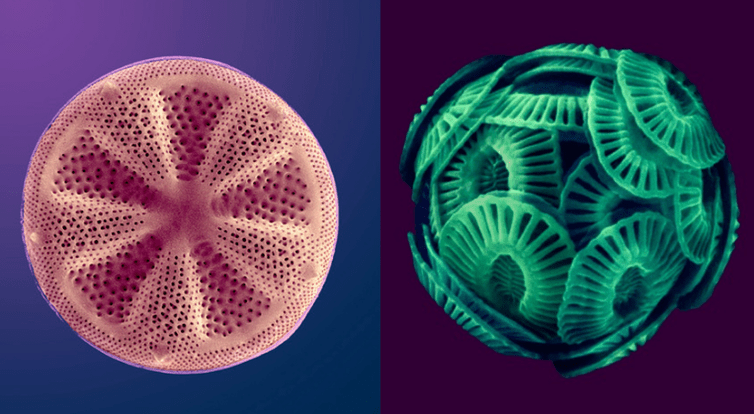
Scientific ocean drilling has also shown that there are roughly as many cells in marine sediment as in the ocean or in soil. Expeditions have found life in sediments at depths over 8000 feet; in seabed deposits that are 86 million years old; and at temperatures above 140 degrees Fahrenheit.
Today scientists from 23 nations are proposing and conducting research through the International Ocean Discovery Program, which uses scientific ocean drilling to recover data from seafloor sediments and rocks and to monitor environments under the ocean floor. Coring is producing new information about plate tectonics, such as the complexities of ocean crust formation, and the diversity of life in the deep oceans.
This research is expensive, and technologically and intellectually intense. But only by exploring the deep sea can we recover the treasures it holds and better understand its beauty and complexity.
ooOOoo
Did the phrase in the first paragraph of the article jump out for you as it did for me?
This one: “…we know more about the surface of the moon than about the Earth’s ocean floor.”
Doesn’t Mr. Neptune hold his cards close to his chest.
Wonder if he communes with man’s best friend??
Continuing my series on examining my navel.
Dear Mr. Neptune,

Your oceans of the world are truly breath-taking. The power you can display in the odd wave or million through to the tranquility you so often also display defy rational explanations.

I have had the profound experience of sailing upon your waters, dear Mr. Neptune, over a number of years sailing back and forth between Cyprus and Turkey. Not a long distance but still sufficient to experience being solo on a yacht day and night.
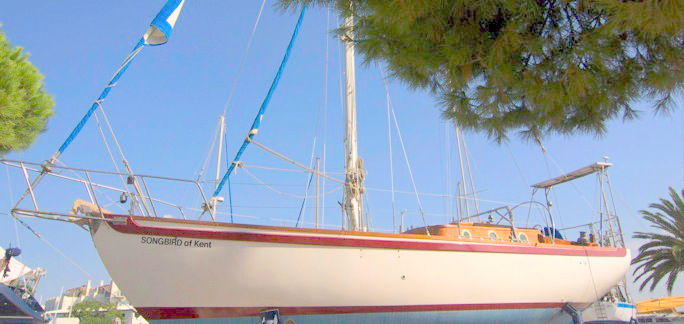
Then on my way sailing back to Plymouth, SW England, the magical, almost primeval, feeling of being alone on the Atlantic Ocean. Looking up at the night sky, feeling so insignificant, so infinitesimally minute with 500 miles of open ocean in all directions and those stars above my head.
No question, that practically everything about your oceans is beyond the understanding of us humans. Indeed, I had to look up online how much water there is on Earth to discover there is:
It’s roughly 326 million cubic miles (1.332 billion cubic kilometers), according to a recent study from the U.S. Geological Survey.
Because I simply didn’t have a clue.
And knowing there are approximately 326 million cubic miles of water doesn’t help because I am still left not having a clue as to what that means!
So, thank goodness, Mr. Neptune this is all a ‘walk in the park’ for you!
But I do have a question for you.
What do you make of this?

The image is cropped from the following:

The description of these figures is:
Figure. (upper) Change in global upper-level (0–2000 m) ocean heat content since 1958. Each bar shows the annual mean relative to a 1981–2010 baseline. (lower) Annual mean ocean heat content anomaly in 2017 relative to a 1981–2010 baseline.
And it was taken from research undertaken by Lijing Cheng and Jiang Zhu and found on the web here.
Ocean Heat Content
Owing to its large heat capacity, the ocean accumulates the warming derived from human activities; indeed, more than 90% of Earth’s residual heat related to global warming is absorbed by the ocean (IPCC, Cheng et al. 2017). As such, the global ocean heat content record robustly represents the signature of global warming and is impacted less by weather-related noise and climate variability such as El Niño and La Niña events (Cheng et al. 2018). On the other hand, ocean thermal expansion due to ocean temperature change contributes substantially (30%~50%) to the sea level change, which can considerably influence human populations in coastal and island regions and marine ecosystems. Therefore, monitoring the OHC changes and understanding its variation are crucial for climate change.
Is it possible, Mr. Neptune, that even you as the master of all our oceans is worried about the future?
I hope not but I do fear your answer.
Sincerely,
Paul
Look what dear Monty found!
I shall cut my waffling and just say that I saw this item on The Smithsonian ‘Smart News’ section last week and just knew it should be shared with you!
ooOOoo
While on a walk outside a small Czech village, Monty the dog and his owner found nearly two dozen 3,000-year-old artifacts

Monty, the dog that found the Bronze Age relics, unearthed 13 sickles, two spear points, three axes and several bracelets. (Hradec Králové Region)
Some archaeologists carry tools and painstakingly chip away at historic sites. Others might have fluffy bodies, keen senses of smell and an affinity for digging stuff up.
As Tom McEnchroe reports for Radio Praha, a very good dog named Monty recently unearthed a rare trove of Bronze Age artifacts near the Czech village of Kostelecké Horky. Monty was walking with his human, identified as “Mr. Frankota,” in a field when he began pawing frenetically at the ground. Soon, thanks to Monty’s hard work, metallic objects began to emerge in the soil.
The cache of relics includes 13 sickles, two spear points, three axes and several bracelets. The objects have been dated to the Urnfield period around 3,000 years ago. This late European Bronze Age culture is marked by the transition from inhumation burials to cremations; the remains of the dead were interred in urns, giving the era its name. According to Encyclopaedia Britannica, Urnfield culture first appeared in east-central Europe and northern Italy, but eventually spread “to Ukraine, Sicily, Scandinavia, and across France to the Iberian peninsula.”
It is rare to find a cluster of intact Urnfield objects, according to a press release. “The culture that lived here at the time normally just buried fragments, often melted as well,” Martina Beková, an archaeologist at the Museum and Gallery of Orlické who studied the artifacts after they were discovered by Monty, tells McEnchroe. So she suspects that the relics were tied to a ritual—“most likely a sacrifice of some sorts,” Beková says.
Additional evidence could help pin down the function of the objects, and according to Michelle Starr of Science Alert, local archaeologists have been searching the area in the hopes of finding more relics. They haven’t uncovered anything yet, but Sylvie Velčovská, a spokeswoman for the region, tells McEnchroe that there have been, “considerable changes to the surrounding terrain over the centuries, so it is possible that the deeper layers are still hiding some secrets.”
The newly uncovered objects will be on display at the Museum and Gallery of Orlické Mountains in the town of Rychnov until October 21, after which point they will undergo conservation and be moved to a permanent exhibition in the village of Kostelec.
Frankota, Monty’s owner, was awarded 7860 Czech Koruna (around $360) for his role in alerting archaeologists to the ancient treasures. One can only hope that Monty was given many treats and pets for his superb fieldwork
Read more: https://www.smithsonianmag.com/smart-news/dog-uncovers-trove-bronze-age-relics-czech-republic-180970324/#HE8cRkejVQOPDlzk.99
Give the gift of Smithsonian magazine for only $12! http://bit.ly/1cGUiGv
Follow us: @SmithsonianMag on Twitter
oooo
Brigit Katz is a freelance writer based in Toronto. Her work has appeared in a number of publications, including NYmag.com, Flavorwire and Tina Brown Media’s Women in the World.
Read more from this author | Follow @brigitkatz
ooOOoo
Where would we be without our dear dogs!!
And I am not speaking of the Autumn!
To be honest, dear friends, I really agonised over whether or not to republish an item that I saw on The Conversation blogsite last Friday. For it has nothing to do with dogs, nothing to do with learning from dogs, and everything to do with being the ‘wrong’ side of 65 years old.
But then one day last week I was out watching some tree cutting being undertaken by Jimmy Gonzales and his crew and heard the phoning ringing in the house.
I ran for the steps leading up to the deck and missed the bottom step.
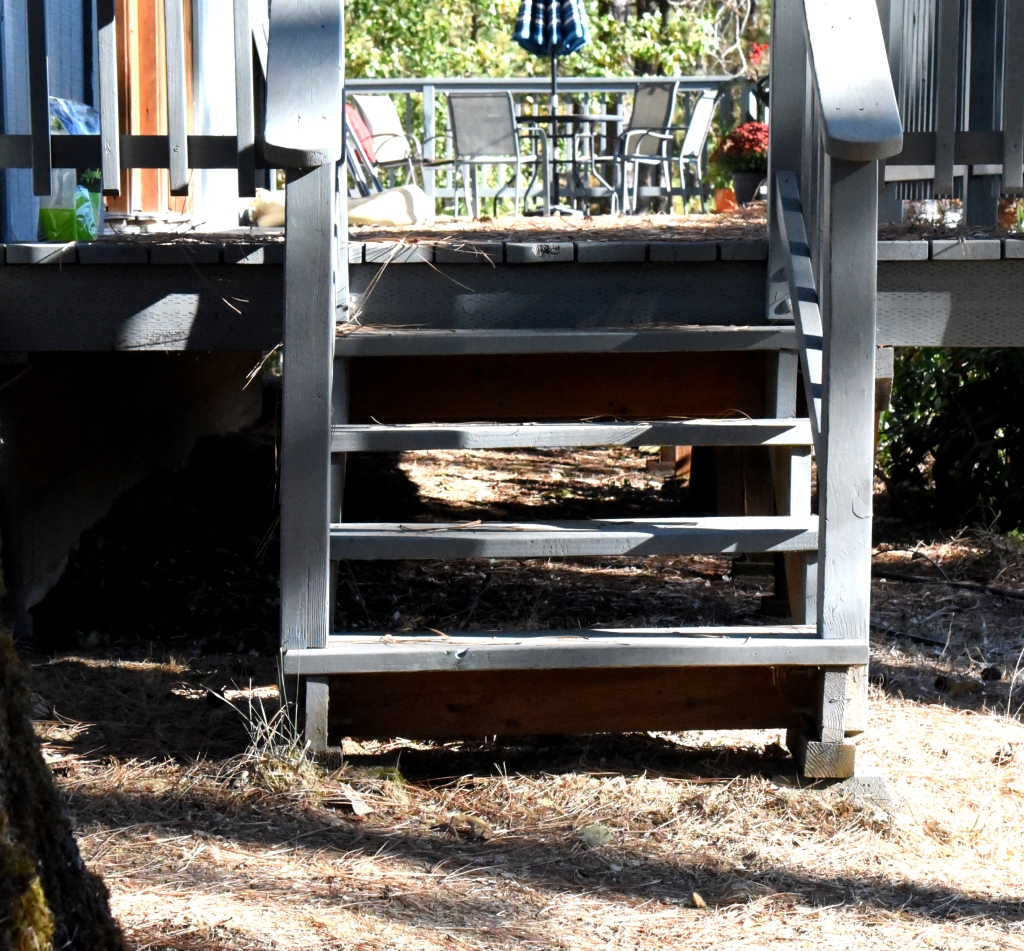
I fell but luckily managed to grab the handrails seconds before I could have smacked my head into the steps. However, it did scare me especially when I reflected that it wasn’t even 9 months since my medical emergency following my fall from my bicycle.
It confirmed the sense in republishing the item. Republished within the terms of The Conversation site.
ooOOoo
September 21, 2018
By four authors:
 Co-Director of Texas A&M Center for Population Health and Aging, Texas A&M University
 Research Scientist, University of North Carolina at Chapel Hill
 Regents and Distinguished Professor, Associate Vice President for Strategic Partnerships and Initiatives, Texas A&M University
 Adjunct Assistant Professor, Public Health, University of North Carolina at Chapel Hill
Baby boomers, who once viewed themselves as the coolest generation in history, are now turning their thoughts away from such things as partying and touring alongside rock bands to how to they can stay healthy as they age. And, one of the most important parts of healthy aging is avoiding a fall, the number one cause of accidental death among people 65 and older.
The issue is growing more pressing each day. More adults than ever – 46 million – are 65 and older, and their numbers are increasing rapidly.
The Centers for Disease Control and Prevention estimates that one in four older adults will fall each year. Falls are the leading cause of injury and injury deaths among older adults. And, they are costly. Falls are responsible for an estimated US$31 billion in annual Medicare costs. This estimate does not account for non-direct medical or societal costs.
People who fall can lose their physical mobility for life, go into a hospital never to be discharged, require skilled nursing or other caregiver support, or become so fearful about falling again that they dramatically limit their daily activities.
The good news is that most falls are preventable, research has identified many modifiable risk factors for falls, and older adults can empower themselves to reduce their falls risks. This means there are opportunities to intervene in clinical and community settings to promote protective behaviors and improve safety.
A life-changing event
Falls can cause fractures, traumatic brain injuries and other conditions that require an emergency room visit or hospitalization. An older adult dies from a fall every 19 minutes, and every 11 seconds an older adult is treated in an emergency room for a fall-related injury. About one in four falls results in needed medical attention, and falls are responsible for about 95 percent of all hip fractures. In addition to the physical and mental trauma associated with the fall itself, falls often result in fear of falling, reduced quality of life, loss of independence and social isolation.

There is no single cause for falling. Falls can result from issues related to biological aging, such as balance problems, loss of muscle strength, changes in vision, arthritis or diabetes. Taking a combination of several prescription drugs can also contribute to falls. Lifestyle behaviors such as physical inactivity, poor nutrition and poor sleep quality can also increase the risk for falling. Environmental hazards inside the home, such as poor lighting and throw rugs, and outside, such as bad weather, standing water and uneven sidewalks, can create situations where falls are more likely to occur.
It takes a careful village
Because falls can be caused by many things, the solutions must also include a diverse set of systems, organizations and professionals. Toward that end, 42 active or developing state fall prevention coalitions, which coordinate initiatives and serve as advocates for policy development and community action, are in place. Their activities foster collaboration across the aging services network, public health and health care system. They do such things as host health fairs and fall risk screening events, fall prevention programs, and awareness-raising events to inform decision-makers and legislators about ways to make communities safer for older adults.
Here are some of the key objectives that the coalitions are working on to reduce hazards from falling:
There are many fall prevention programs offered in communities to promote healthful behaviors and to reinforce positive mental perspectives about falls being preventable.
People concerned about falling should contact their local Area Agency on Aging to find out where these programs are offered and which can be most beneficial. Also, seniors should ask their doctors about fall-related risk factors and what they can do to reduce risk. Communicate your concerns about falls with your health care team and social network, tell them about what you learn during your fall prevention programs, and report back about how they are making a difference in your life.
About 70 percent of older adults have one or more chronic conditions, many of which can increase the risk for falling. For example, people with diabetes may have vision problems and problems with sensation in their feet. Also, the medications used to treat these conditions can increase fall risk. And, taking five or more medications has been identified with increased frailty and higher risk for falling.

While health care access and utilization are important for chronic disease diagnosis and management, 90 percent of health care happens outside the health care setting. Therefore, older adults need to manage their diseases better. To do this, however, they often need help. For starters, they should discuss the side effects of all medications with their doctors and also how best to adhere to prescribed treatment regimens, such as when to take medications, whether to take with food and whether there are possible interactions of one medication with another. Seniors also can consider enrolling in evidence-based disease self-management programs to improve their knowledge and confidence to manage their conditions as well as enhance lasting skills for goal setting and action planning, such as being physically active for 30 minutes a day for five days a week.
About 44 percent of falls occur inside the home. In-home risk factors for falls can include dim lighting, clutter on floors, throw rugs and ottomans, missing railings, uncovered wires and extension cords, children and pets underfoot and unsafe bathrooms. A unsafe bathroom is one with an inappropriate toilet height, high shower or bathtub walls and no grab rails.
To identify possible risks in the home, the CDC created a user-friendly safety checklist that can safeguard older adults by eliminating environmental hazards.
Daily lifestyle behaviors such as physical activity, nutrition and sleep quality can influence fall risk, and these are never too late to change. Interventions can be successful for people of all ages. Among the most important is physical activity, namely safely performing lower-body exercises to increase strength, balance and flexibility. Additionally, seniors should work with their health care team to have medications reviewed and eyes checked regularly. Also, they should ask about their vitamin D levels and possible nutritional supplementation.
ooOOoo
Yes, when it comes to being more careful on our feet once again our dear dogs offer us a much better way: Have four of them!!

Just look at the ease of our dear Brandy scampering through the woods yesterday morning!
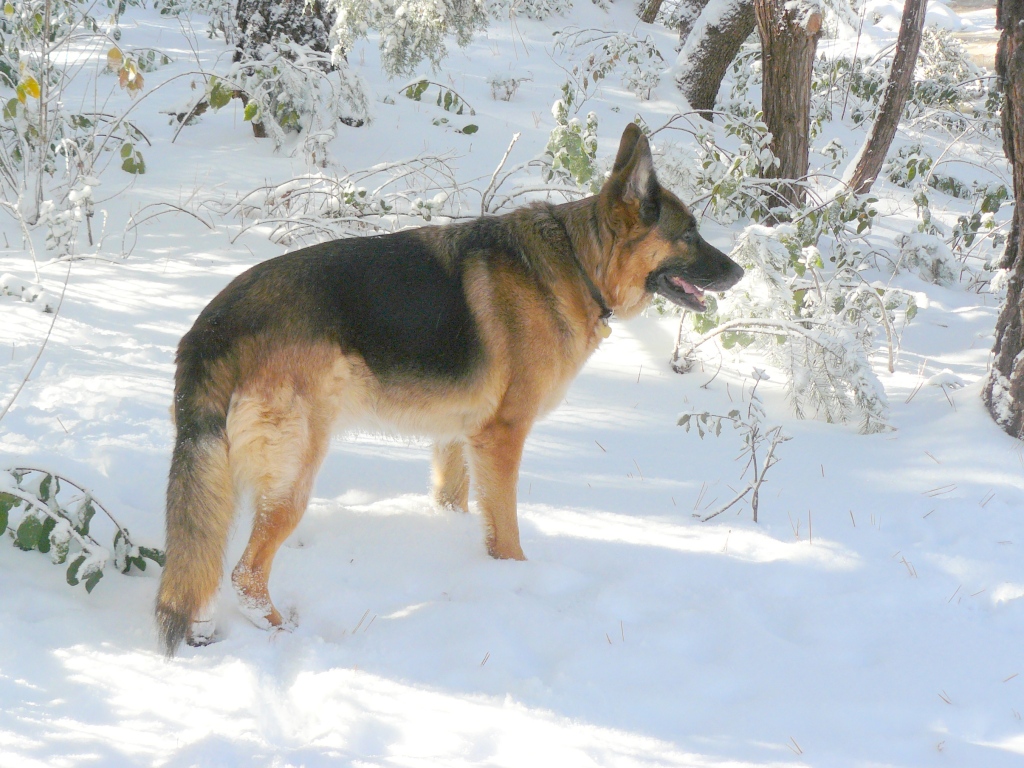
Our dear, sorely-missed Pharaoh demonstrating the advantages of four feet!
So my good people – you be careful out there!
The problem is not plastic. It is consumerism.
I closed yesterday’s Letter to the Moon with the last sentence from a recent essay from George Monbiot: “Defending the planet means changing the world.”
Shortly, I will be republishing, with Mr. Monbiot’s generous permission, the whole of that essay.
But first I am going to reproduce in full what arrived via email from George in the early hours of yesterday morning.
If you are within reach of London please go, or if not do leave a comment on the wall.
Hi Paul,
I’m contacting you because you’re one of the people who emailed me as part of the overwhelming response to my columns In Memoriam, and Incompetence By Design, where I mentioned that ‘some of us are now mobilising to turn the great enthusiasm for wildlife and natural beauty in this country into political action, and to fight the dismantling of the laws that protect our precious wild places’.
Many of you asked what I meant by ‘Watch this space’. The mobilisation starts next Saturday, in London, with The People’s Walk for Wildlife. It’s not a demonstration, nor a rally – it’s a gentle, family-friendly day. The only kind of strength we need is strength in numbers – to show that many thousands of us care deeply about the vanishing of wild mammals, butterflies, mayflies, songbirds and fish, and that we want the Government to commit properly to protecting those that remain.
On Saturday 22nd September, we’ll gather at Reformers Tree, Hyde Park at 10.00am; entertainment will start at 12 noon. At 1pm we’ll walk from Hyde Park Corner, via Piccadilly, St James, Pall Mall, and Cockspur St, to Whitehall. Please come along if you can. Download the birdsong app to play as we go. Bring friends, dress up as your favourite plant or animal or just come as yourself!
I’m looking forward to walking for the missing millions – I hope you can join me!
George
P.S. If you can’t make it, you can still contribute by adding your message of support to the Walk’s Wonder Wall – every post is valuable proof that you care.
Now on to that post.
ooOOoo
The problem is not plastic. It is consumerism.
By George Monbiot, published in the Guardian 5th September 2018
Do you believe in miracles? If so, please form an orderly queue. Plenty of people imagine we can carry on as we are, as long as we substitute one material for another. Last month, a request to Starbucks and Costa to replace their plastic coffee cups with cups made from corn starch was retweeted 60,000 times, before it was deleted.
Those who supported this call failed to ask themselves where the corn starch would come from, how much land is needed to grow it or how much food production it will displace. They overlooked the damage this cultivation would inflict: growing corn (maize) is notorious for causing soil erosion, and often requires heavy doses of pesticides and fertilisers.
The problem is not just plastic. The problem is mass disposability. Or, to put it another way, the problem is pursuing, on the one planet known to harbour life, a four-planet lifestyle. Regardless of what we consume, the sheer volume of consumption is overwhelming the Earth’s living systems.
Don’t get me wrong. Our greed for plastic is a major environmental blight, and the campaigns to limit its use are well-motivated and sometimes effective. But we cannot address our environmental crisis by swapping one over-used resource for another. When I challenged that call, some people asked me, “so what should we use instead?”. The right question is “how should we live?”. But systemic thinking is an endangered species.
Part of the problem is the source of the plastic campaigns: David Attenborough’s Blue Planet II series. The first six episodes had strong, coherent narratives. But the seventh episode, which sought to explain the threats facing the wonderful creatures the series revealed, darted from one issue to another. We were told we could “do something” about the destruction of ocean life. We were not told what. There was no explanation of why the problems are happening, what forces are responsible and how they can be engaged.
Amid the general incoherence, one contributor stated “It comes down, I think, to us each taking responsibility for the personal choices in our everyday lives. That’s all any of us can be expected to do.” This perfectly represents the mistaken belief that a better form of consumerism will save the planet. The problems we face are structural: a political system captured by commercial interests and an economic system that seeks endless growth. Of course we should try to minimise our own impacts, but we cannot confront these forces merely by “taking responsibility” for what we consume.
Unfortunately, these are issues that the BBC in general, and David Attenborough in particular, avoid. I admire Attenborough in many ways, but I am no fan of his environmentalism. For many years, it was almost undetectable. When he did at last speak out, he consistently avoided challenging power, either speaking in vague terms or focusing on problems for which powerful interests are not responsible. I believe this tendency may explain Blue Planet’s skirting of the obvious issues.
The most obvious is the fishing industry, that turns the astonishing lifeforms the rest of the series depicted into seafood. Throughout the oceans, this industry, driven by our appetites and protected by governments, is causing cascading ecological collapse. Yet the only fishery the programme featured was among the 1% that are in recovery. It was charming to see how Norwegian herring boats seek to avoid killing orcas, but we were given no idea of how unusual it is.
Even marine plastics is in large part a fishing issue. It turns out that 46% of the Great Pacific Garbage Patch, that has come to symbolise our throwaway society, is composed of discarded nets, and much of the rest consists of other kinds of fishing gear. Abandoned fishing materials tend to be far more dangerous to marine life than other forms of waste. As for the bags and bottles contributing to the disaster, the great majority arise in poorer nations, without good disposal systems. But because this point was not made, we look to the wrong places for solutions.
From this misdirection arise a thousand perversities. One prominent environmentalist posted a picture of the king prawns she had just bought, celebrating the fact that she had persuaded the supermarket to put them in her own container, rather than a plastic bag, and linking this to the protection of the seas. But buying prawns causes many times more damage to marine life than any plastic in which they are wrapped. Prawn fishing has the highest rates of bycatch of any fishery: scooping up vast numbers of turtles and other threatened species. Prawn farming is just as bad, eliminating great tracts of mangrove forests, crucial nurseries for thousands of species.
We are kept remarkably ignorant of such issues. As consumers, we are confused, bamboozled and almost powerless. This is why corporate power has gone to such lengths to persuade us to see ourselves this way. The BBC’s approach to environmental issues is highly partisan, siding with a system that has sought to transfer responsibility for structural forces to individual shoppers. It is only as citizens, taking political action, that we can promote meaningful change.
The answer to the question “how should we live?” is “simply”. But living simply is highly complicated. In Aldous Huxley’s Brave New World, the government massacred the Simple Lifers. This is generally unnecessary: today they can be safely marginalised, insulted and dismissed. The ideology of consumption is so prevalent that it has become invisible: it is the plastic soup in which we swim.
One-planet living means not only seeking to reduce our own consumption, but also mobilising against the system that promotes the great tide of junk. This means fighting corporate power, changing political outcomes and challenging the growth-based, world-consuming system we call capitalism.
As the famous Hothouse Earth paper published last month, that warned of the danger of flipping the planet into a new, irreversible climatic state, concluded, “incremental linear changes … are not enough to stabilize the Earth system. Widespread, rapid, and fundamental transformations will likely be required to reduce the risk of crossing the threshold”. Disposable coffee cups made from new materials are not just a non-solution. They are a perpetuation of the problem. Defending the planet means changing the world.
ooOOoo
Share this! Please!
We live on such a fragile planet!
The idea of writing a letter to the moon is not a new one and it came to me when listening to an item yesterday morning, Pacific Time, broadcast by the BBC on Radio 4. The item was the news that Elon Musk has announced that:
Elon Musk’s company SpaceX has unveiled the first private passenger it plans to fly around the Moon.
Japanese billionaire and online fashion tycoon Yusaku Maezawa, 42, announced: “I choose to go to the Moon.”
The mission is planned for 2023, and would be the first lunar journey by humans since 1972.
So here is that letter!
ooOOoo
Dear Mr Moon,
I cannot believe how quickly the years roll by!
Who would have thought that yesterday, the 18th of September, 2018, was the anniversary of the day in September, 1977 when:
On September 18, 1977, as it headed toward the outer solar system, Voyager 1 looked back and acquired a stunning image of our Earth and moon.
You will surely remember that first image taken of the Planet Earth and your good self in the same frame.

Now here we are some 41 years later and, my, how things have changed.
But something, dear Mr. Moon, has never changed for you. That is the sight of our most beautiful planet. Plus, I would go so far as to venture that what makes our planet such a beautiful sight, one that has captivated us humans when we have gone into space and looked back at home, is the magic of our atmosphere.

So, so thin …. and so, so fragile.
It is akin to the thinness of the skin of an onion.
In fact, Mr. Moon, that layer that we earthlings call the troposphere, the layer closest to Earth’s surface varies from just 4 miles to 12 miles (7 to 20 km) thick. It contains half of our planet’s atmosphere!
Everything that sustains the life of air-breathing creatures, human and otherwise, depends on the health of this narrow layer of atmosphere above our heads. Now the thickness of that layer varies depending on the season and the temperature of the air. But let’s use an average thickness of 8 miles (say, 13 km) because I want to explore in my letter to you some comparisons.
In your infinite gaze down upon your mother planet you will have seen the arrival of H. sapiens, out of ancestral H. erectus, that took place roughly 315,000 years ago.
You will also have seen from your lofty vantage point the growth of both CO2 levels in the planet’s atmosphere and the average land-ocean temperature. Forgive me quoting something at you, but:
OBSERVABLE CHANGES IN THE EARTH
SINCE THE INDUSTRIAL REVOLUTION
While politicians have been busy debating the merits of climate science, the physical symptoms of climate change have become increasingly apparent: since the industrial revolution, sea level has grown by 0.9 inches, the atmospheric concentration of carbon dioxide has risen to unprecedented levels, average global temperatures have increased by about 1.0 degree Celsius and, to top it off, the global population has jumped by nearly 600 percent; 15 of the 16 hottest years on record occurred in the 21st century, and 2016 is likely to be the warmest year ever recorded.
Now the Industrial Revolution was all but over back in 1840 and the last 178 years have seen an explosion in the way we use energy, in all its forms. Plus we have to accept that back then the global population was around 1 billion persons. It is now over 7 billion.
Between 1900 and 2000, the increase in world population was three times greater than during the entire previous history of humanity—an increase from 1.5 to 6.1 billion in just 100 years.
So on to my comparisons.
The radius of our beautiful planet is about 3,959 miles (6,371 km). The average thickness of the troposphere is 8 miles (13 km).
Thus the ratio of thickness of our liveable atmosphere to the radius of the planet is 8 divided by 3,959. That is a figure of 0.002! Our atmosphere is 1/1000th of the size of the radius of our planet.
Hang on that figure for a moment.
In the last 178 years humanity has transformed our consumption of energy and especially carbon-based fuels. H. sapiens has been around for 315,000 years.
Thus the ratio of these present ‘modern’ times (the last 178 years) to the arrival of us back then (315,000 years ago) is 178 divided by 315,000. That is a (rounded) figure of 0.0006. Our modern times are just 1/10,000th of the time that so-called modern man has been on this planet.
So, dear Mr. Moon, you must despair that in so short a number of years, proportionally ten times smaller than the ratio of the troposphere to the radius of our planet, we funny creatures have done so much damage to what we all depend on to stay alive – clean air!
Or maybe, my dear companion of the night sky, because you are celebrating your 4.1 billionth year of existence, what we humans are doing is all a bit of a yawn.
Sincerely,
This old Brit living in Oregon.
ooOOoo
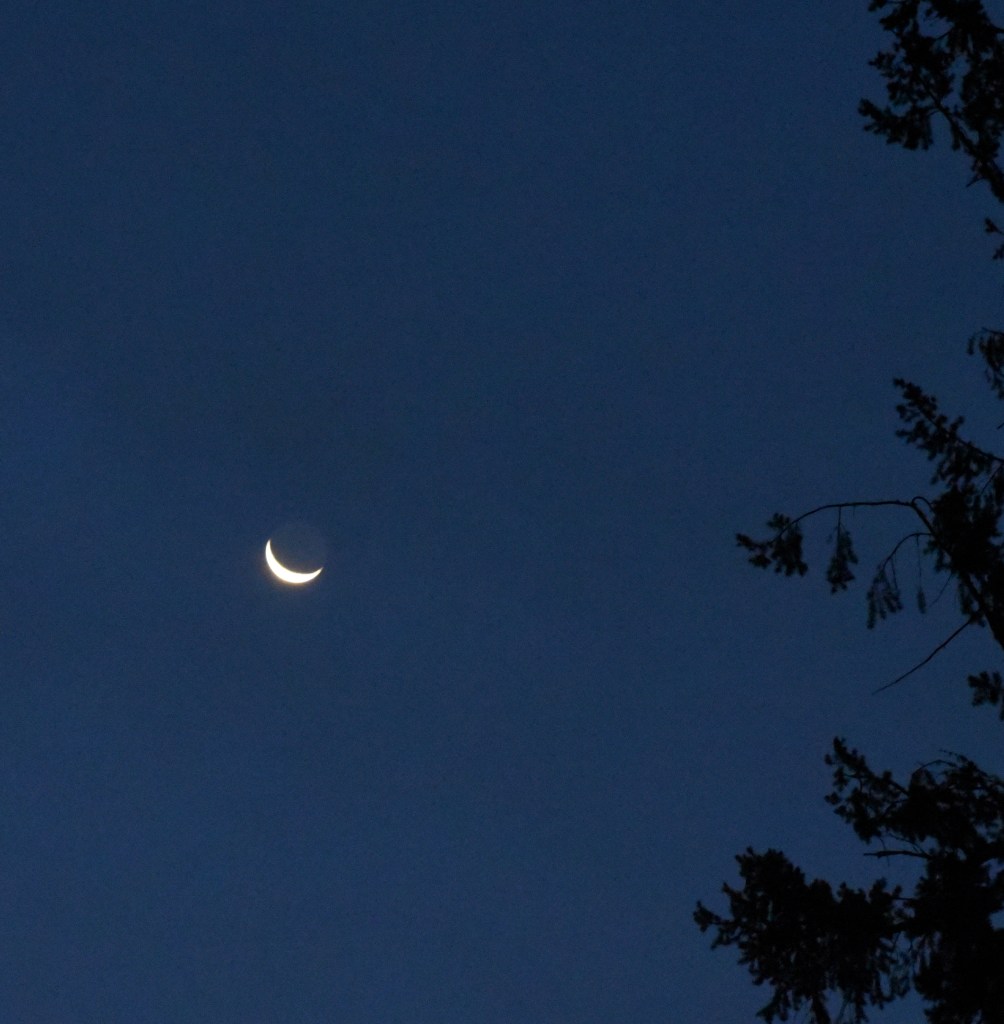
My dear friends (and I’m now speaking to you dear reader, not the moon!) when you reflect on the fragility of our atmosphere, well the layer we depend on for life, you realise without doubt that each and every one of us must make this pledge.
“I promise to do everything possible to reduce my own personal CO2 output and to ensure that both to my near friends and my political representatives I make it clear that we must turn back – and turn back now!”
Or, as George Monbiot writes in closing a recent essay (that I am republishing tomorrow): “Defending the planet means changing the world.”
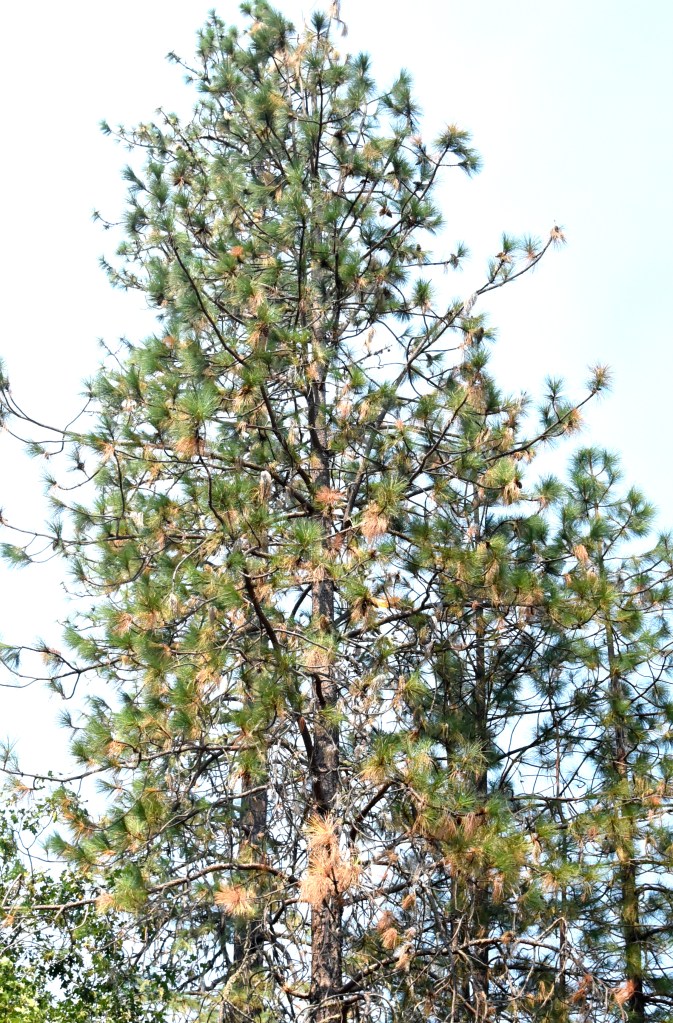
The scientific findings of how the height of trees affects their ability to cope with drought.
I subscribe to the online Physics World website and a recent article tickled my fancy. Because it was supported by what we see here at home.
That is that shorter and taller trees do not handle drought conditions as well as medium-height trees.
First the article and then some supporting evidence from home.
ooOOoo
04 Sep 2018

Forests with canopy heights of around 18 metres are more resistant to the effects of severe drought than those with shorter and taller trees, according to researchers in China and the US.
In the past, studies have disagreed on whether forests with lower or higher canopies will be more likely to make it through prolonged spells of hot, dry weather. The discrepancy has made it difficult for forest managers, who need to know which tree heights to encourage to ensure the highest growth and survival rates during extreme drought.
Study leader Peipei Xu at Beijing Normal University in China and her colleagues believe the issue is increasingly pressing. “Climate data indicate that warm areas of land are increasing, and the warmed areas are also drying,” says Chuixiang Yi at the City University of New York, US. “Hot-dry-induced forest mortality poses a significant global concern for the future as carbon dioxide continues to rise and the climate continues to warm.”
Xu, Yi and the rest of the team aimed to quantify the relationships between canopy height, growth and survival rates during drought accurately for the first time. They analysed data gathered during a severe drought in the southwestern US in 2002 that showed the effect on the ring widths of tree trunks, a useful indicator of their yearly growth. In addition, satellite data revealed how the density of vegetation changed over the course of the drought; the team used this to calculate both leaf growth and tree mortality rates.
The results revealed that trunk and leaf growth under drought conditions increased with canopy height for trees shorter than 18 metres but decreased with height for trees taller than 18 metres. “Our results indicate that both high and small trees have relatively low drought resistance,” says Yi.
After establishing these relationships, the researchers could determine the biological mechanisms governing tree growth and survival during drought.
“All organic matter in a tree is formed on the leaves at the top of the tree by photosynthesis,” Yi explains. “Tall trees have a longer water transport path from roots to leaves and [it’s] more difficult to overcome tissue resistance and … gravity, particularly under dry conditions. The roots of small trees are short, and their abilities to access water and nutrient supplies unavailable to the surface soil layer are extremely limited.”
The researchers believe that using their results to inform the active management of canopy structure could safeguard vulnerable forests. As climate models predict hotter, drier droughts becoming more commonplace, this could be essential to combat forest dieback – a phenomenon that will also drive climate change.
“Our findings provide insights into how to manage forests or plant what trees to increase forest drought resistance in facing hot-dry climate conditions to mitigate climate change,” says Yi.
The team reported the findings in Environmental Research Letters (ERL).
ooOOoo
So turning to home.
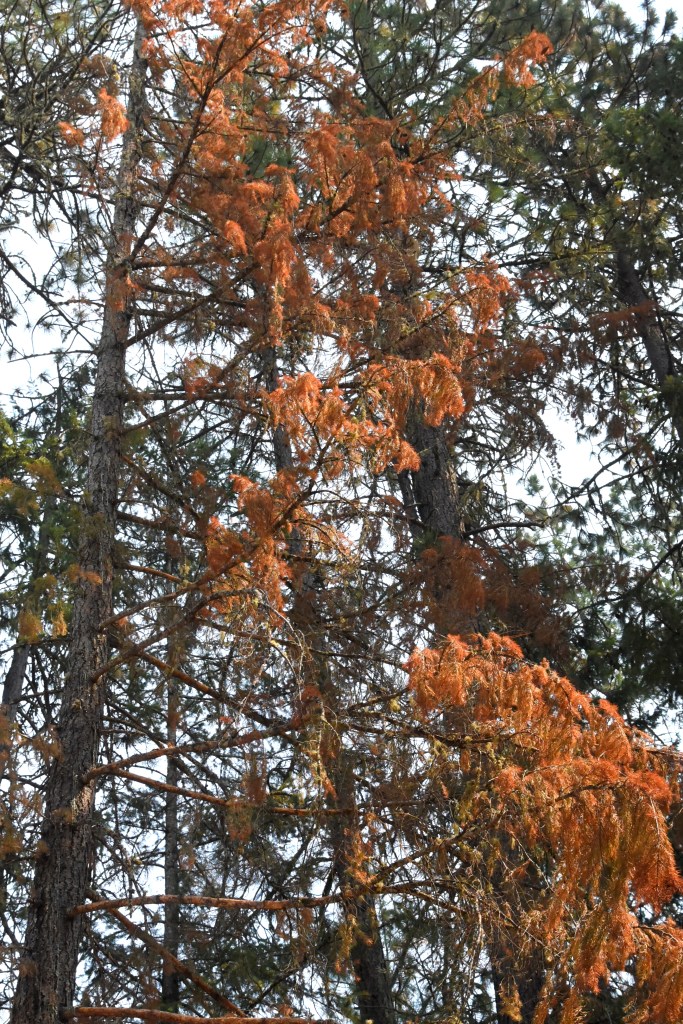
Here are a couple of photographs of tall trees to the Northern side of the house that are clearly showing some stress.
oooo
oooo
Now in stark contrast look at the trees in the photo below. (Oh, that’s the smoky summit of Mount Sexton, elevation 3,829 ft., in the distance.)
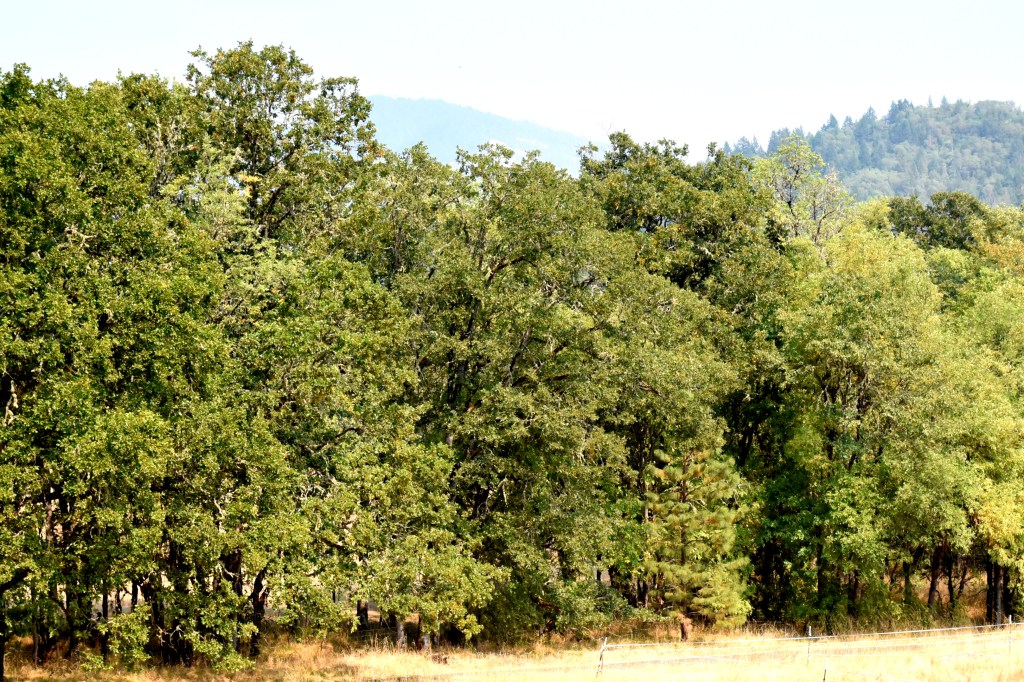
As our taller trees are felled each year we are planting new young trees, two for every tree felled, in one of our grass fields.
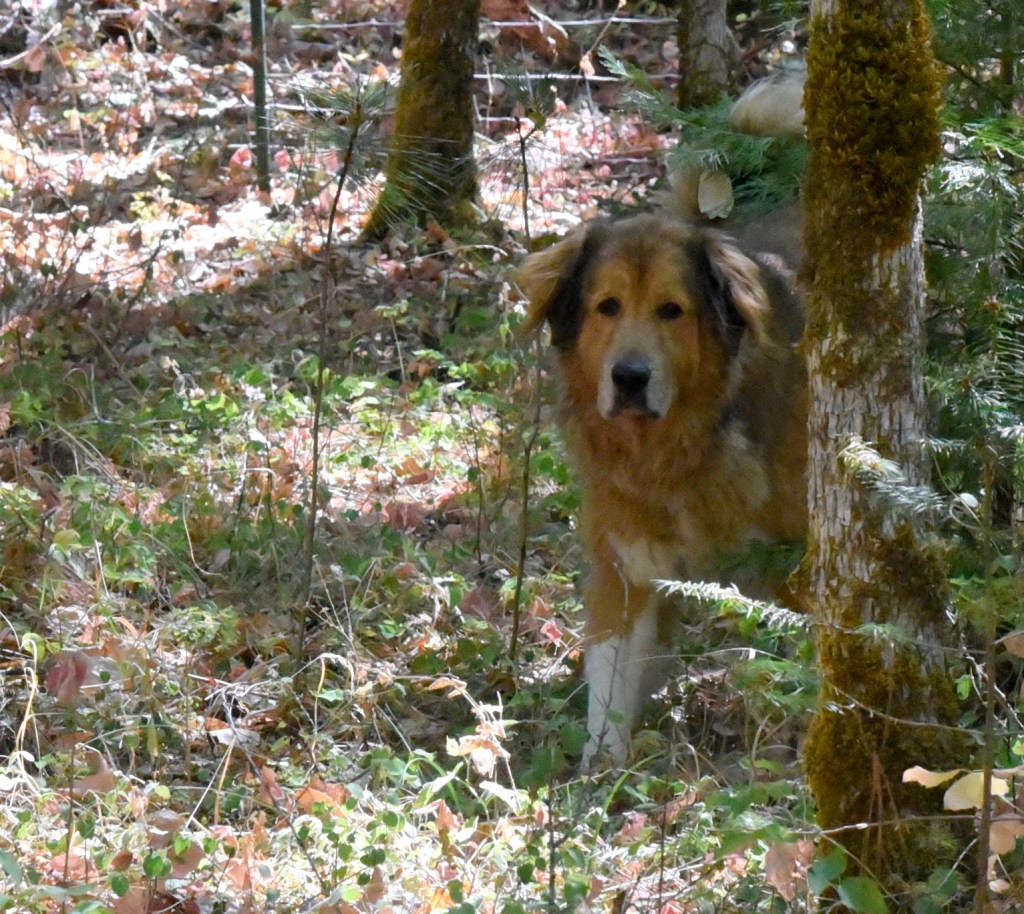
Because it is not just Jeannie and me, and all the wild birds, who love our trees!
oooo
oooo

Will close with another photo with a tree in it taken a few nights ago.
We must never, ever lose our trees!
This should be available to you wherever you are in the world!
I am indebted to Neil back in Devon who gave me the ‘heads up’ to the latest episode from the BBC Natural Histories Unit.
The link to the programme, that was broadcast by the Radio 4 station at 11:00 UK time yesterday, is here: https://www.bbc.co.uk/programmes/b0bgq6f4
When you go to that link you will see this:
Dog
Dogs have changed us and we’ve changed them. Brett Westwood visits Battersea to meet the animals whose history is most inextricably linked with our own. And in the process very nearly loses a furry microphone cover to an enthusiastic lurcher named Trevor (pictured above)… As the first domestic animals, dogs made it possible for humans to spread into the areas of the world that they did, to eat more protein and to take up activities from hunting to sledding. But it was only in the Victorian period that the dogs we know today were “invented”, by breeding. And throughout all of this dogs have also been changing human lives as companions.
Producer Beth O’Dea
Taking part:
Professor Greger Larson, Director Palaeogenomics & Bio-Archaeology Research Network, School of Archaeology, University of Oxford
Dr John Bradshaw, anthrozoologist and author of In Defence of Dogs and The Animals Among Us
Susan McHugh, Professor of English at the University of New England
Naomi Sykes, Lawrence Professor of Archaeology at the University of Exeter
Julie-Marie Strange, Professor of British History at the University of Manchester
Dr Krithika Srinivasan, Lecturer in Human Geography, University of Edinburgh.
The item is 28 minutes long and for all dog lovers is precious listening!
So click on the ‘Listen Now’ button!
Trust me, you will be surprised at some of the findings covered in this most interesting programme.
Many thanks, Neil!
UPDATE 3pm (PDT) on the 5th.
I am going to leave this post up for the rest of this week. Firstly, because I would like as many of you as possible to listen to it and, lastly, until our local Hugo Road fire is 100% contained I can’t really focus on blogging stuff.


