Jeannie and I decided to take a few hours away from the house and go and do some local exploring.
Just 10 miles North of us, indeed the next exit (71) from Highway I-5, is the famous Grave Creek Covered Bridge.
We parked up and soaked it all in.
While there was an information board next to the bridge it was very easy to find the details online on the Southern Oregon travel site.
The Grave Creek Covered Bridge is one of the few covered bridges that remain in southern Oregon. From Vancouver B.C. to the Mexican border, it is the only one visible from the I-5 freeway. Be sure to visit the Applegate Trail Interpretive Center while in Sunny Valley. It provides a first hand look into the local area, history, fabulous displays, theatre & more.
In the fall of 1846, the first emigrant train from Fort Hall, Idaho, to travel the southern route to the Willamette Valley camped on the north side of this creek, then Woodpile Creek. Martha Leland Crowley, 16 years old died of typhoid fever during this encampment and was buried 150 feet north of the creek on the east side or a white oak tree that was later removed for the present roadway, Thus the name “Grave Creek”.
When James H. Twogood laid out his land claim in the fall of 1851 and filed it on May 1st 1852, he named it the Grave Creek Ranch in memory of that unfortunate incident.
McDonough Harkness, his partner, was the first postmaster of Josephine County in the newly named town of Leland on March 28,1855. Harkness was killed by the Indians in April 1856 while riding dispatch for the Army during the second Indian War of southern Oregon which started in October of 1855.
The bridge was built in 1920 and is 105 feet long.
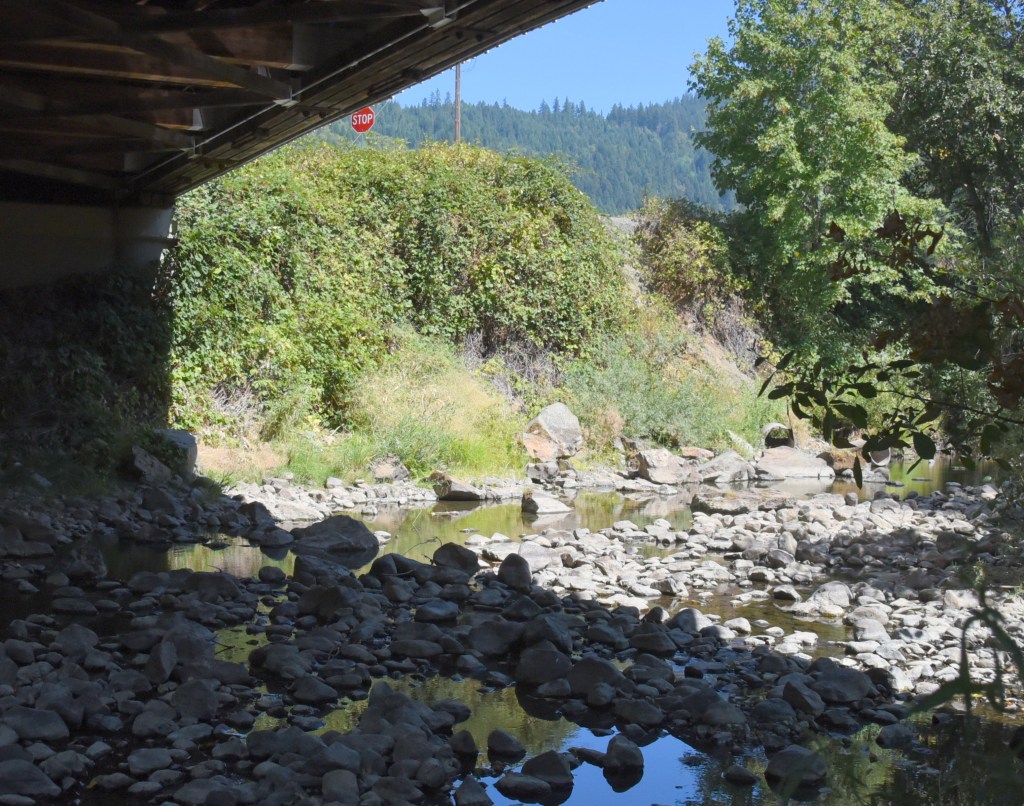
Unsurprisingly, the creek had very little water in it.
But that didn’t diminish in the slightest the magic of this place out in the vast Oregon countryside.
A covered bridge is a timber-truss bridge with a roof and siding which, in most covered bridges, create an almost complete enclosure. The purpose of the covering is to protect the wooden structural members from the weather. Uncovered wooden bridges typically have a lifespan of only 10 to 15 years because of the effects of rain and sun. The brief moment of relative privacy while crossing the bridges earned them the name “Kissing Bridges”.
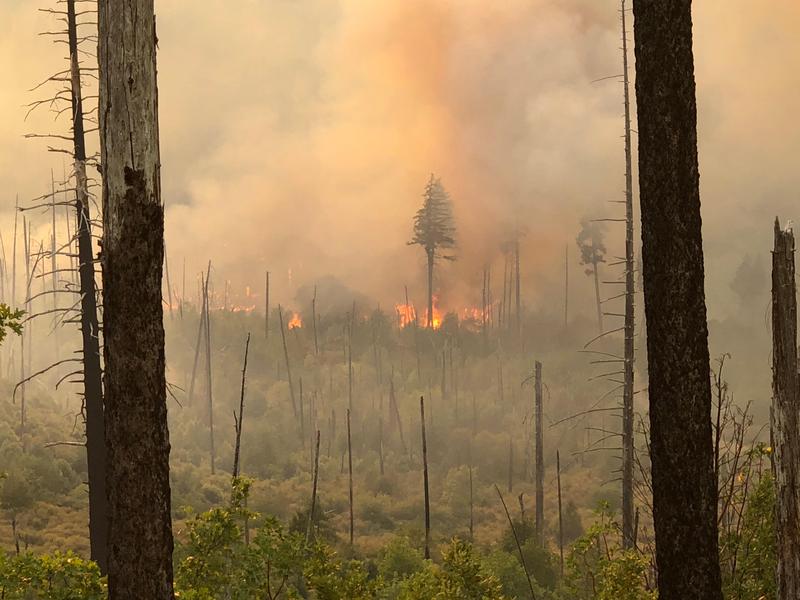
The latest news is that our Klondike Fire is now burning an area larger than 100,000 acres. Or to use the words from the incident webpage(my emphasis):
The Taylor Creek and Klondike Fires were split into zones on Saturday, Aug. 18. The fires are now referred to as “Taylor Creek Fire” and “Klondike Fire East,” managed by the Northwest Incident Management Team 12 out of Lake Selmac, and “Klondike Fire West” managed by California Interagency Incident Management Team 4 out of Gold Beach. A transfer of command of the Klondike West Zone will occur at 6:00 AM Friday when the Southern Area Red Team who arrived on Wednesday will take over.
As of the morning of Aug. 30, the Taylor Creek Fire is estimated 52,839 acres and is 95 percent contained. The Klondike Fire is estimated at 100,996 acres and is 40 percent contained. There are 1,214 personnel working on the Klondike Fire and 126 personnel assigned to the Taylor Creek Fire.
Courtesy Jeffersen Public Radio
Then just over a week ago, The Conversation blogsite published a reminder that I wanted to share with you today, under the permissions offered by The Conversation site.
ooOOoo
Many native animals and birds thrive in burned forests, research shows
But the idea that wildfires should be suppressed by logging the forest is far too simplistic. Most scientists agree that large hot wildfires produce many benefits for North American forests. Notably, they create essential habitat for many native species.
Fifteen years of research on Spotted Owls – a species that has played an oversized role in shaping U.S. forest management policies and practices for the past several decades – directly contradicts the argument that logging is needed to protect wildlife from fires. Wildlife biologists, including me, have shown in a string of peer-reviewed studies, that wildfires have little to no effect on Spotted Owls’ occupancy, reproduction or foraging, and even provide benefits to the owls.
The Northern Spotted Owl in the Pacific Northwest was listed as threatened under the Endangered Species Act in 1990. At that point, about 90 percent of U.S. old-growth forest had already been lost to logging. Every year in the 1980s the U.S. Forest Service sold about 7 to 12 billion board feet of public lands timber.
Figure 1. National forest timber sales (1905–2017). FY 1905-2017 National Summary Cut and Sold Data USDA Forest Service
Listing the owl drew attention to the dramatic decline of old-growth forest ecosystems due to 50 years of unsustainable logging practices. In response the U.S. Forest Service adopted new regulations that included fewer clearcuts, less cutting of trees over 30 inches in diameter and fewer cuts that opened up too much of the forest canopy. These policies, along with vast depletion of old-growth forests, reduced logging on Forest Service lands to about 2 billion board feet per year.
During the 1990s, national forest management policy for the Northern Spotted Owl included creating old-growth reserves and designating critical habitat where logging was restricted – mostly within half a mile of a Spotted Owl nest. In spite of these protections, populations of Northern Spotted Owls, as well as California and Mexican Spotted Owls, continued to decline on forest lands outside national parks. This was most likely due to ongoing logging outside of their protected nesting areas in the owls’ much larger year-round home ranges.
Fire and owls
Over the years the Forest Service shifted away from treating Spotted Owls as symbols of old-
Historical range (burgundy) of the Northern Spotted Owl, which also extended north into British Columbia. One hundred fifty years of logging, agriculture and urbanization have reduced the amount of old growth forest (potential Spotted Owl habitat) in this zone by 85-90 percent. NASA Earth Observatory
growth forest biodiversity, and instead started to cite them as an excuse for more logging. The idea that forest fires were a threat to Spotted Owls was first proposed in 1992 by agency biologists and contract researchers. In a status assessment of the California Spotted Owl, these scientists speculated that fires might be as damaging as clearcuts to the owls.
This perspective gained popularity within the Forest Service over the next 10 years and led to increased logging on public lands that degraded old-growth habitat for Spotted Owls.
Academic scientists, including some with Forest Service funding, published peer-reviewed studies of Spotted Owls and fire in 2002, 2009, 2011 and 2012. All four studies showed either no effects from fire or positive benefits from fire for Spotted Owls. Subsequent research on Spotted Owls in fire-affected forests has showed repeatedly that the owls can persist and thrive in burned landscapes.
(The U.S. Forest Service says wildfires harm wildlife habitat, but wildfires actually create rare and important habitat.)
Many wild species thrive in burned landscapes
I recently conducted a systematic review and meta-analysis that summarized all available scientific research on the effects of wildfires on Spotted Owl ecology. It found that Spotted Owls are usually not significantly affected by mixed-severity forest fire. Mixed-severity forest fire, which includes large patches with 100 percent tree mortality, is how wildfires in western forests naturally burn. The preponderance of evidence indicated that mixed-severity wildfire has more benefits than costs for Spotted Owls.
In 2017 I submitted an early version of this analysis with the same conclusions to the U.S. Fish and Wildlife Service during the agency’s peer-review process for its Conservation Objectives Report for the California Spotted Owl. My conclusions were not included in the final report.
Decades of science have shown that forest fires – including large hot fires – are an essential part of western U.S. forest ecosystems and create highly biodiverse wildlife habitat. Many native animals thrive in the years and decades after large intense fires, including deer, bats, woodpeckers and songbirds as well as Spotted Owls. Additionally, many native species are only found in the snag forest habitat of dead and dying trees created by high-severity wildfire.
Pileated woodpeckers excavate nests within snags, bringing life to charred forests in Oregon. NASA/S. Russell, CC BY-ND
Wildfires threaten homes, but wildlife and water supplies benefit
It is also time to reform Forest Service management goals to emphasize carbon capture, biodiversity, outdoor recreation and water supply as the most important ecosystem services provided by national forest lands. These services are enhanced by wildfires, not by logging.
ooOOoo
These last two paragraphs are key lessons: 1. Logging does not stop the biggest, hottest fires, and, 2. It is time to change the goals under which our forests are managed emphasising carbon capture, biodiversity, recreation and water supplies!
As frequently happens, recently I was sent an email from someone I hadn’t previously been in contact with. It was Sienna Penfold and this is what she wrote:
Hello Paul,
My name is Sienna, and I’m a full-time mom and a regular contributor to highstylife.com. Proud owner of two beautiful dogs (Coco & Hulk) and beautiful cat adopted from a shelter.
Since I’m equally passionate about my pets and my job I’ve decided to share my knowledge and experiences. I love the combination of sharing information and learning from others. Stories I like to write are mostly connected to pets and lifestyle.
You all know me well enough to know what my response was!!
So here is Sienna’s guest post.
ooOOoo
Be Prepared! Tips to Protect Your Dog and Your Family from Dangerous Parasites
by Sienna Penfold, August 21st., 2018
Every year during spring, summer, and most of fall, every pet parent becomes painfully aware of all the crawlies that enjoy the nice weather as much as our furry buddies do. From annoying fleas, which can also carry various diseases, all the way to worms, and ticks, the sunny days of the warm season come with a slew of responsibilities for every family – because, unfortunately, all these insects also pose a risk for us and our kids as well, not just for our pets.
Even if you do your best to prevent any type of an infection, you should also stay alert for any early signs of a flea infestation, and any presence of ticks and other parasites that can wreak havoc on your pooch’s as well as your own health. Let’s go through some of the key symptoms, preventative measures, and possible treatments to make your summers all the more comfortable and worry-free! Keep an eye on your furball
Fleas and ticks are the most common external parasites that your pooch may have, and while it’s always best to focus on prevention, some dogs are more prone to having these pests and thus need more attention from you. Keep in mind that there are almost 2,000 species of fleas out there, and you may find some to be more resilient than others. The following are some of the simplest symptoms your dog will exhibit in case they have fleas:
Frequent scratching and skin irritations such as psoriasis, redness, and hair loss
Flea droppings in your dog’s coat (which you can check when grooming them and examining their hair against a contrasting surface such as a white piece of paper)
Excessive licking and biting
Pale gums
On the other hand, ticks are the next most common parasite found in nature, and its many species carry a wide range of diseases that can endanger your dog’s health or even life. These are the symptoms to keep an eye on:
Skin irritation and itchiness
Loss of appetite
Vomiting
Diarrhea
Lack of energy
A potential internal parasite infection, coming from a wide range of worms, heartworm included, may cause all of the above symptoms as well as the following issues:
Scooting, or dragging their rears against the floor
Coughing
A rounded belly
Visible parasites in fecal matter
The most effective preventative measures
Depending on your furry friend’s health and specific conditions (if any are present), you can mix and match several useful solutions to prevent any parasite issues. For example, regular grooming, including twice-a-day combing, regular baths with suitable shampoos, and even natural remedies as a part of their diet, such as a smidgen of garlic, and spraying apple cider vinegar mixed with water, can help.
Topical solutions come in various forms, from repellant collars to topicals, and are applied once a month, mostly on a dog’s back. However, you should keep in mind that not every form of protection is all-encompassing, meaning that they sometimes don’t include heartworm protection, which are transferred through mosquito bites.
A great option is a monthly spot-on topical such as Advocate dog flea treatment which also keeps your pooch safe against heartworms, and worms. Remember to weigh your pooch beforehand, because all of these treatments are used in different doses depending on how heavy your dog is.
Protecting your environment
Even though you cannot possibly keep your dog away from all risky spots, especially if you take them to natural spots such as rivers, mountains, and meadows, you can still decrease their risk with the right hygiene rules.
If your pooch lives indoors, make sure you vacuum and clean your home every day, or at least every other day, to remove any potential flea eggs. Removing carpets is one of the best ways to prevent an infestation, although your furniture still leaves plenty of room for them to bask in.
Using flea and tick-repellent substances such as apple cider vinegar in your homemade cleaning supplies, can also help you protect your rooms. Make sure to wash your own linens as well as your dog’s bedding on a regular basis, with items such as the Seventh Generation detergent with predominantly plant ingredients, which are perfectly pet and kids-safe. If you dress your dog, you can use the same detergent to wash their sweaters, and make sure they don’t harbor any unwanted pests!
Since all of these parasites transmit many diseases that can also come with all of the listed as well as with more severe symptoms, it’s best to check your dogs from head to toe, especially in those hidden nooks such as between their toes, behind and inside their ears and around their tails. However, it’s always a good idea to have your vet check with you on a regular basis, and make sure that whatever may be causing those symptoms is not a parasite, but a harmless issue, such as an upset stomach.
ooOOoo
Don’t know about you but we found that a very informative guest post!
Want some more?? Please let me know!
As always, I have no commercial interest in or knowledge of any the products and companies mentioned by Sienna.
Simply because yesterday Anita from Anitashope blog left the following comment:
This article popped up after I responded to todays post but I also have to respond to this one as I need to tell you about Mimi. Mimi is my coon hound black lab mix and she will NOT make eye contact with you when a treat is involved. She will come sit by you and look off in the distance like “I am not looking at you”, then she will cut her eyes sideways just to make sure the treat is still there. Its hilarious.
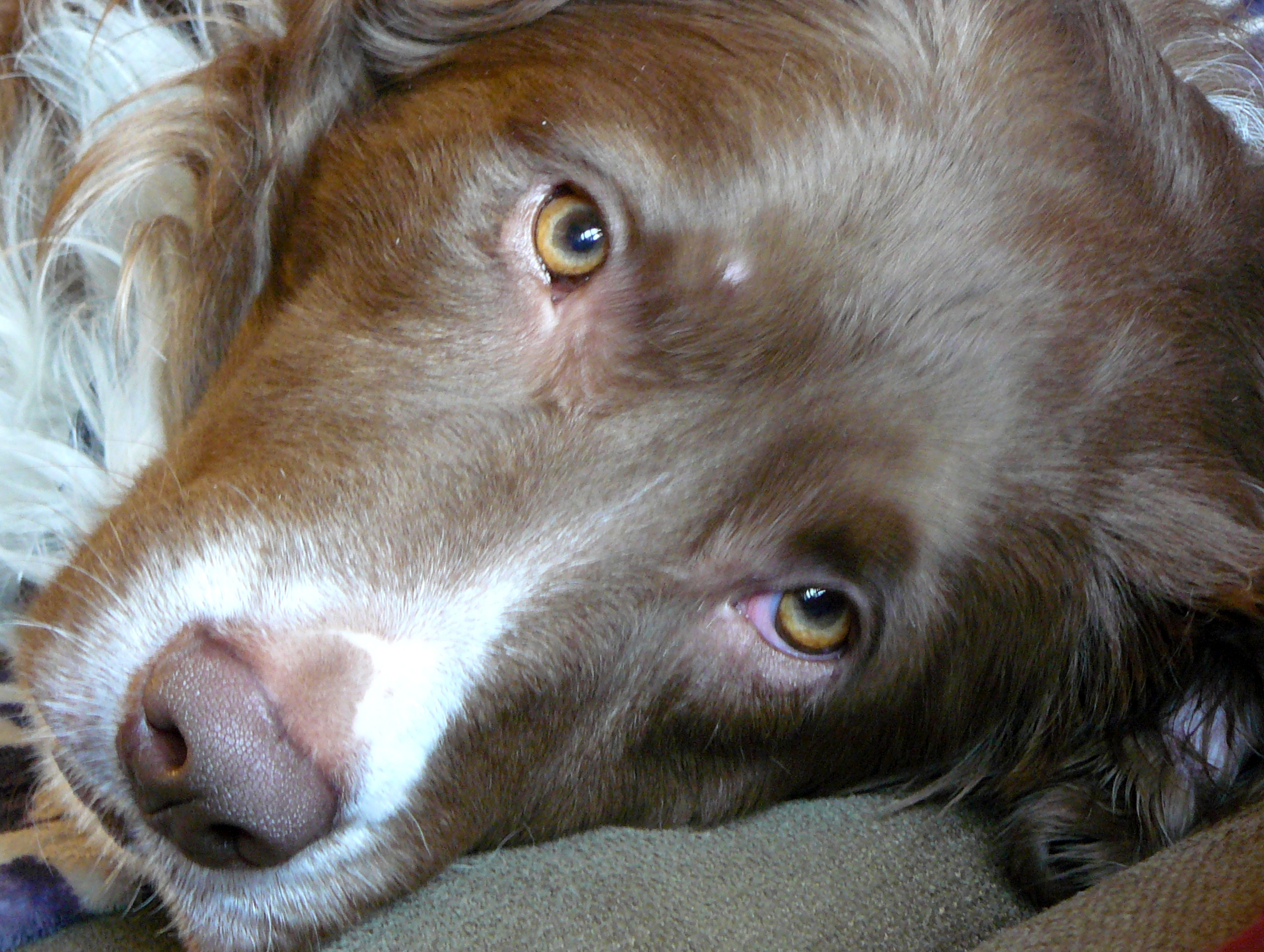
The post where her comment was left was one that I published back on March 13th, 2017. It included the most beautiful photograph of Oliver’s eyes. I had forgotten that picture.
So for that reason alone, it is being republished today.
ooOOoo
The love and admiration for this beautiful animal goes on and on!
It seems as though it is almost on a weekly basis that new and incredible facts about our dear, dear dogs come to the surface.
So what prompted this from me today!
Only a wonderful article that was originally published in New Scientist but then was carried by The Smithsonian. I am hoping that by fully linking this post to both the New Scientist article and the essay in The Smithsonian I am at liberty to republish it for all you good people.
ooOOoo
Dogs Use Deception to Get Treats, Study Shows
When a human partner withheld tasty snacks, the dogs got sneaky
Would these eyes deceive you? New study says yes. (johan63/iStock)
By Brigit Katz smithsonian.com March 10, 2017
There is plenty of evidence to suggest that dogs, in addition to looking adorable in sweaters, possess fairly sophisticated cognitive abilities. They recognize emotion, for example, and respond negatively to antisocial behavior between humans. Man’s best friend can also get pretty tricksy when it comes to scoring snacks. As Brian Owens reports for New Scientist, a recent study found that dogs are capable of using deceptive tactics to get their favorite treats.
The study, published in the journal Animal Cognition, was led by Marianne Heberlein of the Department of Evolutionary Biology and Experimental Studies at the University of Zürich. Heberlein told Owens that the idea for the study was born when she observed her pet pooches engaging in deceptive behavior; one sometimes pretends to see something interesting outside, prompting the other to give up his sleeping spot.
To find out if dogs engage in similar shenanigans with humans, Heberlein and a team of researchers paired 27 dogs with two different partners, Stanley Coren explains in Psychology Today. One of these partners would repeatedly go to the bowl of a given dog, fish out a treat, and give it to the pup. The other would show the treat to the dog, and then put it in her pocket. Perhaps unsurprisingly, the dogs began to show a preference for the more generous partners, and would approach them spontaneously.
Once one partner had been established as co-operative, the other as competitive, the dogs were taught to lead their partners to one of two boxes, both containing food, with the command “Show me the food.” And the same pattern was repeated: when the dogs led the co-operative partner to a treat, they got to eat it. The competitive partner withheld the treat.
Researchers then showed the dogs three covered boxes. One contained a sausage, the second contained a less-yummy dry biscuit, and the third was empty. Once again, the process of treat giving and withholding was repeated, but this time with a twist: when the dog was reunited with its owner, the owner asked it to choose one of the boxes. If there was a treat inside the box, the dog was allowed to eat it. But “if the dog chose the box which had been opened before,” Coren explains, “the owner just showed the empty box to the dog.”
Over the course of a two-day testing period, the dogs were repeatedly presented with this conundrum. They had been trained to lead both partners to boxes containing food, but they knew that the competitive partner would not let them eat the snacks. They also knew that if any snacks remained inside the boxes once they were reunited with their owners, they would get a chance to eat them. So the dogs got a little devious.
Researchers observed the pooches leading the co-operative partner to the box containing the sausage more often than expected by chance. They led the competitive partner to the sausage less often than expected by chance. And here’s where things get really interesting: the dogs took the competitive partner to the empty box more frequently than the co-operative partner, suggesting that they were working through their options and engaging in deliberate deception to maximize their chances of getting both treats.
“It is as though the dog is thinking, ‘Why should I tell that selfish person where the best treat [is] if it means that I will never get it?’,” writes Coren.
“These results show that dogs distinguished between the co-operative and the competitive partner,” the authors of the study write, “and indicate the flexibility of dogs to adjust their behaviour and that they are able to use tactical deception.”
Rest assured, dog lovers: your pooches may be sneaky, but they still love you more than cats.
I haven’t had the time yet to contact them to see if they can provide material of general interest to you.
But I did find the following video on YouTube that seemed to be interesting. (But note that I have no knowledge good or bad about the company and there are many other companies offering aversion training.)
From Lassie to Balto, pop culture loves stories of a dog coming to a person’s rescue. Anecdotally, people experience their dogs coming to their aid every day, like when one of us found herself “trapped” by her children under a pile of pillows only to be “rescued” by her noble collie, Athos.
But is there any scientific evidence behind these sorts of tales?
We recruited 34 pet dogs and therapy dogs – that is, those who visit people in hospitals and nursing homes – to take part in our study. Dogs included a variety of breeds and ages, from an elderly golden retriever therapy dog to an adolescent spaniel mix.
When they got to the lab, each owner filled out a survey about the dog’s training and behaviors while we attached a heart rate monitor to the dog’s chest to measure its stress responses.
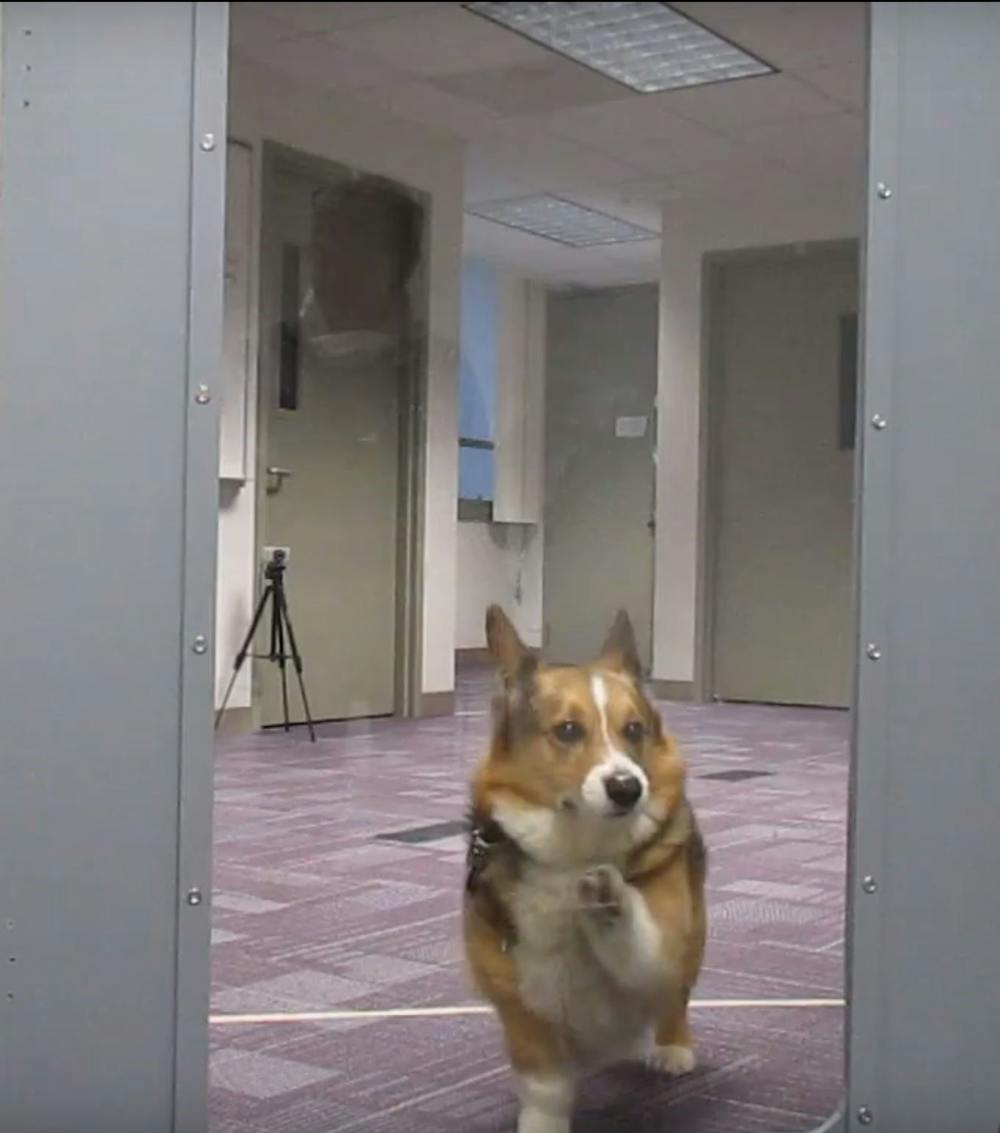
In the experimental setup, dogs could see and hear their owners.
Next, we instructed the owner on how to behave during the experiment. Each owner sat in a chair behind a clear door that was magnetized shut – there as a barrier separating the dog from its owner – that the dog could easily push open. We assigned half the people to cry loudly and say “Help” in a distressed voice every 15 seconds. The other half of our volunteers we assigned to hum “Twinkle, Twinkle, Little Star” and say “Help” in a calm voice every 15 seconds. We ran the test until the dog opened the door or, if it didn’t, until five minutes elapsed.
Past research seemed to indicate that dogs would not help their human companions in distress, but it’s possible that the tasks to demonstrate “help” were too difficult for a dog to understand. So we adapted this straightforward task from previous researchin rats. It seemed like dogs would be capable of nudging open a door to access their owners.
Lassie, Timmy’s crying in the other room
We expected to find that dogs would open the door more often if their owner was crying than if they were humming. Surprisingly, that isn’t what we found: About half the dogs opened the door, regardless of which condition they were in, which tells us that dogs in both conditions wanted to be near their owners.
I’m on my way! Emily Sanford and Julia Meyers-Manor, CC BY-ND
When we looked at how quickly the dogs who opened the door did so, we found a stark difference: In the crying condition, dogs took an average of 23 seconds to open the door, while in the control condition, they took more than a minute and a half. The humans’ crying seemed to affect the dogs’ behaviors, taking just a quarter as long to push open the door and get to their human if they seemed distressed. We did not find any differences between therapy dogs and other pet dogs.
Other interesting results came when we looked into how the dogs were behaving in each condition. In the crying condition, we found the dogs that opened the door showed fewer signs of stress – and were reported by their owners to be less anxious – than dogs that did not open it. We also found that dogs that opened the door more quickly were less stressed than dogs that took longer to open it.
In contrast, dogs in the humming condition showed a slight tendency to open more quickly if they were reported to be more anxious. This may mean that dogs who opened in the humming condition were seeking their owners for their own comfort.
Helping requires more than just empathy
Because both humans and animals tend to be more empathetic toward individuals with whom they are more familiar or close, we thought that the strength of a dog’s bond with its owner might explain some of the differences we saw in dogs’ empathetic responses.
As soon as the test was over, we let the dog and owner reunite and cuddle for a few minutes to make sure everyone was calm before the next part of the experiment. Next, we turned to a test called the Impossible Task to learn a bit more about each dog’s emotional bondwith its person.
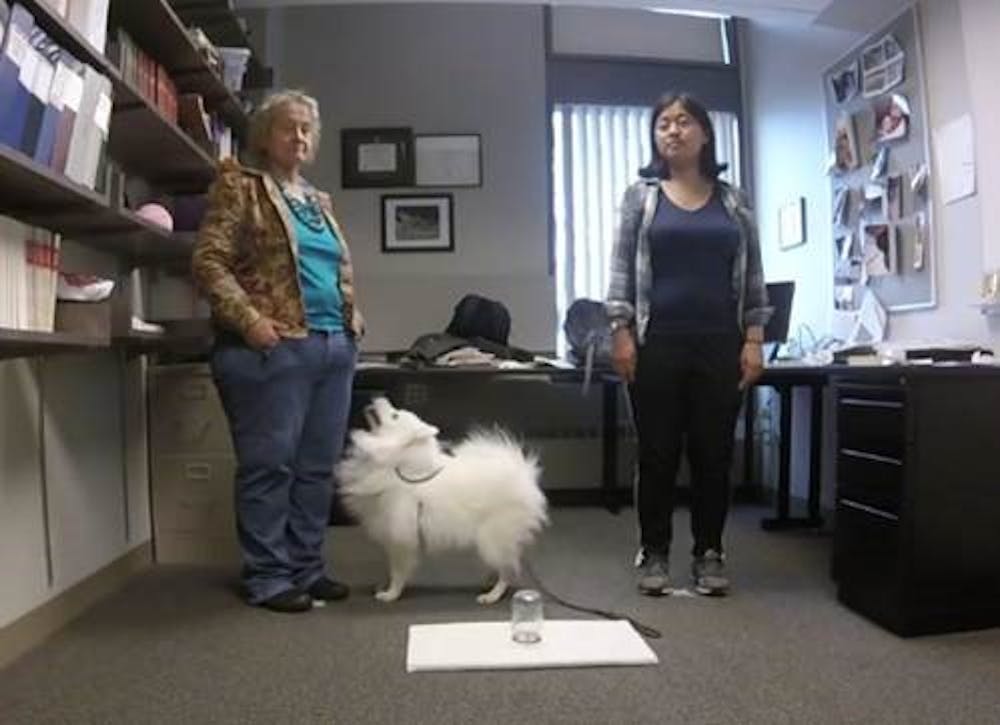
Hey, a little help down here for your furry friend? Julia Meyers-Manor and Emily Sanford, CC BY-ND
In this task, the dog learns to tip over a jar to get to a treat; then we lock the jar onto a board with a treat inside and record whether the dog gazes at its owner or a stranger. There have been some mixed results with this test, but the idea is that a dog who spends more time looking at their owner during this task may have a stronger bond with their owner than a dog that doesn’t spend much time looking at their owner.
We found that dogs who opened the door in the crying condition did gaze at their owner more during the Impossible Task than non-openers. On the other hand, it was the dogs who didn’t open the door in the humming condition that gazed at their owners more than those who opened it. This suggests that openers in the crying condition and non-openers in the humming condition had the strongest relationships with their owners.
Taken together, we interpreted these results as evidence that dogs were behaving empathetically in response to their crying owners. To behave empathetically toward another individual, you must not only be aware of the distress of another person, but also suppress your own stress enough to help out. If you are overwhelmingly stressed, you might either be incapacitated or try to leave the situation entirely. This pattern has been seen in children, where the most empathetic kids are the ones who are skilled at regulating their own emotional states enough to give help.
It appears to be the case with these dogs as well. Dogs with weaker emotional bonds to their owners, and those that perceived their owners’ distress but were unable to suppress their own stress response, may have been too overwhelmed by the situation to provide any help.
While everyone hopes their dog would help them if they ever were in trouble, we found that many of the dogs did not. People involved in our experiment, particularly those with dogs that didn’t open the door, told us many stories of their dogs coming to their aid in the past. Our study suggests that in some cases if your dog doesn’t help you, it’s not a sign he doesn’t love you; Fido might just love you too much.
TIME magazine published a double-issue in February of this year How To Live Longer Better!
The article, on Page 47, opens:
Old age demands to be taken very seriously – and it usually gets its way!
Then later on in that same article one reads:
Exactly how much – or how little – exercise it takes to begin paying dividends has been one of the happy surprises of longevity research. A 2016 study found that elderly people who exercised for just 15 minutes a day, at an intensity level of a brisk walk, had a 22% lower risk of early death compared to people who did not exercise.
Then two sentences later:
Researchers from McMaster University in Canada even found that breaking a sweat for just 60 seconds may be long enough to improve health and fitness (as long as it’s a tough workout).
As part of Jean’s commitment to slowing down the progression of her Parkinson’s Disease (PD) she attends every Monday and Wednesday a special class at our local Club Northwest in Grants Pass. The class runs for 90 minutes and is a boxing class! The instructor, Mark Whiting, is a boxing coach and the class, called the Rock Steady class, is specifically for PD sufferers. One of the exercises involves rapid punching of a punch bag.
Dr. Laurie Mischley of SIM had a telephone consultation with Jean a few days ago. It was Dr. M following up Jean’s consultation with Dr. Nutt in Portland on the 10th that I wrote about in my post Jeannie’s PD Journey. Dr. M commented as to how well Jean was doing.
Possibly, vigorous exercise seems to be offering something that many in their elder years may not have cottoned on to.
Readers may recall Patrice Ayme leaving a comment in my recent Facing up to PD post:
The one and only countermeasure we have is violent neurological activity. As in powerlifting. This has been indicated by research published in 2018… But it was long obvious. So the way to “comfort” is the discomfort of maximum motor-neurological… hmmm… violence. Too much local gentleness doesn’t optimize overall comfort and gentleness… I guess that’s one of my overall philosophical messages… Not one popular with the PC crowd…
Now I’m still trying to get to bottom of this link between vigorous exercise and long-term health and have reached out to McMaster University in Canada seeking academic backing for the link.
More from me as I learn more.
Turning to diet.
In that same TIME magazine, on page 53, there is a single page listing five places around the world known as Blue Zones.
Global life expectancy averages out to 71.4 years. That means. of course, that some parts of the world see much shorter spans, while others enjoy far greater longevity.
Five places, in particular, fall into the latter category. They’re know as Blue Zones – named for the blue circles researchers drew to identify the first one on a map – and they’re home to some of the oldest and healthiest people in the world. Dan Buettner, author of The Blue Zones and The Blue Zones Solution, told TIME why residents of these places live so long – and how you can steal their habits
Those five places are listed below with me republishing just a small extract regarding diet from four of those five place descriptions.
Sardinia, Italy – “A largely plant-based diet ….”
Okinawa, Japan – No mention of diet.
Nicoya, Costa Rica – “The Costa Rican people traditionally get the majority of their caloric intake from beans, squash and corn, plus tropical fruits. This plant-forward, nutrient-dense diet ……”
Loma Linda, Calif., USA – “Adventists live 10 years longer than their fellow Americans. Many avoid meat and eat plenty of plants, whole grains and nuts.”
Ikaria, Greece – ” …. and a strict adherence to the Mediterranean diet – eating lots of fruits, vegetables, beans, whole grains, potatoes and olive oil – propels 1 in 3 ikarians to live into their 90s, often free of dementia and chronic disease.”`
“Happiness resides not in possessions, and not in gold, happiness dwells in the soul.”
So wrote the philosopher Democritus who was born in 460 BCE (although some claim his year of birth was 490 BCE). He acquired fame with his knowledge of the natural phenomena that existed in those times and history writes that he preferred a contemplative life to an active life, spending much of his life in solitude. The fact that he lived to beyond 100 suggests his philosophy didn’t do him any harm.
OK! Before I continue, please let me state, as before, that I write to you purely as Jean’s husband. I have no medical skills or knowledge at all and if you are at all affected by any of the following make an appointment to see your own doctor!
The crux of this post is Jean’s relationship with a naturopathic doctor at a practice in Seattle. The practice is Seattle Integrative Medicine (SIM) and a number of the doctors at SIM specialise in patients with PD. That’s how Jean was connected with Dr. Laurie Mischley. (Dr. M)
When one goes to the web page for Dr. M one reads:
Dr M conducted tests including testing her ear wax*, extensive blood analysis and an analysis of a sample of Jean’s hair.
* Dr. M has a dog that can reliably smell the presence of PD in human ear wax!
The favourite drug for those with PD is Levadopa. Within 48 hours of Jean taking Levadopa she had a serious allergic response to that drug.
Back to Dr. M’s tests. All three tests were non-indicative of PD. A while later, in a subsequent telephone conversation, Dr. M wondered if Jean really did have PD. She recommended a referral to the Oregon Health and Science University (OHSU) in Portland. Specifically to their Department of Neurology and to Dr. John Nutt. His background may be viewed here. From which one notes:
John Nutt, M.D.
Co-founder and Director Emeritus of the OHSU Parkinson Center and Movement Disorders Program
Professor of NeurologySchool of Medicine Expertise
Neurology
Special focus on Parkinson’s and Movement Disorders
Jean’s appointment was at 08:30 on Tuesday, 9th July. In terms of the timeline of all of us, Jean was diagnosed as suspected of having PD in December, 2015.
Dr. Nutt saw us promptly at 8:30 and immediately revealed a listening, caring attitude. He also quietly admitted that he had been a doctor specialising in neurology and movement disorders for 39 years! There was no question in my mind that we had landed in front of the ideal physician under these circumstances.
Over the next hour, Dr. Nutt examined Jean in a great number of ways. From her stretching her arms out, Dr. Nutt examining Jean’s arm joints, watching Jean walk along the corridor outside his examining room, and much more.
Eventually he paused and looked us both in the eyes. He then spoke quietly: “Jean is displaying a number of classic symptoms of Parkinson’s disease. I have no doubt that Jean does have the disease.”
Of course it wasn’t long before I mentioned Laurie Mischley’s opinion that Jean might not have PD. But Dr. Nutt was very clear with his reply. Namely that PD cannot be determined from hair and blood tests alone and that the potential sufferer must be examined physically.
Dr. Nutt asked me if I had noticed that when Jean held her arms straight out in front of her at shoulder height the tremors in her right hand ceased yet when she was relaxed with her hands in her lap the tremor in her right hand was very noticeable? I had not spotted that.
“Paul, that is a classic Parkinson’s characteristic.”
Dr. Nutt went on to say that watching Jean walk gave him another indicator of PD. Because although Jean walks well she doesn’t swing her arms. Classic PD!
Without doubt, Dr. Nutt’s impression was Idiopathic Parkinson’s disease.
But Dr. Nutt also said that Jean was doing incredibly well taking into account that she would have been suffering from the disease for at least 4 to 5 years and that her commitment to lots of exercise including her RockSteady class, that he was aware of, and her vegetarian diet was critically valuable.
It was now time to turn to medication for Jean. Dr. Nutt said that of all the drugs Levadopa was the ideal to combat the loss of dopamine in the brain. He was puzzled as to why Jean had had such a strong allergic reaction to the drug. He wondered if it was a reaction to the Carbidopa that in the USA was so often a component of the Levadopa medication. If so, that could be worked around. Dr. Nutt even mused that he had known of a patient who was allergic to the yellow dye that is sometimes in that medication.
His medication plan for Jean was for her to start on a 1/2 tablet of carbidopa-levadopa 25-100 mg tablets just once a day and if she has no bad reaction in a week then up that to two 1/2 tablets a day. If no adverse effects then increase by 1/2 tablet every week until taking 1 tablet three time a day.
So here we are, a week and a day after we returned from OHSU and, touch wood, Jean has had no adverse effects and is now on two 1/2 tablets a day.
But a postscript to that consultation with Dr. Nutt. At the very end I said that I had two questions. Dr. Nutt welcomed me to ask them.
“My first question is to do with the trend for PD. Is it getting worse?”
“Paul, here in the USA we are seeing a slow but definite decline in the incidence of Parkinson’s. What was your second question?”
“Dr. Nutt, my next question was whether or not science was pointing a finger at the cause of Parkinson’s disease?”
He replied without hesitating: “We are seeing a strong correlation between pesticides and Parkinson’s disease.”
Upon hearing that, Jeannie immediately spoke up recalling her times out in the Mexican fields when the crop-spraying aircraft flew right overhead. Adding that she had at times been drenched by the spray.
But, please, let us not forget: Association is not causation!
That’s enough for today. Because I was going on to include information about the importance of exercise. About managing one’s life really well. About the importance of diet and overall health. In a sense, not just for PD sufferers but for anyone the wrong side of 60 years old!!
That will be coming along soon!
I will close by thanking everyone at OHSU. The quality of care, attentiveness and experience of the staff backed by world-class resources was second-to-none!
To be in their system, so to speak, is a privilege.
In addition, Dr. Lee said to always THINK BIG! Big in voice, big in attitude, big in stature.
Finally, let me share with you what was posted on the Visible Procrastinations blog back in 2009. Reposted with the author’s permission.
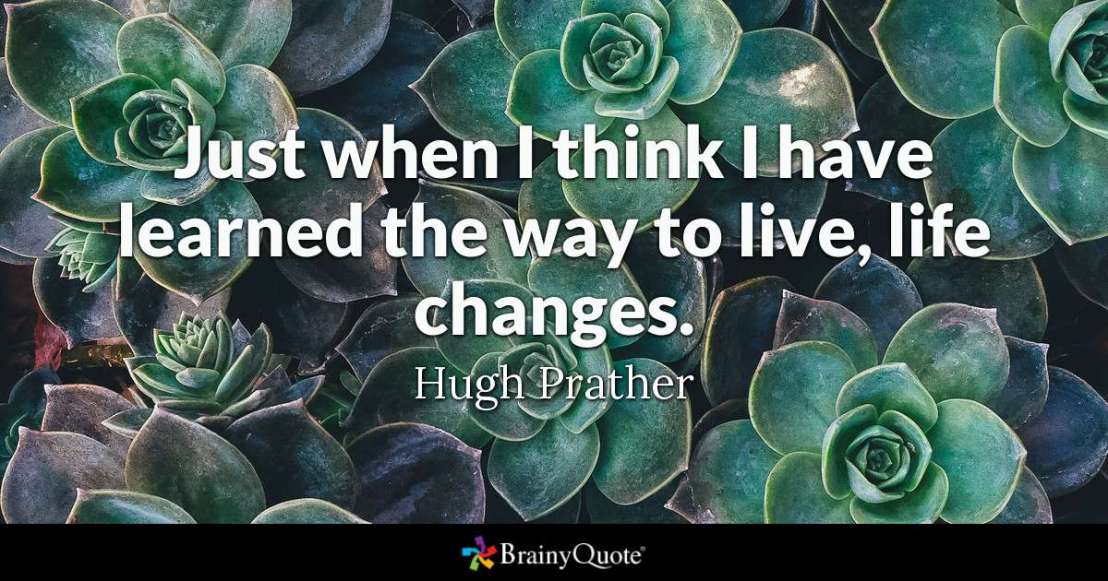
Change.
Change is unavoidable for everyone one of us. Some changes are certainly wonderfully positive ones. Others not quite so. But the thing about change is that whatever the reason in one’s life for having to experience change it has a disruptive effect.
Today’s post leans heavily on that Visible Procrastinations (VP) post but the main theme is fully endorsed by yours truly!
Some notes from My Change Journey: This workshop is designed to help you understand your emotional and psychological needs during times of change and strategies you can use to take control of your own change journey. It also focuses on creating opportunities and seeing possibilities in the new world of work.
change – an event that occurs when something passes from one state or phase to another;
transition – the act of passing from one state or place to the next
Seeing the Big Picture
Many times we do not always see the bigger picture.
There are two examples of that; the first is this rather delightful 5-minute video that is just a bit of fun to watch. The second comes along shortly.
Experiencing Transitions
When change is implemented at any level in an organisation or personally, people typically respond by moving through a series of phases. People will spend different times in each phase. This is a crucial thing to understand and is at the heart of why change is always disruptive and frequently unsettling.
Take a few moments to reflect on the next item; this three-phase framework.
William Bridges (1995) Bridges’ three-phase transition framework: The first phase, the Ending phase, is about letting go of an old identity, an old reality or an old strategy. The Neutral Zone is akin to crossing the wilderness between the old way and the new. The final phase is making a new beginning and functioning effectively in a new way.
I am going to reinforce this message because it underpins everything to do with us understanding the business of change. Especially when we have to deal with unsettling events!
Ending – Letting go of what has been.
Neutral Zone or The Bridge – yes, it does feel like a ‘wilderness’ in some circumstances. Give it time!
Starting – Embracing the new way and making it work really well for you.
The key is to allow each phase plenty of time to take effect; frequently much longer than one senses!
The Process of Transition
John Fisher’s model of personal change – The Transition Curve – is an excellent analysis of how individuals deal with personal change.
“You should only worry about things that are within your sphere of influence.”
This is such a key message. So take a long hard look at the things that make you anxious or worry you. Then clearly identify those things over which you have no or very little control. Then walk away from them!
There’s a great book: The Seven Habits of Highly Effective People, from which is taken:
You should only worry about things in your “sphere of influence.” If you have no control over certain aspects of your life, why bother worrying about them?
Mental Models: our way of seeing the world
(NB. This includes the second example of seeing the bigger picture)
Mental models are usually tacit, existing below the level of awareness. Another way of thinking about them is as a paradigm. This is a big topic and I am going to return to it by way of a separate post, probably one day next week.
But this second example of not seeing the bigger picture is also stirring the deeper waters of one particular personal paradigm.
Take 1000
add 40 to it
Now add another 1000
Now add 30
Add another 1000
Now add 20
Now add another 1000
Now add 10
What is the total? Did you get 5000?The correct answer is actually 4100.
P.S. The number of times I did this, adding it up in my head, and finding it came to 5000. Then I did it on a calculator and it came to 4100. Talk about the eyes looking but not seeing!!
But there’s an important message. If you, as me and Jeannie did first time around, made it 5000 then you are demonstrating that what your eyes see, interpreted by your brain, isn’t necessarily correct.
So if it’s important: Give it a coating or two of thought!
Ethical work and life learning (Free online education for ethical work, business, career and life learning; training materials for entrepreneurs, organizations, seflf-development, business management, sales, marketing, project management, communications, leadership, time management, team building and motivation) www.businessballs.com

 on the Southern Oregon travel site.










 William Bridges (1995) Bridges’ three-phase transition framework: The first phase, the Ending phase, is about letting go of an old identity, an old reality or an old strategy. The Neutral Zone is akin to crossing the wilderness between the old way and the new. The final phase is making a new beginning and functioning effectively in a new way.