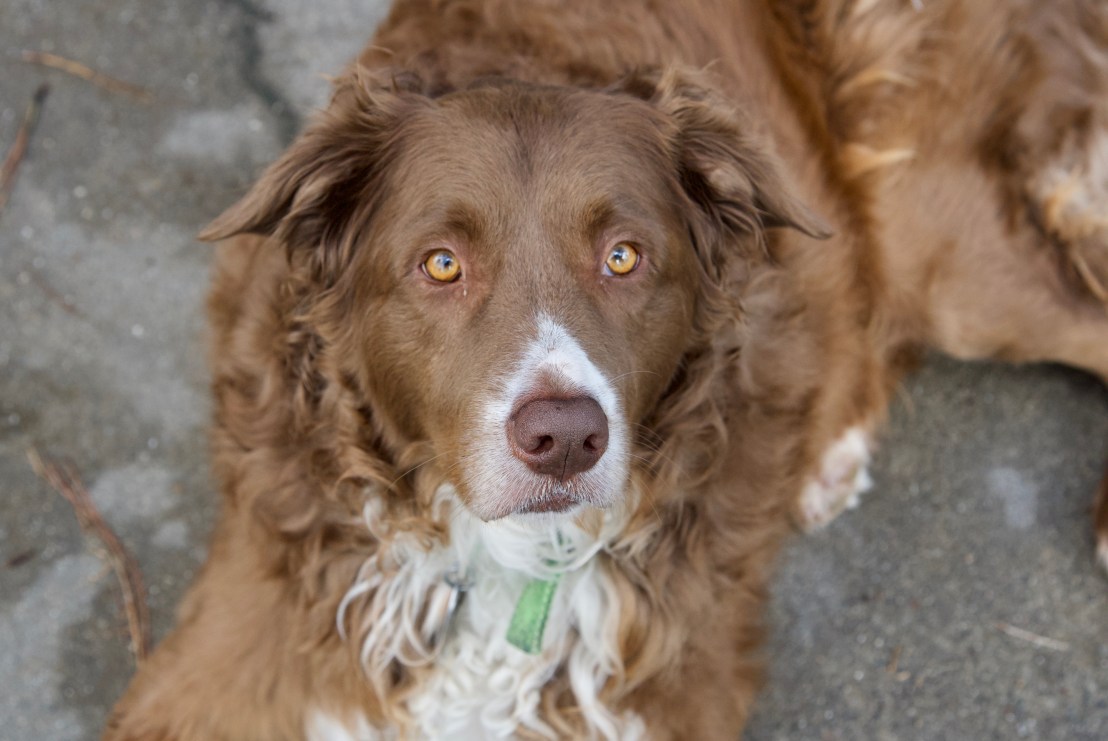
We humans love to be loved and, especially, by our dogs.
I am certain that all of the people who read Learning from Dogs on a regular basis are dog lovers and, just as important, your love for your dogs means that they in turn love you.
But unfortunately not everyone thinks of dogs in such a beautiful manner. For example, not far from here on Hugo Rd are a group of dogs, 4 or 5 I think, that I cycle past, and they live in outside kennels.
If you are an uncertain owner or a new owner you may want to understand more about your dog’s behaviour, or more accurately, whether your dog loves you. This article on The Dodo explains this very well.
ooOOoo
Does My Dog Love Me?
How to tell what those happy wiggles really mean ❤️️
Humans loveeee love. Which means we want the people — or animals — we love to show us they love us back.
But it’s sometimes hard for us to tell whether or not our dogs truly, deeply, madly love us — especially if you’re a new pet owner.
Who doesn’t want to feel all warm, fuzzy and loved by our pets?
To help you get that confirmation you’re looking for, The Dodo turned to Dr. Vanessa Spano, a veterinarian at Behavior Vets in New York City, to understand how dogs show their love.
“It is so important to understand your pets’ body language, as that is their way of communicating with us,” Dr. Spano said.
Here are some of the most common ways to tell that your dog, in fact, abso-freakin’-lutely loves you.
Your dog has a relaxed, wiggly body
“When interacting with your dog, body language signs to look out for that may indicate comfort and positivity include a relaxed body (or wiggly body during times of excitement, like play or you coming home), soft, forward ears and soft, rounded eyes,” Dr. Spano said.
He wiggles his eyebrows at you
You read that right! Doggos in love are known to raise their eyebrows when they see their owner. In fact, a 2013 Japanese study used a high-speed camera to record dogs’ faces when their humans walked into the room. It found that dogs raised their eyebrows when they saw their owners, but not when strangers walked in. *happy cry*
He wants your attention
“It is also a good sign if your dog is soliciting attention from you, such as with a play bow,” Dr. Spano said.
This can also be seen when he brings you one of his favorite toys.
He leans against you
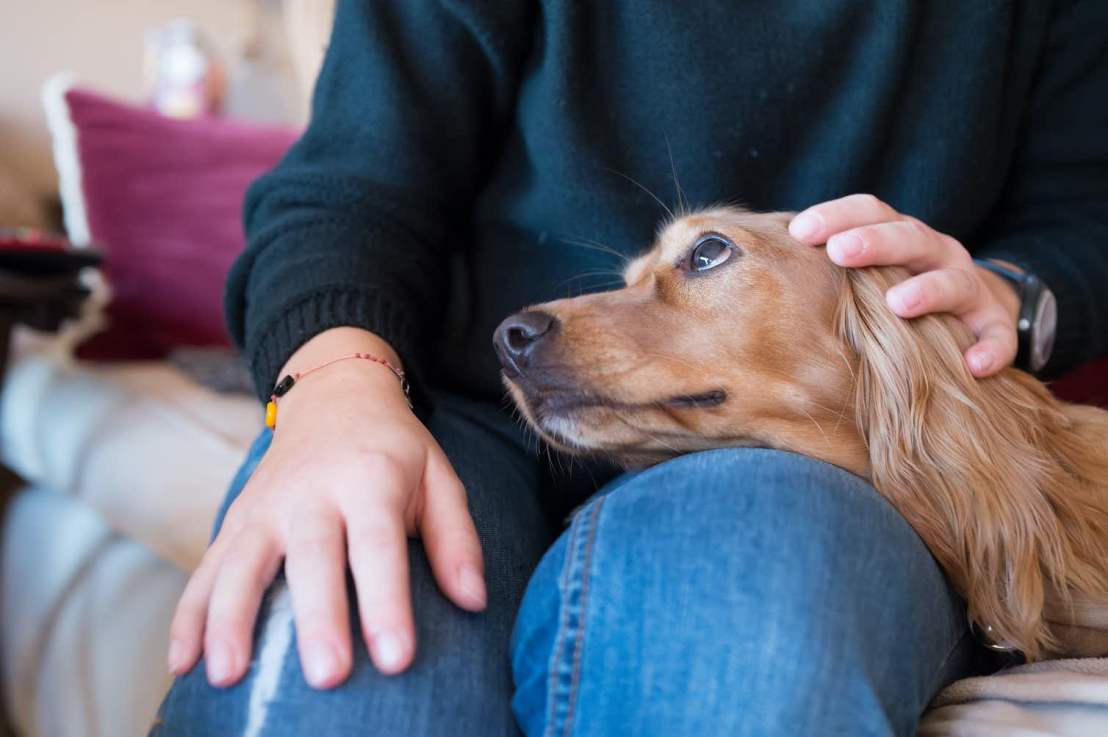
A dog will lean on humans for a few different reasons — sometimes it’s because he’s anxious or he wants you to do something — but it’s also a sign of affection. And regardless — even if your dog is leaning against you because he’s nervous — it still indicates that he thinks of you as someone who can protect him and keep him safe.
Confusing body language to look out for
According to Dr. Spano, there are some things dogs do that humans typically consider to be signs of affection, but aren’t always.
“Confusing signs include wagging tails and exposed bellies,” Dr. Spano said. “A dog wagging his tail simply means he is aroused by the situation. This can be a good thing, but not necessarily; it depends on the context of the situation.”
This means that it’s good to notice the situations that cause each of your dog’s behaviors and begin to build an understanding of your individual dog’s moods.
For example, maybe you notice your dog always wags her tail when you walk into a room — you can equate that situation with her being happy in those moments. On the other hand, maybe you’ve also noticed she wags her tail just a bit stiffer when she sees a strange dog, and it’s almost always followed by raising her hair and growling. While she is wagging her tail in both of these situations, it’s not the same kind of tail wag.
“Similarly, a dog showing his belly may be asking for belly rubs, but it can also indicate fear,” Dr. Spano said. “Dogs do have the capability of trusting and loving you, but depending on their own fears, stress level and past experiences, it may take some time.”
So in general, look for those relaxed and wiggly bodies to know how happy your dog is to see you. Other behaviors you’ll learn over time — and it’ll just help your bond grow even stronger since you’ll be the only one who can truly detect your dog’s moods and emotions.
ooOOoo
Yes, it certainly takes time to really get to know a dog. Although one might think that having a number of dogs in the household makes it easier, and generally that is the case, even in a largish group one can have tensions that exist between a couple of the dogs. Knowing both dogs as well as you can enables one to adjust things so that the tension no longer exists or it becomes a very rare event.
But it is rare and, luckily, loving dogs is the normal!
I will close with a photograph of dear Oliver who is one of the most loving dogs I have come across.
I am referring to the smoke and fires in this part of the Western edge of the USA.
For a while it seemed as though evacuation was becoming closer but now, I hope, that we are nearing a change in the weather including some rain later on this week.
So time for another post.
This one about speech processing in the dog’s brain.
The article that I want to republish is in The National Geographic magazine but I do not have permission to reproduce it in full.
Luckily the video that is in the article is also available on YouTube.
So first some extracts of the article.
Dogs understand praise the same way we do. Here’s why that matters.
Dogs can’t speak, but their brains respond to spoken words, suggesting human language has deep evolutionary roots
By VIRGINIA MORELL, Published August 6th, 2020
Every dog owner knows that saying Good dog! in a happy, high-pitched voice will evoke a flurry of joyful tail wagging in their pet.
That made scientists curious: What exactly happens in your dog’s brain when it hears praise, and is it similar to the hierarchical way our own brain processes such acoustic information?
When a person gets a compliment, the more primitive, subcortical auditory regions first reacts to the intonation—the emotional force of spoken words. Next, the brain taps the more recently evolved auditory cortex to figure out the meaning of the words, which is learned.
When the scientists studied scans of the brains of pet dogs, they found that theirs, like ours, process the sounds of spoken words in a hierarchical manner—analyzing first the emotional component with the older region of the brain, the subcortical regions, and then the words’ meaning with the newer part, the cortex. (Read how dogs are more like us than we thought.)
It’s much longer than I have presented so I do urge you to go to the article and read it fully; it’s fascinating.
And to close this post I insert the video that is in the article.
Still continuing with another dog-free day because this is a supremely important topic: Dementia.
I’m well into my 75th year and have poor recall. I do everything to fight the loss of memory. We are vegan, or technically pescatarian, we both go to the nearby Club Northwest twice a week and I ride my bike every other day.
The number of cases of dementia in the U.S. is rising as baby boomers age, raising questions for boomers themselves and also for their families, caregivers and society. Dementia, which is not technically a disease but a term for impaired ability to think, remember or make decisions, is one of the most feared impairments of old age.
Incidence increases dramatically as people move into their 90s. About 5% of those age 71 to 79 have dementia, and about 37% of those about 90 years old live with it.
Older people may worry about their own loss of function as well as the cost and toll of caregiving for someone with dementia. A 2018 study estimated that the lifetime cost of care for a person with Alzheimer’s, the most common form of dementia, to be US$329,360. That figure, too, will no doubt rise, putting even more burdens on family, Medicare and Medicaid.
There’s also been a good deal of talk and reporting about dementia in recent months because of the U.S. presidential election. Some voters have asked whether one or both candidates might have dementia. But, is this even a fair question to ask? When these types of questions are posed – adding further stigma to people with dementia – it can unfairly further isolate them and those caring for them. We need to understand dementia and the impact it has on more than 5 million people in the U.S. who now live with dementia and their caregivers. That number is expected to triple by 2060.
First, it is important to know that dementia cannot be diagnosed from afar or by someone who is not a doctor. A person needs a detailed doctor’s exam for a diagnosis. Sometimes, brain imaging is required. And, forgetting an occasional word – or even where you put your keys – does not mean a person has dementia. There are different types of memory loss and they can have different causes, such as other medical conditions, falls or even medication, including herbals, supplements and anything over-the-counter.
Older people wonder and worry about so-called senior moments and the memory loss they perceive in themselves and others. I see patients like this every week in my geriatric clinic, where they tell me their stories. They forget a word, get lost in a story, lose keys or can’t remember a name. Details vary, but the underlying concern is the same: Is this dementia?
As we age, we experience many physical and cognitive changes. Older people often have a decrease in recall memory. This is normal. Ever have trouble fetching a fact from the deep back part of your “mind’s Rolodex”? Suppose you spot someone at the grocery store you haven’t seen in years. Maybe you recognize the face, but don’t remember their name until later that night. This is normal, part of the expected changes with aging.
What’s more of a potential problem is forgetting the name of someone you see every day; forgetting how to get to a place you visit frequently; or having problems with your activities of daily living, like eating, dressing and hygiene.
When you have troubles with memory – but they don’t interfere with your daily activities – this is called mild cognitive impairment. Your primary care doctor can diagnose it. But sometimes it gets worse, so your doctor should follow you closely if you have mild cognitive impairment.
You want to note the timing of any impairment. Was there a gradual decline? Or did it happen all of a sudden? This too you should discuss with your doctor, who might recommend the MoCA, or Montreal Cognitive Assessment test, which screens for memory problems and helps determine if more evaluation is needed.
Also, the Centers for Disease Control and Prevention lists problems in these areas as possible signs of dementia:
Memory
Attention
Communication
Reasoning, judgment and problem solving
Visual perception beyond typical age-related changes in vision
When memory loss interferes with daily activities, see your doctor about what to do and how to make sure you’re safe at home.
There are numerous types of severe memory loss. Dementia tends to be a slow-moving progression that occurs over months or years. Delirium is more sudden and can occur over hours or days, usually when you have an acute illness. Depression can also cause memory changes, particularly as we get older.
Alzheimer’s dementia is the most common type of dementia, followed by vascular dementia. They have similar symptoms: confusion, getting lost, forgetting close friends or family, or an inability to do calculations like balance the checkbook. Certain medical conditions – thyroid disorders, syphilis – can lead to dementia symptoms, and less common types of dementia can have different kinds of symptoms. Alzheimer’s has a distinct set of symptoms often associated with certain changes in the brain.
Focusing on safety and appropriate supervision, particularly in the home, is critical for all people with dementia. Your doctor or a social worker can help you find support.
It’s also important to be aware of two other things that can lead to decreased mental functioning – delirium and depression.
Delirium, a rapid change in cognition or mental functioning, can occur in people with an acute medical illness, like pneumonia or even COVID-19 infection. Delirium can occur in patients in the hospital or at home. Risk for delirium increases with age or previous brain injuries; symptoms include decreased attention span and memory issues.
Depression can happen at any time, but it’s more common with aging. How can you tell if you’re depressed? Here’s one simple definition: when your mood remains low and you’ve lost interest or joy in activities you once loved.
Sometimes people have recurring episodes of depression; sometimes, it’s prolonged grieving that becomes depression. Symptoms include anxiety, hopelessness, low energy and problems with memory. If you notice signs of depression in yourself or a loved one, see your doctor. If you have any thoughts of harming yourself, call 911 to get help instantly.
Any of these conditions can be frightening. But even more frightening is unrecognized or unacknowledged dementia. You must, openly and honestly, discuss changes you notice in your memory or thinking with your doctor. It’s the first step toward figuring out what is happening and making sure your health is the best it can be.
And, as with any disease or disease group, dementia is not a “character flaw,” and the term should not be used to criticize a person. Dementia is a serious medical diagnosis – ask those who have it, the loved ones who care for them or any of us who treat them. Having dementia is challenging. Learn what you can do to support those with dementia in your own community.
Please, if you are of the age where this is more than an academic interest then read the article carefully and especially that piece of advice towards the end:
But even more frightening is unrecognized or unacknowledged dementia. You must, openly and honestly, discuss changes you notice in your memory or thinking with your doctor. It’s the first step toward figuring out what is happening and making sure your health is the best it can be.
As is said growing old is not for cissies.
None of us can put off the fateful day when we will die and in our case we do not believe in any form of afterlife, in other words we are confirmed atheists, so all we can do is to live out our remaining years as healthily as possible and loving each other and our precious animals.
But having said that I know that all of us want to live out our lives with healthy, active brains and it’s clear that we can’t leave it to chance.
In closing, I recently purchased the book Outsmart Your Brain written by Dr. Ginger Schechter (and others). It was just $9.99 and contains much advice regarding the best foods and exercise for a healthy brain. I recommend it!
A very interesting article in The Smithsonian Magazine.
There are countless breeds of dogs and they represent thousands of years of breeding.
But recent work in determining the genetic background behind the many different features of dogs has revealed so much.
The Smithsonian Magazine published an article nearly a month ago and hopefully it is alright to share it with you.
ooOOoo
What a Crowdsourced Study Taught Us About How Dogs Learn
A new study looks at the genes that underlie traits from self control to communication
Three dogs sit at attention ( MediaProduction
By Viviane Callier, July 31, 2020
Thousands of years of selective dog breeding has created a fantastic diversity of domestic canine companions, from the workaholic border collie to the perky Pomeranian. In cultures around the world, humans bred different dogs to be good at tasks including guarding, hunting and herding. Later, in Victorian England, kennel clubs established breed standards related not only to their behavior, but also their appearance.
As genomic sequencing has become more affordable, scientists have begun to understand the genes behind physical features such as body shape and size. But understanding the genes behind dog cognition—the mental processes that underlie dogs’ ability to learn, reason, communicate, remember, and solve problems—is a much trickier and thornier task. Now, in a pair of new studies published in Animal Cognition and in Integrative and Comparative Biology, a team of researchers has begun to quantify just how much variation in dog cognition exists, and to show how much of it has a genetic basis.
To study canine cognition, the studies’ authors turned to publicly available genetic information from a 2017 study, and a large community science project, Dognition.com, in which dog owners tested their own pets. “These papers offer an exciting integration of two forms of big data,” says Jeff Stevens, a psychologist at the University of Nebraska-Lincoln who was not involved in the study.
Previous studies often compared cognition in one breed against another using small sample sizes of dogs from each. This study, by contrast, is the first to examine the variation in cognition across three dozen breeds, and the genetic basis of that variation, explains Evan MacLean, a comparative psychologist at the University of Arizona who oversaw the pair of new studies. MacLean says dog breeds may be an ideal way to study the heritability of cognitive traits because breeds—all part of the same species—represent close genetic relatives with an incredibly diverse range of appearances and behaviors.
To gather a sufficient amount of data on how dogs reason and solve problems, the researchers looked to the Dognition.com portal. The initiative, created by Duke University dog researcher Brian Hare, started with tests in the lab. Researchers developed methods to understand how dogs think. They then stripped those methods down, and simplified them for dog owners to do themselves. In an earlier project, the researchers tested dogs in the lab and compared their results to those from owners testing the same dog at home. The results were the same, giving them confidence that the results from the citizen science project were reliable.
To participate in this project, dog owners tested their pups on 11 standardized tasks used by animal behaviorists on a variety of species that reflect four aspects of cognition: inhibitory control, communication, memory and physical reasoning. One task that measured inhibitory control, for example, involved having an owner put a treat on the floor in front of the dog and then verbally forbidding the dog from taking it. The owner then measured how long the dog would wait before eating the treat. In a task to assess communication skills, the dog owner placed two treats on the ground and gestured towards one of them. The owner then determined if the dog approached the indicated treat. To assess memory, the owner visibly placed food under one of two cups, waited for a few minutes, and then determined if the dog remembered which cup the food was placed under. To test physical reasoning, the owner hid food under one of two cups, out of view of the dog. The owner lifted the empty cup to show the dog that there was no food and then assessed whether the dog approached the cup with the food underneath.
The participating dog owners reported their dog’s scores and breed, producing a dataset with 1,508 dogs across 36 breeds. The researchers analyzed the scores and found that about 70 percent of the variance in inhibitory control was heritable, or attributable to genes. Communication was about 50 percent heritable, while memory and physical reasoning were about 20 percent heritable.
“What’s so cool about that is these two traits that are highly heritable [control and communication] are those that are thought to be linked to dogs’ domestication process,” says Zachary Silver, a graduate student in the Canine Cognition Center at Yale who was not involved in the study.
Dogs are better at following humans’ communicative cues than wolves, and this is something that seems to be highly heritable, explains Silver. In contrast, there’s some evidence that wolves are better than dogs at physical reasoning.
Some of these traits are also influenced by environment and how the dog was handled as a puppy, so there are both genetic and environmental components. In fact, there is so much environmental and experiential influence on these traits that Gitanjali Gnanadesikan, a graduate student in MacLean’s lab and lead author of the new studies, cautions against the idea that these findings support certain breed restrictions or stereotypes. “Even the highly heritable traits have a lot of room for environmental influence,” she says. “This shouldn’t be interpreted as, ‘each of these breeds is just the way they are, and there’s nothing that can be done about it.’”
In the same way that women are on average shorter than men, but there’s quite a lot of overlapping variation within each sex, dog breeds also show a lot of variation within each breed that overlaps with variation among breeds.
Previous work has linked differences in inhibitory control to the estimated size of dogs’ brains. Comparative studies across many different species, ranging from tiny rodents to elephants and chimpanzees, also show that some aspects of self-control are strongly related to brain size. The bigger the brain size, the more self-control the animals seem to have, MacLean says.
Stevens notes that a lot of things—not just inhibitory control—correlate with brain size across species. And brain size, metabolic rate, lifespan, home range size are all correlated with body size. When many traits are correlated with each other, it is not clear which of these factors may underlie the cognitive differences. So there are a number of questions remaining to be explored.
After showing the degree to which different aspects of dog cognition are heritable, Gnanadesikan and MacLean used publicly available information on the genomes of dog breeds to search for genetic variation that was associated with the cognitive traits of interest. The researchers found that, like many other complex traits, there were many genes, each with small effect, that contribute to dogs’ cognitive traits. That is in contrast to morphological features in dogs; about 50 percent of variation in dog body size can be accounted for by variation in a single gene.
One of the limitations of the study is that the researchers did not have cognitive and genetic information from the same dogs; the genomes were breed averages. In the future, the researchers are planning to collect genetic data from the very same dogs that are completing the cognitive tests, to get measures of cognitive and genetic variation at the level of individual dogs. “This gives us a roadmap for places that we might want to look at more carefully in the future,” MacLean explains.
ooOOoo
Now this is an article that deserves to be read carefully so if you are in a hurry bookmark this and wait until you can sit and absorb the messages the article contains.
I was minded to look up Gitanjali’s details and I am glad I did. These are the details:
Gitanjali Gnanadesikan
I am an evolutionary biologist and comparative psychologist who is interested in social behavior and cognition. I work with Evan MacLean in the Arizona Canine Cognition Center studying the development and evolution of behavior and cognition in dogs and wolves.
I think I will reach out to her and see if she has more information she would like to share with us all.
There was an article on the website EarthSky News yesterday that, literally, took me out of this world. It described the role of magnetic rivers in newly forming star clusters.
There’s not a dog in sight but nevertheless I wanted to share this article with you.
Astronomers have learned that the pull of gravity can sometimes overcome the strong magnetic fields found in great star-forming clouds in space. The resulting weakly magnetized gas flow can feed the growth of new stars.
See the lines – called streamlines by scientists – in this composite image of the Serpens South star cluster? They’re from magnetic fields in this great star-forming cloud. Notice the lower left, where magnetic fields have been dragged into alignment with a narrow, dark filament. In that area, astronomers say, material from interstellar space is flowing into the star-forming cloud and fueling star formation. Image via NASA/ SOFIA/ T. Pillai/ JPL-Caltech/ L. Allen/ USRA.
Astronomers have known for decades that stars like our sun form when giant clouds of gas and dust in space – sometimes called molecular clouds – collapse under their own gravity. But how does the material from interstellar space flow into these clouds, and what controls the collapse? The image above helps illustrate an answer to these questions. It’s a composite, made with data from SOFIA – an airborne telescope designed for infrared astronomy – overlaid on an image from the now-retired Spitzer Space Telescope. This composite shows that the pull of gravity can sometimes overcome the strong magnetic fields found in great star-forming clouds in space. And it shows that, when that happens, weakly magnetized gas can flow – as on a conveyor belt – to feed the growth of newly forming star clusters.
A statement from the Max Planck Institute in Bonn, Germany, explained:
A major finding in the last decade has been that extensive networks of filaments permeate every molecular cloud. A picture has emerged that stars like our own sun form preferentially in dense clusters at the intersection of filaments.
Now look back at the image above, which shows the Serpens South star cluster, a star-forming region located some 1,400 light-years from Earth. In that image, you see a dark filament in the lower left. Now notice the “stripes” on the image, which astronomers call streamlines. They represent magnetic structures, discovered by SOFIA. The astronomers said these magnetic structures act like rivers, channeling material into the great star-forming cloud.
As you can see in the image, these magnetic streamlines have been dragged by gravity to align with the narrow, dark filament on the lower left. Astronomers say this configuration helps material from interstellar space flow into the cloud.
This is different from the upper parts of the image, where the magnetic fields are perpendicular to the filaments; in those regions, the magnetic fields in the cloud are opposing gravity.
Astrophysicist Thushara Pillai led the study showing that magnetic rivers feed star birth in the Serpens South star-forming region.
The scientists said in a statement from Universities Space Research Association (USRA) that they are:
… studying the dense cloud to learn how magnetic fields, gravity and turbulent gas motions contribute to the creation of stars. Once thought to slow star birth by counteracting gravity, SOFIA’s data reveals magnetic fields may actually be working together with gravity as it pulls the fields into alignment with the filaments, nourishing the birth of stars.
The results were published in the peer-reviewed journal Nature Astronomy on August 17. The lead author of the new study is Thushara Pillai of Boston University and the Max Planck Institute for Radio Astronomy in Bonn, Germany.
In 1835, the French philosopher Auguste Comte wrote of the unknowable nature of stars:
On the subject of stars, all investigations which are not ultimately reducible to simple visual observations are … necessarily denied to us. While we can conceive of the possibility of determining their shapes, their sizes, and their motions, we shall never be able by any means to study their chemical composition or their mineralogical structure … Our knowledge concerning their gaseous envelopes is necessarily limited to their existence, size … and refractive power, we shall not at all be able to determine their chemical composition or even their density…
He was, famously, wrong.
He couldn’t have envisioned the range of tools available to modern astronomers. It’s a beautiful thing that, nowadays, astronomers can not only learn about the compositions of stars via their studies of their spectra, but also probe the deeper mysteries, going all the way to the births of these colossal, self-luminous balls in space.
SOFIA, the Stratospheric Observatory for Infrared Astronomy. The HAWC+ polarimeter on board SOFIA was used for the observations of the magnetic field in the Serpens South star-forming region. Image via NASA/ C. Thomas/ Max Planck Institute.
Bottom line: Astronomers have learned that the pull of gravity can sometimes overcome the strong magnetic fields found in great star-forming clouds in space. The resulting weakly magnetized gas flow can feed the growth of new stars.
Just read that paragraph just before the end of the article: “He couldn’t have envisioned the range of tools available to modern astronomers. It’s a beautiful thing that, nowadays, astronomers can not only learn about the compositions of stars via their studies of their spectra, but also probe the deeper mysteries, going all the way to the births of these colossal, self-luminous balls in space.”
What a long way we have come from just, say, 50 years ago.
It would be easy to get lost in the article in a scientific manner, and that would be entirely appropriate.
But there’s another beautiful way to get lost in the article; by dreaming of outer space and forgetting just for a moment or two this Earthly planet we all live on!
This article in The Smithsonian is well worth reading.
I think that strictly speaking I should not be republishing articles from The Smithsonian and if I am instructed to take the post down then all you will read is this introduction.
But hopefully they will look kindly towards me.
For there was an article recently that spoke about dogs and their ability to find their way across often strange land. Very interesting!
How Do Dogs Find Their Way Home? They Might Sense Earth’s Magnetic Field
Our canine companions aren’t the only animals that may be capable of magnetoreception A terrier fitted with GPS remote tracking device and camera (Kateřina Benediktová / Czech University of Life Sciences
Last week, Cleo the four-year-old yellow Labrador retriever showed up on the doorstep of the home her family moved away from two years ago, reports Caitlin O’Kane for CBS News. As it turns out, Cleo traveled nearly 60 miles from her current home in Kansas to her old one in Missouri. Cleo is just one of many dogs who have made headlines for their homing instincts; in 1924, for example, a collie known as “Bobbie the Wonder Dog” traveled 2,800 miles in the dead of winter to be reunited with his people.
Now, scientists suggest these incredible feats of navigation are possible in part due to Earth’s geomagnetic field, according to a new study published in the journal eLife.
Researchers led by biologists Kateřina Benediktová and Hynek Burda of the Czech University of Life Sciences Department of Game Management and Wildlife Biology outfitted 27 hunting dogs representing 10 different breeds with GPS collars and action cameras, and tracked them in more than 600 excursions over the course of three years, Michael Thomsen reports for Daily Mail. The dogs were driven to a location, led on-leash into a forested area, and then released to run where they pleased. The team only focused on dogs that ventured at least 200 meters away from their owners.
But the researchers were more curious about the dogs’ return journeys than their destinations. When called back to their owners, the dogs used two different methods for finding their way back from an average of 1.1 kilometers (about .7 miles) away. About 60 percent of the dogs used their noses to follow their outbound route in reverse, a strategy known as “tracking,” while the other 30 percent opted to use a new route, found through a process called “scouting.”
According to the study authors, both tactics have merits and drawbacks, and that’s why dogs probably alternate between the two depending on the situation.
“While tracking may be safe, it is lengthy,” the authors write in the study. “Scouting enables taking shortcuts and might be faster but requires navigation capability and, because of possible errors, is risky.” Data from the scouting dogs revealed that their navigation capability is related to a magnetic connection (Kateřina Benediktová / Czech University of Life Sciences)
Data from the scouting dogs revealed that their navigation capability is related to a magnetic connection. All of the dogs who did not follow their outbound path began their return with a short “compass run,” a quick scan of about 20 meters along the Earth’s north-south geomagnetic axis, reports the Miami Herald’s Mitchell Willetts. Because they don’t have any familiar visual landmarks to use, and dense vegetation at the study sites made “visual piloting unreliable,” the compass run helps the dogs recalibrate their own position to better estimate their “homing” direction.
Whether the dogs are aware that they are tapping into the Earth’s magnetic field is unclear. Many dogs also poop along a north-south axis, and they certainly are not the only animals to use it as a tool. Chinook salmon have magnetoreceptors in their skin that help guide their epic journeys; foxes use magnetism to hone in on underground prey; and, sea turtles use it to find their beachside birthplaces.
Catherine Lohmann, a biologist at the University of North Carolina, Chapel Hill, who studies magnetoreception and navigation in such turtles tells Erik Stokstad at Science that the finding of the compass run, however, is a first in dogs. This newfound ability means that they can likely remember the direction they had been pointing when they started, and then use the magnetic compass to find the most efficient way home.
To learn more about how magneto-location works for the dogs, the study authors will begin a new experiment placing magnets on the dogs’ collars to find out if this disrupts their navigational skills.
ooOOo
Courtney Sexton, a writer and researcher based in Washington, DC, studies human-animal interactions. She is a 2020 AAAS Mass Media Fellow and the co-founder and director of The Inner Loop, a nonprofit organization for writers.
This is, as I mentioned earlier, a most interesting article. I can’t wait to read more in The Smithsonian. We actually subscribe to the paper version of the magazine. So fingers crossed that in time there will be a further report from Catherine Lohmann.
I have written about the dog’s nose before. Or rather I have written about the dog’s sense of smell;
Dogs’ noses just got a bit more amazing. Not only are they up to 100 million times more sensitive than ours, they can sense weak thermal radiation—the body heat of mammalian prey, a new study reveals. The find helps explain how canines with impaired sight, hearing, or smell can still hunt successfully.
But I wanted to draw your attention to an article in 2017; June 26th to be precise. In an article called What a nose!
Here’s how that post opened.
Two items that recently caught my eye.
The power of a dog’s nose is incredible and it is something that has been written about in this place on more than one occasion.
But two recent news items reminded me once again of the way we humans can be helped by our wonderful canine partners.
The first was a report that appeared on the Care2 website about how dogs are being used to search for victims in the burnt out ruins following that terrible Grenfell Tower fire. That report opened, thus:
Wearing heat-proof booties to protect their feet, specially trained dogs have been dispatched in London’s Grenfell Tower to help locate victims and determine the cause of last week’s devastating fire that killed at least 79 people.
Because they’re smaller and weigh less than humans, urban search-and-rescue dogs with the London Fire Brigade (LFB) are able to access the more challenging areas of the charred 24-story building, especially the upper floors that sustained the most damage.
Because I read recently, on the EarthSky website, about dogs in Australia that are being trained to detect Covid-19 in humans.
ooOOoo
These dogs are trained to sniff out the coronavirus
Posted by Eleanor Imster in Human World, August 10, 2020
Scientists have been working with professional trainers in South Australia, Victoria and New South Wales to train dogs to sniff out Covid-19. Most of the dogs have a 100% success rate.
What does a pandemic smell like? If dogs could talk, they might be able to tell us.
We’re part of an international research team, led by Dominique Grandjean at France’s National Veterinary School of Alfort, that has been training detector dogs to sniff out traces of the novel coronavirus (SARS-CoV-2) since March.
These detector dogs are trained using sweat samples from people infected with Covid-19. When introduced to a line of sweat samples, most dogs can detect a positive one from a line of negative ones with 100% accuracy.
Across the globe, coronavirus detector dogs are being trained in the United Arab Emirates (UAE), Chile, Argentina, Brazil and Belgium.
In the UAE, detector dogs – stationed at various airports – have already started helping efforts to control Covid-19’s spread. This is something we hope will soon be available in Australia too.
A keen nose
Our international colleagues found detector dogs were able to detect SARS-CoV-2 in infected people when they were still asymptomatic, before later testing positive.
On average, dogs have about 220 million scent receptors. Image via Shutterstock/ The Conversation .
When it comes to SARS-CoV-2 detection, we don’t know for sure what the dogs are smelling.
The volatile organic compounds (VOCs) given off in the sweat samples are a complex mix. So it’s likely the dogs are detecting a particular profile rather than individual compounds.
Sweat is used for tests as it’s not considered infectious for Covid-19. This means it presents less risk when handling samples.
Covid-19 sniffing dogs in Australia
Here in Australia, we’re currently working with professional trainers of detector dogs in South Australia, Victoria and New South Wales. The most common breed used for this work so far has been the German shepherd, with various other breeds also involved.
We are also negotiating with health authorities to collect sweat samples from people who have tested positive for the virus, and from those who are negative. We hope to start collecting these within the next few months.
We will need to collect thousands of negative samples to make sure the dogs aren’t detecting other viral infections, such as the common cold or influenza. In other countries, they’ve passed this test with flying colors.
Once operational, detector dogs in Australia could be hugely valuable in many scenarios, such as screening people at airports and state borders, or monitoring staff working in aged care facilities and hospitals daily (so they don’t need repeat testing).
To properly train a dog to detect SARS-CoV-2, it takes:
– 6-8 weeks for a dog that is already trained to detect other scents, or
– 3-6 months for a dog that has never been trained.
Coronavirus cases recently peaked in Victoria, Australia. Having trained sniffer dogs at hand could greatly help manage future waves of Covid-19. Image via Daniel Pockett/ AAP/ The Conversation.
Could the dogs spread the virus further?
Dogs in experimental studies have not been shown to be able to replicate the virus (within their body). Simply, they themselves are not a source of infection.
Currently, there are two case reports in the world of dogs being potentially contaminated with the Covid-19 virus by their owners. Those dogs didn’t become sick.
To further reduce any potential risk of transmission to both people and dogs, the apparatus used to train the dogs doesn’t allow any direct contact between the dog’s nose and the sweat sample.
The dog’s nose goes into a stainless steel cone, with the sweat sample in a receptacle behind. This allows free access to the volatile olfactory compounds but no physical contact.
Furthermore, all the dogs trained to detect Covid-19 are regularly checked by nasal swab tests, rectal swab tests and blood tests to identify antibodies. So far, none of the detector dogs has been found to be infected.
Dogs are not susceptible to the negative effects of the novel coronavirus. Image via Eyepix/ Sipa USA/ The Conversation.
Hurdles to jump
Now and in the future, it will be important for us to identify any instances where detector dogs may present false positives (signaling a sample is positive when it’s negative) or false negatives (signaling the sample is negative when it’s positive).
We’re also hoping our work can reveal exactly which volatile olfactory compound(s) is/are specific to Covid-19 infection.
This knowledge might help us understand the disease process resulting from Covid-19 infection – and in detecting other diseases using detector dogs.
This pandemic has been a huge challenge for everyone. Being able to find asymptomatic people infected with the coronavirus would be a game-changer – and that’s what we need right now.
A Covid-19 detector dog enrolled in the NOSAIS program led by professor Dominique Grandjean and Clothilde Julien from the Alfort Veterinary School (France). Image via The Conversation.
A friend to us (and science)
Perhaps we shouldn’t be surprised about dogs’ ability to detect Covid-19, as we already know their noses are amazing.
Their great potential in dealing with the current pandemic is just one of myriad examples of how dogs enrich our lives.
We acknowledge Professor Riad Sarkis from the Saint Joseph University (Beirut) and Clothilde Lecoq-Julien from the Alfort Veterinary School (France) for first conceiving the idea underpinning this work back in March.
I find this fascinating. Apart from the value to the construction and home repair industries there is a beauty in the following video; well there is to my eyes!
(I suspect the music is also from Rik. I checked; it is!)
And the next one is a look at Rik getting ready to film a cellist. Or in his own words:
This film gives a look behind the scenes of a recent drone shoot we did for a music video. Additional footage and editing by Jazz Thorn, Music performed by Mateusz Holc.
But it also includes an explanation of the business of getting a drone ready for flight.
And the dogs will have to wait for next Sunday’s Picture Parade! Sorry!
With thanks to Monika for the title of today’s post!
My father was born in 1901. He had two wives. Me and my sister, Elizabeth, are the result of the relationship between our father and his second wife; Betty. Our father died in 1956; December 20th.
My father first was married to Maud and they had two daughters, Rhona and Corinne. Rhona died in 2003 and Corinne died in 2014. Although Rhona and Corinne were half-sisters I prefer to think of them as sisters!
Both had children. But I want to concentrate on Rhona. She and Reider, Norwegian by birth, had four children: Rolv; Greta; Rikard; Marit.
As is the way in this modern world, Rikky who lives near Torquay in South Devon, recently called in to see my brother-in-law, John, and John remarked to me that Rikky’s new wife, Jazz, was gorgeous. I asked Greta for a telephone number and, hey presto, Rikky and I were in contact with each other.
This is a little bit from Rik’s bio.
So you may remember I was with Amanda at the time of Mother’s passing, seems a long time ago now. Well that ultimately came to nothing and I ended up living alone with a couple of huskies in a small flat in Torquay. I had invested a large chunk of Mother’s inheritance into a PA system and set up and ran a sound engineering business for years as well as running quite a successful tribute band to ‘The Doors’. The PA company eventually ended after going into a partnership with a friend who also invested a chunk of cash allowing major upgrades to the kit.
Unfortunately I soon found out he was more interested in holidays to Spain than actual PA work, the problem being I had now sold vital parts of my rig which was replaced by his. We went separate ways and he took his gear with him leaving me without a full system, BIG lesson learnt.
At that point I went back to employment as an engineer for a company servicing and repairing lifting hoists to the health care industry. Four years in and the company went into administration.
Later Rikky says:
Back to work again this time to DPD as a delivery driver for a couple of years following in Rolv’s (Ed: brother) tyre tracks. This was when I also met Jazz on a random night out with friends. We immediately realised that we had many mutual friends and had actually met before many years ago when I was playing in her Dad’s Jazz band! This was around 19 years ago when I was 30 and Jazz was only 16. I only have a vague memory of her then sitting in a corner of the rehearsal room furiously scribbling in a sketch book.
Not much has changed there except she now holds a degree in Art and Design. She is also a Holistic Therapist and has trained in many holistic therapies including Reilki, Reflexology and Massage and is a very talented and beautiful woman. I feel incredibly blessed. She has two daughters Sanije and Latoja (nine and eleven) who I consider as mine; their father left the country last year and went back to Albania which actually has been a blessing for the girls as he is a difficult man to say the least.
So the driving job became another engineering position this time with a company specialising in fire alarms, a couple of years in and the contract I was working on was TUPED over to LiveWest which is one of the largest social housing companies in the South West. Two years after that and the company merged with another housing company, the role changed slightly so I was offered voluntary redundancy which I took giving me the financial opportunity to retrain as a commercial drone pilot and so here we are today.
We can accommodate all your aerial requirements from photography to cinematography, inspections to 3d mapping.
The name of Rik’s website is Ahead4Heights which strikes me as apt. And from the About page of that website, one reads:
Here at Ahead4Heights we have a passion for flying drones and creating visually stunning aerial films and photography. We are PfCO certified by the Civil Aviation Authority and hold full public liability insurance giving you complete confidence in us to provide the service you require.
With our post production studio facility we are able to add voice overs and original music written to your brief if required as we have our own in house composer and audio recording engineer.
Our UAV fleet consists of a variety of drones from the market leading DJI Inspire 2, capable of filming in incredible 5.2k resolution and producing the RAW file format standard for the film industry to our Pixhawk based quadcopter (equipt with a 4k camera) which we use for autonomous flight taking photos used to generate 3d mapping of locations useful for the construction industry.
Finally we have a heavy lift Tarot 680 hexacopter which is used as a backup drone and also for specialised payloads such as thermal cameras and high power lighting.
If you simply want aerial photos for property sales, photos and footage for weddings and events we will be happy to offer our services to you.
We can also carry out inspection work on roofs, tower masts and bridges etc where specialised safety equipment and scaffolding would otherwise be required. Utilizing both the high resolution and thermal imaging cameras we are able to identify problems with the insulation of properties, stress points in structures and damage to roofs and guttering.
Ahead4Heights also holds certificates in the building and setting up of drones so if you require a drone built to your special requirements we would be happy to discuss. We would also offer a full maintenance package with any build projects.
A couple more photographs.
oooo
And, of course, one more of the dogs! That is Storm and Tia.
Our latest dog, Sheena, is one such example of a dog that, in her case, needs vegetables for the sake of her digestion.
There’s a fuller report on what dogs can eat by way of vegetables that came out on the website Pet Releaf a while ago.
ooOOoo
8 Vegetables You Can Add To Your Dog’s Diet
Did you know your dog could eat vegetables? We researched 8 vegetables you can safely give to your pup!
This is not medical advice. Before pursuing feeding your dog a new food or supplement, it’s advised to consult with your veterinarian.
Vegetables aren’t just good for you—they’re also good for your pup! Giving your dog vegetables can be a great way to reward them for good behavior while avoiding unhealthy components such as unnatural fillers and empty calories, commonly found in treats. To avoid giving your pup too many heavy calorie treats a day, try adding vegetables to their daily regimen whether as treats or cooked vegetables in their food bowls. Consider choosing one of the vegetables listed below for their amazing pet health benefits.
8 Nutritious Vegetables for Dogs
1. Carrots
Although carrots are a healthy vegetable for dogs, they can be a potential choking hazard if not prepared correctly. Offer your furry companion smaller pieces to start and watch for large undigested pieces in your pet’s stool. Carrots can be cooked, puréed, or chewed raw to help clean your dog’s teeth and reduce anxiety. They also help with eye health and boost the immune system.
2. Sweet potato
Packed with vitamins, minerals, and fiber, sweet potatoes can be cooked, puréed, or mashed as a great addition to your furry friend’s diet. Although they can be useful for supporting your dog’s digestive system, it’s important to give sparingly to your pup. One tablespoon in your pup’s breakfast or dinner should do the trick as we want to avoid any diarrheal issues. Plus, we even use sweet potato in our Sweet Potato Pie Edibites!
3. Celery
Celery can be a great, crunchy snack for your pup! Within that crunchy bite, celery is filled with vitamins such as Vitamin A, B, and C and can help support a healthy heart!
4. Broccoli
Broccoli is another nutritional powerhouse for your pup, especially the stalks. Known to reduce arthritic inflammation, boost the immune system, and even keep cancer at bay, broccoli stalks are an ideal vegetable for dogs. Broccoli can be cooked or eaten raw to help clean teeth. However, too much broccoli (especially broccoli heads) can cause gas and upset the digestive tract, so be sure to offer this healthy dog treat in moderation. It’s also important to be cautious if your pup suffers from a low thyroid or is on thyroid medication as it can potentially drive the thyroid even lower.
5. Kale
Like broccoli, kale is loaded with health benefits for your fur friend, but it too can cause major gas if too much is eaten. Be sure to add only a very small amount (1–2 ounces, depending on your dog’s size) of dried, steamed, or raw chopped kale to your dog’s food. Kale helps fight allergies, heart disease, urinary tract problems, and even arthritis. Similar to broccoli, it’s important to take caution when giving your dog kale as it won’t be as beneficial for dogs with a low thyroid that are on thyroid medication, since it has the potential of driving the thyroid lower.
6. Cucumber
If your pup is on a diet, give your pup a taste of cucumber! Cucumbers are very low in carbohydrates as well as fats and oils. Plus, they’re loaded with vitamins and minerals, such as Vitamin K and potassium. Make sure to cut them up into bite size pieces to avoid any choking.
7. Zucchini
A small amount of frozen or raw shredded zucchini is excellent for adding extra water and fiber to your furry companion’s diet to keep them full.
8. Parsley
Rich in beta carotene for eye health and potassium for joint and muscle health, parsley also helps reduce “dog breath,” so you can accept your pup’s kisses and breathe easy again. Add just a little fresh chopped parsley to your dog’s meal or favorite Kong recipe.
Adding more dog-friendly vegetables to your pup’s diet at home is a great way to offer variety. When you’re too busy to prepare a veggie snack or need something while away from home, grab our Crunchy Edibites or Soft Chew Edibites filled with natural vegetable ingredients for a healthy pet snack on-the-go!
Shop Edibites on our website. We’re committed to providing a healthy alternative for pets while remaining committed to sustainability.
ooOOoo
If you are at all unsure as to whether your dog is good to go regarding vegetables, then let me repeat the caution that came at the start of the article: This is not medical advice. Before pursuing feeding your dog a new food or supplement, it’s advised to consult with your veterinarian.
But, in general, this is very interesting and, hopefully, will be noted by some of you for your dogs.
And I should say in closing that I have no association with this firm or with Pet Releaf at all.