Behavioral Economist concludes that most people cheat.
In a very interesting video on the website TED, Dan Ariely, Professor of Behavioral Economics at Duke University, explains his research into why people think it is okay to cheat and steal.
Here is Ariely’s presentation from YouTube:
From his research, he concludes the following:
A lot of people will cheat.
When people cheat, however, they cheat by a little, not a lot.
The probability of being caught is not a prime motivation for avoiding cheating.
If reminded of morality, people cheat less.
If distanced from the benefits from cheating, like using “chips” instead of actual money in transactions, people cheat more.
If your in-group accepts cheating, you cheat more.
Dan Ariely
I quibble with the interpretation of some of his findings, which may justify a separate post on how people perceive what they do and do not know, but there are always issues of this sort with a given research project. Where I draw the line is when he expands his conclusions to include all of Wall Street and the stock market, which is totally beyond the scope and nature of his research.
On what basis does he draw this conclusion? As explained in this short video (as I have not read his book, though I’ve read excerpts and am familiar with the study upon which the book is based), Ariely claims that because stocks and derivatives are not in the form of money, they “distance people from the benefits of cheating,” which leads individuals who engage in the stock market to cheat more. He alludes to Enron as proof.
This is almost too silly to spend a lot of time on trying to discredit, but I fear that a lot of people who hear his talks or read his book may be lulled into accepting what he says about the stock market as true. But it is not! Enron is the exception, not the rule.
Companies who issue stocks are raising money to provide a good or service that is valued by society; they are rewarded by profits. Investors who buy and sell stocks, trade derivatives, and invest in portfolios are trying to make their money go further. They are trying to earn a return on their savings. Cheaters do not survive in the stock market, unlike the “consequences-free” classroom in Areily’s experiment.
On the other hand, these factors are in glaring abundance in the government: politicians never “see” the taxes they spend as the hard-earned income of the citizens. And the “benefits” of cheating, including power and privilege, are amorphous and vague, and couched in the so-called morality of “doing the greater good.” I’m surprised Ariely does not condemn the federal government using the same logic as his does the stock market.
His last take-away from this research project? That we find it “hard to believe that our own intuition is wrong.”
I think Dr. Ariely ought to apply that caveat to the conclusions he draws about his own research. Very interesting, very compelling, but his interpretation of the results as they apply to the stock market falls victim to the very same biases that he claims to find in others.
On the 22nd March, Learning from Dogs had the pleasure of a Post from our first Guest Author, Elliot Engstrom. We are doubly delighted to have Per Kurowski join us as our second Guest Author.
Per Kurowski
Per is a prolific blogger. He has had a full career including serving as an Executive Director of the World Bank from 2002 until 2004 for Costa Rica, El Salvador, Guatemala, Honduras, Mexico, Nicaragua, Spain and Venezuela. More about Per’s life experiences can be found here.
Here is Per’s first Guest Post for Learning from Dogs.
——————-
The GPS and the AAAs
Not so long ago I asked my daughter to key in an address in the GPS and then even while I continuously heard a little voice inside me telling me I was heading in the wrong direction I ended up where I did not want to go.
Whither we are led?
Something similar caused the current financial crisis.
First the financial regulators in Basel decided that the only thing they would care about was the risk of individual financial defaults and not one iota about any other risks.
Second then, though they must have known these were humanly fallible they still empowered some few credit rating agencies to be their GPS on default risks.
Finally, by means of the minimum capital requirements for banks, they set up all the incentives possible to force them to heed what the GPS said and to ignore any internal warning voices.
Of course, almost like if planned on purpose, it all ended up in a crisis. In just a couple of years, over two trillion dollars followed some AAA signs over the precipice of badly awarded mortgages to the subprime sector. Today, we are still using the same financial risk GPS with the same keyed in instructions… and not a word about it in all recent Financial Regulatory Reform proposals
I hate the GPS type guidance of any system since I am convinced that any kid brought up with it will have no clue of what north, south, east or west means; just as the banker not knowing his client’s business or how to look into his client’s eyes or how to feel the firmness of his client’s handshake, can only end up stupidly following someone else’s opinion about his client on a stupid monitor.
I hate the GPS type guidance system because, on the margin, it is making our society more stupid as exemplified by how society, day by day, seems to be giving more importance to some opaque credit scores than to the school grades of their children. I wait in horror for some DNA health rating scores to appear and cause a total breakdown of civilization as we know it.
Yes, we are buried under massive loads of information and these systems are a tempting way of trying to make some sense out of it all, but, if we used them, at least we owe it to ourselves to concentrate all our efforts in developing our capacity to question and to respond adequately when our instincts tell us we’re heading in the wrong way.
Not all is lost though. I often order the GPS in my car to instruct me in different tongues so as to learn new languages, it gives a totally new meaning to “lost in translation”, and I eagerly await a GPS system that can describe the surroundings in more extensive terms than right or left, AAA or BBB-, since that way not only would I get more out of it but, more importantly, I would also be more inclined to talk-back.
On the 10th February, I wrote an article entitled Every Economist, Mr President? No Sir! The thrust of my argument was “that the unemployment rate would have been much lower today had the stimulus program never occurred.”
That post also appeared on my own Blog and there attracted a fascinating response from Rick Rutledge. Rick’s response is worthy of a separate article, as below, together with my reply.
Sherry,
The problem with your explanation here is that it states that “government spending is funded with taxes that WOULD HAVE BEEN invested by private industry” and that “the unemployment rate WOULD HAVE BEEN much lower today had the stimulus program never occurred.” (Emphasis mine.)
This argument, it seems to me, is predicated on the conceptual fiction of a two-dimensional relationship between government spending and business investment, with taxes as the lever. That model lacks a time vector, not so much from omitting it, as compressing it. The relationship between those factors can only be simplified to this level by compressing all time into the representational plane.
That is to say that, to fairly represent the relationship between government spending and business investment (via taxation), we have to compress three presumptions into one premise:
– Past government spending that resulted in increased taxes diminishes past, present, and/or future business investment resources;
– Increasing present taxes to fund present and future spending diminishes business’ investment resource pool.
– Past, present, and future government spending without matching funding WILL, EVENTUALLY result in increased taxation, diminishing future business investment resources. (And, consequently, MAY have a chilling effect on present business investment attitudes.)
However, unless NPR has let me down (it could happen), and I’ve missed a big, breaking story about an increase in business taxes, these stimulus programs have been wholly funded by deficit spending.
Of course, it could be argued that deficit spending generally COULD (nay, should) have a chilling effect on business investment. This, together with the third presumption of the aggregate premise above (that is to say, burgeoning national debt), does create a basis for the belief that the unemployment rate COULD have been much lower today, IF a number of things had been done differently. The French have a saying: “With enough ‘IFs,’ we could put Paris in a bottle.”
To simply state that “the unemployment rate would have been much lower today had the stimulus program never occurred” strikes me as conclusory, and the sort of reasoning on which our elected officials too often rely to justify partisan and ideological positions.
Too, and unfortunately, there is a great body of evidence to suggest that business leaders have historically taken a disappointingly short-sighted approach to management, so I would be reluctant to put too many eggs into the “chilling effect” arguments.
Rick Rutledge
As a person who teaches financial literacy, I’m fully aware that sometimes there are urgent needs that justify the use of leverage (and short-term deficit spending) to deal with near-term emergencies. Credit has its uses. I’m of the belief that short-term deficit spending is not the primary (and certainly is not in and of itself) the cause for our current woes. I’m more inclined to believe that short-sightedness, whether in the form of The Quick Buck on Wall Street, or a systemic refusal to acknowledge the looming problem of the national debt, is more to blame than any single short-term stimulus program. Government spending on stimulus, OUTSIDE THE CONTEXT OF DEFICIT SPENDING, wholly evades your argument.
(But then, there may be good reason I don’t claim to be an economist – through no fault of yours, to be sure!)
Rick Rutledge
This was my reply:
Hi Rick,
Goodness. Where to begin! I simply stated my conclusion because it’s a post, and I was responding directly to Obama’s claim about what “all” economists think or say. He was misinformed or stretching the truth, and I wanted to point out that fact. So, yes, there were a lot of unstated underlying assumptions and data and studies and research and theory that I did not specify. Apparently you’ve supplied some of your own to try to deconstruct the “reasoning” or “ideology” that I might have used to arrive at my conclusion! Creative and ambitious but, alas, wrong.
You’ve ignored or misunderstood the very essence of causality: the only thing one needs to know is that business profits are the ONLY source of tax revenues to the government, and when the government takes and spends those tax revenues, they are spending dollars that WOULD HAVE BEEN RETAINED AND INVESTED by the business that created those profits and those very tax revenues IN THE FIRST PLACE, and would have then caused further profits next period. CAUSED. And it doesn’t matter whether you talk one period or multiperiod or lags. This fundamental economic fact does not change.
You bring deficit spending (the relation between this period’s G and this period’s T) and the level of debt (cumulative deficits) into the picture, both of which are entirely irrelevant to the issue I am raising and, worse yet, are the accountant’s version of business profits.
You site “evidence” that business leaders have been short-sighted (do please share some of that evidence with me — cite the source and let me have at it — it will not hold up) and use that to conclude that government spending does not reduce economic wealth? And then literally blame our current woes on the short-sightedness of business? or on national debt? huh?
You say: “Government spending on stimulus, outside the context of deficit spending, wholly evades my argument.” Not so. My point is that when the government takes a dollar of tax revenues, whether the government is running a deficit or surplus, it reduces the economic wealth of the economy relative to what it would have been had the government not taken that dollar of business profits as taxes. Very simple. Very straightforward. The plain, simple, unadorned, incontrovertible truth.
Thanks for your interest and for taking the time to write such a thoughtful, thought-provoking comment!
Learning from Dogs has been publishing on a daily basis since July 15th, 2009. That’s over 460 posts and is a great tribute to the commitment of all the authors of this Blog. We are grateful that our regular readership is also measured in the hundreds and is growing steadily.
Elliot Engstrom
It seemed time to make a small change. We have decided to include articles from Guest Authors on a regular basis. Our first guest is Elliot Engstrom.
Elliot Engstrom is a senior French major at Wake Forest University, and aside from his schoolwork blogs for Young Americans for Liberty and writes at his own Web site, Rethinking the State
Elliot first post for Learning from Dogs is about the US Federal Government and Poverty. This also appeared in The Daily Caller.
————–oooOOOooo—————-
The federal government, which claims to be the greatest supporter of those in need, is anything but a friend of the impoverished.
Often times when conservatives speak of the government treating the rich differently than the poor, the discussion is framed around taxes and welfare, with the argument being made that the government forces the highest earners to pay a massive percentage of all taxes, both punishing success and stifling overall economic productivity and making it all the more difficult for anyone not in the upper echelons to accumulate wealth for themselves. I sincerely hope that I have not constructed a straw man version of this common conservative argument, as I certainly think it has a great deal of credibility. However, I also would like to draw attention to the fact that while government loots the rich through the direct means of taxation, it likewise loots the poor, albeit through a different set of means that is much more difficult to recognize, and thus much more difficult to counteract.
While looting the wealthy can often be construed as some kind of humanitarian effort to aid the poor, looting the impoverished is a much more difficult enterprise to disguise as a moral good. Thus we will find that the government’s means of taking money from the poor are much more difficult to detect, comprehend, and eliminate than the means of direct taxation that is used to extract money from the wealthier members of society.
The dollar in which the majority of Americans receive their wages or salary has no absolute, set value. We see this in the fact that the value of the dollar is constantly fluctuating when compared to gold, silver, or the currencies of other nations (which are all constantly fluctuating in value themselves). “Value” is determined by a wide range of factors, but is based in the fact that human beings are all rational maximizers who are all trying to get what they want while expending the least amount of resources possible to do so. The occurrence of this phenomenon in the mind of every single individual economic actor coordinates the price system in a free market economy.
A given worker making $10.50/hour may see himself as bringing home a constant source of income. However, this is not the case at all due to the constantly shifting value of the dollar. Even in a free and unhindered market, the value of the dollars that this worker takes home each day would fluctuate based on factors like how much liquid currency was actually in existence in the market, how many resources had been invested in banks or stocks, and what amount of resources had been converted into physical capital or products. In the end, the dollar itself has all the value of a flimsy piece of cotton paper – it derives its true value from the productive activities of economic actors who use it as a medium of exchange. In other words, the dollar is a widely accepted “I.O.U.” This would be the case even in the freest of economies. Values of commodities and currencies are always changing based on the effectual demand and effectual supply of the moment.
But, as we all know, we live in anything but a free and unhindered economy. Our supposed “free market” is criss-crossed with a Federal Reserve System that manipulates the value of the dollar at will, a corporate welfare system that socializes the losses of corporations at the expense of the rest of society, and law enforcement policies that weigh the heaviest on those who do not have the time or resources to easily deal with court and lawyer fees, jury duty, and detainments prior to trial, not to mention the fact that the War on Drugs does substantially greater damage to the lower classes of American society than it does good, particularly when speaking of poor African-Americans.
And here’s the scary part – this was all the case before the bailouts and stimulus package that George Bush began and Barack Obama continued and amplified. Not only do these bailouts threaten to massively inflate our currency, spelling disaster for those whose livelihood is based in hourly wages paid in dollars, but it also directly took from all of society, not just the rich or the poor, and gave to a few select corporate entities such as Goldman-Sachs and Wells Fargo. We know this because every new dollar created by the government in the stimulus plan detracted from the value of every dollar already existing in the pre-stimulus economy (or will do so when released into the economy).
Does this sound confusing? It should, because it is, and that’s exactly how the federal government likes it.
While the federal government would tell us that they protect the poor from the exploitation of the rich, economics would tell us that it is in fact the federal government itself that is the greatest exploiter of our nation’s impoverished, and it is this institution that in fact facilitates much of the disparity in wealth between wealthy national corporations and impoverished local communities.
Those of the small government mindset who wish to rally more people to their cause should not go about proclaiming that we should be immediately getting rid of affirmative action and welfare for the poor, but instead should be putting forth a rallying cry against corporate welfare, an inflation-minded Federal Reserve System, and a law enforcement system whose economic penalties weigh heaviest on those with the least money in their savings accounts. It does not have to be out of selfishness that we advocate for a reduction of the federal nanny-state. It can, and should, instead be out of a concern for the poverty and destruction of wealth that is directly generated by this institution’s misguided policies.
The Federal Reserve finally addresses how it plans to unwind trillions in toxic assets
Finally, we hear from the Federal Reserve about how they plan to unwind the billions of dollars of toxic assets they purchased over the last 18 months or so without creating further distortions in the U.S. and world financial markets (Fed lays out exit detail). This after the Fed barely acknowledged one of the most dramatic runups in the money supply in U.S. history.
Brian Sack, EVP Markets Group, Federal Reserve
The announcement came in a speech by Brian P. Sack, the executive Vice President of the Markets Group at the Fed. I am impressed by this guy. He seems to know what he’s talking about and seems to understand how markets and fed policy interact.
In earlier posts I wondered aloud how the Fed might accomplish this tricky task. It is a very delicate balance between reducing the money supply too quickly, which would spike short term rates, and too slowly, which would increase long-term rates due to worries about inflation (which occurs when money growth is higher than the economy’s real growth, even if money growth is falling).
The Fed, the article explains, apparently intends to let $200 billion of the estimated $1.25 trillion in new money supply simply “mature” by the end of 2011 without replacing it. This represents largely toxic assets. The Fed might let another $140 billion of Treasuries it purchased during normal open market operations mature at the end of 2011, but they aren’t committing to that. So that’s about $340/$1,250 or about 35% of the historic increase in money supply that may be vaporized over the next 21 months. What about the rest? It would be nice to know but….
The Fed is doing the right thing by explaining its policy intentions — ANY of its policy intentions — to the markets. Markets want, need, and deserve information from our officials, something that has been sorely lacking of late. With information, lenders and borrowers can plan, they can optimize. Without information, guessing, withdrawing from the market, and fear rule the day. Not a good environment for economic recovery.
I apologise for the rather trite sub-heading but it was a bit of attention grabbing to promote the results of a recent conference called Let Markets Be Markets. It was published by the Roosevelt Institute and had one very impressive line of speakers.
One of the speakers was Simon Johnson of Baseline Scenario fame, a Blog that Learning from Dogs has followed since our inception.
Here’s 8 minutes of Simon pulling no punches.
If you want to read and watch other presentations, then Mike Konczal’s Blog Rortybomb is the place to go.
As this Blog has repeated from time to time, this present crisis is a long way from being over.
The Celebrity Eclipse has recently left her construction dockyard at Papenburg, Germany bound for her home base. This enormous new ship attracted some news simply because the exercise of getting her from the dockyard to the open sea required some ‘shoe-horning’! This YouTube video shows why (amateur filming but a great soundtrack!):
The Celebrity Solstice leaving the dockyard (backwards!) at Papenburg
All would wish any ship that sets out to sea safe travel. But one wonders whether this huge ship, that must require such huge sums of money just to stay afloat, and that must have been conceived and ordered when times were much rosier, will ever be a commercial success?
Sources and types of risk in U.S. and other bonds.
This is part 2 of a multipart [Part One is here, Ed.] series on the factors that drive U.S. and foreign bond prices and yields.
Recall that a bond’s price is the present value of its coupons (if any) and face value (or principal or par value). Let’s keep things simple for now and assume a zero-coupon or “discount” bond.
One thing of interest to note first: As we move forward in time from the issue date toward the maturity date, and the number of periods between now and the maturity date falls, the price of a discount bond rises toward the face value of the bond, even with no changes in the interest rate. At maturity, the price of the bond equals the face value. Only unexpected changes in the effective return on a bond can change the natural upward progression of its price toward face value between the issue and maturity dates.
This example makes clear that the (annual) yield on a bond, simply put, is driven by the difference between the price paid for the bond and the cash flows it generates, that is, the difference between “dollars out” today and “dollars in” later.
The “dollars out” are known because we pay a given price for the bond today. The “dollars in,” consisting of coupons (if any) and the face value of the bond, are also “known” in that they are specified in a contract at the time the bond is issued. The realized value of these dollar returns is, however, subject to many different sources of uncertainty or risk. A short list includes:
Interest rate risk: how sensitive the price of the bond is to changes in interest rates over the life of the bond. Interest rate risk is higher for bonds with a longer maturity (more time for the unexpected to happen), a lower coupon (more of the value of the bond is tied up in the principal), and a lower initial yield (a 1 percentage point change in interest rates represents a higher relative change in low yields). Floating-rate notes and bonds have much lower, though not zero, interest rate risk.
Reinvestment rate risk. Bondholders may reinvest their coupons at the then-prevailing rate of interest. As those market rates of interest change, the return on reinvested coupons becomes more uncertain. The higher the coupons, the more frequently they are paid, and the longer the maturity of the bond, the higher reinvestment rate risk.
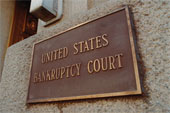
Bankruptcy Court: Destination for issuers in default
Credit or default risk: the risk that the issuer will default on the payments of the bond, which reduces the amount and value of “dollars in” relative to price paid, lowering the earned yield on the bond. Credit risk is frequently measured as the credit spread over like Treasuries, which are assumed to have zero credit risk. Credit risk includes downgrade risk, where a credit rating agency lowers the rating on an issuer as their ability to repay the debt is brought into question.
Call risk: the risk that a callable bond will be called by the issuer. Since a bond is typically called only when it’s in the best interest of the issuer, the call feature is systematically harmful to the bondholder. Prepayment risk reverses these risks: prepayment is good for the bondholder, and bad for the issuer.
Exchange rate risk (that the value of the repaid currency will be lower), inflation risk (that the value of the repaid dollar will be lower), and event risk (natural disasters, corporate restructurings, regulatory changes, sovereign or political changes) round out the list of broad types of risks that drive bond yields.
Next time: why the types and level of risks are so difficult to measure and predict.
When lending is motivated by politics, losses are not far behind.
Years ago, in the summer of 1980, I worked as an intern in the Federal Home Loan Bank Board at the Department of Agriculture. I was a senior in college majoring in business and had been accepted to the University of Chicago doctoral program. I didn’t want to take the internship because I wanted to take more courses over the summer to help prepare me for the rigors of grad school, but my college advisor had openly worried that I was far too serious for a young person. He strongly encouraged me to accept the internship and take a break from academics before I immersed myself in graduate school, and buried myself once again in all things economics!
The U.S. Department of Agriculture was a major lender
I agreed, but only after I had arranged to take 6 credits of independent study in D.C. I chose to examine the Negative Income Tax program, one of the largest social experiments in U.S. history. More on that at another time. Today, I want to talk about what I learned from being an employee of the U.S. federal government.
The first thing I learned was that the “problem” with government work is not the people; well, not all the people. There was one man who spent his entire day going back and forth to feed quarters to the parking meter rather than pay for public transportation or do his work. He represented the worst in government employees. Most all of the others I met were hard-working and honest people, trying to do a good job and make a difference.
President George H. W. Bush
No, I learned that the real problem was the way the “work” was done in government. I worked for the Federal Home Loan Bank Board (FHLBB) that summer, which was one of the largest lenders in the world. The FHLBB was responsible for small business, rural, agricultural, and economic development lending. My job was to review loan applications from community groups, fairs, farmers’ markets, and various municipal organizations to make sure that they were complete.
We did not analyze the applicants for creditworthiness. Instead, if the application was correct and complete, and satisfied the application process, it was approved. The FHLBB, which was publicly trashed by the first President Bush as being largely responsible for the savings and loan crisis, was abolished and replaced by the Office of Thrift Supervision (OTS) under the Department of the Treasury in 1989.
Little did I know back in 1980 that I was witnessing, from the inside, a government lending process that would lead to the most significant financial crisis since the Great Depression. Looking back, the outcome was perfectly predictable: when politics replaces profits as the motivation of the lender, it should be no surprise that losses result.
Which international, taxpayer-funded organisation has an unelected crony of the British Prime Minister in a high-level post (though not the highest) who earns more than the President of the United States and double the salary of Hillary Clinton?
Clue!
Yes, you’re right. It is the European Union. This is an organisation of member states that in principle is supposed to be
Baroness Ashton
about creating a free, democratic and open market in Europe. It has turned into a proto-state (in the eyes of the Brusselocrats) which – therefore – has to have a “Foreign Minister”, in this case Baroness Ashton.
This is a person with very little knowledge of international affairs sent by Gordon Brown to Brussels because he couldn’t afford to lose Peter Mandelson or David Milliband. This is a person never elected to any public post, yet who receives a vast salary and benefits package higher than that of ANY of the Presidents and/or Prime Ministers of ANY of the member states of the EU.
As “The Daily Mail” points out, in addition to this very large salary the Foreign Minister also enjoys an extraordinary raft of other benefits:
“Her basic pay of £250,000 is double that of her U.S. counterpart, Hillary Clinton (who’s on £124,000). And on top of that, Lady Ashton is entitled to a raft of benefits including a £38,000 yearly accommodation allowance, £10,000 annual entertainment budget, two chauffeurs, plus thousands of pounds more in sundry allowances and – if she survives – a pension of £64,000 pa (three times the average salary in Britain) plus a “golden handshake” of over £450,000.”
All this goes hand-in-hand with billions spent on the new EU “diplomatic service”.
But hang on a minute! The EU is NOT A STATE!
The EU has no army! Baroness Ashton as “Foreign Minister” can decide on practically nothing that the key heads of government do not agree to. So what is going on here? Is all this vast waste of public money in a time of financial crisis either A) the bloated pretention of Brusselcrats who have a delusional idea of their own importance or B) another brick in the wall which one day WILL be a United States of Europe.
One can see how the thinking goes: “We’ll set up a “Foreign Ministry” so big and powerful that one day they will just have to agree to creating a single state to justify it. And of course the more it costs, the more important it obviously is and therefore the more powerful we ourselves will be. And naturally, the more jobs there will be for us to go to on the Brussels merry-go-round.
Of course, it is both A AND B. And how can they afford these humungous salaries? Well, because they can get away with it. In theory they are accountable, but in reality? How many people even know who their European MP is? Once you get onto the Euro Gravy Train it disappears out of sight. Nothing the voter says or does seems to stop the bloated upward creep of salaries, allowances and pretentions.
How ANY Brusselocrat can justify such a ludicrous salary for an unelected and essentially unimportant “minister” is a mystery. The main justification seems to be “self-interest”. The EU is NOT A STATE. States have Foreign Ministers.
It is dishonest and amounts to theft of public funds. But that is not the WORST of it. The saddest thing is that it damages the morale of those who – like me – used to believe in a Europe united but not “statefied”. I want a free and open market. I do NOT want a United States of Europe. But this is where they want to lead us, and – like a black hole – each year sees a tiny creep in that direction, or in the above-mentioned case, a BIG creep. I also do not want a venal, money-grabbing, bureaucratic elite in Brussels which makes 80% and rising of British law.
Once again, one wonders if delusional pretentions will bring the whole edifice crashing down and the baby go out with the bathwater …







 Learning from Dogs