Coming up to two weeks and thanks to Tom and Gilliwolfe we, too, have shared every step of the way. As usual, taken from here.
Enjoy Day Eleven!
ooOOoo
Day 11: Indiana to Arriate 14k
By Tom and Chica, 30th January, 2020
Written by Tom’s wife.
After her two day camping adventure, we gave Chica a day off and once again Merlin stepped into the breach. Also, Synnove, our lovely neighbour here in Jimera was going along for the day.
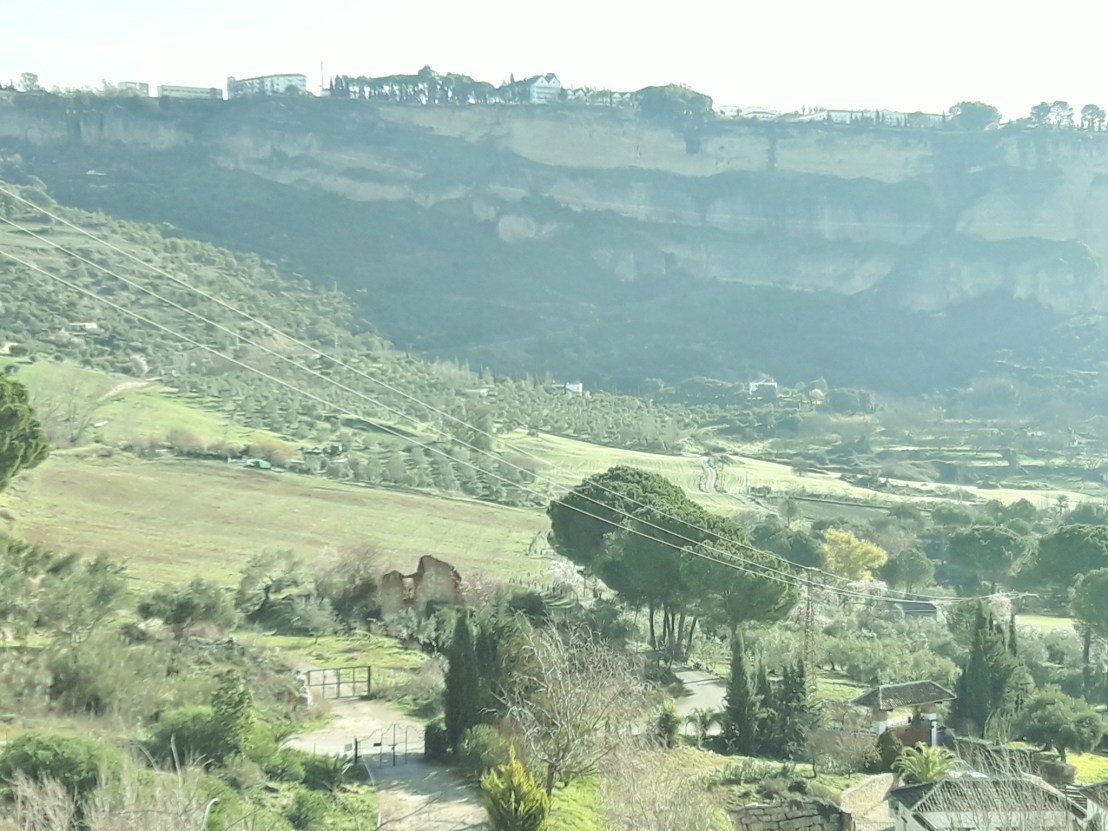
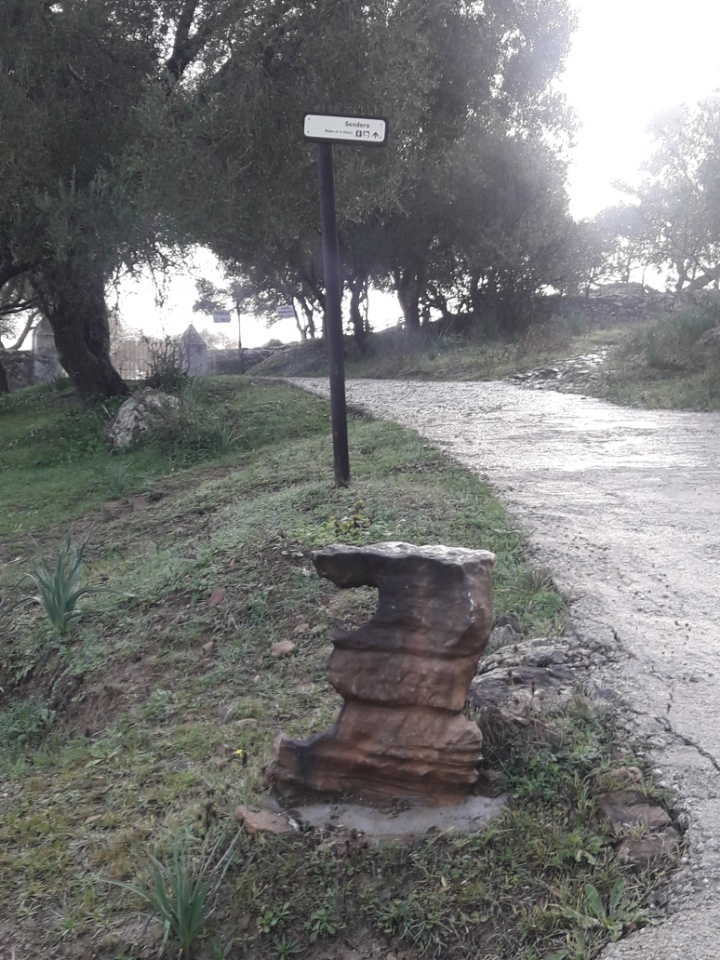
Starting from Indiana and heading towards the city of Ronda, this was gentler country of pasture and olive orchards. The cliffs that surround the city drew nearer and seemed particularly impressive when viewed from below.
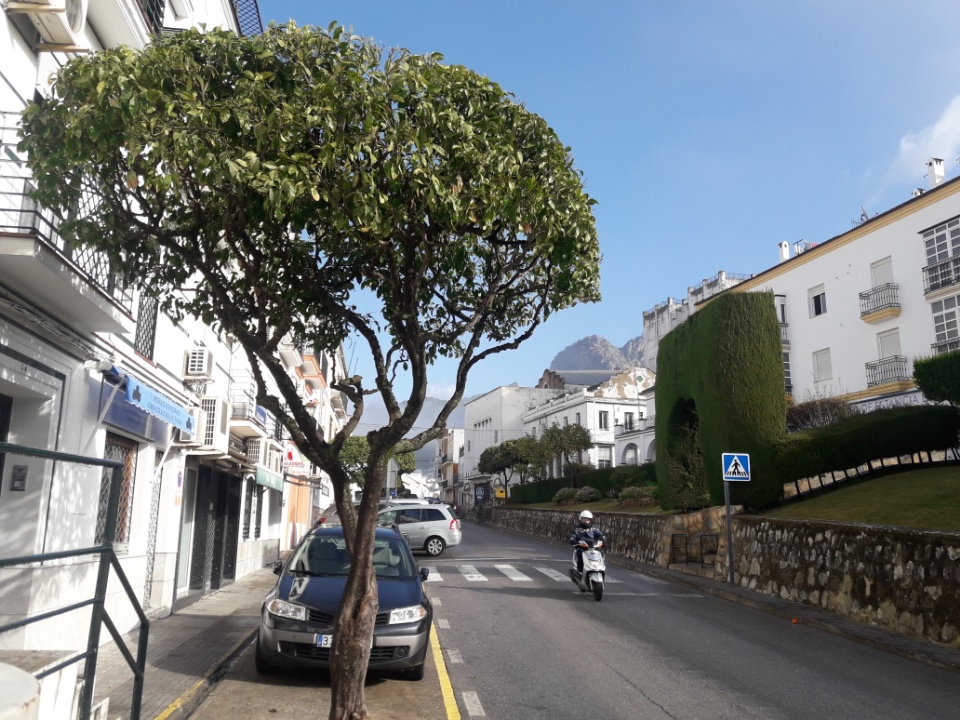
A steep winding path took them up to the top of the cliffs and into the old town. They crossed the famous Puente Nuevo bridge which separates the ‘new’ town built around the 12th century from the ancient Moorish old town. The view is spectacular and you have to jostle for position the get the essential ‘me on the bridge in Ronda’ pic.
After a coffee here, they headed to the top of the town, past the railway station, through the industrial area and back into the countryside. Merlin took all this in his stride and it became clear that he was the better option for the urban parts of the journey. Chica would have found this quite stressful.
After a slight map reading error leading to an unscheduled tour of the surrounding area, they resorted to GPS and found their way back to the route, which headed north-east towards Arriete. The going was easy; tarmacked road though cultivated fields and grazing land. Every property here seems to be guarded by a gang of barking dogs and most have ‘Beware of the Dog’ signs of varying degrees of crudity, but this one was rather good, they thought.
Reaching Arriete, they headed to the station. Technically, dogs are not allowed on trains in Spain but we have managed to take ours a short distance by looking pathetic and saying “No entiendo” (I don’t understand) a lot. This was unnecessary here as the lady in the ticket office was clearly a dog lover and made a huge fuss of Merlin. We’ll see if they’re as lucky tomorrow when Tom and Chica try and get the train back to Arriate. Then I can have a lie-in!
ooOOoo
I love that about putting the dog on the train! 🙂
Just a small but fascinating item on this amazing walk. The walk along GR7.
Susan said in response to yesterday’s post: “It feels as if we are joining them on their adventure.”
I said I truly felt the same way.
This walk of Tom and his dogs is so wonderfully described, and written up by Gilliwolfe, that it does feel that we are sharing the adventure; albeit in spirit only.
The photographs are to die for as well.
Here’s the next chapter.
ooOOoo
Days 9 and 10 Bonacoaz to Indiana via Montejaque 34k
By Tom and Chica, 29th January, 2020.
Written by Tom’s wife.
Another glorious day but it took us quite a while to get organised. Tom was determined not to forget anything vital for the first overnighter so it was 10.30 by the time we left. Making our way back to Benacoaz through Ubrique, where Los Alcornacales gives way to the Sierra de Grazalema, the landscape looked stunning in the sunshine.
Setting off all together, we climbed out of the village between fields dotted with wild iris onto the ridge above where I left the intrepid pair for their two-day trek. Tom had done this walk before a few years ago and had loved it so was keen to revisit.
Grazalema Natural Park was designated a Unesco Biosphere reserve in 1977 and the Sierra de Grazalema was declared the first natural park in Andalucia in 1984. It is one of Spain’s most ecologically outstanding areas. The 51,695 hectare park is famous for its spectacularly rugged limestone landscape of cliffs, gullies, caves and gorges.
The region is well known for being the rainiest place in Spain, with an annual rainfall of 2,200mm, which means that the 1,300 Mediterranean plant species that have been registered here, many of them endemic and some of them unique to the Sierra, flourish.
The town of Grazalema, which nestles between two rugged peaks is well worth a visit, not only because of its spectacular setting, but because there is a bakery selling the best cakes I’ve ever tried. Sadly for Tom, this wasn’t on today’s route.
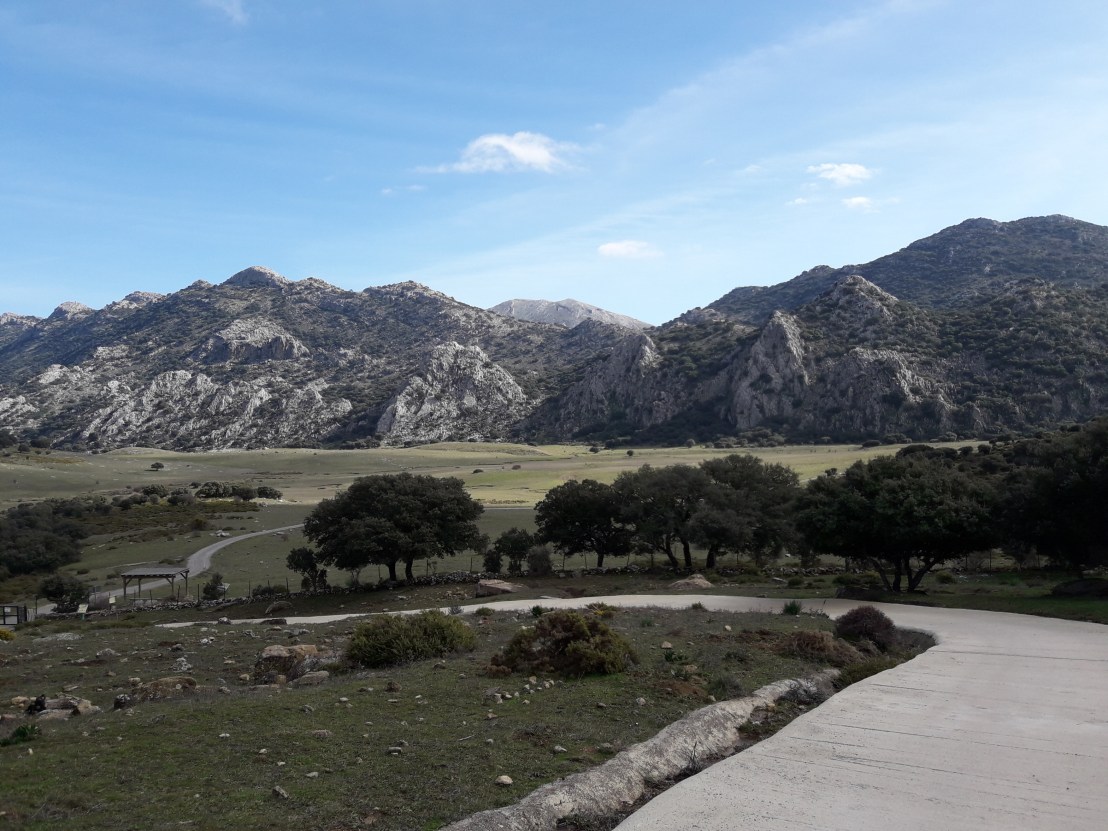
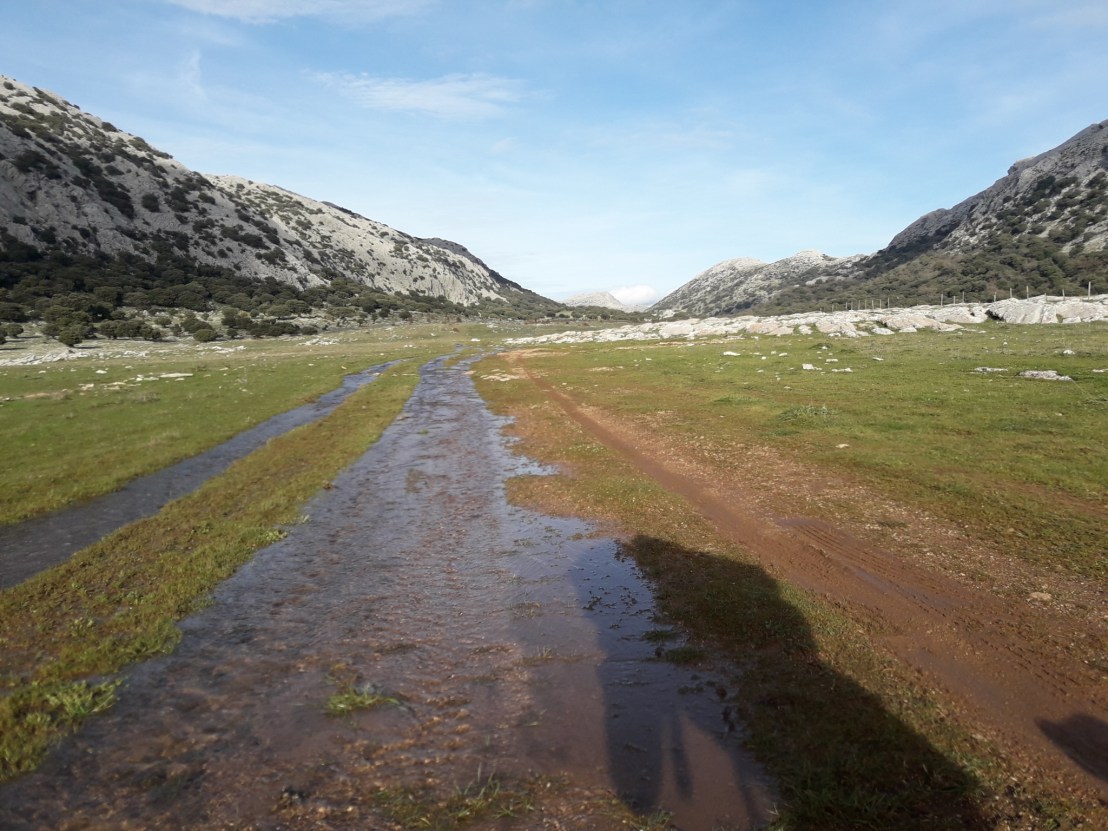
With large birds of prey cruising on the thermals above, the pair headed down the concrete track – easy on the feet – through the forest with views to the Montes Grupo de Libar (Libar mountain range) beyond. The path then climbed up a rocky staircase between peaks before descending through scrubland to the vast flat-bottomed Libar valley. This is really a high plain and the lush grass provides grazing for the local cattle, giving the area the appearance of a prairie in a Western.
They headed west on an undefined path until reaching a large stone hut which offers shelter to hikers in summer but was closed up, presumably not anticipating mad Englishmen and their dogs arriving in mid-winter. However, it provided a good spot to strike camp, with water and a table for cooking and eating. Once she’d been fed and watered, Chica wanted to go to bed. She sat in her night jacket demanding entry to the tent but had to wait while Tom ate his freeze-dried hot pot!
Sleep was a little disturbed as Chica growled at the various grunts and howls in the night. At one point, Tom got up to investigate, concerned that there may be a hoard of marauding wild boar in the vicinity. There wasn’t, but the clear night sky was beautiful so far from civilisation.
In the morning, it was cold as the surrounding peaks screened the sun. Out of the early mist, a herd of small deer, probably roe, crossed the valley and a fox passed close by, alerting a sleepy Chica who opened one eye and then went back to sleep.
By 10, breakfasted and packed, they continued to the end of the high plain. From here the track gradually descended towards the pueblo blanco (white village) of Montejaque. Here they relaxed in a café for a while before continuing over the next range of hills to meet me on the road a few miles outside Ronda. Chica looked very pleased to see us!
“Was it as good as you remembered?” I asked.
“Absolutely, and more.”
“And the camping? Everyone here thought you’d freeze to death”
“Ha – as if! It was great!”
ooOOoo
Wonderful! Just take, for example, that last photograph. What colours, what intense contrast, what a beautiful scene.
That isn’t the only one by far!
I don’t want this walk to end and I’m sure you echo my thoughts.
For my previous post was entitled Day Eight etc. and this one is also called Day Eight.
Ah well, it’s the content that counts!
Which is to say that the next three days are, again, devoted to Tom’s walk along GR7.
ooOOoo
Day 8: Cerra de la Fantasia to Benacoaz 16k
By Tom and Chica, 27th January, 2020.
Written by Tom’s wife.
Authors note: Because we have had such a long weather delay, I have decided to number only the days that Tom and Chica actually walk otherwise it is going to give a very unrealistic idea of how long it takes. That is why today is Day 8 and the last walking day was originally Day 10 (but is now Day 7). I have updated all the blog references to correspond.
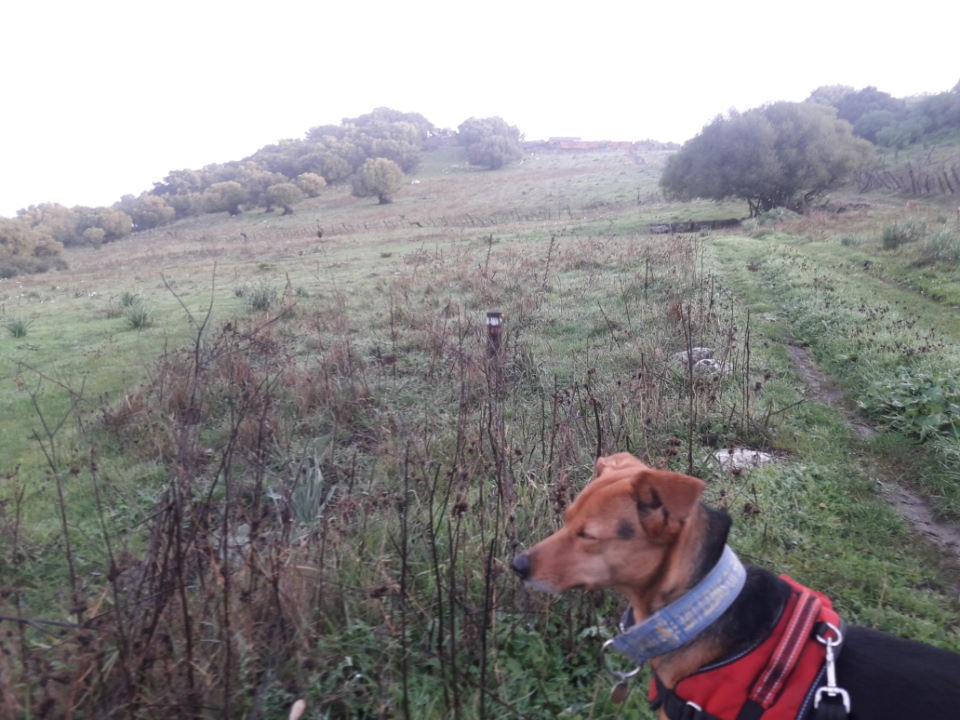
We were up with the lark this morning. Earlier in fact, as it was still dark but we were keen after such a long rain delay. We left the village in fog and went in and out of the sun and mist all the way up to the start point miles into the forest. It was still murky there too and we didn’t hang around as there was a gathering of hunters. Their dogs were in trailers, barking with excitement as this is probably the only time they ever get let out of their cages. But what happens to them after the end of the season next week? I can’t bear to think about it. But that’s why we’re doing this – so onwards and upwards my faithful duo!
After coming out of the forest onto the road, the trees gave way to scrub and the track roughly followed the same route as the road. The mist made it hard to get a feel for the surrounding landscape at first but then as the mist became patchy there were glimpses of the majestic valley and surrounding mountains – a truly spectacular view but impossible to capture on a phone camera.
The track crossed the road and descended to the river – Rio de Ubrique – which heads towards the town of the same name. After a bit of a clamber up a steep, wet, rocky and rather unsavoury path between agricultural outbuildings, we popped out right next to the town sign.
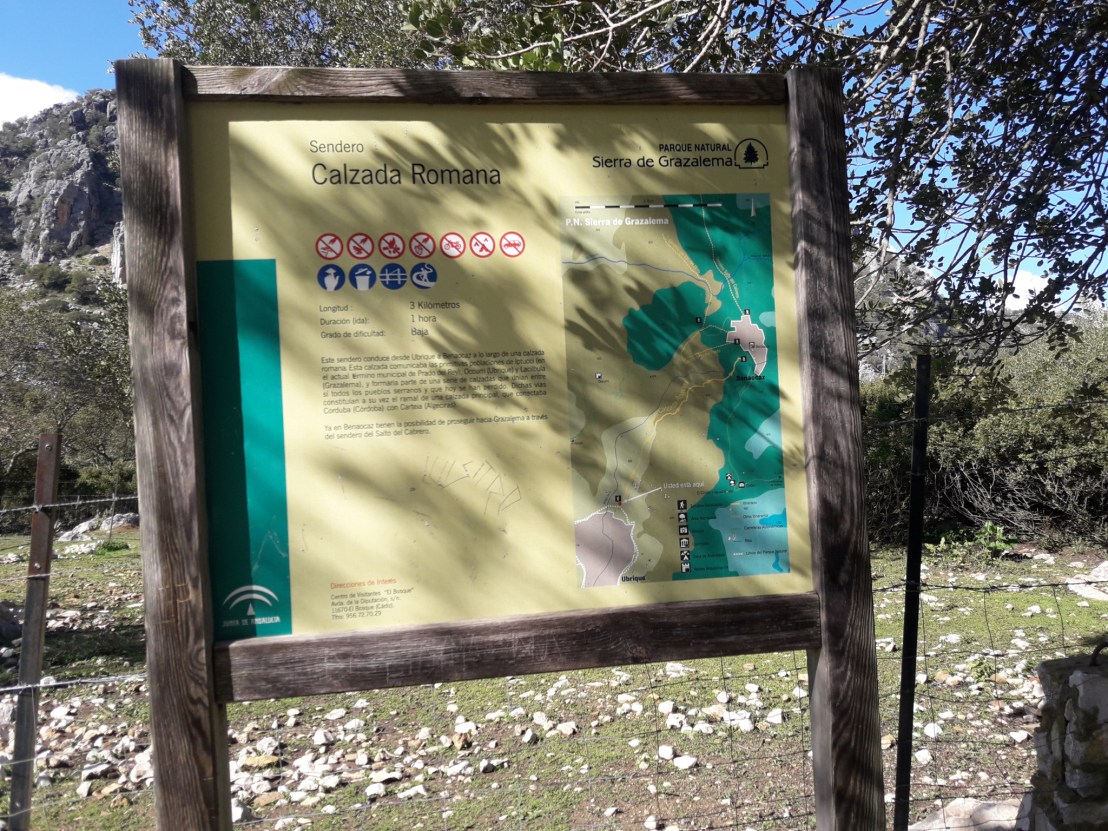
It was a pleasant stroll through the comparatively large and bustling town centre. The sun was now properly out and so Tom stopped in a plaza outside the Town Hall and had a coffee while Chica scrounged titbits by breathing in and contriving to look half starved! Carrying on up through the narrow streets, they arrived at the Convento de Capuchinos where a sign to Benacoaz pointed up a cobbled road: the Calzada Romana (Roman Road).
This proved quite tough on the feet as the cobbles were uneven and scattered but after 3.5k it emerged into the village of Bonacoaz, perched on the side of the mountain with vast panoramic views south – stunning end to today’s beautiful walk.
ooOOoo
I know I have said it before, and undoubtedly I will say it again, but this account of Tom’s walk with his two dogs is astounding! They have been walking for over a week and they are experiencing countryside and more that must be unique to Spain.
I was born towards the tail end of 1944; six months before the end of WWII in Europe.
As such I was in my early twenties when NASA came to the wider attention of millions of people with their effort to put a man on the moon. It was enthralling to look up at the night sky when a moon was present and think that in time there would be a man standing on the moon’s surface.
Now that I am 75 many things have changed. But one of them has not: Staring up at the night sky and getting lost in thought. Luckily we live in a rural location without artificial light anywhere nearby and the night skies are very clear.
All of which takes me back to my days of sailing. From 1986 until 1991 I lived on a deep-water ketch, a Tradewind 33, based in Larnaca, in Cyprus. Each Spring, I would solo across to the Turkish coast, or the Greek coast, and meet up with friends, or my son and daughter, and go coastal cruising. Then in the last year I sailed for England. I well recall seeing the night sky all around me with the stars practically down the watery horizon.
But more of that some other day. Now back to the moon.
All of which is to republish this post and I do hope you will be able to read it fully.
ooOOoo
NASA video reconstructs the harrowing lunar journey of Apollo 13
NASA’s reconstruction of the moon’s far side is based off images received by its Lunar Reconnaissance Orbiter spacecraft. (Photo: NASA/Snapshot from video/YouTube)
On April 15, 1970, NASA astronauts Jim Lovell, Jack Swigert and Fred Haise aboard Apollo 13 set a Guinness World Record for the highest absolute altitude attained by a crewed spacecraft at a distance of 248,655 miles from Earth. Nearly 50 years later, that unplanned record still stands as part of a mission beset by technical glitches and saved by engineering heroism.
“We didn’t slow down, unlike the others, when we got to the moon because we needed its gravity to get back, so we hold the altitude record,” Lowell told the Financial Times in 2011. “I never even thought about it. Records are only made to be broken.”
Gliding by the moon’s far side at an altitude of only 158 miles, the crew of Apollo 13 were, at the time, one of only a handful of humans to ever gaze upon this strange and relatively-unknown terrain of our closest neighbor. Because the moon is tidally locked, a phenomenon in which an orbiting body takes just as long to rotate around its own axis as it does to revolve around its partner, only one side ever faces the Earth.
Using imagery collected by its Lunar Reconnaissance Orbiter spacecraft, NASA has recreated views observed by Apollo 13 during the crew’s harrowing 25-minute journey around the moon’s far side.
“This video showcases visualizations in 4K resolution of many of those lunar surface views, starting with earthset and sunrise, and concluding with the time Apollo 13 reestablished radio contact with Mission Control,” the agency said in a release. “Also depicted is the path of the free return trajectory around the Moon, and a continuous view of the Moon throughout that path. All views have been sped up for timing purposes — they are not shown in ‘real-time.'”
This video uses data gathered from the Lunar Reconnaissance Orbiter spacecraft to recreate some of the stunning views of the Moon that the Apollo 13 astronauts saw on their perilous journey around the farside in 1970. These visualizations, in 4K resolution, depict many different views of the lunar surface, starting with earthset and sunrise and concluding with the time Apollo 13 reestablished radio contact with Mission Control. Also depicted is the path of the free return trajectory around the Moon, and a continuous view of the Moon throughout that path. All views have been sped up for timing purposes — they are not shown in “real-time.” Credits: Data Visualization by: Ernie Wright (USRA) Video Produced & Edited by: David Ladd (USRA) Music provided by Universal Production Music: “Visions of Grandeur” – Frederick Wiedmann
According to Lowell, despite the astronauts’ extremely close proximity, the moon was not the most awe-inspiring scene outside the spacecraft window.
“The impression I got up there wasn’t what the moon looked like so close up, but what the Earth looked like,” he said.
“The lunar flights give you a correct perception of our existence. You look back at Earth from the moon and you can put your thumb up to the window and hide the Earth behind your thumb. Everything you’ve ever known is behind your thumb, and that blue-and-white ball is orbiting a rather normal star, tucked away on the outer edge of a galaxy. You realize how insignificant we really all are. Everything you’ve ever known — all those arguments and wars — is right behind your thumb.”
ooOOoo
Did you watch the video? It’s amazing and is literally the dark side of the moon!
Apollo 13 was the seventh crewed mission in the Apollo space program and the third meant to land on the Moon. The craft was launched from Kennedy Space Center on April 11, 1970, but the lunar landing was aborted after an oxygen tank in the service module (SM) failed two days into the mission. The crew instead looped around the Moon, and returned safely to Earth on April 17. The mission was commanded by Jim Lovell with Jack Swigert as command module (CM) pilot and Fred Haise as lunar module (LM) pilot. Swigert was a late replacement for Ken Mattingly, who was grounded after exposure to rubella.
Accidental ignition of damaged wire insulation inside the oxygen tank as it was being routinely stirred caused an explosion that vented the tank’s contents. Without oxygen, needed both for breathing and for generating electric power, the SM’s propulsion and life support systems could not operate. The CM’s systems had to be shut down to conserve its remaining resources for reentry, forcing the crew to transfer to the LM as a lifeboat. With the lunar landing canceled, mission controllers worked to bring the crew home alive.
Although the LM was designed to support two men on the lunar surface for two days, Mission Control in Houston improvised new procedures so it could support three men for four days. The crew experienced great hardship caused by limited power, a chilly and wet cabin and a shortage of potable water. There was a critical need to adapt the CM’s cartridges for the carbon dioxide removal system to work in the LM; the crew and mission controllers were successful in improvising a solution. The astronauts’ peril briefly renewed interest in the Apollo program; tens of millions watched the splashdown in the South Pacific Ocean by television.
An investigative review board found fault with preflight testing of the oxygen tank and the fact that Teflon was placed inside it. The board recommended changes, including minimizing the use of potentially combustible items inside the tank; this was done for Apollo 14. The story of Apollo 13 has been dramatized several times, most notably in the 1995 film Apollo 13.
Stick to the major brands and you should be alright!
Following my republication of the article in The Conversation two days ago, I have now come to a conclusion. That is that if one sticks to major brands or supplements made in the USA then one should be perfectly safe.
Margaret of Tasmania made a recommendation to use ConsumerLab.com and it appears a brilliant suggestion.
I read this a few days ago and vowed to republish it in this place. Because I had assumed that supplements were safe to take. This copy of a recent article in The Conversation suggests otherwise.
Read it and then let me know your thoughts.
ooOOoo
Natural supplements can be dangerously contaminated, or not even have the specified ingredients
February 14, 2020 5.23pm EST. Updated February 17, 2020 5.43pm EST
By Professor Michael White, Professor and Head of the Department of Pharmacy Practice, University of Connecticut
Some supplement products contain substances that are harmful. Getty Images / David Malan
More than two-thirds of Americans take dietary supplements. The vast majority of consumers – 84% – are confident the products are safe and effective.
They should not be so trusting.
I’m a professor of pharmacy practice at the University of Connecticut. As described in my new article in the Annals of Pharmacotherapy, consumers take real risks if they use diet supplements not independently verified by reputable outside labs.
What are the risks?
Heavy metals, which are known to cause cancer, dementia and brittle bones, contaminate many diet supplements. One study of 121 products revealed 5% of them surpassed the safe daily consumption limit for arsenic. Two percent had excess lead, cadmium and aluminum; and 1% had too much mercury. In June 2019, the Food and Drug Administration seized 300,000 dietary supplement bottles because their pills contained excessive lead levels.
Bacterial and fungal contamination in dietary supplements is not uncommon. In one assessment, researchers found bacteria in all 138 products they investigated. Toxic fungi were also in many of the supplements, and counts for numerous products exceeded the acceptable limits set by the United States Pharmacopeia. Fungal contamination of diet supplements has been linked to serious liver, intestinal and appendix damage.
From 2017-18, dozens were hospitalized with salmonella poisoning after ingesting kratom, a highly addictive natural opioid. Thirty-seven of the kratom products studied were contaminated.
There are ways consumers can verify the quality and safety of supplements. Getty Images / Tanya Constantine
Some dietary supplements contain drugs, yet the manufacturers don’t disclose that information to consumers. Frequently, the concealed drugs are experimental and, in some cases, removed from the market because they’re dangerous. Hundreds of weight-loss, sexual-dysfunction and muscle-building products are adulterated with inferior or harmful substances.
Sometimes, the herb you think you’re buying contains little to no active ingredient. Occasionally, another herb is substituted.
The consequences for consumers are considerable. When manufacturers replaced the herb Stephania tetrandra with the herb Aristolochia fangchi in 2000, more than 100 patients developed severe kidney damage; 18 more got kidney or bladder cancer. Although the herb is now banned by the U.S., a 2014 investigation found Aristolochia fangchi in 20% of the Chinese herbal products sold on the internet.
In an assessment of CBD products, only 12.5% of vaporization liquids, 25% of tinctures and 45% of oils contained the promised amount of CBD. In most cases they held far less. A few CBD products had enough THC to put the user in legal jeopardy of marijuana possession.
Embarrassed by a New York Attorney General’s Office investigation suggesting widespread and fraudulent under-dosing of active ingredients in dietary supplements, CVS pharmacies analyzed 1,400 products that it previously sold in its stores. Seven percent, or about 100 products, failed, resulting in updates to the supplement facts panel or removal of the product from shelves.
It can be difficult for the FDA to adequately oversee supplements. Associated Press / Andrew Harnik
What should consumers do?
The Dietary Supplement Health and Education Act of 1994 allows manufacturers to sell dietary supplements without providing proof of their quality to the FDA. Instead, it’s up to the FDA to prove a product is unsafe and take it off the market. That’s an incredibly tall order, and woefully inadequate. But it’s unlikely to change.
In the meantime, I recommend that consumers should not purchase supplements without verification from one of three highly regarded independent laboratories: the aforementioned United States Pharmacopeia, NSF International and ConsumerLabs.com. The United States Pharmacopeia is an organization that sets reference and quality standards for prescription medication and food in the U.S.; the NSF International is an independent group that assesses safety and risk for food, water and consumer products; and ConsumerLabs.com is a company started to verify product quality for consumers that are paying members. These laboratories conduct an initial analysis and then perform periodic unannounced assessments of the products; those with the appropriate amount of active ingredient, and without contamination or adulteration, can put the United States Pharmacopeia, NSF and ConsumerLabs.com seals on their bottles. CVS announced that all products sold at its stores going forward will need to provide the company proof of quality. Other major retailers should follow suit.
Some manufacturers conduct quality testing and post certificates of analysis on their websites. But the autonomy of the laboratory, and its standards, are often not known. Sometimes, labs may select an inappropriate testing method, intentionally or unintentionally. Sometimes they perform the test incorrectly, or simply make up results.
Because the FDA can’t fully protect you from quality issues in dietary supplements – at least not right now – you must protect yourself. Even if a celebrity or “health guru” recommends a product, that doesn’t mean it’s high-quality. Before you put any supplement into your body, demand proof.
I was about to close it there and then I saw another report, in the same vein, come up on the Harvard Health Blog. Now I can’t republish it in full but essentially it is a reprint of the above. But here’s a taster:
Harmful effects of supplements can send you to the emergency department
For many people, a healthy lifestyle means more than eating a good diet and getting enough exercise — vitamins, supplements, and complementary nutritional products are also part of the plan. But though there is much publicity about their potential benefits, there is less awareness of their possible harmful effects.
In fact, using these products can land you in the emergency department.
A study published today in The New England Journal of Medicine found that adverse effects of supplements were responsible for an average of about 23,000 emergency department (ED) visits per year. That’s a lot for something that is supposed to be good for you.
Now we too take a fair handful of supplements.
I’ve stopped all of them while I do more research.
I have long been a subscriber to The Conversation. They seem to be politically neutral as well as giving permission for their essays to be republished elsewhere.
This particular essay chimed with me because for some time, one or two years sort of time-span, the number of people agreeing with the statement, “It’s a strange world“, has measurably grown. At first I thought it was a question of politics, both sides of The Atlantic, but I have recently come to the opinion that it is deeper than that.
This encapsulates the idea perfectly.
ooOOoo
How CEOs, experts and philosophers see the world’s biggest risks differently
We live in a world threatened by numerous existential risks that no country or organization can resolve alone, such as climate change, extreme weather and the coronavirus.
But in order to adequately address them, we need agreement on which are priorities – and which aren’t.
As it happens, the policymakers and business leaders who largely determine which risks become global priorities spent a week in January mingling in the mountainous resort of Davos for an annual meeting of the world’s elite.
I participated in a global risk assessment survey that informed those at the Davos summit on what they should be paying the most attention to. The results, drawn from experts in a broad range of disciplines including business, happen to be very different from what company CEOs specifically see as the biggest threats they face.
As a philosopher, I found the differences curious. They highlight two contrasting ways of seeing the world – with significant consequences for our ability to address societal risks.
Wildfires in Australia have destroyed more than 3,000 homes and razed more than 10.6 million hectares since September. AP Photo/Noah Berger
Two perspectives on the biggest risks
The World Economic Forum’s Global Risk Report consolidates the perceptions of about 800 experts in business, government and civil society to rank “the world’s most pressing challenges” for the coming year by likelihood and impact.
In 2020, extreme weather, a failure to act on climate change and natural disasters topped the list of risks in terms of likelihood of occurrence. In terms of impact, the top three were climate action failure, weapons of mass destruction and a loss of biodiversity.
The specific perspective of corporate leaders, however, is captured in another survey that highlights what they perceive as the biggest risks to their own businesses’ growth prospects. Conducted by consultancy PwC since 1998, it also holds sway in Davos. I’ve been involved in that report as well when I used to work for the organization.
In sharp contrast to the World Economic Forum’s risk report, the CEO survey found that the top three risks to business this year are overregulation, trade conflicts and uncertain economic growth.
President Trump’s trade war and other economic concerns tend to be the focus of corporate CEOs. AP Photo/Evan Vucci
Economic or ethical
What explains such a big difference in how these groups see the greatest threats?
I wanted to look at this question more deeply, beyond one year’s assessment, so I did a simple analysis of 14 years of data generated by the two reports. My findings are only inferences from publicly available data, and it should be noted that the two surveys have different methodologies and ask different questions that may shape respondents’ answers.
A key difference I observed is that business leaders tend to think in economic terms first and ethical terms second. That is, businesses, as you’d expect, tend to focus on their short-term economic situation, while civil society and other experts in the Global Risk Report focus on longer-term social and environmental consequences.
For example, year after year, CEOs have named a comparatively stable set of narrow concerns. Overregulation is among the main three threats in all but one of the years – and is frequently at the top of the list. Availability of talent, government fiscal concerns and the economy were also frequently mentioned over the past 14 years.
In contrast, the Global Risk Report tends to reflect a greater evolution in the types of risks the world faces, with concerns about the environment and existential threats growing increasingly prominent over the past five years, while economic and geopolitical risks have faded after dominating in the late 2000s.
A philosophical perspective
Risk surveys are useful tools for understanding what matters to CEOs and civil society. Philosophy is useful for considering why their priorities differ, and whose are likelier to be right.
Fundamentally, risks are about interests. Businesses want a minimum of regulations so they can make more money today. Experts representing constituencies beyond just business place a greater emphasis on the common good, now and in the future.
When interests are in tension, philosophy can help us sort between them. And while I’m sympathetic to CEOs’ desire to run their businesses without regulatory interference, I’m concerned that these short-term economic considerations often impede long-term ethical goals, such as looking after the well-being of the environment.
An uncertain world
Experts agree on at least one thing: The world faces dire risks.
This year’s Global Risk Report, titled, “An Unsettled World,” depicts on its cover a vulnerable earth in the shadow of a gigantic whirlpool.
The cover photograph of the Global CEO Survey, which reported the lowest CEO confidence in economic growth since the Great Recession, shows an incoming tide beneath looming dark clouds, with the words: “Navigating the Rising Tide of Uncertainty.”
Between the covers, however, the reports demonstrate a wide gap between two influential groups that need to be on the same page if we hope to resolve the world’s biggest threats.
Last century, in the same year that World War II drew to a close, Bertrand Russell proclaimed that
Bertrand Russell. Naci Yavuz/Shurterstock.com
the purpose of philosophy was to teach us “how to live without certainty, and yet without being paralyzed by hesitation.”
In the 21st century, philosophy can remind us of our unfortunate tendency to let economic priorities paralyze action on more pressing concerns.
Bertrand Russell was a great philosopher. Well he was that and much more. Wikipedia remind us that he “was a British philosopher, logician, mathematician, historian, writer, essayist, social critic, political activist, and Nobel laureate.”
He died at the age of 97 on the 2nd February, 1970; fifty years ago as of yesterday.
I’ll close with another quote from the great man:
“The whole problem with the world is that fools and fanatics are always so certain of themselves, and wiser people so full of doubts. …”
Researchers in India studied whether 160 stray dogs would react to commands like gesturing toward a bowl. This image, taken in 2012, shows street dogs surrounding an Indian tea vendor in Allahabad. (AP Photo / Rajesh Kumar Singh)
Dogs are famously good at interpreting human signals, whether communicated verbally or through gestures. But much of what we know about our furry friends’ comprehension of social cues focuses on pet dogs, which share close relationships with their owners and are trained to follow commands. Now, a study published in Frontiers in Psychology, suggests that stray dogs can also understand human gestures, indicating that this ability might be innate.
The new research took place on the streets of several regions in India, which is home to some 30 million stray dogs. Coexistence between canines and humans there is not always peaceful; people have been known to attack street dogs, and vice versa. Around 36 percent of the world’s annual rabies deaths occur in India, most of them children who came into contact with infected dogs.
To better manage the country’s street dogs, it’s essential to gain further knowledge of their behavior, Anindita Bhadra, study co-author and animal behaviorist at the Indian Institute of Science Education and Research Kolkata, tells Liz Langley of National Geographic. So she and her colleagues set out to discover whether strays, which have never undergone specific training, are able to understand humans in a similar way to their pet counterparts.
The researchers took to the streets equipped with two bowls; one contained chicken and the other was empty but had been rubbed with raw chicken, transferring the food’s scent. The bowls were covered with pieces of cardboard and handed to an experimenter who did not know which one contained the snack. This researcher would approach a stray dog, place the bowls on the ground and point at one of them, sometimes momentarily, sometimes repeatedly.
In total, the researchers studied 160 adult strays. Around half of them refused to get close to either bowl, perhaps because they had negative interactions with humans in the past, the researchers speculate. But of the dogs that did approach the bowls, approximately 80 percent went to the one to which the experimenter had pointed. Whether the researcher had pointed to the bowl briefly or repeatedly did not seem to matter. This response, according to the study authors, suggests that untrained stray dogs are “capable of following complex pointing cues from humans.”
Dogs share an intertwined evolutionary history with humans, with domesticated pooches emerging at least 10,000 to 15,000 years ago, though some experts have argued for an even earlier date. This close contact has prompted dogs to develop a number of skills that allow them to communicate with people, including interpreting human emotion. Still, Bhadra says, the researchers found it “quite amazing” that stray dogs without a history of close human interaction were able to “follow a gesture as abstract as momentary pointing.”
“This means that they closely observe the human, whom they are meeting for the first time, and they use their understanding of humans to make a decision,” Bhadra adds. “This shows their intelligence and adaptability.”
Because some dogs seemed anxious and were wary of approaching the researchers, it’s not clear how a dog’s personality—and past experiences—might affect its ability to interpret human signals. But this ability does not appear to be entirely dependent on training, the study authors say, which in turn should inform efforts to manage stray dogs.
“They are quite capable of understanding our body language and we need to give them their space,” Bhadra says. “A little empathy and respect for another species can reduce a lot of conflict.”
ooOOoo
Mother Nature News had a second picture in their broadly-similar article. Indeed, I’m going to republish this article as well. For although they are of the same story they offer a slightly different account.
ooOOoo
Even stray dogs understand human cues
A new study shows these feral canines are paying close attention.
Even untrained dogs can follow simple communications. (Photo: Abir Bhattacharya/Shutterstock)
Dogs were likely the first animals that human beings domesticated — scientific guesses vary as to whether that was 10,000 years ago in Europe or 30,000 years ago in Asia (or, as one theory goes, humans tamed grey wolves two separate times). Regardless, they have been our companions for much of human history, and all of modern history. We have evolved together.
And that longstanding connection shows up in feral dogs.
Behavioral biologist Dr. Anindita Bhadra of the Indian Institute of Science Education and Research in Kolkata, India, revealed this by studying stray dogs in several Indian cities. In the experiment, Bhadra and her colleagues would find a solo stray dog and put two covered bowls on the ground nearby. They they’d simply point to one of the bowls; some did this just once, others did it a few times.
The researchers, who published their work in Frontiers in Psychology, recorded the dogs’ reactions. Half the dogs seemed nervous, and didn’t look at or come close to either bowl. But the other half — noted as less anxious dogs by the researchers — approached the bowls. Of those friendlier dogs, about 80% went to the bowl the researcher pointed at. As long as the dogs weren’t too scared of the people, they were easily able to interpret what the pointing meant.
“We thought it was quite amazing that the dogs could follow a gesture as abstract as momentary pointing,” Bhadra said in a news release. “This means that they closely observe the human, whom they are meeting for the first time, and they use their understanding of humans to make a decision. This shows their intelligence and adaptability.”
Wolf puppies surprised researchers with their responses. (Photo: Bildagentur Zoonar GmbH/Shutterstock)
In another study, three out of 13 untrained 8-week-old wolf puppies spontaneously retrieved a ball for a person who threw it, as MNN’s Mary Jo DiLonardo explains. It was a small study, and a low percentage of retrieving puppies, but it was an unexpected result as these weren’t domesticated dogs. “It was so unexpected, and I immediately knew that this meant that if variation in human-directed play behavior exists in wolves, this behavior could have been a potential target for early selective pressures exerted during dog domestication,” Christina Hansen Wheat, a biologist at Stockholm University, said.
Her observations show that playing with people may be a very old trait for wolves, that could reflect how our human ancestors first got to know them. This playful behavior may have sparked humans’ interest in domestication. If a dog could fetch a stick or other thrown object, they could be quite useful to hunting humans.
Of course, their adorable, big puppy-dog eyes and floppy ears (both traits that have become accentuated over time as dogs evolved) are among the reason we are still drawn to dogs today. (It also helps that they’re great listeners.)
But long before that happened, dogs served an important purpose — assisting people in locating and retrieving prey, and serving as eyes and ears for an intruder. Simple tasks like showing they can follow directions or fetch an object may have moved prehistoric dogs from outside the fire circle to within it, which is why understanding these behaviors are so important.
ooOOoo
If we go back into the mists of time then prehistoric wolves (or dogs) learnt to bond with early humans because it served both their interests to so do. Humans became much more adept at hunting and wolves obviously became the benefactors of food!
Now dogs are so well bonded to human gestures that even non-domesticated dogs understand the signals that we humans put out. I say ‘non-domesticated’ but in a real sense all dogs are domesticated. It would be more accurate to say that these are dogs who do not have a home with humans.
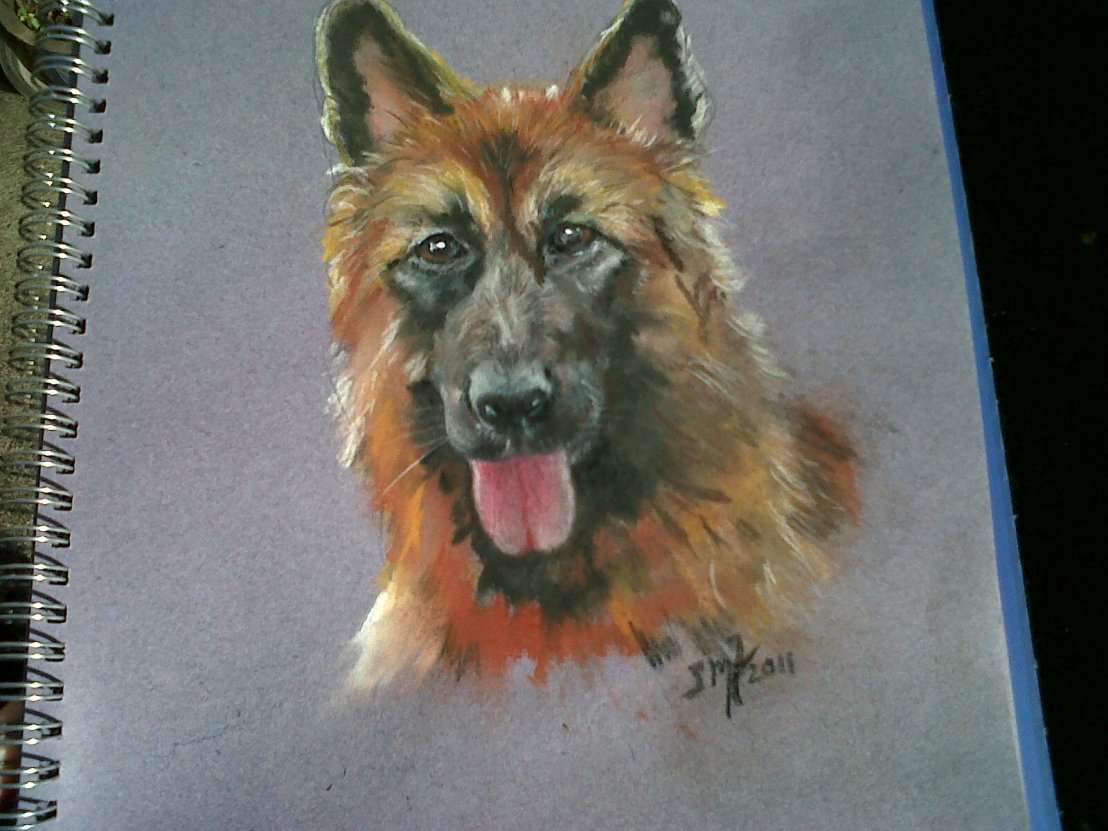
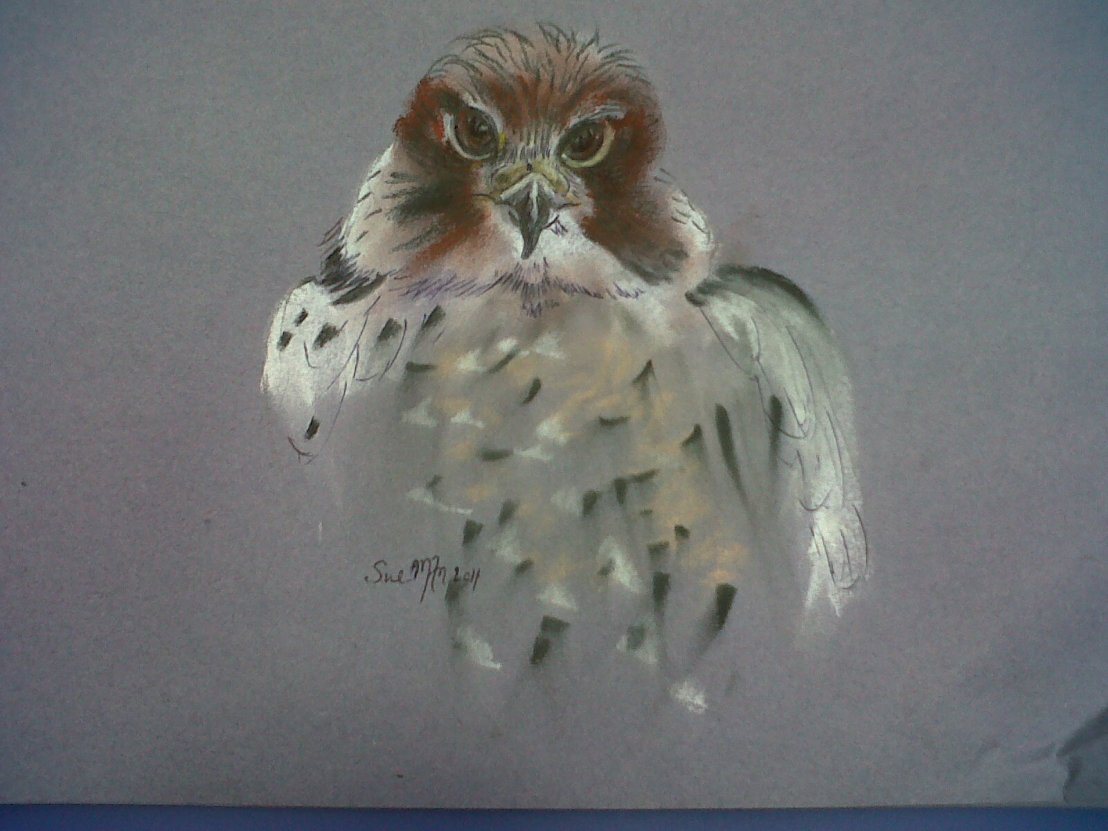
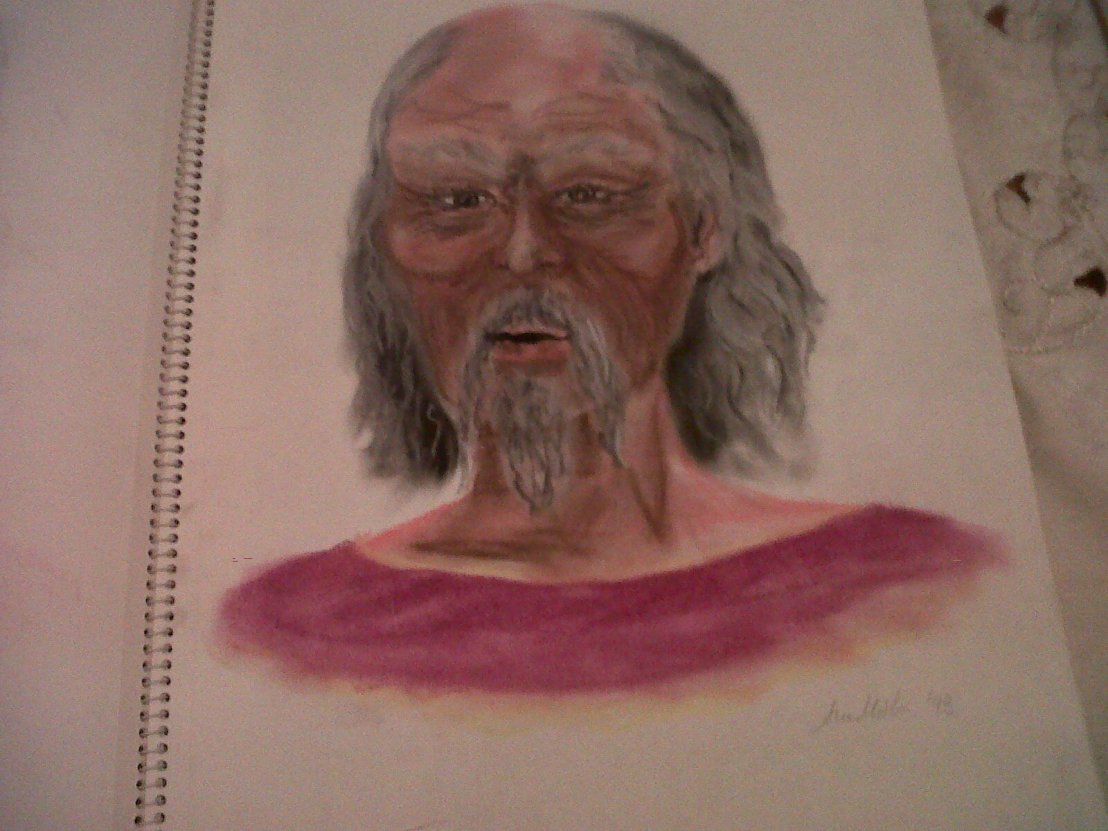
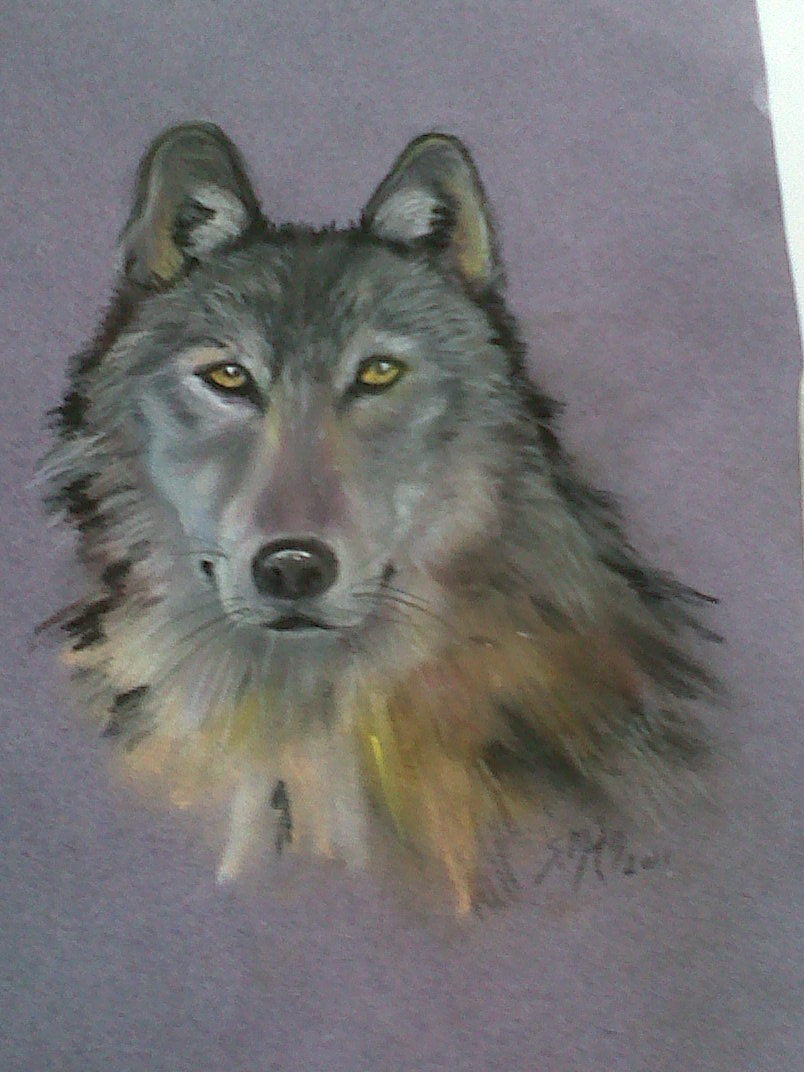
Devoted exclusively to the work of Sue Dreamwalker
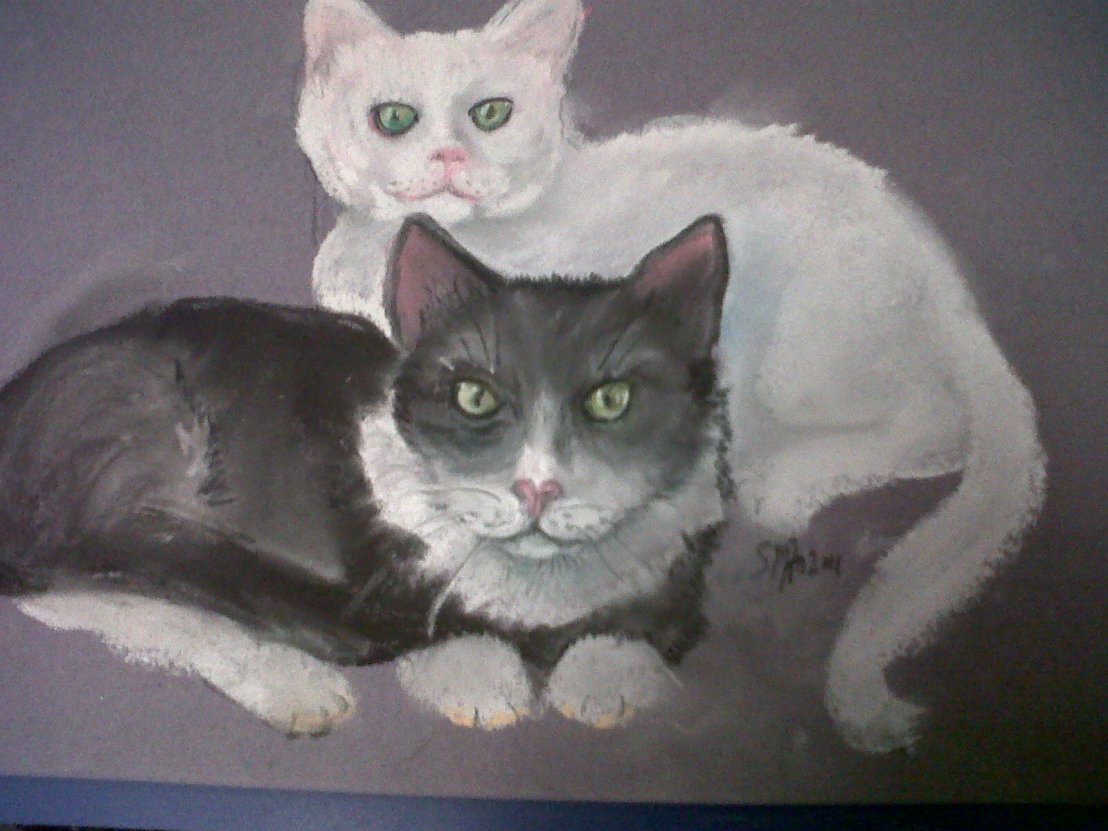
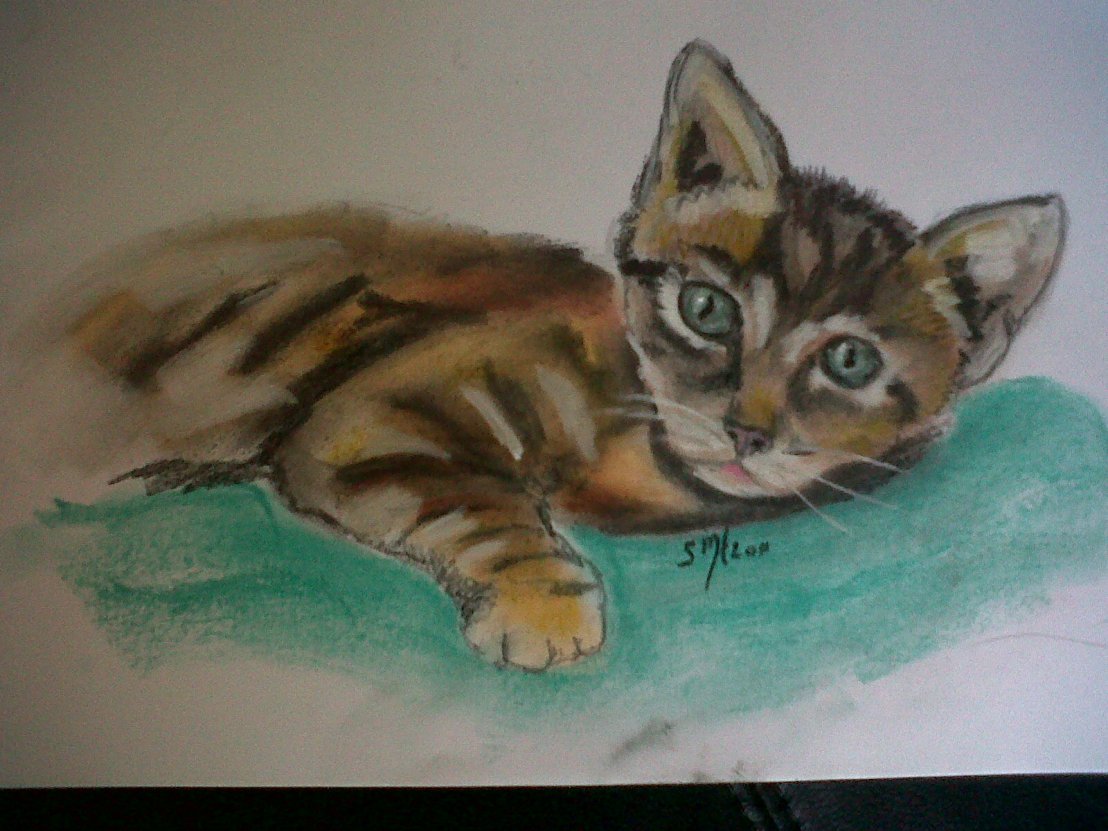
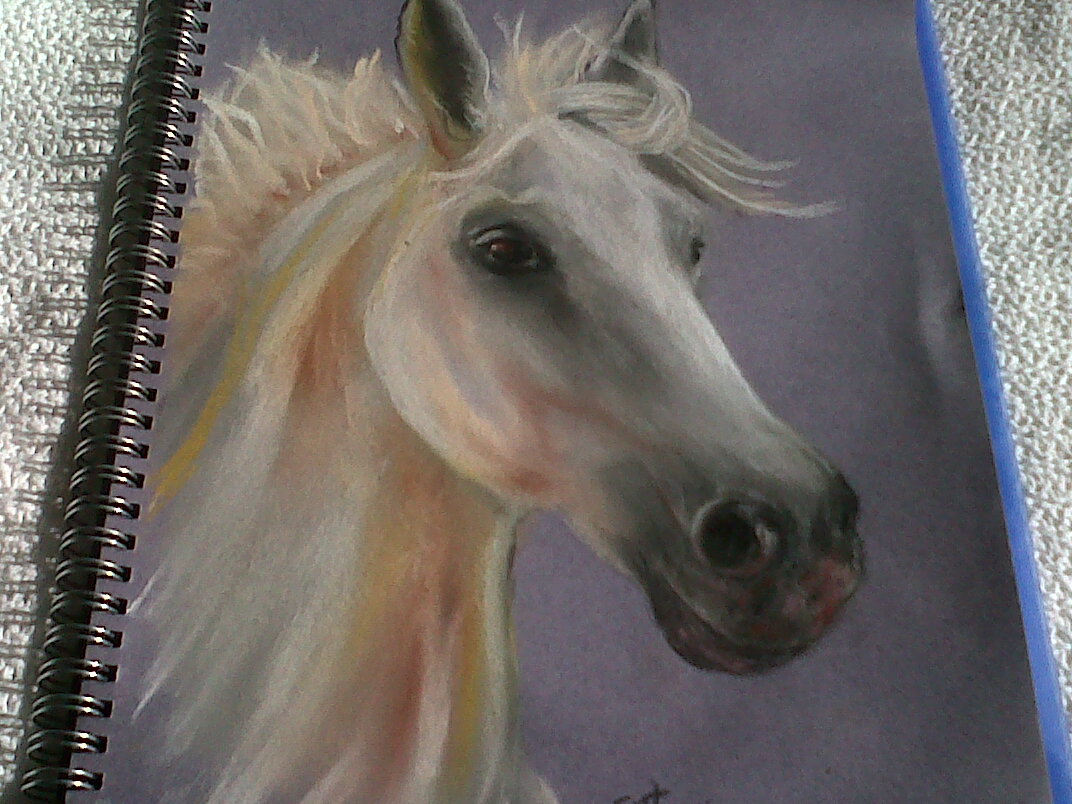
Sue earlier on in the week brought my attention to this page on her blog: Pastel Drawings. Sue said that I could republish them. I am flattered. In fact, there are sixteen of these beautiful drawings and I intend to publish eight of them today and the remaining eight in Picture Parade Three Hundred and Twenty-Two.
oooo
oooo
oooo
oooo
oooo
oooo
oooo
They are so beautiful.
Thank you, Sue, for giving me permission to republish them. Needless to say full copyright is vested in Sue Morton and them being republished in this place does not give authority for them to be republished elsewhere.
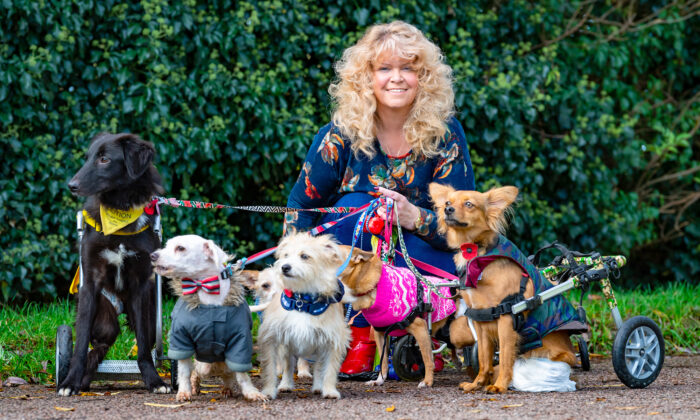
A woman who cares for sick and disabled pooches from around the world has been dubbed a “miracle worker” after getting many of them back on their feet again.
Claire-Louise Nixon, 48, is a dog lover and shares her modest home with 27 canines that no one else wants.
Claire-Louise Nixon, 51 out walking 8 of her 27 dogs that she has helped to walk again. See Cambridge copy SWCAdogs: Dog-lover Claire-Louise Nixon has told how she shares her semi-detached house with her family – and a staggering 27 rescued pooches.Claire-Louise, 48, rescues sick and paralysed dogs from around the world and looks after them at her humble home in Milton Keynes, Bucks.She says looking after the brood of canines is a full-time job and takes her from 6am until midnight.
Many of them are street dogs that have been abused or have lost limbs from mines and explosives in former war zones. But regardless of what conditions the dogs arrive in, Claire is determined to get them walking again through intense physio sessions and walks on wheels.
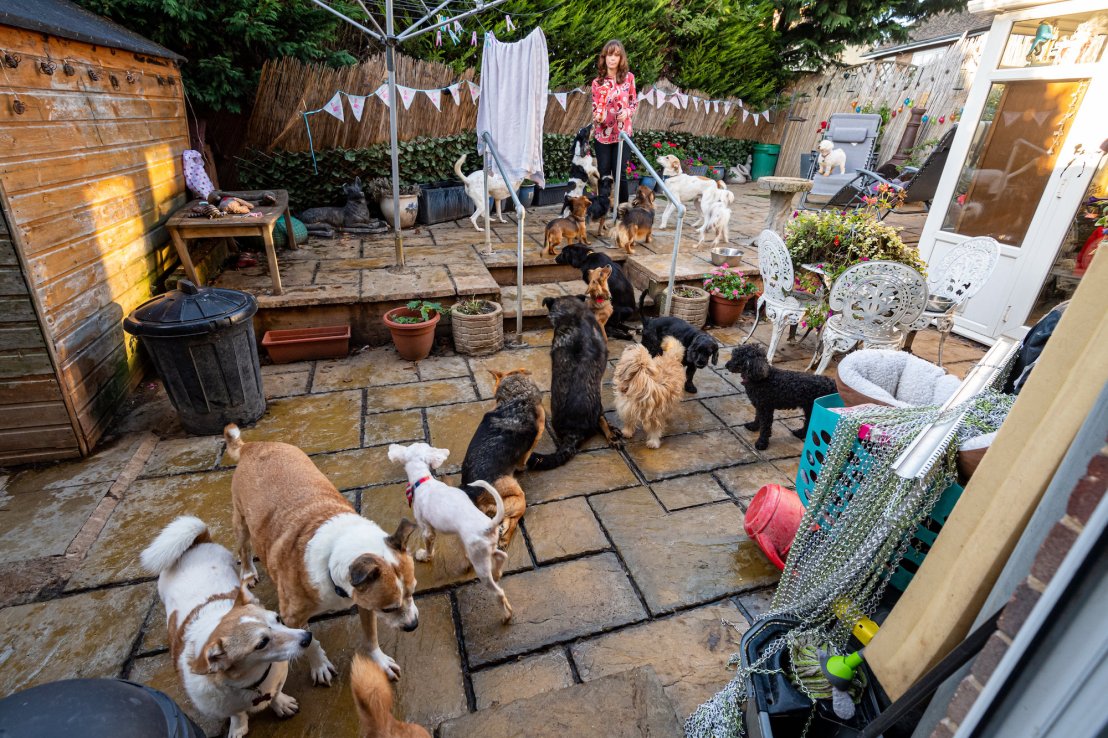
Her motley crew of dogs all live in her four-bedroom, semi-detached house in Milton Keynes with her husband, Gary, 50 and daughter, Rhia-Louise, 22. While Claire’s initial plan is usually to find forever homes for the dogs, quite often, their needs are too complex, with some even having to wear nappies.
The home of Clarie-Lousie Nixon who has 27 dogs living in the house. See Cambridge copy SWCAdogs: Dog-lover Claire-Louise Nixon has told how she shares her semi-detached house with her family – and a staggering 27 rescued pooches.Claire-Louise, 48, rescues sick and paralysed dogs from around the world and looks after them at her humble home in Milton Keynes, Bucks.She says looking after the brood of canines is a full-time job and takes her from 6am until midnight.Some of the 27 dogs that Clarie-Lousie Nixon has living at her home. See Cambridge copy SWCAdogs: Dog-lover Claire-Louise Nixon has told how she shares her semi-detached house with her family – and a staggering 27 rescued pooches.Claire-Louise, 48, rescues sick and paralysed dogs from around the world and looks after them at her humble home in Milton Keynes, Bucks.She says looking after the brood of canines is a full-time job and takes her from 6am until midnight.
She said: “When I get these dogs who are in such a bad way, the vet would say: ‘Claire, you won’t get them walking again.’
“But now they say nothing is impossible! They say we work miracles with them!
“I think all they need is love, kindness and patience. When they walk into my house they see other dogs like them so they don’t feel any different that’s why I think they do so well here.
“If you give them a reason to walk again then they will.”
Rita Ora Collie from Romania who was abandoned on the roadside after beeing born deformed and was sent to Claire-Lousie Nixon as no one wanted her. See Cambridge copy SWCAdogs:Dog-lover Claire-Louise Nixon has told how she shares her semi-detached house with her family – and a staggering 27 rescued pooches.Claire-Louise, 48, rescues sick and paralysed dogs from around the world and looks after them at her humble home in Milton Keynes, Bucks.She says looking after the brood of canines is a full-time job and takes her from 6am until midnight.Forest Gump a small collie crossed pomeranian who was run over on an Army base in Romania. Men on the base found Clarie-Lousie Nixon on facebook and sent Forest Gump to her for treatment. See Cambridge copy SWCAdogs: Dog-lover Claire-Louise Nixon has told how she shares her semi-detached house with her family – and a staggering 27 rescued pooches.Claire-Louise, 48, rescues sick and paralysed dogs from around the world and looks after them at her humble home in Milton Keynes, Bucks.She says looking after the brood of canines is a full-time job and takes her from 6am until midnight.
Claire, who looks after the brood of canines—seven of which are paralyzed—says it’s a full-time job and takes her from 6 a.m. until midnight. Feeding them alone is a mammoth chore involving 15 kilograms (approx. 33 pounds) of biscuits and a complete crate of dog food every single day.
Eight of the dogs have to wear nappies, with little bodysuits to keep them in place, and they all need daily baths to keep them clean and infection-free. There’s a lot of cleaning up involved, and Claire is constantly trying to keep on top of the housework.
Feeding time at The home of Clarie-Lousie Nixon who has 27 dogs living in the house. See Cambridge copy SWCAdogs: Dog-lover Claire-Louise Nixon has told how she shares her semi-detached house with her family – and a staggering 27 rescued pooches.Claire-Louise, 48, rescues sick and paralysed dogs from around the world and looks after them at her humble home in Milton Keynes, Bucks.She says looking after the brood of canines is a full-time job and takes her from 6am until midnight.
Claire’s passion to care for sick dogs all started 12 years ago when a puppy named Thomas Cook, who was only a few days old, was brought to the vets to be put down. The puppy had a hair lip and cleft palate, which prevented him from suckling milk and feeding, but Claire was determined to save him.
Claire painstakingly hand-reared Thomas Cook by feeding him a bottle every few hours, and from there, it escalated to having 27 disabled and sick dogs.
She said: “It went into having paralyzed dogs and dogs that had their legs blown off in Bosnia and dogs that had been shot and still had bullets inside them.”
All of Claire’s dogs are named after celebrities that she feels describe their personalities.
Sir Elton John, who Nixon named because of the song “I’m still standing,” was rescued from Romania after he was run over and left on the road to die. This left him with a broken spine. However, with Claire’s help, he can now go on small walks.
Sir Elton John, a Jack Russell cross who Clarie-Lousie Nixon has helped to walk again. See Cambridge copy SWCAdogs: Dog-lover Claire-Louise Nixon has told how she shares her semi-detached house with her family – and a staggering 27 rescued pooches.Claire-Louise, 48, rescues sick and paralysed dogs from around the world and looks after them at her humble home in Milton Keynes, Bucks.She says looking after the brood of canines is a full-time job and takes her from 6am until midnight.
Sherlock Holmes, who was rightly named for his intelligence and curiosity, was a street dog in Oman who was shot by a security guard.
The other dogs to name a few are Patrick Swayze, who twitches all the time and was previously paralyzed, Freddie Mercury, who wanted to “break free,” and David Bowie, who was “under pressure.”
Claire said: “They’re part of the family. The dogs have a free run of the house.
“They sit where they want and they sleep wherever they happen to fall asleep—often on our beds.
“The dogs arrive with the most horrible past we give them love and [a] wonderful future. They come from all over the world but with me they are home forever.”
Doris Day the pomeranian cross who Claire-Louise Nixon is helping to walk again. See Cambridge copy SWCAdogs: Dog-lover Claire-Louise Nixon has told how she shares her semi-detached house with her family – and a staggering 27 rescued pooches.Claire-Louise, 48, rescues sick and paralysed dogs from around the world and looks after them at her humble home in Milton Keynes, Bucks.She says looking after the brood of canines is a full-time job and takes her from 6am until midnight.Rylan Clark- neal theJack Russell cross Shih tzu who Claire-Louise Nixon helped to walk again. See Cambridge copy SWCAdogs: Dog-lover Claire-Louise Nixon has told how she shares her semi-detached house with her family – and a staggering 27 rescued pooches.Claire-Louise, 48, rescues sick and paralysed dogs from around the world and looks after them at her humble home in Milton Keynes, Bucks.She says looking after the brood of canines is a full-time job and takes her from 6am until midnight.
She further added: “I’m really lucky in that all the neighbors have dogs themselves so we don’t get complaints. And although 27 dogs sounds a lot, they are really quite well behaved.”
Claire raises funds through her organization, Wheels to Paws UK, to provide them with medical treatment, rehabilitation, and the equipment they need to walk again. Vets bills can be a huge drain on resources, but local vets are sympathetic to her cause and often offer a discount.
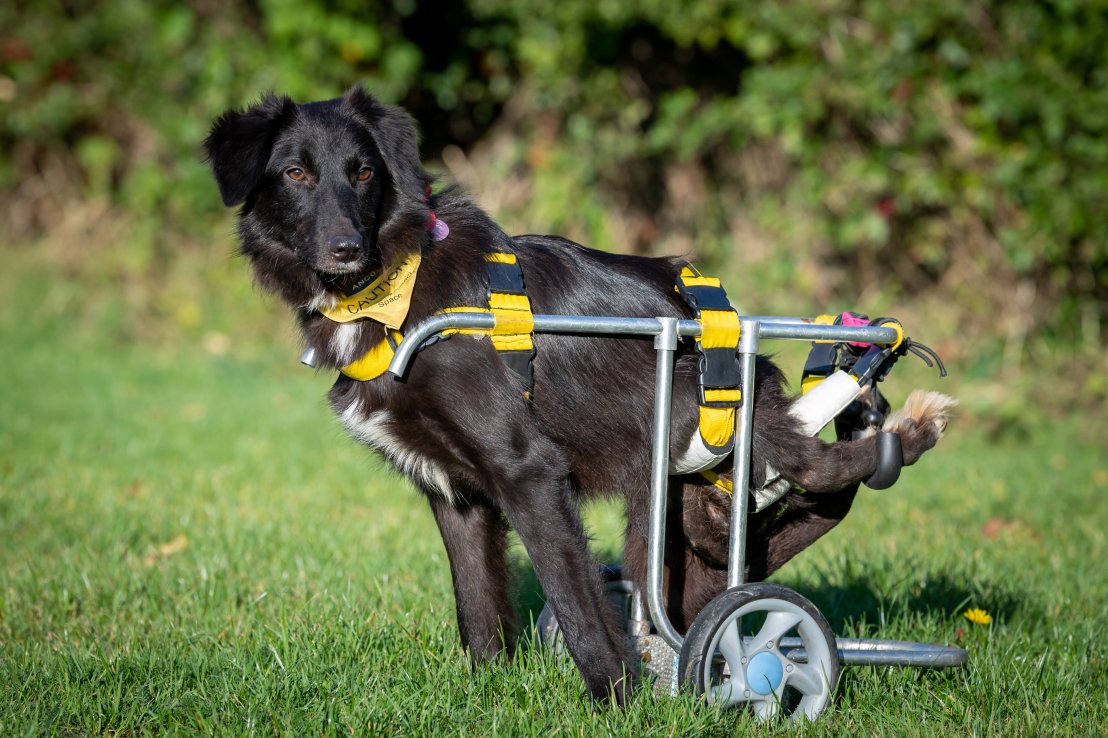
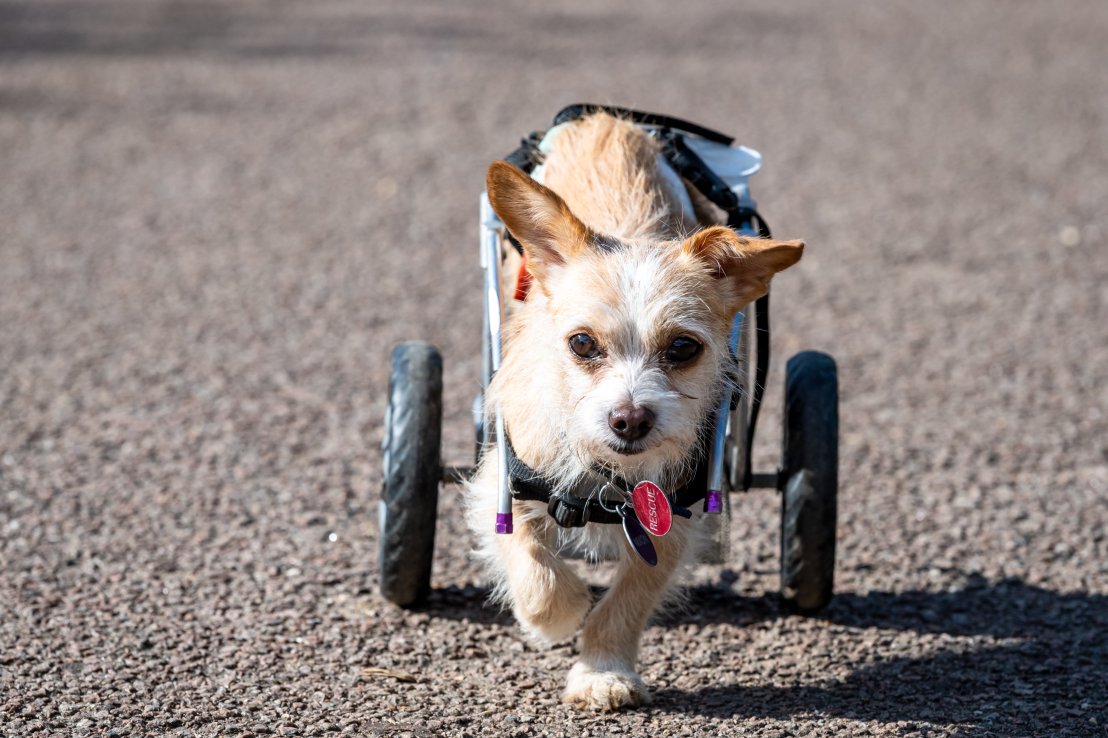
For long walks, the dogs are put in specially made harnesses with wheels to act as false legs so they can enjoy going out for walks. Meanwhile, those that can’t walk are put in buggies.
Other dogs are regularly taken for doggy hydrotherapy, while all those that can walk are taken out for exercise in rotation.
Claire-Louise Nixon, 51 out walking 8 of her 27 dogs that she has helped to walk again. See Cambridge copy SWCAdogs: Dog-lover Claire-Louise Nixon has told how she shares her semi-detached house with her family – and a staggering 27 rescued pooches.Claire-Louise, 48, rescues sick and paralysed dogs from around the world and looks after them at her humble home in Milton Keynes, Bucks.She says looking after the brood of canines is a full-time job and takes her from 6am until midnight.
Claire said: “The dog rescue charities abroad all know of me. So if they get a badly injured or disabled dog in need of specialist care they will pay to transport them to me in the UK. I can never say no.”
She further added: “It is tremendous hard work but I can’t tell you how rewarding it is. The love these dogs give back is amazing. I would not be without any single one of them.”
ooOOoo
There are some people around who do so much more than can be expected and Claire is very much one of those people.
To be impressed with her is only just the half of it.
Thank you Margaret for bringing this wonderful story to all our attentions.
























 Learning from Dogs