Yesterday, I offered the account of physicist Paul Dirac falling in love with Margit Wigner, the sister of a Hungarian physicist. It was my way of opening a window into the mind of one individual, albeit a very clever one, falling in love. However, the conclusion, that won’t surprise anyone, is that the state of love in us humans is more mystery than fact!
Dogs have no such problem in showing their state of love!
A few days ago, in comments to a recent post, the author, John Zande wrote:
We were so heartbroken after losing Arthur so unexpectedly (an astonishing dog we found with a massive tumor in his eye) in Sao Paulo we literally moved cities. I couldn’t stand being in the same neighbourhood. Too much reminded me of him.
Then in response to my reply went on to say:
They are amazing creatures. The dog across the street from us died almost a year ago to the day. Beautiful dog, not so good owners (never paid her any attention, fed her crap… we’d sneakily feed her mince and chicken and treats every night). She had many male visitors (they never neutered her), but one in particular, Hop-along, a crippled dog from a street over considered her his wife/girlfriend. When she died it was only us and Hop-along who grieved. It was amazing. He held vigil outside her house for 2 weeks solid after she died, day and night. He never left. He just stood there.
More than thirty-five years ago, when I was working in Colchester, Essex, England, I met Roger Davis. It was Roger that introduced me to gliding (sailplaning in American speak!) courtesy of Rattlesden Gliding Club. Roger and I have stayed in touch ever since including, of course, keeping in touch with Sheila, Roger’s wife, and much of the family.
Yesterday, in an exchange of emails, Roger sent this:
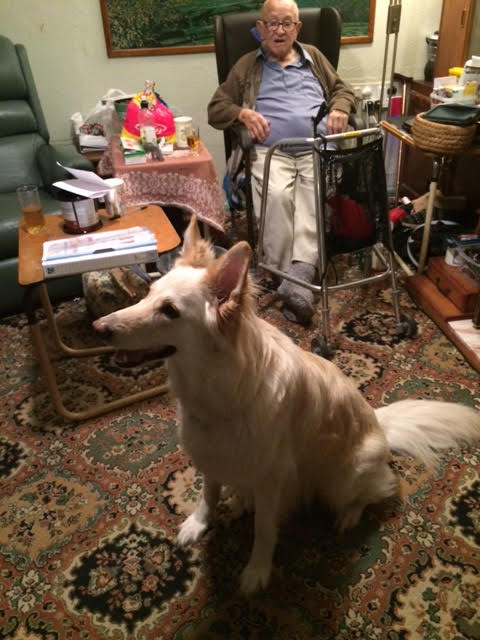
Just back from taking Ralph (now 89) to day surgery at Broomfields.His companion since Freda his wife died two years ago is Sasha, a blonde Alsatian. He always had Alsatians so no surprise when this one appeared.
The love and companionship offered by Sasha to Ralph.
I was moved equally by John’s love for Arthur, Hop-along’s love for his female canine love, and the love of Sasha for Ralph.
Today’s post is inspired by something I read that is very special.
The last time I published a post headed What is love?, back in 2012, I included this:
I would imagine that there are almost as many ideas about the meaning of love as there are people on this planet. Dictionary.com produces this in answer to the search on the word ‘love’.
love
[luhv] noun, verb, loved, lov·ing. noun
a profoundly tender, passionate affection for another person.
a feeling of warm personal attachment or deep affection, as for a parent, child, or friend.
sexual passion or desire.
a person toward whom love is felt; beloved person;sweetheart.
(used in direct address as a term of endearment, affection,or the like): Would you like to see a movie, love?
But, I don’t know about you, those definitions leave something missing for me. Here’s my take on what love is, and it’s only by having so many dogs in my life that I have found this clarity of thought.
“Love is trust, love is pure openness, love is knowing that you offer yourself without any barriers. Think how you dream of giving yourself outwardly in the total surrender of love. Reflect on that surrender that you experience when deeply connecting, nay loving, with your dog.“
One of the very special qualities of our dogs is their natural and instinctive ability to love, unconditionally, both us humans and other animals around them (with some notable exceptions; of course.)
Yet as much as we want to learn unconditional love from our dogs, there is something just too complex about us humans to manage that. Possibly rooted in our inability to really live in the present, another quality our dogs also demonstrate so perfectly.
“What is love” was the most searched phrase on Google in 2012, according to the company. In an attempt to get to the bottom of the question once and for all, the Guardian has gathered writers from the fields of science, psychotherapy, literature, religion and philosophy to give their definition of the much-pondered word.
So I sub-titled today’s post by saying that I was inspired by something.
Here it is, recently published over on The Conversation and republished within their terms. I think you are going to love it!
ooOOoo
The life-changing love of one of the 20th century’s greatest physicists
December 9, 2015
Author: Richard Underman, Chancellor’s Professor of Medicine, Liberal Arts, and Philanthropy, Indiana University
Love is for everyone. mawazeFL/Flickr, CC BY-NC
One of the great short stories of the 20th century is Nobel Laureate Isaac Bashevis Singer’s The Spinoza of Market Street. It tells of an aged scholar who has devoted his life to the study of Spinoza’s great work, Ethics. Protagonist Dr Fischelson has lost his library job and, like his hero, been expelled from his religious community for his heretical views. Looking down from his garret with disdain at the crowded street below him, he devotes his days to solitary scholarship. At night he gazes up through his telescope at the heavens, where he finds verification of his master’s wisdom.
Then one day Dr Fischelson falls ill. A neighbor, an uneducated “old maid,” nurses him back to health. Eventually, though the good doctor never understands exactly how or why, they are married. On the night of the wedding, after the unlikeliest of passionate consummations, the old man gazes up at the stars and murmurs, “Divine Spinoza, forgive me. I have become a fool.” He has learned that there is more to life than the theoretical speculations that have preoccupied him for decades.
The history of modern physics boasts its own version of Fischelson. His name was Paul Dirac. I first encountered Dirac in physics courses, but was moved to revisit his life and legacy through my service on the board of the Kinsey Institute for the Study of Human Sexuality and teaching an undergraduate course on sexuality and love.
A brilliant but very strange man
Born in Bristol, England, in 1902, Dirac became, after Einstein, the second most important theoretical physicist of the 20th century. He studied at Cambridge, where he wrote the first-ever dissertation on quantum mechanics. Shortly thereafter he produced one of physics’ most famous theories, the Dirac equation, which correctly predicted the existence of antimatter. Dirac did more than any other scientist to reconcile Einstein’s general theory of relativity to quantum mechanics. In 1933 he received the Nobel Prize in Physics, the youngest theoretical physicist ever to do so.
At the time Dirac received the Nobel Prize, he was leading a remarkably drab and, to most eyes,
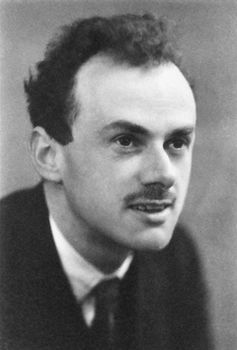
Paul Dirac in 1933. Nobel Foundation via Wikimedia Commons
unappealing existence. As detailed in Graham Farmelo’s wonderful biography, The Strangest Man: The Hidden Life of Paul Dirac, Mystic of the Atom, on which I rely heavily in this article, Dirac was an incredibly taciturn individual. Getting him to utter even a word could prove nearly impossible, leading his mischievous colleagues to introduce a new unit of measure for the rate of human speech, the Dirac, which amounted to one word per hour.
Dirac was the kind of man who would “never utter a word when no word would do.” Farmelo describes him as a human being completely absorbed in his work, with absolutely no interest in other people or their feelings, and utterly devoid of empathy. He attributes this in part to Dirac’s tyrannical upbringing. His father ruthlessly punished him for every error in speech, and the young Dirac adopted the strategy of saying as little as possible.
Dirac was socially awkward and showed no interest in the opposite sex. Some of his colleagues suspected that he might be utterly devoid of such feelings. Once, Farmelo recounts, Dirac found himself on a two-week cruise from California to Japan with the eminent physicist Werner Heisenberg. The gregarious Heisenberg made the most of the trip’s opportunities for fraternization with the opposite sex, dancing with the flapper girls. Dirac found Heisenberg’s conduct perplexing, asking him, “Why do you dance?” Heisenberg replied, “When there are nice girls, it is always a pleasure to dance.” Dirac pondered this for some minutes before responding, “But Heisenberg, how do you know beforehand that the girls are nice?”
Love finds the professor
Then one day, something remarkable entered Dirac’s life. Her name was Margit Wigner, the sister of a Hungarian physicist and recently divorced mother of two. She was visiting her brother at the Institute for Advanced Study in Princeton, New Jersey, where Dirac had just arrived.
Known to friends and family as “Manci,” one day she was dining with her brother when she observed a frail, lost-looking young man walk into the restaurant. “Who is that?” she asked. “Why that is Paul Dirac, one of last year’s Nobel laureates,” replied her brother. To which she replied, “Why don’t you ask him to join us?”
Thus began an acquaintance that eventually transformed Dirac’s life. Writes Farmelo:
His personality could scarcely have contrasted more with hers: to the same extent that he was reticent, measured, objective, and cold, she was talkative, impulsive, subjective, and passionate.”
A self-described “scientific zero,” Manci embodied many things that were missing in Dirac’s life. After their first meeting, the two dined together occasionally, but Dirac, whose office was two doors down from Einstein, remained largely focused on his work.
After Manci returned to Europe, they maintained a lopsided correspondence. Manci wrote letters that ran to multiple pages every few days, to which Dirac responded with a few sentences every few weeks. But Manci was far more attuned than Dirac to a “universally acknowledged truth” best expressed by Jane Austen: “A single man in possession of a good fortune must be in want of a wife.”
She persisted despite stern warnings from Dirac:
I am afraid I cannot write such nice letters to you – perhaps because my feelings are so weak and my life is mainly concerned with facts and not feelings.
When she complained that many of her queries about his daily life and feelings were going unanswered, Dirac drew up a table, placing her questions in the left column, paired with his responses on the right. To her question, “Whom else should I love?” Dirac responded, “You should not expect me to answer this question. You would say I was cruel if I tried.” To her question, “Are there any feelings for me?” Dirac answered only, “Yes, some.”
Realizing that Dirac lacked the insight to see that many of her questions were rhetorical, she informed him that “most of them were not meant to be answered.” Eventually, exasperated by Dirac’s lack of feeling, Manci wrote to him that he should “get a second Nobel Prize in cruelty.” Dirac wrote back:
You should know that I am not in love with you. It would be wrong for me to pretend that I am, as I have never been in love I cannot understand fine feelings.
Yet with time, Dirac’s outlook began to change. After returning from a visit with her in Budapest, Dirac wrote, “I felt very sad leaving you and still feel that I miss you very much. I do not understand why this should be, as I do not usually miss people when I leave them.” The man whose mathematical brilliance had unlocked new truths about the fundamental nature of the universe was, through his relationship with Manci, discovering truths about human life that he had never before recognized.
Soon thereafter, when she returned for a visit, he asked her to marry him, and she accepted immediately. The couple went on two honeymoons little more than month apart. Later he wrote to her:
Manci, my darling, you are very dear to me. You have made a wonderful alteration in my life. You have made me human… I feel that life for me is worth living if I just make you happy and do nothing else.
A Soviet colleague of Dirac corroborated his friend’s self-assessment: “It is fun to see Dirac married, it makes him so much more human.”
In Dirac, a thoroughly theoretical existence acquired a surprisingly welcome practical dimension.
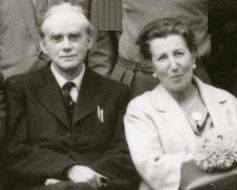
Paul and Manci in 1963. GFHund via Wikimedia Commons, CC BY
A man who had been thoroughly engrossed in the life of the mind discovered the life of the heart. And a human being whose greatest contributions had been guided by the pursuit of mathematical beauty discovered something beautiful in humanity whose existence he had never before suspected.
In short, a brilliant but lonely man found something new and wonderful that had been missing his entire life: love. As my students and I discover in the course on sexuality and love, science can reveal a great deal, but there are some aspects of reality – among them, love – that remain largely outside its ambit.
ooOOoo
Picking up on that last sentence, “there are some aspects of reality – among them, love – that remain largely outside its ambit.” all I can offer is to introduce dogs to the students!
I struggled for ages wondering how to close today’s post. In the end, decided on the following:
Here’s an anti-aging project that we all wish for a successful outcome.
Despite the fact that one of the very important items that we learn from dogs is the certainty of death, there is not a single dog carer who doesn’t want them to live much longer lives.
Today’s post is the republication of a recent science report over on Mother Nature Network concerning a drug, rapamycin, that is hoped may give our wonderful dogs several more healthy years of life. As always, republished within the generous terms of MNN.
We wish the scientists much luck in achieving this outcome, without any deleterious side effects.
ooOOoo
Anti-aging project aims to extend dogs’ life spans
Researchers hope a drug called rapamycin can give dogs several more healthy years of life.
By: Russell McLendon, December 4, 2015,
Although some dogs have lived as long as 29 years, canine life spans are typically closer to half that length. (Photo: Shutterstock)
Living with a dog can help humans in lots of ways, from reducing stress and anxiety to lifting our spirits and making us laugh. Yet despite the abundance of benefits dogs offer, they also come with a notable drawback: Their life spans are much shorter than ours, forcing us to deal with the sadness of their deaths every 15 years or so.
Grieving for our dogs is just part of life, and in the big picture, it’s a small price to pay. But according to researchers at the University of Washington (UW), there may be a way to help our best friends stay with us — and stay healthy — a little longer.
Dog aging varies widely by size and breed, with smaller dogs typically maturing more quickly, yet also living a few years longer on average. It’s also common for mutts to outlive purebred dogs, thanks to the perks of higher genetic diversity. But while almost any dog is considered elderly by age 15, some have been known to nearly double their expected life spans — including Bluey, an Australian cattle dog who famously lived to see his 29th birthday last century.
And now researchers at UW’s Dog Aging Project (DAP) are working to bring similar longevity to canines of all kinds. In addition to performing “the first nationwide, large-scale longitudinal study of aging in pet dogs,” this project involves efforts to improve dogs’ “healthy life span” via therapies that already work in lab settings.
“To be clear, our goal is to extend the period of life in which dogs are healthy, not prolong the already difficult older years,” the project’s website explains. “Imagine what you could do with an additional two to five years with your beloved pet in the prime of his or her life. This is within our reach today.”
If it pans out, this may also aid ongoing research into extending the lives of other animals, including humans. But for now, the therapy is focused on dogs.
Researchers think rapamycin might increase a dog’s healthy life span by up to 5 years. (Photo: Shutterstock)
Namely, they’re testing the FDA-approved drug rapamycin (aka sirolimus) on middle-aged dogs. High doses of rapamycin are already used in humans to fight cancer and prevent organ-transplant rejection, but at low doses, it has also been shown to slow aging and extend life span in several animals with few or no side effects. In mice, for example, the immunosuppressant can lengthen lives by up to 25 percent.
“If rapamycin has a similar effect in dogs — and it’s important to keep in mind we don’t know this yet — then a typical large dog could live 2 to 3 years longer, and a smaller dog might live 4 years longer,” the project’s organizers write. “More important than the extra years, however, is the improvement in overall health during aging that we expect rapamycin to provide.”
Rapamycin trials have already begun on 32 middle-aged golden retrievers, Labrador retrievers and German shepherds. Ranging from 6 to 9 years old, these dogs will spend several months on a low-dose rapamycin regimen in which researchers study age-related metrics like heart function, immune response, physical activity, body weight and cognitive measures. They’ll also follow these 32 dogs throughout the rest of their lives, looking for any significant changes in aging or life span.
And in phase two of the study, a second group of middle-aged dogs will enter a longer-term, low-dose rapamycin regimen “designed to optimize lifespan extension.” Based on mouse studies conducted both at UW and elsewhere, they anticipate the drug “could increase healthy lifespan of middle-aged dogs by 2-5 years or more.”
Rapamycin isn’t a miracle drug, however, and high doses have been linked to side effects like immune suppression and delayed wound healing. But as the DAP website argues, “these are greatly mitigated at the doses used to extend longevity, and both animal and human studies indicate that even mild adverse events are rare.”
Regular exercise and outdoor time are great ways to boost a dog’s quality of life. (Photo: Shutterstock)
While the idea of extending dogs’ lives is exciting, it’s important not to let quantity of life overshadow quality of life. We may never have full control over how long our dogs live, but we can make sure they live well while they’re here.
A good reminder of this comes from Pegasus, a Great Dane rescued from unscrupulous breeders in South Africa when she was 4 weeks old. Suffering from a pigment deficiency often associated with blindness and deafness, Pegasus wasn’t expected to live very long. Filmmaker Dave Meinert adopted her anyway, and decided to film her daily as she grew up. In May 2015, he released a time-lapse movie (see below) of her reaching adulthood that quickly went viral. And as he explains in the video, Pegasus’ prognosis only helped the pair live every day like it was their last.
“I still don’t know how long she is going to live,” Meinert admits. “But right now is pretty great.”
ooOOoo
Watching the video offers the most beautiful, and powerful, reminder of the unconditional love that we can share with our dogs! What a gift they give us!
Wouldn’t we all love a few more years of happy and healthy life for our beloved dogs.
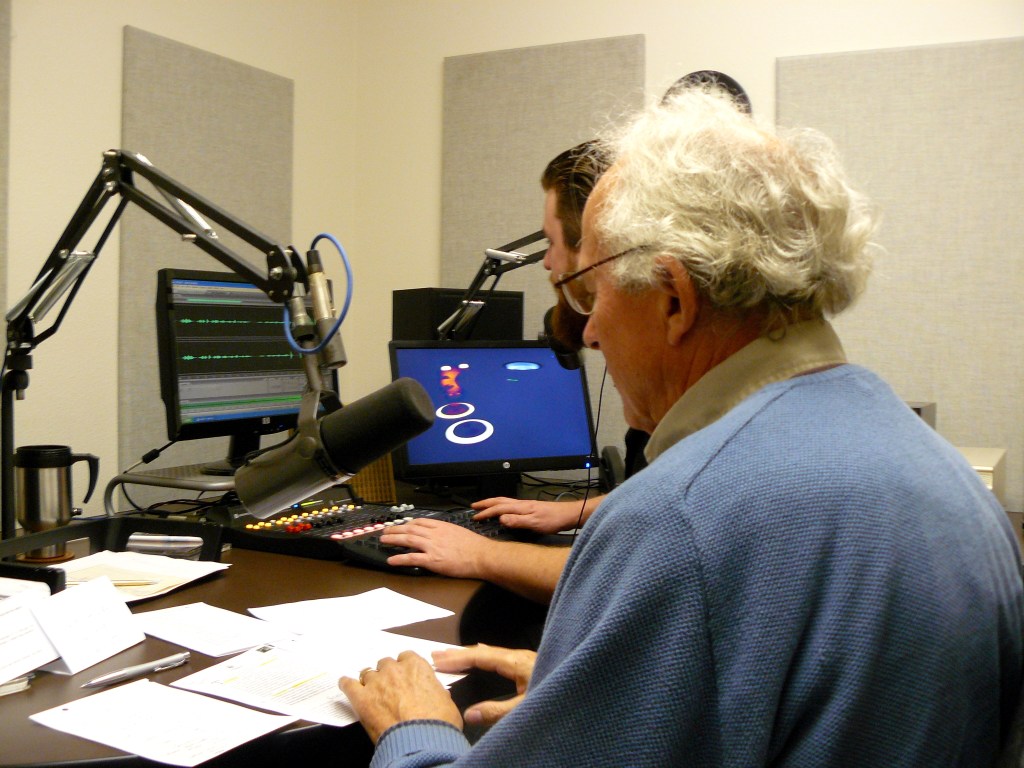
In exactly twenty-four hours from now, you will have the opportunity to listen to Kyle Dunlap of the radio station KAJO interviewing me about my book: Learning from Dogs.
The interview, that was pre-recorded on the 23rd November, is part of KAJO’s community broadcasts where they speak to local authors. As a newbie author, I was delighted and flattered to be asked to participate.
Anyway!
The broadcast is a little after 12:45 Pacific Standard Time on Tuesday, 8th December. If you are not in the USA, you can check the equivalent time easily at The World Clock website.
You will see the On Air button to click just to the right of the KAJO 1270am logo. Here is the “Click to Listen Live” button grabbed from the KAJO website at 3:20pm yesterday.
It will have Kyle Dunlap’s name on it when you “tune in” at 12:45 tomorrow.
If you do listen to the interview do leave a comment below – good or bad! 😉
At first, this may seem like a rather bizarre question.
Before plunging in to today’s post, can I just explain, especially to those who are new to this place, why there has been a preponderance of republished articles from other sources in recent times. (And that’s not to say that these articles aren’t fascinating reads; by the way.)
While my book is now available, I am still just over a week away from a formal launch, both here on Learning from Dogs, and locally in the town of Grants Pass. However, the level of demands upon me in connection with the launch is building rapidly. For example, on Friday a team from the local Daily Courier are coming here in connection with a feature article that they want to write. On Saturday, Jean and I have a stand at a local craft fair. Next Tuesday I have my fingers crossed that there will be a radio broadcast from local KAJO about the book on their local community slot. (More details will be published here once the time and day has been confirmed.)
I’m sure you get the picture!
So with all that out of the way, here’s a wonderful sequel to my recent posts on Stillness and Happiness. It is a fascinating essay from Val Boyco under the heading of W.A.I.T., republished with Val’s kind permission.
I love to work with people on becoming better communicators. The key, of course, is to learn to really listen – becoming engaged listeners and tuning into the other person, rather than letting our own thoughts take us away from the moment and distract us.
But before we even get to this step, there is one vital piece of wisdom to absorb.
When we are talking we are not listening.
So, the question to ask yourself is : Why Am I Talking?…
Have you ever considered why you are talking? It is usually more than sharing valuable information; that’s for sure!
Next time you notice you are talking, consider these questions:
Am I trying to release something that’s bottled up?
Am I trying to persuade someone to my point of view?
Is it a habit?
Am I trying to work through something out loud?
Do I have an unmet personal need that I am trying to get met? For example: a need for validation, attention, love, approval, recognition or to be right.
Do I find talking entertaining?
Am I uncomfortable with silence?
Do I believe that people really need all the information I am providing, that I am being helpful or teaching something?
To explore more, you may want to write W.A.I.T.? on a post-it note before your next meeting and notice what comes up for you.
When we become aware of our talking, we are in a better position to choose whether we want to continue or not. Enjoy tuning in to yourself this week.. and this video.
One of the classic lessons we can learn from our dearest dogs.
In yesterday’s post, towards the end of the essay by Russell McLendon was the following paragraph:
All this may seem like an esoteric quest for neuroscientists, but it’s about more than just academic curiosity. By knowing which parts of the human brain generate our sensation of happiness, we might develop more accurate ways to test methods of becoming happier, like travel, exercise or meditation.
I have written before on the subject of stillness and how important it is for us humans. That was a post back in August where I shared an interesting talk by Pico Iyer The Art of Stillness.
Anyway, back to yesterday’s post and the essay that was linked to from the word “meditation”. An essay that I am going to republish in full, within the terms of Mother Nature Network.
ooOOoo
Russell Simmons says meditation is the key to greater happiness
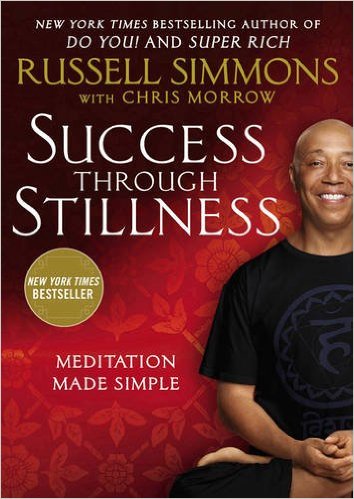
Business magnate shares the benefits and practice of daily meditation in his new book ‘Success Through Stillness.’
For those wondering if the daily practice of meditation really works, Russell Simmons has both a succinct response and a more in-depth answer totaling more than 220 pages.
“Today my new book ‘Success Through Stillness: Meditation Made Simple’ comes out,” he recently wrote in a blog post. “As the title suggests, it is a very straight-forward, easy-to-digest guide on how to get past whatever misconceptions or apprehensions you might have about meditation and learn how to use this simple yet incredibly effective tool.
“As I move around talking about the book, one question I seem to get asked over and over again is, ‘Does meditaion really work?’ And my answer is always an unequivocal ‘YES!'”
The 56-year-old vegan and healthy living guru, who has built a net worth estimated at more than $340 million, says he was skeptical at first that 40 minutes of daily meditation could do anything to stem the anxiety he was feeling.
“The idea of being still and operating from a calm place is one that I never would’ve thought would’ve suited my lifestyle or my goals or the way that I pursue life, ’cause I pursue everything with a vigor,” he told Yahoo! News.
Simmons explains that he practices mantra-based meditation, in which one repeats a word or sound for a period of 20 minutes. Simmons repeats the word “Rum” over and over, a process he says has led him to greater happiness.
“I come out of meditation, and sometimes I just start giggling, I feel so happy, right in the mornings,” he shares.
According to a study released earlier this year, while feelings of happiness may not necessarily occur for all practitioners of meditation, reductions in anxiety, depression and possibly pain are possible.
“Meditation helps young people and adults to get control of the noise,” says Simmons. “The noise is the cause of almost all sickness and sadness. If we can calm the noise, our relationship with the world benefits tremendously.”
ooOOoo
If you would like to buy a copy of Simmons’ book, in Kindle, Hardback or Paperback formats, then do click on the link below.
Chapter 8 of my book is entitled: Behaviours and Relationships. It opens thus:
“It is all to do with relationships.”
I heard this many years before the idea of writing this book came to me. Heard it from J, who was referred to in the previous chapter. J was speaking of what makes for happy people in all walks of life. It’s one of those remarks that initially comes over as such an obvious statement, akin to water being wet or the night being dark, that it is easy to miss the incredible depth of meaning behind those seven words.
Humans are fascinating. Every aspect of who we are can be seen in our relationships. How we relate to people around us, whether it be a thirty-second exchange with a stranger or a long natter with friends whom we have known for decades, including our partners and family relations. The core relationship, of course, the relationship that drives so many of our behaviours is the relationship that we have with ourself. That being rooted in our relationship experiences with the adults around us when we were young people.
When one looks at the performance of successful companies one often sees, nay one always sees, people being valued. The directors and managers of those companies understand that if people are valued then a myriad of benefits flow from that approach to relationships. Moving out of the workplace, the relationships that people have are always stronger and happier if those individual persons know they are valued. Moving beyond people, our dogs, and many other animals, are always stronger and happier if they feel valued. It’s the difference between empathy and sympathy.
Recently over on Mother Nature Network there was an essay presented by Russell McLendon who is science editor for MNN. It is about happiness.
ooOOoo
Happiness is all in your head
Scientists say they’ve found where happiness happens in the brain. What does that mean?
By: Russell McLendon, November 24, 2015
Understanding how our brains generate happiness could help make it less elusive, researchers say. (Photo: Andrew Vargas/Flickr)
Everyone wants to be happy. Yet despite all our efforts in pursuit of this prized emotion, it can be a surprisingly nebulous goal. What is “happiness,” exactly?
That question has puzzled philosophers for thousands of years, and it’s still tricky for anyone to tackle. But recent advances in neuroscience have finally begun to shed light on it, and now a new study claims to have found an answer. Being told happiness is “all in your head” may seem both obvious and dismissive, but in this case the specifics are also empowering. The more we know about how (and where) happiness happens, the less helpless we’ll be to summon it when we need it.
By comparing magnetic resonance imaging (MRI) with questionnaires about emotional states, researchers from Kyoto University in Japan say they’ve traced the experience of happiness to a specific part of the human brain. Overall happiness, they conclude, occurs when positive emotions combine with a sense of life satisfaction in the precuneus, a region of the medial parietal lobe that’s linked to important brain tasks like episodic memory, self-reflection and consciousness.
Psychologists already distinguish between broad life satisfaction and “subjective well-being,” since happiness often seems to fade during bad moods without necessarily plunging us into deeper existential despair. But by revealing the neural mechanics of how these feelings combine to create overall happiness, the authors of the new study hope to make it easier to objectively quantify this mysterious and elusive emotion.
“Over history, many eminent scholars like Aristotle have contemplated what happiness is,” lead author Wataru Sato says in a press release. “I’m very happy that we now know more about what it means to be happy.”
Scientists used MRI brain scans to identify happiness in a brain region known as the precuneus. (Photo: Kyoto University)
To pinpoint the location of happiness, Sato and his colleagues first used MRI to scan the brains of their study subjects. Those participants then took a survey, which asked about their general sense of happiness, the intensity of their emotions and the degree of their overall life satisfaction.
After analyzing the data, the researchers discovered that those who scored higher on the happiness survey also had more gray matter mass in the precuneus. That means this brain region is larger in people who feel happiness more intensely, feel sadness less intensely and who are better able to find meaning in life.
“To our knowledge, our study is the first to show that the precuneus is associated with subjective happiness,” the researchers write in the journal Scientific Reports.
Complex phenomena like happiness rarely boil down to a single brain region, but other recent research also points to an outsized role for the precuneus. A study published this month links impaired connectivity in the precuneus to depression, for example, and a 2014 study suggests the region is a “distinct hub” in the brain’s default-mode network, which is active during self-reflection and daydreaming.
All this may seem like an esoteric quest for neuroscientists, but it’s about more than just academic curiosity. By knowing which parts of the human brain generate our sensation of happiness, we might develop more accurate ways to test methods of becoming happier, like travel, exercise or meditation.
“Several studies have shown that meditation increases grey matter mass in the precuneus,” Sato says. “This new insight on where happiness happens in the brain will be useful for developing happiness programs based on scientific research.”
ooOOoo
It’s an unscientific opinion from me but I truly believe that humans have a bias towards happiness. And if there’s one animal that we can learn happiness from, it’s the dog!












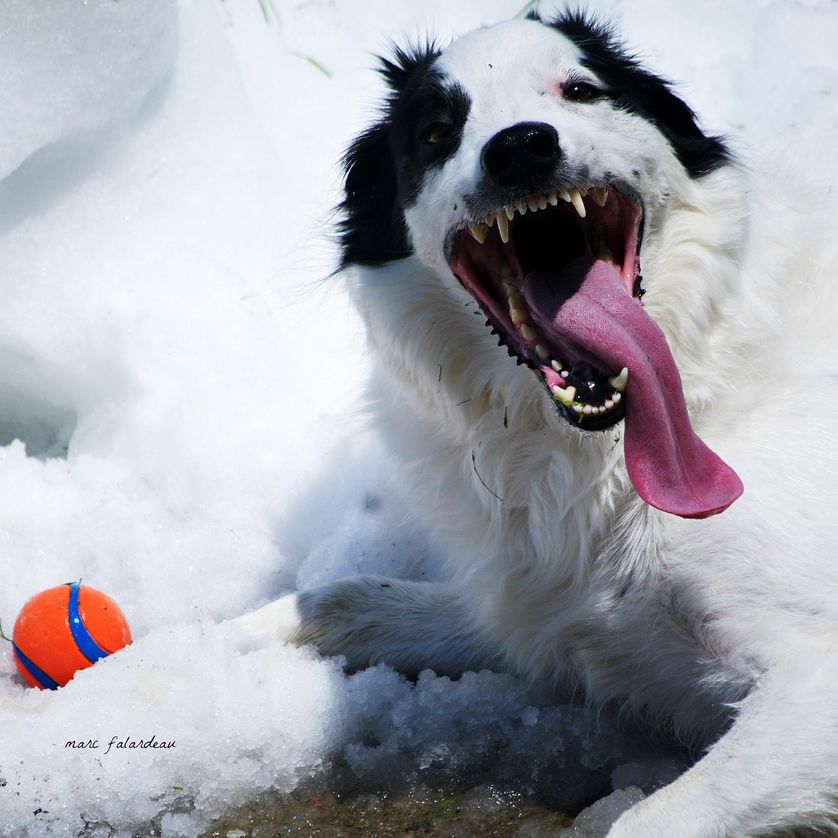





 I truly envy a dog’s ability to be still so easily!


 Learning from Dogs