Category: consciousness

Picture parade sixty-four

Change of plans!

In last week’s picture parade I mentioned that today would be the final set of glorious pictures, courtesy of Su Reeves.

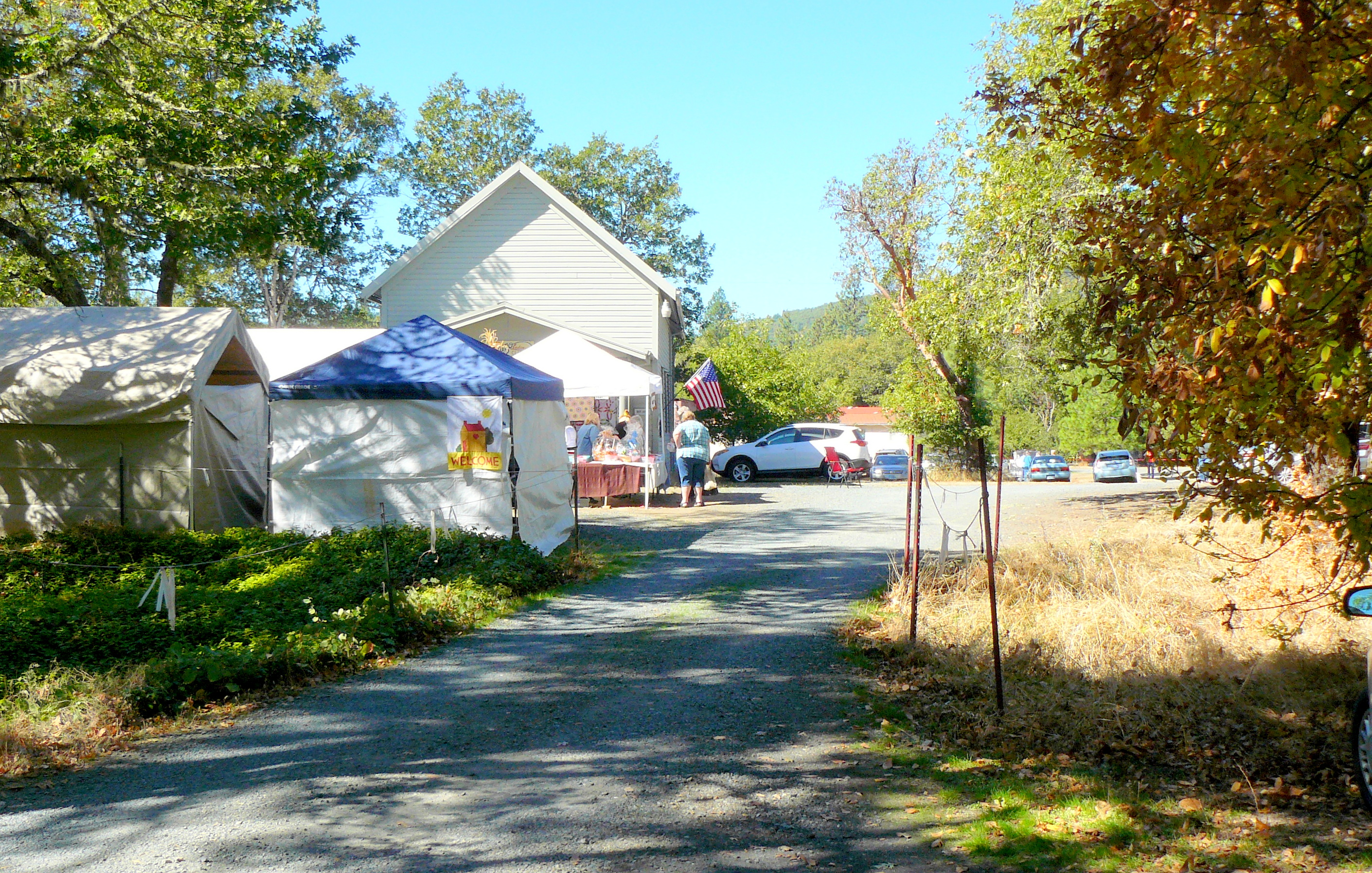
But that was before I realised that Jean and I would be popping in to our local old school house on Friday to enjoy a couple of hours admiring the quilting work on show at this year’s Hugo Ladies Club Quilt Show.

The theme of community has never been far from the pages of this blog and despite the provincial nature of this gathering I wanted to share a selection of photographs with you for today’s picture parade.

P1150151


oooo

The front entrance of what was once the school in Hugo.

oooo

P1150161

oooo

Now that's what I call a school bell!
Now that’s what I call a school bell!

oooo

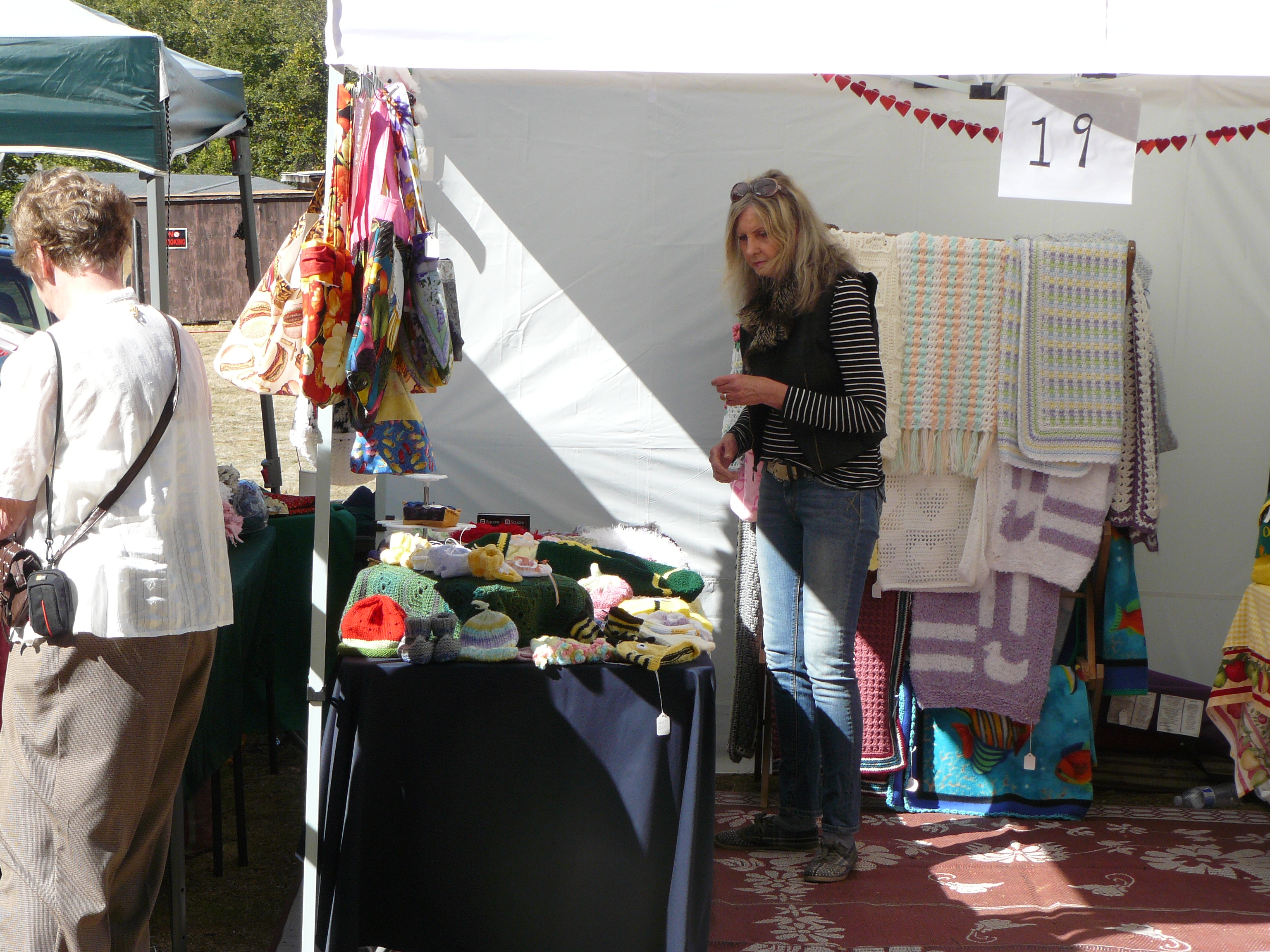
An amazing array and range of items.

oooo

P1150155

oooo

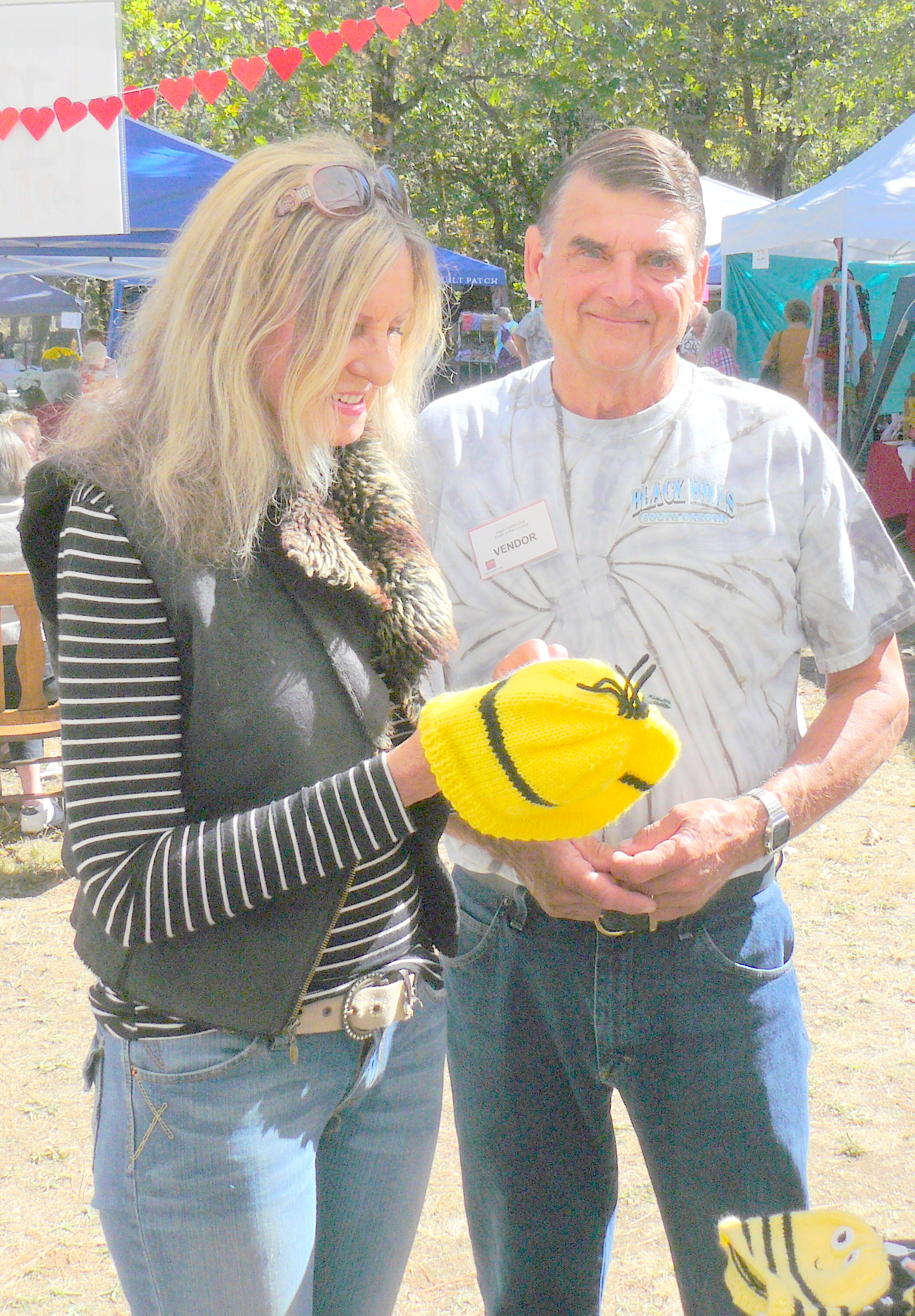
Irresistible to Mrs H.!

oooo

Including a rather fun woollen hat for grandson Morten back in England.

oooo

P1150154

oooo

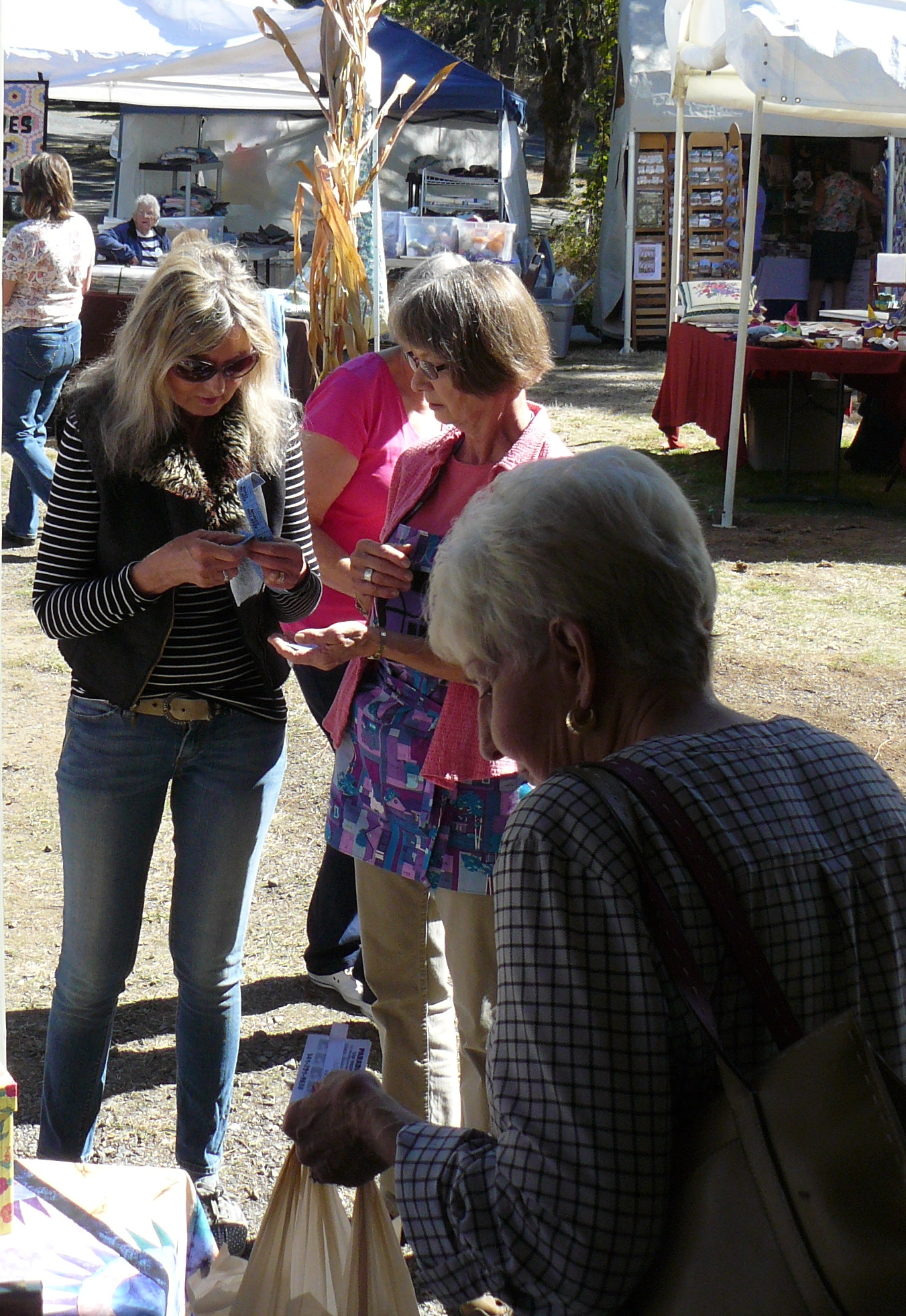
Jean chatting to neighbour Janell; also a keen quilter.
Jean chatting to neighbour Janell who is also a keen quilter; as are so many North American women.

oooo

One of Janell's exhibits at the show.
One of Janell’s exhibits at the show.

oooo

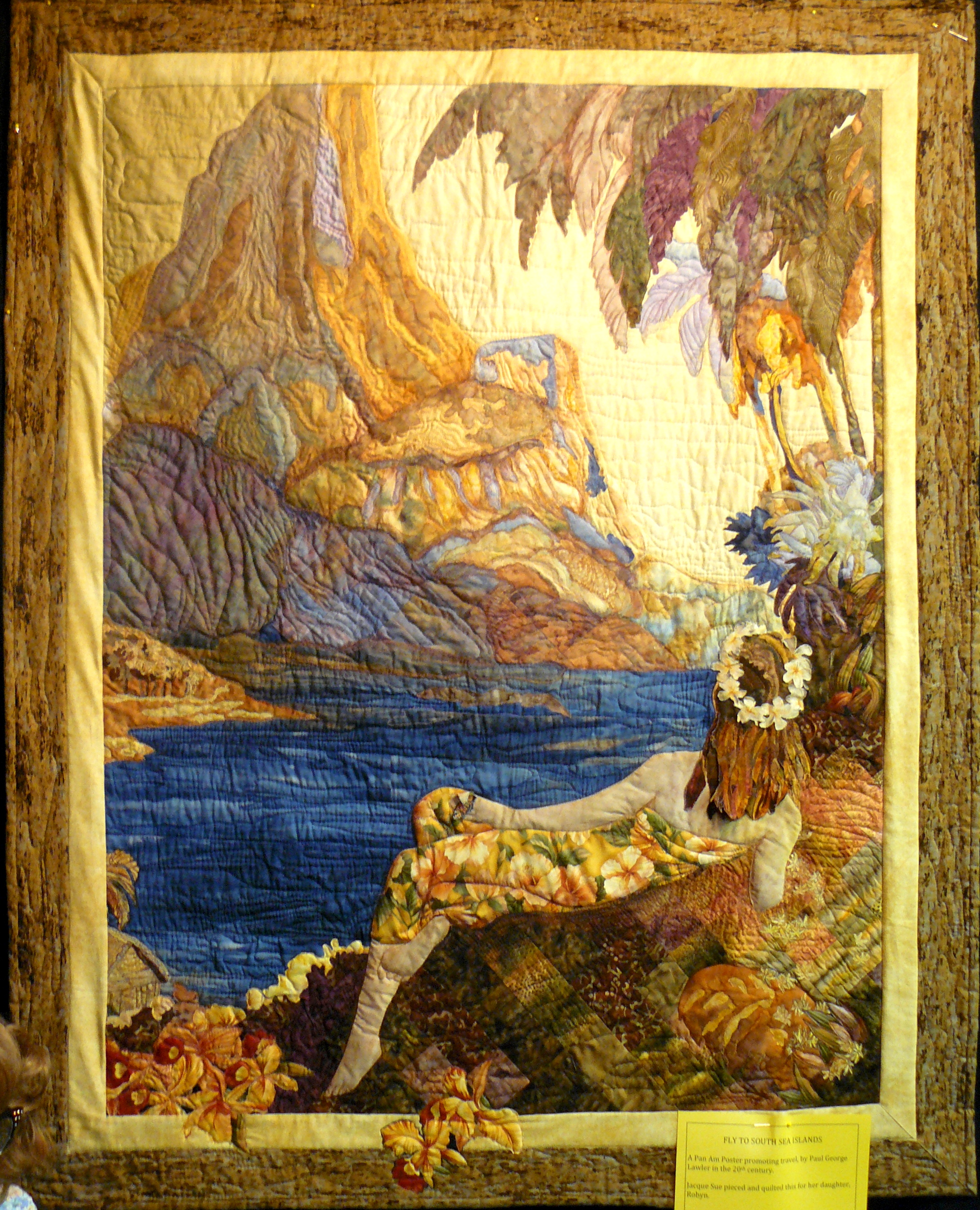
Established quilters are also featured at the show.
Established quilters are also featured at the show.  Here’s a magnificent example from Jacque Sue Harvey.

oooo

The quilt above the work of Jacque Sue Harvey.


oooo

P1150165
Another quilt from Jacque.

oooo

Final example of Jacque's work.
Final example of Jacque’s work.

Puts the phrase “needle and thread” into a whole new world of meaning!

P1150152
One last look as we drove away!

Maybe I’m becoming a soppy old fool but a couple of hours wandering around this event, just five minutes from where we live, made me feel, strongly so, that Jean and I and all our animals really do belong here!

Good news is never far away

We all need a reminder of the many good things happening in our world!

It’s common knowledge that homo sapiens is wired to react to the threat of danger in a rapid manner.  But while the danger of a bear or a lion jumping on us from out of the trees is much diminished in the 21st century, our fear-response circuits are still alive and active.  One of the fundamental reasons why so much of the media ‘sells’ stories via alarmist headlines.

Thus it was a real delight to come across a magazine with the simple, yet powerful, brand name of YES!

Cover of the current issue of YES!

Even better than coming across YES! was receiving a complimentary subscription for Jean and me!  (Thanks John H!)  Jean and I took to the magazine immediately.  Not only because of an active blog but also because of their support for sharing their content.  I quote:

Reprints & Reposts

We want you to pass along the work of YES! Magazine. All we ask is that you follow these easy steps:

Text

For all material designated Creative Commons (cc):

(as used herein, material means the text of the articles, and does not mean titles, images, or illustrations)

  • Use the same byline information that we have placed at the end of the article. For reposts, keep links intact.
  • Material is free except for commercial use.
  • Do not alter, change, or add to the material.
  • Please notify us that you are reprinting by sending an email to reprints [at] yesmagazine.org.

For full details, see the Creative Commons license.

Copyrighted © text:

We have adopted Creative Commons licensing beginning with our issue #44. We readily grant reprint permission for earlier copyrighted material, upon request. Just ask us at reprints [at] yesmagazine.org. We occasionally reprint or excerpt material that is copyrighted by others, and this material is NOT included in the Creative Commons license.

Moving on to the next good news item.

I forget how but recently came across the Buy Nothing Project.  As the ‘About’ page explains:

Buy Nothing. Give Freely. Share Creatively.

The Buy Nothing Project began as an experimental hyper-local gift economy on Bainbridge Island, WA; in just 8 months, it has become a social movement, growing to over 25,000 members in 150 groups, in 4 countries. Our local groups form gift economies that are complementary and parallel to local cash economies; whether people join because they’d like to quickly get rid of things that are cluttering their lives, or simply to save money by getting things for free, they quickly discover that our groups are not just another free recycling platform. A gift economy’s real wealth is the people involved and the web of connections that forms to support them. Time and again, members of our groups find themselves spending more and more time interacting in our groups, finding new ways to give back to the community that has brought humor, entertainment, and yes, free stuff into their lives. The Buy Nothing Project is about setting the scarcity model of our cash economy aside in favor of creatively and collaboratively sharing the abundance around us.


flowers
The gift of flowers. © Liesl Clark

How does the Buy Nothing Project work? Using the free platform provided by Facebook Groups, Buy Nothing Project members can easily participate with their local group. Our rules are simple: “Post anything you’d like to give away, lend, or share amongst neighbors. Ask for anything you’d like to receive for free or borrow. Keep it legal. Keep it civil. No buying or selling, no trades or bartering, we’re strictly a gift economy.” The transparency of Facebook groups’ design allows our members to see mutual friends they share with relative strangers, and to build trust based on real-life connections visible through personal profile information. This trust allows groups to grow quickly and encourages people to both give freely and ask for what they need; everything from toilet paper roll springs to rides home from the doctor; burial sites for beloved pets to freshly-baked bread and casseroles have been given freely; our members share things mundane and meaningful in equal measure, and throughout it all connect with each other by means of the shared personal stories and chatting encouraged by the platform. We rely on our co-founders’ daily guidance and direction for the development of our nascent culture, assisted by a team of volunteer local administrators who have on-the-ground knowledge of their communities.

The Buy Nothing Project Connects Us With Our Neighbors. © Liesl Clark

Why the Buy Nothing Project? The Buy Nothing Project is brought to you by the creators of Trash Backwards (www.trashbackwards.com,) an app that helps you with the last of the 3 Rs, “Reusing” and “Recycling” the everyday things in your life. The Buy Nothing Project addresses the first of the 3 R’s, “Reduce” as well as the lesser-known Rs “Refuse” and “Rethink.” Participating in a local Buy Nothing Project group allows individuals and communities to reduce their own dependence on single-use and virgin materials by extending the life of existing items through gifting and sharing between group members. Rethinking consumption and refusing to buy new in favor of asking for an item from a neighbor may make an impact on the amount of goods manufactured in the first place, which in turn may put a dent in the overproduction of unnecessary goods that end up in our landfills, watersheds, and our seas. It most certainly creates connections between people who see each other in real life, not just online, leading to more robust communities that are better prepared to tackle both hard times and good by giving freely. The Trash Backwards app, blog articles, and Buy Nothing Project groups are diverting more materials from our landfills and oceans than we can possibly quantify as hundreds of items are rehomed each day.

The Buy Nothing Project Strengthens Communities.

Our Statistics:

With over 25,000 members and growing every day, we have a captive audience in each of our groups. Most members visit the group pages several times a day and many literally spend hours there, commenting, reading posts, while posting their own gifts and wants.

Our Trash Backwards blog, app, and the Buy Nothing Project website garner over 50,000 unique visitors per month. With 7,000 followers on Pinterest and 3,775 “likes” on our Facebook Pages, we have enough sway to bring significant traffic to our sites whenever we upload news or new blog posts.

Funding:

With funding to staff our core project, PR, legal help, design, and developers, the Buy Nothing movement will grow quickly, spreading the joys of gift economy giving and receiving. The world is ready for this experimental model of sharing our possessions and talents to help others, but the endeavor needs its basic operational costs covered to foster the movement even further.

Isn’t that a fabulous idea!

I’m determined to start a local group here in Merlin, Oregon.

My final item of good news, that I’m sure many others read about, was:

A declaration announced as part of a UN summit on climate change being held in New York also pledges to halve the rate of deforestation by the end of this decade and to restore hundreds of millions of acres of degraded land.

The Guardian newspaper released the news, as follows:

UN climate summit pledges to halt the loss of natural forests by 2030

New York declaration on forests could cut carbon emissions equivalent of taking all the world’s cars off the road

PEKANBARU, SUMATRA, INDONESIA - JULY 11:  A forest activist inspects land clearing and drainage of peat natural forest located on the concession of PT RAPP (Riau Andalan Pulp and Paper), a subsidiary of APRIL group which is being developed for a pulp and paper plantation at Pulau Padang, Kepulauan Meranti district on July 11, 2014 in Riau province, Sumatra, Indonesia. The Nature Climate Change journal has reported that Indonesia lost 840,000 hectares of natural forest in 2012 compared to 460,000 hectares in Brazil despite their forest being a quarter of the size of the Amazon rainforest. According to Greenpeace, the destruction of forests is driven by the expansion of palm oil and pulp & paper has increased the greenhouse gas emissions, pushing animals such as sumatran tigers to the brink of extinction, and local communities to lose their source of life. (Photo by Ulet Ifansasti/Getty Images)
PEKANBARU, SUMATRA, INDONESIA – JULY 11: A forest activist inspects land clearing and drainage of peat natural forest located on the concession of PT RAPP (Riau Andalan Pulp and Paper), a subsidiary of APRIL group which is being developed for a pulp and paper plantation at Pulau Padang, Kepulauan Meranti district on July 11, 2014 in Riau province, Sumatra, Indonesia. The Nature Climate Change journal has reported that Indonesia lost 840,000 hectares of natural forest in 2012 compared to 460,000 hectares in Brazil despite their forest being a quarter of the size of the Amazon rainforest. According to Greenpeace, the destruction of forests is driven by the expansion of palm oil and pulp & paper has increased the greenhouse gas emissions, pushing animals such as sumatran tigers to the brink of extinction, and local communities to lose their source of life. (Photo by Ulet Ifansasti/Getty Images)

Governments, multinational companies and campaigners are pledging to halt the loss of the world’s natural forests by 2030.

A declaration announced as part of a UN summit on climate change being held in New York also pledges to halve the rate of deforestation by the end of this decade and to restore hundreds of millions of acres of degraded land.

Backers of the New York declaration on forests claim their efforts could save between 4.5bn and 8.8bn tonnes of carbon emissions per year by 2030 – the equivalent of taking all the world’s cars off the road.

The UK, Germany and Norway have pledged to enter into up to 20 programmes over the next couple of years to pay countries for reducing their deforestation, which could be worth more than £700m.

Companies such as Kellogg’s, Marks & Spencer, Barclays, Nestle, the palm oil giant Cargill, Asia Pulp and Paper and charities including the RSPB, WWF and the International Union for Conservation of Nature (IUCN) have signed the declaration.

The declaration’s supporters say ending the loss of the world’s natural forests will be an important part of limiting global temperature rises to 2C, beyond which the worst impacts of climate change are expected to be felt.

It comes after analysis suggests that land use change such as deforestation accounts for around 8% of the world’s carbon emissions, with carbon dioxide released when trees are felled and burned to free up land for agriculture or development.

“Forests represent one of the largest, most cost-effective climate solutions available today,” the declaration says.

“Action to conserve, sustainably manage and restore forests can contribute to economic growth, poverty alleviation, rule of law, food security, climate resilience and biodiversity conservation.”

Signatories to the declaration are committing to a number of steps to halt forest loss, including backing a private sector goal of eliminating deforestation from producing agricultural products such as palm oil, soy, paper and beef by no later than 2020.

They are also seeking to support alternatives to deforestation which is caused by subsistence farming and the need for wood fuel for energy and reward countries that reduce forest emissions.

Read the full article here.

I first picked up on this news courtesy of the Grist blog:

rainforest-e1411587105860

Cargill promises to stop chopping down rainforests. This is huge.

By Nathanael Johnson

Everything I’ve been reading about the U.N. Climate Summit had been making me pretty gloomy, until I read about the New York Declaration on Forests.

The first notice was a press release from the Rainforest Action Network informing me that Cargill, the agribusiness giant, had pledged “to protect forests in all of Cargill’s agricultural supply chains and to endorse the New York Declaration on Forests.” Cargill has a big handprint — they have soy silos in Brazil and palm oil plants in Malaysia. So as of now, if you want to carve a farm out of the jungle, you’re going to get the cold shoulder from a company that is a prime connector to world markets.

And this isn’t limited to hot-button crops like soy and oil palm. Here’s what Cargill’s CEO Dave MacLennan said at the U.N.: “We understand that this sort of commitment cannot be limited to just select commodities or supply chains,” said MacLennan. “That’s why Cargill will take practical measures to protect forests across our agricultural supply chains around the world.”

It’s not just Cargill. Kellogg’s, Unilever, Nestle, Asia Pulp and Paper, General Mills, Danone, Walmart, McDonalds, and many other corporations have committed to the New York Declaration on Forests. But, here’s why Cargill is interesting: It’s making a concrete pledge, while the actual declaration is pretty mushy at this point. The declaration calls for ending forest loss by 2030. And, to quote a U.N. brief: “It also calls for restoring forests and croplands of an area larger than India. Meeting these goals would cut between 4.5 and 8.8 billion tons of carbon pollution every year — about as much as the current emissions of the United States.” Or about as much as taking all the cars in the world off the roads — that’s another comparison I’ve seen. The details are supposed to be hammered out in time for the 2015 convention in Paris.

Again, read the rest of the article here.

So as much as you, I and hundreds of thousands of others get battered with ‘gloom and doom’ stories every single day, we do need to balance that out from time-to-time with the good things around us. Also every single day.

Now where’s a dog to hug!

AS18

Space for Nature

Last day of September

I was mulling over the fact that tomorrow sees the start of October and, inevitably, pondering what sort of winter we are in for. At the same time, I was reflecting on how beautiful this last month has been.  Wonderful ‘easy-on-the-body’ temperatures, an inch or more of much-needed rain, wonderful Autumn colours; all being shared for the last ten days with our guests: Reggie and Chris.

I was unsure what to write about to reflect my thoughts and was then saved by the September Digest from Transition Culture back in the old country.  I started to read it and immediately wanted to share it with you; dear reader.

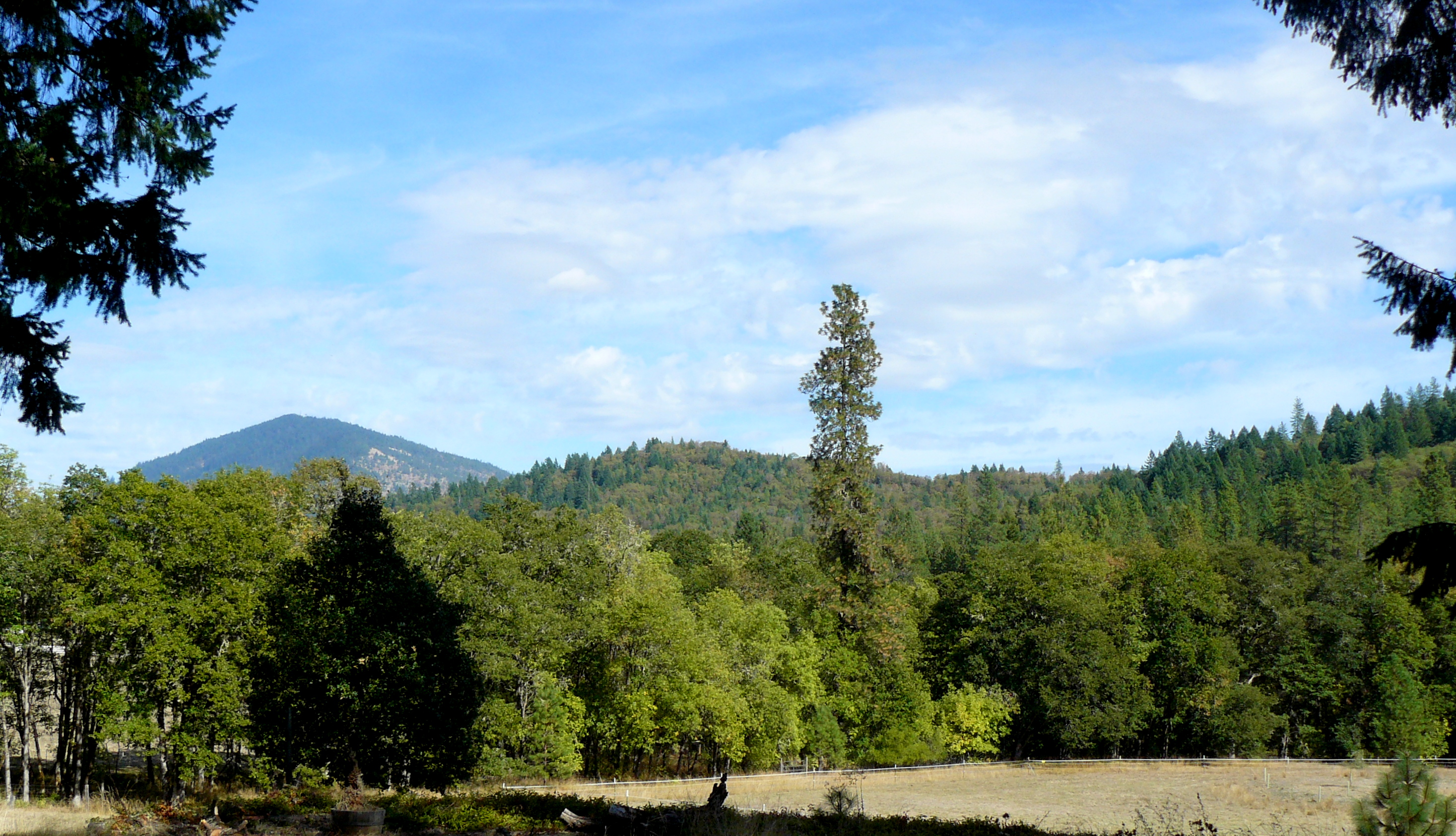
First, to set the tone, here is a photograph taken just before I sat down to write today’s post.

Space for Nature - all around us!
Space for Nature – all around us!

ooOOoo

Transitioners’ Digest (September 2014)

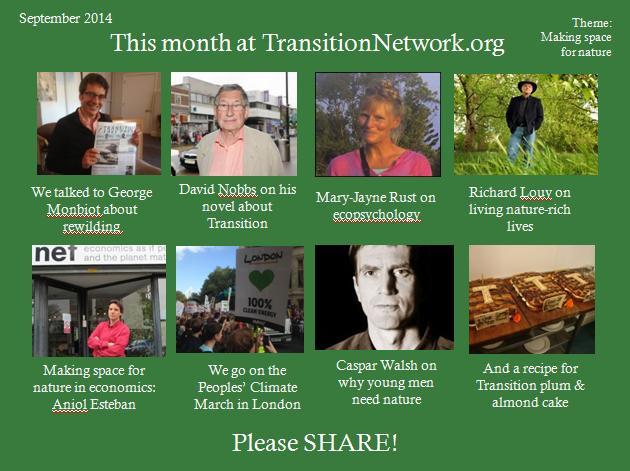
This month we have been exploring the theme of “Making Space for Nature” from a wide range of different angles. We started with an editorial piece which argued that one of the key things that digest2nature can bring our work doing Transition is a sense of wonder. Something to do with glowworms apparently. We grabbed George Monbiot before he went on stage and talked about his book Feral and the concept of rewilding.

Writer and founder of the charity Write to Freedom, Caspar Walsh, talked about the vital role nature can play in the healing of young men. “She, it, whatever it is”, he told us, “works on them and softens them up so I don’t have to do all the work”. Ecopsychologist Mary-Jayne Rust talked about the impacts being separated from nature can have on us, and the benefits we get from making space for it. “When was the last time you heard of an activist going on a pilgrimage for eight months?” she asked.

Isabel Carlisle introduced us to Community Charters, and the potential they have for making space for nature at the community scale. Richard Louv, author of Last Child in the Woods, and of the theory of Nature Deficit Disorder, talked to us via Skype. “If we’re not careful”, he told us, “environmentalists and others who care about the future of nature will carry nature in their briefcases, not in their hearts”. Mike Jones, who builds natural play spaces for kids, talked about the need to make space for “the primodial nature of kids”.

Sept14

Aniol Esteban of New Economics Foundation reflected on why we need to make space for nature in economics. He told us:

Nature contributes to our mental health. It delivers mental health benefits and physical health benefits. It delivers a wide range of societal benefits. It contributes to our education. It can help reduce levels of crime. It can help urban regeneration. There is a huge range of areas and ways in which nature contributes to our wellbeing – individual wellbeing and collective wellbeing.

2782613807-300x212
David Nobbs

TootingHayley Spann, one of the participants in One Year in Transition, reflected on “what nature taught me”. We had a review of the first mainstream novel about Transition, The Second Life of Sally Mottram by David Nobbs (see right). We also talked to the author about where the idea came from, and what makes a good story. We had a recipe for “Transition Plum and Almond Cake”. Mark Watson reflected on the importance of ‘Making Space for Flowers’, and the many ways in which his Transition initiatives, Sustainable Bungay, create opportunities for people to encounter and benefit from nature.

Rob Hopkins reflected on how different our approach to managing water and drought would be if we took forests as the model on which we based it. He also responded to a critique of Transition by Ted Trainer and explored why the language we use to talk about this stuff really matters. He also went on the Peoples’ Climate March in London and reflected on how that was.

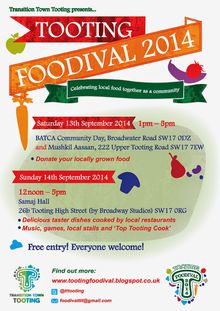
We heard from Transition initiatives about their experience of making space for nature in what they do. Hilary Jennings of Transition Town Tooting talked about the Tooting Foodival. Chris Bird wrote about the Transition Homes initiative in Totnes. Cara Naden discussed the many ways in which Transition Langport make space for nature. “I believe we all have an inherent bond with nature”, she wrote. “It makes us feel happy and healthy and makes us feel we are doing something positive and worthwhile for the benefit of wildlife, each other and ourselves”.

A very rich and thought-provoking month we hope you’ll agree. Our theme for October will be Transition and development. We hope you enjoy that too.

ooOOoo

(Note: there were many links in the original digest so do please check there as well.)

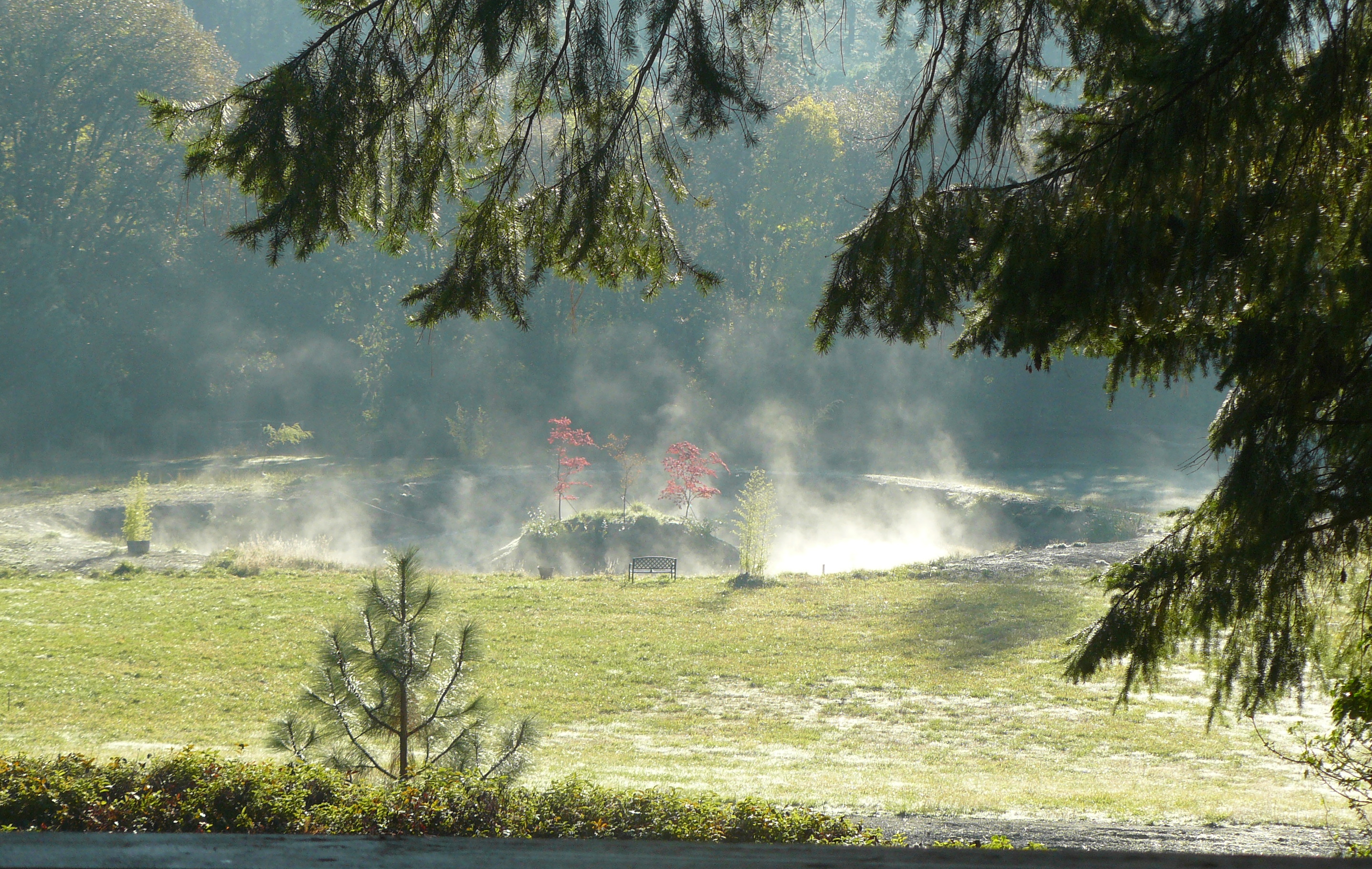
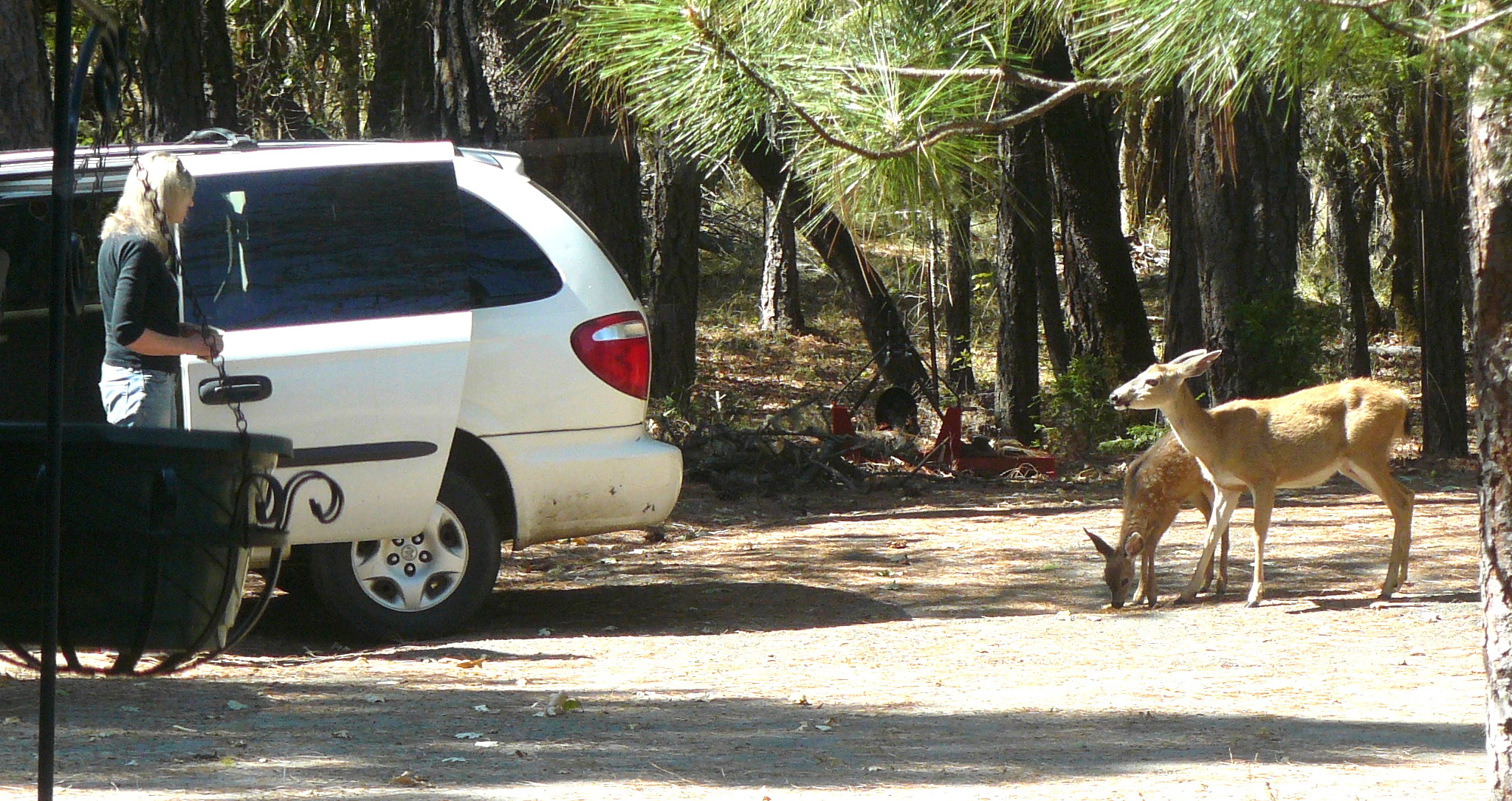
Can’t resist a couple more pictures from home to underline how we feel so strongly about having space for nature.

oooo

A misty October morning from a year ago.

oooo

Trust between deer and Jean.
This is what making space is all about!

Let’s all have a great month of October embracing the natural world around us howsoever it can be done.

Happy lives!

Happiness.

I guess that it would be difficult to find a greater change in topic than going from America’s relationship with war to the secret of happiness!  But that’s what’s on offer today!

All as a result of reading a recent article on the Grist blogsite written by one of the Grist staff writers, David Roberts.

ooOOoo

The secret to a happy life: revealed!

By David Roberts
10 Sep 2014

I don’t want to brag, but while I was on sabbatical I discovered the secret to happiness.

The crazy thing is, it was lying right there in the open. It’s been revealed dozens, hundreds of times over the course of human history. It’s revealed every day in ordinary human affairs, if you’re paying attention.

What is it? Let’s ask George Vaillant.

Vaillant is a Harvard psychologist who has been working for over 40 years on the Grant Study, one of the longest-running longitudinal studies in scientific history. It began tracking a set of 268 (white, physically and mentally healthy) men when they were sophomores at Harvard in 1939 and has been tracking them ever since, for 75 years, with exhaustive regular physical and psychological tests. It has followed them as they’ve grown, gone to war, married, divorced, worked, been fired, gotten sick, found God, and so on. (The ups and downs of the study’s history are recounted in this classic Atlantic piece, one of my favorite magazine stories ever.)

Vaillant has spent most of his adult life analyzing the data from the study, attempting to determine which factors most reliably correlate with well-being. He’s probably studied happiness longer, and in greater depth, than any other single human being. So what is it, George Vaillant? What’s the secret to a happy life?

“That the only thing that really matters in life are your relationships to other people.”

Wow. That’s pretty straightforward. But can you boil it down just a little more?

“Happiness is love. Full stop.”

All right then! There you have it. The secret to happiness, revealed. It’s love.

If you want to break it down a little more, there’s plenty of social science research on it. We live longer, healthier, happier lives when we are at the center of overlapping social networks, when we have a devoted life partner, close family and friends (and pets), extensive “weak ties” with acquaintances and colleagues, peer and professional networks that value our skills, and a sense of autonomy balanced with a sense of involvement in something larger than ourselves. We are happiest when we have a place in the world, when we love and are loved, when we make the most of our gifts.

This is all obvious, of course, and has been said a million times. But that’s the point. People want there to be a what of happiness, a secret, an epiphany that once you learn it changes you forever. But the what of happiness is banal. It’s been confirmed by research. It’s in a kajillion self-help books. It’s cliché.

The what of happiness is not the hard part. The how is the hard part. As a million deathbed testimonials have taught us, when we look back on our lives, we won’t wish we’d worked harder, maintained Inbox Zero, finished those reports on deadline, gotten more promotions, owned a nicer car. We’ll wish we’d spent more time appreciating the ones we love and who love us, that we’d done more meaningful work, that we’d traveled more and had more memorable experiences.

We all know this. But it is no easy matter to translate that knowledge into action. Why? Vaillant is insightful about that, too, as The Atlantic explains:

Vaillant [says] positive emotions make us more vulnerable than negative ones. One reason is that they’re future-oriented. Fear and sadness have immediate payoffs—protecting us from attack or attracting resources at times of distress. Gratitude and joy, over time, will yield better health and deeper connections—but in the short term actually put us at risk. That’s because, while negative emotions tend to be insulating, positive emotions expose us to the common elements of rejection and heartbreak.

Gratitude and joy are emotions we can muster when we don’t feel threatened, when our lizard brain calms and our prefrontal cortex takes over. But it’s very difficult when our egos feel under siege. Relationships are more meaningful the more we open and extend ourselves (and are reciprocated), but our degree of openness is also our degree of vulnerability. Often we close off, deciding, consciously or not, that it’s not worth the risk of getting hurt; our lizard-brain fear overpowers us.

We cannot control this dynamic entirely. As the Atlantic piece explains, researchers believe that about 50 percent of our happiness is determined by our internal “set point,” which is shaped by genetics and early childhood and mostly fixed in place. About 10 percent is determined by circumstances. But that other 40 percent comes from how we react to circumstances, and over that we do have some control.

We can learn to detach from fear and anger, to let them go, to take deep breaths, return our focus to the present, and choose positive emotions. That, as I wrote yesterday, is what mindfulness is all about. It’s what the entire discipline of positive psychology (which counts Vaillant as a founding father) is about: strengthening the prefrontal cortex so that it’s more able to override instinctual fear and anger. The more inclement the circumstances we face, the more we need it. That’s why mindfulness training is catching on in low-income communities, the military, and elderly care.

So when people ask, as they have many times in the last week, “What did you learn over your break?” … the honest answer is, nothing. I already knew the what of happiness, just as you already know it. The break was about more consciously practicing the how, and on that score I’m afraid I have no grand epiphanies, only a few baby steps down a road I’ll be walking all my life.

ooOOoo

The original Grist article was headed with a picture of a group of happy dogs and it seemed almost an automatic response from me to close today’s post with a picture of happy dogs here in Oregon. But rather obvious, don’t you think!

Instead, I’m going to use a photograph of me being ‘loved’ by Ben so soon after he came to us in April; Ben being one of the two horses (Ben and Ranger) to come here that were rescued by Darla Clark, as explained here.

P1140593

Now going to offer my own reflection on happiness.

Animals that are comfortable being around us readily display unconditional affection to humans.  All that these dogs, cats, horses, and others, require is trust in us.  The knowledge that we are there to care for them, to comfort them, to cuddle them, to love them for the majority of the interactions between the person and the creature.  That doesn’t rule out chastisement, far from it, just that it comes from a heartfelt desire to care for the animal.

I now have a life surrounded by loving animals.  It has been that way since I started living with Jean back in 2008. Yes, I had had Pharaoh in my life since 2003.  Still have him; the precious animal. But the one-on-one bond that existed between Pharaoh and me hadn’t previously opened my heart in the way that all 14 dogs and 5 cats did that were living with Jean when I joined her.

The unconditional love shown by those animals in my life for the last six years has profoundly affected me.  We are now ‘down’ to 9 dogs and 4 cats plus we have the 4 horses (2 rescue quarter-horses and 2 miniature horses). Still there are very few moments in the whole of my day, either day or night, where I am not in the company of, or in contact with, an animal that offers me unconditional love.

Recall earlier in the David Roberts article: “We are happiest when we have a place in the world, when we love and are loved, when we make the most of our gifts.

Of course, I have ‘off’ days!

But down to my core, I know that being loved by Jean and all the animals and returning that love provides me with a deep happiness unimaginable prior to 2008.

It is better to have a heart that makes love than a mind that makes sense.” Robert Keck

Unanticipated consequences!

Who would have believed it!

Way back in July 2012, I posted the following item.

oooo

Dear Readers of Learning from Dogs.

Today, Jeannie and I are off on a trip to Oregon.

Oregon State

We expect to be away for about the next 10 or 11 days.

While there are a number of new posts that will come out during this period, rather than have quiet days with nothing being posted, some days I will be republishing posts from the last three years; hopefully most of them new to your eyes.

Inevitably, responding promptly to comments will be tough.

Which is why I am so grateful to Martin Lack of Lack of Environment who graciously agreed to keep an eye on things while we are away.

The Punch Bowl Falls, Columbia River, Oregon

oooo

That was twenty-six months ago.

Yesterday morning, Jean and I took Reggie and Chris down to our creek area to feed some wild deer that have been congregating in recent days.

P1150076

After Jean had sprinkled some cracked corn on the ground, one of the seven deer around us started feeding and when it looked up at me, I took the following picture.

P1150079

Can’t ever imagine living anywhere else now.

Funny how life runs!

Seeds of thought.

Two very different perspectives.

solstice

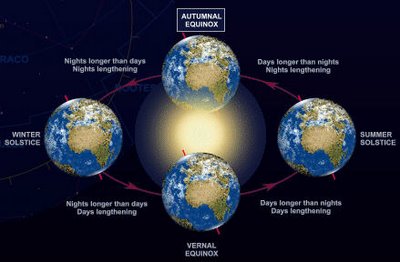
I’m writing this post a short while after midnight (UTC) on the morning of Tuesday, 23rd September.  In other words, 00:00 UTC 23/9/2014. (I hasten to add that the local time in Oregon is late afternoon Monday!)

In approximately three hours time it will be the moment of the September Equinox, or 02:29 UTC on the 23rd to be precise. The planet Earth has been in orbit around the sun for a very long time!  It’s almost beyond comprehension how long the Solar System has been the way it is.

All of which constitutes my introduction to a recent beautiful post over at Sue Dreamwalker.  Kindly republished with her gracious permission.

ooOOoo

Planting a Seed … A Thought!

William Blake, said:

that everything that now exists was once imagined,

Wayne Dyer said:

So, if you want something to exist, you must first be able to imagine it.

Each of us have a chance of planting new seeds.. Yet we so often never have the courage to pick them out of our minds to plant them with intention into our reality… Those alexander-graham-bell_thumbwho do have the courage may see how from their tentative thoughts ideas grew beyond their wildest dreams… I bet Alexander Graham Bell never in his wildest dreams would have thought how his invention would now be in everyone’s pocket!.

But we need to have the courage to take those first steps and plant them..

Like all seeds they take time to germinate, so too with our ideas we often wonder why our wishes are not fulfilled.. All too often we sabotage them before they even begin to grow roots. How?, because we doubt our own capabilities and we say we are far from worthy of success. Telling ourselves we are never lucky.. and its bound to fail.. So we poison the very idea, so the seed withers even before it gets a chance to grow..

Our subconscious mind is an incredible tool, it possess the power to manifest from our thoughts to bring them into our physical reality. You only have to take a look around the room you are now in, and see that every thing in it was once someone’s thought, even the paint upon the walls… An idea born, brought into reality from that first seed of an idea..

I have just finished a book the second time in reading it, I think this time its message really hit home. As I see how I have sabotaged many such seeds in the past. The Book is called Wishes Fulfilled By Wayne Dyer, listen to his talk HERE upon the subject of Wishes Fulfilled.

‘Thoughts become things when you Feel them’ says Wayne Dyer, In the past I have often experienced frustration, Anger, worry, stress. These I have amplified with my ‘Feelings’ as the frustration of helplessness, or horror at how brutal we can be to one another have overshadowed my thoughts..

We need to reprogrammed ourselves to think differently about ourselves and the World..

dr-wayne-dyer-quote_thumb

Seeds are sown, every day within our minds.. What sort of seeds are you sowing within your own mind? Which type of thoughts are you cultivating?

wayne-dyer-quote_thumb2

My last simple post World Peace! Just Imagine got reblogged 6 times!. I got more traffic today than for a long while.. People Do want Peace, and yet how many of us are being manipulated into getting caught up in Conflict? We are part of it every time we read a Newspaper, every time we watch the Media News, Every time we join in Gossip, every time we Judge another. Every time we argue, even with ourselves, We are creating yet more Conflict , more Negative Energy in the World.

Our very thoughts Create…

32108-Positive+thoughts+quotes+every

Let us Create the Future we each wish to Live in..

Have a Brilliant Thought Provoking and Harmonious Week!

Blessings

~Sue~

ooOOoo

So wherever you are in the world, take a moment to look up into the sky and marvel at it all.  As one of Sue’s followers remarked, “ ….. Equinox is an excellent time to focus on the seed ideas for the future.

Finally, the link that Sue included in the sentence, “The Book is called Wishes Fulfilled By Wayne Dyer, listen to his talk HERE upon the subject of Wishes Fulfilled.” took you to a YouTube video.  It is below because I know many will want to listen to Wayne Dyer’s important words.

3D-Autumn-1680x1050

From seeds grow great futures.

A welcome and understandable distraction.

We have family guests with us for the next seven days.

Jean’s brother, Reg, and his lady are arriving today so for a while blogging will be less of a priority than usual.

Although I have spoken to Reg over the telephone on numerous occasions, this will be the first time we have met and I am looking forward to better knowing him.

Thus, as in previous times when we have had friends and family staying with us, I will be reposting popular items from previous times on Learning from Dogs, or republishing things that have caught my eye in recent days.

As with today’s post.

Reg, shares the same birth year as me: 1944!

Thus we are staring over the edge of our eightieth decade!

So this short talk by Isabel Allende seems like a worthwhile topic for today!

Published on Sep 3, 2014
Author Isabel Allende is 71. Yes, she has a few wrinkles—but she has incredible perspective too. In this candid talk, meant for viewers of all ages, she talks about her fears as she gets older and shares how she plans to keep on living passionately.

Want to know more about Isabel Allende?  Her website is here.

Yet another thing we can learn from dogs! Living passionately right up to the last days.

Pharaoh, age 88 years in human equivalent, passing on his wisdom to Oliver, age 3 in human terms.
Pharaoh, age 88 in human equivalent years, passing on his wisdom to Oliver, age 3 in human terms. Makes being 70 look a doddle!

A world at peace.

Never say never!

Next Monday, the 21st September, is going to be the most important day this year.  No! The most important day ever!

Because next Monday is the date of the People’s Climate March in New York.  It is predicted to be the largest climate march in history. Well over 100,000 are expected to attend.  I shall write more about this event during the coming week.

But also the 21st September will be International Day of Peace. That coincidence strikes me as highly significant. For a world at peace would cause the most massive reduction in our use of carbon-based fuels.

Thus without any embarrassment, I intend to republish in full [Ed: but see my comment] a recent item on the Permaculture News website: Seven Reasons Why World Peace is Possible.

Do I mention dogs?  Read through to the end to find out! (Probably not difficult to guess the answer!)

ooOOoo

Seven Reasons Why World Peace is Possible

Introduction

The 21st of September will be International Day of Peace. It may seem a little premature to declare that world peace is due to break out by the end this month. I do not deny that the amount of killing and death and war and torture and death and coercion and abuse and death all over everywhere can be overwhelming. Nor do I deny that considering this, it is a natural assumption to believe people are sinners, destined for extinction. However, I do argue that compassion is as much a part of human nature as cruelty.

There is evidence that humankind did not always live violent lives. In fact, I assume most people reading this article are not habitually violent, and do not desire to watch someone suffer. All animals have the capacity to enrich the lives of others. We have the capacity to be both selfish and kind. What matters is which quality we chose to focus on; bringing that quality into focus within ourselves, the world, and our children.

Here I have collected an array of research demonstrating that there is a positive potential within each social group and person. I argue that humans can learn to build societies which are not founded on the expectation of organised violence. Here are seven reasons why world peace is possible. You won’t believe your own strength of belief: There is at least some hope.

aadsdas
National Peace Academy’s Peace Spheres

Experimental prototypes

The balance of this powerful and fascinating article may be read here.

ooOOoo

How many links did you follow?  Most of them are wonderful links to organisations that many readers, including me, may not have come across before.

So to close.

I was about half-way through arranging today’s post when I realised that dogs have evolved without the need to have their own police forces or armies.  It’s not as silly as it first sounds. Of course, dogs fight and some fights can be brutal and, occasionally, fatal to one or more of the participants.  But they have a keen sense of their locality, of their tribal space; so to speak.  Even as domestic animals, they are fiercely protective of what is their own place.  Before dogs were domesticated, like the wolves from whence dogs evolved, the pack size was around fifty animals with just three animals having any form of status; something that has been mentioned many times before in this place.

The point is that dogs are creatures that have evolved to live in a local community and to live peacefully; by and large.  My sense is that ancient man also evolved to be most complete within a community environment.

This is the end of the era of huge federal and national social constructions.

We must return to locally run and managed communities, which is the pathway to peace across this planet.

Think you know our Solar System – Think again!

An incredible discovery about the motion of the sun, and the planets.

Serendipity

I have turned on my computer. It’s 15:30 on Sunday. My creative juices re Monday’s blog post are not flowing. Why? Because, together with a young helper who comes over most Sunday mornings, this morning we have shifted 100 bales of hay from outside the garage, taken them down to the hay-loft and stacked them floor to ceiling: all two and a half tons of them!  To use an old English colloquial expression: I am fair knackered!

Then I am rescued!

Top of my email inbox is an email from Dan Gomez that is an item sent to him from his brother Chris.  It’s a truly incredible discovery. One that requires us all to tear up what we understand about the Solar System and start again.

Here is the essay in question.  It has been recently published on the Spirit, Science and Metaphysics website.

ooOOoo

Our Model Of The Solar System Has Been Wrong This Entire Time!

Written by Amateo Ra

solar-system1

If you walk into any classroom today, and likely ever since you were a kid yourself , there is one model being taught regarding the structure of our Solar System. It’s the model that looks like this:

SolarSysScope-1024x571

It’s the traditional orbiting model of the Solar System, or the Heliocentric Model, where our planets rotate around the sun.

While this isn’t entirely wrong, it’s omitting one very important fact. The sun isn’t stationary. The sun is actually travelling at extremely fast speeds, upward of 828,000 km/hr, or 514,000 miles an hour.
Our whole Solar System is orbiting the Milky Way Galaxy. In fact it takes 220-Million Years for the Sun to orbit our Galaxy.

milkyway

Knowing this to be true, our visual model of the Solar System needs to change, and has been inaccurate this whole time. In fact, our planets are barreling through space with the sun, and literally creating a giant Cosmic DNA Helix, and a vortex similar to our Milky Way Galaxy.

Like this but in space, creating a never ending Sine Wave.

SineWAves

This entails that our Sun & the Planets of our Solar System are never in the same place. When we make one rotation around the sun, we have already traveled millions of miles through space, meaning these Cosmic Cycles are far grander than we might have previously imagined.

Here are two video examples of the Helical Model of our Solar System:

This is one by Physicist Nassim Haramein, which clarifies the difference:

Here is a beautiful digital representation of how our solar system is actually a vortex.

Thanks & Spread the Word! Let’s get this changed in Classrooms all around the World.

About the author: Amateo Ra is the co-founder of Creator Course, an Online School for Conscious Living which is currently being built. For the last 4-years, he has been training with Global leaders in Spirituality, Channeling & Conscious Business.

ooOOoo

Don’t know about you but reading this for the first time and watching the two videos really invigorated me. What an amazing universe it is out there!

Harvest Moon 2014

Sorry, couldn’t resist this.

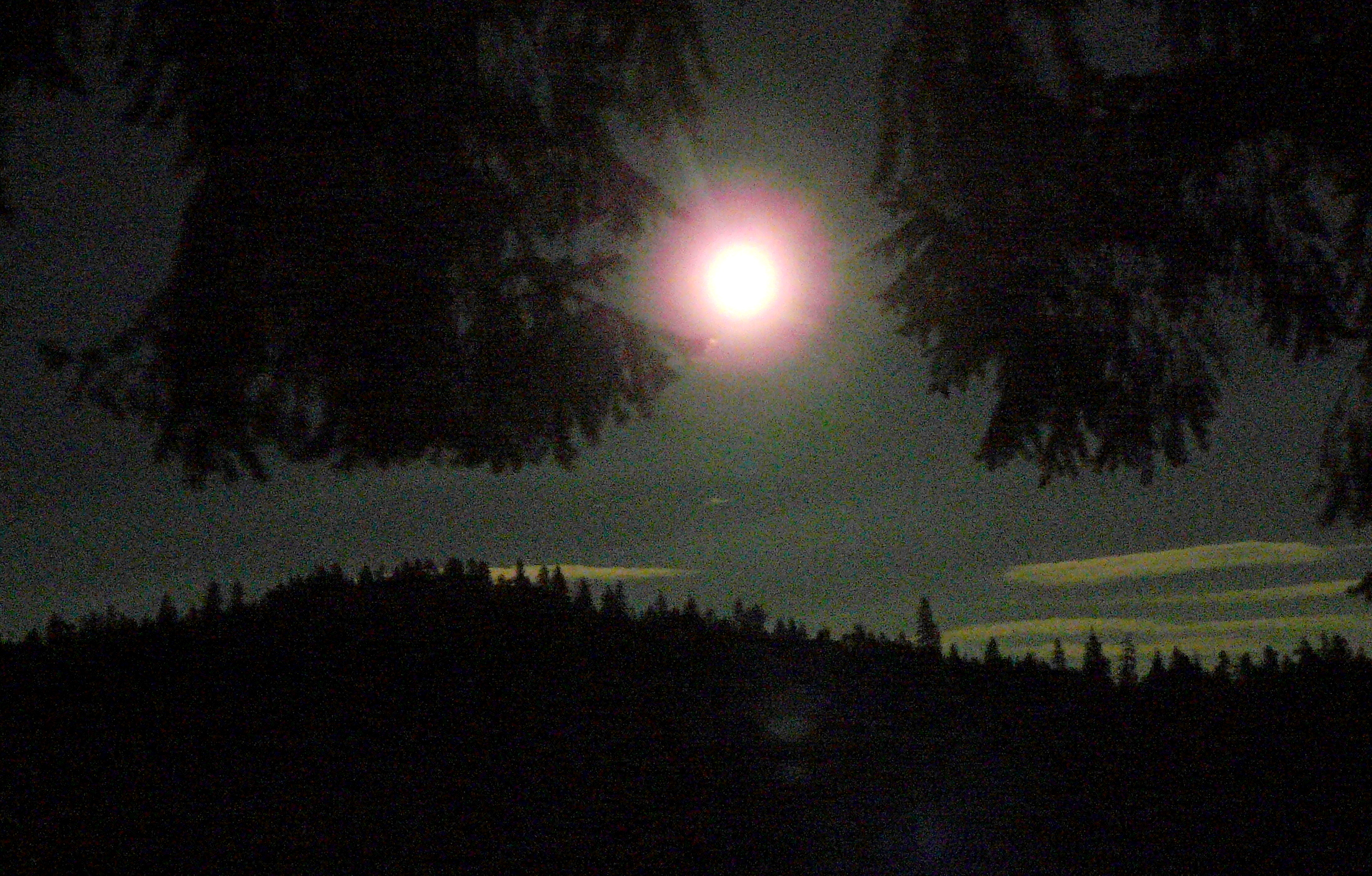
The following photograph was taken around 9pm (PDT) on the evening of the 8th September; i.e. Monday evening.

The image has been tweaked to display the picture more clearly but, nonetheless, shows the most beautiful Harvest Moon.  The camera was pointing to the East; I was standing on the deck at the back of our house.
P1150050

Anything to do with dogs?

You bet! There’s this ….

dogmoon

oooo

and this:

Uploaded on Nov 9, 2010
During Bob and Jan Shaw’s Annual fall training session outside of Newberry, MI in the beautiful Upper Peninsula, I had the opportunity to record over 100 huskies howling at a full moon.

We all shine on…like the moon and the stars and the sun…we all shine on…come on and on and on…John Lennon.