I was looking for something else on YouTube and came across this 8:56 video of what the James Webb has seen.
ooOOoo
Every Stunning Image Captured By James Webb Space Telescope So Far
21 Jul 2023
The James Webb Space Telescope has completed its first year of science operations. In its first year, the $10-billion infrared space observatory challenged our understanding of the cosmos and showed the universe in a way no other telescope in the past could. In this video, you will find every James Webb Space Telescope image released so far: From the mesmerizing images of the planets of the solar system to the gigantic galaxies seen at the edge of time.
Copyright (2023) National Geographic Partners, LLC. (I hope me sharing this image with you is alright.)
National Geographic published the above edition of their magazine recently that consists of three chapters: From Wolf to Wolf; The Human-Dog Bond; Inside Dog Behaviour.
In that first chapter it is stated that: “The exact timing of the appearance of the domesticated dog is hotly debated, but based on the latest science, it most likely falls somewhere between 15,000 and 40,000 years ago.”
So when I wrote on the home page of this blog all those years ago, “Yet they have been part of man’s world for an unimaginable time, at least 30,000 years.“, I wasn’t far wrong.
If you can possibly purchase a copy then please do. National Geographic provide back issues while Ebay, Amazon and others also sell this. You will not regret it!
Hate to say it but it is the great leveller. Some believe in some form of afterlife but not me (nor Jeannie). But how we all get to that final state is far from being simple or straightforward.
That’s why I am republishing, with permission, a recent article in The Conversation.
ooOOoo
Aging is complicated – a biologist explains why no two people or cells age the same way, and what this means for anti-aging interventions
While some people may be older in chronological age, their biological age might be much younger. FangXiaNuo/E+ via Getty Images
Assistant Professor in Molecular, Cellular, and Developmental Biology.
You likely know someone who seems to age slowly, appearing years younger than their birth date suggests. And you likely have seen the opposite – someone whose body and mind seem much more ravaged by time than others. Why do some people seem to glide though their golden years and others physiologically struggle in midlife?
I have worked in the field of aging for all of my scientific career, and I teach the cellular and molecular biology of aging at the University of Michigan. Aging research doesn’t tend to be about finding the one cure that fixes all that may ail you in old age. Instead, the last decade or two of work points to aging as a multi-factoral process – and no single intervention can stop it all.
What is aging?
There are many different definitions of aging, but scientists generally agree upon some common features: Aging is a time-dependent process that results in increased vulnerability to disease, injury and death. This process is both intrinsic, when your own body causes new problems, and extrinsic, when environmental insults damage your tissues.
Your body is comprised of trillions of cells, and each one is not only responsible for one or more functions specific to the tissue it resides in, but must also do all the work of keeping itself alive. This includes metabolizing nutrients, getting rid of waste, exchanging signals with other cells and adapting to stress.
The trouble is that every single process and component in each of your cells can be interrupted or damaged. So your cells spend a lot of energy each day preventing, recognizing and fixing those problems.
Aging can be thought of as a gradual loss of the ability to maintain homeostasis – a state of balance among body systems – either by not being able to prevent or recognize damage and poor function, or by not adequately or rapidly fixing problems as they occur. Aging results from a combination of these issues. Decades of research has shown that nearly every cellular process becomes more impaired with age.
Repairing DNA and recycling proteins
Most research on cellular aging focuses on studying how DNA and proteins change with age. Scientists are also beginning to address the potential roles many other important biomolecules in the cell play in aging as well.
One of the cell’s chief jobs is to maintain its DNA – the instruction manual a cell’s machinery reads to produce specific proteins. DNA maintenance involves protecting against, and accurately repairing, damage to genetic material and the molecules binding to it.
Proteins are the workers of the cell. They perform chemical reactions, provide structural support, send and receive messages, hold and release energy, and much more. If the protein is damaged, the cell uses mechanisms involvingspecial proteins that either attempt to fix the broken protein or send it off for recycling. Similar mechanisms tuck proteins out of the way or destroy them when they are no longer needed. That way, its components can be used later to build a new protein.
Aging disrupts a delicate biological network
The cross-talk between the components inside cells, cells as a whole, organs and the environment is a complex and ever-changing network of information.
When all processes involved in creating and maintaining DNA and protein function are working normally, the different compartments within a cell serving specialized roles – called organelles – can maintain the cell’s health and function. For an organ to work well, the majority of the cells that make it up need to function well. And for a whole organism to survive and thrive, all of the organs in its body need to work well.
Aging can lead to dysfunction at any of these levels, from the sub-cellular to the organismal. Maybe a gene encoding an important protein for DNA repair has become damaged, and now all of the other genes in the cell are more likely to be repaired incorrectly. Or perhaps the cell’s recycling systems are unable to degrade dysfunctional components anymore. Even the communication systems between cells, tissues and organs can become compromised, leaving the organism less able to respond to changes within the body.
Random chance can lead to a growing burden of molecular and cellular damage that is progressively less well-repaired over time. As this damage accumulates, the systems that are meant to fix it are accruing damage as well. This leads to a cycle of increasing wear and tear as cells age.
Anti-aging interventions
The interdependence of life’s cellular processes is a double-edged sword: Sufficiently damage one process, and all the other processes that interact with or depend on it become impaired. However, this interconnection also means that bolstering one highly interconnected process could improve related functions as well. In fact, this is how the most successful anti-aging interventions work.
There is no silver bullet to stop aging, but certain interventions do seem to slow aging in the laboratory. While there are ongoing clinical trials investigating different approaches in people, most existing data comes from animals like nematodes, flies, mice and nonhuman primates.
One of the best studied interventions is caloric restriction, which involves reducing the amount of calories an animal would normally eat without depriving them of necessary nutrients. An FDA-approved drug used in organ transplantation and some cancer treatments called rapamycin seems to work by using at least a subset of the same pathways that calorie restriction activates in the cell. Both affect signaling hubs that direct the cell to preserve the biomolecules it has rather than growing and building new biomolecules. Over time, this cellular version of “reduce, reuse, recycle” removes damaged components and leaves behind a higher proportion of functional components.
What all of these interventions have in common is that they affect core processes that are critical for cellular homeostasis, often become dysregulated or dysfunctional with age and are connected to other cellular maintenance systems. Often, these processes are the central drivers for mechanisms that protect DNA and proteins in the body.
There is no single cause of aging. No two people age the same way, and indeed, neither do any two cells. There are countless ways for your basic biology to go wrong over time, and these add up to create a unique network of aging-related factors for each person that make finding a one-size-fits-all anti-aging treatment extremely challenging.
However, researching interventions that target multiple important cellular processes simultaneously could help improve and maintain health for a greater portion of life. These advances could help people live longer lives in the process.
I was born in London towards the tail end of 1944. I was the product of an affair between my father and mother. I came before my younger sister, Elizabeth, born in 1948. Then my father died on December 20th, 1956 and eventually my mother remarried my stepfather but he died in 1979 and then my mother died in 2016.
Elizabeth is still alive and so is my step-sister, Eleanor. I also had two half-sisters, Rhona, Corinne, born of my father and his first wife, but they are long dead.
But my family still continue and with a bit of luck I have a few years left; I shall be 80 in November, 2024.
When the music stops it will have been a fabulous life!
I follow the website The Conversation and read most of their posts on a very regular basis. Back in May they published the following. It caught my eye because my own mental health is drifting downwards, or so it seems, due to age, I shall be 80 in November, 2024, plus a couple of brain bleedings that occurred in 2017 that were attended to by the Regional Trauma Center in Eugene.
I then had two sub-durnal (sp?) operations overnight before being put onto the ICU ward. The lead surgeon explained that I was within 24 hours of dying! As in if I had not gone back to hospital.
I find that difficult to realise that it was 6 years ago! Anyway, to the post published by The Conversation.
ooOOoo
Mindfulness, meditation and self-compassion – a clinical psychologist explains how these science-backed practices can improve mental health
Mindfulness and self-compassion are now buzzwords for self-improvement. But in fact, a growing body of research shows these practices can lead to real mental health benefits. This research – ongoing, voluminous and worldwide – clearly shows how and why these two practices work.
One effective way to cultivate mindfulness and self-compassion is through meditation.
For more than 20 years, as a clinical psychologist, research scientist and educator, I taught meditation to students and clinical patients and took a deep dive into the research literature. My recent book, “The Self-Talk Workout: Six Science-Backed Strategies to Dissolve Self-Criticism and Transform the Voice in Your Head,” highlights much of that research.
Could mindfulness meditation be the next public health revolution?
Be patient when starting a meditation practice
I didn’t like meditation – the specific practice sessions that train mindfulness and self-compassion – the first time I tried it as a college student in the late ‘90s. I felt like a failure when my mind wandered, and I interpreted that as a sign that I couldn’t do it.
In both my own and others’ meditation practices, I’ve noticed that the beginning is often rocky and full of doubt, resistance and distraction.
But what seem like impediments can actually enhance meditation practice, because the mental work of handling them builds strength.
For the first six months I meditated, my body and mind were restless. I wanted to get up and do other tasks. But I didn’t. Eventually it became easier to notice my urges and thoughts without acting upon them. I didn’t get as upset with myself.
After about a year of consistent meditation, my mind seemed more organized and controllable; it no longer got stuck in self-critical loops. I felt a sense of kindness or friendliness toward myself in everyday moments, as well as during joyful or difficult experiences. I enjoyed ordinary activities more, such as walking or cleaning.
It took a while to understand that anytime you sit down and try to meditate, that’s meditation. It is a mental process, rather than a destination.
How meditation works on the mind
Just having a general intention to be more mindful or self-compassionate is unlikely to work.
Don’t be discouraged if your mind wanders as you meditate.
Establishing the formal practice
A common misconception about mindfulness is that it’s simply a way to relax or clear the mind. Rather, it means intentionally paying attention to your experiences in a nonjudgmental way.
Consider meditation the formal part of your practice – that is, setting aside a time to work on specific mindfulness and self-compassion techniques.
Cultivating mindfulness with meditation often involves focusing on paying attention to the breath. A common way to start practice is to sit in a comfortable place and bring attention to your breathing, wherever you feel it most strongly.
At some point, probably after a breath or two, your mind will wander to another thought or feeling. As soon as you notice that, you can bring your attention back to the breath and try not to judge yourself for losing focus for five to 10 minutes.
When I was just getting started meditating, I would have to redirect my attention dozens or hundreds of times in a 20-to-30-minute session. Counting 10 breaths, and then another 10, and so on, helped me link my mind to the task of paying attention to my breathing.
The most well-established technique for cultivating self-compassion is called loving-kindness meditation. To practice, you can find a comfortable position, and for at least five minutes, internally repeat phrases such as, “May I be safe. May I be happy. May I be healthy. May I live with ease.”
When your attention wanders, you can bring it back with as little self-judgment as possible and continue repeating the phrases. Then, if you like, offer the same well wishes to other people or to all beings.
Every time you return your focus to your practice without judging, you’re flexing your mental awareness, because you noticed your mind wandered. You also improve your capacity to shift attention, a valuable anti-rumination skill, and your nonjudgment, an antidote to self-criticism.
Mindfulness also occurs when you tune into present-moment sensations, such as tasting your food or washing the dishes.
An ongoing routine of formal and informal practice can transform your thinking. And again, doing it once in a while won’t help as much. It’s like situps: A single situp isn’t likely to strengthen your abdominal muscles, but doing several sets each day will.
When thoughts pop up during meditation, no worries. Just start again … and again … and again.
One final point: Beginning meditators may find that self-criticism gets worse before it gets better.
After years or decades of habitual self-judgment, people often judge themselves harshly about losing focus during meditation. But once students get through the first few weeks of practice, the self-judgment begins to abate, both about meditation and about oneself in general.
As one of my students recently said after several weeks of mindfulness meditation: “I am more stable, more able to detach from unhelpful thoughts and can do all of this while being a little more compassionate and loving toward myself.”
In reading this article I think I should try and find a way to start the process. There are a great number of articles and websites. I will share my journey with you.
(This post was drafted back in 2020 and, for whatever reason, never got published, until today! Pharaoh, of course, is no longer with us)
Years ago if I was ever to own a dog, it had to be one breed and one breed only: a German Shepherd Dog.
The reason for this was that back in 1955 my father and mother looked after a German Shepherd dog called Boy. Boy belonged to a lovely couple, Maurice and Marie Davies. They were in the process of taking over a new Public House (Pub); the Jack & Jill in Coulsdon, Surrey. My father had been the architect of the Jack & Jill.
Jack & Jill, Longlands Avenue, Coulsdon, Surrey
As publicans have a tough time taking holidays, it was agreed that the move from their old pub to the Jack & Jill represented a brilliant opportunity to have that vacation. My parents offered to look after Boy for the 6 weeks that Maurice and Marie were going to be away.
Boy was the most gentle loveable dog one could imagine and I quickly became devoted to him; I was 11 years old at the time. So when years later it seemed the right time to have a dog, there was no question about the breed. Boy’s memory lived on all those years, and, as this post reveals, still does!
Pharaoh was born June 3rd, 2003 at Jutone Kennels up at Bovey Tracy, Devon, on the edge of Dartmoor. As the home page of the Jutone website pronounces,
The Kennel was established in 1964 and it has always been the aim to breed the best German Shepherd Dogs for type and temperament. To this end the very finest German bloodlines are used to continue a modern breeding programme.
and elsewhere on that website one learns:
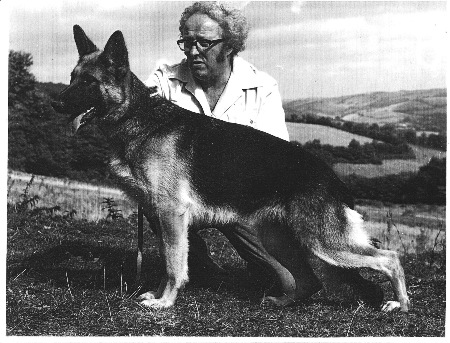
Jutone was established by Tony Trant who was joined by Sandra Tucker in 1976. Sandra continues to run Jutone since Tony passed away in 2004. Both Tony and Sandra qualified as Championship Show judges and Sandra continues to judge regularly. Sandra is the Secretary and a Life Member of the German Shepherd Dog Club of Devon.
Tony Trant
Turning to Pharaoh, here are a few more pictures over the years.
Pharaoh, nine months old.
oooo
One year old: June 3rd 2004.
The next picture of Pharaoh requires a little background information.
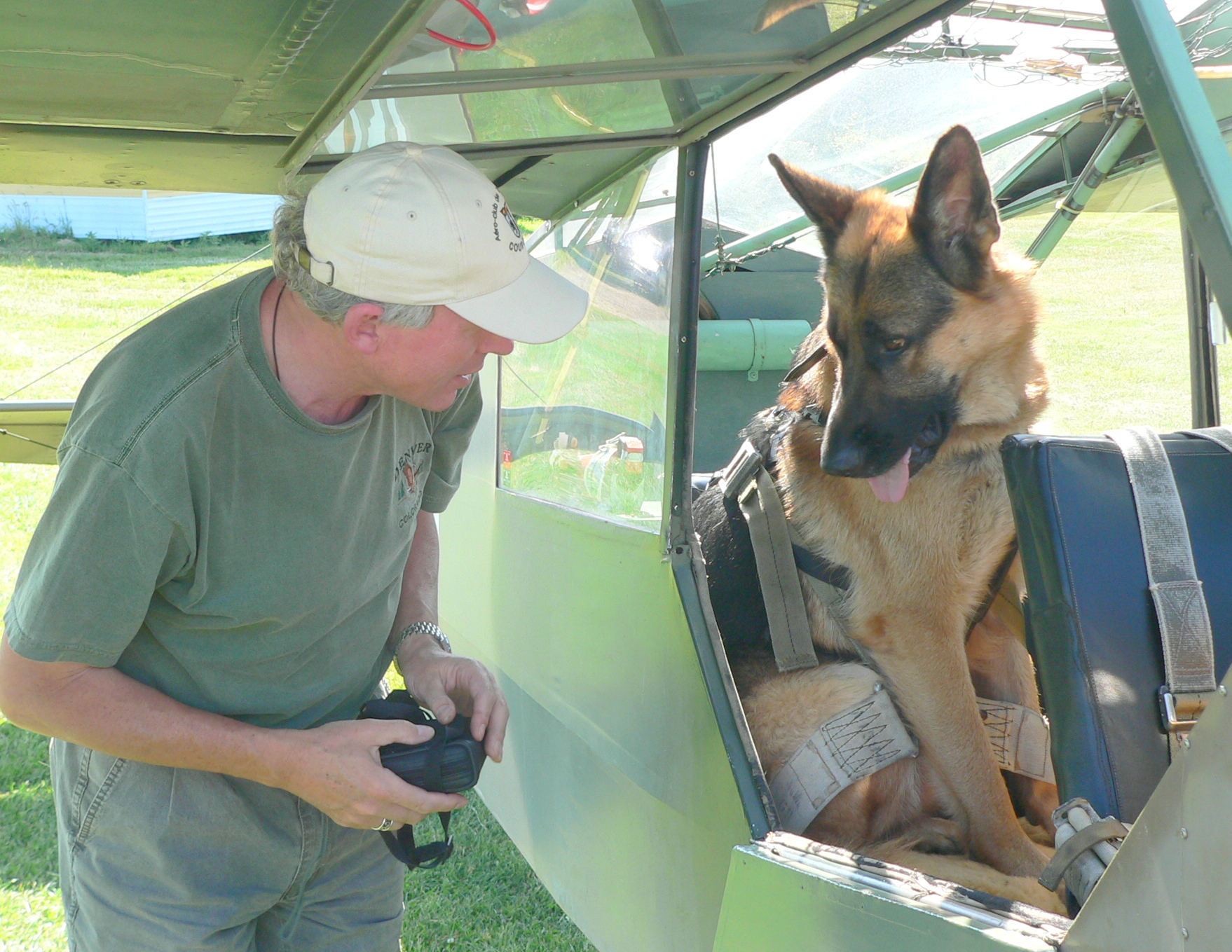
For many years I was a private pilot and in later days had the pleasure, the huge pleasure I must say, of flying a Piper Super Cub which is a group-owned aircraft based at Watchford Farm in South Devon. The aircraft, a Piper PA-18-135 Super Cub, was originally supplied to the Dutch Air Force in 1954 and was permitted by the British CAA to carry her original military markings including her Dutch military registration, R-151, although there was a British registration, G-BIYR, ‘underneath’ the Dutch R-151. (I wrote more fully about the history of the aircraft on Learning from Dogsback in August 2009.)
Piper Cub R151
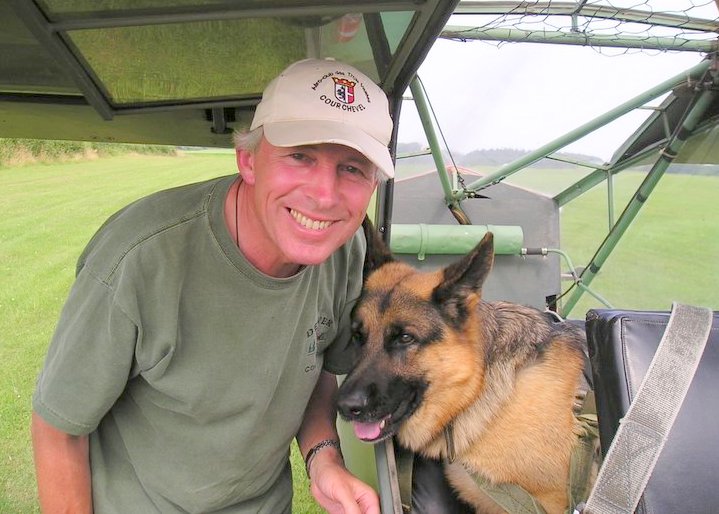
Anyway, every time I went to the airfield with Pharaoh he always tried to climb into the cockpit. So one day, I decided to see if he would sit in the rear seat and be strapped in. Absolutely no problem with that!
My idea had been to fly a gentle circuit in the aircraft. First I did some taxying around the large grass airfield that is Watchford to see how Pharaoh reacted. He was perfectly behaved.
Then I thought long and hard about taking Pharaoh for a flight. In the Cub there is no autopilot so if Pharaoh struggled, or worse, it would have been almost impossible to fly the aircraft and cope with Pharaoh. So, in the end, I abandoned taking him for a flight. The chances are that it would have been fine. But if something had gone wrong, the outcome just didn’t bear thinking about.
So we ended up motoring for 30 minutes all around the airfield which, as the next picture shows, met with doggie approval. The date was July 2006.
That was fun, Dad!
What a dear dog he has been over all the years!
As if to reinforce the fabulous dog he still is, yesterday it was almost as though he knew he had to show how youthful he still was.
Because, when I took his group of dogs out around 7.30am armed with my camera, Pharaoh was brimming over with energy.
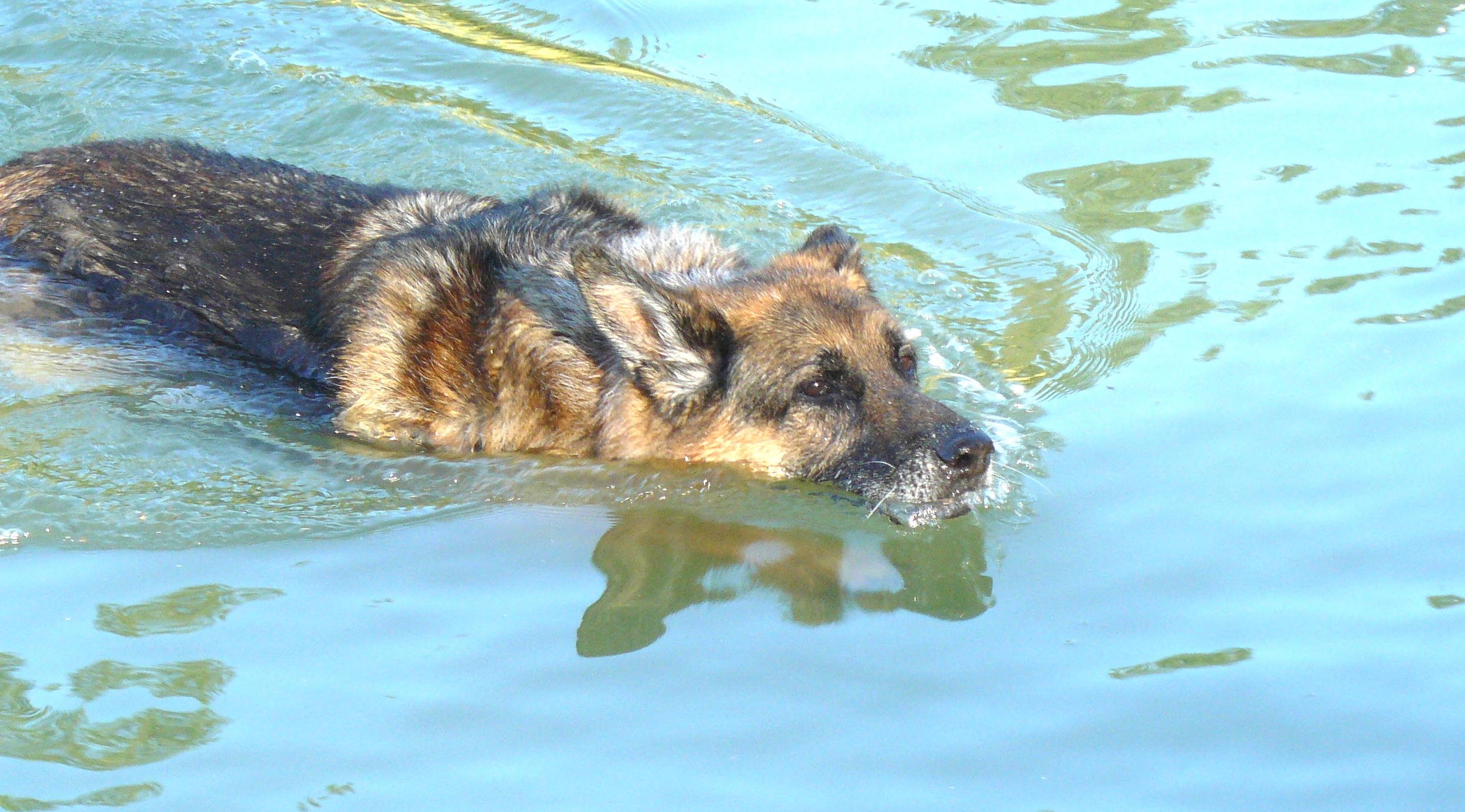
First up was a swim in the pond.
Ah, an early birthday dip! Bliss!
Then in a way he has not done before, Pharaoh wanted to play ‘King of my Island’, which is in the middle of the pond.
Halt! Who goes there!
oooo
This is my island! So there!
Then a while later, when back on dry land, so to speak, it was time to dry off in the morning sunshine.
Actually, this isn’t such a bad life!
Long may he have an enjoyable and comfortable life.
ooOOoo
This was written quite obviously before Pharaoh died. He is still on the home page of this blog.
Beloved Pharaoh. Born: June 3rd., 2003 – Died: June 19th., 2017. A very special dog that will never be forgotten.
So many times a particular article from a website that allows republishing is not only a good and relevant article but also is a quick way of me publishing a post when, as I was yesterday, a bit pressed for time.
From sports to pop culture, there are few themes more appealing than a good comeback. They happen in nature, too. Even with the Earth losing species at a historic rate, some animals have defied the trend toward extinction and started refilling their old ecological niches.
I’m a philosopher based in Montana and specialize in environmental ethics. For my new book, “Tenacious Beasts: Wildlife Recoveries That Change How We Think About Animals,” I spent three years looking at wildlife comebacks across North America and Europe and considering the lessons they offer. In every case, whether the returnee is a bison, humpback whale, beaver, salmon, sea otter or wolf, the recovery has created an opportunity for humans to profoundly rethink how we live with these animals.
One place to see the rethink in action is Colorado, where voters approved a ballot measure in 2020 mandating the reintroduction of gray wolves west of the Continental Divide. Colorado’s Parks and Wildlife Agency has released a draft plan that calls for moving 30 to 50 gray wolves from other Rocky Mountain states into northwest Colorado over five years, starting in 2024.
Aldo Leopold, the famed conservationist and professor of game management at the University of Wisconsin, believed that moral beliefs evolve over time to become more inclusive of the natural world. And what’s happening in Colorado suggests Leopold was right. Human attitudes toward wolves have clearly evolved since the mid-1940s, when bounties, mass poisoning and trapping eradicated wolves from the state.
Recovering animals encounter a world that is markedly different from the one in which they declined, especially in terms of how people think about wildlife. Here are several reasons I see why societal attitudes toward wolves have changed. The importance of keystone species
Wolves released in northwest Colorado will wear GPS collars that enable wildlife managers to track them.
The idea that certain influential species, which ecologists call keystone species, can significantly alter the ecosystems around them first appeared in scientific literature in 1974. Bison, sea otters, beavers, elephants and wolves all exert this power. One way in which wolves wield influence is by preying on coyotes, which produces ripple effects across the system. Fewer coyotes means more rodents, which in turn means better hunting success for birds of prey.
Wolves also cause nervous behaviors among their prey. Some scientists believe that newly returned predators create a “landscape of fear” among prey species – a term that isn’t positive or negative, just descriptive. This idea has shifted thinking about predators. For example, elk avoid some areas when wolves are around, resulting in ecological changes that cascade down from the top. Vegetation can recover, which in turn may benefit other species.
Insights into pack dynamics
Animal behavioral science research has provided pointers for better wolf management. Studies show that wolf packs are less likely to prey on livestock if their social structure remains intact. This means that ranchers and wildlife managers should take care not to remove the pack’s breeding pair when problems occur. Doing so can fragment the pack and send dispersing wolves into new territories.
Wildlife agencies also have access to years of data from close observation of wolf behavior in places like Yellowstone National Park, where wolves were reintroduced starting in 1995. This research offers insights into the wolf’s intelligence and social complexity. All of this information helps to show how people can live successfully alongside them.
Predators provide economic value
Research has also demonstrated that wolves provide economic benefits to states and communities. Wisconsin researchers discovered that changes in deer behavior due to the presence of wolves have saved millions of dollars in avoided deer collisions with cars. These savings far exceed what it costs the state to manage wolves.
Wolf recovery has been shown to be a net economic benefit in areas of the U.S. West where they have returned. The dollars they attract from wolf-watchers, photographers and foreign visitors have provided a valuable new income stream in many communities.
Predators do kill livestock, but improved tracking has helped to put these losses in perspective. Montana Board of Livestock numbers show that wolves, grizzly bears and mountain lions caused the loss of 131 cattle and 137 sheep in the state in 2022. This is from a total of 2,200,000 cattle and 190,000 sheep. Of the 131 cattle, 36 were confirmed to be taken by wolves – 0.0016% of the statewide herd.
According to the U.S. Department of Agriculture, dogs, foxes and coyotes in Montana all killed more sheep and lambs than wolves did in 2020. Even eagles were three times more deadly to sheep and lambs than wolves were.
Actual costs to ranchers are certainly higher than these numbers suggest. The presence of wolves causes livestock to lose weight because the animals feed more nervously when wolves are around. Ranchers also lose sleep as they worry about wolves attacking their livestock and guard dogs. And clearly, low statewide kills are small comfort to a rancher who loses a dozen or more animals in one year. Margins are always tight in the livestock business.
t
A northern Colorado rancher discusses options for protecting his cattle from wolves, which already are naturally present in the state.
What’s more, predators’ economic impacts don’t end with ranching. In Colorado, for example, elk numbers are likely to decline after wolves are reintroduced. This may affect state wildlife agency budgets that rely on license fees from elk hunters. It may also affect hunting outfitters’ incomes.
In my view, voters who supported bringing wolves back to Colorado should remain deeply aware of the full distribution of costs and support proactive compensation schemes for losses. They should be mindful that support for wolf reintroduction varies drastically between urban and rural communities and should insist that effective mechanisms are in place ahead of time to ensure fair sharing of the economic burdens that wolves generate.
A new ethical playing field
Despite these complexities, the idea of the “big bad wolf” clearly no longer dominates Americans’ thinking. And the wolf is not alone. Social acceptance of many other wildlife species is also increasing. For example, a 2023 study found that between 80% and 90% of Montanans believed grizzly bears – which are recovering and expanding their presence there – have a right to exist.
Aldo Leopold famously claimed to have experienced an epiphany when he shot a wolf in New Mexico in the 1920s and saw “a fierce green fire” dying in her eyes. In reality, his attitude took several more decades to change. Humans may have an ingrained evolutionary disposition to fear carnivorous predators like wolves, but the change ended up being real for Leopold, and it lasted.
Leopold, who died in 1948, did not live to see many wildlife species recover, but I believe he would have regarded what’s happening now as an opportunity for Americans’ moral growth. Because Leopold knew that ethics, like animals, are always evolving.
Those last few paragraphs under the sub-heading of ‘A new ethical playing field’ show how many other wildlife species have gained a real advantage, a social acceptance as the article said. Long may it continue.
But it is more pertinent today than it was when it was first released.
The video asks ‘… why we never really learnt how to talk about this’.
The video is a little less than ten minutes long so watch it now, with the family as well, if that is appropriate, and perhaps have a discussion afterwards.
Jean and I do not have any answers especially when the news is all about other things.
Yes, we know that the climate is changing but what exactly does that mean is a more difficult question to answer. Mind you there are a growing number of organisations committed to finding answers.
Yes, there are many scientists who have clear opinions on the situation but we need a global movement, NOW, to address this very urgent requirement, and there is no sign that the global community are even talking about climate change let alone doing something.
There was a recent item on The Conversation that is being shared with you all today. It is about the role of meditation and mindfulness is keeping one healthy, and I sense this will be a popular article!
ooOOoo
Meditation and mindfulness offer an abundance of health benefits and may be as effective as medication for treating certain conditions
Assistant Professor of Psychiatry and Behavioral Neurosciences, Wayne State University
Published January 12th, 2023
Many people look to diet trends or new exercise regimens – often with questionable benefit – to get a healthier start on the new year. But there is one strategy that’s been shown time and again to boost both mood and health: meditation.
In late 2022, a high-profile study made a splash when it claimed that meditation may work as well as a common drug named Lexapro for the treatment of anxiety. Over the past couple of decades, similar evidence has emerged about mindfulness and meditation’s broad array of health benefits, for purposes ranging from stress and pain reduction to depression treatments to boosting brain health and helping to manage excessive inflammation and long COVID-19.
Despite the mounting body of evidence showing the health benefits of meditation, it can be hard to weigh the science and to know how robust it is.
I am very excited about how meditation can be used as a tool to provide powerful new insights into the ways the mind and brain work, and to fundamentally change a person’s outlook on life. And as a mental health researcher, I see the promise of meditation as a low- or no-cost, evidence-based tool to improve health that can be relatively easily integrated into daily life.
Meditation requires some training, discipline and practice – which are not always easy to come by. But with some specific tools and strategies, it can be accessible to everyone.
What are mindfulness and meditation?
There are many different types of meditation, and mindfulness is one of the most common. Fundamentally, mindfulness is a mental state that, according to Jon Kabat-Zinn a renowned expert in mindfulness-based practices, involves “awareness that arises through paying attention, on purpose, in the present moment, non-judgmentally.”
This means not ruminating about something that happened in the past or worrying about that to-do list. Being focused on the present, or living in the moment, has been shown to have a broad array of benefits, including elevating mood, reducing anxiety, lessening pain and potentially improving cognitive performance.
Mindfulness is a skill that can be practiced and cultivated over time. The goal is that, with repetition, the benefits of practicing mindfulness carry over into everyday life – when you aren’t actively meditating. For example, if you learn that you aren’t defined by an emotion that arises transiently, like anger, then it may be harder to stay angry for long.
The health benefits of meditation and other strategies aimed at stress reduction are thought to stem from increasing levels of overall mindfulness through practice. Elements of mindfulness are also present in practices like yoga, martial arts and dance that require focusing attention and discipline.
The vast body of evidence supporting the health benefits of meditation is too expansive to cover exhaustively. But the studies I reference below represent some of the top tier, or the highest-quality and most rigorous summaries of scientific data on the topic to date. Many of these include systematic reviews and meta-analyses, which synthesize many studies on a given topic.
Mindfulness-based programs also show promise as a treatment option for anxiety disorders, which are the most common mental disorders, affecting an estimated 301 million people globally. While effective treatments for anxiety exist, many patients do not have access to them because they lack insurance coverage or transportation to providers, for instance, or they may experience only limited relief.
It’s important to note, however, that for those affected by mental or substance use disorders, mindfulness-based approaches should not replace first-line treatments like medicine and psychotherapy such as cognitive behavioral therapy. Mindfulness strategies should be seen as a supplement to these evidence-based treatments and a complement to healthy lifestyle interventions like physical activity and healthy eating.
How does meditation work? A look into the brain
Studies show that regular meditators experience better attention control and improved control of heart rate, breathing and autonomic nervous system functioning, which regulates involuntary responses in the body, such as blood pressure. Research also shows that people who meditate have lower levels of cortisol – a hormone involved in the stress response – than those who don’t.
A recent systematic review of neuroimaging studies showed that focused attention meditation is associated with functional changes in several brain regions involved in cognitive control and emotion-related processing. The review also found that more experienced meditators had stronger activation of the brain regions involved in those cognitive and emotional processes, suggesting that the brain benefits improve with more practice.
This research does have limits. These include a lack of a consistent definition for the types of programs used, and a lack of rigorously controlled studies. In gold-standard randomized controlled trials with medications, study participants don’t know whether they are getting the active drug or a placebo.
In contrast, in trials of mindfulness-based interventions, participants know what condition they are assigned to and are not “blinded,” so they may expect that some of the health benefits may happen to them. This creates a sense of expectancy, which can be a confounding variable in studies. Many meditation studies also don’t frequently include a control group, which is needed to assess how it compares with other treatments.
Benefits and wider applications
Compared with medications, mindfulness-based programs may be more easily accessible and have fewer negative side effects. However, medication and psychotherapy – particularly cognitive behavioral therapy – work well for many, and a combination approach may be best. Mindfulness-based interventions are also cost-effective and have better health outcomes than usual care, particularly among high-risk patient populations – so there are economic benefits as well.
Researchers are studying ways to deliver mindfulness tools on a computer or smartphone app, or with virtual reality, which may be more effective than conventional in-person meditation training.
Importantly, mindfulness is not just for those with physical or mental health diagnoses. Anyone can use these strategies to reduce the risk of disease and to take advantage of the health benefits in everyday life, such as improved sleep and cognitive performance, elevated mood and lowered stress and anxiety.
Where to get started?
Many recreation centers, fitness studios and even universities offer in-person meditation classes. For those looking to see if meditation can help with the treatment of a physical or mental condition, there are over 600 clinical trialscurrently recruiting participants for various conditions, such as pain, cancer and depression.
If you want to try meditation from the comfort of your home, there are many free online videos on how to practice, including meditations for sleep, stress reduction, mindful eating and more. Several apps, such as Headspace, appear promising, with randomized controlled trials showing benefits for users.
The hardest part is, of course, getting started. However, if you set an alarm to practice every day, it will become a habit and may even translate into everyday life – which is the ultimate goal. For some, this may take some time and practice, and for others, this may start to happen pretty quickly. Even a single five-minute session can have positive health effects.
ooOOoo
This is a comprehensive article on a most important topic.
For whatever is happening in our world it is getting busier especially for those that are a great deal younger than me.
Whatever age we are and in many different cultures the New Year holds out so much hope. It seems an opportunity to start anew, to put the habits of last year behind us, to embrace a new start. Yet all the evidence is that a New Year’s Resolution will not make it through to February.
That is why I picked up on a recent article in The Conversation, that they kindly allow to be republished.
ooOOoo
Why you should give the gift of mindfulness this New Year
The start of another year can feel magical to many of us. Even though the days remain short and dark, the flip of the calendar can make it seem new beginnings with new resolutions are possible.
Mindfulness scholars and teachers like me call resolutions “habit breakers,” as they can overcome patterns that no longer serve individuals. However, research suggests that many resolutions fail by the end of January.
But a key to ensuring that resolutions stick is to choose one that will make a meaningful difference in your life. Seeing a real, tangible benefit can provide inspiration to keep going when all of life is telling us to let things go back to how they were before.
Living more mindfully is a common New Year’s resolution. This year, try gifting it to others.
The practice is based on an insight first described by ancient Buddhist texts that human beings have the capacity to observe experience without being caught up in it. This means, simply and wonderfully, that it is possible to observe ourselves having a craving, or a happy thought, or even a scary emotion, without reacting in the moment in a way that amplifies the feeling or sends the mind spiraling off into thinking about old memories or anticipating events.
This practice can help calm the mind and the body as we learn not to react to experience with likes and dislikes or judgments of good and bad. It does not make us cold or apathetic but more fully present.
Mindfulness in a distracted world
One of the challenges of practicing mindfulness in our contemporary world is that there has been a profound transformation in human attention. The artist Jenny Odell argues that in our “attention economy” human attention has been transformed into a commodity that big corporations buy and sell. This economy rests on a technological revolution of mobile phones and social media that makes it possible for corporations to reach us with content that can capture and monetize our focus, at every moment, every day, and no matter where we may be.
The needy little devices most people carry in their pockets and wear on their wrists, incessantly beeping and buzzing and chirping, are a perpetual diversion from the present moment. The result is that it can feel as though our ability to focus, and be fully present, has been stolen.
But mindfulness can help us resist the attention economy and savor the things that make life special, like being together with those we love.
The gift of mindfulness
While most mindfulness research focuses on the individual benefits of the practice, scholars like me argue that we not only practice mindfulness for ourselves but that we can also practice it for others. It can help us build stronger, healthier relationships.
The sad truth is that living in the attention economy, most of us have become bad listeners. However, just as it is possible to watch ourselves having an experience without reacting, it’s possible to watch another person have an experience without getting tied up in reactivity and judgment. It’s possible simply to be present.
The gift of mindfulness is a practice of listening with compassion to another person describe their experiences. To give this gift means putting away your phone, turning off social media, and setting aside other common distractions. It means practicing being fully present in another person’s presence and listening to them with complete attention, without reacting with judgment, while resisting the urge to make the interaction about you.
It is not a gift that you will wrap, or put inside a card; it’s not one you will have to name as a gift or draw attention to. It’s something you can do right now.
ooOOoo
Professor David Engels is spot on. The number of people who are wedded to their cell phone, especially the younger ones of us, is frightening. Many years ago I was fortunate to have a counsellor who was into mindfulness and some of the good practices have stayed with me.
So, please, if you are thinking that your use of a cell phone is intrusive, even slightly, then let this New Year present a new you!
P.S.
Belinda sent in the following attached to one of her comments. It’s perfect! Thank you, Belinda!
And while we are on the subject of New Year’s Resolutions try this one. It is not a long video but it is extremely important; it concerns our diet and our health!















 Learning from Dogs