Category: Communication

How old is that doggie in the window?

Interesting article about calculating a dog’s age.

It’s a well-known ‘calculation’ that a dog’s age is seven years for every human year. But it’s wrong; the scientific result is more complex.

But rather than me say it, I’ll hand it over to Christian Yates of the BBC who on the 6th January this year published an article on this subject.

ooOOoo

Your pet clearly ages faster than you do, but new research is giving us a much clearer idea of just how old your dog really might be.

By Christian Yates, January 6th, 2020

If your dog has been alive and kicking its paws about for a decade, the widely held belief is it has aged as much as a human would have done over 70 years. This conversion factor – each year of a dog’s life accounting for seven human years – comes from dividing human life expectancy of around 77 by the canine life expectancy of around 11.

The underlying assumption is that each calendar year a dog lives through is equivalent to seven human years at any stage of a dog’s life. But new research suggests that things aren’t so simple. And if we look at some basic developmental milestones, it’s clear why.

For example, most dog breeds reach sexual maturity between the ages of six and 12 months – the upper end of that range corresponding, by the traditional conversion, to a human age of seven. And at the other end of the spectrum, although unusual, some dogs have been known to live for over 20 years. Under the “factor-of-seven” conversion rule, this would equate to an unfathomable 140 human-equivalent years.

New insights into how dogs age suggest our pets move into middle age more rapidly than most owners might suspect (Credit: Getty Images)

To make matters more complicated, dogs’ life expectancy depends significantly on the breed. Smaller dogs tend to live significantly longer, suggesting that they age more slowly than bigger dogs.

All of this raises the question of what exactly we mean by age. The most obvious way to describe it is simply the length of time that has passed since birth. This is known as the chronological definition of age.

When it comes to comparing animal ages across species, the biological definitions of age are far more useful than their chronological counterparts

However, there are other descriptions. Biological age, for example, is a more subjective definition, which relies on assessing physiological indicators to identify an individual’s development. These include measures like the “frailty index” – surveys that take into account an individual’s disease status, cognitive impairments and levels of activity.

Then there are the more objective ageing biomarkers, such as levels of gene expression (genes produce proteins at differing rates at different stages of life) or numbers of immune cells. The rate at which biological age increases depends on genetically inherited factors, mental health and lifestyle.

Rather than celebrating chronological age, looking at the levels of methylation on a dog’s DNA is a much more accurate measure of aging (Credit: Getty Images)

For example, if you’ve spent a lot of time eating junk food and smoking cigarettes instead of taking exercise and eating healthily, the chances are your biological age will exceed your chronological age. Or, you might be a 60-year-old with the body of a 40-year-old if you’ve looked after yourself well.

A dog’s life

When it comes to comparing animal ages across species, the biological definitions of age are far more useful than their chronological counterparts. Knowing a hamster is six weeks old doesn’t give you a good picture of that animal’s life stage, even if you know the life expectancy of a hamster is only three years. Learning that a hamster has reached an age where it can reproduce gives a much better picture of its level of maturity.

The authors of the new ageing study suggest that a sensible way to measure biological age is though so-called “epigenetic clocks” – changes to the packaging of our DNA that accumulate over time in all mammals.

In their first year of life, puppies grow up so quickly that they age the equivalent of 31 human years (Credit: Getty Images)

In particular, “methylation” – the addition of methyl groups (a carbon atom bonded to three hydrogen atoms) to DNA – seems to be a good indicator of age. Many prominent physiological markers, such as the development of teeth, seem to occur at the same levels of methylation across different species. So by matching the levels of methylation in Labrador retrievers and humans, the researchers derived a formula to map dog age to its human equivalent.

That formula is: human equivalent age = 16 x ln(dog’s chronological age) + 31.

Here “ln” represents a mathematical function known as the natural logarithm. The logarithm function is well-known in the non-linear scales for energy released during earthquakes (Richter) or for measuring sound (decibels). It comes in useful for measuring quantities whose sizes vary over many orders of magnitude. It’s even possible that a logarithmic experience of the passing of time might explain why we perceive time speeding up as we get older.

A handy short cut is to remember that the first dog year counts for 31 human years

In the graph below, you can see how the natural logarithm works to convert the years a dog has lived (dog age) into the equivalent human age in the red dashed curve. The curve suggests that dogs mature extremely rapidly at first, but that their ageing then slows down, meaning that most of their lives are experienced as a form of protracted middle age.

A handy short cut is to remember that the first dog year counts for 31 human years. Then, after that, every time the dog’s chronological age doubles, the number of equivalent human years increases by 11. So eight calendar years represents three “doublings” (from one to two, two to four and then four to eight) giving a dog age equivalent of 64 (that’s 31 + 3×11).

This useful approximation is plotted as the black curve on the conversion figure below. The green line represents the discredited factor-of-seven rule that suggests unrealistic ages at the higher end of the dog age spectrum.

In eight calendar years a dog will approximately age the equivalent of 64 years (Credit: Christian Yates)

Most dog lovers will already have suspected that the human-to-dog age relationship is non-linear, having noticed that, initially, their pets mature much more quickly than the linear factor-of-seven rule suggests.

more sophisticated refinement to the factor-of-seven rules has suggested that each of the dog’s first two years correspond to 12 human years while all subsequent years count for four human equivalents. The blue curve in the above figure, which represents this ad hoc rule, shows better agreement with the new logarithmic law.

In practice the new molecular insights into human-to-dog age conversion encapsulated by the logarithmic law suggest that dogs move into middle age even more rapidly than most dog-owners would have suspected. It’s worth bearing in mind, when you find that Rex is reluctant to chase the ball like he once did, that he’s probably got more miles on the clock than you’ve been giving him credit for.

Christian Yates is a senior lecturer in mathematical biology at the University of Bath. He is also the author of The Maths of Life and Death.

This article originally appeared on The Conversation, and is republished under a Creative Commons licence. 

ooOOoo

I don’t know about you but I found this article extremely interesting.

Well done the BBC!

Speaking with wolves!

An insightful look at the way that baby wolves play.

I’m gradually getting ourselves organised following the power failure and, on cue, Chris Gomez sent the following in two days ago.

It shows beyond doubt that young wolves play like dogs and that the two animals are more alike than dis-alike.

You watch the following video and see what I mean.

Then there is the article that is reproduced below.

ooOOoo

Baby wolves like to play fetch too – what this says about your dog.

By Fermin Koop

Playing a game of fetch with a dog means they are following a human social cue to recover the ball. But fetch isn’t just for dogs, wolf puppies are down to play too, which means they can also understand human communication cues, according to a new study.

Credit Wikipedia Commons

The findings, published in the journal iScience, were made after researchers put 13 8-week-old wolf puppies from three different litters through a series of tests usually used to assess dog-puppy behavior. Three of the pups were interested in playing fetch with a stranger, which included bringing a ball back when encouraged to.

The discovery was quite a surprise for the team as it was believed that the cognitive abilities necessary to understand communication cues given by a human were presented in dogs only after humans domesticated them 15,000 years ago. Dogs differ from wolves physically, genetically and behaviorally.

“When I saw the first wolf puppy retrieving the ball, I literally got goosebumps,” said Christina Hansen Wheat of Stockholm University in a press release. “I immediately knew that this meant that if variation in human-directed play behavior exists in wolves, this behavior could have been a potential target for early selective pressures exerted during dog domestication.”

Wanting to learn more about the effects of domestication on behavior, Hansen Wheat and her team raised wolf and dog puppies from the age of 10 days and put them through various behavioral tests. In one of them, the pup was thrown a ball by an unknown person, encouraging the wolf to get it and bring it back.

Expectations of the wolf pups catching on weren’t high, with the first two litters showing no interest in the balls, let alone of playing fetch. But everything changed with the third litter. A few of the puppies went for the ball and even responded to the social cues and brought it back.

“It was very surprising that we had wolves actually retrieving the ball,” said Hansen Wheat. “I did not expect that. I do not think any of us did. It was especially surprising that the wolves retrieved the ball for a person they had never met before.”

In the past, other research showed that domesticated and non-domesticated species will follow human gestures if a food reward is given, Hansen Wheat and her team said. But in those cases, the animals were previously trained to follow the cues or knew the person conducting the study.

While the new research has a limitation over the size of its sample, it could reassess our interpretation that understanding human social cues came from domestication. Instead, it could be possible that this behavior can be traced back to an ancestral population before wolves were domesticated into dogs.

ooOOoo

Despite this being the twenty-first century there are still things being discovered that cause us humans to be amazed.

Such as this story about the young wolves, way before they evolved into dogs.

We’re back!

On last Thursday morning, at 02:30, in the middle of a huge storm the electricity was lost. So was the telephone and the internet.

The electricity was restored at 04:30 on Friday, the telephone later in the morning but no internet.

Finally, the internet was restored at 21:00 last night, too late to do anything useful.

So that explains the absence of yours truly over the last three days. Hopefully, if it remains on there will be a normal post at midnight tonight. All times are Pacific Time.

It was a huge storm with about 6 inches of snow.

Picture Parade Three Hundred and Twenty-One

Devoted exclusively to the work of Sue Dreamwalker

Sue earlier on in the week brought my attention to this page on her blog: Pastel Drawings. Sue said that I could republish them. I am flattered. In fact, there are sixteen of these beautiful drawings and I intend to publish eight of them today and the remaining eight in Picture Parade Three Hundred and Twenty-Two.

oooo

oooo

oooo

oooo

oooo

oooo

oooo

They are so beautiful.

Thank you, Sue, for giving me permission to republish them. Needless to say full copyright is vested in Sue Morton and them being republished in this place does not give authority for them to be republished elsewhere.

This man loves his dog a lot!

An item in The Dodo just had to be shared with you.

This is devotion with a capital ‘D’.

Straight into the article that, as I said, came from a recent Dodo newsletter.

ooOOoo

Man Makes A Cozy Wagon So His Paralyzed Dog Can Still Take Walks

He said that she would do the same for him ❤

By
Published On 01/07/2020

Photo Credit: Facebook/Bryan Thompson

Last month, on a chilly winter day in Nova Scotia, Canada, Bryan Thompson had a chance encounter he won’t soon forget.

While walking through a local park, Thompson saw this: a stranger making his way through the snow, pulling a cart containing the most precious cargo.

Inside, bundled up against the cold, was a cozy white pup.

Photo Credit: Facebook/Bryan Thompson

Speaking to the stranger, Thompson came to learn that the dog has amyotrophic lateral sclerosis (ALS), a spinal cord disorder which can lead to paralysis in dogs. Because of that, she’s unable to get around on her own — but that hasn’t stopped the pair from still taking walks.

The dedicated dog owner crafted the cart to ensure it never does.

In a post online, Thompson described his reaction to that scene.

“I told him he was a great person for doing that, because I know there are many who wouldn’t. He just said that she would do the same for him,” Thompson wrote. “It’s hard to type this without tearing up.”

Photo Credit: Facebook/Bryan Thompson

Afterward, the stranger and his happy dog continued on their way — slipping out of sight, but not out of mind.

Thompson’s account of that touching encounter has since gone viral, inspiring countless others with an example of true love at its finest.

ooOOoo

This stranger, who is not named, is just a miraculous person. Plus a caring and loving man. It’s no surprise that the encounter, as described above, has gone viral.

This is, after all, what matters!

Bow ties!

Yes, you read that correctly.

I came late to my desk yesterday afternoon so you will forgive me for launching straight into a piece I read on the BBC.

ooOOoo

Bow ties give dogs in shelters a ‘second chance’

When 13-year-old Sir Darius Brown (yes, his real name) heard about displaced dogs being euthanised after Hurricanes Harvey and Irma in 2017, he had an idea.

His sister had taught him how to make bow ties and he decided to donate some to local animal shelters. It helped the dogs to get adopted faster.

Now his handmade bow ties have helped around 200 dogs across the US, leading him to receive a letter of recognition from former President Barack Obama.

ooOOoo

There’s no shortage of brilliant young people!

Pentobarbital found in route to dog food!

This is another important dog food recall notice.

The first of the New Year but I suspect if will be far from the last.

ooOOoo

Dear Fellow Dog Lover,

I’m pleased to report there have been no dog food recalls issued since September 26, 2019.

Euthanasia Drug Discovered in Adulterated Animal Fat

The FDA recently discovered an animal euthanasia drug (pentobarbital) in test samples collected at a major supplier of animal fat to the pet food industry.

We’re unable to locate any information about which pet food brands may have purchased the affected ingredient.

For this reason, we recommend all dog and cat owners remain alert to the potential for future recalls related to this news.

Click here to read the official FDA Warning Letter sent to the producer.

Dog Food Recall Update

Some pet foods previously recalled may still be on store shelves… or in your own home. So, if you’ve missed any of the 11 recalls we’ve sent since July… be sure to visit our Dog Food Recalls page for full details.

10 Best Dog Food Lists
Recently Updated

Over the last 90 days, The Dog Food Advisor has updated the following best dog food pages:

  • Best Dry Dog Food
  • Best Wet Dog Food
  • Best Puppy Food
  • Best Affordable Dog Food
  • Best Dog Food for Allergies
  • Best Grain-Free Dog Food
  • Best Dog Food Made with Grain
  • Best Dog Food for Sensitive Stomach
  • Best Senior Dog Food
  • Best Dog Food for Weight Loss

Click here to see ALL our Best Dog Food lists for January 2020

Please be sure to share this report with other pet owners.
Mike Sagman, Editor
The Dog Food Advisor
Saving Good Dogs From Bad Dog Food

ooOOoo

Once again may I add my plea to Mike Sagman’s request to share this report as far and wide as you can.

The making of a scent dog.

A guest post from Bryony Ravate.

To be honest there are times when I struggle to come up with something original in terms of blogging. And it is at these times of life that I am very grateful for the offer of a guest post. Take Bryony for example. This is not the first time that I have presented her work but I am forever grateful for her so doing.

This is her article on scent dogs.

ooOOoo

The making of a scent dog.

By Bryony Ravate, January 2nd, 2020

If you’ve been lucky enough to be around dogs, you will have probably noticed how their noses are always moving. By possessing a nose up to 15x times more sensitive than our own, with 600,00 neurones, they can sniff out different components in every room. When you’re cooking a meal, you will be able to recognise the smell of a dish. But when your dog smells the meal, he can smell each individual spice and seasoning, the oils, the crockery and even any water.
You can use your dogs’ keen sense of smell for play – laying out different scents for them to explore. But their noses can also be used for working environments– such as in airports, with the police and in search and rescue missions. They can track down suitcases hiding illegal substances, follow the suspect of a crime and sniff out the victims of a snowstorm. To become scent dogs, the canines go through vigorous training. However, although all dogs have an exceptional sense of smell, not all dogs make it through training.

It makes sense to analyse what leads to success and failure in scent dog training. So, a keen researcher at University College Cork, Ireland performed a literature review in which factors behind success and failure in scent dog training were analysed. A literature review is the process whereby you search a database full of information (usually research articles published in reputable journals) and you extrapolate the information to create your own source. Here, I’m going to pull together some of the points I found the most interesting, points you may not think would affect the making of a scent dog.

Personality

Dogs with strong motivation to play or search, dogs which were bold rather than shy, and dogs which can adapt and cope with stressful stimuli are more likely to become scent dogs. High motivation to play or search, makes a dog easier to train. Play can be used as a reward, by allowing the dog to pull on a chew toy after being successful in a trial. Finding scents may be perceived as a game to the dog, increasing his motivation to engage. Bold dogs are less unnerved by new surroundings and situations. A nervous dog may be hesitant about pursuing an unknown scent – but a bold dog will take little hesitation. Adaptable dogs may be able to apply their knowledge to different situations and they will be unphased by commotions and will keep working when faced with distractions.

Housing Standards

Dogs that live in enriched environments throughout their training have increased ability in trials. Like children, the more opportunities you offer your dogs to learn, explore and interact with their environment, the more it allows them to develop and grow. Dogs should feel secure in their home environment when not working; keeping them with other dogs and in bright rooms without using loud cleaning equipment (such as hoovers) will make them less anxious, leading to better accuracy in scent trials.

The Human Partner

Dogs emotions are often intertwined with their handlers. When a dog’s owner gets angry, the stress hormones in the dog increase as a result. If a dog handler is happy, the dogs will perform better. The bond between dogs and their handlers can affect the accuracy of scent trials. If the dog lives at the owners’ home when he’s not working, obedience and accuracy are increased. Although the bond between scent dog and handler is important, they must be independent thinkers. When faced with a problem- solving task, they must be able to manipulate the environment themselves to find a solution, rather than looking at their handler for cues about the answer.
These are some factors which can alter the likelihood of a dog being a successful, as reviewed by Camille A Trosi and her team. What we must keep in mind is that all dogs are individuals. We cannot use this information to ensure all dogs in the future will pass scent dog training. However, we can use this knowledge to give potential scent dogs the best possible start to life; providing enrichment, an affectionate bond with their handler, and a suitable home environment. Canine personalities are not always determined by genetics, and a suitable environment can give a dog a metaphorical push in the right direction to ensure he is the best he can be, whether that be as a scent dog, a guide dog or even a lap dog.

Original Source : Troisi, C. A., Mills, D. S., Wilkinson, A. and Zulch, H. E. 2019. Behavioral and Cognitive Factors That Affect the Success of Scent Detection Dogs. Comparative Cognition & Behavior Reviews, 14, pp. 51-76. doi: 10.3819/ccbr.2019.140007

ooOOoo

Now what I haven’t done before but intend to do straightaway is to reproduce an extract from Bryony’s CV.

I currently hold a Pass with Distinction in MSc Animal Behaviour and Welfare from Queen’s University Belfast. I also have a BSc in Animal Behaviour and Welfare from Plymouth University. As well as holding two degrees relevant to the field, I currently have 2+ years of work experience. I possess the core attributes required when pursuing a career in the scientific industry; dedication, independence and initiative. I am highly passionate and believe that with my unique skillset I can have a valuable impact in the field of Science Communication.

Plus Bryony has her own blog, BrynsteinScience, and is also on Instagram, of the same name.

We wish Bryony much success in her work life and in her caring and interest for animals in general and dogs in particular!

There is an extensive article on Wikipedia in the UK on scent dog and the link to that article is here.

Finally to close with this wonderful photograph of a scent dog.

By Taz80 / SEDIRI Eddy – Personal picture, CC BY-SA 3.0, https://commons.wikimedia.org/w/index.php?curid=15094727

That’s perfect!

Those eyes!

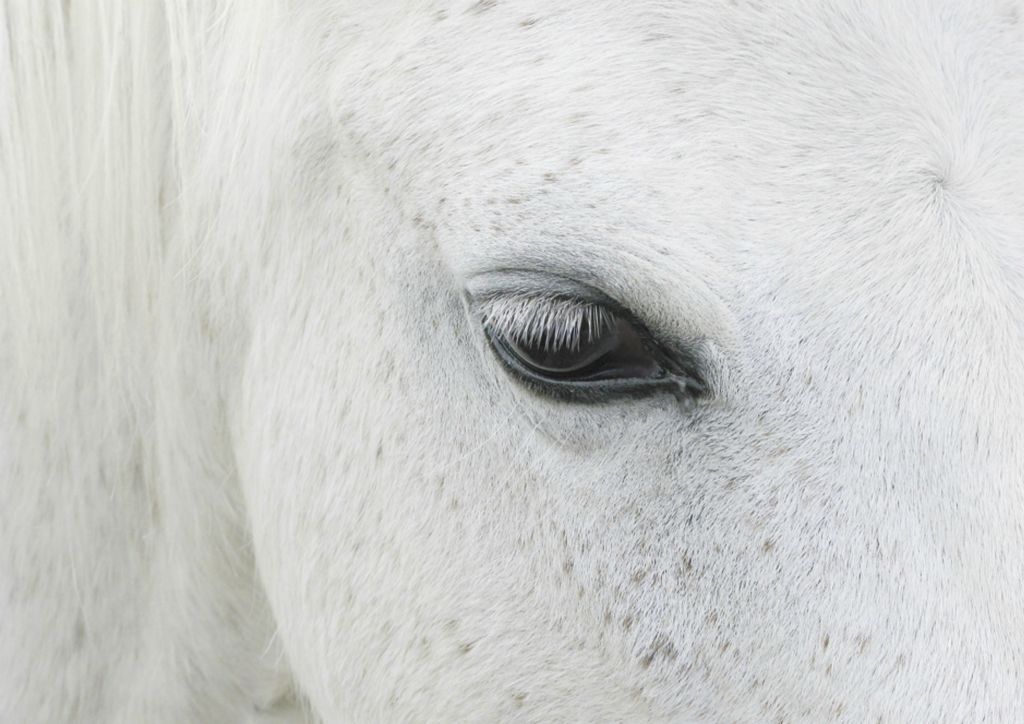
Now to the wolf’s eyes!

I have written quite a few times about the eyes of dogs but never the wolf.

This was sent to me by Julie Thomas-Smith, the wife of my best friend, Richard Maugham, and it is just beautiful.

It comes from the Wolf Conservation Center and when one goes across to that website then one reads:

A wolf’s eyes have the power to speak a great language. Did you know that wolves possess certain ocular characteristics that allow them to communicate with other members of their species using their eyes alone? One can guess that this gives a new meaning to the common phrase “puppy-dog eyes!”

Enjoy your weekend.

A truly wonderful woman

I shall never tire of sharing these sorts of stories!

In the last hours of 2019 Margaret Krupinski sent us a story about this amazing woman and how she loved all the dogs in her care.

It’s a real pleasure to reproduce that article here.

ooOOoo

(SWNS)

Woman Dubbed ‘Miracle Worker’ for Helping Paralyzed, Injured Dogs Walk Again

By SWNS
December 30, 2019

A woman who cares for sick and disabled pooches from around the world has been dubbed a “miracle worker” after getting many of them back on their feet again.

Claire-Louise Nixon, 48, is a dog lover and shares her modest home with 27 canines that no one else wants.

Claire walking with 8 out of the 27 dogs that she has helped to walk again. (©SWNS)
Claire-Louise Nixon, 51 out walking 8 of her 27 dogs that she has helped to walk again. See Cambridge copy SWCAdogs: Dog-lover Claire-Louise Nixon has told how she shares her semi-detached house with her family – and a staggering 27 rescued pooches.Claire-Louise, 48, rescues sick and paralysed dogs from around the world and looks after them at her humble home in Milton Keynes, Bucks.She says looking after the brood of canines is a full-time job and takes her from 6am until midnight.

Many of them are street dogs that have been abused or have lost limbs from mines and explosives in former war zones. But regardless of what conditions the dogs arrive in, Claire is determined to get them walking again through intense physio sessions and walks on wheels.

Her motley crew of dogs all live in her four-bedroom, semi-detached house in Milton Keynes with her husband, Gary, 50 and daughter, Rhia-Louise, 22. While Claire’s initial plan is usually to find forever homes for the dogs, quite often, their needs are too complex, with some even having to wear nappies.

The home of Clarie-Lousie Nixon who has 27 dogs living in the house. See Cambridge copy SWCAdogs: Dog-lover Claire-Louise Nixon has told how she shares her semi-detached house with her family – and a staggering 27 rescued pooches.Claire-Louise, 48, rescues sick and paralysed dogs from around the world and looks after them at her humble home in Milton Keynes, Bucks.She says looking after the brood of canines is a full-time job and takes her from 6am until midnight.
Some of the 27 dogs that Clarie-Lousie Nixon has living at her home. See Cambridge copy SWCAdogs: Dog-lover Claire-Louise Nixon has told how she shares her semi-detached house with her family – and a staggering 27 rescued pooches.Claire-Louise, 48, rescues sick and paralysed dogs from around the world and looks after them at her humble home in Milton Keynes, Bucks.She says looking after the brood of canines is a full-time job and takes her from 6am until midnight.

She said: “When I get these dogs who are in such a bad way, the vet would say: ‘Claire, you won’t get them walking again.’

“But now they say nothing is impossible! They say we work miracles with them!

“I think all they need is love, kindness and patience. When they walk into my house they see other dogs like them so they don’t feel any different that’s why I think they do so well here.

“If you give them a reason to walk again then they will.”

Rita Ora Collie from Romania who was abandoned on the roadside after beeing born deformed and was sent to Claire-Lousie Nixon as no one wanted her. See Cambridge copy SWCAdogs:Dog-lover Claire-Louise Nixon has told how she shares her semi-detached house with her family – and a staggering 27 rescued pooches.Claire-Louise, 48, rescues sick and paralysed dogs from around the world and looks after them at her humble home in Milton Keynes, Bucks.She says looking after the brood of canines is a full-time job and takes her from 6am until midnight.
Forest Gump a small collie crossed pomeranian who was run over on an Army base in Romania. Men on the base found Clarie-Lousie Nixon on facebook and sent Forest Gump to her for treatment. See Cambridge copy SWCAdogs: Dog-lover Claire-Louise Nixon has told how she shares her semi-detached house with her family – and a staggering 27 rescued pooches.Claire-Louise, 48, rescues sick and paralysed dogs from around the world and looks after them at her humble home in Milton Keynes, Bucks.She says looking after the brood of canines is a full-time job and takes her from 6am until midnight.

Claire, who looks after the brood of canines—seven of which are paralyzed—says it’s a full-time job and takes her from 6 a.m. until midnight. Feeding them alone is a mammoth chore involving 15 kilograms (approx. 33 pounds) of biscuits and a complete crate of dog food every single day.

Eight of the dogs have to wear nappies, with little bodysuits to keep them in place, and they all need daily baths to keep them clean and infection-free. There’s a lot of cleaning up involved, and Claire is constantly trying to keep on top of the housework.

Feeding time at The home of Clarie-Lousie Nixon who has 27 dogs living in the house. See Cambridge copy SWCAdogs: Dog-lover Claire-Louise Nixon has told how she shares her semi-detached house with her family – and a staggering 27 rescued pooches.Claire-Louise, 48, rescues sick and paralysed dogs from around the world and looks after them at her humble home in Milton Keynes, Bucks.She says looking after the brood of canines is a full-time job and takes her from 6am until midnight.

Claire’s passion to care for sick dogs all started 12 years ago when a puppy named Thomas Cook, who was only a few days old, was brought to the vets to be put down. The puppy had a hair lip and cleft palate, which prevented him from suckling milk and feeding, but Claire was determined to save him.

Claire painstakingly hand-reared Thomas Cook by feeding him a bottle every few hours, and from there, it escalated to having 27 disabled and sick dogs.

She said: “It went into having paralyzed dogs and dogs that had their legs blown off in Bosnia and dogs that had been shot and still had bullets inside them.”

All of Claire’s dogs are named after celebrities that she feels describe their personalities.

Sir Elton John, who Nixon named because of the song “I’m still standing,” was rescued from Romania after he was run over and left on the road to die. This left him with a broken spine. However, with Claire’s help, he can now go on small walks.

Sir Elton John, a Jack Russell cross who Clarie-Lousie Nixon has helped to walk again. See Cambridge copy SWCAdogs: Dog-lover Claire-Louise Nixon has told how she shares her semi-detached house with her family – and a staggering 27 rescued pooches.Claire-Louise, 48, rescues sick and paralysed dogs from around the world and looks after them at her humble home in Milton Keynes, Bucks.She says looking after the brood of canines is a full-time job and takes her from 6am until midnight.

Sherlock Holmes, who was rightly named for his intelligence and curiosity, was a street dog in Oman who was shot by a security guard.

The other dogs to name a few are Patrick Swayze, who twitches all the time and was previously paralyzed, Freddie Mercury, who wanted to “break free,” and David Bowie, who was “under pressure.”

Claire said: “They’re part of the family. The dogs have a free run of the house.

“They sit where they want and they sleep wherever they happen to fall asleep—often on our beds.

“The dogs arrive with the most horrible past we give them love and [a] wonderful future. They come from all over the world but with me they are home forever.”

Doris Day the pomeranian cross who Claire-Louise Nixon is helping to walk again. See Cambridge copy SWCAdogs: Dog-lover Claire-Louise Nixon has told how she shares her semi-detached house with her family – and a staggering 27 rescued pooches.Claire-Louise, 48, rescues sick and paralysed dogs from around the world and looks after them at her humble home in Milton Keynes, Bucks.She says looking after the brood of canines is a full-time job and takes her from 6am until midnight.
Rylan Clark- neal theJack Russell cross Shih tzu who Claire-Louise Nixon helped to walk again. See Cambridge copy SWCAdogs: Dog-lover Claire-Louise Nixon has told how she shares her semi-detached house with her family – and a staggering 27 rescued pooches.Claire-Louise, 48, rescues sick and paralysed dogs from around the world and looks after them at her humble home in Milton Keynes, Bucks.She says looking after the brood of canines is a full-time job and takes her from 6am until midnight.

She further added: “I’m really lucky in that all the neighbors have dogs themselves so we don’t get complaints. And although 27 dogs sounds a lot, they are really quite well behaved.”

Claire raises funds through her organization, Wheels to Paws UK, to provide them with medical treatment, rehabilitation, and the equipment they need to walk again. Vets bills can be a huge drain on resources, but local vets are sympathetic to her cause and often offer a discount.

For long walks, the dogs are put in specially made harnesses with wheels to act as false legs so they can enjoy going out for walks. Meanwhile, those that can’t walk are put in buggies.

Other dogs are regularly taken for doggy hydrotherapy, while all those that can walk are taken out for exercise in rotation.

Claire-Louise Nixon, 51 out walking 8 of her 27 dogs that she has helped to walk again. See Cambridge copy SWCAdogs: Dog-lover Claire-Louise Nixon has told how she shares her semi-detached house with her family – and a staggering 27 rescued pooches.Claire-Louise, 48, rescues sick and paralysed dogs from around the world and looks after them at her humble home in Milton Keynes, Bucks.She says looking after the brood of canines is a full-time job and takes her from 6am until midnight.

Claire said: “The dog rescue charities abroad all know of me. So if they get a badly injured or disabled dog in need of specialist care they will pay to transport them to me in the UK. I can never say no.”

She further added: “It is tremendous hard work but I can’t tell you how rewarding it is. The love these dogs give back is amazing. I would not be without any single one of them.”

ooOOoo

There are some people around who do so much more than can be expected and Claire is very much one of those people.

To be impressed with her is only just the half of it.

Thank you Margaret for bringing this wonderful story to all our attentions.