Such a fundamental aspect of all conscious life on Planet Earth.
As many of you know, weekend posts on Learning from Dogs are usually pretty innocuous. But two things came together to make me want to offer today’s central thoughts while they were fresh and clear in my mind.
The first thing flowed from good friend, John Hurlburt. Together with Jon Lavin, John had helped me develop my Statement of Purpose for my book. It was John who proposed a chapter under the heading of “The biological interconnectedness of all conscious earthly life“; a proposal I embraced with open arms.
The second thing was that Alex Jones, he of the blog The Liberated Way, published a post yesterday that, succinctly and beautifully, supported John Hurlburt’s thesis.
What do we mean by the idea that all of us are connected? (…. and ignoring the many of you who wonder why the question even has to be asked.)
I’m going to answer that most fundamental of all questions in this rather roundabout manner.
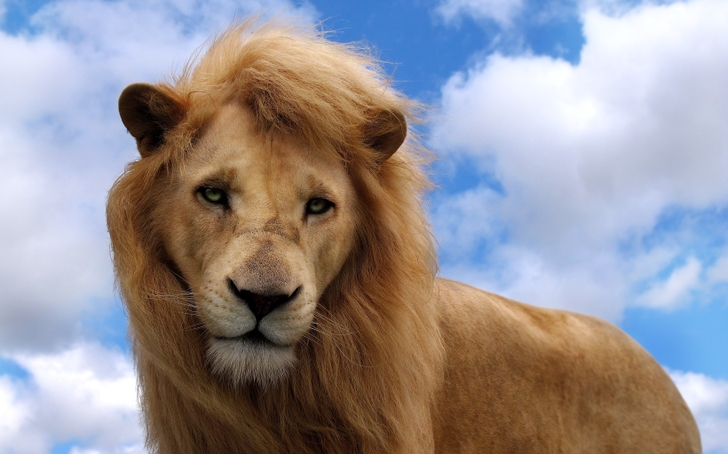
As someone who in previous times has been a glider pilot (aka sailplane in US speak), and a long-distance sailor (Tradewind 33), the weather about me was very much part of my life. Long ago I came to love clouds. Yesterday morning we had to take puppy Oliver to the vet and, unusually for this time of year in Southern Oregon, overhead there were beautiful grey stratus clouds covering 90% of the sky. There wasn’t the time to grab my camera but the following stock photograph found on the web is close to what we saw.
Still en-route in answer to the question, take a look at the next photograph; also from the web.
Now to the next photograph. (Hang on in there!)
See how the road, a man-made road stretching away to the horizon, is such an intimate part of the landscape and the sky.
Now to my final photograph.
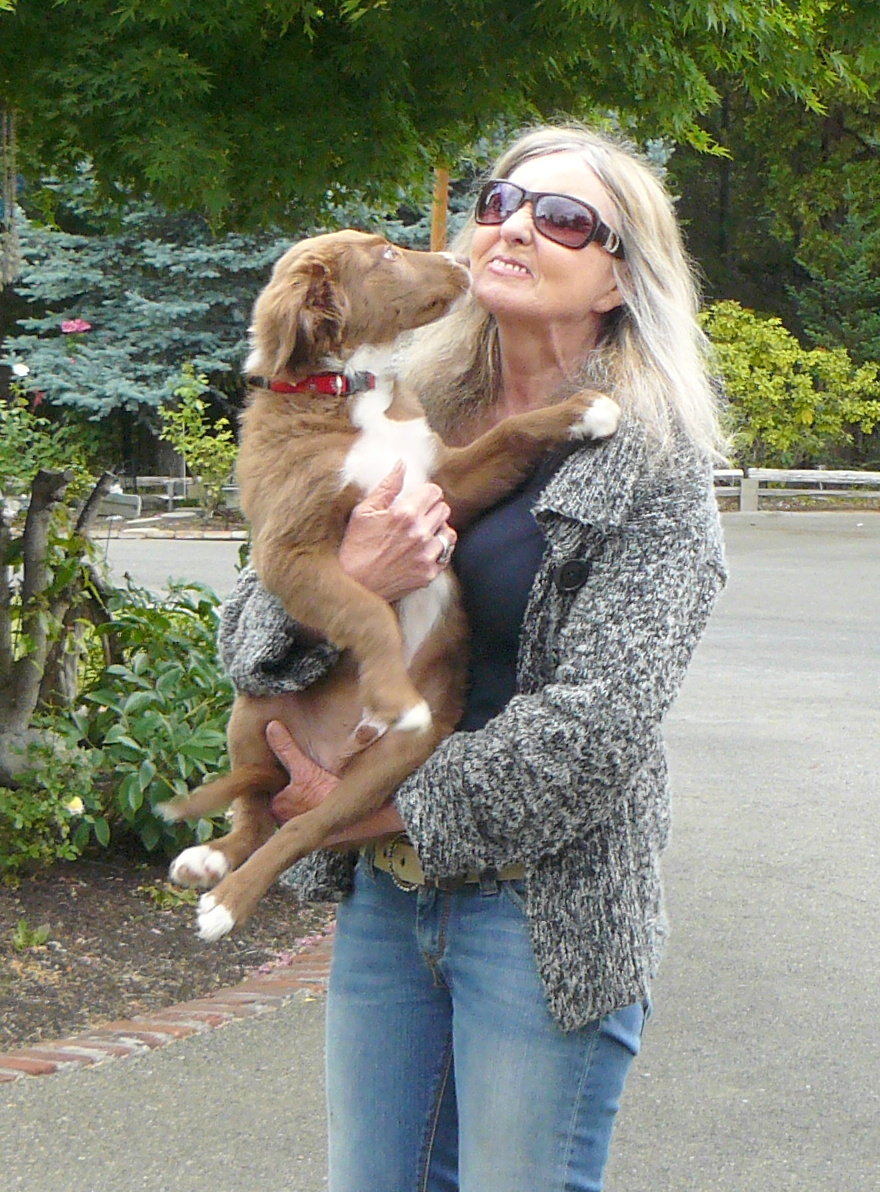
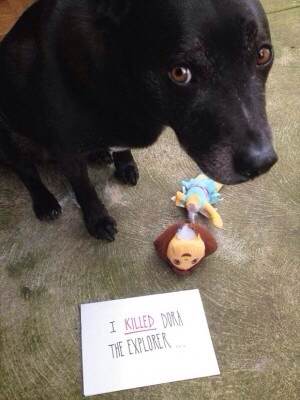
I see a strong and clear theme behind these four beautiful images. A theme that answers the question of what we mean by the idea that all of us are connected.
It is this.
Our planet’s atmosphere gives us all that we need to live. All the oxygen and water and other essentials for all of life. Over millions of years it has provided all that life has needed to evolve and grow.
The land prospered. Beautiful animals arrived. Then came man and over time he left his mark on the lands of the planet. For aeons of time, man and animals shared their lives upon the land. Indeed, man and animals frequently demonstrated they had the capacity to love each other without denying the fact that both man and animals, in many cases, were also meat-eaters. To state the obvious, the beauty of the obvious, is to say that everything on this planet is connected under Nature. Man, animals, lands: all part of that same Nature.
Loving each other: woman and dog!
Let me close by republishing with Alex’s permission his post from yesterday.
ooOOoo
One in nature
The joy of knowing nature and self are one.
The butterfly and I enjoyed a common connection in the sun on a fallen tree – we became one.
Sitting upon a fallen dead tree, one that could have but did not kill me when it fell in the storms last year, an orange butterfly flew and settled next to me. Here we were, butterfly and I, enjoying the warm sun sitting on the same tree trunk like two people on a park bench. The butterfly would after a time fly away returning later to sit next to me. In this moment I shared something in common with this butterfly, different species, but living on and coming from the same planet earth.
Another day it is raining, I huddle under the garden conifers eating raspberries, watching the clouds empty their water upon a thirsty garden, my cat Pebbles sitting at my feet. Out of the fallen branches two little mice played, oblivious to me and the cat, which did not seem to notice them.
For many people there are degrees of separation from nature, us and them. For some like me, Ubuntu, I am because we are. There is only connection, the animals and I are one.
Camping in the rain, a knocking at the tent door. I looked out of the tent, I looked into the eyes of a frog, which then vanished into the rainy darkness.
Before I move on to today’s essay, published courtesy of The Automatic Earth, let me ponder about the nature of reason. A quick dip into the dictionary offers this:
reason
noun
a basis or cause, as for some belief, action, fact, event, etc.: the reason for declaring war.
a statement presented in justification or explanation of a belief or action.
the mental powers concerned with forming conclusions, judgments, or inferences.
sound judgment; good sense.
normal or sound powers of mind; sanity.
The PhilosopherAyn Rand wrote once, “The Renaissance was specifically the rebirth of reason, the liberation of man’s mind, the triumph of rationality over mysticism – a faltering, incomplete, but impassioned triumph that led to the birth of science, of individualism, of freedom.”
Now as we move on, endeavour to keep this notion of reason in the forefront of your mind!
A few days ago, I read an essay that was first seen on Naked Capitalism. It was introduced by Yves Smith of NC thus:
Yves here. As Ilargi himself acknowledges, even by the standards of his fare, this post on “overshoot” is plenty sobering. We do seem to be on our way to precipitating a mass species die off (as in it’s underway already and humans seem remarkably unwilling to take sufficiently stern measures to stop it). The end of civilization as we know it seems almost inevitable, given that most “advanced” economies are seeing serious erosion of their social fabric, as reflected in falling social well-being measures.
However, the provocative point that Jay Hanson argues is that our hard-wired political habits guarantee our undoing. It’s akin to a literary rendering I read long ago of Dollo’s theory of evolution, which went something like this:
Species develop characteristics which give them competitive advantage. Dinosaurs get big so no predators can eat them up. Saber tooth tigers develop monster jaws so they can chomp on mastadons and other large prey.
But the problem is that species continue to develop these characteristics beyond the point of maximum advantage. Dinosaurs get so big that they need to get a second brain in their midsection to manage their bodies and they die of anatomical schizophrenia. Saber-tooth tiger become such efficient killers of large prey that they begin to wipe them out, and their hypertrophied jaws are badly adapted to killing smaller prey, so they die of starvation. And humans have developed overly large brains and are in the process of thinking themselves to death.
It was then a matter of moments to find that the essay was originally published on The Automatic Earth and, as was noted yesterday, a request to republish was very promptly replied to in the affirmative. It’s a privilege to share it with you.
It’s a long essay but entirely engaging; right through to the last footnote. More than that, many of those footnote links open up a majesty of learning and knowledge.
So if you aren’t in the right ‘headspace’ to settle down now and read it fully then bookmark it for a later date. I guarantee you will not be disappointed!
ooOOoo
Debt Rattle Jul 7 2014: Overshoot Loop
Posted by Raúl Ilargi Meijer
Russell Lee Fun with fountain at 4th of July picnic, Vale, OR July 1941
There is not one single person I’ve learned more from than Jay Hanson, back when I was even younger than I am now. Jay is not the greatest writer in the world, his talent is that he has the right kind of unrelenting curiosity, needed to dig deep into the reasons we put ourselves where we do (it’s hardwired). This curiosity put together the best library of information on ourselves and the world we live in that one can ever hope to find, at dieoff.org, much of it not published anywhere else. I took a month off, 15 years ago, and read it all back to back. The dieoff library was – mostly – finished by then. So it was a nice surprise to have someone send me the following piece, which is recent. It may look bleak and dark to you, but the challenge is to find where you think Jay goes wrong, and what you know better. That will not be easy, Jay’s a mighty smart puppy. I guess the essence is this: our brains are our destiny. That this leads to things we don’t like to acknowledge is something we will need to deal with. Walking away from it is neither a solution nor the best way to use the one part of us that may help find a solution. Which is also our brain.
Jay Hanson: I have been forced to review the key lessons that I have learned concerning human nature and collapse over the last 20 years. Our collective behavior is the problem that must be overcome before anything can be done to mitigate the coming global social collapse. The single most-important lesson for me was that we cannot re-wire (literally, because thought is physical) our basic political agendas through reading or discussion alone. Moreover, since our thoughts are subject to physical law, we do not have the free-will to either think or behave autonomously.
We swim in “politics” like fish swim in water; it’s everywhere, but we can’t see it!
We are “political” animals from birth until death. Everything we do or say can be seen as part of lifelong political agendas. Despite decades of scientific warnings, we continue to destroy our life-support system because that behavior is part of our inherited (DNA/RNA) hard wiring. We use scientific warnings, like all inter-animal communications, for cementing group identity and for elevating one’s own status (politics).
Only physical hardship can force us to rewire our mental agendas. I am certainly not the first to make the observation, but now, after 20 years of study and debate, I am totally certain. The net energy principle guarantees that our global supply lines will collapse. The rush to social collapse cannot be stopped no matter what is written or said. Humans have never been able to intentionally-avoid collapse because fundamental system-wide change is only possible after the collapse begins.
What about survivors? Within a couple of generations, all lessons learned from the collapse will be lost, and people will revert to genetic baselines. I wish it weren’t so, but all my experience screams “it’s hopeless.” Nevertheless, all we can do is the best we can and carry on…
I am thankful for the Internet where I can find others bright enough to discuss these complex ideas and help me to understand them.
Today, when one observes the many severe environmental and social problems, it appears that we are rushing towards extinction and are powerless to stop it. Why can’t we save ourselves? To answer that question we only need to integrate three of the key influences on our behavior: biological evolution, overshoot, and a proposed fourth law of thermodynamics called the “Maximum Power Principle”(MPP). The MPP states that biological systems will organize to increase power [1] generation, by degrading more energy, whenever systemic constraints allow it [2].
Biological evolution is a change in the properties of populations of organisms that transcend the lifetime of a single individual. Individual organisms do not evolve. The changes in populations that are considered evolutionary are those that are inheritable via the genetic (DNA/RNA) material from one generation to the next.
Natural selection is one of the basic mechanisms of evolution, along with mutation, migration, and genetic drift. Selection favors individuals who succeed at generating more power and reproducing more copies of themselves than their competitors.
OVERSHOOT!
Energy is a key aspect of overshoot because available energy is always limited by the energy required to utilize it.
Since natural selection occurs under thermodynamic laws, individual and group behaviors are biased by the MPP to generate maximum power, which requires over-reproduction and/or over-consumption of resources [3] whenever system constraints allow it. Individuals and families will form social groups to generate more power by degrading more energy. Differential power generation and accumulation result in a hierarchical group structure.
Overshoot eventually leads to decreasing power attainable for the group with lower-ranking members suffering first. Low-rank members will form subgroups and coalitions to demand a greater share of power from higher-ranking individuals who will resist by forming their own coalitions to maintain it. Meanwhile, social conflict will intensify as available power continues to fall.
Eventually, members of the weakest group (high or low rank) are forced to “disperse.” [4] Those members of the weak group who do not disperse are killed, [5] enslaved, or in modern times imprisoned. By most estimates, 10 to 20 percent of Stone-Age people died at the hands of other humans. The process of overshoot, followed by forced dispersal, may be seen as a sort of repetitive pumping action — a collective behavioural loop — that drove humans into every inhabitable niche.
Here is a synopsis of the behavioral loop described above:
Step 1. Individual and group behaviors are biased by the MPP to generate maximum power, which requires over-reproduction and/or over-consumption of natural resources (overshoot), whenever systemic constraints allow it. Individuals and families will form social groups to generate more power by degrading more energy. Differential power generation and accumulation result in a hierarchical group structure.
Step 2. Energy is always limited, so overshoot eventually leads to decreasing power available to the group, with lower-ranking members suffering first.
Step 3. Diminishing power availability creates divisive subgroups within the original group. Low-rank members will form subgroups and coalitions to demand a greater share of power from higher-ranking individuals, who will resist by forming their own coalitions to maintain power.
Step 4. Violent social strife eventually occurs among subgroups who demand a greater share of the remaining power.
Step 5. The weakest subgroups (high or low rank) are either forced to disperse to a new territory, are killed, enslaved, or imprisoned.
Step 6. Go back to step 1.
The above loop was repeated countless thousands of times during the millions of years that we were evolving [6]. This behavior is entrained in our genetic material and will be repeated until we go extinct. Carrying capacity will decline [7] with each future iteration of the overshoot loop, and this will cause human numbers to decline until they reach levels not seen since the Pleistocene.
Current models used to predict the end of the biosphere suggest that sometime between 0.5 billion to 1.5 billion years from now, land life as we know it will end on Earth due to the combination of CO2 starvation and increasing heat. It is this decisive end that biologists and planetary geologists have targeted for attention. However, all of their graphs reveal an equally disturbing finding: that global productivity will plummet from our time onward, and indeed, it already has been doing so for the last 300 million years. [8]
It’s impossible to know the details of how our rush to extinction will play itself out, but we do know that it is going to be hell for those who are unlucky to be alive at the time.
• To those who followed Columbus and Cortez, the New World truly seemed incredible because of the natural endowments. The land often announced itself with a heavy scent miles out into the ocean. Giovanni da Verrazano in 1524 smelled the cedars of the East Coast a hundred leagues out. The men of Henry Hudson’s Half Moon were temporarily disarmed by the fragrance of the New Jersey shore, while ships running farther up the coast occasionally swam through large beds of floating flowers. Wherever they came inland they found a rich riot of color and sound, of game and luxuriant vegetation. Had they been other than they were, they might have written a new mythology here. As it was, they took inventory. Frederick Jackson Turner
• Genocide is as human as art or prayer. John Gray
• Kai su, teknon. Julius Caesar
oooo
[1] Power is energy utilization for a purpose; proportional to forces x flows = work rate + entropy produced (Maximum Power and Maximum Entropy Production: Finalities in Nature, by S. N. Salthe, 2010). A surplus resource is stored power. Energy is a key aspect of overshoot because available energy is always limited by the energy required to utilize it.
[2] Originally formulated by Lotka and further developed by Odum and Pinkerton, the MPP states that biological systems capture and use energy to build and maintain structures and gradients, which allow additional capture and utilization of energy. One of the great strengths of the MPP is that it directly relates energetics to fitness; organisms maximize fitness by maximizing power. With greater power, there is greater opportunity to allocate energy to reproduction and survival, and therefore, an organism that captures and utilizes more energy than another organism in a population will have a fitness advantage (The maximum power principle predicts the outcomes of two-species competition experiments, by John P. DeLong, 2008).
[3] The best way to survive in such a milieu is not to live in ecological balance with slow growth, but to grow rapidly and be able to fend off competitors as well as take resources from others.
Not only are human societies never alone, but regardless of how well they control their own population or act ecologically, they cannot control their neighbors behavior. Each society must confront the real possibility that its neighbors will not live in ecological balance but will grow its numbers and attempt to take the resources from nearby groups. Not only have societies always lived in a changing environment, but they always have neighbors. The best way to survive in such a milieu is not to live in ecological balance with slow growth, but to grow rapidly and be able to fend off competitors as well as take resources from others.
To see how this most human dynamic works, imagine an extremely simple world with only two societies and no unoccupied land. Under normal conditions, neither group would have much motivation to take resources from the other. People may be somewhat hungry, but not hungry enough to risk getting killed in order to eat a little better. A few members of either group may die indirectly from food shortages—via disease or infant mortality, for example—but from an individual s perspective, he or she is much more likely to be killed trying to take food from the neighbors than from the usual provisioning shortfalls. Such a constant world would never last for long. Populations would grow and human activity would degrade the land or resources, reducing their abundance. Even if, by sheer luck, all things remained equal, it must be remembered that the climate would never be constant: Times of food stress occur because of changes in the weather, especially over the course of several generations. When a very bad year or series of years occurs, the willingness to risk a fight increases because the likelihood of starving goes up.
If one group is much bigger, better organized, or has better fighters among its members and the group faces starvation, the motivation to take over the territory of its neighbor is high, because it is very likely to succeed. Since human groups are never identical, there will always be some groups for whom warfare as a solution is a rational choice in any food crisis, because they are likely to succeed in getting more resources by warring on their neighbors.
Now comes the most important part of this overly simplified story: The group with the larger population always has an advantage in any competition over resources, whatever those resources may be. Over the course of human history, one side rarely has better weapons or tactics for any length of time, and most such warfare between smaller societies is attritional. With equal skills and weapons, each side would be expected to kill an equal number of its opponents. Over time, the larger group will finally overwhelm the smaller one. This advantage of size is well recognized by humans all over the world, and they go to great lengths to keep their numbers comparable to their potential enemies. This is observed anthropologically by the universal desire to have many allies, and the common tactic of smaller groups inviting other societies to join them, even in times of food stress.
Assume for a moment that by some miracle one of our two groups is full of farsighted, ecological geniuses. They are able to keep their population in check and, moreover, keep it far enough below the carrying capacity that minor changes in the weather, or even longer-term changes in the climate, do not result in food stress. If they need to consume only half of what is available each year, even if there is a terrible year, this group will probably come through the hardship just fine. More important, when a few good years come along, these masterfully ecological people will/not/grow rapidly, because to do so would mean that they would have trouble when the good times end. Think of them as the ecological equivalent of the industrious ants.
The second group, on the other hand, is just the opposite—it consists of ecological dimwits. They have no wonderful processes available to control their population. They are forever on the edge of the carrying capacity, they reproduce with abandon, and they frequently suffer food shortages and the inevitable consequences. Think of this bunch as the ecological equivalent of the carefree grasshoppers. When the good years come, they have more children and grow their population rapidly. Twenty years later, they have doubled their numbers and quickly run out of food at the first minor change in the weather. Of course, had this been a group of “noble savages who eschewed warfare, they would have starved to death and only a much smaller and more sustainable group survived. This is not a bunch of noble savages; these are ecological dimwits and they attack their good neighbors in order to save their own skins. Since they now outnumber their good neighbors two to one, the dimwits prevail after heavy attrition on both sides. The “good” ants turn out to be dead ants, and the “bad” grasshoppers inherit the earth. The moral of this fable is that if any group can get itself into ecological balance and stabilize its population even in the face of environmental change, it will be tremendously disadvantaged against societies that do not behave that way. The long-term successful society, in a world with many different societies, will be the one that grows when it can and fights when it runs out of resources. It is useless to live an ecologically sustainable existence in the “Garden of Eden unless the neighbors do so as well. Only one nonconservationist society in an entire region can begin a process of conflict and expansion by the “grasshoppers” at the expense of the Eden-dwelling “ants”. This smacks of a Darwinian competition—survival of the fittest—between societies. Note that the “fittest” of our two groups was not the more ecological, it was the one that grew faster. The idea of such Darwinian competition is unpalatable to many, especially when the “bad” folks appear to be the winners.[pp. 73-75] (Constant Battles: Why we Fight, by Steven A. LeBlanc, St. Martin, 2004)
[4] “Dispersal” is important in biology. Many amazing biological devices have evolved to ensure it, such as the production of fruits and nectar by plants and the provision of tasty protuberances called elaiosomes by seeds to attract insects. Often a species will produce two forms:
(1) a maintenance phenotype (the outcome of genes and the structures they produce interacting with a specific environment) that is adapted to the environment in which it is born,
and (2) a dispersal phenotype that is programmed to move to a new area and that often has the capacity to adapt to a new environment.
According to the present theory, humans have developed two dispersal phenotypes in the forms of the prophet and the follower. The coordinated action of these two phenotypes would serve to disperse us over the available habitat. This dispersal must have been aided by the major climatic changes over the past few million years in which vast areas of potential human habitat have repeatedly become available because of melting of ice sheets.
The dispersal phenotypes might have evolved through selection at the individual level, since the reproductive advantage of colonizing a new habitat would have been enormous. They would also promote selection between groups. This is important because selection at the group level can achieve results not possible at the level of selection between individuals. One result of the dispersal phenotype includes ethnocentrism (the tendency to favor one’s own ethnic group over another) and the tendency to use “ethnic cleansing.” The other result, as previously noted, is selection for cooperation, self-sacrifice, and a devotion to group rather than individual goals. Factors that promote selection at the group level are rapid splitting of groups, small size of daughter groups, heterogeneity (differences) of culture between groups, and reduction in gene flow between groups. These factors are all promoted by the breaking away of prophet-led groups with new belief systems.
One of the problems of selection at the group level is that of free-riders. These are people who take more than their share and contribute to the common good of the group less than their proper share. Selection at the group level gives free-riders their free ride. They potentially could increase until they destroy the cooperative fabric of the group.
However, the psychology of the free-rider, which is one of self-aggrandizement and neglect of group goals, is not likely to be indoctrinated with the mazeway of the group. Nor is it likely to be converted to the new belief system of the prophet. Therefore, theoretically one would predict that cults and New Religious Movements should be relatively free of free-riders. Such an absence of free-riders would further enhance selection at the group level. Moreover, this is a testable theoretical proposition.
Cult followers have been studied and found to be high on schizotypal traits, such as abnormal experiences and beliefs. They have not yet been tested for the sort of selfish attitudes and behavior that characterize free-riders. If a large cohort of people were tested for some measure of selfishness, it is predicted that those who subsequently joined cults would be low on such a measure. Predictions could also be made about future cult leaders. They would be likely to be ambitious males who were not at the top of the social hierarchy of their original group. If part of why human groups split in general is to give more reproductive opportunities to males in the new group, it can also be predicted that leaders of new religious movements would be males of reproductive age. Female cult leaders are not likely to be more fertile as a result of having many sexual partners, but their sons might be in an advantageous position for increased reproduction.
Conclusion: The biobehavioral science of ethology is about the movement of individuals. We have seen that change of belief system has been responsible for massive movements of individuals over the face of the earth. Religious belief systems appear to have manifest advantages both for the groups that espouse them and the individuals who share them. It is still controversial whether belief systems are adaptations or by-products of other evolutionary adaptive processes. Regardless of the answer to this question, the capacity for change of belief system, both that seen in the prophet and also that seen in the follower, may be adaptations because they have fostered the alternative life history strategies of dispersal from the natal habitat.
Moreover, change of belief system, when it is successful in the formation of a new social group and transfer of that group to a “promised land,” accelerates many of the parameters that have been thought in the past to be too slow for significant selection at the group level, such as eliminating free-riders, rapid group splitting, heterogeneity between groups and reduction of gene transfer between groups. Natural selection at the group level would also favor the evolution of the capacity for change of belief system, so that during the past few million years we may have seen a positive feedback system leading to enhanced cult formation and accelerated splitting of groups. This may have contributed to the rapid development of language and culture in our lineage. (The Biology of Religious Behavior, Edited by Jay R. Feierman, pp. 184-186)
[5] The results of the study are striking, according to Robbins Schug, because violence and disease increased through time, with the highest rates found as the human population was abandoning the cities. However, an even more interesting result is that individuals who were excluded from the city’s formal cemeteries had the highest rates of violence and disease. (Violence, Infectious Disease and Climate Change Contributed to Indus Civilization Collapse , Science Daily, January 17, 2014)
[6] My discussion will revolve around two basic propositions regarding long-term human population history: 1) the near-zero growth rates that have prevailed through much of prehistory are likely due to long-term averaging across periods of relatively rapid local population growth interrupted by infrequent crashes caused by density-dependent and density-independent factors; and 2) broad changes in population growth rates across subsistence modes in prehistory are probably best explained in terms of changes in mortality due to the dampening or buffering of crashes rather than significant increases in fertility (Subsistence strategies and early human population history: an evolutionary ecological perspective, by James L. Boone, 2002).
So all of you will understand, without any doubt, why this key essay was published here on Learning from Dogs. It strikes me as a rather bitter-sweet irony that in today’s super-networked society, where it is so easy to ‘sit at the knees‘ of such learned folk, it may all be too late to have a decisive effect. So back to Jay Hanson. Yes, his well-presented and beautifully researched essay does have some pretty terrifying notions. But humanity’s only hope is that person-by-person, street-by-street, city-by-city, a cry for change becomes such a torrent of sound that like a huge waterfall it has the power to change our landscape. Nature needs to be listened to: and soon!
Nature maintains our equilibrium. Denying Nature is a sure path to extinction.
In yesterday’s post, I closed it by saying “More on the theme tomorrow.” What I had in mind was writing about a recent essay that I read; courtesy of Naked Capitalism. However, the essay struck me as of such interest that it should be republished in full. Thus I sent off a request for permission to so do. Hopefully, permission granted in time for me to publish the essay tomorrow (and see my note later on).
That then gave me the opportunity to explain my situation for the next few weeks.
In short, as a result of a number of guests coming to stay with us from the end of July right through to the end of September, the hours that I spend pleasurably preparing and writing posts for Learning from Dogs are going to be under some pressure.
For instance!
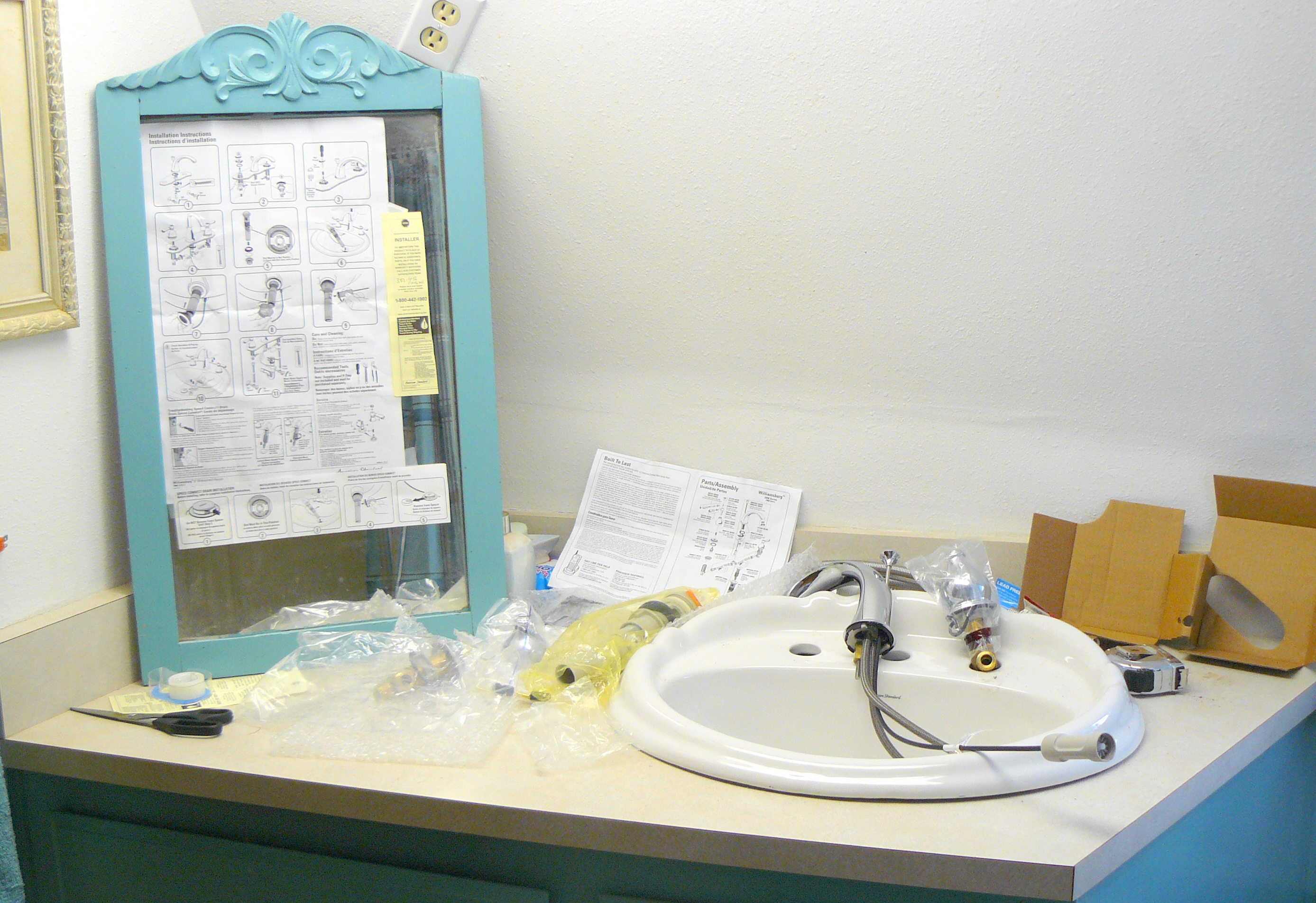
Ahead of the arrival of our first set of guests, my mother from London and my sister from Tokyo, it has been decided to renovate the guest bathroom by upgrading the wash-basin. Naturally, something yours truly wants to do himself! (Don’t believe me? See the following photo!)
Of course, as well as still not speaking American, I’m a very long way from speaking American plumbing! I mean fancy going into a builder’s store and asking for a set of taps.
So how does one connect the hot and cold water to these taps!
I looked at what the store attendant had placed in front of me and said, “No, I don’t mean that sort of tap, I mean a tap for a bathroom basin.”
“Oh, you mean force-it!“, replied the attendant.
(Now how did this attendant know that my tool of choice for jobs around the house was a 2-pound club hammer!)
“Of course,” I replied, “You Americans call them faucets!”
So you get the message!
(By the way, the permission to republish the article from The Automatic Earth just came through – just 12 minutes after I sent off my email request – great service, peeps.)
Plus there’s another distraction! Even more bizarre than pretending to be an American plumber! I am pretending to be an American author!
I have returned to writing the book!
Long-term readers of this blog (you crazy lot) will recall that last November I signed up for NaNoWriMo: National Novel Writing Month. From that accomplishment has flowed a number of very positive outcomes. One of them was being contacted by a company specialising in self-publishing. I was told that really before I get started in earnest, I need to set out a clear idea of what I am writing about and the audience I have in mind. I called it my Statement of Purpose and after a number of weeks of being amended and revised (huge thanks to Jon and John for their help) it was finally completed just a week ago. Here are the opening sections:
Learning from Dogs
the book.
Statement of Purpose v1.51
Introduction
We live in very challenging times.
It seems rare these days to meet someone who doesn’t sense, to one degree or another, a feeling of vulnerability to today’s world. A sense that many aspects of their lives are beyond their control.
These are also times where it is widely acknowledged that the levers of privilege, power and money are undermining the rights and needs of so many. A feeling of unprecedented levels of deceit, lying and greed.
Then there’s the subject of climate change and the “end-of-world” sword just waiting to descend on us all; the so-called beat of the butterfly’s wing!
Yes, these are challenging times. As we are incessantly reminded by the drumbeat of the doom-and-gloom news industry every hour, frequently every half-hour, throughout the day. A symphony of negative energy.
Yet right next to us is a world of positive energy. The world of dogs. A canine world full of love and trust, playfulness and relaxation. A way of living that is both clear and straightforward; albeit far from being simple. As anyone will know who has seen the way dogs interact with each other and with us humans.
In other words, dogs offer endless examples of positive behaviours. The wonderful power of compassion for self, and others, and of loving joy. The way to live that we humans crave for. A life full of hope and positive energy that keeps the power of negativity at bay.
Reading audience
The book is written by ‘an ordinary bloke’, not by someone who has a specialist or professional understanding in the areas of mind and behaviour. The author is no different to the majority of people out there and, presumably, the majority of potential readers.
Readers who feel the weight of all that ‘doom-and-gloom’ and general negativity that seems to be in the air. Yet, readers who desire a positive, compassionate attitude to their own life, and to the lives of the people around them. Almost certainly readers who are animal lovers, in general, and dog lovers in particular.
The clarity provided by the above has been fantastic and I am now firmly committed to writing something, however small in words, each day.
Yet another drag on my blogging time; I regret.
So if over the coming weeks you read something that strikes you as familiar it may be because I have reposted the item from previous years. Or if there seems to be a string of posts that have been republished from elsewhere, then at least you will understand.
Of course even better would be for you, my dear reader, to send me stuff or point me towards material you think others would enjoy. Or write a guest post! 🙂 Now that would be splendid!
Irrespective of the author, it’s always the words that count.
Just recently, a very good friend of this blog sent me a wonderful and inspiring set of words attributed to George Carlin.
As is usual, I took a quick dip into the internet to learn more about how these words came to be. I soon came upon the Snopes website and their page The Paradox of Our Time.
Here’s what I read:
In May 1998, Jeff Dickson posted the ‘Paradox of Our Time’ essay to his Hacks-R-Us online forum, loosing it upon the Internet. That essay has since spread far and wide and has commonly been attributed to a variety authors, including comedian George Carlin, an unnamed Columbine High School student, the Dalai Lama, and that most prolific of scribes, Anonymous!
George Carlin very emphatically denied he had had anything to do with “Paradox,” a piece he referred to as “a sappy load of shit,” and posted his comments about being associated with this essay on his own web site. (The line about “His wife recently died” which was added to many forwarded versions referenced Brenda Carlin, the comedian’s wife, who passed away on 11 May 1997 of liver cancer. Carlin himself died in June 2008.)
The true author of the piece isn’t George Carlin, Jeff Dickson, or the Dalai Lama, nor is he anonymous. Credit belongs to Dr. Bob Moorehead, former pastor of Seattle’s Overlake Christian Church (who retired in 1998 after 29 years in that post). This essay appeared under the title “The Paradox of Our Age” in Words Aptly Spoken, Dr. Moorehead’s 1995 collection of prayers, homilies, and monologues used in his sermons and radio broadcasts.
Now, of course, what is presented on the Snopes webpage also may not be correct. But does it really matter? No!
What matters are the words themselves and the ability of words to inspire us and change the way we think about our lives. So with that, here are those words.
ooOOoo
The Paradox of Our Age
The paradox of our time in history is that we have taller buildings but shorter tempers, wider Freeways, but narrower viewpoints.
We spend more, but have less, we buy more, but enjoy less.
We have bigger houses and smaller families, more conveniences, but less time.
We have more degrees, but less sense, more knowledge, but less judgment, more experts, yet more problems, more medicine, but less wellness.
We drink too much, smoke too much, spend too recklessly, laugh too little, drive too fast, get too angry, stay up too late, get up too tired, read too little, watch TV too much, and pray too seldom.
We have multiplied our possessions, but reduced our values. We talk too much, love too seldom, and hate too often.
We’ve learned how making a living, but not a life.
We’ve added years to life not life to years.
We’ve been all the way to the moon and back, but have trouble crossing the street to meet a new neighbor. We conquered outer space but not inner space. We’ve done larger things, but not better things.
We’ve cleaned up the air, but polluted the soul.
We’ve conquered the atom, but not our prejudice.
We write more, but learn less.
We plan more, but accomplish less.
We’ve learned to rush, but not to wait.
We build more computers to hold more information, to produce more copies than ever, but we communicate less and less.
These are the times of fast foods and slow digestion, big men and small character, steep profits and shallow relationships. These are the days of two incomes but more divorce, fancier houses, but broken homes. These are days of quick trips, disposable diapers, throwaway morality, one night stands, overweight bodies, and pills that do everything from cheer, to quiet, to kill. It is a time when there is much in the showroom window and nothing in the stockroom. A time when technology can bring this letter to you, and a time when you can choose either to share this insight, or to just hit delete…
ooOOoo
I chose to share this with you. (Dear reader, feel free to share this as well!)
That good friend also included some of his own wisdoms.
Remember, spend some time with your loved ones, because they are not going to be around forever.
Remember, say a kind word to someone who looks up to you in awe, because that little person soon will grow up and leave your side.
Remember, to give a warm hug to the one next to you, because that is the only treasure you can give with your heart and it doesn’t cost a cent.
Remember, to say, ‘I love you’ to your partner and your loved ones, but most of all mean it. A kiss and an embrace will mend hurt when it comes from deep inside of you.
Remember to hold hands and cherish the moment. For someday that person will not be there again.
Give time to love, give time to speak! And give time to share the precious thoughts in your mind.
AND ALWAYS REMEMBER:
Life is not measured by the number of breaths we take, but by the moments that take our breath away.
Highlights from the Monty Python Live (mostly) press conference in London, on the day before their reunion shows at London’s O2 Arena kick off. Terry Jones, Michael Palin, Terry Gilliam, Eric Idle and John Cleese answer questions from the press about the rehearsals, the live show and much more.
Welcome to the official Monty Python YouTube channel. This is the place to find top quality classic Python videos, as well as some special stuff that you’ll only find here – such as interviews and behind-the-scenes footage from our live shows. All the Pythons including John Cleese, Michael Palin, Eric Idle, Terry Gilliam, Terry Jones & Graham Chapman can be found here being incredibly silly
Yesterday morning I had a lovely long chat with Jon Lavin in the UK. We chit-chatted for a long time, covering such matters as caring for ourselves, about being compassionate towards the self, and much more besides.
Then in stark contrast, around noon Jean and I went over to “Runaway Tractors” to collect our tractor that had been in for a service.
The afternoon brought along another great conversation with John Hurlburt, he of the highly-appreciated Human arrogance essay last Thursday. That brought forth a whole bundle of ideas to write about.
The talks with Jon and John inspired a wonderful set of essays in my mind – BUT!
But by the time I sat down in front of the PC to write today’s post, I had simply run out of time to write something of value. So I’m cheating, well sort of, by reposting something from a little over a year ago. Hope it’s fresh to your eyes and that you enjoy it.
ooOOoo
Returning to Nature
The power of serendipity!
Why the choice of this sub-heading? Well, just because a number of quite separate articles and essays have come together to offer a powerful, cohesive argument for reconsidering the role of Nature in the future of mankind.
Of course, my use of words in that preceding sentence is completely ludicrous; the suggestion that ‘Nature’ is disconnected from ‘mankind’. Yet millions of us, to a greater or lesser degree, do behave as if we are the masters of the world.
So let me dip into what has been ‘crossing my desk’ in recent times.
On May 28th, George Monbiot published in The Guardian newspaper an essay entitled A Manifesto for Rewilding the World. (The link takes you to the article on the Monbiot blogsite.) Here’s how that essay opened,
Until modern humans arrived, every continent except Antarctica possessed a megafauna. In the Americas, alongside mastodons, mammoths, four-tusked and spiral-tusked elephants, there was a beaver the size of a black bear: eight feet from nose to tail(1). There were giant bison weighing two tonnes, which carried horns seven feet across(2).
The short-faced bear stood thirteen feet in its hind socks(3). One hypothesis maintains that its astonishing size and shocking armoury of teeth and claws are the hallmarks of a specialist scavenger: it specialised in driving giant lions and sabretooth cats off their prey(4). The Argentine roc (Argentavis magnificens) had a wingspan of 26 feet(5). Sabretooth salmon nine feet long migrated up Pacific coast rivers(6).
During the previous interglacial period, Britain and Europe contained much of the megafauna we now associate with the tropics: forest elephants, rhinos, hippos, lions and hyaenas. The elephants, rhinos and hippos were driven into southern Europe by the ice, then exterminated around 40,000 years ago when modern humans arrived(7,8,9). Lions and hyaenas persisted: lions hunted reindeer across the frozen wastes of Britain until 11,000 years ago(10, 11). The distribution of these animals has little to do with temperature: only where they co-evolved with humans and learnt to fear them did they survive.
I’m not going to reproduce the bulk of the article; just hoped that I have tickled your curiousity sufficient for you to read it in full here. But will just show you how it closed:
Despite the best efforts of governments, farmers and conservationists, nature is already beginning to return. One estimate suggests that two thirds of the previously-forested parts of the US have reforested, as farming and logging have retreated, especially from the eastern half of the country(23). Another proposes that by 2030 farmers on the European Continent (though not in Britain, where no major shift is expected) will vacate around 30 million hectares (75 million acres), roughly the size of Poland(24). While the mesofauna is already beginning to spread back across Europe, land areas of this size could perhaps permit the reintroduction of some of our lost megafauna. Why should Europe not have a Serengeti or two?
Above all, rewilding offers a positive environmentalism. Environmentalists have long known what they are against; now we can explain what we are for. It introduces hope where hope seemed absent. It offers us a chance to replace our silent spring with a raucous summer.
Then further research for this post brought to light an interview with David Suzuki in February. Widely reported, I picked the version published on Straight.com, from which comes:
In December, Canadian specialty TV channel Business News Network interviewed me about the climate summit in Copenhagen. My six-minute interview followed a five-minute live report from Copenhagen, about poor countries demanding more money to address climate change and rich countries pleading a lack of resources. Before and after those spots were all kinds of reports on the Dow Jones Industrial Average, the price of gold and the loonie, and the implications of some new phone technology.
For me, this brought into sharp focus the inevitable failure of our negotiating efforts on climate change. BNN, like the New York-based Bloomberg channel, is a 24-hour-a-day network focused completely on business. These networks indicate that the economy is our top priority. And at Copenhagen, money dominated the discussions and the outcome.
But where is the 24-hour network dealing with the biosphere? As biological creatures, we depend on clean air, clean water, clean soil, clean energy, and biodiversity for our well-being and survival. Surely protecting those fundamental needs should be our top priority and should dominate our thinking and the way we live. After all, we are animals and our biological dependence on the biosphere for our most basic needs should be obvious.
The economy is a human construct, not a force of nature like entropy, gravity, or the speed of light or our biological makeup. It makes no sense to elevate the economy above the things that keep us alive. But that’s what our prime minister does when he claims we can’t even try to meet the Kyoto targets because that might have a detrimental effect on the economy.
This economic system is built on exploiting raw materials from the biosphere and dumping the waste back into the biosphere. And conventional economics dismisses all the “services” that nature performs to keep the planet habitable for animals like us as “externalities”. As long as economic considerations trump all other factors in our decisions, we will never work our way out of the problems we’ve created.
Concluding:
Nature is our home. Nature provides our most fundamental needs. Nature dictates limits. If we are striving for a truly sustainable future, we have to subordinate our activities to the limits that come from nature. We know how much carbon dioxide can be reabsorbed by all the green things in the oceans and on land, and we know we are exceeding those limits. That’s why carbon is building up in the atmosphere. So our goal is clear. All of humanity must find a way to keep emissions below the limits imposed by the biosphere.
The only equitable course is to determine the acceptable level of emissions on a global per capita basis. Those who fall below the line should be compensated for their small carbon footprint while those who are far above should be assessed accordingly. But the economy must be aligned with the limits imposed by the biosphere, not above them.
Quite clearly, if we continue to turn our backs on Nature, the consequences won’t be long in tapping us on the shoulder.
So, going to close it today with this, seen nearly a month ago on the PRI website:
Imagine the type of world we could see
If instead of saying ‘pray,’ we said, ‘plant a tree’.
With this one little change so much more could be done
To protect all living things found under the sun.
We could ‘plant a tree’ for our troops sent away into war
So when they return they’d come home to find more.
We could ‘plant a tree’ at our churches with our husband or wife
To praise the Creator through a celebration of life.
We could ‘plant a tree’ for the needy and for those with no food
We could even plant in public without seeming rude.
The government would not have to introduce rules,
And most likely we could ‘plant a tree’ at our schools.
If we took it to task to ‘plant trees’ for the poorest,
We would all soon be reaping the wealth of a forest.
We could plant freely with those of all religions and creeds,
The improvement of earth would be based on these deeds.
We could plant with our neighbours, our family, and friends,
And ‘plant a tree’ with our enemies to help make amends.
If we ‘plant a tree’ for the sick to show them we care,
We would also be healing the soil, water, and air.
We could ‘plant a tree’ to observe when two people wed,
And plant one with our kids each night before bed.
Throughout the history of the whole human race
We find respect for the ‘tree’ has always had a place.
The great Ash of the Norse was their tree of the World,
And on a tree in the Garden is where the serpent once curled.
It was in groves of Oaks that the Druid priests wandered,
And under the Bodhi where the great Buddha pondered.
In the Bible it’s clear that we have all that we need:
‘All the trees with their fruits and plants yielding seed’.
Despite all these lessons that the past has taught
Now days, it seems, we cut our trees without thought.
This is confirmed by the Koran, for in it we read:
‘Many are the marvels of earth, yet we pay them no heed’.
We all have a duty, no matter what nation
To perform our part in protecting Creation.
Just think what we’d have if we had picked up a spade
Every time each one of us bowed our heads and prayed.
A powerful and compelling post from friend and follower: John Hurlburt.
Anyone who can compose phrases such as “an enlightened interest in the quality of the harvest of our transitory lives” deserves to be listened to! Our friend, John, from our Payson, AZ, days, is a regular author of essays that arrive here in Hugo Road via the mail. It’s always a pleasure to read John’s words and frequently I feel the need to share them with you, dear reader. So it was with John’s latest.
I’ll say no more except to promise you that you will be enthralled.
ooOOoo
Arrogance ‘R Us
We hear the drumbeat of steadily increasing global, national, state, regional and local problems every day. When common-sense solutions are offered for any of these problems, the solutions are immediately demonized as actions which would aggravate the problems they would logically solve. This sort of nonsensical circular argument is both a paralyzing paradox and a guaranteed death spiral for our relatively young biological species.
We imagine that we know far more than we do. The Earth doesn’t need living species in order to regenerate life. Human beings continue to need the Earth from which we are made and which sustains our consciously aware being. Some of us believe that having money is the answer to all our problems. Actually, the imaginary power of human “money” is killing life on Earth from the bottom of the food chain up.
Every government in the world competes with every other government in the world for power and control to one degree or another. The richer the nation, the greater it’s illusion of power. We’ve forgotten about responsibility, morality and faith in the power of Nature. Change is a constant. Failure to adapt to change is a death knell for living beings.
We live to learn. Why? Is death a finality or a new beginning? Both classic and quantum physics recognize Conservation of Information and the exchange of energy and matter at the level of fundamental forces. How much of the energy of our lives is absorbed by the cosmos and how much is recycled as life energy? We have no earthly idea of the answer.
Aye, there’s the rub.
We do know that everything fits together. Otherwise, we’d be random atoms. We also know that the cosmos does not exist for the pleasure of human beings. To the contrary, if the cosmos were even minimally different, life as we know it would not exist. We are an infinitesimally small part of Reality.
Statistically, we’re not alone as consciously aware life forms in our universe. When we release ourselves from the bondage of our biological limitations, we connect with the living energy of our planet in harmony with the geo-magnetic network of our planet, our living galaxy, and our living universe. We realize that other life on Earth shares conscious awareness in varying degrees.
Don’t believe it? That’s a matter of choice. Consider that denying the facts of reality is a foundation for ignorance. Letting go is a gateway to enlightenment.
Those who do not accept change profess to believe that the immensity of a universe beyond our inclusive comprehension has existed since the beginning of time solely for their personal benefit. Their corporate slogan is “Arrogance ‘R Us”.
More precisely, the statistical probability of human conscious awareness being unique in the universe is so infinitesimal that it would be laughable if it weren’t for our present species peril.
Not only have we amassed enough fire power to turn the earth into a burning sphere overnight, we are now proceeding to systematically and efficiently eliminate the natural resources we need to live.
We can’t eat computers or opinions. Clean air, clean water, clean food and clean energy are more than slogans. They’re essential for human life. Are we a swarm of predatory locusts or are we stewards of the blessings of a life we don’t fully understand?
Money has dissolved the human contract with Nature which began about 14 million years ago on a planet that’s been around in one form or another for roughly the last 14 billion years. Preservation, sustainability and natural efficiency are enemies of our present delusional global economic system. No living species on Earth is safe from the ecocide being committed by human insanity. We’re experiencing a systemic failure and treating it as a side-show.
We’re suffering from a fatally immoral addiction to what we may personally consider to be the good life. It’s time for our conscious awareness to transcend self and species. We need to combine our spiritual awareness, our natural awareness, our moral awareness, our cultural awareness, our social awareness and our common sense for the immediate purpose of preserving, sustaining and accepting the natural efficiency of our pale blue dot in a universally remote solar system.
So, where do we begin? We begin wherever we are. Today is the tomorrow we dreamed of yesterday. What is our vision of tomorrow? Is it an Earth that is unchanging in the midst of constant change? Is it an Earth that is scorched and barren? Perhaps it can become an Earth that continues to grow and nurture our existence.
The choice is made by our daily actions. Time is not currently in our favor. Freedom is not the exclusive privilege of wealth. Freedom is everyone’s responsibility. Poverty is the deadliest form of violence. Seven trillion dollars of worthless derivatives tick like a time-bomb in dank Wall Street sub-basements. Environmental bankruptcy threatens all life on Earth. It’s more than past half-time to face our shared Reality. There’s no place to hide.
We grieve our former lives. We begin with the suppressed anger we have self-generated through fear until it has become a traumatic syndrome. The antidote for fear is faith. What do we believe? What are our values? Are we moral, semi-moral, immoral or amoral? Do we believe we are the purpose of the Cosmos or a relatively young animal living on a garden planet far from the heart of an emerging universe? Is our immediate gratification more important than any long-term purpose?
Global recovery depends upon inclusive personal recovery and the ability to recognize the urgency of our common purpose. Personal and cultural recovery begin by surrendering the illusionary cocoon of “self”. Stepping stones include daily humility, hope, study, acceptance, inventory, amends, sharing and compassionate service. The result is a new lease on life.
We surrender our politics. We learn to think for ourselves. We question authority. We test our ideas and follow the evidence. Science belongs to all of us. We reserve judgment. We realize that our imagination is nothing in comparison to the majesty of the truth of our shared Reality. We become creative rather than destructive.
We build a global resource management system based on the concepts of common well-being, strategic preservation and strategic efficiency. Our objective is to maintain, grow and recycle natural resources utilizing our technology as a constructive tool rather than as a weapon.
The concept of ownership needs to be replaced by the idea of strategic access to what we need as opposed to what we may superficially believe or think we want. We stop competing and start co-operating as the result of an enlightened interest in the quality of the harvest of our transitory lives.
As we live and learn together, we realize that love is as important to life as air, food, water and shelter.
Peace beyond all understanding,
an old lamplighter
ooOOoo
Fabulous essay! Breathtakingly so! Making it clear that there is so much for us humans to learn! Yet offering a clear pathway to that learning. Starting with unconditional love and openness! Now where’s a dog to learn from!
Hazel teaching us openness and love through her eyes.
Further information on the subject of being grounded.
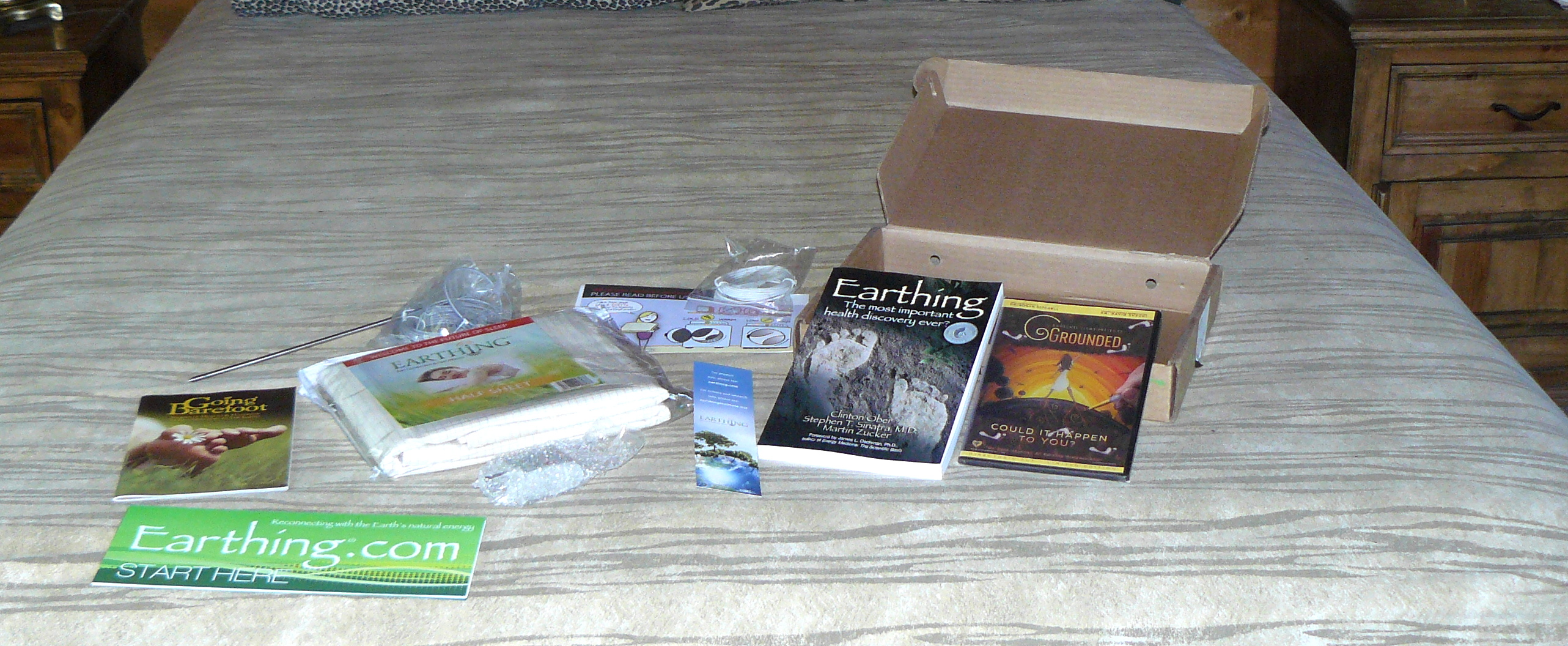
Just to set the scene, so to speak, last Saturday week I published a post on our reaction to the book called Earthing authored by Ober, Sinatra and Zucker. I said that we had been sufficiently convinced to order the half-sheet kit. Then on the 23rd., I wrote of our experiences after having spent 5 nights on the earthing sheet.
The half-sheet kit.
I promised to provide more information today. We have now been sleeping on the earthing sheet for eight nights. All the positive effects written about on Monday continue and, frankly, strengthen.
The website GoingBarefoot.org has much information, including real-life experiences from customers. That website suggests it is the work of Martin Zucker, one of the authors of the book. It also offers this testimonial video:
There is another website Earthing.com that offers much the same information as the GoingBarefoot site. (Indeed, I just called the Earthing company and they confirmed that there was no difference in service between the two websites.)
One of the items in the kit, as shown in the photograph, was a 74-minute, professionally-made film that was fascinating. Guess what! That film is available as a YouTube video.
The film was the product of Kroschel Films and their website is wonderful. You must go there. These two pictures came from there.
Isis, January 2013 – Photo courtesy Dr.Vic Walker
oooo
Steve Kroschel spends some quality time with Lennox the Lynx, Nov.3, 2013
Then a web search brought to light a company with the name of Mercola. Their website has a page with earthing products even including, towards the end of the webpage, instructions on making your own earthing mat. The following video comes from that website.
So I do hope this is of interest and, please, if you have any thoughts or experiences, do please offer them as comments to the post.
(Oh, I guess I should mention that I am not affiliated with any of these companies and stand to gain no advantage if you choose to purchase a product mentioned on Learning from Dogs. Please verify for yourself the potential advantages in using any earthing product.)
How to close?
This seems as good a way as any.
Standing Bear.
There is a road in the hearts of all of us, hidden and seldom traveled, which leads to an unknown, secret place.
The old people came literally to love the soil, and they sat or reclined on the ground with a feeling of being close to a mothering power. Their teepees were built upon the earth and their altars were made of earth. The soul was soothing, strengthening, cleansing, and healing.
That is why the old Indian still sits upon the earth instead of propping himself up and away from its life giving forces. For him, to sit or lie upon the ground is to be able to think more deeply and to feel more keenly.
He can see more clearly into the mysteries of life and come closer in kinship to other lives about him.





















 Learning from Dogs