Happy Boxing Day!
(the day after Christmas Day to those who are not familiar with the term!)
Sent to me by Julie Thomas-Smith.
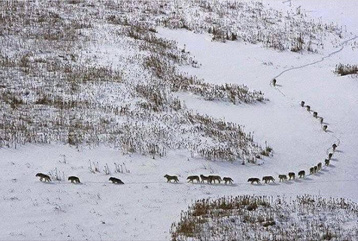
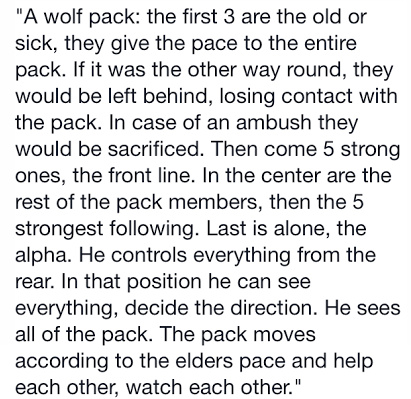 Always something to learn from our canines!
Happy Holidays!
Dogs are animals of integrity. We have much to learn from them.
Category: Communication
Happy Boxing Day!
(the day after Christmas Day to those who are not familiar with the term!)
Sent to me by Julie Thomas-Smith.
Always something to learn from our canines!
Happy Holidays!
You can blame John Zande for today’s post!
John left an intriguing question as a comment to yesterday’s post.
Oh to have a time machine!
Tell me, Paul, if you did have one, a time machine, what three moments in history would you visit?
It really grabbed Jean and me and we spent quite a few minutes during the day kicking around ideas. At first, it was easy just to do a web search on epic moments in history and see if any of them related to me. But that seemed too easy. So I have picked three that do connect with my life.
I was born on November 8th, 1944. I was born in North London (Acton). It was the period of the Second World War when the V2 rockets were landing all around. Take, for example, the incident just eleven days after my birth, when on the 19th November, 1944 a V2 landed in Wandsworth causing much damage and many fatalities around Hazlehurst Road and Garratt Lane. Spend a moment reviewing who died, and their ages, in that bombing.

So I was precisely six months old when the armistice was announced on May 8th, 1945. As Wikipedia describes it:
Victory in Europe Day, generally known as V-E Day, VE Day or simply V Day was the public holiday celebrated on 8 May 1945 (7 May in Commonwealth realms) to mark the formal acceptance by the Allies of World War II of Nazi Germany’s unconditional surrender of its armed forces.[1] It thus marked the end of World War II in Europe.
On 30 April, Adolf Hitler, the Nazi leader, committed suicide during the Battle of Berlin. Germany’s surrender, therefore, was authorised by his successor, Reichspräsident Karl Dönitz. The administration headed by Dönitz was known as the Flensburg Government. The act of military surrender was signed on 7 May in Reims, France and on 8 May in Berlin, Germany.
I would have loved to witness, by being in the crowd that day, the King and Queen acknowledging the end of the war in Europe.

Nevertheless, that day in May, 1945 has been memorable for me for all of my life. Because my mother, who is still alive today, aged 96, (still living in London but spending Christmas with my sister in Cape Town, by the way), held me in her arms and said aloud: “My dear Paul, you are going to live!” I grew up with those loving words deeply rooted within me.
2. Stonehenge – too many moons ago!
For reasons that I am not entirely clear about, I have always been fascinated by the stars. From the point of view of using the stars to help me navigate strange parts of the world, both on land and at sea. I grew up regarding Polaris, the North Star, almost as a companion. Later in my life when sailing solo from Gibraltar to The Azores, a distance of just under 1,150 nautical miles, on a Tradewind 33 yacht, despite having an early GPS unit it was backup to me using a sextant to maintain (some) awareness of my position.
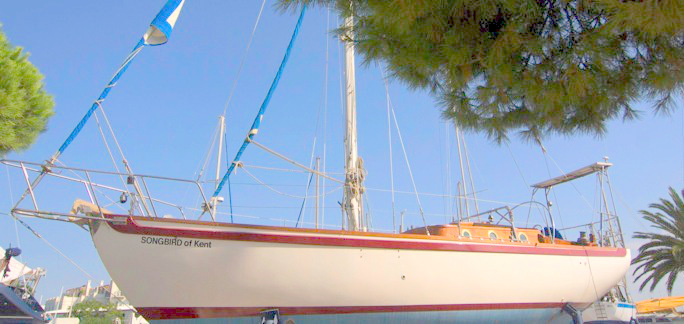
(Reminds me of a anecdote when I was crewing on a privately-owned East Coast Essex fishing smack. I was asking Bill, the owner, why he always laid his thumb on the position on the chart in response to the question, “Where are we?” Bill’s reply: “That’s as accurate as anyone can be!”)
In 1969, when I was driving across the desert plains of Australia, often with inhabited places more than a 150-mile radius away (the Simpson Desert especially coming to mind) the Southern Cross seemed to keep me grounded and remind me that I was making progress.
Back when I was living just outside Totnes in South Devon, my frequent drives up to London along the A303 took me past Stonehenge in Wiltshire.

THE EARLIEST MONUMENT
It is possible that features such as the Heel Stone and the low mound known as the North Barrow were early components of Stonehenge,[3] but the earliest known major event was the construction of a circular ditch with an inner and outer bank, built about 3000 BC. This enclosed an area about 100 metres in diameter, and had two entrances. It was an early form of henge monument.[4]
Within the bank and ditch were possibly some timber structures and set just inside the bank were 56 pits, known as the Aubrey Holes. There has been much debate about what stood in these holes: the consensus for many years has been that they held upright timber posts, but recently the idea has re-emerged that some of them may have held stones.[5]
Within and around the Aubrey Holes, and also in the ditch, people buried cremations. About 64 cremations have been found, and perhaps as many as 150 individuals were originally buried at Stonehenge, making it the largest late Neolithic cemetery in the British Isles.[6]
Taken from here.
I would have loved being present at Stonehenge when the builders finally were able to stand back and see the Sun “speak” to them at the first Solstice after that point in its construction.
It seems to me to be a most magical place yet Stonehenge offers a mathematical and rhythmic foundation to that magic.
3. First man into space – 12th April, 1961
It was, of course, Yuri Gagarin, who made the first complete orbit of Planet Earth in space.

I would have given anything to be in his seat (and suit). For to look out and see our planet as a small object in an enormous outer space would have to change one’s perception of almost everything; for evermore.

My wish for the New Year is that we recognise our place both in history and on our Planet Earth, and care for it as the sole, beautiful home that we have.
Now that global recognition would be a moment in history that I would want to experience before I die!
(Thanks John for inspiring me to jot down these thoughts!)
A remarkable report about how dogs share.
Apologies for the short intro but my internet connection is still not 100% and I didn’t want to fuss around and lose the window in which to present this fascinating article on ScienceAlert sent to me by Dan Gomez.
ooOOoo

Treats for everybody! But more for pals.
PETER DOCKRILL 17 DEC 2015
Voluntary acts of kindness and positive outward gestures without thought of reward are two of the more redeeming aspects of human society, but to what extent do these prosocial behaviours exist in other animals?
A new study by researchers in Austria suggests that dogs are prosocial among their own kind too, with an experiment involving the voluntary offering of food between the animals showing that dogs also understand the concept of giving.
“Dogs and their nearest relatives, the wolves, exhibit social and cooperative behaviour, so there are grounds to assume that these animals also behave prosocially toward conspecifics,” said Friederike Range, an ethnologist at the Messerli Research Institute. “Additionally, over thousands of years of domestication, dogs were selected for special social skills.”
But measuring prosocial behaviour in dogs isn’t easy, says Range, because they’re so very social with humans. It can be difficult to tell between seemingly prosocial acts and behaviours that could actually just be the dog obediently reacting to cues and unintended communications from researchers.
So to take people out of the equation as much as possible, Range and his colleagues conducted an experiment where two dogs were set up by themselves in cages side by side. One of the dogs, called the donor dog, had the ability to extend one of two trays toward a receiver dog, using its mouth to pull on a string.
One of these trays contained a treat, while the other was empty. The dogs had been trained over weeks to understand how the tray-pulling system worked, and the donor dog in each instance knew that it would receive nothing itself if it gave the treat to its fellow canine (other than the pleasure perhaps of knowing it had done a kindness to its counterpart).
The researchers found that dogs, in the absence of any ulterior motive, do indeed exhibit prosocial behaviour, by voluntarily giving food to other dogs. But, having said that, they can be accused of preferential treatment.
“Dogs truly behave prosocially toward other dogs. That had never been experimentally demonstrated before,” said Range. “What we also found was that the degree of familiarity among the dogs further influenced this behaviour. Prosocial behaviour was exhibited less frequently toward unfamiliar dogs than toward familiar ones.”
In other words, dogs look out for their friends more than they do random strangers, but the same could be said of our own prosocial behaviour. Humans have the capacity for kindness, but we demonstrate it more frequently with those with which we are more familiar.
The findings are reported in Scientific Reports, but now that we know dogs are prosocial, that of course means there are other puzzles for the researchers to solve. Why do dogs act this way? Is it a result of domestication, their cognitive complexity, or has it been shaped by the species’ reliance on cooperative activities, such as foraging together? As dog lovers, we can’t wait to hear the answers.
ooOOoo
What amazing creatures they are!
Apologies to you all!
Our internet service has been down, more or less the last several days.
It was restored some five minutes ago. Apparently down to the fact that our internet provider, Outreach Internet, had to purchase two snowmobiles to get access to the generators powering two of their masts!
The foul weather continues but fingers crossed so does our internet service.
Thus I hope Learning from Dogs returns to “normal service” starting with a new post at midnight PST tonight.
As seen by Doranne Long over on Facebook.
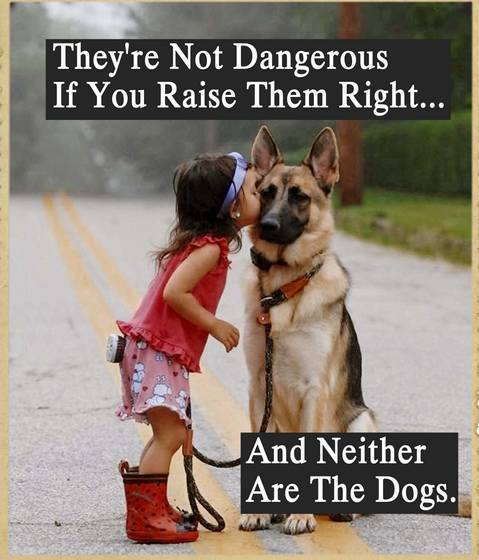
This is just an interim post while I get my act together today (it’s 08:07am).
For yesterday morning, around 7am, we lost our internet service and it was only restored a couple of hours ago.
There’s an announcement from me coming out before the end of the day about my book and a way for anyone interested in reading a section to be able to download a few chapters.
More later!
Thanks Doranne for sharing that wonderful reminder.
Bravo Pet Foods
Bravo Pet Foods of Manchester, Connecticut, has announced it is voluntarily recalling select lots of its raw food for dogs and cats due to the possible presence of Salmonella.
To learn which products are affected, please visit the following link:
Bravo Dog Food Recall of December 2015
Please be sure to share the news of this alert with other pet owners.
Mike Sagman, Editor
The Dog Food Advisor
That link offers the following:
The following product is being voluntarily recalled because of the possible presence of Salmonella.
Bravo Blend Chicken diet for dogs and cats
Item number: 21-102
Size: 2 pound (32 ounce) chub
Best Used By Date: 11-13-16
UPC: 829546211028
My promotion yesterday of my KAJO interview!
Yes, I know I’m running the risk of being a pain in the arse but …

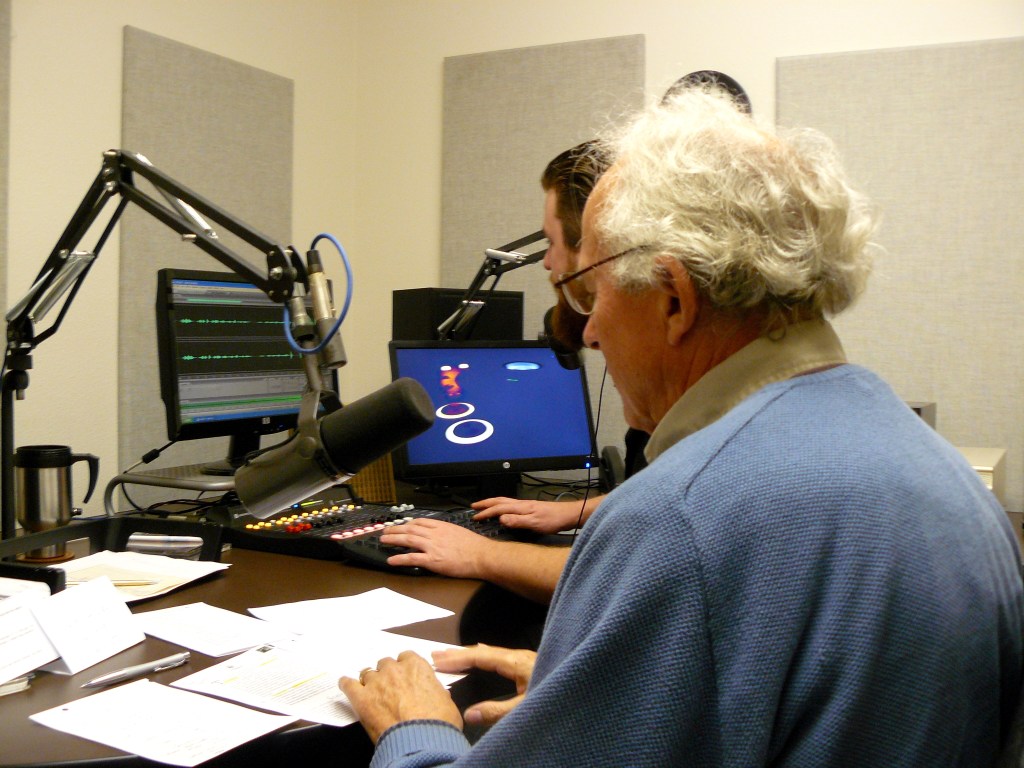
In just six hours time my interview by Kyle Dunlap of the radio station KAJO will be aired.
You will see the On Air button to click just to the right of the KAJO 1270am logo.

It will have Kyle Dunlap’s name on it when you “tune in” at 12:45 PST later today.
Would love you to listen to this.
In exactly twenty-four hours from now, you will have the opportunity to listen to Kyle Dunlap of the radio station KAJO interviewing me about my book: Learning from Dogs.
The interview, that was pre-recorded on the 23rd November, is part of KAJO’s community broadcasts where they speak to local authors. As a newbie author, I was delighted and flattered to be asked to participate.
Anyway!
The broadcast is a little after 12:45 Pacific Standard Time on Tuesday, 8th December. If you are not in the USA, you can check the equivalent time easily at The World Clock website.
It is being broadcast live on KAJO’s website
You will see the On Air button to click just to the right of the KAJO 1270am logo. Here is the “Click to Listen Live” button grabbed from the KAJO website at 3:20pm yesterday.
It will have Kyle Dunlap’s name on it when you “tune in” at 12:45 tomorrow.
If you do listen to the interview do leave a comment below – good or bad! 😉
What clues does your dog’s spit hold for human mental health?
This is not a spoof. Apparently the closeness of the relationship between dogs and humans holds real scientific value.
Just my way of introducing a most fascinating and interesting item that recently appeared on The Conversation blogsite. (And see my note at the end of today’s post.)
ooOOoo
December 2, 2015
Elixir Karlsson, Assistant Professor of Bioinformatics and Integrative Biology, University of Massachusetts Medical School

Dogs were the first animals people domesticated, long before the earliest human civilizations appeared. Today, tens of thousands of years later, dogs have an unusually close relationship with us. They share our homes and steal our hearts – and have even evolved to love us back. Sadly, they also suffer from many of the same difficult-to-treat psychiatric and neurological diseases we do.
I learned this firsthand about six years ago, when my sister Adria adopted Beskow, a beautiful,

boisterous, black and white mutt. Beskow became my constant companion on my morning runs along the Charles River. Her joy in running was obvious to everyone we passed, and she kept me going mile after mile.
When not running, though, Beskow suffered from constant anxiety that left her stressed and unhappy – on edge around other dogs and prone to aggressive behavior. Beskow had trouble even playing outdoors, since she was compelled to attend to every sound and movement. Working one-on-one with skilled behaviorists and trainers helped immensely, but poor Beskow still never seemed able to relax. Eventually, Adria combined the intensive training with medication, which finally seemed to give Beskow some relief.
Beskow’s personality – her intelligence, her focus and her anxiety – was shaped not only by her own life experiences, but by thousands of years of evolution. Have you ever known a dog who would retrieve the same ball over and over again, for hours on end? Or just wouldn’t stay out of the water? Or wasn’t interested in balls, or water, but just wanted to follow her nose? These dogs are the result of hundreds of generations of artificial selection by human beings. By favoring useful behaviors when breeding dogs, we made the genetic changes responsible more common in their gene pool.
When a particular genetic change rapidly rises in prevalence in a population, it leaves a “signature of selection” that we can detect by sequencing the DNA of many individuals from the population. Essentially, around a selected gene, we find a region of the genome where one particular pattern of DNA – the variant linked to the favored version of the gene – is far more common than any of the alternative patterns. The stronger the selection, the bigger this region, and the easier it is to detect this signature of selection.
In dogs, genes shaping behaviors purposely bred by humans are marked with large signatures of selection. It’s a bit like evolution is shining a spotlight on parts of the dog genome and saying, “Look here for interesting stuff!” To figure out exactly how a particular gene influences a dog’s behavior or health, though, we need lots more information.
To try to unravel these connections, my colleagues and I are launching a new citizen science research project we’re calling Darwin’s Dogs. Together with animal behavior experts, we’ve put together a series of short surveys about everything from diet (does your dog eat grass?) to behavior (is your dog a foot sitter?) to personality (is your dog aloof or friendly?).
Any dog can participate in Darwin’s Dogs, including purebred dogs, mixed breed dogs, and mutts of no particular breed – our study’s participants will be very genetically diverse. We’re combining new DNA sequencing technology, which can give us much more genetic information from each dog, with powerful new analysis methods that can control for diverse ancestry. By including all dogs, we hope to be able to do much larger studies, and home in quickly on the important genes and genetic variants.

Once an owner has filled out the survey, there’s a second, crucial step. We send an easy-to-use kit to collect a small dog saliva sample we can use for DNA analysis. There’s no cost, and we’ll share any information we find.
Our plan is to combine the genetic data from many dogs and look for changes in DNA that correlate with particular behaviors. It won’t be easy to match up DNA with an obsession with tennis balls, for instance. Behavior is a complex trait that relies on many genes. Simple Mendelian traits, like Beskow’s black and white coat, are controlled by a single gene which determines the observable characteristic. This kind of inherited trait is comparatively easy to map. Complex traits, on the other hand, may be shaped by tens or even hundreds of different genetic changes, each of which on its own only slightly alters the individual carrying it.
Adding to the complexity, environment often plays a big role. For example, Beskow may not have been as anxious if she’d lived with Adria from puppyhood, even though her genetics would be unchanged.

To succeed, we need a lot of dogs to sign up. Initially, we’re aiming to enroll 5,000 dogs. If successful, we’ll keep growing. With bigger sample sizes, we’ll be able to tackle even more complex biological puzzles.
This is a huge effort, but could offer huge rewards. By figuring out how a genetic change leads to a change in behavior, we can decipher neural pathways involved in psychiatric and neurological diseases shared between people and dogs. We already know these include not just anxiety, but also PTSD, OCD, autism spectrum disorders, phobias, narcolepsia, epilepsy, dementia and Alzheimer’s disease.
Understanding the biology underlying a disease is the first step in developing more effective treatments – of both the canine and human variety. For example, genetic studies of narcolepsy in Doberman pinschers found the gene mutation causing the disease – but only in this one dog population. Researching the gene’s function, though, led to critical new insights into the molecular biology of sleep, and, eventually, to new treatment options for people suffering from this debilitating disease.
Darwin’s Dogs is investigating normal canine behaviors as well as diseases. We hypothesize that finding the small genetic changes that led to complex behaviors, like retrieving, or even personality characteristics, like playfulness, will help us figure out how brains work. We need this mechanistic understanding to design new, safe and more effective therapies for psychiatric diseases.
And Beskow? Six years later, she is as wonderful as ever. While still anxious some of the time, the

medication and training have paid off, and she enjoys her daily walks, training and playtime. She still gets very nervous around other dogs, but is a gentle, playful companion for my sister’s three young children.
We are now sequencing her genome. In the next few months, we should have our first glimpse into Beskow’s ancestry. We know she is a natural herder, so we’re curious to find out how much her genome matches up to herding breeds, and which genes are in that part of the genome.
Of course, we can’t figure out much from just one dog – if you are a dog owner, please enroll your dog today!
ooOOoo
This is an incredibly interest research project with far-reaching implications for us humans. I have written to Professor Karlsson to double-check that anyone who reads this can participate, even if living outside the USA, and will update this post as soon as I hear back from her.
Do share this as far and wide as you can for the benefits for us humans are clear and obvious.
Not a week goes by without me gaining more and deeper understanding of just how wonderful and fabulous our dogs are.
The concluding part to yesterday’s post.
ooOOoo
Open a door
Your dog can cue to you open the door by ringing a bell, but how about taking it to the next level and teaching your dog to open the door by himself? In fact, there’s a handy trick built into this that we will introduce later on! This video walks you through all the steps to opening doors and drawers:
Hold an object
If your dog likes to play fetch or tug, it may be a great idea to teach him how to hold and carry an object. It’s a new way for a dog to think about holding a toy, since once the dog has a grip on it, he needs to wait for you to give the cue to release it. This trick is also included in a more complicated trick, which is next on our list. But first, here’s a video that shows you how to master this trick:
Fetch something from the fridge or cupboard
When you have the training down for touch, opening the door, knowing the names of objects, and holding an object, it’s just a matter of putting the steps together to teach your dog to fetch an item from somewhere in the house. A popular version of this trick is of course to fetch a beer from the fridge! But maybe start out with a less fizzy drink option, just in case.
Back up
An interesting trick to teach your senior dog is how to walk backwards. It’s a great one to help with getting him to think about using his body a little differently. Most dogs aren’t really aware of where their hind end is — it’s just the part that follows their front end. By teaching your dog to walk backward, you’re teaching him to be aware of where his back legs are going. It’s great for both mental and physical agility.
Find it
Keep life interesting for your dog by creating a game around using his nose to find a reward. This is a great trick especially for dogs whose hearing or sight has diminished with age. The trick teaches them to use their noses even more purposefully, using scent work to find the hidden treat or toy. Once you teach your dog how to find it, you can have the “it” be something different every time you play to keep your dog at the top of his game. This video shows an older Labrador learning the steps to the “find it” game and having fun playing:
Tuck himself in bed
It’s surprising how much fun you can have with a trick that only requires your dog to grab a blanket and roll over. This adorable trick is great for dogs of any age, and is an easy (and cozy) trick for your senior dog to learn. You simply teach your dog to lie down on a blanket, grab and hold the corner of it, and roll over so he tucks himself into bed. For senior dogs who like to snooze in extra warm blankets, this is a dream trick. Here’s how it works:
ooOOoo
So there you are. Plenty to keep you and your senior dogs engaged for a long time. Once again, if you missed part one then that was published yesterday.

