Are you a dog owner? Then here’s something else that you gain from your wonderful friend.
I was rather short on time yesterday so apologies for cutting my introduction to a minimum. But you will still love this item that appeared on the Care2 site three days ago.
ooOOoo
People Who Talk to Their Pets Are Actually Quite Intelligent
If you’ve ever owned a pet, you’ve probably talked to it at one point or another. And even though you may have been fully aware that your pet couldn’t talk back or even really comprehend what you were saying, you still did it anyway.
Why do we do this? Why do we talk to our pets like human friends when we know their little minds just aren’t built to think or feel the same way we do?
When we talk to our pets, we subconsciously create a human-like bond in our own minds with non-human creatures. We’re built for connection — and we feel more connected to things when we recognize that they’re just like us.
Talking to animals (and even to inanimate objects, such as house plants) is called anthropomorphism. We usually call it “cute” when kids do it, but when adults do it, we tend to view it as a little weird and immature.
According to behavioral science professor at the University of Chicago and anthropomorphism expert Nicholas Epley, talking to animals and objects is actually a sign of intelligent social cognition. Humans are very social creatures, so our brains are wired to see faces and perceive minds everywhere.
Epley explains that we anthropomorphize the things that we love as opposed to the things that we hate. The more we like something, the more likely we are to want to engage with its mind — even if it doesn’t actually have a mind.
In a 2011 study where a group of participants were shown photos of baby animals and adult animals, most admitted to liking the baby animals better and were more likely to anthropomorphize them. If the participants could own one of the baby animals, they said that they would name it, talk to it and refer to it by its appropriate gender pronoun.
The most common way we anthropomorphize animals and objects is by giving them names, but it can apply to character traits, too. For example, a person may describe their cat as “sassy” or their car as a “rickety old man.” These human-like character traits given to non-human things reflect our relationship with them and perhaps even symbolize extensions of ourselves.
Anthropomorphizing only benefits us when inanimate objects are involved, but when it comes to anthropomorphizing domesticated animals like dogs and cats, both ourselves and our pets can benefit. Since these animals evolved over thousands of years to become human companions, they are biologically designed to bond with us.
Studies have shown that when we talk to dogs, they can distinguish between the meaning of the words and the emotional cues we give them. Cats may not be as responsive to human language as dogs are, but they do have the ability to recognize their owners’ voices and they also have 16 different types of vocalizations they use to communicate.
So you can let go of the widely held belief that talking to your pet, your houseplants, your car or anything else is childish or even a little bit crazy. From a scientific viewpoint, it turns out that quite the opposite is true.
ooOOoo
Let me close by reminding all you good people of yet another wonderful aspect of the relationship between humans and dogs. In that we all know the dog evolved from the grey wolf. But had you pondered on the fact that wolves don’t bark! Yes, they howl but they do not bark.
There is good science to underpin the reason why dogs evolved barking; to have a means of communicating with us humans.
Every person who has a dog in their life will instinctively understand the meaning of most, if not all, of the barks their dog utters.
Jean and I went to a conference down in Medford last Saturday. It was a conference to do with Parkinson’s Disease and was arranged by the group Parkinson’s Resources of Oregon (PRO).
Almost immediately upon our arrival at 1pm we saw a gentleman in his wheel chair accompanied by his service dog. That gentleman soon identified himself as Ken Schiff and his wonderful service dog was named Lacey. It was clear within moments how beautifully behaved was Lacey and, by implication, how well trained he had been to perform his role as a service dog to Ken.
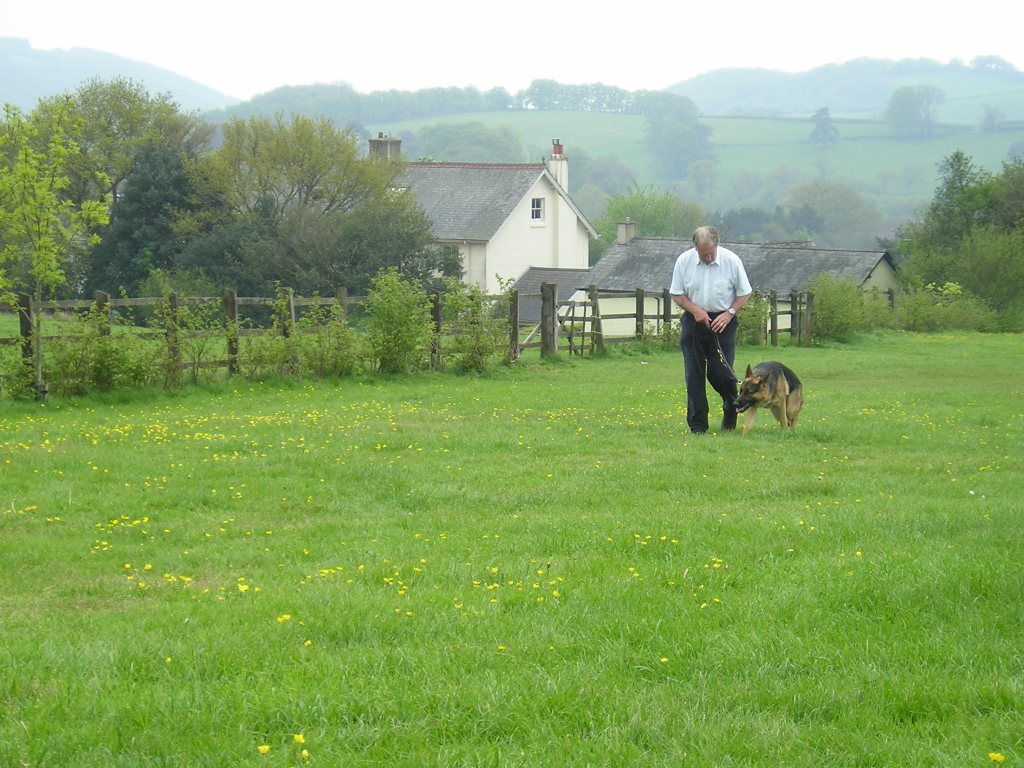
That took me way back to my days of working with Pharaoh back in Devon; before Jean and I met. Living in a very rural part of England with, reputedly, there being more sheep than people, one of the early requirements was to train Pharaoh to behave properly in the vicinity of sheep. Here are a couple of pictures from that training day in Devon.
Pharaoh’s training the afternoon of the 11th May, 2004.
oooo
Luckily the training paid off! Pharaoh was fabulous in and around sheep!
Needless to say, Pharaoh also received professional training for his general behaviours.
So treat all of the above as my introduction to a guest post by Robert Michael. On dog training. So who is Robert Michael?
Robert Michael
Robert is professional dog trainer having an experience of almost 8 years now. And he loves to contribute to the pets blogs to enjoy his passion. Plus, I write free of cost for those pets blogs: do you have one? Contact me rob.michael47@gmail.com
ooOOoo
A Comprehensive Visual Guide on Dog Training Schedule to Get 100% Outcomes
by Robert Michael. April 26th. 2017
There are a number of acts to follow on time, when your dog is on a training with you! So, if it is said that, you can get no any effective outcomes of the dog training, without making a proper schedule; it would not be wrong at all.
So, you must be aware of the fact that:
Making an appropriate dog training scheduleis necessary for a super effective output. Now you might be thinking that:
How to make a dog training schedule?
So, it is not a tough task to do so! You just can make a schedule by following the tips given below:
Take a pen and diary specified in writing and following the schedule.
Save notes in your mobile phone, and set the reminders.
Make an Excel sheet containing the schedule.
Make an MS Word document to file the training schedule.
Make a training schedule chart and attach to one of the walls of your home.
So, these are the super easy ways, you can make and follow the training schedule of your dogs.
You will be habituated by the training schedule.
Your dog will get habituated by the schedule timings.
You will get a punctual routine.
Your training sessions will prove to be more effective.
You will be able to train your dog by an organized manner.
What can you include in the schedule?
The feeding timings.
The playing timings.
The walk timings.
The toilet timings.
The training sessions’ timings.
The exercise timings.
The sleeping and waking up timings.
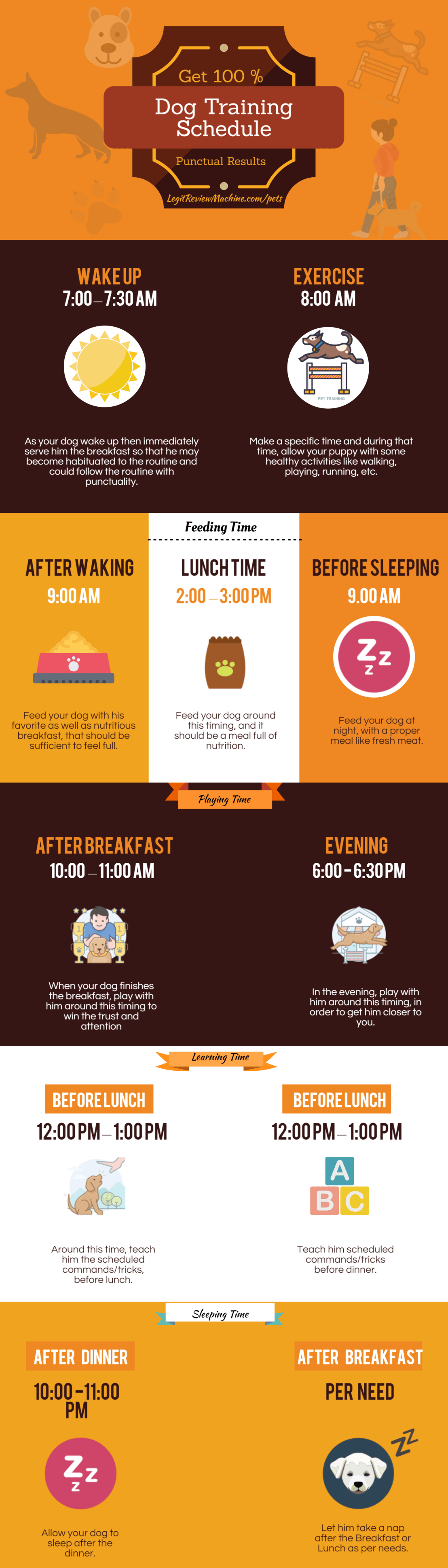
You can see the Legit Review Machine infographic to better understand the dog training schedule ways and steps.
ooOOoo
And here is that infographic that Robert included as a separate image in his email to me.
Puppy Training Schedule
I’m sure many of you will have found this very useful and I do hope there will be more guest posts from Robert.
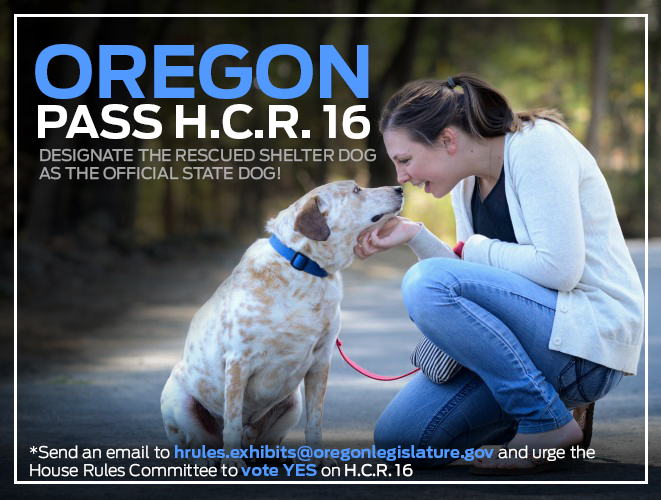
Recognize Rescued Shelter Dogs as Oregon’s State Dog
A couple of hours ago I received an email from Scott Beckstead. Scott is the Senior Oregon Director and the Rural Outreach Director for The Humane Society of the United States (HSUS).
Scott and his wife are two people that Jeannie and I have met and they know that we are committed to supporting the HSUS. Scott was asking in his email that we promote his plea, on behalf of HSUS’s great work in Oregon, for all Oregon residents to support a proposal that comes with the catchy title of Proposal H.C.R. 16.
Because of the immediacy of this campaign, tomorrow is the deadline, I was pleased to publish what Scott sent me without delay.
ooOOoo
In Support of H.C.R. 16
Recognize Rescued Shelter Dogs as Oregon’s State Dog
Dogs are man’s best friend, providing many benefits to their families such as love, loyalty and an improved sense of well-being. Yet many people are surprised to learn that nationwide, millions of healthy, adoptable dogs are euthanized in shelters annually due to a lack of critical resources and public awareness.
The number of euthanized dogs could be reduced dramatically if more people adopted pets instead of buying them. When families choose to adopt, they save a loving animal by making them part of their family and open up shelter space for another animal who might desperately need it. If more families looking for a pet dog this year would adopt their new furry friend from a shelter, we could put an end to this tragedy.
Animal shelters and rescue groups are brimming with happy, healthy dogs of every breed, shape, size, age, and color, just waiting for someone to take them home. With the help of legislation like H.C.R. 16, we can spread the word about the benefits of adoption and work to end the senseless euthanasia of homeless dogs nationwide.
Shelter dogs make great pets. Please pass this legislation to emphasize the importance of animal adoption with the support of state and national animal sheltering leaders.
oooo
MY TESTIMONY IN SUPPORT OF H.C.R. 16
From: SCOTT BECKSTEAD, SENIOR OREGON DIRECTOR, RURAL OUTREACH DIRECTOR
THE HUMANE SOCIETY OF THE UNITED STATES
This Testimony presented to the HOUSE COMMITTEE ON RULES, APRIL 27, 2017
Chair Williamson, Co-Chairs Rayfield and McLane, and Members of the Committee:
Thank you for the opportunity to comment on H.C.R. 16, the bill to designate the rescued shelter dog as the official state dog of Oregon. The Humane Society of the United States strongly supports this legislation and urges you to vote YES.
First it is important to recognize this bill is not intended to denigrate reputable breeders of purebred dogs. Rather, it celebrates dogs of all stripes, be they purebred or mutt- and encourages Oregon citizens to consider adopting a dog in need of a home.
With regard to the claim that many Oregon shelter dogs originated in other parts of the country, transporting dogs from areas of over-population into areas where the population of adoptable dogs does not meet the demand is an activity that has been taking place for many years, and has saved countless lives, and created many happy families across the state. The Society of Animal Welfare Administrators (SAWA) has produced best practice guidelines for transport programs to ensure that both sending and receiving shelters are adhering to the highest standards of animal welfare and health considerations, including but not limited appropriate health certificates and veterinary inspection.
Shelters across Oregon adhere to industry best practices and appropriate oversight. Contrary to scare-mongering from the National Animal Interest Alliance, there is no data to show that dogs within the Oregon shelter system have higher incidences of temperament issues, health concerns, or that dogs from out of state are displacing Oregon dogs in need.
When a prospective owner buys a dog from a pet store, online seller or flea market, they’re almost certainly getting a dog from a puppy mill. Puppy mills are factory-style breeding facilities that put profit above the welfare of dogs. Animals from puppy mills are housed in shockingly poor conditions with improper medical care, and are often very sick and behaviorally troubled as a result. The mothers of these puppies are kept in cages to be bred over and over for years, without human companionship and with little hope of ever joining a family. And after they’re no longer profitable, breeding dogs are simply discarded—either killed, abandoned or sold at auction.
These puppy mills continue to stay in business through deceptive tactics — their customers are unsuspecting consumers who shop in pet stores, over the Internet or through classified ads. Puppy mills will continue to operate until people stop supporting them. But by visiting your local shelter or rescue and adopting a homeless pet, you can be certain you aren’t giving them a dime.
Dogs and cats share the homes of 65% of U.S. households, providing many benefits to their families such as love, loyalty and an improved sense of well-being. Yet many people are surprised to learn that nationwide, millions of healthy, adoptable dogs are euthanized in shelters annually due to a lack of critical resources and public awareness.
The number of euthanized animals could be reduced dramatically if more people adopted pets instead of buying them. When families choose to adopt, they save a loving animal by making them part of their family and open up shelter space for another animal who might desperately need it.
Animal shelters and rescue groups are brimming with happy, healthy pets just waiting for someone to take them home. With the help of legislation like HCR 16, we can spread the word about the benefits of adoption and work to end the senseless euthanasia of homeless pets nationwide.
Usually when you adopt a pet, the cost of spay/neuter, first vaccinations (and sometimes even microchipping!) is included in the adoption price, which can save you some of the up-front costs of adding a new member to your family. Furthermore, pets are screened for good health and behavior.
Not only do animals give you unconditional love, but they have been shown to be psychologically, emotionally and physically beneficial to their companions. Caring for a pet can provide a sense of purpose and fulfillment and lessen feelings of loneliness. And when you adopt instead of buying a pet, you can also feel proud about helping an animal in need!
Thank you for considering our position, and for your service to the people and animals of Oregon.
ooOOoo
Let me close with this graphic that Scott also sent me.
Please, please, if you wish to support this proposed measure then, without delay, send an email now to hrules.exhibits@oregonlegislature.gov asking for a YES vote on H.C.R. 16
Jean and I have just done so.
Chair Williamson, Co-Chairs Rayfield and McLane, and Members of the Committee,
I write to you all on behalf of myself and my wife.
When we moved to Oregon in 2012 we came with 12 dogs many of which were rescue dogs and from animal shelters. We still have 7 dogs.
Shelter dogs make wonderful pets and they always know when they have been rescued from a shelter. They offer such love and gratitude to their loving owners.
Please, Jean and I ask for this measure, Measure H.C.R. 16, to be supported.
Thank you.
Paul & Jean Handover
4000 Hugo Road, Merlin, OR 97532
That quote was one uttered by Harold Macmillan, the British Conservative politician and publisher, who served six years as Prime Minister from 1957 to 1963. It was in response to a question regarding what sort of thing was most likely to blow a government off course.
Why did that quotation come to my mind? Simply because all my grand plans for writing a post for you good people were stymied by our internet connection being down for much of the weekend.
So rather than get cut off half-way through a new post, I decided to re-post what I published on this blog five years ago to the day: on April 24th. 2012. Here it is.
ooOOoo
How lady luck brought joy for a ‘down-and-out’ Londoner and a cat called Bob!
I was chatting with my son yesterday and he happened to mention that perhaps I should write about a cat for a change! Alex mentioned a book recently published in the UK called A Street Cat Named Bob: How One Man and His Cat Found Hope on the Streets.
This is how the book is described on Amazon (UK site),
When James Bowen found an injured, ginger street cat curled up in the hallway of his sheltered accommodation, he had no idea just how much his life was about to change. James was living hand to mouth on the streets of London and the last thing he needed was a pet. Yet James couldn’t resist helping the strikingly intelligent tom cat, whom he quickly christened Bob. He slowly nursed Bob back to health and then sent the cat on his way, imagining he would never see him again. But Bob had other ideas. Soon the two were inseparable and their diverse, comic and occasionally dangerous adventures would transform both their lives, slowly healing the scars of each other’s troubled pasts. A Street Cat Named Bob is a moving and uplifting story that will touch the heart of anyone who reads it.
A quick web search found volumes of material.
As in the local London newspaper the Islington Tribune wrote this back in 2010,
Two cool cats… the Big Issue seller and a stray called Bob
Inseparable: musician James Bowen with Bob
Down-on-his-luck musician teams up with ‘wonderful loyal friend’ he rescued from streets
Published: 24 September, 2010
by PETER GRUNER
NOT since the legendary Dick Whittington has a man and his cat become such unlikely celebrities on the streets of Islington.
Big Issue seller James Bowen and his docile ginger cat Bob, who go everywhere together, have been attracting comments since they first appeared outside Angel Tube station.
The story of how they met – widely reported in blogs on the internet – is one of such extraordinary pathos that it seems only a matter of time before we get a Hollywood film.
James, 31, who lives off Seven Sisters Road, Holloway, is a musician who has fallen on hard times.
He ekes out a basic living selling the homeless people’s magazine Big Issue at Angel and Covent Garden.
Bob was a stray discovered by James outside his accommodation one day.
The cat was limping after apparently being attacked by another animal, possibly a fox.
After failing to discover the cat’s owner, James took him to the RSPCA hospital at Finsbury Park, which prescribed a course of antibiotics.
“I kept him for two weeks until he was well enough to go on his way,” said James. “But when I opened the front door to let him out Bob wouldn’t move. He seemed to me to be saying: ‘I want to stay with you.’
“Now we go everywhere together. I even have a cat harness when we go out and Bob gets really excited when I show it to him.”
Read the rest of the article here and if you want more information, a web search on Bob the Cat will finds loads more.
It’s a fabulous story with a great message of hope for not just for James and Bob but for all of us that find ourselves ‘up a creek without a paddle’ at points in our lives.
Here’s how the newspaper The Daily Mail wrote about it on their website,
[last half of the story]
But then Bob started following him and it became increasingly difficult to shoo him away, especially as there were dangerous roads to be crossed. One day there was nothing for it but to put Bob on a makeshift lead and take him along. Bob travelled sitting on James’s shoulders.
The trouble was, so many cat-mad passers-by stopped him to stroke the animal that James arrived late at his pitch, secretly cursing Bob for thereby costing him some of his usual £25-a-day takings. He couldn’t have been more wrong.
Within minutes, people who would normally have walked by without giving James a second glance were lingering to make a fuss of the cat sitting sedately in his guitar case, and most made a donation. By the end of the day, he’d racked up more than £60.
It was the beginning of a phenomenon as tourists and commuters befriended Bob and James, many bringing titbits for the cat. People were amazed at how placidly Bob would sit all day, quite happily watching the world go by while James earned a living. Not that it was always without a hitch; on a couple of occasions Bob bolted when startled, leading to a frantic chase through the crowded streets.
Bob’s popularity continued when James switched from busking to selling the Big Issue, the magazine produced and sold by homeless people. This change in direction was part of James’s growing sense of a need to get his life in order, which he puts down to the responsibility of looking after Bob, and the example the cat offered of the possibility of a second chance.
It enabled James to make the final push to end his drug dependency, going through the necessary cold turkey to get off heroin substitutes, and to mend broken contacts with his family. The final result of Bob’s influence came when a literary agent who passed the duo every day and had seen them on YouTube suggested James tell their story in a book. The result is this heart-warming tale with a message of hope that will appeal especially to the many cat obsessives out there.
Over on my website, under My Writings, I mention my recently published booklet, The Amazing World of Dogs.
Here’s an extract from pages 17-18 of that booklet.
Finally, Dr. Morten Kringelbach of the Department of Psychiatry at Oxford University1 explains that the need to nurture is very deep in us humans and that dogs produce an instinctive parental response in us that is very similar to our nurturing instinct for our children.
If the magic of having dogs in our lives for such a long time ended there it would still be breathtakingly wonderful. But dogs could now be offering us humans the capacity to understand many human diseases. Literally, our dogs could be saving our lives!
The challenge in understanding human diseases is that within our ‘breed’ there is a great variability of genes. Not surprising when one considers the incredible diversity and variation within us humans.
But when we turn to dogs then we have a bonus. For despite there being, as mentioned earlier, 400 or more different breeds of dog, within each breed dogs are very similar to each other. In other words, that narrow gene pool within a specific dog breed makes if far easier to pinpoint genetic mutations than it is in humans.
Elinor Karlsson is the director of the Vertebrate Genomics Group at the Broad Institute of MIT and Harvard.2 As a geneticist, Dr. Karlsson has identified, “hundreds of diseases common to dogs and humans”. In 2005, the dog’s genome was fully mapped; all 2.4 billion letters of the dog’s genome
Among those common diseases between us humans and our wonderful dogs are diabetes, cardiac diseases, epilepsy, many cancers especially bone cancers, and breast cancer and even brain tumours.
The statistics are grim: About 60 to 70 percent of children who have glioblastoma, a form of brain cancer, do not survive more than two years. This fast-growing cancer is resistant to traditional treatments like radiation and chemotherapy.
For dogs, cancer statistics are also grim. More than 6 million dogs are diagnosed with cancer every year, and one out of four dogs will get cancer during their lifetime. It’s the leading cause of death for dogs after the age of two.
But there could be hope for both dogs and kids. A vaccine being developed that destroys cancer cells in dogs could also be successful in fighting glioblastoma in children.
Researchers at Children’s Mercy Hospital in Kansas City, Mo., have started a partnership with ELIAS Animal Health, a company that’s testing treatments for osteosarcoma (bone cancer) and B cell lymphoma in dogs.
“If we take advantage of the resources we have in this region and get behind those collaborations, this could be a mecca for advanced, exciting, innovative therapies for cancer and lots of other diseases,” Dr. Doug Myers, an oncologist at Children’s Mercy, told the Kansas City Star.
ELIAS Cancer Immunotherapy (ECI) uses the dog’s own immune system to destroy the cancer. “Research has shown that ex vivo activated T cells have the machinery to effectively kill cancer cells, including cancer stem cells,” according to the company’s website. “ELIAS Cancer Immunotherapy utilizes adoptive cell therapy to deliver an army of activated T cells.”
The dog is vaccinated with his own cancer cells to produce an immune response, then the generated white blood cells destroy the cancer cells.
“Personalized T cells are then safely obtained from the patient through apheresis [the removal of blood] and then ‘super charged’ to produce a large population of killer T cells that are reinfused into the patient to kill the cancer,” the company explains.
ELIAS Animal Health is currently conducting clinical trials of ECI at Kansas State University, the University of Missouri-Columbia and a few animal hospitals across the country. The success rates of using ECI along with surgery on dogs with cancer are being compared with those of patients that are treated with surgery alone.
“Early clinical study results already show positive outcomes,” Tammie Wahaus, CEO of ELIAS Animal Health, said in November 2016.
Among the ECI success stories is that of Dakota, a German shorthaired pointer who continues to survive a year after she was diagnosed with osteosarcoma. This is twice as long as her original prognosis. X-rays taken during a follow-up examination showed no signs of the cancer spreading.
Could ECI also successfully treat children with glioblastoma? Dr. Kevin Ginn, a pediatric oncologist at Children’s Mercy, and other researchers are currently developing protocols for trials. They’re planning to apply for a Phase II clinical trial with the U.S. Food and Drug Administration, using the results of ECI’s studies on safety and effectiveness as far as dogs are concerned. The Phase II trial would give ECI to a large group of children to see if it’s effective and further evaluate its safety.
Animal health trials are regulated by the U.S. Department of Agriculture. They are less expensive and proceed faster than FDA-regulated human trials, the Kansas City Star reports, “but successful human health treatments often bring a larger return on investment.”
In this case, a larger return on investment could be a win-win for children as well as dogs with cancer.
Many would extend that proficiency of dogs to include their sense of loyalty and forgiveness, to and of us humans, but that all pales into insignificance when compared to what our understanding of dogs is giving us.
No less than the capacity to help cure many of our diseases, to deeply understand the workings of the human mind, and above all else, to offer insight into our very existence.
(And, please, make a note of my final remark at the end of today’s post.)
Those who are regular visitors to this place will know that John Zande, who lives in Brazil, is a good friend, and, for that matter, I try to be a good friend of his place. (If you didn’t read my recent review of John’s latest book On The Problem of Good then it is here.)
So when a couple of days ago I received the following email from John you can imagine my positive response to his request.
Paul, hi, I have a favour to ask.
My wife’s sister, Dee (who lives in Australia) has started a gofundme campaign to help cover a rash of vet surgery bills we’ve had recently. These past few months (most of summer, really) has been appalling with the number of dumped animals in our area.
Together with a few other people in our loose group we rescued about ten and got them adopted out to good homes. Plus, we have three in temporary shelters as we nurse them back to health. We took one into our house, Nina, thus making eleven here now, who had her tail amputated last Tuesday. We were fortunate in that our vet worked for free (a 3hr operation) and only charged us for the anesthetist.
We’re lucky to have these wonderful people around, but we’re a tad snowed under right now with the accumulated surgeries and medicines, which is why Dee started this little campaign.
Now there was no question that Jean and I wanted to help. Not only by making a modest donation ourselves but by promoting Dee’s campaign. I emailed a reply to John saying just that.
John then responded with more details, including some photographs:
Dee is married to a very good friend of mine from Uni. She started this campaign to help Dionete, my wife, and I (and if possible a few other Vista Verde folk who’re in our rescue network) here in Brazil. Dee was here just before Christmas and saw the problem first hand. She actually helped us rescue a wonderful little fellow, Terrorista, who now lives a few streets away with a wonderful family.
I didn’t know, but Dionete was chatting to her a week or two ago and it came up just how many vet/surgery/medicine expenses we’d accumulated over the summer. Without either of us knowing, she, Dee, then started this gofundme campaign to lend a hand and help clear the vet bills. We’re not an NGO (we actually help four here in Sao Jose dos Campos, two in Sao Paulo, and Sandra’s Maxmello in another city south of Sao Paulo). Because we’re not an NGO we’ve never thought about doing a campaign ourselves, so was surprised when Dee started this one. It’s quite modest, $1,000 Australian dollars (the goal) converted to Brazilian Reis will make a sizable dent in our backlog of vet surgery bills. Our bills are tiny compared to a guy we know who does have an NGO and owes his network of vets 90,000. He’s a wonderful fellow and I’m actually working with him to try and get a mobile neutering unit started here in Sao Jose dos Campos. But that’s another story. So, to be clear, the campaign is for us here in Vista Verde, which is sadly a dumping ground for animals. Surrounding districts seem to think we’re all wealthy here and therefore they can dump their animals. It’s infuriating, and the animals never stop coming.
I am sure that Jean and I aren’t the only ones that want to help.
And John could offer no better reason for seeking some financial support from the wider world. Here’s some of his later email:
My apologies if there was some confusion. I’m actually heading out right now to feed a new fellow I found a few days ago and is sleeping outside a house in another district. When I get back I’ll send some more photos, OK.
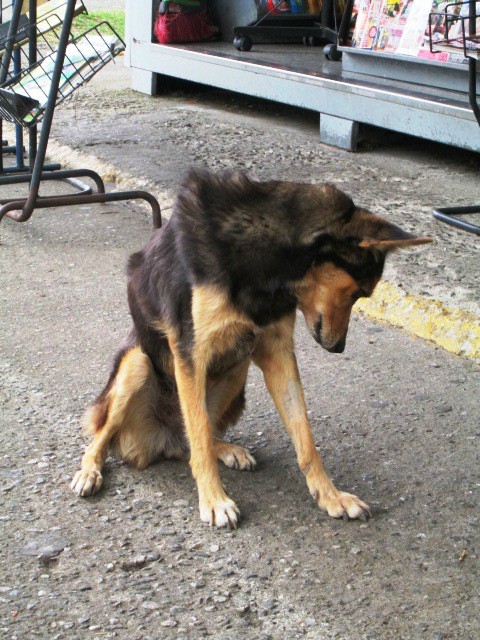
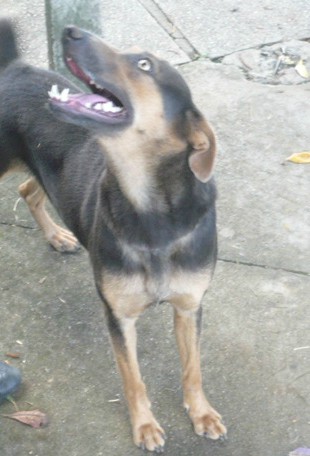
Let me close with some more photos of dogs that have been helped by John, Dionete and the rest of the great band of the Vista Verde Fund.
oooo
oooo
oooo
Finally!
Please offer whatever you can to help. Even the smallest amount makes a real difference.
April 17, 2017 — Party Animal, Inc. has announced it is recalling specific lots of two varieties of its Cocolicious canned dog foods because they have each tested positive for the euthanasia drug, pentobarbital.
What’s Being Recalled?
The following products are affected by the recall:
Cocolicious Beef and Turkey
Size: 12 ounce cans
Lot Number: 0136E15204 04
Best By Date: July 2019
Cocolicious Chicken and Beef
Size: 12 ounce cans
Lot Number: 0134E15 237 13
Best By Date: August 2019
What Caused the Recall?
According to a statement posted on the company’s website and its Facebook page:
The safety of pets is and always will be our first priority. We sincerely regret the reports of the discomfort experienced by the pet who consumed this food.
As pet parents ourselves, we take this matter seriously.
On April 13, a retailer in Texas notified us that their customer had presented samples of our Cocolicious Beef and Turkey Lot #0136E15204 04 and Cocolicious Chicken and Beef Lot #0134E15 237 13 to a testing lab, and that the results had tested positive for pentobarbital.
We have requested those results.
When we were notified, we immediately tracked the lot numbers of the food in question and determined that the food had been manufactured and distributed in 2015.
We then contacted the two probable retailers that had sold the customer the food and asked them to isolate all remaining cans from these lots.
We also requested that the retailers send all of the cans from those lots to us so that we can forward them on to an accredited independent laboratory for independent testing.
We expect to receive the receive the results in 7 to 10 days.
We first saw the formal report from the lab at Texas A&M regarding the customer’s samples, today, April 17.
Out of an abundance of caution, we are retrieving the remainder of these two lots nationwide.
We are working with our distributors and retailers to determine if any additional beef-flavored products manufactured during this 2015 production period remain on shelves and, if so, to retrieve them from shelves, immediately, as well.
What to Do?
Consumers with questions may contact the company by phone at 855-727-8926 or by email at info@partyanimalpetfood.com.
U.S. citizens can report complaints about FDA-regulated pet food products by calling the consumer complaint coordinator in your area.
Offering up a tribute to the work of a professional.
Many, many years ago when I was in business on my own account (1978-1986) I had the pleasure of getting to know Frank Tijou. He was running his own very successful business. But more important than that, Frank had this wonderful ability to explain what he had learned over his years of being an entrepreneur. One such learning was stick to what you really know and don’t try and do things that are best left to other professionals. In other words, don’t be an amateur when it comes to important matters.
Thus when some weeks ago I was strongly recommended by some local authors to have an author website, I looked around for a professional. I quickly came to find Christy Kiltz of Design! by Kiltz Internet Solutions.
Talk about finding a true professional.
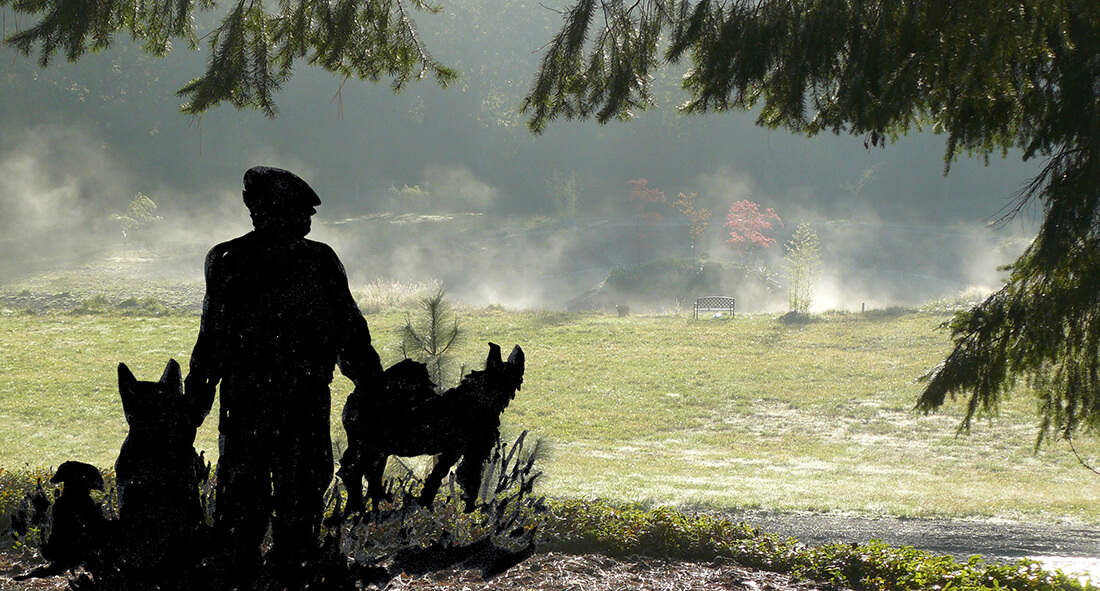
Forgive me, I’m not coming at this in terms of an ego trip. I just want to promote what a wonderful job Christy did. (And not forgetting Emily’s grand design work.) (And most certainly not forgetting my darling Jeannie who did the image of the man in a flat cap with the dogs!)






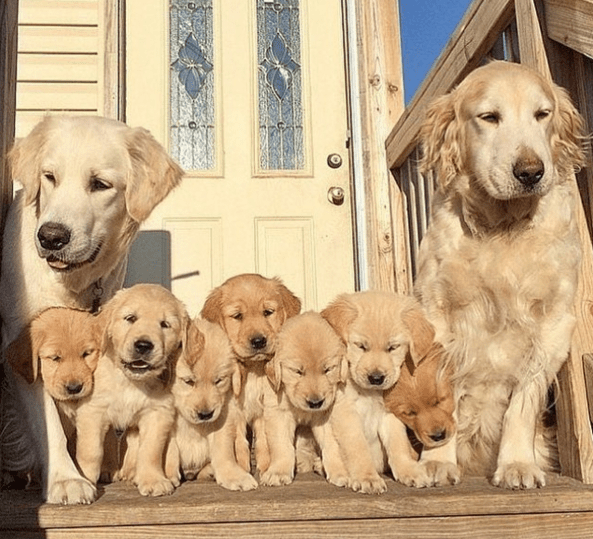



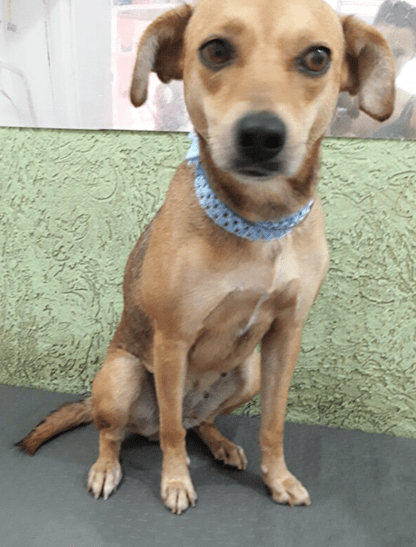
 Let me close with some more photos of dogs that have been helped by John, Dionete and the rest of the great band of the Vista Verde Fund.




 Learning from Dogs