Category: Cats

Starting your own pet business.

Another guest post from Penny Martin.

Well I am preparing this post on Saturday, the 14th. The operation for the hernia on the 10th went smoothly enough but I did not reckon on the discomfort that would follow. Indeed, I was talking to a good friend on Thursday and he said that the pain would more or less last for two weeks. My son gave me the good advice to take regular doses of an over-the-shelf painkiller rather than the stronger tablets the hospital gave me because those prohibited driving! I returned to a small amount of driving last Friday.

Now on with the show!

Penny Martin first wrote a guest post for me in February, Fostering or adopting a dog, and I am delighted to present her second post. Over to her!

ooOOoo

Why Now Is a Great Time for a Pet Business and How to Start Your Own

By Penny Martin.

If you are an animal lover who wants to spend your days scrolling through cute dog pictures and surrounded by furry clients, now is a great time to consider starting your own pet business. Here, you can learn more about which relevant business areas experiencing growth and tips to get started on the right foot. 

Reasons Why It’s a Great Time for Pet Businesses

A growing number of families include animals. According to the American Veterinary Medical Association data, more than half of American households have a pet. That number appears to be growing, too, representing an increased need for care services. 

Pets are not just more abundant; they are also becoming full-fledged family members. As a result, spending on them is also increasing. Despite rapid growth in many care service areas, there are not enough providers to meet this increased demand. 

Animal-Related Businesses That Are Thriving

If you are curious about what type of business to start, look no further than pet care providers. There are several types of jobs you can get involved in:

  • Training and behavioral services: Training isn’t just for puppies. Dogs of all ages can benefit from learning household rules and appropriate behaviors when they are out and about. 
  • Dog walking and pet sitting: This is usually based out of the client’s home, where you pick them up for a walk or provide companionship for short periods.
  • Boarding: This is an excellent option for individuals who would rather welcome dogs and cats to their own home or care facility. Many boarding companies also provide daycare services. 
  • Grooming: You will need to learn how to groom different types of pets to master the skills for a successful grooming career. However, if you enjoy helping dogs look their best, this is an excellent high-demand field. 

Business Strategies to Help You Succeed

Economic conditions are excellent for small pet-focused companies to thrive. However, as an entrepreneur, you need to follow some basic business principles to succeed.

Start by choosing an appropriate legal structure. Research the most popular setup for businesses like yours to find one that fits your needs. Then, file with the appropriate offices to make it official. Next, take time to develop a comprehensive business plan. This document will do more than get you up and running; it will also serve as a reference as you continue to grow. Be sure to conduct market research to identify your target customers.  

Implement a structured invoicing process to set clear payment terms for clients and ensure you get paid on time, especially if you send invoices immediately after performing a service. Accepting several forms of payment is also helpful for clients. Use an invoice maker, free online usually, to streamline the process. Simply add your logo and business information, and you are ready to go. 

Use bookkeeping software to track your income and expenses and gain insight into your cash flow. This is a great way to organize and store receipts, ensuring compliance with regulatory agencies. It also makes tax filing easier at the end of the year and helps you find the most deductions.

A growing number of households with pets and increased spending make now a great time to start an animal-related business. Care and service providers are excellent fields to consider, with high demand for groomers, trainers, and dog walkers. However, no matter what type of company you start, sound business strategies can keep it running smoothly.

Image via Pixels

oOOoo

Excellent!

As an ex-entrepreneur, who fundamentally was a salesman, I can also add the following to that post.

It starts and ends with the customer. A business plan is vital and so too is market research. But unless you have a clear vision of how you are to sell your services and what’s the difference that makes the difference you must not proceed. Selling is all about: Need; Feature; Benefit.

  • Open-ended questions to establish the need. (Those are questions that cannot be answered with a yes or a no.)
  • Keep on asking, and establishing a relationship, until you and the potential customer are clear that there is a need.
  • Then speak about the features of what you are selling that matches the need/s. Do not progress until the prospective customer understands and agrees.
  • For every agreed feature be clear what the benefit is for the customer; of that particular feature.
  • Try closing the deal. If there is hesitation then understand why. Resolve it. Try closing the deal again.

The very best of luck to those that want to run with this.

Yet another amazing story about a dog’s skills

Who knows whether it was a smell, or a sound, or what…

This is a story from England. From a town called Tow Law, a few miles to the south-west of Newcastle. As wikipedia explains: Tow Law is a town and civil parish in County Durham, England. It is situated a few miles to the south of Consett and 5 miles to the north west of Crook. 

Anyway, the story was published by The Dodo and is reproduced below.

ooOOoo

Dog Out On A Walk Finds Someone Very Stuck In A Stone Wall

He wouldn’t leave until his dad agreed to help 💞

By Caitlin Jill Anders

Published on the 25th February, 2022

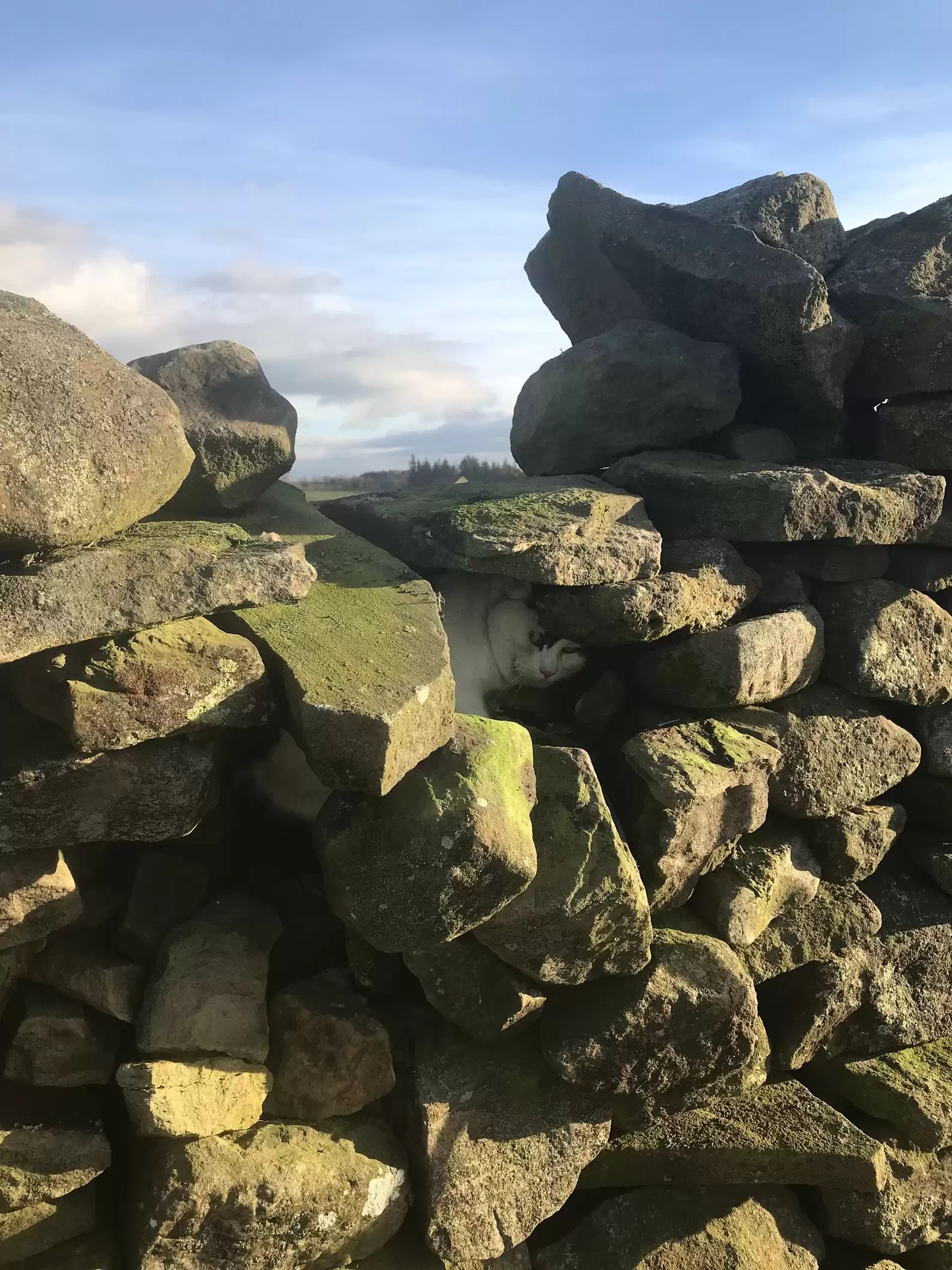
A guy and his dog were out on a walk one day through a field in Tow Law, England, when the dog suddenly became very interested in a nearby stone wall. After looking a little closer, the pair found a cat — who had somehow gotten himself completely stuck in the wall.

The RSPCA was called and Inspector Ruth Thomas-Coxon drove over to try and help. She was hoping that it would be as easy as just gently pulling the cat, later named Freddy, out of the wall, but she quickly discovered that he was much more stuck than that.

“Initially it looked as though he’d chosen to tuck himself inside the gap, but he didn’t try to run away when we got closer,” Thomas-Coxon said in a press release.

Thomas-Coxon weighed all her options and decided the best way to free Freddy would be to take apart the stone wall.

“The owner of the paddocks and wall came out and, between us, we removed some of the stones to dismantle the top part of the wall and free the cat,” Thomas-Coxon said. “He made a dash for it and jumped into another part of the wall, where we were able to catch him.”

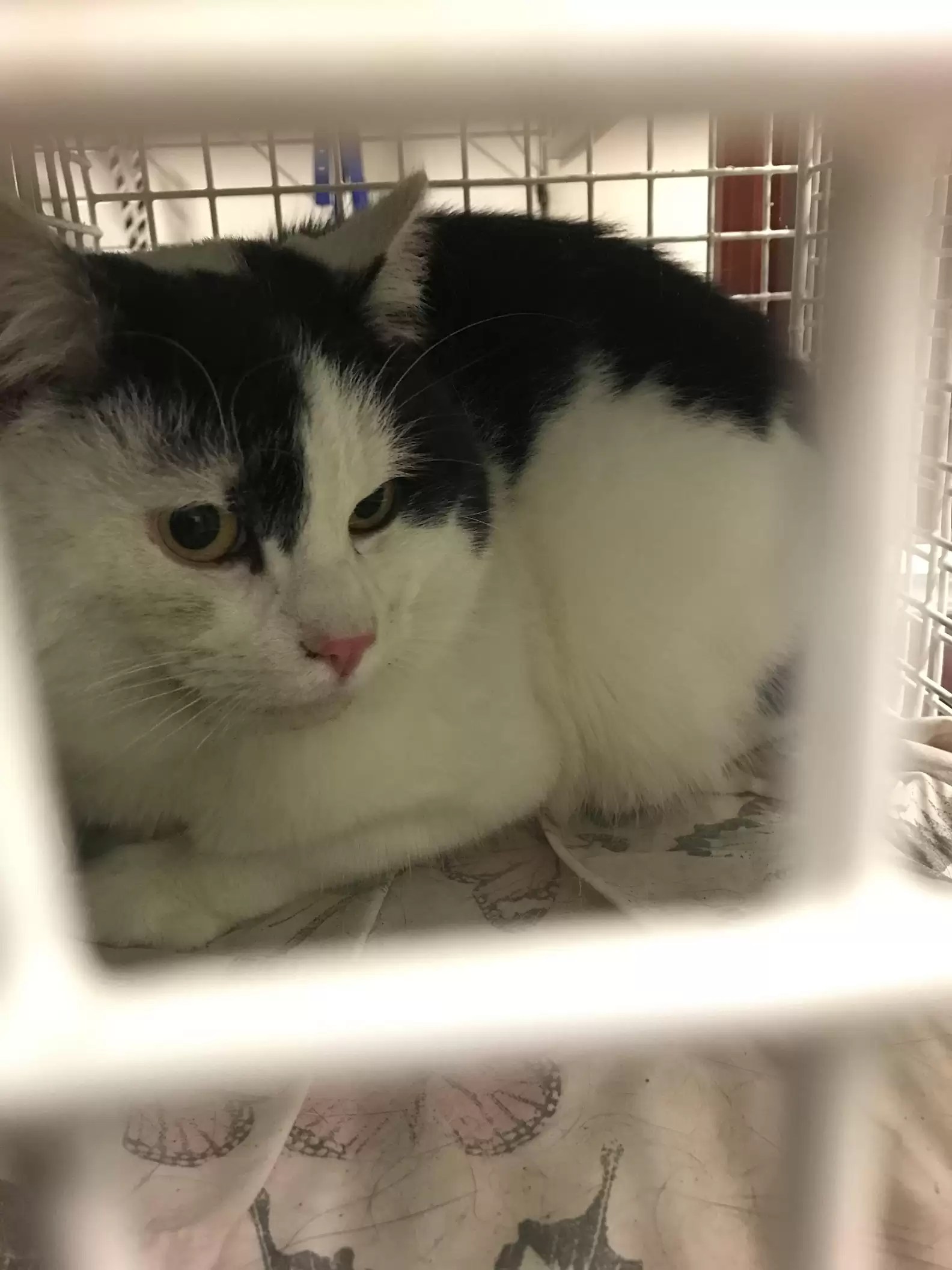
Even though Freddy was definitely stuck and needed help, he was also not super pleased about being rescued by strangers. Once he realized he was safe, though, he calmed down, and Thomas-Coxon took him to the vet to get him checked out.

“Vets found he was in fairly good health, although he had some mats in his coat, which they removed,” Thomas-Coxon said. “He was a sweet, friendly cat, so I wondered if he was a missing pet, but he was not microchipped. I made some inquiries nearby, put up a poster where we rescued him and also put his profile on PetsLocated, but, unfortunately, he’s not yet been claimed.”

Freddy is settling into the shelter well, and if no one comes forward to claim him, he’ll be put up for adoption. From being stuck in a stone wall to a potential forever home — Freddy’s come a long way.

ooOOoo

It’s a strange story in the sense that the cat was not claimed so who knows where he had come from. But his future is much better, thanks to the RSPCA, and if he is adopted it will be to a good, caring home.

Fostering or adopting a dog!

A guest post from a very patient Penny Martin.

Penny first contacted me towards the end of January, 2022. I was going to publish her post not long after. But Penny didn’t realise that I had changed my email address so there was a resend involved. Then I forgot that I had her guest article waiting to be published. Then last Wednesday, the 9th Feb., I got myself ready to publish it the following Thursday, and discovered that it was in Windows format and I was a Mac user.

So that is why I nominated her as Patient Penny!

Here is her post.

ooOOoo

Must-Have Resources and Tips for Fostering or Adopting a Pup

If you want to relieve some of the tension you’ve been feeling over the last year, now may be the perfect time to add a new pet to your life! Here, Learning From Dogs shares some helpful resources to ensure you’re ready to provide health and happiness for your new buddy.

Should You Foster or Adopt?

This is the first question to ask yourself before you welcome a furry companion into your home. Each has its own perks, so read through these tips to decide whether you would prefer to foster a new pet or add a permanent member to your family.

Setting Up Your Home for a Pet

Whether you foster or adopt, you want to be sure your home is safe and comfortable for your new buddy. These supplies, tips, and resources can help.

Caring for Your Pet

If you are thinking of fostering or adopting a dog, here’s some info on keeping them safe and healthy.

Fostering or adopting a dog during this time of stress and anxiety can be a perfect way to calm those feelings and keep your home from feeling so lonely. As long as you can provide care, food, a few snuggles, and the essentials mentioned above, you should be able to keep your new friend perfectly safe, sound, and happy. So, what are you waiting for? Consider adopting a pup today!

Photo Credit: Unsplash

ooOOoo

That is a very useful guest article.

I hope there will be others.

Please help!

I do not very often post a request, but…

I have known John Zande for quite a few years. It has been, what they call, a virtual relationship for we have never met in person. I do have John’s book The Superstitious Naked Ape and it is a first-rate read.

John recently sent me an email. It read:

Hi Paul — How are you both, and the clan? Weather station up and going? Still has not stopped raining here. The ground is beyond saturated, and many of our big old trees around here are just falling over, which is horrible.
Just got sent this link (below), and G asked me to send it on to people I know. To celebrate Betty White’s work with animals (and her 100th birthday, which sadly she’ll not have) her sister (in Australia) just started a short Gofundme for G and me here in Brazil. She’s good like that, and at this time of year (heaps of dumped dogs and cats after Christmas) everything helps. 

This is the link: https://www.gofundme.com/f/help-vista-verde-animals-fund

If one opens the link then one reads the following:

ooOOoo

On 17/01 Betty White would turn 100 years old. Most of her life she was an advocate for the health & welfare of animals. As a tribute to her legacy, there’s a global movement to send monies to all animal shelters (thanks to my amazing friend Heather C who brought that to my attention). My sister and her husband John live in Brazil and have been working tirelessly to take stray cats & dogs off the streets for over 15 years.

Their amazing work, as much as is rewarding & noble have absolutely no financial help from the local Government. Stray animals are definitely a public health issue and depend practically solely on the private initiative.

So I’m asking my friends here to donate (any amount will help) to my sister’s VISTA VERDE ANIMAL FUND. Every cent in this campaign will go towards helping fund rescuing stray cats & dogs in the city of Sao Jose dos Campos, Brazil – where my family lives – have them spayed/neutered, nurtured back to health with whatever operations/medicines/treatment they need, house them, and, with luck, get them adopted out into loving homes.

As Betty White herself summed it up best: “Take responsibility and breathe kindness.” Thank you in advance. YOUR CONTRIBUTION WILL MAKE A HUGE DIFFERENCE.

ooOOoo

To view the photographs and, more importantly, to Donate! go here

We have joined thousands of others in making a modest donation!

Science on the business of loving our dogs (and cats).

A fascinating article!

I have long subscribed to The Conversation and shared quite a few stories with you good people. But this recent one was a terrific report.

Read it yourself and I am sure you will agree with me.

ooOOoo

New research suggests cat and dog ‘moms’ and ‘dads’ really are parenting their pets – here’s the evolutionary explanation why.

Pet parenting can provide love and companionship to both human and animal. Willie B. Thomas/DigitalVision via Getty Images

Shelly Volsche, Boise State University

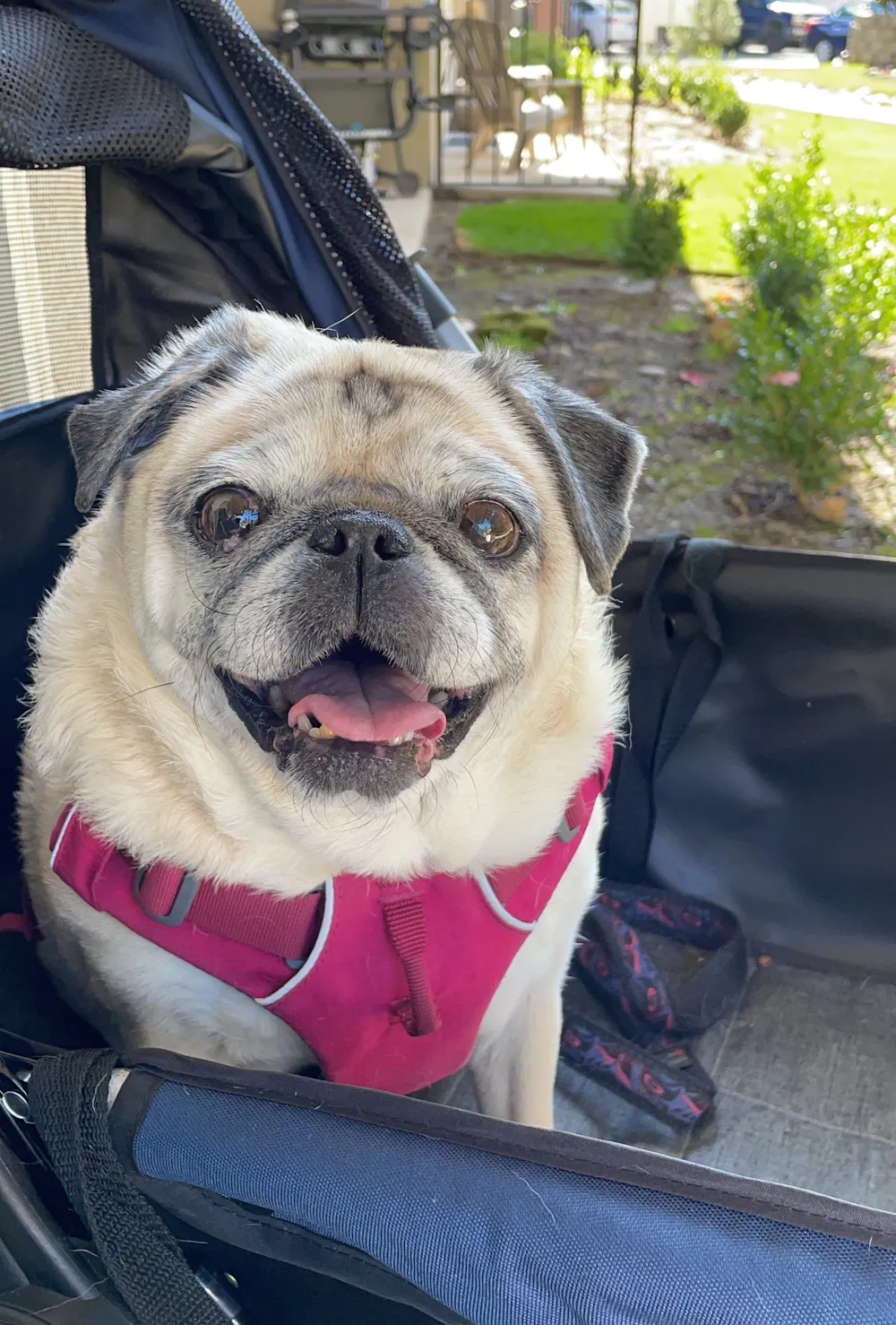
old pug dog in a stroller and harness
A pup out for a stroll, without paws touching the ground. Shelly Volsche, CC BY-ND

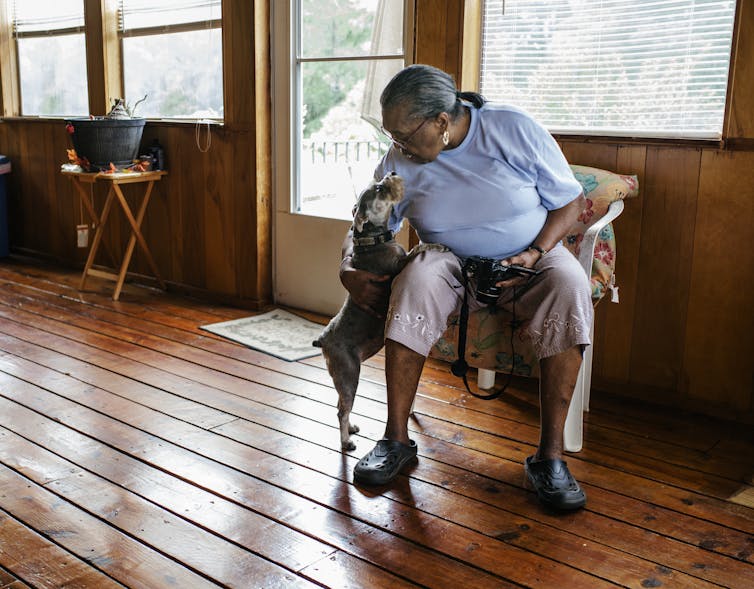
Have you noticed more cats riding in strollers lately? Or bumper stickers that read, “I love my granddogs”? You’re not imagining it. More people are investing serious time, money and attention in their pets.

It looks an awful lot like parenting, but of pets, not people.

Can this kind of caregiving toward animals really be considered parenting? Or is something else going on here?

I’m an anthropologist who studies human-animal interactions, a field known as anthrozoology. I want to better understand the behavior of pet parenting by people from the perspective of evolutionary science. After all, cultural norms and evolutionary biology both suggest people should focus on raising their own children, not animals of a completely different species.

More child-free people, more pet parents

The current moment is unique in human history. Many societies, including the U.S., are experiencing major changes in how people live, work and socialize. Fertility rates are low, and people have more flexibility in how they choose to live their lives. These factors can lead people to further their education and value defining oneself as an individual over family obligations. With basics taken care of, people can focus on higher order psychological needs like feelings of achievement and a sense of purpose.

The scene is set for people to actively choose to focus on pets instead of children.

In earlier research, I interviewed 28 self-identified child-free pet owners to better understand how they relate to their animals. These individuals pointedly shared that they had actively chosen cats and dogs instead of children. In many cases, their use of parent-child relational terms – calling themselves a pet’s “mom” for instance – was simply shorthand.

They emphasized fulfilling the species-specific needs of their dogs and cats. For example, they might fulfill the animal’s need to forage by feeding meals using a food puzzle, while most children are fed at the table. These pet owners acknowledged differences in the nutrition, socialization and learning needs of animals versus children. They were not unthinkingly replacing human children with “fur babies” by treating them like small, furry humans.

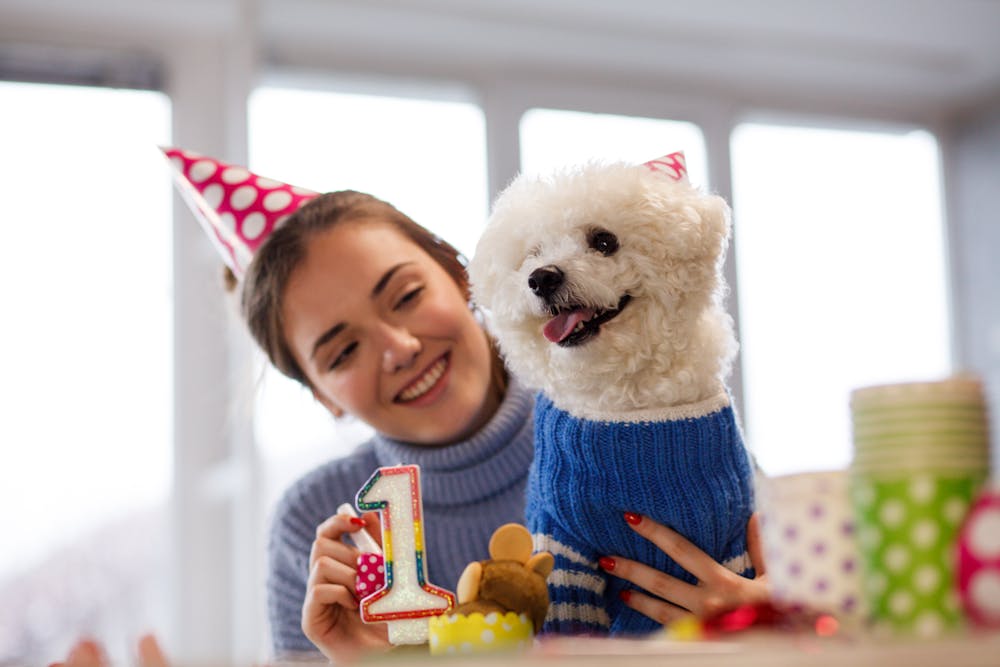
woman with party hat with dog
Pet parents might celebrate their dog’s big day – but with a doggy treat and not chocolate cake. fotostorm/E+ via Getty Images

Other researchers find similar connections, showing that child-free pet owners perceive their companions as emotional, thinking individuals. This way of understanding the mind of the animal helps lead to the development of a parent identity toward companion animals. In other cases, uncertain individuals find their need to nurture sufficiently fulfilled by caring for pets, cementing their fertility decisions to remain child-free.

Nurturing others is part of being human

Yet, these findings still do not answer this question: Are people who choose pets over children truly parenting their pets? To answer, I turned to the evolution of parenting and caregiving.

Evolutionary anthropologist Sarah Hardy wrote in 2009 that humans are cooperative breeders. This means it is literally in our DNA and our ancestral history to help care for offspring who are not our own. Anthropologists and biologists call this trait alloparenting. It is an evolutionary adaptation that helped human beings who cooperatively raised children survive. For early humans, this ancient environment was likely made up of small, foraging societies in which some people exchanged child care for food and other resources.

I propose that it is this evolutionary history that explains pet parenting. If people evolved to alloparent, and our environment is now making caring for children more difficult or less appealing to some, it makes sense for people to alloparent other species entering their homes. Alloparenting companion animals can offer a way to fulfill the evolved need to nurture while reducing the investment of time, money and emotional energy compared to raising children.

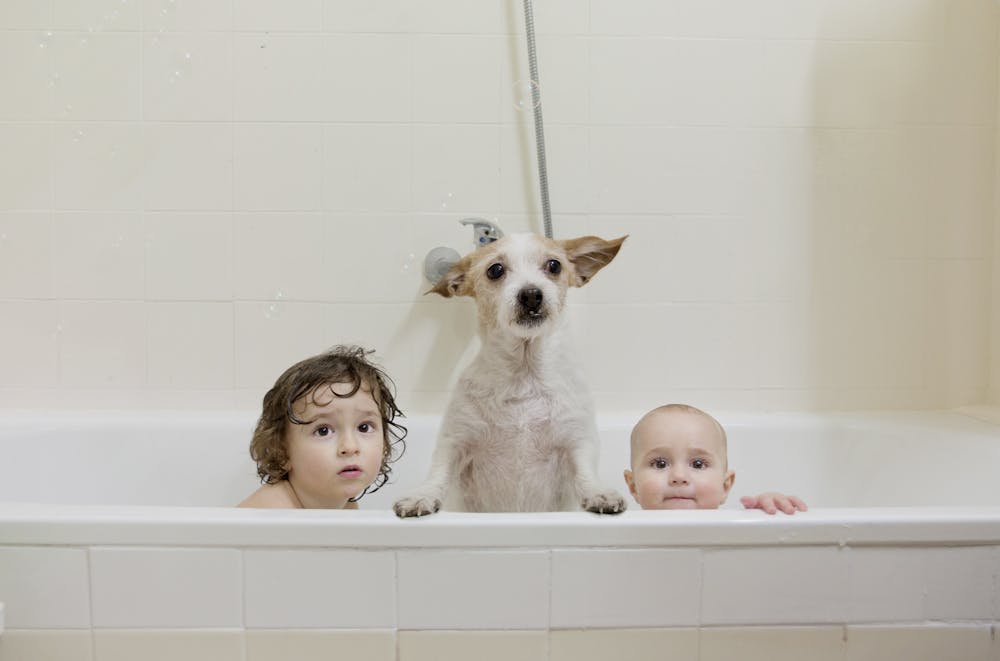
two kids and dog bathing in tub
Do people relate to animals differently in families with children? Mayte Torres/Moment via Getty Images

Untangling differences in caring for pets

To further understand this phenomenon of child-free adults parenting pets, I launched an online survey via social media, seeking responses from U.S.-based dog and cat owners over the age of 18. The survey included questions about attachment and caregiving behaviors using the Lexington Attachment to Pets Scale. It also asked a series of questions I developed to probe specific human caretaking behaviors oriented toward pets – things like feeding, bathing and training – as well as how much autonomy companion animals had in the home.

The final sample of 917 respondents included 620 parents, 254 nonparents and 43 people who were undecided or did not answer. Most of the respondents were also married or in a domestic partnership for over one year (57%), between the ages of 25 and 60 (72%) and had at least a bachelor’s degree (77%). They were also mostly women (85%) and heterosexual (85%), a common situation in human-animal interactions research.

Both parents and nonparents reported high amounts of training and play with their pets. This finding makes sense given that all pet owners need to help their dogs and cats learn how to navigate a human world. Survey respondents reported socializing, training and enrichment, including play, for their animals.

Nonparents were more likely to be the one providing general care for the animal. This finding also makes sense since parents often adopt or purchase companion animals as a way to help their children learn responsibility and to care for others. Child-free animal owners invest time, money and emotional energy directly in their pets.

Nonparents reported higher rates of general attachment to their animals. They more frequently viewed their pets as individuals. Nonparents were also more likely to use family terms such as “parent,” “child,” “kids” and “guardians” when referring to their relationships with their pet.

woman on couch petting cat
Caring for another being can be fulfilling and rewarding. Delmaine Donson/E+ via Getty Images

It is this difference, combined with the evidence from my earlier research that these individuals address the species-specific needs of the dogs and cats in their care, that suggests pet parenting is, truly, parenting pets. Though the details may look quite different – attending training classes instead of school functions, or providing smell walks for dogs instead of coloring books for children – both practices fulfill the same evolved function. Whether child or pet, people are meeting the same evolved need to care for, teach and love a sentient other.

My colleagues and I continue to collect data from all over the world about how people live with animals. For now, this study provides evidence that, perhaps rather than being evolved to parent, humans are evolved to nurture. And as a result, who and when we parent is much more flexible than you might initially believe.

[Get our best science, health and technology stories. Sign up for The Conversation’s science newsletter.]

Shelly Volsche, Clinical Assistant Professor of Anthropology, Boise State University

This article is republished from The Conversation under a Creative Commons license. Read the original article.

ooOOoo

Shelly does a fabulous job of looking more closely at the science and it is a science that has a very wide appeal. For in the UK, according to the RSPCA, “In the UK, it’s estimated that 12 million (44 percent of) households have pets with around 51 million pets owned.

Here in America The Washington Post reported that: “Google the U.S. pet population, and you’re quickly confronted with two oft-cited, and contradictory, sources. The American Pet Products Association (APPA) found that 68 percent of U.S. households owned some sort of pet in 2016 — “equal to the highest level ever reported,” it gushed in the executive summary. Among those pets were about 90 million dogs and 94 million cats, the group said.

That is just two countries. The worldwide population of dogs and cats must be gigantic.

This is too wonderful!

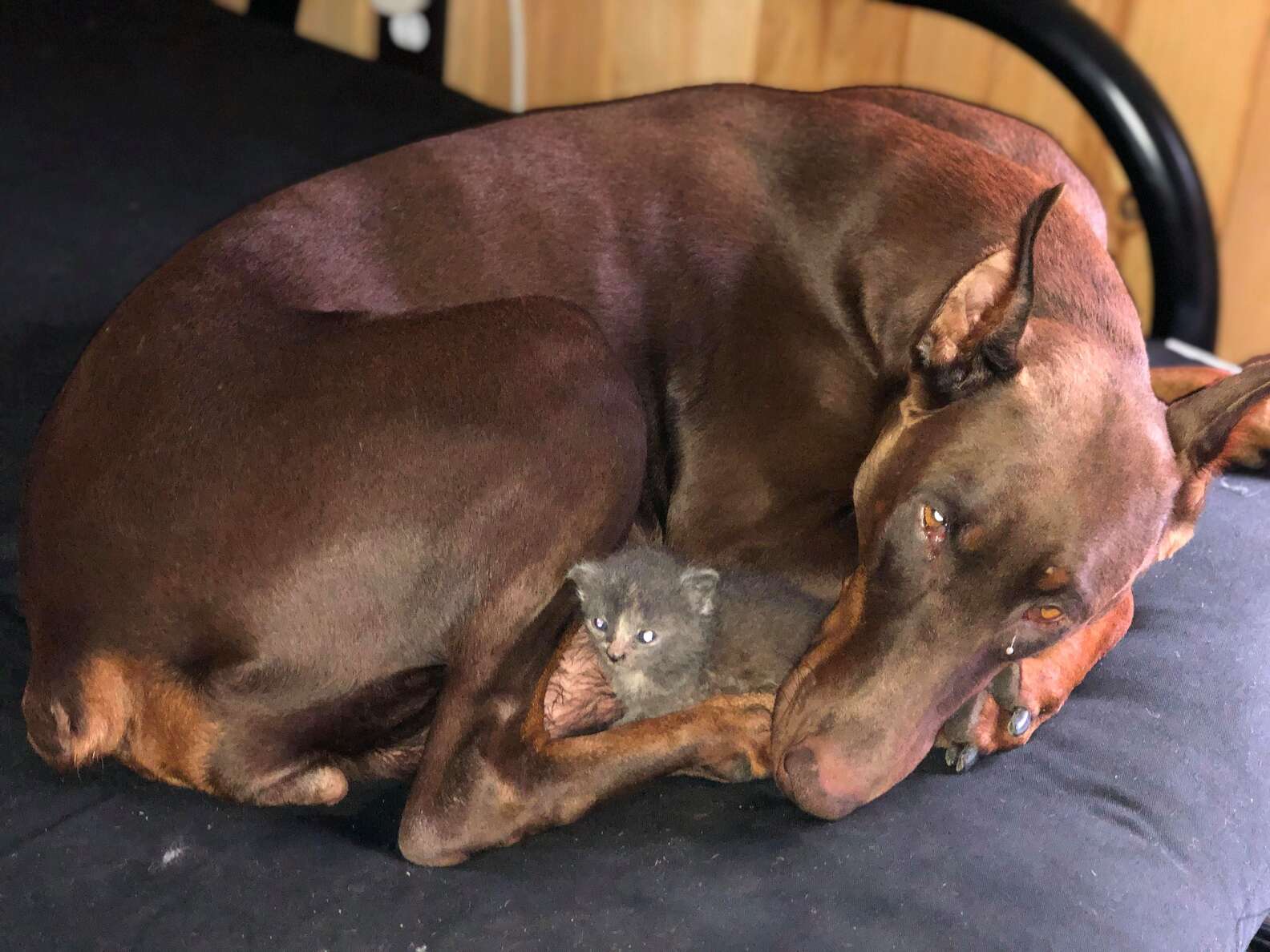
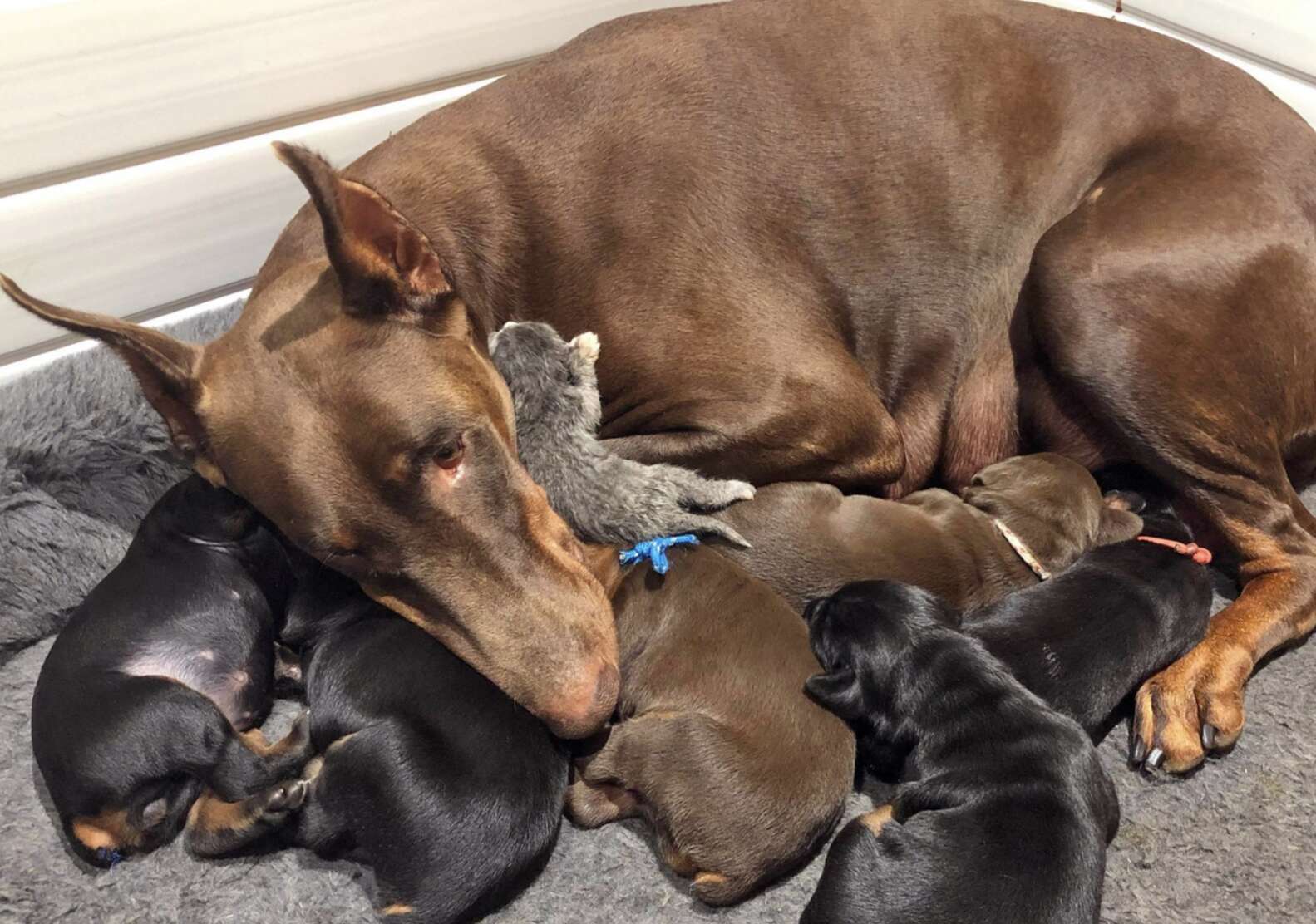
A Doberman pinscher shows off her caring attitude.

It strikes me dogs are loving animals. Certainly for the vast majority of animals that I write about and that we see in our daily lives. For example, on Thursday we had to take Cleo and Oliver for their annual check-ups at Lincoln Road Veterinary Clinic. They inevitably came into contact with a few other dogs and there was no friction whatsoever; just a lot of bum sniffing!

That is why I chose this article from The Dodo to share with you.

ooOOoo

Big Mama Dog Adopts Newborn Kitten And Carries Her Around In Her Mouth

“She’s just obsessed with this kitten” ❤️️

By Lily Feinn, Published on the 27th September, 2021

Three weeks ago, Brittany Callan wasn’t planning on adding more animals to her life. Then she heard meowing coming from the back of her aunt’s garage.

There, in the grass, was a newborn kitten. Callan placed the little animal on a soft blanket in the shade nearby, hoping the mom would return. But hours later, the kitten was still alone. She knew the little animal wouldn’t make it through the night, so she decided to take the little blind baby home.

BRITTANY CALLAN

Callan’s Doberman pinscher, Ruby, had just had puppies, and she hoped that the dog’s mothering instincts would kick in when she saw the helpless kitten.

“We’ve had baby bunnies and guinea pigs, and she just licks them like she’s their mom,” Callan told The Dodo. “She was carrying around the baby bunnies in her mouth and hiding them in the couch like they were hers — she even tried to nurse them when she was younger.”

BRITTANY CALLAN

Ruby and the kitten couldn’t look more different, but none of that mattered when they met. Callan held the kitten out to her dog, and Ruby immediately accepted the new baby into her pack.

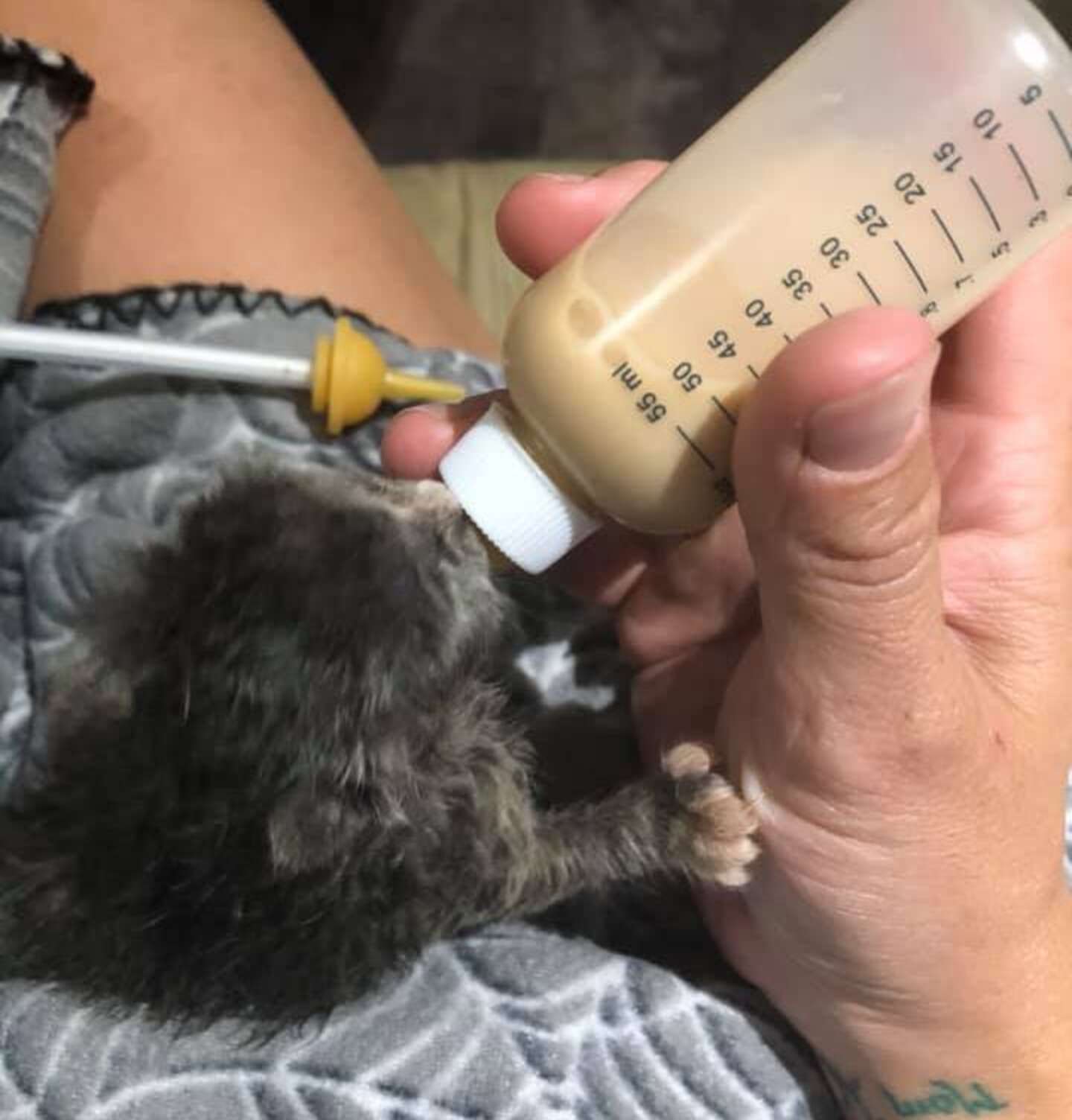
“She just started cleaning it and nudging it out of my hand,” Callan said. “Then I just opened up the kitten’s mouth and put it on Ruby’s smallest nipple, and it started eating right away. Ruby looked at it and laid her head down.”

BRITTANY CALLAN

Rubys’ puppies were already three times her size, but that didn’t stop the kitten from crawling in to snuggle with her dog brothers and sisters.

And her new mom always makes sure the kitten is clean and safe. “She looks like the scruffiest kitten ever because she’s always wet from Ruby licking her or carrying her around in her mouth,” Callan said. “Her back end is either sopping wet or matted down from Ruby cleaning her so much.”

Ruby is now weaning her puppies, but refuses to be separated from her tiniest baby for more than a few minutes.

“She’s just obsessed with this kitten,” Callan said. “She doesn’t want to be outside — she’ll go to every door and whine and scratch until you let her in, and then she’ll just pick up the kitten and carry it around in her mouth.”

BRITTANY CALLAN

Under Ruby’s care, the little orphaned kitten is thriving, and when she’s old enough, she will travel to her forever home with Callan’s cousin.

But for now, the only mom the kitten needs is Ruby. It just goes to show when it comes to family, size doesn’t matter — it’s the love that counts.

ooOOoo

it’s the love that counts.

Lily Feinn has gone to the heart of Ruby’s care for this kitten: Love!

It is a great example to us humans as well. Nothing is ever gained from hate and war.

Picture Parade Four Hundred and Six

Continuing to share them with you!

oooo

oooo

oooo

oooo

oooo

The last set of these gorgeous photographs in a week’s time.

Picture Parade Four Hundred and Five

More delightful photographs sent in to me.


oooo

oooo

oooo

oooo

oooo

oooo

They are so special!

And more to come in a week’s time!

Picture Parade Four Hundred and Four

A variety of photographs!

Sent to me by a neighbour.

oooo

oooo

oooo

oooo

oooo

They are very special.

More of these delightful photographs next week.

Thank goodness for a dog’s sense of smell

Another great story

All dogs have a brilliant sense of smell. That comes from them having many times more scent receptors. As CareCredit write:

Dogs have a strong sense of smell
Scientists guess the dog’s sense of smell is somewhere between 10,000 to 100,000 times more acute than ours. One of the reasons a dog has such better smelling ability than us is the number of scent receptors. For every scent receptor a human has, a dog has about 50.

So here is a story of a Husky using her sense of smell to good effect!

ooOOoo

Dog On Her Morning Walk Discovers A Cooler With Someone Inside

“Koda wouldn’t leave it. She was like, ‘There’s something in there. I want in there! Mom, look!’”

By Lily Feinn

Published on the 8th July, 2021.

When a husky named Koda set out on her morning walk earlier this month, she had no idea she was about to save a life.

Around 5:45 a.m., Koda and her mom were walking on their regular route past the Fearless Kitty Rescue building. Koda usually stops to sniff around the area, but this time something was different.

“She made a beeline to our donation bench,” Teryn Jones, events and marketing coordinator at Fearless Kitty Rescue, told The Dodo. “On our donation bench was a cooler that was zipped up, no holes, and then wrapped up in a garbage bag. Koda wouldn’t leave it. She was like, ‘There’s something in there. I want in there! Mom, look!’”

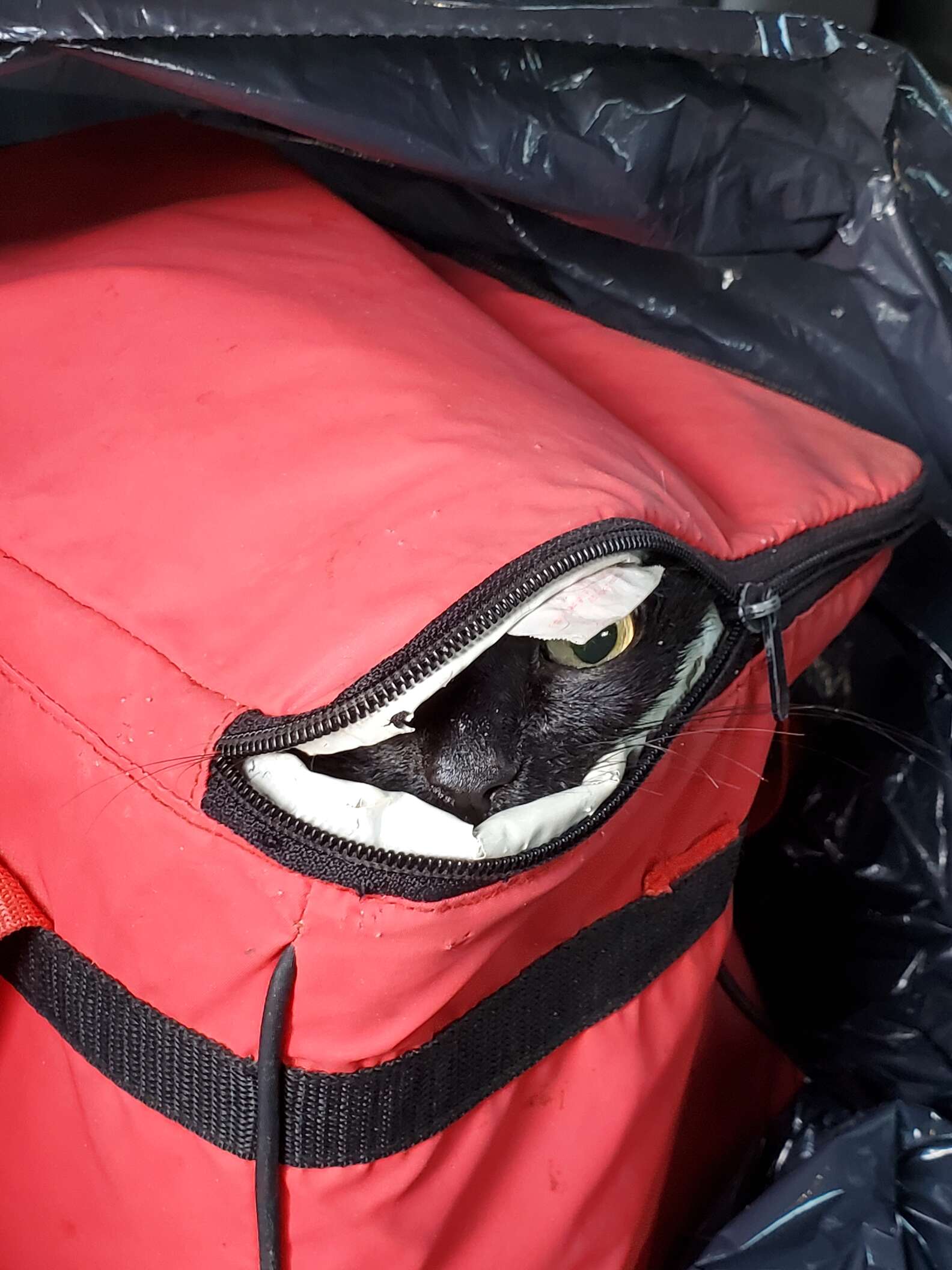
Koda’s mom was startled by her pup’s excited reaction and unzipped the cooler. A black cat popped her head out and began to gasp for air. Even though it was still early, it was already getting hot outside, and the cat seemed relieved to be free.

Koda’s mom contacted a volunteer at the rescue, who rushed over to welcome the cat inside and out of the sun. 

“She was just shaken up and was kind of in freeze-mode,” Jones said. “And that’s how she’s been since.”

The little black cat, now known as Juliane, has been slowly acclimating to life at the rescue. 

“She’s so sweet and very nervous and shy,” Jones said. “But she loves being pet — she purrs and rolls around on her belly. The resilience of her, in going through, what she went through is really amazing.”

“In the Danish culture, the name Juliane means ‘Fearless,’” Fearless Kitty Rescue wrote on Facebook. “And Fearless she is!”

But Juliane isn’t out of the woods just yet. A vet exam found a large mass on Juliane’s tail, which will require surgery. Once she’s healed and feeling better, Juliane will be ready to start her search for a loving forever home

“She’s very sweet and very clean — so she’s your ideal cat,” Jones said. “She sits and does her own thing, she doesn’t make a mess … She’s just very dainty.”

Thanks to Koda, Juliane has a second chance at a happy life — proving that guardian angels come in all shapes and sizes.

ooOOoo

I want to add another small remark that was on the website:

If you are interested in adopting Juliane, you can fill out an application here. To help with her care, you can make a donation to Fearless Kitty Rescue.

There! Maybe someone can help. This post by The Dodo isn’t that old.

All the photographs are by Fearless Kitty Rescue.