Category: Cats

Dogs are dirty – Thank Goodness!

A fascinating new study offering insight into the health of our gut!
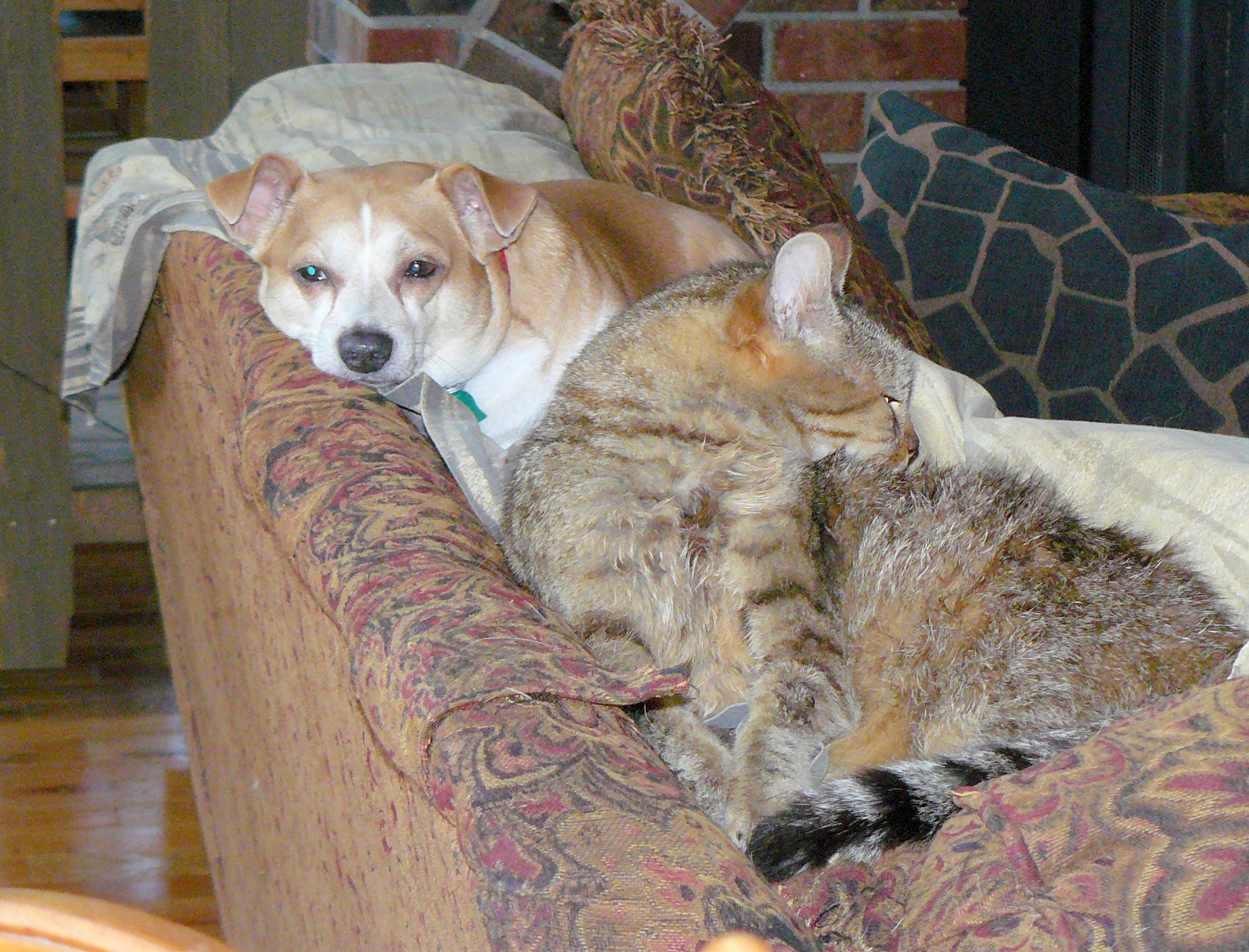
P1150755It doesn’t take too much imagination to appreciate that living in a house and sharing it with nine dogs and four cats doesn’t lend itself to perfect hygiene! Indeed, just yesterday morning we found evidence of mice in one of our bedroom cabinets. Plus both the bedroom and the main living room are never completely free of fleas, as my skin attests to. Then let’s not even speak of the hair and dust around the house!

Plus we live in a very rural location and the dog traffic in and out of the house is a consequence of our lifestyle choices that we do accept (99% of the time! 😉 ).

But possibly living a healthier life as a consequence of our ‘dirty’ animals was not something that would have ever crossed my mind until now, thanks to a recent essay published over on The Conversation site.

Read it and come to your own conclusion. It is republished within the generous terms of The Conversation; viz:

We believe in the free flow of information. We use a Creative Commons Attribution NoDerivatives licence, so you can republish our articles for free, online or in print.

ooOOoo

If being too clean makes us sick, why isn’t getting dirty the solution?

January 13, 2016 5.59am EST
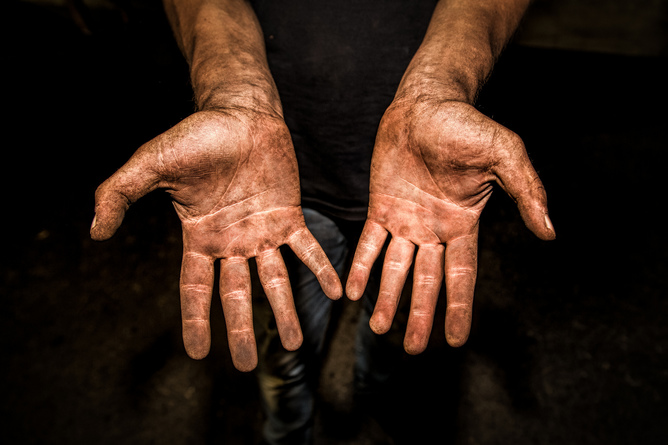
Author: Associate Professor of Surgery, Duke University
image-20151216-30102-sybi4b
Wash up. Riccardo Meneghini/Flickr, CC BY-NC-ND.

Today rates of allergic, autoimmune and other inflammatory diseases are rising dramatically in Western societies. If that weren’t bad enough, we are beginning to understand that many psychiatric disorders, including depression, migraine headaches and anxiety disorders, are associated with inflammation. Perhaps the most startling observation is that our children are afflicted with the same inflammatory problems, contributing to the fact that over 40 percent of US children are on medications for some chronic condition.

And the cause, according to the “hygiene hypothesis,” is that being too clean causes a malformation of the immune system, leading to a wide range of inflammatory diseases. The original idea was that decreased infections in childhood due to hygiene led to a weak immune system, prone to become allergic and inflamed.

If the problem is that we are too clean, then, hypothetically, the issue can be easily resolved. We just need to get dirty, right? Wrong.

Getting dirty doesn’t help our immune system and generally makes inflammation worse. Much worse. That means there is something very wrong with the hygiene hypothesis.

Biodiversity is the real issue

What we actually have is a biodiversity problem. Our clean, indoor-centered lives and a Western diet rich in processed foods have depleted our biomes – the bacteria and worms that naturally live in our bodies, our guts in particular. These organisms play a role in the development and regulation of our immune systems, and scientists have identified the loss of biodiversity as being central to the high rates of inflammatory disease in the developed world.
 Giving up soap won’t help your biome. Bar of soap via www.shutterstock.com.
Giving up soap won’t help your biome. Bar of soap via http://www.shutterstock.com.

The hygiene hypothesis was right…in its day

An increase in inflammatory disorders, like allergies, was first observed about 150 years ago among the aristocracy in Europe, then reached the entire population of the industrialized world by the 1960s, and seems only to have climbed steadily since then.

When trying to understand why inflammatory diseases increased in the late 1800s and throughout the 20th century, scientists put their finger on things such as toilets and water treatment facilities. In those days, having a toilet was “hygiene.”

But times change. After generations of living with toilets and water treatment facilities, some of the wildlife in our bodies has been driven to the point of extinction. Our loss of contact with the soil due to indoor working environments has further depleted the wildlife of our bodies. And the typical Western diet doesn’t help either.

Even if you were to never use soap again for the rest of your life, you would not recover the wildlife your body is missing. Many of the lost organisms of our body don’t exist in North America in the wild, and others you simply won’t come across in your daily life.

On top of tremendous social difficulties imposed by a lack of soap, you’d likely increase your exposure to a lot of aggravating and even dangerous germs. The bacteria and viruses deposited on your shopping cart handle or the light switch at a hotel are generally not good. Those are often the germs of modern society that cause infection and inflammation. Your immune system would remain inflamed, and perhaps be even more agitated than before.

So what exactly are we missing? For practical purposes, it’s important to divide the wildlife of our bodies into two groups: microbes and more complex organisms such as worms. Microbes and worms affect our immune systems in different ways and both are important to be healthy. Biodiversity is the key.

A healthy crop of microbes and a few good worms

What would the gut biomes in our hunter-gatherer ancestors have looked like? A study by Jeffrey Gordon at Washington University in St. Louis showed that people living in modern preindustrial societies had more diverse micriobiome compositions than people living in the United States today. Seventy bacterial species Gordon found in preindustrial people’s biomes were present in very different amounts from those found in the modern U.S. participants.

While each group may have been exposed to different kinds of bacteria in their day-to-day life, the primary reason for the difference in diversity was attributed to diet. The preindustrial folks ate a diet rich in corn and cassava, compared to a U.S. diet rich in animal fat and protein.

And you might think that antibiotics are an issue, but they are usually less of a long-term problem for biodiversity. They can deplete bacteria in the gut microbiome, but the dangerous and disease-inducing tailspin is generally temporary. The microbiome usually recovers quite nicely, for the most part, although some lingering effects can remain.

The second group of organisms that we need are intestinal worms called helminths. These worms are called mutualists, because they benefit from us and we benefit from having them hanging around in our intestines. They used to naturally live in our gut. In fact, only 150 years ago most people in the West had intestinal worms that helped regulate immune function and prevent inflammatory disease. The culprit here isn’t diet, but cleanliness and sanitation.

Eat some fiber. Ali Karimian/Flickr, CC BY-SA.

If getting dirty won’t help your biome, what can you do?

When it comes to bacteria, a healthy diet is the critical ingredient. We can actually achieve a good mixture of gut bacteria very similar to that of our hunter-gatherer ancestors by adopting a good diet high in fiber and low in processed foods. The right diet helps the good bacteria in your gut flourish, and might make it easier for new varieties of good bacteria to take root.

In addition, there are some products that might, in theory, support a more hunter-gatherer-like bacterial flora, by exposing us to the kind of bacteria we don’t encounter anymore, but they haven’t been tested in clinical trials.

Probiotics, generally formulations of bacteria such as bifidobacteria and lactobacilli that grow readily in milk, are safe to use unless patients are severely ill. They could help support biodiversity in our guts if we need to take antibiotics.

Worms are a bit more challenging. There are two schools of thought on how to help helminth-less guts: one is to figure out what makes good worms good for us, and develop a drug that can do the same thing. The other is just to have these good worms living in your intestines.

Personally, I don’t think we can replicate complex biological relationships using a drug. My view is that modern medicine will eventually embrace the actual worm or maybe complex single-celled organisms called protozoans that work the same way, but research in this field is still in the early stages of development.

In the meantime, some intrepid people are going straight for the worm. As in actually acquiring worms in their gut. The challenge for these adventurers is to find a worm that has more benefits than disadvantages.

For instance, the same species of worm can have different effects in different people. The human hookworm, for instance, is commercially available and easily cultured at home. It has been found to treat multiple sclerosis and severe airway hypersensitivity but can also cause severe gastrointestinal distress in many patients.

For now, most individuals interested in immune health will focus on those factors that are risk-free, like avoiding chronic psychological stress, eating well and exercising, and watching out for vitamin D deficiency. These factors, all within our control, are important for avoiding a wide range of inflammation-related diseases, including allergy, autoimmunity, depression and cancer.

ooOOoo

It seems to me that another solution is having more and more dogs and fully embracing them into our lives.
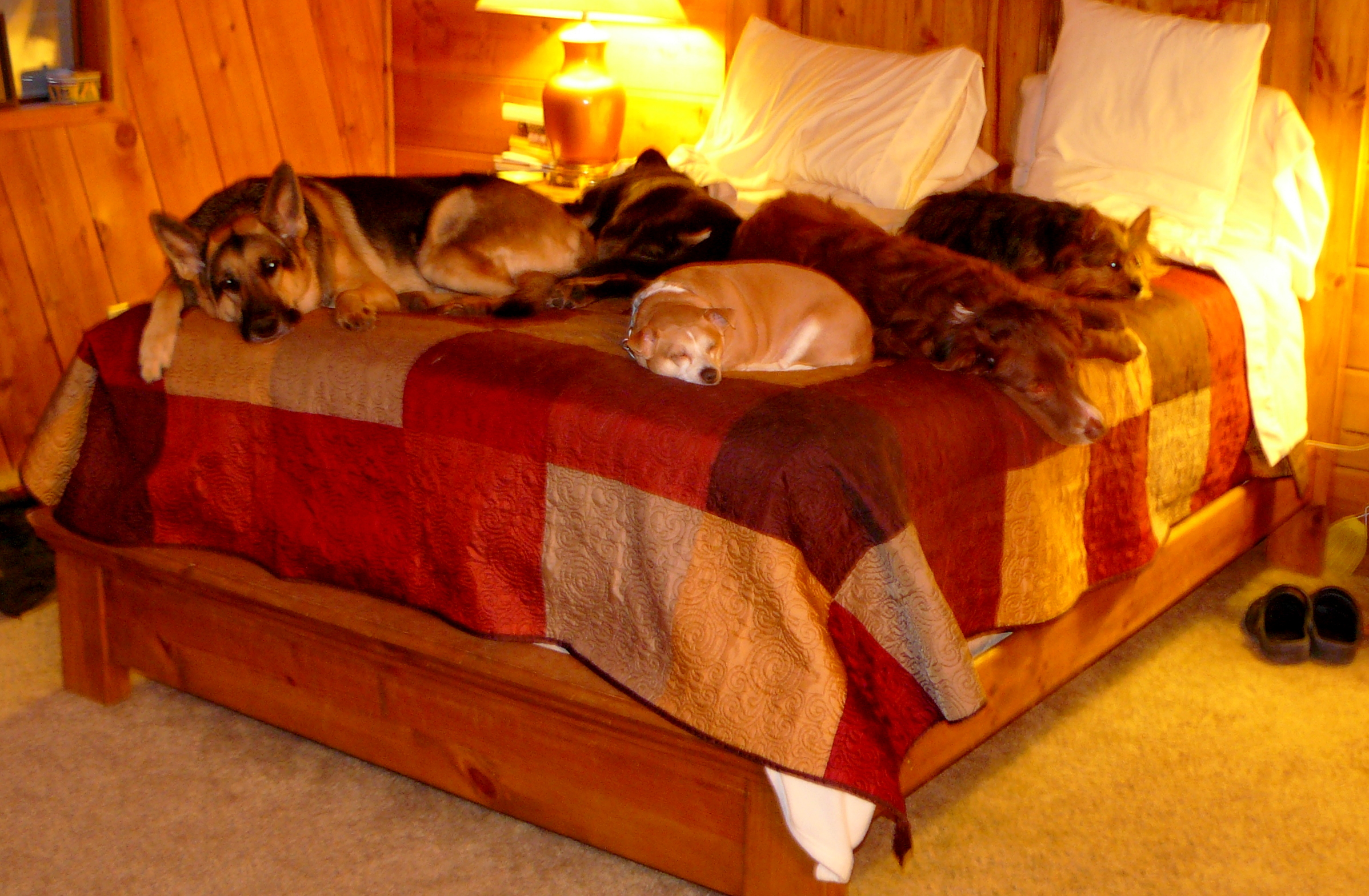
P1150854My case rests!

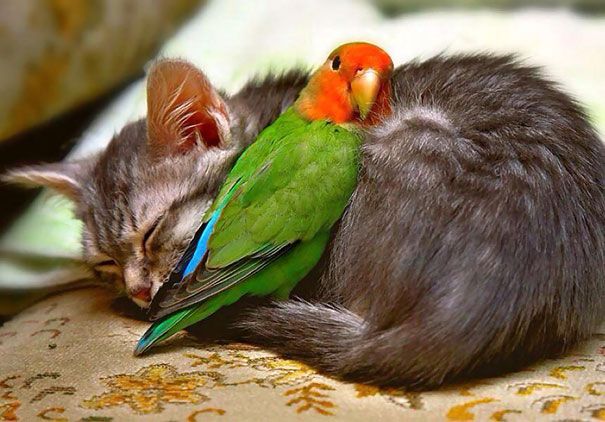
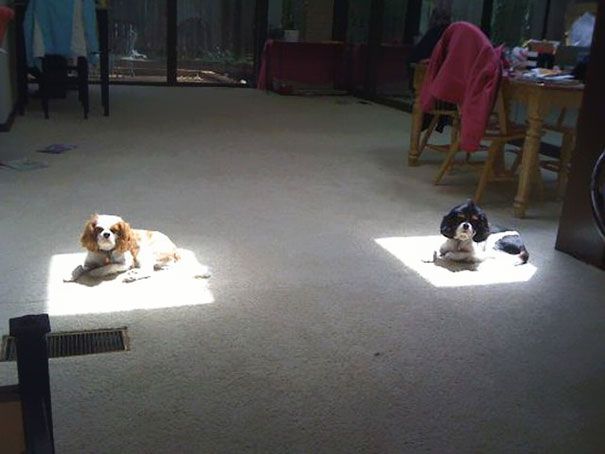
Picture parade one hundred and thirty-one.

The second set of those beautiful dog and cat photographs.

The first set was a week ago.

Image[147]oooo

Image[148]oooo

Image[150]oooo

Image[151]oooo

Image[152]oooo

Image[153]oooo

Image[154]oooo

Image[155]oooo

Image[149]oooo

Wish I had weeks and weeks of these for you but sadly that’s all for now! But many thanks, John H., for sending them on.

Happy days everyone!

Picture parade one hundred and thirty.

Speaking of dogs and cats …

(With huge thanks to John H. for sending these on to me.)

Image[139]oooo

Image[140]oooo

Image[141]oooo

Image[142]oooo

Image[143]oooo

Image[144]oooo

Image[145]oooo

Image[146]Another set of these gorgeous photographs next week.

Stay happy and stay warm all of you!

A tiny bite of this could kill your dog!

Please read, digest and share as widely as you can!

Fellow author, Deborah Taylor-French, recently posted a stark warning for all dog owners. Deborah wrote on her blog, Dog Leader Mysteries, the following:

1 thing more toxic than chocolate for dogs

More toxic than chocolate?

Yes, and it’s everywhere.

Please visit my guest blog post on 4Knines blog “One common thing that is more toxic than chocolate for dogs”  Then please comment! Of course, after you comment, I’d love it if you would share far and wide for the love and lives of dogs. After working on this post for about a month I shared it as a guest post so that it may reach a larger audience of dog lovers, beyond my WordPress blog.

(I also can’t resist including the following photograph of Deborah and Syd that was in that post!)

Syd the kid!
Syd the kid!

So the balance of my post today is a full republication of Deborah’s guest post as it appeared over on 4knines blog.

ooOOoo

One Common Thing That is More Toxic Than Chocolate for Dogs!

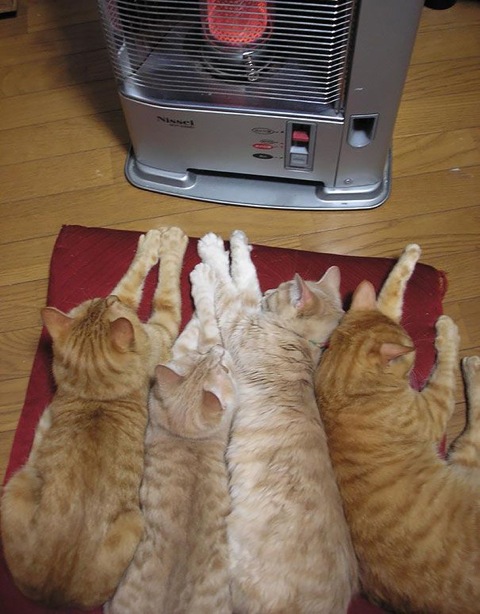
Mid-Winter warmer!

Sent across to me by Dordie, a close neighbour of ours.

You all stay warm wherever you are – and here are some good ideas about so doing!

warm1

oooo

warm5

oooo

warm8oooo

warm9oooo

FwdAnima13oooo

FwdAnima15oooo

FwdAnima3oooo

FwdAnima10oooo

Heading into the end of the year now!


And another dog food recall.

This one came in on the 12th December.

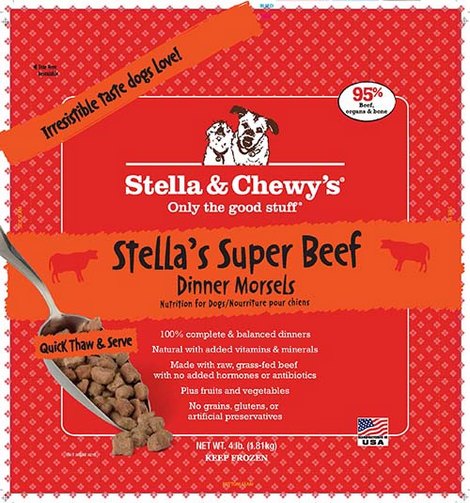
Stella and Chewy’s of Oak Creek, Wisconsisn, has announced it is voluntarily recalling select lots of its raw dog and cat food due to the possible presence of Listeria monoyctogenes bacteria.

To learn which products are affected, please visit the following link:
Stella and Chewy’s Dog and Cat Food Recall of December 2015

Please be sure to share the news of this alert with other pet owners.

Mike Sagman, Editor
The Dog Food Advisor

That link offers, in part:

December 11, 2015 — Stella and Chewy’s of Oak Creek, Wisconsin, has announced it is voluntarily recalling four of its products sold in the U.S. and Canada due to possible contamination with Listeria monocytogenes bacteria.
The recall affects a total of 990 cases — 964 cases in the U.S. and 26 cases in Canada.
What’s Recalled?
As a precautionary measure, Stella and Chewy’s is voluntarily recalling selected products from Lot # 165-15, which includes:

Please go here to read all the details if this is a concern for you.

The following is just one of the product images – view all of them here.

stella-chewys-1

Feeding our furry friends.

An insight into the eating behaviours of cats and dogs.

As it happens, Jean and I are vegetarians; Jean going way back in years to when she first turned away from meat. Thus the only meat that we purchase is from Cartwrights’, a local butcher in Grants Pass, where we buy hearts and liver for the dogs. The cats are fed on dried cat biscuits and canned cat food.

All owners of cats and dogs know that they have very different eating habits, and behaviours.

So to put some flesh on the bone, so to speak, about the eating behaviours of cats and dogs I am going to republish a recent essay that appeared over on The Conversation. As always, it is republished within the terms of The Conversation.

ooOOoo

Why cats are fussy eaters but dogs will consume almost anything

by Hannah Rowland, Lecturer in Ecology and Evolution & Research Fellow at Zoological Society of London, University of Cambridge

November 13, 2015

Anyone who’s watched a cat throwing up after munching on grass knows that our feline friends aren’t natural plant eaters. So you might be surprised to discover that these carnivorous animals share some important genes that are more typically associated with herbivores. And this might help explain why cats aren’t always easy to please when it comes to food.

New research suggests that cats possess the genes that protect vegetarian animals from ingesting poisonous plants by giving them the ability to taste bitter. Animals use their sense of taste to detect whether a potential food is nutritious or harmful. A sweet taste signals the presence of sugars, an important source of energy. A bitter taste, on the other hand, evolved as a defence mechanism against harmful toxins commonly found in plants and unripe fruits.

Evolution has repeatedly tweaked animals’ taste buds to suit various dietary needs. Changes in an animal’s diet can eliminate the need to sense certain chemicals in food, and so receptor genes mutate, destroying their ability to make a working protein.

I can haz chlorophyll. Lisa Sympson/Wikimedia Commons, CC BY-SA

One example of this comes from strictly meat-eating cats, who can no longer taste sweetness. But if bitter detection evolved to warn of plant toxins, then it stands to reason that cats, which (usually) eschew plants, shouldn’t be able to taste bitter either. Humans and other vegetable-munching animals can taste bitter because we possess bitter taste receptor genes. If cats have lost the ability to taste bitterness, we should find that their receptor genes are riddled with mutations.

Geneticists at the Monell Chemical Senses Center in Philadelphia scoured the genome of cats and other carnivorous mammals like dogs, ferrets, and polar bears to see if our carnivorous cousins have bitter genes. They were surprised to find that cats have 12 different genes for bitter taste. Dogs, ferrets, and polar bears are equally well endowed. So, if meat eating animals are unlikely to encounter any bitter morsels, why do they boast genes for tasting bitterness?

Taste test

To find out, Peihua Jiang, a molecular biologist at Monell, put cat taste buds to the test. He inserted the cat taste receptor gene into human tissue cells in the lab. When combined, the cell and the gene act as a taste receptor that responds to chemicals dropped onto it.

Jiang discovered that the cat’s taste receptors responded to bitter chemicals found in toxic plants and to compounds that also activate human bitter receptors. The cat bitter taste receptor, known as Tas2r2, responded to the chemical denatonium benzoate, a bitter substance commonly smeared on the fingernails of nail-biting children.

So why have cats retained the ability to detect bitter tastes? Domestic cats owners know how unpredictable cats’ dietary choices can be. Some of the “presents” cats bring to their owners include frogs, toads, and other animals that can contain bitter and toxic compounds in their skin and bodies. Jiang’s results show that bitter receptors empower cats to detect these potential toxins, giving them the ability to reject noxious foods and avoid poisoning.

Hair of the dog. Michal Hrabovec/Flickr, CC BY-NC-SA

But how often do meat-loving cats actually get exposed to bitter and toxic compounds in their diet, compared with the plethora of plant toxins that their vegetarian counterparts have to contend with? Jiang suggests this is not enough to explain why cats have retained such an arsenal of receptors.

Instead, cat taste receptors may have evolved for reasons other than taste. In humans, bitter taste receptors are found not only in the mouth, but also in the heart and in the lungs, where they are thought to detect infections. It remains to be seen if feline bitter receptor genes also double-up as disease detectors.

The discovery of feline bitter receptors might explain why cats have got a reputation as picky eaters. But their unfussy canine counterparts have a similar number of bitter taste receptors – so why are cats so finicky? One answer might lie in how the cat receptors detect bitter-tasting compounds. Research published earlier this year by another team of researchers showed that some of the cat taste receptors are especially sensitive to bitter compounds, and even more sensitive to denatonium than the same receptor in humans.

Perhaps cats are also more sensitive to bitter chemicals than dogs, or they may detect a greater number of bitter compounds in their everyday diet. Food that tastes bland to us or to a dog could be an unpleasant gastronomic experience for cats. So rather than branding cats as picky, perhaps we should think of them as discerning feline foodies.

ooOOoo

Once again, I find it wonderful and incredible that there is so much knowledge and experience “out there” and how quickly a few clicks of a computer mouse can make it available to all of you wonderful readers!

And with that, it’s time to go off and feed the dogs. (Only showing off – Jean is the one who feeds both our dogs and our cats!)

Speaking of Jean – it’s her birthday today!

happy_birthday_alaskan_malamute_puppy_dog_card_postcard-r95e60e6e059748c58d5441d384bc8382_vgbaq_8byvr_512

Feelings – of both humans and animals.

Five years ago Jean and I were married!

So if we are discussing feelings, as we are today, there is no better place to start than by me expressing my feelings of joy and love that I feel for, and still receive from, my gorgeous Jean. I know five years at our stage of life is far fewer than for many married couples but, nevertheless, they have been beautiful years and I wish for many more.

wedding
Diane Jackson, Bridesmaid, Jean and me, my mother and Dan Gomez, Best Man. November 20th, 2010

I had been pondering these last few days as to what I would write for today. For I wanted to celebrate our anniversary yet wanted a broader theme; so to speak.

There couldn’t have been a better answer to that ponder than a recent video that was presented by TED Talks. It was a talk by Carl Safina about what is going on inside the brains of animals: What are animals thinking and feeling? Or in the fuller words of that TED Talk page:

What’s going on inside the brains of animals? Can we know what, or if, they’re thinking and feeling? Carl Safina thinks we can. Using discoveries and anecdotes that span ecology, biology and behavioral science, he weaves together stories of whales, wolves, elephants and albatrosses to argue that just as we think, feel, use tools and express emotions, so too do the other creatures – and minds – that share the Earth with us.

Safina is very qualified to speak on the subject as his bio on that TED Talk page reveals. However, I couldn’t find a YouTube link for that TED Talk but could find two videos that are very good alternatives.

The first is a short video of Safina promoting his book Beyond Words: What Animals Think and Feel.

The second is a much longer video that is Safina’s presentation at the recent Ransom A. Myers Lecture. If you can spare the time, then do watch it. You will not be disappointed.

Published on Oct 9, 2015
8th Annual Ransom A. Myers Lecture in Science and Society. Thursday, October 1st 2015.

Title: Beyond Words: What animals think and feel
Presented by: Dr. Carl Safina, Marine Ecologist/Author, The Safina Centre

Finally, and please forgive my indulgences, I want to close today’s post with some photographs that for me have “feelings” stamped all over them!

Jeannie, Hazel and cat feeling trust for each other.

oooo

One of our local deer trusting Jeannie.
One of our local wild deer trusting Jeannie.

oooo

Oliver and Pedy adoring each other.

oooo

Last but not least! Photograph taken two days ago by yours truly reflecting my feelings of wonder at being alive in this world!
Last but not least! A photograph taken two days ago by yours truly reflecting my feelings of wonder at being alive in this world!

Onwards and upwards!

Picture parade one hundred and twenty-two.

The third welcome to the season of mists and autumnal colours.

With thanks to Mother Nature Network where these wonderful photographs were published. Set one is here. Last week’s set is here.

Photo: photoknipser/flickr

oooo

Photo: Thawt Hawthje/flickr

oooo

Photo: Maja Dumat/flickr

oooo

Photo: Alexandra Giese/Shutterstock

oooo

Photo: wplynn/flickr

oooo

Photo: Andrea_44/flickr

Well that’s the last of the Autumn scenes and we will see what next Sunday brings.

Meanwhile, you all take care of yourself out there.