Another incredible, unbelievable feat of balance.
Back on the 16th June, I published a post under the title of Wonder and Awe. It featured Miyoko Shida Rigolo and a balancing act of such artistry with a most beautiful finale!
Well here she is again.
Dogs are animals of integrity. We have much to learn from them.
Category: Art
Another incredible, unbelievable feat of balance.
Back on the 16th June, I published a post under the title of Wonder and Awe. It featured Miyoko Shida Rigolo and a balancing act of such artistry with a most beautiful finale!
Well here she is again.
Just ran out of time yesterday, so enjoy the following:
(Sent to me by Dan Gomez.)

The beautiful strange-eyed kitten, taken in Lovech, Bulgaria in the summer of 2009 by Bobby Pfeiffer.
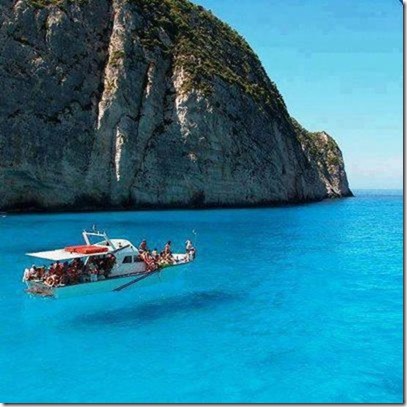
Zakynthos Island in Greece. The water is so clear, it looks like the boat is floating in the air.

This is what ocean sand looks like when it’s magnified 250 times.

California Red-Sided Garter Snake.

Zanjeer, The Golden Labrador Who Saved Thousands Of Lives.
In March 1993, a series of 12 bombs went off across Mumbai, India. The serial blasts left 257 dead and 713 injured. But in the aftermath, an unlikely hero emerged. According to Reuters, a golden labrador named Zanjeer worked with the bomb squad and saved thousands of lives by detecting “more than 3,329 kgs of the explosive RDX, 600 detonators, 249 hand grenades and 6,406 rounds of live ammunition.” He helped avert three more bombs in the days following the blasts.
The dog died of bone cancer in 2000. He was eight years old.
In the photo, a senior police officer lays a wreath of flowers on Zanjeer as he was buried with full police honors at a widely-attended ceremony.

The love of a woman for her horse!
The incredible story of one woman’s loyalty to her horse – she spent three hours holding its head above the tide after it got stuck in the mud on a beach in Australia. His owner, Nicole Graham, who was enjoying an afternoon ride, stayed with him as rescuers struggled for three hours to pull him out. With moments to spare, the 500kg horse, named Astro, was freed with the help of a tractor and harness at Avalon Beach in Geelong, Victoria, Australia .

The power of serendipity!
Why the choice of this sub-heading? Well, just because a number of quite separate articles and essays have come together to offer a powerful, cohesive argument for reconsidering the role of Nature in the future of mankind.
Of course, my use of words in that preceding sentence is completely ludicrous; the suggestion that ‘Nature’ is disconnected from ‘mankind’. Yet millions of us, to a greater or lesser degree, do behave as if we are the masters of the world.
So let me dip into what has been ‘crossing my desk’ in recent times.
On May 28th, George Monbiot published in The Guardian newspaper an essay entitled A Manifesto for Rewilding the World. (The link takes you to the article on the Monbiot blogsite.) Here’s how that essay opened,
Until modern humans arrived, every continent except Antarctica possessed a megafauna. In the Americas, alongside mastodons, mammoths, four-tusked and spiral-tusked elephants, there was a beaver the size of a black bear: eight feet from nose to tail(1). There were giant bison weighing two tonnes, which carried horns seven feet across(2).
The short-faced bear stood thirteen feet in its hind socks(3). One hypothesis maintains that its astonishing size and shocking armoury of teeth and claws are the hallmarks of a specialist scavenger: it specialised in driving giant lions and sabretooth cats off their prey(4). The Argentine roc (Argentavis magnificens) had a wingspan of 26 feet(5). Sabretooth salmon nine feet long migrated up Pacific coast rivers(6).
During the previous interglacial period, Britain and Europe contained much of the megafauna we now associate with the tropics: forest elephants, rhinos, hippos, lions and hyaenas. The elephants, rhinos and hippos were driven into southern Europe by the ice, then exterminated around 40,000 years ago when modern humans arrived(7,8,9). Lions and hyaenas persisted: lions hunted reindeer across the frozen wastes of Britain until 11,000 years ago(10, 11). The distribution of these animals has little to do with temperature: only where they co-evolved with humans and learnt to fear them did they survive.
I’m not going to reproduce the bulk of the article; just hoped that I have tickled your curiousity sufficient for you to read it in full here. But will just show you how it closed:
Despite the best efforts of governments, farmers and conservationists, nature is already beginning to return. One estimate suggests that two thirds of the previously-forested parts of the US have reforested, as farming and logging have retreated, especially from the eastern half of the country(23). Another proposes that by 2030 farmers on the European Continent (though not in Britain, where no major shift is expected) will vacate around 30 million hectares (75 million acres), roughly the size of Poland(24). While the mesofauna is already beginning to spread back across Europe, land areas of this size could perhaps permit the reintroduction of some of our lost megafauna. Why should Europe not have a Serengeti or two?
Above all, rewilding offers a positive environmentalism. Environmentalists have long known what they are against; now we can explain what we are for. It introduces hope where hope seemed absent. It offers us a chance to replace our silent spring with a raucous summer.
Then further research for this post brought to light an interview with David Suzuki in February. Widely reported, I picked the version published on Straight.com, from which comes:
In December, Canadian specialty TV channel Business News Network interviewed me about the climate summit in Copenhagen. My six-minute interview followed a five-minute live report from Copenhagen, about poor countries demanding more money to address climate change and rich countries pleading a lack of resources. Before and after those spots were all kinds of reports on the Dow Jones Industrial Average, the price of gold and the loonie, and the implications of some new phone technology.
For me, this brought into sharp focus the inevitable failure of our negotiating efforts on climate change. BNN, like the New York-based Bloomberg channel, is a 24-hour-a-day network focused completely on business. These networks indicate that the economy is our top priority. And at Copenhagen, money dominated the discussions and the outcome.
But where is the 24-hour network dealing with the biosphere? As biological creatures, we depend on clean air, clean water, clean soil, clean energy, and biodiversity for our well-being and survival. Surely protecting those fundamental needs should be our top priority and should dominate our thinking and the way we live. After all, we are animals and our biological dependence on the biosphere for our most basic needs should be obvious.
The economy is a human construct, not a force of nature like entropy, gravity, or the speed of light or our biological makeup. It makes no sense to elevate the economy above the things that keep us alive. But that’s what our prime minister does when he claims we can’t even try to meet the Kyoto targets because that might have a detrimental effect on the economy.
This economic system is built on exploiting raw materials from the biosphere and dumping the waste back into the biosphere. And conventional economics dismisses all the “services” that nature performs to keep the planet habitable for animals like us as “externalities”. As long as economic considerations trump all other factors in our decisions, we will never work our way out of the problems we’ve created.
Concluding:
Nature is our home. Nature provides our most fundamental needs. Nature dictates limits. If we are striving for a truly sustainable future, we have to subordinate our activities to the limits that come from nature. We know how much carbon dioxide can be reabsorbed by all the green things in the oceans and on land, and we know we are exceeding those limits. That’s why carbon is building up in the atmosphere. So our goal is clear. All of humanity must find a way to keep emissions below the limits imposed by the biosphere.
The only equitable course is to determine the acceptable level of emissions on a global per capita basis. Those who fall below the line should be compensated for their small carbon footprint while those who are far above should be assessed accordingly. But the economy must be aligned with the limits imposed by the biosphere, not above them.
Quite clearly, if we continue to turn our backs on Nature, the consequences won’t be long in tapping us on the shoulder.
So, going to close it today with this, seen nearly a month ago on the PRI website:
oooo
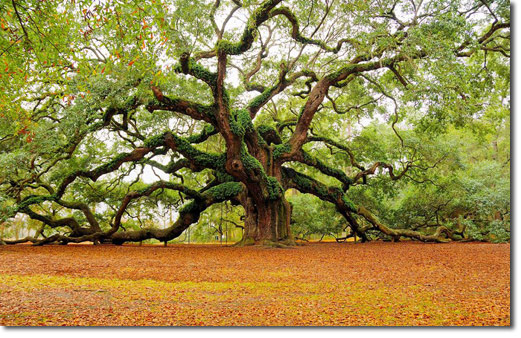
Imagine the type of world we could see
If instead of saying ‘pray,’ we said, ‘plant a tree’.
With this one little change so much more could be done
To protect all living things found under the sun.
We could ‘plant a tree’ for our troops sent away into war
So when they return they’d come home to find more.
We could ‘plant a tree’ at our churches with our husband or wife
To praise the Creator through a celebration of life.
We could ‘plant a tree’ for the needy and for those with no food
We could even plant in public without seeming rude.
The government would not have to introduce rules,
And most likely we could ‘plant a tree’ at our schools.
If we took it to task to ‘plant trees’ for the poorest,
We would all soon be reaping the wealth of a forest.
We could plant freely with those of all religions and creeds,
The improvement of earth would be based on these deeds.
We could plant with our neighbours, our family, and friends,
And ‘plant a tree’ with our enemies to help make amends.
If we ‘plant a tree’ for the sick to show them we care,
We would also be healing the soil, water, and air.
We could ‘plant a tree’ to observe when two people wed,
And plant one with our kids each night before bed.
Throughout the history of the whole human race
We find respect for the ‘tree’ has always had a place.
The great Ash of the Norse was their tree of the World,
And on a tree in the Garden is where the serpent once curled.
It was in groves of Oaks that the Druid priests wandered,
And under the Bodhi where the great Buddha pondered.
In the Bible it’s clear that we have all that we need:
‘All the trees with their fruits and plants yielding seed’.
Despite all these lessons that the past has taught
Now days, it seems, we cut our trees without thought.
This is confirmed by the Koran, for in it we read:
‘Many are the marvels of earth, yet we pay them no heed’.
We all have a duty, no matter what nation
To perform our part in protecting Creation.
Just think what we’d have if we had picked up a spade
Every time each one of us bowed our heads and prayed.
Further Reading:
oooOOOooo
The theme continues tomorrow.
Another gem from John Hurlburt.

oooo

oooo
oooo
oooo
oooo
oooo

oooo

oooo
oooo
“It came to me that every time I lose a dog,
they take a piece of my heart with them….
And every new dog who comes into my life,
gifts me with a piece of their heart.
If I live long enough, all the components of
my heart will be dog …
and maybe
I will become as generous and loving as they are.“
Unknown author.
In memory of my elder sister, Corinne Grace Joiner, nee Handover, who died peacefully in her sleep at 7am yesterday, UK time.
The following video was sent to me a few days ago by John Hurlburt before me hearing the sad news of my sister’s graceful release from extreme dementia. The video seemed a most fitting tribute to Corinne who was a loving friend to me for well over 60 years.
Published on May 5, 2012
Video by Scott Mckinley Productions, Produced for Rocky Mountain Elk Foundation for Ad campaign. Licensed music by Kenny G.. This short video won Best of Category at the International Wildlife Film Festival in Missoula Montana! The majority was shot on location in Yellowstone National Park, Grand Teton National Park and The National Elk Refuge in Jackson Hole, Wyoming.
As old as time itself!

The point at which the sun reaches its farthest point north of the equator is the Summer Solstice, well it is for the Northern Hemisphere. This occurs annually on June 20 or June 21, depending on your time zone.
Here in Southern Oregon, the moment of the Summer Solstice will be 22:04 Pacific Daylight Time (PDT) on the evening of June 20th and at 05:04 GMT/UTC on June 21 2013 in the United Kingdom.
A quick web ‘look-up’ finds that the word solstice is from the Latin solstitium, from sol (sun) and stitium (to stop), reflecting the fact that the Sun appears to stop at this time, albeit momentarily.
At the ancient stone circle of Stonehenge in Southern England, the prehistoric monument that took Neolithic builders an estimated 1,500 years to erect, for many years the Druids have celebrated the Solstice and, undoubtedly, will be doing so again.

Sometimes applause seems just … oh, I don’t know …. just so inadequate!
If you, like me, was entranced by the music then thanks to a comment left by one Eugene Karry on the YouTube website, all is explained.
A reminder of the beauty of the present moment.
Yesterday, I wrote a post I cry for the wolves. A comment from Jeremy Nathan Marks included this:
I have learned slowly that being an adult means learning to face and acknowledge the many horrors of our world. It also means -for me, anyway- recognizing that love is the one saving grace, the one remaining hope, the one promise that might be kept. And I mean love in the hear and now and not in any afterlife. Love is what animates beauty for me -a beauty that is about more than aesthetics.
Some people would perhaps think I am ridiculous for saying that I feel that wolves are my kin. But they are. To be kin doesn’t mean we have to think the same thoughts, speak the same spoken language, or even move through the world in precisely the same way. Being kin to me means that we recognize the life lived in one another. I see that life and its light and love in wolves, just as you have beautifully described. And I know people who have lived and worked with wolves have seen that mutuality in their encounters and interactions with wolves and their packs.
That is such a profound reflection.
Unwittingly, before I read that comment from Jeremy, I had added this comment:
Around 7am I went down to our pond just to enjoy the world Jean and I live in and there was a young deer grazing the field grass near the water. Slowly, I moved towards a bench seat by the edge of the pond and sat down. The deer strolled away, perhaps some 30 feet, and continued to graze. Thanks to Dordie and Bill this young, beautiful creature was perfectly comfortable with my presence.
I sat there and my mind wander back to some far-off time when a curious young wolf might have let curiousity compell it to come a little closer to a human, perhaps nibble at the bone that the human threw in its direction.
There’s a theme here. “Love in the here and now ..” from Jeremy and me being lost watching that deer; the love of that moment.
A couple of evenings ago, Jean and I watched a truly wonderful and inspiring film. The film was called What about me? 1 Giant Leap The embedded link takes you to the website for the film.
Here’s the trailer.
Following the success of their first double Grammy nominated film & album, What About Me? is the latest offering from 1 Giant Leap. This visionary project took Jamie Catto and Duncan Bridgeman to over 50 locations as they explore through music, the complexities of human nature on a global scale, and aims to reveal how we are all connected through our creativity and beliefs, but most of all through our madness.
Through music and film, “1 Giant Leap” explores the universal complexities of human nature. Jamie Catto (Faithless co-founder) and Duncan Bridgeman set out on their journey recording musical jewels and words of wisdom with the cream of the world’s thinkers, writers and entertainers along the way. The duo traveled to the farthest corners of the planet, to ensure immense cultural diversity in this time capsule of humanity at its most inspirational.
Covering universal topics such as God, Sex, Death and Money, What About Me? features an incredibly diverse collection of collaborators from Noam Chomsky to Will Young, Maxi Jazz to Tim Robbins, Billy Connolly to Michael Stipe, Eckhart Tolle to Baaba Mal, among many others.
Encompassing a TV series, film and album, this is a poignant, emotional and entertaining time capsule of humanity at its most inspirational.
I can’t recommend too strongly that you watch the full-length film – I doubt that you will watch it and remain unchanged.
Reflections on the launch of George Monbiot’s new book Feral.
In my recent post, Dealing with Madness, where I referred to the launch of this new book there were comments from Jules that included him saying:
George is appearing at the Hay Festival to sell his book and do a talk this Saturday and it is only a few miles away so may be I will pop in and buy the book.
all the best
Jules
Jules, who has his own blog Bollocks2012, did go across to the Hay Festival and most generously agreed to write up his visit as a guest post.
So I am delighted to offer you Jules’ report today.
oooOOOooo
by Jules Bywater-Lees, 1st June, 2013
The small Welsh border town of Hay-on-Wye in Powys is just a few miles from where I live. It went from a little backwater with a failing rural economy to become, in the words of Bill Clinton, ‘the Woodstock of the mind’. All through the vision of eccentrics!

The town of Hay-on-Wye is pretty. It is set in the most beautiful Welsh countryside and even has its own tumble-down castle. However, back in the 70’s, like so many other small market centres, the town was in decline. That was until an eccentric bibliophile moved into the castle. The name of that eccentric was Richard Booth.
Richard Booth established a second-hand bookshop in town and, as a publicity stunt, on 1st April 1977 proclaimed himself King of Hay and Head of this new Independent Kingdom! Hay-on-Wye subsequently became a magnet for the second-hand book lover and trader, and now every other shop is a bookshop giving the town a healthy economy serving the many visitors.
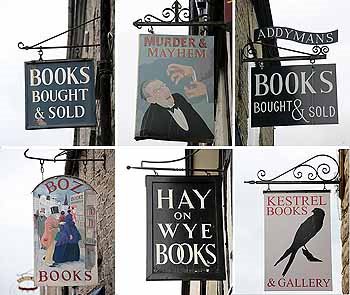
The Hay Literary Festival was devised by Norman and Peter Florence in 1988 and had become sufficiently established internationally for the highlight of Bill Clinton being a speaking guest in 2001. It is rather a corporate festival now attracting big names but the town has developed fringe events, that are both cheaper and more fun.
The reason this back story is relevant is that Hay-on-Wye has always been a gateway town between the urban English and rural Welsh. It is only a few hours drive from London and the nearest ‘wilderness’ for day trippers and holiday makers. A few miles further west and the uplands, or mountains as we call them (few are higher than 1000 feet), are considered by most people to be wild.
George Monbiot lives another 60 miles away to the West on the coast in what is considered deepest Wales where the hills have a barren beauty and the locals speak Britain’s ancient first language. But it is not all that it seems; the moors and hilltops are not natural they are a product of over-grazing. They are the degraded shells of a natural ecosystem. A shadowland; a ghostly memory of a former landscape.

Back to this year’s Festival. I coughed up the £8 ticket price and went with friends to have a day of culture. Those friends who came to hear George Monbiot speak were sceptical; for them the hills are beautiful and it is the denuded ‘wildness’ and prancing Spring lambs that gives the landscape so much value.
George makes frequent appearances on television and is very much a leading commentator on the environment and climate change, and his Guardian articles, see postscript, cover his views well so I wasn’t expecting any surprises. If anything I felt sceptical! You see while in principle I agreed with Monbiot’s message of rewilding and supportive of his views on the wide range of subjects he covers, the concept of rewilding appeared to be woolly and vague and lacking the practicalities of how this vision would be achieved. I even prepared a question for the session after his presentation.
Britain is a little country and our national parks are not the same as those elsewhere in the world, a better description would be regulated areas of private ownership. There are a few parks in Wales notable Snowdonia, which amounts to 2,200 square Kilometres (850 square miles), Brecon Beacons, 1,300 Km2 (502 SqM) and larger ones in Scotland such as the Cairngorms of 4,500 Km2 (1,737 SqM). But all of these are tiny compared to Yellowstone National Park with its 9,000 km2 (3,475 SqM and about 100 wolves!). Is it possible to have viable populations of wild animals in such a small area?
My concern is that Britain actually does have a wild landscape of both international importance and scale, with mega fauna, diversity and rare ecosystems that put it on par with the rainforest. It is truly huge with a conservative estimate of 50 to 100 thousand Km2 in area (19,305 to 38,610 square miles) but it is hidden: It is the 31,000 Km (19,260 miles) of coastline and the waters that extend from it. Surely we should be concentrating on its protection rather than allowing the hill tops to grow pretty common native woodland that could support a few hundred wolves, Lynx and beavers at best?
George live, as it were, was a lot more engaging than his appearance on telly and his spoken words a lot more passionate than his written words. I was surprised, and interested. Like all good story tellers he started off with a mystery. Why do British native trees appear to thrive when they are hacked about into hedges, why do blackthorn trees have thorns so tough and sharp they spike industrial leather gloves and why does the yew and holly have roots so extensive they could hold up a tree twice as big? The answer: Elephants!
Much of what he spoke about is found in his last three Guardian articles so I will spare you the detail but what struck me was his passion. Initially the cynic within wondered if George was just another celebrity seeking a cause. But such thoughts were dispelled as soon as George started to speak. What was communicated resonated strongly with this idealistic former self who was sufficiently passionate about nature enough to have studied zoology and yearned a human desire for wilderness and, indeed, danger but whose life has otherwise been engaged in more civilised necessities.
Such was the passion expressed by Mr. Monbiot that even I could overlook the practicalities and details; they can be sorted out when they need to be. My friends were impressed and even they were able to see that letting the hills go wild or a least a few of them would enhance their appreciation of our countryside.
But I didn’t buy a signed copy of the book! At £20 for the hardback version I thought it best to order one from my local library or at least wait for the paperback edition on Amazon.
Postscript
Those Guardian articles mentioned are:
My manifesto for rewilding the world, Guardian Newspaper, 27th May.
Until modern humans arrived, every continent except Antarctica possessed a megafauna. In the Americas, alongside mastodons, mammoths, four-tusked and spiral-tusked elephants, there was a beaver the size of a black bear: eight feet from nose to tail. There were giant bison weighing two tonnes, which carried horns seven feet across.
Why Britain’s barren uplands have farming subsidies to blame, Guardian Newspaper, 22nd May
Even before you start reading the devastating State of Nature report, published today, you get an inkling of where the problem lies. It’s illustrated in the opening pages with two dramatic photographs of upland Britain (p6). They are supposed to represent the natural glories we’re losing. In neither of them (with the exception of some distant specks of scrub and leylandii in the second) is there a tree to be seen. The many square miles they cover contain nothing but grass and dead bracken. They could scarcely provide a better illustration of our uncanny ability to miss the big picture.
It’s time we challenged agricultural hegemony, Guardian Newspaper, 6th June
The dam is beginning to crack, faster than I would have believed possible. Britain, one of the world’s most zoophobic nations, is at last considering the return of some of its extinct and charismatic mammal species.
While wolves, lynx, bears, bison, moose, boar and beavers have been spreading across the continent for decades, into countries as developed and populous as ours, and while they have been widely welcomed in those places, here we have responded to this prospect with unjustified horror.
Why the lynx effect would send Scotland wild, Guardian Newspaper, 2nd June
As Edinburgh Zoo’s panda freakshow continues to captivate the witless and the infantile, a real Scottish animal has been allowed to die. Under the noses of Scottish Natural Heritage, which likes to be known as the nation’s leading conservation body, the Scottish wildcat has all but been extinguished from the Highlands. The importance of this news may be deemed worthy of a mere footnote on the schedule of important issues with which Scotland is grappling but it ought to rank much higher. For the wildcat’s demise seems to be part of the neutering and emasculating of our wildest places. That which was previously held to be a quintessential part of what Scotland was originally meant to look like and smell like and sound like is now, it seems, unimportant.
Britain’s paradise has been lost – but there’s still hope for our wildlife, Guardian Newspaper, 24th May
I never imagined being 52. As I grew up catching lizards and newts, rummaging through hedges to find birds’ nests, or prodding flattened hedgehogs with my scuffed Clarks lace-ups, the world was ripe with natural riches. Every scrap of wasteland revealed yet more gems: tadpoles, fox cubs and a confetti of butterflies. And when at the weekends the family Ford Anglia trundled off to the countryside, I strode in shorts into a wildlife nirvana, a utopia, and I explored what I imagined would be a never-ending world of beautiful and exotic creatures.
oooOOOooo
Finally, back to me and all I want to add is that the blogsite for more information on the book Feral is here.
So how to close? Well having given this post the title of a well-known saying, let me close with one perhaps less familiar but, boy oh boy, so relevant.
“When the oak is felled the whole forest echoes with it fall, but a hundred acorns
are sown in silence by an unnoticed breeze.”
Thomas Carlyle
What an expanse of learning is out there in this modern interconnected world!
I try to limit my following to those organisations and writers who offer me the opportunity of learning. Whether something I was previously unaware of or a sight of the world from an unfamiliar perspective, it’s a rare day when something doesn’t ‘pass my screen’ that offers an ‘Ah, ha’ moment.
Such as the following essay by Dave Nussbaum that recently appeared on the Big Think website. Cheekily, I asked permission to republish and promptly and generously both Dave and Daniel Honan, managing editor of Big Think, said yes. Thank you, gentlemen.
A quick web search finds that Dave Nussbaum is Adjunct Assistant Professor of Behavioral Science, University of Chicago Booth School of Business. (I couldn’t avoid wondering if the learned Professor requires extra-large business cards! Sorry for that!) To fill in a little more about the Professor, one can easily read that:
I am currently an Adjunct Assistant Professor of Behavioral Science at the University of Chicago Booth School of Business. I received my PhD in Social Psychology from Stanford in 2008, working primarily with Claude Steele and Carol Dweck. I recently completed a SSHRC Post-Doctoral Fellowship at the University of Waterloo with Steve Spencer. My research is primarily focused on how people manage and defend their self-image in the face of threats, and how this affects their beliefs and behavior. I also explore how social contexts and psychological processes can either exacerbate threats to self-image or attenuate them. I have found that defensively managing self-image threats can often lead to negative consequences, including academic disidentification, missed learning opportunities, the avoidance of important medical tests, and persistence in failing investments. I believe that by identifying contexts and processes that attenuate threat, individuals and organizations can employ strategies to prevent these maladaptive outcomes.
So moving on past my quip about the length of Professor Nussbaum’s title, the summary above shows that this is one smart cookie! Just go back and reread “My research is primarily focused on how people manage and defend their self-image in the face of threats, and how this affects their beliefs and behavior.” Then reflect on the range and scale of ‘threats’ facing millions of us across the world. So research into “how social contexts and psychological processes can either exacerbate threats to self-image or attenuate them“, seems particularly appropriate for these times.
OK, without further ramblings from yours truly, here is that essay.
oooOOOooo
by Dave Nussbaum – May 27, 2013

According to legend, the Sirens were beautiful women whose voices were so alluring that when sailors heard their song they could not resist approaching and were drowned on the rocky shores of the island where the Sirens sang. No sailor had heard their song and lived until Odysseus, who, on the counsel of the goddess Circe, had his crew tie him to the mast of his ship. When he heard the Sirens’ song he begged to be released, but his crew, their ears plugged with beeswax, would not unbind him and saved him from his own desires. Odysseus was lucky – he knew that he would be unable to resist the Sirens and had himself bound – but people often have difficulty foreseeing their weakness from a distance. Sometimes they need help.
I love watching my not-quite-two-year-old son learn about the world from his mistakes. I look on with sympathy at his falls and bumps and spills and I try to restrain myself from interceding. But when he’s about to tumble down a flight of stairs I step in. It is difficult to balance preserving his freedom to explore and make his own mistakes with the desire to keep him safe. There’s a lot to be said for giving kids autonomy and letting them learn from experience, but sometimes you have to behave paternalistically and tie them to the mast (or at least install safety gates).
When you start treating grown men and women like you’re their father, though, the charge of paternalism becomes a more serious one. There may be cases in which a heavy-handed approach is necessary (particularly when people’s actions harm others), but we should be careful about using it. A more circumspect approach is libertarian paternalism, described by Richard Thaler and Cass Sunstein in Nudge (and re-articulated more recently by Sunstein in his Simpler) as a way of influencing people to make decisions that they themselves would consider beneficial, without restricting their freedom.
Here, we are not tying Odysseus to the mast – the more appropriate analogy would be to the beeswax that Odysseus had his sailors put in their ears. The wax prevented the sailors from hearing the Sirens’ song and saved them from being lured to their deaths, but it also left them free to remove the wax if that is what they wanted to do. This sort of intervention is an acknowledgment that the sailors’ freedom is important, but also that people are not always perfectly rational. As Carnegie Mellon economist (and psychologist) George Loewenstein recently explained to me, “When people have problems exercising self-control, restricting their choices can, in some cases, leave them more freedom to choose.”
On its face, Loewenstein’s claim may seem paradoxical – isn’t a person most free when presented with all her options and allowed to choose among them? But as the mythical Sirens make clear, there are some options that we are not truly free to resist. Without beeswax in their ears Odysseus’ crew would have been doomed; the wax gave them the freedom to choose.
Take the recent attempt by New York City Mayor, Michael Bloomberg, to forbid stores from displaying cigarettes to their customers. Just like the beeswax did not prevent the sailors’ from choosing to hear the Sirens’ song, hiding cigarettes from view doesn’t prevent people from buying them. But, as Loewenstein explains, it makes it easier for those who may be trying to quit to avoid being lured back in.

When we pass laws that forbid the sale of cigarettes to minors we are being paternalistic. We are tying Odysseus to the mast, whether he likes it or not. But when we ban cigarette advertising that targets children – as the FTC did when it banned Joe Camel ads – we’re not tying anyone down. We are merely acknowledging that children are vulnerable to influences that may lead them to act contrary to their own interests and that they may not be in a position to resist these influences. Banning the display of cigarettes in stores is merely acknowledging that children aren’t the only ones who are vulnerable. The cigarettes, like the sirens, draw us in against our will. Putting them out of sight is like putting wax in our ears – we can easily still give in to temptation if we choose to, but we’re less at its mercy.
You can visit Dave Nussbaum’s blog at www.davenussbaum.com and follow Dave on Twitter at @davenuss79
Images courtesy of Wikimedia Commons and Shutterstock.
oooOOOooo


Eugene explained that the instrument is called the Armenian Duduk and that Armenian Duduk music is recognized by UNESCO.
It was only a quick search on the UNESCO website to find this:
Back to Eugene, who went on to write that Jivan Gasparyan and Gevorg Dabaghyan are famous duduk players among many others. The musical pieces played on the duduk are mostly armenian folk or spiritual tunes; many of them sad songs. Nowadays the duduk is very often played during funerals among Armenians but there are some dance songs as well.
Finally, Eugene offered these further hauntingly beautiful pieces of music.
——-
——-
——–
oooOOOooo
Just beautiful.