In my last essay on love that was published on Friday, I quoted Carl Sagan, “For small creatures such as we the vastness is bearable only through love.Carl Sagan” My conclusion about love was:
… that if we don’t love our planet with all the ardour and passion of a teenager’s first romance, all those other loves in our lives will ultimately become irrelevant.
In researching for that essay, I visited Carl Sagan’s website, a rich source of information and materials for anyone interested in the far Cosmos right down to our future on this planet.
Just a little over three months ago, I wrote a post with the title of Carl Sagan with the objective of promoting his beautiful and awe-inspiring film called Pale Blue Dot.
Back to the present. On YouTube I came across this short video that seems so relevant to our need to love the only planet we have.
Carl Sagan explains the immensity of space and time in this clip is from Carl Sagan’s Cosmos episode 8, “Journeys in Space and Time.
“Those worlds in space are as countless as all the grains of sand on all the beaches of the Earth. Each of those worlds is as real as ours. In every one of them, there’s a succession of incidence, events, occurrences which influence its future. Countless worlds, numberless moments, an immensity of space and time.
And our small planet, at this moment, here we face a critical branch-point in the history. What we do with our world, right now, will propagate down through the centuries and powerfully affect the destiny of our descendants. It is well within our power to destroy our civilization, and perhaps our species as well. If we capitulate to superstition, or greed, or stupidity we can plunge our world into a darkness deeper than time between the collapse of classical civilization and the Italian Renaissance.
But we are also capable of using our compassion and our intelligence, our technology and our wealth, to make an abundant and meaningful life for every inhabitant of this planet. To enhance enormously our understanding of the Universe, and to carry us to the stars.”
Today, in the USA it is Memorial Day. The day of remembering the men and women who died while serving in the United States Armed Forces. It doesn’t seem out of order to reflect that all those courageous men and women died with a belief in the future. That belief in the future surely must embrace “… using our compassion and our intelligence, our technology and our wealth, to make an abundant and meaningful life for every inhabitant of this planet.“
Five days of writing about love and none the clearer!
So here I am penning Friday’s post about love. You will recall that on Monday I wrote:
In last week’s telephone conversation MaryAnne spoke so easily about love that I promised her that I would dedicate a post on Learning from Dogs to her.
In fact, rather than one post, I’m setting myself the challenge of writing about love for the entire week, i.e. Monday to Friday. I will readily admit that over and beyond today’s post, I don’t have more than the vaguest inkling of how the week will pan out. You have been warned!
Ironically, up until yesterday things fell into place pretty easily. But I must confess that today’s post has been a struggle. I read the love quotes over on the Brainy Quote website to find some inspiration. None found. Not that there weren’t many, many beautiful sayings but the incredible spread of quotations just magnified the difficulty of pinning down something to write about.
Then I did a web search for ‘love stories’. Came across the story of The Lost Wallet. It was moving but seemed too perfect a love story – try it yourself if you want.
Then back to the Brainy Quote website and once more meandered through the love quotes. Saw this one.
For small creatures such as we the vastness is bearable only through love.Carl Sagan
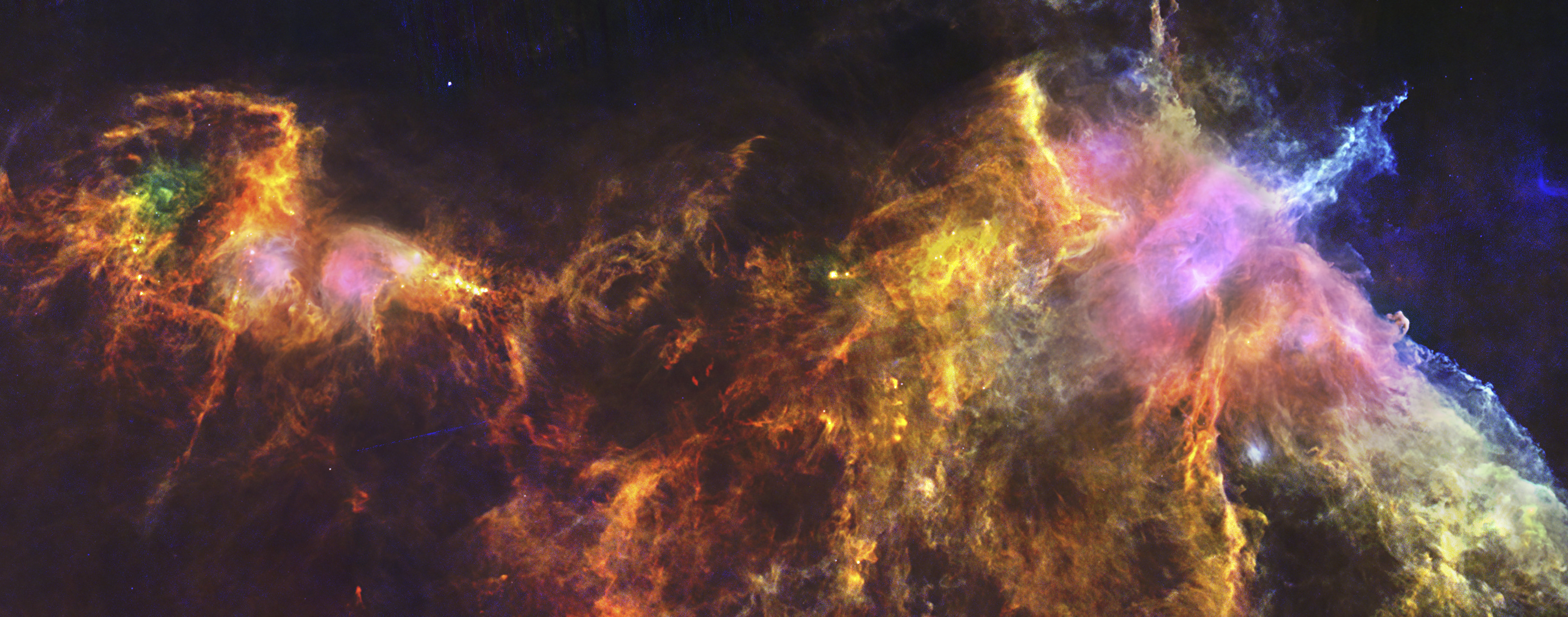
That struck a chord. A few hours earlier I had been sorting out my photographs and came across this one.
The Herschel Horsehead Nebula.
I had grabbed this image a month ago from the announcement on ESA’s website:
19 April 2013 New views of the Horsehead Nebula and its turbulent environment have been unveiled by ESA’s Herschel space observatory and the NASA/ESA Hubble space telescope.
The Horsehead Nebula lies in the constellation Orion, about 1300 light-years away, and is a popular target for amateur and professional astronomers alike. It sits just to the south of star Alnitak, the easternmost of Orion’s famous three-star belt, and is part of the vast Orion Molecular Cloud complex.
The new far-infrared Herschel view shows in spectacular detail the scene playing out around the Horsehead Nebula at the right-hand side of the image, where it seems to surf like a ‘white horse’ in the waves of turbulent star-forming clouds.
It appears to be riding towards another favourite stopping point for astrophotographers: NGC 2024, also known as the Flame Nebula. This star-forming region appears obscured by dark dust lanes in visible light images, but blazes in full glory in the far-infrared Herschel view.
The image is staggeringly beautiful yet a potent reminder that man, even the totality of our planet, is such an irrelevance in the scheme of things. We are surrounded by beauty both within and without, yet the fragility of our existance is a ‘vastness’, both literally and psychologically.
Guess what! Writing that last sentence brought to mind a photograph that I took Wednesday afternoon. As part of the Land Stewardship course Jean and I are taking, the class had gone to the Limpy Creek Botanical area in the Rogue River-Siskiyou National Forest not far from Grants Pass, Oregon. Here’s that photograph.
Reflect on the delicate beauty and vulnerability of that small wild flower. A perfect metaphor for the entire natural world.
So I am going to close this week’s perambulation through love with the thought that if we don’t love our planet with all the ardour and passion of a teenager’s first romance, all those other loves in our lives will ultimately become irrelevant.
Yesterday, I explored love across the species; back to that first encounter between wolf and early man.
Today, I want to revisit what we mean when we use the word ‘love‘ and feel the emotion. I say revisit because it’s not the first time I have dipped my toes into this particular pool. Last August, I wrote a piece What is love? It opened thus:
How the relationship that we have with domesticated animals taught us the meaning of love.
This exploration into the most fundamental emotion of all, love, was stimulated by me just finishing Pat Shipman’s book The Animal Connection. Sturdy followers of Learning from Dogs (what a hardy lot you are!) will recall that about 5 weeks ago I wrote a post entitled The Woof at the Door which included an essay from Pat, republished with her permission, that set out how “Dogs may have been man’s best friend for thousands of years longer than we realized“.
The following day, I wrote a further piece introducing the book and then commenced reading it myself. Please go there and read about the praise that the book has received.
What I want to do is to take a personal journey through love. I should add immediately that I have no specialist or professional background with regard to ‘love’ just, like millions of others, a collection of experiences that have tapped me on the shoulder these last 67 years.
The challenge for us humans is that while we instinctively understand what emotions represent: love, fear, anger, joy, grief, sadness, happiness, et al, we really have no way of knowing precisely what another person is feeling and how that feeling compares to our own awareness and experience of that emotion.
Stay with me as I explore how others offer a meaning of love.
As it happens, this week’s Sabbath Moment from Terry Hershey was much about love.
If you judge people you have not time to love them. Mother Teresa
Where there is great love there are always miracles. Willa Cather
Someday, after we have mastered the winds, the waves, the tides, and gravity, we shall harness… the energies of love. Then for the second time in the history of the world man will have discovered fire. Pierre Teilhard de Chardin
Then some further reflections:
Here’s my take: Life is complicated and at times, very, very challenging. And sometimes, overwhelming. Bad things can happen to good people. Decisions can be thorny and disconcerting. However. Even in the midst … where there is great love, there are always miracles.
and
Here’s the deal:
Love is not always where I predict it will be.
Love can grow and blossom even in the face of striving and anguish.
If we judge we cannot love. Just because I see something one way, doesn’t mean that I am right and you are wrong.
When we do love, we are present. When we are present, there is always a thread. The good news is that we are in this together. One day you may be that thread for me. And one day, I may be that thread for you.
Powerful words! Words that will have many nodding. Yet still nothing absolute that offers a definition of love that would be universally understood. Because there can be no universal definition. That is the magic of all emotions – they defy the ‘science of life’. So let’s just treasure that magic.
Last night I wrote this poem, its been a while since I posted one, so as my pen flew across the page I was inspired with these words.. Maybe due to the recent Solar flares, but my ears have been ringing ever louder as the energies have intensified.. The Silence space within is a place to reflect and absorb the peacefulness of Oneness with the Universe…. A place I often go, where we can just close our eyes to the constant noise as the Planet cries with yet more pain… Meditation helps centre our minds. If you would like to follow a meditation I often do… You can find it Here on a post I did back in 2008 .
Silence booms in an explosion of sound
Splintering static high pitched and loud
Morse Coded downloads in intermittent bursts
The Cosmos is talking-Do you hear its verse?
~~
I escape to the mountains and I run to the sea
But its chatter surrounds me as I long to be free
I hear cries of children, laments from the old
Each on a journey their stories to be told
~~
The Elephants and Dolphin their cries go unheard
Yet I hear their low rumbles and clicks how absurd
Each voice in the matrix – every thought in the mix
A Planet in Crisis – will it ever be fixed?
~~
So I turn down the volume as I shut the outer door
As I meditate inward finding higher-self law
Here I seek Peace in the stillness I find
The Key to the Cosmos we turn in the mind
~~
All things are great and all things are small
The Mind gives them power and shall overcome all
The Universal Plan- I am part and unique
Each one is searching to fit the pieces they seek
~~
And the answer is simple- but we make is so hard
With the choices we choose as we shuffle life’s cards
How to close it for today? Frankly, I’m not sure. So I’m going to ‘cheat’. By which I mean republish something else from last August. A guest essay about the loss of love. Because it seems to me that one way (the only way?) to experience what love truly means is when we lose it. As Eleanore MacDonald describes below in the most heart-rending and beautiful fashion.
oooOOOooo
one of the seven great dogs
“Until one has loved an animal, a part of one’s soul remains unawakened.” Anatole France
Djuna Cupcake, my heart of hearts, photo by Breelyn MacDonald
A great squall came upon us here on our farmlet a week ago. I saw it first from a distance, in that dawning of the morning when Djuna usually announced the coming day with his gentle, breathy ‘woooof’, his polite plea to join us on the bed. Mysteriously disturbing, it surely was a sign of things to come, but we didn’t know how dangerous it really was until it was upon us.
And when it was suddenly there, a Great Joy was sucked from our world and an overwhelming sadness took its place … a raging stillness, hot and stifling, no breath, no heartbeat.
My springs of Joy are dry … (a sentiment stolen in part from that great old song, Long Time Traveler)
Djuna Cupcake was one of the Seven Great Dogs. If you’ve seen the film ‘Dean Spanley’, you will know what I mean. If you have loved and been loved by a dog of pure heart … one who was a great teacher of presence, of patience, one who was the dispenser of unconditional love and the blessings of an incomparable joy … one who was a great listener, guardian, and the embodiment of Buddha, Coyote, the Goddesses Eleos and Kuan Yin all in one soft coated body … one who was your loving shadow because he or she felt that it was their job to see you safe at all times … you will know what I mean.
He died quite suddenly. Like that squall, his death came with no warning and for days after Paul and I were sucked deep into that great black hole of grief. The dread attacked us at every turn, where we would always see him but now only a glaring emptiness stood. I felt as though my heart and soul had a raw, oozing, gaping, searingly painful wound where he had been torn away from me. Stolen. We cried a lot.
Some people will never understand. I try to feel compassion for them, rather than issuing the big ‘EFF YOU”, but I am only human. What is this BS about a ‘three day’ rule? What? Because he was ‘just a dog’ we should be over it all in 3 days? Djuna was surely a better person than most Humans and I will never stop missing him. I feel so deeply sorry for those people who have overlooked having such grace and beauty bless their lives –– the companionship of a great dog (or cat or horse, or human person) –– so that, when the monumental end comes and they’ve come through the great fires of sorrow, and have been washed by the flush of a million tears, they come through to the other side where they are able to see the remarkable love, joys and lessons they’d been gifted by that companionship. I can only hope now to ‘be’ the person Djuna thought me to be.
3 days and 3 more and 3 million more and even then more just won’t do it.
Paul and I were with Djuna on our bedroom floor when he died. I lay with him next to my heart, whispering love, my arm draped over his neck … and as he was leaving us, I saw him standing just beyond Paul. Alert, ears akimbo, head cocked, eyes bright, a wad of socks in mouth, standing in his particularly great exuberance, as he did each morning when the time for chores presented itself – “Come on! It’s time to go! Get with it you silly humans! There’s work to be done, there’s a barn to clean and a day to sniff, there’s delight to be found!” And then he left.
My ‘joyometer’, my daily dispenser of mirth, and my constant reminder of the importance of presence, has gone missing – his lessons of ‘Be Here Now’ measured in doses of ’Oh, sense the beauty in the music of the wind!’, ‘Let’s just run in circles and laugh’, ‘I love, love, love you!’ … gone. It is wholly up to me now to remember to stay in each moment, to just be a nice person, cry whenever I must, to laugh as much as possible and dance for the sheer joy of it. And when the cacophony of the deafening silence has quieted and the colors of sorrow have muted and gone transparent and I’ve had some time to let the Aegean clean up those bloodied wounds in my heart and soul, there will be room again here for another one of the Seven Great Dogs. And the cycles will continue on.
Almost every evening Djuna and I took an evening stroll down our quiet lane. I loved watching him dance his great joy, nose to the ground scenting all of the news of the day or nose to the sky, sensing what was coming on the breeze. On our walks I watched the seasons change, the rising of the full moon, the greening of the new spring and the evening skies, like snowflakes, no one ever alike … I watched the Canadian geese come and go, the Red Tail hawks courting in the air above me, and let the build up of my day fall away as I tread softly with my gentle friend. It took me several days after Djuna’s death for me to realize that here was yet again another gift he had left for me in his wake, and one I should continue to enjoy. The sky was black to the West, we’d had heavy winds and rain all day, but when there was a break I set off on ‘our’ walk. Wrapped tightly in sadness and hardly breathing with the missing of him, I shuffled along about a 1/2 mile and turned for home before the rains started up and the chill wind began to blow, fierce again, from the south. That wind battered and bashed me until it freed the tears from my eyes, and the freezing rain lashed my face until I grew numb. As though suddenly realizing I was about to drown, I surfaced, taking in great gulps of air as though I’d not been breathing for several days, and began to climb free of the suffocating bonds of my sadness.
Part of our family
My Djuna, my Cupcake … My Heart of Hearts who knew my soul, my every thought; great lover of Paul and I, and of Breelyn; great lover of his mare and his pony, of socks and his furry toys and his GWBush chew doll; great lover of his evening walkies and of riding in the car, and feeding the birds; great lover of sofa naps and sleeping in late with us on the bed and chasing BALL and rolling on the grass and of eating horse poop; bountiful bestower of stealthy kisses; joyful jokester, Greek scholar (he knew about 15 words and understood several phrases spoken to him in Greek; something we did only after he’d begun to understand words and phrases *spelled out* in English! ‘Car’, ‘dinner?’, ‘play with the ball?’, ‘feed the birds’, water, pony, get the goat, etc!); Djuna, beloved Honorary Cat, our timekeeper, our guardian angel, our boss, our playfully dignified friend (thanks for that Marija) and family member, and one of the Seven Great Dogs – we will love and miss you forever.
But now – there’s work to be done, there’s a barn to clean and a new day to sniff, there’s delight to be found!
This saying was offered in a creative writing class that Jean and I attended when we were living in Payson, Arizona. It came to me spontaneously as I started today’s post. Because feeling what is going on around us is the only way to write it, to share it, to bring it to the attention of all.
These are tough times for so many that love the world around us and having the odd weep is a perfectly rational, and healthy, thing to happen.
So as you listen to the following just feel it. And if a tear comes to your eye … embrace it.
Hopefully, you listened to the full seven minutes before reading on! Because to end the post at this point would be to leave out some great connections.
Put this on in the background and let it creep up on you.
Elizabeth Shepherd performs Live-to-Air with Michael Occipinti’s Shine On: The Universe of John Lennon
Toronto, June 1, 2012 CBC Radio
UPDATE: by popular demand, the original below.
Secondly, a quick dip into WikiPedia reveals that the song was recorded by the Beatles in February 1968 at the famous Abbey Road studios and released on the 12th December, 1969. It was written by John Lennon, and credited to Lennon–McCartney.
Abbey Road Studios, 3 Abbey Road, St. John’s Wood, London
Thirdly, that Wikipedia reference includes the background to the composition of the song, some of which I will share here:
One night in 1967, the phrase “words are flowing out like endless rain into a paper cup” came to Lennon after hearing his ex-wife Cynthia, according to Lennon, “going on and on about something.” Later, after “she’d gone to sleep—and I kept hearing these words over and over, flowing like an endless stream,” Lennon went downstairs and turned it into a song. He began to write the rest of the lyrics and when he was done, he went to bed and forgot about them.
“
I was lying next to my first wife in bed, you know, and I was irritated, and I was thinking. She must have been going on and on about something and she’d gone to sleep and I kept hearing these words over and over, flowing like an endless stream. I went downstairs and it turned into a sort of cosmic song rather than an irritated song, rather than a “Why are you always mouthing off at me?”[1]… [The words] were purely inspirational and were given to me as boom!. I don’t own it you know; it came through like that.[2]
”
The flavour of the song was heavily influenced by Lennon’s and the Beatles’ interest in Transcendental Meditation in late 1967 – early 1968, when the song was composed. Based on this he added the mantra “Jai gurudevaom” (Sanskrit: जय गुरुदेव ॐ) to the piece, which became the link to the chorus. The Sanskrit phrase is a sentence fragment whose words could have many meanings. Literally it approximates as “glory to the shining remover of darkness,”[3] and can be paraphrased as “Victory to God divine”, “Hail to the divine guru”, or the phrase commonly invoked by the late Maharishi Mahesh Yogi in referring to his spiritual teacher “All Glory to Guru Dev.”[4]
Finally the lyrics.
“Across The Universe”
Words are flowing out like endless rain into a paper cup
They slither wildly as they slip away across the universe
Pools of sorrow, waves of joy are drifting through my open mind
Possessing and caressing me
Jai Guru Deva OM
Nothing’s gonna change my world
Nothing’s gonna change my world
Nothing’s gonna change my world
Nothing’s gonna change my world
Images of broken light which dance before me like a million eyes
They call me on and on across the universe
Thoughts meander like a restless wind inside a letter box
They tumble blindly as they make their way across the universe
Jai Guru Deva OM
Nothing’s gonna change my world
Nothing’s gonna change my world
Nothing’s gonna change my world
Nothing’s gonna change my world
Sounds of laughter shades of live are ringing through my open ears
Inciting and inviting me
Limitless undying love which shines around me like a million suns
It calls me on and on, across the universe
Jai Guru Deva OM
Nothing’s gonna change my world
Nothing’s gonna change my world
Nothing’s gonna change my world
Nothing’s gonna change my world
Jai Guru Deva
Jai Guru Deva
Jai Guru Deva
Jai Guru Deva
Jai Guru Deva [fade out]
Footnote
The title of the song was given a new dimension when NASA beamed the song into space.
“On 4 February 2008, at 00:00 UTC, NASA transmitted the Interstellar Message “Across the Universe” in the direction of the star Polaris, 431 light years from Earth. The transmission was made using a 70m antenna in the Deep Space Network’s Madrid Deep Space Communication Complex, located outside of Madrid, Spain. It was done with an “X band” transmitter, radiating into the antenna at 18 kW. This was done to celebrate the 40th anniversary of the song’s recording, the 45th anniversary of the Deep Space Network (DSN), and the 50th anniversary of NASA. The idea was hatched by Beatles historian Martin Lewis, who encouraged all Beatles fans to play the track as it was beamed to the distant star. The event marked the first time a song had ever been intentionally transmitted into deep space, and was approved by McCartney, Yoko Ono, and Apple Corps.”
Thus those feelings so beautifully expressed in the song will be echoing around the universe for time immemorial. Now that is a legacy!
Whatever one’s view is about the significance of CO2 levels in the Earth’s atmosphere, this blog is about integrity. As the byline states, “Dogs are integrous animals. We have much to learn from them.” Regular readers (and thank you for being one) know that this blog ranges far and wide in pursuit of stories, essays and examples of integrity, all the more better when they involve a dog!
All dog owners know that one of the prime things we can learn from our dogs is the ability to remain in the present. No, more than that! To value and cherish the present. Dogs manage this in an effortless manner, in a way that humans can only dream of achieving.
This came to me as a result of a recent post on Damn the Matrix, Mike Stasse’s fascinating blog. The post was about what we humans regret at the end of our days, which I will come to in a moment.
Mike had taken the theme from a recent book by Australian author Bronnie Ware. Her website is here from where one learns:
Picture from The Sunday Mail (Qld)
Bronnie Ware is an inspiring and creative soul from Australia.
Through her work Bronnie weaves delightful tales of real life observations and experience. Using gentleness, honesty, and humour, Bronnie celebrates both the strength and vulnerability of human nature. Her message is a positive and inspiring one.
Bronnie is the author of the full-length memoir, The Top Five Regrets of the Dying– A Life Transformed by the Dearly Departing, released worldwide, with translations in 27 languages. She also runs an online personal growth and songwriting course, has released two albums of original songs, and writes a well-loved blog called Inspiration and Chai.
Every challenge brings its own gifts. Sometimes though it is not always easy to see those gifts at first. Suffering and wounds can blind us. We have all been there. It is at times like these that Inspiration and Chai is needed. Inspiration to soothe the heart. Chai to soothe the body.
Even during happier cruising chapters, being inspired is still a beautiful thing. It keeps us going. It reminds us of what we already know.
Inspiration and Chai is an ongoing journey. The aim of this site is to share inspirational stories and motivational thoughts and for it to reach more and more people in need, seekers on their path. It is a positive environment to revisit whenever you feel it calling. It is also somewhere for me to share my love of story telling and to share memories of life.
Jean is no stranger to the death of a dog. Over her many years of rescuing dogs Jean has seen far too many deaths. I have been living with Jean since 2008. In that short time five of our dogs have died.
Of course, we have no idea of what goes through a dog’s mind in those last stages of life. Dogs appear to embrace death in an uncomplicated way but we will never know for sure.
What about humans? On Bronnie’s blogsite there is a post under the title of Regrets of the dying. Whatever age you are, read what Bonnie wrote and ponder:
REGRETS OF THE DYING
For many years I worked in palliative care. My patients were those who had gone home to die. Some incredibly special times were shared. I was with them for the last three to twelve weeks of their lives.
People grow a lot when they are faced with their own mortality. I learnt never to underestimate someone’s capacity for growth. Some changes were phenomenal. Each experienced a variety of emotions, as expected, denial, fear, anger, remorse, more denial and eventually acceptance. Every single patient found their peace before they departed though, every one of them.
When questioned about any regrets they had or anything they would do differently, common themes surfaced again and again. Here are the most common five:
1. I wish I’d had the courage to live a life true to myself, not the life others expected of me.
This was the most common regret of all. When people realise that their life is almost over and look back clearly on it, it is easy to see how many dreams have gone unfulfilled. Most people had not honoured even a half of their dreams and had to die knowing that it was due to choices they had made, or not made.
It is very important to try and honour at least some of your dreams along the way. From the moment that you lose your health, it is too late. Health brings a freedom very few realise, until they no longer have it.
2. I wish I didn’t work so hard.
This came from every male patient that I nursed. They missed their children’s youth and their partner’s companionship. Women also spoke of this regret. But as most were from an older generation, many of the female patients had not been breadwinners. All of the men I nursed deeply regretted spending so much of their lives on the treadmill of a work existence.
By simplifying your lifestyle and making conscious choices along the way, it is possible to not need the income that you think you do. And by creating more space in your life, you become happier and more open to new opportunities, ones more suited to your new lifestyle.
3. I wish I’d had the courage to express my feelings.
Many people suppressed their feelings in order to keep peace with others. As a result, they settled for a mediocre existence and never became who they were truly capable of becoming. Many developed illnesses relating to the bitterness and resentment they carried as a result.
We cannot control the reactions of others. However, although people may initially react when you change the way you are by speaking honestly, in the end it raises the relationship to a whole new and healthier level. Either that or it releases the unhealthy relationship from your life. Either way, you win.
4. I wish I had stayed in touch with my friends.
Often they would not truly realise the full benefits of old friends until their dying weeks and it was not always possible to track them down. Many had become so caught up in their own lives that they had let golden friendships slip by over the years. There were many deep regrets about not giving friendships the time and effort that they deserved. Everyone misses their friends when they are dying.
It is common for anyone in a busy lifestyle to let friendships slip. But when you are faced with your approaching death, the physical details of life fall away. People do want to get their financial affairs in order if possible. But it is not money or status that holds the true importance for them. They want to get things in order more for the benefit of those they love. Usually though, they are too ill and weary to ever manage this task. It is all comes down to love and relationships in the end. That is all that remains in the final weeks, love and relationships.
5. I wish that I had let myself be happier.
This is a surprisingly common one. Many did not realise until the end that happiness is a choice. They had stayed stuck in old patterns and habits. The so-called ‘comfort’ of familiarity overflowed into their emotions, as well as their physical lives. Fear of change had them pretending to others, and to their selves, that they were content. When deep within, they longed to laugh properly and have silliness in their life again.
When you are on your deathbed, what others think of you is a long way from your mind. How wonderful to be able to let go and smile again, long before you are dying.
Life is a choice. It is YOUR life. Choose consciously, choose wisely, choose honestly. Choose happiness.
I hesitated to write anything more because that last sentence should be the one that continues to resonate.
So just a reflection on how easy it is for a dog to wag its tail – dogs so easily choose happiness.
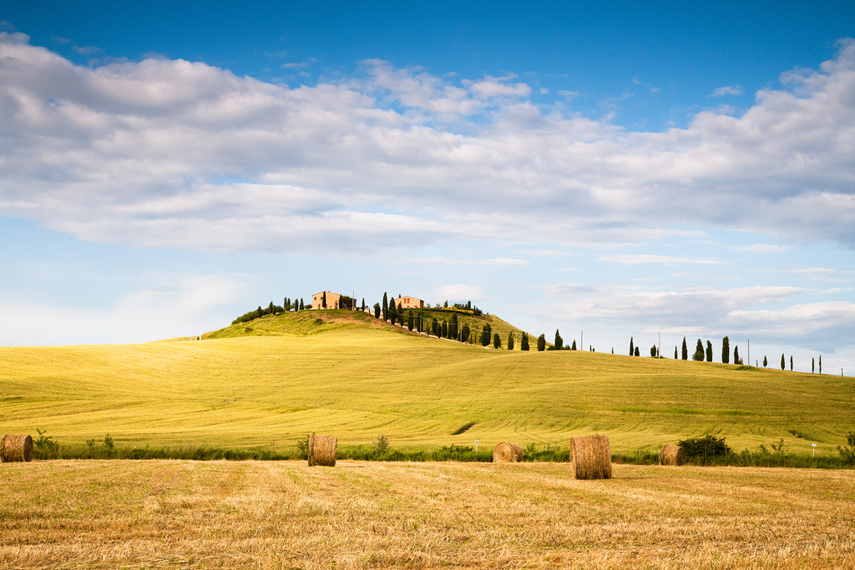
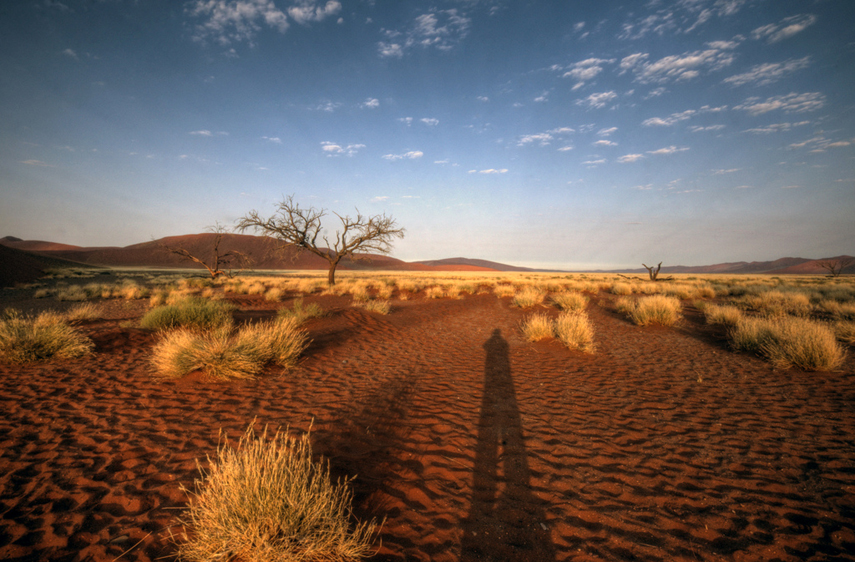
Remembering that Monday, 22nd April is Earth day, 2013. Like many others, I subscribe to Mother Nature Network. Recently published on MNN were twelve stunningly beautiful photographs. There are reproduced below, hopefully without infringing any copyrights. I just wanted to share them with readers of Learning from Dogs ahead of next Monday.
oooOOOooo
Earth Day photos: Celebrating the beauty of our planet
From the rolling hills of Tuscany to the surreal glacial formations of Patagonia, here are 12 stunning photos showcasing the diverse collection of landscapes found across the planet. By: Catie Leary Fri, Apr 19 2013 at 11:40 AM
So you all have a great week-end, wherever you are in the world, and do something, however small, for the one and only planet that nourishes all the life of the world.
Many months ago, I was contacted by a Peter Bloch offering to write a guest post on the subject of the healing power of dogs. Peter had read a post that I had published in July last year which prompted the email dialogue between us.
Not going to say much more at this stage except that today I am republishing that post from last July. On Monday, I will introduce Peter and his guest post. Then on Tuesday, I will speak of my own experiences both as entrepreneurial mentor and as a ‘customer’ of a wonderful psychotherapist back in Devon during 2007. Hope that works for you.
So here’s that Learning from Dogs post.
000OOOooo
The bond between dogs and humans
Such a beautiful and mutually-important relationship.
I didn’t plan to write more about this subject thinking that my last two posts, Woof at the Door and Prof. Pat Shipman, more than covered the theme; indeed much more.
But then a flurry of other articles conspired to pass my desk.
In no particular order there was an article on the Big Think website, Do Dogs Speak Human? As the article opened,
What’s the Big Idea?
Perhaps the better question is, do humans speak dog? Either way, the debate over whether language is unique to humans, or a faculty also possessed by wild and domestic animals from dogs to apes to dolphins, is an interesting one. The answer depends on exactly how we define “language,” and who’s doing the talking, says David Bellos, the Booker prize-winning translator.
The article includes this three-minute video,
and concludes,
Broadly, a language is a mode of expression. “The argument that only human language is language and that animal communication systems, however sophisticated they are — and some of them are quite sophisticated — are not languages because they consist of discrete signals is a circular argument,” he argues. “It’s a self-fulfilling thing. And I think we should be a little bit more interested in the complexity and the variability of animal communication systems and less rigid about this distinction between what is a language and what is not a language.”
For now, we’re happy with this:
The June 30th edition of The Economist had an article entitled, Can dogs really show empathy towards humans? (You may have to register (free) to view this.) That report ends, as follows,
As they report in Animal Cognition, “person-oriented behaviour” did sometimes take place when either the stranger or the owner hummed, but it was more than twice as likely to occur if someone was crying. This indicated that dogs were differentiating between odd behaviour and crying. And of the 15 dogs in the experiment that showed person-oriented responses when the stranger cried, all of them directed their attention towards the stranger rather than their owner.
These discoveries suggest that dogs do have the ability to express empathetic concern. But although the results are clear enough, Dr Custance argues that more work needs to be done to be sure that such behaviour is true empathy. It is possible, she points out, that the dogs were drawing on previous experiences in which they were rewarded for approaching distressed human companions. Dog-owners, however, are unlikely to need any more convincing.
It was then an easy follow-up to that Animal Cognition article which is available online here; here’s the abstract,
Empathy covers a range of phenomena from cognitive empathy involving metarepresentation to emotional contagion stemming from automatically triggered reflexes.
An experimental protocol first used with human infants was adapted to investigate empathy in domestic dogs. Dogs oriented toward their owner or a stranger more often when the person was pretending to cry than when they were talking or humming. Observers, unaware of experimental hypotheses and the condition under which dogs were responding, more often categorized dogs’ approaches as submissive as opposed to alert, playful or calm during the crying condition. When the stranger pretended to cry, rather than approaching their usual source of comfort, their owner, dogs sniffed, nuzzled and licked the stranger instead.
The dogs’ pattern of response was behaviorally consistent with an expression of empathic concern, but is most parsimoniously interpreted as emotional contagion coupled with a previous learning history in which they have been rewarded for approaching distressed human companions.
I feel very guilty as I didn’t make a note of where I came across this film. Whoever highlighted the film, thank you! It’s truly beautiful. So, please, settle yourself down and be enthralled.
In March 1940, the author John Steinbeck and his friend, marine biologist Ed Ricketts, sailed down the coast of California and Mexico to the Sea of Cortez. “The abundance of life here gives one an exuberance,” they wrote, “a feeling of fullness and richness.”
Their stated purpose was to document the creatures that inhabit shallow waters and tide pools on the margins of the Sea of Cortez. But it became much more. In these mysterious, phosphorescent waters they sought an understanding of mankind’s relationship to the natural world and a wellspring of hope for a world headed toward war.
Looking beyond the events of the day, the two friends foresaw our rising impact on the oceans and the devastating impact that over fishing would have on this rich sea. And yet, in their journey, they encountered a periodic cooling of the eastern Pacific Ocean known as La Niña that can still set off an explosion of life.
Can the story of their journey inspire new efforts to preserve the Sea of Cortez? Down along the shores of western Mexico, the wind blows hot and dry. Beyond these barren landscapes, cold currents rush up from the deep and the ocean literally boils with life.
Following their journey down to the Sea of Cortez in March of 1940, John Steinbeck and Ed Ricketts searched for a way to describe what they saw. “Trying to remember this place,” they wrote, “is like trying to re-create a dream. It is fierce and hostile and sullen. The stone mountains pile up to the sky and there is little fresh water. But we know we must go back if we live, and we don’t know why.”
The Sea of Cortez is one of the most diverse marine ecosystems on the planet. It’s shaped by the cool waters of the California Current flowing into the warm tropics and by a complex undersea terrain that rises up along a chain of islands and sea mounts. It was the shorelines, between the desert and the deep, that drew John Steinbeck, the author, and Ed Ricketts, a marine biologist and expert on coastal ecosystems.
Ricketts’ book, “Between Pacific Tides,” is a classic study of the inter-tidal zones of the California coastline and the myriad creatures that live in shallow pools, clinging to rocks to sift the rich nutrients carried in by the tides. Steinbeck and Ricketts sought to extend this work to the Sea of Cortez and to explore ideas at the core of their friendship. They shared a belief that man’s fate, like that of the animals they saw, is linked to the health of the natural world. [Ed. my emphasis]
Ricketts is said to have inspired some of Steinbeck’s most memorable characters, including Doc in Cannery Row, and the preacher Jim Casy in The Grapes of Wrath, published a year before their voyage. Set against the backdrop of drought and economic depression, the book describes the dustbowl conditions that gripped the American heartland in the 1930’s. “Now the wind grew strong and hard and it worked at the rain crust in the corn fields. Little by little the sky was darkened by the mixing dust, and carried away. The wind grew stronger. The rain crust broke and the dust lifted up out of the fields and drove gray plumes into the air like sluggish smoke.”
In most years, southerly winds carry moisture into the midsection of the country from the Gulf of Mexico. In the 1930’s, according to a recent NASA study, those winds were diverted by a build up of warm water in the Western Atlantic and by a periodic cooling of the Eastern Pacific known as La Niña. This combination robbed the region of rain.
By the time Steinbeck and Ricketts began their journey, the historic backdrop had shifted to war. Fighting had engulfed Europe and was spreading to the western Pacific. While the United States was still officially neutral, American companies had begun supplying arms to the allied effort. In early 1940, John Steinbeck used money he earned from “The Grapes of Wrath” to hire a sardine boat called the Western Flyer. From Monterrey, California, he, his wife Carol, Ed Ricketts and a four-man crew headed south, charting a course along the Mexican coastline.
By all accounts, the journey was filled with adventure, camaraderie, and a sense of wonder at the diversity of living things they encountered. Over a six-week period, the two friends wrote journal entries, took notes on conversations, and catalogued specimens they collected on the way. They compiled these writings into a book: “Sea of Cortez, A Leisurely Journal of Travel and Research,” later changed to “The Log From the Sea of Cortez.”
The work amounts to a search for a way to understand nature, and humanity at large, in a world steadily coming apart at the seams.
Ed Ricketts
The film was released last Feb 28, 2013. Directed by Thomas Lucas, the Producers were John Friday, Thomas Lucas and Adam Ravetch.
oooOOOooo
Will end with a couple of personal reflections. First is that when I was invited out to Mexico for Christmas 2007 by Suzann and Don, I travelled to San Carlos, Mexico on the Eastern shores of the Sea of Cortez. San Carlos is a little under 300 miles south of the Arizonan border with Mexico and was where Jean had been living for many years. Meeting Jean changed my life forever! Here’s a picture of the Sea of Cortez through the rear door of Jean’s house in San Carlos.
Not the longest walk in the world to the beach!
Second reflection is about dogs. Jean had spent many years rescuing Mexican feral dogs and finding homes for them; hundreds of them over her time in San Carlos. We brought 13 of those dogs with us when we moved to Arizona and 9 came to Oregon. Below is Hazel, one of the five remaining Mexican ‘rescue’ dogs that are still with us in Oregon.
A new animated short film from Lucas Martell, the creator of Pigeon: Impossible.
Back on the 4th December, 2011 I published a post under the title of Pigeon: Impossible. Here’s some of what I wrote:
A truly remarkable example of the level of film animation being produced.
The second item that came to me from Bob D. (yesterday’s is here) has clearly done the rounds; the YouTube video has been watched nearly 7 million times! But if you haven’t seen this short film, just over 6 minutes long, then do watch it. It shows just how close to reality film animation has become! The story behind the film is from here, reproduced below.
Pigeon: Impossible is the tale of Walter, a rookie secret agent faced with a problem seldom covered in basic training: what to do when a curious pigeon gets trapped inside your multi-million dollar, government-issued nuclear briefcase.
The film took nearly 5 years to complete and is the first attempt at animation by writer/director Lucas Martell: “When the project started, it was mostly an excuse to learn 3D animation, but by the end of the project I had spent so much time reworking and polishing the story that I just wanted people to laugh.“
The end-result is a hilarious 6-minute romp through the streets of Washington D.C. as our hero fights to save himself, and the world from the chaos reigned down by a hungry pigeon. Breathtaking visuals and a sweeping soundtrack showcase the work of nearly one-hundred talented artists and musicians, and the film stands as a testament to what can be accomplished by a team of dedicated volunteers working for the love of their craft.
Personally, I think that last sentence is still an understatement. Just watch this – and be amazed.
If you haven’t seen the film then you can watch it here.
Anyway, yesterday Lucas Martell left a comment to that post, as follows:
Lucas Martell
Hi, I’m the creator of Pigeon: Impossible and am so glad you enjoyed the film! We’re trying to finish our next animated short, and would love it if you could check it out and help us spread the word.
Thanks!
It seemed a worthwhile thing to do just that. That next animated short is called The OceanMaker. Enjoy 4 minutes of it:
This is the website associated with the venture that explains more and also gives details of the way you can financially support the project, starting from as little as $10. The website is great fun! (I couldn’t resist republishing the following)
oooOOOooo
About the Film
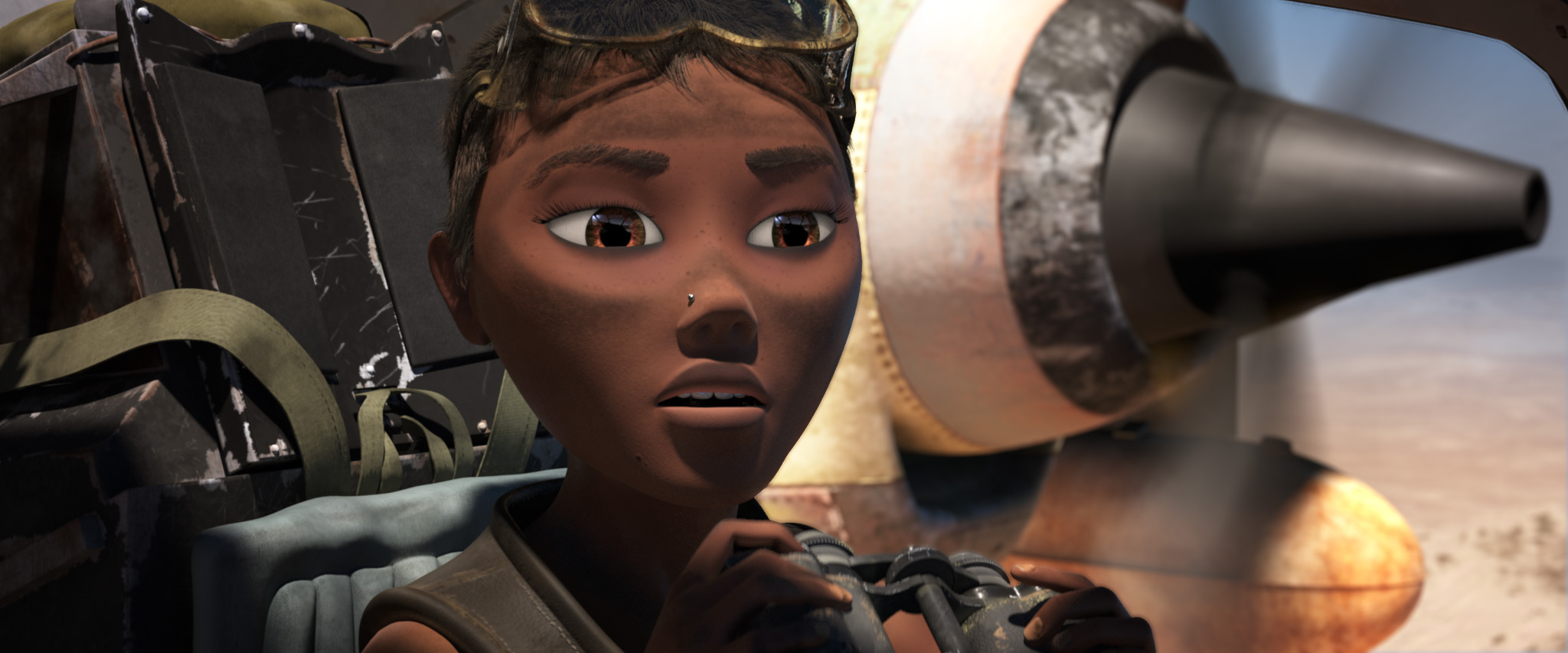
The OceanMaker is a 9-minute animated short film that takes place after Earth’s oceans have disappeared. It tells the tale of one courageous pilot who fights against vicious sky pirates for control of the last remaining source of water: the clouds.
From a visual standpoint, we’re steering away from the air pirates often found in steampunk and going straight-up “Mad Max” in the sky. The film is packed with old, beat-up planes that have been cobbled together from spare parts found in airplane graveyards.
Tonally, The OceanMaker is filled with exciting action, but the ending is emotional and powerful in a way that even feature-length films rarely achieve. The film also contains no dialogue, which means that the visuals and soundtrack need to be top notch in order to tell this story properly.
Finally, this film is unique in that it’s a complete story which stands on its own as a self-contained short film, but it’s also part of a even larger, more epic tale. Contributing to this project means a double dose of good karma, as you’re not only helping us complete the short, you’re getting us one step closer to making the feature! Our sights are set high and it’s going to be an amazing ride. We hope you’ll come along and share the adventure with us!
Goals
$10,000 – We can finish the models! – At the moment we have our hero models finished, but the story requires several other assets in order to set up the world and show how the loss of the oceans has affected life on earth. At $10,000, we’ll be able to bring on two model/texture artists to finish these assets.
$20,000 – We can finish the animation! – Animation is about 70% completed, but the remaining shots are the most challenging ones in the film. We’ll need two animators to bring these awesome shots to life!
$30,000 – We can finish the lighting! – Lighting and rendering are what make things pretty. It’s also a very technically challenging process, with each frame taking about an hour to render. At 24 frames per second, that’s just under 13,000 frames!
$40,000 – We can finish the film! – The last major step is the effects. In a word: clouds. They’re very tough to do right, and they’re pretty important for this whole story to work. Plus, these aren’t just static clouds in the background. We’re flying through them, scooping them up and making them grow!
$50,000 – Post Production! – This first stretch goal would allow us to hire a professional sound designer, as well as doing the final mix, color correction and output in a proper studio. This is crucial in order to submit the film to festivals and put it up on the big screen. If we reach this stretch goal, then all donors will also recieve a PDF copy of the script!
$60,000 – Live orchestra! – With this stretch goal, we could record Chris Reyman’s amazing score with a real live orchestra. This would be HUGE, as the film is extremely reliant on music, and the production value will increase dramatically. All donors at every level would receive a DRM-free copy of the score.
$70,000 – Expanded cast! – One thing that will make the film even better, is a second character. We already have a temporary version of that character in our animatic, but she’s very difficult to create and quite expensive for the few shots she’s in. However, that small addition would take the emotion and complexity of the story to a whole new level.
$80,000 – $100,000 The OceanMaker extended universe – As you can imagine, the OceanMaker is a really BIG story… too big to fit entirely within a short, but we’ve done an excellent job capturing the essence of it in a way that feels complete and stands on its own. However, if we hit $80,000, we can start to explore this broader story. This would be in the form of a graphic novel that delves deeper into the world both before and after the short film. The higher into this range we get, the longer this graphic novel could be and the more of the expanded story we could tell. Donors at every level would get a free digital copy of the graphic novel.
$100,000 and up – Feature!!! – OK, I realize we’re really reaching for the stars here, but you don’t do something like this without being a dreamer. If we somehow manage to reach the 100k mark, we’ll be able to start working on the feature film! It would be based in part on the content from the extended universe. The first step would be a treatment, then a script, then visual development and finally an animatic. Should we be able to complete any of these stages with money raised from this campaign, all donors will receive a digital copy of the completed work. You can take a sneak peek or remain unspoiled, but its the least we can do if your hard-earned dollars end up funding development of the feature.
oooOOOooo
So I hope you can contribute whatever you can afford.
Oh, and I should make it clear that neither Jean nor I have any financial or commercial connection with the project.

















 Learning from Dogs