Winter wonderland two. (One was here.)
oooo
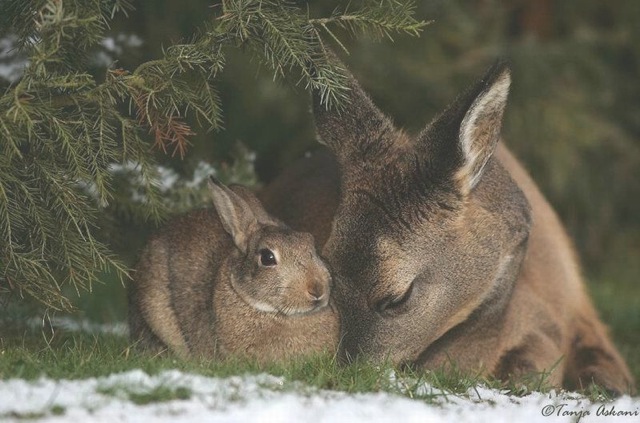
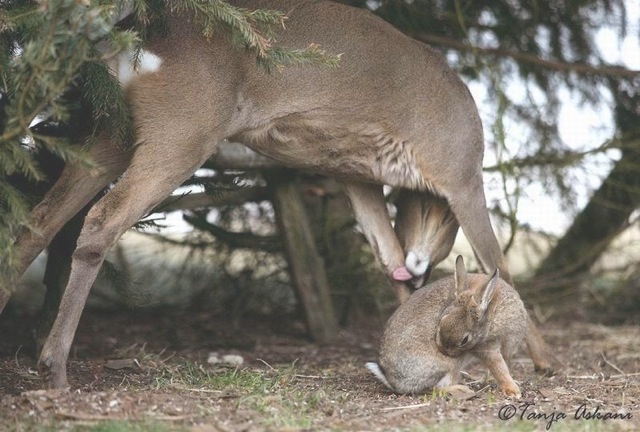
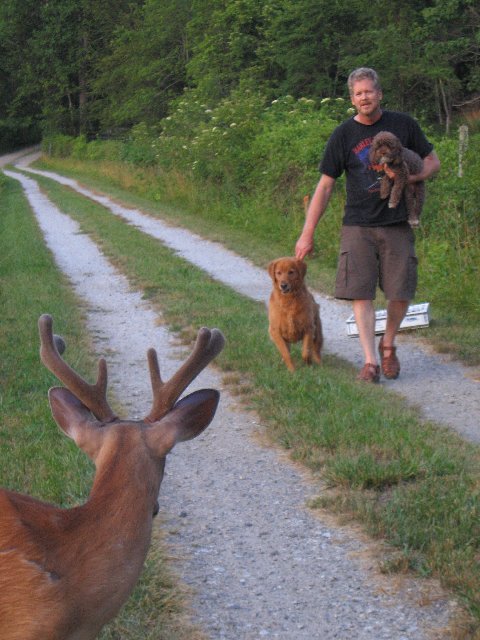
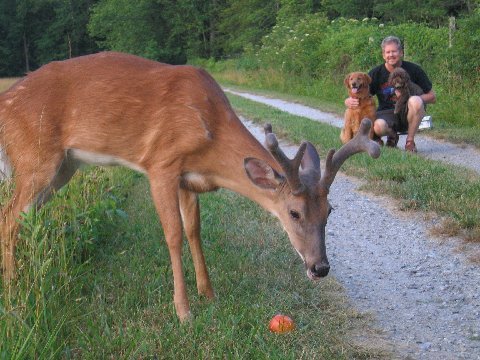
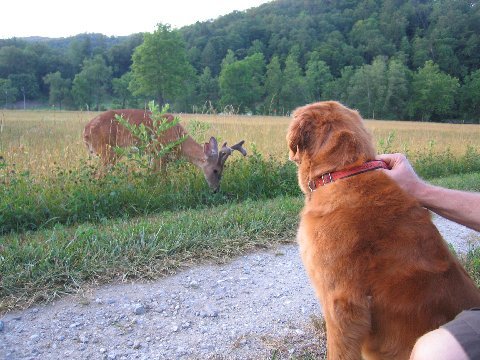
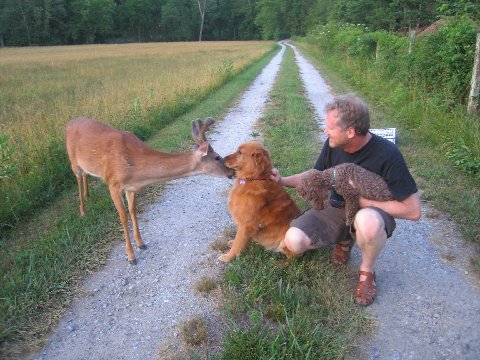
Now still remaining with the pictures sent in by Dordie but a change from deer and rabbit to deer and dog!
oooo
oooo
oooo
oooo
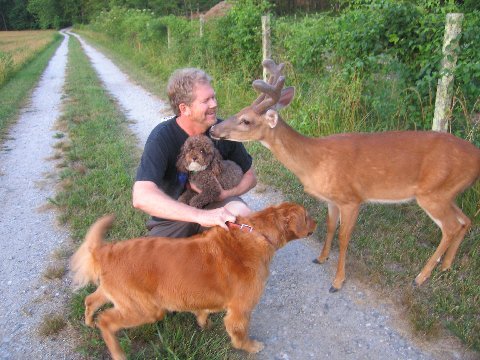
The third group of winter wonderland pictures in a week’s time. Enjoy!
Dogs are animals of integrity. We have much to learn from them.
Category: Art
Winter wonderland two. (One was here.)
oooo
Now still remaining with the pictures sent in by Dordie but a change from deer and rabbit to deer and dog!
oooo
oooo
oooo
oooo
The third group of winter wonderland pictures in a week’s time. Enjoy!
A return to a theme previously presented in this place.
The primary motivation for today’s post was to continue the theme in my post last Wednesday: Canada – Ellesmere Island, that featured the most beautiful film from the BBC about the wolves on Ellesmere: Snow Wolf Family and Me.
Now it struck me that in writing a blog called Learning from Dogs there was a fair chance that the history of dogs had been featured before. I ran a quick search through previous posts using the search term ‘history of dogs’. There were a number of returns. Such as the republication of an article by Mark Derr: The Wolf Who Stayed last November. Then there was a post called Dogs and Wolves: Fascinating Research in February, 2014. Back in 2013, a post Dogs and Man: An eternity of a relationship.
Yet, all these and more didn’t quite offer what I am presenting today. (Well, that’s my story!)
First up was the chance finding of a blog called Bioventures. On the 11th September, 2013 there was a post published by D.K. Taylor under the title of: The Science of Dogs: Dogs Vs. Wolves. Here’s how it started:
While watching The Science of Dogs, one portion of the documentary that interested me was the comparison of domestic dogs verses wolves. I knew beforehand that dogs and wolves behaved differently, but it was not until now that I knew much about these differences. Wolves depend upon their pack only, while dogs have been taught to rely on humans to meet many of their needs. The difference must be extreme for it to have been so obvious in the demonstration with the meat and rope from the documentary! (For anyone in the class that watched the other documentary: A piece of meat was tied to a rope, and a wolf kept pulling at it and trying to solve the problem for itself while the dog almost immediately looked to the nearby human for help.)
Then, and I forget how, I came upon a news blog, for want of a better description, called The Examiner. More precisely, I came across an article published on The Examiner back in January, 2013 called: How wolves became dogs explained in groundbreaking study.
A study by a team of American and Swedish researchers published on Jan. 23 in the Journal of Nature, shows that dogs have more genes involved in starch metabolism than wolves.
The finding suggests that this was a major factor in the evolution process of the wolf. No one knows exactly when or how our ancestors began to be so closely linked to dogs, but archaeological evidence indicates that it was thousands of years ago.
One theory suggests that modern behavior of the dogs came from the hunters that used wolves as guards or fellow hunters.
But another theory – that underpins the study – suggests that domestication began when the wolves began to approach the villages in search of food, stealing the remains left by people.
This practice became increasingly common and as a result, wolves began to live around humans. According to this second hypothesis, when we became sedentary and dependent on agriculture, waste dumps created around our settlements soon became the power source of many wolves, explains Erik Axelsson, of the University of Uppsala.
You will need to go here to read the full article, but I will offer this further piece:
Dr. Axelsson and colleagues examined the DNA of more than 50 modern breeds – from the Cocker Spaniel to the German Shepherd.
They then compared their genetic information with 12 wolves from around the world. They scanned DNA sequences of the two canids in areas with large differences. They assumed that these areas contained genes that could help explain the domestication of dogs. Axelsson’s team identified 36 regions, with more than one hundred genes.
The analysis detected the presence of two major functional categories – genes involved in brain development and starch metabolism.
The latter suggests that dogs have many more genes encoding enzymes needed to break down starch, a feature that could have been advantageous to the ancestors who rummaged among the wheat and corn of the farmers.
“The wolves also have these genes, but not used as efficiently as dogs,” said Dr. Axelsson.
“When we look at the wolf genome, we only see one copy of the gene [for the amylase enzyme] on each chromosome. When we look at the dog genome, we see a range from two to fifteen copies; and on average a dog carries seven copies more than the wolf.”
“That means the dog is a lot more efficient at making use of the nutrition in starch than the wolf.”
As for the genes related to brain development, these probably reflect some of the behavioral differences we now see in the two canids.
The dog is an animal that is much more docile, which is probably due to the past humans preferring to work with animals that were easier to tame.
“Previous experiments have indicated that when you select for a reduction in aggressiveness, you obviously get a tamer animal but you also get an animal that retains juvenile characteristics much longer during development, sometimes into adulthood,” said Dr. Axelsson.
This may help explain why it is said that dogs act like puppies throughout their lives.
The study of the origin of dogs is still, in many ways, a puzzle.
Fossil evidence suggests that some populations have been around for tens of thousands of years, long before the advent of agriculture. One reason why it is so difficult to determine the time of this change of behavior is that domestication may have occurred more than once.
Over on YouTube, there are many videos about the subject of ‘the science of dogs’, albeit many of them lengthy. But so what!
I have gone for a 2013 Documentary film that has found its way on to YouTube: Wolf and Human – The Creation of The Dog (Full Nature Documentary). It is 90-minutes long and, at the time of writing this post, Jean and I haven’t watched it. We will this evening. But it comes highly rated and I very much hope it is a good film. The title of the film is perfectly aligned with the theme of today’s post. (N.B. We had bandwidth issues last night and gave up the struggle after just eleven minutes. Despite the poor resolution of the video, it still looked like an interesting video to watch in full.)
“The best laid plans of mice and men.”
Following yesterday’s post about Ellesmere Island and the white wolves, I had plans to write more about the history of the wolf and the dog. (Oh, and thank you so much for the great way you all reacted to yesterday’s post.)
But events transpired to get in the way.
We were longer in Grants Pass in the morning than anticipated, then it was time for a quick lunch, get the fire going again, go through a rather bulging inbox, and then I was in the mood to start the post. I stood up to stretch and noticed that the deer that we feed most days were waiting impatiently.
So outside to put down some feed for the deer, then hover around, just captivated by them, decide to grab the camera from indoors and take a picture,
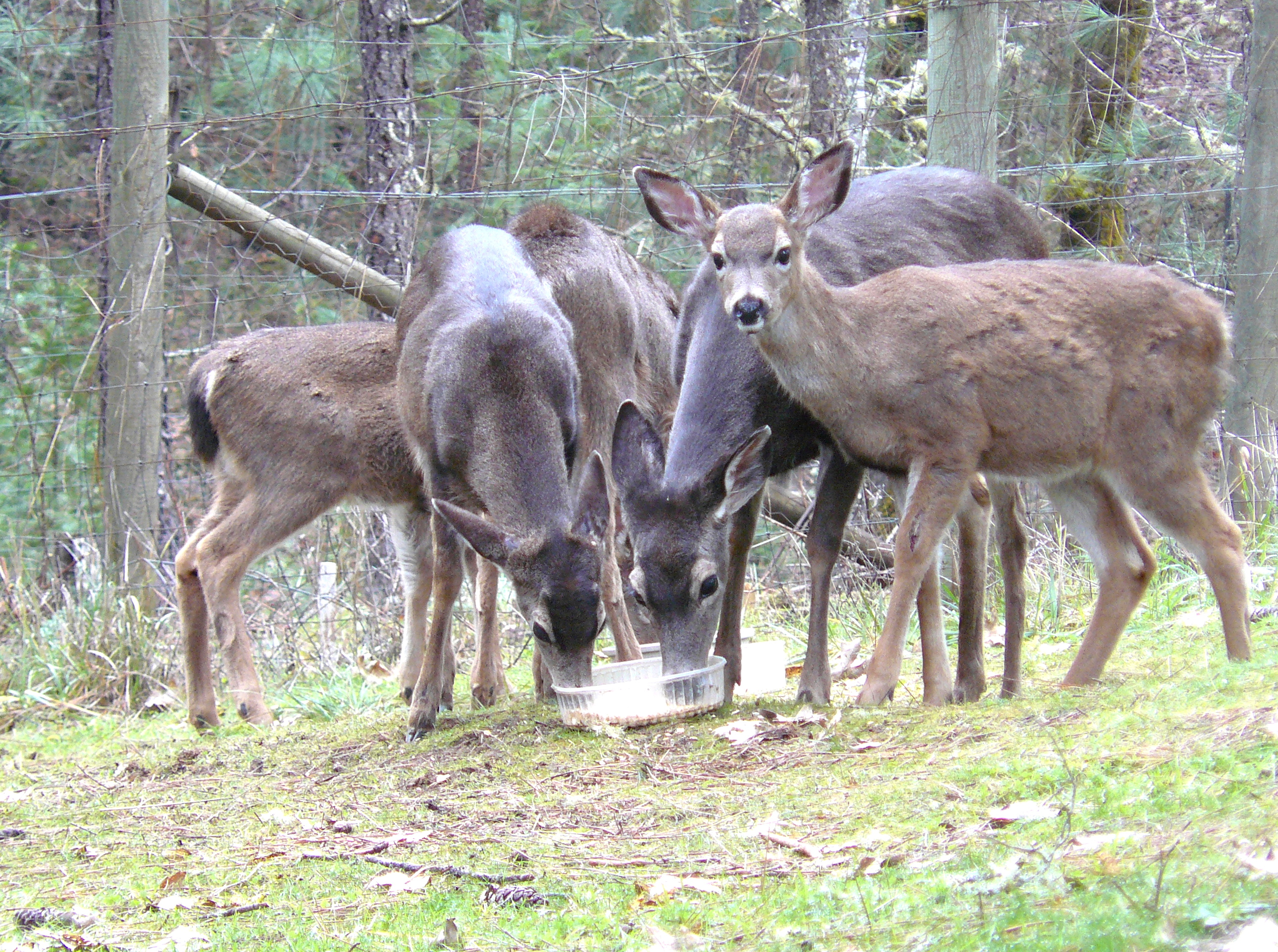
then, while I was outside realised that I ought to bring some logs in for the fire, and …… you get the scene, I’m sure.
I sat down at my PC to start the post and knew that I was stressing about there not being enough time to do it justice.
Gave myself a talking to about writing a blog was not something to stress about and looked for a ‘fill-in’ for today.
Opened an email recently sent to me from long-time UK friend, Neil Kelly, and discovered Neil had included in the email the most wonderful, evocative, serenely beautiful photograph of a rambler from calmer, more peaceful times. It really had to be shared with you.
One of the most remote places on this Planet.
The reason I am choosing to write about Ellesmere Island is because of a recent BBC film: Snow Wolf Family and Me.
This video offers a great insight into the film:
Published on Dec 29, 2014
A new BBC film, Snow Wolf Family and Me, explores the lives and habits of arctic wolves, revealing the family secrets of one of our most feared predators. Ellesmere Island is one of the most remote and beautiful places on Earth. This is the only place in the world where wolves are naive to man and have no fear. It allowed wildlife cameraman Gordon Buchanan and scientists an unparalleled opportunity to form bonds with a wild wolf family, revealing the remarkable story of their relationships and behaviour.
Here series producer Ted Oakes talks about some of the highlights and challenges of being accepted by a wild wolf pack.
Snow Wolf Family and Me will be broadcast on 29th and 30th December 2014 at 21:00 on BBC Two.
Music by Jean-Marc Petsas. Photofilm produced by Dualtagh Herr.Subscribe to BBC News HERE http://bit.ly/1rbfUog
Check out our website: http://www.bbc.com/news
Facebook: http://www.facebook.com/bbcworldnews
Twitter: http://www.twitter.com/bbcworld
Instagram: http://instagram.com/bbcnews
Family members back in England who did watch both episodes of the film said it was breath-taking, especially the scenes in the second episode where the wolves were filmed coming right up close to Gordon.

What captivated me, seeing how quickly the wolves acclimatised to Gordon and his two colleagues, was imagining that this must have been what it was like when, thousands of years ago, wild wolves bonded with early man providing the start of the glorious and beautiful relationship between canines and humans. A wonderful relationship experienced by millions of us around the world today.
The next short video illustrates that the ancient lineage, from wolf to dog, still resonates between both species.
Ellesmere Island Expedition 2008 – Howling Good Time
Uploaded on Feb 21, 2010
After a long day of pulling, the dogs serenade the team with a round of howling.
Couple more pictures to close today’s post.

oooo

Winter wonderland One
(Over the next four Sunday’s I shall be sharing some gorgeous photographs that were forwarded to me by neighbour Dordie.)

oooo

oooo

oooo
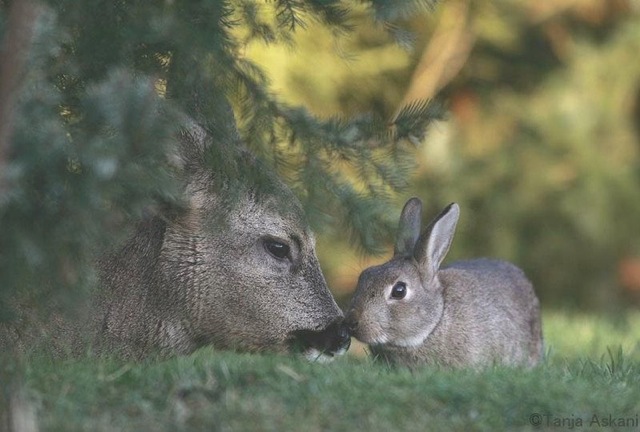
oooo

oooo

oooo
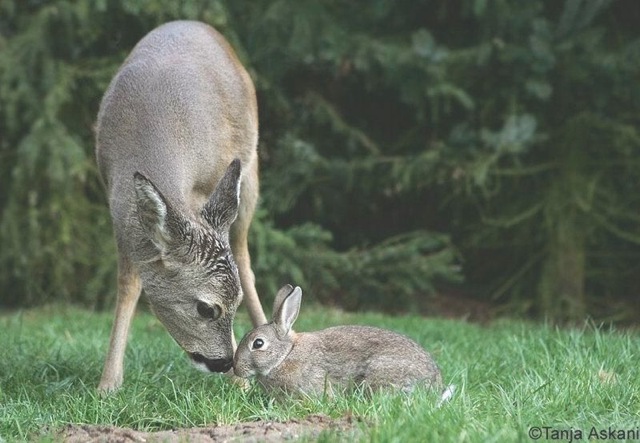
oooo
These photographs were taken in Alberta, Canada.
You are never too old …
Sent by our neighbour Dordie.
A 7 minute film about 85-year-old widower Horace ‘Horrie’ Bedwell’s quest to find a much younger woman, a beautiful blonde.
This film won 2nd prize at the 2013 Tropfest Australia short film festival. Deservedly so!
Forgive the introspection of this old fart, this day after Christmas
Jean is a great lover of music and, without fail, has music playing in the kitchen, especially when she is preparing the evening meal. Thus it was that last Tuesday, I was sitting alongside the kitchen in our living room and heard some tracks that took me back many years; in the way that music can do.
The tracks were songs from Alan Parsons. I was taken back to early 1971 when, freshly back from Australia, I was living in a flat in Harpenden with my then wife: Britta. At the start of 1971, I had joined the Guided Weapons Division of the British Aircraft Corporation (BAC) as a Commercial Apprentice. My office was in Six Hills Way, Stevenage; fewer than 15 miles from Harpenden.
Living in the flat above us were a couple, whose names escape me after all these years, and they were newly into listening to Alan Parsons. That is how I came to learn of the Alan Parsons Project as the group were known and have loved the music ever since.
Now, coming up to forty-four years later, I can share one of my favourite tracks from the album The Time Machine; “… the third solo album produced and engineered by Alan Parsons following the split of The Alan Parsons Project.” (Wikipedia)
That track is called Ignorance is Bliss.
I have included the wonderful words written by the person who uploaded that video.
Published on Feb 23, 2013
Every once in a while in your life, a song will speak to you because it’s happening right then and there. There was a time in my own life where I had tears streaming down my face and this song played on repeat. It was a time of turmoil, where all I could imagine was the peace that only ignorance of my own situation could bring.A good song writer will set up a situation where it could be applicable in a variety of ways to hit the broadest audience. The trouble is, how do you make a broadly interpretive song that isn’t too broad as to be intangible?
This song walks the line, but the line IS defined if you listen closely. The ‘paradise’ the writer finds is in ignorance. It’s a dreamworld of course, none of us can fully forget our own existence or return to the womb, but it’s a beautiful thought sometimes – particularly when the wind changes, ‘shakes the ground on which you stand’, and ‘blows away your wonderland’.
Anyone who’s lost a loved one, been diagnosed with a terminal illness, gone through a divorce, or had a life-changing experience will understand ‘sand castle’ demolition. The author postulates that maybe we don’t find true peace until we are willing to give up those things we are so concerned about (our sand castles). After all, how long can you protect a sand castle against the inevitable tide?
And when those things that we cared so much about are gone, there’s nothing more to worry about. Perhaps you’ll find peace at last…
However, I have still not grasped the wisdom that the author is in the assumption that the elimination of the things I care most about will bring eventual peace. I’ve known people who NEVER got over a tragedy. Is it that they won’t let go, or that they CAN’T let go? Still though, it’s a nice thought and a pretty song.
In a more mellow and beautiful tone is “Ignorance Is Bliss.” This song shares traits with music by Dan Fogelberg. This mellow song has the honor of being the longest on this CD (The Time Machine) , as well as being one of the most beautiful. The lead vocal on this song is by Alan Parson’s veteran Colin Blunstone, who provided the vocals for the excellent Alan Parson’s Project song “Old and Wise.” There is a lovely orchestral arrangement in the extended bridge of this song, which I consider a must listen for Alan Parson’s fans.
Here are the lyrics:
“Ignorance Is Bliss“
I find this Paradise and rest beside a river
No need to walk another mile
It seems like everyone has everything that wishes could provide
But no one seems to smileYou won’t believe me when I tell you this is fantasy
Don’t ask how long all this can last
The same old sun will rise and make tomorrow just like yesterday
And so your time will passA shelter from the storm
A room without a view
A place where you belong
And like a mother’s kiss
That carries you to sleep
The ignorance is blissOne day the wind may change and blow at your defences
And shake the ground on which you stand
One day the tide may turn and wash away your castles in the sand
And silence rule the landA shelter from the storm
A room without a view
A place where you belong
And like a mother’s kiss
That carries you to sleep
The ignorance is blissOne day the wind will change and blow away your wonderland
Blue skies will soon be overcast
One day the tide will turn and wash away your castles in the sand
And you’ll find peace… at last
May we all find peace.
A guest story for this special day.
(The background to today’s story comes later on.)
ooOOoo
by Madeleine Johnston
We had just finished baking the hazelnut pie when the storm hit, a monster blizzard with enough wind that it tore down three telephone poles. The Christmas tree lights sparked and went out, as did all the other lights. I noticed snow had begun to fall in heavy clumps. The house shook violently from the fierce wind, and my mother ordered me to retrieve my brother and father. I got them out of the TV room as fast as I could, snatching Posy, my cat, as we rushed to the kitchen.
“I’m scared!” my brother wailed.
“Everything’s fine,” my father said. But I knew he was lying.
My mother handed us our winter jackets. “Go outside! Hurry!”
Just then, there was a tremendous BOOM! Bark and branches scratched my skin, and I smelled sap. A tree had smashed through our house. I screamed and fell on my behind. Posy raced off.
“POSY!” I jumped up.
“Leave her!” my mother said.
“NO!” I followed her through the scabby branches and into the dining room. She was cowering under the table. I coaxed her to me, picked her up, and hurried back to the kitchen.
“OUTSIDE! NOW!” my mother bellowed.
We were ushered into the freezing garage, and outside, which was even colder than the snow I was playing in yesterday. Dark storm clouds had rolled in and were dropping hail on our heads. A huge pine tree destroyed the house on the left, and I heard screaming. I wanted desperately to help our neighbors, but I knew we couldn’t.
I hugged Posy close to my chest. Our hearts pounded together.
“To the rock!” my mother hollered above the wind. We ran through the snow to the enormous boulder in the backyard. The world was black as coal.
We crawled under the rock, my father shielding us with his broad body. Posy hissed. My brother was crying, and my mother kissed my head.
We soon fell asleep, as trees crashed down around us. I worried for our Christmas tree farm.
When I awoke, the wind had ceased. I peered around my dad. The sky was cloudy, we were weighed down by snow, and our house was reduced to a mound of debris. Somewhere, a bird chirped.
I looked up to see a cardinal sitting in one of our Christmas trees. Only part of the Christmas tree farm had survived. The others were uprooted.
The cardinal nibbled on the string of cranberries we hung around the trees every Christmas season.
I heard my father mumble, “Everything, gone.”
“Not everything,” my mother whispered. “For one, we still have part of our farm. And…” From beside her, she pulled the hazelnut pie. It was a bit squished, but not badly. I hadn’t noticed she’d brought it. She smiled meekly. “We’ll be okay.”
And I believed her.
So we sat beneath the rock, enjoying the only thing we had left.
Except for being together.
ooOOoo
4am Writer is Kate Johnston’s blog; we follow each other’s blog. Thus it was on Tuesday that I came to read the following:
Foster’s Daily Democrat, our local newspaper, runs an annual holiday art and writing contest. It was open to all students from first grade through high school in the seacoast area of New Hampshire and Maine. Over 2,000 students submitted entries. 34 winners were chosen for the art portion, and 36 winners were chosen for the writing portion.
My daughter was one of the winners for writing. Some of you may have seen my Facebook post about it, and a few people had requested to read her story. While her short story was published in the paper, it was in a special pull-out section that is not accessible on-line. So, I’m posting it here.
Merry Christmas!
Now that you have read Madeleine Johnston’s short story you can see why I asked her permission to republish it here on Learning from Dogs.
May you all have a trouble-free Christmas Day!
I’m sure that the human psyche lives in a bubble of delusion. Not always and not extremely so; of course. Clearly, if the level of delusion were abnormal then we couldn’t function properly as social animals. However, just take a quiet moment of self-reflection to muse over the ways that you ‘shelter’ from reality. In directing that last point to you, dear reader, trust me I don’t exclude myself!
There are times when going beyond the self, going out of oneself, is the only way to see the reality of who we are and the world around us; to be able to brush away our delusions. Perfectly expressed by the author, Aldous Huxley: “Experience is not what happens to you; it’s what you do with what happens to you.” Wise words, indeed!
But these fine expressions representing the peak of common sense have one grinding, searing fault. They do not assume the end of a person’s life. I am speaking of death, of the inevitability of our death! That largely unspoken truth no better expressed than through the words[1] of Sharon Salzberg in her book Faith.
What does it mean to be born in a human body, vulnerable and helpless, then to grow old, get sick and die, whether we like it or not?
Anyone who has lost a loved one knows that it is tough; incredibly tough. It is full of pain and anguish amidst a great churning of emotions, all in a very deep-seated and personal manner. That’s the perspective from the loved ones left behind with more life ahead of them. But if one thinks of it in reverse, turns it on its head, what are our fundamental wishes with respect to those we love; what we would want to leave behind when we die?
Fond memories, naturally, but they wouldn’t be our fundamental wishes. This is what those fundamental wishes would be. That our death does not leave pain and anguish in the hearts and souls of those left behind. That it doesn’t leave a pain that cannot be dealt with in a healthy way. Our wishes would be that those whom we loved and who loved us may embrace their loss and move on.
Anyone who has loved a dog has most likely been intimately involved in the end of that dog’s life. It is, to my mind, the ultimate lesson that dogs offer us: how to be at peace when we die and how to leave that peace blowing through the hearts of all the people who loved us.
Our beloved dogs have much shorter life spans than we do, thus almost everyone who has loved a dog will have had to say goodbye to that gorgeous friend at some point in their lives. Very sadly, perhaps, saying goodbye to more than one loved dog.
I see the most precious of parallels in the tragic death of a loved dog and our own death. The parallel between coping with our grief for the loss of a loved dog and reaching out to our loved ones so that they may cope with their grief at losing us.
In other words, knowing what to expect in emotional terms at the loss of our loved dog is helpful, very much so, to us helping our loved ones when comes our time to die.
There are five stages of mourning[2], of dealing with our grief, when we lose our beloved dog: Denial; Anger; Guilt; Depression and Acceptance.
Compare those stages to the five stages of mourning[3], perhaps of dealing with the knowledge that oneself is dying, or a person is dying who is very emotionally close to us. Those five stages are: Denial and Isolation; Anger; Bargaining; Depression and Acceptance.
The parallels are almost perfect.
Whether it is the impending or actual death of a loved dog, a loved person, or ourselves, the similarities between embracing the loss of the loved dog, or the loved person, are powerfully obvious. So, too, are the many different ways each of us embraces the death of a loved dog or a loved person. Let me expand on this last point.
Namely, that each of us will experience each stage of mourning at varying levels of intensity, for varying lengths of time, and sometimes in a different order. Some of the stages may converge and overlap each other. But however you experience the mourning, it is incredibly important to remember that your feelings are completely normal.
As the website of the American Animal Hospital Association points out, on their webpage entitled Life after Dog[4], “… we almost always outlive our beloved companions. Learning to live with loss is an essential part of life.”
That webpage imploring us to honour our emotions, to honour the memory of our dog, and critically, when a child is involved, to help that child cope with the loss of their loved dog. For all, young and old, helping to ease the pain through learning to cope with the loss. Easing the pain through changing one’s schedule, moving furnishings around to help distance the memory of your dog’s favourite sleeping spots, or creating a memorial in one form or another, even writing a letter (or blog post!) to your dog in which one describes all the feelings you have for your recently departed, loved dog.
I was born in 1944. I am therefore the ‘wrong’ side of seventy years old. I was born an Englishman and, according to life expectancy tables from 2012, a male Englishman’s life expectancy is 79.5 years. I am living happily in the USA and, according to those same tables, a male American’s life expectancy is 77.4 years. My mother is alive and an amazingly fit and healthy ninety-five-year-old, at the time of writing this book. My father died at the age of 56 just 5 days before Christmas in 1956. I do not believe in any form of spiritual life after death.
So take your pick!
All that I do know is that loving our dogs, welcoming all the wonderful qualities that our dogs possess, striving always to live peacefully ‘in the present’, just as our dogs do, and, ultimately, as with our faithful companions, taking that last breath in the knowledge that ours was a beautiful life, is what learning from dogs is all about.
Thank you.
1,059 words. Copyright © 2014 Paul Handover
[1] page 34.
[2] http://dogtime.com/dealing-with-grief-of-loss-aaha.html#
[3] http://psychcentral.com/lib/the-5-stages-of-loss-and-grief/000617
[4] http://www.aahanet.org/blog/petsmatter/post/2014/05/20/929363/Life-after-dog-Support-and-resources-on-pet-loss.aspx
To my dear readers.
The final two parts of the book, How the dog offers us a way into our own soul, and, And show us the way to embrace death, are offered today and tomorrow.
I can’t tell you what it has meant to me to have the many ‘Likes’ and comments along the way; just take it from me that it has been enormously inspiring and motivational and part of me can’t believe that the project that started in November 2013 under the NaNoWriMo-2013 umbrella was completed this November just gone, for a draft word count of a little over 104,000 words!
Come the New Year and the real work starts, that of the Big Edit.
So let me close by just saying, once again, thank you!
oooo
“Happiness resides not in possessions, and not in gold, happiness dwells in the soul.”
So wrote the philosopher Democritus. Democritus, born in 460 BCE, although according to some in 490 BCE. He acquired fame with his knowledge of natural phenomena, and preferred a contemplative to an active life, spending much of his life in solitude. The fact that he lived to beyond 100 suggests he lived out what he philosophised about!
Now the last thing I am going to attempt is any rational, or even semi-rational, explanation of the soul; of what it is; of whatever it is. Despite the familiarity of the word, especially within religious circles, the notion of the soul remains an enigma. Indeed, it reminds me of that very clever quotation attributed to the German philosopher, Martin Heidegger: “Making itself intelligible is suicide for philosophy”, that with a little poetic licence might be rewritten: “In making itself intelligible does the soul become soulless.”
Thus having ‘bared my chest’ in terms of failing the test of knowing what a soul is, in any rational manner, I shall, nonetheless, continue to use the word. Simply because there will be sufficient bonding between me writing the word ‘soul’ and those reading the word ‘soul’, for those same readers to sense where I am coming from.
I’m going to stay with this wonderful concept of soul for just a little longer before adding our beautiful dogs into the dream. Staying with it courtesy of the writer; John O’Donohue. John’s name is not one known to the masses. Yet his writings are, without fail, beautifully moving. John’s first book was called Anam Cara: A Book of Celtic Wisdom., Anam Cara means ‘soul friend’ in Gaelic. The following passage, taken from Anam Cara, represents to my mind the most exquisite understanding of the human soul.
The secret heart of time is change and growth. Each new experience which awakens in you adds to your soul and deepens your memory. The person is always a nomad, journeying from threshold to threshold, into ever different experiences. In each new experience, another dimension of the soul unfolds. It is no wonder that from ancient times the human person has been understood as a wanderer. Traditionally, these wanderers traversed foreign territories and unknown places. Yet, Stanislavsky, the Russian dramatist and thinker, wrote: “The longest and most exciting journey is the journey inwards.”
There is a beautiful complexity of growth within the human soul. In order to glimpse this, it is helpful to visualise the mind as a tower of windows. Sadly, many people remain trapped at one window, looking out every day at the same scene in the same way. Real growth is experienced when you draw back from one window, turn and walk around the inner tower of the soul and see all the different windows that await your gaze. Through these different windows, you can see new vistas of possibility, presence and creativity. Complacency, habit and blindness often prevent you from feeling your life. So much depends on the frame of vision – the window through which we look.
Those are so wonderful words from John and a brilliant example of his exquisite creativity of thought. They also offer the most perfect ‘window’ to seeing how the dog offers us a way into our own human soul.
What do I mean by this?
When we have dogs in our lives there are many occasions when there is a link between us and our dog; a link that defies logical explanation. Let me offer some examples.
Let’s start with this one. As a human, that is you and me, out of the blue, with no rhyme or reason, you will surely experience finding your day a bit tough from time to time. The odds are that it doesn’t show to your loved ones and, you are pretty sure, that it is entirely an experience that is well hidden inside one. But you and I know you can’t hide it from your dog. You slump down in a chair and your dog comes over and lays its warm snout across your legs or offers a head for you to scratch. In any one of many familiar ways you have a caressing and loving contact with your dog. And you know, you know beyond doubt, that your dog is attracting the angst away from you.
Or how about the time when you might be standing somewhere in or around the house, trying to think how best to approach a task, and your dog comes up next to you and softly leans against you.
Or that most special of links between us and our dog. I have in mind the times when our dog links ‘eye-to-eye’ with us, when those beautiful, deep unblinking eyes of our dog look so deeply inside of us. Those are the times when you and your dog know, you both sense in a clear, unwritten language, the thousands of years of relationship, the very special relationship, that man and dog have had with each other. That at that moment of held eye contact there is a real, tangible connection between your two souls.
We know beyond doubt that dogs have emotions, that they are full of natural goodness and feelings, and that there is some part of a dog’s inner being that links to us and, in turn, that there is an inner being within us that links us back to our dog.
Let me return to the power of that eye-to-eye bond between us and a dog.
In humans, that part of the brain in which self-awareness is thought to arise is called the ventromedial prefrontal cortex. That just happens to be located behind the eyes. Ergo, we learn[1] to associate the identity of others with our eyes. Then as we mature, our eyes take on more importance because we develop awareness and a better understanding of the social cues that other people convey with their eyes.
Therefore, is it any surprise that dogs, such intuitive creatures that they are, young and old, soon learn to read us humans and the feelings and emotions that we give out via our eyes. There’s a knowing in my mind, albeit an unscientific ‘knowing’, that dogs, too, give out emotions and feelings from their own eyes.
That loving a dog and, in return, being loved by that dog truly does offer us a way into our own souls.
“Until one has loved an animal, a part of one’s soul remains un-awakened.“
~ Anatole France
1.089 words Copyright © 2014 Paul Handover
[1] Refer Christina Starmans and Paul Bloom of the Mind and Development Lab at Yale University.
 Learning from Dogs