For Christians the world over the Easter weekend is the religious moment of the year.
For all of humanity, believers and non-believers alike, the following simple but powerful words ought to be a reminder of eternal values for every day of the year.
ooOOoo
Today’s Quote from Theresa
Beautiful words and image from Theresa at Soul Gatherings. Let it settle in.💛
It seems to me that it is so incredibly easy to be influenced, even engulfed, by bad news.
Back on the 20th I posted an item that had been sent to me by John Hurlburt, who is the old lamplighter, called Interstellar News.
Here’s another essay from John that is a great reminder of that old adage: We are what we think.
ooOOoo
Misery Is Optional
There’s always been a delicate balance in the struggle between growth and stagnation. The emerging universe invariably prevails. The good news is that absolutely insisting upon the denial of reality naturally backfires in the long run. Common sense has repeatedly saved our collective bacon from the fire as our species has faced former crises. The stakes have never been higher.
There’s a natural balance that runs through our relatively brief species history. Extreme cultural alternatives include plutocracy and anarchy. There’s no question that if we’re not an active supporter of an inclusive solution we contribute to our collective dissolution.
Nero fiddled while Rome burned. There’s a current global analogy. Global media communications reflect hate, divisiveness and violence. The obvious truth is essentially ignored. A result is our present state of angst, paranoia and associated stress disorders. We compensate with bread and circuses.
Indifference doesn’t have to be a local reality. We’re all naturally connected in whatever we conceive of as God. We share a common soul. If we are wise we’ll act accordingly. We’ll accept our inherent responsibilities as stewards of Creation. The fulfilment of positive actions in according with the nature of our being is a blessing that keeps on giving.
an old lamplighter
ooOOoo
These are beautiful words and whatever one’s religious or spiritual convictions if we don’t recognise that we are all “naturally connected” then it won’t be long before we run out of bread and circuses – and deservedly so.
Going to close this post by using the following picture and quotation taken from the latest Terry Hershey newsletter.
“Beyond living and dreaming there is something more important: waking up.“
A Monday morning reminder of our beautiful planet.
American Wilderness: The John Moulton Barn on Mormon Row at the base of the Tetons. Photo: Jon Sullivan
Just a random picture found by doing a web search. (Actually found on what looks like a great blog: I am Wilderness.)
This morning’s post was prompted by listening to one of my favourite music groups: The Alan Parsons Band.Listening to this particular track: Call of the Wild. From his third solo album The Time Machinereleased in September, 1999.
Lyrics written by Ian Bairnson
Well I’ve talked to the wind and I’ve listened to rain,
I have climbed to the clouds and I’ve cried out with pain,
This life is for living so come to my side,
And open your heart to the call of the wild.
We are all of one nation, all of one creed,
We are all out of nature, all of one seed,
We are in this together, man, woman and child,
So open your heart to the call of the wild.
We talk the same language in different tongues,
We’re somebody’s daughters and somebody’s sons,
But those who believe we are head of the chain,
May wake up to find we are all that remain.
There is no need to fear what we don’t understand,
For we breathe the same air and we walk the same land,
The strong and the anxious, the meek and the mild,
All dance to the drum that’s the call of the wild.
Impossible to listen to this beautiful track and not reflect on how badly we are treating Mother Earth.
Staying with the theme of the relationship with humanity’s oldest friend.
Yesterday, I offered the first of two articles forwarded to me by local friend Jim, a vet, about the domestication of the wolf.
Here is the second.
Study narrows origin of dogs
By Krishna Ramanujan/ January 16th, 2014
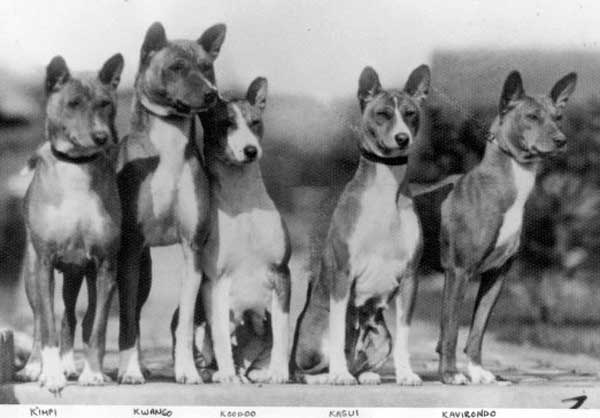
Genomic sequencing of genetically divergent dogs, such as this basenji from the Congo, together with wolves and other wild canids, provides rich information about the history of domestic dogs.
Dogs were domesticated between 9,000 and 34,000 years ago, suggesting the earliest dogs most likely arose when humans were still hunting and gathering – before the advent of agriculture around 10,000 years ago, according to an analysis of individual genomes of modern dogs and gray wolves.
An international team of researchers, who published their report in PLoS Genetics Jan. 16, studied genomes of three gray wolves, one each from China, Croatia and Israel – all areas thought to be possible geographic centers of dog domestication. They also studied dog genomes from an African basenji and an Australian dingo; both breeds come from places with no history of wolves, where recent mixing with wolves could not have occurred.
Their findings revealed the three wolves were more closely related to each other than to any of the dogs. Likewise, the two dog genomes and a third boxer genome resembled each other more closely than the wolves. This suggests that modern dogs and gray wolves represent sister branches on an evolutionary tree descending from an older, common ancestor. The results contrast with previous theories that speculated dogs evolved from one of the sampled populations of gray wolves.
“This is an incredibly rich new dataset, and it has allowed us to carry out the most detailed analysis yet of the genetic history of dogs and wolves,” said Adam Siepel, associate professor of biological statistics and computational biology at Cornell and a co-author of the paper. “There are still many open questions, but this study moves the ball forward,” Siepel added.
Computer methods for analyzing complete genome sequences developed by Ilan Gronau, the paper’s second author and a postdoctoral associate in Siepel’s lab, played a key role in the collaboration. Gronau’s computer program, called G-PhoCS (Generalized Phylogenetic Coalescent Sampler), was previously applied with success in a 2011 Nature Genetics study of early human history and demographics.
In this case, G-PhoCS provided a detailed picture of the demographic changes that occurred during the divergence of dogs from wolves. The analysis revealed there was a sizable pruning in population of early dogs and wolves around the time of domestication. Dogs suffered a sixteenfold cut in population size as they diverged from an early wolf ancestor. Gray wolves also experienced sharp drops in population, suggesting that the genetic diversity among both species’ common ancestors was larger than represented by dogs and modern wolves. In addition, there was considerable gene flow between dogs and wolves after domestication. Accounting for gene flow was a major challenge in the analysis, and Gronau’s research on this topic proved valuable in obtaining an accurate model of canid demography.
The picture emerging from this study will allow researchers to better interpret genetic differences observed between dogs and wolves and to identify differences driven by natural selection. “This paper sets the stage for the next step in the study of dog domestication that tries to determine the genetic changes that enabled this amazing transformation,” said Gronau.
The study’s senior authors included geneticists John Novembre at the University of Chicago and Robert Wayne at the University of California, Los Angeles (UCLA). Adam Freeman, a postdoctoral fellow at UCLA, was the paper’s first author. Adam Boyko, a Cornell assistant professor of biomedical sciences, also co-authored the paper.
The study was funded by various sources, including the National Science Foundation, National Institutes of Health and Life Technologies.
Staying with the theme of our early companions, back on the 28th February, 2015 there was an article in the UK’s Guardian newspaper about the way wolves helped early modern man. Now I don’t have permission to republish the full article but here’s a taste:
How hunting with wolves helped humans outsmart the Neanderthals
Forty thousand years ago in Europe our ancestors formed a crucial and lasting alliance that enabled us to finish off our evolutionary cousins, the Neanderthals.
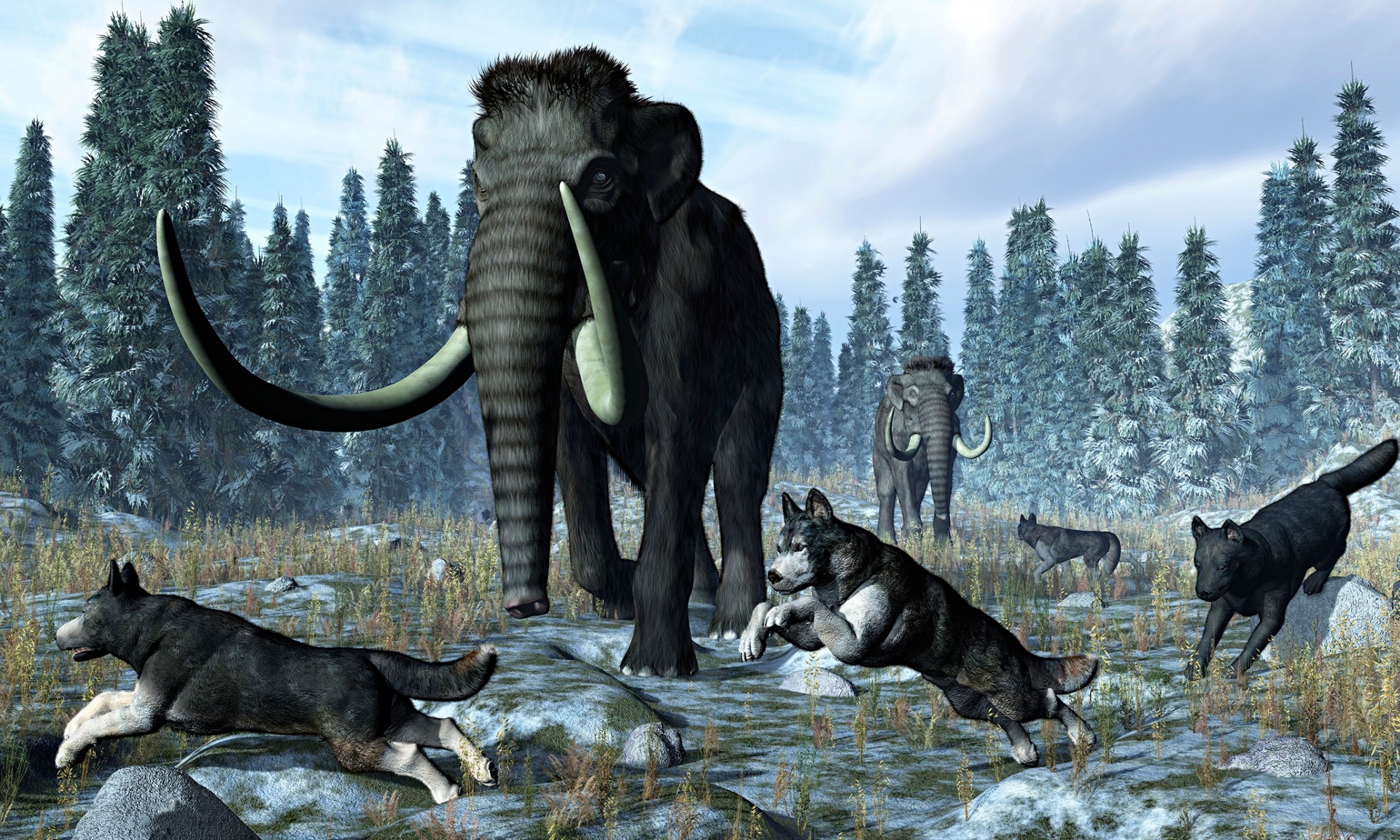
A pack of dire wolves crosses paths with two mammoths during the Upper Pleistocene Epoch. Photograph: Alamy
Dogs are humanity’s oldest friends, renowned for their loyalty and abilities to guard, hunt and chase. But modern humans may owe even more to them than we previously realised. We may have to thank them for helping us eradicate our caveman rivals, the Neanderthals.
According to a leading US anthropologist, early dogs, bred from wolves, played a critical role in the modern human’s takeover of Europe 40,000 years ago when we vanquished the Neanderthal locals.
The Guardian article finishes, thus:
Thus we began to change the wolf’s appearance and over the millennia turned them into all the breeds of dog we have today, from corgis to great Danes. Intriguingly, they may have changed our appearances as well, says [Professor Pat] Shipman, whose book, The Invaders: How Humans and Their Dogs Drove Neanderthals to Extinction, will be published this month. Consider the whites of our eyes, she states. The wolf possesses white sclera as does Homo sapiens though, crucially, it is the only primate that has them.
“The main advantage of having white sclera is that it is very easy to work out what another person is gazing at,” added Shipman. “It provides a very useful form of non-verbal communication and would have been of immense help to early hunters. They would been able to communicate silently but very effectively.”
Thus the mutation conferring white sclera could have become increasingly common among modern humans 40,000 years ago and would have conferred an advantage on those who were hunting with dogs.
By contrast, there is no evidence of any kind that Neanderthals had any relationship with dogs and instead they appear to have continued to hunt mammoths and elks on their own, a punishing method for acquiring food. Already stressed by the arrival of modern humans in Europe, our alliance with wolves would have been the final straw for Neanderthals.
Nor does the story stop in Europe, added Shipman. “I would see this as the beginning of the humans’ long invasion of the world. We took dogs with us wherever we went after our alliance formed in the palaeolithic. We took them to America and to the Pacific Islands. They made hunting easy and helped guard our food. It has been a very powerful alliance.”
RISE AND FALL OF NEANDERTHALS
250,000 years ago The first Neanderthals appear in Europe.
200,000 years The first modern humans appear in Africa.
70,000 years The first modern humans leave Africa.
50-60,000 years Modern humans and Neanderthals share territory in Middle East.
45,000 years Modern humans enter Europe.
40,000 years Neanderthals disappear.
I don’t know about you but I find the history of our, as in man’s, relationship with wolves and thence with dogs to be not just romantic but spiritually significant. To know, as I hug one of our many huggable dogs here at home, that I am bonding my mind and emotions with an animal that has been my partner for tens of thousands of years is beautiful beyond words.
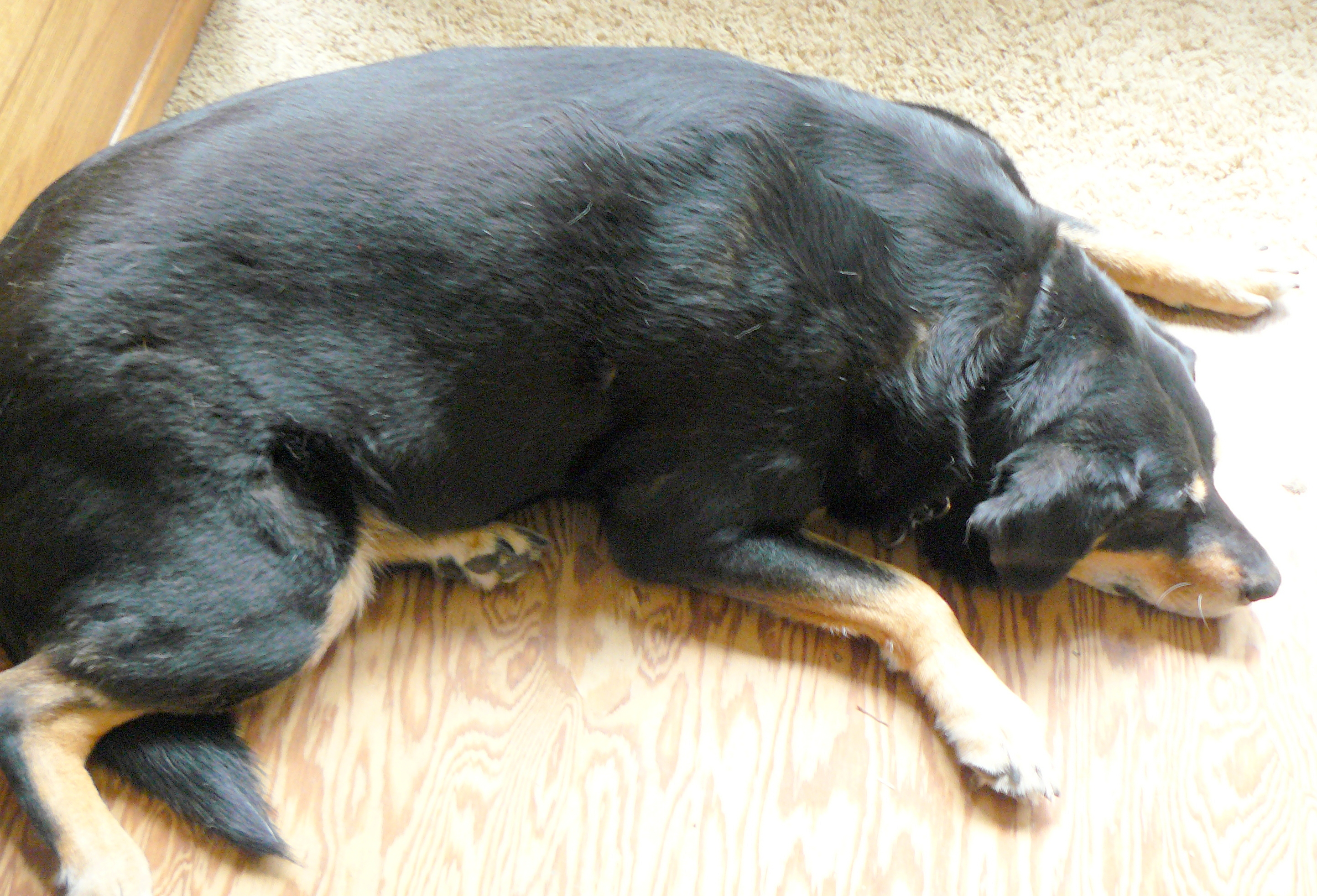
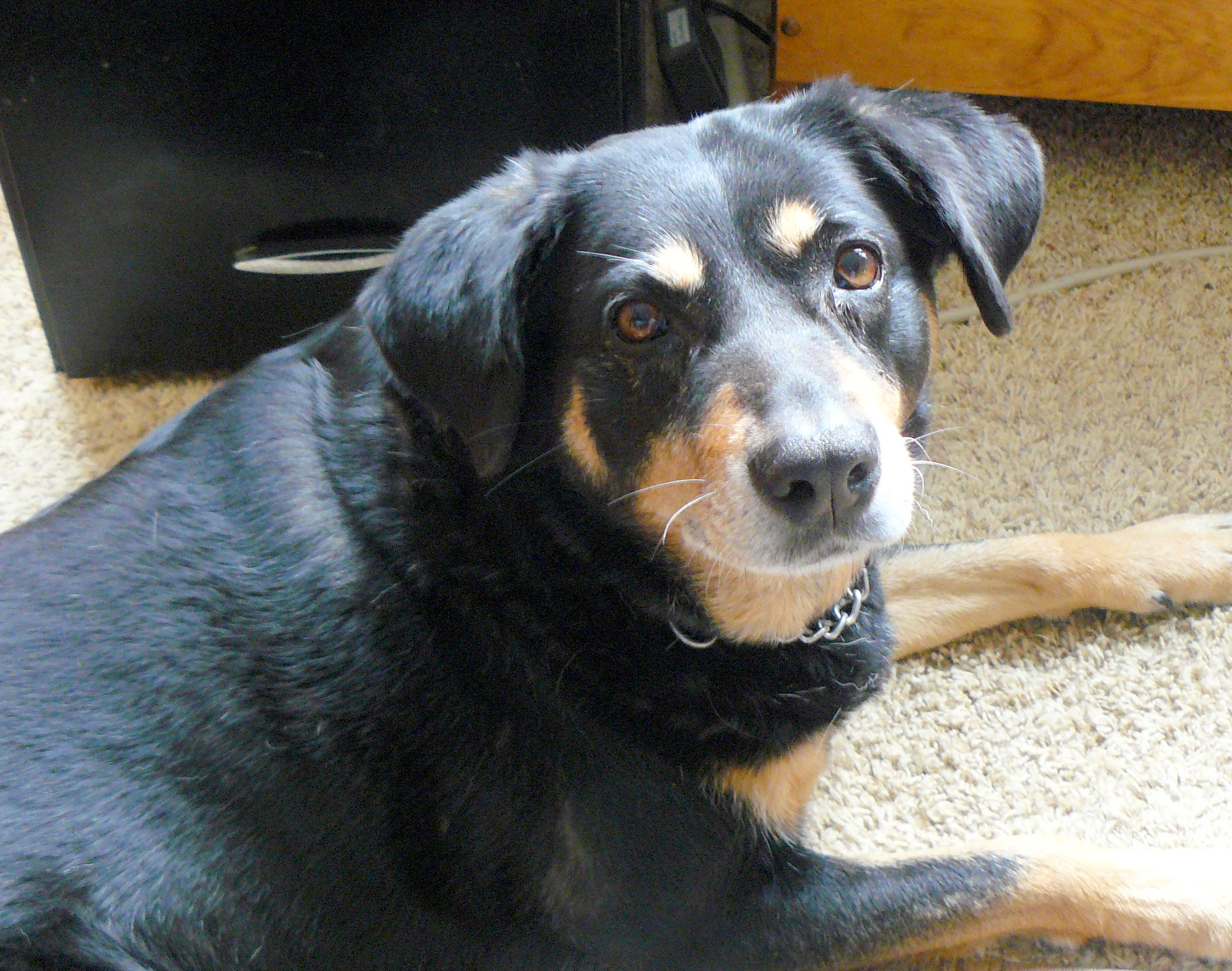
(I took a break of a couple of minutes at this point to grab my camera and take a photograph of Hazel sleeping next to my chair, as she so often does when I am writing. Then one of her when she looked up at me. Here they are:)
oooo
That second photograph reminds me that somewhere I read that dogs are the only animal that can look to where a human is directing a gaze or pointing a finger.
(NB: I am presently away with my son enjoying the Wintry delights of Bend, Or and Mount Bachelor.)
In yesterday’s post, Be good to yourself, I featured a poem from Danna Faulds. I had not come across her before and this time around it was thanks to a recent post over on Val Boyco’s blog Find Your Middle Ground.
It didn’t take much effort to find more beautiful ideas from Ms. Faulds. Try these, for example:
Awakening Now by Danna Faulds
Why wait for your awakening?
Do you value your reasons for staying small
more than the light shining through the open door?
Forgive yourself,
Forgive yourself.
Now is the only time you have to be whole.
Now.
Now is the sole moment that exists to live in the light of your true nature.
Perfection is not a prerequisite for anything but pain.
Perfection is not a prerequisite for anything but pain.
Please, oh please, don’t continue to believe
in your stories of deficiency and failure.
This is the day of your awakening.
Elsewhere, on a yoga website, we learn that Danna is:
Danna Faulds, poet and dedicated practitioner of Kripalu Yoga, is the author of four popular books of yoga poetry: Go In and In; One Soul; Prayers to the Infinite; and From Root to Bloom. She credits Kripalu Yoga and expressive writing with transforming her life.
Another web search very quickly finds this item over on the All Things Healing blogsite.
ooOOoo
Allow
by Danna Faulds
Editor’s Note from Diane Renz: I have just returned from the Center for Mindfulness Scientific conference, a powerful gathering for all teachers, researchers, clinicians, and practitioners engaged in Mindfulness in the world. The Center for Mindfulness if the base point for Jon Kabat Zinn’s MBSR (Mindfulness Based Stress Reduction) program developed over 30 years ago which, through science, has proven to benefit psychological, physiological, emotional, cognitive, and the many neural correlates relative to well-being. The last day we had the chance to practice mindfulness with Jon Kabat Zinn, Saki Santorelli, Florence Meleo-Meyer, Bob Stahl, which is where I first heard the Poem here called “Allow”. It is through our allowing where we each find our healing and return to our wholeness. In light of spring and all rebirth and beginning again, learning how to turn toward our pain so we can open to bright new growth rising up from the dark compost of our suffering.
There is no controlling life.
Try corralling a lightning bolt,
containing a tornado. Dam a
stream and it will create a new
channel. Resist, and the tide
will sweep you off your feet.
Allow, and grace will carry
you to higher ground. The only
safety lies in letting it all in –
the wild and the weak; fear,
fantasies, failures and success.
When loss rips off the doors of
the heart, or sadness veils your
vision with despair, practice
becomes simply bearing the truth.
In the choice to let go of your
known way of being, the whole
world is revealed to your new eyes.
ooOOoo
Again from that All Things Healing website:
About the Author
Danna Faulds is a long-term practitioner and teacher of Kripalu Yoga. A former librarian, she incorporated writing into her spiritual practices years ago, and this book is the result. Drawing inspiration from yoga and meditation, from the natural world, and from life, her poems capture both the struggle and the delight of the attempt to live consciously, in a voice that always encourages and uplifts. Common themes include awakening to true nature, touching the divinity within, overcoming fear and self-judgement, and the ineffable joy of spiritual union.
(NB: By the time you read this, I will be away for three days with my son enjoying the Wintry delights of Bend, Or and Mount Bachelor.)
I spoke yesterday about the many writers who follow this place and, in turn, are followed by me. Val Boyco is one such example. Val writes the blog Find Your Middle Ground and it is with her permission that I republish a recent post of hers.
ooOOoo
Inspiration – Self Observation
Posted on February 24, 2015 by Val Boyko
A reminder for all of us who are working on self observation and dealing with our inner critic.
Be gentle with yourself on this part of the journey.
Self-Observation Without Judgment
Release the harsh and pointed inner voice.
It’s just a throwback to the past, and holds no truth about this moment.
Let go of self-judgment, the old, learned ways of beating yourself up for each imagined inadequacy.
Allow the dialogue within the mind to grow friendlier, and quiet.
Shift out of inner criticism and life suddenly looks very different.
I can say this only because I make the choice a hundred times a day to release the voice that refuses to acknowledge the real me.
What’s needed here isn’t more prodding toward perfection, but intimacy – seeing clearly, and embracing what I see.
Love, not judgment, sows the seeds of tranquility and change.
Yet another wonderful item sent across to me by neighbours Dordie and Bill.
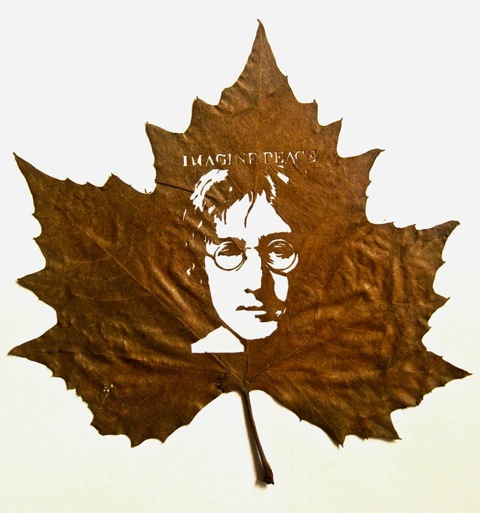
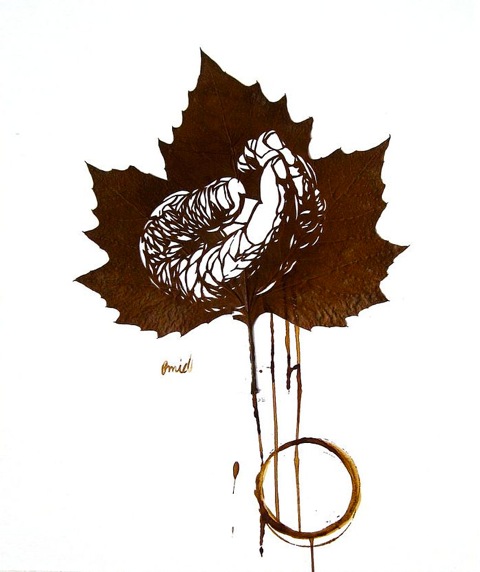
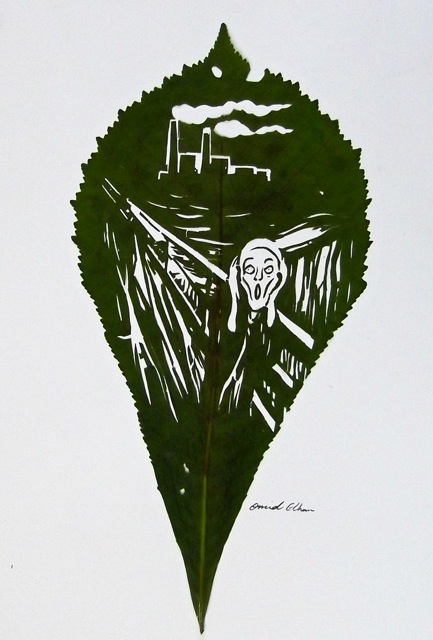
Delicate Leaf Cuttings By Omid Asadi
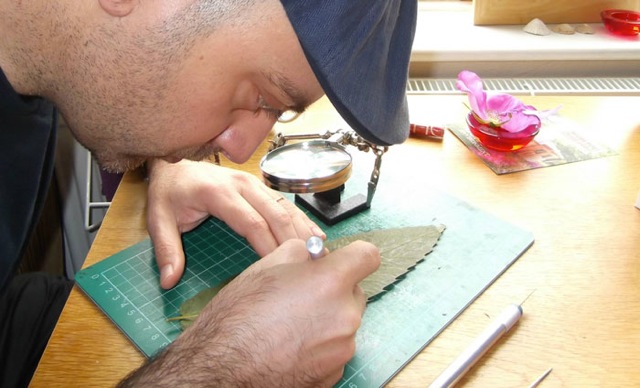
My name is Omid Asadi and I currently live in Manchester, United Kingdom. I created this work with carving and cutting techniques on actual fallen leaves using a craft knife and a needle. I always try to create pieces with a message, not just beautiful art. Some of these messages or ideas come from my world view, poems, stories, global problems and philosophy. I’m also inspired by other artists’ and designers’ works.
Here’s the man in action.
I use a craft knife or scalpel and needle. It is not like a paper cutting because each part needs a certain pressure to cut. If I make a mistake, I destroy maybe hundreds of hours of work.
oooo
Leaf’s Mind. I’m very attentive to beautiful fallen leaves. Suddenly, I started SEEING them, not simply looking at them.
oooo
Carriage. I believe that we look at many things everyday, but don’t SEE them. For example, apples had been falling from trees for thousands of years, but only Isaac Newton truly saw that and, thanks to him, our lives have changed forever.
oooo
Dandelion
oooo
Che Guevara
oooo
Love
oooo
Eagle
Another set of these remarkable cuttings in a week’s time.
A most fabulous idea of sharing poetry in the wild.
One of the great advantages of having a dog, or nine, is that there are endless opportunities to go walking with them.
The other day, Jean and I became aware of the most wonderful idea: The Stanza Stones Walk. Here’s how that walk is explained on the website:
THE STANZA STONES PROJECT
The Stanza Stones Walk: An Alternative devised by Mick Melvin.
A fifty mile upland walk from Marsden to Ilkley visiting the six Stanza Stones carved with poems written by Simon Armitage.
Why create an alternative walk?
I have created this walk as an alternative to the 47 mile trail created by the team working with the Ilkley Literature Festival, not because it is my intention to denigrate the walk which was produced by the team. Far from it, the trail which they created is a fine outing and one that will satisfy the desires of most people wishing to visit the Stanza Stones.
My purpose was to devise an upland walk linking the stones which did not stick to recognised footpaths or to existing well-known walking trails. This has not always been possible, since I felt that it was necessary to follow the Pennine way or Millennium Way on occasions, in order to visit significant places of interest i.e. Blackstone Edge.
In addition I believe that considering the walk was motivated by literature, it should visit the places that inspired some of the area’s finest writers, Haworth and Mytholmroyd. My objective is to create six more circular walks to each of the stones which will be suitable for a day’s walking. These walks will be posted on the site as I complete them.
The seven Stanza Stones, each carved with a poem written by the poet Simon Armitage, are at locations which in general follow the Pennine watershed. The Stanza Stones project, which started at Ilkley Festival in August 2010, is focused on poems specially written by Simon stirred by his response to the Pennine Watershed and the relationship between the landscape and language of Yorkshire. The seven stones will form a permanent moorland trail across the watershed from Ilkley to Marsden the home town of the poet. The Stanza Stones poems are reproduced here by kind permission of Simon Armitage.
Isn’t that an incredibly wonderful idea!
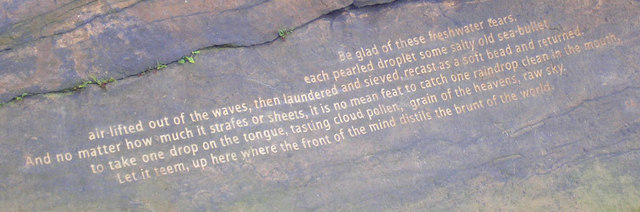
Here’s a photograph of one of the stones bearing Simon Armitage’s poetry.
Cows Mouth Quarry
Blackstone Edge
The third Stanza Stone has now been completed at Cow’s Mouth Quarry near Blackstone Edge. The quarry is situated about 20 minutes walk along the track (Pennine Way) which starts at the White House pub. The Pub is on the A58 road between Halifax and Littleborough just beyond Blackstone Edge Reservoir. As you approach the quarry from the White House, watch for a small stone arched bridge spanning the catch water drain on you right about 75 yards before the crags. The path from the bridge affords a close up view of the face carrying the carving. The poem can also be seen from the main path if you continue along the gravelled track. A circular walk can be made if you continue on the track, taking the right turn to White Holme Reservoir returning to Blackstone edge and the White House on a good path over Byron Edge.
Whether or not you will ever have the chance to enjoy this walk, do go across to the Stanza Stones website and just revel in the poetry and the nature.
Possibly the most important lesson to be learnt from dogs.
As is the way, a number of separate happenings seemed to be ‘singing from the same song sheet’ in bringing about today’s post.
Earlier yesterday morning Jean and I had a meeting with the executive director of an important charity that is helping the many homeless and disadvantaged young persons in this part of Oregon. For example, Jean and I were told that there were 300-500 homeless teenagers in Josephine County alone (Josephine County is where our home is.)
One of the ideas that was floated in the conversation was how kids are so loving to animals and whether our dogs and horses might help.
Then later, when back home, I recalled that over two years ago I published a post called Sticks and stones.
It wasn’t a long post and is republished now.
oooo
Sticks and stones
I make no apologies for today’s post being more emotional and sentimental. The phrase ‘sticks and stones may break my bones but names will never hurt me‘ is well known throughout the English-speaking world and surprisingly goes back some way. A quick web search found that in the The Christian Recorder of March 1862, there was this comment:
Remember the old adage, ‘Sticks and stones will break my bones, but words will never harm me’. True courage consists in doing what is right, despite the jeers and sneers of our companions.
So if in 1862 the saying was referred to as an ‘old adage’ then it clearly pre-dated 1862 by some degree. A few days ago, Dusty M., here in Payson, AZ, sent me a short YouTube video called The Power of Words. I’m as vulnerable as the next guy to needing being reminded about what’s important in this funny old world.
Then I started mulling over the tendency for all of us to be sucked into a well of doom and gloom. Take my posts on Learning from Dogs over the last couple of days, as an example. There is no question that the world in which we all live is going through some extremely challenging times but anger and negativity is not going to be the answer. As that old reference spelt out so clearly, “True courage consists in doing what is right, despite the jeers and sneers of our companions.” So first watch the video,
then let me close by reminding us all that courage is yet something else we can learn from dogs.
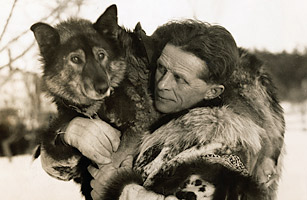
Togo the husky
In 1925, a ravaging case of diphtheria broke out in the isolated Alaskan village of Nome. No plane or ship could get the serum there, so the decision was made for multiple sled dog teams to relay the medicine across the treacherous frozen land. The dog that often gets credit for eventually saving the town is Balto, but he just happened to run the last, 55-mile leg in the race. The sled dog who did the lion’s share of the work was Togo. His journey, fraught with white-out storms, was the longest by 200 miles and included a traverse across perilous Norton Sound — where he saved his team and driver in a courageous swim through ice floes.
More about Togo another day.
oooo
One of the comments left to that post back in November, 2012 was from Virginia Hamilton. Her website, Canine Commandos, is about just that: dogs helping youngsters. This is what Virginia wrote:
Our sermon today was about sticks and stones which is perfect timing because my sixth graders are throwing words at each other and it is hurting. So I looked up the phrase and found you. We were shown the video in a faculty meeting and since you tie into dogs I was hoping to find “the answer.” When you look at the website you’ll see out community project where I have twenty schools training in three shelters. One would think that because these kids are so loving to the animals that they could pass that kindness to each other. Any words of wisdom? Also check this out. Thank you, Virginia.
Now I would be the first to admit that there’s a difference between a homeless young person and a gifted young person. Yet the difference may not be so great. In this one sense: that caring for an animal changes lives and what young people, from all backgrounds and circumstances, need to learn is the power of unconditional love.
Not just caring for dogs, horses and cats, by the way.