Category: Animal rescue

Meet the dogs – Hazel

Hazel – our dog number six.

Last week Jean wrote about Casey. Slight difference this week in the sense that both Jean and I equally know the story of how Hazel came into our lives. So you are stuck with me today for the story of Hazel.

ooOOoo

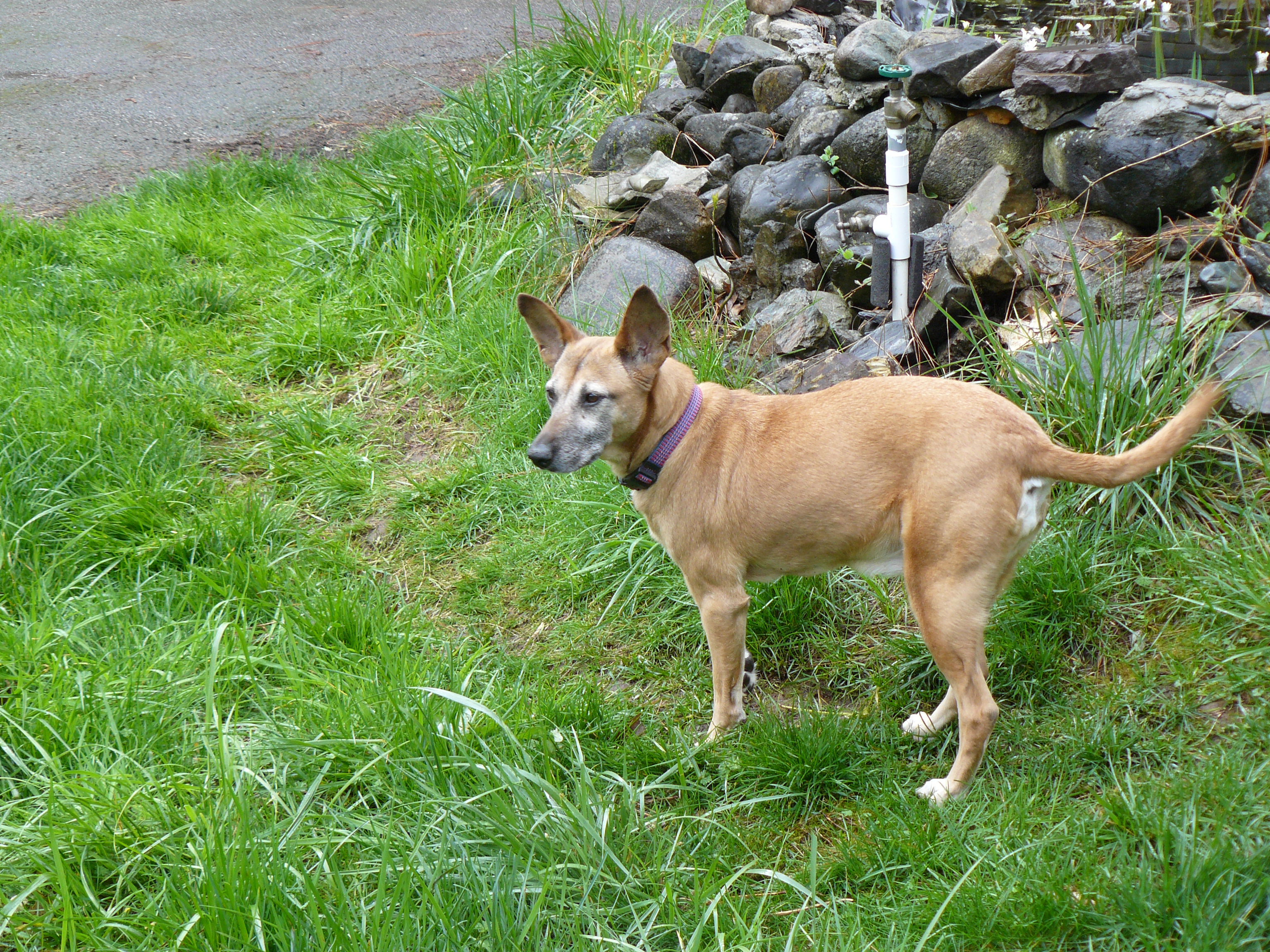
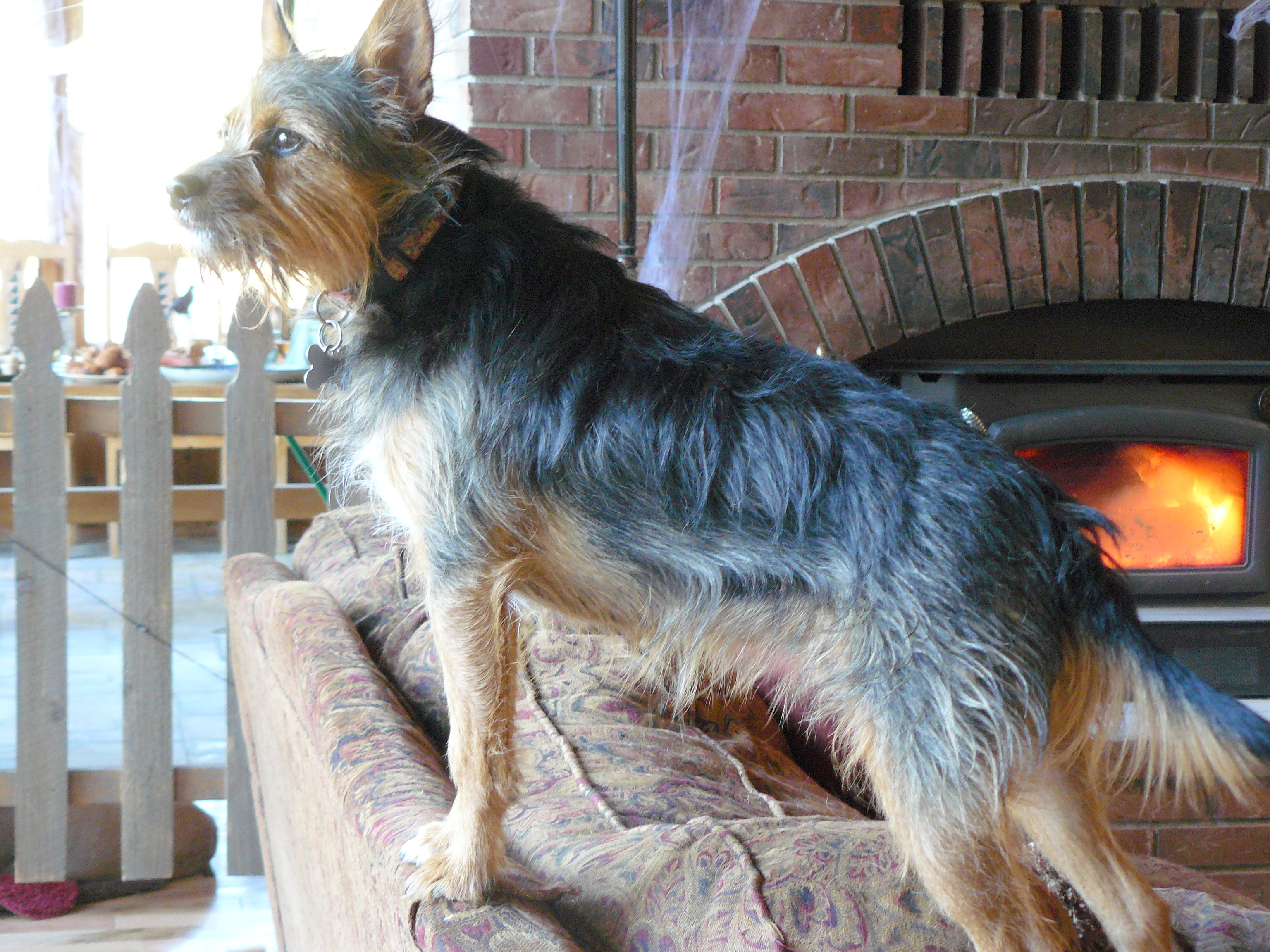
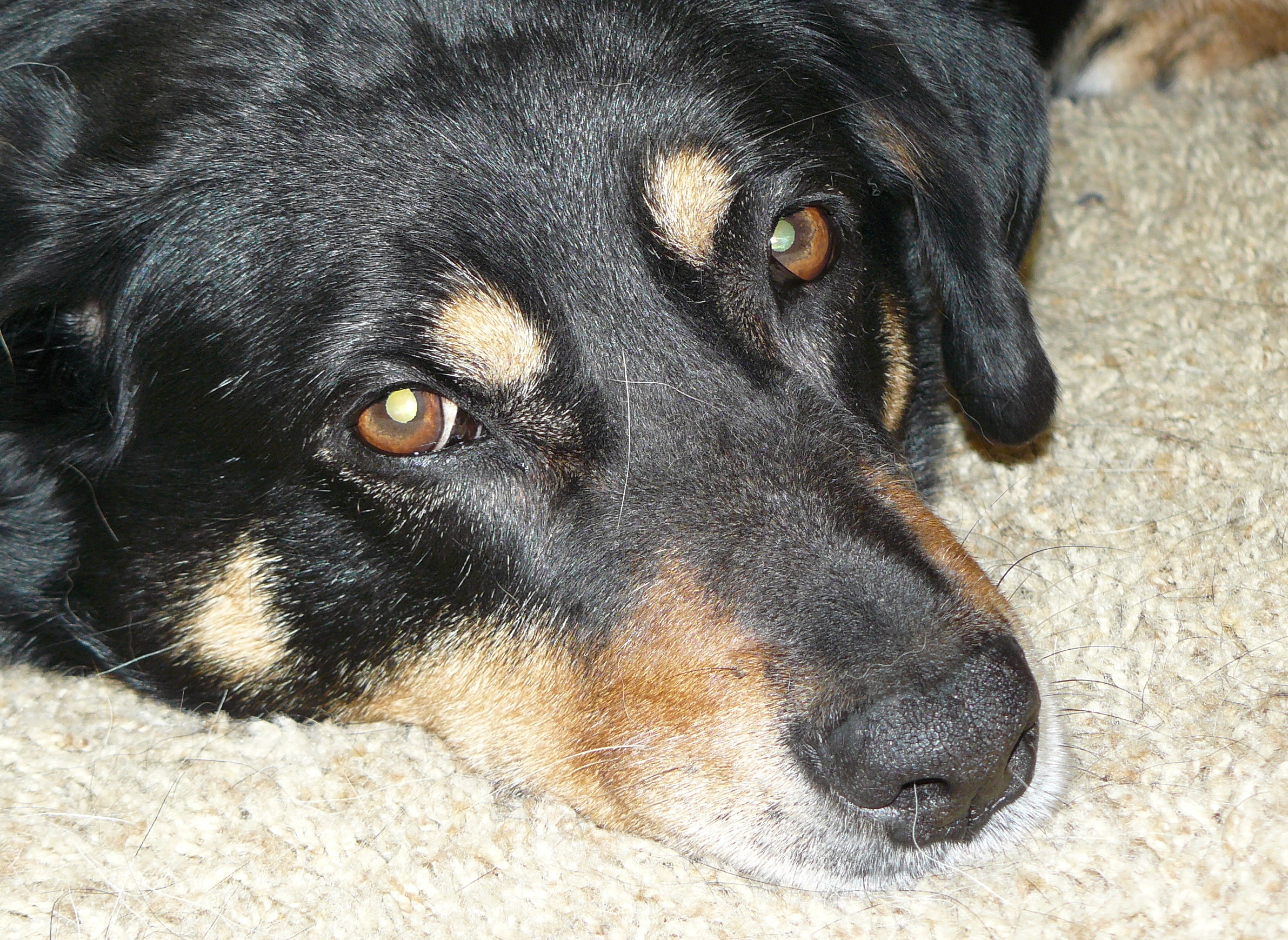
Hazel

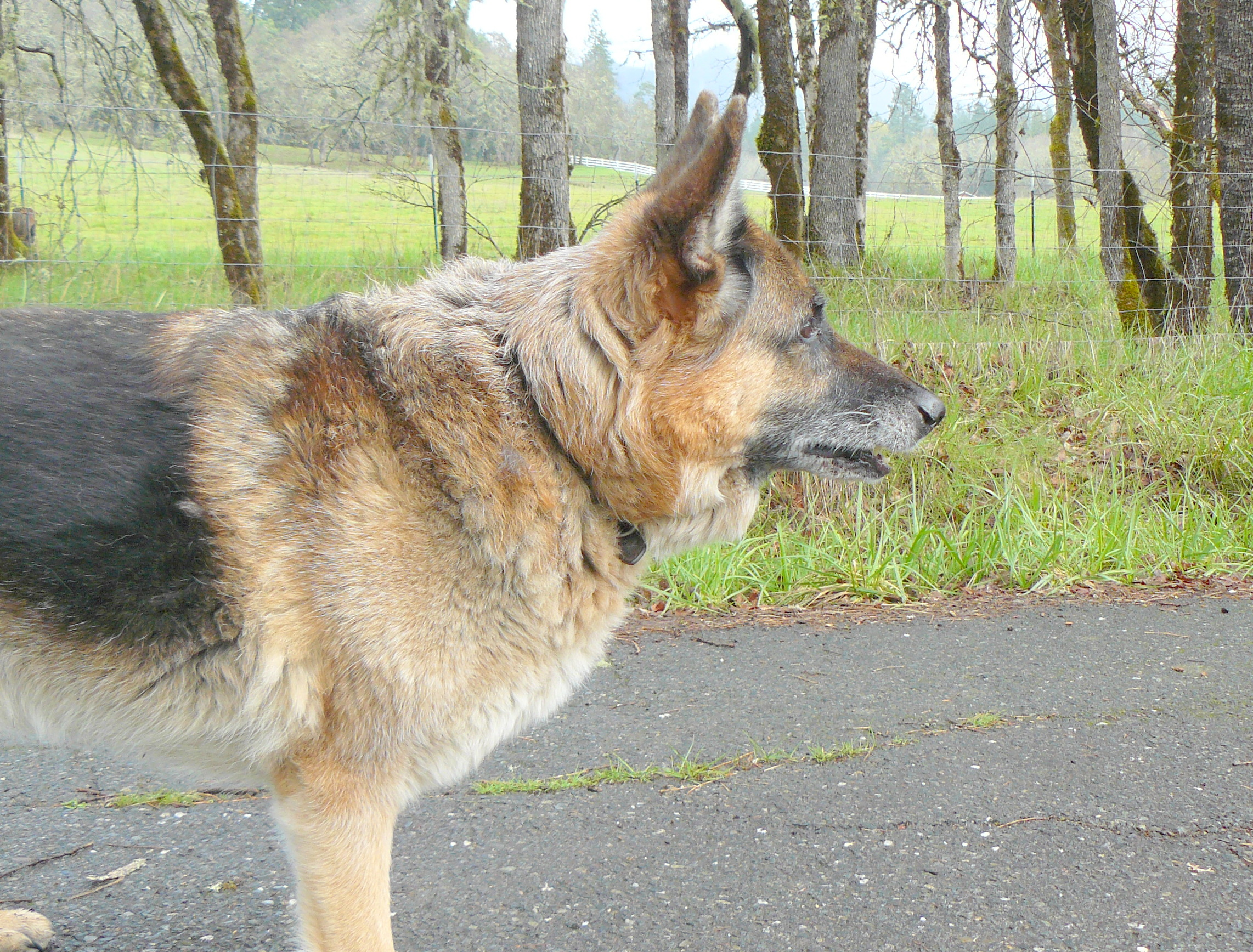
Picture of Hazel taken in the last twenty-four hours.

I first met Jean in Mexico; namely, in San Carlos, Sonora, Mexico to be precise.  Just a few days before Christmas, 2007.  At that time, Jean had 16 dogs, all of them rescues off the streets in and around San Carlos.  Jean was well-known for rescuing Mexican feral dogs.

In September, 2008 I travelled out to Mexico, via London-Los Angeles, with my Pharaoh. Jean and I have been together ever since.  In February, 2010, because we wanted to be married and to be married in the USA, we moved from San Carlos to Payson, in Arizona; some 80 miles North-East of Phoenix.

One morning, just a few days before we were due permanently to leave San Carlos and move our animals and belongings the 513 miles (827 km) to Payson, AZ, Jean went outside the front of the San Carlos house to find a very lost and disorientated black dog alone on the dusty street.  The dog was a female who in the last few weeks had given birth to puppies that had been weaned.  Obvious to Jean because the dog’s teats were still somewhat extended.

The dog had been abandoned outside in the street.  A not uncommon happening because many of the local Mexicans knew of Jean’s rescues over many years and when they wanted to abandon a dog it was done outside Jean’s house.  The poor people of San Carlos sometimes resorted to selling the puppies for a few Pesos and casting the mother dog adrift.

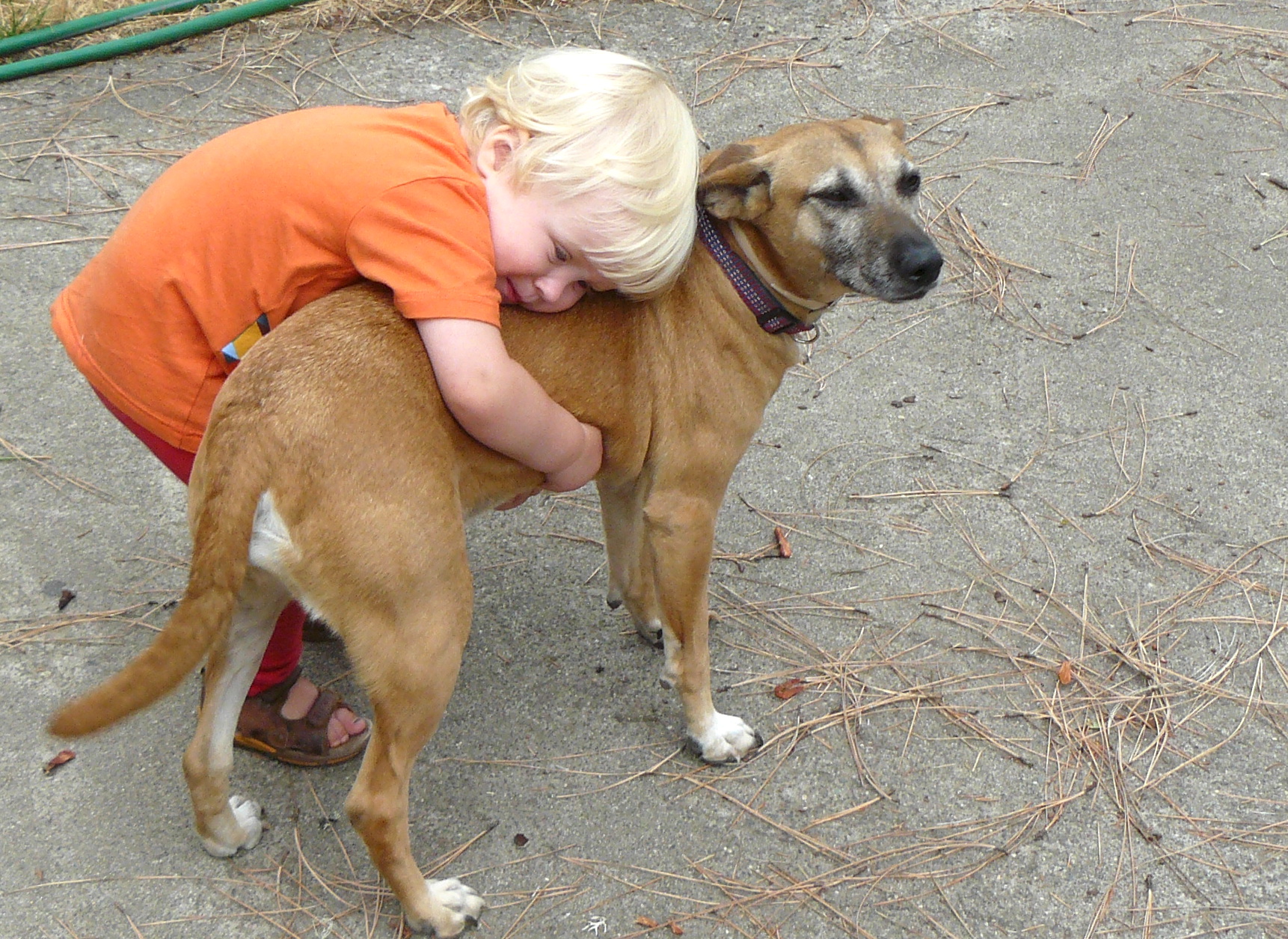
Of course the dog was taken in and we named her Hazel.  Right from Day One Hazel was the most delightful, loving dog and quickly attached herself to me.

The truest of love between a man and a dog!

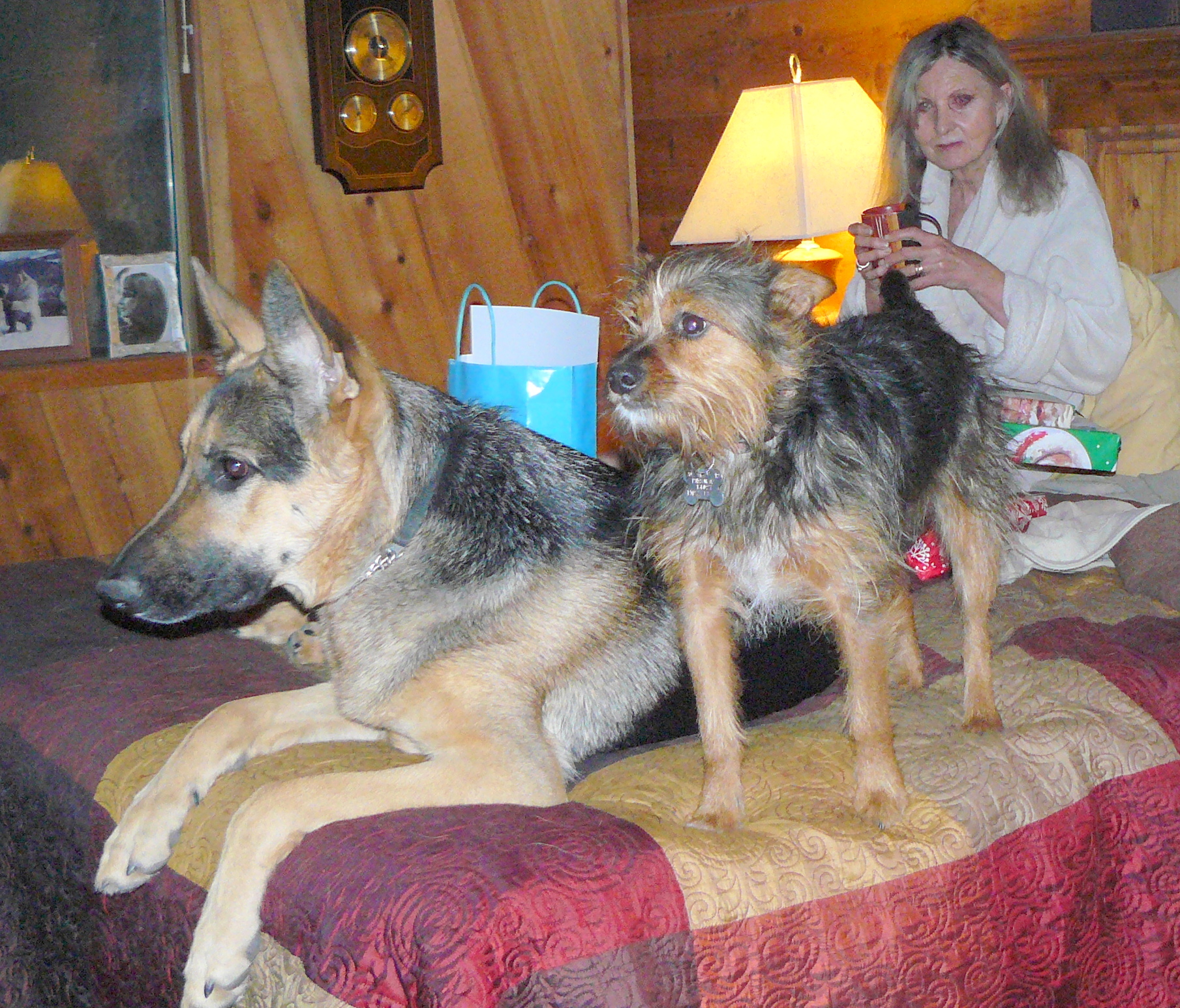
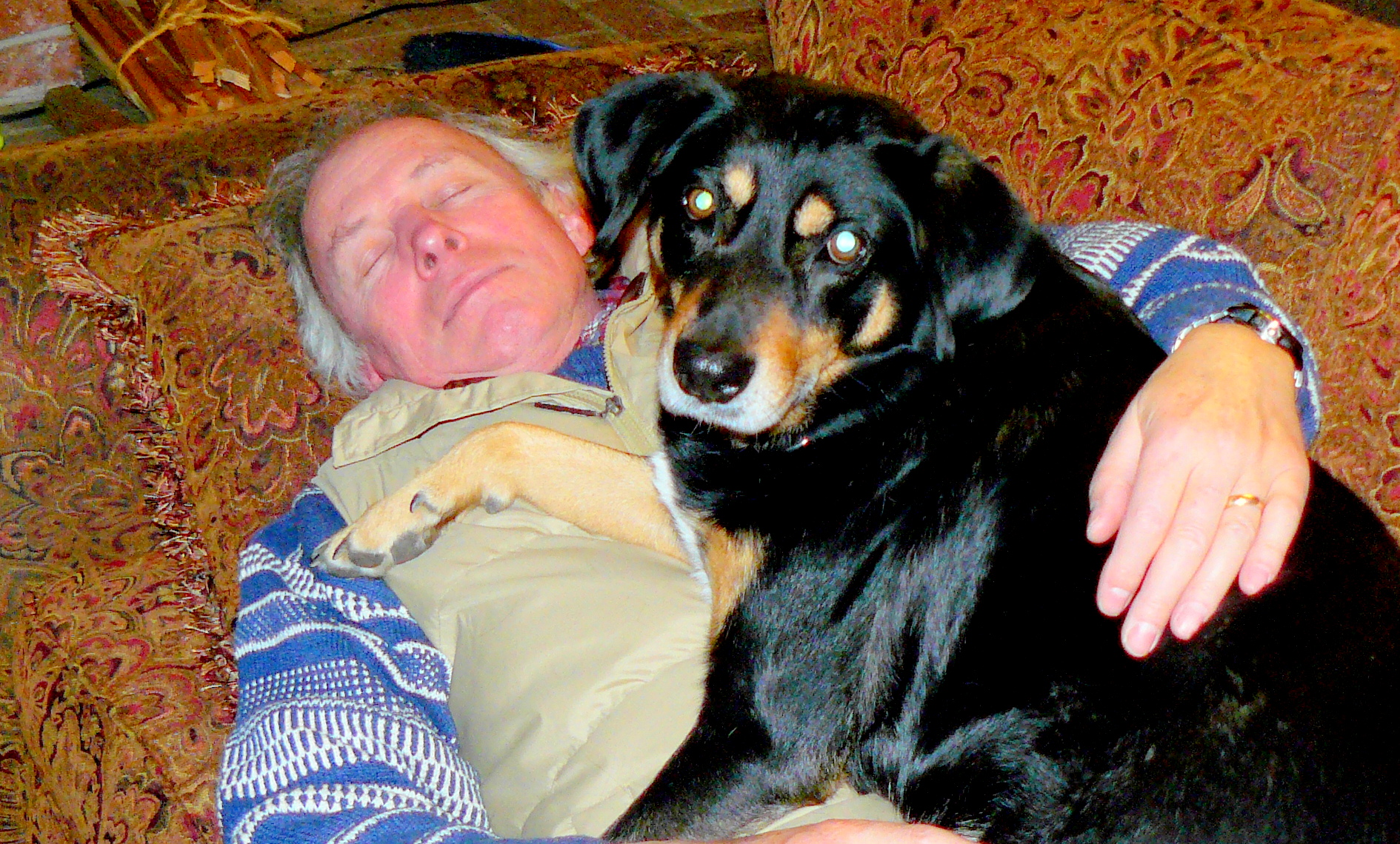
Of all the dogs that we have here at home, and, trust me, many are extremely loving, my relationship with Hazel is precious beyond description.  She is in Pharaoh’s ‘group’ (Pharaoh, Hazel, Cleo, Sweeny and Dhalia) so sleeps in our bedroom at night.  Most nights Hazel is tucked up against me.

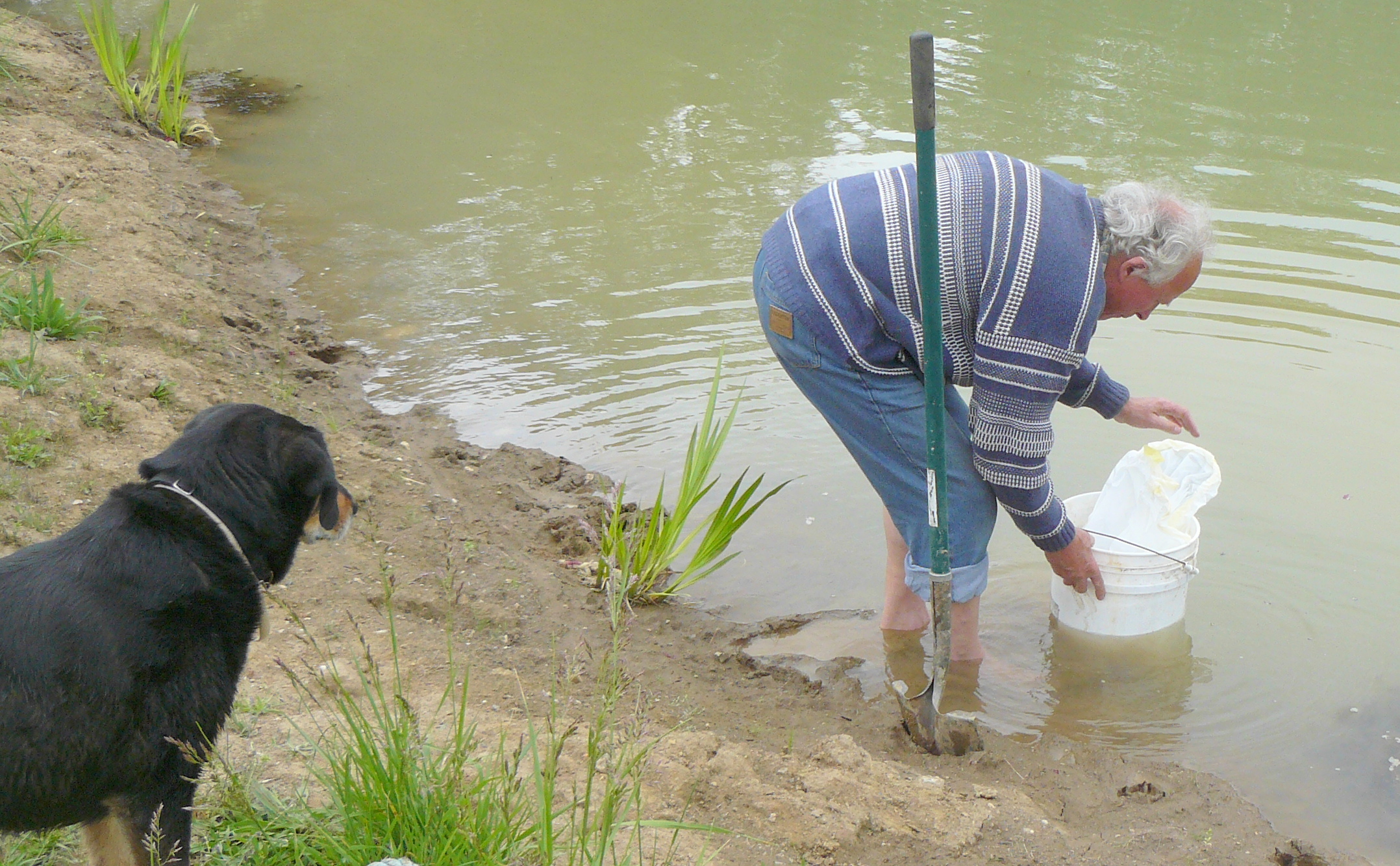
Plus frequently during the day Hazel will take an interest in what I am doing, as the next photograph illustrates.

Hazel taking an interest in my potterings.

Very little more that can be said without the risk of repeating myself.

If ever one wanted an example of the unconditional love that a dog can offer a human, then Hazel is that example.

ooOOoo

Precious creature!

What we really have to learn from dogs!

And many more of Nature’s creatures besides.

The answer? Unconditional love. (11 words.)

OK, that’s it for today’s post! 😉

oooo

Those that know this blog know that posts of just eleven words coming from yours truly are as rare as hen’s teeth.  So stay with me!

The number of LfD followers has just passed 900.  To say that I am amazed, grateful and humbled still feels like an inadequate response.  Thank you: to everyone of you.

One of those new followers left a recent comment that said, ” I love this blog, dedicated to dogs ..”  It struck me that as the number of new followers has increased significantly in recent times that it wouldn’t do any harm to return to the principles behind Learning from Dogs.

For it’s not a blog about dogs per se but about the qualities that we, as in mankind, have to learn from dogs.

The starting point is truth; as in what is truth?  Such a straightforward question of just three words requires many more words, indeed a book, to answer. A little over two years ago, I published a post called The evolution of the domestic dog, that included the following:

Way back in 2007 I was working with a good friend of mine, Jon, who lives in SW England. Anyway, Jon spoke of the philosophies of Dr. David Hawkins.  David Hawkins has written a number of books including Truth vs Falsehood: How to Tell the Difference which I read a few years ago and found very convincing.

Dr David Hawkins of Veritas Publishing, Sedona, Arizona.

Here’s how Amazon describes the book,

The exploration into the truth of man’s activities is unique, intriguing, and provocative. From a new perspective, one quickly grasps the levels of truth expressed by the media, the arts, writers, painters, architecture, movies, TV, politics, and war, as well as academia and the greatest thinkers and philosophies through the ages and up to present-day science and advanced theories of the nature of the universe. Most importantly, the ego and its structure are revealed to facilitate the understanding of religious and spiritual truths expressed by the mystics and enlightened sages over the centuries. It becomes apparent why the human mind, unaided, has been intrinsically incapable of discerning truth from falsehood. A simple test is described that, in seconds, can solve riddles that have been irresolvable by mankind for centuries. This book delivers far more than it promises.

Here’s the description of the book on David Hawkin’s website,

Reveals a breakthrough in documenting a new era of human knowledge. Only in the last decade has a science of Truth emerged that, for the first time in human history, enables the discernment of truth from falsehood. Presented are discoveries of an enormous amount of crucial and significant information of great importance to mankind, along with calibrations of historical events, cultures, spiritual leaders, media, and more.

A science of consciousness developed which revealed that degrees of truth reflect concordant calibratable levels of consciousness on a scale of 1 to 1,000. When this verifiable test of truth was applied to multiple aspects of society (movies, art, politics, music, sociology, religion, scientific theories, spirituality, philosophy, everyday Americana, and all the countries of the world), the results were startling.

Trust me, I am (slowly) getting to the point!

Dr. Hawkins created a ‘map’ of those calibrated levels of consciousness, see details of that map here.  Also, it wasn’t too difficult to find a plain B&W version on the Web, reproduced below.

Map of Consciousness, copyright Dr. David Hawkins

As you can see when you study the map, the boundary between ‘truth’ and ‘falsehood’ is the calibrated level of 200, the blue line in the above described as ‘The beginning of integrity’.

Anyway, back to Jon.  When I used to visit him, I always had Pharaoh with me and he would settle down behind my chair and let the human talk just flow over him, happy at some dog level to be included.

One day Jon was talking about the different levels of consciousness and looked over at Pharaoh asleep on the floor and said, “Do you that dogs are integrous!”  I responded that I didn’t know that, please tell me more.

Jon continued, “Yes, dogs have been calibrated as having a level of consciousness in the zone of 205 to 210.”

So dogs, horses, cats and many other warm-blooded species of animals are fundamentally integrous creatures.  Creatures that display the qualities of unconditional love, trust, courage, integrity and forgiveness.  Just see where those emotions appear on David Hawkin’s ‘map’ above.  However of all those animals, dogs have been man’s longest companion by far, perhaps all the way back to neolithic times.

So what gets written about Learning from Dogs is what we, as in society, have to learn from dogs. Because the time for mankind to place integrity, as in integrity of thought, word and deed, at the highest pinnacle of our domain is fast running out.

Going to close with a photograph taken yesterday afternoon here at home in Oregon, showing a pair of geese that are giving every indication of using our ‘island’ in our so-called pond as their base for having their goslings!

The integrity of Nature!

Some content on this page was disabled on August 23, 2017 as a result of a DMCA takedown notice from Susan Hawkins. You can learn more about the DMCA here:

https://wordpress.com/support/copyright-and-the-dmca/

Picture parade thirty-three.

The concluding photographs on the theme of why we have pets.

The first set may be seen here; the second set are here.

AS17

oooo

AS18

oooo

AS19

oooo

AS20

oooo

AS21

oooo

AS22

oooo

AS23

oooo

AS24

oooo

AS25

oooo

As I mentioned in Picture parade thirty-one, all twenty-five photographs were sent to me by friend and follower in Australia, Amanda Smith.

Amanda will be delighted that her photographs have caused so much pleasure to so many, including Jean and me, of course.

Meet the dogs – Casey

On to dog number five.

If you are new to this series then Ruby’s story of last week will link you to all the dogs written about so far.  Today, here is Jean’s account of how Casey became part of the family.

ooOOoo

Casey

Casey, at home; picture taken a month ago.

Every Friday, the Payson Roundup newspaper would devote a full page to the Humane Society, displaying some of the cats and dogs they had for adoption. I would read about each animal and quietly wish I could bring them all home.

I was particularly taken with one dog that had appeared several times in this Friday page.  His name was Casey and he was a six-year-old Pit Bull mix.  Unfortunately, at home (we were then living in Payson, AZ) we were ‘maxed out’ with a total of 14 dogs in three different sections of our house.  We just couldn’t take Casey.

I had volunteered to be a dog-walker at the Humane Society dog shelter.  But after two sessions walking dogs, I just couldn’t look at these sad little faces without breaking down in tears. I switched my efforts to working at the Society’s Thrift Store.  That was great fun and, at least, it felt as though I was still helping the animals. Nonetheless, I was very impressed with the animal shelter.  They did their utmost to re-home the animals in their care.

Ruby’s ‘pack’ here at home included Phoebe and Tess, rescue dogs from Mexico.   Recently, Phoebe had died with leukaemia and Tess with bone cancer leaving Ruby on her own.  Ruby was a dog that didn’t mix at all well with the other dogs, as was explained in last week’s post.

The next Friday, the Payson Roundup showed the Society’s ‘lonely hearts club’, highlighting animals that had been in care for a long time.  The first dog shown was Casey.  I telephone Chandra, the lady responsible for adoptions, and asked if Paul and I could bring Ruby to the shelter to find a companion for her. When we were at the shelter, Chandra asked us if we had anything against Pit Bulls. Of course we didn’t.  Ruby was introduced to Casey and, as they say, the rest was history.  Casey and Ruby right from the start were just wonderful together.

Ruby behind Casey.
Ruby behind Casey.

Subsequently, I learned from Chandra that Casey had been in care for over a year and, had we not taken him home, his days were numbered at the shelter.  There were many cheers and tears when I signed the adoption paper for Casey.

Casey now lives in the kitchen group here in Oregon: Paloma, Ruby, Lilly and Casey.  As with all our dogs, Casey is so happy to have our 14 acres to play in.  He is also the sweetest natured of dogs and will try to climb on to your lap at the first opportunity.  I have always been a great advocate of Pit Bulls and Pit Bull mixes and have never come across a mean one.

Thus, if you are in the position to adopt a dog, please consider Pit Bulls and Pit Bull mixes for the Pit Bull is a much-maligned breed.

Casey demonstrating a dog's focussing skills!
Casey demonstrating a dog’s focussing skills!

ooOOoo

Meet dog number six next week.

Picture parade thirty-two.

The second set of why we have pets.

Thank you hugely for the response to last week’s first set of photographs sent to me from Australia by Amanda.  So without further ado, here is the next set.

AS9

oooo

AS10

oooo

AS11

oooo

AS12

oooo

AS13

oooo

AS14

oooo

AS15

oooo

AS16

oooo

Come back in a week’s time for the final set of nine photographs on the theme of why we have pets.

Oregon wolves, and book writing!

Just wanted to share some good news with you. Well, regarding Oregon’s wolves!

My so-called book has rather ground to a halt.  Sturdy followers of this blog will recall that in November last year, I sat down and wrote the first draft of a book, under the umbrella of NaNoWriMo = write a minimum of a 50,000-word novel in the month of November.  That I did write in excess of 50,000 words (53,704) in under thirty days felt a wonderful achievement.

But then reality set in!

I subscribed to a NaNoWriMo webinar on editing hosted by David Henry Sterry and Arielle Eckstut of The Book Doctors. To my horror, half-way through the webinar came the realisation that what I had written wasn’t even a fictional novel: It was a personal story on the theme of what dogs have taught me over a life of approaching 70 years.

So those 53,000 words had to be rewritten as non-fiction book!

The next boulder to cause me to fall was the issue of tense.  The book had been written in the 3rd-person, as you can see from the draft of Chapter Twenty-Three.  But the more that I thought about the story the more that it felt that it should be in the 1st-person; namely this first person!  Reinforced by feedback from Jeannie and from reading Melinda Roth’s latest book Mestengo clearly written in the first-person.

Mestengo book cover.

Chapter One

I first smelled the smoke as I stood in the driveway of the farmhouse on the top of a hill in McHenry County in Northern Illinois that was, according to the man who leased it to me one month before, the highest point in all of Northern Illinois.

Damn, damn, damn!  Now the rewrite not only has to go from fiction to non-fiction, it also has to change the tense from ‘Philip’ to ‘Paul’; from him to me!  The words from The Book Doctors seminar rang louder and louder, “You write the first draft for yourself; you edit it for your readers!” (Smart arses!)

Then along came hope in the form of Kami Garcia, the author.  It was a NaNoWriMo pep talk.

So you made it through NaNoWriMo, and you have 50,000 words… Now what? It’s the same question a lot of writers face when they finish a first draft. The good news is you finished the hard part: you have a draft.

I can hear some of you cursing me now: “But Kami, my first draft is totally crappy and worthless. It’s terrible. I wasted an entire month of my life, and all I have 50,000 terrible words to show for it.”

My answer: It doesn’t matter if you wrote the crappiest first draft in the history of all first drafts. You have something to work with, which means you can fix it, mold it, and bang it into whatever shape you want. Here are a few tips to get started:

Read Your First Draft (and Possibly Cry a Little)

After you put away the pint of ice cream and the tissues, take an objective look at your draft. What are the strongest points? The parts that kept you reading? Whether you print out your draft to make notes or use software (I love Scrivener), mark the best bits—circle, highlight, whatever works for you. These are the parts you’ll re-read whenever you start to lose hope (which will be often).

All of which is a long-winded way of me saying that I shouldn’t be spending time writing blog posts but have my head down in the big edit.

But, hey, already come this far so going to leave you with this wonderful news.

ooOOoo

Hello Paul,

Good news: For the first time since 2009, the Oregon Department of Fish & Wildlife has confirmed wolves south of the Eagle Cap Wilderness!

Based on recent evidence, it’s clear that at least five wolves are frequenting an area in Northern Baker County. It may not be a story as epic as Journey’s, but it’s another good sign wolves are continuing to retake their rightful place on the Oregon landscape.

Those of you who have been tracking wolf issues for a long time, may remember the iconic photo of a scraggly Oregon wolf in sagebrush. The young wolf and his partner frequented an area near the Keating Valley in Baker County.

Sadly, the “Keating Wolves”, as they came to be known, were killed in 2009. Despite some tantalizing reports, since that time, only one Oregon wolf is known south of the Wallowas.

Later today, we’ll revisit the story of the Keating Wolves on the Oregon Wild Blog and post it on the Oregon Wolves Facebook page. Wolf recovery still has a long ways to go. But today’s news is significant.

Since 2009 – with your help – we’ve stopped round after round of wolf kill bills in Salem. We’ve stood up for wolves in court. We’ve worked with responsible ranchers. We’ve educated the public, highlighted the positive impacts of having wolves back on the landscape, and shared news – good and bad – of wolf recovery.

Things are far from perfect. Old prejudices die hard and wolves continue to be at the center of a campaign of misinformation and fear. The Obama administration is stubbornly pushing a scheme to strip wolves of important protections, and the state can still kill wolves on behalf of the livestock industry.

But today’s news is a sign that we’re headed in the right direction here in Oregon. And there should be more on the horizon. Wolves are mating, pups should be on their way, and Oregon will announce an updated wolf population estimate soon. That’s more news we look forward to sharing.

For wolves and wildlife,
Rob Klavins
Wildlife Advocate, Oregon Wild

ooOOoo


Meet the dogs – Ruby.

Ruby – the fourth dog for you to meet.

Firstly, there was Paloma and then Lilly.  Last week, it was Jean’s story about how she found Dhalia. Today, Jean recounts how Ruby came in to the family.

ooOOoo

Ruby

Ruby - picture taken at the end of January, this year.
Ruby – picture taken at the end of January, this year.

My house in Mexico was on the beach.  There was a door in the wall of the rear courtyard that lead almost directly on to the sand.  Most mornings I would rise before dawn to run two or three dogs together along the shore.  It was a good arrangement for all of us!

Next door to my house was a duplex that had been rented out to a family that lived in Hermosillo; the capital of the State of Sonora.  Every month or so this family would visit for a long weekend. This family, unfortunately, had an autistic daughter who, when not supervised, would open my front gate that led on to the dusty road so she could come in to play with my cats that lived in the front area of my house.  That was fine by me when the daughter was in a calm mood but frequently she had screaming fits that would send both my cats and dogs into a state of frenzy.  In addition, the family owned a Chihuahua dog that the daughter often carried as if it were a doll.

One month, the family arrived ‘sans Chihuahua‘ with the news that it had died; adding that their daughter was bereft at the loss.

The following day the mother knocked on my door.  She explained that they had acquired a new puppy but that it was not eating. What could they do? Would I help?

Of course I went with them to have a look. Sure enough, they had a small puppy, probably no more that three weeks old. “It’s a Chihuahua”, they said. I replied, “Firstly, it’s not a Chihuahua and secondly, it’s far too young to be without it’s mother – you must take the puppy back to the mother”.

Despite much pleading, I could not convince the family to do this. So I did the next best thing and went back home to get replacement milk formula and a tiny feeding bottle. I showed the family how to feed the little puppy and also how to massage its tummy to help it go to the toilet. I was more than a little concerned, to say the least. I just couldn’t see the family going to the effort of feeding the puppy every couple of hours or so; essential to ensuring the tiny dog survived.

I planned to check up how things were going the following day.  But didn’t need to. For when opening my front door I found the puppy left on my doorstep. Not even left in a box. The family had returned to Hermosillo.
That little three-week-old puppy is now Ruby; an eight-year-old 80 lbs Shar-Pei mix. After a few weeks of investigation I tracked down Ruby’s mother. She had had 13 pups and was unable to feed them all.

Ruby suffers from skin problems as do many Shar-Peis.  Ruby clearly missed out on the mother-puppy relationship; so important for the development of social skills. Accordingly, she is a bit scatty when playing with the other dogs, frequently bowling them over in her enthusiasm.  Luckily the other dogs seem to realise that she is missed out as a young puppy and are very forgiving.

After such a shaky start I didn’t even try to find her a home.  With countless puppy feeds in the middle of too many nights, I had bonded too deeply.
The family returned to the duplex a couple of months later with a new Chihuahua in tow.  I confronted them about Ruby.  Their answer was that they had given the puppy to a couple on the beach and it was they who had left the puppy on my front door-step.
Yeah! And the moon is made of green cheese!

Ruby in our kitchen area - picture taken yesterday.
Ruby in our kitchen area – picture taken yesterday.

oooo

Another picture of Ruby from yesterday.

oooo

Ruby behind Casey.
Ruby with Casey in front.

oooo

Another week next week – another dog to meet!

The lone Ranger.

The story of a horse.

You will recall that yesterday I very briefly mentioned our trip to visit Strawberry Mountain Mustangs, our meeting with Darla and the outcome.  Namely, that subject to an adoption agreement being signed and approved we hope to be able to adopt Ranger.

Here is Ranger’s story.

Ranger
Ranger

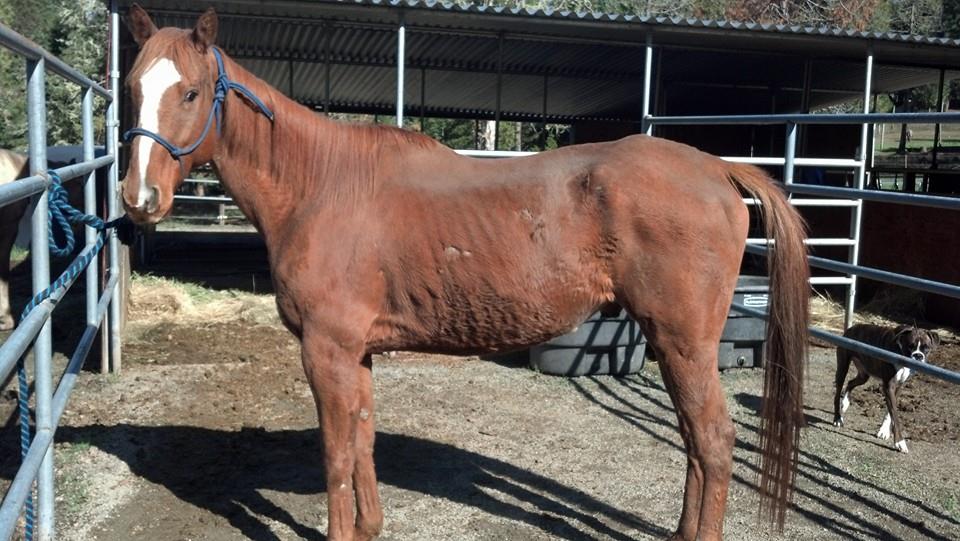
Ranger is believed to be a quarter-horse (a quarter thoroughbred, as I now have learnt) that earlier on in his life was a roping and barrel-racing horse.  Ranger is a little over 15 hands.

He has been abused in the past.  Evidenced by the scars of previous ill-fitting saddles and from being wary of having his ears touched.

Originally Ranger came to Strawberry Mountain because he was found abandoned and starving in an Oregon forest.  After he became a settled horse at Strawberry, he was adopted out to a family.  But after some months of being ridden he threw his riders by spinning so quickly they came off.

He came back to Darla and eventually was adopted out to a different home.  But after some months with his next owners, the habit of spinning riders off his back resurfaced.

Back he came to Darla but his age, he is about 15 years-old, and not being a secure riding horse were against him.  Darla was unhopeful that he would ever be found a home.

Hallo, my name's Jean.  Will you come and live with us, Ranger?
Hallo, my name’s Jean. Will you come and live with us, Ranger?

But in our case, I don’t know how to ride and Jean is not interested in riding Ranger.  His age is a bonus because it reduces the odds of Ranger outliving Jean and me.  So Ranger seemed like a perfect match.

Jean and Ranger getting to know each other.

So that’s where we are just now.  As we progress in getting our fencing done and our adoption approved (fingers crossed) then there will be more to report.  We have come a long way from wild mustangs but this truly feels like the most sensible way to help given that our experience and facilities are not sufficient for us to handle a rescued Mustang.

P.S. the comments and the ‘Likes’ to yesterday’s post were wonderful.  Both Jean and I are touched beyond measure.

Lost your heart to a horse!

Apologies for the brevity of today’s post.

Yesterday, Sunday, Jean and I went North in Oregon to visit Strawberry Mountain Mustangs to explore the pros and cons of adopting a horse previously rescued by Darla, of Strawberry Mountain.  It was a long day and by the time I sat down in front of the PC it was already past 5pm.

So for today going to offer you two pictures from our inspiring time with Darla and all her magnificent horses, most of whom have backgrounds that would make one weep.

Tomorrow, I will write more fully about what we are discovering when it comes to adopting a horse.

Trust me, a horse with its tongue in your ear is very ticklish!


oooo

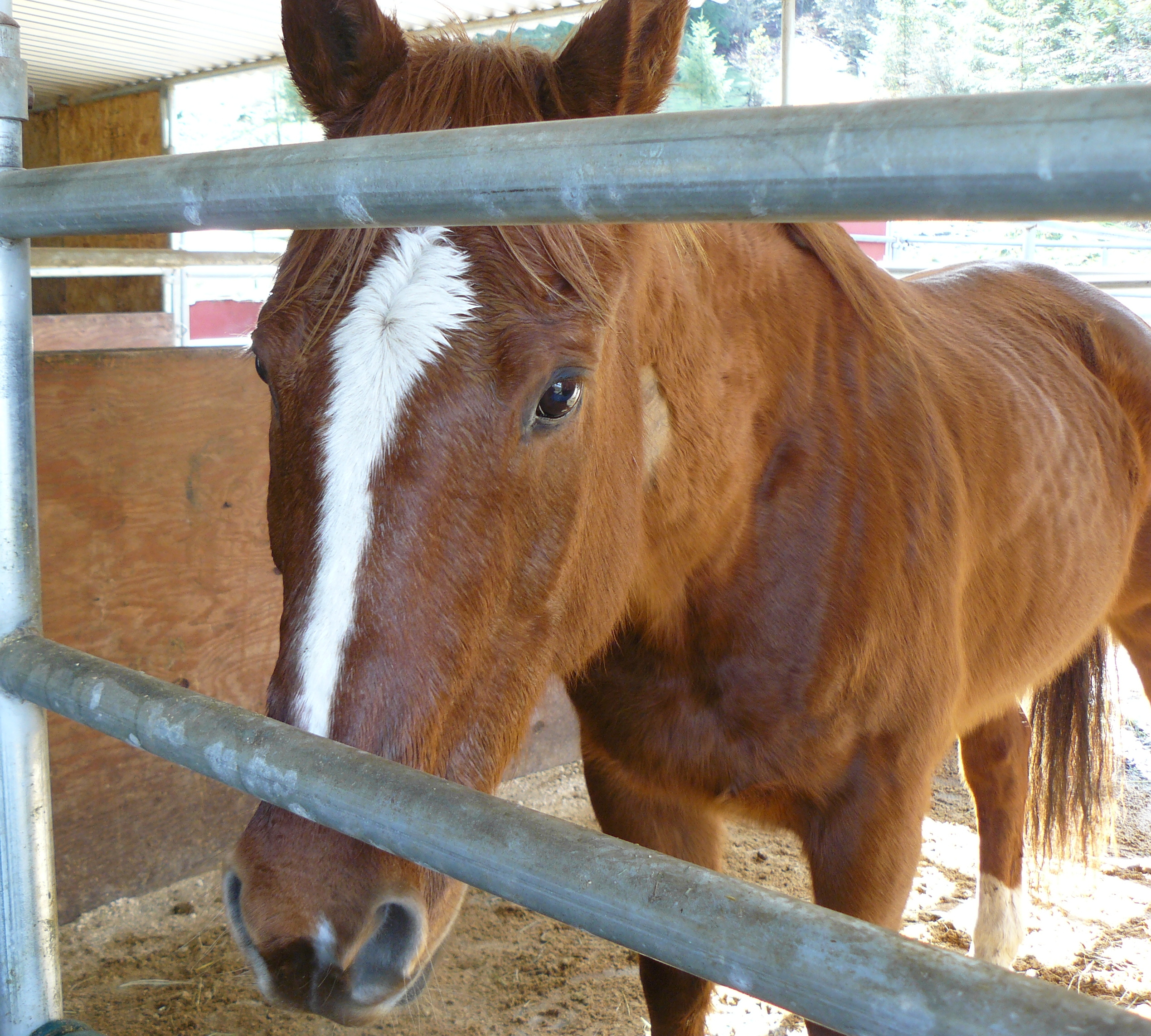
Ranger, the 15-year-old horse we hope to adopt.

oooo

Picture parade thirty-one

This is why we have pets!

Friend and follower, Amanda Smith from Australia, recently emailed me a set of twenty-five fabulous pictures.  I propose to offer eight of them today, and eight more next Sunday and, possibly, the final nine in two weeks time; that is if the response from you, dear reader, suggests you would like that.

AS1

oooo

AS2

oooo

AS3

oooo

AS4

oooo

AS5

oooo

AS6

oooo

AS7

oooo

AS8

oooo

Thanks Amanda, and if anyone knows any of the names of the photographers who took these delightful photographs, do please say so in a comment.  Would be nice to acknowledge them.

The second set next Sunday – you all have a peaceful and untroubled week.