Category: Animal rescue

Spreading love and kindness

The huge gift we receive from therapy animals.

Our Brandy is a Pyrenean Mastiff!

I know there are times when giving Brandy a big hug feeds something very deep inside me. That unconditional affection Brandy shows me has a very strong healing sense.

I know that Jean shares my sense of being loved by Brandy, and by all our other dear dogs.

I am without doubt that hundreds of thousands of other people experience this.

Yet there must always be room for more therapy dogs which is why an item on Care2 just a few days ago is being shared with you today.

(P.S. When a photo of me hugging Brandy was sought his nibs did not comply!)

ooOOoo

Could Your Pet Become a Therapy Animal?

3187027.large

If you have a pet who’s mellow and loves being around people, and the idea of helping your pet bring joy to others appeals to you, you might just have a therapy animal in the making.

Accompanied by their owners, therapeutic visitation animals – which are most commonly dogs, but can also be cats, rabbits, pot-bellied pigs, horses, etc. – regularly visit people in hospitals, nursing homes, schools and other facilities, providing furry comfort and compassion.

“Four-footed therapists give something special to enhance the health and well-being of others,” says the website of  Therapy Dogs International (TDI), a nonprofit organization that regulates, tests and registers therapy dogs and their handlers. “It has been clinically proven that through petting, touching and talking with animals, patients’ blood pressure is lowered, stress is relieved and depression is eased.”

What It Takes to Be a Therapy Animal

Therapy animals are “born, not made,” according to TDI. They must have an outstanding temperament, and be outgoing and friendly to people of all ages. They must also behave well with other animals.

 In general, therapy animals must also be at least one year old; current on all vaccines required by local laws; and be clean and well groomed when visiting people.

As for dogs, along with the ability to obey basic commands like “Sit,” “Stay,” “Come” and “Leave it,” they are tested by therapy dog certification organizations to ensure they can do the following, according to TDI (most of these requirements apply to other species of potential therapy animals as well):

  • Listen to their handlers
  • Allow strangers to touch them all over
  • Not jump on people when interacting
  • Not mind strange noises and smells
  • Be calm for petting
  • Not be afraid of people walking unsteadily

Getting Your Pet Certified as a Therapy Animal

Think your pet has the right stuff to be a therapy animal? To get an idea of the type of testing involved, this TDI brochure describes each of the 13 tests a dog must pass in order to be certified. The tests are similar for other animals.

Some therapy animal organizations, including Pet Partners, offer workshops so you and your pet can practice the required skills before being tested for certification.

The AKC website has a list of therapy animal organizations all across the U.S. from which your pet can receive certification. Contact the one nearest you for further information.

The Difference Between Therapy and Service Animals

Although the two are often confused, therapy animals are not the same as service animals, which “have been individually trained to do work or perform tasks for the benefit of a person with a disability,” according to the Americans with Disabilities Act (ADA).

“An example of a service dog is a dog who guides an owner who is blind or assists someone who has a physical disability,” the American Kennel Club (AKC) explains. “Service dogs stay with their person and have special access privileges in public places such as planes, restaurants, etc.”

Therapy dogs, on the other hand, are privately owned. Unlike service animals and their handlers, in most U.S. states, therapy animals and their owners don’t have protections under federal law (ADA, the Fair Housing Act, etc.), reports the National Service Animal Registry.

Additional Resources

You can find out more about therapy animals and getting your pet certified from these organizations:

Photo credit: Thinkstock

ooOOoo

Closing this post with some photographs Jean took yesterday afternoon. Me with Pharaoh and Cleo.

(OK, they were staged for this post as the look on Cleo’s face rather suggests!)

P1160423oooo

P1160414oooo

P1160419Have a very huggable weekend!

Kate Humble and Teg

Following on from yesterday.

In yesterday’s post I included the full documentary that was recently broadcast by the BBC. It was really interesting and a great insight into the uniqueness of the Welsh Sheepdog. More of that in a moment but first some details about Kate. As WikiPedia puts it:

Katherine “Kate” Humble (born 12 December 1968) is an English television presenter, mainly for the BBC, specialising in wildlife and science programmes. She was also the President of the RSPB until 2013.

Inevitably, Kate has her own website where one reads on the ‘home’ page:

kate&tegKate Humble and her sheepdog Teg set off to learn about the threats to British herding dogs. Filmed over a year, and with an exclusive insight into Kate’s shepherding life,  ‘Kate Humble: My Sheepdog and Me’, unveils the story of the Welsh Sheepdog, explores the challenges of breed recognition and celebrates the simple joy of a handful of puppies.

‘Kate Humble: My Sheepdog and Me’ will be on BBC 2 on the 15th August 2016 at 9pm.

As changing farming practices, cross breeding and dog shows came about, so too did the decline of Britain’s working dogs.  Of 22 British herding dog breeds, 12 are now extinct and the 10 remaining are mostly show dogs or pets. Kate sets out to discover if Teg belongs to one of these rare breeds, criss-crossing Wales as she uncovers the story of the Welsh Sheepdog and tries to find a mate for Teg.

From sheepdog trials to droving, from DNA profiling to a nationwide search for a mate, Kate and Teg’s journey is a celebration of the Welsh landscape and rural traditions. It also delves into the hi-tech, hi-value world of breeding rare dogs, and explores the timeless bond between humans and their dogs.

Join Kate and Teg as they play their part in the continuing survival of Britain’s herding dogs.

Now we hear a great deal about this endangered animal and that endangered animal but British herding dog breeds wouldn’t for me come to mind as one such endangered breed.

Clearly the effort to save the future of the Welsh sheepdog is significant underpinned by the fact that there is a society devoted exclusively to the breed: The Welsh Sheepdog Society. The website of the Welsh Sheepdog Society also has a page where registered sheepdogs are for sale. I’m going to republish the details on that page not only to show readers what the dogs look like but also to promote them to a wider audience.

ooOOoo

FOR SALE

Registered Welsh Sheepdogs of Sale from Society Members

Red and white welsh sheepdog pups for sale, pictured below. 6 bitches and 2 dogs by Fferm Mynydd Morgan out of Safn y Coed Erin. Both parents good workers. Ready to go now. Contact Edward Hopkins phone 07867 474 866.

hopkins pups
Welsh sheepdog pups for sale. Black and white and red and white. By Wilden Gel out of Fron Felen Fflei. Good working stock. Contact Bob Williams 01745 550 304.

Welsh sheepdog pups for sale. By Hendrerhys Gelert out of Fron Felen Nel. Both parents good workers. Contact John Williams 01745 5870 657.

Welsh sheepdog pups for sale, picture below, ready December. Sire Ty Llwyd Bonnie trophy winner Penlanlwyd Tango. Dam Glyngwilym Rose. Contact Simon and Emma Mogford, 07846 017 669

mogs pupsooOOoo

Here’s hoping they all find wonderful loving homes.

Let me finish off today’s post by extensively quoting from the WikiPedia page about the Welsh Sheepdog.

The Welsh sheepdog (Welsh: ci defaid Cymreig, pronounced [kiː dɛˈvaɪd kəmˈrɛɨɡ]) is a landrace of herding dog from Wales.

Like other types of working dog, Welsh sheepdogs are normally bred for their herding abilities rather than appearance, and so they are generally somewhat variable in build, colour and size. Welsh sheepdogs are of collietype, usually black-and-white, red-and-white or tricolour, and merle markings may occur over any of these combinations. The coat may be short or fairly long, and the ears are pricked, but usually folded at the tip. They are longer in leg, broader in chest and wider in muzzle than the Border Collie. They are extremely active and intelligent, and therefore need much exercise and mental stimulation, if they are to be kept as pets. Welsh sheepdogs are more commonly known as Welsh collies, however these are the same breed.

Over many decades the Welsh sheepdog has largely been replaced for working sheep in Wales by the Border Collie, a standardised breed. However, in more recent years, efforts have been made to maintain the indigenous Welsh sheepdog as a distinct variety.

Welsh sheepdogs are usually of loose-eyed action, not fixing the stock with their gaze like the strong-eyed (de)Border Collie. They are able to work independently without necessarily being under direct human control. Welsh sheepdogs are most often used for herding sheep, but also readily work cattle, goats, and even horses and pigs. Traditionally they were often used as droving dogs to take cattle and sheep to markets locally or elsewhere in Britain.

The Welsh sheepdog’s life span is 12–15 years.

History

At one time there existed many sheep-herding dogs peculiar to Wales; during the 18th century Welsh drovers taking sheep for sale took with them five or six Welsh sheepdogs as “herders on the narrow roads, guards against highwaymen, and providers of game on the route”. These were an early type of Welsh sheepdog, higher on the leg and more racily built than the modern day breed.

However, by the 1940s the group had decreased to two or three breeds only. The ancient pure breeds of black-and-tan sheepdog and Welsh hillman were almost extinct, and were scarcely ever seen working. The type best known in Wales at that time was mostly descended from the old black-and-tan with an infusion of working Border Collie blood.

In the 1940s the Welsh sheepdog was still common throughout the north and central Welsh counties. In herding activities, it did not normally work low to the ground in “the showy manner sometimes seen in the work of the working [Border] Collies”, as British dog fancier C. L. B. Hubbard put it in 1948. It was variable in type; approximately 18 in (46 cm) in height, but the weight ranged from the lighter built, leggier dog of North Wales at 35 lb (16 kg) to the more solid 40 to 45 lb (18 to 20 kg) dogs of Glamorganshire and Monmouthshire. There were no dog show classes for the Welsh sheepdog as it was purely a working breed.

Finally another picture of Kate and Teg.

JS50109203Fabulous animals!

Welsh Sheepdogs

Congratulations to the BBC for a fascinating documentary.

Recently the BBC aired a documentary about Kate Humble and her journey to have her dog, Teg, registered as a Welsh sheepdog by the Welsh Sheepdog Society. It was fascinating and a ‘must see’ for all dog lovers irrespective of their residency in Wales or not! The programme, that is no longer available (still on BBC iPlayer at the time of writing), was described on the BBC website, thus:

When Kate Humble decides she wants to breed from her dog Teg, she finds out that her beloved pet is a Welsh sheepdog. She sets out to learn more about this little-known and endangered breed, and discovers that a true Welsh sheepdog is a working dog. Kate wants Teg and her future puppies to be certifiably Welsh, and sets out to train Teg to work in the traditional Welsh way. Teg shows willing, and Kate works on her own shepherding skills, but will the demanding experts from the Welsh Sheepdog Society be impressed by the pair’s performance?

However, some smart soul has uploaded the episode to YouTube so if you want to watch it do so quickly before it is removed.

http://www.youtube.com/watch?v=-7m7dKBd3mQ

Published on Aug 15, 2016

Kate Humble sets out to breed Welsh sheepdog puppies from her beloved pet Teg, and learns about the threat facing British herding dogs. A true Welsh sheepdog is a working dog, and so Kate sets out to train Teg to work in the traditional Welsh way. Along the way, she meets a team of researchers at the University of Aberystwyth, whose groundbreaking DNA research reveals some remarkable facts about the Welsh sheepdog. If Teg can produce a litter of healthy Welsh sheepdog puppies, she can play a big part in helping one of Britain’s unique herding dogs survive for generations to come.

I’m going to continue this item tomorrow for there’s more information that I think you will find interesting.

But for now, watch the documentary – you’ll love it!

Life’s Lottery!

A traumatic accident to Casey is very professionally dealt with.

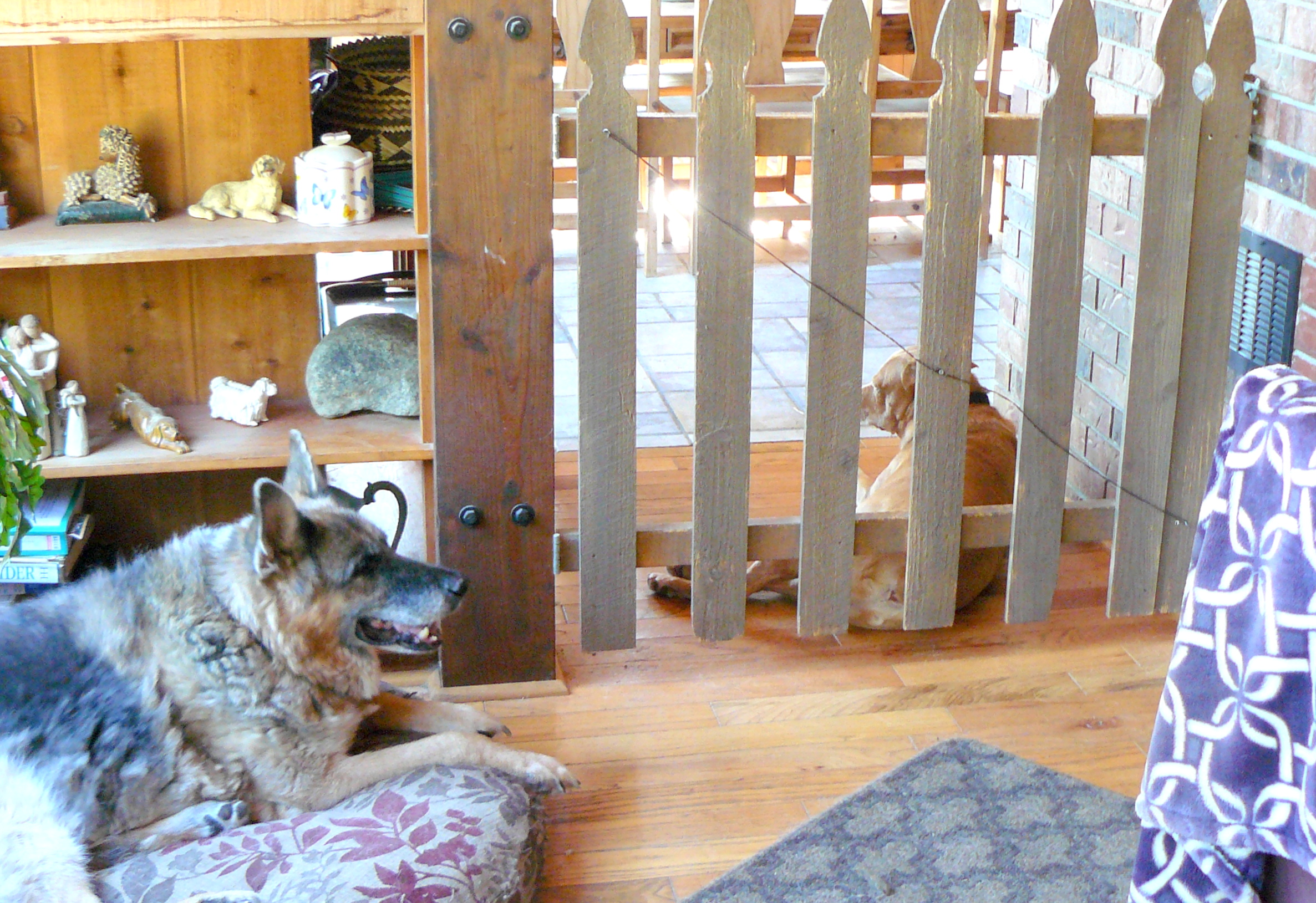
Our nine dogs are divided into two groups. One group lives in the kitchen/dining-room area (Casey, Paloma and Ruby) and the other dogs in the living-room/bedroom area (Pharaoh, Sweeny, Pedy, Oliver, Cleo and Brandy).

These two groups are separated by a gate, as seen here with Pharaoh resting on his bed and Casey at ease just on the other ‘kitchen’ side.

P1160402Both Jean and I go between the two areas via the gate many times daily.

Last Sunday evening, as Jean was going to the kitchen, Casey stuck his head through one of the vertical spaces in the gate and must have become stuck albeit what then happened was upon us in a flash. For Brandy grabbed the left-hand side of Casey’s face with his own jaw and the two dogs were locked together. It was a bit of a struggle to separate Brandy from Casey and when we took a look at Casey’s face it was clear that there was a laceration along his lower, left-hand lip. However, he did not appear to be in pain and we all proceeded to bed.

On the Monday morning after I had returned from my bike ride with a local group of neighbours I queried with Jean whether or not we should just check that Casey wasn’t too badly injured despite the fact that Casey was showing no signs of discomfort. Nevertheless, his wound was not a pretty sight and a quick call to our neighbour Jim Goodbrod, who is also a Doctor of Veterinary Medicine (DVM), resulted in Jim saying to bring Casey round to his place then and there.

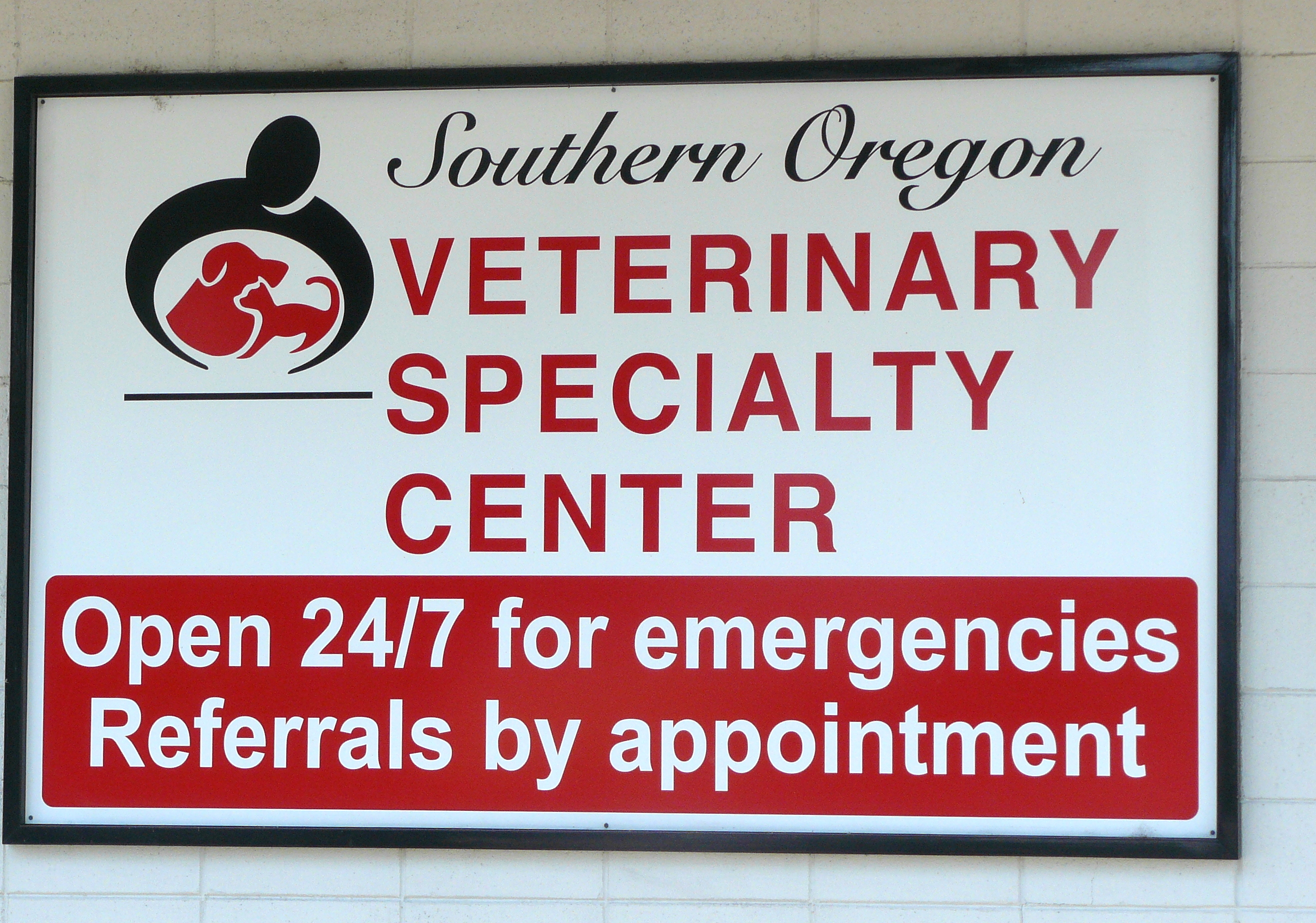
We are glad that we did for Jim quickly discovered that the laceration was not only to Casey’s lower lip but that much of his gum below the gum line along Casey’s teeth had been torn away exposing the jaw bone. Jim said that this required specialist attention and had no hesitation in recommending Southern Oregon Veterinary Speciality Center (SOVSC) in Medford, about 40 miles to the South. Jim went inside his house and made an appointment for us to take Casey to SOVSC for 2pm that afternoon.

P1160385We had previously been to SOVSC with Hazel and were impressed with their level of expertise and experience and the fact that they were open twenty-four hours every day of the week!

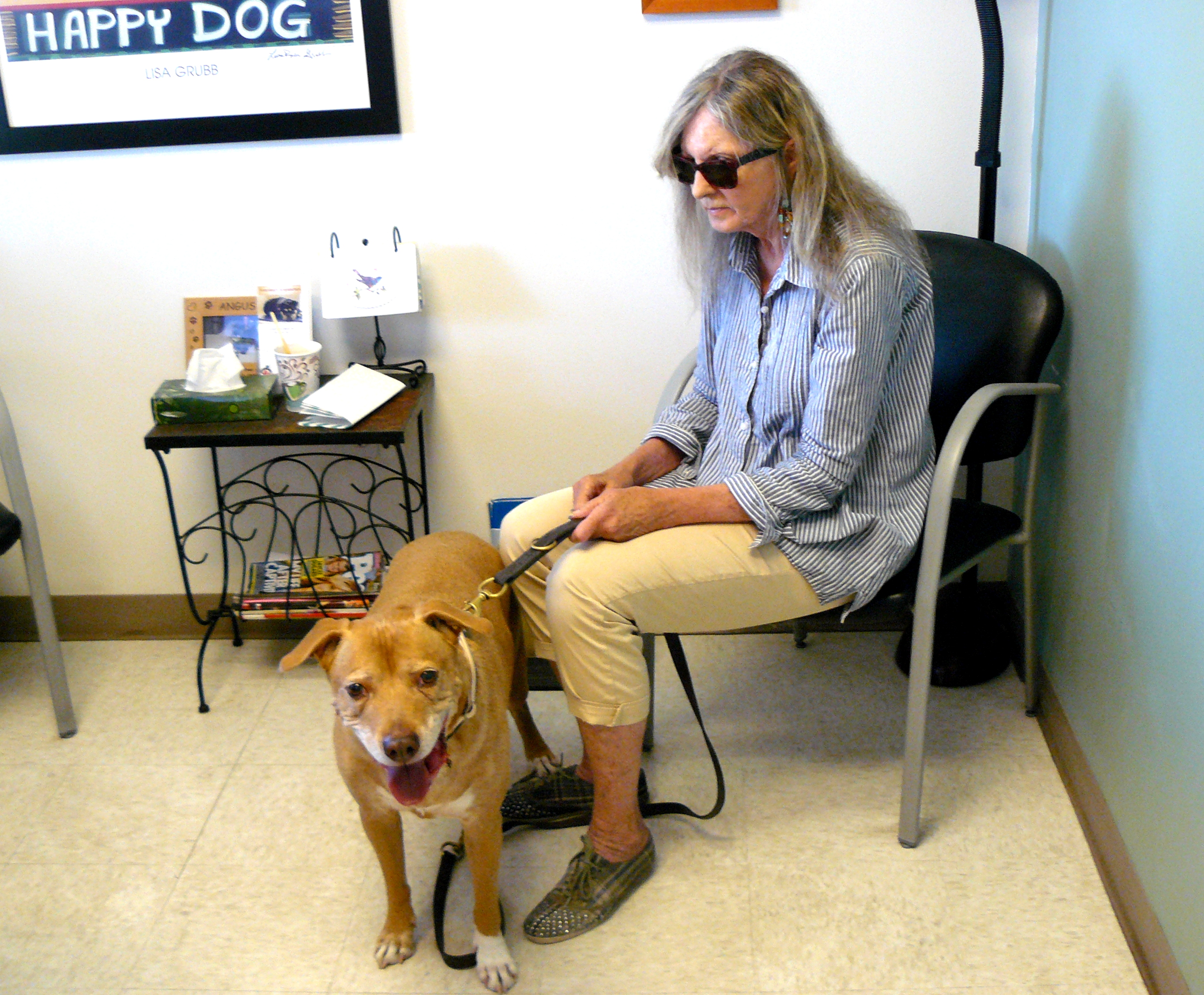
By the time we arrived Casey had been allocated to be seen by Dr. Adam Reiss, DVM, and very soon after arrival we were shown into a side room awaiting Dr. Reiss’s medical assistant.

P1160382Dr. Reiss then arrived and explained that Casey’s lip and gum would require suturing under a general anesthetic but that they could fit it in that afternoon albeit Casey would not be ‘back on his feet’ until 6pm at the earliest. Of course, we agreed and shortly thereafter Casey quietly and calmly was led away by Dr. Reiss’s assistant.

Jean and I then went the short distance to the centre of Medford, did a bit of shopping, had an early dinner and returned to SOVSC shortly before 6pm.

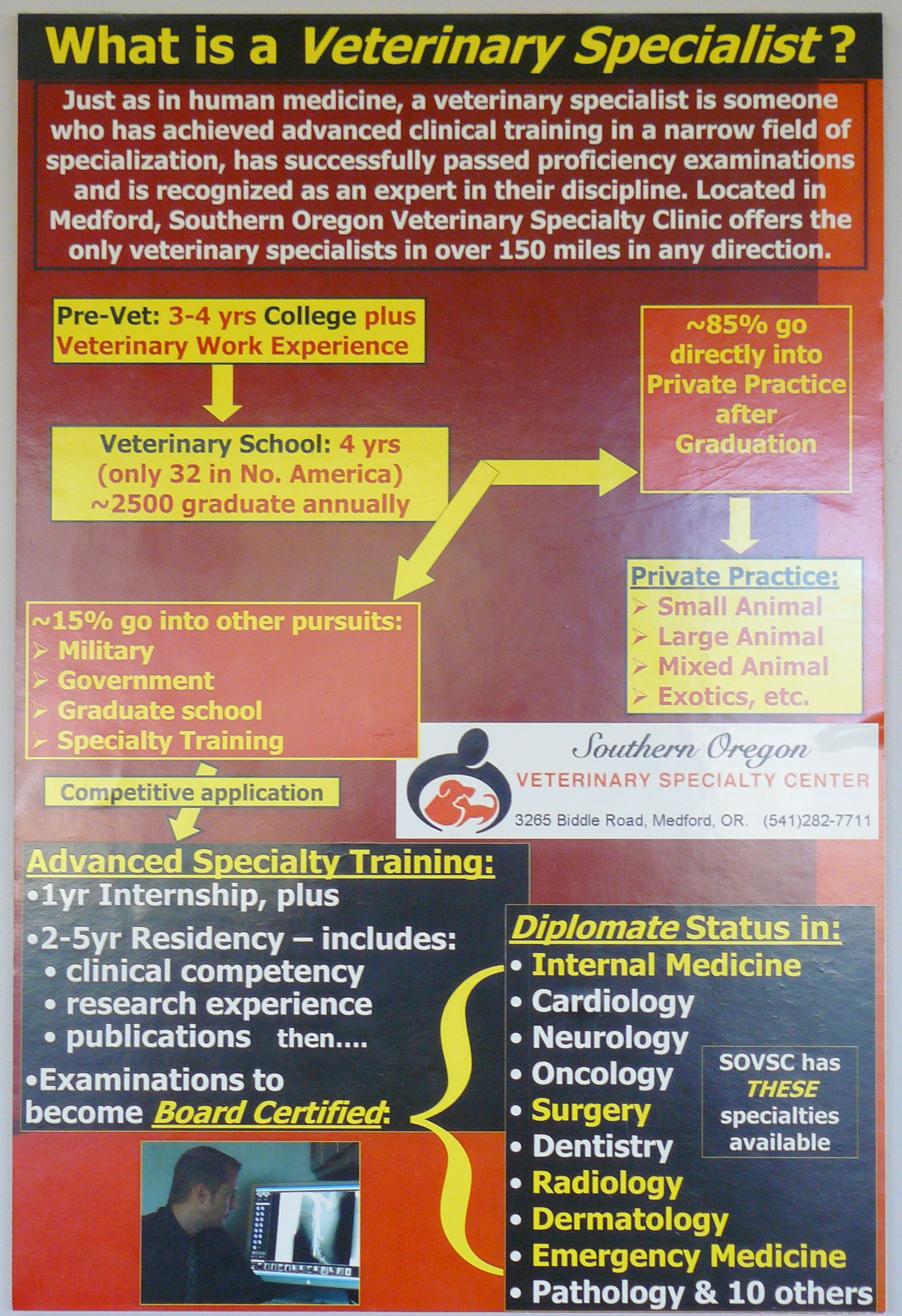
While we were waiting for news I was interested to read a prominently displayed sign setting out what constituted a veterinary specialist. (I’ve included the image at a larger size to make it easier for you to read it.)

P1160388Clearly there is more to caring for one’s pet than meets the eye.

Indeed, SOVSC’s web site introduces readers in this fashion:

At Southern Oregon Veterinary Specialty Center, we understand the special bond between a pet and their human family. Our team of highly trained doctors, certified technicians and support staff partner with your family veterinarian to provide specialized diagnostics, surgery and emergency care for your pet upon a referral or emergency basis. Our clinic is staffed 24 hours-a-day, 7 days a week, to receive emergency cases and to monitor our critical care patients. The clinic’s board-certified veterinary specialists and staff are committed to providing exceptional compassionate care utilizing state-of-the-art technology and treatments.

The relationships we have with partner veterinarians are vital to the success of treating your pet. We will keep them apprised of the patient’s status to provide a smooth and cohesive experience.

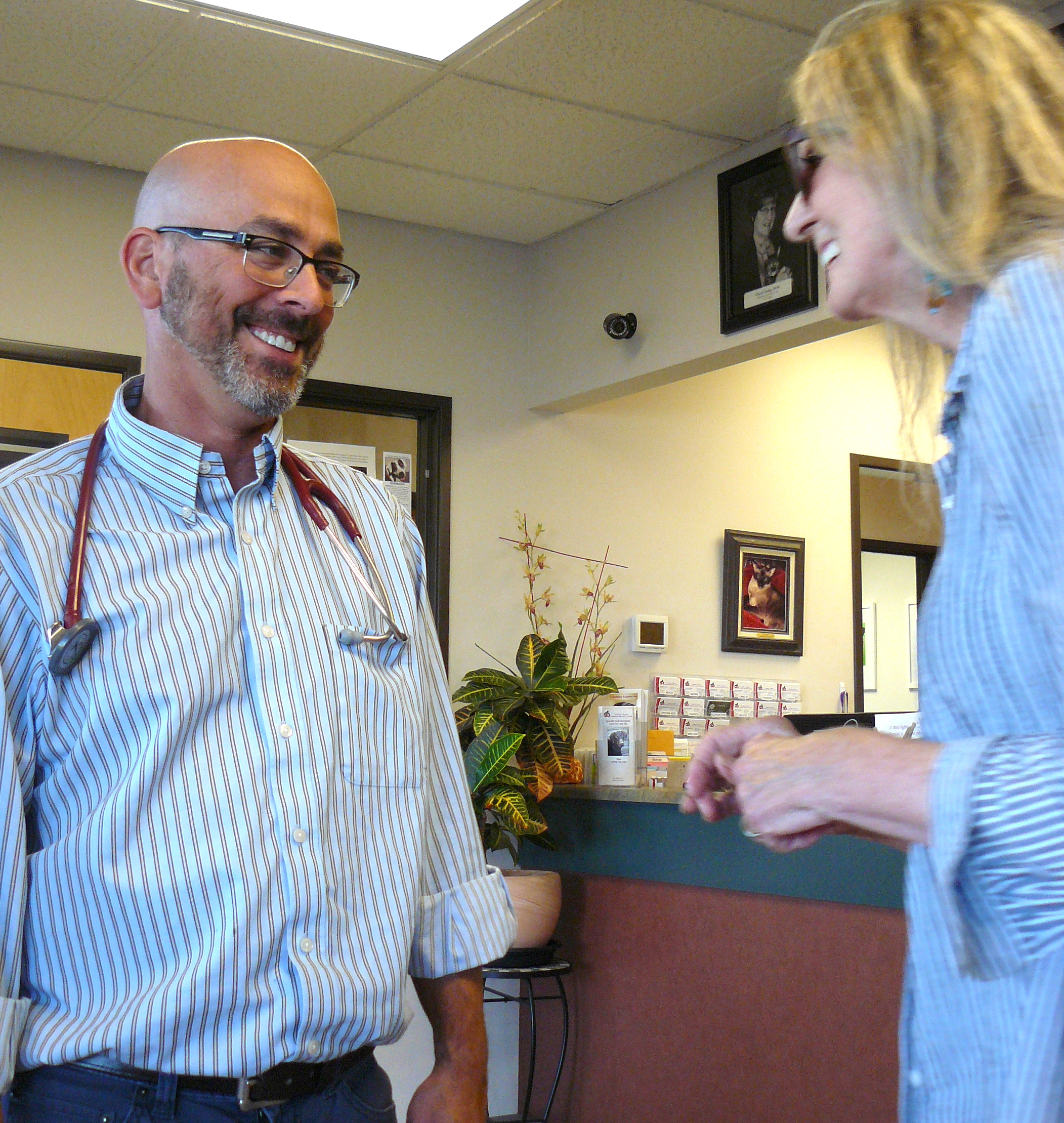
Jim Goodbrod speaks highly of the Center.

P1160387Dr. Reiss duly came out to speak with us and explained that all had gone well although Casey was still groggy but back on his feet. Despite the smiling face Dr. Reiss looked pretty tired. Not surprising when one reflects that the time was well past 6pm.

In an earlier conversation with some of the staff it was reported that, on average, some thirty animals were seen every day!

That’s commitment to the cause in any language!

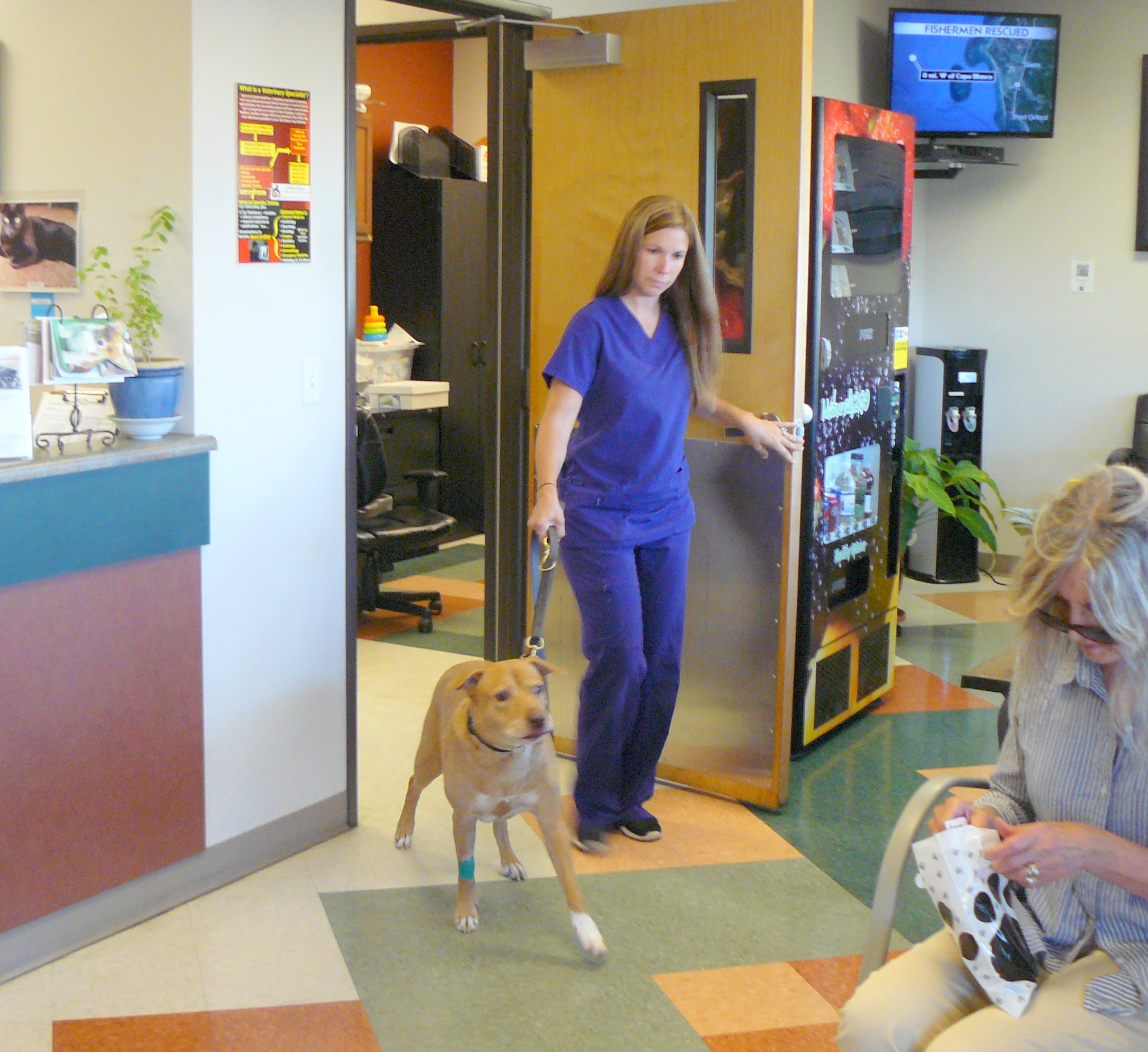
Then it wasn’t long before our dear Casey was being led back into the front waiting area.

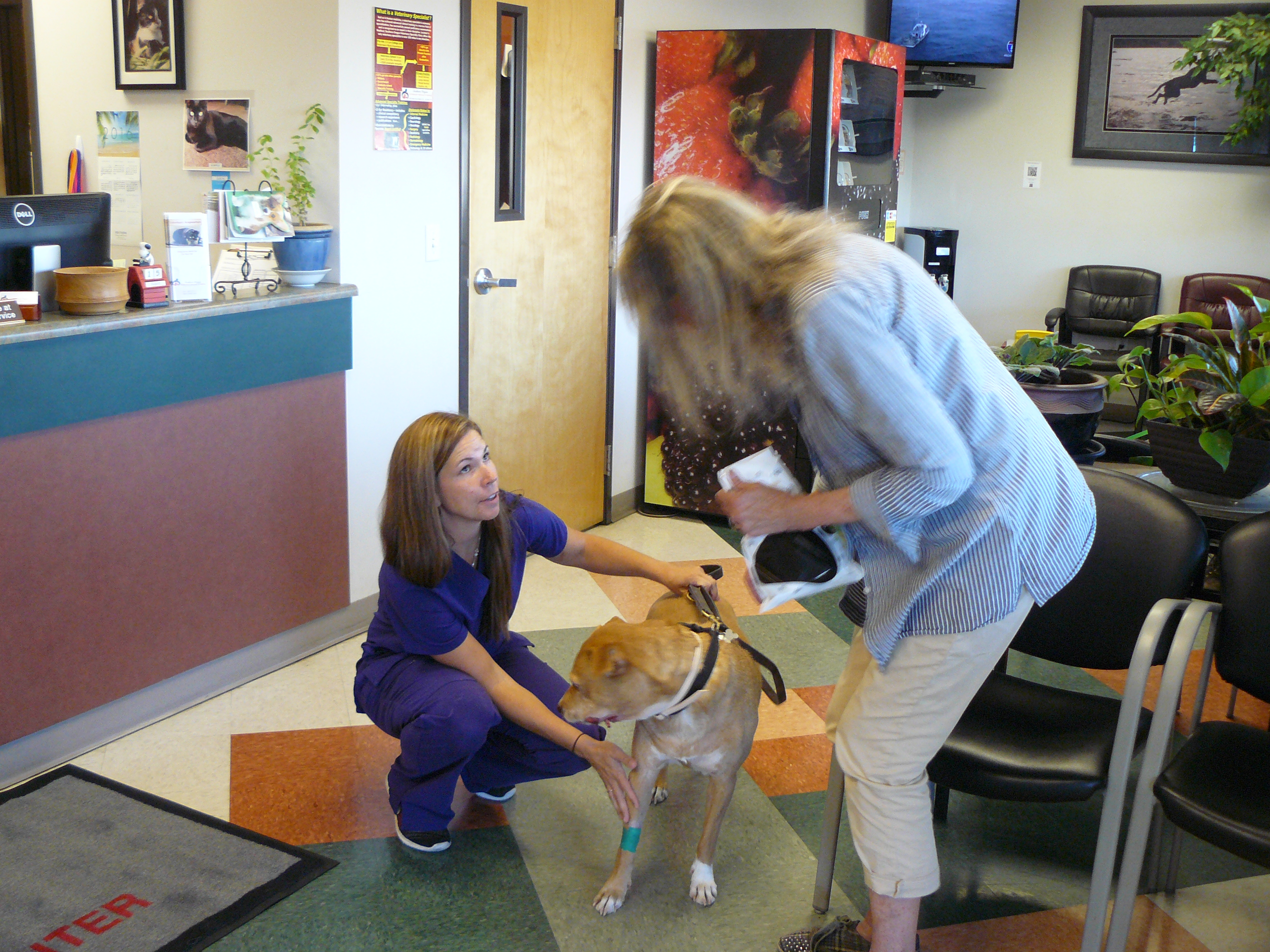
P1160389To be followed moments later by the assistant (apologies for not making a note of her name) setting out the details of how Casey had to be cared for over the coming hours and days.

P1160391The verbal guidance was supported by extensive notes.

Then it was a case of yours truly paying for all the services that had been provided for Casey and time to go home.

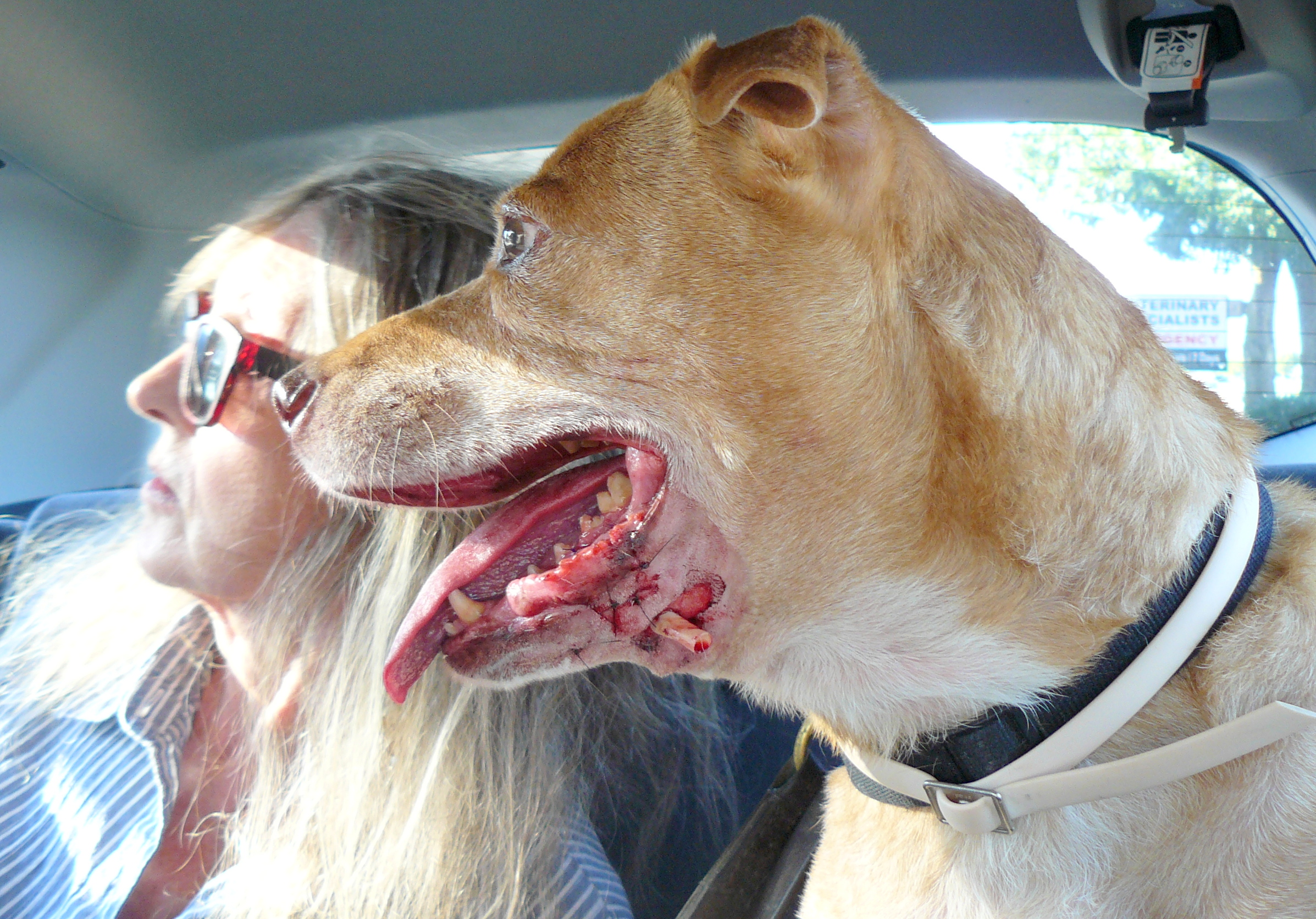
The car was rearranged to give room for Casey to sit on the rear seats with Jean next to him. I took the opportunity to take a photograph of the two of them that showed clearly the extent of the suture and the drain that had been inserted into Casey’s mouth.

P1160394It was beyond me to comprehend how Casey was so nonchalent to what in any human’s experience would have been hurting big time.

An hour later we were all home and getting dogs, cats and horses fed a lot later than normal.

Miracle of miracles Casey made it comfortably through the night and the following photograph was taken a little after 9:30 am yesterday morning.P1160400Well done all involved!

Thank you to Jim and all the doctors and staff at SOVSC but the biggest thank you of them all must go to Casey!!

Life’s Lottery: For humans and animals alike!

No post today!

We had a medical emergency with one of our dogs yesterday.

We only returned home a little after 8pm.

The details, and it was a good outcome, will comprise tomorrow’s post.

Just takes one’s breath away.

The incredible story of one stray dog and a desert racer.

This has been widely reported in many other places but, nonetheless, seemed a perfect fit for a blog called Learning from Dogs!

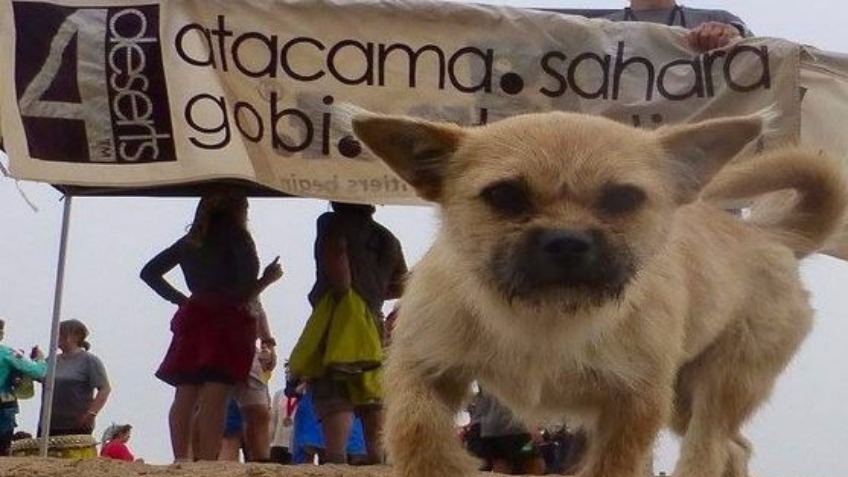
This is the story of a stray dog that took a liking to a runner participating in the 2016 Gobi March 4 Deserts race in China. I first saw the story when it was carried on the Care2 Causes site.

How hard are you willing to work to improve your position in life? For one stray dog, the answer is: pretty darn hard.

During the 2016 Gobi March 4 Deserts race in China, extreme runner Dion Leonard from Scotland was racing through the rugged terrain of the Tian Shan mountain range. That’s when a stray female pooch (eventually and aptly named) Gobi started following him.

The runner figured that she’d tire out eventually. She was a small dog, so keeping up with a life-sized human (who is an extreme jogger) probably didn’t seem likely. But amazingly, the little dog kept up.

That Care2 report linked to the UK’s Independent Newspaper who opened the story thus:

Man who befriended stray dog during extreme desert marathon launches reunion appeal

The dog ran alongside Dion Leonard for 124 kilometres

May Bulman Tuesday 2 August 2016

Mr Leonard hopes to be reunited with the dog who ran with him during the 250 kilometre race in the Gobi desert 4Deserts.com / Omni Cai

An extreme marathon runner has launched an appeal to be reunited with a stray dog with whom he formed an “unbreakable bond” during a 250-kilometre (155 mile) race in the Gobi desert in China.

Dion Leonard, 41, hopes to raise the funds that will allow him to be reunited with the dog, named Gobi, who joined him during the annual 4 Deserts Race Series in March.

Gobi began running alongside the 101 competitors as they ran through the Tian Shan mountain range. Despite her small size the dog managed to run half of the race.

Later on in that Independent article it is reported:

Mr Leonard set up the crowdfunding page to raise funds towards organising for Gobi to be transported from China to live with him in Scotland.

The process will take up to four months and cost £5,000, with the dog having to be medically checked and quarantined before she can be cleared for entry.

A simple mouse click then takes the reader to that Crowdfunding page where the headline then shows that already over £19,000 has been raised.

90358That page explains:

Gobi, a friendly stray dog joined 101 other competitors running 250km over the Tian Shan Mountains down to the Black Gobi Desert during a 6 stage 7 day self sufficiency foot race. Gobi ran 4 stages including the final 10km stage to the finish line, showing unique strength and stamina for a little dog to keep up with the runners in such grueling conditions.

90358-0742f368adef57f7a59875929a05e67dEveryone from the competitors, volunteers and race crew fell in love with this little dog that captured all our hearts. Gobi took a shine to me and over the week we developed an unbreakable bond as I shared my sleeping space, food/water and ultimately our companionship. 

Now let’s hear from Dion.

Time and time again our wonderful dogs inspire us to reach out; to never say never!

Have a lovely day!

The lesson of love from our dogs just keeps rolling along.

Neighbour Dordie had the following sent to her in an email and, subsequently, passed it on to me.

I share it with you and hope that it brightens your day.

ooOOoo

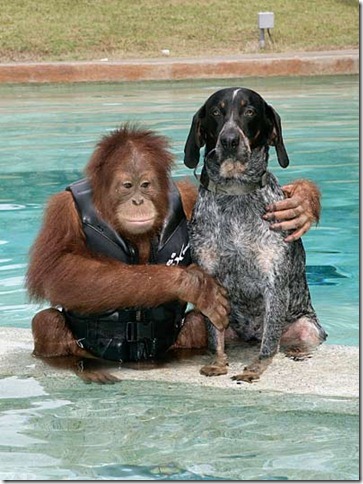
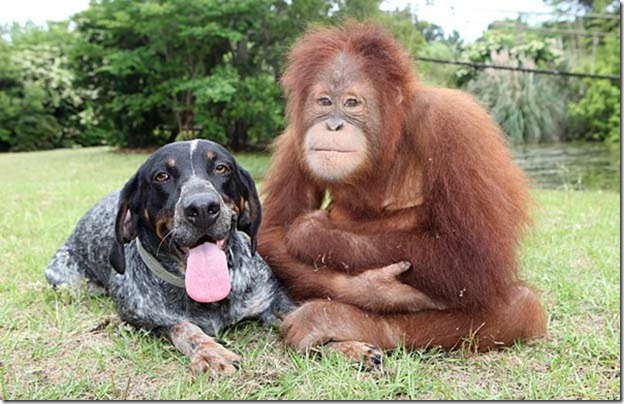
After losing his parents, this three-year-old orangutan was so depressed he wouldn’t eat and didn’t respond to any medical treatments.  The veterinarians thought he would surely die from sadness.

ATT00001The zoo keepers found an old sick dog on the grounds in the park at the zoo where the orangutan lived. They took the dog to the animal treatment center; the dog arriving at the same time that the orangutan was there being treated.

ATT00002The two lost souls met and have been inseparable ever since. The orangutan found a new reason to live and each always tries his best to be a good companion to his new-found friend. They are together 24-hours-a-day in all their activities.

ATT00003They  live in Northern California where swimming is their favorite past-time, although Roscoe (the orangutan) is a little afraid of the water and needs his friend’s help to swim.

ATT00004Together, they have discovered the joy and laughter in life and the value of friendship.
ATT00005They have found more than a friendly shoulder to lean on.
ATT00006Long Live Friendship!
I don’t know… some say life is too short, others say it is too long.

But, I know that nothing that we do makes sense if we don’t touch the hearts of others… While it lasts!

May you always have – Love to Share, Health to Spare, and Friends who Care… Even if they are a little hairy at times.

ooOOoo

Shared with you with the fondest love of Jean and me and all our furry friends.

A wonderful step forward.

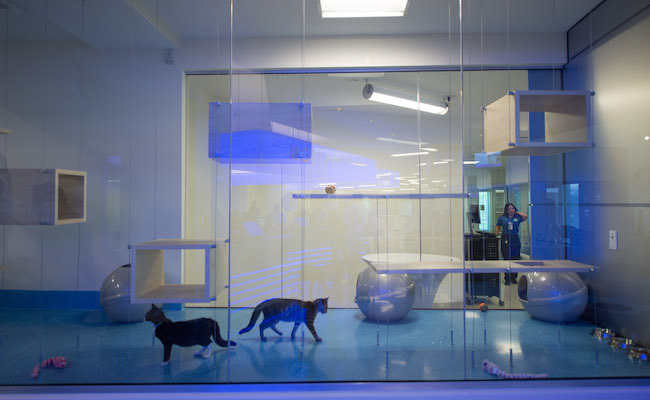
Setting a fabulous example of what an animal shelter should be like!

The chances are that the great majority of domestic animal lovers have an impression of the standard animal shelter. The chances are that this impression is not one of wall-to-wall approval. It is tragic that animal shelters are required but it is a fact of life that they are needed. Many of them depend heavily on volunteers and donated money.

But that’s not to say that there can’t be a shelter setting a very high example of how a shelter should be.

My prelude to the following article seen recently over on the Care2 site. Read and enjoy!

ooOOoo

All Shelters Should Look Like This

3185924.large

Picture Parade One Hundred and Fifty-Nine

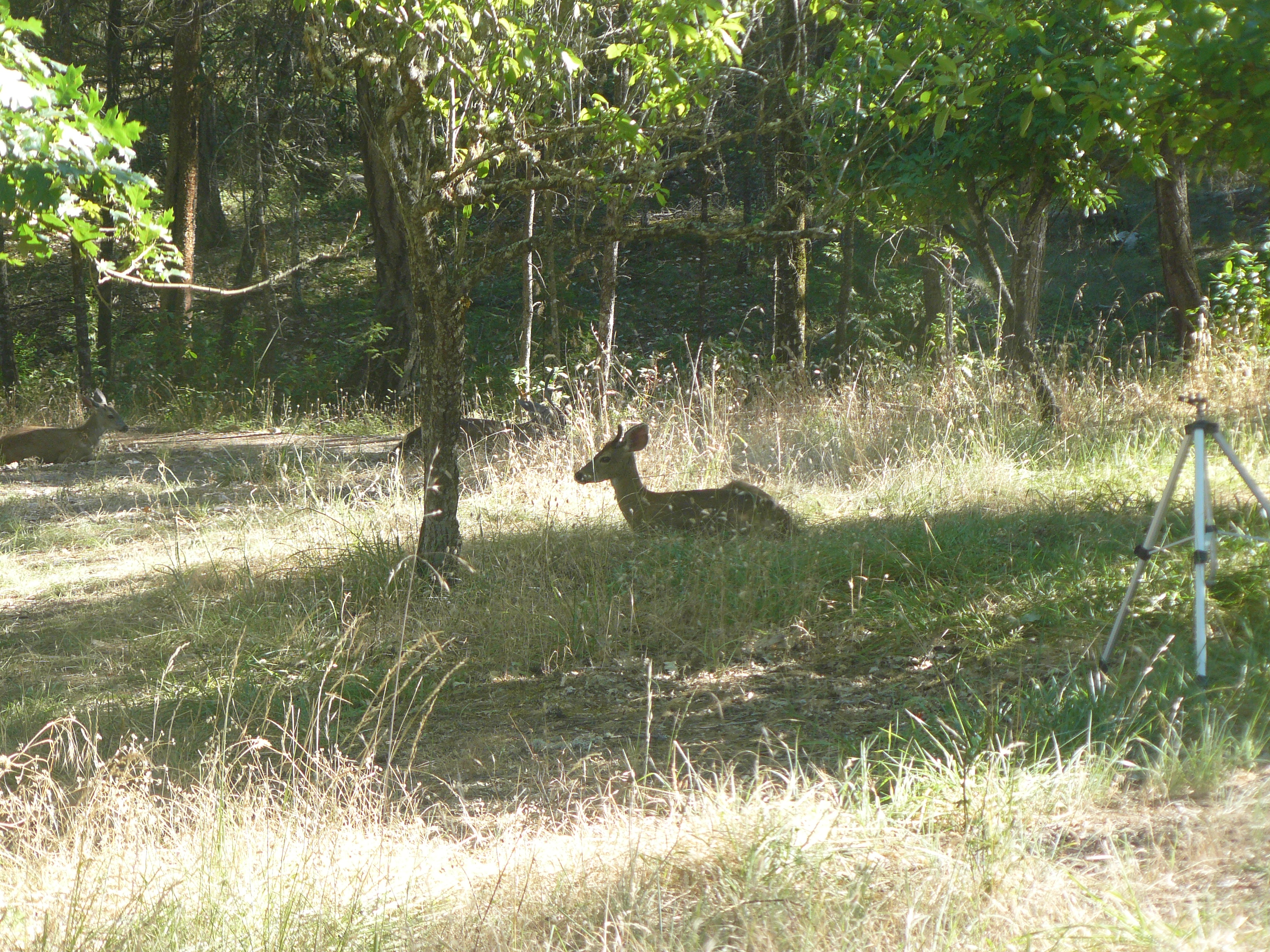
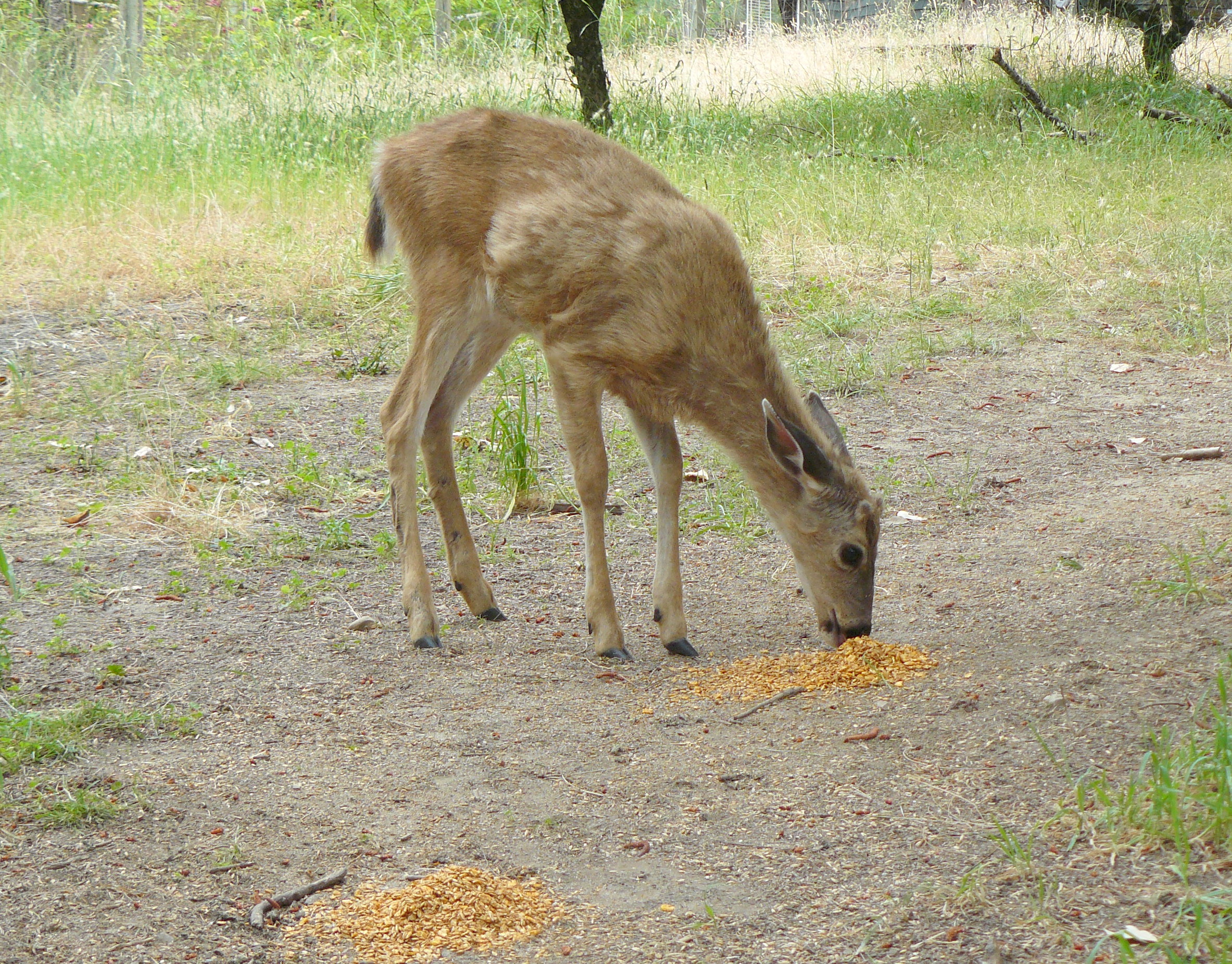
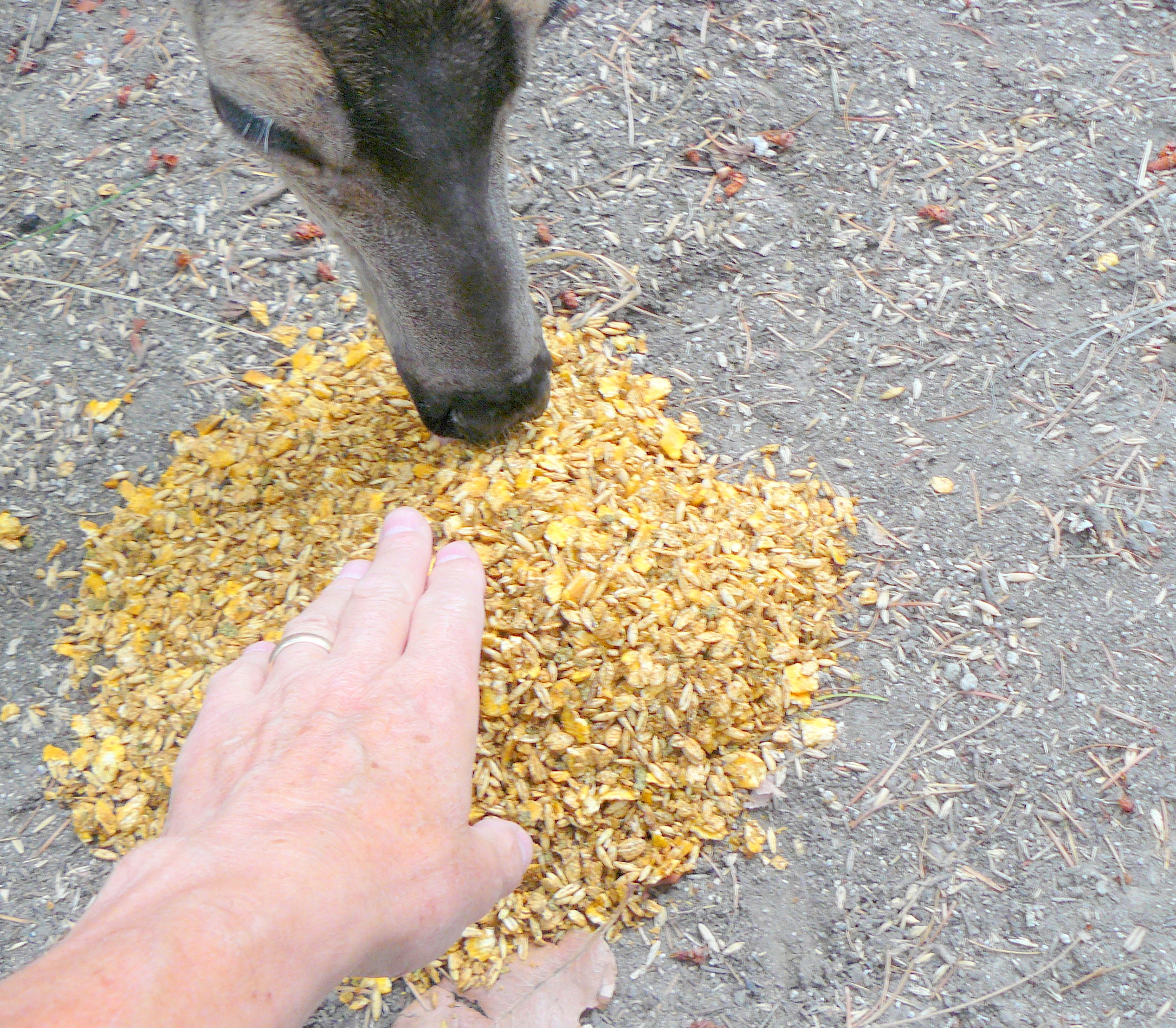
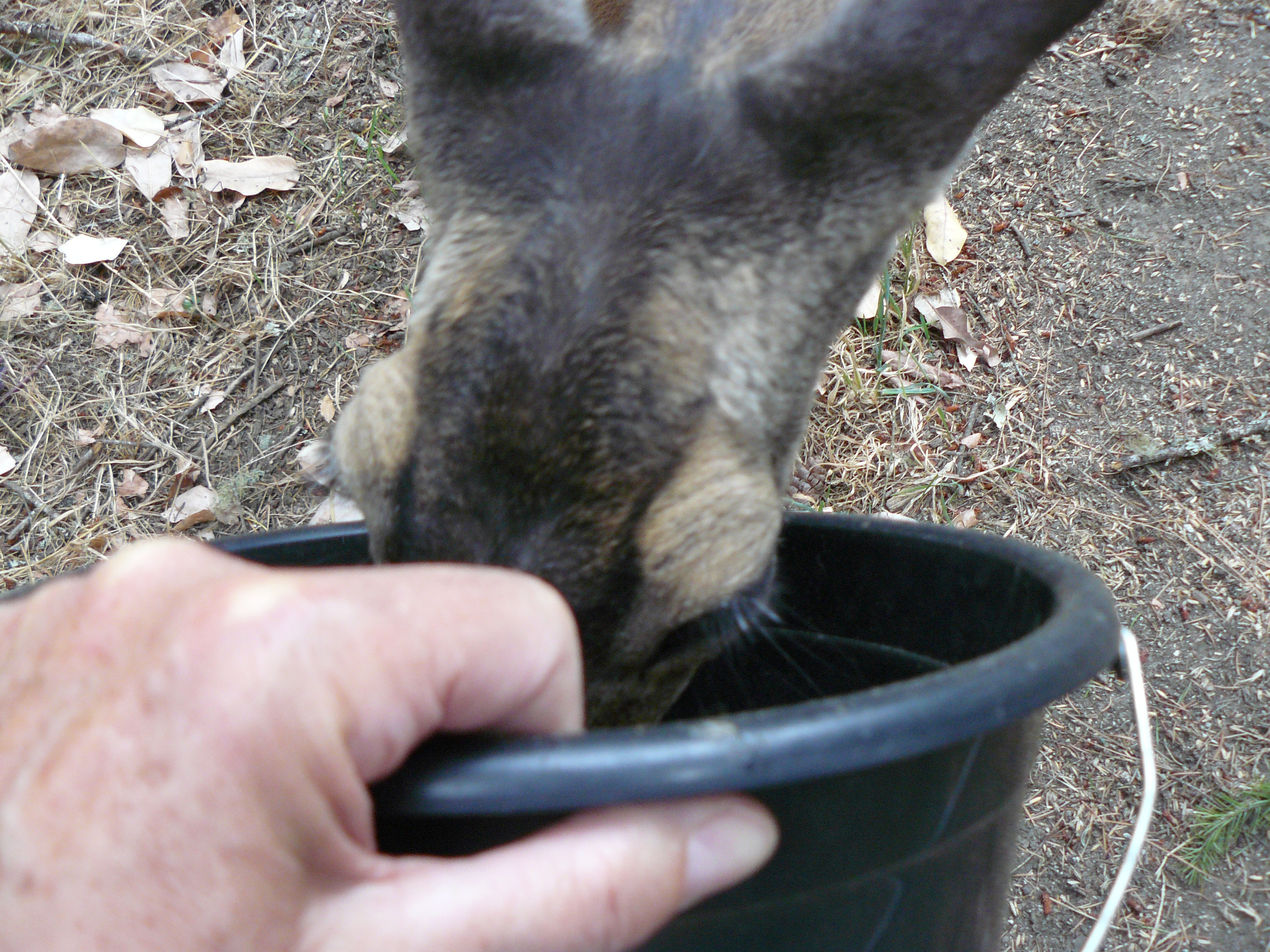
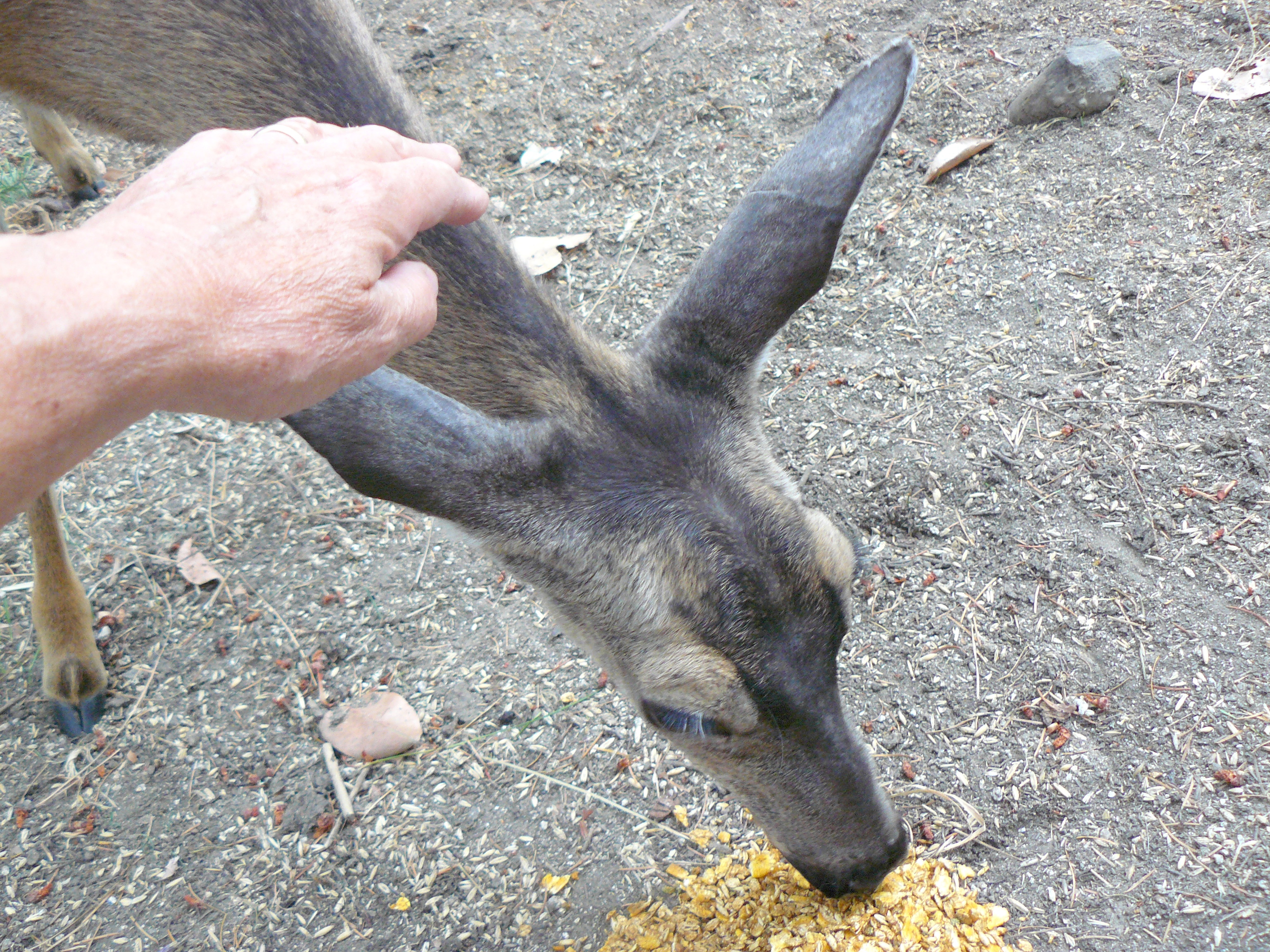
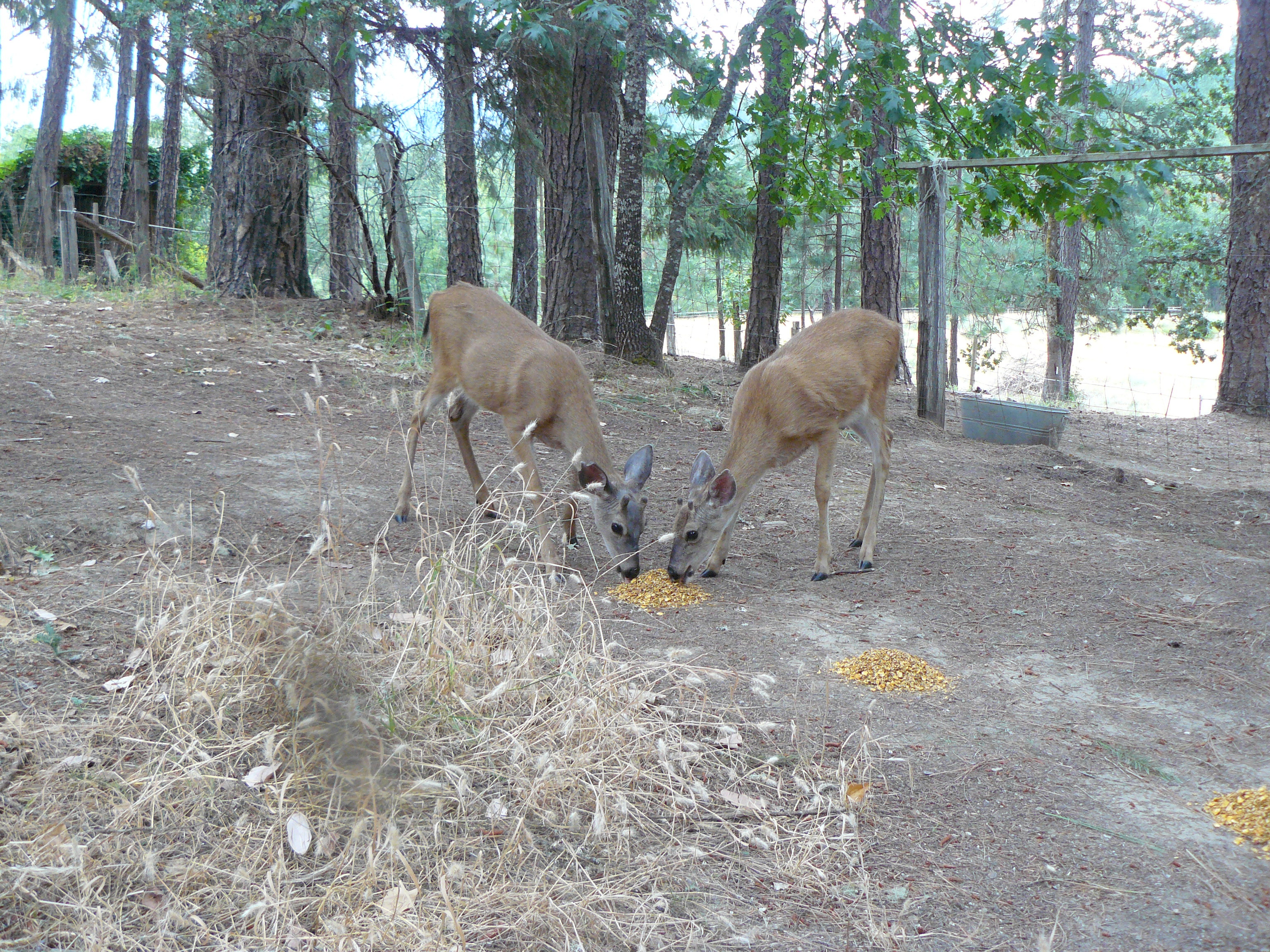
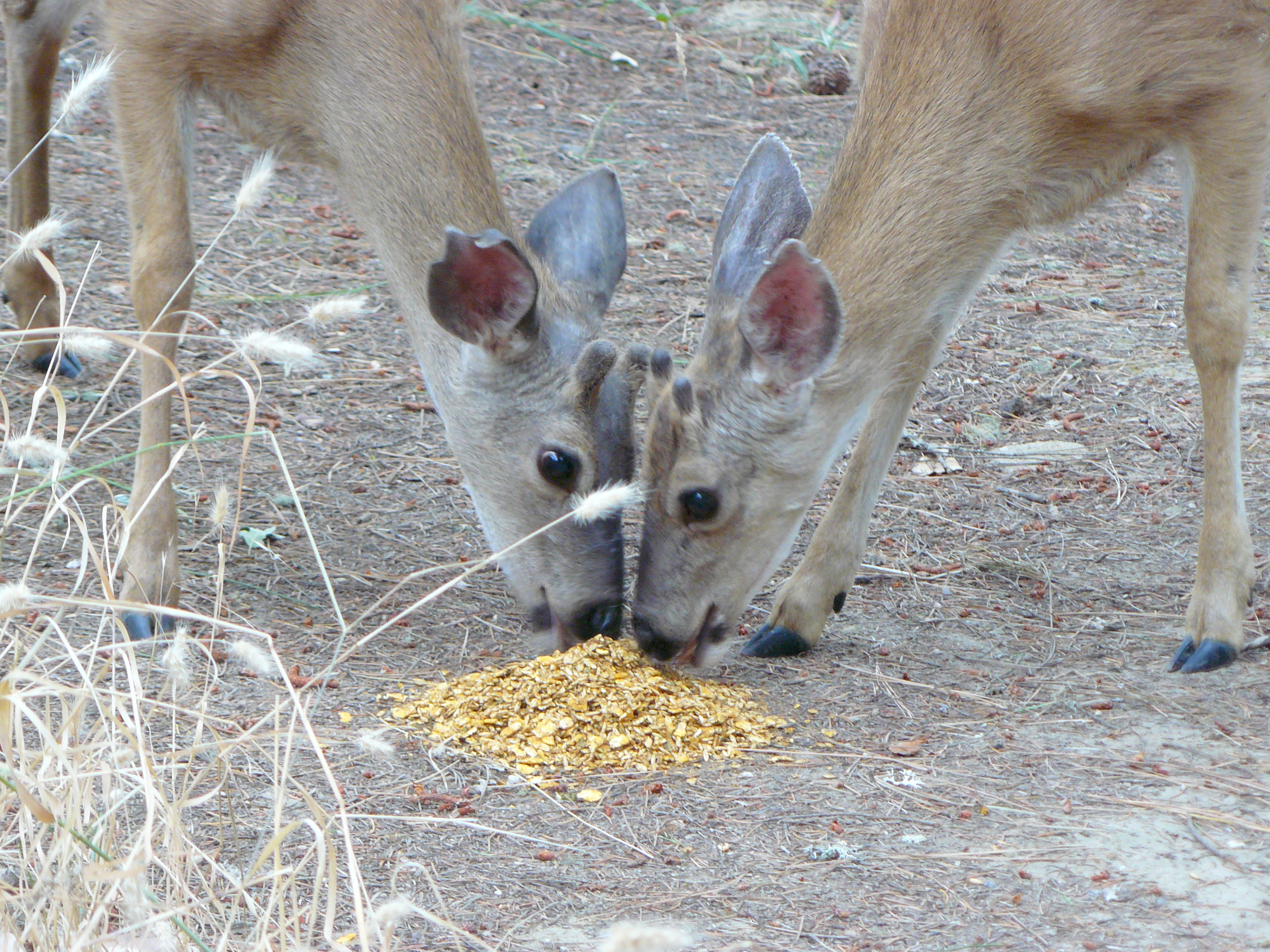
Continuing the photographs of the deer that visit our property.

(The first set of photographs was a week ago.)

P1160229oooo

P1160187oooo

P1160243oooo

P1160237oooo

P1160240oooo

P1160249oooo

P1160253Hope you all share the same warm feeling that Jean and I enjoy seeing these pictures.

Loving our dogs

even our deaf dogs!

Another day yesterday where my creative juices had evaporated; if that’s what creative juices do!

But that doesn’t devalue the following article in the slightest! An article that was recently read on the Care2 blogsite and is republished here for your pleasure.

ooOOoo

Prisoners Care for Deaf Dogs Displaced by Wildfire

3185692.large By: Laura Goldman  August 3, 2016