Year: 2012

Getting a good night’s sleep

Some fascinating insights into the nature of sleep.

Of the eleven dogs that we have at home, five are in what Jean and I call our bedroom group.  That group consists of Pharaoh, he of the LfD home page, young puppy GSD Cleo, little Jack Russell cross Sweeny, ex-Mexican rescue dogs Dhalia and Hazel.

Dhalia
Puppy Cleo

Most nights all of them except Pharaoh compete for space on the bed.  Turning over, as we all do during our sleep, is a challenge and I often have to be awake to accomplish the task.  Plus Cleo especially loves to wake me for an early-morning pee around 5am.  Don’t get me wrong, I wouldn’t have it any other way as much of the night, when I have turned to face the edge of the bed, my arm is around either Hazel or Dhalia.  To sleep with an arm around a dog that is cuddled into one’s chest is to stir wonderings of early man sleeping with his (her) dogs many thousands of years ago.

Plus one of the consequences of our regular fasting on Thursday and Friday of each week is that the reduced calorie intake seems to act as a diuretic for me; ergo, I am taking regular trips to the bathroom during the night!

Anyway, the result of these disturbed patterns of ‘sleeping’ is that my ambition of an unbroken 8 hours of sleep is rarely achieved.  So it was with great interest that I saw an article on the Big Think website, “Rethinking the 8-Hour Sleep Imperative, or Why You Should Take Naps“.  Here’s how it opened,

A restful night that includes eight hours of uninterrupted sleep is now more of a fallacy than ever before, partially because technology has demanded we attend to work, family and friends at all hours of the day. “[R]oughly 41 million people in the United States—nearly a third of all working adults—get six hours or fewer of sleep a night, according to a recent report from the Centers for Disease Control and Prevention.” But our own rigidity with respect to sleep patterns may be causing us harm, too, as we demand our bodies conform to the eight-hour regimen rather than observing more natural rhythms.

At the bottom there was a link to an article on The New York Times Sunday Review called Rethinking Sleep.  That set out, following from above,

And sleep deprivation is an affliction that crosses economic lines. About 42 percent of workers in the mining industry are sleep-deprived, while about 27 percent of financial or insurance industry workers share the same complaint.

The author, David K. Randall*, went on to write,

The idea that we should sleep in eight-hour chunks is relatively recent. The world’s population sleeps in various and surprising ways. Millions of Chinese workers continue to put their heads on their desks for a nap of an hour or so after lunch, for example, and daytime napping is common from India to Spain.

One of the first signs that the emphasis on a straight eight-hour sleep had outlived its usefulness arose in the early 1990s, thanks to a history professor at Virginia Tech named A. Roger Ekirch, who spent hours investigating the history of the night and began to notice strange references to sleep. A character in the “Canterbury Tales,” for instance, decides to go back to bed after her “firste sleep.” A doctor in England wrote that the time between the “first sleep” and the “second sleep” was the best time for study and reflection. And one 16th-century French physician concluded that laborers were able to conceive more children because they waited until after their “first sleep” to make love. Professor Ekirch soon learned that he wasn’t the only one who was on to the historical existence of alternate sleep cycles. In a fluke of history, Thomas A. Wehr, a psychiatrist then working at the National Institute of Mental Health in Bethesda, Md., was conducting an experiment in which subjects were deprived of artificial light. Without the illumination and distraction from light bulbs, televisions or computers, the subjects slept through the night, at least at first. But, after a while, Dr. Wehr noticed that subjects began to wake up a little after midnight, lie awake for a couple of hours, and then drift back to sleep again, in the same pattern of segmented sleep that Professor Ekirch saw referenced in historical records and early works of literature.

Later on, Mr. Randall highlights a NASA study …

In a NASA-financed study, for example, a team of researchers led by David F. Dinges, a professor at the University of Pennsylvania, found that letting subjects nap for as little as 24 minutes improved their cognitive performance.

then reports that,

Robert Stickgold, a professor of psychiatry at Harvard Medical School, proposes that sleep — including short naps that include deep sleep — offers our brains the chance to decide what new information to keep and what to toss. That could be one reason our dreams are laden with strange plots and characters, a result of the brain’s trying to find connections between what it’s recently learned and what is stored in our long-term memory. Rapid eye movement sleep — so named because researchers who discovered this sleep stage were astonished to see the fluttering eyelids of sleeping subjects — is the only phase of sleep during which the brain is as active as it is when we are fully conscious, and seems to offer our brains the best chance to come up with new ideas and hone recently acquired skills. When we awaken, our minds are often better able to make connections that were hidden in the jumble of information.

Anyway, do go and read the full article or, perhaps, follow the example of your dog!

Meanwhile, I think I will just take a little …….. nap!

* David K. Randall is a senior reporter at Reuters and the author of “Dreamland: Adventures in the Strange Science of Sleep.”

The best and the worst of mankind – the worst.

This makes me so sick I can’t find an appropriate heading!

Just read this from the October edition of The National Geographic magazine!

Ivory Worship

Thousands of elephants die each year so that their tusks can be carved into religious objects. Can the slaughter be stopped?

By Bryan Christy

Photographs by Brent Stirton, Reportage by Getty Images

IN JANUARY 2012 A HUNDRED RAIDERS ON HORSEBACK CHARGED OUT OF CHAD INTO CAMEROON’S BOUBA NDJIDAH NATIONAL PARK, SLAUGHTERING HUNDREDS OF ELEPHANTS—entire families—in one of the worst concentrated killings since a global ivory trade ban was adopted in 1989. Carrying AK-47s and rocket-propelled grenades, they dispatched the elephants with a military precision reminiscent of a 2006 butchering outside Chad’s Zakouma National Park. And then some stopped to pray to Allah. Seen from the ground, each of the bloated elephant carcasses is a monument to human greed. Elephant poaching levels are currently at their worst in a decade, and seizures of illegal ivory are at their highest level in years. From the air too the scattered bodies present a senseless crime scene—you can see which animals fled, which mothers tried to protect their young, how one terrified herd of 50 went down together, the latest of the tens of thousands of elephants killed across Africa each year. Seen from higher still, from the vantage of history, this killing field is not new at all. It is timeless, and it is now.

The full terrible article is here – if you have the stomach to read it.

Photograph by Brent Stirton, Reportage by Getty Images
To keep the ivory from the black market, a plainclothes ranger hacks the tusks off a bull elephant killed illegally in Kenya’s Amboseli National Park. In the first half of this year six park rangers died protecting Kenya’s elephants; meanwhile, rangers killed 23 poachers.

The best and the worst of mankind – the best

An extraordinary view of the Universe

I first saw this report on the BBC News website,

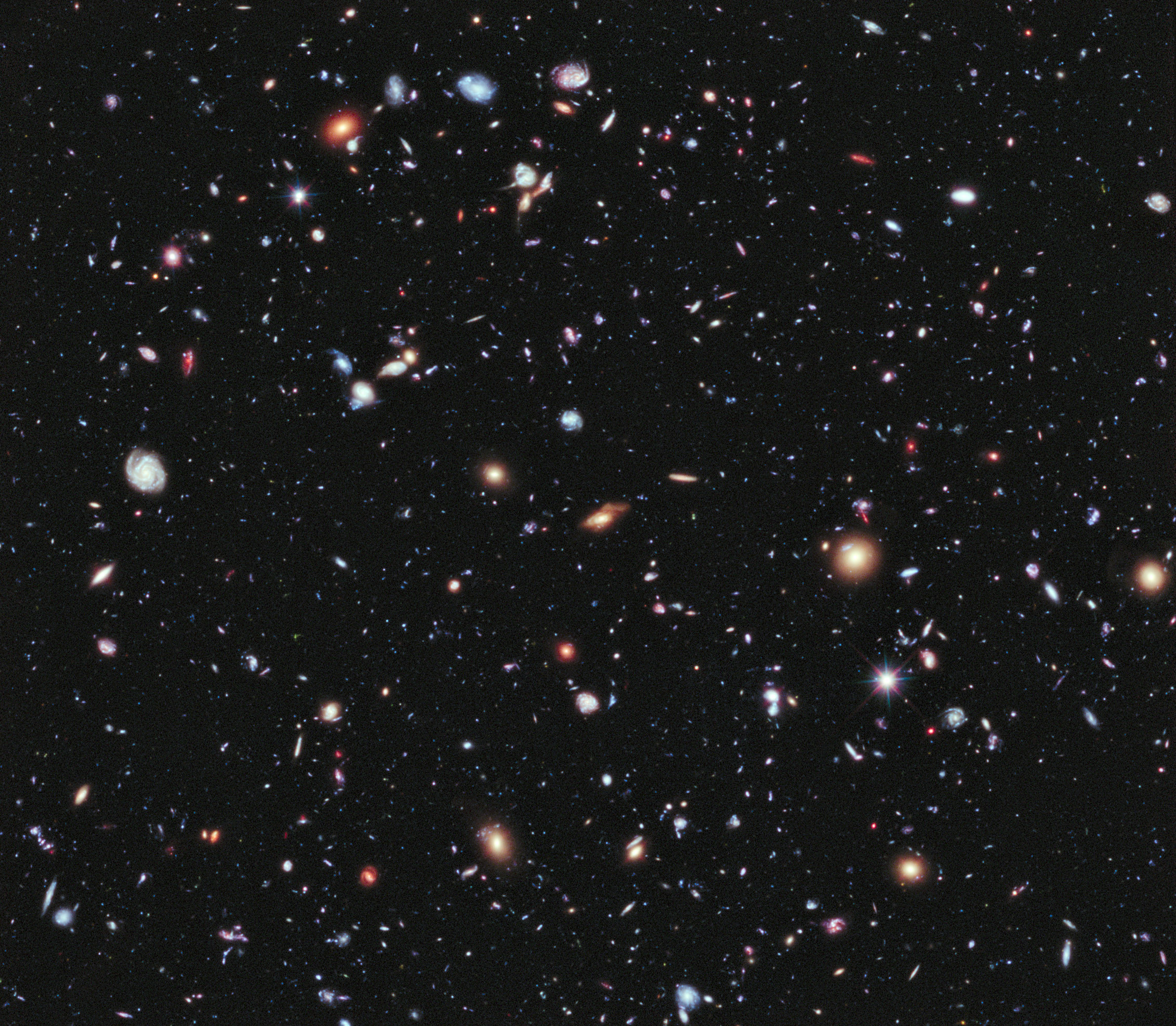
The Hubble Space Telescope (HST) has produced one of its most extraordinary views of the Universe to date.

Called the eXtreme Deep Field, the picture captures a mass of galaxies stretching back almost to the time when the first stars began to shine.

But this was no simple point and snap – some of the objects in this image are too distant and too faint for that.

Rather, this view required Hubble to stare at a tiny patch of sky for more than 500 hours to detect all the light.

“It’s a really spectacular image,” said Dr Michele Trenti, a science team member from the University of Cambridge, UK.

Then while the BBC News item had that stunning picture, over on the NASA website there was the following image together with more information.

Called the eXtreme Deep Field, or XDF, the photo was assembled by combining 10 years of NASA Hubble Space Telescope photographs taken of a patch of sky at the center of the original Hubble Ultra Deep Field. The XDF is a small fraction of the angular diameter of the full moon.

The Hubble Ultra Deep Field is an image of a small area of space in the constellation Fornax, created using Hubble Space Telescope data from 2003 and 2004. By collecting faint light over many hours of observation, it revealed thousands of galaxies, both nearby and very distant, making it the deepest image of the universe ever taken at that time.

The new full-color XDF image is even more sensitive, and contains about 5,500 galaxies even within its smaller field of view. The faintest galaxies are one ten-billionth the brightness of what the human eye can see.

Magnificent spiral galaxies similar in shape to our Milky Way and the neighboring Andromeda galaxy appear in this image, as do the large, fuzzy red galaxies where the formation of new stars has ceased. These red galaxies are the remnants of dramatic collisions between galaxies and are in their declining years. Peppered across the field are tiny, faint, more distant galaxies that were like the seedlings from which today’s magnificent galaxies grew. The history of galaxies — from soon after the first galaxies were born to the great galaxies of today, like our Milky Way — is laid out in this one remarkable image.

Hubble pointed at a tiny patch of southern sky in repeat visits (made over the past decade) for a total of 50 days, with a total exposure time of 2 million seconds. More than 2,000 images of the same field were taken with Hubble’s two premier cameras: the Advanced Camera for Surveys and the Wide Field Camera 3, which extends Hubble’s vision into near-infrared light.

“The XDF is the deepest image of the sky ever obtained and reveals the faintest and most distant galaxies ever seen. XDF allows us to explore further back in time than ever before”, said Garth Illingworth of the University of California at Santa Cruz, principal investigator of the Hubble Ultra Deep Field 2009 (HUDF09) program.

The universe is 13.7 billion years old, and the XDF reveals galaxies that span back 13.2 billion years in time. Most of the galaxies in the XDF are seen when they were young, small, and growing, often violently as they collided and merged together. The early universe was a time of dramatic birth for galaxies containing brilliant blue stars extraordinarily brighter than our sun. The light from those past events is just arriving at Earth now, and so the XDF is a “time tunnel into the distant past.” The youngest galaxy found in the XDF existed just 450 million years after the universe’s birth in the big bang.

Before Hubble was launched in 1990, astronomers could barely see normal galaxies to 7 billion light-years away, about halfway across the universe. Observations with telescopes on the ground were not able to establish how galaxies formed and evolved in the early universe.

Hubble gave astronomers their first view of the actual forms and shapes of galaxies when they were young. This provided compelling, direct visual evidence that the universe is truly changing as it ages. Like watching individual frames of a motion picture, the Hubble deep surveys reveal the emergence of structure in the infant universe and the subsequent dynamic stages of galaxy evolution.

The infrared vision of NASA’s planned James Webb Space Telescope will be aimed at the XDF. The Webb telescope will find even fainter galaxies that existed when the universe was just a few hundred million years old. Because of the expansion of the universe, light from the distant past is stretched into longer, infrared wavelengths. The Webb telescope’s infrared vision is ideally suited to push the XDF even deeper, into a time when the first stars and galaxies formed and filled the early “dark ages” of the universe with light.

The Hubble Space Telescope is a project of international cooperation between NASA and the European Space Agency. NASA’s Goddard Space Flight Center in Greenbelt, Md., manages the telescope. The Space Telescope Science Institute (STScI) in Baltimore, Md., conducts Hubble science operations. STScI is operated by the Association of Universities for Research in Astronomy, Inc., in Washington.

What a fabulous achievement.  Just think that “The faintest galaxies are one ten-billionth the brightness of what the human eye can see.” and “The history of galaxies — from soon after the first galaxies were born to the great galaxies of today, like our Milky Way — is laid out in this one remarkable image.”  Plus, “The youngest galaxy found in the XDF existed just 450 million years after the universe’s birth in the big bang.

Do you know what crosses my mind looking at the picture?  All those galaxies with, presumably, tens of thousands of planets and, surely, the near certainty that intelligent life must be teeming across those trillions of miles!

Let me close with this YouTube video brought to my attention thanks to Peter Sinclair of Climate Crocks.

Watch this and other space videos at http://SpaceRip.com

We’ve all seen pictures of Earth from space, but have we really taken the time to appreciate what our planet looks like against the starscapes of the Milky Way galaxy? Here, we beckon viewers to see Earth in its cosmic context, which includes the stars, interstellar gases, the moon, the sun, and the solar winds. Be sure to watch in full HD, 1080p, and imagine you’re an astronaut aboard the International Space Station with a little time on your hands.

More seeing life

Sent in by John H.

As he wrote,

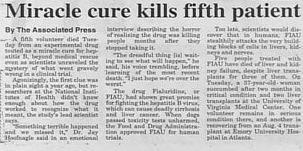
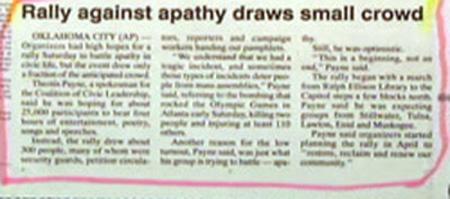
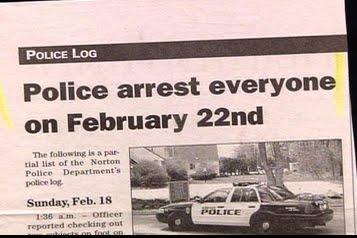
This is why we cannot let our newspapers go out of business… the light entertainment they provide is priceless!

Just wonderful – thanks John.

Brain-to-brain communication

Communication seems to be a bit of a theme just at present!

About 18 months ago, I wrote a piece on Learning from Dogs about Rupert Sheldrake’s fascinating book Dogs That Know When Their Owners Are Coming Home. The reason that this has come up again (and, as it happens, I’m rereading Sheldrake’s book just now) is a recent item on the Big Think website called Can We Have Brain-to-Brain Communication?  Here’s what was written.

Dr. Michio Kaku addresses the question of Collective Intelligence. Some people think that the next big innovation in the coming decades is not going to involve the Internet because we can already connect computers to the human mind. Therefore, Dr. Kaku says this brain-to-brain communication would involve not just the exchange of information, but also the transmission of emotions and feelings, “because these are also part of the fabric of our thoughts.”

There’s also an interesting 4-minute video by Dr. Kaku that may be accessed here.

But then again, many pet owners would probably take it for granted that our cats and dogs can read our mind, as Dr. Sheldrake rather entertainingly explains below.

Before closing today’s post, the research that Dr. Sheldrake has undertaken is very impressive.  His website is here, from which one learns that,

Dr. Sheldrake

Rupert Sheldrake, one of the world’s most innovative biologists and writers, is best known for his theory of morphic fields and morphic resonance, which leads to a vision of a living, developing universe with its own inherent memory.

He worked in developmental biology at Cambridge University, where he was a Fellow of Clare College. He was then Principal Plant Physiologist at the International Crops Research Institute for the Semi-Arid Tropics (ICRISAT), in Hyderabad, India. From 2005 to 2010 he was Director of the Perrott-Warrick project. , funded from Trinity College, Cambridge.

Rupert Sheldrake … Biography 
A Guide to the Website Rupert’s Science and Philosophy

The website is a very useful resource, as this section underlines,

Unexplained Powers of Animals

by Rupert Sheldrake

In the late 1980s and early 1990s I explored a variety of experimental approaches for the investigation of unexplained phenomena that might help to enlarge our scientific view of the world, summarised in my book Seven Experiments That Could Change the World: A Do-It-Yourself Guide to Revolutionary Science (1994).

One of the seven experiments concerned unexplained abilities of animals, and I published a series of papers on the unexplained powers of animals, see Papers on animals .

I summarised much of this research in my book Dogs That Know When Their Owners Are Coming Home, And Other Unexplained Powers of Animals (1999).

My research with Aimée Morgana into the telepathic powers of her African Grey Parrot, Nkisi, led to the celebrated debate at the London RSA with Prof Lewis Wolpert, which is featured on this website The Telepathy Debate 

More information is available on Nkisi, including a tape of one of his conversations with Aimée in The Nkisi project

So if your pet is looking at you as though they know what you are thinking – they probably are!

Sticks and stones

I make no apologies for today’s post being more emotional and sentimental.

The phrase ‘sticks and stones may break my bones but names will never hurt me‘ is well known throughout the English-speaking world and surprisingly goes back some way.  A quick web search found that in the The Christian Recorder of March 1862, there was this comment:

Remember the old adage, ‘Sticks and stones will break my bones, but words will never harm me’. True courage consists in doing what is right, despite the jeers and sneers of our companions.

So if in 1862 the saying was referred to as an ‘old adage’ then it clearly pre-dated 1862 by some degree.

A few days ago, Dusty M., here in Payson, AZ, sent me a short YouTube video called The Power of Words.  I’m as vulnerable as the next guy to needing being reminded about what’s important in this funny old world.  Then I started mulling over the tendency for all of us to be sucked into a well of doom and gloom.  Take my posts on Learning from Dogs over the last couple of days, as an example.

There is no question that the world in which we all live is going through some extremely challenging times but anger and negativity is not going to be the answer.  As that old reference spelt out so clearly, “True courage consists in doing what is right, despite the jeers and sneers of our companions.

So first watch the video,

then let me close by reminding us all that courage is yet something else we can learn from dogs.

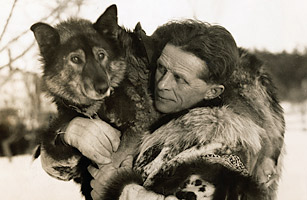
Togo the husky

In 1925, a ravaging case of diphtheria broke out in the isolated Alaskan village of Nome. No plane or ship could get the serum there, so the decision was made for multiple sled dog teams to relay the medicine across the treacherous frozen land. The dog that often gets credit for eventually saving the town is Balto, but he just happened to run the last, 55-mile leg in the race. The sled dog who did the lion’s share of the work was Togo. His journey, fraught with white-out storms, was the longest by 200 miles and included a traverse across perilous Norton Sound — where he saved his team and driver in a courageous swim through ice floes.

More about Togo another day.

Hear no evil; or is that hear no climate change?

A new angle on the famous ‘hear no evil, see no evil, speak no evil’ saying!

What climate change??

That new angle being ‘hear no climate change, see no climate change, speak no climate change!

So what has prompted this outburst from me?  It started with me seeing a truly scary graph that was on Peter Sinclair’s Climate Crock blogsite on the 20th September.  That was the graph that was published yesterday on Learning from Dogs under the post title of It’s not rocket science!  If you didn’t see that graph yesterday, don’t read further on until you have looked at it.

Thus while today’s post could easily be interpreted as yet another blogpost from yet another writer about climate change, that is not the case.  What I am doing is taking a quick trip across a few recently published items that really do make it utterly clear what is happening to the Earth’s biosphere, all in support of a very simple question to two gentlemen who are currently in the news; stay with me for all to become clear!

First, back to the blogsite Climate Crocks.  Under the title of Climate Denial Crock of the Week was a recent post by Peter Sinclair about a video from Dr. Jennifer Francis of Rutger’s Institute of Marine and Coastal Sciences.  (Go to that link to watch the video.)

However, this is what caught my eye, (an interview between Dr. Francis and Peter Sinclair).

What she told me in a recent interview was that the sea ice record is not something that we just pay attention to in September – there will, in fact, be reverberations that will make fall and winter “very interesting” around the globe.

Then it was easy to come across this piece on The Weather Channel website,

An unusually strong storm formed off the coast of Alaska on August 5 and tracked into the center of the Arctic Ocean, where it slowly dissipated over the next several days. The center of the storm was located in the middle of the Arctic Ocean.

On Wednesday, the National Snow and Ice Data Center concluded Arctic sea ice is at its lowest late-August level since records began, and the area covered by ice has continued to shrink in September. Since 1979, the 1.54 million square miles of ice is the smallest coverage on record at the North Pole, the report states.

With so many questions surrounding these latest findings, perhaps one of the most immediate is whether this melting of sea ice will affect the upcoming winter across the United States and Northern Hemisphere. Is it possible that a lack of Arctic sea ice could change weather patterns across the globe?

Four meteorologists spoke about these possibilities, and while they didn’t say dramatic weather shifts are imminent in the short-term, they did give some thoughts on what could happen.

One of the meteorologists was Dr. Jeff Masters, Director of Meteorology, Weather Underground. He wrote,

In my December 2011 blog post, I discuss research by Dr. Jennifer Francis of Rutgers University, who found that Arctic sea ice loss may significantly affect the upper-level atmospheric circulation, slowing its winds and increasing its tendency to make contorted high-amplitude loops. High-amplitude loops in the upper level wind pattern (and associated jet stream) increases the probability of persistent weather patterns in the Northern Hemisphere, potentially leading to extreme weather due to longer-duration cold spells, snow events, heat waves, flooding events, and drought conditions.

Several studies published in 2012 have linked Arctic sea ice loss to an increase in probability of severe winter weather in Western Europe, Eastern North America and Eastern Asia.

Then if one goes to that December 2011 blog post, one reads this,

“The question is not whether sea ice loss is affecting the large-scale atmospheric circulation…it’s how can it not?” That was the take-home message from Dr. Jennifer Francis of Rutgers University, in her talk “Does Arctic Amplification Fuel Extreme Weather in Mid-Latitudes?“, presented at last week’s American Geophysical Union meeting in San Francisco. Dr. Francis presented new research in review for publication, which shows that Arctic sea ice loss may significantly affect the upper-level atmospheric circulation, slowing its winds and increasing its tendency to make contorted high-amplitude loops. High-amplitude loops in the upper level wind pattern (and associated jet stream) increases the probability of persistent weather patterns in the Northern Hemisphere, potentially leading to extreme weather due to longer-duration cold spells, snow events, heat waves, flooding events, and drought conditions.

Further on in that blog post, one reads,

Arctic sea ice loss can slow down jet stream winds

Dr. Francis looked at surface and upper level data from 1948 – 2010, and discovered that the extra heat in the Arctic in fall and winter over the past decade had caused the Arctic atmosphere between the surface and 500 mb (about 18,000 feet or 5,600 meters) to expand. As a result, the difference in temperature between the Arctic (60 – 80°N) and the mid-latitudes (30 – 50°N) fell significantly. It is this difference in temperature that drives the powerful jet stream winds that control much of our weather. The speed of fall and winter west-to-east upper-level winds at 500 mb circling the North Pole decreased by 20% over the past decade, compared to the period 1948 – 2000, in response to the extra warmth in the Arctic. This slow-down of the upper-level winds circling the pole has been linked to a Hot Arctic-Cold Continents pattern that brought cold, snowy winters to the Eastern U.S. and Western Europe during 2009 – 2010 and 2010 – 2011.

OK, nearly finished!  Stay with me for one last item.  Did you note in that blog post (the first section quoted) this, “Dr. Francis presented new research in review for publication …“?  Here’s the Abstract from that publication, from which one reads,

Evidence linking Arctic amplification to extreme weather in mid-latitudes

Key Points

  • Enhanced Arctic warming reduces poleward temperature gradient
  • Weaker gradient affects waves in upper-level flow in two observable ways
  • Both effects slow weather patterns, favoring extreme weather

Jennifer A. Francis, Institute of Marine and Coastal Sciences, Rutgers University, New Brunswick, New Jersey, USA

Stephen J. Vavrus, Center for Climatic Research, University of Wisconsin-Madison, Madison, Wisconsin, USA

So to the point of both yesterday’s Post and the information above.

Will someone tell me why Messrs Barack Obama and Willard Mitt Romney so fervently adopt the stance of ‘hear no climate change, see no climate change, speak no climate change!

It’s not as though it’s unimportant!!

It’s not rocket science!

A graph that more or less says it all.

I am indebted to Peter Sinclair for his permission to reproduce the graph below.  It was embedded in his post on Climate Crocks on the 20th September, a post he not unreasonably called The Planetary Emergency.

As Peter wrote,

As you can see from the graphic above, the actual observations of arctic sea ice melt are far outstripping the climate model predictions of just a few years ago, that the denial-sphere continues to call “alarmist”. Apparently, not alarming enough.

Read the rest of Peter’s post here.

The point of publishing this on Learning from Dogs is simply as an introduction to a post coming out tomorrow called Hear no evil; or is that hear no climate change?, the purpose of which is to ask a very simple question of the two gentlemen wishing to reside in the White House as President of the USA for another four years.  All revealed tomorrow!

The changing ways in which humans communicate

How Virtual Reality Has Changed the English Language and the Way Humans Communicate

Introduction

Is it noise or content?

One of the wonderful consequences of spending far too much time ‘blogging’ is the connections that I have made over the last 27 months.  I have come across a wonderful range of interesting writers and learnt so much more from those links.  However, that’s not all, by a long chalk.  A number of you have offered to contribute an essay to Learning from Dogs. (And if you are reading this and would like to offer a guest post then ‘fill your boots!‘ )

So it was that a few weeks ago I received an email from Alexa Russell.  She offered me a guest post that I found very interesting, leading to it being published today.

I asked Alexa to write a little about herself, to which she replied, “I am a freelance writer who likes to write about technology, education and the changing nature of society. I am currently considering graduate school but fear being scared off by mounting costs and diminishing returns.”

So onto the post, which Alexa explains is about the ways in which virtual reality and digital devices change how we humans communicate and use the English language.  Alexa is the author of several resources on studying English and the value in earning anEnglish PhD.  Here she asks what Learning from Dogs has previously wondered — do we need to understand language in order to get the message?

oooOOOooo

How Virtual Reality Has Changed the English Language and the Way Humans Communicate

Technology has changed the way we communicate in some obvious (and occasionally obnoxious) ways. Grammar, punctuation, and even a more general respect for lexical rules have diminished in favor of speed and facility in text messages, which are now the most common communicative tool. Probably more periods have been omitted in the last two days than in the hundreds of years since the Gutenberg Bible. None will be omitted here, but maybe they should be.

As social networks expand, making an acquaintance at a coffee shop can easily translate to a lifetime connection – thanks to Facebook. And finally, there is a way to sever contact without engaging in direct conflict – defriending. The funniest thing about defriending is that it is usually considered as an unimpeachable revocation, as starkly offensive as a breakup – when in fact the message has not even crossed the digital threshold to the real world.

As virtual reality and networks progress, so too do our attempts to understand exactly what has happened and may happen to our grip on physical reality. There are a myriad of movies that attempt to explore the subject: The Matrix, Inception, and Avatar, to name a few of the most popular. In The Matrix, Neo discovers that he can will himself to do anything, move with almost infinite speed, gain superman strength, as long as he can carry that belief to his avatar in The Matrix. In Avatar, the protagonist cannot walk in real life but is then given a taller, stronger, more agile host to control. Inception tests the boundaries of the physical, as well as the emotional, as the virtual realities of the “hacked” mind have real impact on his or her emotional truth.

The conclusions that all of these movies come to is the same, albeit shocking fact: virtual reality has real-world effects. Neo can die if he believes he has died. Love can transfer from the blue, tall, strong, avatar to the avatar’s handicapped controller. Inception controls the outlook and actions of an individual well beyond the confines of the dreamworld. It can even come to define the rest of the dreamer’s life.

Virtual reality allows us to shed our physical shells and our weak points. There is nothing holding us back from becoming what or who we want to be. The zits and potbellies of real life give way to what is being communicated. Equally, as in the Matrix, World of Warcraft and even in NASA’s new medical diagnosis virtual reality for astronauts, skills can be learned more quickly than ever will be possible in real life. The NASA device gives astronauts an instant how-to guide, which will enable them to collect data and provide diagnoses as if they had years of medical school under their belts.

So, it really shouldn’t be all that surprising that grammar, punctuation, and spelling have lost a lot of their importance. When people communicate through a virtual medium, they can forget things like academic training and rules of grammar. The value of training and rules is diminishing. It is the essence of the message, not its style, that matters. The biggest question, however  is, can you understand the essence?

oooOOOooo

You can understand why it was such a pleasure to receive Alexa’s essay!  And the question left in the air, so to speak, in her closing sentence, is one of huge import.  As we add to, or is it replace, our tradition of the ‘spoken’ word with this new-world of staccato speak, what’s happening to the essence of the message!

I do hope that Alexa will grace these pages again.