The more that man tries to interfere the more that man screws up.
Jeannie and I subscribe to Time Magazine. This week’s edition had a pretty eye-catching cover that required a second look.
Illustration by Justin Metz for Time. Photo reference for emerald ash borer courtesy of PDCNR—Forestry Archive, Bugwood.org
That cover referred to the lead article concerning invasive species, “From giant snails to Asian carp, alien wildlife is on the move.“, written by Bryan Walsh. The essence of the article is that man’s global activities are responsible, albeit often unwittingly, for the movement of a wide range of species across national borders. My own reaction to the article was that it was typical of the many ‘scare’ stories the media present but that at the end of the day, nothing will change. However the last two paragraphs of the article did resonate with me.
Human beings have become the dominant force on the planet, so much so that many scientists believe we’ve entered an entirely new geological epoch: the Anthropocene. We have already been shaping the planet unintentionally, through greenhouse-gas emissions and global trade and every other facet of modern existence. The challenge now is to take responsibility for that power over the planet and use it for the right ends – all the while knowing that there is no single correct answer, no lost state of grace we can beat back toward.
How we respond to the thickening invasions that we ourselves loosed will be part of that answer – which is only just. There is one species that can claim to be the most dominant invasive of all time. From its origins in Africa, this species has spread to every corner of the world and every kind of climate. Everywhere it goes, it displaces natives, leaving extinction in its wake, altering habitat to suit its needs, with little regard for the ecological impact. Its numbers have grown nearly a millionfold, and its spread shows no sign of stopping. If that invasive species sounds familiar, it should. It’s us.
Thus with that article from Time in mind, it was very pertinent to see the latest essay from George Monbiot. It reinforces, in spades, the sentiment expressed by Bryan Walsh in those paragraphs above and is republished here on Learning from Dogs with the generous permission of George Monbiot.
ooOOoo
A One Way Street to Oblivion
As soon as an animal becomes extinct, a new bill proposes, it will be classified as “non-native”.
By George Monbiot, published on the Guardian’s website, 21st July 2014
Can any more destructive and regressive measures be crammed into one bill?
Already, the Infrastructure Bill, which, as time goes by, has ever less to do with infrastructure, looks like one of those US monstrosities into which a random collection of demands by corporate lobbyists are shoved, in the hope that no one notices.
So far it contains (or is due to contain) the following assaults on civilisation and the natural world:
– It exempts fracking companies from the trespass laws
– Brings in a legal requirement for the government to maximise the economic recovery of petroleum from the UK’s continental shelf. This is directly at odds with another legal requirement: to minimise the UK’s greenhouse gas emissions
– Introduces the possibility (through Clauses 21 and 22) of a backdoor route to selling off the public forest estate. When this was attempted before, it was thwarted by massive public protest.
– further deregulates the town and country planning system, making life even harder for those who wish to protect natural beauty and public amenities
Enough vandalism? Not at all. There’s yet another clause aimed at suppressing the natural world, which has, so far, scarcely been discussed outside parliament. If the Infrastructure Bill is passed in its current state, any animal species that “is not ordinarily resident in, or a regular visitor to, Great Britain in a wild state” will be classified as non-native and subject to potential “eradication or control”. What this is doing in an infrastructure bill is anyone’s guess.
At first wildlife groups believed it was just poor drafting, accidentally creating the impression that attempts to re-establish species which have become extinct here – such as short-haired bumblebees or red kites – would in future be stamped out. But the most recent Lords debate scotched that hope: it became clear that this a deliberate attempt to pre-empt democratic choice, in the face of rising public enthusiasm for the return of our lost and enchanting wildlife.
As Baroness Parminter, who argued unsuccessfully for changes to the bill, pointed out, it currently creates
“a one-way system for biodiversity loss, as once an animal ceases to appear in the wild, it ceases to be native.”
She also made the point that it’s not just extinct species which from now on will be treated as non-native, but, as the bill now stands, any species listed in Schedule 9 of the Wildlife and Countryside Act 1981.
Among those in Schedule 9 are six native species that have already been re-established in Britain (the capercaillie, the common crane, the red kite, the goshawk, the white-tailed eagle and the wild boar); two that are tentatively beginning to return (the night heron and the eagle owl); and four that have been here all along (the barn owl, the corncrake, the chough and the barnacle goose). All these, it seems, are now to be classified as non-native, and potentially subject to eradication or control.
After the usual orotund time-wasting by aristocratic layabouts (“my ancestor Sir Ewen Cameron of Lochiel, who was known as the great Sir Ewen … killed the last wolf in Scotland” etc), the minister promoting the bill, Baroness Kramer, made it clear that the drafting was no accident. All extinct species, it appears, are to be treated as non-native and potentially invasive. At no point did she mention any of the benefits their re-establishment might bring, such as restoring ecological function and bringing wonder and delight and enchantment back to this depleted land.
Here is a list, taken from Feral, of a few of the animals which have become extinct recently (in ecological terms) and which probably meet the bill’s new definition of non-native: “not ordinarily resident in, or a regular visitor to, Great Britain in a wild state”. Some would be widely welcomed; others not at all, but it’s clear that a debate about which species we might welcome back is one that many people in this country want to have, but that the government wants to terminate. There’s a longer list, with fuller explanations and a consideration of their suitability for re-establishment, in the book.
European Beaver: became extinct in Britain in the mid-18th Century, at the latest. Officially re-established in the Knapdale Forest, Argyll. Unofficially in the catchment of the River Tay and on the River Otter, in Devon.
Wolf: The last clear record is 1621 (not 1743 as commonly supposed). It was killed in Sutherland. As far as I can determine, neither Sir Ewen Cameron nor any of the other blood-soaked lairds and congenital twits from whom Lord Cameron of Dillington is descended were involved.
Lynx: The last known fossil remains date from the 6th Century AD, but possible cultural records extend into the 9th Century.
Wild Boar: The last truly wild boar on record were killed on the orders of Henry III in the Forest of Dean, in 1260. Four small populations in southern England, established after escapes and releases from farms and collections.
Elk or Moose (Alces alces): The youngest bones found in Britain are 3,900 years old. Temporarily released in 2008 into a 450-acre enclosure on the Alladale Estate, Sutherland.
Reindeer: The most recent fossil evidence is 8,300 years old. A free-ranging herd grazes on and around Cairn Gorm in the Scottish Highlands.
Wild horse: The most recent clearly-established fossil is 9,300 years old. Animals belonging to the last surviving subspecies of wild horse, Przewalski’s (Equus ferus przewalskii), graze Eelmoor Marsh in Hampshire.
Forest bison, or wisent: Likely to have become extinct here soon before the peak of glaciation, between 15,000 and 25,000 years ago. A herd was temporarily established at Alladale in 2011.
Brown bear: probably exterminated around 2000 years ago.
Wolverine: survived here until roughly 8,000 years ago.
Lion: the last record of a lion in the region is a bone from an animal that lived in the Netherlands – then still connected to Britain – 10,700 years ago.
Spotted hyaena: around 11,000 years ago.
Hippopotamus: it was driven out of Britain by the last glaciation, around 115,000 years ago, and hunted to extinction elsewhere in Europe about 30,000 years ago.
Grey whale: the most recent palaentological remains, from Devon, belonged to a whale that died around 1610 AD.
Walrus: late Bronze Age, in the Shetland Islands.
European Sturgeon: possibly as recently as the 19th Century.
Blue stag beetle: probably 19th Century.
Eagle owl: the last certain record is from the Mesolithic, 9,000-10,000 years old . But a possible Iron Age bone has been found at Meare in Somerset. Now breeding in some places, after escaping from collections.
Goshawk: wiped out in the 19th Century. Unofficially re-established in the 20th Century, through a combination of deliberate releases and escapes from falconers.
Common crane: last evidence of breeding in Britain was in 1542. Cranes re-established themselves through migration in the Norfolk Broads in 1979, and have bred there since then. Now breeding in two other places in eastern England. Re-introduced in 2010 to the Somerset Levels.
White Stork: last recorded nesting in Edinburgh in 1416. In 2004 a pair tried to breed on an electricity pole in Yorkshire. In 2012 a lone bird built a nest on top of a restaurant in Nottinghamshire.
Spoonbill: the last breeding records are 1602 in Pembrokeshire and 1650 in East Anglia. In 2010 a breeding colony established itself at Holkham in Norfolk.
Night Heron: last bred here in either the 16th or 17th Century, at Greenwich. Today it is a scarce visitor.
Dalmatian Pelican: remains have been found from the Bronze Age in the Cambridgeshire Fens and from the Iron Age in the Somerset levels, close to Glastonbury. A single mediaeval bone has been found in the same place.
These and many others are now to be classified as officially non-native, unless this nonsense can be stopped.
Incidentally, determining what is and isn’t a native species, let alone what “should” or “should not” be living here, is a much more complicated business than you might imagine, as Ken Thompson’s interesting book, Where Do Camels Belong?, makes clear. He also points out that some species which are initially greeted with horror and considered an ecological menace soon settle down as local wildlife learns to prey on them or to avoid them. Sometimes they perform a useful ecological role by filling the gaps created by extinction. He overstates his case, and glosses over some real horror stories, but his book is an important counterweight to attempts to create a rigid distinction between native and non-native wildlife.
Many species introduced to this country by human beings are now cherished as honorary members of our native wildlife. Here are just a few I’ve come across. How many of you knew that they were all brought here by people?:
Brown hare
Little owl
Field poppy
Corncockle
Crack willow
Greater burdock
Pheasant’s eye
Cornflower
Wormwood
Mayweed
White campion
Isn’t this an interesting subject? Unfortunately government ministers seem to know to know nothing about it and to care even less. They are crashing through the middle of delicate interactions between people and the natural world like bulldozers in a rainforest.
I will close today’s post with another, very recent, story in The Guardian, that opens, thus:
Wild beaver kits born in Devon
Thursday 17 July 2014
One of the first wild beavers to be seen in England in centuries and due to be taken into captivity has given birth to three young.
Local retired environmentalist Tom Buckley captured the three young beavers climbing all over their mother. Photograph: Tom Buckley/Apex
A wild beaver due to be taken into captivity has given birth to at least three young.
The young, known as kits, were born to the family of two adult and one juvenile European beavers (Castor fiber) that were spotted living on the river Otter in Devon earlier this year, in what was believed to be the first sighting of the species in the wild in England in 500 years.
All that is left for me to do is to quote a little from a recent letter from John Hurlburt.
Our future depends on the air we breathe. Our lives depend upon rivers of living water. Our health requires the blessings of organic agriculture. Our energy streams through us from the cosmos.
We are warrior animals. Peace must come from within. Non-violence is our best choice. We have the magnificent opportunity to wake up as an animal that is grateful and sings in harmony with the Earth.
The present is surrounded by the past and the future. We float on the wings of compassion and wisdom with a sacred responsibility for the Nature of all Creation.
Two days ago I published a rather introspective post called The temptation to turn ever inwards. It was the result of reading three disturbing essays about the ‘affairs of man’; essays by Tom Engelhardt, Jim Wright and George Monbiot. Frankly, I wasn’t expecting a great response either in the form of ‘Likes’ or written replies. However, the first reply, a long reply, came in from Patrice Ayme. I made the decision to reply to Patrice via a new post; ergo today’s post. Since making that decision a further comment came in from Sue Dreamwalker, also republished today.
What I am going to do is to reproduce Patrice’s comment but interspersed with my replies.
oooo
The biosphere evolved over billions of years. Now it is taken over by critters who live for just a few years. Solution? Make it so that said critters live longer, thus attaching a greater value upon survival.
I presume that the ‘said critters’ refer to humans? The average lifespan of humans has increased hugely. From a life expectancy of 30 years [1] at birth in Medieval Britain, back in the 13th Century, to an average of 67.2 years for humans worldwide in 2010. [2]
That’s an increase of 124% in a little over 700 years. Yet despite that incredible increase in lifespan, humans have shown no interest in attaching a greater value to their survival: far from it! One might even muse that humans have attached a greater value to those things that actively harm our survival.
For all the (over-) elaborate set-up of dear Monbiot, it’s simpler than that. Instead of going back to Baby Thatcher, Baroness god save the queen knows what, let’s grab a clear and present example.
I’m unclear as to what is meant by “the over-elaborate set-up” but as a long-time reader of Mr. Monbiot‘s essays I applaud both his commitment to the highest standards of journalism and to the UK’s Guardian newspaper for publishing so many of them over the years. I would invite Patrice to give an example of over-elaboration coming from the pen of George Monbiot.
Britain, and many of the Brits, say our dear friend Chris Snuggs, a participant to your, and my, site, have said that they hated Europe, because Europe was not democratic enough. However, one of the latest improvement of the European Constitution is now effective: the head of the EC, the European Commission, is now to be elected by the just elected European PARLIAMENT. Guess what?
Chris Snuggs is more than a participant to Learning from Dogs, he is a close friend of many years. Yes, he has strong views about Europe but those views are expressed in a declared, personal manner.
Chameleon Cameron, came out of the woodworks to bark, in the clearest way, that it was out of the question to do things differently from before, and now dare to have the European Parliament to elect (what is basically) the European Prime Minister.
Never mind that Britain voted for that European Constitutional change.
Never mind that in representative democracies, the leaders of the executive are elected by Parliament.
So what do we see here?
Contradiction within moods and thoughts systems (Britain agreed to the democratic change, and now does not). We also see erroneous ideas imposed (leaders of the executive says Cameron should be nominated undemocratically, that’s erroneous).
The same sort of things is also perking up in Iraq: the USA caused the mess there, committing several major war crimes in the process. Precisely because those war crimes were not prosecuted, a strong push has been exerted on Obama to duplicate Bush, and go back to attack Iraq some more.
Thus, it is simple: there bad ideas out there, and they need to be destroyed. And bad moods too (an example of bad moods is the enormity that the American population was made, by Bush, Cheney, Rumsfeld, etc., into an accomplice of the most major war crime there is, war of aggression. Now that this war is in the process of being lost, some clamor to have the war pursued with renewed vigor.
We are now the stewards of the biosphere, whether we like it, or not. We can’t just sit on our rumps, strokes dogs, and whine we will attend to our garden (Voltaire style). By doing nothing, we leave criminals such as Bush, or their spirit, or their mood, in power. And thus we become accomplices.
There is total agreement for the idea that humans are the stewards of the biosphere. But if the “sit on our rumps, strokes dogs and whine we will attend to our garden” is aimed at me, as it appears to be, then I strongly disagree. Living as simple a life as we can is a long way from “doing nothing”.
So go out there, and engage in combat, bad moods, and bad ideas. That’s what even very old alpha monkeys, covered with age spots, do. We don’t want to let very old monkeys be examples of moral rectitude we cannot emulate.
A last point: Monbiot does not realize the contradiction he engages in. In the guise of criticising the opposition, he puts it on a pedestal, and engages in its very propaganda. Monbiot, and many like him, bemoan a “shift towards conservatism”. Nothing could be more false. People who destroy the biosphere are NOT conservatives. They play conservatives on TV. In truth, they are just the opposite. They are destructionists.
I am of the opinion, totally so, that George Monbiot is not playing at conservatism.
oooo
So, dear reader, there is little in the comment from Patrice that has me nodding my head. Don’t get me wrong! Patrice Ayme is an individual of extreme intellect as even a dip into his blog will confirm. I am a regular reader of the writings over at that place.
However, there is one major stumbling block for me, one that I have communicated privately to the said Patrice, and that is the issue of anonymity. Because Patrice Ayme is a nom-de-plume. Despite following ‘his’ writings for some time and sharing the occasional private email, I have almost no idea about who the person is. Yes, ‘his’ writings are often very strong and highly critical of many aspects of modern life, especially the American political system. But that is not unique. There is a long line-up of writers doing the same, and doing the same over their signatures: Tom Engelhardt, Jim Wright and George Monbiot and many, many others
For me, hiding one’s identity so securely behind a ‘virtual’ mask yet writing so passionately about many of the issues critically affecting the future of mankind, doesn’t work. If one can’t or won’t be honest about who they are, then better, perhaps, that they keep their thoughts and ideas close to them. There is no shortage of people openly being critical about the American Government and much else across the world, and being critical openly.
Later, Sue of Sue Dreamwalker added a comment. That resonated perfectly with me and it, too, is reproduced in full.
Paul sometimes I despair at how Mankind plays out his life in the world Paul… We bemoan lots as we sit in our homes as the virus of hate, greed, and disaster pours into our living rooms via the BLACK BOX of FEAR tricks… Which helps depress, make us anxious, fearful,…. It insights anger, aggression and the spiral of thought escalates out via the Web… Internet at our fingertips- instant reactions…
Some times I wonder as I ponder… at the soup being remixed… as only this week we hear of ISIS another branch of the terrorists we are now supposed to fear… As the UK now makes friends with its long time enemy Iran.. reinstating diplomatic relationships again.. The Saga runs on an on… With Oil as the major players .
That’s why turning inward is sometimes Paul the only thing we can do… As we can only live our lives… While I so want to save the world.. The world has also got to want to save itself…
I can only live my own life and stop the petty squabbles, the judgements, the criticisms as I mend my own world to live at peace within it…
Once we all realise its our thoughts which in fact we send out, in fear, in anger, as we judge and condemn that are reflected back …
WE create the world.. We consume its products, We want to live in the lifestyles that demand this World to exploit others for riches.. And yet condemn the conditions of the haves and have nots…
We have lost sight of our basic values in life Paul…
So yes I often retreat inwards… I have too.. Because I worry too much about the kind of Earth we are leaving our Grandchildren to grow up in…
~Sue
In final reply to Patrice, I shall reproduce this well-known quotation [3]:
“I disapprove of what you say, but I will defend to the death your right to say it.“
3.This saying is widely attributed to Voltaire, but cannot be found in his writings. With good reason. The phrase was invented by a later author as an epitome of his attitude. It appeared in The Friends of Voltaire (1906), written by Evelyn Beatrice Hall under the pseudonym Stephen G. Tallentyre.
A run of essays that, collectively, deeply disturb me.
My seventieth birthday is fewer than six months away. Indeed, it will be just a little over two weeks after we celebrate the second anniversary of our arrival to this beautiful homestead back on October 25th, 2012. Two years: Seventy years! Time seems to run through one’s fingers like the proverbial sand. It’s difficult to avoid the irony that comes with recognising the two journeys. The one journey bringing me to living here on our rural Oregonian acres, with stunning scenery, wonderful animals and so much love in the air. The other journey bringing me to the realisation that this is the Autumn of my life and the sense, the keen sense, of my own mortality.
What, may you ask, has brought this feeling, these words, to the surface?
Well, I’ll tell you.
It’s been the coincidence of essays from three authors across the ‘blogosphere’ that I have recently read. Taken together, they paint a picture that disturbs me. Very much so. They sing out to me that mankind is spiralling ever downwards to oblivion and that the dark forces of greed, power and control will never be stopped; well not by man that is!
Here are the links to those essays.
The first was from Tom Englehardt. It was an essay entitled: A Record of Unparalleled Failurepublished on June 10th. That opened:
The United States has been at war — major boots-on-the-ground conflicts and minor interventions, firefights, air strikes, drone assassination campaigns, occupations, special ops raids, proxy conflicts, and covert actions — nearly nonstop since the Vietnam War began. That’s more than half a century of experience with war, American-style, and yet few in our world bother to draw the obvious conclusions.
Given the historical record, those conclusions should be staring us in the face. They are, however, the words that can’t be said in a country committed to a military-first approach to the world, a continual build-up of its forces, an emphasis on pioneering work in the development and deployment of the latest destructive technology, and a repetitious cycling through styles of war from full-scale invasions and occupations to counterinsurgency, proxy wars, and back again.
The second was from another American, Jim Wright, who is the author of the blog Stonekettle Station. Jim describes himself as:
I’m a retired US Navy Chief Warrant Officer. Nowadays I live in Alaska where I spend most of my time working in my woodshop or fishing. I occasionally consult for the Military. I have delusions of becoming a full time writer – or conquering the universe, whichever is easier…
Thanks to Yves Smith’s Naked Capitalism, I followed a link to a recent essay from Jim under the title of Absolutely Nothing, published on the 14th June.
I’m not going to quote from it, not because I don’t approve of his essay, far from it, but because there are many tough, profane words and I do not wish inadvertently to upset my readers. But it is very strongly recommended.
The third essay is from fellow Englishman, George Monbiot, whose work has been regularly republished on Learning from Dogs.
While his essay is not specifically about war, unlike the other two, it does, nonetheless, contribute to my feelings of not wanting to engage with anything that is outside being a better husband, landowner and animal lover. It is called The Values Ratchet and is republished here with the generous permission of George Monbiot.
ooOOoo
The Values Ratchet
June 10th, 2014
How to ensure that nations slide ever further into selfishness, and ever further to the right.
By George Monbiot, published in the Guardian 11th June 2014
Any political movement that fails to understand two basic psychological traits will, before long, fizzle out. The first is Shifting Baseline Syndrome. Coined by the biologist Daniel Pauly, it originally described our relationship to ecosystems(1), but it’s just as relevant to politics. We perceive the circumstances of our youth as normal and unexceptional – however sparse or cruel they may be. By this means, over the generations, we adjust to almost any degree of deprivation or oppression, imagining it to be natural and immutable.
The second is the Values Ratchet (also known as policy feedback). If, for example, your country has a public health system which ensures that everyone who needs treatment receives it without payment, it helps instil the belief that it is normal to care for strangers, and abnormal and wrong to neglect them(2,3). If you live in a country where people are left to die, this embeds the idea that you have no responsibility towards the poor and weak. The existence of these traits is supported by a vast body of experimental and observational research, of which Labour and the US Democrats appear determined to know nothing.
We are not born with our core values: they are strongly shaped by our social environment. These values can be placed on a spectrum between extrinsic and intrinsic. People towards the intrinsic end have high levels of self-acceptance, strong bonds of intimacy and a powerful desire to help other people. People at the other end are drawn to external signifiers, such as fame, financial success, image and attractiveness(4). They seek praise and rewards from others.
Research across 70 countries suggests that intrinsic values are strongly associated with an understanding of others, tolerance, appreciation, cooperation and empathy(5,6,7). Those with strong extrinsic values tend to have lower empathy, a stronger attraction towards power, hierarchy and inequality, greater prejudice towards outsiders and less concern for global justice and the natural world(8,9). These clusters exist in opposition to each other: as one set of values strengthens, the other weakens(10,11).
People at the extrinsic end tend to report higher levels of stress, anxiety, anger, envy, dissatisfaction and depression than those at the intrinsic end of the spectrum(12,13,14). Societies in which extrinsic goals are widely adopted are more unequal and uncooperative than those with deep intrinsic values. In one experiment, people with strong extrinsic values who were given a resource to share soon exhausted it (unlike a group with strong intrinsic values), as they all sought to take more than their due(15).
As extrinsic values are strongly associated with conservative politics, it’s in the interests of conservative parties and conservative media to cultivate these values. There are three basic methods. The first is to generate a sense of threat. Experiments reported in the journal Motivation and Emotion suggest that when people feel threatened or insecure they gravitate towards extrinsic goals(16). Perceived dangers – such as the threat of crime, terrorism, deficits, inflation or immigration – trigger a short-term survival response, in which you protect your own interests and forget other people’s.
The second method is the creation of new frames, structures of thought through which we perceive the world. For example, if tax is repeatedly cast as a burden, and less tax is described as relief, people come to see taxation as a bad thing that must be remedied(17). The third method is to invoke the Values Ratchet: when you change the way society works, our values shift in response. Privatisation, marketisation, austerity for the poor, inequality: they all shift baselines, alter the social cues we receive and generate insecurity and a sense of threat.
Margaret Thatcher’s political genius arose from her instinctive understanding of these traits, long before they were described by psychologists and cognitive linguists: “Economics are the method; the object is to change the heart and soul.”(18) But Labour and the Democrats no longer have objects, only methods. Their political philosophy is simply stated: if at first you don’t succeed, flinch, flinch and flinch again. They seem to believe that if they simply fall into line with prevailing values, people will vote for them by default. But those values and baselines keep shifting, and what seemed intolerable before becomes unremarkable today. Instead of challenging the new values, these parties keep adjusting. This is why they always look like their opponents, with a five-year lag.
There is no better political passion killer than Labour’s Zero-Based Review(19). Its cover is Tory blue. So are the contents. It promises to sustain the coalition’s programme of cuts and even threatens to apply them to the health service(20). But, though it treats the deficit as a threat that must be countered at any cost, it says not a word about plugging the gap with innovative measures such as a Robin Hood tax on financial transactions, a land value tax, a progressively-banded council tax or a windfall tax on extreme wealth. Nor does it mention tax avoidance and evasion. The poor must bear the pain through spending cuts, sustaining a cruel and wildly unequal social settlement.
At the end of last month, Chris Leslie, Labour’s Shadow Chief Secretary to the Treasury, promised, like George Osborne, that the cuts would be sustained for “decades ahead”(21). He asserted that Labour’s purpose in government would be to “finish that task on which [the Chancellor] has failed”: namely “to eradicate the deficit”. The following day the shadow business secretary, Chuka Umunna, sought to explain why Labour had joined the political arms race on immigration. In doing so, he revealed that his party will be “radical in reforming our economy” in support of “a determinedly pro-business agenda”(22). They appear to believe that success depends on becoming indistinguishable from their opponents.
It’s not quite as mad as the old tactic among some Marxist groups of promoting inequality and injustice in the hope that popular fury would lead to revolution, but it’s not far off. Quite aside from the obvious flaw (what’s the sodding point of voting for a party that offers no substantial change in policy?), it evinces a near-perfect psychological illiteracy. When a party reinforces conservative values and conservative ideas, when it fails clearly to expound any countervailing values, when it refuses to reverse the direction of the Values Ratchet, what outcome does it expect, other than a shift towards conservatism?
1. Daniel Pauly, 1995. Anecdotes and the Shifting Baseline Syndrome of Fisheries. Trends in Ecology and Evolution 10. 10:430.
2. Stefan Svallfors, 2010 Policy feedback, generational replacement, and attitudes to state intervention: Eastern and Western Germany, 1990-2006, European Political Science Review, 2, 119-135.
5. Shalom H. Schwartz, 2006. Basic Human Values: Theory, Measurement, and Applications. Revue Française de Sociologie, 47/4. http://bit.ly/1hL1JFJ
6. Frederick Grouzet et al, 2005. The structure of goal contents across fifteen cultures. Journal of Personality and Social Psychology, 89, 800-816. http://psycnet.apa.org/journals/psp/89/5/800/
9. Kennon M. Sheldon and Charles P. Nichols, 2009. Comparing Democrats and Republicans on
Intrinsic and Extrinsic Values. Journal of Applied Social Psychology, 2009, 39, 3, pp. 589–623.
12. Tim Kasser, 2014. Changes in materialism, changes in psychological well-being: Evidence from three longitudinal studies and an intervention experiment. Motivation and Emotion, 38:1–22. doi: 10.1007/s11031-013-9371-4
20. “We will be cutting departmental spending in 2015-16 and not raising it, with no more borrowing to cover day-to-day spending”
“The fundamental principle of the Zero-Based Review is that all spending is in scope and all budgets will be challenged. The review will cover all areas of public spending, including those that have been protected in the current Spending Review such as health”.
Some days, one just wonders about a world that appears to be stark, raving mad!
One of the fundamental things that mankind is not learning from dogs, or from other animals for that fact, is having a sensitivity to danger.
Even happy, domesticated dogs, as with cats, are incredibly quick to pick up on something that just doesn’t ‘feel right’!
For example, take what was written here last Wednesday. About the extreme madness of our dependency on oil for our food!
Why is there no outcry?
Just recently, NOAA reported that “April 2014 was tied with April of 2010 as being the warmest April on record globally for land and ocean surface combined. NOAA also said that – globally – the January 2014 to April 2014 period was the 6th warmest Jan-Apr period on record.”
Why is there no outcry?
Just ten days ago, I wrote a post under the title of The nature of delusions. Included in that post was an essay from George Monbiot he called Are We Bothered? His proposition being, “The more we consume, the less we care about the living planet.”
Part of me hates the way that this blog often touches on pain and negativity but my motivation is simply that doing nothing, ignoring what is so wrong in the world, would be the height of irresponsibility.
All of which is a preamble to another George Monbiot essay. Mr. Monbiot is a powerful writer as his many essays demonstrate. But this latest one from him is one of the most powerful essays in a very long time.
It’s not a comfortable read. But sure as hell, it’s a must read!
Why collapse and salvation are hard to distinguish from each other.
By George Monbiot, published in the Guardian 28th May 2014
Let us imagine that in 3030BC the total possessions of the people of Egypt filled one cubic metre. Let us propose that these possessions grew by 4.5% a year. How big would that stash have been by the Battle of Actium in 30BC? This is the calculation performed by the investment banker Jeremy Grantham (1).
Go on, take a guess. Ten times the size of the pyramids? All the sand in the Sahara? The Atlantic ocean? The volume of the planet? A little more? It’s 2.5 billion billion solar systems (2). It does not take you long, pondering this outcome, to reach the paradoxical position that salvation lies in collapse.
To succeed is to destroy ourselves. To fail is to destroy ourselves. That is the bind we have created. Ignore if you must climate change, biodiversity collapse, the depletion of water, soil, minerals, oil; even if all these issues were miraculously to vanish, the mathematics of compound growth make continuity impossible.
Economic growth is an artefact of the use of fossil fuels. Before large amounts of coal were extracted, every upswing in industrial production would be met with a downswing in agricultural production, as the charcoal or horse power required by industry reduced the land available for growing food. Every prior industrial revolution collapsed, as growth could not be sustained (3). But coal broke this cycle and enabled – for a few hundred years – the phenomenon we now call sustained growth.
It was neither capitalism nor communism that made possible the progress and the pathologies (total war, the unprecedented concentration of global wealth, planetary destruction) of the modern age. It was coal, followed by oil and gas. The meta-trend, the mother narrative, is carbon-fuelled expansion. Our ideologies are mere subplots. Now, as the most accessible reserves have been exhausted, we must ransack the hidden corners of the planet to sustain our impossible proposition.
On Friday, a few days after scientists announced that the collapse of the West Antarctic ice sheet is now inevitable (4), the Ecuadorean government decided that oil drilling would go ahead in the heart of the Yasuni national park (5). It had made an offer to other governments: if they gave it half the value of the oil in that part of the park, it would leave the stuff in the ground. You could see this as blackmail or you could see it as fair trade. Ecuador is poor, its oil deposits are rich: why, the government argued, should it leave them untouched without compensation when everyone else is drilling down to the inner circle of hell? It asked for $3.6bn and received $13m. The result is that Petroamazonas, a company with a colourful record of destruction and spills (6), will now enter one of the most biodiverse places on the planet, in which a hectare of rainforest is said to contain more species than exist in the entire continent of North America (7).
The UK oil company Soco is now hoping to penetrate Africa’s oldest national park, Virunga, in the Democratic Republic of Congo (8); one of the last strongholds of the mountain gorilla and the okapi, of chimpanzees and forest elephants. In Britain, where a possible 4.4 billion barrels of shale oil has just been identified in the south-east (9), the government fantasises about turning the leafy suburbs into a new Niger delta. To this end it’s changing the trespass laws to enable drilling without consent and offering lavish bribes to local people (10,11). These new reserves solve nothing. They do not end our hunger for resources; they exacerbate it.
The trajectory of compound growth shows that the scouring of the planet has only just begun. As the volume of the global economy expands, everywhere that contains something concentrated, unusual, precious will be sought out and exploited, its resources extracted and dispersed, the world’s diverse and differentiated marvels reduced to the same grey stubble.
Some people try to solve the impossible equation with the myth of dematerialisation: the claim that as processes become more efficient and gadgets are miniaturised, we use, in aggregate, fewer materials. There is no sign that this is happening. Iron ore production has risen 180% in ten years (12). The trade body Forest Industries tell us that “global paper consumption is at a record high level and it will continue to grow.” (13) If, in the digital age, we won’t reduce even our consumption of paper, what hope is there for other commodities?
Look at the lives of the super-rich, who set the pace for global consumption. Are their yachts getting smaller? Their houses? Their artworks? Their purchase of rare woods, rare fish, rare stone? Those with the means buy ever bigger houses to store the growing stash of stuff they will not live long enough to use. By unremarked accretions, ever more of the surface of the planet is used to extract, manufacture and store things we don’t need. Perhaps it’s unsurprising that fantasies about the colonisation of space – which tell us we can export our problems instead of solving them – have resurfaced (14).
As the philosopher Michael Rowan points out, the inevitabilities of compound growth mean that if last year’s predicted global growth rate for 2014 (3.1%) is sustained, even if we were miraculously to reduce the consumption of raw materials by 90% we delay the inevitable by just 75 years(15). Efficiency solves nothing while growth continues.
The inescapable failure of a society built upon growth and its destruction of the Earth’s living systems are the overwhelming facts of our existence. As a result they are mentioned almost nowhere. They are the 21st Century’s great taboo, the subjects guaranteed to alienate your friends and neighbours. We live as if trapped inside a Sunday supplement: obsessed with fame, fashion and the three dreary staples of middle class conversation: recipes, renovations and resorts. Anything but the topic that demands our attention.
Statements of the bleeding obvious, the outcomes of basic arithmetic, are treated as exotic and unpardonable distractions, while the impossible proposition by which we live is regarded as so sane and normal and unremarkable that it isn’t worthy of mention. That’s how you measure the depth of this problem: by our inability even to discuss it.
2. Grantham expressed this volume as 1057 cubic metres. In his paper We Need To Talk About Growth, Michael Rowan translated this as 2.5 billion billion solar systems. (http://persuademe.com.au/need-talk-growth-need-sums-well/). This source gives the volume of the solar system (if it is treated as a sphere) at 39,629,013,196,241.7 cubic kilometres, which is roughly 40 x 1021 cubic metres. Multiplied by 2.5 billion billion, this gives 1041 cubic metres.
Since posting this, I’ve received the following clarifications:
From Jacob Bayless:
“… about the volume of the solar system — there is no agreed-upon definition of its diameter, which is why the figures vary wildly. (There are also two definitions of ‘a billion’, which adds to the confusion). Using the radius of Neptune’s orbit, as the farthest ‘planet’ from the sun, gives the 2.5 billion billion figure:
The orbit of Neptune is 4.5 x 10^12 m radius, which yields a 4 x 10^38 cubic m sphere. Multiplying this by 2.5 x 10^18, or “2.5 billion billion”, gives 10^57 cubic m. So that calculation checks out.
The heliopause radius would be another possible way to measure the solar system radius; it’s 4 times as far and thus 64 times the volume.”
From Geoff Briggs:
“Michael Rowan has taken the size of the solar system to be the orbit of Neptune, which is kind of understandable, but the sun’s influence extends a LOT further than that, so his estimate is correspondingly significantly overstated (ie the extra billion).
The 39,629,… cubic km figure from yahoo answers is based on a correct calculation in light years, but then a massive cock-up in the conversion to cubic km. The author seems to have assumed that a light year is about 21,000,000m, which is off by about eight orders of magnitude. 4.2 cubic light years is about 3.6 x 10^39 cubic km (and hence about 3.6 x 10^48 cubic metres).”
From Andrew Bryce:
“Starting volume of Egyptian possessions = 1 m3
after 3000 years volume = 1 x (1.045)^3000
= 2.23 x 10^57 m3
Assume the radius of the solar system is 50 AU (the distance to the Kuiper belt)
1 AU = 1.496 x 10^11 m
radius of the solar system = 50 AU = 7.48 x 10^12 m
volume of solar system = 4/3 x pi x r^3
= 1.75 x 10^39 m3
so the Egyptian possessions would require 2.23 x 10^57 / 1.75 x 10^39 solar systems
= 1.27 x 10^18
= about 1.27 billion billion solar systems
If you consider the radius of the solar system to be 40 AU (about the mid point of the orbit of Pluto), then you would get a figure of about 2.5 billion solar systems.”
But: “if you round off the volume of possessions to exactly 10^57 m3, and you assume the radius of the solar system to be 30 AU (the orbit of Neptune), then you would also get a figure of around 2.5 billion billion solar systems (well, 2.64 billion billion), which might be where the calculation came from. That would be a better definition for the size of the solar system, because it has a neatly defined edge.”
3. EA Wrigley, 2010. Energy and the English Industrial Revolution. Cambridge University Press.
12. Philippe Sibaud, 2012. Opening Pandora’s Box: The New Wave of Land Grabbing by the Extractive Industries and the Devastating Impact on Earth. The Gaia Foundation. http://www.gaiafoundation.org/opening-pandoras-box
This week is taking on a life of it’s own, so far as Learning from Dogs is concerned!
For when I penned Monday’s post, Running on Empty, I had not yet read George Monbiot’s essay Are We Bothered?. When I did so, it struck me as the perfect sequel to Monday’s post and formed the crux of yesterday’s post The nature of delusions. That second post also included a personal account of my delusion with regard to ocean sailing and seemed sufficiently wordy not to be extended by my further reflections.
Thus the decision to run over to a third day!
Let me offer, first of all, my own reflections to George Monbiot’s concerns. That I distill, using his words, to: “The more we consume, the less we care about the living planet.” Expanded in his concluding paragraph:
So the perennially low level of concern, which flickers upwards momentarily when disaster strikes, then slumps back into the customary stupor, is an almost inevitable result of a society that has become restructured around shopping, fashion, celebrity and an obsession with money. How we break the circle and wake people out of this dreamworld is the question that all those who love the living planet should address. There will be no easy answers.
When I first read Mr. Monbiot’s essay, I found myself nodding in agreement. Yet, upon further reflection, I became less sure that “a society that has become restructured around shopping, fashion, celebrity and an obsession with money.” was the core of the issue. I think it is a symptom.
Stay with me awhile I take a small deviation. To dogs, and other animals.
Many creatures have a powerful and instinctive means of assessing danger. One only needs to observe the wild black-tailed deer that frequent our property to know that the slightest hint of danger or the unknown has them dashing away to safety.
A young black-tailed deer seen at home last September.
Dogs are the same in that they will run early on from a danger.
Humans also have the propensity to be cautious about a clear and present danger. However, it’s my proposition that when the danger is unclear and when that danger threatens the very essence of who we are and the world that we have constructed around us, we can be blind to the point of madness. I can think of many examples in support of that thesis and I’m sure you can too.
Yes, we have “a society that has become restructured around shopping, fashion, celebrity and an obsession with money.” But I contend only because of the power of capitalism, of the power of modern marketing and advertising and the allure of being ‘one of the crowd’.
So back to my proposition. It is this.
That when our lives are threatened by something unclear, complex and, ultimately, of devastating impact, we are very reluctant to embrace it and even more reluctant to both embrace it and escape to safety; whatever the latter implies.
Mankind’s effect on the environment, the rising CO2 levels in the atmosphere, the increasing acidification of the oceans, the growing concerns about global weather, and on and on, are the most unclear, the most complex and the most devastating of futures to embrace.
(Thanks to Patrice for referring to this recently.)
So it really is no surprise to see mankind in general behaving as though this is a bit of a hangover, and an aspirin and a good night’s sleep will sort it! Especially when there is so much money and control invested in selling the same message; the message that there really is nothing to worry about.
There will be a so-called ‘tipping point’. A point in our awareness where the urgency to prevent the destruction of the biosphere will be paramount. And it will be a miracle if when that point arrives it isn’t far too late to save us.
I truly hope that I am wrong.
oooo
Remember what I wrote in yesterday’s post? About experiencing an Atlantic gale?
Fewer than 48-hours before my estimate of coming into Horta Marina on the Azores island of Faial, Songbird of Kent was struck by an early, fierce Winter gale. I seem to recall it was touching Force 10 Beaufort Scale (54 – 63 mph or 48 – 55 knots).
Anyway, it just about finished me off: literally as well as psychologically! I was so frightened, so utterly scared that I could think of nothing else other than getting to Horta and never going sailing again.
It revealed my delusion!
That was my ‘tipping point’ when it came to ocean sailing.
The gale subsided and I motor-sailed the 150-odd miles to Horta without any break for sleep or rest. Came into the harbour early in the morning after the second night since the gale. As soon as I was securely berthed, I closed the boat up and found a local hotel where a hot shower and a clean bed could restore a part of me.
Within a week, I had engaged a crew to sail the boat to Plymouth in South-West England and I flew back to England on a commercial airline.
Once Songbird of Kent arrived at Plymouth, she was put up for sale at a price that wouldn’t delay matters and that was that!
Oh, and I have never read any more books about single-handed ocean sailing. (But see my P.S.!)
oooo
P.S.
In yesterday’s post, I referred to Les Powells. Remember when I was in Larnaca, Cyprus? This is what I wrote:
Living on a boat close to me was Les Powles. Many will not have heard of Les but this quiet, softly-spoken man knows a thing or two about solo ocean sailing. As an article in The Guardian newspaper explained (in part):
In the 1980s and 90s a British man called Les Powles sailed three times round the world – always single-handedly, once non-stop. He couldn’t afford a radio transmitter, and on his greatest adventure he didn’t speak to anyone for 329 days. At 84, his circumnavigating days are now behind him, but he still lives on his boat, the Solitaire. What’s the appeal of sailing, I asked him. “It’s the solitude. When you’re out at sea on your own, there’s no government or bankers to worry about. You’re not responsible to anyone but yourself.”
Three times around the world – solo!
Thus getting to know Les was a great inspiration in getting me over the hurdle of can I really do this! (Les once said to me “the first three days are the worst!”)
Anyway, I have discovered that Les is living happily on his boat in Lymington, England and has written a book about his sailing life.
It has been ordered and arrives today. This one will be read – from the comfort and safety of our rural home in Oregon!
Yesterday, I wrote a post under the title of Running on empty!I listed just a few recent items that had left me feeling very dispirited. Trust me, not a familiar place!
I also raised the question ……
All of this is sending out a message. The message that if we are not very, very careful this could be the end-game for human civilisation on this Planet.
But do you know what really puzzles me?
It’s that this message is increasingly one that meets with nods of approval and words of agreement from more and more people that one sees going about one’s normal life.
…… then didn’t expand on what was puzzling me!
Let me come at this again; in full!
But do you know what really puzzles me? It is the terrible lethargy across so many societies. The lack of any substantial social and political force for change. Especially, when so many scientists involved in climate research are warning we are leaving it dangerously late.
I’m no psychologist; far from it. But I want to recount a true story that gave me an insight into one of my own delusions. Please stay with me because it does have a message at the end of it! 😉
oooo
Many years ago, I spent 5 years living on a boat in Larnaca in Cyprus. My boat was a wonderful heavy-displacement ocean-going yacht. A type known as a Tradewind 33. Here is a picture of my boat.
Tradewind 33 – Songbird of Kent.
For years I had devoured all the books written by the great yacht sailors who had sailed the oceans, many of them completing solo circumnavigations of the world. Part of me wanted to sail the oceans.
Living on a boat close to me was Les Powles. Many will not have heard of Les but this quiet, softly-spoken man knows a thing or two about solo ocean sailing. As an article in The Guardian newspaper explained (in part):
In the 1980s and 90s a British man called Les Powles sailed three times round the world – always single-handedly, once non-stop. He couldn’t afford a radio transmitter, and on his greatest adventure he didn’t speak to anyone for 329 days. At 84, his circumnavigating days are now behind him, but he still lives on his boat, the Solitaire. What’s the appeal of sailing, I asked him. “It’s the solitude. When you’re out at sea on your own, there’s no government or bankers to worry about. You’re not responsible to anyone but yourself.”
Three times around the world – solo!
Thus getting to know Les was a great inspiration in getting me over the hurdle of can I really do this! (Les once said to me “the first three days are the worst!”)
Thus it came about that I departed Larnaca and worked my way Westwards along the Mediterranean, eventually arriving in Gibraltar. After a few days getting ‘Songbird’ ready for my first ocean leg, Gibraltar to the Azores, I took a deep breath and headed West out into the Atlantic Ocean. Frankly, I was a tad too late to be starting out but the thought of spending a Winter in and around Gibraltar was too much to contemplate and, anyway, it was only 8 or 9 days sailing to the Azores; a distance of 1,125 land miles or 980 nautical miles.
Fewer than 48-hours before my estimate of coming into Horta Marina on the Azores island of Faial, Songbird of Kent was struck by an early, fierce Winter gale. I seem to recall it was touching Force 10 Beaufort Scale (54 – 63 mph or 48 – 55 knots).
Anyway, it just about finished me off: literally as well as psychologically! I was so frightened, so utterly scared that I could think of nothing else other than getting to Horta and never going sailing again.
It revealed my delusion!
It proved that I had been in love with the courageousness of those many ocean sailors that I had read about. In love with the idea of a solo Atlantic crossing and being seen as a courageous hero. But, in truth, utterly in denial about what ocean sailing was really about!
So with the theme of delusion in your head, have a read of a recent post by George Monbiot. The post is called Are We Bothered? It is republished with the kind permission of George.
ooOOoo
Are We Bothered?
May 16, 2014
The more we consume, the less we care about the living planet.
By George Monbiot, published on the Guardian’s website, 9th May 2014
That didn’t take long. The public interest in the state of the natural world stimulated by the winter floods receded almost as quickly as the waters did. A YouGov poll showed that the number of respondents placing the environment among their top three issues of concern rose from 6% in mid-January to 23% in mid-February. By early April – though the Intergovernmental Panel on Climate Change had just published two massive and horrifying reports – the proportion had fallen back to 11%.
Sustaining interest in this great but slow-burning crisis is a challenge no one seems to have mastered. Only when the crisis causes or exacerbates an acute disaster – such as the floods – is there a flicker of anxiety, but that quickly dies away.
Why is it so difficult to persuade people to care about our wonderful planet, the world that gave rise to us and upon which we wholly depend? And why do you encounter a barrage of hostility and denial whenever you attempt it (and not only from the professional liars who are paid by coal and oil and timber companies to sow confusion and channel hatred)?
The first thing to note, in trying to answer this question, is that the rich anglophone countries are anomalous. In this bar chart (copied from the website of the New York Times) you can see how atypical the attitudes of people in the US and the UK are. Because almost everything we read in this country is published in rich, English-speaking nations, we might get the false impression that the world doesn’t care very much.
This belief is likely to be reinforced by the cherished notion that we lead the world in knowledge, sophistication and compassion. The bar chart puts me in mind of the famous quote perhaps mistakenly attributed to Gandhi. When asked by a journalist during a visit to Britain, “What do you think of Western civilization?”, he’s reputed to have replied, “I think it would be a good idea.”
Our erroneous belief that we are more concerned about manmade climate change than the people of other nations informs the sentiment, often voiced by the press and politicians, that there’s no point in acting if the rest of the world won’t play its part. For example, last year the Chancellor, George Osborne, remarked:
“I don’t want us to be the only people out there in front of the rest of the world. I certainly think we shouldn’t be further ahead of our partners in Europe.”
But we’re not “the only people out there in front of the rest of the world.” In fact we’re not in front at all. As this map produced by Oxford University’s Smith School suggests, we are some way behind not only some other rich nations but also a number of countries much poorer than ours.
As for the US, Australia and Canada, they are ranked among the worst of all: comprehensively failing to limit their massive contribution to a global problem. We justify our foot-dragging with a mistaken premise. Our refusal to stop pumping so much carbon dioxide into the atmosphere is pure selfishness.
For years we’ve been told that people cannot afford to care about the natural world until they become rich; that only economic growth can save the biosphere, that civilisation marches towards enlightenment about our impacts on the living planet. The results suggest the opposite.
As you can see from the following graph, the people consulted in poorer countries feel, on average, much guiltier about their impacts on the natural world than people in rich countries, even though those impacts tend to be smaller. Of the nations surveyed, the people of Germany, the US, Australia and Britain feel the least consumer guilt; the people of India, China, Mexico and Brazil the most.
The more we consume, the less we feel. And maybe that doesn’t just apply to guilt.
Perhaps that’s the point of our otherwise-pointless hyperconsumption: it smothers feeling. It might also be the effect of the constant bombardment of advertising and marketing. They seek to replace our attachments to people and place with attachments to objects: attachments which the next round of advertising then breaks in the hope of attaching us to a different set of objects.
The richer we are and the more we consume, the more self-centred and careless of the lives of others we appear to become. Even if you somehow put aside the direct, physical impacts of rising consumption, it’s hard to understand how anyone could imagine that economic growth is a formula for protecting the planet.
So what we seem to see here is the turning of a vicious circle. The more harm we do, the less concerned about it we become. And the more hyperconsumerism destroys relationships, communities and the physical fabric of the Earth, the more we try to fill the void in our lives by buying more stuff.
All this is accompanied in the rich anglophone nations with the extreme neoliberalism promoted by both press and politicians, and a great concentration of power in the hands of the financial and fossil fuel sectors, which lobby hard, in the public sphere and in private, to prevent change.
So the perennially low level of concern, which flickers upwards momentarily when disaster strikes, then slumps back into the customary stupor, is an almost inevitable result of a society that has become restructured around shopping, fashion, celebrity and an obsession with money. How we break the circle and wake people out of this dreamworld is the question that all those who love the living planet should address. There will be no easy answers.
I sense the levels of inequity in today’s world reaching crisis levels!
This is the next essay in my irregular series of The Natural order. The last one, on life and death, was published a couple of weeks ago.
Now it would be tempting to rant on at great length about the ‘haves’ and the ‘have-nots’ but there’s a sense of caution about so doing. Because, to be blunt about it, the lifestyle that Jean and I enjoy here on our rural retreat in Southern Oregon is, compared to millions, a blissful luxury.
So all I will do is to refer to some recent articles and essays that seem, to me anyway, to speak volumes about the terrible and growing levels of inequity between the majority of citizens and ‘the 1%‘!
Patrice Ayme of the blog Patrice Ayme’s Thoughts has long written about inequality. I recommend you browse his many essays on the subject of plutocracy but this one, USA: Rich Plutos, Poor People, comes to mind fairly quickly; from which I quote:
Plutocracy is a redistribution of wealth, power, income, from We The People to a small minority of controlling parasites. Plutocracy paralyzes the minds with a warped case of inverted decency. Plutocracy is neither optimal for the society, nor the economy.
Plutocracy affects the USA more than Europe, and the minds, even more than the stomachs. The fact that average Americans feel that they are much better off than in the rest of the world reinforces the plutocratization of the USA. Including astounding tolerance for the amazingly corrupt so-called Supreme Court (Supremely plutocratic!).
I’m “Black”, Mom Was White, & Thus We’re In The Black.
Turning back to this place, not so long ago I published a two-part essay on the loss of democracy. In the first part, I wrote:
But if you think this is an American problem, let me take you back a couple of days to my post that reflected the feeling that it was all getting too much: I just want to throw up! Reason? Because in that post I referred to a recent essay by George Monbiot called The Shooting Party. Here are the opening chapters (and you will have to go here to read the numbered references):
As the food queues lengthen, the government is giving our money to the super-rich.
By George Monbiot, published in the Guardian 29th April 2014
So now you might have to buy your own crutches, but you’ll get your shotgun subsidised by the state. A few days after False Economy revealed that an NHS group is considering charging patients for the crutches, walking sticks and neck braces it issues (1), we discovered that David Cameron has intervened to keep the cost of gun licences frozen at £50: a price which hasn’t changed since 2001 (2).
The police are furious: it costs them £196 to conduct the background checks required to ensure that shotguns are issued only to the kind of dangerous lunatics who use them for mowing down pheasants, rather than to the common or garden variety. As a result they – sorry we – lose £17m a year, by subsidizing the pursuits of the exceedingly rich (3). The Country Land and Business Association – the armed wing of the Conservative party – complains that it’s simply not fair to pass on the full cost of the licence to the owners of shotguns (4); unlike, say, the owners of passports or driving licences, who are charged on the basis of full cost recovery.
Three days later – on Friday – the government announced that it will raise the subsidy it provides for grouse moors from £30 per hectare to £56 (5). Yes, you read that right: the British government subsidises grouse moors, which are owned by 1% of the 1% and used by people who are scarcely less rich. While the poor are being forced out of their homes through government cuts, it is raising the payments – across hundreds of thousands of hectares – that some owners use to burn and cut the land (helping to cause floods downstream), shoot or poison hen harriers and other predators, and scar the hills with roads and shooting butts (6). While the rest of us can go to the devil, the interests of the very rich are ringfenced.
Shortly, I’m going to refer to another Monbiot essay recently published that underscores, once again, the corruption of fairness that is happening in the United Kingdom.
Before that, let me remind all you great readers the lesson we should, and must, learn from Nature. Again, using something recently posted:
OK, I opened today’s post with the sub-heading “Probably just now the most important lesson to be learnt from dogs!” Let me expand on that.
Dogs, like many other ‘pack’ animals, have a relatively flat hierarchy across their group. Typically, a wild dog pack numbered upwards of 30 animals although in modern times we have only the African Wild dog left to study. Nevertheless, the African Wild dog offers mankind the key lesson about cooperation and social equality. Here’s an extract from a National Geographic article [my emphasis]:
African Wild Dog Lycaon pictus
Known as African wild, painted, or Cape hunting dogs, these endangered canines closely resemble wolves in their pack-oriented social structure. Photograph by Chris Johns
The African wild dog, also called Cape hunting dog or painted dog, typically roams the open plains and sparse woodlands of sub-Saharan Africa.
These long-legged canines have only four toes per foot, unlike other dogs, which have five toes on their forefeet. The dog’s Latin name means “painted wolf,” referring to the animal’s irregular, mottled coat, which features patches of red, black, brown, white, and yellow fur. Each animal has its own unique coat pattern, and all have big, rounded ears.
African wild dogs live in packs that are usually dominated by a monogamous breeding pair. The female has a litter of 2 to 20 pups, which are cared for by the entire pack. These dogs are very social, and packs have been known to share food and to assist weak or ill members. Social interactions are common, and the dogs communicate by touch, actions, and vocalizations.
African wild dogs hunt in formidable, cooperative packs of 6 to 20 (or more) animals. Larger packs were more common before the dogs became endangered.
So back to the domesticated dog. There are just three ‘roles’ to be found: the female alpha dog, the male beta dog and the omega dog that can be of either gender. Even though in a group of dogs (we have eight here at home) the alpha and beta dogs are dominant and will eat first, there is no question of denying the other dogs in the group access to food, water and love from us humans.
The lesson we must learn from dogs is obvious and there’s no need for me to spell it out!
This, then, is the power of the natural order as it applies to animal ‘communities’.
Nature, one way or another, will show us that the natural order is the only ruling order on this natural planet.
So with those tones of mine hopefully ringing in your ears, have a read of this recent Monbiot essay republished with Mr. Monbiot’s kind permission.
ooOOoo
Land of Impunity
May 5, 2014
Politicians and government contractors now seem to be able to get away with almost anything.
By George Monbiot, published in the Guardian 6th May 2014.
What do you have to do to fall out of favour with this government? Last month, the security company G4S was quietly rehabilitated (1). It had been banned in August 2013 from bidding for government contracts (2), after charging the state for tagging 3,000 phantom criminals (3). Those who had died before it started monitoring them presented a particularly low escape risk. G4S was obliged to pay £109m back to the government.
Eight months later, and before an investigation by the Serious Fraud Office has concluded, back it bounces, seeking more government business. Never mind that it almost scuppered the Olympics (4). Never mind Jimmy Mubenga, an asylum seeker who died in 2010 after being “restrained” by G4S guards(5), or Gareth Myatt, a 15-year-old who died while being held down at a secure training centre in 2004(6). Never mind the scandals and crises at Oakwood, the giant prison it runs(7). G4S, recently described by MPs as one of a handful of “privately-owned public monopolies”(8), is crucial to the government’s attempts to outsource almost everything. So it cannot be allowed to fail.
Was it ever banned at all? Six days after the moratorium was lifted, G4S won a new contract to run services for Her Majesty’s Revenue and Customs(9). A fortnight later, it was chosen as one of the companies that will run the government’s Help to Work scheme(10). How did it win these contracts if, in the preceding months, it wasn’t allowed to bid?
When I first worked in Brazil, in the late 1980s, the country was widely described as o pais de impunidade: the land of impunity. What this meant was that there were no political consequences. Politicians, officials and contractors could be exposed for the most flagrant corruption, but they remained in post. The worst that happened was early retirement with a fat pension and the proceeds of their villainy safely stashed offshore. It’s beginning to look a bit like that here.
This is not to suggest that the people or companies I name in this article are crooked or corrupt. It’s to suggest that the political class no longer seems to care about failure.
The failure works both ways of course. As Polly Toynbee has shown, the pilot projects for the Help to Work scheme which G4S will run reveal that it’s a complete waste of time and money(11). Yet the government has decided to go ahead anyway, subjecting the jobless to yet more humiliation and pointlessness. Contrast the boundless forgiveness of G4S to the endless castigation for being unemployed.
A record of failure reflects the environment in which such companies are hired: one in which ministers launch improbable schemes then look the other way when they go wrong. G4S had to pay back so much money for the phantom criminals it wasn’t monitoring because it had been doing it for eight years, and no one in government had bothered to check(12). There is no such thing as failure any more, just lessons to be learnt.
Accountability has always been weak in this country, but under this government you must make spectacular efforts to lose your post. At the Leveson inquiry in April 2012, the relationship between the then culture secretary Jeremy Hunt and the Murdoch empire that he was supposed to be regulating was exposed in gory detail(13,14). Though he was meant to be deciding impartially whether or not to allow the empire to take over the broadcaster BSkyB, he was secretly exchanging gleeful messages with James Murdoch and his staff(15).
We all knew what it meant. The emails, the Guardian observed, were likely to “sever the slim thread connecting Hunt to his cabinet job.”(16) “After this he’s toast … it’s over for Hunt,” wrote Tom Watson MP(17). “He cannot stay in his post,” said Ed Miliband. “And if he refuses to resign, the prime minister must show some leadership and fire him.”(18) We waited. Hunt remained culture secretary for another four months, then he was promoted to secretary of state for health.
On 2 September 2012, the Guardian revealed that the housing minister, Grant Shapps, had founded a business which “creates web pages by spinning and scraping content from other sites to attract advertising”: a process that looks to me like automated plagiarism(19). He had been promoting the business under the name of Michael Green, who claimed to be an internet marketing guru. Again it looked fatal. Two days later, in the same reshuffle that elevated Hunt, he was promoted to Conservative party chairman.
A real Mr Green – Stephen this time – was ennobled by David Cameron and appointed, democratically of course, as minister for trade and investment. In July 2012, a US Senate committee reported that while Lord Green was chief executive and chairman of HSBC, the bank’s compliance culture was “pervasively polluted”(20). Its branches had “actively circumvented US safeguards … designed to block transactions involving terrorists, drug lords, and rogue regimes.” Billions of dollars from Mexican drug barons, from Iran and from “obviously suspicious” travellers’ cheques “benefiting Russians who claimed to be in the used car business” sluiced through its tills(21). Out went dollars and financial services to banks in Saudi Arabia and Bangladesh linked to the financing of terrorists. The Guardian reported that HSBC “continued to operate hundreds of accounts with suspected links to Mexican drug cartels, even after Green and fellow executives were told by regulators that HSBC was one of the worst banks for money laundering.”(22)
Green refused to answer questions and sat tight(23). He remained in post for another 17 months, until he gracefully retired in December 2013.
After it had become obvious to almost everyone that it was impossible for them to remain in the Cabinet, David Cameron refused to sack either Liam Fox or Maria Miller. Forgiveness and redemption, by all means. But they are not unconditional: without contrition or even acknowledgement that wrong has been done, there’s no difference between giving people a second chance and engaging in an almighty cover-up.
There has seldom, in the democratic era, been a better time to thrive by appeasing wealth and power, or to fail by sticking to your principles. Politicians who twist and turn on behalf of business are immune to attack. Those who resist are excoriated.
Here’s where a culture of impossible schemes and feeble accountability leads: to cases like that of Mark Wood, a highly vulnerable man who had his benefits cut after being wrongly assessed by the outsourcing company Atos Healthcare as fit for work, and starved to death(24) – while those who run such companies retire with millions. Impunity for the rich; misery for the poor.
Probably just now the most important lesson to be learnt from dogs! (read to the end!)
I have frequently written about the many growing stresses in societies so, in a sense, today’s post is nothing new. But the power of a recent essay over on TomDispatch was such that I couldn’t ignore it. Especially as Tom Engelhardt has given me permission to republish it. I’m referring to the essay by Peter Van Buren under the title of Regime Change in America.
However, while that essay is published wholly as one by Tom, I’m going to break it down into two posts; today and next Monday. Simply because it resonates so strongly with other items that I want to refer to.
But let me get started by offering you Tom’s introduction to Peter Van Buren’s essay.
The old words are on the rebound, the ones that went out in the last century when the very idea of a Gilded Age, and the plutocrats and oligarchy of wealth that went with it, left the scene in the Great Depression. Now, those three classic terms that were never to return (or so it once seemed) are back in our vocabularies. They’ve been green-lighted by society. (If they’re not on SAT tests in the coming years, I’ll eat my top hat.)
Of course, an inequality gap has been widening into an abyss for decades now, but when it comes to the present boom in old-fashioned words that once went with being really, really, obscenely wealthy and powerful, give the Occupy movement of 2011 credit. After all, they were the ones who took what should already have been on everyone’s lips — the raging inequality in American society — out of the closet and made it part of the national conversation. 1%! 99%!
Now, the stats on national and global inequality are everyday fare (and looking worse all the time). Meanwhile, the book of a French (French!) economist about how the U.S. is leading the way when it comes to inequality and possibly creating the basis for a future… yes!… oligarchy of inherited wealth is on the bestseller list and the talk of the town. And if that weren’t enough, a new study out of Princeton University suggests that, as Talking Points Memo put it, “Over the past few decades America’s political system has slowly transformed from a democracy into an oligarchy, where wealthy elites wield most power.” As the two authors of the study write, “The central point that emerges from our research is that economic elites and organized groups representing business interests have substantial independent impacts on U.S. government policy, while mass-based interest groups and average citizens have little or no independent influence.”
In an America where, when it comes to the political system, the Supreme Court has now granted the dollar the full right to speak its mind, and ever more of those dollars can be found in the pockets of… well, not to put a fine point on it, plutocrats, we need a new (that is, old) vocabulary to fit our changing circumstances.
In all of this, one thing missing has been the classic American observer, the keen reporter setting out on the road to catch the new look of a land in pain and misery. Today, TomDispatch aims to remedy that. Peter Van Buren, former State Department whistleblower and author of a new book on American inequality, Ghosts of Tom Joad: A Story of the #99Percent, has been traveling the ever-expanding, ever-rustier Rust Belt taking the temperature of a land with a significant fever. Here’s his account. Tom
But if you think this is an American problem, let me take you back a couple of days to my post that reflected the feeling that it was all getting too much: I just want to throw up! Reason? Because in that post I referred to a recent essay by George Monbiot called The Shooting Party. Here are the opening chapters (and you will have to go here to read the numbered references):
As the food queues lengthen, the government is giving our money to the super-rich.
By George Monbiot, published in the Guardian 29th April 2014
So now you might have to buy your own crutches, but you’ll get your shotgun subsidised by the state. A few days after False Economy revealed that an NHS group is considering charging patients for the crutches, walking sticks and neck braces it issues (1), we discovered that David Cameron has intervened to keep the cost of gun licences frozen at £50: a price which hasn’t changed since 2001 (2).
The police are furious: it costs them £196 to conduct the background checks required to ensure that shotguns are issued only to the kind of dangerous lunatics who use them for mowing down pheasants, rather than to the common or garden variety. As a result they – sorry we – lose £17m a year, by subsidizing the pursuits of the exceedingly rich (3). The Country Land and Business Association – the armed wing of the Conservative party – complains that it’s simply not fair to pass on the full cost of the licence to the owners of shotguns (4); unlike, say, the owners of passports or driving licences, who are charged on the basis of full cost recovery.
Three days later – on Friday – the government announced that it will raise the subsidy it provides for grouse moors from £30 per hectare to £56 (5). Yes, you read that right: the British government subsidises grouse moors, which are owned by 1% of the 1% and used by people who are scarcely less rich. While the poor are being forced out of their homes through government cuts, it is raising the payments – across hundreds of thousands of hectares – that some owners use to burn and cut the land (helping to cause floods downstream), shoot or poison hen harriers and other predators, and scar the hills with roads and shooting butts (6). While the rest of us can go to the devil, the interests of the very rich are ringfenced.
So with no further ado, back to the first half of Peter Van Buren’s essay.
ooOOoo
This Land Isn’t Your Land, This Land Is Their Land
An Empire in Decline (City by City, Town by Town)
By Peter Van Buren
As America’s new economy starts to look more like the old economy of the Great Depression, the divide between rich and poor, those who have made it and those who never will, seems to grow ever starker. I know. I’ve seen it firsthand.
Once upon a time, I worked as a State Department officer, helping to carry out the occupation of Iraq, where Washington’s goal was regime change. It was there that, in a way, I had my first taste of the life of the 1%. Unlike most Iraqis, I had more food and amenities than I could squander, nearly unlimited funds to spend as I wished (as long as the spending supported us one-percenters), and plenty of U.S. Army muscle around to keep the other 99% at bay. However, my subsequent whistleblowing about State Department waste and mismanagement in Iraq ended my 24-year career abroad and, after a two-decade absence, deposited me back in “the homeland.”
I returned to America to find another sort of regime change underway, only I wasn’t among the 1% for this one. Instead, I ended up working in the new minimum-wage economy and saw firsthand what a life of lousy pay and barely adequate food benefits adds up to. For the version of regime change that found me working in a big box store, no cruise missiles had been deployed and there had been no shock-and-awe demonstrations. Nonetheless, the cumulative effects of years of deindustrialization, declining salaries, absent benefits, and weakened unions, along with a rise in meth and alcohol abuse, a broad-based loss of good jobs, and soaring inequality seemed similar enough to me. The destruction of a way of life in the service of the goals of the 1%, whether in Iraq or at home, was hard to miss. Still, I had the urge to see more. Unlike in Iraq, where my movements were limited, here at home I could hit the road, so I set off for a look at some of America’s iconic places as part of the research for my book, Ghosts of Tom Joad.
Here, then, are snapshots of four of the spots I visited in an empire in decline, places you might pass through if you wanted to know where we’ve been, where we are now, and (heaven help us) where we’re going.
On the Boardwalk: Atlantic City, New Jersey
Drive in to Atlantic City on the old roads, and you’re sure to pass Lucy the Elephant. She’s not a real elephant, of course, but a wood and tin six-story hollow statue. First built in 1881 to add value to some Jersey swampland, Lucy has been reincarnated several times after suffering fire, neglect, and storm damage. Along the way, she was a tavern, a hotel, and — for most of her life — simply an “attraction.” As owning a car and family driving vacations became egalitarian rights in the booming postwar economy of the 1950s and 1960s, all manner of tacky attractions popped up along America’s roads: cement dinosaurs, teepee-shaped motels, museums of oddities, and spectacles like the world’s largest ball of twine. Their growth paralleled 20 to 30 years of the greatest boom times any consumer society has ever known.
Between 1947 and 1973, actual incomes in the United States rose remarkably evenly across society. Certainly, there was always inequality, but never as sharp and predatory as it is today. As Scott Martelle’s Detroit: A Biography chronicles, in 1932, Detroit produced 1.4 million cars; in 1950, that number was eight million; in 1973, it peaked at 12 million. America was still a developing nation — in the best sense of that word.
Yet as the U.S. economy changed, money began to flow out of the working class pockets that fed Lucy and her roadside attraction pals. By one count, from 1979 to 2007, the top 1% of Americans saw their income grow by 281%. They came to control 43% of U.S. wealth.
You could see it all in Atlantic City, New Jersey. For most of its early life, it had been a workingman’s playground and vacation spot, centered around its famous boardwalk. Remember Monopoly? The street names are all from Atlantic City. However, in the economic hard times of the 1970s, as money was sucked upward from working people, Boardwalk and Park Place became a crime scene, too dangerous for most visitors. Illegal drug sales all but overtook tourism as the city’s most profitable business.
Yet the first time I visited Atlantic City in the mid-1980s, it looked like the place was starting to rebound in the midst of a national economy going into overdrive. With gambling legalized, money poured in. The Boardwalk sprouted casinos and restaurants. Local business owners scrambled to find workers. Everyone and everything felt alive. Billboards boasted of “rebirth.”
Visit Atlantic City in 2014 and it’s again a hollowed-out place. The once swanky mall built on one of the old amusement piers has more stores shuttered than open. Meanwhile, the “We Buy Gold” stores and pawnshops have multiplied and are open 24/7 to rip off the easy marks who need cash bad enough to be out at 4 A.M. pulling off their wedding rings. On a 20-story hotel tower, you can still read the word “Hilton” in dirt shadow where its name had once been, before the place was shuttered.
Trump Plaza, a monument to excess and hubris created by a man once admired as a business magician and talked about as a possible presidential candidate, is now a catalog of decay. The pillows in the rooms smell of sweat, the corners of doors are chipped, many areas need a new coat of paint, and most of the bars and restaurants resemble the former Greyhound bus terminal a few blocks away. People covered with the street gravy that marks the homeless wander the casino, itself tawdry and too dimly lit to inspire fun. There were just too many people who were clearly carrying everything they owned around in a backpack.
Outside, along the Boardwalk, there are still the famous rolling chairs. They are comfortable, bound in wicker, and have been a fixture of Atlantic City for decades. They were once pushed by strong young men, maybe college students earning a few bucks over the summer break. You can still ride the chairs to see and be seen, but now they’re pushed by recent immigrants and not-so-clean older denizens of the city. Lots of tourists still take rides, but there’s something cheap and sad about paying workers close to my own age to wheel you around, just a step above pushing dollars into the G-strings of the strippers in clubs just off the Boardwalk.
One of the things I did while in Atlantic City was look for the family restaurant I had worked in 30 years earlier. It’s now a dollar store run by an angry man. “You buy or you leave,” he said. Those were the last words I heard in Atlantic City. I left.
Dark Side of the Moon: Weirton, West Virginia
The drive into Weirton from the east takes you through some of the prettiest countryside in Maryland and Western Pennsylvania. You cross rivers and pass through the Cumberland Gap along the way and it’s easy going into the town, because the roads are mostly empty during typical business hours. There’s nothing much going on. The surrounding beauty just makes the scarred remains of Weirton that much more shocking when you first come upon them. Take the last turn and suddenly the abandoned steel mills appear like a vision of an industrial apocalypse, nestled by the Ohio River.
In 1909, Ernest T. Weir built his first steel mill next to that river and founded what later became the Weirton Steel Corporation. In the decades to come, the town around it and the mill itself were basically synonymous, both fueled by the industrial needs of two world wars and the consumer economy created following the defeat of Germany and Japan. The Weirton mill directly contributed to wartime triumphs, producing artillery shells and raw steel to support the effort, while Weirton’s sons died on battlefields using the company’s products. (A war memorial across the street from the mill sanctifies the dead, the newest names being from the battlefields of Iraq and Afghanistan.)
At its peak, the Weirton Steel Corporation employed more than 12,000 people, and was the largest single private employer and taxpayer in West Virginia. The owners of the mill paid for and built the Weirton Community Center, the Weirton General Hospital, and the Mary H. Weir Library in those glory days. For years the mill also paid directly for the city’s sewers, water service, and even curbside garbage pickup. Taxes were low and life was good.
In the 1970s and early 1980s, however, costs rose, Asian steel gained traction and American manufacturing started to move offshore. For the first time since the nineteenth century, the country became a net importer of goods. Some scholars consider the mid-1970s a tipping point, when Congress changed the bankruptcy laws to allow troubled companies an easier path to dumping existing union contracts and employee agreements. It was then that Congress also invented individual retirement accounts, or IRAs, which were supposed to allow workers to save money tax-free to supplement their retirements. Most corporations saw instead an opportunity to get rid of expensive pensions. It was around then that some unknown steelworker was first laid off in Weirton, a candidate for Patient Zero of the new economy.
The mill, which had once employed nearly one out of every two people in town, was sold to its employees in 1984 in a final, failed attempt at resuscitation. In the end, the factory closed, but the people remained. Today, the carcass of the huge steel complex sits at one end of Main Street, rusting and overgrown with weeds because it wasn’t even cost-effective to tear it down. Dinosaur-sized pieces of machinery litter the grounds, not worth selling off, too heavy to move, too bulky to bury, like so many artifacts from a lost civilization. A few people do still work nearby, making a small amount of some specialty metal, but the place seems more like a living museum than a business.
Most of the retail shops on Main Street are now abandoned, though I counted seven bars and two strip clubs. There’s the Mountaineer Food Bank that looks like it used to be a hardware store or maybe a dress shop. The only still-thriving industry is, it seems, gambling. West Virginia legalized “gaming” in 1992 and it’s now big business statewide. (Nationally, legal gambling revenues now top $92.27 billion a year.)
Gambling in Weirton is, however, a far cry even from the decaying Trump Hotel in Atlantic City. There are no Vegas-style casinos in town, just what are called “cafes” strung along Main Street. None were built to be gambling havens. In fact, their prior history is apparent in their architecture: this one a former Pizza Hut, that one an old retail store with now-blacked out windows, another visibly a former diner.
One sunny Tuesday, I rolled into a cafe at 7 A.M., mostly because I couldn’t believe it was open. It took my eyes a minute to adjust to the darkness before I could make out three older women feeding nickels into slot machines, while another stood behind a cheap padded bar, a cigarette tucked behind her ear, another stuck to her dry lips. She offered me a drink, gesturing to rows of Everclear pure grain, nearly 99% pure alcohol, and no-name vodka behind her. I declined, and she said, “Well, if you can’t drink all day, best anyway that you not start so early.”
Liquor is everywhere in Weirton. I talked to a group of men drinking out of paper bags on a street corner at 8 A.M. They hadn’t, in fact, been there all night. They were just starting early like the cafe lady said. Even the gas stations were stocked with the ubiquitous Everclear, all octane with no taste or flavor added because someone knew that you didn’t care anymore. And as the state collects tax on it, everyone but you wins.
Booze is an older person’s formula for destruction. For the younger set, it’s meth that’s really destroying Weirton and towns like it across the Midwest. Ten minutes in a bar, a nod at the guy over there, and you find yourself holding a night’s worth of the drug. Small sizes, low cost, adapted to the market. In Weirton, no need even to go shopping, the meth comes to you.
Meth and the Rust Belt were just waiting for each other. After all, it’s a drug designed for unemployed people with poor self-images and no confidence. Unlike booze or weed, it makes you feel smart, sexy, confident, self-assured — before the later stages of addiction set in. For a while, it seems like the antidote to everything real life in the New Economy won’t ever provide. The meth crisis, in the words of author Nick Reding in Methland: The Death and Life of an American Small Town, is “as much about the death of a way of life as the birth of a drug.”
The effects of a lifetime working in the mill — or for the young, of a lifetime not working in the mill — were easy enough to spot around town. The library advertised free diabetes screening and the one grocery store had signs explaining what you could and could not buy with SNAP (food stamps, which have been called the Supplemental Nutrition Assistance Program since 2008). The local TV channels were chock-a-block full of lawyers’ ads urging you to call in if you have an asbestos-related illness. A lot of health was left behind in those mills.
There are some nice people in Weirton (and Cleveland, Detroit, or any of the other industrial ghost towns once inhabited by what Bruce Springsteen calls “steel and stories”). I’m sure there were even nicer parts of Weirton further away from the Main Street area where I was hanging out, but if you’re a stranger, it’s sure damn hard to find them. Not too far from the old mill, land was being cleared to make way for a new Walmart, a company which already holds the distinction of being West Virginia’s largest private employer.
In 1982 at the Weirton mill, a union journeyman might have earned $25 an hour, or so people told me. Walmart pays seven bucks for the same hour and fights like a junkyard dog against either an increase in the minimum wage or unionization.
Copyright 2014 Peter Van Buren
ooOOoo
OK, I opened today’s post with the sub-heading “Probably just now the most important lesson to be learnt from dogs!” Let me expand on that.
Dogs, like many other ‘pack’ animals, have a relatively flat hierarchy across their group. Typically, a wild dog pack numbered upwards of 30 animals although in modern times we have only the African Wild dog left to study. Nevertheless, the African Wild dog offers mankind the key lesson about cooperation and social equality. Here’s an extract from a National Geographic article [my emphasis]:
African Wild Dog Lycaon pictus
Known as African wild, painted, or Cape hunting dogs, these endangered canines closely resemble wolves in their pack-oriented social structure. Photograph by Chris Johns
The African wild dog, also called Cape hunting dog or painted dog, typically roams the open plains and sparse woodlands of sub-Saharan Africa.
These long-legged canines have only four toes per foot, unlike other dogs, which have five toes on their forefeet. The dog’s Latin name means “painted wolf,” referring to the animal’s irregular, mottled coat, which features patches of red, black, brown, white, and yellow fur. Each animal has its own unique coat pattern, and all have big, rounded ears.
African wild dogs live in packs that are usually dominated by a monogamous breeding pair. The female has a litter of 2 to 20 pups, which are cared for by the entire pack. These dogs are very social, and packs have been known to share food and to assist weak or ill members. Social interactions are common, and the dogs communicate by touch, actions, and vocalizations.
African wild dogs hunt in formidable, cooperative packs of 6 to 20 (or more) animals. Larger packs were more common before the dogs became endangered.
So back to the domesticated dog. There are just three ‘roles’ to be found: the female alpha dog, the male beta dog and the omega dog that can be of either gender. Even though in a group of dogs (we have eight here at home) the alpha and beta dogs are dominant and will eat first, there is no question of denying the other dogs in the group access to food, water and love from us humans.
The lesson we must learn from dogs is obvious and there’s no need for me to spell it out!
The second half of Peter Van Buren’s essay will be published here on Monday.
Normally, there’s always a selection of bits and pieces in my LfD Blog folder from which to construct a new post.
But yesterday afternoon as I trawled a number of articles and blog sites I ended up feeling sick to the back teeth. Disgusted about the inequalities and injustices that seem to be in the news just now. (I use the word ‘news’ liberally!)
It started with me reading, even before I was out of bed, the latest essay from George Monbiot entitled The Shooting Party.
As the food queues lengthen, the government is giving our money to the super-rich.
Then I went back to re-read an essay from Patrice Ayme that came out on the 22nd called USA: Rich Plutos, Poor People. Here’s a snippet from there:
Plutocracy is a redistribution of wealth, power, income, from We The People to a small minority of controlling parasites. Plutocracy paralyzes the minds with a warped case of inverted decency. Plutocracy is neither optimal for the society, nor the economy.
Plutocracy affects the USA more than Europe, and the minds, even more than the stomachs. The fact that average Americans feel that they are much better off than in the rest of the world reinforces the plutocratization of the USA. Including astounding tolerance for the amazingly corrupt so called Supreme Court (Supremely plutocratic!).
On to another of Patrice’s essays. Or more specifically to a comment left by Eugen to a post from Patrice published yesterday.
I would like to share with you my thought about the major defaults of the economic system called “Market economy” or “Capitalism”, or in the language of this blog, the moral deficiency of the system run by Plutocracy.
The major problem of the contemporary economic system on the macro level is that it enabled on one hand to pour into the economy too much financial liquidity at times of boom and overheated economy, by investing too much money in wrong and too expensive assets, and on the other hand at times of bust, when the economy needs liquidity to sustain employment, the system is rather greedy with helping investments in the same assets for even very reduced price. This system a-priory has to cause bust and boom, situations.
The economist since the great depression of 1929-1933 which had disastrous consequences learned from the lesson, and since then the governments and the central banks took as their major task in economy (and be the price whatever it takes), to act as anti bust and boom instrument. This is why they made the economic stimulus of trillions that saved the banks and financial system from total collapse (luckily the collapse came during the time of republican presidency and they couldn’t resist this decision), and the quantitative easing that poured liquidity of government money into the economy as alternative to the private money from banks who stopped to borrow.
So if it is so easy to solve the economic crisis situations, what is the problem? Let the economy run on the waves of bust and boom, and whenever the bust comes the government interferes, and at the times of booms let the boys play and enjoy themselves. If economics would be only about mathematical formulas, probably it could work, but the truth is all the economic decisions have their moral-political aspects. [Ed. My emphasis] And here lies the problem.
Because it is morally and politically very hard to neglect the principle of punish those who do wrong and give tribute to those who has done good. And this is actually what happens when the government comes to rescue the “credit boomers”, the bankers who created a distorted financial system, that channeled the financial and material resources to wrong places to invest in wrong assets, and when the D day came, they did not have to pay the price for their wrong doings. The same happened to those who took the loans, without to ask themselves if and when are they going to pay them back.
These Financiers and their creditors, who get loans of other peoples’ money enjoy free lunch twice. Once when they give and get these loans with knowledge that it will never be repaid, and second time when they enjoy the debt reduction, when the governments come to rescue them.
On the other hand those who use the wealth generated at times of boom to accumulate reserves for the bad times have to pay twice. First time when they restrain their activities during the times of prosperity and reduce by it their profits, second time at times of bust, when still they have to fulfill all their obligations, and get no praise for their responsible behavior in the times of boom.
Of course this system of Boom and Bust causes with each wave a major shift of wealth from one sector to the other, and generally from the decent and responsible entrepreneurs to the irresponsible gamblers, who happen to make bid on other people’s money.
This is one of the reasons why the pension systems are all in deficit, the wages stagnate while the profits and mainly the rewards of corporate managers of publicly traded companies surge.
Plutocrats have a certain grudging respect for one another. Naturally, they would like to put each other out of business unless it impacted their own business adversely. So I conclude that Obama’s sanctions are an attempt to isolate Putin from his plutocratic supporters (although perhaps supporters is too strong a word; Putin keeps his plutocrats on a pretty tight leash, just ask Mikhail Khodorkovsky).
But what if under the table the West is inviting Putin’s plutocrats to join them, where the grass is greener and you don’t have old Vlad busting your chops. We’re not going to mention that we’re going to give you a haircut on the way, but are you really ready for the rebirth of the Soviet Union? The London bankers must certainly be for it.
On the other hand, you have the Chinese promising big business… but China’s biggest real estate investor is unloading everything as China replicates the Western real estate bubble and collapse….
It’s tough being a Russian plutocrat these days. It’s tough being a plutocrat anywhere, really, with all this talk that plutocrats are *too* wealthy (and are actually mass murdering their fellow humans with their insatiable greed by hording wealth and depriving others of health care, education and jobs).
Come to America! Come to the UK! Plutocrats rule! This is the subtext of what the Russian plutocrats are hearing.
Finally, an essay published on Naked Capitalism had me reaching for the bowl. It was by Rob Johnson on the Breakdown of Democracy. Read it. It included this video.
Published on Apr 26, 2014
Rob Johnson: The influx of additional campaign finance dollars and central bank policies have contributed to the destruction of democratic institutions
That was enough for me.
Couldn’t take any more. Certainly wasn’t feeling inspired and creative. Just wanted to go out and find a horse to kiss.
Sanity is a warm, loving horse!
Sorry! Hopefully back to being more positively creative tomorrow!
Years ago I recall hearing the retort, “What part of the word no are you having trouble with!”
It made me laugh out loud.
It comes to mind again, and this is why.
The accumulation of evidence mounts almost on a daily basis that mankind is critically affecting the viability of Planet Earth. Not only threatening a sustainable home for tens of thousands of species but, most importantly, for homo sapiens.
Yesterday, I included a report that suggested we may be on the verge of one of the largest El Ninos in history. The presumption being that the extra heat energy in the atmosphere is transferring to the Pacific waters.
Today, I want to stay with the theme that it is nature, not mankind, that is dictating our future; that our leaders, are way ‘behind the drag curve’ to use an aviation expression.
But let me offer yet another lesson from dogs. Learnt from understanding the role of the ‘alpha’ dog; the leader.
When dogs lived in the wild the size of their pack, or community, was around fifty animals. The most senior in status was the alpha dog. The alpha dog was a female who had two important roles on behalf of the pack. First, the alpha dog had the pick of the male dogs to ensure the optimum genetic health of the entire group.
Second, it was alpha dog that, in the rare circumstances of their pack’s territory becoming unsustainable, made the decision for her pack to find a new territory.
Humans are on the verge of understanding that our ‘territory’ is rapidly becoming unsustainable. Just a great shame we don’t have any ‘alpha leaders’ to find ‘a new territory’. Clearly in a metaphorical sense. Because the last time I looked a ‘backup’ to Planet Earth wasn’t anywhere close!
No better illustrated than by a recent essay from George Monbiot that I am republishing in full within his blanket permission to so do. The essay is called Loss Adjustment and was published in the Guardian newspaper on the 1st April 2014.
ooOOoo
Loss Adjustment
When people say we should adapt to climate change, do they have any idea what that means?
By George Monbiot
To understand what is happening to the living planet, the great conservationist Aldo Leopold remarked, is to live “in a world of wounds … An ecologist must either harden his shell and make believe that the consequences of science are none of his business, or he must be the doctor who sees the marks of death in a community that believes itself well and does not want to be told otherwise.” (1)
The metaphor suggests that he might have seen Henrik Ibsen’s play An Enemy of the People (2). Thomas Stockmann is a doctor in a small Norwegian town, and medical officer at the public baths whose construction has been overseen by his brother, the mayor. The baths, the mayor boasts, “will become the focus of our municipal life! … Houses and landed property are rising in value every day.”
But Dr Stockmann discovers that the pipes were built in the wrong place, and the water feeding the baths is contaminated. “The source is poisoned …We are making our living by retailing filth and corruption! The whole of our flourishing municipal life derives its sustenance from a lie!” People bathing in the water to improve their health are instead falling ill.
Dr Stockmann expects to be treated as a hero for exposing this deadly threat. After the mayor discovers that re-laying the pipes would cost a fortune and probably sink the whole project, he decides that his brother’s report “has not convinced me that the condition of the water at the baths is as bad as you represent it to be.” He proposes to ignore the problem, make some cosmetic adjustments and carry on as before. After all, “the matter in hand is not simply a scientific one. It is a complicated matter, and has its economic as well as its technical side.” The local paper, the baths committee and the business people side with the mayor against the doctor’s “unreliable and exaggerated accounts”.
Astonished and enraged, Dr Stockmann lashes out madly at everyone. He attacks the town as a nest of imbeciles, and finds himself, in turn, denounced as an enemy of the people. His windows are broken, his clothes are torn, he’s evicted and ruined.
Yesterday’s editorial in the Daily Telegraph, which was by no means the worst of the recent commentary on this issue, follows the first three acts of the play (3). Marking the new assessment by the Intergovernmental Panel on Climate Change, the paper sides with the mayor. First it suggests that the panel cannot be trusted, partly because its accounts are unreliable and exaggerated and partly because it uses “model-driven assumptions” to forecast future trends. (What would the Telegraph prefer? Tea leaves? Entrails?). Then it suggests that trying to stop manmade climate change would be too expensive. Then it proposes making some cosmetic adjustments and carrying on as before. (“Perhaps instead of continued doom-mongering, however, greater thought needs to be given to how mankind might adapt to the climatic realities.”)
But at least the Telegraph accepted that the issue deserved some prominence. On the Daily Mail’s website, climate breakdown was scarcely a footnote to the real issues of the day: “Kim Kardashian looks more confident than ever as she shows off her toned curves” and “Little George is the spitting image of Kate”.
Beneath these indispensable reports was a story celebrating the discovery of “vast deposits of coal lying under the North Sea, which could provide enough energy to power Britain for centuries.” (4) No connection with the release of the new climate report was made. Like royal babies, Kim’s curves and Ibsen’s municipal baths, coal is good for business. Global warming, like Dr Stockmann’s contaminants, is the spectre at the feast.
Everywhere we’re told that it’s easier to adapt to global warming than to stop causing it. This suggests that it’s not only the Stern review on the economics of climate change (showing that it’s much cheaper to avert climate breakdown than to try to live with it (5)) that has been forgotten, but also the floods which have so recently abated. If a small, rich, well-organised nation cannot protect its people from a winter of exceptional rainfall – which might have been caused by less than one degree of global warming – what hope do other nations have, when faced with four degrees or more?
When our environment secretary, Owen Paterson, assures us that climate change “is something we can adapt to over time” (6) or Simon Jenkins, in the Guardian yesterday, says that we should move towards “thinking intelligently about how the world should adapt to what is already happening” (7), what do they envisage? Cities relocated to higher ground? Roads and railways shifted inland? Rivers diverted? Arable land abandoned? Regions depopulated? Have they any clue about what this would cost? Of what the impacts would be for the people breezily being told to live with it?
My guess is that they don’t envisage anything: they have no idea what they mean when they say adaptation. If they’ve thought about it at all, they probably picture a steady rise in temperatures, followed by a steady rise in impacts, to which we steadily adjust. But that, as we should know from our own recent experience, is not how it happens. Climate breakdown proceeds in fits and starts, sudden changes of state against which, as we discovered on a small scale in January, preparations cannot easily be made.
Insurers working out their liability when a disaster has occurred use a process they call loss adjustment. It could describe what all of us who love this world are going through, as we begin to recognise that governments, the media and most businesses have no intention of seeking to avert the coming tragedies. We are being told to accept the world of wounds; to live with the disappearance, envisaged in the new climate report, of coral reefs and summer sea ice, of most glaciers and perhaps some rainforests, of rivers and wetlands and the species which, like many people, will be unable to adapt (8).
As the scale of the loss to which we must adjust becomes clearer, grief and anger are sometimes overwhelming. You find yourself, as I have done in this column, lashing out at the entire town.
Published on Apr 6, 2014
Hollywood celebrities and respected journalists span the globe to explore the issues of climate change and cover intimate stories of human triumph and tragedy. Watch new episodes Sundays at 10PM ET/PT, only on SHOWTIME.
It’s the biggest story of our time. Hollywood’s brightest stars and today’s most respected journalists explore the issues of climate change and bring you intimate accounts of triumph and tragedy. YEARS OF LIVING DANGEROUSLY takes you directly to the heart of the matter in this awe-inspiring and cinematic documentary series event from Executive Producers James Cameron, Jerry Weintraub and Arnold Schwarzenegger.
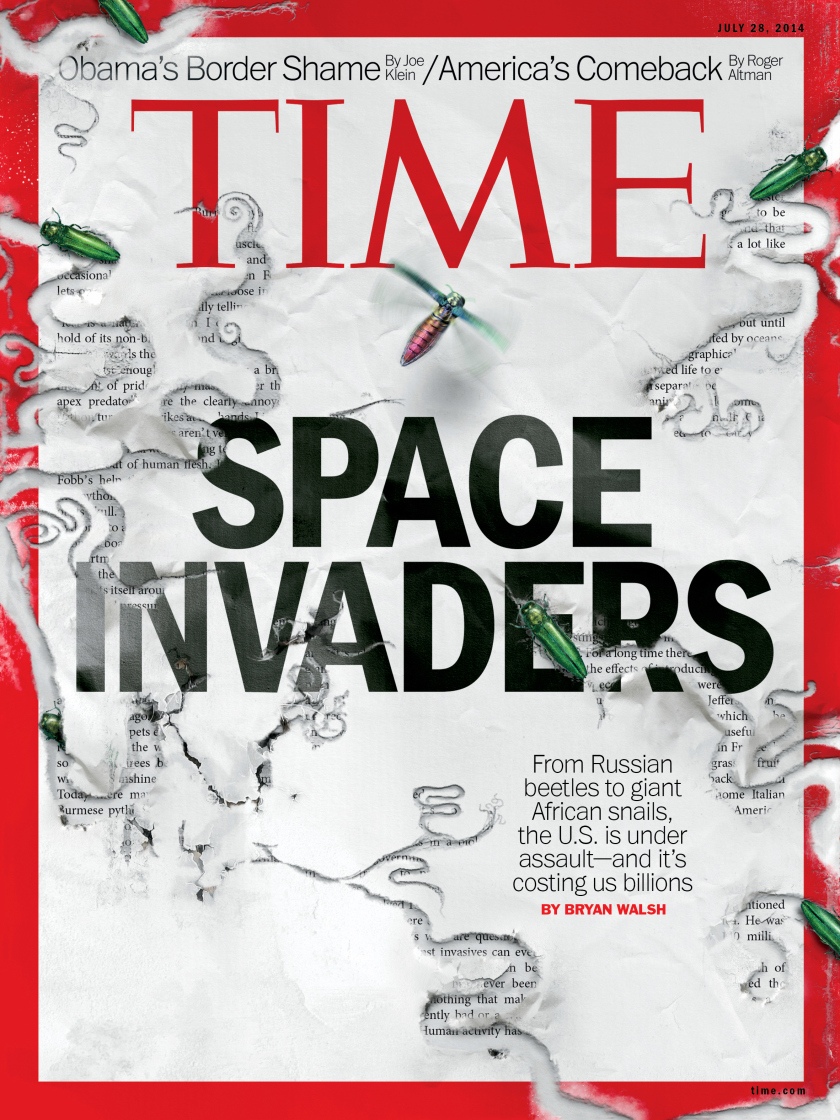
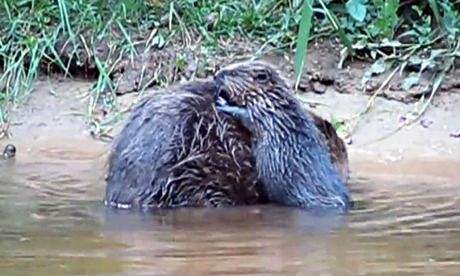


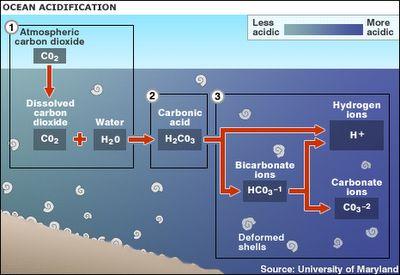
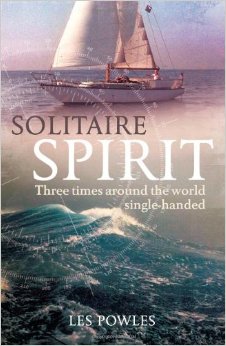
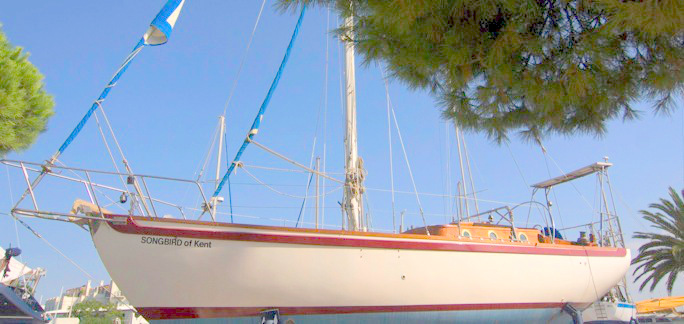
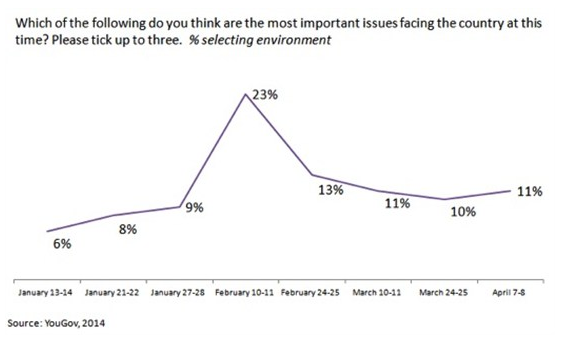
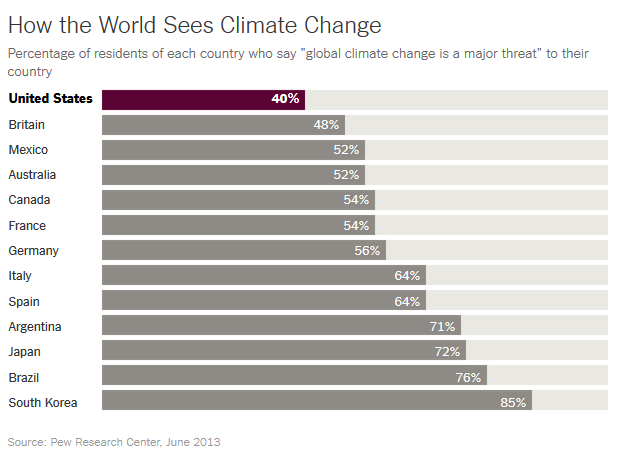
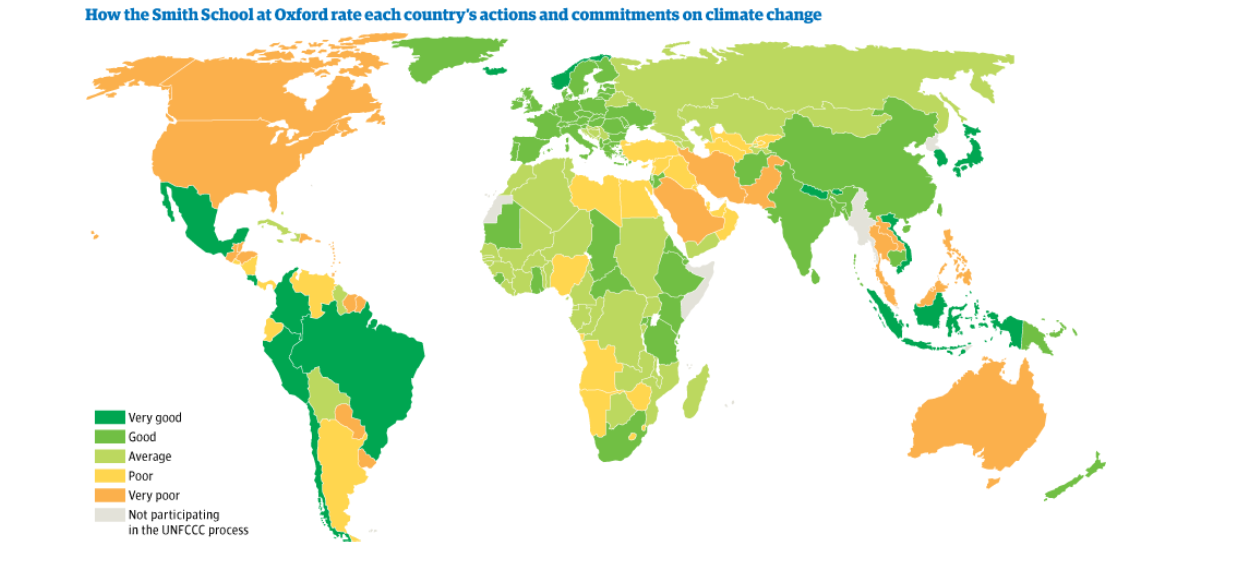
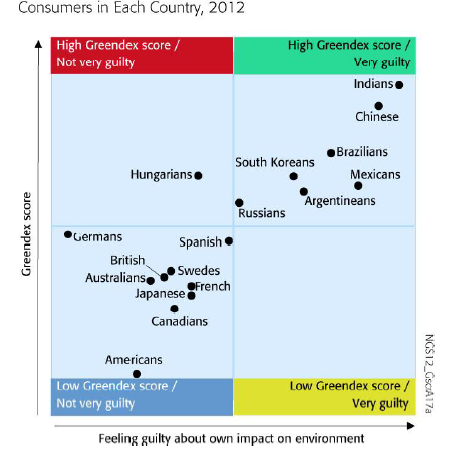

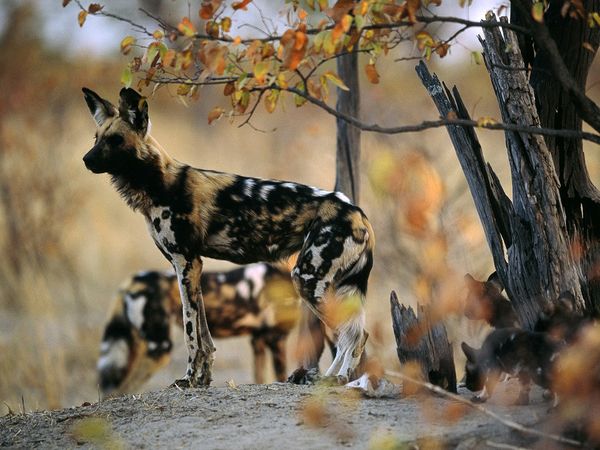

 Learning from Dogs