Much as I respect Mr. Monbiot’s views, I hope he is wrong in this respect.
I have long admired the writings of George Monbiot and, as often as not, have republished his essays in this place.
But an essay by George that was published in the UK Guardian newspaper yesterday portrays a frightening picture of modern-day Britain. It was called Falling Apart and is republished, with George’s permission, today.
I want to offer a personal response to the essay, that immediately follows George’s piece.
ooOOoo
Falling Apart
October 14, 2014
Competition and individualism are forcing us into a devastating Age of Loneliness
By George Monbiot, published in the Guardian 15th October 2014
What do we call this time? It’s not the information age: the collapse of popular education movements left a void now filled by marketing and conspiracy theories(1). Like the stone age, iron age and space age, the digital age says plenty about our artefacts but little about society. The anthropocene, in which humans exert a major impact on the biosphere, fails to distinguish this century from the previous twenty. What clear social change marks out our time from those that precede it? To me it’s obvious. This is the Age of Loneliness.
When Thomas Hobbes claimed that in the state of nature, before authority arose to keep us in check, we were engaged in a war “of every man against every man”(2), he could not have been more wrong. We were social creatures from the start, mammalian bees, who depended entirely on each other. The hominims of East Africa could not have survived one night alone. We are shaped, to a greater extent than almost any other species, by contact with others. The age we are entering, in which we exist apart, is unlike any that has gone before.
Three months ago we read that loneliness has become an epidemic among young adults(3). Now we learn that it is just as great an affliction of older people. A study by Independent Age shows that severe loneliness in England blights the lives of 700,000 men and 1.1m women over 50(4), and is rising with astonishing speed.
Ebola is unlikely ever to kill as many people as this disease strikes down. Social isolation is as potent a cause of early death as smoking 15 cigarettes a day(5); loneliness, research suggests, is twice as deadly as obesity(6). Dementia, high blood pressure, alcoholism and accidents – all these, like depression, paranoia, anxiety and suicide, become more prevalent when connections are cut(7,8). We cannot cope alone.
Yes, factories have closed, people travel by car instead of buses, use YouTube rather than the cinema. But these shifts alone fail to explain the speed of our social collapse. These structural changes have been accompanied by a life-denying ideology, which enforces and celebrates our social isolation. The war of every man against every man – competition and individualism in other words – is the religion of our time, justified by a mythology of lone rangers, sole traders, self-starters, self-made men and women, going it alone. For the most social of creatures, who cannot prosper without love, there is now no such thing as society, only heroic individualism. What counts is to win. The rest is collateral damage.
British children no longer aspire to be train drivers or nurses, more than a fifth now say they “just want to be rich”: wealth and fame are the sole ambitions of 40% of those surveyed(9). A government study in June revealed that Britain is the loneliness capital of Europe(10). We are less likely than other Europeans to have close friends or to know our neighbours. Who can be surprised, when everywhere we are urged to fight like stray dogs over a dustbin?
We have changed our language to reflect this shift. Our most cutting insult is loser. We no longer talk about people. Now we call them individuals. So pervasive has this alienating, atomising term become that even the charities fighting loneliness use it to describe the bipedal entities formerly known as human beings(11). We can scarcely complete a sentence without getting personal. Personally speaking (to distinguish myself from a ventriloquist’s dummy), I prefer personal friends to the impersonal variety and personal belongings to the kind that don’t belong to me. Though that’s just my personal preference, otherwise known as my preference.
One of the tragic outcomes of loneliness is that people turn to their televisions for consolation: two-fifths of older people now report that the one-eyed god is their principal company(12). This self-medication enhances the disease. Research by economists at the University of Milan suggests that television helps to drive competitive aspiration(13). It strongly reinforces the income-happiness paradox: the fact that, as national incomes rise, happiness does not rise with them.
Aspiration, which increases with income, ensures that the point of arrival, of sustained satisfaction, retreats before us. The researchers found that those who watch a lot of television derive less satisfaction from a given level of income than those who watch only a little. Television speeds up the hedonic treadmill, forcing us to strive even harder to sustain the same level of satisfaction. You have only to think of the wall-to-wall auctions on daytime TV, Dragon’s Den, the Apprentice and the myriad forms of career-making competition the medium celebrates, the generalised obsession with fame and wealth, the pervasive sense, in watching it, that life is somewhere other than where you are, to see why this might be.
So what’s the point? What do we gain from this war of all against all? Competition drives growth, but growth no longer makes us wealthier. Figures published this week show that while the income of company directors has risen by more than a fifth, wages for the workforce as a whole have fallen in real terms over the past year (14). The bosses now earn – sorry, I mean take – 120 times more than the average full-time worker. (In 2000, it was 47 times). And even if competition did make us richer, it would make us no happier, as the satisfaction derived from a rise in income would be undermined by the aspirational impacts of competition.
The top 1% now own 48% of global wealth(15), but even they aren’t happy. A survey by Boston College of people with an average net worth of $78m found that they too are assailed by anxiety, dissatisfaction and loneliness(16). Many of them reported feeling financially insecure: to reach safe ground, they believed, they would need, on average, about 25% more money. (And if they got it? They’d doubtless need another 25%). One respondent said he wouldn’t get there until he had $1 billion in the bank.
For this we have ripped the natural world apart, degraded our conditions of life, surrendered our freedoms and prospects of contentment to a compulsive, atomising, joyless hedonism, in which, having consumed all else, we start to prey upon ourselves. For this we have destroyed the essence of humanity: our connectedness.
Yes, there are palliatives, clever and delightful schemes like Men in Sheds and Walking Football developed by charities for isolated older people(17). But if we are to break this cycle and come together once more, we must confront the world-eating, flesh-eating system into which we have been forced.
Hobbes’s pre-social condition was a myth. But we are now entering a post-social condition our ancestors would have believed impossible. Our lives are becoming nasty, brutish and long.
As closing sentences go, that’s about as tough as it gets.
Nevertheless, I’m going to offer a perspective, something that George doesn’t mention. That is the importance of community.
Back in 2008 BBC Timewatch screened a programme about the revelations that came from the latest archaeological dig at Stonehenge, near Amesbury in Wiltshire in England. I wrote about the programme over four years ago: Stonehenge – a place of healing.
Stonehenge is one of Britain’s most famous historical sites, deservedly so because Stonehenge was one of the most important places in ancient Europe.
Stonehenge
But evidence from a dig that was authorised in 2008 has shown that not only is Stonehenge a much older site of human habitation but that it’s purpose is altogether different to what has been assumed. It was, indeed, a healing place, possibly the most important in Europe.
Professors Tim Darvill and Geoff Wainwright are the world-renowned archaeologists who believe they have cracked the conundrum of Stonehenge’s original purpose.
If you would like to watch that Timewatch episode, and it is highly recommended, then someone has neatly uploaded it to YouTube.
The programme clearly offers evidence from the carbon-dating of seeds buried under the famous blue stones that dates this settlement to some 9,000 years BP. The detailed examination of ancient humans buried nearby indicates they came to Stonehenge with a range of diseases, many terminal in nature.
So back to George Monbiot’s essay and the element that screams out at me.
We have lost sight of the huge healing benefits that come from old-fashioned, shoulder-to-shoulder communities.
Not to mention the healing properties of a loving dog or two in one’s life!
Let’s start with the Ebola outbreak with the latest news from the BBC suggesting:
The death toll from the Ebola virus outbreak has risen to 4,447, with the large majority of victims in West Africa, the World Health Organization (WHO) says.
WHO assistant director-general Bruce Aylward also said there could be up to 10,000 new cases a week within two months if efforts were not stepped up,
But the rate of new infections in some areas has slowed down, he added.
Next up.
I’ve been musing as to whether or not I was going to republish a recent essay from George Monbiot. The one in question being The Kink in the Human Brain. It opens, thus:
Pointless, joyless consumption is destroying our world of wonders.
By George Monbiot, published in the Guardian 2nd October 2014
This is a moment at which anyone with the capacity for reflection should stop and wonder what we are doing.
If the news that in the past 40 years the world has lost over 50% of its vertebrate wildlife (mammals, birds, reptiles, amphibians and fish) fails to tell us that there is something wrong with the way we live, it’s hard to imagine what could. Who believes that a social and economic system which has this effect is a healthy one? Who, contemplating this loss, could call it progress?
In fairness to the modern era, this is an extension of a trend that has lasted some two million years. The loss of much of the African megafauna – sabretooths and false sabretooths, giant hyaenas and amphicyonids (bear dogs), several species of elephant – coincided with the switch towards meat eating by hominims (ancestral humans). It’s hard to see what else could have been responsible for the peculiar pattern of extinction then.
My spirits continued downward, especially when I clicked on that first link and read this from the Guardian website:
Rubbish dumped on the tundra outside llulissat in Greenland stand in stark contrast to icebergs behind from the Sermeq Kujullaq or llulissat Ice fjord – a Unesco world heritage site. Photograph: Global Warming Images/WWF-Canon
The number of wild animals on Earth has halved in the past 40 years, according to a new analysis. Creatures across land, rivers and the seas are being decimated as humans kill them for food in unsustainable numbers, while polluting or destroying their habitats, the research by scientists at WWF and the Zoological Society of London found.
“If half the animals died in London zoo next week it would be front page news,” said Professor Ken Norris, ZSL’s director of science. “But that is happening in the great outdoors. This damage is not inevitable but a consequence of the way we choose to live.” He said nature, which provides food and clean water and air, was essential for human wellbeing.
“We have lost one half of the animal population and knowing this is driven by human consumption, this is clearly a call to arms and we must act now,” said Mike Barratt, director of science and policy at WWF. He said more of the Earth must be protected from development and deforestation, while food and energy had to be produced sustainably.
Then a few days ago, one of our neighbours sent me an email with his latest news about ISIS. This is what he sent:
Got this from one of my closest friends today, it came from his brother so I’m pretty confident that it’s true. There is some really bad stuff on the horizon and it’s probably gonna come this way like a runaway train!! Everybody better start thinking about where they want to stand when push comes to shove!
With “this’ being in part:
Missionaries who are in the areas that are being attacked by ISIS. ISIS has taken over the town they are in today. He said ISIS is systematically going house to house to all the Christians and asking the children to denounce Jesus. He said so far not one child has. And so far all have consequently been killed. But not the parents. The UN has withdrawn and the missionaries are on their own. They are determined to stick it out for the sake of the families – even if it means their own deaths. They are very afraid, have no idea how to even begin ministering to these families who have had seen their children martyred. Yet he says he knows God has called them for some reason to be His voice and hands at this place at this time. Even so, they are begging for prayers for courage to live out their vocation in such dire circumstances. And like the children, accept martyrdom if they are called to do so. These brave parents instilled such a fervent faith in their children that they chose martyrdom. Please surround them in their loss with your prayers for hope and perseverance.
One missionary was able to talk to her brother briefly by phone. She didn’t say it, but I believe she believes it will be their last conversation. Pray for her too. She said he just kept asking her to help him know what to do and do it. She told him to tell the families we ARE praying for them and they are not alone or forgotten — no matter what. Please keep them all in your prayers.
Love the poem/verse Illusion. The lines, Following the herd, bleating like sheep, Held captive, half asleep. hit a strong note with me.
As we often wonder why people can’t think for themselves outside the box but then again maybe that is part of being human. Life is a mystery isn’t it? Enjoyed the post,
Maria’s comment about life being a mystery was interpreted by me as humans being a mystery and the realisation that it has ever been so. For it resonated with a recent programme over on the BBC that included information on the ancient Teotihuacan people who ruled in what is present-day Mexico some 2,000 years ago. From Wikipedia:
View of the Avenue of the Dead and the Pyramid of the Sun, from Pyramid of the Moon (Pyramide de la Luna).
Teotihuacan /teɪˌoʊtiːwəˈkɑːn/, also written Teotihuacán (Spanish About this sound teotiwa’kan (help·info)), was a pre-Columbian Mesoamerican city located in the Valley of Mexico, 30 miles (48 km) northeast of modern-day Mexico City, known today as the site of many of the most architecturally significant Mesoamerican pyramids built in the pre-Columbian Americas. Apart from the pyramids, Teotihuacan is also anthropologically significant for its complex, multi-family residential compounds, the Avenue of the Dead, and the small portion of its vibrant murals that have been exceptionally well-preserved. Additionally, Teotihuacan exported a so-called “Thin Orange” pottery style and fine obsidian tools that garnered high prestige and widespread utilization throughout Mesoamerica.
The city is thought to have been established around 100 BC, with major monuments continuously under construction until about AD 250. The city may have lasted until sometime between the 7th and 8th centuries AD, but its major monuments were sacked and systematically burned around 550 AD. At its zenith, perhaps in the first half of the 1st millennium AD, Teotihuacan was the largest city in the pre-Columbian Americas, with a population estimated at 125,000 or more, making it at minimum the sixth largest city in the world during its epoch. Teotihuacan began as a new religious center in the Mexican Highland around the first century AD. This city came to be the largest and most populated center in the New World. Teotihuacan was even home to multi-floor apartment compounds built to accommodate this large population. The civilization and cultural complex associated with the site is also referred to as Teotihuacan or Teotihuacano.
That BBC programme also included the fact that almost on a daily basis the Teotihuacan authorities viewed the assassinations of often hundreds of lower class people as perfectly normal.
In other words, despicable cruelty of man upon man, not to mention an utter disregard for the natural world, has been going on for thousands of years!
Thus it underlined to me, in spades, that what ‘other people’ get up to is, to a very great extent, irrelevant. Because whatever the circumstances we have a choice: we always have a choice. Or if you will forgive me for repeating my closing sentences in yesterday’s post:
Whatever is going on in the world, whatever has the power to create fear in our minds, in the end it comes down to another power, the power of thought, and our choice of the behaviors that we offer the world.
That is why dogs are so important. Because they almost predominantly love sharing and living their lives in the company of humans.
“Honesty is the first chapter in the book of wisdom.”
Thus spoke Thomas Jefferson who died nearly 200 years ago (April 13th, 1743 – July 4th, 1826).
But some essays that have passed my eyes in the last few days have profoundly disturbed me. Because they illustrate, well to me anyway, the parlous state of wisdom in today’s world. Or better put, the parlous state of truth and integrity in today’s world.
The first essay was the latest one from Tom Engelhardt over at TomDispatch. Normally I republish TomDispatch essays in full, with permission I hasten to add, because they seem such a fine commentary of where we are as a ‘modern’ society. I used the word ‘we’ in the context of a global ‘we’.
But the latest essay was so disheartening that I couldn’t bring myself to republish it in full. Plus, if I am to be brutally honest (in line with the theme of today’s blog post!) I didn’t want to ‘make waves’ as a non-US citizen albeit a valid US resident (Green Card holder). I want to live freely and openly in the USA for the rest of my natural days!
Then in the last twenty-four hours up popped the latest essay from George Monbiot and I was struck by the harmony, the terrible harmony, between Tom and George.
See if you agree with me.
Tom Engelhardt published on Tuesday a TomGram about American Intelligence. It was called Failure Is Success – How American Intelligence Works in the Twenty-First Century.
Here’s a flavour of Tom’s essay.
What are the odds? You put about $68 billion annually into a maze of 17 major intelligence outfits. You build them glorious headquarters. You create a global surveillance state for the ages. You listen in on your citizenry and gather their communications in staggering quantities. Your employees even morph into avatars and enter video-game landscapes, lest any Americans betray a penchant for evil deeds while in entertainment mode. You collect information on visits to porn sites just in case, one day, blackmail might be useful. You pass around naked photos of them just for… well, the salacious hell of it. Your employees even use aspects of the system you’ve created to stalk former lovers and, within your arcane world, that act of “spycraft” gains its own name: LOVEINT.
You listen in on foreign leaders and politicians across the planet. You bring on board hundreds of thousands of crony corporate employees, creating the sinews of an intelligence-corporate complex of the first order. You break into the “backdoors” of the data centers of major Internet outfits to collect user accounts. You create new outfits within outfits, including an ever-expanding secret military and intelligence crew embedded inside the military itself (and not counted among those 17 agencies). Your leaders lie to Congress and the American people without, as far as we can tell, a flicker of self-doubt. Your acts are subject to secret courts, which only hear your versions of events and regularly rubberstamp them — and whose judgments and substantial body of lawmaking are far too secret for Americans to know about.
Then a few paragraphs later, Tom holds up his mirror:
Whatever the case, while taxpayer dollars flowed into your coffers, no one considered it a problem that the country lacked 17 overlapping outfits bent on preventing approximately 400,000 deaths by firearms in the same years; nor 17 interlocked agencies dedicated to safety on our roads, where more than 450,000 Americans have died since 9/11. (An American, it has been calculated, is 1,904 times more likely to die in a car accident than in a terrorist attack.) Almost all the money and effort have instead been focused on the microscopic number of terrorist plots — some spurred on by FBI plants — that have occurred on American soil in that period. On the conviction that Americans must be shielded from them above all else and on the fear that 9/11 bred in this country, you’ve built an intelligence structure unlike any other on the planet when it comes to size, reach, and labyrinthine complexity.
It’s quite an achievement, especially when you consider its one downside: it has a terrible record of getting anything right in a timely way. Never have so many had access to so much information about our world and yet been so unprepared for whatever happens in it.
Tough words indeed!
But it gets worse.
Let’s focus for a moment, however, on a case where more is known. I’m thinking of the development that only recently riveted the Obama administration and sent it tumbling into America’s third Iraq war, causing literal hysteria in Washington. Since June, the most successful terror group in history has emerged full blown in Syria and Iraq, amid a surge in jihadi recruitment across the Greater Middle East and Africa. The Islamic State (IS), an offshoot of al-Qaeda in Iraq, which sprang to life during the U.S. occupation of that country, has set up a mini-state, a “caliphate,” in the heart of the Middle East. Part of the territory it captured was, of course, in the very country the U.S. garrisoned and occupied for eight years, in which it had assumedly developed countless sources of information and recruited agents of all sorts. And yet, by all accounts, when IS’s militants suddenly swept across northern Iraq, the CIA in particular found itself high and dry.
The IC seems not to have predicted the group’s rapid growth or spread; nor, though there was at least some prior knowledge of the decline of the Iraqi army, did anyone imagine that such an American created, trained, and armed force would so summarily collapse. Unforeseen was the way its officers would desert their troops who would, in turn, shed their uniforms and flee Iraq’s major northern cities, abandoning all their American equipment to Islamic State militants.
Nor could the intelligence community even settle on a basic figure for how many of those militants there were. In fact, in part because IS assiduously uses couriers for its messaging instead of cell phones and emails, until a chance arrest of a key militant in June, the CIA and the rest of the IC evidently knew next to nothing about the group or its leadership, had no serious assessment of its strength and goals, nor any expectation that it would sweep through and take most of Sunni Iraq. And that should be passing strange. After all, it now turns out that much of the future leadership of IS had spent time together in the U.S. military’s Camp Bucca prison just years earlier.
All you have to do is follow the surprised comments of various top administration officials, including the president, as ISIS made its mark and declared its caliphate, to grasp just how ill-prepared 17 agencies and $68 billion can leave you when your world turns upside down.
Leaving Tom to offer the following sorry conclusions:
Clearly, having a labyrinth of 17 overlapping, paramilitarized, deeply secretive agencies doing versions of the same thing is the definition of counterproductive madness. Not surprisingly, the one thing the U.S. intelligence community has resembled in these years is the U.S. military, which since 9/11 has failed to win a war or accomplish more or less anything it set out to do.
On the other hand, all of the above assumes that the purpose of the IC is primarily to produce successful “intelligence” that leaves the White House a step ahead of the rest of the world. What if, however, it’s actually a system organized on the basis of failure? What if any work-product disaster is for the IC another kind of win.
Perhaps it’s worth thinking of those overlapping agencies as a fiendishly clever Rube Goldberg-style machine organized around the principle that failure is the greatest success of all. After all, in the system as it presently exists, every failure of intelligence is just another indication that more security, more secrecy, more surveillance, more spies, more drones are needed; only when you fail, that is, do you get more money for further expansion.
Keep in mind that the twenty-first-century version of intelligence began amid a catastrophic failure: much crucial information about the 9/11 hijackers and hijackings was ignored or simply lost in the labyrinth. That failure, of course, led to one of the great intelligence expansions, or even explosions, in history. (And mind you, no figure in authority in the national security world was axed, demoted, or penalized in any way for 9/11 and a number of them were later given awards and promoted.) However they may fail, when it comes to their budgets, their power, their reach, their secrecy, their careers, and their staying power, they have succeeded impressively.
You could, of course, say that the world is simply a hard place to know and the future, with its eternal surprises, is one territory that no country, no military, no set of intelligence agencies can occupy, no matter how much they invest in doing so. An inability to predict the lay of tomorrow’s land may, in a way, be par for the course. If so, however, remind me: Why exactly are we supporting 17 versions of intelligence gathering to the tune of at least $68 billion a year?
So over to George Monbiot. Yesterday, he published an essay in the UK’s Guardian newspaper entitled: Bomb Everyone. I am going to republish this in full, with the kind permission of George.
ooOOoo
Bomb Everyone
Humanitarian arguments, if consistently applied, could be used to flatten the entire Middle East
By George Monbiot, published in the Guardian 1st October 2014
Let’s bomb the Muslim world – all of it – to save the lives of its people. Surely this is the only consistent moral course? Why stop at blowing up Islamic State, when the Syrian government has murdered and tortured so many? This, after all, was last year’s moral imperative. What’s changed?
How about blasting the Shia militias in Iraq? One of them selected 40 people from the streets of Baghdad in June and murdered them for being Sunnis(1). Another massacred 68 people at a mosque in August(2). They now talk openly of “cleansing” and “erasure”(3), once Islamic State has been defeated. As a senior Shia politician warns, “we are in the process of creating Shia al-Qaida radical groups equal in their radicalisation to the Sunni Qaida.”(4)
What humanitarian principle instructs you to stop there? In Gaza this year, 2,100 Palestinians were massacred: including people taking shelter in schools and hospitals. Surely these atrocities demand an air war against Israel? And what’s the moral basis for refusing to liquidate Iran? Mohsen Amir-Aslani was hanged there last week for making “innovations in the religion” (suggesting that the story of Jonah in the Qu’ran was symbolic rather than literal)(5). Surely that should inspire humanitarian action from above? Pakistan is crying out for friendly bombs: an elderly British man, Mohammed Asghar, who suffers from paranoid schizophrenia, is, like other blasphemers, awaiting execution there after claiming to be a holy prophet(6). One of his prison guards has already shot him in the back.
Is there not an urgent duty to blow up Saudi Arabia? It has beheaded 59 people so far this year, for offences that include adultery, sorcery and witchcraft(7). It has long presented a far greater threat to the west than Isis now poses. In 2009 Hillary Clinton warned in a secret memo that “Saudi Arabia remains a critical financial support base for al-Qa’ida, the Taliban … and other terrorist groups.”(8) In July, the former head of MI6, Sir Richard Dearlove, revealed that Prince Bandar bin Sultan, until recently the head of Saudi intelligence, told him: “The time is not far off in the Middle East, Richard, when it will be literally ‘God help the Shia’. More than a billion Sunnis have simply had enough of them.”(9) Saudi support for extreme Sunni militias in Syria during Bandar’s tenure is widely blamed for the rapid rise of Isis(10,11). Why take out the subsidiary and spare the headquarters?
The humanitarian arguments aired in parliament last week(12), if consistently applied, could be used to flatten the entire Middle East and West Asia. By this means you could end all human suffering, liberating the people of these regions from the vale of tears in which they live.
Perhaps this is the plan: Barack Obama has now bombed seven largely-Muslim countries(13), in each case citing a moral imperative. The result, as you can see in Libya, Iraq, Pakistan, Afghanistan,Yemen, Somalia and Syria, has been the eradication of jihadi groups, of conflict, chaos, murder, oppression and torture. Evil has been driven from the face of the earth by the destroying angels of the west.
Now we have a new target, and a new reason to dispense mercy from the sky, with similar prospects of success. Yes, the agenda and practices of Isis are disgusting. It murders and tortures, terrorises and threatens. As Obama says, it is a “network of death”(14). But it’s one of many networks of death. Worse still, a western crusade appears to be exactly what it wants(15).
Already Obama’s bombings have brought Isis and Jabhat al-Nusra, a rival militia affiliated to Al Qaeda, together(16). More than 6,000 fighters have joined Isis since the bombardment began(17). They dangled the heads of their victims in front of the cameras as bait for war planes. And our governments were stupid enough to take it.
And if the bombing succeeds? If – and it’s a big if – it manages to tilt the balance against Isis, what then? Then we’ll start hearing once more about Shia death squads and the moral imperative to destroy them too – and any civilians who happen to get in the way. The targets change; the policy doesn’t. Never mind the question, the answer is bombs. In the name of peace and the preservation of life, our governments wage perpetual war.
While the bombs fall, our states befriend and defend other networks of death. The US government still refuses – despite Obama’s promise – to release the 28 redacted pages from the Joint Congressional Inquiry into 9/11, which document Saudi Arabian complicity in the attack on America(18). In the UK, in 2004 the Serious Fraud Office began investigating allegations of massive bribes paid by the British weapons company BAE to Saudi ministers and middlemen. Just as the crucial evidence was about to be released, Tony Blair intervened to stop the investigation(19). The biggest alleged beneficiary was Prince Bandar, mentioned above. The Serious Fraud Office was investigating a claim that, with the approval of the British government, he received £1bn in secret payments from BAE(20).
And still it goes on. Last week’s Private Eye, drawing on a dossier of recordings and emails, alleges that a British company has paid £300m in bribes to facilitate weapons sales to the Saudi National Guard(21). When a whistleblower in the company reported these payments to the British ministry of defence, instead of taking action it alerted his bosses. He had to flee the country to avoid being thrown into a Saudi jail. Smirking, lying, two-faced bastards – this scarcely begins to touch it.
There are no good solutions that military intervention by the UK or the US can engineer. There are political solutions in which our governments could play a minor role: supporting the development of effective states that don’t rely on murder and militias, building civic institutions that don’t depend on terror, helping to create safe passage and aid for people at risk. Oh, and ceasing to protect and sponsor and arm selected networks of death. Whenever our armed forces have bombed or invaded Muslims nations, they have made life worse for those who live there. The regions in which our governments have intervened most are those which suffer most from terrorism and war. That is neither coincidental nor surprising.
Yet our politicians affect to learn nothing. Insisting that more killing will magically resolve deep-rooted conflicts, they scatter bombs like fairy dust.
21. Richard Brooks and Andrew Bousfield, 19th September 2014. Shady Arabia and the Desert Fix. Private Eye.
ooOOoo
Two journalists reporting from two very different countries separated by thousands of miles.
Yet together they illustrate the very low regard for truth, for truth and integrity I should add, held by two major western Governments. That old saying of never underestimate the power of unintended consequences is hammering inside my head.
What very strange times we live in just now.
The sooner the concepts of truth and integrity are adopted by those with the power, money and influence, the sooner this world will turn away from what looks eminently like future self-destruction.
Let’s turn to dogs for some examples of beautiful ways of living.
Whatever the outcome, may it truly represent the wishes of the majority.
I have not hidden my feelings as to the outcome that I would welcome. My post of the 11th September was subtitled “My hope for a ‘yes’ vote for Scottish Independence.” After my introduction to that post, I then republished an essay by George Monbiot that was published in the Guardian newspaper on the 3rd September 2014. Mr. Monbiot has made it very clear as to where he stands on this matter.
George Monbiot then followed up that Guardian article with another one published in the Guardian yesterday. It offers cogent points and, with his permission, I am delighted to republish it.
ooOOoo
Remote Control
September 16, 2014
How the media shafted the people of Scotland.
By George Monbiot, published in the Guardian 17th September 2014
Perhaps the most arresting fact about the Scottish referendum is this: that there is no newspaper – local, regional or national, English or Scottish – which supports independence except the Sunday Herald. The Scots who will vote yes have been almost without representation in the media.
There is nothing unusual about this. Change in any direction except further over the brink of market fundamentalism and planetary destruction requires the defiance of almost the entire battery of salaried opinion. What distinguishes the independence campaign is that it has continued to prosper despite this assault.
In the coverage of the referendum we see most of the pathologies of the corporate media. Here, for example, you will find the unfounded generalisations with which less enlightened souls are characterised. In the Spectator, Simon Heffer mainatains that “addicted to welfare … Scots embraced the something for nothing society”, objecting to the poll tax “because many of them felt that paying taxes ought to be the responsibility of someone else.”(1)
Here is the condescension with which the dominant classes have always treated those they regard as inferior: their serfs, the poor, the Irish, Africans, anyone with whom they disagree. “What spoilt, selfish, childlike fools those Scots are … They simply don’t have a clue how lucky they are,” sneered Melanie Reid in the Times(2). Here is the chronic inability to distinguish between a cause and a person: the referendum is widely portrayed as a vote about Alex Salmond, who is then monstered beyond recognition (a Telegraph leader last week compared him to Robert Mugabe(3)).
The problem with the media is exemplified by Dominic Lawson’s column for the Daily Mail last week(4). He began with Scotland, comparing the “threat” of independence with the threat presented by Hitler (the article was helpfully illustrated with a picture of the Fuhrer, unaccompanied in this case by the Mail’s former proprietor). Then he turned to the momentous issue of how he almost said something wrong about David Attenborough, which was narrowly averted because “as it happens, last weekend we had staying with us another of the BBC’s great figures, its world affairs editor John Simpson”, who happily corrected Lawson’s mistake. This was just as well because “the next day I went to the Royal Albert Hall as one of a small number of guests invited by the Proms director for that night’s performance. And who should I see as soon as I entered the little room set aside for our group’s pre-concert drinks? Sir David Attenborough.”
Those who are supposed to hold power to account live in a rarified, self-referential world of power, circulating among people as exalted as themselves, the “small number of guests” who receive the most charming invitations. That a senior journalist at the BBC should be the house guest of a columnist for the Daily Mail surprises me not one iota.
In June the BBC’s economics editor Robert Peston complained that BBC news “is completely obsessed by the agenda set by newspapers … If we think the Mail and Telegraph will lead with this, we should. It’s part of the culture.”(5) This might help to explain why the BBC has attracted so many complaints of bias in favour of the No campaign(6,7).
Living within their tiny circle of light, most senior journalists seem unable to comprehend a desire for change. If they notice it at all, they perceive it as a mortal threat: comparable perhaps to Hitler. They know as little of the lives of the 64 million inhabiting the outer darkness as they do of the Andaman islanders. Yet, lecturing the poor from under the wisteria, they claim to speak for the nation.
As John Harris reports in the Guardian, both north and south of the border “politics as usual suddenly seems so lost as to look completely absurd.”(8) But to those within the circle, politics still begins and ends in Westminster. The opinions of no one beyond the gilded thousand with whom they associate are worthy of notice. Throughout the years I’ve spent working with protest movements and trying to bring neglected issues to light, one consistent theme has emerged: with a few notable exceptions, journalists are always among the last to twig that things have changed. It’s no wonder that the Scottish opinion polls took them by surprise.
One of the roles of the Guardian, which has no proprietor, is to represent the unrepresented – and it often does so to great effect. On Scottish independence I believe we have fallen short. Our leader on Saturday used the frames constructed by the rest of the press, inflating a couple of incidents into a “habit” by yes campaigners of “attacking the messenger and ignoring the message”, judging the long-term future of the nation by current SNP policy, confusing self-determination with nationalism(9).
If Westminster is locked into a paralysing neoliberal consensus it is partly because the corporate media, owned and staffed by its beneficiaries, demands it. Any party that challenges this worldview is ruthlessly disciplined. Any party that more noisily promotes corporate power is lauded and championed. UKIP, though it claims to be kicking against the establishment, owes much of its success to the corporate press.
For a moment, Rupert Murdoch appeared ready to offer one of his Faustian bargains to the Scottish National Party: my papers for your soul(10). That offer now seems to have been withdrawn, as he has decided that Salmond’s SNP is “not talking about independence, but more welfarism, expensive greenery, etc and passing sovereignty to Brussels”(11) and that it “must change course to prosper if he wins.”(12) It’s not an observation, it’s a warning: if you win independence and pursue this agenda, my newspapers will destroy you.
Despite the rise of the social media, the established media continues to define the scope of representative politics in Britain, to shape political demands and to punish and erase those who resist. It is one chamber of the corrupt heart of Britain, pumping fear, misinformation and hatred around the body politic.
That so many Scots, lambasted from all quarters as fools, frauds and ingrates, have refused to be bullied is itself a political triumph. If they vote for independence, they will do so in defiance not only of the Westminster consensus, but also of its enforcers: the detached, complacent people who claim to speak on their behalf.
The second of George Monbiot’s essays on Scotland.
In yesterday’s post Alba an Aigh or Scotland the Brave, I closed it by saying, “Since preparing this post, I see that George Monbiot has published a second essay on the subject of the Scottish referendum. I’m pondering republishing that second essay next Monday.”
Upon further reflection, it struck me that Mr. Monbiot’s second essay was better appreciated being republished in this place the following day; i.e. today.
Thus with no further ado, here it is.
ooOOoo
England the Brave
September 9, 2014
The rest of the UK doesn’t need to be rescued by Scottish votes: independence could inspire transformation everywhere.
By George Monbiot, published in the Guardian 9th September 2014
Of all the bad arguments urging the Scots to vote no – and there are plenty – perhaps the worst is the demand that Scotland should remain in the Union to save England from itself. Responses to last week’s column suggest that this wretched, snivelling, apron-strings argument has some traction among people who claim to belong to the left.
Consider what it entails: it asks a nation of 5.3 million to forgo independence to exempt a nation of 53 million from having to fight its own battles. In return for this self-denial, the five million must remain yoked to the dismal politics of cowardice and triangulation which have caused the problems from which we ask them to save us.
“A UK without Scotland would be much less likely to elect any government of a progressive hue”, the former Labour minister Brian Wilson claimed in the Guardian last week(1). We must combine against the “forces of privilege and reaction” (as he lines up with the Conservatives, UKIP, the LibDems, the banks, the corporations, almost all the rightwing columnists in Britain and every UK newspaper except the Sunday Herald) – in the cause of “solidarity”.
There’s another New Labour weasel word to add to its dreary lexicon (other examples include reform, which now means privatisation, and partnership, which means selling out to big business). Once solidarity meant making common cause with the exploited, the underpaid, the excluded. Now, to these cyborgs in suits, it means keeping faith with the banks, the corporate press, cuts, a tollbooth economy and market fundamentalism.
Here, to Wilson and his fellow flinchers, is what solidarity meant while they were in office. It meant voting for the Iraq war, for Trident, for identity cards, for 3,500 new criminal offences(2), including the criminalisation of most forms of peaceful protest(3). It meant being drafted in as political mercenaries to impose on the English policies to which the Scots were not subject, such as university top-up fees and foundation hospitals(4,5). It meant supporting every destructive and injust proposition advanced by their leaders: the brood parasites who hatched in the Labour nest then flicked its dearest principles over the edge. It’s no surprise that the more the Scots see of their former Labour ministers, the more inclined they are to vote for independence.
So now Better Together has brought in Gordon Brown, scattering bribes in a desperate, last-ditch effort at containment. They must hope the Scots have forgotten that he boasted of setting “the lowest rate in the history of British corporation tax, the lowest rate of any major country in Europe and the lowest rate of any major industrialised country anywhere”(6). That he pledged to the City of London “in budget after budget I want us to do even more to encourage the risk takers”(7). That, after 13 years of Labour government, the UK had higher levels of inequality than after 18 years of Tory government(8). That his government colluded in kidnapping and torture(9). That he helped cause the deaths of hundreds of thousands through his support for the illegal war on Iraq.
He roams through Scotland, still badged with blood, promising what he never delivered when he had the chance, this man who helped unravel the social safety net his predecessors wove; who marketised and dismembered public services; who enriched the wealthy and shafted the poor; who pledged money for Trident but failed to reverse the loss of social housing(10); whose private finance initiative planted a series of timebombs now exploding throughout the NHS and other public services(11); who greased and wheedled and slavered his way into the company of bankers and oligarchs while trampling over the working people he was elected to represent. This is the progressive Prester John who will ride to the rescue of the No campaign?
Where, in Scotland’s Labour party, are the Keir Hardies and Jimmy Reids of our time? Where is the vision, the inspiration, the hope? The shuffling, spineless little men with whom these titans have been replaced offer nothing but fear. Through fear they seek to shove Scotland back into its box, as its people rebel against the dreary, closed future mapped out for them – and the rest of us – by the three main Westminster parties.
Sure, if Scotland becomes independent, all else being equal, Labour would lose 41 seats at Westminster and Tory majorities would become more likely(12). But all else need not be equal. Scottish independence can galvanise progressive movements across the rest of the United Kingdom. We’ll watch as the Scots engage in the transformative process of writing a constitution. We’ll see that a nation of these islands can live and – I hope – flourish with a fully elected legislature (no House of Lords), with a fair electoral system (proportional representation), and with a parliament in which only representatives of that nation can vote (no cross-border mercenaries).
Already, the myth of political apathy has been scotched by the tumultuous movement north of the border. As soon as something is worth voting for, people will queue into the night to add their names to the register(13). The low turn-outs in Westminster elections reflect not an absence of interest but an absence of hope.
If Scotland becomes independent, it will be despite the efforts of almost the entire UK establishment. It will be because social media has defeated the corporate media. It will be a victory for citizens over the Westminster machine, for shoes over helicopters. It will show that a sufficiently inspiring idea can cut through bribes and blackmail, through threats and fearmongering. That hope, marginalised at first, can spread across a nation, defying all attempts to suppress it. That you can be hated by the Daily Mail and still have a chance of winning.
If Labour has any political nous, any remaining flicker of courage, it will understand what this moment means. Instead of suppressing the forces of hope and inspiration, it would mobilise them. It would, for example, pledge, in its manifesto, a referendum on drafting a written constitution for the rest of the United Kingdom.
It would understand that hope is the most dangerous of all political reagents. That it can transform what appears to be a fixed polity, a fixed outcome, into something entirely different. That it can summon up passion and purpose we never knew we possessed. If Scotland becomes independent, England – if only the potential were recognised – could also be transformed.
My hope for a ‘yes’ vote for Scottish Independence.
“Alba an Aigh” is Scottish Gaelic for the Scottish patriotic song, Scotland the Brave. It was one of several songs considered an unofficial national anthem of Scotland.
Before the main purpose of today’s post, I want to republish three comments to a recent post from Patrice Ayme, Free Scotland From Thieves.
I hope that “yes” is the outcome in the Scottish vote. I believe Scotland is part of a trend away from globalism and centralism to a new devolved form of localism.
To which I added:
Delighted to agree with Alex and for exactly the reasons he offers. All around the globe we are seeing countless examples of the failure, to put it mildly, of BIG GOVERNMENT.
Just as much in my new home country as it was in my old one.
On Sunday evening, neighbours Janell and Larry threw a short-notice BBQ. Thirty minutes after Larry’s phone call, we walked across our fields to their place, to join three other neighbours. It was a wonderful evening and the majority of the talk was about local issues: when is it going to rain, we are all short of hay, that sort of stuff.
Towards the end, there was a general rant about the state of the world. I hesitated, aware of my ‘new boy’ status, and then quietly remarked that Jean and I were overwhelmed by the friendship and cooperation of all those living nearby. And went on to add that the contrast between how our community worked and how the American government failed to work was stark.
Everyone signalled by grunts, words and body language their agreement.
Bon chance, New Scotland.
Patrice then offered:
Dear Paul: 100% agree. The strength of the USA is that the average state is 6 million people. The state of Massachusetts has excellent results on the PISA tests, in stark distinction with most of Euramerica. That’s entirely due to localism.
In my more or less native Bay Area, governance is extremely local, and there is the secret of Silicon Valley: most deals are made with handshakes, or people who argue with each other, while knowing they will have to keep on living with each other. Silicon Valley exists, because it’s 3,000 miles from Washington and New York.
They signaled with grunts and body language because of these low PISA tests, but, right now in the Bay Area, the PISA rising movement is engaged (having a 4 year old, I am in the middle of it).
Bonne Chance Scotland, indeed. Independence (from London’s plutocracy) ought to be easy as pie for Scotland.
BTW, the “City” is technically a plutocracy: voting there depends upon the money…
However, the most eloquent and powerful argument read in recent days comes from George Monbiot in his essay Someone Else’s Story. It is republished here with Mr. Monbiot’s kind permission.
ooOOoo
Someone Else’s Story
September 2, 2014
Scots voting no to independence would be an astonishing act of self-harm
By George Monbiot, published in the Guardian 3rd September 2014
Imagine that the question was posed the other way round. An independent nation is asked to decide whether to surrender its sovereignty to a larger union. It would be allowed a measure of autonomy, but key aspects of its governance would be handed to another nation. It would be used as a military base by the dominant power and yoked to an economy over which it had no control.
It would have to be bloody desperate. Only a nation in which the institutions of governance had collapsed, which had been ruined economically, which was threatened by invasion or civil war or famine might contemplate this drastic step. Most nations faced even with such catastrophes choose to retain their independence – in fact will fight to preserve it – rather than surrender to a dominant foreign power.
So what would you say about a country that sacrificed its sovereignty without collapse or compulsion? That had no obvious enemies, a basically sound economy and a broadly functional democracy, and chose to swap it for remote governance by the hereditary elite of another nation, beholden to a corrupt financial centre?(1)
What would you say about a country that exchanged an economy based on enterprise and distribution for one based on speculation and rent?(2) That chose obeisance to a government which spies on its own citizens, uses the planet as its dustbin, governs on behalf of a transnational elite which owes loyalty to no nation, cedes public services to corporations, forces terminally ill people to work(3) and can’t be trusted with a box of fireworks, let alone a fleet of nuclear submarines? You would conclude that it had lost its senses.
So what’s the difference? How is the argument altered by the fact that Scotland is considering whether to gain independence, rather than whether to lose it? It’s not. Those who would vote no – now, a new poll suggests, a rapidly diminishing majority(4) – could be suffering from system justification.
System justification is defined as the “process by which existing social arrangements are legitimised, even at the expense of personal and group interest”(5). It consists of a desire to defend the status quo, regardless of its impacts. It has been demonstrated in a large body of experimental work, which has produced the following surprising results.
System justification becomes stronger when social and economic inequality is more extreme. This is because people try to rationalise their disadvantage by seeking legitimate reasons for their position(6). In some cases disadvantaged people are more likely than the privileged to support the status quo. One study found that US citizens on low incomes were more likely than those on high incomes to believe that economic inequality is legitimate and necessary(7).
It explains why women in experimental studies pay themselves less than men, why people in low status jobs believe their work is worth less than those in high status jobs, even when they’re performing the same task, and why people accept domination by another group(8). It might help to explain why so many people in Scotland are inclined to vote no.
The fears the no campaigners have worked so hard to stoke are – by comparison to what the Scots are being asked to lose – mere shadows. As Adam Ramsay points out in his treatise Forty-Two Reasons to Support Scottish Independence, there are plenty of nations smaller than Scotland which possess their own currencies and thrive(9). Most of the world’s prosperous nations are small: there are no inherent disadvantages to downsizing(10).
Remaining in the UK carries as much risk and uncertainty as leaving. England’s housing bubble could blow at any time. We might leave the EU. Some of the most determined no campaigners would take us out: witness Ukip’s intention to stage a “pro-Union rally” in Glasgow on September 12(11). The Union in question, of course, is the UK, not Europe. This reminds us of a crashing contradiction in the politics of such groups: if our membership of the EU represents an appalling and intolerable loss of sovereignty, why is the far greater loss Scotland is being asked to accept deemed tolerable and necessary?
The Scots are told they will have no control over their own currency if they leave the UK. But they have none today. The monetary policy committee is based in London and bows to the banks. The pound’s strength, which damages the manufacturing Scotland seeks to promote, reflects the interests of the City(12).
To vote no is to choose to live under a political system that sustains one of the rich world’s highest levels of inequality and deprivation. This is a system in which all major parties are complicit, which offers no obvious exit from a model that privileges neoliberal economics over other aspirations(13). It treats the natural world, civic life, equality, public health and effective public services as dispensable luxuries, and the freedom of the rich to exploit the poor as non-negotiable.
Its lack of a codified constitution permits numberless abuses of power. It has failed to reform the House of Lords, royal prerogative, campaign finance(14) and first-past-the-post voting (another triumph for the no brigade). It is dominated by a media owned by tax exiles, who, instructing their editors from their distant chateaux, play the patriotism card at every opportunity. The concerns of swing voters in marginal constituencies outweigh those of the majority; the concerns of corporations with no lasting stake in the country outweigh everything. Broken, corrupt, dysfunctional, retentive: you want to be part of this?
Independence, as more Scots are beginning to see, offers people an opportunity to rewrite the political rules. To create a written constitution, the very process of which is engaging and transformative. To build an economy of benefit to everyone. To promote cohesion, social justice, the defence of the living planet and an end to wars of choice(15).
To deny this to yourself, to remain subject to the whims of a distant and uncaring elite, to succumb to the bleak, deferential negativity of the no campaign; to accept other people’s myths in place of your own story: that would be an astonishing act of self-repudiation and self-harm. Consider yourselves independent and work backwards from there, then ask why you would sacrifice that freedom.
5. John T. Jost and Mahzarin R. Banaji, 1994. The role of stereotyping in system-justification and the production of false consciousness. British Journal of Social Psychology, 33, 1–27.
7. John T. Jost et al, 2003. Social inequality and the reduction of ideological dissonance on behalf of the system: evidence of enhanced system justification among the disadvantaged. European Journal of Social Psychology, 33, 13–36.
8. John T. Jost, Mahzarin R. Banaji and Brian A. Nosek, 2004, see above.
Since preparing this post, I see that George Monbiot has published a second essay on the subject of the Scottish referendum. I’m pondering republishing that second essay next Monday.
Many will be aware that on a fairly regular basis, I repost essays here from George Monbiot, the last being Monbiot Unmasked on the 6th August.
I do so because in a world where much of the media is ‘bought’, and do understand that I use the term loosely, solid and trustworthy correspondents are to be applauded and, in turn, their views shared. Mr. Monbiot is a classic example of someone who adheres to a truthful perspective. I am more than grateful for the blanket permission given to me by GM for the republication of his essays.
Do you feel left out? Perhaps it’s because you refuse to succumb to the competition, envy and fear neoliberalism breeds.
By George Monbiot, published in the Guardian 6th August 2014
To be at peace with a troubled world: this is not a reasonable aim. It can be achieved only through a disavowal of what surrounds you. To be at peace with yourself within a troubled world: that, by contrast, is an honourable aspiration. This column is for those who feel at odds with life. It calls on you not to be ashamed.
I was prompted to write it by a remarkable book, just published in English, by a Belgian professor of psychoanalysis, Paul Verhaeghe (1). What About Me?: The Struggle for Identity in a Market-Based Society is one of those books that, by making connections between apparently distinct phenomena, permits sudden new insights into what is happening to us and why.
We are social animals, Verhaeghe argues, and our identity is shaped by the norms and values we absorb from other people. Every society defines and shapes its own normality – and its own abnormality – according to dominant narratives, and seeks either to make people comply or to exclude them if they don’t.
Today the dominant narrative is that of market fundamentalism, widely known in Europe as neoliberalism. The story it tells is that the market can resolve almost all social, economic and political problems. The less the state regulates and taxes us, the better off we will be. Public services should be privatised, public spending should be cut and business should be freed from social control. In countries such as the UK and the US, this story has shaped our norms and values for around 35 years: since Thatcher and Reagan came to power (2). It’s rapidly colonising the rest of the world.
Verhaeghe points out that neoliberalism draws on the ancient Greek idea that our ethics are innate (and governed by a state of nature it calls the market) and on the Christian idea that humankind is inherently selfish and acquisitive. Rather than seeking to suppress these characteristics, neoliberalism celebrates them: it claims that unrestricted competition, driven by self-interest, leads to innovation and economic growth, enhancing the welfare of all.
At the heart of this story is the notion of merit. Untrammelled competition rewards people who have talent, who work hard and who innovate. It breaks down hierarchies and creates a world of opportunity and mobility. The reality is rather different. Even at the beginning of the process, when markets are first deregulated, we do not start with equal opportunities. Some people are a long way down the track before the starting gun is fired. This is how the Russian oligarchs managed to acquire such wealth when the Soviet Union broke up. They weren’t, on the whole, the most talented, hard-working or innovative people, but those with the fewest scruples, the most thugs and the best contacts, often in the KGB.
Even when outcomes are based on talent and hard work, they don’t stay that way for long. Once the first generation of liberated entrepreneurs has made its money, the initial meritocracy is replaced by a new elite, which insulates its children from competition by inheritance and the best education money can buy. Where market fundamentalism has been most fiercely applied – in countries like the US and UK – social mobility has greatly declined (3).
If neoliberalism were anything other than a self-serving con, whose gurus and think tanks were financed from the beginning by some of the richest people on earth (the American tycoons Coors, Olin, Scaife, Pew and others) (4), its apostles would have demanded, as a precondition for a society based on merit, that no one should start life with the unfair advantage of inherited wealth or economically-determined education. But they never believed in their own doctrine. Enterprise, as a result, quickly gave way to rent.
All this is ignored, and success or failure in the market economy are ascribed solely to the efforts of the individual. The rich are the new righteous, the poor are the new deviants, who have failed both economically and morally, and are now classified as social parasites.
The market was meant to emancipate us, offering autonomy and freedom. Instead it has delivered atomisation and loneliness. The workplace has been overwhelmed by a mad, Kafka-esque infrastructure of assessments, monitoring, measuring, surveillance and audits, centrally directed and rigidly planned, whose purpose is to reward the winners and punish the losers. It destroys autonomy, enterprise, innovation and loyalty and breeds frustration, envy and fear. Through a magnificent paradox, it has led to the revival of a grand old Soviet tradition, known in Russian as tufta. It means the falsification of statistics to meet the diktats of unaccountable power.
The same forces afflict those who can’t find work. They must now contend, alongside the other humiliations of unemployment, with a whole new level of snooping and monitoring. All this, Verhaeghe points out, is fundamental to the neoliberal model, which everywhere insists on comparison, evaluation and quantification. We find ourselves technically free but powerless. Whether in work or out of work, we must live by the same rules or perish. All the major political parties promote them, so we have no political power either. In the name of autonomy and freedom we have ended up controlled by a grinding, faceless bureaucracy.
These shifts have been accompanied, Verhaeghe writes, by a spectacular rise in certain psychiatric conditions: self-harm, eating disorders, depression and personality disorders. Of the personality disorders, the most common are performance anxiety and social phobia; both of which reflect a fear of other people, who are perceived as both evaluators and competitors, the only roles for society that market fundamentalism admits. Depression and loneliness plague us. The infantilising diktats of the workplace destroy our self-respect. Those who end up at the bottom of the pile are assailed by guilt and shame. The self-attribution fallacy cuts both ways (5): just as we congratulate ourselves for our successes,we blame ourselves for our failures, even if we had little to do with it.
So if you don’t fit in; if you feel at odds with the world; if your identity is troubled and frayed; if you feel lost and ashamed, it could be because you have retained the human values you were supposed to have discarded. You are a deviant. Be proud.
I’m preparing this post on Sunday; i.e. three days ago. Reason is that my sister, Elizabeth, and friend, Merle, are arriving on Monday afternoon (as in two days ago) bringing us up to three guests in the house. My mother leaves on tomorrow morning and then Elizabeth and Merle depart on Friday morning. So for all the right reasons, Learning from Dogs is taking a backstage. Hence me doing as much as I can ahead of time.
In Monday’s post, The tracks we leave, towards the end I wrote, “The utter madness of mankind’s group blindness is beyond comprehension.” Many know that there is something very badly wrong with the way politics is operating today. Yet, at the same time, many intuitively know the political changes that mankind has to see if there is to be any chance of a sustainable future for mankind on this planet.
Thus George Monbiot’s essay published on the 29th July makes encouraging reading in the context of the growing confidence of the UK Green Party. It is republished here with the kind permission of George Monbiot.
ooOOoo
Unmasked
July 29, 2014
The justifications for extreme inequality have collapsed. But only the Green Party is prepared to take the obvious step
By George Monbiot, published in the Guardian 30th July 2014
When inequality reaches extreme and destructive levels, most governments seek not to confront it but to accommodate it. Wherever wealth is absurdly concentrated, new laws arise to protect it.
In Britain, for example, successive governments have privatised any public asset which excites corporate greed. They have cut taxes on capital and high incomes. They have legalised new forms of tax avoidance (1). They have delivered exotic gifts like subsidised shotgun licences and the doubling of state support for grouse moors (2). And they have dug a legal moat around the charmed circle, criminalising, for example, the squatting of empty buildings (3) and most forms of peaceful protest (4). However grotesque inequality becomes, however closely the accumulation of inordinate wealth resembles legalised theft, political norms shift to defend it.
None of this should surprise you. The richer the elite becomes, and the more it has to lose, the greater the effort it makes to capture public discourse and the political system. It scarcely bothers to disguise its wholesale purchase of political parties, by means of an utterly corrupt and corrupting funding system (5,6). You can feel its grip not only on policy but also on the choice of parliamentary candidates and appointments to the cabinet. The very rich want people like themselves in power, which is why we have a government of millionaires (7).
But that describes only one corner of their influence. They fund lobby groups, thinktanks and economists to devise ever more elaborate justifications for their seizure of the nation’s wealth (8). These justifications are then amplified by the newspapers and broadcasters owned by the same elite.
Among the many good points Thomas Piketty makes in Capital in the 21st Century – his world-changing but surprisingly mild book – is that extreme inequality can be sustained politically only through an “apparatus of justification.” (9) If voters can be persuaded that insane levels of inequality are sane, reasonable and even necessary, then the concentration of income can keep growing. If they can’t, then either states are forced to act, or revolutions happen.
For the notion that inequalities must be justified sits at the heart of democracy. It is possible to accept that some can have much more than others if one of two conditions are met: either that they reached this position through the exercise of their unique and remarkable talent; or that this inequality is good for everyone. So the network of think tanks, economists and tame journalists must make these justifications plausible.
It’s a tough job. If wages reflect merit, why do they seem so arbitrary? Are the richest executives 50 or 100 times better at their jobs than their predecessors were in 1980? Are they 20 times more skilled and educated than the people immediately below them, even though they went to the same business schools? Are US executives several times as creative and dynamic as those in Germany? If so, why are their results so unremarkable?
It is, of course, all rubbish. What we see is not meritocracy at work at all, but a wealth grab by a nepotistic executive class which sets its own salaries, tests credulity with its ridiculous demands and discovers that credulity is an amenable customer. They must marvel at how they get away with it.
Moreover, as education and even (in the age of the intern) work becomes more expensive, the opportunities to enter the grabbers’ class diminish. The nations which pay the highest top salaries, such as the US and Britain, are also among the least socially mobile (10). Here, you inherit not only wealth but opportunity.
Aha, they say, but extreme wealth is good for all of us. All will be uplifted by their god’s invisible hand. Their creed is based on the Kuznet’s curve, the graph which appears to show that inequality automatically declines as capitalism advances, spreading wealth from the elite to the rest.
When Piketty took the trouble to update the curve, which was first proposed in 1955, he discovered that the redistribution it documented was an artefact of the peculiar circumstances of its time. Since then the concentration of wealth has reasserted itself with a vengeance (11). The reduction in inequality by 1955 was not an automatic and inherent feature of capitalism, but the result of two world wars, a great depression and the fierce response of governments to these disruptions.
For example, the top federal income tax rate in the US rose from 25% in 1932 to 94% in 1944. The average top rate throughout the years 1932 to 1980 was 81%. In the 1940s, the British government imposed a top income tax of 98% (12). The invisible hand? Hahaha. As these taxes were slashed by Reagan and Thatcher and the rest, inequality boomed once more, and is exploding today. This is why the neoliberals hate Piketty with such passion and poison: he has destroyed with data the two great arguments with which the apparatus of justification seeks to excuse the inexcusable.
So here we have a perfect opportunity for progressive parties: the moral and ideological collapse of the system of thought to which they were previously in thrall. What do they do? Avoid the opportunity like diphtheria. Cowed by the infrastructure of purchased argument, Labour fiddles and dithers (13).
But there is another party, which seems to have discovered the fire and passion that moved Labour so long ago: the Greens. Last week they revealed that their manifesto for the general election will propose a living wage, the renationalisation of the railways, a maximum pay ratio (no executive should receive more than 10 times the salary of the lowest paid worker), and, at the heart of their reforms, a wealth tax of the kind Piketty recommends (14).
Yes, it raises plenty of questions, but none of them are unanswerable, especially if this is seen as one step towards the ideal position: a global wealth tax, that treats capital equally, wherever it might lodge. Rough as this proposal is, it will start to challenge the political consensus and draw people who thought they had nowhere to turn. Expect the billionaires’ boot boys to start screaming, once they absorb the implications. And take their boos and jeers as confirmation that it’s onto something. You wanted a progressive alternative? You’ve got it.
Just to put this into context, if you watched the George Monbiot speech that was the highlight of my post last Tuesday, The Goon Show, you might well have been forgiven for wondering if these are starting to feel like the end-times for species homo sapiens.
Almost perfectly on cue, on Monday, John Hurlburt down in Payson, AZ., sent me the following. It does make one think!
Time Required for the Earth to Heal if the Human Race Disappeared Today
Time Required for the Earth to Heal if the Human Race Disappeared Today.
(While John over the telephone read out the URL that was the source of this ‘chart’, I was unable to link to it. Thus apologies for not recognising the author.)
Then if you are up for more of the same theme, here’s a film that will ‘entertain’ you.
Published on Sep 2, 2012
What will happen when humans disappear from the face of the Earth? This movie will certain make you think about the impact we have made on this beautiful planet. But when humans are gone… Earth does continue.
Imagine if one minute from now, every single person on Earth disappeared. All 6.6 billion of us. What would happen to the world without humans?
How long would it be before our nuclear power plants erupted, skyscrapers crumbled and satellites dropped from the sky?
What would become of the household pets and farm animals? And could an ecosystem plagued with years of pollution ever recover?
Similar to the History Channel’s special Life After People (recommended), Aftermath features what scientists and others speculate the earth, animal life, and plant life might be like if humanity no longer existed, as well as the effect that humanity’s disappearance would have on the artefacts of civilisation.
FAIR USE NOTICE: The material on this channel is provided solely for educational and informational purposes. It may contain copyrighted material, the use of which has not been specifically authorized by the copyright owner. Infringement of copyright is not intended. The material is made available to help educate people about health related issues. It is believed that this constitutes a ‘FAIR USE’ of any such copyrighted material as provided for in Title 17, section 107 of the US Copyright Law. The material is distributed without profit to those who would like to use such material for research and educational purposes.
I’m really showing my age and cultural upbringing through the choice of this title to today’s post.
For The Goon Show was an integral part of my ‘education’ during my formative years. Spike Milligan was an outstanding actor in The Goon Show, a comedy legend, along with Peter Sellers and Harry Secombe; not forgetting the narratives from Wallace Greenslade.
The Goon Show ran from 1951 to 1960 (I was born in 1944) broadcast by the BBC Home Service.
Spike Milligan after receiving his Order of the British Empire (OBE) in 1992.
What’s this all leading up to?
Simply that a recent speech by George Monbiot reveals such utter madness in the upper echelons of the United Kingdom that only reflecting on The Goon Show offers any meaning to this old Brit. Not that the USA escapes Mr. Monbiot’s analysis.
Here’s how the speech opens:
The Pricing of Everything
Ladies and gentlemen, we are witnessing the death of both the theory and the practice of neoliberal capitalism. This is the doctrine which holds that the market can resolve almost all social, economic and political problems. It holds that people are best served, and their prosperity is best advanced, by the minimum of intervention and spending by the state. It contends that we can maximise the general social interest through the pursuit of self-interest.
To illustrate the spectacular crashing and burning of that doctrine, let me tell you the sad tale of a man called Matt Ridley. He was a columnist on the Daily Telegraph until he became – and I think this tells us something about the meritocratic pretensions of neoliberalism – the hereditary Chair of Northern Rock: a building society that became a bank. His father had been Chair of Northern Rock before him, which appears to have been his sole qualification.
While he was a columnist on the Telegraph he wrote the following:
The government “is a self-seeking flea on the backs of the more productive people of this world. … governments do not run countries, they parasitize them.”(1) He argued that taxes, bail-outs, regulations, subsidies, interventions of any kind are an unwarranted restraint on market freedom. When he became Chairman of Northern Rock, Mr Ridley was able to put some of these ideas into practice. You can see the results today on your bank statements.
In 2007 Matt Ridley had to go cap in hand to the self-seeking flea and beg it for what became £27 billion. This was rapidly followed by the first run on a British bank since 1878. The government had to guarantee all the deposits of the investors in the bank. Eventually it had to nationalise the bank, being the kind of parasitic self-seeking flea that it is, in order to prevent more or less the complete collapse of the banking system. (2)
You can read the full transcript and look up the references over on the George Monbiot website.
However, a real bonus is that his speech (delivered without notes!), his SPERI Annual Lecture, hosted by the Sheffield Political Economy Research Institute at the University of Sheffield, was recorded on video.
Please set aside a quiet hour (and a tad) to listen to George Monbiot and wonder at the goon show that we are all acting out! In fact, watching his speech and his answers to a number of questions from the audience will give you something that the transcript just can’t convey. Watch it! You will be inspired!
(SPERI Annual Lecture by George Monbiot: “The Pricing of Everything” at the Octagon in Sheffield, UK, on 29th April 2014.)
Back to dear old Spike Milligan and to close with what seems like a very apt quote of his.
“All I ask is the chance to prove that money can’t make me happy.“




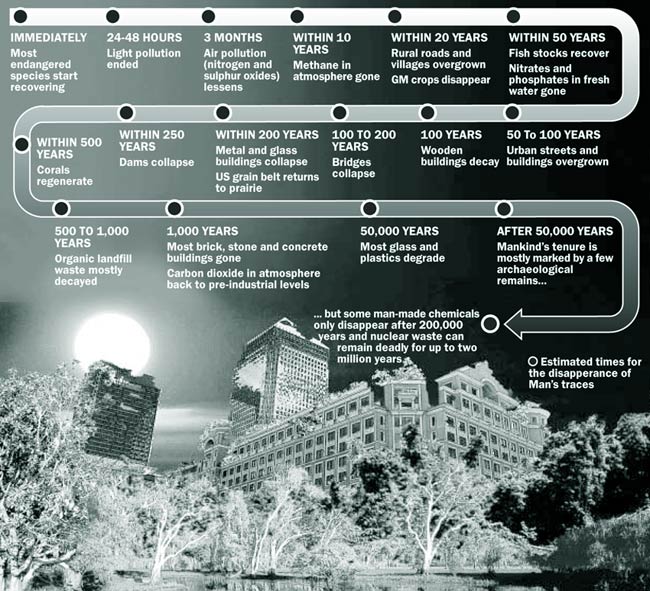
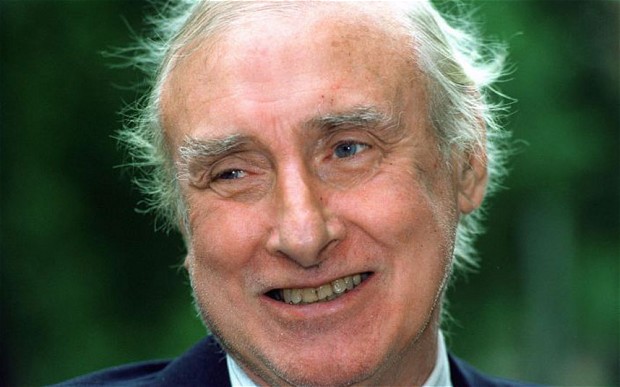
 Learning from Dogs