Tag: George Monbiot

Seeking intelligent life!

Continuing from yesterday with the essay from George Monbiot.

The title of today’s post comes from that very silly joke, oft repeated by yours truly, about why is it that Planet Earth has never been visited by aliens?

Answer: Because they have seen no signs of intelligent life!

(Yes, I know, it’s very corny!)

In yesterday’s post about Smart thinking (or the frequent lack of it) I referred to a recent essay from George Monbiot about the United Nations and climate change.  Mr. Monbiot’s essay offers both a startling and hard-to-believe account of the madness, in lieu of a more cruel word, of what could be one of the crucial assemblies for positive change, but isn’t!

I said that the essay would be published in full today and here it is, with the kind permission of Mr. Monbiot.

ooOOoo

Applauding Themselves to Death

10th March 2015

Why the UN climate talks have wasted 23 years, and how this can change.

By George Monbiot, published in the Guardian 11th March 2015

If you visit the website of the UN body that oversees the world’s climate negotiations(1), you will find dozens of pictures, taken across 20 years, of people clapping. These photos should be of interest to anthropologists and psychologists. For they show hundreds of intelligent, educated, well-paid and elegantly-dressed people wasting their lives.

The celebratory nature of the images testifies to the world of make-believe these people inhabit. They are surrounded by objectives, principles, commitments, instruments and protocols, which create a reassuring phantasm of progress while the ship on which they travel slowly founders. Leafing through these photos, I imagine I can almost hear what the delegates are saying through their expensive dentistry. “Darling you’ve re-arranged the deckchairs beautifully. It’s a breakthrough! We’ll have to invent a mechanism for holding them in place, as the deck has developed a bit of a tilt, but we’ll do that at the next conference.”

This process is futile because they have addressed the problem only from one end, and it happens to be the wrong end. They have sought to prevent climate breakdown by limiting the amount of greenhouse gases that are released; in other words, by constraining the consumption of fossil fuels. But, throughout the 23 years since the world’s governments decided to begin this process, the delegates have uttered not one coherent word about constraining production.

Compare this to any other treaty-making process. Imagine, for example, that the Biological Weapons Convention made no attempt to restrain the production or possession of weaponised smallpox and anthrax, but only to prohibit their use. How effective do you reckon it would be? (You don’t have to guess: look at the US gun laws, which prohibit the lethal use of guns but not their sale and carriage. You can see the results in the news every week). Imagine trying to protect elephants and rhinos only by banning the purchase of their tusks and horns, without limiting killing, export or sale. Imagine trying to bring slavery to an end not by stopping the transatlantic trade, but by seeking only to discourage people from buying slaves once they had arrived in the Americas. If you want to discourage a harmful trade, you must address it at both ends: production and consumption. Of the two, production is the most important.

The extraction of fossil fuels is a hard fact. The rules governments have developed to prevent their use are weak, inconsistent and negotiable. In other words, when coal, oil and gas are produced, they will be used. Continued production will overwhelm attempts to restrict consumption. Even if efforts to restrict consumption temporarily succeed, they are likely to be self-defeating. A reduction in demand when supply is unconstrained lowers the price, favouring carbon-intensive industry.

You can search through the UN’s website for any recognition of this issue, but you would be wasting your time. In its gushing catalogue of self-congratulation(2), at Kyoto, Doha, Bali, Copenhagen, Cancun, Durban, Lima and all stops en route, the phrase “fossil fuel” does not occur once. Nor do the words coal or oil. But gas: oh yes, there are plenty of mentions of gas. Not natural gas, of course, but of greenhouse gases, the sole topic of official interest.

The closest any of the 20 international conferences convened so far have come to acknowledging the problem is in the resolution adopted in Lima in December last year. It pledged “cooperation” in “the phasing down of high-carbon investments and fossil fuel subsidies”(3), but proposed no budget, timetable or any instrument or mechanism required to make it happen. It’s progress of a sort, I suppose, and perhaps, after just 23 years, we should be grateful.

There is nothing random about the pattern of silence that surrounds our lives. Silences occur where powerful interests are at risk of exposure. They protect these interests from democratic scrutiny. I’m not suggesting that the negotiators decided not to talk about fossil fuels, or signed a common accord to waste their lives. Far from it: they have gone to great lengths to invest their efforts with the appearance of meaning and purpose. Creating a silence requires only an instinct for avoiding conflict. It is a conditioned and unconscious reflex; part of the package of social skills that secures our survival. Don’t name the Devil for fear that you’ll summon him.

Breaking such silences requires a conscious and painful effort. I remember as if it were yesterday how I felt when I first raised this issue in the media(4). I had been working with a group of young activists in Wales, campaigning against opencast coal mines(5). Talking it over with them, it seemed so obvious, so overwhelming, that I couldn’t understand why it wasn’t on everyone’s lips. Before writing about it, I circled the topic like a dog investigating a suspicious carcass. Why, I wondered, is no one touching this? Is it toxic?

You cannot solve a problem without naming it. The absence of official recognition of the role of fossil fuel production in causing climate change – blitheringly obvious as it is – permits governments to pursue directly contradictory policies. While almost all governments claim to support the aim of preventing more than 2°C of global warming, they also seek to “maximise economic recovery” of their fossil fuel reserves. (Then they cross their fingers, walk three times widdershins around the office and pray that no one burns it). But few governments go as far as the UK has gone.

In the Infrastructure Act that received royal assent last month, maximising the economic recovery of petroleum from the UK’s continental shelf became a statutory duty(6). Future governments are now legally bound to squeeze every possible drop out of the ground.

The idea came from a government review conducted by Sir Ian Wood, the billionaire owner of an inherited company – the Wood Group – that provides services to the oil and gas industry. While Sir Ian says his recommendations “received overwhelming industry support”(7), his team interviewed no one outside either the oil business or government. It contains no sign that I can detect of any feedback from environment groups or scientists.

His review demanded government powers to enhance both the exploration of new reserves and the exploitation of existing ones. This, it insisted, “will help take us closer to the 24 billion [barrel] prize potentially still to come.” The government promised to implement his recommendations in full and without delay(8). In fact it went some way beyond them. It is prepared to be ruthlessly interventionist when promoting climate change, but not when restraining it.

During December’s climate talks in Lima, the UK’s energy secretary, Ed Davey, did something unwise. He broke the silence. He warned that if climate change policies meant that fossil fuel reserves could no longer be exploited, pension funds could be investing in “the sub-prime assets of the future”(9). Echoing the Bank of England and financial analysts such as the Carbon Tracker Initiative, Mr Davey suggested that if governments were serious about preventing climate breakdown, fossil fuel could become a stranded asset.

This provoked a furious response from the industry. The head of Oil and Gas UK wrote to express his confusion(10), pointing out that Mr Davey’s statements come “at a time when you, your Department and the Treasury are putting great effort into [making] the UK North Sea more attractive to investors in oil and gas, not less. I’m intrigued to understand how such opposing viewpoints can be reconciled.” He’s not the only one. Ed Davey quickly explained that his comments were not to be taken seriously, as “I did not offer any suggestions on what investors should choose to do.”(11)

Barack Obama has the same problem. During a television interview last year, he confessed that “We’re not going to be able to burn it all.”(12) So why, he was asked, has his government been encouraging ever more exploration and extraction of fossil fuels? His administration has opened up marine oil exploration from Florida to Delaware – in waters that were formally off-limits(13). It has increased the number of leases sold for drilling on federal lands and, most incongruously, rushed through the process that might, by the end of this month, enable Shell to prospect in the highly vulnerable Arctic waters of the Chukchi Sea(14).

Similar contradictions beset most governments with environmental pretentions. Norway, for example, intends to be “carbon neutral” by 2030. Perhaps it hopes to export its entire oil and gas output, while relying on wind farms at home(15). A motion put to the Norwegian parliament last year to halt new drilling because it is incompatible with Norway’s climate change policies was defeated by 95 votes to 3(16).

Obama explained that “I don’t always lead with the climate change issue because if you right now are worried about whether you’ve got a job or if you can pay the bills, the first thing you want to hear is how do I meet the immediate problem?”(17)

Money is certainly a problem, but not necessarily for the reasons Obama suggested. The bigger issue is the bankrolling of politics by big oil and big coal(18), and the tremendous lobbying power they purchase. These companies have, in the past, financed wars to protect their position(19); they will not surrender the bulk of their reserves without a monumental fight. This fight would test the very limits of state power; I wonder whether our nominal democracies would survive it. Fossil fuel companies have become glutted on silence: their power has grown as a result of numberless failures to challenge and expose them. It’s no wonder that the manicured negotiators at the UN conferences, so careful never to break a nail, have spent so long avoiding the issue.

I believe there are ways of resolving this problem, ways that might recruit other powerful interests against these corporations. For example, a global auction in pollution permits would mean that governments had to regulate just a few thousand oil refineries, coal washeries, gas pipelines and cement and fertiliser factories, rather than the activities of 7 billion people(20). It would create a fund from the sale of permits that’s likely to run into trillions: money that could be used for anything from renewable energy to healthcare. By reducing fluctations in the supply of energy, it would deliver more predictable prices, that many businesses would welcome. Most importantly, unlike the current framework for negotiations, it could work, producing a real possibility of averting climate breakdown.

Left to themselves, the negotiators will continue to avoid this issue until they have wasted everyone else’s lives as well as their own. They keep telling us that the conference in Paris in December is the make or break meeting (presumably they intend to unveil a radical new deckchair design). We should take them at their word, and demand that they start confronting the real problem.

With the help of George Marshall at the Climate Outreach and Information Network, I’ve drafted a paragraph of the kind that the Paris agreement should contain. It’s far from perfect, and I would love to see other people refining it. But, I hope, it’s a start:

“Scientific assessments of the carbon contained in existing fossil fuel reserves suggest that full exploitation of these reserves is incompatible with the agreed target of no more than 2°C of global warming. The unrestricted extraction of these reserves undermines attempts to limit greenhouse gas emissions. We will start negotiating a global budget for the extraction of fossil fuels from existing reserves, as well as a date for a moratorium on the exploration and development of new reserves. In line with the quantification of the fossil carbon that can be extracted without a high chance of exceeding 2°C of global warming, we will develop a timetable for annual reductions towards that budget. We will develop mechanisms for allocating production within this budget and for enforcement and monitoring.”

If something of that kind were to emerge from Paris, it will not have been a total waste of time, and the delegates would be able to congratulate themselves on a real achievement rather than yet another false one. Then, for once, they would deserve their own applause.

References:

1. http://unfccc.int/2860.php

2. See the section titled “Key Steps”.

3. http://unfccc.int/resource/docs/2014/cop20/eng/10a01.pdf

4. http://www.theguardian.com/commentisfree/2007/dec/11/comment.greenpolitics

5. http://www.theguardian.com/commentisfree/2007/dec/05/beartoherethetruthyouvespoken

6. http://www.legislation.gov.uk/ukpga/2015/7/part/6/crossheading/recovery-of-uk-petroleum/enacted

7. http://www.woodreview.co.uk/documents/UKCS%20Maximising%20Recovery%20Review%20FINAL%2072pp%20locked.pdf

8. https://www.gov.uk/government/groups/wood-review-implementation-team

9. http://www.telegraph.co.uk/finance/newsbysector/energy/11277546/Fossil-fuel-investing-a-risk-to-pension-funds-says-Ed-Davey.html

10. https://www.scribd.com/doc/256034152/Malcom-Webb-to-Secretary-of-State

11. https://www.scribd.com/doc/256034194/Secretary-of-State-to-Malcolm-Webb

12. http://www.nytimes.com/2014/06/08/opinion/sunday/friedman-obama-on-obama-on-climate.html?_r=1

13. http://www.motherjones.com/environment/2014/09/how-obama-became-oil-president-gas-fracking-drill

14. http://www.tomdispatch.com/post/175963/tomgram%3A_subhankar_banerjee%2C_arctic_nightmares/

15. http://www.newscientist.com/article/dn24299-ipcc-digested-just-leave-the-fossil-fuels-underground.html

16. https://stortinget.no/no/Saker-og-publikasjoner/Saker/Sak/?p=59412

17. http://www.nytimes.com/2014/06/08/opinion/sunday/friedman-obama-on-obama-on-climate.html?_r=1

18. http://www.theguardian.com/environment/georgemonbiot/2012/aug/02/climate-change-political-funding-us

19. http://en.mercopress.com/2008/06/15/formal-end-to-oil-companies-proxy-chaco-war-1932-35

20. http://www.kyoto2.org/

ooOOoo

What a funny lot we can be!
Smart thinking – something else to learn from our dogs?

Because some of the things we humans do are insanely stupid!

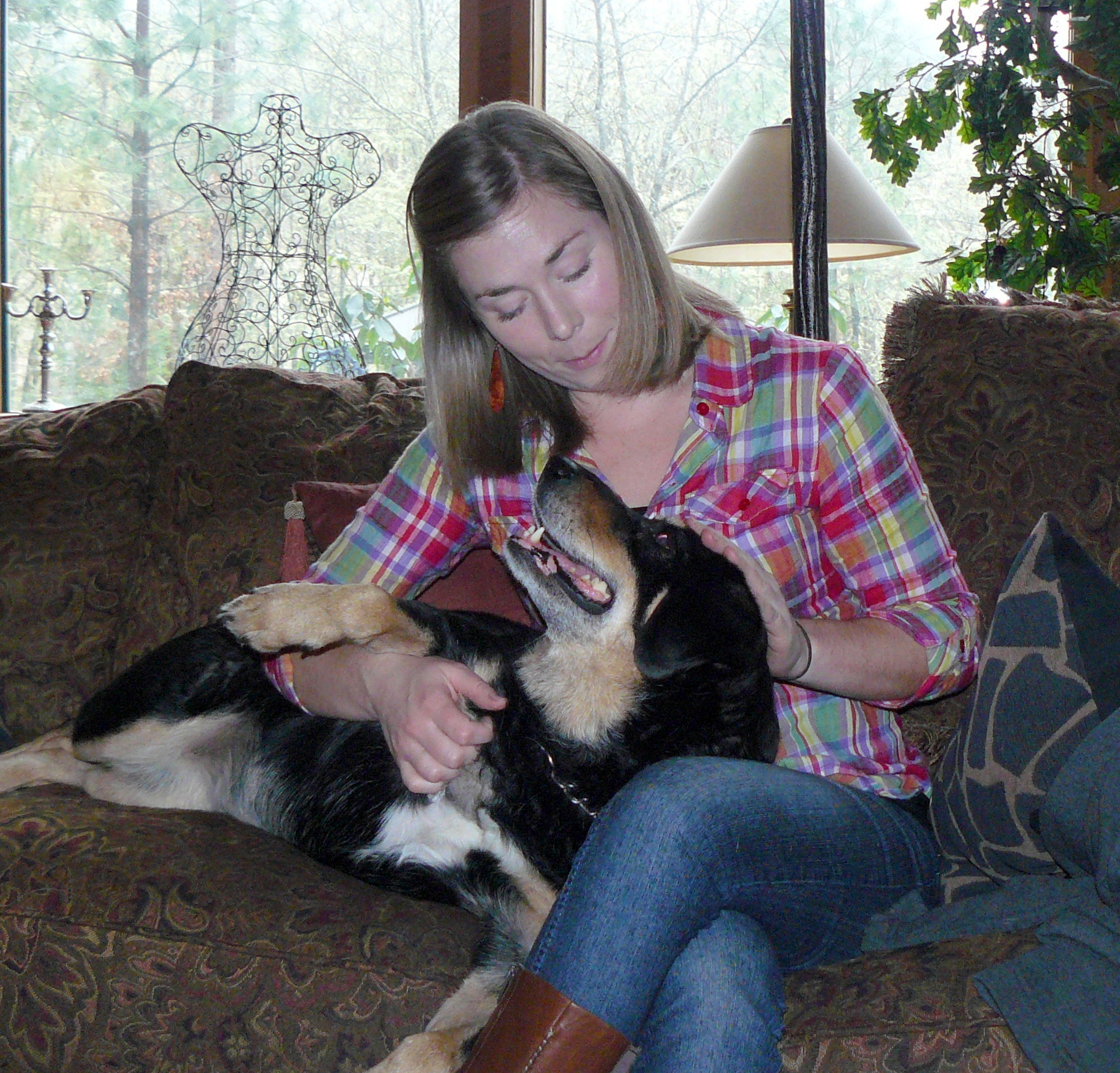
Here’s a picture of Oliver taken yesterday afternoon.

Becoming a dear, smart dog. (And those eyes!)

A few days ago, I was sitting in our living room on one of our settees (more or less where Oliver was sitting when the photograph above was taken) with my knees up against a low coffee table; the table separates our two settees.

On the settee to my left lay Cleo and on the floor across my feet slept Hazel.

It was clear that Oliver wanted to join me on the settee but couldn’t work out if there was room.  I shifted about two feet to my left leaving an Oliver-sized gap to my right. However, Oliver couldn’t come past my knees, from left to right as it were, because of Hazel. He very quickly worked out to run around behind the settee and jump up into the space I had newly created to my right.

Don’t worry if I lost you!

The point I am making is that Oliver, who has grown into the most delightful young adult dog, with a gorgeous temperament, demonstrates daily a keen intelligence and a nose for working things out quickly.

All of which is a preamble for me wondering if among the list of qualities that we humans should learn from dogs we should add intelligence.

For there’s been a few items around the ‘blogosphere’ that have highlighted how silly we can be.

Take this item that recently was featured on Grist.

Walmart’s new green product label is the most misleading yet.

A giant, 150-foot roll of bubble wrap may not be your idea of an environmentally friendly product, but over at Walmart.com this one-pound ball of plastic now boasts a special “Sustainability Leaders” badge. It’s one of more than 3,000 products tagged with this new green label, which Walmart executives unveiled last week, together with a web portal where shoppers can find these items.

Dozens of news accounts hailed the giant retailer’s move as a significant step toward clearing up the confusion and misleading information that often greet consumers trying to make ecologically responsible choices. “The world’s largest retailer took a major and important step toward helping all of us shop more smartly,” declared corporate sustainability consultant Andrew Winston in Harvard Business Review. Triple Pundit concurred: “It’s about to get a lot easier for Walmart.com shoppers to make the responsible choice.”

Actually, a green-minded online shopper is likely to find Walmart’s new badge confusing, murky, and downright misleading. I searched the bubble wrap’s product page high and low for its secret sauce, the invisible feature that makes it a smarter choice amid the many seemingly less harmful packing options available, but found no explanation.

It turns out that the key to this mystery lies in a remarkable disclaimer tucked into the middle of the home page of Walmart’s sustainability shopping portal: “The Sustainability Leaders badge does not make representations about the environmental or social impact of an individual product.” (my emphasis)

You can read the full item here, and you should! It’s unbelievably stupid, apart from being highly misleading, to my mind because when the word gets around it will damage the trust that all retailers need from their customers. And don’t even bring up the notion of integrity!

Then over on George Monbiot’s blogsite, there is a recent essay about the UN and progress on climate change. Here’s how it starts (and I’m republishing it in full tomorrow):

Applauding Themselves to Death

If you visit the website of the UN body that oversees the world’s climate negotiations, you will find dozens of pictures, taken across 20 years, of people clapping. These photos should be of interest to anthropologists and psychologists. For they show hundreds of intelligent, educated, well-paid and elegantly-dressed people wasting their lives.

The celebratory nature of the images testifies to the world of make-believe these people inhabit. They are surrounded by objectives, principles, commitments, instruments and protocols, which create a reassuring phantasm of progress while the ship on which they travel slowly founders. Leafing through these photos, I imagine I can almost hear what the delegates are saying through their expensive dentistry. “Darling you’ve re-arranged the deckchairs beautifully. It’s a breakthrough! We’ll have to invent a mechanism for holding them in place, as the deck has developed a bit of a tilt, but we’ll do that at the next conference.”

Humans have the potential to be incredibly smart thinkers, and down the ages there have been many such thinkers.

But!

Over on the Patrice Ayme blogsite there have been a couple of recent essays that highlight examples of both stupid thinking and the rewards that flow from smart thinking. In one essay, Added Value in the XXI Century, Patrice writes:

SUPERIORITY OF THE WEST?

Why did the West become so superior? Or China, for that matter?

Technology. Superior technology. Coming from superior thinking. Both the Greeks and the Chinese had colossal contempt for barbarians. (In both cases it went so far that the Greeks lost everything, and the Chinese came very close to annihilation).

Around the year 1000 CE, the Vietnamese (it seems) invented new cultivars of rice, which could produce an entire crop, twice a year. The population of East Asia exploded accordingly.

A bit earlier, the Franks had invented new cultivars of beans. The Frankish Tenth Century was full of beans. Beans are nutritious, with high protein.

Homo is scientific and technological. Thus, two million years ago, pelt covered (tech!) Homo Ergaster lived in Georgia’s Little Caucasus, a pretty cold place in winter. And the population was highly varied genetically (showing tech and travel already dominated).

A GREATER OBSESSION WITH FREEDOM MADE THE WEST SUPERIOR:

Here is the very latest. Flour was found in England, in archeological layers as old as 10,000 years before present. It was pure flour: there were no husks associated. The milling had been done, far away. How far? Well the cultivation of wheat spread to Western Europe millennia later. The flour had been traded, and brought over thousands of miles. Most certainly by boat. Celtic civilization, which would rise 5,000 years later, was expert at oceanic travel.

What’s the broad picture? Not just that prehistoric Englishmen loved their flat bread, no doubt a delicacy. Advanced technology has permeated Europe for much longer than is still understood now by most historians. Remember that the iceman who died in a glacier, 5,000 years ago, was not just tattooed, and had fetched in the lowlands a bow made of special wood. More telling: he carried antibiotics.

Then in a subsequent essay, What Is It To Think Correctly?, Patrice opens, thus:

What Is It To Think Correctly?

Some say that correct thinking has to do with avoiding “logical fallacies”. That is, of course, silly. Imagine a pilot in a plane. Suppose she avoids all logical fallacies. Where does the plane go? Nowhere. Thinking correctly is more than avoiding logical “fallacies”.

One needs more than logic, to proceed: one needs e-motion, or motivation (both express the fact that they are whatever gets people to get into action; the semantics recognizes that logic without emotion goes nowhere).

There is another, related, fallacy in thinking that correct thinking is all about avoiding “logical fallacies”.

I don’t have the answers to the conundrum of stupid thinking a la Walmart and the United Nations (not an exclusive list; by far) but I do believe that the only way for humanity to overcome what looks like a very dangerous era ahead is through smarter thinking!

Oh, nearly forgot.

Oliver will be happy to run classes on smart thinking!

Stepping back from the future!

In more ways than one.

I freely admit that I have been putting off today’s post, and I’m not sure why.

Maybe it’s the continuing escalation of words between the West and Russia over the Ukraine? (But for some clarity do read this analysis written by Anatol Lieven, Professor, Georgetown University’s School of Foreign Service in Qatar.)

Maybe it’s because my last republication of a George Monbiot essay was so hopeful. Indeed, the blog post was called Voting for hope. Whereas today’s Monbiot essay is very sad.

Maybe it’s because I am not immune to the temptations that are described.

But whatever the reasons, there can be no denying that there is a real sense of finding the modern world increasingly strange and frequently upsetting.

That theme continues today with the republication of a George Monbiot essay that he released on his blog a week ago.

ooOOoo

Lost in the 21st Century

3rd February 2015

Consumerism has broken its promise. Perhaps now we can begin to reconnect.

By George Monbiot, published in the Guardian 4th February 2015

A woman walks into a department store. She takes in the racks and stacks of stuff, the sugared music, the sale signs, the listless customers shuffling through the aisles, and is moved – suddenly and to her own astonishment – to shout. “Is this all there is?!”. An assistant comes round from behind his till. “No madam. There’s more in our catalogue.”

This is the answer we have been given to everything, the only answer. We might have lost our attachments, our communities, our sense of meaning and purpose, but there will be more money and more stuff with which to replace them. Now that the promise has evaporated, the size of the void becomes intelligible.

It’s not that the old dispensation was necessarily better: it was bad in different ways. Hierarchies of class and gender crush the human spirit as effectively as atomisation. The point is that the void that was filled with junk is a void that could have been occupied by a better society, built on mutual support and connectedness, without the stifling stratification of the old order. But the movements that helped to smash the old world were facilitated and co-opted by consumerism.

Individuation, a necessary response to oppressive conformity, is exploitable. New social hierarchies, built around positional goods and conspicuous consumption, took the place of the old. The conflict between individualism and egalitarianism, too readily ignored by those who helped to break the oppressive norms and strictures, does not resolve itself.

So we are lost in the 21st Century, living in a state of social disaggregation that hardly anyone desired, but that is an emergent property of a world reliant on rising consumption to avert economic collapse, saturated with advertising and framed by market fundamentalism. We inhabit a planet our ancestors would have found impossible to imagine: 7 billion people, suffering an epidemic of loneliness. It is a world of our making but not of our choice.

Now it appears that the feast to which we were invited is only for the few. Figures released last week show that wages in the United Kingdom are lower than they were 13 years ago(1). A fortnight ago, Oxfam revealed that the top 1% now possesses 48% of the world’s wealth(2); by next year it will own as much as everybody else put together. On the same day, an Austrian company unveiled its design for a new superyacht. It will be built on the hull of an oil tanker, 918 feet long(3). There will be 11 decks, three helipads, theatres, concert halls and restaurants, electric cars to take the owner and his guests from one end of the ship to the other, and a four-storey ski slope.

In 1949, Aldous Huxley wrote to George Orwell, to argue that his dystopian vision was the more convincing(4). “The lust for power can be just as completely satisfied by suggesting people into loving their servitude as by flogging and kicking them into obedience. … The change will be brought about as a result of a felt need for increased efficiency.” I don’t believe he was wrong.

Consumerism is at odds with common purpose: you could pay your taxes or you could spend the money on a new car(5). It stifles feeling, dulling our concern for other people. Freedom to spend displaces other freedoms, as lotus eating allows us to forget our losses. Most forms of peaceful protest are now banned, but no one stops us from devouring the resources upon which future generations will depend. All this helps the global oligarchs to rip holes in the social safety net, find relief from the constraints of both democracy and taxation, and enclose and privatise our common weal.

Just as human society has been pulled apart by consumerism and materialism, pushing us into an unprecedented Age of Loneliness(6), so ecosystems have been shattered by the same forces. It is the consumerist mindset, raised to the global scale, that now threatens us with climate breakdown, catalyses a sixth great extinction, imperils global water supplies and strips the soil upon which all human life depends(7).

But nor do I believe that the acceptance of servitude Huxley envisaged is a permanent state. Wage stagnation, the brutality of the new conditions of employment, the breaking of the link between educational attainment and social advancement, the impossibility, for many young people, of finding good housing, all these confront us with the question that could be deferred only during conditions of rising general prosperity: is this all there is?

As the growth of Syriza and Podemos suggests, we cannot build political movements to challenge these issues unless we also build society. It is not enough to urge people to change their politics: we must create not only communities of interest but also communities of mutual support, offering the security, survival and respect that the state will no longer provide.

In a remarkable series of contemplations, extending beyond its familiar brief, Friends of the Earth has begun to explore how we might reconnect(8), with each other and with the natural world. It is looking, for example, at new models for urban living(9), based on sharing rather than competitive consumption: the sharing not just of cars and appliances and tools, but also of money (through credit unions and micro-finance) and power. This means community-led decision-making, over transport, planning and, perhaps, rent levels, minimum and maximum wages, municipal budgets and taxation. Such initiatives are not a substitute for government action – like David Cameron’s Big Society they are meaningless without facilitation from the state – but they can bring people together with a sense of shared purpose, ownership and mutual support that centralised decision-making can never provide.

Friends of the Earth also supports the empathy revolution championed by the author Roman Krznaric(10), and lifelong education that might counter the ever narrower schooling now inflicted on our children, whose purpose is to prepare people for jobs they will never have, in the service of an economy ordered for the benefit of others.

In these ideas and movements we find the glimmerings of an answer to the question: no, this is not all there is. There is attachment. Despite the best efforts of those who believe there is no such thing as society, we have not lost our ability to connect.

http://www.monbiot.com

References:

1. http://www.theguardian.com/business/2015/jan/30/british-wage-slump-post-financial-crisis-uk

2. http://www.theguardian.com/business/2015/jan/19/global-wealth-oxfam-inequality-davos-economic-summit-switzerland

3. http://www.dailymail.co.uk/travel/travel_news/article-2916523/Welcome-aboard-gold-superyacht-size-OIL-TANKER-indoor-ski-slope-board-BMWs-five-helicopters.html

4. http://www.lettersofnote.com/2012/03/1984-v-brave-new-world.html

5. See also the discussion of Rami Gabriel’s work (2013. Why I buy: Self, taste, and consumer society in America. University of Chicago Press) in Friends of the Earth, December 2013. Consumption and identity: A review of literature which is relevant to the question: ‘what is a better foundation for people’s identity than consumption?’ http://bit.ly/1ECZopQ

6. http://www.theguardian.com/commentisfree/2014/oct/14/age-of-loneliness-killing-us

7. http://www.theguardian.com/environment/georgemonbiot/2014/jun/05/the-farming-lobby-has-wrecked-efforts-to-defend-our-soil

8. http://www.foe.co.uk/page/big-ideas-change-world

9. http://www.foe.co.uk/page/big-ideas-cities

10. http://www.romankrznaric.com/

ooOOoo

Tomorrow, I want to offer the example of someone who has been sufficiently strong to take one small step back to sanity.

Voting for hope.

Considered reflections to yesterday’s post.

Yesterday, I published Bitter Lake ripples, a post that, in turn, was my response to the fabulous comments left by readers of my earlier post Oil, money, banks, guns and blood.  The overall feeling I read in those comments was one of terrible uncertainty about these present times. Or in the words of Sue Dreamwalker in response to a comment left by Patrice Ayme.

I have to say Patrice.. I agree with your comment here… And yes people are not understanding the whole of what is going on.. The Truth of it would seem unbelievable..

Patrice, in a post published on Monday entitled Arm Ukraine, Disarm Bankers sent shivers down my spine with the suggestion, the strong suggestion, that Ukraine, if not handled properly by ‘the West’ could be a tipping point into another major war between Europe (and the USA?) and Russia.  Here’s an extract from Patrice’s post:

The way it was said, in conjunction with Putin’s recent admission that Russian “volunteers” were fighting in Ukraine, is basically a declaration of war. On top of this, the head of the Eastern Ukraine rebels declared that he was raising a 100,000 men army. This means he expect tens of thousands of Russian troops (Putin’s “volunteers”) to cross the border.

This is not contained. Putin is billowing out of control, all by himself. One has to see what the combination of Putin’s dictatorial powers, media control, psychology and sinking economy leads to. Let me spell it out.

Once Putin has conquered Ukraine, he will push for more: he is already partly occupying Moldavia, WEST of Ukraine. Putin is also messing up with Hungary: there were street demonstrations about this, just yesterday, in Budapest. Putin uses the fact that Hungary is extremely dependent upon Russia’s fossil fuels. Merkel, who desperately wants to avoid war with Putin, flew to Budapest in emergency, to sort the situation out.

Patrice continues the warning of possible terrible times ahead in a subsequent post: Mental Inertia, Evil’s Friend, published yesterday.

Just as it takes a long time to erect, or change a vast building, so it is with the brain. The brain has inertia. Thus psychological inertia.

This mental inertia is why human beings tend to go on with a task, or with an attitude, once they got launched into it (a Jihadist laden with explosives just flew by).

Once a force is applied to an object, for example a propaganda to a brain, it tends to gather momentum, and develop ever more inertia.

Putin of course creates his own propaganda, and then can listen to it, reinforcing his deviance, in a self-reflective way. It’s all the more efficient if others repeat his ideas, and he listens to them. Actually that’s not just a problem with Putin, but with all Great Leaders. (And that’s one reason why Great Leadership has to be discontinued, and replaced by Direct Democracy.)

This amplifies the inertia.

By not fiercely opposing Putin, one collaborates with him. It is not just a question of sanctions. Putin is a liar, and an aggressive one, he should be publicly called for what he is.

Thus in terms of my own personal ideas, I freely admit to struggling to see things clearly.  Simply because I find it very difficult to get to the heart of these international issues through not having access to clear, impartial commentators who know what they are speaking about. As Patrice infers much of the media is corrupted by self-serving agendas.

However, on balance, despite Patrice Ayme being a ‘nom-de-plume’ and me having no idea who the person behind the label really is, I do trust his (?) writings and believe that Patrice writes from a position of having very good access to the inner workings of the US Government. (I am not privy to anything to support my proposition; just my guess.)

The other commentator whose opinions and judgements are trusted by me in equal fashion is George Monbiot. Mr. Monbiot has been gracious to grant permission to me for his essays to be republished here on Learning from Dogs.

On the 28th January, Mr. Monbiot published an essay that in words better than I could write encapsulates my response to the comments left on my Bitter Lake ripples post. Here is that post from George Mobiot.

ooOOoo

The Lamps Are Coming On All Over Europe

28th January 2015

By George Monbiot, published in the Guardian 28th January 2015

Here is the first rule of politics: if you never vote for what you want, you never get it. We are told at every election to hold our noses, forget the deficiencies and betrayals and vote Labour yet again, for fear of something worse(1). And there will, of course, always be something worse. So at what point should we vote for what we want, rather than keep choosing between two versions of market fundamentalism? Sometime this century? Or in the next? Follow the advice of the noseholders and we will be lost forever in Labour’s Bermuda triangulation.

Perhaps there was a time when this counsel of despair made sense. No longer. The lamps are coming on all over Europe. As in South America, political shifts that seemed impossible a few years earlier are now shaking the continent. We knew that another world was possible. Now, it seems, another world is here: the sudden death of the neoliberal consensus. Any party that claims to belong to the left but does not grasp this is finished.

Syriza, Podemos, Sinn Fein, the SNP; now a bright light is shining in England too, as the Green party stokes the radical flame that Labour left to gutter. On Tuesday morning, its membership in England and Wales passed 50,000(2); a year ago it was less than 15,000. A survey by the website voteforpolicies.org.uk reports that in blind tests (the 500,000 people it has polled were unaware of which positions belong to which parties), the Green Party’s policies are more popular than those of any other. If people voted for what they want, the Greens would be the party of government.

There are many reasons for this surge, but one of them must be a sense of popular ownership. Green party policies are determined democratically. Emerging from debates led mostly by younger members(3), they feel made for their time, while those of the major parties appear trapped in the 1980s.

Let me give you a flavour of the political transformation the Green Party seeks. There would be no prime minister of the kind we have today, no secretaries of state. Instead, Parliament would elect policy committees which in turn appoint convenors(4). It would also elect a First Minister, to chair the convenors’ committee. Parliament, in other words, would be sovereign rather than subject to the royal prerogative prime ministers abuse, leaders would be elected by the whole body and its various parties would be obliged to work together, rather than engage in perennial willy-waving.

Local authorities would set the taxes they chose. Local currencies, which have proved elsewhere to have transformative effects in depressed areas (see Bernard Lietaer’s book The Future of Money(5)) would become legal tender(6). Private banks would no longer be permitted to create money(7) (at the moment they issue 97% of our money supply, in the form of debt). Workers in limited companies would have the legal right, following a successful ballot, to buy them out and create cooperatives(8), with funding from a national investment bank.

The hideously unfair council tax system would be replaced by land value taxation(9), through which everyone would benefit from the speculative gains now monopolised by a few. All citizens would receive, unconditionally, a basic income(10), putting an end to insecurity and fear and to the punitive conditions attached to benefits, which have reduced recipients almost to the status of slaves.

Compare this vision of hope to Labour’s politics of fear. Compare it to a party so mesmerised by the City and the Daily Mail that it has promised to sustain the Tory cuts for “decades ahead”(11) and to “finish that task on which [the Chancellor] has failed”: eradicating the deficit.

Far too late, a former Labour minister, Peter Hain, now recognises that, inasmuch as the books need balancing, it can be done through measures like a financial transaction tax and a reform of national insurance(12), rather than through endless cuts. These opportunities have been dangling in front of Labour’s nose since 2008(13), but because appeasing the banks and the corporate press was deemed more important than preventing pain and suffering for millions, they have not been taken. Hain appears belatedly to have realised that austerity is a con, a deliberate rewriting of the social contract to divert our common wealth to the elite. There’s no evidence that the frontbench is listening.

Whether it wins or loses the general election, Labour is probably finished. It would take a generation to replace the sycophants who let Blair and Brown rip their party’s values to shreds. By then it will be history. If Labour wins in May, it is likely to destroy itself faster and more surely than if it loses, through the continued implementation of austerity. That is the lesson from Europe.

Fearful voting shifts the whole polity to the right. Tony Blair’s obeisance to corporate power enabled the vicious and destructive policies the Coalition now pursues(14). The same legacy silences Labour in opposition, as it pioneered most of the policies it should oppose. It is because we held our noses before that there is a greater stink today. So do we keep voting for a diluted version of Tory politics, for fear of the concentrate? Or do we start to vote for what we want? Had the people of this nation heeded the noseholders a century ago, we would still be waiting for the Liberal Party to deliver universal healthcare and the welfare state.

Society moves from the margins, not the centre. Those who wish for change must think of themselves as the sacrificial margin: the pioneering movement that might not succeed immediately, but that will eventually deliver sweeping change. We cannot create a successful alternative to the parties that have betrayed us until we start voting for it. Do we start walking, or just keep talking about the journey we might one day take?

Power at the moment is lethal. Whichever major party wins this election, it is likely to destroy itself through the pursuit of policies that almost no one wants. Yes, it might mean five more years of pain, though I suspect in these fissiparous times it won’t last so long. And then it all opens up. This is what we must strive for; this is the process that begins in May by voting, regardless of tactical considerations, for parties offering a genuine alternative. Change arises from conviction. Stop voting in fear. Start voting for hope.

http://www.monbiot.com

References:

1. http://www.theguardian.com/commentisfree/2014/dec/09/labour-tories-vote-osborne

2. Green Party office, by email, 27th January 2015

3. http://bright-green.org/green-movement/how-the-green-party-changed-itself-to-make-the-greensurge-possible/

4. http://policy.greenparty.org.uk/pa.html

5. http://www.lietaer.com/writings/books/the-future-of-money/

6. http://policy.greenparty.org.uk/ec.html#EC678

7. http://policy.greenparty.org.uk/ec.html

8. http://policy.greenparty.org.uk/in.html

9. http://policy.greenparty.org.uk/ec.html

10. http://policy.greenparty.org.uk/ec.html

11. http://press.labour.org.uk/post/87284550049/long-termism-in-public-finance-speech-by-chris

12. http://www.theguardian.com/politics/2015/jan/22/labour-radical-counter-greens-peter-hain

13. I was not the first to propose these alternatives to austerity Peter Hain has just discovered, but even I had got there by 2011: http://www.theguardian.com/commentisfree/2011/mar/06/march-26-protest-aims-first-draft

14. http://www.monbiot.com/books/captive-state/

ooOOoo

I said that Mr. Monbiot’s words were much finer than my own. No better illustrated than by his closing three sentences:

“Change arises from conviction. Stop voting in fear. Start voting for hope.”

Who am I, Part Two!

Trying to make sense of our place in the world – and probably failing!

Yesterday’s post, Making sense of who we are?, was built upon a recent essay from George Monbiot: A Small and Shuffling Life. It is a terrific essay, in the very best tradition of George Monbiot. I really hope you read it in yesterday’s post because today’s introspective jaunt is built on that essay. Two particular paragraphs of his essay really ‘spoke’ to me.

The opening paragraph:

Live free or die: this is the maxim of our age. But the freedoms we celebrate are particular and limited. We fetishise the freedom of business from state control; the freedom not to pay taxes; the freedom to carry guns and speak our minds and worship whom we will. But despite – in some cases because of – this respect for particular freedoms, every day the scope of our lives appears to contract.

Later:

We carry with us the psychological equipment, rich in instinct and emotion, required to navigate that world. But our survival in the modern economy requires the use of few of the mental and physical capacities we possess. Sometimes it feels like a small and shuffling life. Our humdrum, humiliating lives leave us, I believe, ecologically bored.

In that second paragraph I sense something from Mr. Monbiot that is felt by me and Jean and appears to be shared very widely. A sense that something about today’s society is broken. That the last, say fifty years, of increasing living standards, health and prosperity, albeit not universally embraced, have brought us no closer to a golden future. That, as so clearly voiced in the preceding paragraph, “… our survival in the modern economy requires the use of few of the mental and physical capacities we possess.

My guess is that George Monbiot and Terry Hershey have never met. One might suggest that their backgrounds are as different as two people might be. Take their respective ‘About’ pages on their blogsites. Here are their closing paragraphs.

First, George:

George Monbiot Guardian Staff Byline

My work is more sedentary than it used to be, so I temper it with plenty of physical activity: sea kayaking, ultimate frisbee, running and some heavy duty gardening: growing my own vegetables and much of my own fruit.

Here are some of the things I love: my family and friends, salt marshes, arguments, chalk streams, Russian literature, kayaking among dolphins, diversity of all kinds, rockpools, heritage apples, woods, fishing, swimming in the sea, gazpacho, ponds and ditches, growing vegetables, insects, pruning, forgotten corners, fossils, goldfinches, etymology, Bill Hicks, ruins, Shakespeare, landscape history, palaeoecology, Gavin and Stacey and Father Ted.

Here are some of the things I try to fight: undemocratic power, corruption, deception of the public, environmental destruction, injustice, inequality and the misallocation of resources, waste, denial, the libertarianism which grants freedom to the powerful at the expense of the powerless, undisclosed interests, complacency.

Here is what I fear: other people’s cowardice.

I still see my life as a slightly unhinged adventure whose perpetuation is something of a mystery. I have no idea where it will take me, and no ambitions other than to keep doing what I do. So far it’s been gripping.

Now, Terry:

terry-hershey

I used to ask of myself and others: what have you accomplished? Where are your credentials? What does your job and your bank account say about who you are?

Now, my questions are different:
Are there butterflies in your garden?
What are the color of loved ones’ eyes, when they are looking at you with hope?
And when was the last time your house smelled of paper-white narcissus?
Do sunsets make you smile?
When was the last time you stood in stocking feet just to stare at the rising moon?
Have you ever seen a sunflower bloom?
Does the laughter of children do your heart good?
At what angle does the sun enter your house?

Do I understand that life is full of complications, obligations and distractions? Yes. I do. My wife and I raise a teenage son. We run two businesses. So, yes, I know a bit about down-to-earth realities.

But this, too, is reality:

I love to watch the hummingbirds dance.
I love that my son likes to put on his dancing shoes.
I love to join him when we play
old-time rock and roll.
I love to stretch out on a garden bench on a
warm summer day.
I love a hot shower and drying with an expensive,
oversized cotton towel.
I love books, delight in poetry,
and find sustenance in writing.
I treasure the certainty that grace
gives us all many second chances.
I value the times I can simplify life by letting go of my need to validate my humanity through productivity.
And I love to lose track of time in a garden.

I also know that sharing this with you – offering my practices for pausing, resources for doing less and living more, reflections in my blog —feeds me.

So I invite you, too, to join us — and together we’ll share, remind, and support each other, to “do less, live more.

Yet, despite the differences in backgrounds, cultures and much more, to me there is a common openness, an honesty shared, and a passion for the truth.

All of which is a very long introduction to this week’s Sabbath Moment from Terry; republished in full.

ooOOoo

Finding sanctuary and grace

January 19, 2015

Today I am sitting in a café (and bar) in Vaison-la-Romaine, in the Provence region of France, nursing my espresso. The old men of the village (actually all of them are about my age) gather. They unload, swap stories, sip pastis, and watch petanque on TV. Some read the newspaper–with stories about Charlie Hebdo and photos of “Somme Nous Charlie“–carrying reminders of hope in our fragile and broken world.

I am glad to be here. Today. In this place. There is an air of familiarity among the men, and comfort in their ritual. I am grateful for reminders and invitations to live well into a place. Not just a physical space, but a tonic and sanctuary to the spirit. The invitation is a permission to settle down. (In the words of Jesus, “to come away and rest awhile.”) A sanctuary is a place that restores us, replenishes us, nourishes us. In this renewal, we are reminded, once again, of what really is important.

I agree that it is easy to sentimentalize. But living into the moment doesn’t smooth the edges of our life. It allows us to pay attention. I like to think that we can name the edges, to welcome and invite them into the sanctuary.

Outside a bicycle club gathers in the village center parking lot, ready for their weekend excursion. Their spirit is eager, their uniform bearing homage to their journey to the top of Mont Ventoux.

Sitting in the café, my thoughts meander, with no agenda or responsibilities to tether them. So I let them wander, a gift to embrace. But my reverie is interrupted with worry … I need a Sabbath Moment. And I don’t have a clue (I tell myself). It’s not easy on vacation. Especially without wi-fi.

I am on my annual trip to Europe with my good friend Bill McNabb to taste wine. He’s a wine writer (and pastor) in the San Francisco area. But mostly, he’s a friend. I’m his aide-de-camp and connoisseur.
We travel to wine regions and are blessed to taste beverages that we cannot afford, but offer us a glimpse of heaven.
Yes I’m biased. But then wine is not a beverage here; it is an experience. Your choice is to savor and take delight.

We visited wineries harvesting grapes from vines 100 years old. These are businesses passed down through the generations, grandfather to father to son (and now thankfully, often to daughter). A world where terroir is king, the personality of the soil. Meaning that this wine is born of a place, a very specific place. Here in the Rhone Valley, I’m honored to be in the company of crafts people. Like being with a great gardener. The men and women I met coddle their vines–they call them trees–lovingly.
Unlike Peter Mayle, I don’t have “A Year in Provence.” I only have a few days. But that’ll do… It is my first visit and I’m sure won’t be my last.

We’re in our gite–a rural rental property in France–we relish the evening light, a layer of bruised purple (pourple) above the slopes in Provence (Cotes du Rhone). Below the hills, vineyards roll through the landscape, the vines–still in winter and pruned–pose as menorah renderings in the dusk light.

Yes, this scene is a tonic. There is something about these moments that carry significance, because they are reminders, and they are sacraments. Partial, yes, but containing the full sustenance of grace.
And I think of the question a friend asks me, “What holds you?”
In other words… What sustains you, and carries you gently through your days?

Ryoken, a Zen master, lived the simplest kind of life in a little hut at the foot of a mountain. One evening a thief visited the hut, only to discover there was nothing in it to steal. Ryoken returned and caught him in the act.
“You may have come a long way to visit me,” he told the disillusioned prowler, “and you should not return empty-handed. Please take my clothes as a gift.”
The thief was bewildered. But he took the clothes and slunk away.
Ryoken sat naked, watching the moon, “Poor fellow,” he mused. “I wish I could have given him this beautiful moon.”

Sometimes I feel like that thief. Standing–in my own home, or in front of an audience, or in a crowd, or all alone–I am looking for something, for whatever ails me or creates a hole or emptiness; but, like that thief, not finding it. “What am I missing?” I ask myself. What am I wanting, yearning for, that I find myself in such a pell-mell-hurry or weighted down… hoping to fix it, or find it, or mend it. So I run and race and call on God, or the sky, or roll the dice with some prayer from my childhood. This will solve it, I tell myself. But the more I push, the more I ask, the more I beseech, the further I move from the center.

Here’s the deal: In my state of distraction, I cannot see that the core of my identity, the place where I stand in this moment (even at times without clarity, or stability, or faith, or answers)… I stand smack dab in the center of an awesome and illogical grace. Smack dab in the center of the sacred present.

If I do have the permission to see that place, I know that I am grounded.
I am now able to breathe in
and out,
and rest in this acceptance.

Last night, above the slopes to the south, a slivered crescent moon rests, the sky a cobalt blue canvas. It is visceral, arresting, piercing. And for whatever reason, reassuring. This snapshot is imprinted, and I know in my heart that it is in some way essential, indispensable. I accept this gift of the moon, even though I don’t yet know why.

I don’t know what to tell you to do, exactly. Only that I too, wish I could give you the gift of that crescent moon.
I know this for certain: when we do not pay tribute, we are like the thief in the Zen story–without even knowing it–and we settle for less. So much less. So it is not just a question of what hold us, but of what holds us back… from being wholehearted, true to our self, fully alive, unafraid of uncertainty, and grateful for the gift of this moment.

Lord knows we look for ways to bottle it and sell it, when I reckon we should just get out of the way.

Our gite sits squarely in a vineyard and a working farm. A perfect setting to replenish. For years I’ve been writing about sanctuary and the need for restoration. And I’m my own worst enemy. There’s not a week that goes by that a Sabbath Moment friend doesn’t remind me to follow my own advice to pause… and let my soul catch up with my body. Gladly, this week I did.

ooOOoo

My penultimate reflection to today’s post is with a short, six-minute video from Professor Dan Gilbert. The video is entitled: The psychology of your future self. I hope you see it as offering a calming perspective to two days of inner psychological ramblings!

Published on Jun 3, 2014
“Human beings are works in progress that mistakenly think they’re finished.” Dan Gilbert shares recent research on a phenomenon he calls the “end of history illusion,” where we somehow imagine that the person we are right now is the person we’ll be for the rest of time. Hint: that’s not the case.

My final reflection is the lesson that dogs teach us; that one about living in the present.

Cleo living, and sleeping, in the present moment.

Making sense of who we are?

The psychology of self.

One of the huge differences between humans and our beloved dogs is that dogs live entirely in the present and do not engage in abstract thinking. Indeed, one of the most glorious aspects of owning a dog is being able to lose oneself in those moments of intimacy between yourself and your dog. Here’s a wonderful example of that when Bridget from Oregon Wild visited us recently and enjoyed a moment of bliss with Hazel.

P1150348

So with that in mind, I am now going to be very un-dog-like and very human by offering an essay that is most abstract in manner.  Not my essay, I should hasten to add, but a recent essay from George Monbiot, republished here with his kind permission. Then tomorrow, I want to stay with the abstract theme and include a recent essay from Terry Hershey.

ooOOoo

A Small and Shuffling Life

Why, in this age of freedom, are we so confined? And what can we do to reclaim our lives?

By George Monbiot, published in the New York Times, 19th January 2015

Live free or die: this is the maxim of our age. But the freedoms we celebrate are particular and limited. We fetishise the freedom of business from state control; the freedom not to pay taxes; the freedom to carry guns and speak our minds and worship whom we will. But despite – in some cases because of – this respect for particular freedoms, every day the scope of our lives appears to contract.

Half a century ago, we were promised that rising wealth would mean less work, longer vacations and more choice. But our working hours rise in line with economic growth, and they are now governed by a corporate culture of snooping and quantification, of infantilizing dictats and impossible demands, which smothers autonomy and creativity. Technologies that promised to save time and free us from drudgery (such as email and smartphones) fill our heads with a clatter so persistent it stifles the ability to think.

Public spaces in our cities are reduced to pasteurised piazzas, in which loitering without intent to shop is treated as suspicious. Protest is muted by dozens of constraining laws. Young people, who have no place in this dead-eyed, sanitised landscape, scarcely venture from their bedrooms. Political freedom now means choosing between alternative versions of market fundamentalism.

Even the freedoms we do possess we tend not to exercise. We spend hours every day watching other people doing what we might otherwise be doing: dancing, singing, playing sport, even cooking. We venture outdoors to seek marginally different varieties of stuff we already possess. “Getting and spending, we lay waste our powers / Little we see in Nature that is ours,” wrote William Wordsworth (1), and it is truer today than it was then.

We entertain the illusion that we have chosen our lives. Why, if this is the case, do our apparent choices differ so little from those of other people? Why do we live and work and travel and eat and dress and entertain ourselves in almost identical fashion? It’s no wonder, when we possess and use it so little, that we make a fetish out of freedom.

Perhaps we have forgotten the bitter complaint made by Benjamin Franklin in 1753. “When an Indian Child has been brought up among us, taught our language and habituated to our Customs, yet if he goes to see his relations and make one Indian Ramble with them, there is no perswading him ever to return.”(2) But when European Americans “have been taken prisoners young by the Indians, and lived a while among them, tho’ ransomed by their Friends, and treated with all imaginable tenderness to prevail with them to stay among the English, yet in a Short time they become disgusted with our manner of life … and take the first good Opportunity of escaping again into the Woods, from whence there is no reclaiming them.” In 1785 Hector de Crèvecoeur asked two European refuseniks why they would not come home. “The reasons they gave me would greatly surprise you: the most perfect freedom, the ease of living, the absence of those cares and corroding solicitudes which so often prevail with us.”(3)

We arose in a thrilling, terrible world. The African savannahs on which the first hominims evolved were dominated by sabretooth and false sabretooth cats, giant hyaenas and bear dogs. When human beings arrived in the Americas, 14,000 years ago, they found ground sloths the weight of elephants; a beaver eight feet from nose to tail; armadillos like small cars; giant lions and sabretooths; short-faced bears whose shocking armoury of teeth and claws suggests they drove giant lions and sabretooths off their prey. A bird in Argentina had a wingspan of 26 feet. Fanged salmon nine feet long migrated inland from the Pacific coast.

We carry with us the psychological equipment, rich in instinct and emotion, required to navigate that world. But our survival in the modern economy requires the use of few of the mental and physical capacities we possess. Sometimes it feels like a small and shuffling life. Our humdrum, humiliating lives leave us, I believe, ecologically bored.

At times this sensation has overwhelmed me. It happened in a newly-discovered bone cave in southern England. The walls and floor were encrusted with calcite crystals, that glittered in the torchlight. One of the archaeologists with whom I was exploring it handed me the atlas vertebra of a Bronze Age cow. Then he picked up another bone, this time with both hands: another atlas vertebra, but monstrous. “It’s the same species as the first one. But this is the wild version. The aurochs.” As I turned it over in my hands, feeling its great weight, I experienced what seemed like an electric jolt of recognition. It felt raw, feral, pungent, thrilling. The colour seemed to drain from modern life.

I felt it again when stalking up a tidal channel with a trident, trying to spear flounders. After two hours scanning the sand intently for signs of the fish, I was suddenly transported by the fierce conviction that I had done it a thousand times before. I felt it most keenly when I stumbled across the fresh corpse of a deer in a wood. I hoisted it onto my shoulders. As soon as I felt its warmth on my back, my skin flushed, my hair stood on end and I wanted to roar. Civilisation slid off like a bathrobe. I believe that in these cases I accidentally unlocked a lumber room in the mind, in which vestigial faculties shaped by our evolutionary past are stored. These experiences ignited in me a smouldering longing for a richer and rawer life than the one I lead.

Unless we are prepared to reject civilization altogether and live in the woods, there is no complete answer to this predicament. But I think there is a partial one. Across many rich nations, especially the United States, global competition is causing the abandonment of farming on less fertile land. Rather than trying to tame and hold back the encroaching wilds, I believe we should help to accelerate the process of reclamation, removing redundant roads and fences, helping to re-establish missing species, such as wolves and cougars and bears, building bridges between recovering habitats to create continental-scale wildlife corridors, such as those promoted by the Rewilding Institute(4).

This rewilding of the land permits, if we choose, a partial rewilding of our own lives. It allows us to step into a world that is not ordered and controlled and regulated, to imagine ourselves back into the rawer life from which we came, to discover, perhaps, the ecstasy I experienced when I picked up that deer. We don’t have to give up our washing machines and computers and spectacles and longevity to shed our ecological boredom and recover some measure of the freedom that has been denied to us. Perhaps we do need to remember who we are.

George Monbiot’s book Feral: rewilding the land, the sea and human life is published this month by the University of Chicago Press.

References:

1. http://www.bartleby.com/145/ww317.html

2. Benjamin Franklin, 9th May 1753. The Support of the Poor. Letter to Peter Collinson.

http://www.historycarper.com/1753/05/09/the-support-of-the-poor/

3. J. Hector St. John de Crèvecoeur, 1785. Letters from an American Farmer and Other Essays. Letter 12. Edited by Dennis D. Moore. Harvard University Press.

4. http://rewilding.org/rewildit/

ooOOoo

So tomorrow, the second part with Terry Hershey and a short talk by Professor Dan Gilbert, Professor of Psychology at Havard University.

We are in and of nature itself!

Yet another powerful essay from George Monbiot.

I wonder at times why the most obvious things about us humans can be so easily overlooked. I have in mind that we humans are a product of a natural world, that we cannot survive without nature; however we examine our lives.

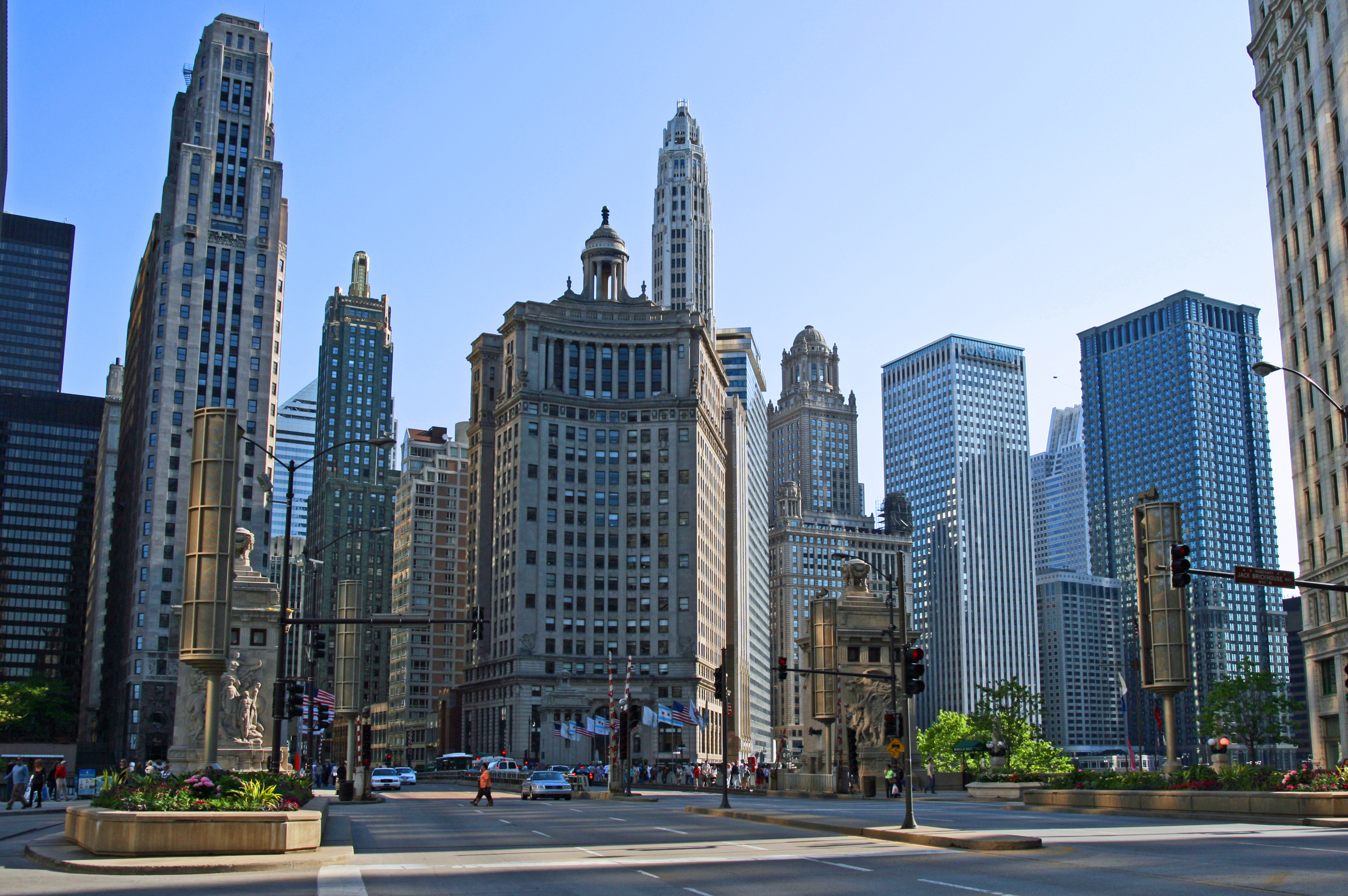
Take, for example, this picture of a city spread, in this case Chicago, where one might expect the natural world to be practically out of sight, reduced to a single point, metaphorically speaking. Yet nature is still hanging on, albeit courtesy of some local gardeners, I don’t doubt.

Chicago_cityscape_(5253757001)

All of which is my introduction to yet another powerful essay from George Monbiot, republished here with his very kind permission.

ooOOoo

Civilisation is Boring

December 9, 2014

We are pre-tuned to the natural world; wired to respond to nature.

By George Monbiot, published on BBC Earth, 8th December 2014

This is the first of BBC Earth’s longform essays about our relationship with the natural world.

One of the penalties of an ecological education is that one lives alone in a world of wounds,” the pioneering conservationist Aldo Leopold wrote. “An ecologist must either harden his shell and make believe that the consequences of science are none of his business, or he must be the doctor who sees the marks of death in a community that believes itself well and does not want to be told otherwise.”(1)

I remembered that when I read the news that the world has lost 52% of its vertebrate wildlife over the past 40 years(2). It’s a figure from which I’m still reeling. To love the natural world is to suffer a series of griefs, each compounding the last. It is to be overtaken by disbelief that we could treat it in this fashion. And, in the darkest moments, it is to succumb to helplessness, to the conviction that we will keep eroding our world of wonders until almost nothing of it remains. There is hope – real hope – as I will explain later, but at times like this it seems remote.

These wounds are inflicted not only on the world’s wildlife but also on ourselves. Civilisation is but a flimsy dust sheet that we have thrown over a psyche rich in emotion and instinct, shaped by the living planet. The hominims from whom we evolved inhabited a fascinating, terrifying world, in which survival depended on constant observation and interpretation. They contended not only with lions and leopards, but with sabretooths and false sabretooths, giant hyaenas and bear dogs (monstrous creatures with a huge bite radius).

As the work of Professor Blaire van Valkenburgh at UCLA suggests, predators in the pre-human past lived at much greater densities than they do today(3). The wear and breakage of their teeth show that competition was so intense that they were forced to consume the entire carcasses of the animals they killed, bones and all, rather than just the prime cuts, as top carnivores tend to do today. In other words, the animals with which we evolved were not just bigger than today’s predators; they were also hungrier.

Navigating this world required astonishing skills. Our ancestors, in the boom-and-bust savannahs, had to travel great distances to find food, through a landscape shimmering with surprise and hazard. Their survival depended upon reacting to the barest signals: the flicker of a tail in the grass, the scent of honey, a change in humidity, tracks in the dust. We still possess these capacities. We carry with us a ghost psyche, adapted to a world we no longer inhabit, which contains – though it remains locked down for much of the time – a boundless capacity for fear and wonder, curiousity and enchantment. We are pre-tuned to the natural world; wired to respond to nature.

In computer games and fantasy novels, we still grapple the monsters of the mind. In the film of Lord of the Rings: the Two Towers, the orcs rode on giant hyaenas(4). In the first Hunger Games film, bear dogs were released into the forest to prey on the contestants(5). I don’t believe these re-creations were accidental: the directors appear to have known enough of our evolutionary history to revive the ancestral terror these animals provoke. The heroic tales that have survived – tales of Ulysses, Sinbad, Sigurd, Beowulf, Cú Chulainn, St George, Arjuna, Lạc Long Quân and Glooskap – are those that resonate with the genetic memories lodged in our minds. I suspect that their essential form has remained unchanged for hundreds of thousands of years; that the encounters with monsters recorded in writing were a consolidation of stories we have been telling since we acquired the capacity to use the past tense.

You can see how such tales might have originated in a remarkable sequence in the BBC’s Human Planet series(6). Three men in southern Kenya, described by the programme as Dorobo people (though this is not a designation many ethnographers accept) stalk to within about 50 metres of a lion kill. Fifteen lions, blood dripping from their jaws, are eating the carcass of a wildebeest. The men suddenly stand and walk towards the pride. Rattled by their astonishing confidence, the lions flee. They watch from the bushes, puzzled and indecisive, as the three men walk up to the carcass, hack off one of the hind legs, then saunter away. That night, the adventurers roast the meat in their cave. “We really robbed those lions”, one of them boasts. “How many do you think there were?”, another asks. “Fifteen, but there might have been more.”

This, surely, is how sagas begin. Those men, led by a veteran of such ruses, are heroes of the old stamp. They outwitted a party of monsters, using guile and audacity, much as Ulysses did. A few hours later, they tell the first version of a story that might echo down the generations, every time with new flourishes and embellishments. Now imagine that, thousand of years hence, lions are long extinct, and the descendants of the Dorobo have only the haziest notion of what they were. They have become monsters even bigger and more dangerous than they were in life, and the feat becomes even more outrageous and unlikely. The saga remains true to its core, but the details have changed. We are those people, still telling the old stories, of encounters with the beasts that shaped us.

The world lives within us, we live within the world. By damaging the living planet we have diminished our existence.

We have been able to do this partly as a result of our ability to compartmentalise. This is another remarkable capacity we have developed, which perhaps reflects the demands of survival in the ever more complex human world we have created. By carving up the world in our minds we have learnt to shut ourselves out of it.

One of the tasks that parents set themselves is to train their children in linearity. Very young children don’t do linearity. Their inner life is discursive, contingent, impulsive. They don’t want to walk in a straight line down the pavement, but to wander off in the direction of whatever attracts their attention. They don’t begin a task with a view to its conclusion. They throw themselves into it, engage for as long as it’s exciting, then suddenly divert to something else.

This is how all animals except adult humans behave. Optimal foraging, the term biologists use to describe the way animals lock onto the best food supply, involves pursuing a task only for as long as it remains rewarding. Our own hunting and gathering would have followed a similar pattern, though it was complicated by our ability to plan and coordinate and to speculate about imagined outcomes. Broadly speaking, ours was a rambling and responsive existence, in which, by comparison to the way we live today, we had little capacity or inclination to impose our will on the world, to lay out a course of action and to follow it without deviation or distraction.

Only with the development of farming did we have to discipline ourselves to think linearly: following a plan from one point to another across weeks or months. Before long we were ploughing in straight lines, making hedges and ditches and tracks in straight lines, building houses and then towns in straight lines. Now almost every aspect of our lives is lived within grids, either concrete or abstract. Linearity, control and management dominate our lives. We fetishise progress: a continuous movement in the same direction. We impose our lines on the messy, contradictory and meandering realities of the human world, because otherwise we would be completely lost in it. We make compartments simple enough, amid the labyrinths we have created, to navigate and understand.

Thus we box ourselves out of the natural world. We become resistant to the experiences that nature has to offer; its spontaneity and serendipity, its unscripted delights, its capacity to shake us out of the frustrations and humiliations which are an inevitable product of the controlled and ordered world we have sought to create. We bully the living world into the grids we impose on ourselves. Even the areas we claim to have set aside for nature are often subjected to rigid management plans, in which the type and the height of the vegetation is precisely ordained and, through grazing or cutting or burning, nature is kept in a state of arrested development to favour an arbitrary assemblage of life over other possible outcomes. Nothing is allowed to change, to enter or leave. We preserve these places as if they were jars of pickles.

The language we use to describe them is also rigid and compartmentalised. In the UK we protect “sites of special scientific interest”, as if the wildlife they contain is of interest only to scientists. The few parts of the seabed which are not ripped up by industrial trawling are described as “reference areas”, as if their only value is as a baseline with which to compare destruction elsewhere. And is there a more alienating term than “reserve”? When we talk about reserve in people, we mean that they seem cold and remote. It reminds me of the old Native American joke: “we used to like the white man, but now we have our reservations.” Even “the environment” is an austere and technical term, which creates no pictures in the mind.

It’s not that we have banished our vestigial psychological equipment from our minds, or lost our instinct for engagement with wildlife. The tremendous popularity of nature programmes testifies to its persistence. I remember sitting in a café listening to a group of bus drivers talking, with great excitement and knowledge, about the spiders they had seen on television the night before, and thinking that, for all our technological sophistication, for all the clever means by which we shield ourselves from our emotions, we remain the people we have always been.

But we have suppressed these traits, and see the world through our fingers, shutting out anything that might spoil the view. We eat meat without even remembering that it has come from an animal, let alone picturing the conditions of its rearing and slaughter. We make no connection in our compartmentalised minds between the beef on our plates and the destruction of rainforests to grow the soya that fed the cattle; between the miles we drive and the oil wells drilled in rare and precious places, and the spills that then pollute them.

In our minds we have sanitised the world. WH Auden’s poem Et in Arcadia Ego describes how “Her jungle growths / Are abated, Her exorbitant monsters abashed, / Her soil mumbled,” while “the autobahn / Thwarts the landscape / In godless Roman arrogance”(7). But the old gods, the old fears, the old knowledge, have not departed. We simply choose not to see. “The farmer’s children / Tiptoe past the shed / Where the gelding knife is kept.”

Civilisation is boring. It has many virtues, but it leaves large parts of our minds unstimulated. It uses just a fraction of our mental and physical capacities. To know what comes next has been perhaps the dominant aim of materially-complex societies. Yet, having achieved it, or almost achieved it, we have been rewarded with a new collection of unmet needs. Many of us, I believe, need something that our planned and ordered lives don’t offer.

I found that something once in Cardigan Bay, on the west coast of Wales. I had stupidly launched my kayak into a ten-foot swell to fish a couple of miles from the shore. As I returned to land, I saw that the tide had risen, and ugly, jumbled breakers were smashing on the seawall. From where I sat, two hundred metres from the shore, I could see that the waves were stained brown by the shingle they flung up. I could hear them cracking and soughing against the wall. It was terrifying.

Behind me I heard a monstrous hiss: a freak wave was about to break over my head. I ducked and braced the paddle against the water. But nothing happened. Then a hooked grey fin, scarred and pitted, rose and skimmed just under the shaft of my paddle. I knew what it was, but the shock of it enhanced my rising fear. I glanced around, almost believing that I was under attack.

Then, from the stern, I heard a different sound: a crash and a rush of water. A gigantic bull dolphin soared into the air and almost over my head. As he flew past, he fixed his eye on mine. I stared at the sea into which he had disappeared, willing him to emerge again, filled with a wild exaltation, and a yearning of the kind that used to afflict me when I woke from that perennial pre-adolescent dream of floating down the stairs, my feet a few inches above the carpet. I realised at that moment that I had been suffering from a drought of sensation which I had come to accept as a condition of middle age, like the loss of the upper reaches of hearing.

I found that missing element again in the Białowieża Forest in eastern Poland. I was walking down a sandy path between oak and lime trees that rose for perhaps one hundred feet without branching. Around them the forest floor frothed with ramsons, celandines, spring peas and May lilies. I had seen boar with their piglets, red squirrels, hazel grouse, a huge bird that might have been an eagle owl, a black woodpecker. As I walked, every nerve seemed stretched, tuned like a string to the forest I was exploring. I rounded a curve in the path and found myself face to face with an animal that looked more like a Christian depiction of the Devil than any other creature I have seen.

I was close enough to see the mucus in her tear ducts. She had small, hooked black horns, heavy brows and eyes so dark that I could not distinguish the irises from the pupils. She wore a neat brown beard and an oddly human fringe between her horns. Her back rose to a crest then tapered away to a narrow rump, from which a black tail, slim as a whip, now twitched. She flared her nostrils and raised her chin. I fancied I could smell her sweet, beery breath. We watched each other for several minutes. I stayed so still that I could feel the blood pounding in my neck. Eventually the bison tossed her head, danced a couple of steps then turned, trotted back down the path then cantered away through the trees.

Experiences like these are the benchmarks of my life, moments in which dormant emotions were rekindled, in which my world was re-enchanted. But such unexpected encounters have been far too rare. Most of the lands in which I walk and the seas in which I swim or paddle my kayak are devoid of almost all large wildlife. I see deer, the occasional fox or badger, seals, but little else. It does not have to be like this. We can recharge the world with wonder, reverse much of the terrible harm we have done to it.

Over the past centuries, farming has expanded onto ever less suitable land. Even places of extremely low fertility have been cultivated or grazed, and the result has been a great disproportion between damage and productivity: the production of a tiny amount of food destroys the vegetation, the wild animals, the soil and the watersheds of entire mountain ranges. In the face of global trade, farming in such areas is becoming ever less viable: it cannot compete with production in fertile parts of the world. This has caused a loss of cultural diversity, which is another source of sadness.

But at the same time it means that the devastated land could be restored. In Europe, according to one forecast, 30 million hectares – an area the size of Poland – will be vacated by farmers by 2030(8). In the United States, two thirds of those parts of the land which were once forested, then cleared, have become forested again(9), as farming and logging have retreated, especially from the eastern half of the country. Rewilding, the mass restoration of ecosystems, which involves pulling down the redundant fences, blocking the drainage ditches, planting trees where necessary, re-establishing missing wildlife and then leaving the land to find its own way, could reverse much of the damage done to these areas. Already, animals like lynx, wolves, bears and moose, on both continents, are moving back into their former ranges.

There are also possibilities of restoring large parts of the sea. Public disgust at a fishing industry that has trashed almost every square metre of seabed on the continental shelves is now generating worldwide demands for marine parks. These are places in which commercial extraction is forbidden and the wildlife of the seas can recover. Even fishing companies can be persuaded to support them, when they discover that the fish migrating out of these places greatly boost their overall catches, a phenomenon known as the spillover effect. Such underwater parks are quickly recolonised by sessile life forms. Fish and crustacea proliferate, breeding freely and growing to great sizes once more. Dolphins, sharks and whales move in.

In these places we can leave our linearity and confinement behind, surrender to the unplanned and emergent world of nature, be surprised once more by joy, as surprise encounters with great beasts (almost all of which, despite our fears, are harmless to us) become possible again. We can rediscover those buried emotions that otherwise remain unexercised. Why should we not have such places on our doorsteps, to escape into when we feel the need?

Rewilding offers something else, even rarer than lynx and wolves and dolphins and whales. Hope. It offers the possibility that our silent spring could be followed by a raucous summer. In seeking to persuade people to honour and protect the living planet, an ounce of hope is worth a ton of despair. We could, perhaps, begin to heal some of the great wounds we have inflicted on the world and on ourselves.

George Monbiot is the author of Feral: rewilding the land, sea and human life. There’s an archive of his articles at http://www.monbiot.com

References:

1. Aldo Leopold, 1949. A Sand County Almanac. Oxford University Press.

2. http://www.theguardian.com/environment/2014/sep/29/earth-lost-50-wildlife-in-40-years-wwf

3. http://www.eci.ox.ac.uk/news/events/2014/megafauna/valkenburgh.pdf

4. https://www.youtube.com/watch?v=F3GFYKIwJ9Y

5. http://www.imdb.com/title/tt1392170/

6. http://vimeo.com/22616099

7. http://www.nybooks.com/articles/archives/1965/jun/03/et-in-arcadia-ego/

8. http://www.rewildingeurope.com/assets/uploads/Downloads/Rewilding-Europe-Brochure-2012.pdf

9. http://articles.chicagotribune.com/2012-11-16/features/ct-prj-1118-book-of-the-month-20121116_1_wild-animals-wildlife-wild-game-meat/2

ooOOoo

I’m sure that you will agree with me that this is a wonderful essay from Mr. Monbiot, an essay that speaks to us in ways that we all intuitively know makes huge sense.

There is hope for us!


A breath of common-sense.

George Monbiot perfectly spells it out.

Regular readers of this place will know that it is a rare couple of weeks without a republication of a George Monbiot essay.  His voice seems so often to be a ray of common-sense shining into a dark cave of present-day madness. None more obvious than this essay that was published last Monday under the title of There Is An Alternative.

It’s a huge honour to be able to share this with you, dear readers.

ooOOoo

There Is An Alternative

December 8, 2014

The great political question of our age is what to do about corporate power. It’s time we answered it.
By George Monbiot, published in the Guardian 8th December 2014

Does this sometimes feel like a country under enemy occupation? Do you wonder why the demands of so much of the electorate seldom translate into policy? Why the Labour Party, like other former parties of the left, seems incapable of offering effective opposition to market fundamentalism, let alone proposing coherent alternatives? Do you wonder why those who want a kind and decent and just world, in which both human beings and other living creatures are protected, so often appear to find themselves confronting the entire political establishment?

If so, you have already encountered corporate power. It is the corrupting influence that prevents parties from connecting with the public, distorts spending and tax decisions and limits the scope of democracy. It helps to explain the otherwise inexplicable: the creeping privatisation of health and education, hated by almost all voters; the private finance initiative, which has left public services with unpayable debts(1,2); the replacement of the civil service with companies distinguished only by their incompetence(3); the failure to re-regulate the banks and to collect tax; the war on the natural world; the scrapping of the safeguards that protect us from exploitation; above all the severe limitation of political choice in a nation crying out for alternatives.

There are many ways in which it operates, but perhaps the most obvious is through our unreformed political funding system, which permits big business and multimillionaires effectively to buy political parties. Once a party is obliged to them, it needs little reminder of where its interests lie. Fear and favour rule.

And if they fail? Well, there are other means. Before the last election, a radical firebrand said this about the lobbying industry(4): “It is the next big scandal waiting to happen … an issue that exposes the far-too-cosy relationship between politics, government, business and money. … secret corporate lobbying, like the expenses scandal, goes to the heart of why people are so fed up with politics.” That, of course, was David Cameron, and he’s since ensured that the scandal continues. His lobbying act restricts the activities of charities and trade unions, but imposes no meaningful restraint on corporations(5).

Ministers and civil servants know that if they keep faith with corporations while in office they will be assured of lucrative directorships in retirement. Dave Hartnett, who, as head of the government’s tax collection agency HMRC, oversaw some highly controversial deals with companies like Vodafone and Goldman Sachs(6,7), apparently excusing them from much of the tax they seemed to owe, now works for Deloitte, which advises companies like Vodafone on their tax affairs(8). As head of HMRC he met one Deloitte partner 48 times(9).

Corporations have also been empowered by the globalisation of decision-making. As powers but not representation shift to the global level, multinational business and its lobbyists fill the political gap. When everything has been globalised except our consent, we are vulnerable to decisions made outside the democratic sphere.

The key political question of our age, by which you can judge the intent of all political parties, is what to do about corporate power. This is the question, perennially neglected within both politics and the media, that this week’s series of articles will attempt to address. I think there are some obvious first steps.

A sound political funding system would be based on membership fees. Each party would be able to charge the same fixed fee for annual membership (perhaps £30 or £50). It would receive matching funding from the state as a multiple of its membership receipts. No other sources of income would be permitted. As well as getting the dirty money out of politics, this would force political parties to reconnect with the people, to raise their membership. It will cost less than the money wasted on corporate welfare every day.

All lobbying should be transparent. Any meeting between those who are paid to influence opinion (this could include political commentators like myself) and ministers, advisers or civil servants in government should be recorded, and the transcript made publicly available. The corporate lobby groups that pose as thinktanks should be obliged to reveal who funds them before appearing on the broadcast media(10,11), and if the identity of one of their funders is relevant to the issue they are discussing, it should be mentioned on air.

Any company supplying public services would be subject to freedom of information laws (there would be an exception for matters deemed commercially confidential by the information commissioner). Gagging contracts would be made illegal, in the private as well as the public sector (with the same exemption for commercial confidentiality). Ministers and top officials should be forbidden from taking jobs in the sectors they were charged with regulating.

But we should also think of digging deeper. Is it not time we reviewed the remarkable gift we have granted to companies in the form of limited liability? It socialises the risks which would otherwise be carried by a company’s owners and directors, exempting them from the costs of the debts they incur or the disasters they cause, and encouraging them to engage in the kind of reckless behaviour that caused the financial crisis. Should the wealthy authors of the crisis, like Fred Goodwin or Matt Ridley, not have incurred a financial penalty of their own?

We should look at how we might democratise the undemocratic institutions of global governance, as I outlined in my book The Age of Consent(12). This could involve the dismantling of the World Bank and the IMF, which are governed without a semblance of democracy, and cause more crises than they solve, and their replacement with a body rather like the international clearing union designed by John Maynard Keynes in the 1940s, whose purpose was to prevent excessive trade surpluses and deficits from forming, and therefore international debt from accumulating.

Instead of treaties brokered in opaque meetings between diplomats and transnational capital (of the kind now working towards a Transatlantic Trade and Investment partnership), which threaten democracy, the sovereignty of parliaments and the principle of equality before the law, we should demand a set of global fair trade rules, to which multinational companies would be subject, losing their licence to trade if they break them. Above all perhaps, we need a directly elected world parliament, whose purpose would be to hold other global bodies to account. In other words, instead of only responding to an agenda set by corporations, we must propose an agenda of our own.

This is not only about politicians, it is also about us. Corporate power has shut down our imagination, persuading us that there is no alternative to market fundamentalism, and that “market” is a reasonable description of a state-endorsed corporate oligarchy. We have been persuaded that we have power only as consumers, that citizenship is an anachronism, that changing the world is either impossible or best effected by buying a different brand of biscuits.

Corporate power now lives within us. Confronting it means shaking off the manacles it has imposed on our minds.

www.monbiot.com

References:

1. http://www.dropnhsdebt.org.uk/

2. http://www.monbiot.com/2010/11/22/the-uks-odious-debts/

3. http://www.monbiot.com/2014/05/05/land-of-impunity-2/

4. https://tompride.wordpress.com/2014/10/13/lobbying-camerons-deleted-speech-and-his-jaw-dropping-hypocrisy/

5. http://www.lobbyingtransparency.org/

6. http://www.theguardian.com/commentisfree/2010/oct/22/vodafone-tax-case-leaves-sour-taste

7. http://www.theguardian.com/business/2011/oct/11/goldman-sachs-interest-tax-avoidance

8. http://www.theguardian.com/business/2013/may/27/deloitte-appoints-dave-hartnett-tax

9. http://www.theguardian.com/business/2013/may/27/deloitte-appoints-dave-hartnett-tax

10. http://www.monbiot.com/2013/11/29/hidden-interests/

11. http://www.monbiot.com/2011/10/17/show-me-the-money/

12. http://www.monbiot.com/books/the-age-of-consent/

Breaking the silence

The second essay this week from George Monbiot

Part of me feels that I am being sucked in to too much ‘doom and gloom’ with the republication of this recent essay from George Monbiot.  I guess it’s a fine balance between spreading the word about the reality of life, in this case in the United Kingdom, or living in sweet innocence of the current state of affairs of ‘man’. But I found George Monbiot’s essay so shocking, in terms of the terrible inequality in British life, that it really did deserve the widest promulgation.

All I can offer in mitigation is that in thirty minutes time, I publish the next chapter of my book: How humans view dogs However, because this chapter is nothing more than setting the scene for the main chapters in Part Five, thirty minutes later comes leading chapter, specifically on Love, under the overall theme of Part Five: What we need to learn.

Your feedback, as always, would be wonderful.

ooOOoo

Breaking the Silence

December 2, 2014

It’s time to bring the Highland Spring south, and, like Scotland, introduce democracy to this quasi-feudal nation.

By George Monbiot, published in the Guardian 3rd December 2014

Bring out the violins. The land reform programme announced by the Scottish government is the end of civilised life on earth, if you believe the corporate press. In a country where 432 people own half the private rural land(1), all change is Stalinism. The Telegraph has published a string of dire warnings, insisting, for example, that deer stalking and grouse shooting could come to an end if business rates are introduced for sporting estates(2). Moved to tears yet?

Yes, sporting estates – where the richest people in Britain, or oil sheikhs and oligarchs from elsewhere, shoot grouse and stags – are exempt from business rates: a present from John Major’s government in 1994(3). David Cameron has been just as generous with our money: as he cuts essential services for the poor, he has almost doubled the public subsidy for English grouse moors(4), and frozen the price of shotgun licences(5), at a public cost of £17m a year.

But this is small change. Let’s talk about the real money. The Westminster government claims to champion an entrepreneurial society, of wealth creators and hard-working families, but the real rewards and incentives are for rent. The power and majesty of the state protects the patrimonial class. A looped and windowed democratic cloak barely covers the corrupt old body of the nation. Here peaceful protestors can still be arrested under the 1361 Justices of the Peace Act. Here, the Royal Mines Act 1424 gives the Crown the right to all the gold and silver in Scotland(6). Here the Remembrancer of the City of London sits behind the Speaker’s chair in the House of Commons(7), to protect the entitlements of a Corporation that pre-dates the Norman conquest. This is an essentially feudal nation.

It’s no coincidence that the two most regressive forms of taxation in the UK – council tax banding and the payment of farm subsidies – both favour major owners of property. The capping of council tax bands ensures that the owners of £100 million flats in London pay less than the owners of £200,000 houses in Blackburn(8,9). Farm subsidies, which remain limitless as a result of the Westminster government’s lobbying(10), ensure that every household in Britain hands £245 a year to the richest people in the land(11). The single farm payment system – under which landowners are paid by the hectare – is a reinstatement of a mediaeval levy called feudal aid(12): a tax the vassals had to pay to their lords.

If this is the government of enterprise, not rent, ask yourself why capital gains tax (at 28%) is lower than the top rate of income tax. Ask yourself why principal residences, though their value may rise by millions, are altogether exempt(13). Ask yourself why rural landowners are typically excused capital gains tax, inheritance tax and the first five years of income tax(14). The enterprise society? It’s a con, designed to create an illusion of social mobility.

The Scottish programme for government(15) is the first serious attempt to address the nature of landholding in Britain since David Lloyd George’s budget of 1909. Some of its aims hardly sound radical until you understand the context. For example it will seek to discover who owns the land. Big deal. Yes, in fact, it is. At the moment the owners of only 26% of the land in Scotland have been identified(16).

Walk into any mairie in France or ayuntamiento in Spain and you will be shown the cadastral registers on request, on which all the land and its owners are named. When The Land magazine tried to do the same in Britain(17), it found that there was a full cadastral map available at the local library, which could be photocopied for 70p. But it was made in 1840. Even with expert help, it took the magazine several weeks of fighting official obstruction and obfuscation and cost nearly £1000(18) to find out who owns the 1.4 km2 around its offices in Dorset. It discovered that the old registers had been closed and removed from public view, at the behest of a landed class that wishes to remain as exempt from public scrutiny as it is from taxes. (The landowners are rather more forthcoming when applying for subsidies from the rural payments agency, which possesses a full, though unobtainable, register of their agricultural holdings). What sort of nation is this, in which you cannot discover who owns the ground beneath your feet?

The Scottish government will consider breaking up large land holdings when they impede the prospects of local people(19). It will provide further help to communities to buy the land that surrounds them. Compare its promise of “a fairer, wider and more equitable distribution of land” to the Westminster government’s vision of “greater competitiveness, including by consolidation”(20): which means a continued increase in the size of land holdings. The number of holdings in England is now falling by 2% a year(21), which is possibly the fastest concentration of ownership since the acts of enclosure.

Consider Scotland’s determination to open up the question of property taxes, which might lead to the only system that is fair and comprehensive: land value taxation(22). Compare it to the fleabite of a mansion tax proposed by Ed Miliband, which, though it recoups only a tiny percentage of the unearned income of the richest owners, has so outraged the proprietorial class that some of them (yes Griff Rhys Jones, I’m thinking of you(23)) have threatened to leave the country. Good riddance.

The Scottish government might address the speculative chaos which mangles the countryside while failing to build the houses people need. It might challenge a system in which terrible homes are built at great expense, partly because the price of land has risen from 2% of the cost of a house in the 1930s to 70% today(24). It might take land into public ownership to ensure that new developments are built by and for those who will live there, rather than for the benefit of volume housebuilders. It might prevent mountains from being burnt and overgrazed(25) by a landowning class that cares only about the numbers of deer and grouse it can bag and the bragging rights this earns in London clubs. As Scotland, where feudalism was not legally abolished until 2000(26), becomes a progressive, modern nation, it leaves England stuck in the pre-democratic past.

Scotland is rudely interrupting the constructed silences that stifle political thought in the United Kingdom. This is why the oligarchs who own the media hate everything that is happening there: their interests are being exposed in a way that is currently impossible south of the border.

For centuries, Britain has been a welfare state for patrimonial capital. It’s time we broke it open, and broke the culture of deference that keeps us in our place. Let’s bring the Highland Spring south, and start discussing some dangerous subjects.

http://www.monbiot.com

References:

1. http://bit.ly/1vi0kuK

2. http://www.telegraph.co.uk/news/uknews/scotland/11262856/Future-bleak-for-grouse-shooting-and-deer-stalking.html

3. http://www.andywightman.com/?p=3975

4. Defra has tried to pass this off as payments for “moorland farmers”, but all owners of grazed or managed moorlands, of which grouse moors are a major component, are eligible. https://www.gov.uk/government/news/cap-boost-for-moorland

5. http://www.theguardian.com/uk-news/2014/apr/22/cameron-blasted-battle-shotgun-licence-fees

6. The Land Reform Review Group, 2014. The Land of Scotland and the Common Good.
http://www.scotland.gov.uk/About/Review/land-reform/events/FinalReport23May2014

7. http://www.monbiot.com/2011/10/31/wealth-destroyers/

8. http://www.theguardian.com/commentisfree/2014/mar/29/why-do-we-pay-more-council-tax-than-knightsbridge-oligarchs

9. This assumes that a house in Blackburn valued at £69,000 in 1991 would cost around £200,000 today. http://www.blackburn.gov.uk/Pages/Council-tax-charges.aspx

10. http://www.monbiot.com/2014/03/03/the-benefits-claimants-the-goverment-loves/

11. Defra, 31st August 2011, by email.

12. http://en.wikipedia.org/wiki/Feudal_aid

13. http://www.theguardian.com/business/2014/sep/22/charge-capital-gains-tax-main-residencies-says-housing-expert

14. http://www.ft.com/cms/s/2/99ae5756-1d89-11df-a893-00144feab49a.html#ixzz3Kexs2dL2

15. http://www.scotland.gov.uk/Publications/2014/11/6336

16. http://www.andywightman.com/?p=3816

17. http://www.thelandmagazine.org.uk/issue/land-issue-14-summer-2013

18. http://www.thelandmagazine.org.uk/issue/land-issue-14-summer-2013

19. http://www.scotland.gov.uk/Publications/2014/11/6336

20. http://archive.defra.gov.uk/foodfarm/policy/capreform/documents/110128-uk-cap-response.pdf

21. Compare the figures, Agriculture in the United Kingdom 2013: http://bit.ly/1vLQSi4
to the figures in the 2011 version: https://www.gov.uk/government/statistics/agriculture-in-the-united-kingdom-2011

22. http://www.theguardian.com/commentisfree/2013/jan/21/i-agree-with-churchill-shirkers-tax

23. http://www.theguardian.com/commentisfree/2014/nov/04/griff-rhys-jones-mansion-tax-soft-option

24. The Land Reform Review Group, 2014. The Land of Scotland and the Common Good. http://www.scotland.gov.uk/About/Review/land-reform/events/FinalReport23May2014

25. http://www.theguardian.com/commentisfree/2014/may/19/vote-yes-rid-scotland-of-feudal-landowners-highlands

26. http://www.scotland.gov.uk/Topics/Justice/law/17975/Abolition

A Vision for Nature

Another powerful essay from George Monbiot.

Despite this now being December and NaNoWriMo is behind me, all 53,376 words of it, the next few weeks are still going to be demanding.

I have three more chapters to write plus adding a guest preface and an overhaul of Part One of the book.  In other words, December is still a busy book month, albeit without the word-count pressures of NaNoWriMo.

All a long-winded way of me saying that I will present articles seen elsewhere if I think they are of interest to all of you readers.

Which brings me to another powerful essay from George Monbiot that he published a few days ago and is republished here with George’s very kind permission.

ooOOoo

A Vision for Nature

November 27, 2014

As governments tear down the rules that defend our wildlife from extinction, here’s a positive attempt to stop the wreckage.

By George Monbiot. posted on the Guardian’s website, 21st November 2014

One of the fears of those who seek to defend the natural world is that people won’t act until it is too late. Only when disasters strike will we understand how much damage we have done, and what the consequences might be.

I have some bad news: it’s worse than that. For his fascinating and transformative book, Don’t Even Think About It: why our brains are wired to ignore climate change, George Marshall visited Bastrop in Texas, which had suffered from a record drought followed by a record wildfire, and Sea Bright in New Jersey, which was devastated by Hurricane Sandy. These disasters are likely to have been caused or exacerbated by climate change. He interviewed plenty of people in both places, and in neither case – Republican Texas or Democratic New Jersey – could he find anyone who could recall a conversation about climate change as a potential cause of the catastrophe they had suffered. It simply had not arisen.

The editor of the Bastrop Advertiser told him “Sure, if climate change had a direct impact on us, we would definitely bring it in, but we are more centred around Bastrop County.” The mayor of Sea Bright told him “We just want to go home, and we will deal with all that lofty stuff some other day.” Marshall found that when people are dealing with the damage and rebuilding their lives they are even less inclined than they might otherwise be to talk about the underlying issues.

In his lectures, he makes another important point that – in retrospect – also seems obvious: people often react to crises in perverse and destructive ways. For example, immigrants, Jews, old women and other scapegoats have been blamed for scores of disasters they did not create. And sometimes people respond with behaviour that makes the disaster even worse: think, for instance, of the swing to UKIP, a party run by a former City broker and funded by a gruesome collection of tycoons and financiers, in response to an economic crisis caused by the banks.

I have seen many examples of this reactive denial at work, and I wonder now whether we are encountering another one.

The world’s wild creatures are in crisis. In the past 40 years the world has lost over 50% of its vertebrate wildlife. Hardly anywhere is spared this catastrophe. In the UK, for example, 60% of the 3,000 species whose fate has been studied have declined over the past 50 years. Our living wonders, which have persisted for millions of years, are disappearing in the course of decades.

You might expect governments and officials, faced with a bonfire of this magnitude, to rush to the scene with water and douse it. Instead they have rushed to the scene with cans of petrol.

Critical to the protection of the natural world are regulations: laws which restrain certain activities for the greater public good. Legal restrictions on destruction and pollution are often the only things that stand between species and their extinction.

Industrial interests often hate these laws, as they restrict their profits. The corporate media denigrates and demonises the very concept of regulation. Much of the effort of those who fund political parties is to remove the regulations that protect us and the living planet. Politicians and officials who seek to defend regulation will be taken down, through campaigns of unrelenting viciousness in the media. Everywhere the message has been received.

The European Commission has now ordered a “review” of the two main pillars of the protection of our wildlife: the Birds Directive and the Habitats Directive. It’s likely to be the kind of review conducted by a large tracked vehicle with a steel ball on the end of a chain. The problem, the Commission says, is that these directives could impede the “fitness” of business in Europe.

But do they? Not even Edmund Stoiber, the conservative former president of Bavaria who was appointed by the Commission to wage war on regulation, thinks so. He discovered that European environmental laws account for less than 1% of the costs of regulation to business: the lowest cost of any of the regulations he investigated. “However, businesses perceive the burden to be much higher in this area.” So if these crucial directives are vitiated or scrapped, it will not be because they impede business, but because they are wrongly perceived to impose much greater costs than they do.

The UK chancellor, George Osborne, claimed in 2011 that wildlife regulations were placing ridiculous costs on business. But a review by the environment secretary, Caroline Spelman, concluded the claim was unfounded.

In the United Kingdom, whose leading politicians, like those of Australia and Canada, appear to be little more than channels for corporate power, we are facing a full-spectrum assault on the laws protecting our living treasures.

The Small Business, Enterprise and Employment Bill, now passing through the House of Commons, would oblige future governments to keep deregulating on behalf of business, regardless of the cost to the rest of society. The government’s Red Tape Challenge at first insisted that no new regulation could be introduced unless an existing one is scrapped. Now two must be scrapped in exchange for any new one.

Cameron’s government has set up what it calls a “Star Chamber”, composed of corporate executives and officials from the business department, before which other government departments must appear. They must justify, in front of the sector they regulate, any of the rules these business people don’t like. If they are deemed insufficiently convincing, the rules are junked.

Usually, governments go to some lengths to disguise their intent, and to invent benign names for destructive policies. Not in this case. A Star Chamber perfectly captures the spirt of this enterprise. Here’s how a website about the history of the Tudors describes the original version (my emphasis):

“The power of the court of Star Chamber grew considerably under the Stuarts, and by the time of Charles I it had become a byword for misuse and abuse of power by the king and his circle. … Court sessions were held in secret, with no right of appeal, and punishment was swift and severe to any enemy of the crown. Charles I used the Court of Star Chamber as a sort of Parliamentary substitute during the years 1628-40, when he refused to call Parliament. Finally, in 1641 the Long Parliament abolished the hated Star Chamber, though its name survives still to designate arbitrary, secretive proceedings in opposition to personal rights and liberty.”

Yes, that is exactly what we’re looking at. I suspect the government gave its kangaroo court this name to signal its intent to its corporate funders: we are prepared to be perfectly unreasonable on your behalf, trampling justice, democracy and rational policy-making to give you what you want. We are putting you in charge. So please keep funding us, and please, dear owners of the corporate press, don’t destroy our chances of winning the next election by backing UKIP instead.

Then there’s the Deregulation Bill, which has now almost run its parliamentary course. Among the many ways in which it tilts the balance even further against defending the natural world is Clause 83, which states this:

“A person exercising a regulatory function to which this section applies must, in the exercise of the function, have regard to the desirability of promoting economic growth.”

So bodies such as the Environment Agency or Natural England must promote economic growth, even if it directly threatens the natural wonders they are charged with protecting. For example, companies could save money by tipping pollutants into a river, rather than processing them or disposing of them safely. That means more funds for investment, which could translate into more economic growth. So what should an agency do if it is supposed to prevent pollution and promote economic growth?

Not that the government needs to bother, for it has already stuffed the committees that oversee these bodies.

Look, for example, at the board of Natural England. Its chairman, Andrew Sells, is a housebuilder and major donor to the Conservative Party, who was treasurer of the thinktank Policy Exchange, which inveighs against regulation at every opportunity. Its deputy chairman, David Hill, is also chairman of a private company called the Environment Bank, whose purpose is ”to broker biodiversity offsetting agreements for both developers and landowners.” Biodiversity offsetting is a new means of making the destruction of precious natural places seem acceptable.

The government has recently appointed to this small board not one but two Cumbrian sheep farmers – Will Cockbain and Julia Aglionby – who, my encounters with them suggest, both appear to be fanatically devoted to keeping the uplands sheepwrecked and bare. There’s also a place for the chief executive of a group that I see as a greenwashing facility for the shooting industry, the Game and Wildlife Conservation Trust. And one for a former vice-president of Citibank. The board members with current or former interests in industries that often damage the natural world outnumber those who have devoted their lives to conservation and ecology.

So what do we do about this? You cannot fight assaults of this kind without producing a positive vision of your own.

This is what the RSPB and the Wildlife Trusts have done with the publication of their Nature and Wellbeing Green Paper. It’s a proposal for a new act of parliament modelled on the Climate Change Act 2008. It obliges future governments to protect and restore the living world. It proposes targets for the recovery of species and places, a government agency (the Office for Environmental Responsibility) whose role is to ensure that all departments help to defend wildlife, and Local Ecological Networks, which devolve power to communities to protect the places they love most.

I have problems with some aspects of this proposal, not least its enthusiastic embrace of the Natural Capital Agenda, which seeks to persuade us to value nature by putting a price on it. This strategy is, I believe, astonishingly naïve. To be effective, you must open up political space, not help to close it down by accepting the premises, the values and the framing of your opponents. But I can see what drove them to do it. If the government accepts only policies or regulations that contribute to economic growth, it’s tempting to try to prove that the financial value of wildlife and habits is greater than the financial value to be gained by destroying them, foolish and self-defeating as this exercise may be.

But I’ll put this aside, because their proposal is the most comprehensive attempt yet to douse the bonfire of destruction on which the government is toasting our wildlife like marshmallows. The Climate Change Act and its lasting commitments are just about the only measures that oblige this government to restrict greenhouse gases. It remains a yardstick against which the efforts of all governments can be judged. Should we not also have similar, sustained protection for wildlife and habitats? Only lasting safeguards, not subject to the whims and fads of passing governments, can defend them against extinction.

The Nature and Wellbeing Act is a good example of positive environmentalism, setting the agenda, rather than merely responding to the policies we don’t like. We must do both, but while those who love wildlife have often been effective opponents, we have tended to be less effective proponents.

It will be a struggle, as the times have changed radically. In 2008 the Climate Change Act was supported by the three main political parties. So far the Nature and Wellbeing Act has received the support of the Liberal Democrats (so after the election both their MPs will promote it in parliament) and the Green Party. The Conservatives, despite the green paper’s desperate attempts to speak their language, are unreachable. And where on earth is Labour? So far it has shown no interest at all.

If you care about what is happening to the living world, if you care about the assault on the enthralling and bewitching outcome of millions of years of evolution for the sake of immediate and ephemeral corporate profits, join the campaign and lobby your MPs. The Nature and Wellbeing Act will succeed only through a movement as big as the one that brought the Climate Change Act into existence. Please join it.

www.monbiot.com

ooOOoo

Sometimes, I wonder if such essays, as powerful and well-written as they are, are not just too terrible a commentary on how things are just now.  My justification for republishing them is simply from the point of view that the more the awareness of good ordinary people is enhanced as to these present times, the better the odds that there will be a sufficient social and political reaction to bring this madness to a halt.