Tag: Arizona State University

Yet more about Mindfulness

I am returning to this subject.

Simply because it is so important to us humans. For the world we live in has changed, and changed drastically. Now we are ‘wired up’ and that means less time to do nothing.

In 2010 I presented a book review Mindfulness by Ellen Janger.

Now I want to share an article presented by The Conversation.

ooOOoo

Mindfulness won’t burn calories, but it might help you stick with your health goals

Meditation exists on a spectrum, from mindful moments and bursts of mindfulness to building up to a formal meditative practice. d3sign/Moment via Getty Images

Masha Remskar, Arizona State University

Most people know roughly what kind of lifestyle they should be living to stay healthy.

Think regular exercise, a balanced diet and sufficient sleep. Yet, despite all the hacks, trackers and motivational quotes, many of us still struggle to stick with our health goals.

Meanwhile, people worldwide are experiencing more lifestyle-associated chronic disease than ever before.

But what if the missing piece in your health journey wasn’t more discipline – but more stillness?

Research shows that mindfulness meditation can help facilitate this pursuit of health goals through stillness, and that getting started is easier than you might think – no Buddhist monk robes or silent retreats required.

Given how ubiquitous and accessible mindfulness resources are these days, I have been surprised to see mindfulness discussed and studied only as a mental health tool, stopping short of exploring its usefulness for a whole range of lifestyle choices.

I am a psychologist and behavioral scientist researching ways to help people live healthier lives, especially by moving more and regulating stress more efficiently.

My team’s work and that of other researchers suggests that mindfulness could play a pivotal role in paving the way for a healthier society, one mindful breath at a time.

Mindfulness unpacked

Mindfulness has become a buzzword of late, with initiatives now present in schools, boardrooms and even among first responders. But what is it, really?

Mindfulness refers to the practice or instance of paying careful attention to one’s present-moment experience – such as their thoughts, breath, bodily sensations and the environment – and doing so nonjudgmentally. Its origins are in Buddhist traditions, where it plays a crucial role in connecting communities and promoting selflessness.

Over the past 50 years, however, mindfulness-based practice has been Westernized into structured therapeutic programs and stress-management tools, which have been widely studied for their benefits to mental and physical health.

Research has shown that mindfulness offers wide-ranging benefits to the mind, the body and productivity.

Mindfulness-based programs, both in person and digitally delivered, can effectively treat depression and anxiety, protect from burnout, improve sleep and reduce pain.

The impacts extend beyond subjective experience too. Studies find that experienced meditators – that is, people who have been meditating for at least one year – have lower markers of inflammation, which means that their bodies are better able to fight off infections and regulate stress. They also showed improved cognitive abilities and even altered brain structure.

But I find the potential for mindfulness to support a healthy lifestyle most exciting of all.

A senior couple sitting on the beach, pressing their feet together as the woman pulls the man's arms forward in a stretch.
Mindfulness meditation may enhance the psychological skills needed to follow through on exercise and other health habits. Maria Korneeva/Moment via Getty Images

How can mindfulness help you build healthy habits?

My team’s research suggests that mindfulness equips people with the psychological skills required to successfully change behavior. Knowing what to do to achieve healthy habits is rarely what stands in people’s way. But knowing how to stay motivated and keep showing up in the face of everyday obstacles such as lack of time, illness or competing priorities is the most common reason people fall off the wagon – and therefore need the most support. This is where mindfulness comes in.

Multiple studies have found that people who meditate regularly for at least two months become more inherently motivated to look after their health, which is a hallmark of those who adhere to a balanced diet and exercise regularly.

A 2024 study with over 1,200 participants that I led found more positive attitudes toward healthy habits and stronger intentions to put them into practice in meditators who practiced mindfulness for 10 minutes daily alongside a mobile app, compared with nonmeditators. This may happen because mindfulness encourages self-reflection and helps people feel more in tune with their bodies, making it easier to remember why being healthier is important to us.

Another key way mindfulness helps keep momentum with healthy habits is by restructuring one’s response to pain, discomfort and failure. This is not to say that meditators feel no pain, nor that pain during exercise is encouraged – it is not!

Mild discomfort, however, is a very common experience of novice exercisers. For example, you may feel out of breath or muscle fatigue when initially taking up a new activity, which is when people are most likely to give up. Mindfulness teaches you to notice these sensations but see them as transient and with minimal judgment, making them less disruptive to habit-building.

Putting mindfulness into practice

A classic mindfulness exercise includes observing the breath and counting inhales up to 10 at a time. This is surprisingly difficult to do without getting distracted, and a core part of the exercise is noticing the distraction and returning to the counting. In other words, mindfulness involves the practice of failure in small, inconsequential ways, making real-world perceived failure – such as a missed exercise session or a one-off indulgent meal – feel more manageable. This strengthens your ability to stay consistent in pursuit of health goals.

Finally, paying mindful attention to our bodies and the environment makes us more observant, resulting in a more varied and enjoyable exercising or eating experience. Participants in another study we conducted reported noticing the seasons changing, a greater connection to their surroundings and being better able to detect their own progress when exercising mindfully. This made them more likely to keep going in their habits.

Luckily, there are plenty of tools available to get started with mindfulness practice these days, many of them free. Mobile applications, such as Headspace or Calm, are popular and effective starting points, providing audio-guided sessions to follow along. Some are as short as five minutes. Research suggests that doing a mindfulness session first thing in the morning is the easiest to maintain, and after a month or so you may start to see the skills from your meditative practice reverberating beyond the sessions themselves.

Based on our research on mindfulness and exercise, I collaborated with the nonprofit Medito Foundation to create the first mindfulness program dedicated to moving more. When we tested the program in a research study, participants who meditated alongside these sessions for one month reported doing much more exercise than before the study and having stronger intentions to keep moving compared with participants who did not meditate. Increasingly, the mobile applications mentioned above are offering mindful movement meditations too.

If the idea of a seated practice does not sound appealing, you can instead choose an activity to dedicate your full attention to. This can be your next walk outdoors, where you notice as much about your experience and surroundings as possible. Feeling your feet on the ground and the sensations on your skin are a great place to start.

For people with even less time available, short bursts of mindfulness can be incorporated into even the busiest of routines. Try taking a few mindful, nondistracted breaths while your coffee is brewing, during a restroom break or while riding the elevator. It may just be the grounding moment you need to feel and perform better for the rest of the day.

Masha Remskar, Psychologist and Postdoctoral Researcher in Behavioral Science, Arizona State University

This article is republished from The Conversation under a Creative Commons license. Read the original article.

ooOOoo

Moments of rest are essential, grounding moments as written in the article. The article is great and has great motivation to abide by the recommendations.

Please read carefully the article and change your ways.

An article on loneliness

A surprising find!

I shall be 80 in November and I find myself thinking about death more often than I did a few years ago. As an example of how my mind has changed, yesterday I was contemplating renewing my subscription to the Free Inquiry magazine and wondering if I should renew it for two or three years? In other words will I still be alive in three years time? Silly but it is the truth. And that is not taking into account that I go to the Club Northwest two days a week and try and bike ride another two or three times a week.

Then let us not get into the topic of whether I will die before Jean or the reverse. That is an enormous subject and, thank goodness, where we live in Oregon one has the choice to die: “Two states, Oregon and Washington, currently have statutes providing a procedure for a terminally ill patient to request medication to end his or her life. These laws are sometimes referred to as “death with dignity” or “physician-assisted suicide” laws.

All of which is an introduction to a recent article published in The Conversation that I republish below:

ooOOoo

Loneliness can kill, and new research shows middle-aged Americans are particularly vulnerable

The desire to belong is a fundamental human need. Oliver Rossi/Stone via Getty Images

Frank J. Infurna, Arizona State University

Middle-aged Americans are lonelier than their European counterparts. That’s the key finding of my team’s recent study, published in American Psychologist.

Our study identified a trend that has been evolving for multiple generations, and affects both baby boomers and Gen Xers. Middle-aged adults in England and Mediterranean Europe are not that far behind the U.S. In contrast, middle-aged adults in continental and Nordic Europe reported the lowest levels of loneliness and stability over time.

We used survey data drawn from over 53,000 middle-aged adults from the U.S. and 13 European nations from 2002 to 2020. We tracked their reported changes in loneliness every two years across the midlife years of 45 to 65. This span provided us data from the so-called silent generation of people born between 1937 and 1945; baby boomers, born between 1946 and 1964; and members of Generation X, born between 1965 and 1974.

Our study makes clear that middle-aged Americans today are experiencing more loneliness than their peers in European nations. This coincides with existing evidence that mortality rates are rising for working-age adults in the U.S.

We focused on middle-aged adults for several reasons. Middle-aged adults form the backbone of society by constituting a majority of the workforce. But they also face increasing challenges today, notably greater demands for support from both their aging parents and their children.

Following the Great Recession from late 2007 to 2009, middle-aged adults in the U.S. reported poorer mental and physical health compared to same-aged peers in the 1990s. Compared to several European nations, U.S. middle-aged adults currently report more depressive symptoms and higher rates of chronic illness, pain and disability.

Why it matters

The desire to belong is an innate and fundamental need. When this is lacking, it can have downstream consequences.

Loneliness is bad for your health. Researchers have found that loneliness is as dangerous as smoking. Loneliness increases one’s vulnerability to sickness, depression, chronic illness and premature death.

Loneliness is considered a global public health issue. The U.S. surgeon general released an advisory report in 2023 documenting an epidemic of loneliness and a pressing need to increase social connection. Other nations, such as the U.K. and Japan, have appointed ministers of loneliness to ensure relationships and loneliness are considered in policymaking.

You can be lonely even when surrounded by people.

What still isn’t known

Why are middle-aged Americans exceptional when it comes to loneliness and poorer overall mental and physical health?

We did not directly test this in our study, but in the future we hope to zero in on the factors driving these trends. We think that the loneliness Americans are reporting compared to peer nations comes down to limited social safety nets and to cultural norms that prioritize individualism over community.

Individualization carries psychological costs, such as reductions in social connections and support structures, which are correlates of loneliness. Relative to the other nations in our study, Americans have a higher tendency to relocate, which is associated with weak social and community ties.

One of the reasons why we chose countries from across Europe is that they differ dramatically from the U.S. when it comes to social and economic opportunities and social safety nets. Social and economic inequalities likely increase one’s loneliness through undermining one’s ability to meet basic needs. Generous family and work policies likely lessen midlife loneliness through reducing financial pressures and work-family conflict, as well as addressing health and gender inequities.

Our findings on loneliness in conjunction with previous studies on life expectancy, health, well-being and cognition suggest that being middle-aged in America is a risk factor for poor mental and physical health outcomes.

The Research Brief is a short take on interesting academic work.

Frank J. Infurna, Associate Professor of Psychology, Arizona State University

This article is republished from The Conversation under a Creative Commons license. Read the original article.

ooOOoo

And on yesterday afternoon, the Sunday, I went for a bike ride of 22 miles. I loved the ride especially as I listened to music all the way; I have a portable speaker that clips near the front handlebars and plays tracks from my iPhone.

Then there was an article in March from the University of Bristol: “Happiness can be learnt, but we have to work at it – study finds.

It reads:

Press release issued: 11 March 2024

We can learn to be happy, but only get lasting benefits if we keep practising, a first-of-its-kind study has revealed.

The team behind the University of Bristol’s ‘Science of Happiness’ course had already discovered that teaching students the latest scientific studies on happiness created a marked improvement in their wellbeing.

But their latest study found that these wellbeing boosts are short-lived unless the evidence-informed habits learnt on the course – such as gratitude, exercise, meditation or journaling – are kept up over the long-term.

Senior author Professor Bruce Hood said: “It’s like going to the gym – we can’t expect to do one class and be fit forever. Just as with physical health, we have to continuously work on our mental health, otherwise the improvements are temporary.”

Launched in 2018, the University of Bristol’s Science of Happiness course was the first of its kind in the UK. It involves no exams or coursework, and teaches students what the latest peer-reviewed studies in psychology and neuroscience say really makes us happy.

Students who took the course reported a 10 to 15% improvement in wellbeing. But only those who continued implementing the course learnings maintained that improved wellbeing when they were surveyed again two years on.

Published in the journal Higher Education, it is the first to track wellbeing of students on a happiness course long after they have left the course.

Professor Hood said: “This study shows that just doing a course – be that at the gym, a meditation retreat or on an evidence-based happiness course like ours – is just the start: you must commit to using what you learn on a regular basis.

“Much of what we teach revolves around positive psychology interventions that divert your attention away from yourself, by helping others, being with friends, gratitude or meditating.

“This is the opposite of the current ‘selfcare’ doctrine, but countless studies have shown that getting out of our own heads helps gets us away from negative ruminations which can be the basis of so many mental health problems.”

Professor Hood has distilled the Science of Happiness course into a new book, out on March 10. ‘The Science of Happiness: Seven Lessons for Living Well’ reveals an evidence-informed roadmap to better wellbeing.

The other paper authors are fellow University of Bristol academics Catherine Hobbs and Sarah Jelbert, and Laurie R Santos, a Yale academic whose course inspired Bristol’s Science of Happiness course.

Paper

Long‑term analysis of a psychoeducational course on university students’ mental well‑being‘ by Catherine Hobbs, Sarah Jelbert, Laurie R. Santos and Bruce Hood in Higher Education

Further information
  • Surprising take aways from the Science of Happiness course include:
    • Talking to strangers makes us happier, despite a majority of us shying away from such encounters.
    • Social media is not bad for everyone, but it can be bad for those who focus on their reputation.
    • Loneliness impacts on our health by impairing our immune systems.
    • Optimism increases life expectancy.
    • Giving gifts to others activates the reward centres in our brain – often providing more of a happiness boost than spending money on oneself.
    • Sleep deprivation impacts on how well we are liked by others.
    • Walking in nature deactivates part of the brain related to negative ruminations, which are associated with depression.
    • Kindness and happiness are correlated.

I sincerely hope you find today’s post, a long post, of interest.

The fate of the world!

Whichever way you look there are substantial challenges.

This post is largely a republication of a recent post from Patrice Ayme. Because when I read it I was profoundly affected. I thought that it needed to be shared with all you good people because if nothing is done then life as we know it is going to come to an end. Period! That includes our gorgeous dogs as well as us humans! So, please, please read it all the way through!

But before Patrice’s post is presented The Economist this last week came out with a special report entitled Business and climate change. I offer a small extract:


For most of the world, this year will be remembered mainly for covid-19. Starting in Asia, then spreading across Europe and America before taking hold in the emerging world, the pandemic has infected millions and killed hundreds of thousands. And it has devastated economies even more severely that did the global financial crisis which erupted in 2008.

But the impact of covid-19 has also given a sense of just how hard it will be to deal with climate change. As economic activity has stalled, energy-related CO2 emissions have fallen sharply. This year the drop will be between 4% and 7%. But to have a decent chance of keeping Earth’s mean temperature less than 2 deg C above pre-industrial levels, net emissions of CO2 and other greenhouse gases must fall to more or less zero by mid-century. And such a drop needs to be achieved not by halting the world economy in its tracks, but by rewiring it.

The next section in the special report was A grim outlook and it was, indeed, a very grim read.

So onto Patrice’s article.

ooOOoo

Back To The Jurassic In A Hurry: 500 Part Per Million Of Greenhouse Gases

Greenhouse gases (GHG) used to be 280 parts per million. Now they are around 500 ppm (including CH4, Nitrogen oxides, chlorofluorocarbons, etc.). This is more GHG than in at least thirty  million years, when the Earth was much warmer, and it is similar to CO2 densities during the Jurassic.

So we are presently transiting to a Jurassic climate. The transition to the Jurassic climate is happening at a rate many orders of magnitude faster than changes in the past. This implies that most forests of the Earth , desiccating and incapable to adapt fast enough, are going to burn… worldwide. This generalized combustion has a drastic potential consequence: generalized hypoxia.

So we should talk about climate catastrophe rather than climate change, and global heating rather than global warming: recent fires got helped by temperatures dozen of degrees higher than normal, in part from compression of the air due to record breaking winds. This is why parts of the Pacific Northwest which never burn are now burning. This will extend to Canada, Alaska, Siberia and already did in recent years. The catastrophic massive release of frozen methane hydrates could happen any time (it already does, but not as bad as it is going to get). It has up to one hundred times more warming power than CO2 (fires release it by billions of tons).

What is the way out? Well, hydrogen is the solution, in two ways, but has not been deployed as it could be. A decade ago, thermonuclear fusion, on the verge of becoming a solution, was starved for funding, and so was green hydrogen (the then energy secretary, Obama’s Steven Chu, prefered investing in batteries, it was more lucrative for his little greedy self).

Green hydrogen enables to store energy for renewables, avoiding blackouts which cut electricity to pumps to fight fires.

We, Spaceship Earth, went from 275 ppm of GreenHouse Gases (GHG) in 1750 CE to 500 ppm in 2020. That doesn’t mean we double the Greenhouse, because the main GHG gas is… water vapor (H2O). What we can guess the best at this point is the EXCESS radiative forcing since 1750 CE, and that’s already nearly 3 Watts per square meter… Equivalent to a million and a half nuclear reactors at full power…

Climate forcing is a fascinating subject, with vast areas without a high level of scientific understanding (LOSU). However we know enough to realize forceful mitigation has to be engaged in immediately.

Joan Katsareas from Philadelphia, PA wrote back: “Thank you @Patrice Ayme for sharing your knowledge of the causes and extent of the climate crisis. I will be seeking out more information on hydrogen as a solution.”

@Joan Katsareas Thank you for thanking me, that is much appreciated. Hydrogen is indeed the overall solution we need at this point. Actually Australia, in collaboration with Japan, is building a gigantic, 15 Gigawatts, project in north west Australia, AREH, the Asian Renewable Energy Hub, to convert renewables from sun and wind into hydrogen products which will then be shipped to Japan. The same needs to be done all over, it would collapse the price of “green hydrogen” (99% of the US hydrogen is from fossil fuels).

In the case of thermonuclear fusion, the  international thermonuclear experimental reactor (ITER) being built in France was slowed down by ten years, from reduced funding, and uses obsolete magnets (superconducting, but not High Temperature Superconductors, which can now be engineered with more compact and powerful fields). A massive effort would bring a positive energy thermonuclear reactor within 10 years… But that effort has not been made… except in China, the usual suspect, where a project, the China Fusion Engineering Test Reactor (CFETR), aims at an energy gain of 12 and a total power equivalent to a fission nuclear reactor. Its detailed engineering has been launched for a while (it’s supposedly symbiotic with the European DEMO project, which will produced as much as a large power station and will be connected to the grid. That too has been delayed, to the 2050s, although it’s feasible now).  The USA needs to launch a similar project, right away.

We face ecological constraints incomparably more severe than those of the Roman state. Rome did not solve its paltry problems, and let them fester: they had to do mostly with a dearth of metals, and the Franks solved them readily. This hindered the Roman economy. The situation we are facing, the threat of a runaway greenhouse is a terminal existential threat.

Look at Venus, we can look at our sparkling neighbor when the forests have finished burning, and the smoke dissipates (we were told it could be months). Once Venus probably had a vast ocean, and probably, life. But it died from a brutal greenhouse generated by Large Igneous Provinces (LIP). The same happened on Earth, on a smaller scale, more than once, in particular with the Permian Triassic mass extinction, which destroyed 95% of known species..

Now the rumor has it that indeed some life may have survived in the atmosphere.  This is not a joke. Consider: Life on Venus? Astronomers See a Signal in Its Clouds. The detection of a gas in the planet’s atmosphere could turn scientists’ gaze to a planet long overlooked in the search for extraterrestrial life.

Life on Venus? Ah, science, all those possibilities… We never imagined we would ever think possible.

Patrice Ayme

***

P/S: I argued in the past, before anybody else, that the dinosaur-pterosaurs-plesiosaurs extinction, and extinction of anything bigger than 20 kilograms was due to volcanism (I was at UC Berkeley when the two Alvarez were, and they seemed too full of themselves with the iridium layer, and I like to contradict certainties…)

How would LIP volcanism set forests on fire? Well, by the same exact mechanism as now: through a massive CO2 driven greenhouse, what may have terminated the Venusians…

In this perspective climate cooling, for millions of years, visible in the graph above, would have disrupted those species which were not equipped to generate enough heat, and then the LIP accelerated into a vast holocaust…

The end with general burning and acidic oceans is hard to duplicate with a bolide, so the impactophiles have argued that the bolide magically impacted the most CO2 generating rock imaginable… Maybe. But an enormous LIP does all that CO2 production/destruction of the oceans, effortlessly… A friend of mine who is the biggest of the big in this academic domain, he decides who publishes, replied to me that the 66 million year old Dekkan LIP is too small… To which I replied that we don’t know what lays below the ocean…

Here’s a question?

The future President of the USA.

This article has quite a serious element to it. Namely, about not trusting a person who doesn’t like a dog.

But before I go to the article let me just say to my grandson:

Happy Birthday, Morten!

ooOOoo

Could a dog pick the next president?

By

Professor of Psychology, Arizona State University, March 3, 2020

I’m not sure who first said it, but it’s clear a lot of people agree with the sentiment: “Never trust a person who doesn’t like dogs.” Many pet lovers share the belief that a person’s attitude to dogs reveals something essential about their character.

During the political campaign season, Americans are deciding who has the characteristics, skills and temperament to be president. As a dog psychologist and founder of the Canine Science Collaboratory at Arizona State University, I spend my time studying the relationship between dogs and their people. I’d certainly be happy if a candidate’s attitude toward dogs could offer a simple way to evaluate a leader’s personality, cutting to the essence of a person’s character and clinching my vote without needing a detailed assessment of their policy proposals.

Is it enough just to follow the leash to choose a leader? There must be good people with bad dogs, or no dog at all, and some notoriously bad people who were loved by their dogs, no? But I want to believe that canine companionship can still shed light on human character and help us pick a candidate.

Dogless in the White House

For the past three years, the pup-parazzi have been speculating on President Donald Trump’s dogless existence at the White House. It’s certainly most common for the president to have a dog – perhaps because, as someone reputedly said, “If you want a friend in Washington, get a dog.”

The Washington Post has claimed that every occupant of the White House since William McKinley has had a dog at some point. Just a couple of weeks ago, Trump declared at a rally that having a dog would be “phony.”

The only dog he has expressed any enthusiasm for while in office was the Belgian Malinois involved in the raid that resulted in the death of Islamic State group leader Abu Bakr al-Baghdadi. As for al-Baghdadi, Trump said he “died like a dog.”

Dog friends

Among the Democratic front-runners, Joe Biden shares his life with a German shepherd, Major. This may be a good move for the uniformed vote: German shepherds are a favored breed of military and police forces. Biden has always preferred German shepherds, but, for his latest – acquired in November 2018 – he softened the image by adopting a puppy that had been exposed to toxic chemicals and was being cared for by the Delaware Humane Society.

Biden might want to be careful of the historical baggage that comes with this popular large breed. The most famous German shepherd in politics must surely have been Blondi, the dog Adolf Hitler himself said was the only being that loved him.

Elizabeth Warren’s dog, Bailey, gets a belly rub from a supporter. Joseph Prezioso/AFP via Getty Images

Elizabeth Warren has a dog with a gentler association. Warren’s stereotypically family-friendly golden retriever, Bailey, is named for George Bailey from the movie “It’s a Wonderful Life.” Warren said she named her dog for “a guy who was decent, determined and saw the best in people.” Warren’s Bailey is front and center in all her campaign activities.

Bailey features so prominently in his owner’s social media feeds that Warren might want to be careful not to be upstaged by her pooch. George H.W. Bush’s dog, Millie, published a memoir that outsold President Ronald Reagan’s contemporaneous “An American Life.”

Pete Buttigieg has suspended his campaign, effectively dropping out of the race. He and his husband Chasten already had a shelter mutt, Truman, when they added another – Buddy – to their household in December 2018. Marie Claire magazine considers Buddy and Trumanthe cutest fur babies in all of politics.” Buddy is the ultimate underdog: rescued from a shelter, of no particular heritage. With only one eye, he peeks out from Instagram voicing droll commentary on the goings-on.

Dog-detached?

Other candidates either have no dog or are happy to keep their canine enthusiasms to themselves.

The Facebook group “Pet Lovers for Bernie Sanders” had to photo-edit dogs into an image of Sanders and his wife, who have no dog.

These pets do not actually belong to Bernie Sanders. Pet Lovers for Bernie Sanders Facebook group

Michael Bloomberg was in the “apparently dogless” camp until just the other week when he got into a spot of dog difficulty by shaking a pooch by its snout rather than engaging in one of the more customary forms of interspecies greeting. The dog looked unperturbed, but pet lovers on social media roasted Bloomberg for his maladroitness.

The billionaire’s campaign quickly stitched together a 30-second ad spot of dogs voiced to endorse their candidate – ending with a cute white Lab who “says,” “I’m Mike Bloomberg’s dog, and I approve this message.”

Canine character references

Of course, dogless people get elected all the time – they can always pick up a pooch later. The Obama family did not acquire their dog, Bo, until three months after the inauguration. Having originally indicated an interest in rescuing a shelter mutt, they ended up with a pedigree Portuguese water dog because of their daughter Malia’s allergies. Though often known as the “Big Dog,” Bill Clinton did not acquire a dog of his own, a chocolate Labrador retriever, until his second term.

On Trump’s doglessness, the memoirs of his ex-wife, Ivana, are often quoted: “Donald was not a dog fan. When I told him I was bringing Chappy with me to New York, he said, ‘No.’ ‘It’s me and Chappy or no one!’ I insisted, and that was that.” But two sentences farther on – and far less frequently cited – Ivana adds, “Donald never objected to Chappy’s sleeping on my side of the bed.”

In fact, from 2010 to 2015, the Westminster Kennel Club had a tradition of sending the winner of its annual show to be photographed with Trump at his eponymous New York tower. Images from that time show Trump happily hugging the pooches.

Donald Trump poses with the winner of the Westminster Kennel Club Dog Show in 2010. AP Photo/Mary Altaffer

Witness accounts from these meetings, quoted by Snopes.com in an assessment of the claim that Trump hates dogs, recall Trump thoroughly enjoying himself cuddling the prize-winning canines. Snopes concluded that claims Trump considers dogs “disgusting” were just plain false.

Meanwhile, Harry Truman, to whom the claim about dog friendship in Washington is often mistakenly attributed, not only declined to bring a dog into the White House; he actually gave away a cocker spaniel puppy named Feller that was given to him.

Asked at a press conference in April 1947 what had become of the pup, Truman responded: “To what?” On receiving clarification, he lied, “Oh, he’s around.” In fact, Truman had already given Feller away to his physician, Brig. Gen. Wallace Graham.

Much as we might like dogs to tell us whom to vote for, the truth is, dogs are such forgiving assessors of human character that their appraisals need to be taken with more than a pinch of salt. We may just have to do the hard yards and learn about the candidate’s policies. It isn’t easy. Maybe not having to participate in a democracy is what keeps our dogs so happy.

ooOOoo

This is both a lovely and intelligent article. Professor Clive Wynne raises some important points but concludes that we shouldn’t take it too seriously. I, for one, would not trust a person who doesn’t like dogs!

Sharing Ideas.

There’s no limit to learning.

I can’t recall how but recently I came across an online source of analysis, ideas and research that calls itself The Conversation. In their folder How we’re different, (in part) they explain:

The Conversation US launched as a pilot project in October 2014. It is an independent source of news and views from the academic and research community, delivered direct to the public.

Our team of professional editors work with university and research institute experts to unlock their knowledge for use by the wider public.

Access to independent, high quality, authenticated, explanatory journalism underpins a functioning democracy. Our aim is to promote better understanding of current affairs and complex issues. And hopefully allow for a better quality of public discourse and conversation.

We aim to help rebuild trust in journalism. All authors and editors sign up to our Editorial Charter. All contributors must abide by our Community Standards policy. We only allow authors to write on a subject on which they have proven expertise, which they must disclose alongside their article. Authors’ funding and potential conflicts of interest must also be disclosed. Failure to do so carries a risk of being banned from contributing to the site.

The Conversation launched in Australia in March 2011 and​ the UK in May 2013.

So with no further ado, and within the terms of The Conversation, may I share:

What does it mean to preserve nature in the Age of Humans?

Ben A Minteer, Arizona State University and Stephen Pyne, Arizona State University

Is the Earth now spinning through the “Age of Humans?” More than a few scientists think so. They’ve suggested, in fact, that we modify the name of the current geological epoch (the Holocene, which began roughly 12,000 years ago) to the “Anthropocene.” It’s a term first put into wide circulation by Nobel-Prize winning atmospheric chemist Paul Crutzen in an article published in Nature in 2002. And it’s stirring up a good deal of debate, not only among geologists.

The idea is that we needed a new planetary marker to account for the scale of human changes to the Earth: extensive land transformation, mass extinctions, control of the nitrogen cycle, large-scale water diversion, and especially change of the atmosphere through the emission of greenhouse gases. Although naming geological epochs isn’t usually a controversial act, the Anthropocene proposal is radical because it means that what had been an environmental fixture against which people acted, the geological record, is now just another expression of the human presence.

It seems to be a particularly bitter pill to swallow for nature preservationists, heirs to the American tradition led by writers, scientists and activists such as John Muir, Aldo Leopold, David Brower, Rachel Carson and Edward Abbey. That’s because some have argued the traditional focus on the goal of wilderness protection rests on a view of “pristine” nature that is simply no longer viable on a planet hurtling toward nine billion human inhabitants.

Given this situation, we felt the time was ripe to explore the impact of the Anthropocene on the idea and practice of nature preservation. Our plan was to create a salon, a kind of literary summit. But we wanted to cut to the chase: What does it mean to “save American nature” in the age of humans?

We invited a distinguished group of environmental writers – scientists, philosophers, historians, journalists, agency administrators and activists – to give it their best shot. The essays appear in the new collection, After Preservation: Saving American Nature in the Age of Humans.

Getting the chronology right, it turns out, matters less than we might think. The historian J R McNeill recounts the difficulty in fixing a clear start date for the Anthropocene. (Should it coincide with the late Pleistocene megafaunal extinctions? The rise of agriculture? The birth of the industrial era in the 19th century? The mid-20th century uptick in carbon emissions?) Wherever we peg it, McNeill argues, the future of nature preservation in America will increasingly be shaped by environmental traditions more congruent with notions of a human-driven world.

Is humanity now ‘too big for nature?’ (Photo by Mark Klett)
Trails of Weekend Explorers, near Hanksville, CC BY-NC-ND

It’s a view shared by ecologist Erle Ellis. We’ve simply “outgrown” nature, Ellis argues, and so we have to become more comfortable within the “used and crowded planet” we’ve made. Andrew Revkin, author of the Dot Earth environmental blog for the New York Times, sounds a similar theme, arguing that the whole idea of “saving” a nature viewed outside the human presence is an anachronism. What we need instead, he suggests, is to focus on restoring a bipartisan politics able to cope with the challenges of living in and managing a human-driven world.

But all this talk of a more human-driven world and a species that is now “too big for nature” is dismissed by wilderness activist Dave Foreman, who spies a dark future awaiting us if we continue on the current path. Foreman condemns the vision of the “Anthropoceniacs” who he argues are promoting nothing less than the technological takeover of life on the planet. We need to remind ourselves, he writes, “that we are not gods.”

The need for humility courses throughout After Preservation. But it’s joined by an equally strong plea for pragmatism and more intelligent control. As science journalist Emma Marris writes, the desire to restrain ourselves in nature may ironically prove self-defeating if it means we can’t intervene to prevent present and future species extinctions. The biologist Harry Greene echoes this view with his manifesto to “rewild” the Anthropocene by actively introducing cheetahs, elephants, camels and lions to North America as proxies for the long-lost megafauna of the Pleistocene. It’s a rebooting of the wilderness idea – or maybe a wilderness 2.0 – for the technological age.

Regardless of how the Anthropocene debate plays out, environmental science and policy experts Norm Christensen and Jack Ward Thomas remind everyone how hard it is to implement whatever we want on the ground without unexpected consequences. Thomas, a former chief of the US Forest Service, describes how the unpredictability of ecosystems can result in cases in which the preservationist agenda becomes complicated as ecosystems change in surprising ways (for instance, when an unplanned growth in the barred owl population starts to displace the protected northern spotted owl in the Pacific Northwest).

The Anthropocene has become an environmentalist Rorshach. (Photo by Mark Klett)
Computer Monitor Washed Down Stream by Flood Waters, Salt River, CC BY-NC-ND

Much of the discussion of the Anthropocene must hinge on values. But many of our authors conclude that it also needs grounding in a deeper and more nuanced understanding of history. As historians Donald Worster and Curt Meine point out, even if purist notions of the wilderness may no longer be realistic in the Anthropocene, it would be a grave mistake to jettison our environmental traditions and the commitment to protecting as much wildness as we can.

Even so, many suggest that nature conservation will have to evolve in order to reflect a more diverse constituency, an urban population not well served by the older preservationist values and images. Or, as ecologist Michelle Marvier and The Nature Conservancy’s Hazel Wong sum it up, “Move over, Grizzly Adams.”

The debate wasn’t settled at the end of After Preservation but we didn’t expect it to be. The argument has deep roots, as the writer and climate activist Bill McKibben reminds us in his coda to the book. And in one way or another, pragmatists and preservationists have been at odds since the birth of the American conservation movement in the late 19th century. The Anthropocene debate is only the most recent replaying of this enduring struggle.

What way forward? We think John McPhee probably got it about right nearly forty years ago in his memorable portrait of modern Alaska, Coming into the Country:

Only an easygoing extremist would preserve every bit of country. And extremists alone would exploit it all. Everyone else has to think the matter through – choose a point of tolerance, however much the point might tend to one side.

Our hope is that After Preservation will help us choose that point of tolerance as we puzzle through the environmental ethos of the Anthropocene. We’ve little choice: it’s going to be a challenge confronting the meaning and work of nature preservation for some time to come.

The Conversation

Ben A Minteer is Arizona Zoological Society Endowed Chair at Arizona State University.
Stephen Pyne is Regents Professor in the School of Life Sciences at Arizona State University.

This article was originally published on The Conversation.
Read the original article.

ooOOoo

No matter what people tell you, words and ideas can change the world.” Robin Williams

Trust, truth and community, Pt. Two.

Musings on truth and the corrosive nature of fear.

Yesterday, in Part One, I explored how easy it is to signal to the public that they are not to be trusted.  I used the case of PayPal’s changes to their ‘privacy’ policy which, as Wolf Richter wrote, only partially tongue-in-cheek perhaps, made “the NSA, which runs the most expansive spying dragnet in history, is by comparison a group of choirboys.

Truth

Again, back to Roget’s Thesaurus.

truth noun

1. Correspondence with fact or truth: accuracy, correctness, exactitude, exactness, fidelity, veraciousness, veracity

2. Freedom from deceit or falseness: truthfulness, veracity

So that’s all clear then!

If only it was that easy.  So many aspects of our modern lives are exposed to complex issues.  None more complex than, of course, the issue of humans having a damaging effect on the planet’s climate.  Or if one wants something more esoteric then try the origins of the universe. (So far as the former is concerned, then my personal belief is that mankind is damaging the global climate.  But do I have the scientific background to support that belief? No Sir!)

However, one thing that our complex society does offer is the opportunity to spread fear. Indeed, fear pervades popular culture and the media.  I picked up that theme from an essay published by David L. Altheide and R. Sam Michalowski of Arizona State University.

Just a random example of the spread of fear.

The link to that essay is here. It opens, thus:

Fear pervades popular culture and the news media. Whether used as a noun, verb, adverb, or adjective, an ongoing study finds that the word “fear” pervades news reports across all sections of newspapers, and is shown to move or “travel” from one topic to another. The use of fear and the thematic emphases spawned by entertainment formats are consistent with a “discourse of fear,” or the pervasive communication, symbolic awareness and expectation that danger and risk are a central feature of the effective environment. A qualitative content analysis of a decade of news coverage in The Arizona Republic and several other major American news media (e.g., the Los Angeles Times, and ABC News) reveals that the word “fear” appears more often than it did several years ago, particularly in headlines, where its use has more than doubled. Comparative materials obtained through the Lexis/Nexis information base also reveals that certain themes are associated with a shifting focus of fear over the years (e.g., violence, drugs, AIDS), with the most recent increases associated with reports about children. Analysis suggests that this use of fear is consistent with popular culture oriented to pursuing a “problem frame” and entertainment formats, which also have social implications for social policy and reliance on formal agents of social control.

No passion so effectually robs the mind of all its powers of acting and reasoning as fear. [my italics]

That last sentence offers the words of Edmund Burke, the Irish statesman and author from over 200 years ago. So, perhaps, nothing changes in this regard!

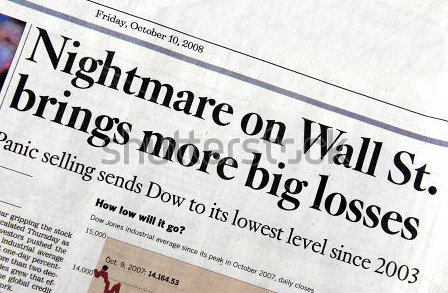
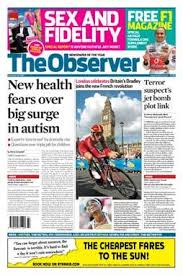
In my old country, the British press love to sell their newspapers on the back of fear.  Here are some examples of lurid front pages.

horse meat

oooo

meltdown

oooo

autism

However, it doesn’t end there. Fear of the unknown, of forces beyond our control, are behind the incredible number of conspiracy theories, many of them quite famous.  WikiPedia lists dozens of them. One that was voiced by friends of ours concerned HAARP, which is an acronym for High Frequency Active Auroral Research Program.  It was a perfectly legitimate research programme, one that was unclassified, albeit a program that was shut down in July, 2013.

But that didn’t stop it being regarded by many as deeply suspicious, “Many conspiracy theories surround HAARP. Some theorists believe that it is being used as a weather-controlling device that can trigger catastrophic events, such as floods, hurricanes, etc. Others believe that the government uses HAARP to send mind-controlling radio waves to humans.”  Taken from here.

As it happens, this was a programme that I was acquainted with back in my UK days.

OK, time to round this off.

This new, digital world allows the sharing and spreading of information in a manner unimaginable from, say, 25 years ago.  It has many positive attributes, as I will touch upon in tomorrow’s post.  But it also has the power to spread fear and misinformation.  In a world that is becoming more complex and more uncertain year by year, it takes effort by every one of us to stop, think and check on anything that has the potential to upset one.

It takes the power of community to keep us rooted in the stuff of our daily lives, to live calmly and stay in touch with the truth.  More on the power of community tomorrow.

Food, glorious food!

Advisory.

This Post includes the details of a live broadcast of an important event Feeding the World While the Earth Cooks from Washington D.C. If you would like to watch that broadcast then it starts at:

6am US Mountain Time Zone

9am US Eastern Daylight Time

13:00 Greenwich Mean Time (GMT/UTC)

2pm British Summer Time

Full details below.

H’mm, maybe the days of Oliver are well and truly numbered!

A quick ‘search’ found the lyrics of the famous song from the musical Oliver.  Here’s a part of the chorus:

Food, glorious food!
Don’t care what it looks like —
Burned!
Underdone!
Crude!
Don’t care what the cook’s like.
Just thinking of growing fat —
Our senses go reeling
One moment of knowing that
Full-up feeling!

Not to be taken for granted.

However, a recent announcement from Arizona State University quite rightly points out the challenges that lay ahead in terms of feeding the world’s population.  Here are the details of that ASU announcement.

The future of food: feeding the world while the Earth cooks

Editor’s Note: This event is presented by Future Tense, a partnership between Arizona State University, the New America Foundation and Slate, that examines emerging technologies, public policy and society.

Arizona State University, the New America Foundation and Slate present Feeding the World While the Earth Cooks live from Washington, D.C., on April 12.

The program will air in it’s entirety on ASUtv.

The event considers the agricultural crisis that may ensue when today’s toddlers are parents themselves – a time when the world population will reach 9 billion. “A growing global middle class will demand more food. And climate change will leave farmers holding seeds that won’t sprout. By 2050, will our global appetite outgrow our agricultural capacity?”

Tune in to find out how everyone – growers, technologists, governments, business leaders, and carbon-conscious consumers – will be part of the solution.

Speakers include Nina Fedoroff, special advisor on science and technology to the Secretary of State; Fred Kirschenmann, Distinguished Fellow at the Leopold Center for Sustainable Agriculture and President of Stone Barnes Center; Debra Eschmeyer, founder and program director of FoodCorps; and Bill Hohenstein, director of the USDA Global Change Program Office.

Let me highlight that the event is being carried live and is available to view.

The link you need to that ASUtv programme is here.  From where you will see that:

Arizona State University, the New America Foundation , and Slate present “Feeding the World While the Earth Cooks” live from Washington, D.C., this April 12 from 6:00 am to 12:15 pm. The program will air in it’s entirety onASUtv.

(From the New America Foundation): When today’s toddlers are parents themselves, they will face an agricultural crisis. The world population will reach 9 billion. A growing global middle class will demand more food. And climate change will leave farmers holding seeds that won’t sprout. By 2050, will our global appetite outgrow our agricultural capacity?

Join us to find out how everyone—growers, technologists, governments, business leaders, and carbon-conscious consumers—will be part of the solution.

The day’s speakers include Dr. Nina Fedoroff, Special Advisor on Science and Technology to the Secretary of State; Dr. Fred Kirschenmann, Distinguished Fellow at the Leopold Center for Sustainable Agriculture and President of Stone Barnes Center; Debra Eschmeyer, Founder and Program Director of FoodCorps; Bill Hohenstein, Director of the USDA Global Change Program Office; and many more.

So if you want to watch that event then here are the UTC times.

April 12 from 6:00 am to 12:15 pm US Mountain Time equates to 13:00 – 19:15 UTC (2 pm to 8:15 pm British Summer Time)

The governance of Planet Earth

How fundamental reforms of environmental governance are urgently needed.

I must admit that as Post titles go, the one above is about as ‘weighty’ as it comes!  But then again, one might argue as Ronald Firbank, a British novelist, was reputedly to have quoted, “The world is so dreadfully managed, one hardly knows to whom to complain!

One of the great assets of the part of the world where Jean and I live, namely Arizona, is the state university or to give it it’s proper title Arizona State University.  The university has an important School of Sustainability and I subscribe to their regular newsletter.  But it was Rob I. here in Payson who spotted a recent item and forwarded same to me.  Thank goodness because it covered something of supreme relevance to the future.

I’m taking the liberty of reproducing it in full, as follows;

Fundamental steps needed now in global redesign of Earth system governance

Leading experts from around the world, 4 from Pac-12 colleges, argue for immediate ambitious reforms

Some 32 social scientists and researchers from around the world, including Kenneth W. Abbott, a professor of international relations in ASU’s Sandra Day O’Connor College of Law and a Senior Sustainability Scholar in the Global Institute of Sustainability a Senior, are calling for fundamental reforms of global environmental governance to avoid dangerous changes in the Earth system.

Some 32 social scientists and researchers from around the world, including a senior sustainability scholar at Arizona State University, have concluded that fundamental reforms of global environmental governance are needed to avoid dangerous changes in the Earth system. The scientists argued in the March 16 edition of the journal Science that the time is now for a “constitutional moment” in world politics.

Research now indicates that the world is nearing critical tipping points in the Earth system, including on climate and biodiversity, which if not addressed through a new framework of governance could lead to rapid and irreversible change.

“Science assessments indicate that human activities are moving several of Earth’s sub-systems outside the range of natural variability typical for the previous 500,000 years,” wrote the authors in the opening of “Navigating the Anthropocene: Improving Earth System Governance.”

Reducing the risk of potential global environmental disaster requires the development of “a clear and ambitious roadmap for institutional change and effective sustainability governance within the next decade,” comparable in scale and importance to the reform of international governance that followed World War II, they wrote.

In particular, the group argued for the creation of a Sustainable Development Council that would better integrate sustainability concerns across the United Nations system. Giving a leading role to the 20 largest economies (G20) would help the council act effectively. The authors also suggested an upgrade of the UN Environment Program to a full-fledged international organization, a move that would give it greater authority and more secure funding

To keep these institutions accountable to the public, the scientists called for stronger consultative rights for representatives of civil society, including representatives from developing countries, NGOs, consumers and indigenous peoples.

“We should seek input from people closest to the ground, not just from the elites, not just at the 30,000-feet level,” noted Kenneth W. Abbott, a professor of international relations in ASU’s Sandra Day O’Connor College of Law. “Consultations should not take place only at the global scale, where the broadest policies are created, but also at local scales, smaller scales, all scales,” he said.

To improve the speed of decision-making in international negotiations, the authors called for stronger reliance on qualified majority voting. “There has to be a change in international negotiating procedures from the current situation, in which no action can be taken unless consensus is reached among all participating governments,” Abbott said.

The authors also called for governments “to close remaining regulatory gaps at the global level,” including the treatment of emerging technologies.

“A great deal of attention has been given to issues such as climate change, yet nanotechnology and other emerging technologies, which may bring significant benefits, also carry potential risks for sustainable development,” Abbott said.

Relying on research by Abbott and his colleagues at ASU’s College of Law, the authors wrote that emerging technologies “need an international institutional arrangement – such as one or several multilateral framework conventions” to support forecasting and transparency, and to ensure that environmental risks are taken into account.

“Working to make the world economy more green and to create an effective institutional framework for sustainable development will be the two main focal points at this summer’s United Nations Conference on Sustainable Development in Rio de Janeiro,” Abbott said. “This article was written to bring urgency to those discussions and to outline specific ‘building blocks’ for a more effective and sustainable Earth system governance system.”

The authors also argued for increased financial support for poorer nations. “More substantial financial resources could be made available through novel financial mechanisms, such as global emissions markets or air transportation levies for sustainability purposes,” they wrote.

Lead author Frank Biermann, of Free University Amsterdam and Lund University, Sweden, said, “Societies must change course to steer away from critical tipping points in the Earth system that could lead to rapid and irreversible change. Incremental change is no longer sufficient to bring about societal change at the level and with the speed needed to stop Earth system transformation.

“Structural change in global governance is needed, both inside and outside the UN system and involving both public and private actors,” said Biermann, who also is chair of the scientific steering committee of the Earth System Governance Project.

All 32 authors of the Science article are affiliated with the Earth System Governance Project, a global alliance of researchers and leading research institutions, specializing in the scientific study of international and national environmental governance. ASU’s Abbott is one of some 50 lead faculty of the Earth System Governance Project. Lead faculty are scientists of high international reputation who share responsibility for research on earth system governance. Additional information is at http://earthsystemgovernance.org.

Among the other authors of “Navigating the Anthropocene” are: S. Andresen, Fridtjof Nansen Institute, Norway; K. Bäckstrand, Lund University, Sweden; S. Bernstein, University of Toronto, Canada; M. M. Betsill, Colorado State University; H. Bulkeley, Durham University, U.K.; B. Cashore, Yale University; J. Clapp, University of Waterloo, Canada; C. Folke, Stockholm Resilience Centre Stockholm University and Beijer Institute, Royal Swedish Academy of Sciences, Sweden; A. Gupta, Wageningen University and Research Centre, Netherlands; J. Gupta, Free University Amsterdam and UNESCO-International Institute for Hydraulic and Environmental Engineering Institute for Water Education, Netherlands; P. M. Haas, University of Massachusetts at Amherst; A. Jordan, Tyndall Centre, University of East Anglia, U.K.; N. Kanie, Tokyo Institute of Technology and United Nations University Institute of Advanced Studies, Japan; T. Kluvánková-Oravská, CETIP, Slovak Academy of Sciences, Slovakia; L. Lebel, Chiang Mai University, Thailand;

And, D. Liverman, University of Arizona and Oxford University, U.K.; J. Meadowcroft, Carleton University, Canada; R. B. Mitchell, University of Oregon; P. Newell, University of Sussex, U.K.; S. Oberthür, Vrije University, Belgium; L. Olsson, Lund University, Sweden; P. Pattberg, Free University Amsterdam; R. Sánchez-Rodríguez, El Colegio de la Frontera Norte, Mexico, and University of California, Riverside; H. Schroeder, Tyndall Centre, University of East Anglia, U.K.; A. Underdal, University of Oslo, Norway; S. Camargo Vieira, Universidade de Itaúna, Brazil; C. Vogel, independent scholar, South Africa; O. R. Young, University of California, Santa Barbara; A. Brock, Free University Amsterdam; and R. Zondervan Lund University, Sweden.

Abbott is also a senior sustainability scholar in the Global Institute of Sustainability, a transdisciplinary unit in ASU’sOffice of Knowledge Enterprise Development that advances research, entrepreneurship, innovation and economic development, and a professor of global studies in the School of Politics and Global Studies at ASU’s College of Liberal Arts and Sciences.

Carol Hughes, carol.hughes@asu.edu
480-965-6375

In that first paragraph, it was reported that the March 16 edition of the journal Science carried the argument put forward by the scientists.  Here the link to that argument which also includes a link to the full text from which I quote the abstract,

Policy Forum

Navigating the Anthropocene: Improving Earth System Governance

Science assessments indicate that human activities are moving several of Earth’s sub-systems outside the range of natural variability typical for the previous 500,000 years (12). Human societies must now change course and steer away from critical tipping points in the Earth system that might lead to rapid and irreversible change (3). This requires fundamental reorientation and restructuring of national and international institutions toward more effective Earth system governance and planetary stewardship.

The full list of references including the author’s email address can be seen here.

The view from the window.

Perhaps ancient man is still alive and well in all of us.

Two delightful events have provided the fuel for today’s post which, I warn you, is much more the personal mental ramble than the usual daily post on Learning from Dogs.  So, health warning, continue reading at your own risk, or be safe and switch off now!

Before getting in to my perambulations, just a word of thanks to you for your support.  Last month, there were 31,291 viewers of Learning from Dogs and 71 of you have chosen to subscribe.  I am humbled by your interest.  Don’t ever hesitate to give me feedback or, if you prefer, comment to a specific post.

OK, to the theme of today.

On Wednesday I had an enjoyable lunch with a friend from here in Payson, Dennis L.  Sitting in the Crosswinds restaurant at Payson airport is one of the most beautiful eating spots in terms of the view from the window.  So it’s a very conducive place to relax and try put the world to rights!  Conversation ranged across a variety of topics but frequently touched on the lunacy of so many things to do with man, especially when it comes to the government of peoples.

Dennis and I also acknowledged that entering politics with a set of passionate ideals, as we were sure many persons did, would quickly run up against the skein of vested interests that must permeate governments from top to bottom.

Yes Minister was a satirical comedy written by Antony Jay and Jonathan Lynn that ran for many years.  It was extraordinarily funny, here’s a 3-minute clip,

That programme underlined, far better than anything else, how governments most probably work in reality.

Dennis and I were clear, as so many millions of other global citizens must be, that the complexity of commerce, politics, national interests, global finance, and more, had created ‘systems’ of decision making that were utterly disconnected with the needs of mankind having a long and stable future on the only finite home around, Planet Earth.

Then today (Thursday), Jean and I attended our regular weekly gardening course at the local college in Payson.  Today’s subject was Arizona’s Climate and the tutor, Mike C., was a professional climatologist and meteorologist.  It was fascinating, indeed, totally absorbing.  Mike’s graphs and slides about the climate, some showing data for the last 1,000 years, underlined the incredible complexity and interconnectedness of the processes that made up the global climate system.

Once again that use of the word ‘complexity’.  He confirmed that there was no scientific doubt that the world was warming as a result of changes to the Earth’s atmosphere, science certain most of it is caused by increasing concentrations of greenhouse gases produced by human activities such as deforestation and burning fossil fuels.

Mike closed the session with an interesting reflection.  He reminded the audience that mankind is still essentially wired, in evolutionary terms, to know how to react to an attacking tiger or similar wild beast, as in the fight or flee response, than know how to deal with such complex, despite intellectually obvious, threats as global climate change, rising sea levels and many other totally unsustainable practices.  Mike held the view that only when man had the threat in his face equivalent to that of the attacking tiger would there be a wholesale change.

On the home page of this blog, I write,

As man’s companion, protector and helper, history suggests that dogs were critically important in man achieving success as a hunter-gatherer.  Dogs ‘teaching’ man to be so successful a hunter enabled evolution, some 20,000 years later, to farming,  thence the long journey to modern man.  But in the last, say 100 years, that farming spirit has become corrupted to the point where we see the planet’s plant and mineral resources as infinite.  Mankind is close to the edge of extinction, literally and spiritually.

In the context of homo sapiens, Latin for “wise man” or “knowing man”, then we know that modern man, anatomically, originated in Africa about 200,000 years ago.  Modern man only evolved from hunter/gatherer to farmer around 10,000 years ago, a tiny proportion of H. sapiens existence and, in evolutionary terms, no time at all.

The DNA of the domesticated dog separated from that of the wolf around 100,000 years ago.  No one knows for sure when man and dog came together but there is archaeological evidence of dogs being buried in mens’ graves around 30,000 years ago.  That’s an association over a huge time period.

Dennis and Mike, between them, triggered in my mind something fundamental.  Perhaps modern society, with all it’s bizarre behaviours and so many totally illogical practises (especially, in terms of a long-term relationship with our planet), could be understood.  Understood from the perspective of our social behaviours, built so much on technology, having raced far on to the point where they are now practically out of sight of our instinctive evolutionary behaviours.  We really don’t know how to change those core behaviours.

In contrast, dogs have remained much more stable with regard to their evolutionary progress and their external world.  Consider that the last big change for the domesticated dog was the association with man and that is at least three times as long ago as man becoming farming man.  No wonder when we curl up with our dog it has echoes of a time thousands of years before we could even spell the word, ‘politician’.  Echoes of a stability that seems now so way beyond reach.

And the view from the window of the Crosswinds ……

Mogollon Rim, North of Payson, AZ., in Winter

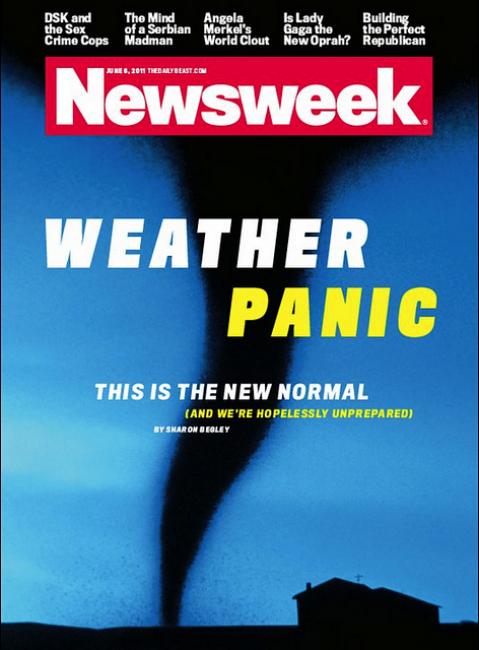
“Weather panic” courtesy Newsweek

Is it me or does there seem to be a shift in overall awareness of our ‘new world’?

On the 30th May, I mentioned the concept of a new Anthropocene era for the second time, based on The Economist of the 28th May having it as a lead story.  (The first mention was on the 16th May.)

Then a couple of days later, friend John H. here in Payson, drops off his copy of Newsweek for June 6th.  Here’s the cover page.

Newsweek, June 6, 2011

This is how the article runs, written by Sharon Begley,

Are You Ready for More?

In a world of climate change, freak storms are the new normal. Why we’re unprepared for the harrowing future.

Joplin, Mo., was prepared. The tornado warning system gave residents 24 minutes’ notice that a twister was bearing down on them. Doctors and nurses at St. John’s Regional Medical Center, who had practiced tornado drills for years, moved fast, getting patients away from windows, closing blinds, and activating emergency generators. And yet more than 130 people died in Joplin, including four people at St. John’s, where the tornado sucked up the roof and left the building in ruins, like much of the shattered city.

Then just a couple of paragraphs later, this pretty blunt summary,

From these and other extreme-weather events, one lesson is sinking in with terrifying certainty. The stable climate of the last 12,000 years is gone. Which means you haven’t seen anything yet. And we are not prepared.

Just read that again very carefully, “The stable climate of the last 12,000 years is gone.”  Do take a few moments off and go here and read the full article.  The last paragraph of which reads,

So what lies behind America’s resistance to action? Economist Sachs points to the lobbying power of industries that resist acknowledgment of climate change’s impact. “The country is two decades behind in taking action because both parties are in thrall to Big Oil and Big Coal,” says Sachs. “The airwaves are filled with corporate-financed climate misinformation.” But the vanguard of action isn’t waiting any longer. This week, representatives from an estimated 100 cities are meeting in Bonn, Germany, for the 2nd World Congress on Cities and Adaptation to Climate Change. The theme is “Resilient Cities.” As Joplin, Mo., learned in the most tragic way possible, against some impacts of climate change, man’s puny efforts are futile. But time is getting short, and the stakes are high. Says Daniel Sarewitz, a professor of science and society at Arizona State University: “Not to adapt is to consign millions of people to death and disruption.”

It’s a powerful article that can be read in full on the Newsweek website.

So, perhaps one might say at last, the notion that mankind’s impact on the Planet is real and capable of affecting practically all of us living on this beautiful Planet is becoming a ‘mainstream’ accepted idea.

More musings about this next Tuesday, 14th.