Category: Water

Funny what falls from the sky!

Mud ball meteorites!

We took a rafting trip down the Rogue River yesterday (the 4th) and when I have finished transferring the photographs from my iPhone to my computer I will write a post on the journey.

But for today’s post I want to republish an item that appeared also yesterday in EarthSky.

And it does involve dogs!

ooOOoo

Mud ball meteorites rain down in Costa Rica

“Mud ball” meteorites – full of clays, organics and water – are unique among space rocks. And a lot of them fell in April 2019 on a small town in Costa Rica, much to the delight of scientists.

This meteorite from the fall at Aguas Zarcas, Costa Rica, in April hit a doghouse. Luckily, the dog – Rocky – was unharmed. Image via Michael Farmer/ASU.

Meteorite falls on Earth are fairly common, but not all meteorites are the same. Some of them are “mud balls,” rich in clays, organic compounds and water-bearing minerals, called carbonaceous chondrites. They are of great interest to scientists, due to their unique composition, and now a bunch more prime specimens have been found, which rained down after a large fireball was seen over Aguas Zarcas, a small town in Costa Rica, on April 23, 2019.

The fireball was a meteor, or space rock, entering the Earth’s atmosphere that broke apart into hundreds of smaller pieces. When the pieces of this rock hit the ground, their name changed to meteorite. One meteorite fragment weighed about two pounds and smashed through the roof of a house, destroying the owner’s dining table. Another one crashed through the roof of a dog house, narrowly missing a sleeping dog. Close calls!

The doghouse with the hole in its roof from the April 2019 meteorite in Costa Rica. The dog, Rocky, was sleeping in the doghouse at the time; he was unharmed, but probably surprised! Image via Michael Farmer/ASU.

Several of the meteorites were collected and sent to Arizona State University (ASU) for study, donated by meteorite collector Michael Farmer. ASU will also be able to purchase additional meteorites from the fall, thanks to a private donor. This is the first time in 50 years that the university has had a chance to analyze such pristine samples of extraterrestrial mud balls. As Laurence Garvie, a research professor at ASU and a curator for its Center for Meteorite Studies, said:

Many carbonaceous chondrites are mud balls that are between 80 and 95 percent clay. Clays are important because water is an integral part of their structure. These had to be collected quickly and before they got rained on. Because they are mostly clay, as soon as these types of meteorites get wet, they fall apart.

Luckily, the researchers were able to collect their samples before it rained again, and they got a nice little haul, too, about 55 pounds (25 kilograms) of the precious space rocks.

A composite element map from one of the meteorites showing the distribution of different minerals. Orange-yellow colors show tochilinite, deep-blue colors represent olivine, and red colors are pentlandite and pyrrhotite. Image via ASU.

Analysis of the meteorites was carried out at ASU’s campus in Tempe, Arizona. According to Garvie:

I was in the lab by 5 a.m. the next morning after picking up the samples to get them ready for the initial analyses. Classification of new meteorites can be like a race with other institutions, and I needed ASU to be first so that we’ll have the recognition of being the collection that holds and curates the type specimen material.

Air-sensitive meteorites like these are kept in special nitrogen cabinets. The nitrogen gas helps to preserve the meteorites, which can degrade easily due to their composition. As Garvie explained:

If you left this carbonaceous chondrite in the air, it would lose some of its extraterrestrial affinities. These meteorites have to be curated in a way that they can be used for current and future research, and we have that ability here at ASU.

This mud ball meteorite fragment from April’s meteorite fall in Aguas Zarcas, Costa Rica, looks a bit like an arrowhead. Image via ASU.

The classification of these meteorites is part of a broader international classification effort. Garvie is also working with Karen Ziegler from the Institute of Meteoritics at the University of New Mexico. They studied the oxygen isotopes of the meteorites, to determine how similar they are to other carbonaceous chondrites.

Sandra Pizzarello, an organic chemist from ASU’s School of Molecular Sciences, is also involved in the studies, focusing on the organic content of the meteorites. These kinds of organics could have provided the material needed for life to begin on Earth.

Additional scientific analysis will follow later, but first the meteorites need to be approved, classified and named by The Meteoritical Society‘s nomenclature committee. This group of 12 scientists is responsible for approving all meteorite samples for study.

These new meteorite samples are currently on display at ASU’s Tempe campus in the Center for Meteorite Studies collection.

So, why are mud ball carbonaceous chondrite meteorites so significant?

They are thought to originate from asteroids that are leftovers from early planetesimals, planets that started to form in the early solar system billions of years ago but now no longer exist. Those planets had organic materials and water, making them places where the chemical precursors to life could have started. In the case of the asteroid that these new meteorites originated from, Garvie said:

It formed in an environment free of life, then was preserved in the cold and vacuum of space for 4.56 billion years, and then dropped in Costa Rica last week.

As CMS Director Meenakshi Wadhwa also said:

Carbonaceous chondrites are relatively rare among meteorites but are some of the most sought-after by researchers because they contain the best-preserved clues to the origin of the solar system. This new meteorite represents one of the most scientifically significant additions to our wonderful collection in recent years.

Because these meteorites contain so much mineral-bound water, they could also be useful in learning how water can be extracted from asteroids, a great resource for future astronauts. According to Garvie:

Having this meteorite in our lab gives us the ability, with further analysis, to ultimately develop technologies to extract water from asteroids in space.

Location of Aguas Zarcas in Costa Rica. Image via Google Maps.

The last time a carbonaceous chondrite meteorite fall similar to this one occurred was in 1969 near Murchison, Australia. Those meteorites were curated by another ASU professor and founding director of ASU’s Center for Meteorite Studies, Carleton Moore.

The meteorites in Aguas Zarcas have also been found to be similar in composition to asteroid Bennu, now being explored by NASA’s OSIRIS-REx spacecraft. Bennu is thought to be a remnant carbonaceous chondrite planetesimal. OSIRIS-REx is carrying ASU’s Phil Christensen-designed Thermal Emissions Spectrometer (OTES) instrument, which is being used to make mineral and temperature maps of the asteroid.

Garvie and other scientists will be studying these mud ball meteorites for years to come, unlocking more secrets as to how our solar system formed and evolved, and how the ingredients of life originated and were spread throughout the solar system, including to Earth.

Bottom line: This new meteorite fall in Costa Rica has provided scientists with a great opportunity to study multiple mud ball meteorites, one of the most unusual kinds of meteorites known to exist, and one that could help answer the question of how life started on Earth.

Via ASU

ooOOoo

I don’t know about you but I found this very interesting indeed. I guess I hadn’t looked at meteorites as different entities, depending on the source, before.

Fascinating!

Must repeat that closing paragraph again: “Garvie and other scientists will be studying these mud ball meteorites for years to come, unlocking more secrets as to how our solar system formed and evolved, and how the ingredients of life originated and were spread throughout the solar system, including to Earth.

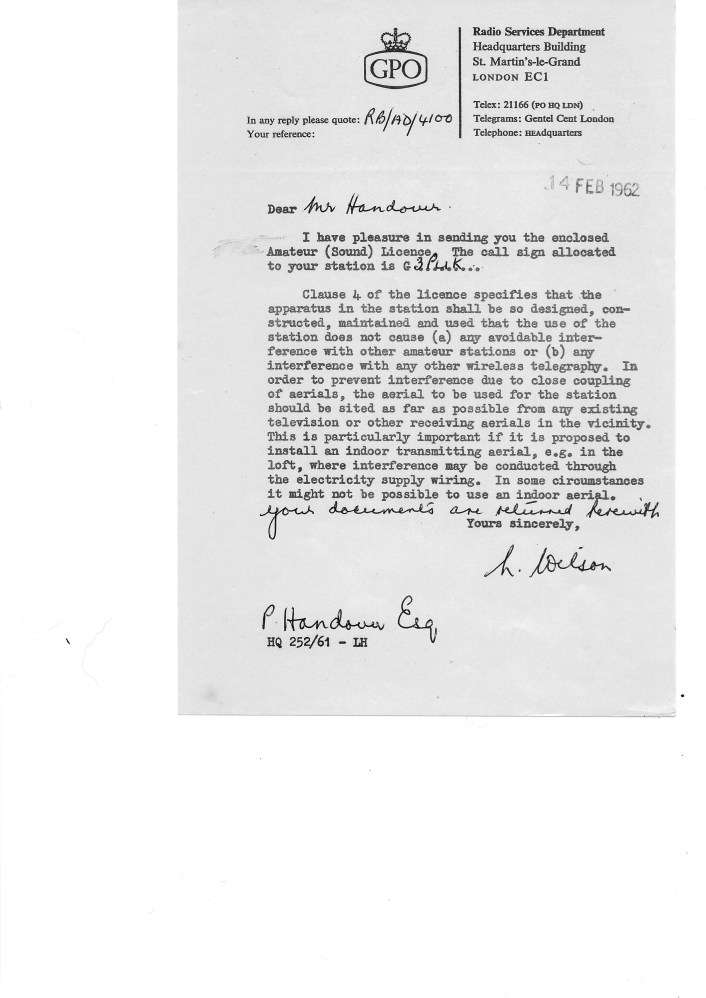
G3PUK!

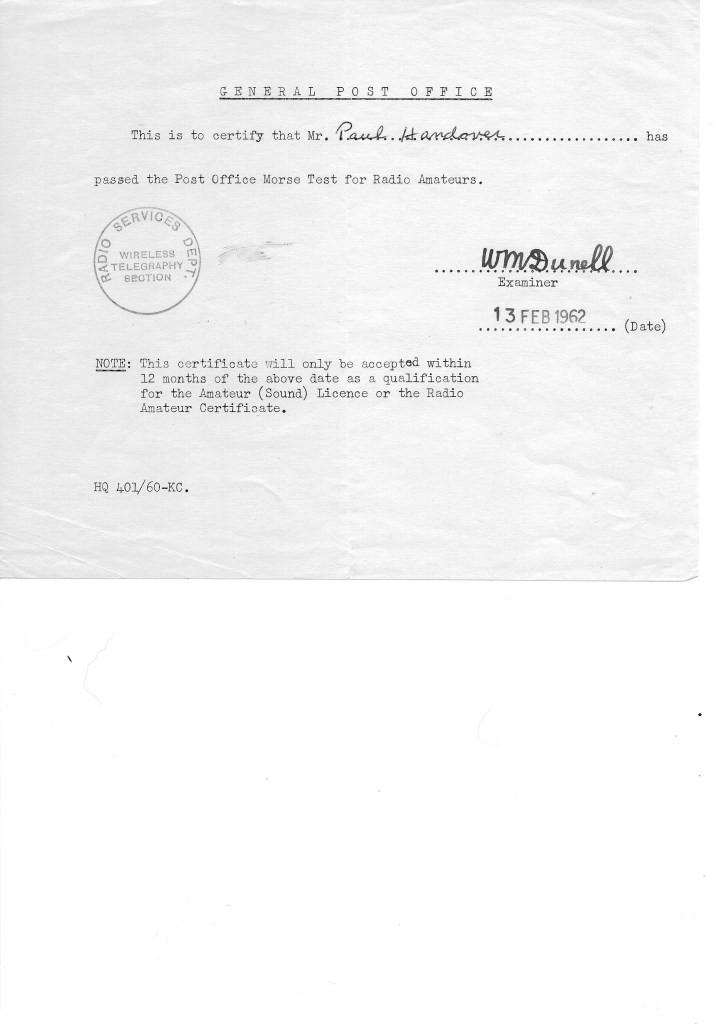
The story of me gaining my radio amateur licence.

As I spoke about yesterday in my introduction, when my mother remarried my sister and I had a new man about the house, so to speak. He was Richard Mills.

I was 13 or thereabouts and already struggling with my school work (the result of my father’s sudden death). And ‘Dad’ as we called him was finding his feet in the strange world of going from having no children to instantly having two step children!

Anyway, Dad found a theme with me that I enjoyed: building a shortwave radio receiver. It was full of learning for me and over the years I became hooked on listening to radio stations both near and far transmitting in morse code. I also joined the Harrow Radio Society and went across to their weekly meetings by tube and bus. (Despite the Society no longer being at the Harrow address it is amazing that they are still going strong.)

It was also a time when there was a great deal of ‘radio surplus’ equipment going for next to nothing and I ‘upgraded’ to an R-1152 receiver.

War surplus R-1152 receiver.

In time I became sufficiently old to take driving lessons and pass my driving licence. I then got a secondhand car. It helped because then I could drive up to Bushey and spend Sunday mornings at the house of Ron Ray. Ron was a keen amateur. On Sunday mornings Ron had a small group of people who wanted to pass the morse code test and apply for a licence.

I was already a member of the RSGB, the Radio Society of Great Britain, and that surely encouraged me further to study for my amateur licence.

In time, I sat the exam and much to my amazement passed!

oooo

oooo


So that is the story of me and amateur radio.

Well, almost the full story.

In 1963 I volunteered for the Royal Naval Reserve, London Division. In time I was accepted and chose the join the radio branch, my G3PUK status coming in useful, because I reckoned that when we went to sea, on flat-bottomed minesweepers, it was better to be sick into a bucket between the knees than be sick on deck!

So there you are – G3PUK!

Saturday smile!

A delightful story of one man’s bravery for another – dog!

This was published on The Daily Dodo a week ago and really does need retelling.

It shows how much we love our dogs.

ooOOoo

Man Jumps Into An NYC River To Save A Drowning Dog

Photo Credit: Erin O’Donnell

Ever since she was adopted from North Shore Animal League in March 2017, Harper has been absolutely head over heels for her mom, Erin O’Donnell, but is definitely a little nervous in new situations and can take some time to warm up to new people.

“She is a sweetheart but very anxious outside and around strangers,” O’Donnell told The Dodo.

On Saturday, O’Donnell was performing with the Brooklyn Irish Dance Company in Manhattan and left Harper in Brooklyn with friends and a trusted dog walker. Harper and her dog walker were out taking a stroll when a cab recklessly ran a stop sign and hit both the dog walker and Harper.

Both were OK and only sustained minor injuries, but poor Harper was so scared and shaken up that she ran and ran and ran — until she reached the East River, and jumped right in.

Still in a panic, Harper swam with determination and ferocity, and while at first onlookers thought she was just a dog with an owner nearby going for a swim, they soon realized that wasn’t the case at all.

“I was at the Brooklyn Barge celebrating my B’day when we saw a dog ‘going for a swim,’” Gabe Castellanos wrote in a post on Instagram. “The day grew hot and we all figured a nice swim could do us all a service. We assumed the owner was on shore keeping a watchful eye until a patron ran up to the north side of the Barge with a panicked voice saying that the dog, Harper, had run away.”

Photo Credit: Lorenzo Fonda

It was around that time that everyone began to notice Harper losing speed. The river was incredibly cold, and with the amount of energy Harper was exerting in her panicked state, it was likely that she wouldn’t be able to keep herself afloat for very much longer. This fact settled in for Castellanos, and he immediately knew he had to do something about it.

Castellanos happens to be a graduate of SUNY Maritime College and has extensive water survival skills knowledge — and so he decided he was going in.

“Since there was no sign of her making an attempt to swim back to shore, I knew something had to be done,” Castellanos told The Dodo. “I looked on the barge for any type of floating device to use if I were to jump from the end, but then I noticed there was a life vest, so I grabbed it.”

At this point, a crowd of about 300 people had gathered, invested in Harper and her well-being, and as soon as everyone realized what Castellanos was about to do, they all broke out into cheers of encouragement. Lorenzo Fonda, a Brooklyn-based filmmaker and artist, was hanging out at the Brooklyn Barge when he suddenly realized what was happening, and quickly began recording the entire ordeal.

Photo Credit: Lorenzo Fonda

Knowing the water was going to be cold and the conditions less than ideal, Castellanos strategized quickly with those around him as he prepared to jump into the water. He stripped down to his underwear, climbed over the rails, and then lowered himself as close to the water as he possibly could before letting go and diving in.

“There was a grand cheer when I entered the water,” Castellanos said. “After that, I was no longer focused on the crowds and my surroundings but focused on my breathing and swimming over to Harper. The crowds went mute during my swim. I’m sure they were still cheering, but I could not hear anything other than the water.”

Harper was still swimming at a steady pace, and Castellanos had to work hard to catch up with her. As soon as she realized someone was swimming towards her, she became even more panicked and tried as hard as she could to swim away from him.

Castellanos was persistent, though, and even though Harper struggled and lashed out a bit out of fear when he finally reached her, he stayed calm and determined and was finally able to secure her.

Cheers erupted from all over when Castellanos finally had Harper safely in his arms, and the pair quickly returned to shore. Both were exhausted and needed medical attention to make sure everything was OK, but luckily they were both completely fine, and are now recovering at their respective homes.

Photo Credit: Lorenzo Fonda

O’Donnell was in the middle of a performance when all of this occurred, and didn’t find out until later about Harper’s river adventure and the man who saved her life.

“Her paws are in rough shape, so she will need some trendy boots for a few weeks, but otherwise she’s in great spirits,” O’Donnell said. “It is definitely so refreshing to see the positive responses from people at the Brooklyn Barge and on social media expressing their sympathy for Harper and praising Gabe, who definitely saved the day.”

As an innocent onlooker that day, Castellanos didn’t have to do anything to help. He could have just sat by and watched and let someone else handle it, but instead he took a leap of faith and ended up saving Harper’s life, making him a true hero.

ooOOoo

I take my hat off to Gabe Castellanos. It’s something that 99.9% of us wouldn’t do yet Gabe didn’t think twice. OK, he had specific training but still there was a degree of risk. But he took it!

So well done, Mr. Gabe Castellanos!

It’s time to change our habits.

Funny how things evolve!

A week ago I was casually reading a copy of our local newspaper, the Grants Pass Daily Courier, and inside was a piece by Kathleen Parker, a syndicated columnist, entitled It’s the end of everything – or not.

I found it particularly interesting especially a quotation in her piece by Robert Watson, a British chemist who served as the chair of the panel of the Intergovernmental Science-Policy Platform on Biodiversity and Ecosystem Services (IPBES). The IPBES had recently published the results of the three-year study by 145 authors from 50 countries.

So I wrote to Kathleen Parker asking if I might have permission to quote that excerpt and, in turn, received her permission to so do.

Here it is:

Robert Watson wrote in a statement that:

“the health of ecosystems on which we and all species depend is deteriorating more rapidly than ever. We are eroding the very foundation of our economies, livelihoods, food security, health and quality of life worldwide.”

But, Watson also said, it’s not too late to repair and sustain nature – if we act now in transformative ways.

It is time to change our habits both at an individual level and the level of countries working together.

Moreover we haven’t got decades. We have got to do it now!

Boonrod has a home!

Good news to our earlier story.

On April 30th I published a story that had been on the BBC News website about a dog that had been rescued from the sea some 200+ kilometres from the Thai coast.

It drew a fair amount of replies.

Then Margaret from Tasmania left a reply that contained the link to an article in the Bangkok Post. It was very good news!

ooOOoo

Rescue dog heads to new home in Khon Kaen

29 Apr 2019

WRITER: GARY BOYLE

ORIGINAL SOURCE/WRITER: ASSAWIN PAKKAWAN

Vitisak Payalaw sits behind Boonrod, the dog he helped rescue from the ocean, as he prepares to take him from a shelter in Hat Yai district, Songkhla, to his home in Khon Kaen on Saturday. (Photo from Boonrod Facebook account)

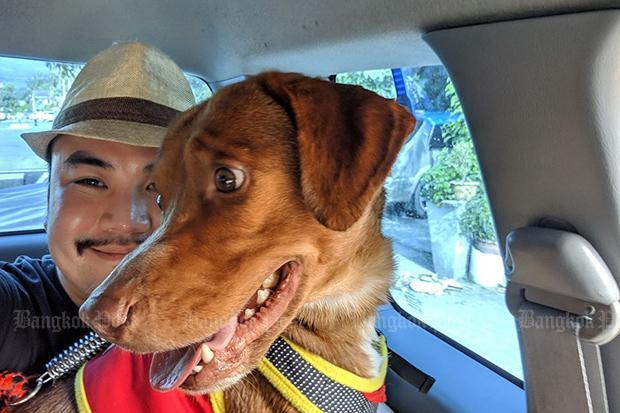
Seafaring dog Boonrod is heading to a new life in Khon Kaen with his new owner — one of the oil rig workers who rescued him from the ocean in a story that captured international attention.

“We’re leaving,” owner Vitisak Payalaw posted in a message on the Boonrod Facebook page on Saturday evening.

Mr Vitisak, an planner of Chevron Thailand Exploration and Production, met Boonrod — in Thai — on Saturday for the first time since the team found him to an oil platform in the Gulf of Thailand about 220km from the shore in Songkhla on April 12.

How Boonrod got there remains a mystery, but it is believed that he must have fallen off a trawler. After helping rescue the deepwater dog, Mr Vitisak offered to be his new owner.

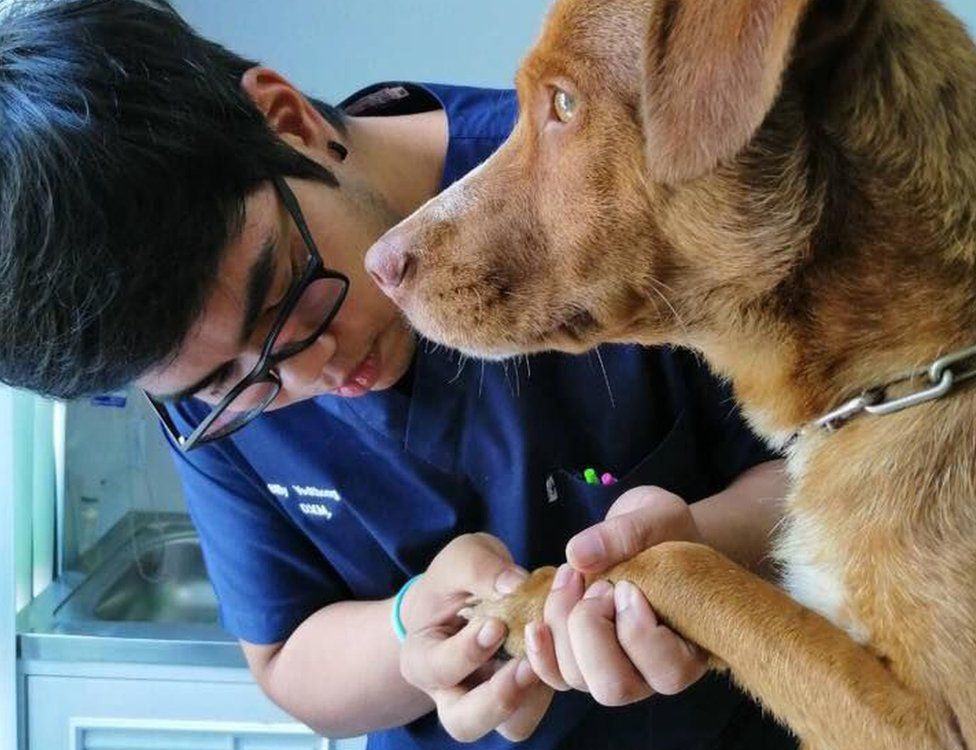
The exhausted animal was brought ashore on April 15 and lodged at Dog Smile House, a shelter in Hat Yai district of the southern province, with financial support from the US oil firm and Watchdog Thailand, a non-profit group.

Boonrod appeared delighted to see Mr Vitisak and the other members of the oil rig team who rescued him.

Mr Vitisak said he was taking annual leave from his work at the oil platform to transport the dog to his home in Khon Kaen, almost 1,500km from Hat Yai. The house in the northeastern province has been prepared to accomodate a new resident, the Chevron employee added.

Mr Vitisak asked for privacy and requested that well-wishers not visit his new pet at his parents’ home in Khon Kaen. But fans are welcome to greet Boonrod when he walks the dog, he added.

He also encouraged other animal lovers to adopt pets if they can.

The story of Boonrod was carried by global news agencies, including CNN. He can be followed on his Facebook page.

ooOOoo

We love stories like that!

Good luck to Boonrod and to his new friends.

Svalbard video

And, yes, it does concern dogs!

I wasn’t going to post anything today but then came across this YouTube video.

So watch and enjoy.

A bit too cold for my liking!

Dog saved!

This was on the BBC News the other day!

This remarkable story of a dog that was rescued some 200+ kilometres off the coast of Thailand was featured on the BBC news website.

It’s quite amazing and truly miraculous.

ooOOoo

Dog rescued 220km from Thai coast by rig workers

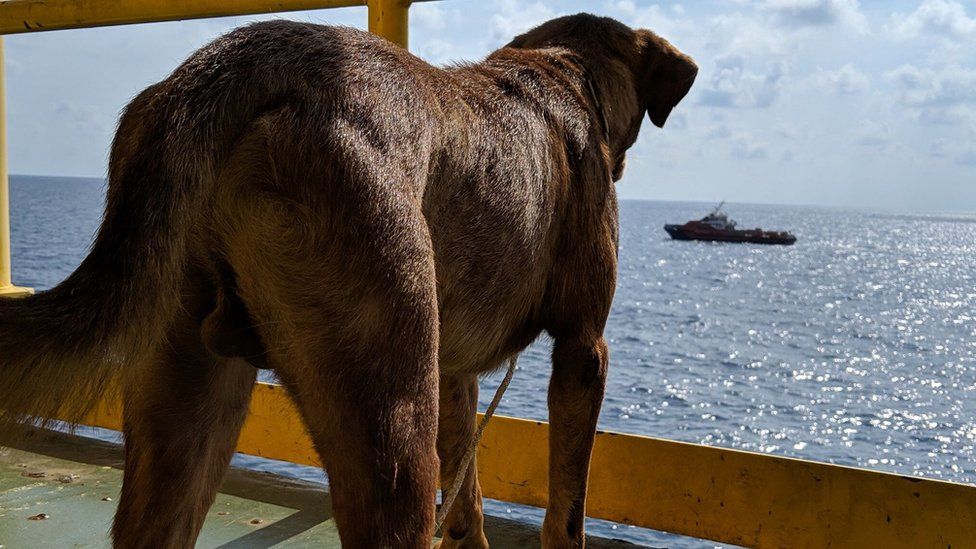
A dog discovered some 220km (135 miles) off the coast of Thailand has been rescued by a team of oil rig workers after the exhausted pooch was spotted paddling near a drilling platform.

The brown aspin swam towards the workers when they called out to him last Friday afternoon. He was then pulled to safety.

It is not clear how the dog became stranded so far out at sea. Some reports suggest he may have fallen from a fishing trawler.

The rig workers named the dog Boonrod, a Thai word that roughly translates as “the saved one” or “survivor”.

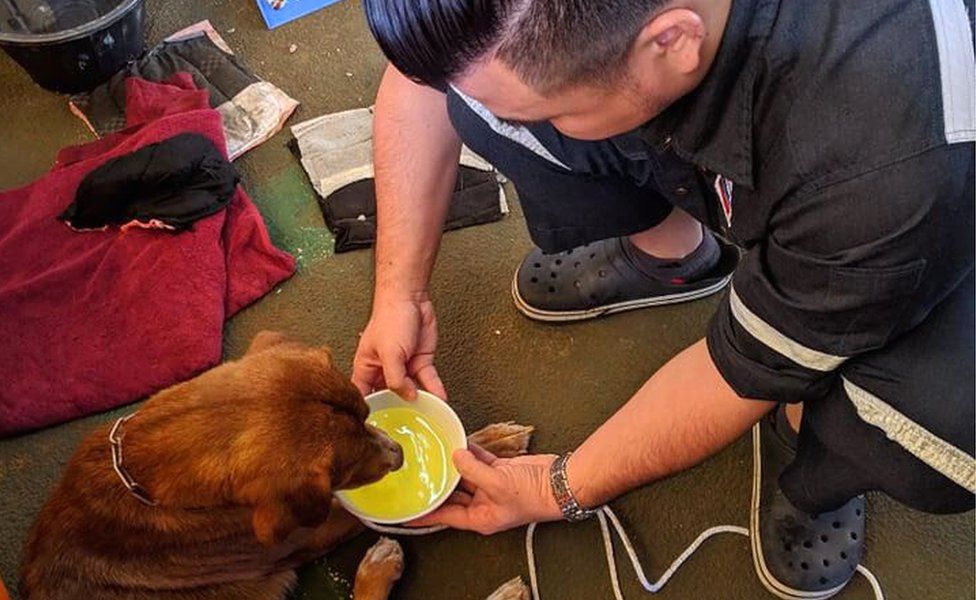
Boonrod was said to have been exhausted and in need of fresh drinking water and food.

He was nursed back to health on the rig while staff radioed for help, requesting the assistance of a tanker that was heading back to shore.

Boonrod had to have a proper wash to cleanse his fur of salt from the seawater. Afterwards, he had a nap.

The conditions were said to have been calm during the rescue, which workers said made it easier to spot Boonrod among the rusty metal bars of the rig.

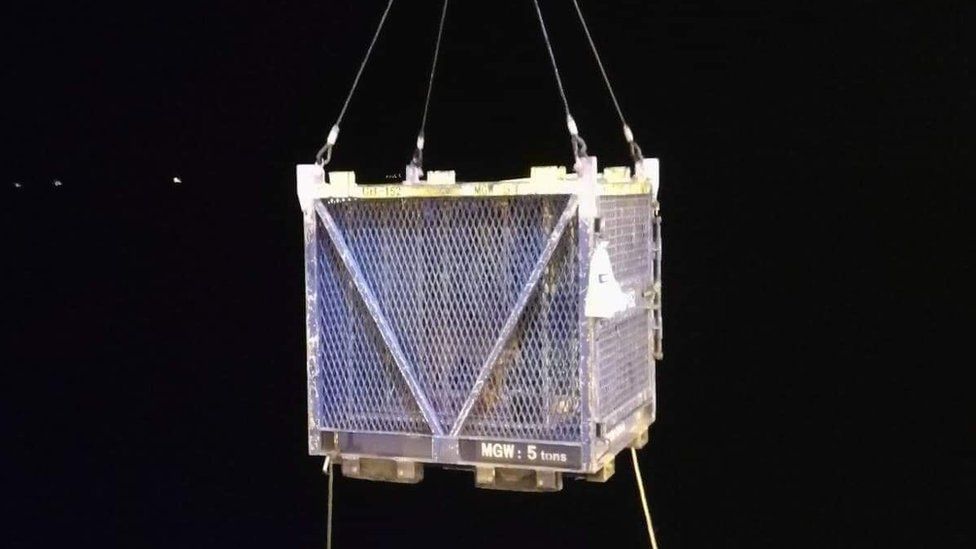
Boonrod was lifted by crane on to an oil vessel that was passing through the area on Sunday to be transported to a veterinary practice in southern Thailand.

The dog was said to have been in good spirits when he arrived on land to be taken to the vet.

(All images are copyright Viralpress.)

ooOOoo

The fact that this dog was rescued so far out to sea is incredible. Clearly, the poor dog had fallen off another vessel but the details of that incident are not known and it is purely conjecture.

But what is really important was that the dog was rescued and returned to health.

Picture Parade Two Hundred and Eighty-Four

Something a little different!

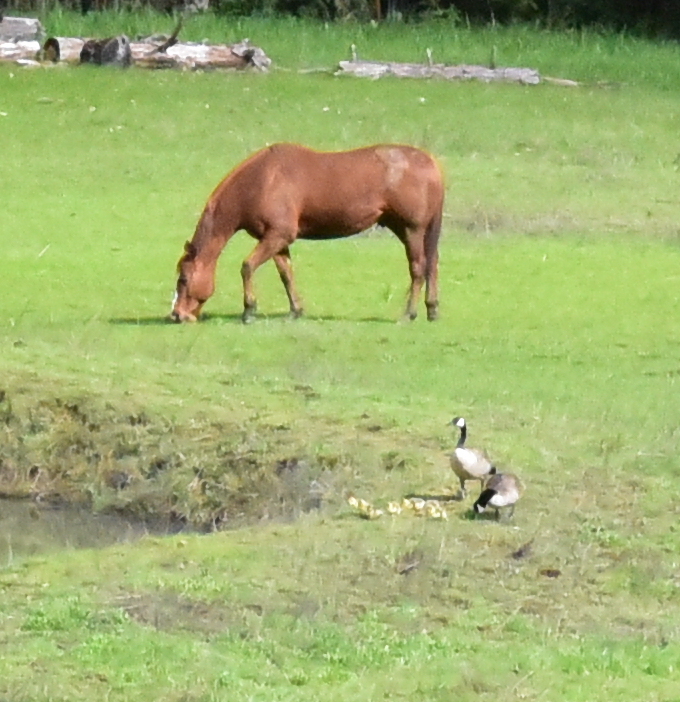
At the start of the week, indeed last Tuesday, a pair of geese hatched a brood of goslings.

I tried very hard to take some photographs of them but they stayed their distance and all I got was the following. (These are cropped down from the original.)

They are at the limits of the camera lens.

This is the morning of birth, Tuesday 16th April, and the goslings are still in the nest underneath the mother’s belly.

oooo

oooo

Five or six goslings; it’s still too difficult to tell.

oooo

oooo

oooo

Nothing to do with dogs but I’m sure you enjoyed them! This is the second time that we have had a pair of geese build a nest, lay eggs and bring the goslings into the world. The last time was April 23rd, 2015. Pictures here!

Sir David Attenborough.

A very great man!

For someone born on May 8th, 1926 he, perhaps, should be slowing down. But none of it. He is passionate about how we are endangering our planet. And having a public profile he is the right position to do something about it, albeit a warning statement.

Plus, he is not the only one doing something about it. For Extinction Rebellion are protesting in the London streets.

But back to Sir David.

I’m assuming that it is OK to republish in full an item that appeared on BBC News yesterday. And according to their terms it is OK.

ooOOoo

Climate change: Sir David Attenborough warns of ‘catastrophe’

By Matt McGrath, Environment correspondent

(There is a video on the webpage that I am unable to copy across. Please go here to watch it. Update: I think I have got it.)

Sir David Attenborough has issued his strongest statement yet on the threat posed to the world by climate change.

In the BBC programme Climate Change – The Facts, the veteran broadcaster outlines the scale of the crisis facing the planet.

Sir David says we face “irreversible damage to the natural world and the collapse of our societies”.

But there is still hope, he says, if dramatic action to limit the effects is taken over the next decade.

Sir David’s new programme lays out the science behind climate change, the impact it is having right now and the steps that can be taken to fight it.

“In the 20 years since I first started talking about the impact of climate change on our world, conditions have changed far faster than I ever imagined,” Sir David states in the film.

“It may sound frightening, but the scientific evidence is that if we have not taken dramatic action within the next decade, we could face irreversible damage to the natural world and the collapse of our societies.”

Speaking to a range of scientists, the programme highlights that temperatures are rising quickly, with the world now around 1C warmer than before the industrial revolution.

“There are dips and troughs and there are some years that are not as warm as other years,” says Dr Peter Stott from the Met Office.

“But what we have seen is the steady and unremitting temperature trend. Twenty of the warmest years on record have all occurred in the last 22 years.”

The programme shows dramatic scenes of people escaping from wildfires in the US, as a father and son narrowly escape with their lives when they drive into an inferno.

Scientists say that the dry conditions that make wildfires so deadly are increasing as the planet heats up.

Greenland is losing ice five times as fast as it was 25 years ago – Getty Images.

Some of the other impacts highlighted by scientists are irreversible.

“In the last year we’ve had a global assessment of ice losses from Antarctica and Greenland and they tell us that things are worse than we’d expected,” says Prof Andrew Shepherd from the University of Leeds.

“The Greenland ice sheet is melting, it’s lost four trillion tonnes of ice and it’s losing five times as much ice today as it was 25 years ago.”

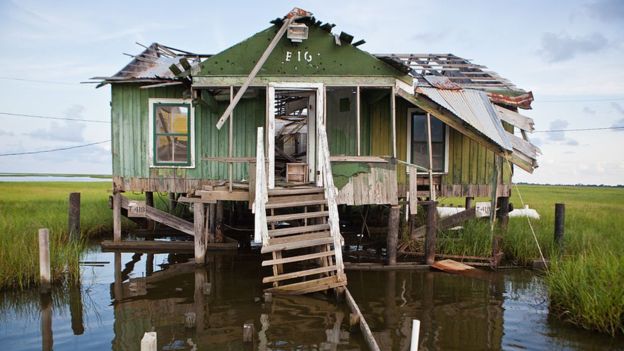
These losses are driving up sea levels around the world. The programme highlights the threat posed by rising waters to people living on the Isle de Jean Charles in Louisiana, forcing them from their homes.

“In the US, Louisiana is on the front line of this climate crisis. It’s losing land at one of the fastest rates on the planet – at the rate of of a football field every 45 minutes,” says Colette Pichon Battle, a director of the Gulf Coast Center for Law & Policy.

People are moving from parts of Louisiana in the US as a result of rising waters. – Julie Dermansky

“The impact on families is going to be something I don’t think we could ever prepare for.”

Hope rising

Sir David’s concern over the impacts of climate change has become a major focus for the naturalist in recent years.

This has also been a theme of his One Planet series on Netflix.

His new BBC programme has a strong emphasis on hope.

Sir David argues that if dramatic action is taken over the next decade then the world can keep temperatures from rising more than 1.5C this century. This would limit the scale of the damage.

“We are running out of time, but there is still hope,” says Sir David.

“I believe that if we better understand the threat we face the more likely it is we can avoid such a catastrophic future.”

The programme says that rapid progress is being made in renewable energy, with wind now as cheap as fossil fuels in many cases. It shows how technologies to remove and bury carbon dioxide under the ground are now becoming more viable.

But politicians will need to act decisively and rapidly.

“This is the brave political decision that needs to be taken,” says Chris Stark from the UK’s Committee on Climate Change.

Teenage campaigner Greta Thunberg has helped spark school strikes all over the world. – Getty Images.

“Do we incur a small but not insignificant cost now, or do we wait and see the need to adapt. The economics are really clear on this, the costs of action are dwarfed by the costs of inaction.”

The programme also highlights the rising generation of young people who are deeply concerned about what’s happening to the planet.

Swedish teenager Greta Thunberg explains that things can change quickly, despite the scale of the challenge on climate change.

“The first day I sat all alone,” she says, speaking of her decision to go on strike from school and sit outside the Swedish parliament to highlight the climate crisis.

“But on the second day, people started joining me… I wouldn’t have imagined in my wildest dreams that this would have happened so fast.”

“Change is coming whether you like it or not.”

Follow Matt on Twitter@mattmcgrathbbc

Climate Change – The Facts is on BBC One on Thursday 18 April at 9pm

ooOOoo

There are so many quotes in this item that one can hardly pick out the most pertinent one.

Change is coming whether you like it or not.

The impact on families is going to be something I don’t think we could ever prepare for.

… irreversible damage to the natural world and the collapse of our societies“.

But this is the most powerful one! “We are running out of time, but there is still hope,” says Sir David.

This is the essence of the man-dog relationship

A recent story from The Dodo.

This is so good. As good as it gets. It’s the account of a man and his dog who don’t have second thoughts in rescuing two elderly Labradors.

But let the story speak for itself.

ooOOoo

Man And His Dog Leap Into Water To Save Pups Trapped In Icy Lake

“I knew she was going to follow me. We were going to do it together.”

PUBLISHED ON 03/14/2019

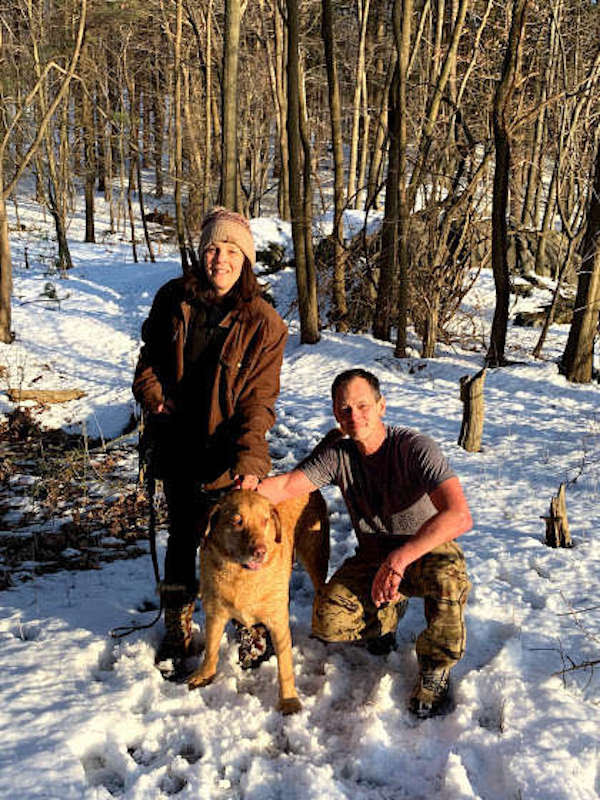
Since meeting one another last year, Timofey Yuriev and his faithful dog Kira have been inseparable companions. Indeed, the happy duo do just about everything together.

And that includes saving lives.

Photo Credit: Timofey Yuriev

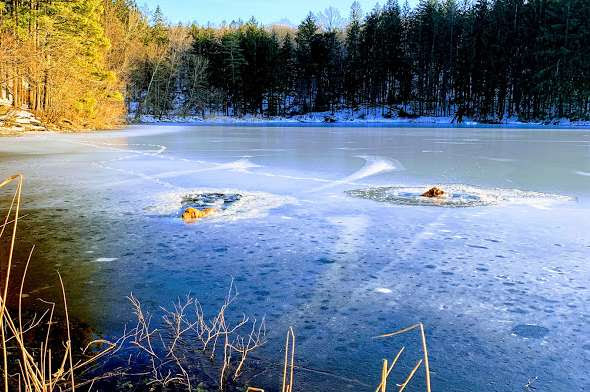
Last Saturday, Yuriev, his wife and Kira headed out for a sunset stroll around an ice-covered lake near their home in New York. It’s a tranquil spot, but on this chilly early evening, the quiet, peaceful air was shattered by the sound of a tragedy unfolding.

“We heard a woman screaming something across the lake, so we went to see what was happening,” Yuriev told The Dodo. “Her two old Labradors were crossing the lake, when they got to a spot where the ice is much thinner. One fell in, then the second. They tried to climb out but they couldn’t.”

Photo Credit: Timofey Yuriev

Yuriev watched as the dogs’ energy was quickly sapped by the freezing water — and he knew time was of the essence.

Having experience swimming in icy waters, Yuriev decided to take the plunge in order to save the two dogs himself — but he was not alone.

After Yuriev undressed and leapt into the freezing lake, he looked and saw Kira by his side entering the water as well to lend him her paw in the rescue effort.

“I knew she was going to follow me,” Yuriev said. “We were going to do it together.”

Here’s video taken by Yuriev’s wife showing him and Kira reaching the nearest dog first:

“She was great moral support; I was not alone,” Yuriev said. “There was my little helper.”

After leading the first dog safely to the shore, Yuriev and Kira headed out for the second:

“She came to each dog and touched them with her nose, then helped guide them back.”

Once back on dry land, both of the rescued dogs were frazzled but in good health.

Yuriev and Kira had saved the day.

“The owner, of course, was in tears,” Yuriev said. “She was so thankful.”

Photo Credit: Timofey Yuriev

Kira has always been a kindhearted and intelligent dog, able to assess situations and sense when she’s needed.

And on this day, it was clear for all to see.

Timofey Yuriev

“We told her that she’s a dog-saving dog. I’m sure she understood that something was happening. She could see the dogs were in distress. I’m positive about it,” Yuriev said, adding that he’s just happy they were able to help.

“It was pure luck that we were at that place at that time. It was like the universe smiled at us.”

ooOOoo

This is a glorious post that was taken from here.

I have said it before and no doubt I shall repeat this many times more: Dogs are the most special creature going!