On April 30th I published a story that had been on the BBC News website about a dog that had been rescued from the sea some 200+ kilometres from the Thai coast.
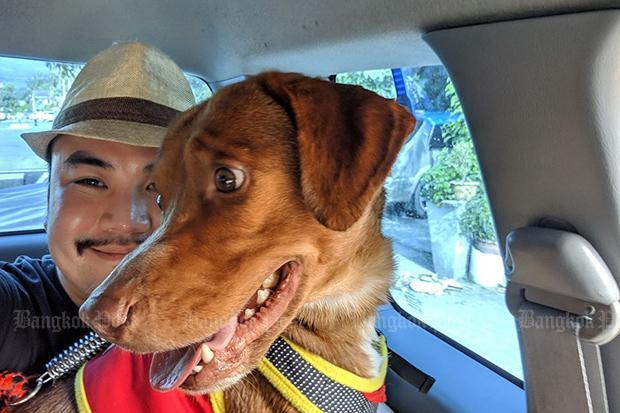
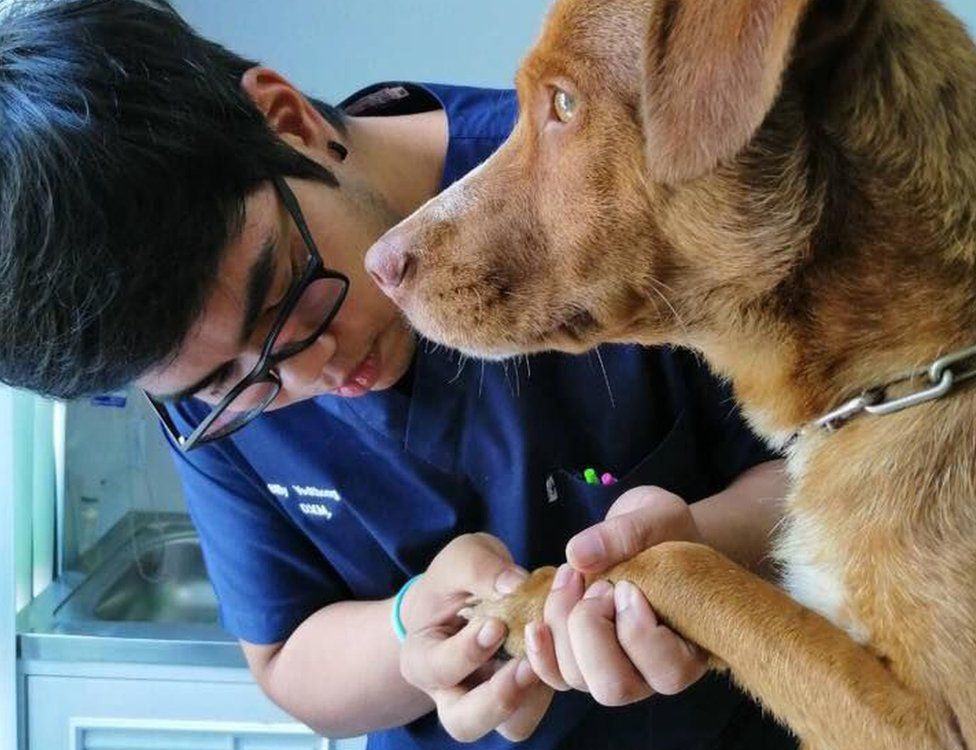
Vitisak Payalaw sits behind Boonrod, the dog he helped rescue from the ocean, as he prepares to take him from a shelter in Hat Yai district, Songkhla, to his home in Khon Kaen on Saturday. (Photo from Boonrod Facebook account)
Seafaring dog Boonrod is heading to a new life in Khon Kaen with his new owner — one of the oil rig workers who rescued him from the ocean in a story that captured international attention.
“We’re leaving,” owner Vitisak Payalaw posted in a message on the Boonrod Facebook page on Saturday evening.
Mr Vitisak, an planner of Chevron Thailand Exploration and Production, met Boonrod — in Thai — on Saturday for the first time since the team found him to an oil platform in the Gulf of Thailand about 220km from the shore in Songkhla on April 12.
How Boonrod got there remains a mystery, but it is believed that he must have fallen off a trawler. After helping rescue the deepwater dog, Mr Vitisak offered to be his new owner.
The exhausted animal was brought ashore on April 15 and lodged at Dog Smile House, a shelter in Hat Yai district of the southern province, with financial support from the US oil firm and Watchdog Thailand, a non-profit group.
Boonrod appeared delighted to see Mr Vitisak and the other members of the oil rig team who rescued him.
Mr Vitisak said he was taking annual leave from his work at the oil platform to transport the dog to his home in Khon Kaen, almost 1,500km from Hat Yai. The house in the northeastern province has been prepared to accomodate a new resident, the Chevron employee added.
Mr Vitisak asked for privacy and requested that well-wishers not visit his new pet at his parents’ home in Khon Kaen. But fans are welcome to greet Boonrod when he walks the dog, he added.
He also encouraged other animal lovers to adopt pets if they can.
The story of Boonrod was carried by global news agencies, including CNN. He can be followed on his Facebook page.
This remarkable story of a dog that was rescued some 200+ kilometres off the coast of Thailand was featured on the BBC news website.
It’s quite amazing and truly miraculous.
ooOOoo
Dog rescued 220km from Thai coast by rig workers
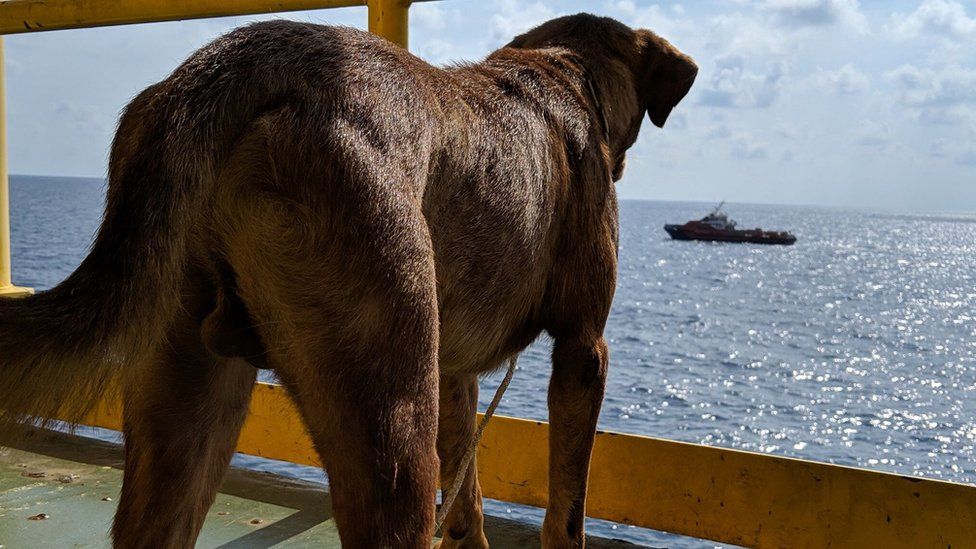
A dog discovered some 220km (135 miles) off the coast of Thailand has been rescued by a team of oil rig workers after the exhausted pooch was spotted paddling near a drilling platform.
The brown aspin swam towards the workers when they called out to him last Friday afternoon. He was then pulled to safety.
It is not clear how the dog became stranded so far out at sea. Some reports suggest he may have fallen from a fishing trawler.
The rig workers named the dog Boonrod, a Thai word that roughly translates as “the saved one” or “survivor”.
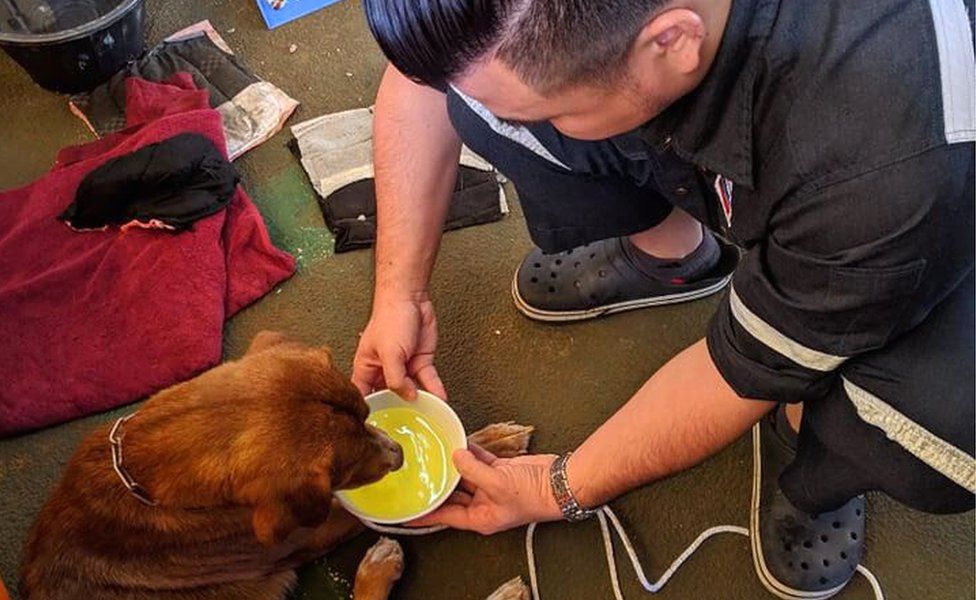
Boonrod was said to have been exhausted and in need of fresh drinking water and food.
He was nursed back to health on the rig while staff radioed for help, requesting the assistance of a tanker that was heading back to shore.
Boonrod had to have a proper wash to cleanse his fur of salt from the seawater. Afterwards, he had a nap.
The conditions were said to have been calm during the rescue, which workers said made it easier to spot Boonrod among the rusty metal bars of the rig.
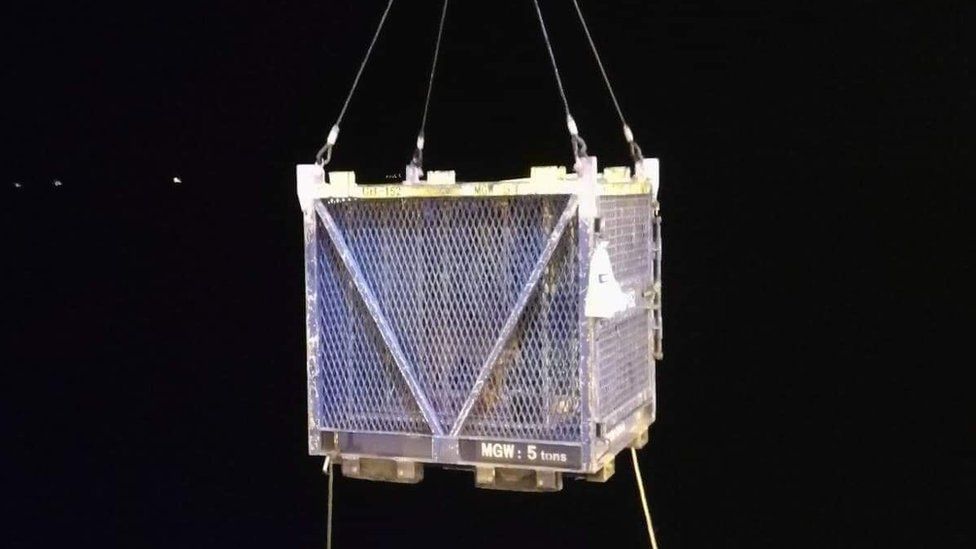
Boonrod was lifted by crane on to an oil vessel that was passing through the area on Sunday to be transported to a veterinary practice in southern Thailand.
The dog was said to have been in good spirits when he arrived on land to be taken to the vet.
(All images are copyright Viralpress.)
ooOOoo
The fact that this dog was rescued so far out to sea is incredible. Clearly, the poor dog had fallen off another vessel but the details of that incident are not known and it is purely conjecture.
But what is really important was that the dog was rescued and returned to health.
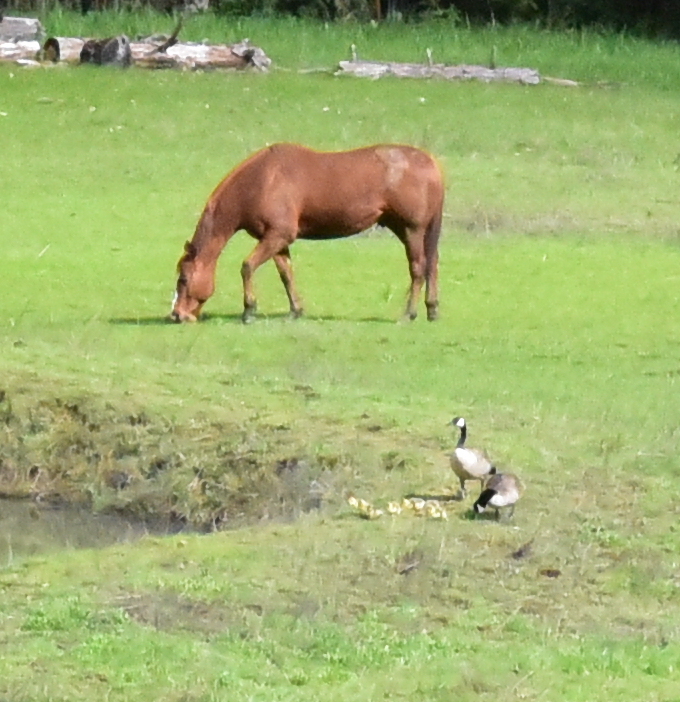
At the start of the week, indeed last Tuesday, a pair of geese hatched a brood of goslings.
I tried very hard to take some photographs of them but they stayed their distance and all I got was the following. (These are cropped down from the original.)
They are at the limits of the camera lens.
This is the morning of birth, Tuesday 16th April, and the goslings are still in the nest underneath the mother’s belly.
oooo
oooo
Five or six goslings; it’s still too difficult to tell.
oooo
oooo
oooo
Nothing to do with dogs but I’m sure you enjoyed them! This is the second time that we have had a pair of geese build a nest, lay eggs and bring the goslings into the world. The last time was April 23rd, 2015. Pictures here!
For someone born on May 8th, 1926 he, perhaps, should be slowing down. But none of it. He is passionate about how we are endangering our planet. And having a public profile he is the right position to do something about it, albeit a warning statement.
Plus, he is not the only one doing something about it. For Extinction Rebellion are protesting in the London streets.
Sir David’s new programme lays out the science behind climate change, the impact it is having right now and the steps that can be taken to fight it.
“In the 20 years since I first started talking about the impact of climate change on our world, conditions have changed far faster than I ever imagined,” Sir David states in the film.
“It may sound frightening, but the scientific evidence is that if we have not taken dramatic action within the next decade, we could face irreversible damage to the natural world and the collapse of our societies.”
Speaking to a range of scientists, the programme highlights that temperatures are rising quickly, with the world now around 1C warmer than before the industrial revolution.
“There are dips and troughs and there are some years that are not as warm as other years,” says Dr Peter Stott from the Met Office.
“But what we have seen is the steady and unremitting temperature trend. Twenty of the warmest years on record have all occurred in the last 22 years.”
The programme shows dramatic scenes of people escaping from wildfires in the US, as a father and son narrowly escape with their lives when they drive into an inferno.
Scientists say that the dry conditions that make wildfires so deadly are increasing as the planet heats up.
Greenland is losing ice five times as fast as it was 25 years ago – Getty Images.
Some of the other impacts highlighted by scientists are irreversible.
“In the last year we’ve had a global assessment of ice losses from Antarctica and Greenland and they tell us that things are worse than we’d expected,” says Prof Andrew Shepherd from the University of Leeds.
“The Greenland ice sheet is melting, it’s lost four trillion tonnes of ice and it’s losing five times as much ice today as it was 25 years ago.”
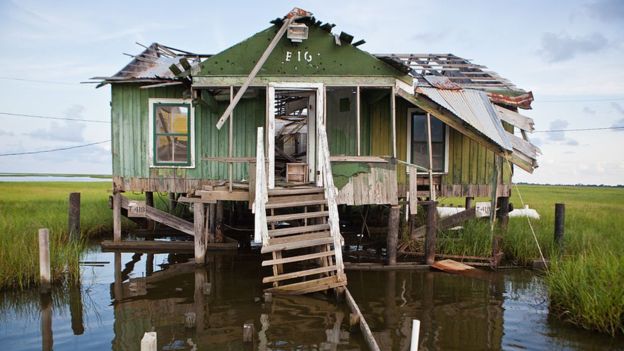
These losses are driving up sea levels around the world. The programme highlights the threat posed by rising waters to people living on the Isle de Jean Charles in Louisiana, forcing them from their homes.
“In the US, Louisiana is on the front line of this climate crisis. It’s losing land at one of the fastest rates on the planet – at the rate of of a football field every 45 minutes,” says Colette Pichon Battle, a director of the Gulf Coast Center for Law & Policy.
People are moving from parts of Louisiana in the US as a result of rising waters. – Julie Dermansky
“The impact on families is going to be something I don’t think we could ever prepare for.”
Hope rising
Sir David’s concern over the impacts of climate change has become a major focus for the naturalist in recent years.
This has also been a theme of his One Planet series on Netflix.
His new BBC programme has a strong emphasis on hope.
Sir David argues that if dramatic action is taken over the next decade then the world can keep temperatures from rising more than 1.5C this century. This would limit the scale of the damage.
“We are running out of time, but there is still hope,” says Sir David.
“I believe that if we better understand the threat we face the more likely it is we can avoid such a catastrophic future.”
The programme says that rapid progress is being made in renewable energy, with wind now as cheap as fossil fuels in many cases. It shows how technologies to remove and bury carbon dioxide under the ground are now becoming more viable.
But politicians will need to act decisively and rapidly.
“This is the brave political decision that needs to be taken,” says Chris Stark from the UK’s Committee on Climate Change.
Teenage campaigner Greta Thunberg has helped spark school strikes all over the world. – Getty Images.
“Do we incur a small but not insignificant cost now, or do we wait and see the need to adapt. The economics are really clear on this, the costs of action are dwarfed by the costs of inaction.”
The programme also highlights the rising generation of young people who are deeply concerned about what’s happening to the planet.
Swedish teenager Greta Thunberg explains that things can change quickly, despite the scale of the challenge on climate change.
“The first day I sat all alone,” she says, speaking of her decision to go on strike from school and sit outside the Swedish parliament to highlight the climate crisis.
“But on the second day, people started joining me… I wouldn’t have imagined in my wildest dreams that this would have happened so fast.”
Since meeting one another last year, Timofey Yuriev and his faithful dog Kira have been inseparable companions. Indeed, the happy duo do just about everything together.
And that includes saving lives.
Photo Credit: Timofey Yuriev
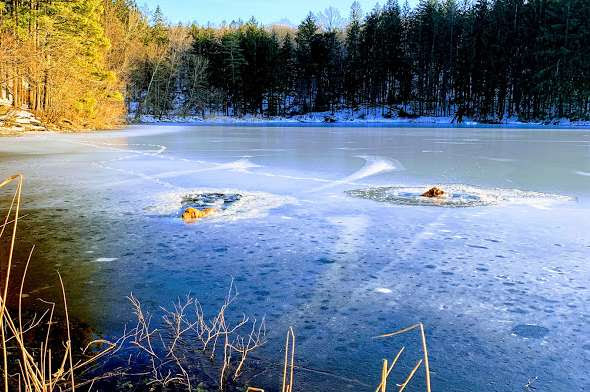
Last Saturday, Yuriev, his wife and Kira headed out for a sunset stroll around an ice-covered lake near their home in New York. It’s a tranquil spot, but on this chilly early evening, the quiet, peaceful air was shattered by the sound of a tragedy unfolding.
“We heard a woman screaming something across the lake, so we went to see what was happening,” Yuriev told The Dodo. “Her two old Labradors were crossing the lake, when they got to a spot where the ice is much thinner. One fell in, then the second. They tried to climb out but they couldn’t.”
Photo Credit: Timofey Yuriev
Yuriev watched as the dogs’ energy was quickly sapped by the freezing water — and he knew time was of the essence.
Having experience swimming in icy waters, Yuriev decided to take the plunge in order to save the two dogs himself — but he was not alone.
After Yuriev undressed and leapt into the freezing lake, he looked and saw Kira by his side entering the water as well to lend him her paw in the rescue effort.
“I knew she was going to follow me,” Yuriev said. “We were going to do it together.”
Here’s video taken by Yuriev’s wife showing him and Kira reaching the nearest dog first:
“She was great moral support; I was not alone,” Yuriev said. “There was my little helper.”
After leading the first dog safely to the shore, Yuriev and Kira headed out for the second:
“She came to each dog and touched them with her nose, then helped guide them back.”
Once back on dry land, both of the rescued dogs were frazzled but in good health.
Yuriev and Kira had saved the day.
“The owner, of course, was in tears,” Yuriev said. “She was so thankful.”
Photo Credit: Timofey Yuriev
Kira has always been a kindhearted and intelligent dog, able to assess situations and sense when she’s needed.
And on this day, it was clear for all to see.
Timofey Yuriev
“We told her that she’s a dog-saving dog. I’m sure she understood that something was happening. She could see the dogs were in distress. I’m positive about it,” Yuriev said, adding that he’s just happy they were able to help.
“It was pure luck that we were at that place at that time. It was like the universe smiled at us.”
Mera seemed to have little trouble in the snow and ice. (Photo: Don Wargowsky)
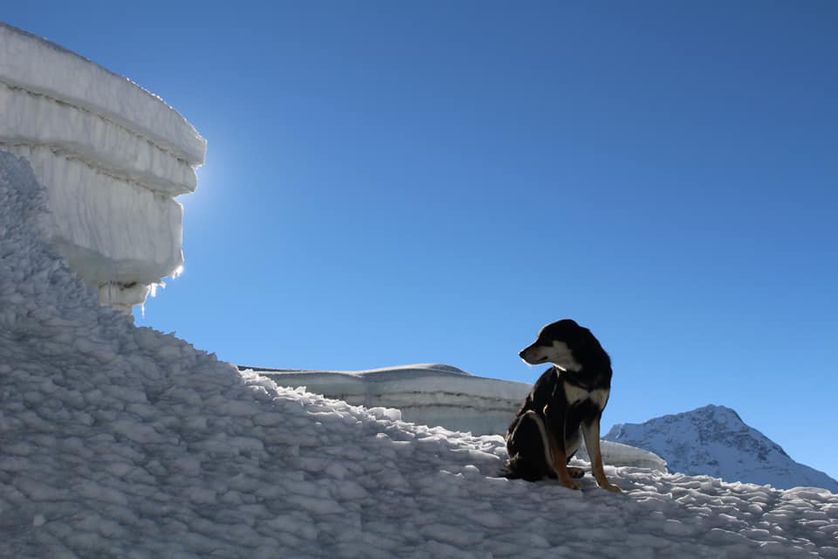
When Seattle-based mountain guide Don Wargowsky was leading an expedition to Mera Peak and Baruntse in Nepal’s Himalayas last November, he picked up an extra member on his team. A stray dog noticed the climbers somewhere around 17,500 feet and decided to stick around with the group.
The climbers had just summited Mera Peak, and when they were coming down around Mera La pass, they saw the pup going up.
“What struck me was to get to that pass, there were a few hundred feet of fixed rope which means the terrain was so difficult that most climbers need rope to help themselves up,” Wargowsky tells MNN. “To see a dog up there just running by all these climbers in their $2,000 down suits and crampons was very unusual. When she came up to me, I gave her a bit of beef jerky and she didn’t leave for 3 1/2 weeks.”
The team dubbed their newest four-legged member “Mera” and she tagged along on the way back down the mountain. Wargowsky realized he had seen her in the town of Kare a few days earlier, but she had made no effort then to get close. He thinks that’s because street dogs aren’t treated very well in Nepal due to the fear of rabies.
“Dogs are shooed away pretty aggressively,” he says. “So, she was naturally pretty shy.”
A new climbing partner
Climbing is hard work. (Photo: Don Wargowsky)
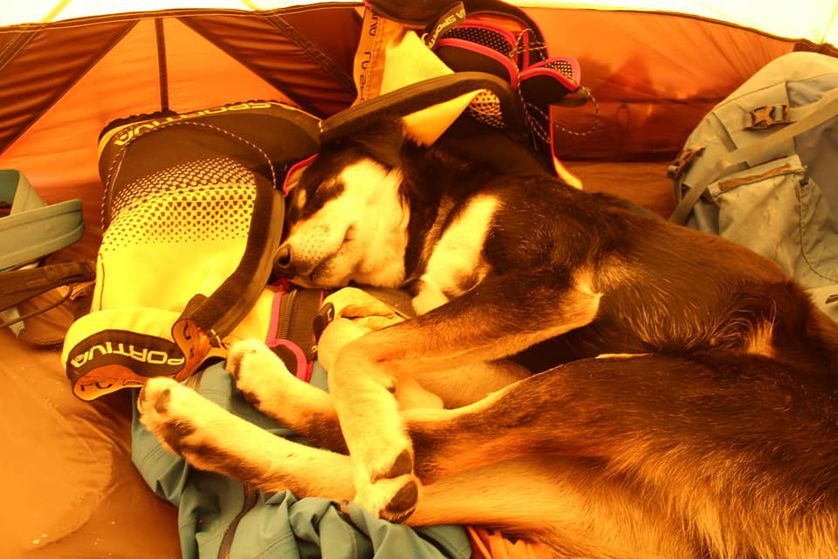
But once Mera decided to join the expedition, she gradually lowered her guard. The first night, Wargowsky tried to encourage her to sleep in his tent, but she wouldn’t come inside. The next morning, he found her curled up outside the flaps covered in a layer of snow. After that, he was able to coax her inside. He gave her one of his sleeping pads and a coat to keep her warm.
Wargowsky was in a difficult position with his uninvited guest. The elements were unforgiving, and he was worried about the dog who had no protection for her paws or her body in conditions that likely reached minus 20 or minus 30 degrees Fahrenheit at times. But he had no luck getting her to leave … and where would she go?
“Obviously my responsibility was to the group, but I was super happy to have her with us. I didn’t encourage her to come along, but I wasn’t going to have her starve, so I would feed her,” he says. “I really tried to persuade her to stay at camp as we got into steeper and more dangerous terrain. Where we were was a more remote part of Nepal. If we didn’t feed her, she was going to starve.”
Mera stuck with the expedition the entire time, never venturing far from Wargowsky’s side. Or technically, his knee.
“She would walk with her nose almost in the back of my knee when we would walk,” he says. “But she wanted to be up front. If I would drop back to hang out with a slower client, she would go up and walk with whoever was up front. She didn’t get out of sight pretty much the entire time we were there.”
‘No clue what her motivation was’
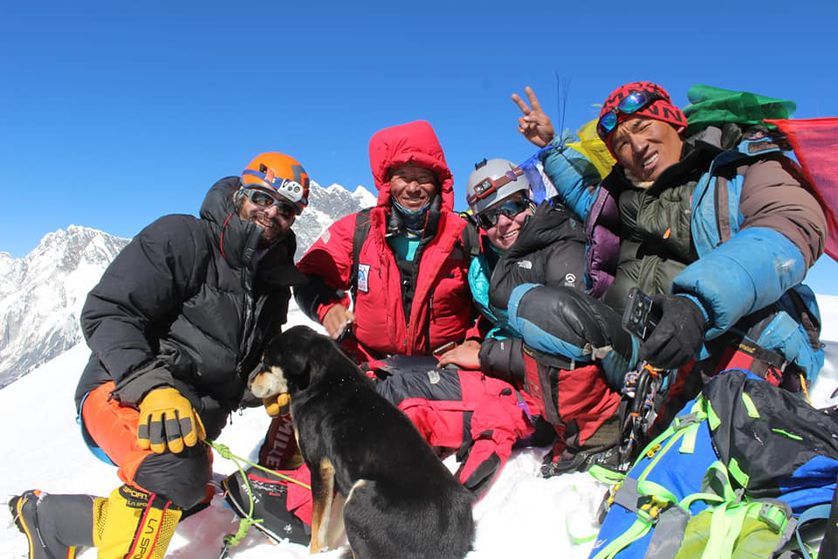
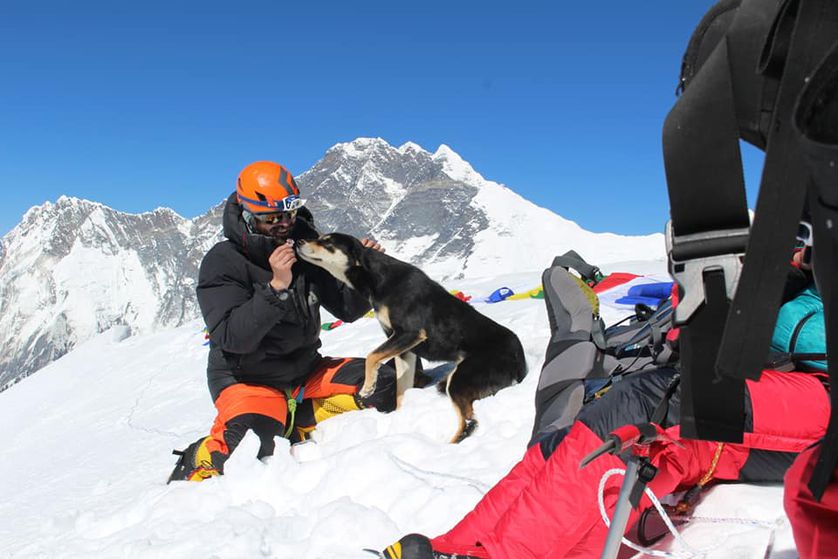
Mera celebrates with her fellow climbers. (Photo: Don Wargowsky)
There was only one time when Mera was gone for several days.
While Wargowsky was working on training with some members of the expedition, showing them how to climb the ice with rope, Mera followed the team’s sherpas instead. They were working to set up ropes to “camp one” at around 20,000 feet. She scrambled up the steep terrain but seemed afraid to go back down and wouldn’t return with them to base camp.
“She ended up spending two nights alone on a glacier at 20,000 feet. I really thought she was going to freeze to death,” Wargowsky says. The sherpas went up to continue working and she was there. But instead of going back down right away, she followed them to 22,000 feet as they continued working before going back to base camp.
The next day when the entire team went to make the climb, Wargowsky tried to keep her at base camp because he didn’t want her to make the steep climb again. He tied her up but she got out of her rope and quickly caught up with them. Wargowsky couldn’t leave his human clients to take her back, so Mera was allowed to stay with the group.
“I have no clue what her motivation was,” he says. “We were feeding her at base camp, so it wasn’t the food. It’s not like there was anything up there for her, but it was amazing to see.”
Tackling the ice and snow
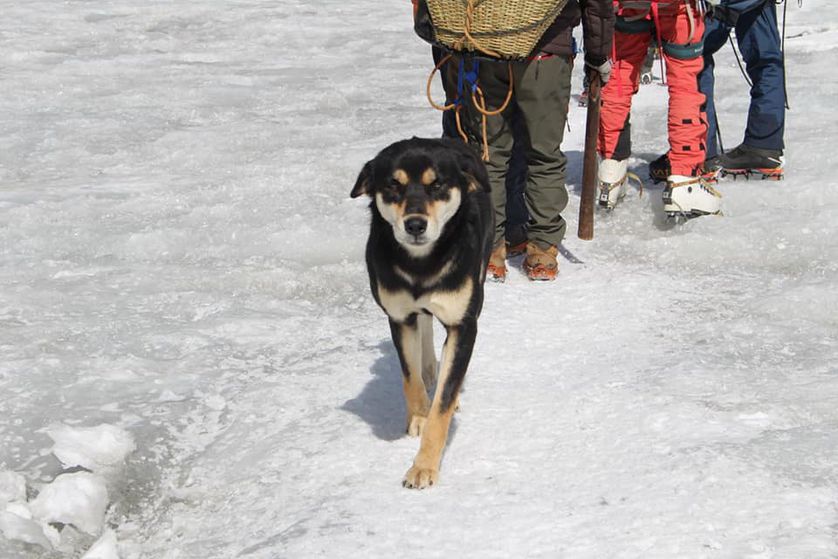
Mera often trotted ahead of the climbers, waiting for them to catch up. The temperatures didn’t seem to faze her. (Photo: Don Wargowsky)
Early on, Mera started to slide and Wargowsky was able to catch her and save her from what could’ve been a dangerous fall. When the team moved to camp two at around 21,000 feet, they were sidelined there for four days because of bad weather. Mera stayed with Wargowsky, who shared his tent and his food with the pup.
“I split all my meals with her 50/50 so we both lost weight,” he says. He guesses the scruffy brown-and-tan stray weighed probably 45 pounds to start with but lost maybe five or 10 pounds during the trip. Wargowsky says Mera looked like a combination of a Tibetan mastiff and a Nepali sheepdog.
Wargowsky was impressed with how well Mera navigated the snow and ice and handled the cold.
“She did very very well like 98 percent of the time. There were certain slopes very early in the morning or late at night when the snow was very crusty and icy when it was very slippery and you could see her kind of struggle with it,” he says. “Her paws got beat up and it was hard to see her paws bleeding a little. But everything healed up that evening and it was all superficial.”
He says it was also hard to believe she didn’t go snow-blind. The humans were all wearing expensive glacier goggles while she trotted along with no protection.
The highest a dog has ever climbed
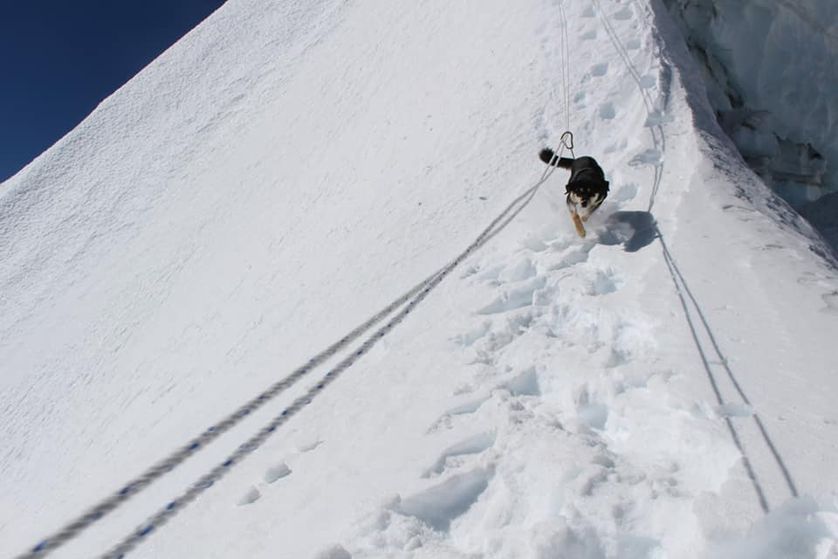
In one particularly harrowing descent, Mera was clipped to a rope to keep her safe. (Photo: Don Wargowsky)
There was only one part of the descent where she was assisted by a rope. Somehow, she had climbed the vertical 15-foot-tall section without incident but when it was time to go back down, she didn’t want to do it. The humans were rappelling, so to coax the dog down safely, they tied a rope harness to her so she could half-run, half tumble. You can see it in the photo above, but Wargowsky points out that the truly harrowing part of the mountain isn’t even visible in the shot.
In the end, when the team — along with their canine mascot — had come down from their completed 23,389-foot climb of Baruntse, Mera was hailed as a bit of a hero. Word had spread about her alleged feat and Wargowsky had to show off photos from his phone to prove she had been with them.
“She was the first dog to ever have climbed that mountain,” he says. “We can’t find anything that says a dog has ever been that high. I believe that is the highest that a dog has ever climbed ever at any point in the world.”
“I am not aware of a dog actually summiting an expedition peak in Nepal,” Billi Bierling of the Himalayan Database, an organization that documents climbing expeditions in Nepal, told Outside. “I just hope that she won’t get into trouble for having climbed Baruntse without a permit.” Bierling told Outside that there have been a few reported cases of dogs at Everest Base Camp (17,600 feet) and some who’ve trailed teams through the Khumbu Icefall up to Camp II (21,300 feet) on Mount Everest, but Mera’s adventure is perhaps the highest-recorded elevation by a dog anywhere in the world.
‘This dog wants to climb mountains’
Wargowsky shares his food with his climbing buddy. (Photo: Don Wargowsky)
After all that climbing and bonding, Wargowsky was tempted to bring his new friend home with him to the U.S.
“I really would’ve loved to adopt her. But I live in a 700-square-foot unit in Seattle and this dog wants to climb mountains. I gave it a lot of consideration. I didn’t care what it cost. Despite how much I loved this dog, I thought it would’ve been a very selfish thing to do to bring her to such a small space.”
But he didn’t want to leave what he calls “this hero of a dog” out on the streets. Fortunately, the expedition’s base camp manager was also smitten with the adventurous dog. Because dogs can’t fly, NirKaji Tamang paid someone $100 to walk three days to pick her up until they could get her on a bus and get her to his home in Kathmandu.
After what she had accomplished on Baruntse, Tamang changed the athletic dog’s name to Baru. He took her to the vet to make sure she was healthy. Her injuries quickly healed, and she gained weight.
Wargowsky, who told his remarkable Mera story online, was thrilled recently to receive photos of her. He will be back in Nepal several times this year for expeditions, and he plans on visiting his canine climbing partner.
“With what we had available, I don’t know what more I could’ve done to prevent her from climbing. She was definitely there of her own free will,” he says. “I truly loved that dog.”
ooOOoo
This is such a wonderful account of a stray dog coming into contact with a group of such loving people. Plus, the photographs are wonderful especially the fourth one; just following the Tackling the Ice and Snow sub-heading. I could look at that photograph for ever!
Hi Paul,
I thought that you and Jeannie might like to see this, if you haven’t already done so.
It brought a tear to my eye. Very inspiring – the way the world should be. The best of humanity.
Warm regards
– Margaret K
It’s fair to say that whilst people send me a whole range of items, as yesterday’s post demonstrated, what I am about to republish is the high-water mark for everything! Well it is for me!
But you be the judge!
ooOOoo
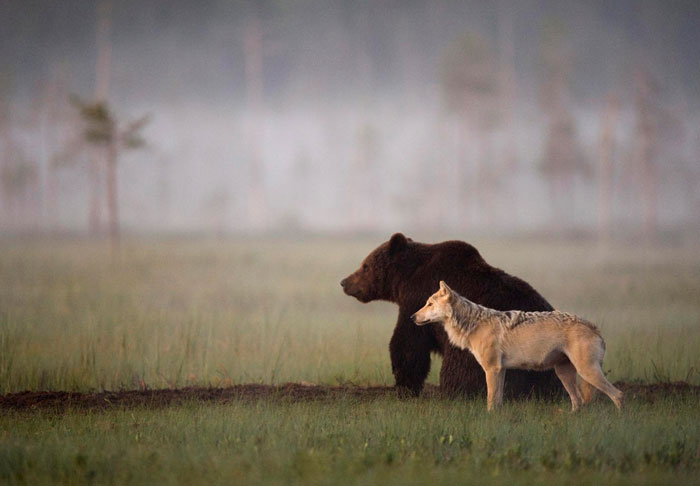
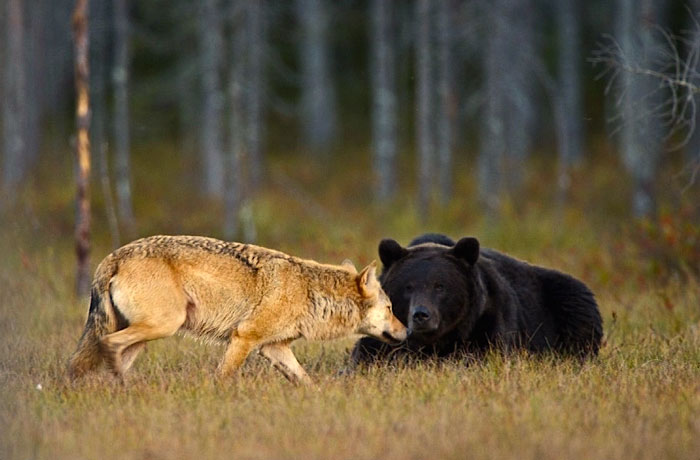
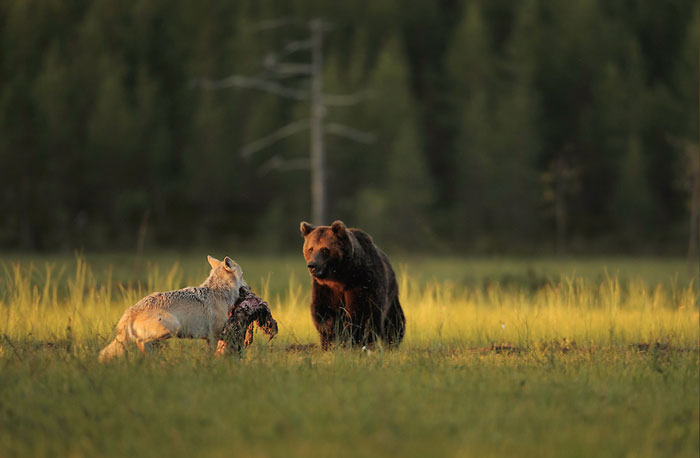
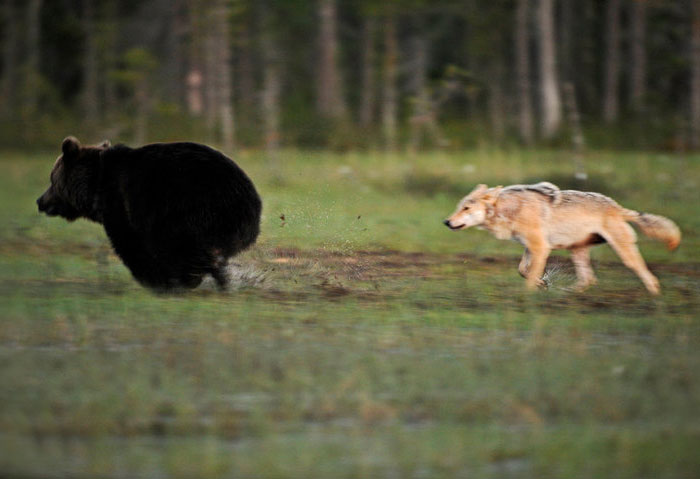
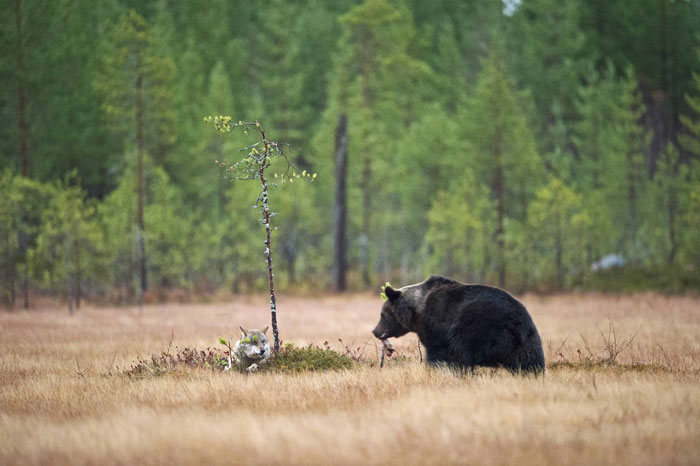
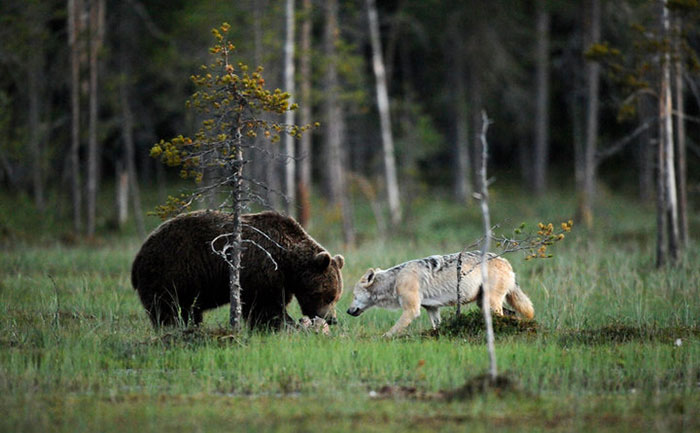
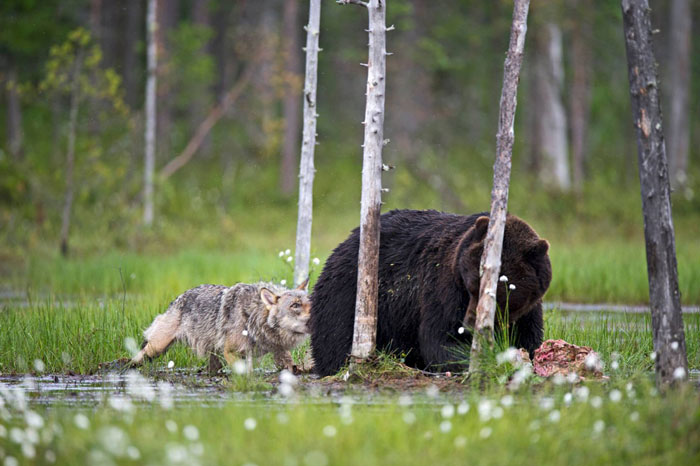
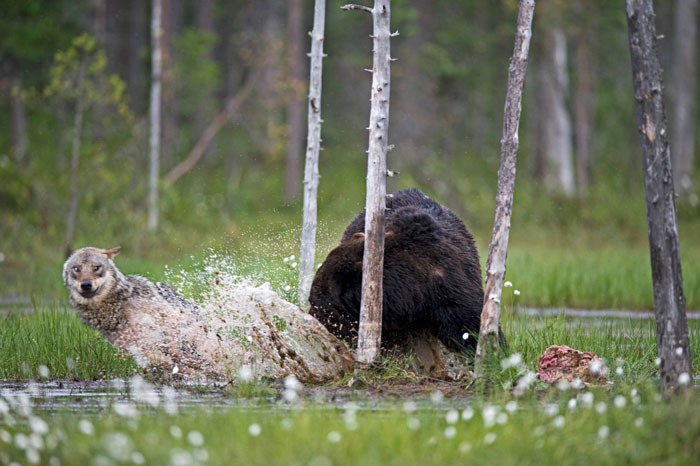
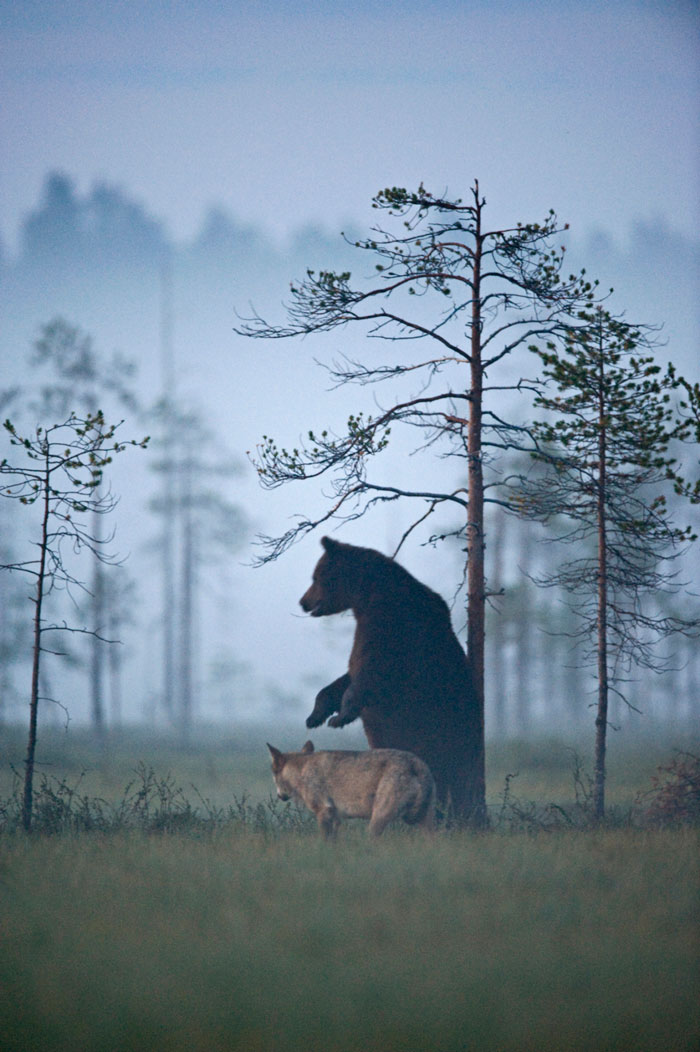
Unusual Friendship Between Wolf And Bear Documented By Finnish Photographer
“It’s very unusual to see a bear and a wolf getting on like this” says Finnish photographer Lassi Rautiainen, 56, who took these surprising photos. The female grey wolf and male brown were spotted every night for ten days straight, spending several hours together between 8pm and 4am. They would even share food with each other.
“No-one can know exactly why or how the young wolf and bear became friends,” Lassi told the Daily Mail. “I think that perhaps they were both alone and they were young and a bit unsure of how to survive alone…It is nice to share rare events in the wild that you would never expect to see.”
“It’s very unusual to see a bear and a wolf getting on like this”
This unlikely pair was spotted by Finnish photographer Lassi Rautiainen
He photographed the female grey wolf and male brown bear every night for ten days straight
“No one had observed bears and wolves living near each other and becoming friends in Europe”
The two “friends” were even seen sharing food
“No one can know exactly why or how the young wolf and bear became friends”
“I think that perhaps they were both alone when they were young and a bit unsure of how to survive alone”
“I came across these two and knew that it made the perfect story”
oooo
“It seems to me that they feel safe being together”
ooOOoo
Taken from here but I wouldn’t have known about this beautiful story if Margaret K. hadn’t sent me the link. Thank you, Margaret!
In posting this I must admit to not noticing any changes in our group of ‘buddies’. Correction: I don’t notice any changes in behaviour as a result of cold temperatures. Hot weather is different.
See what you make of the following article that was taken from here.
Have you ever noticed that your dog’s mood shifts with the weather? Storms, heat, cold, and the changing seasons affect our dogs, just like they affect us. Understanding this behavior can help you prepare your canine companion for the forecast ahead.
Changing Seasons
When the temperature heats up, some dogs rejoice, while others seek out cool, shady spots where they can rest. Though all dogs can be susceptible to hot weather hazards, certain dog breeds are less heat tolerant than others. Brachycephalic breeds, such as Bulldogs, French Bulldogs, Pugs, and Boston Terriers, do best when staying cool in hot weather because they can have difficulty breathing in extreme heat. Large breeds are also susceptible to heat, as are longhaired breeds like the Komondor, Afghan Hound, and Alaskan Malamute. If you own a breed like these, you may find that your dog is not as active in hot weather or as willing to engage in play and other activities.
Seasons change gradually, giving your dog time to adjust. Relocating to an entirely new climate, however, can cause sudden shifts in your pup’s mood. Depending on your dog’s breed, you may notice that he becomes more or less active, and some dogs even show signs of irritation if the weather makes them too uncomfortable.
A move to a cold climate can be shocking for dogs that are not used to chilly temperatures. Some pups seek out warm places, like air vents, blankets, or human contact, and you might notice your canine companion becoming cuddlier in the cold. Understanding the cause of your dog’s sudden lethargy or increased activity can help you determine if his change in mood is circumstantial or medical. Lethargy is a common symptom of many illnesses and should be taken seriously, so make sure your dog is not exhibiting any other abnormal signs. If he is, consult your veterinarian immediately.
Helping Your Dog Adjust
If your dog gets grumpy in the heat, don’t worry. There are things you can do to make him more comfortable and lower his risk of heatstroke.
Avoid taking your dog for walks during the hottest parts of the day.
Make sure he has plenty of fresh water.
Raised canvas platform dog beds offer a cooling alternative to traditional beds, and you can even invest in cooling mats or kiddie pools for particularly heat-intolerant dogs.
If you don’t have air conditioning, adjust a fan so that your dog has access to a nice, cool breeze.
Never leave a dog unattended in an enclosed vehicle or in a warm environment that does not have good air circulation.
You can also help your dog acclimate to the cold. After all, who doesn’t love a pup in a sweater? With so many dog sweaters, jackets, raincoats, and booties to choose from, keeping your dog warm is easier than ever. However, it’s important to note that you should never leave an item of clothing on an unsupervised dog. And anything you do put on your canine companion should fit properly (not too tight or too loose).
ooOOoo
“Understanding this behavior can help you prepare your canine companion for the forecast ahead.” One wonders just how one prepares our canine companions (all six of them) for the forecast.












 Learning from Dogs