The powerful combination of good medicine and unconditional love.
In the last post on Hazel’s condition, back last Thursday, I passed on Dr. Codd’s observation, “… that by not having Hazel on her meds we were, of course, letting the fungal infection continue its damage.”
Dr. Codd also recommended reducing the dosage of the Fluconazole to lower its side effect of suppressing appetite.
So since then, with outstanding care and patience, Jean has been coaxing Hazel to eat just sufficient food for Hazel to be able to take the Fluconazole, for her fungal infection in her lungs, and Doxycycline, for her tick infection. (Mind you, Hazel is still a long way from eating reliably.)
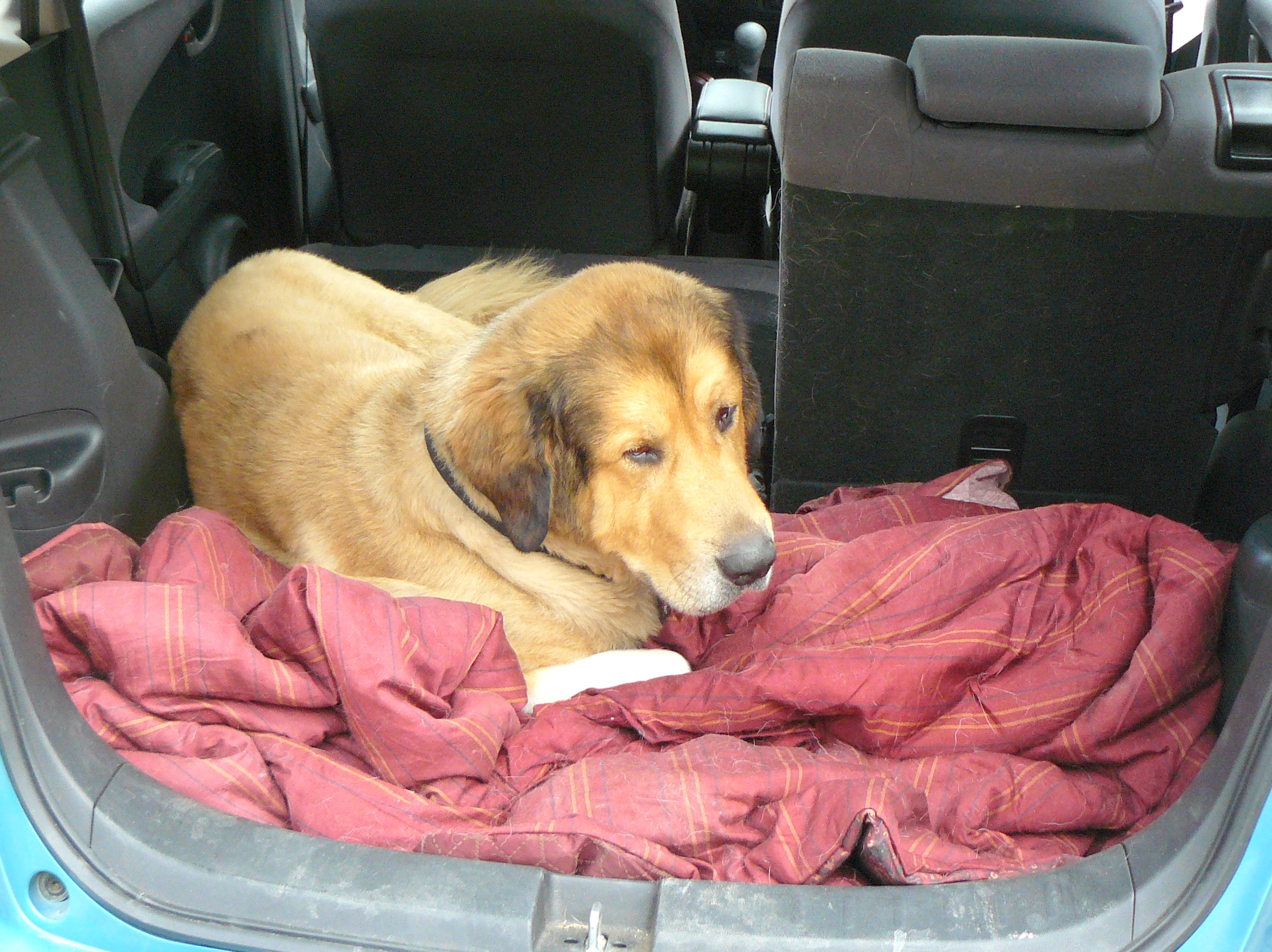
Yesterday, (Saturday) Hazel was showing clear signs of feeling better but still having to be hand-fed by Jean.
Then this morning (Sunday) she really was perky and readily came out for a walk with the other dogs.
First time in recent days when Hazel has shown an interest in the world around her.
oooo
A return of a head gesture unique to Hazel that we haven’t seen in ages! 🙂
More generally, Dr. Jim was trying to track down supporting details to the observation made by Dr. Russ:
Namely, that there was evidence that fungal infections can lay dormat for quite long periods of time.
Jim sent me the following email:
Paul …
The following article is the one and only reference I have found so far that refers to the possible dormancy of this fungal infection. In paragraph 2 (Clinical Disease) I have highlighted it in red. I have to admit, I was skeptical.
Jim
The article was:
Coccidioidomycosis (Zoonotic) Last updated on 2/4/2011.
Contributors:
Rhea V. Morgan DVM, DACVIM, DACVO
Synonyms:
San Joaquin Valley Fever
Valley Fever
This is that domancy aspect from that paper that Jim highlighted (in red):
The incubation period in the dog is 1 to 3 weeks.1,2The organism can remain dormant, with exposure preceding the onset of clinical signs by 3 years or more.1,3 Although people may acquire the disease from the same sources as domestic animals and the mycelial forms are highly infectious, with one exception the disease has not been transmitted from animals to people. One published report exists of transmission to a veterinary assistant via the bite of an infected cat.15
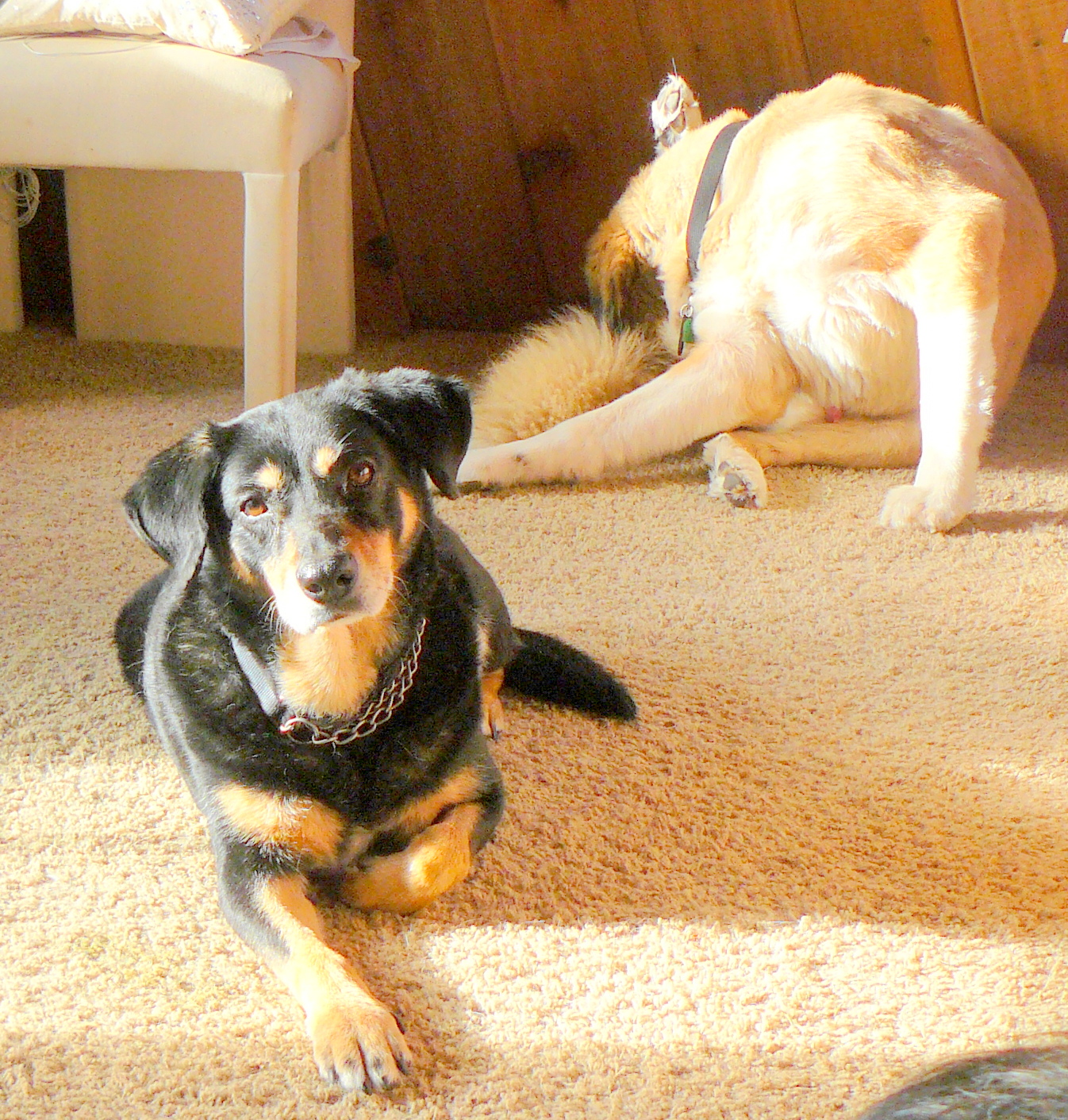
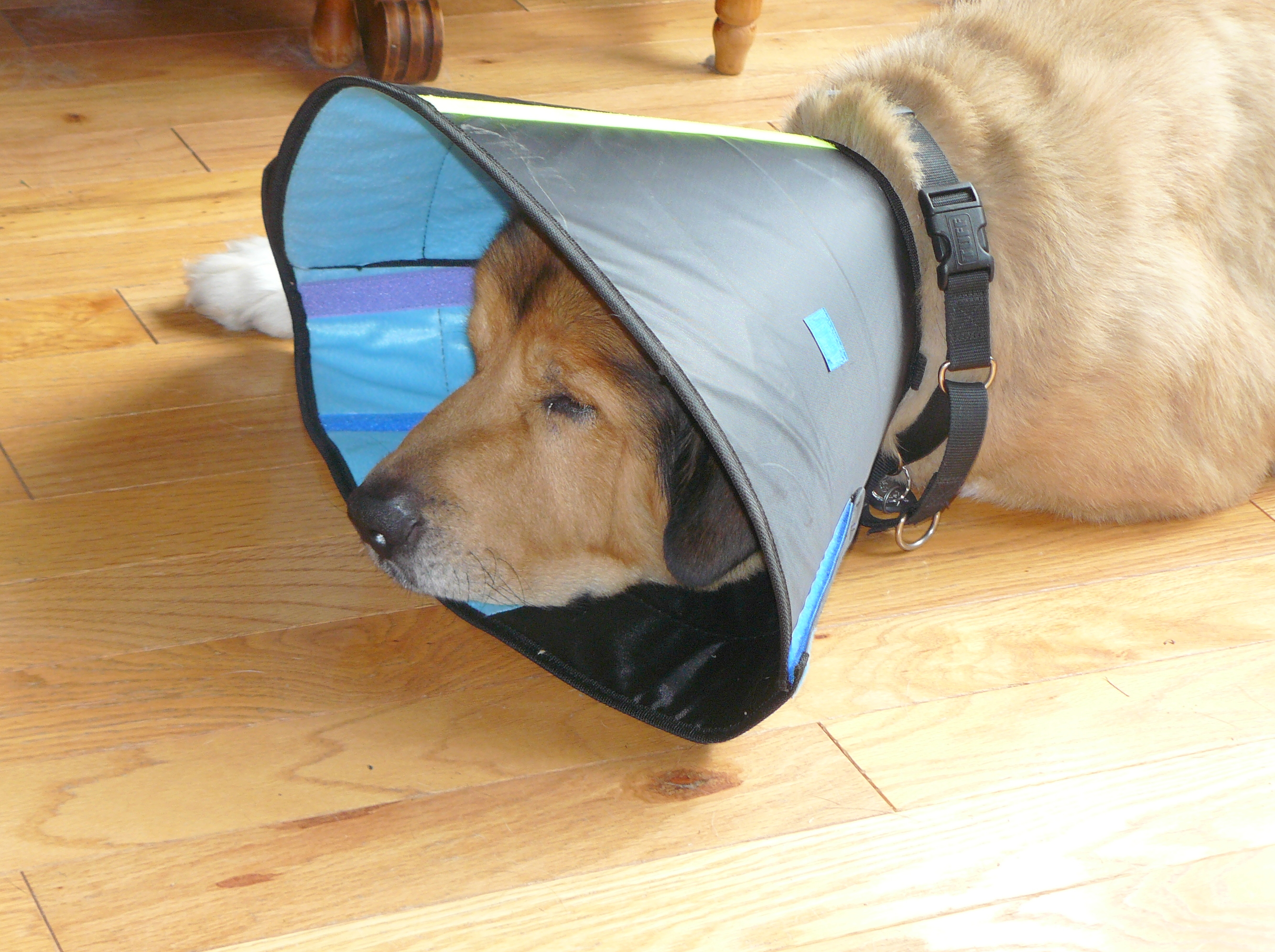
Meanwhile, over in Brandy’s corner, he has very quickly healed after his neutering operation last Thursday. It was fair to say that he was not a happy chappy when he arrived home that day.
Didn’t like that!
oooo
And I can’t even lick my balls!
But his cone was off by Saturday and he is back to the wonderful, bouncing dog we all love so much. (Can’t believe that last Saturday was only the second week that Brandy had been with us; he has so quickly woven his way into all our hearts.)
Checking out the stables yesterday (Sunday) morning.
oooo
Behind that placid expression is the most docile, loving brain and heart one could ever wish for!
Returning to Hazel we are still some way from knowing that she has returned to a fully fit dog but the love and caring sent her way by all of you out there has been precious beyond imagination.
An interesting item that recently crossed my ‘screen’.
I make no apologies for cutting corners for today’s post. Because the last few days of looking after, and worrying about, Hazel have soaked up so much of our time and energy that I just couldn’t find the creative impulse to do much more than ‘copy and paste’.
Why the Internet isn’t making us smarter – and how to fight back
April 15, 2016 5.58am EDT
David Dunning Professor of Psychology, University of Michigan
Disclosure statement: David Dunning has received funding from the National Science Foundation, the National Institutes of Health, and the Templeton Foundation in the past.
In the hours since I first sat down to write this piece, my laptop tells me the National Basketball Association has had to deny that it threatened to cancel its 2017 All-Star Game over a new anti-LGBT law in North Carolina – a story repeated by many news sources including the Associated Press. The authenticity of that viral video of a bear chasing a female snowboarder in Japan has been called into question. And, no, Ted Cruz is not married to his third cousin. It’s just one among an onslaught of half-truths and even pants-on-fire lies coming as we rev up for the 2016 American election season.
The longer I study human psychology, the more impressed I am with the rich tapestry of knowledge each of us owns. We each have a brainy weave of facts, figures, rules and stories that allows us to address an astonishing range of everyday challenges. Contemporary research celebrates just how vast, organized, interconnected and durable that knowledge base is.
That’s the good news. The bad news is that our brains overdo it. Not only do they store helpful and essential information, they are also receptive to false belief and misinformation.
Just in biology alone, many people believe that spinach is a good source of iron (sorry, Popeye), that we use less than 10 percent of our brains (no, it’s too energy-guzzling to allow that), and that some people suffer hypersensitivity to electromagnetic radiation (for which there is no scientific evidence).
But here’s the more concerning news. Our access to information, both good and bad, has only increased as our fingertips have gotten into the act. With computer keyboards and smartphones, we now have access to an Internet containing a vast store of information much bigger than any individual brain can carry – and that’s not always a good thing.
Better access doesn’t mean better information
This access to the Internet’s far reaches should permit us to be smarter and better informed. People certainly assume it. A recent Yale study showed that Internet access causes people to hold inflated, illusory impressions of just how smart and well-informed they are.
But there’s a twofold problem with the Internet that compromises its limitless promise.
First, just like our brains, it is receptive to misinformation. In fact, the World Economic Forum lists “massive digital misinformation” as a main threat to society. A survey of 50 “weight loss” websites found that only three provided sound diet advice. Another of roughly 150 YouTube videos about vaccination found that only half explicitly supported the procedure.
Rumor-mongers, politicians, vested interests, a sensationalizing media and people with intellectual axes to grind all inject false information into the Internet.
So do a lot of well-intentioned but misinformed people. In fact, a study published in the January 2016 Proceedings of National Academy of Science documented just how quickly dubious conspiracy theories spread across the Internet. Specifically, the researchers compared how quickly these rumors spread across Facebook relative to stories on scientific discoveries. Both conspiracy theories and scientific news spread quickly, with the majority of diffusion via Facebook for both types of stories happening within a day.
Making matters worse, misinformation is hard to distinguish from accurate fact. It often has the exact look and feel as the truth. In a series of studies Elanor Williams, Justin Kruger and I published in the Journal of Personality and Social Psychology in 2013, we asked students to solve problems in intuitive physics, logic and finance. Those who consistently relied on false facts or principles – and thus gave the exact same wrong answer to every problem – expressed just as much confidence in their conclusions as those who answered every single problem right.
For example, those who always thought a ball would continue to follow a curved path after rolling out of a bent tube (not true) were virtually as certain as people who knew the right answer (the ball follows a straight path).
Defend yourself
So, how so we separate Internet truth from the false?
First, don’t assume misinformation is obviously distinguishable from true information. Be careful. If the matter is important, perhaps you can start your search with the Internet; just don’t end there. Consult and consider other sources of authority. There is a reason why your doctor suffered medical school, why your financial advisor studied to gain that license.
Second, don’t do what conspiracy theorists did in the Facebook study. They readily spread stories that already fit their worldview. As such, they practiced confirmation bias, giving credence to evidence supporting what they already believed. As a consequence, the conspiracy theories they endorsed burrowed themselves into like-minded Facebook communities who rarely questioned their authenticity.
Instead, be a skeptic. Psychological research shows that groups designating one or two of its members to play devil’s advocates – questioning whatever conclusion the group is leaning toward – make for better-reasoned decisions of greater quality.
If no one else is around, it pays to be your own devil’s advocate. Don’t just believe what the Internet has to say; question it. Practice a disconfirmation bias. If you’re looking up medical information about a health problem, don’t stop at the first diagnosis that looks right. Search for alternative possibilities.
Seeking evidence to the contrary
In addition, look for ways in which that diagnosis might be wrong. Research shows that “considering the opposite” – actively asking how a conclusion might be wrong – is a valuable exercise for reducing unwarranted faith in a conclusion.
After all, you should listen to Mark Twain, who, according to a dozendifferent websites, warned us, “Be careful about reading health books. You may die of a misprint.”
Wise words, except a little more investigation reveals more detailed and researched sources with evidence that it wasn’t Mark Twain, but German physician Markus Herz who said them. I’m not surprised; in my Internet experience, I’ve learned to be wary of Twain quotes (Will Rogers, too). He was a brilliant wit, but he gets much too much credit for quotable quips.
Misinformation and true information often look awfully alike. The key to an informed life may not require gathering information as much as it does challenging the ideas you already have or have recently encountered. This may be an unpleasant task, and an unending one, but it is the best way to ensure that your brainy intellectual tapestry sports only true colors.
ooOOoo
The way the world now communicates, for good and bad, using the internet is staggering. As the website Internet Live Stats reveals: (as of this moment today)
The learning and healing journey continues with Hazel.
The title to today’s post came from Dr. Jim Goodbrod, DVM. When he and I were taking a walk yesterday Jim mentioned that diagnosing exactly what an animal is suffering from is as much an art as it is a science.
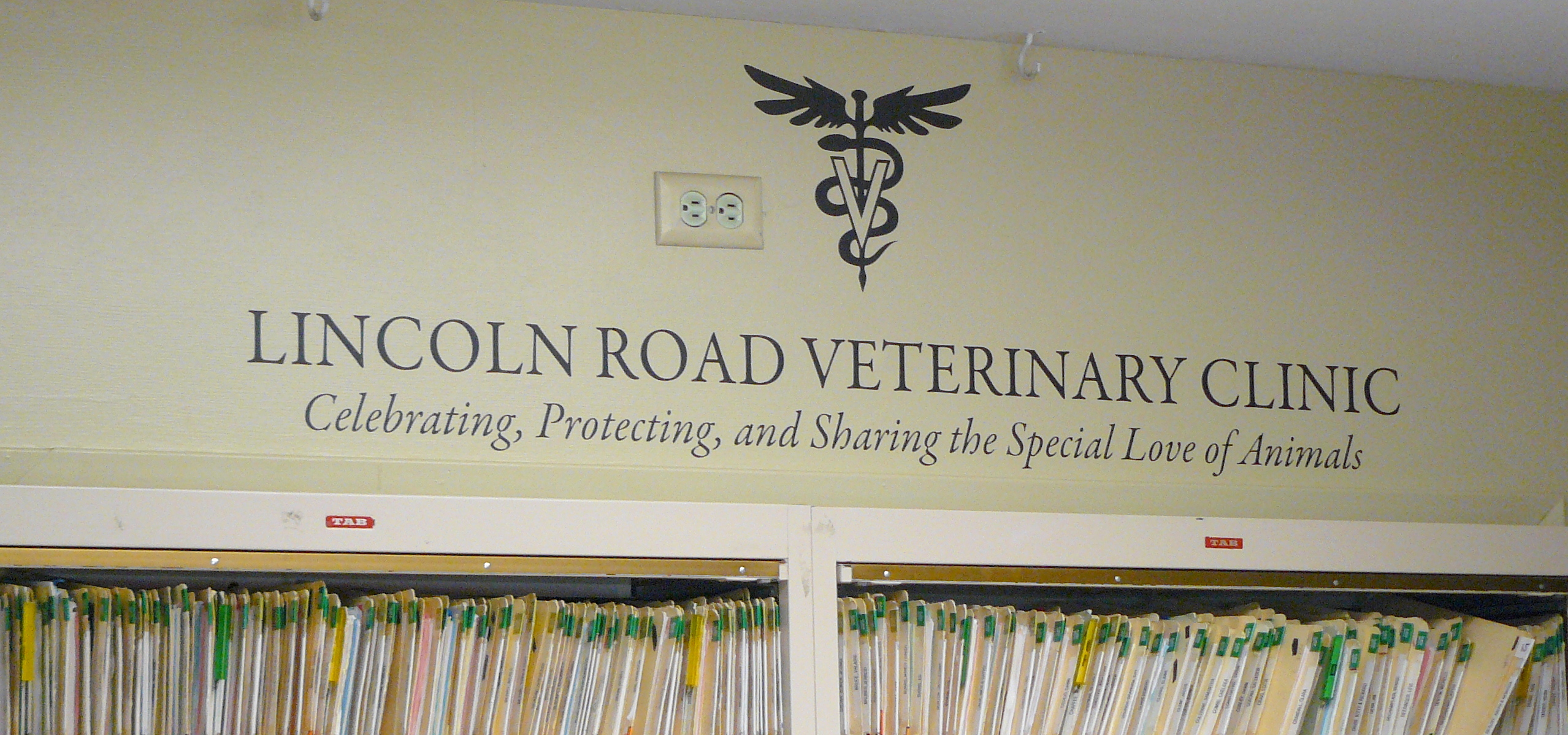
Jim and Janet are close friends and neighbours who live a couple of roads away. Jim also attends the Lincoln Road Vet Clinic on a part-time basis. Off his own volition he has been speaking with Dr. Codd (Russ) about the situation with Hazel and the pair of them are showing incredible devotion to getting to the bottom of what is happening.
So, like yesterday’s post, today is being offered to you in the spirit of information. Forgive me if I repeat the caution from yesterday. (This is being written at 4pm on April 19th, 2016.)
CAUTION: The following is offered by way of information reaching out to other loving dog owners. Please do not assume I have any specialist veterinarian knowledge and please do not take the following as a replacement for seeing your own vet.
Late on Sunday afternoon Hazel was becoming so weak and lethargic that Jean and I feared that she wouldn’t make it through the night. So it was wonderful to see that she was alive and still connected to the world at 6am yesterday; Monday. Nonetheless, Hazel had not eaten since Saturday afternoon and was only drinking very small amounts of water. We made the decision to ring the Clinic as soon as they opened on Monday at 8am. They recommended that Hazel be brought in to go on to an IV drip to boost her anti-fungal intake and also to receive an anti-nausea intake to help her regain an appetite. But there was the question hanging over everyone that if this was a fungal infection, as in Coccidioidomycosis, that is not present in the Oregonian soil but is found in the drier parts of the USA and Mexico then why had it been such a long time before it brought Hazel down?
Jean also had this suspicion that Hazel might be suffering from a form of ‘Tick Fever’ that is very common in Mexico.
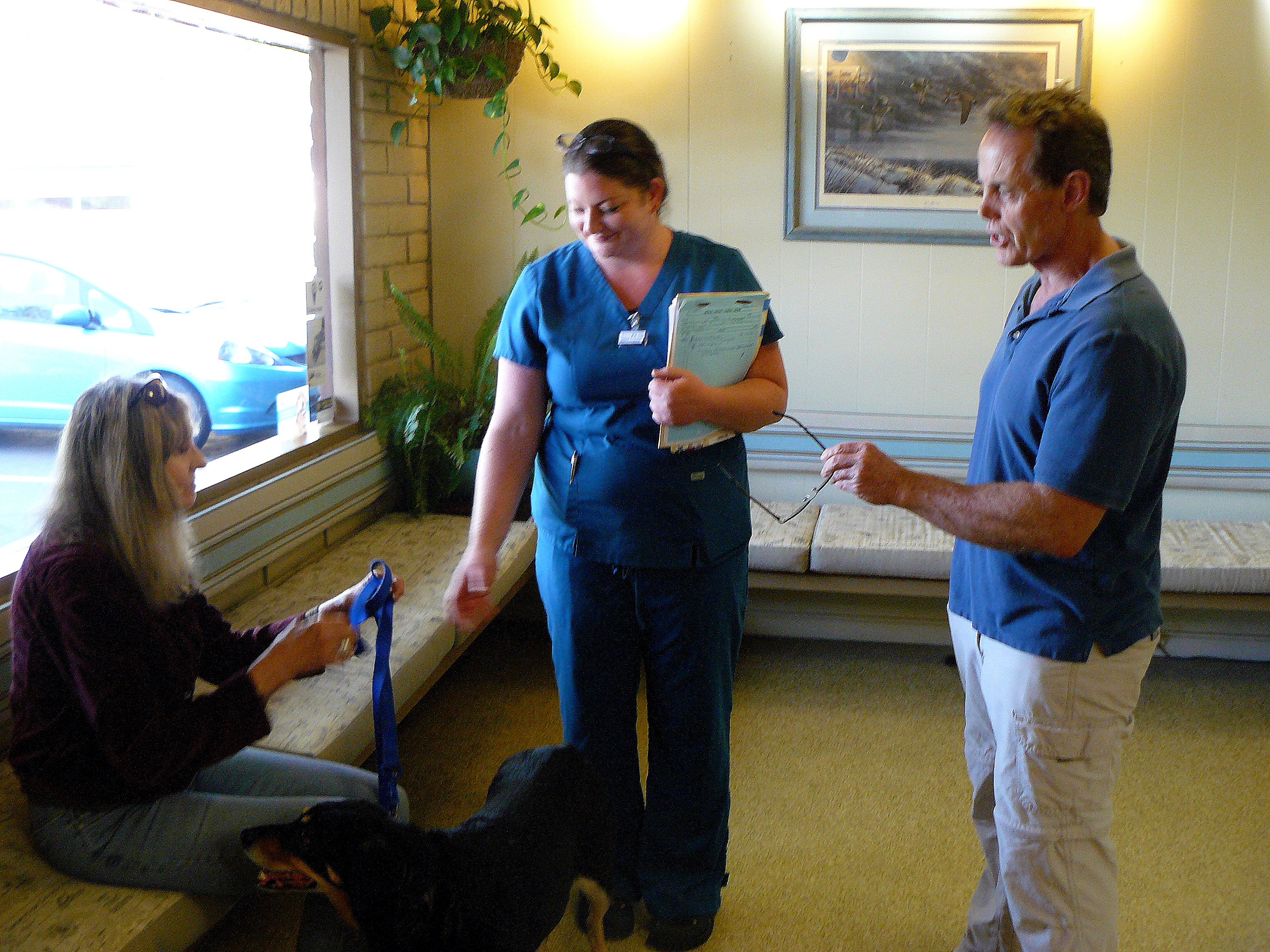
So off we went to the Clinic again. There were discussions about the whole situation.
Dr. Codd (RHS) speaking with Jean at the Clinic.
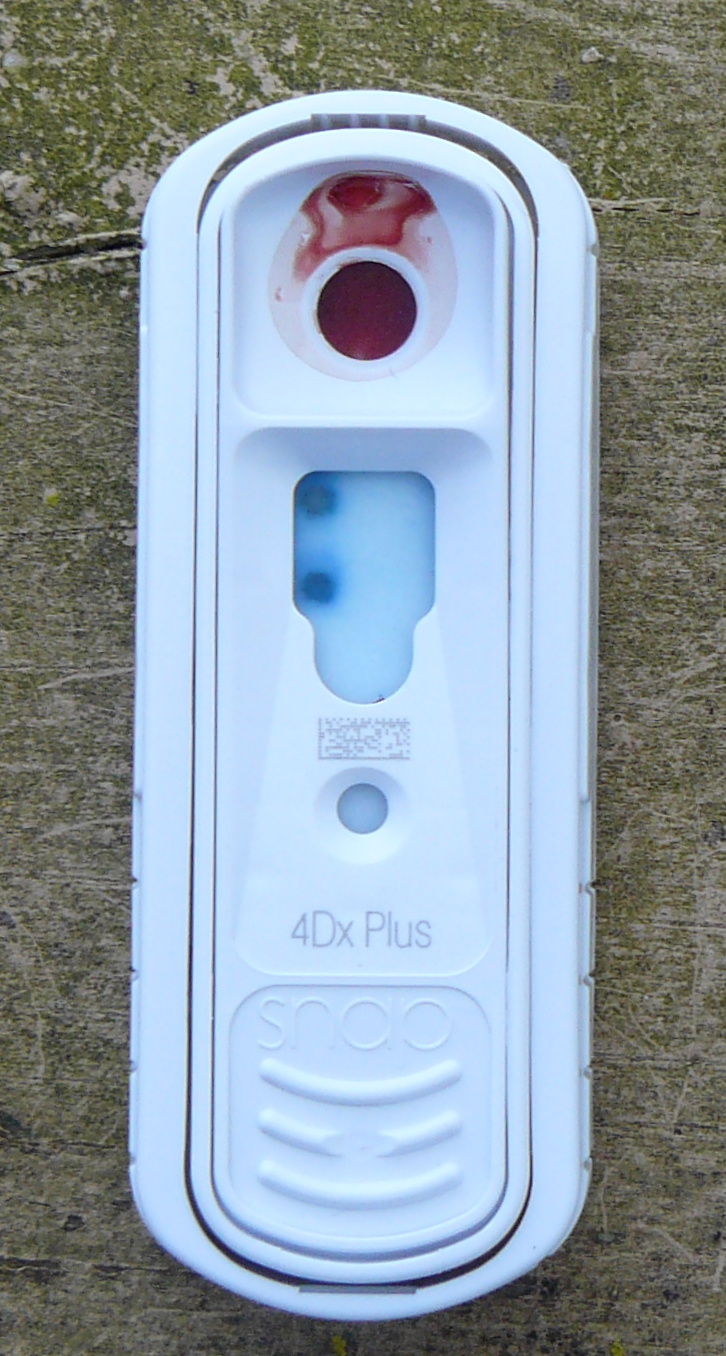
Dr. Codd took a quick blood test and, bingo, it revealed that Hazel was showing that she had, or had had in the past, an Ehrlichia Infection; a tick-borne infection.
The lower of the left-hand spots is the indicator of a past or present Ehrlichia Infection.
The cure for that was a course of Doxycycline.
So now we are looking at battling two separate diseases.
The blood that was taken from Hazel last Friday, when she also had radiographs taken of her lungs, had been sent for a ‘titre’ that would confirm one way or another if her lungs were suffering from a fungal infection. Those results will be available on Wednesday or Thursday of this week.
One of the radiographs taken of Hazel.
Back to Hazel’s lack of appetite. One of the side-effects of Fluconazole is that it depresses appetite. Getting Hazel eating again was becoming a priority. It seemed to make sense that until we had confirmation of whether or not Hazel had a lung fungal infection, for which taking Fluconazole would be an excellent course of action, we should pause in her dose until the results were in. To speed up the return of an appetite Dr. Jim prescribed a short course of Mirtazipine.
So that’s about it for the time being. Except for Jean and me to say how much we appreciate the art and the science that is being so skillfully offered by the Clinic. (As of 19:00 PDT yesterday Hazel was eating again! 🙂 )
Great team effort!
Their “Special Love of Animals” comes over in spades!
As regular followers of this place know (and a huge thank-you to you all) much of last Friday was spent planting trees in a grassy meadow just to the East of our house.
A part view of the area where the trees were planted: Kentucky Coffeetrees; Northern Catalpas; a Red Maple, Eastern Redcedars.
An hour before I sat down to write this post (now 13:30 PST yesterday) I didn’t have a clue as to what to write. Then I read Patrice Ayme’s latest essay and, wow, it punched me in the face. For it resonated so strongly with a few other recent readings.
“We empowered a demagogue” laments the New York Times ostensibly bleeding heart liberal, the kind Mr. Kristof, in his false “Mea Culpa” editorial, “My Shared Shame: How The Media Made Trump”. By this, Mr. Kristof means that Mr. Trump is a bad person. However, Mr. Kristof’s choice of the word “demagogue” is revealing. (Actually it’s not really his choice: “demagogue” is not Mr. Kristof’s invention: he just repeats like a parrot the most prominent slogan of the worldwide campaign of insults against Trump).
Trump a demagogue? Is Mr. Sanders a “demagogue”, too? (As much of the financial and right-wing press has it: for The Economist and the Financial Times, Trump and Sanders are both “demagogues” and that’s their main flaw.)
To understand fully the word “demagogue” one has to understand a bit of Greek, and a bigger bit of Greek history.
Then later on in that essay, Patrice goes on to quote Andy Grove:
A hard day may be coming for global plutocrats ruling as they do thanks to their globalization tricks. And I am not exactly naive. Andy Grove, founder of Intel, shared the general opinion that much of globalization was just theft & destitution fostering an ominous future (the Hungarian immigrant to the USA who was one of the founders of Intel). He pointed out, an essay he wrote in 2010 that Silicon Valley was squandering its competitive edge in innovation by neglecting strong job growth in the United States.
Mr. Grove observed that: …”it was cheaper and thus more profitable for companies to hire workers and build factories in Asia than in the United States. But… lower Asian costs masked the high price of offshoring as measured by lost jobs and lost expertise. Silicon Valley misjudged the severity of those losses, he wrote, because of a “misplaced faith in the power of start-ups to create U.S. jobs.”
Silicon Valley makes its money from start-ups. However, that phase of a business is different from the scale-up phase, when technology goes from prototypes to mass production. Both phases are important. Only scale-up is an engine for mass job growth — and scale-up is vanishing in the United States (especially with jobs connected to Silicon Valley). “Without scaling,” Mr. Grove wrote, “we don’t just lose jobs — we lose our hold on new technologies” and “ultimately damage our capacity to innovate…
The underlying problem isn’t simply lower Asian costs. It’s our own misplaced faith in the power of startups to create U.S. jobs. Americans love the idea of the guys in the garage inventing something that changes the world. New York Times columnist Thomas L. Friedman recently encapsulated this view in a piece called “Start-Ups, Not Bailouts.” His argument: Let tired old companies that do commodity manufacturing die if they have to. If Washington really wants to create jobs, he wrote, it should back startups.
Friedman is wrong. Startups are a wonderful thing, but they cannot by themselves increase tech employment.”
Spot on! For in my previous life I was the founder of two businesses. First up was Dataview Ltd, based in Colchester, that was formed in the late 1970s and soon became the global distributor of the word processing software Wordcraft, written by Englishman Pete Dowson. Dataview also initiated the ‘dongle’, a software/hardware security device to protect Wordcraft.
The Wordcraft dongle.
The second company founded by me was Aviation Briefing Ltd ‘AvBrief’ that is still going today, albeit with me no longer involved!
So I can reinforce, with hundreds of hours of lost sleep and tears, that growing a company and increasing employment, especially the employment of great technical people, is a very different matter to the start-up phase.
Frankly, regarding Dataview, it was only the luck of meeting Sid Newman that saved my bacon. For within 12 months of starting trading I was already sinking under the load of trying to be the number one salesman (that I was good at) and being the company general manager (that I was total crap at). Sid had years of experience at general management and very quickly let me get on with what I really loved – opening up Wordcraft distributorships all over the world.
The analogy with planting trees is very apt. For any clown can plant the tree but parenting that young tree into a mature forty-foot high beauty takes professional management.
Clown work! (This is a Red Maple, by the way!)
Tomorrow I will return and offer a viewpoint as to how we, as in society, are currently bereft of professional managers.
Luna likely survived on dead fish and mice, as well as fresh water that was shipped in for Navy employees. (Photo: U.S. Navy – Naval Base Coronado)
When Nick Haworth’s dog, Luna, fell off his fishing boat a couple miles off the shore of San Clemente Island in the Pacific Ocean, he thought there was a good chance she’d swim for land.
“Nick was pretty certain she would make for shore because she was a very strong swimmer,” says Sandy DeMunnik, public affairs officer for the U.S. Navy’s Naval Base Coronado, which includes the island. “He asked if he could have permission to come ashore to get her.”
San Clemente Island is a weapons training facility where they work with bombs and offshore bombardment, so they had to shut off one of the artillery ranges to look for the 1 1/2-year-old German shepherd/Husky mix. The staff helped Haworth search for her to no avail. He stayed in the area for two more days and couldn’t find her.
“After about a week, it was presumed she had never even made it to shore because they hadn’t seen a sign of her,” says DeMunnik. “They presumed she was lost at sea.”
Fast forward five weeks to March 15 when Navy staff arrived on the island for work.
“She was sitting on the side of the road just wagging her tail,” says DeMunnik. The staff members knew immediately that this was the dog they had been searching for. They opened their door, whistled and Luna jumped right in the truck.
After more than a month of being gone, Luna takes a well-deserved nap. (Photo: U.S. Navy – Naval Base Coronado)
They immediately called Haworth and let him know the happy news. Luna was examined by the island’s wildlife biologist, who said she likely wasn’t seen for five weeks because her tan-and-black coloring let her blend in with the island’s landscape. Miraculously, except for having lost a little weight, she was OK.
“Amazingly for being lost for five weeks in a very dangerous and treacherous environment, she was fine,” says DeMunnik. “During that time, there was bombardment training, weapons training … there was a lot of very loud, very dangerous training going on, and we had some very severe El Nino storms.”
Those storms probably helped keep the dog alive because fresh water was brought to the island by barge for the staff during the storm. They determined that Luna had survived by eating dead fish and rodents.
Because her owner, a commercial fisherman and student at San Diego State University, was away on a fishing trip, he sent his best friend, Conner Lamb, to meet Luna’s plane. When the plane doors opened, she leapt into Lamb’s arms and he fought back tears. On her first night home, he made her a steak for dinner.
The commanding officer of the base sent Luna home with a keepsake of her time spent on the island: her own set of military dog tags. They are engraved with her name, the dates she was missing, and “Keep the faith.”
Luna is greeting by paparazzi — but it’s clear that’s she’s had enough media coverage for the day. (Photo: U.S. Navy – Naval Base Coronado)
ooOOoo
Two more pictures to reinforce this wonderful story.
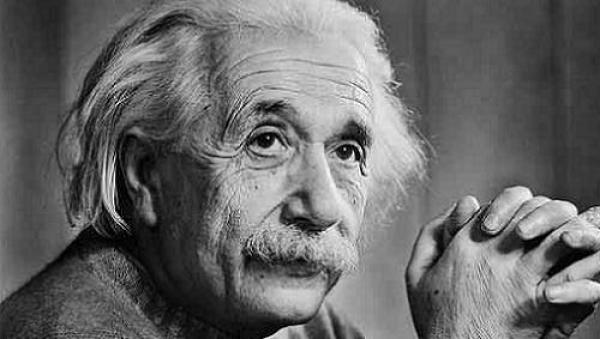
Celebrating the life and times of Albert Einstein.
Yesterday was the centenary of the birth of Albert Einstein (14 March 1879 – 18 April 1955). It has been widely reported. For example, a piece on the EarthSky blog:
March 14, 1879. This is the anniversary of the birth of Albert Einstein, undoubtedly the most famous scientist of the modern era.
Einstein was born in Ulm, Germany, where an uncle – Jakob Einstein, an engineer – introduced him to science and math. At age 17, he enrolled in the Swiss Polytechnic Institute after failing the entrance exam the previous year. He graduated in 1900, and in 1902 he became a junior patent examiner in the Swiss Patent Office in Bern, Switzerland, where he specialized in electrical devices.
The year 1905 came to be known as Einstein’s Miracle Year. He was 26 years old, and in that year he published four papers that reshaped physics.
Now before you read on let me proclaim that today’s post has absolutely nothing to do with dogs! (Unless dogs exist in parallel universes!)
But a recent documentary that was published on Top Documentary Films was really fascinating and incredibly well presented. Thus, in terms of the likes of you and I better understanding what Einstein revealed about our universe, I couldn’t resist sharing it with you all today. It is just 29 minutes long.
STORYLINE
One hundred years have passed since Albert Einstein first unleashed his highly influential Theory of General Relativity unto the world. These revelations charted a future course of scientific pursuit, and never cease to inform our understanding of the universe today. In celebration of that impressive legacy, the documentary short Einstein’s Extraordinary Universe travels to three research facilities in different regions across the globe, and shows us how Einstein’s work continues to challenge, shape and inspire the scientific discoveries of tomorrow.
The film opens in Tuscany. Under the shadows of Galileo’s groundbreaking work on gravity research, a group of astrophysicists are exploring Einstein’s theories related to the occurrence of gravitational waves through space and time. Can modern technologies and advanced scientific intellect result in actual proof of such waves?
Viewers are then taken to the world’s largest underground laboratory. Hidden far beneath Italy’s Gran Sasso mountains, the lab serves as a home to researchers who work tirelessly to prove another of Einstein’s grandiose theories: the existence of dark matter. The vast majority of our universe is made up of materials that we have not yet been able to detect through forces of light and energy. The dedicated team who toil away in this impressive underground lair hope they can lay the groundwork in changing that.
The filmmakers’ next stop is Switzerland, where they are given a tour of one of the most impressive displays of scientific testing technology on the planet. Housed by the European Organization for Nuclear Research, or CERN, the Large Hadron Collider is the most powerful particle accelerator on the planet, and is being used to question and examine the substance of all matter in our universe.
Through each destination on this incredible journey, what amazes most is how prescient Einstein’s theories have proven even after a century has passed. His work continues to test the limits of our scientific understanding, and sets a groundwork from which researchers still strive for answers. Featuring a plethora of illuminating interviews with many top figures in the fields of scientific study, Einstein’s Extraordinary Universe is certain to delight seasoned science geeks and novices alike.
To be honest, at a personal level I just don’t know the answer to that question. It seems to depend on the mood that Jean and I are in at any particular time. All I can fall back on is that well-used saying from me: “Never underestimate the power of unintended consequences”.
In other words, we shouldn’t underestimate the strength of millions of good people when their demands start reaching out to those in power. (And whatever your reaction to this post, please don’t miss watching the inspirational Al Gore speech towards the end of this post.)
Recently over on the Grist site there was an article about the critical changes that each and every one of us should be making. I want to share it with you in full.
ooOOoo
Want to fight climate change? Here are the 7 critical life changes you should make
A few months ago, the U.S. and 195 other countries signed this thing in Paris in which all parties involved kind of sort of agreed to stop messing with the world’s climate. It was very exciting.
So what if we, as Americans, were going to join in as individuals in order to help the U.S. meet its emissions goals? What would we do differently? Two researchers at the University of Michigan’s Transportation Research Institute, Michael Sivak and Brandon Schoettle, recently set out to answer those questions. (Here is the abstract of their report.) Their conclusion: The largest single source of greenhouse gas emissions is making things (industry, clocking in at 29 percent of greenhouse gas emissions). After that, there’s moving people and things around (transportation, 27 percent), then the energy we use at home (17 percent) followed by the energy used by non-industrial businesses (17 percent) and the energy used in agriculture (10 percent).
Most of this energy is stuff that you don’t have any control over: If you are looking at a row of lawn chairs at the store, you don’t have any way of knowing how much energy it took to produce each one. You cannot, on a personal level, decide to have your contact-lens solution delivered to your local pharmacy by cargo bicycle instead of long-haul trucker.
So, given the imperfections of this world, what is a lone wolf such as yourself to do? Here are some conclusions gleaned from this study:
1. Buy the most fuel-efficient car you can afford, then drive it as little as possible
You might notice that Sivak and Schoettle don’t even consider the option of going without a car — even though their own graph suggests that, if having an efficient car is good, having none at all is even better:
To be sure, many people live in cities and work at jobs where living without a car is virtually impossible — and these are the people who this report is written for.
Currently, the average car on the road gets about 21.4 miles per gallon. If that went up to just 31 mpg, Sivak and Schoettle claim that the amount of carbon that the U.S. emits would drop by 5 percent — as long as we didn’t go crazy and drive a lot more. If the average fuel economy rose to 56 mpg, total U.S. emissions would be reduced by 10 percent.
That said, I would like to see Sivak and Schoettle have a conversation with my (very nice) Motor City-born mom about why she should get the most fuel-efficient car she can afford when she loves her damn Jeep and gas right now is less than $2 a gallon. Since they both live in Michigan, maybe they have already.
2. Drive your fuel-efficient car until it’s so old that it turns into dust — actually, use everything you own for so long that it turns into dust
The average age of a car on the road right now is 11.5 years. The average 3,000-pound car takes the equivalent of 260 gallons of gasoline to make. It’s not like you can compare among different manufacturers to see which one is the most energy-efficient carmaker any more than you can compare lawn-chair makers or cellphone manufacturers.
But unless you’re trading it in for something that is significantly more energy efficient than what you have already, keep the old stuff around. That goes for cars, clothes, shoes, remodeling your kitchen, and so on and so forth. There is no law requiring you to buy a new cellphone every two years, and though that’s what we do in the U.S., in other countries people keep them much longer.
3. Drive your fuel-efficient car like it is a leaf on the breeze
According to Sivak and Schoettle, frequent hard stops and rapid acceleration have a dramatic effect on fuel efficiency. They assume that the average driver can reduce overall fuel consumption by 5 percent by chilling out a little while driving. Also: Since engines don’t use gasoline efficiently past a certain speed, a hypothetical driver could reduce emissions even more by never driving faster than 61 mph.
I will also say that, based on my experience growing up with a dad whose default driving speed was about 60, driving at that speed on many U.S. highways and backcountry roads is going to piss a lot of people off. They will honk, tailgate, flash their brights at you, and jokingly and not-so-jokingly pretend like they’re about to run you off the road when they do pass you. It’s a little harder to maintain zen composure under those circumstances, but that will just make those times that you do accomplish it even more impressive.
4. Fly coach
Or, well, don’t fly at all. But when taking a train from SF to NY takes four days, and flying takes about six hours, it’s not hard to see why a lot of people fly. In some cases, flying can produce less emissions than driving (if you drive alone — not if you take a train or the bus).
There’s also some information out there about which airlines are the most fuel efficient. (Spoiler: This more or less correlates precisely with which carriers pack flyers in like sardines and make them pay extra to check their bags.)
5. Fly nonstop
Planes use a disproportionate amount of fuel during takeoff, so minimizing the number of takeoffs is relatively easy (if more expensive). If you need to take a connecting flight, choose the option that gives you the least number of miles traveled.
6. Turn down the thermostat
Right. And put on a sweater. While people who use air conditioning inspire all those summer energy conservation think pieces, according to Sivak and Schoettle’s stats, it’s heating the air and water around us to a temperature that we like that is the greater problem.
7. Eat low on the food chain
Sivak and Schoettle cite stats (published in Climatic Change in 2014) suggesting that the average vegetarian diet produces 32 percent lower emissions than the average omnivore diet. Are there ways around this? Sivak and Schoettle don’t get into this, but yeah, it gets complicated. Some processed vegetarian food has a pretty hefty carbon footprint, and if you live somewhere with an abundant white-tailed deer or squirrel population, you’ve got some low-carbon meat nearby. Still, this is about averages, not your Hunger Games lifestyle.
Sivak and Schoettle also suggest that we all try reducing our collective caloric input by 1 percent, eating 25 fewer calories a day (if we’re men) or 20 fewer a day (for women) — about a tablespoon of hummus, or a single egg white, if you even think measuring things in calories makes sense (I don’t). Their excuse? “Given that 69 percent of American adults are overweight (CDC, 2015), most of us could safely lose some weight.” Dudes. Really. The low-carbon agricultural revolution will not come any faster because you fat-shamed America.
So: I have read a lot of reports like this one before. This one is particularly weird, though, because it focuses so much on personal choice, and ease of that choice. And because its definition of “ease” makes no sense.
As Sivak and Schoettle put it:
This study did not exhaustively examine all possible actions that an individual can take to reduce greenhouse gas emissions. The emphasis was on selected actions that do not require substantial effort and time, do not require much in the way of changing one’s lifestyle, and are relatively easy to quantify in terms of their effects. Examples of actions not considered are increasing home insulation (takes both substantial effort and time), eliminating the use of drive-through banks and restaurants, and thus eliminating the associated idling (requires a change, albeit small, in one’s lifestyle), and buying locally sourced products (effects are not easy to generalize because they vary from product to product).
I’m not quite sure what to make of the fact that the study’s authors have somehow decided that going vegetarian, or figuring out how to consistently eat a tablespoon less of hummus than you usually do, is less arduous than parking your car, getting out of it, and going into a building to order food.
Let’s take this study at face value. What can a hypothetical person do to cut emissions easily, when they are not trying very hard to do anything? The answer to that question is, by far and away, this one: Buy a more fuel-efficient car.
But here’s the thing. The only reason we have fuel-efficient cars to buy is because of political pressure, rather than individual choice — the first Corporate Average Fuel Economy (CAFE) standards were created by Congress in 1975. The newest CAFE standards, which are intended to get the average mpg up to 54.5 mpg by 2025, were the result of hard bargaining — and an auto industry that had been weakened by the recession. At the time that the standards were finalized in 2005, only two cars (the Chevy Volt and a thing called a Ford Focus BEV FWD) met that standard — even the much-hyped Toyota Prius didn’t qualify. Now there are a handful that get nearly double that — but the average mpg of cars sold actually fell slightly between 2014 and 2015, probably because of lower gas prices.
Meanwhile, for way too long, the low-income people with long commutes who would have the most practical incentive to drive a fuel-efficient car have been locked out of the market for one, even as the current housing status quo pushes them farther out into the suburbs. Individual choice only goes so far: Sometimes you need the whammy of regulation to change the available options before you can get to the point where you have a choice.
On paper, it’s totally possible for the U.S. to transition to lower carbon emissions and still have a strong economy. But looking at the numbers alone leaves out the huge political and social obstacles — angry oil barons, stick-in-the-mud utilities, car companies that would rather roll out old models than develop new tech — that have to be overcome to make that happen. You can’t buy fuel-efficient vehicles until companies are under pressure to actually make them — and to make them affordable. You can’t reduce the amount of time you spend driving unless your city or suburb actually has the infrastructure (sidewalks, transit, zoning that allows jobs and housing and shopping to coexist) that makes such changes possible.
Climate change is not something that we can conserve our way out of individually or easily. As Maggie Koerth-Baker put it in her excellent book Before the Lights Go Out, if we Americans were going to conserve our collective way out of climate change, we would have to reduce our emissions to less than one ton per person. While one ton seems like a big number, getting to it is much harder than it sounds:
One ton of greenhouse gas emissions buys a year’s worth of heat for one average home in the United States … That’s not including electricity, clothes, food, or transportation. Do you travel a lot for business? Maybe you could spend your one ton of emissions on airline flights instead. On that yearly budget, you can afford to fly 10 thousand miles in coach. Of course, again, that leaves you with no food to eat, no clothes to wear, and no house to come home to.
Getting to less than a ton per person — in the U.S., anyway — would involve a level of change that hasn’t been seen since WWII. Back then, tires, automobiles, typewriters, bicycles, gasoline, sugar, coffee, meat, cheese, butter, firewood, and coal were all rationed. Factories stopped making consumer products and concentrated on the war effort.
The national speed limit was set to 35 mph to conserve fuel. All forms of automobile racing were banned. Driving for “sightseeing” was banned. Special courts were set up to deal with those who broke the law — people who were found to be driving “for pleasure” had their gasoline rations taken away.
I’m not suggesting we go full WWII on climate change. (For one thing: We had more trains then. For another thing: We could get a lot done with just a Cold War approach.) What I am saying is that, yes, we can change our individual ways — and we should. But with a problem as big as climate change, we shouldn’t pretend that we can go it alone.
For example, that half of all urban water consumption is spent on landscaping seems to have sunk in, as has a greater appreciation for the hardiness of lawn grass. In Northern California at least, lawns that went brown in the summer and fall are now green — following the natural cycle of the foothills.
“It is hard to kill grass,” Marcus said. “And while I don’t think in the long run it’s realistic to think people are going to keep their lawns brown forever, I do think folks have learned they don’t need as much water as they have been dumping on them.… So that is a real ‘aha’ for people.” [Ed: Marcus refers to Felicia Marcus, chair of the state water board.]
Also demonstrated through eight months of mandatory cutbacks is that reducing consumption by nearly 25% is doable — a mark Marcus feared would be unattainable when the order went out.
Marcus grows most animated when discussing a movement underway at many local agencies up and down the state — one aimed toward integrating traditional water delivery with enhanced recycling, storm-water capture, underground storage and the like.
To conclude my proposition that only an optimistic attitude is going to sort this out for our heirs let me close with this recent TED Talk given by Al Gore. Mr. Gore supplies all the power we need to be optimistic about the future.
Al Gore has three questions about climate change and our future. First: Do we have to change? Each day, global-warming pollution traps as much heat energy as would be released by 400,000 Hiroshima-class atomic bombs. This trapped heat is leading to stronger storms and more extreme floods, he says: “Every night on the TV news now is like a nature hike through the Book of Revelation.” Second question: Can we change? We’ve already started. So then, the big question: Will we change? In this challenging, inspiring talk, Gore says yes. “When any great moral challenge is ultimately resolved into a binary choice between what is right and what is wrong, the outcome is foreordained because of who we are as human beings,” he says. “That is why we’re going to win this.”
Do drop across and consider joining. Because by so doing you will become, “… part of a growing community of millions of people worldwide who have come together in support of taking urgent steps to halt the growing climate crisis.”
Let this be the time of all of our lives where we say, “Enough is enough”, and vote and act, both individually and collectively, for positive change!
Professor of Physics and Analytics, University of the Pacific
The number 2016 divided by 4 equals 504, exactly – with no remainder, which makes the year 2016, like the upcoming years 2020, 2024 and 2028 (and beyond), a leap year. We will get an “extra” day, February 29.
This pattern will repeat until 2100, when the cycle breaks. Though 2100 is exactly divisible by 4, there is an exception – for years whose number is exactly divisible by 100. (On top of that, there’s another exception – for years exactly divisible by 400. So 2400 will be a leap year. Mark your calendars now.)
Where do these quadrennial liberties with our calendar originate?
In the stars, of course.
Celestial rhythms
One of the simplest joys of life is to watch the stars, night after night, month after month, year after year. They become old friends. They spend a season, and then move on. Or rather, it is we who move on – ever advancing around the sun toward next week’s deadlines, new constellations, new fashions and new ideas.
I imagine myself late one night, eight months from now, remembering the overfull recycling bin, at midnight on trash day. As I try to quietly dump wine bottles into the yellow-topped container, there striding over the eastern skyline is Orion. Back again is my ancient friend, telling me that winter is near, and that I have ridden this miraculous rock almost another full lap around my home star. Rigel shimmers its blue-white light, the twinkle in the eye (the knee, actually) of a companion who has visited me, annually, every place on Earth I have lived since childhood. Even to the Southern Hemisphere, the steady Orion came for a summer visit – cartwheeling upside down, feet over hands.
It is from these celestial cycles that our concepts of time originate, and, ultimately, from which we gain the leap day.
The sidereal year is the length of time it takes for the Earth to return to the same place with respect to the “fix’d” and “constant” stars, so that Orion appears exactly in the same place in the sky, at exactly midnight, 365.2563 days later. Stellar friends like that don’t stand you up; they keep their appointments to seven-digit precision (and more).
Right over the equator: A diagram showing the sun’s position relative to the Earth at the vernal equinox.Tfr000, CC BY-SA
Our Western calendar is tied to the tropical year – the time between successive vernal equinoxes. At that moment, the sun’s position in the sky is exactly where the ecliptic (the plane of the solar system and the path that the planets take as they move through the constellations) crosses the celestial equator (the projection of the Earth’s own equator onto the celestial sphere). Straddling the celestial equator, the sun splits its time exactly between the day side and the night side of the Earth. It returns to that place again in roughly 365.24219 days. Roughly.
Now you can see where those alternating “divisible by 4, 100 and 400” leap year rules originate.
Making up the differences
At the end of 365 days, there are still 0.24219 days (just shy of six hours) to go before Earth gets back to the equinox line.
After four years, however, this fractional 0.24219 of a day adds up to 0.96876, which is pretty close to one full day. If we were using only a 365-day calendar, the stars, and more importantly the months, corresponding to the seasons – crucial for agricultural societies – would slip behind. This was apparent to the Romans in the first century, as well as to the Olmecs and the Maya on the other side of the world.
Thus decreed Julius Caesar in 46 B.C.: that every four years an extra day would be added to February. It was called the Julian calendar. But adding one day every four years, in order to make up for that 0.96876 of a day in orbital spare change, is overcompensating. Caesar’s “every four” leap year prescription adds 0.03124 of a day too much. This makes the Julian calendar run fast by just over 600 seconds per year.
Exception after exception: Christopher Clavius, in a line engraving by E de Boulonois.Wellcome Trust, CC BY
Like with the spare coin jar in our house, small change like that takes a while to add up. It wasn’t until the age of Pope Gregory XIII, in 1582, that this mismatch was becoming a problem. After consultation, presumably with God, but particularly with his astronomer, Christopher Clavius, the pope adopted Clavius’ clever solution.
The Julian calendar runs fast by 0.03124 of a day every four years; multiply both sides by 100, and see an excess of about three days after 400 years. Clavius’ solution was to make centuries exceptions – but that would lose too much, four days in 400 years, not three. So Clavius added one back, once every 400 years, starting in 1600.
This Gregorian calendar, which we use today, has the following rules:
Every year divisible by 4: add February 29
Every century (1800, 1900, 2000, 2100): do not add February 29
Every century divisible by 400: add February 29
Still finer measurements
Even with this refinement, there is still orbital change left over. But now we are talking about temporal shavings that are quite small. At this level of precision, other wobbles in the relation of the Earth’s rotational period (the day) and its revolution period (the year) have to be taken into account.
When a leap second is added, digital clocks tick past 23:59:59 but don’t go directly to 00:00:00.Twid
Personally, I think we should make February 29, leap day, a global holiday. It should be considered a gift to ourselves, like taking that accumulated spare change to the grocery store coin-counting machine, and trading it for some easier-to-spend bills. It should be a day of celebration, a reward for saving that quarter of a day over the last four years, to be spent on something frivolous. Or it could be a special day to realign our sense of hourly routines, weekly trash pickups, the race to fulfill monthly quotas, to the celestial schedule.
Without that extra day every fourth year, our ancient friends would begin to miss their annual appointments, and start to fall behind in wishing us prompt birthday greetings, like forgetful Facebook friends. Without February 29, roughly, every four years, the “constant stars” would cease to be constant.
ooOOoo
So there! Now you know!
You all spend this extra day peacefully and happily.
A fascinating new study offering insight into the health of our gut!
It doesn’t take too much imagination to appreciate that living in a house and sharing it with nine dogs and four cats doesn’t lend itself to perfect hygiene! Indeed, just yesterday morning we found evidence of mice in one of our bedroom cabinets. Plus both the bedroom and the main living room are never completely free of fleas, as my skin attests to. Then let’s not even speak of the hair and dust around the house!
Plus we live in a very rural location and the dog traffic in and out of the house is a consequence of our lifestyle choices that we do accept (99% of the time! 😉 ).
But possibly living a healthier life as a consequence of our ‘dirty’ animals was not something that would have ever crossed my mind until now, thanks to a recent essay published over on The Conversation site.
Read it and come to your own conclusion. It is republished within the generous terms of The Conversation; viz:
We believe in the free flow of information. We use a Creative Commons Attribution NoDerivatives licence, so you can republish our articles for free, online or in print.
ooOOoo
If being too clean makes us sick, why isn’t getting dirty the solution?
January 13, 2016 5.59am EST
Author: William Parker, Associate Professor of Surgery, Duke UniversityWash up. Riccardo Meneghini/Flickr, CC BY-NC-ND.
Today rates of allergic, autoimmune and other inflammatory diseases are rising dramatically in Western societies. If that weren’t bad enough, we are beginning to understand that many psychiatric disorders, including depression, migraine headaches and anxiety disorders, are associated with inflammation. Perhaps the most startling observation is that our children are afflicted with the same inflammatory problems, contributing to the fact that over 40 percent of US children are on medications for some chronic condition.
And the cause, according to the “hygiene hypothesis,” is that being too clean causes a malformation of the immune system, leading to a wide range of inflammatory diseases. The original idea was that decreased infections in childhood due to hygiene led to a weak immune system, prone to become allergic and inflamed.
If the problem is that we are too clean, then, hypothetically, the issue can be easily resolved. We just need to get dirty, right? Wrong.
Getting dirty doesn’t help our immune system and generally makes inflammation worse. Much worse. That means there is something very wrong with the hygiene hypothesis.
Biodiversity is the real issue
What we actually have is a biodiversity problem. Our clean, indoor-centered lives and a Western diet rich in processed foods have depleted our biomes – the bacteria and worms that naturally live in our bodies, our guts in particular. These organisms play a role in the development and regulation of our immune systems, and scientists have identified the loss of biodiversity as being central to the high rates of inflammatory disease in the developed world.
An increase in inflammatory disorders, like allergies, was first observed about 150 years ago among the aristocracy in Europe, then reached the entire population of the industrialized world by the 1960s, and seems only to have climbed steadily since then.
But times change. After generations of living with toilets and water treatment facilities, some of the wildlife in our bodies has been driven to the point of extinction. Our loss of contact with the soil due to indoor working environments has further depleted the wildlife of our bodies. And the typical Western diet doesn’t help either.
Even if you were to never use soap again for the rest of your life, you would not recover the wildlife your body is missing. Many of the lost organisms of our body don’t exist in North America in the wild, and others you simply won’t come across in your daily life.
On top of tremendous social difficulties imposed by a lack of soap, you’d likely increase your exposure to a lot of aggravating and even dangerous germs. The bacteria and viruses deposited on your shopping cart handle or the light switch at a hotel are generally not good. Those are often the germs of modern society that cause infection and inflammation. Your immune system would remain inflamed, and perhaps be even more agitated than before.
So what exactly are we missing? For practical purposes, it’s important to divide the wildlife of our bodies into two groups: microbes and more complex organisms such as worms. Microbes and worms affect our immune systems in different ways and both are important to be healthy. Biodiversity is the key.
A healthy crop of microbes and a few good worms
What would the gut biomes in our hunter-gatherer ancestors have looked like? A study by Jeffrey Gordon at Washington University in St. Louis showed that people living in modern preindustrial societies had more diverse micriobiome compositions than people living in the United States today. Seventy bacterial species Gordon found in preindustrial people’s biomes were present in very different amounts from those found in the modern U.S. participants.
While each group may have been exposed to different kinds of bacteria in their day-to-day life, the primary reason for the difference in diversity was attributed to diet. The preindustrial folks ate a diet rich in corn and cassava, compared to a U.S. diet rich in animal fat and protein.
And you might think that antibiotics are an issue, but they are usually less of a long-term problem for biodiversity. They can deplete bacteria in the gut microbiome, but the dangerous and disease-inducing tailspin is generally temporary. The microbiome usually recovers quite nicely, for the most part, although some lingering effects can remain.
The second group of organisms that we need are intestinal worms called helminths. These worms are called mutualists, because they benefit from us and we benefit from having them hanging around in our intestines. They used to naturally live in our gut. In fact, only 150 years ago most people in the West had intestinal worms that helped regulate immune function and prevent inflammatory disease. The culprit here isn’t diet, but cleanliness and sanitation.
Eat some fiber. Ali Karimian/Flickr, CC BY-SA.
If getting dirty won’t help your biome, what can you do?
When it comes to bacteria, a healthy diet is the critical ingredient. We can actually achieve a good mixture of gut bacteria very similar to that of our hunter-gatherer ancestors by adopting a good diet high in fiber and low in processed foods. The right diet helps the good bacteria in your gut flourish, and might make it easier for new varieties of good bacteria to take root.
In addition, there are some products that might, in theory, support a more hunter-gatherer-like bacterial flora, by exposing us to the kind of bacteria we don’t encounter anymore, but they haven’t been tested in clinical trials.
Worms are a bit more challenging. There are two schools of thought on how to help helminth-less guts: one is to figure out what makes good worms good for us, and develop a drug that can do the same thing. The other is just to have these good worms living in your intestines.
Personally, I don’t think we can replicate complex biological relationships using a drug. My view is that modern medicine will eventually embrace the actual worm or maybe complex single-celled organisms called protozoans that work the same way, but research in this field is still in the early stages of development.
In the meantime, some intrepid people are going straight for the worm. As in actually acquiring worms in their gut. The challenge for these adventurers is to find a worm that has more benefits than disadvantages.
For instance, the same species of worm can have different effects in different people. The human hookworm, for instance, is commercially available and easily cultured at home. It has been found to treat multiple sclerosis and severe airway hypersensitivity but can also cause severe gastrointestinal distress in many patients.
For now, most individuals interested in immune health will focus on those factors that are risk-free, like avoiding chronic psychological stress, eating well and exercising, and watching out for vitamin D deficiency. These factors, all within our control, are important for avoiding a wide range of inflammation-related diseases, including allergy, autoimmunity, depression and cancer.
ooOOoo
It seems to me that another solution is having more and more dogs and fully embracing them into our lives.
So here we are on the last day of 2015, the cusp of a new year and who knows what the next twelve months have in store.
All I am going to do is to reflect on the huge potential our modern ‘wired-up’ world offers for learning.
Most will know the saying, “You can’t teach an old dog new tricks.”
But it is wrong!
Here at home, where a number of the dogs are in their old age (Pharaoh is the equivalent in age of 100 human years; one dog year being approximately the same as eight human years) Jean and I see no difficulty in these elderly dogs learning new tricks. Staying with Pharaoh, as an example, his hearing is pretty poor now but he has learnt a whole range of hand signals in recent months and he still communicates very well with us.
There is much in this new world that concerns me and I know I am not alone with this view. But the rewards of reading the thoughts of others right across the world are wonderful beyond measure.
Here’s a tiny dip into some fascinating items and articles that have graced my in-box in just the last twenty-four hours.
Eckhart Tolle’s Moment Reminder: “As far as inner transformation is concerned, there is nothing you can do about it. You cannot transform yourself, and you certainly cannot transform your partner or anybody else. All you can do is create a space for transformation to happen, for grace and love to enter.”
Val Boyco, “Everything comes to us that belongs to us, if we create the capacity to receive it.” ~ Rabindranath Tagore
John Zande in his Sketches on Atheism, “Theism’s most potent, pervasive, irresistibly enchanting gift to frightened but otherwise sane individuals is a belief—a promise—that upon their death they will go home.”
Mother Nature Network, “7 ways to meditate while you move – If you don’t have time for sitting meditation, give one of these active meditations a try.”
George Monbiot, (on the UK floods), “These floods were not just predictable. They were predicted. There were clear and specific warnings that the management of land upstream of the towns now featuring in the news would lead to disaster.”
and my final selection:
Patrice Ayme: (from an essay on Brain & Consciousness) “The best microprocessors you can buy in a store now can do 10 to the power 11 (10^11; one hundred billions) operations per second and use a few hundred watts,” says Wilfred van der Wiel of the University of Twente in the Netherlands, a leader of the gold circuitry effort. “The human brain can do orders of magnitude more and uses only 10 to 20 watts. That’s a huge gap in efficiency.”
So here’s to a new year of wonderful new learnings. And let me leave you with this additional message for 2016.
Namely that The Nation weekly journal are celebrating their 150 years of publishing the magazine. They recently published a 150th Anniversary edition and the front editorial is written by Katrina Vanden Heuval. There is a ‘break out’ to one side on Page 2 of that editorial that reads:
Change is inevitable, but the one constant in The Nation‘s history has been a faith in what can happen if you tell people the truth.
Finding out the truth and sharing it so we can all see what can happen is my wish for 2016.
Happy New Year to all of you, and to all of your friends and loved ones.











 To be sure, many people live in cities and work at jobs where living without a car is virtually impossible — and these are the people who this report is written for.
 Sivak and Schoettle also suggest that we all try reducing our collective caloric input by 1 percent, eating 25 fewer calories a day (if we’re men) or 20 fewer a day (for women) — about




 Learning from Dogs


