Category: Technology

Those deeper ways of listening

How humans and animals communicate with each other has more than an edge of mystery to it!

We sleep with our bedroom door open to the main run of the rest of the house. Generally, all six dogs sleep in our bedroom unless it is a very warm night when some of them may choose the cooler tiled surface of the kitchen floor.

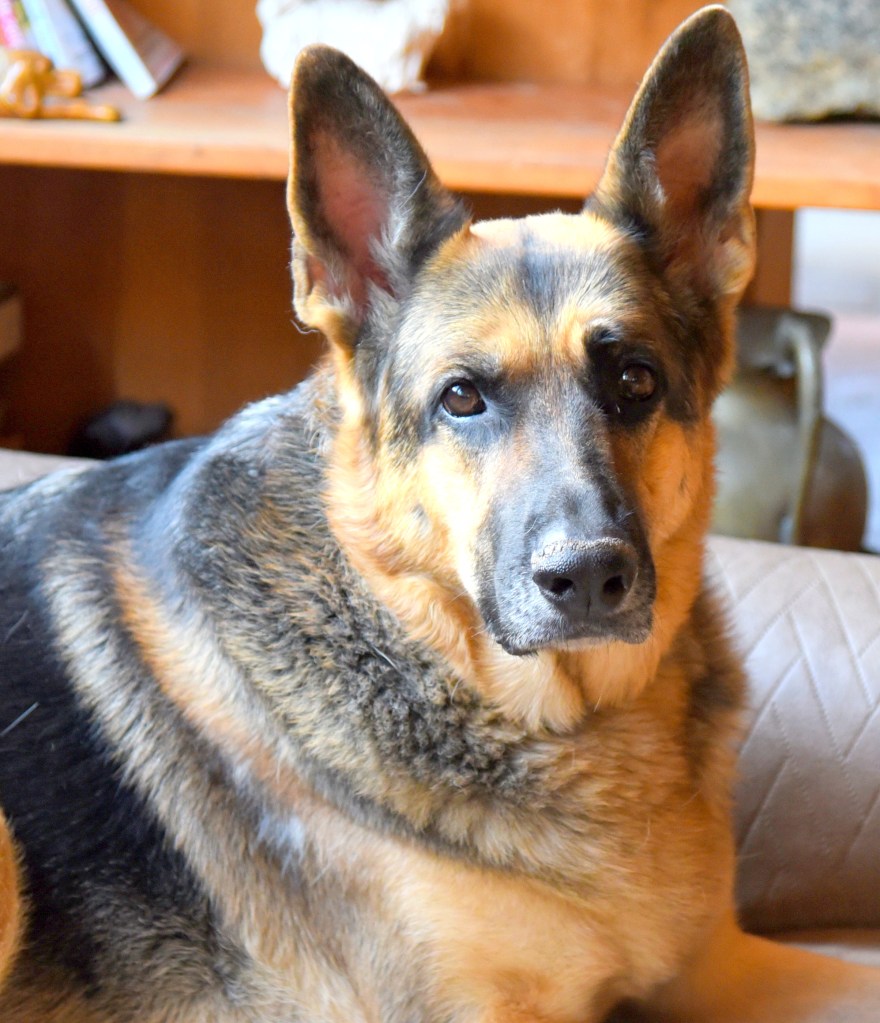
Cleo, our female German Shepherd, has a bit of a sensitive stomach and it is not unknown for her to need to be let outside in the middle of the night. Just a couple of nights ago her need for a ‘poo’ break came at 02:40!

But the point of this is that no matter how deeply I am sleeping, all it takes is a short, quiet whimper next to my side of bed and I am instantly awake. I need no time at all to know that Cleo has to be let outside from our bedroom door that opens out onto the deck. A few minutes later I hear her feet padding along the wooden boards of the deck and she is let back in to the bedroom.

Thus this demonstrates how well I understand her and in turn how well she acutely listens to me.

Just look at this photograph.

The connection, the intensity, of her attention towards me. And this was just from me pointing the camera at her and ‘click, clicking’ my tongue.

Moving on!

My introduction today was inspired by an article that I recently read on the Care2 site and that I want to share with you. Here it is.

ooOOoo

Can Humans Understand When Animals Are in Distress?

By: Laura Burge   August 13, 2017

About Laura   Follow Laura at @literarylaura

Have you ever jumped at the sound of birds fighting or a squirrel screaming? Heard an animal make a sound somewhere nearby that made your heart race?

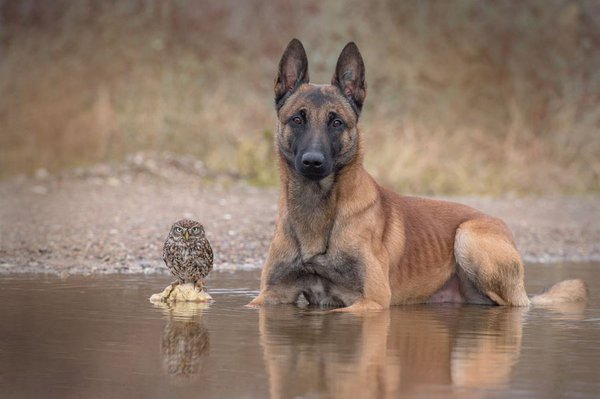
More than one hundred years ago, Darwin suggested that there was a universal understanding of certain animal vocalizations — a way of expressing emotion that went all the way back to the Earth’s earliest animals. Now, researchers are re-examining that theory, and they’re making some interesting headway.

In a study published in the journal “Proceedings of the Royal Society B: Biological Sciences,” researchers decided to explore the idea that animal vocalizations, including distress calls, might be recognizable across different species — and even into different animal classes.

Earlier research delved into whether or not humans could detect which emotion, or signal, another mammal was using, but this study is the first to examine other vertebrates as well. Amphibians and reptiles joined the club, and, perhaps surprisingly, humans did pretty well determining what these animals were trying to communicate.

The researchers primarily looked into whether or not people listening to certain animal sounds would be able to detect the level of arousal — high or low — that an animal expressed vocally. High arousal indicates an animal in distress, expressing desperate or negative screams, who might be calling out because of a fight, a predator in the area or another perceived danger. Scientists believe that these sounds are part of an old signaling system.

Researchers asked 75 college-aged individuals to listen to sounds from nine different species. In order to account for language differences, these people included English, German and Mandarin speakers.

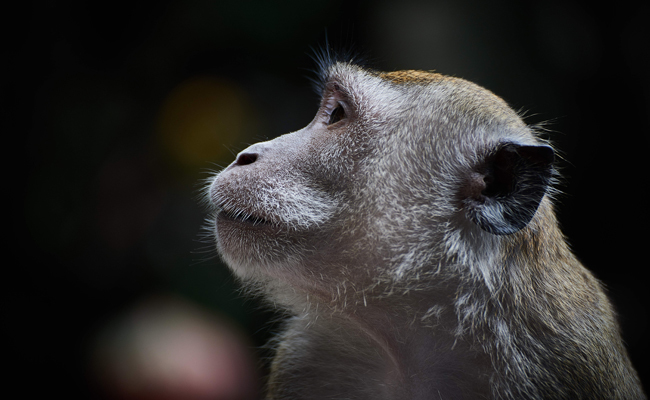
Scientists collected 180 recordings of animal vocalizations, reflecting high or low levels of excitement, such as “the sounds of frogs in competition for mates, monkeys reacting to danger or ravens confronted by a dominant bird,” and included humans in that list, instructing actors to react neutrally or with different, heightened emotions while speaking Tamil.

The 75 people were then asked to identify which vocalization out of paired sounds from the same species represented the higher level of arousal.

In this study, the results showed that people identified the correct “emotion,” roughly speaking, better than expected by chance. Here is how the accuracy broke down across species:

  • Humans: 95 percent correct
  • Giant panda: 94 percent correct
  • Hourglass tree frog: 90 percent correct
  • African bush elephant: 88 percent correct
  • American alligator: 87 percent correct
  • Black-capped chickadee: 85 percent correct
  • Pig: 68 percent correct
  • Common raven: 62 percent correct
  • Barbary macaque (monkey): 60 percent correct

It seems strange that people were less able to identify the distress call of a monkey than a frog, but Harold Gouzoules, a bioacoustician and animal behavior expert at Emory University, posits that the monkey calls may have sounded less extreme in intensity than those of the other species, making it harder to tell the difference.

“Our study shows that humans are naturally able to recognize emotional arousal across all classes of vocalizing animals,” said Piera Filippi, who studies the evolution of cognition and communication at the Vrije University Brussels in Belgium.

This doesn’t mean that humans should feel confident in interpreting animal emotions or body language in general, though. Those behaviors can vary greatly, and humans are prone to misinterpretation and anthropomorphism. You wouldn’t, for example, want to assume a wolf baring its teeth is simply smiling at you.

Naturally, much remains to be studied in the effort to understand a wider range of animal emotions. Filippi hopes to repeat the experiment, but with the black-capped chickadees taking the place of the college-aged humans in interpreting the distress calls. It will be interesting to see if this understanding between humans and other animals goes both ways.

Could there be a beneficial reason for animals to understand each other’s distress calls? What do you think?

Photo Credit: Valentino Funghi/Unsplash

ooOOoo

Just so long as too many different animals don’t all sound out distress calls at the same time around here!


Our incredible world!

What to see in the night sky in August

You all understand that this blog, while predominantly about our special doggie friends, never hesitates to wander away from matters canine if I think it will be enjoyed by all you good people.

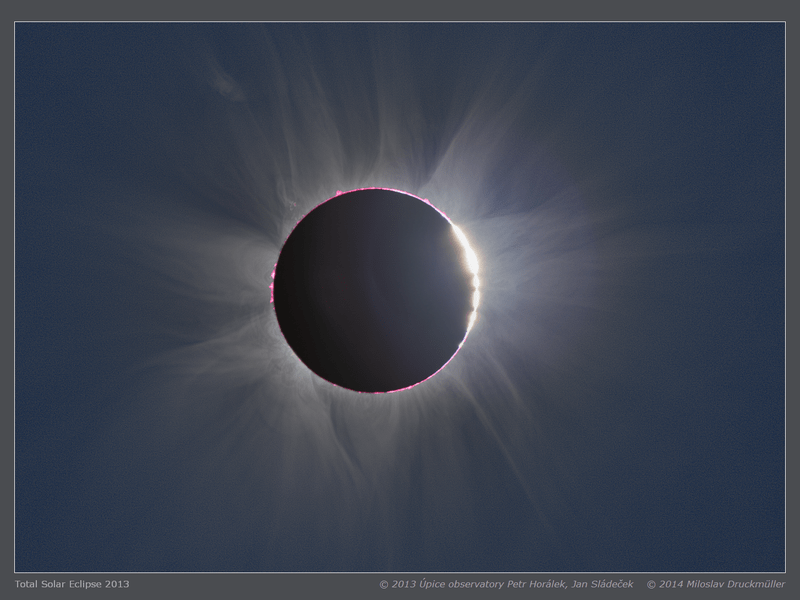
You will also all appreciate that August is the month where in the USA, on August 21st, there will be a total eclipse of the sun.

The reasons why I didn’t hesitate to republish a recent post that was presented on Mother Nature Network.

ooOOoo

What to see in the night sky in August

While the total solar eclipse is the highlight, there are other celestial fireworks to look forward to this month.

Michael d’Estries   August 1, 2017.

Michael d’Estries ( @michaeldestries ) covers science, technology, art, and the beautiful, unusual corners of our incredible world.

Celestial events for August 2017 include a total solar eclipse, Perseid meteor shower and the rise of the Sturgeon Moon. (Photo: Michael Seeley/Flickr)

Welcome to August, a month defined by loud cicadas, pool parties, humidity and children fretting about an impending return to school. When it comes to celestial happenings, however, there is no larger star this month that our own moon. From a partial lunar eclipse to the first coast-to-coast solar eclipse in almost a century, the moon will be the cause of most eyeballs drifting towards the heavens over the next several weeks.

Below is a small sampling of some of the night and day celestial events to look forward to this month. Wishing you all clear skies!

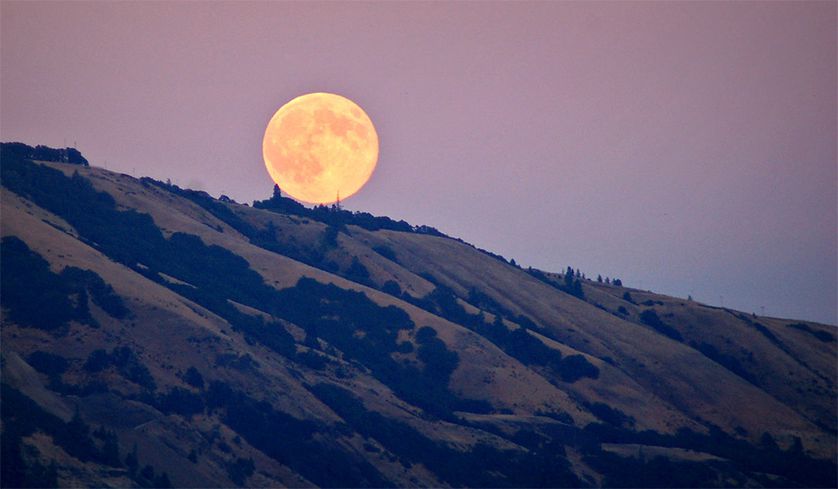
The rise of the full Sturgeon Moon (Aug. 7)

The full Sturgeon Moon is so-named for the fish that are easily caught in August and early September. (Photo: Paul Kline/flickr)

August’s full moon, nicknamed the Sturgeon Moon, will rise for the U.S. Eastern Seaboard on the evening of Aug. 7 at 8:05 p.m.

The Sturgeon Moon gets its name from the species of fish native to both Europe and the Americas that is easily caught this time of year. Other nicknames include the Corn Moon, Fruit Moon and Grain Moon. In countries experiencing winter, such as New Zealand, native Māori called this full moon “Here-turi-kōkā” or “the scorching effect of fire is seen on the knees of man.” This reference is to warm fires that glow during the Southern Hemisphere’s coldest month.

Partial lunar eclipse (Aug. 7 & 8)

Observers in Africa, Asia and Australia will see August’s partial lunar eclipse in its entirety. (Photo: Forrest Tanaka/flickr)

As a kind of consolation prize for missing out on this month’s total solar eclipse over North America, those living on the continents of Africa, Asia and Australia will bear witness to a partial lunar eclipse. Spectators in Europe will catch the tail end of the eclipse as the moon rises around 7:10 p.m. on Aug. 7.

This phenomenon occurs between two to four times a year when the moon passes through a portion of the Earth’s shadow. Because the shadow cast is more than 5,700 miles wide, lunar eclipses last much longer than solar eclipses. In some instances, totality can occur for as long as 1 hour and 40 minutes. As a reference, maximum totality for the Aug. 21 solar eclipse will top out a mere 2 minutes and 42 seconds. The longest, at over 7 minutes, won’t take place until the year 2186.

This month’s partial lunar eclipse is the last of the year. Next year, total lunar eclipses will take place in January and July.

Perseid meteor shower (Aug. 12)

A composite shot of last year’s Perseid meteor shower over Turkey. Notice how the path of the meteors appears to race from the constellation Perseus. (Photo: NASA)

Regarded as one of the best celestial light shows of the year, the Perseid meteor shower occurs from July 17 to Aug. 24 and peaks on the evening of Aug. 12.

The shower, sometimes creating as many as 60 to 200 shooting stars per hour, is produced as Earth passes through debris left over from the orbit of Comet Swift-Tuttle. This 16-mile-wide periodic comet, which completes an orbit around the sun every 133 years, has been described as “the single most dangerous object known to humanity.” This is because every instance of its return to the inner solar system brings it ever closer to the Earth-moon system. Though astronomers believe the comet bears no threat for at least the next 2,000 years, future impacts cannot be ruled out.

If the comet were to hit Earth, scientists believe Swift-Tuttle would be at least 27 times more powerful than the asteroid or comet that wiped out the dinosaurs. For now, you can take in the beauty of the debris from this harbinger of doom by looking north towards the constellation Perseus. Because the moon will be three-quarters full, you’ll need to search out a nice dark sky to escape any light pollution from urban environments.

Total solar eclipse (Aug. 21)

A total solar eclipse as captured over the Southern Hemisphere in November 2012. (Photo: NASA Goddard Space Flight Center)

By far the biggest celestial event in ages, Aug. 21 marks the first time since June 1918 that a total solar eclipse will race from coast to coast across the United States. Cities and towns along the 72-mile-wide path of totality are preparing for an influx of visitors, with millions of Americans expected to drive to view the rare phenomenon. Those outside totality will still experience a show, with partial solar eclipses happening over much of North America. Regardless, everyone will want to invest in a pair of special solar eclipse glasses to avoid ruining your eyesight.

Total solar eclipses occur when the new moon moves between the Earth and the sun and casts its shadow on the planet. This shadow is comprised of two concentric cones –– the larger penumbra, which from Earth only shows the sun partially blocked, and the much smaller umbra, which blocks the sun completely. It is within this latter cone that totality will occur, giving spectators on the ground what’s considered by many to be a “once-in-a-lifetime” experience.

The Great American Eclipse will actually first start out in the Pacific (at this point, it will actually, unbelievably rise while completely eclipsed!), making landfall on the Oregon community of Lincoln Beach at 10:16:01 a.m. (PDT). From there, the moon’s shadow will continue to race across the U.S. The point of greatest eclipse, where the axis of the moon’s shadow passes nearest to the center of Earth, will take place in Hopkinsville, Kentucky and last 2 minutes and 40.1 seconds. In celebration of the event, the town has temporarily renamed itself “Eclipseville,” and expects anywhere from 55,000 to 150,000 tourists to visit in advance of Aug. 21.

The next total solar eclipse over the U.S. will take place on April 8, 2024.

New moon (Aug. 21)

August’s new moon will not only create a show during the day, but also leave the heavens to glow unimpeded by night. (Photo: Coconino National Forest/flickr)

Fresh after wowing the U.S. during the day with its solar theatrics, August’s new moon will give way to dark skies for the next several nights. This is the perfect opportunity to grab a blanket and head outside into the still-warm summer evenings to enjoy the heavens in all their glory. With some remnants of the Perseids still visible, it will also offer a chance to catch some of the faintest shooting stars.

Look for Earth’s shadow (All year)

The Earth’s shadow and ‘Belt of Venus’ as captured above Mauna Kea, Hawaii. (Photo: Jay El Eskay/flickr)

Ever wonder what causes the beautiful bands of color in the eastern sky at sunset or the western sky at sunrise? The dark blue band stretching 180 degrees along the horizon is actually the Earth’s shadow emanating some 870,000 miles into space. The golden-red portion, nicknamed the “Belt of Venus,” is Earth’s upper-atmosphere illuminated by the setting or rising sun.

Now that you know about this phenomenon, choose a night or morning sometime to try and pick it out. You’ll need a western or eastern horizon that’s fairly unobstructed to get a clear view of our planet’s huge curved shadow.

Looking ahead to September

On Sept. 15, the Cassini spacecraft will end its 20-year mission to Saturn with a dramatic death dive into the ringed planet. (Photo: NASA)

As fall beckons, the biggest event next month will be the dramatic death dive of the Cassini spacecraft into Saturn. Taking place on Sept. 15, Cassini will make discoveries about Saturn right up until its fiery conclusion, with unprecedented photos and data captured and transmitted during its final moments.

ooOOoo

It is going to be quite a month!

Oh, and for those of you that want to know the timings of the eclipse over North America there is a useful reference site here, from which I republish the following table.

Eclipse Start & End: Local Time for US States

The eclipse will begin over the Pacific Ocean at 15:46 UTC, which corresponds to 8:46 am Pacific Time. It will reach the coast of Oregon at Lincoln City, just west of Salem, at 9:04 am local time. The eclipse will reach its maximum point here at 10:17 am.

From here, the Moon’s central shadow will move inland. The following table shows when the Moon will begin to move in front of the Sun and the moment it completely covers the Sun, as seen from some locations along the central path of the eclipse. All times are local.

Location Partial Eclipse Begins Sun Completely Obscured
Salem, OR 09:05 am PDT 10:18 am PDT
Idaho Falls, ID 10:15 am MDT 11:33 am MDT
Casper, WY 10:22 am MDT 11:43 am MDT
Lincoln, NE 11:37 am CDT 1:03 pm CDT
Sabetha, KS 11:38 am CDT 1:05 pm CDT
Jefferson City, MO 11:46 am CDT 1:14 pm CDT
Carbondale, IL 11:52 am CDT 1:21 pm CDT
Hopkinsville, KY 11:56 am CDT 1:25 pm CDT
Nashville, TN 11:58 am CDT 1:28 pm CDT
Talulah Falls, GA 1:07 pm EDT 2:37 pm EDT
Columbia, SC 1:13 pm EDT 2:43 pm EDT
Charleston, SC 1:16 pm EDT 2:47 pm EDT

Please note that this list includes only a small selection of locations where the total eclipse will be visible. You can look up more locations in our Eclipse Database or via the Eclipse Map.

Enjoy your nights out there! And let your dogs howl their hearts out!

Picture Parade Two Hundred and Six

Forgive the indulgence today.

In last week’s Picture Parade it was mentioned that at some point I would share some of the sights of home.

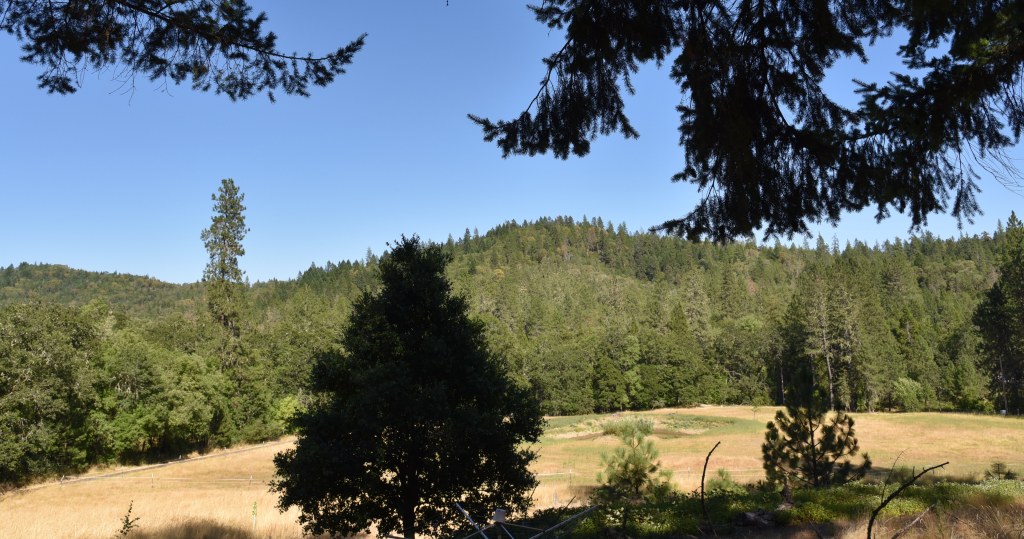
Well today, all the photographs were taken here at home (that being Merlin, Southern Oregon). The motivation behind these photographs was learning the operation of a new camera that I recently treated myself with. That is turning out to be quite a task; the user manual is 510 pages long!

But in no particular order, here are a few pictures.

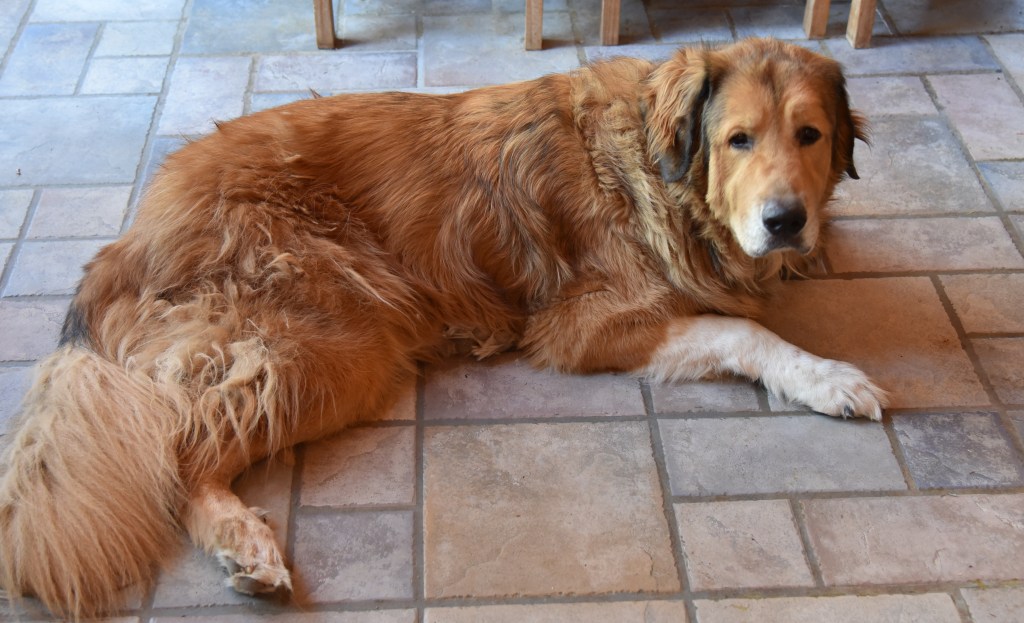
Brandy staying cool on the kitchen floor!

oooo

Looking out to the East from the deck adjoining the house.

oooo

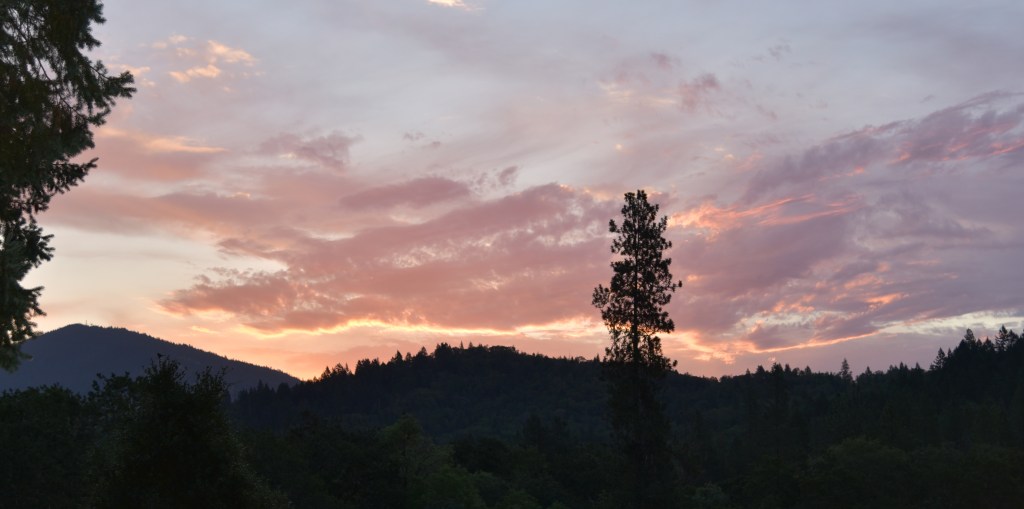
Photo taken at 06:10 on the morning of the 25th July. That is Mount Sexton on the horizon and the view is towards the North-East, again taken from our deck. (I was playing with the exposure control on the camera.)

oooo

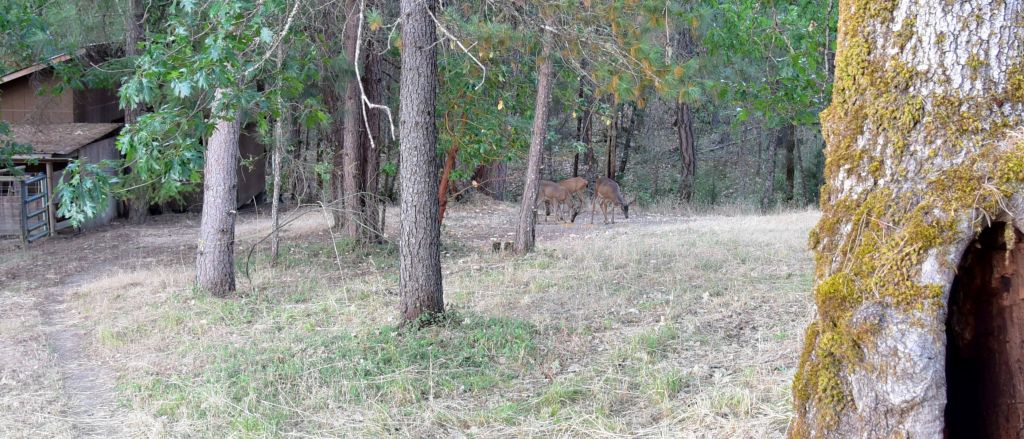
Looking from the end of the deck towards the South down to where our stables are. Photo taken at 06:20 on the 28th shortly after I had put out feed for the deer that come most mornings.

oooo

Taken at 06:10 on the 25th. This shows ‘Doris’ (the second) who has been sleeping under the trees overnight.

oooo

Zoomed in a little closer to Doris and she looked up at me exactly when I took the photograph!

oooo

Morning sky. Unusual to have cloudy skies at this time of the year. 06:20 on the 26th July.

oooo

Our beautiful, gorgeous stag. He has been a regular visitor for the last two years. Taken at 06:10 on the 25th.

oooo

Morning sky, with exposure adjustment, taken at 06:00 on the 25th July.

Can’t close without publicly thanking the wonderful photographic forum Ugly Hedgehog. With over 75,000 users it really is a superb place for all those interested in photography. The forum was invaluable in helping me decide what camera to purchase and, just as importantly, where to purchase it from.

Have a great week, everyone!

We are of the stars!

I so relate to this item from EarthSky News!

Long-term readers of this place will possibly recall that between April, 1989 and June, 1994 I lived on a Tradewind 33 sailing yacht Songbird of Kent. I have written before about those days.

Songbird of Kent. My home for five years.

When sailing at night when the sky is clear it is impossible not to feel deeply connected to the stars above one’s head.

My logbook for Songbird of Kent reports that at noon on Wednesday, 1st June, 1994, I departed the yacht harbour at Horta in The Azores bound for Plymouth, South-West England. Plymouth was 1,257 nautical miles (2,329km/1,447 statute miles) from Horta.

Horta on Faial Island of the Azores

The logbook has an entry for the 6th June.

0400 Lat. 43 deg 25 minutes North, Long 22 deg 3 minutes West. Engine Off. Still no wind but must sleep after 19 hours of helming. 840 miles to run. Wind 2 knots from SW. Baro 1027 mb, Viz Good.

The visibility was wonderful and seeing the stars up in the night sky all around me, as in all 360 degrees about me, practically down to the horizon on this moonless night is an image still etched in my mind.

That’s why I want to republish this article that appeared on the blog EarthSky News yesterday.

ooOOoo

We are galaxy stuff

A new study – based on supercomputer simulations – reveals that each one of us may be made in part from matter that passes from one galaxy to another.

This image shows M81 (bottom right) and M82 (upper left), a pair of nearby galaxies where intergalactic transfer – transfer of materials between galaxies – might be happening. Image via Fred Herrmann.

Sagan famously said that we are made of star stuff. He meant the carbon, nitrogen and oxygen atoms in our bodies, as well as atoms of all other heavy elements, were created inside stars. Yet Sagan’s expression of this idea, which quickly became a cornerstone of popular culture, might not take the concept far enough. According to astrophysicists at Northwestern University, our origins are much less local than previously thought. In fact, according to their analysis – which they say is the first of its kind – we’re not just star stuff. We’re galaxy stuff.

This study is being published on July 26, 2017 (July 27 in the U.K.) by the peer-reviewed journal Monthly Notices of the Royal Astronomical Society.

The Northwestern researchers found that up to half of the matter in our Milky Way galaxy may come from distant galaxies. As a result, each one of us may be made in part from extragalactic matter. That is, atoms of carbon, nitrogen, oxygen and so on in our bodies may be created not just by stars in our own Milky Way galaxy, but by stars in far-flung galaxies.

They arrived at this conclusion using supercomputer simulations. The study required the equivalent of several million hours of continuous computing.

The simulations show that supernova explosions eject great quantities of gas from galaxies, which causes the atoms made inside stars to be transported from one galaxy to another via powerful galactic winds. According to their statement, intergalactic transfer is a newly identified phenomenon, which, they say, requires supercomputer simulations in order to be understood. According to these astrophysicists, this understanding is critical for knowing how galaxies evolve … and hence for knowing our own place in the universe.

Animation of gas flows around a Milky Way-like galaxy, as seen by the team’s computer simulations.

Daniel Anglés-Alcázar is a postdoctoral fellow in Northwestern’s Center for Interdisciplinary Exploration and Research in Astrophysics (CIERA). He led the study, and he said:

It is likely that much of the Milky Way’s matter was in other galaxies before it was kicked out by a powerful wind, traveled across intergalactic space and eventually found its new home in the Milky Way.

Given how much of the matter out of which we formed may have come from other galaxies, we could consider ourselves space travelers or extragalactic immigrants.

Space is vast. Galaxies are located at almost inconceivable distances from each other. So, Alcázar and his team said, even though galactic winds propagate at several hundred kilometers per CIERA second, the process of intergalactic transfer occurs over billions of years.

As always, this new research built on earlier studies. Northwestern’s Claude-André Faucher-Giguère and his research group, along with a unique collaboration called Feedback In Realistic Environments (FIRE), had developed numerical simulations that produced realistic 3-D models of galaxies. These simulations followed a galaxy’s formation from just after the Big Bang to the present day.

Anglés-Alcázar then developed state-of-the-art algorithms to mine this wealth of data. In this way, he and his team were able to quantify how galaxies acquire matter from the universe.

The scientists say the prediction of intergalactic transfer can now be tested. The Northwestern team plans to collaborate with observational astronomers who are working with the Hubble Space Telescope and ground-based observatories to test the simulation predictions.

Simulated examples of intergalactic winds, shown as green string, in action around galaxies, shown as clusters of yellow dots. The galaxy at the center is ejecting the winds, blowing them toward potential the other galaxies.

Bottom line: Supercomputer simulations suggest that each one of us may be made in part from extragalactic matter. Hence, we are galaxy stuff.

ooOOoo

16th June, 1994

1945 Lat. 50 deg 21 minutes North, Long. 4 deg 10 minutes West. ARRIVED MAYFLOWER MARINA. Wind Nil. Baro 1023 Mb. Viz Good.

LOG CLOSED!

Mayflower Marina is at Plymouth.

Protecting our dogs from being stolen!

Can you imagine anything more awful!

I’m not sure if we are out and about with our dogs more frequently in the Summer but one would assume so.

But whatever the season, the number of people that do take their dogs with them when they are out is very significant.

So a recent article published by Care 2 about how thieves do steal dogs seemed timely.

ooOOoo

5 Ways Thieves Could Steal Your Dog

Editor’s note: This Care2 favorite was originally posted on January 1, 2013. Enjoy!

Sergeant Kenneth Chambers was playing Frisbee with his dog in the parking lot of a Jacksonville, Florida, grocery store recently when lightning struck out of the clear blue sky. The young American veteran, in recovery for post traumatic stress disorder, rolled down the car windows and placed his Australian Shepard/Blue Heeler Mix inside the vehicle just briefly, while he went inside to help his mother with the bags. When he came out moments later, Adalida was gone.

Unfortunately for Sergeant Chambers, and for Adalida, the parking lot scenario placed them in two of the top five high-risk situations for pet theft. And while Sergeant Chamebers’ search continues for Adalida, there are measures that all of us can take to prevent a similar tragedy.

Here are five of the top high-risk pet theft scenarios to avoid: 

1. Dogs in cars

In the blink of an eye, a partially opened window can be forced down or smashed. It takes 20 seconds or less to abduct a dog, and by the time a pet owner returns to the car, their dog is long gone. The American Kennel Club reports a 70 percent rise in dog theft in 2012 and a 40 percent rise the year before. A weak economy has fueled financially motivated dog-napping — and a dog in a car is, quite simply, a sitting duck.

2. Highly prized breeds or dogs with special abilities

A purebred dog or a dog with special skills is a bit like a gold watch. Thieves see dollar signs, and that’s more than enough temptation. Any dog left unattended can be taken, but there is far greater motivation for criminals to walk off with a dog who can bring in a large sum of cash.

3. Pets left in fenced backyards

Everyone loves the convenience of a doggy door — especially criminals. Homeowners who let their pet explore the fenced yard without supervision maintain the illusion of safety, but police departments across the country will tell you that this isn’t enough.

In broad daylight on a single Saturday in November, Corning Animal Shelter Manager Debbie Eaglebarger documented the theft of four Dobermans, four Australian shepherds and two Rottweilers. One neighbor witnessed a man and a woman lure one of the dogs out of a backyard and into their vehicle. All dogs taken that day were purebred, but that is not always the case.

4. Pets left tied in front of businesses

This one may sound like a no-brainer, but particularly in urban areas where pets accompany their owners on errands, it’s not uncommon to find dogs tied up in front of a bank or grocery store. Typically, these are dogs with a gentle demeanor — and that makes them highly susceptible to the commands of a would-be thief.

“Leaving your dog tied up in front of a store is about as ludicrous as leaving your child out front and saying, ‘Wait right there, I’ll be back in 10 minutes,” explains Howard Simpson of Integrated Security and Communications in Tyngsboro, Massachusetts. “Do yourself a favor and realize that there are security risks in even the safest of neighborhoods. Being naive makes you a target.”

5 Strangers in the neighborhood

Any strangers on your property can be a risk to your pets. Whether they are invited contractors, deliverymen or political campaigners, visitors could easily grab a pet during a moment when the homeowner is distracted. In some cases, they are making a mental note of homes with valuable breeds or easy-to-subvert home security that will facilitate a quick dog-napping at a later time. It bears mentioning that it’s not uncommon for cats to jump into the back of truck beds for a snooze and to be unwittingly carried off at the end of the day.

Which breeds are most likely to be stolen?

According to the American Kennel Club, the most stolen dog of 2011 was the Yorkshire terrier, followed by the Pomeranian, Maltese and Boston terrier. Small breeds are targeted by thieves because of their size but also because of their value on the market — a single dog can fetch well over $1,000! Among the large breeds, Labrador retrievers are a frequent target, as well as pit bull terriers and pit bull mixes – perhaps for a much more sinister purpose.

Why do thieves target pets?

1. Bait dogs and laboratory dogs

This is every dog guardian’s worst nightmare. Indeed people involved in dog fighting will gather “bait” dogs to be used as training tools for fighting dogs. It happens in both urban and rural areas, and there has been no measurable decline in dog fighting in recent years. Despite some legislation intended to stop the sale of undocumented dogs to research laboratories, under-the-table sales continue — and, in some countries, these exchanges are not considered a crime.

2. Financially motivated theft

“For the first time ever we’ve seen a trend now where shelters are being broken into and purebred and mixed breed dogs are being stolen,” said Lisa Peterson, spokesperson for the American Kennel Club. In fact, any purebred dog, particularly puppies, is considered a high-value commodity. Even with a microchip, it’s often too late when a pet buyer discovers that they have purchased a stolen dog.  By then, the thief is long gone.

3. Emotionally driven theft

What’s often overlooked are the emotionally motivated crimes that rob dogs of their families. This can happen because the perpetrator feels that a dog is not being properly cared for. Some animal lovers will feel justified in stealing a dog that is tied in front of a store or who gets  loose one day. Other times it’s an act of revenge, and, in many cases, a former romantic partner is considered the prime suspect.

Whatever the scenario or the motivation, dog guardians can best protect their dogs with watchfulness. Never leave a dog unattended. Secure your home, including all doors and windows, to the best of your ability and budget. And be wary of strangers in your neighborhood at all times.

Brought to you by the Harmony Fund, an international animal rescue charity.

Visiting the Vet – Updates

How this theme is taking shape!

But first, let me offer an update and a correction.

In my first report, published on June 28th, the very first patient for Dr. Jim was Ginger.Here’s an extract from that report:

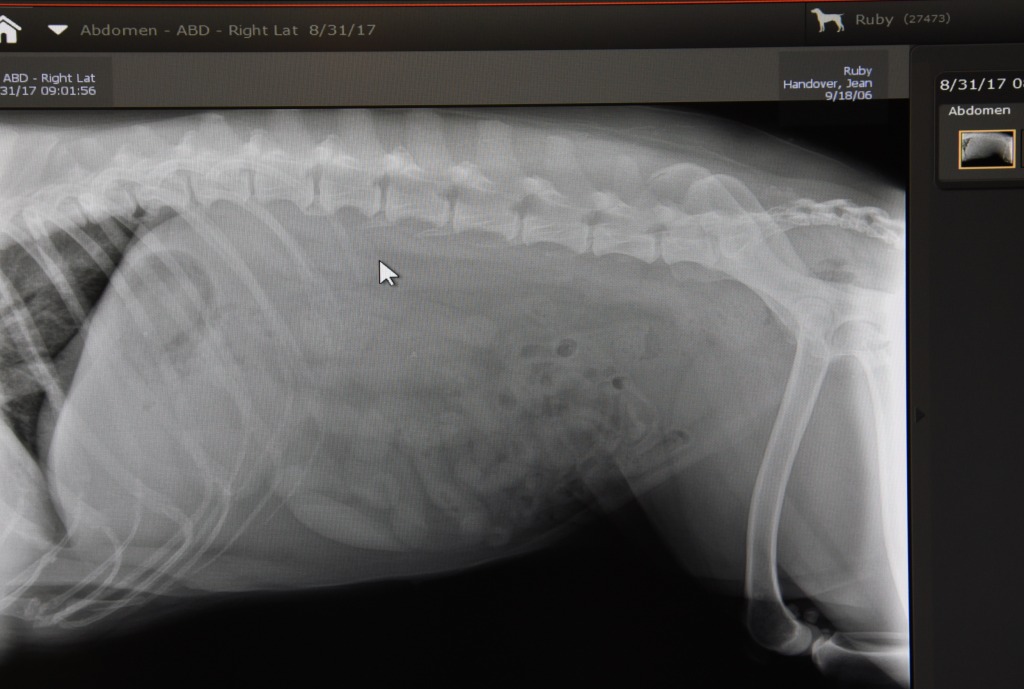
It was immediately clear to Jim when he listened to Ginger’s heart that it was racing; Jim thought at something like 200 beats per minute. Jim continued to check Ginger over although, as he told me later, he had an idea that Ginger’s medical problem was a cardiac issue. Jim arranged for Ginger to be given an X-ray as well as blood work.

A number of you wanted me to check on Ginger’s status. Jim said that in a follow-up call made by the clinic they were told that Ginger was doing well.

The second item is a correction. In the report that described Lynn bringing in a stray kitten that had terrible puss oozing from one eye, I wrote: “Moments later Jim has not only cleaned out all the puss but found and removed the cause of the infection that was behind the kitten’s eyeball.”

When I queried with Jim what was the cause of the infection, he said that there was nothing physical behind the eye but that the kitten had contracted a severe eye infection probably a viral infection. The kitten was also doing well.

So last Thursday, the 13th July, I returned to Lincoln Road, arriving at 09:45. My plan was to spend the morning with Jim and then the afternoon with Dr. Russel  Codd the owner of the clinic.

It was another wonderfully interesting day and I have sufficient material for the next two to three weeks.

This is Cooper, a male Jack Russell, being checked out by Dr. Russ.

Dr. Russ started the afternoon at 14:30 so there was a bit of a wait after Jim had finished his morning at 12:05. That prompted me to see if future sessions watching Dr. Russ at work could be morning ones.

In other words, I would go across to Lincoln Road on two mornings a month; one to spend with Dr. Jim and one with Dr. Russ. I have yet to speak to Russ about that but can’t envisage an issue.

What Russel Codd did say to me that afternoon was that he really supported this theme and that he might arrange for me to ‘shadow’ one or two specialists who work locally in Grants Pass.  Plus, I did venture the idea that maybe there was book potential and Russ was very happy with that possible development as well.

So Sue, there’s the answer to you writing last week: “Lots of information here perhaps for a second book?” Great suggestion! (Indeed, good people, I am giving the idea of turning this series into a book very careful thought and will ask for feedback from you in a subsequent post once I am clearer about the purpose and objectives of such a book.)

So the first of my reports from my visit on the 13th will be published either later this week or early next week.

Thank you, everyone, for your interest, suggestions and support. You really are a great group of readers!

Visiting the Vet – Transformations.

This is why some choose to become veterinary doctors.

Today I write about the last animal that Dr. Jim attended to from my morning at Lincoln Road on June 22nd. I have been blown away by the interest in this theme from so many of you. Thank you!

Indeed, today I am back at the clinic spending both the morning and some of the afternoon watching and recording.

My plan from now on, subject to Dr. Codd supporting the idea, is to spend time at the clinic roughly one day a month. For in just the five or six hours of a day’s visit there is such a variety of events that it will provide more than enough material for me to present Visiting the Vet posts regularly each week during the following month.

OK! Now to the last patient that morning.

12:20

A woman carries in a stray kitten that had been found on the premises of a local scrap metal dealer.

The woman, Lynn, didn’t hesitate to bring the kitten to Lincoln Road because it had an infected right eye.

Jim takes some blood, in itself a bit of a challenge with such a young kitten, and looks more closely at the male kitten. He observes that the eye is most terribly infected with puss pouring out and Jim is of no doubt that the kitten had this eye infection since birth just a few weeks ago.

I come closer to take a photograph (the one above) and am in awe of the delicate way that Jim uses a tiny swab, Lynn holding the kitten for Jim, to clear the puss away from the eye. Moments later Jim has not only cleaned out all the puss but found and removed the cause of the infection that was behind the kitten’s eyeball.
12:40 The kitten sees with both eyes. What a transformation in just twenty minutes.

Jim looks up at Lynn: “Lynn, you do know you have saved his life!”

Lynn replies: “I didn’t really want another cat!”

Jim then gets some food for the kitten and gives it time to settle down.

Lynn and I chat and I am flattered to learn that Lynn has previously purchased a copy of my book. It can be such a small world at times!

12:30 All done. Lynn wraps the kitten back into the same towel that was used to bring it in to the clinic such a short time ago.

Thus ended my first experience of being behind the scenes of a busy vet practice.

The experience has profoundly affected me.

For as well as the astounding level of medical skill that I have observed it was also clear, as Jim put it, that he has to play counselor, psychotherapist, and even bartender. Why bartender? Because Jim quietly offers the observation that quite a few persons come in with their pets when they are the worse for drink! The owner that is not the animal!

Seriously though, let me offer what I concluded after just this one visit to Lincoln Road. That Jim and, I’m sure, Dr. Russ and many thousands of DVMs across the world, have many more demands on them than just being a good doctor.

They must display attention to detail and have an inquiring mind. They must be genuinely empathetic for the animal owner’s circumstances. But also good record keepers! Also they will have to endure a great deal of kneeling. Then, again, those knees have to be topped with a head that is jam-packed full of knowledge and experience to avoid jumping to incorrect conclusions. More subjectively, their emotions have to be kept under control for they frequently will see animals that have not been best cared for and, again all too frequently, they will have to end the life of a dear pet as gently and painlessly as is possible.

To be continued!

Potty training.

Advice from DoctorPup.

I’m always a little cautious about submissions of guest articles from those who are ‘in the business’. But sometimes drawing the line between a genuinely informative article from a pet-related business and overt promotion is a fine one. I chose to publish an article from Alex back in November last year. It was about behavioral issues with dogs and was well received.

Earlier this month, in came another guest article from DoctorPup and, again, I think this is a good share with you. But please do let me know if you think it is too much of a product ‘sell’. I protect the integrity of this blog without question.

ooOOoo

Michael Schoeff reveals how to effectively potty train a puppy

Written by Florentina Popa on behalf of the company
Michael Schoeff, the inventor of the innovative potty training system called Pup Pee Poo Palace, considers that classic house training a puppy is a difficult process that takes time, patience, commitment and consistency.

Traditional potty training

If you want to follow the traditional path, it is important to inform yourself carefully and to establish clear guidelines to get on the right track your pup in just a few weeks. Puppies learn very fast from two to four months, picking up easily on the concept of housebreaking. Five to 30 minutes after eating, puppies want to defecate, so it is important to respect a clear schedule. The most important aspects you should take into consideration is to stay consistent, positive and patient and the results will appear gradually.
The first step is to establish a routine by creating a schedule for eating and playing. Feeding your puppy according to a clear schedule depending on his age, ensures eliminations at consistent times. This is crucial because generally, a puppy has control of his bladder one hour for every month of age so they are prone to accidents if they are not taken outdoor regularly. During his first months of life, a puppy should be taken outside at least every two hours as well as immediately after he wakes up, during and after playing and after eating.

Pick a specific spot outside and always take him there. Also, use a specific word or phrase before he goes outside to remind what he has to do. Take him to walks or playtime after he eliminated. Your attitude is important during potty training, so avoid being nervous or impatient as well as using a loud tone because you’ll make your pup anxious.

Reward him every time he eliminates outdoor, praising or giving treats immediately after he has finished and before coming back inside. This will help teaching him what you are expecting from him.
It is recommended to pick up his water dish about two hours before bedtimes to avoid relieving himself during the night.
An essential rule and hard to apply is to always supervise your puppy when he is indoor to avoid accidents or soiling. Keep your puppy in a specific area and watch him for signs he needs to go out. If you notice him barking, scratching the door, squatting, sniffing or circling, take him outdoor.
If there are times when you cannot supervise him, restrict him to an area small enough that he won’t want to eliminate there. Make sure that the space is comfortable to stand, lie down and turn around. A good idea is to use a crate or a leash, but don’t forget to take him outdoors whenever he needs to eliminate. You can gradually give him more freedom in the house as he learns to eliminate outdoor.
Keep in mind that accidents can happen anytime and make sure you act properly. If you see him eliminating indoor, interrupt him by saying “outside!” or making a noise without scaring him and take him to his eliminating spot outdoors. Always use positive reinforcement, keep calm and be assertive. Don’t punish him for eliminating in the house to avoid a negative connection with his bodily function, just clean up the room and make sure to remove the smell.

If your program doesn’t allow to stay at home with your puppy, you need to find someone to take your pup for bathroom breaks several times a day. You can teach him to eliminate in specific place indoors, but be careful regarding this process as he will get used to it and will practice it as well when becoming adult.
Pup Pee Poo Palace was released in 2013 as an ideal solution for busy dog owners that don’t have enough time to spend with their puppies. The system is based on puppies’ natural behavior to get up on things, so it contains the separate elevated sleep and play area and the elimination area. Bedding area is made of a frame covered in bedding material and it is raised above the floor of the cage using frame extensions. The system helps reinforcing good patterns for puppies and encouraging them to repeat the actions.Puppy owners can let the palace door open when being with their puppies so they can return to the cage whenever they need to eliminate.
Using Pup Pee Poo Palace avoids the risks of infections especially if your puppy hasn’t completed all his vaccinations. You can perform your daily activities while your pup is enjoying his comfortable private space without worrying that he needs to potty.
Furthermore, you can still train your puppy to go outdoors whenever you can, especially after eating, drinking, playing or sleeping, but if you are busy or you’re not at home, count on Pup Pee Poo Palace and stay assured. Your puppy potty training will be easier and faster.
Michael Schoeff and his partner, Gary Rybka, have created not only a very useful tool for dog owners, but a tool that suits any dog breed, starting with breeds that weigh under 5 lbs at maturity and finishing with those that weigh under 70 lbs at maturity.
Author Bio

Florentina Popa is the founder of the digital marketing agency. She is a young entrepreneur with a strong passion for innovation, digital marketing technologies and a real focus on marketing strategies and evaluation process for her clients. She currently advises several companies in the Southeastern Europe and USA. She is content writer and social media manager for several small and medium companies located in the Southeastern Europe. She loves to create articles about business, leadership, digital marketing, lifestyle, animals (especially dogs). She has a great collection of materials published on various online marketing, business and lifestyle websites. When she’s not online, Florentina loves exploring the mountains and local coffee shops with her dogs, traveling and discovering new cultures watching movies and reading. ‘If you believe, you can achieve’ – that’s her motto!

ooOOoo

Good people, I do hope you found this interesting and not crossing the line of offering free promotion to a business. Neither me nor Learning from Dogs in publishing this guest post can offer any explicit or implicit endorsement of the company or this product. Any reader interesting in learning more must conduct their own research.

Visiting the Vet – Buffy & Chloe

Still it comes, one pet after another!

It’s 11:05

This is Buffy, a nine-year-old Dachshund crossed with a Terrier, who is drinking and peeing too much according to the lady who brought Buffy in to the clinic this morning. Adding that Buffy seems to be always hungry and quieter than normal.

Jim runs a blood test and not long after says that nothing has jumped out at him as a potential issue from Part One of the test results. (Apparently, the blood test comprised two parts – I will learn more in a subsequent visit to Lincoln Road.)

Buffy’s heart sounds good. Buffy has not lost weight.

Then Part Two of the blood test results reveal, thankfully, that Buffy is not diabetic, is not indicating Cushing’s Syndrome, and that Buffy’s kidneys are fine.

In other words, Buffy has the look of a healthy dog.

Has this all been a waste of time and money? Not at all, says Dr. Jim. This is the first time the clinic has seen Buffy and all the test results can now be logged providing a baseline of data for future reference purposes.

11:50 In comes Chloe.

Chloe has been vomiting up her food and, consequently, has stopped eating. Jim is concerned that Chloe is overweight and that in the very hot weather of recent days (high 90s F./mid 30s C.) he has been seeing a number of dogs with excessive heat problems.

One thing that could be done to Chloe was to clip her excessively long toe nails.

Jim does that.

12:15 All done.

To be continued:

(Please note: These observations are mine alone and because of the busy environment it must be assumed that my interpretation of what was taking place might not be totally accurate. Nothing in this blog post should be used by a reader to make any medical judgment about an animal. If you have any concern about an animal do make an appointment to see a properly qualified veterinarian doctor.)

Visiting the Vet – Kenya’s itch.

Practical ways of treating Kenya’s itchy skin.

10:45 Next along was Kenya and his ‘Mum’.

The story was that after a raw patch had appeared on Kenya’s back it had then become very itchy for the brave dog.

Jim shaved the area clear of fur and cleaned the skin to aid a closer examination.

Jim then explained that the challenge in these sorts of cases is that it is very easy to throw a lot of money at the problem without any guarantee of success.  Not only were there cost considerations but also the question of whether to go down the route of injections or administer pills.

As an observer I was struck, but not surprised knowing Jim as a friend, to see how an open and honest assessment of the problem came way before any commercial implications.

Jim’s view was to leave it for the time being but he did recommend using a hypoallergenic shampoo. There were a number to choose from but Jim supported the shampoo manufactured by Bayer and sold under the brand name of Hylyt Shampoo.

There are a number of online sources for this shampoo. I chose, more or less at random, the one at Allvet Supply.

That website describes the shampoo, thus:

HyLyt Shampoo is a hypoallergenic dog shampoo and is perfect for routine use in bathing dogs and cats. The shampoo is safe for normal, dry or sensitive skin types and may be used in conjunction with topical therapeutics.

HyLyt shampoo contains a light fragrance that will leave your pets smelling clean and fresh. The gentle shampoo formula is ideal for bathing both dogs and cats. The soap-free formula is pH balanced and will not dry out delicate skin or fur.

In addition to the gentle formula, HyLyt shampoo also contains special emollients for moisturizing and proteins for conditioning. The hypoallergenic dog shampoo also contains fatty acids to reduce scaling and flaking of the skin. If your pet suffers from seasonal or acute dryness, HyLyt shampoo will help restore their skin and coat to optimal health and beauty.

Then it was time for a quick checkup underneath Kenya, so to speak, and that was it!

11:00 All done!

I am having trouble getting my head around the fact that I have only been watching proceedings for two-and-a-half hours! So much knowledge on show. So much experience. So much compassion for our beloved pets!

To be continued:

(Please note: These observations are mine alone and because of the busy environment it must be assumed that my interpretation of what was taking place might not be totally accurate. Nothing in this blog post should be used by a reader to make any medical judgment about an animal. If you have any concern about an animal do make an appointment to see a properly qualified veterinarian doctor.)