Category: Spirituality

We go back a very long time

The ancient history of man and dog!

And when I say ‘man’ I am of course referring to the species.

For a couple of weeks ago Meilan Solly of The Smithsonian wrote about the relationship 4,500 years ago of man and dog.

In Neolithic times there was an important relationship, as there is today. Maybe our dogs have become more of the ‘pet’ rather than the working dog that they are assumed to be then.

But here’s the article.

ooOOoo

Thanks to Facial Reconstruction, You Can Now Look Into the Eyes of a Neolithic Dog

The collie-sized canine was buried in a cavernous tomb on Scotland’s Orkney Islands around 2,500 B.C.

Experts believe the Neolithic dog is the first canine to undergo forensic facial reconstruction (Santiago Arribas/Historic Environment Scotland)
By Meilan Solly
SMITHSONIAN.COM, 

Some 4,500 years ago, a collie-sized dog with pointed ears and a long snout comparable to that of the European grey wolf roamed Scotland’s Orkney Islands. A valued member of the local Neolithic community, the canine was eventually buried alongside 23 other dogs and at least eight humans in a cavernous tomb known as the Cuween Hill Chambered Cairn.

Now, 118 years after archaeologists first chanced upon its resting place, the prized pup’s image is being reimagined. As Esther Addley reports for the Guardian, experts believe the dog is the first canine to undergo forensic facial reconstruction. Its likeness, commissioned by Historic Environment Scotland (HES) and the National Museum of Scotland, is set to go on view in Orkney later this year.

“Just as they’re treasured pets today, dogs clearly had an important place in Neolithic Orkney, as they were kept and trained as pets and guards and perhaps used by farmers to help tend sheep,” Steve Farrar, interpretation manager at HES, explains in a statement. “But the remains discovered at Cuween Hill suggest that dogs had a particularly special significance for the farmers who lived around and used the tomb about 4,500 years ago.”

It’s possible, Farrar adds, that the Neolithic group viewed dogs as their “symbol or totem,” perhaps even dubbing themselves the “dog people.”

Cuween Hill dates to around 3,000 B.C., Sky News reports, but radiocarbon dating places the dog’s actual interment some 500 years later. It remains unclear why the animal was buried so many centuries after the tomb’s creation, but archaeologists posit the timing may point toward the ceremony’s ritual value within the community. As HES observes, the fact that the Orkney residents placed canine remains alongside those of humans could also speak to their belief in an afterlife for both parties.

According to the Scotsman, forensic artist Amy Thornton drew on a CT scan to create a 3-D print of the animal’s skull. After layering clay approximations of muscle, skin and hair onto this base, she cast the model in silicone and added a fur coat designed to mimic that of the European grey wolf. Interestingly, Thornton notes, the process played out much as it would for a human facial reconstruction, although “there is much less existing data” detailing average tissue depth in canine versus human skulls.

The model is the latest in a series of technologically focused initiatives centered on Orkney’s Neolithic residents. Last year, HES published 3-D digital renderings of the chambered cairn on Sketchfab, enabling users to explore the tomb’s four side cells, tall central chamber and entrance passage. First discovered in 1888 but only fully excavated in 1901, the impressive stone structure held 24 canine skulls and the remains of at least eight humans.

In an interview with the Guardian’s Addley, Farrar explains that the reconstruction aims “to bring us closer to who [the dog’s owners] were and perhaps give a little hint of what they believed.”

“When you look at a Neolithic dog, it somehow communicates human relationships,” Farrar concludes. “… I can empathise with the people whose ingenuity made Orkney such an enormously important place. When this dog was around, north-west Europe looked to Orkney.”

ooOOoo

“When you look at a Neolithic dog, it somehow communicates human relationships,” Farrar concludes.

That’s a powerful statement.

Now if one goes across to the website for Cuween Hill Chambered Cairn one reads this:

History

An ancient site for burials

Built between 3000 and 2400 BC, this is an excellent example of a Neolithic chambered tomb. It has four cells opening off a central chamber, which is accessed down a passage. Entrance into the tomb today is through the original passage.

Secondary burials at the Cuween Hill could reflect a continued reverence for the site. A recently discovered settlement nearby is probably contemporary with the cairn, and would likely have been connected.

Tomb of the dogs

Exploration at the tomb in 1901 found:

  • Remains of at least eight humans – five skulls on the floor of the chamber, one at the entrance and two in side cells
  • The skulls of 24 dogs on the chamber floor

The dog remains suggest the local tribe or family perhaps had a dog as their symbol or totem, or there may have been a belief in an afterlife for animals.

The tomb is completely unlit, which serves to both add to the atmosphere and discourage vandalism and graffiti. It also means the tomb is largely free of green algal growth.

The stonework at Cuween Hill is of particularly high quality. The roof of one of the cells is likely to be original, elsewhere the walls and corbelled roofs have survived to a considerable height.

As I said, we go back a very long time!

The spirit in my dog!

Another guest post from Holli Burch.

The first guest post from Holli Why dogs are so good for us was during a period where I had quite a few guest authors and I ended up losing track. Thus I didn’t attribute the guest post to Holli. Something that I can correct in today’s post.

ooOOoo

What is a spirit animal? How to tell if yours is a dog!

By Holli, February 2nd, 2019.

Many cultures believe there are spirit animals that guide and protect us during this physical journey we are on as humans. It is also said that we embody their characteristics and vice versa. The Shamen call it a power animal.

When a dog chooses to act as your spirit guide you will always have trust, courage, loyalty, protection, familiarity, a best friend and unconditional love. Just don’t abuse them or treat them badly…they may bite.

Here are the signs pointing to the dog as your spirit animal.  Does it sound like you?

  • You feel like your dog saved you. Your dog came at a time where you were calling out for aid.
  • You give unconditional love
  • You may be a protector that will go above and beyond to take care of the people you care about
  • You like to help those in need and seem to sense what they need
  • You are easy to devote and also forgive
  • You are happy hanging back and letting others you care about take the spotlight
  • You are perceptive and can sense negative energy people
  • You have an infectious energy that people like to be around, and you bring it out in others
  • You may feel like you get burnt out because you put forth a lot of energy; therefore needing to be lazy for a while

Did a dog come into  your life at just the right time?   Do you always have dogs around?

Human spiritual connection with dogs is nothing new and not many people can argue with that because you can feel and see it! Through the years the dog has evolved to be so much closer with the human. They are therapy dogs, dogs in schools, service dogs, dogs are becoming more popular to have at work, there are police dogs, the list goes on.

They sleep in our beds, follow us around the house and come for car rides with us. The closer they get to us, the more human like they become.

ooOOoo

In reply to my question about sending me a short bio, this is what Holli sent:

My name is Holli Burch, and I live in Wisconsin.  I have had dogs all my life and love everything about them.
Currently I have 4 labs, a yellow, black, chocolate and most recently a silver!
I started a dog blog because of my passion for dogs and wanting to be my own boss!  Along with my dogs I have 4 children, horses, goats and 2 cats!
My typical dream day would include taking my kids to school, blogging and walking my dogs bare feet on the beach!
Perfect!

Say Hello to the New Year!

This was too good to ignore.

ooOOoo

Police diver adopts dog rescued from icy lake

A puppy was saved from a frozen lake by a police diver in Turkey. The rescuer feared the worst but said it was miracle that she survived.

(Now try as I may I can’t embed the video but, please, follow the link to the page.)

https://www.bbc.com/news/av/world-europe-46709311/police-diver-adopts-dog-rescued-from-icy-lake

ooOOoo

It’s inspiring and beautiful what a human will do for a dog!

Last but not least Happy New Year to you.

That Winter Solstice

Good people, this is mid-Winter.

(Northern Hemisphere only.)

OK, not in the sense of weather because the worse is yet to come I’m sure. But in terms of the movement of the Planet Earth in its orbit around the Sun. And that’s what matters!

This is a really ancient moment as the following article published in The Conversation explains in much more detail.

ooOOoo

What winter solstice rituals tell us about indigenous people

By    Associate Professor of Environmental Studies, The University of Montana

December 13th, 2018.

On the day of winter solstice, many Native American communities will hold religious ceremonies or community events.

The winter solstice is the day of the year when the Northern Hemisphere has the fewest hours of sunlight and the Southern Hemisphere has the most. For indigenous peoples, it has been a time to honor their ancient sun deity. They passed their knowledge down to successive generations through complex stories and ritual practices.

As a scholar of the environmental and Native American religion, I believe, there is much to learn from ancient religious practices.

Ancient architecture

For decades, scholars have studied the astronomical observations that ancient indigenous people made and sought to understand their meaning.

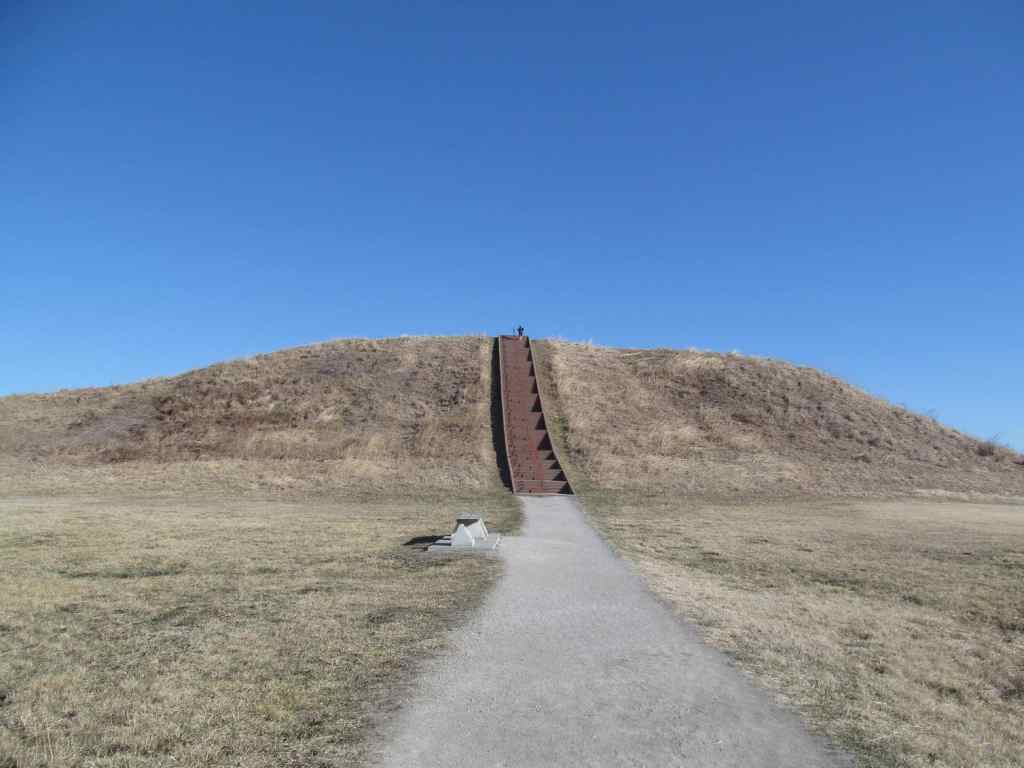
One such place was at Cahokia, near the Mississippi River in what is now Illinois across from St. Louis.

The Cahokia mounds. Doug Kerr, CC BY-SA

In Cahokia, indigenous people built numerous temple pyramids or mounds, similar to the structures built by the Aztecs in Mexico, over a thousand years ago. Among their constructions, what most stands out is an intriguing structure made up of wooden posts arranged in a circle, known today as “Woodhenge.”

To understand the purpose of Woodhenge, scientists watched the sun rise from this structure on winter solstice. What they found was telling: The sun aligned with both Woodhenge and the top of a temple mound – a temple built on top of a pyramid with a flat top – in the distance. They also found that the sun aligns with a different temple mound on summer solstice.

Archaeological evidence suggests that the people of Cahokia venerated the sun as a deity. Scholars believe that ancient indigenous societies observed the solar system carefully and wove that knowledge into their architecture.

Scientists have speculated that the Cahokia held rituals to honor the sun as a giver of life and for the new agricultural year.

Complex understandings

Zuni Pueblo is a contemporary example of indigenous people with an agricultural society in western New Mexico. They grow corn, beans, squash, sunflowers and more. Each year they hold annual harvest festivals and numerous religious ceremonies, including at the winter solstice.

At the time of the winter solstice they hold a multiday celebration, known as the Shalako festival. The days for the celebration are selected by the religious leaders. The Zuni are intensely private, and most events are not for public viewing.

But what is shared with the public is near the end of the ceremony, when six Zuni men dress up and embody the spirit of giant bird deities. These men carry the Zuni prayers for rain “to all the corners of the earth.” The Zuni deities are believed to provide “blessings” and “balance” for the coming seasons and agricultural year.

As religion scholar Tisa Wenger writes, “The Zuni believe their ceremonies are necessary not just for the well-being of the tribe but for “the entire world.”

Winter games

Not all indigenous peoples ritualized the winter solstice with a ceremony. But that doesn’t mean they didn’t find other ways to celebrate.

The Blackfeet tribe in Montana, where I am a member, historically kept a calendar of astronomical events. They marked the time of the winter solstice and the “return” of the sun or “Naatosi” on its annual journey. They also faced their tipis – or portable conical tents – east toward the rising sun.

They rarely held large religious gatherings in the winter. Instead the Blackfeet viewed the time of the winter solstice as a time for games and community dances. As a child, my grandmother enjoyed attending community dances at the time of the winter solstice. She remembered that each community held their own gatherings, with unique drumming, singing and dance styles.

Later, in my own research, I learned that the Blackfeet moved their dances and ceremonies during the early reservation years from times on their religious calendar to times acceptable to the U.S. government. The dances held at the time of the solstice were moved to Christmas Day or to New Year’s Eve.

The solstice. Divad, from Wikimedia Commons

Today, my family still spends the darkest days of winter playing card games and attending the local community dances, much like my grandmother did.

Although some winter solstice traditions have changed over time, they are still a reminder of indigenous peoples understanding of the intricate workings of the solar system. Or as the Zuni Pueblo’s rituals for all peoples of the earth demonstrate – of an ancient understanding of the interconnectedness of the world.

ooOOoo

Let me pick up on the last sentence: “Or as the Zuni Pueblo’s rituals for all peoples of the earth demonstrate – of an ancient understanding of the interconnectedness of the world.”

We are all of us interconnected across the world. We have been for a very long time.

The importance of understanding this, truly understanding this, is critical to our future.

Why don’t we do this?

The day of the dogs.

I saw this on the BBC News site back in November and had been meaning to share it with you before now. But it’s still highly relevant.

Do no more than go straight into the article.

ooOOoo

Nepal festival celebrates ‘day of the dogs’

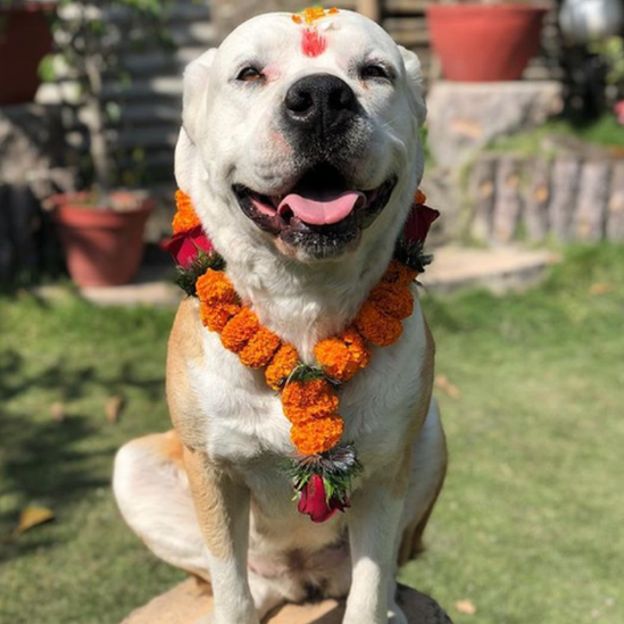
The Nepalese festival Kukur Tihar celebrates dogs by blessing them with a red mark on their forehead

Every dog has its day, and for canines in Nepal that phrase could not be more literal.

The five-day Nepalese Hindu festival of Tihar started this week and the second day is known as Kukur Tihar or “day of the dogs”.

Dogs are celebrated and blessed with a Tika – a red mark applied to their forehead.

The animals are also given flowers, garlands and offered food as part of the festival.

Scooby the Japanese Spitz enjoyed being decorated with garlands of fresh marigold flowers

Hindus believe that dog is the messenger of Yamaraj – the God of death – and by keeping the dogs in good humour they will be able to appease Yamaraj himself.

Sumnima Maudas said Kukur Tihar is one of her “favourite Nepalese festivals” and added the day was all about her chihuahua Sanu

The festival, which shares some traditions with Diwali in India, also celebrates cows and crows.

Dog owner Umid Pokharel celebrated with his labrador Frieza but said “worshipping them for a day is not enough”

It is not just beloved pets who are involved in the celebrations. Stray dogs are honoured on the day too.

Kelsang Ongmu Tamang’s cat Missy joined in with the tradition as well as dogs Sweetie and Milly

Treats given to dogs during Kukur Tihar can range from meat, milk, eggs and good quality dog food.

Pappu the pug has been enjoying the food element of the festival

Tihar is also called Deepavali or the festival of lights.

Throughout this festival, people in Nepal clean their houses and courtyards; light up lamps and pray to Laxmi – the Goddess of Wealth – urging her to visit their houses and bless them.

Daisy Pie certainly looked pleased to be the centre of attention

ooOOoo

Just beautiful!

Picture Parade Two Hundred and Sixty-Seven

These are just mouth-wateringly beautiful.

Margaret K. from down in Australia sent me the link to these photographs.

I should add the words that precede the photos.

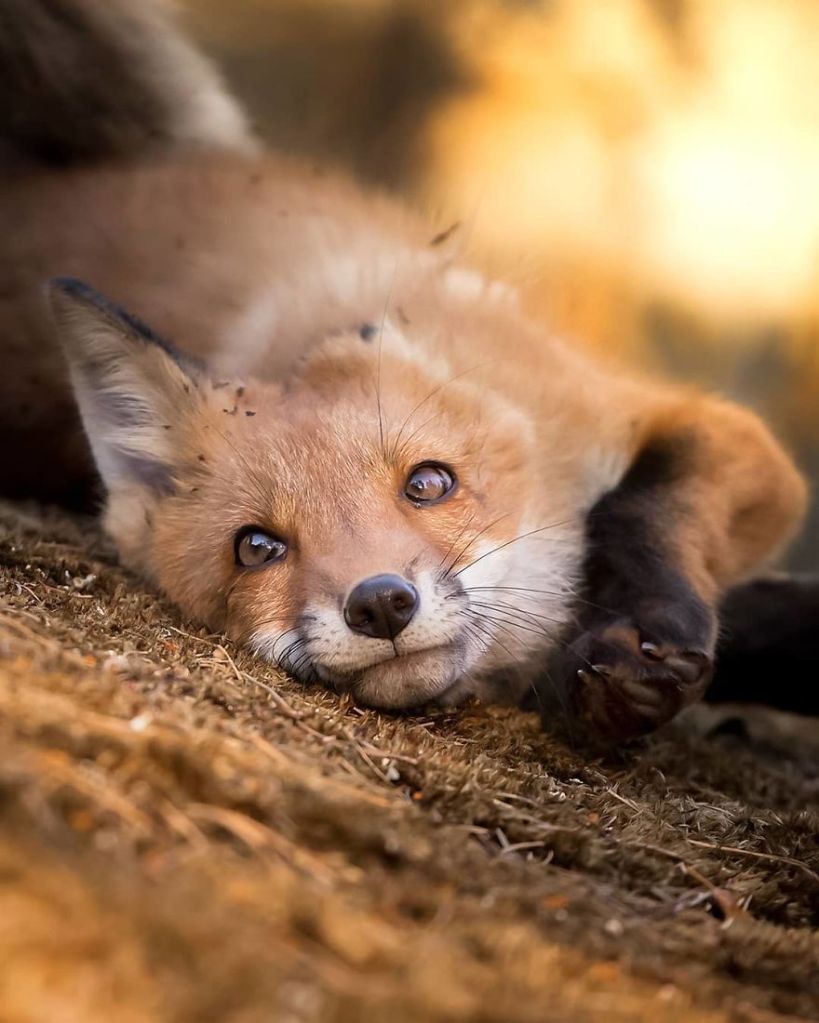
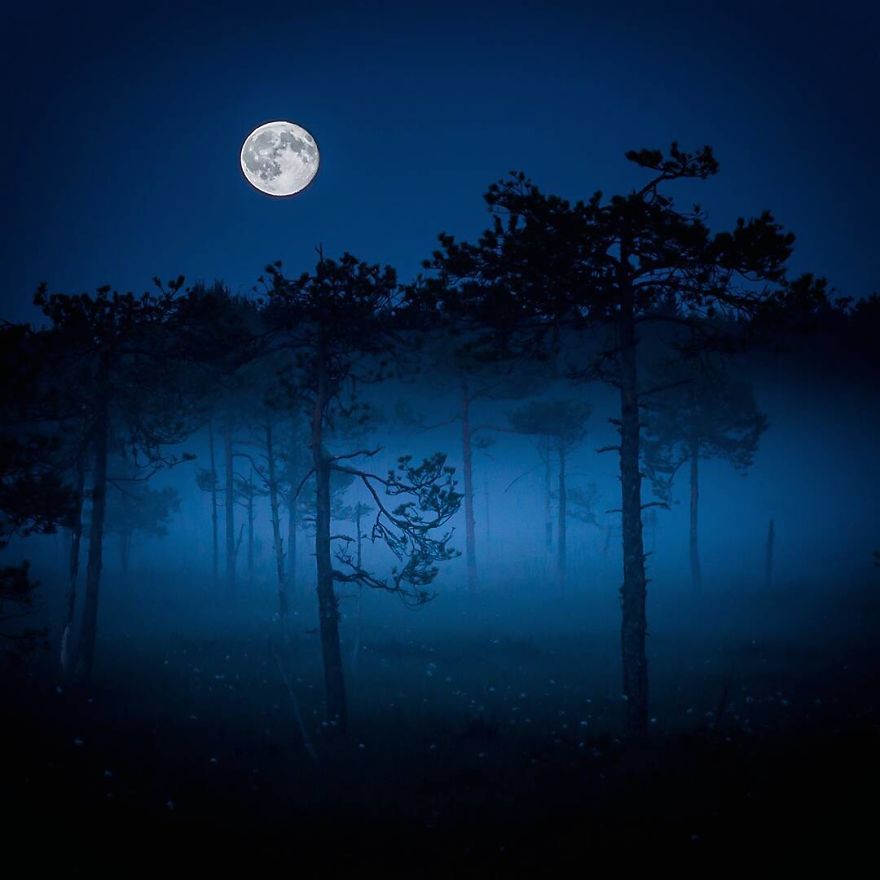
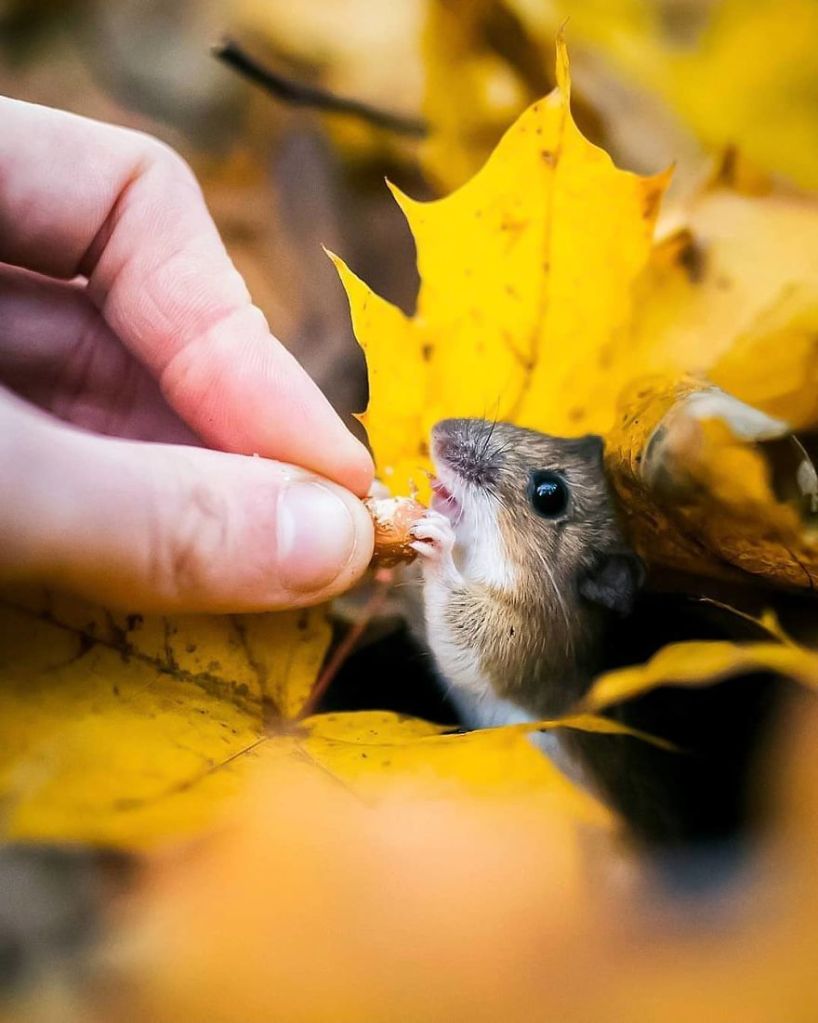
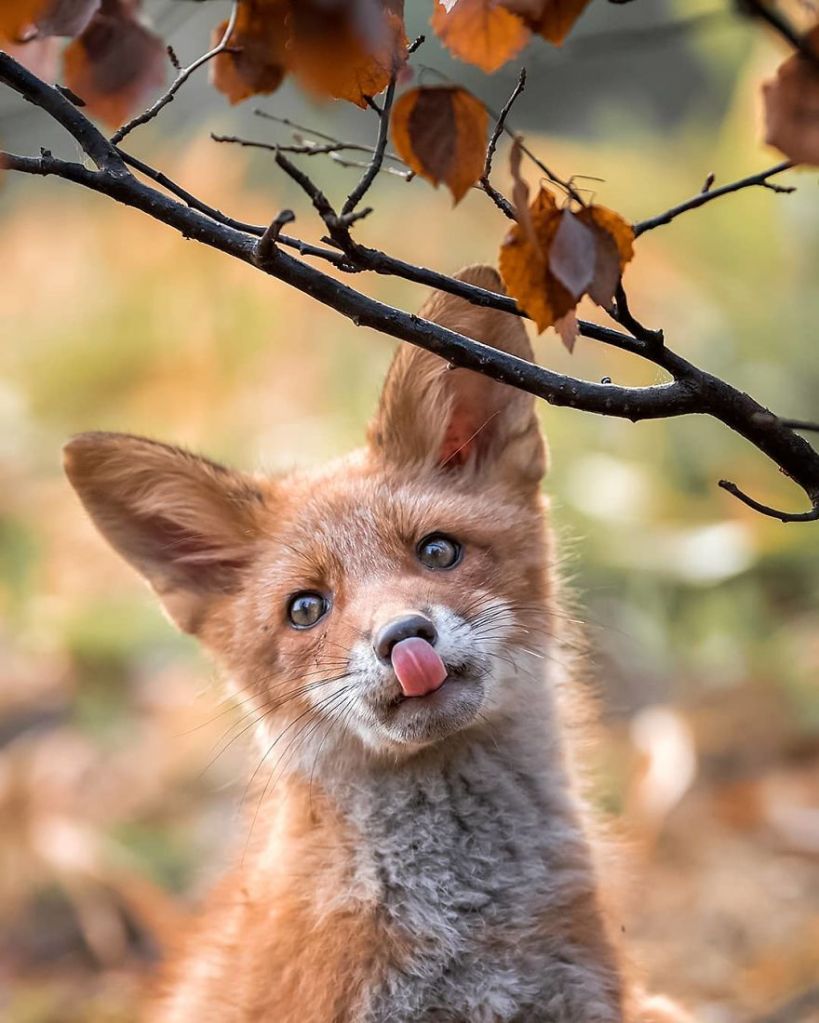
Many people think of Finland as the land of cold weather and darkness. However, Ossi Saarinen (previously here and here), a Finnish photographer, believes that the country is much more than just that, and he shows another surprisingly enchanting side of his motherland.

Ossi brings delightful feelings through his photos of spectacular Finnish nature, especially the untouched forests covering almost three-quarters of the whole country. And within these peaceful and ancient forests, wild animals roam freely and enjoy their lives at their best.

Finnish animals appear to be very mysterious, fascinating and charming just like they’ve stepped out from fairy tales. Ossi does not skip the chances to capture the beauty of Finnish wildlife either. He believes that every encounter between the animals and humans becomes an unforgettably amazing experience (Well, let’s not talk about the encounter with a bear).

Now, let’s enjoy the fairy tale’s atmosphere in his photos

oooo

oooo

oooo

oooo

oooo

oooo

oooo

oooo

Oh my! Beautiful beyond words!

Staying with the theme of loyal dogs

Or rather letting Deinah Storm offer a guest post.

This is a guest post. It stays with the theme of loyalty. The loyalty of dogs towards their dead masters.

ooOOoo

8 Dogs Who Remained Loyal to Their Now-Gone Masters

By Deinah Storm, December 5th, 2108

A dog has always been a man’s best friend. Having a pet dog is always great. You have a partner to go with anywhere you want. Also, you won’t feel alone when you have a pet dog. Dogs are creatures that are filled with joy; no wonder fur parents from around the world try to give their best to show how they care for their pooch—be it to provide them the best dog food, regularly visit the vet, or keep dog house warm.

The love and affection that dogs give their owners are comparable to a mother’s love. It is unconditional and lasts a lifetime, and even beyond. Here is a list of eight dogs who remained loyal to their now-gone masters.

Hachiko
You may have heard of this name before already. Hachiko’s story has been all over the world. They even made movies about this loyal dog. He was originally owned by a Japanese professor at Tokyo University named Eizoburo Ueno. His students were the ones who nudged him to adopt this beautiful Akita dog. Every day that the professor goes to work, he goes to the train station to take the train. Hachiko always waited for him to return so they could go home together. After having been partners for only less than a year, Eizoburo Ueno died tragically while he was at work. So that day, Hachiko was waiting in vain for his master to return. But, he never did. Still, Hachiko waited every single day of his life for his now-gone to return to the train station. People were feeding Hachiko and giving him treats until he got old and died. A lot of people mourned over his death, and a statue was built for him.

Capitan
Capitan was a dog owned by an Argentinian man named Michael Guzman. He was bought by Michael for his son Damian as a gift. They always had a special bond and loved each other. When Mr. Guzman passed away after just a year, Capitan could not be found by the Guzman family. Eventually, they were able to locate him. He was beside his master’s grave. Capitan stayed there for six long years until he passed away.

Hawkeye
Hawkeye  was a labrador who was owned by a Navy SEAL who died in a helicopter crash in Afghanistan. A photo went viral during his funeral service. It was a picture of Hawkeye lying sadly in front of his master’s casket. He stayed there for the whole service. It is disheartening for dogs to lose their owners. Thankfully, the best friend of the deceased took Hawkeye and cared for him.

Ruswarp
Ruswarp was owned by Graham Nuttall. One day, they went on a walk along the mountains in Wales. But, they did not return. So, Graham’s friends alerted the police. A search was done. But after several weeks, they could not be found. Eventually, after eleven weeks of being missing, another person found Graham beside a stream together with Ruswarp. Ruswarp never left his master’s side even after several weeks. Ruswarp was so weak and ill when they were found. A statue of Ruswarp was unveiled at a train station which he and his owner helped save.

Fido
Fido was owned by a factory worker in Italy. His name literally translates to “faithful.” He always went with his master to the bus station and waited for him to come back every single day. One tragic day, his owner was killed in the factory due to a bombing attack. Fido waited all day for his owner to return. He eventually returned home, but every single day he waited by the train station for fourteen years until he died.

Shep
Shep was owned by a shepherd. One day, his shepherd was ill and was rushed to the hospital. Shep waited outside the hospital until his owner died. He followed his owner’s casket as it was loaded onto a train to be sent home. Shep waited by the train station for five years. Every single day, he checked each person who went off the train. He stayed there until Shep tragically died in the train station when he became deaf and went to the tracks where a train hit him.

Greyfriars Bobby
Bobby was owned by a police officer. When the officer died, Bobby never left his grave for fourteen years. When Bobby died, he was buried near his master. He had a gravestone which read “Greyfriars Bobby — died 14th January 1872 — aged 16 years — Let his loyalty and devotion be a lesson to us all.” He had a statue made for him across the place where they are buried.

Waghya
Waghya was owned by the King of the Maratha Empire. Traditionally, when a king dies, his remains are cremated. So, when the king died, Waghya never left his side until he was about to be incinerated. When the funeral pyre was lit, Waghya leaped into his death.

Dogs are forever loyal and loving

Dogs bring love and happiness to the world. They are there forever for humans. They will love you for all of eternity. So, love your dogs and care for them. They will never let you down.

(Source of Featured Image: Pexels.com)

ooOOoo

It would be wrong of me to close without thanking Deinah. It’s a great guest post.

Finally, Deinah’s bio:

Author’s Bio:
Deinah Storm is a pet lover from the US that’s had cats and dogs all her life. When she’s not walking the dogs with her family, she spends time writing informational and interesting blogs about pets to share with pet lover communities.

 

Lidl Recalls Orlando Brand Dog Food

Yet another dog food recall.

ooOOoo

Lidl Recalls Orlando Brand Dog Food

November 9, 2018

Lidl USA is voluntarily recalling specific lots of Orlando brand Grain Free Chicken & Chickpea Superfood Recipe Dog Food because the products may contain elevated levels of Vitamin D.

What’s Recalled?

The recalled Orlando brand products include the following lot numbers manufactured between March 3, 2018 and May 15, 2018:

  • TI1 3 Mar 2019
  • TB2 21 Mar 2019
  • TB3 21 Mar 2019
  • TA2 19 Apr 2019
  • TB1 15 May 2019
  • TB2 15 May 2019

Elevated Vitamin D Levels

Dogs consuming elevated levels of Vitamin D could exhibit symptoms such as vomiting, loss of appetite, increased thirst, increased urination, excessive drooling, and weight loss.

Customers with dogs who have consumed this product and are exhibiting these symptoms should contact their veterinarian as soon as possible.

No other products sold by Lidl are impacted by the recall.

This is a voluntary recall and is being conducted in cooperation with the U.S. Food and Drug Administration.

What to Do?

Customers who have purchased this product with the affected lot codes should stop feeding it to their dogs and discard the product immediately or return it to their nearest Lidl store for a full refund.

Customers who have questions about this recall should call the Lidl US Customer Care Hotline at 844-747-5435, 8 AM to 9 PM Eastern time, 7 days a week.

U.S. citizens can report complaints about FDA-regulated pet food products by calling the consumer complaint coordinator in your area.

Or go to http://www.fda.gov/petfoodcomplaints.

Canadians can report any health or safety incidents related to the use of this product by filling out the Consumer Product Incident Report Form.

Get Dog Food Recall Alerts by Email

Get free dog food recall alerts sent to you by email. Subscribe to The Dog Food Advisor’s emergency recall notification system.

ooOOoo

Please share this amongst all your friends.

A Letter to Mr. Cosmos, Page Two

The concluding part of my letter to Mr. Cosmos.

Your Universe, Mr. Cosmos, is an enormous place.

Just the view at night from one small planet, the one that I happen to live on, Planet Earth, reveals millions upon millions of stars. It is then beyond inconceivable that there are not, in turn, countless numbers of other planets.

Extending this line of thought and recognising that a ‘mere’ billion years after the formation of our solar system and Planet Earth, some 4.54 billion years ago, the earliest life appeared, we can’t surely be alone!

Granted it was only cyanobacteria, as in blue-green algae, but, but, but ……… that this evolution of life on Planet Earth, and that evolution eventually leading to intelligent life, including the gift to us humans of the genetic separation of the dog from the wolf some 100,000 years ago, has not occurred on other planets is also totally inconceivable.

So, dear Mr. Cosmos, why have we not detected any signs of that intelligent life. Where are they?

Mr. Cosmos, back in June this year there was an article on the Big Think site that asked just this question.

Are we alone in the universe? New Drake equation suggests yes

A fresh take on the decades-old Drake equation incorporates new factors and greater uncertainty, suggesting a high likelihood that humanity is alone in the universe.

By , 25th June, 2018

At the Los Alamos National Laboratory in 1950, physicist Enrico Fermi famously posed to his colleagues a simple question borne of complex math: ‘Where are they?’

He was asking about aliens—intelligent ones, specifically. The Italian-American scientist was puzzled as to why mankind hasn’t detected any signs of intelligent life beyond our planet. He reasoned that even if life is extremely rare, you’d still expect there to be many alien civilizations given the sheer size of the universe. After all, some estimates indicate that there is one septillion, or 1,000,000,000,000,000,000,000,000, stars in the universe, some of which are surrounded by planets that could probably support life.

So, where are they, and why aren’t they talking to us?

Now, as the article reveals, there is a lot to tackling this question, much of it involving statistics and mathematics, but it does prove one very important fact: Finding another planet as good for life and humanity as this one is just about impossible.

This is our only home!!

My wish, dear Mr. Cosmos, to you is this: That before I die it becomes clear beyond question that the peoples of this sweet Planet, from the lone individual living on some island out in the wilderness to the Governments of the most powerful nations on Earth, understand that nothing is more important than loving, caring for and looking after Planet Earth.

I remain, dear Mr. Cosmos, your respectful servant.

Paul H.

A step in my own self-awareness.

But the most important step I have ever taken.

In yesterday’s post I wrote:

It was the fickle finger of fate that led me to the arms, metaphorically speaking, of a core process psychotherapist back in Devon in the first half of 2007. That counselling relationship that revealed a deeply hidden aspect of my consciousness: a fear of rejection that I had had since December, 1956. That finger of fate that took me to Mexico for Christmas 2007 and me meeting Jean and all her dogs. That finger of fate that pointed me to the happiest years of my life and a love between Jeannie and me that I could previously never ever have imagined.

Here’s the full account. (But this is quite a long post and has the potential to cause some pain. Of course, I don’t intend that. But it’s best to mention that now.)

First we need to go back to that evening of December 19th, 1956. I had turned 12 on November, 8th and had just completed my first term at a nearby Grammar School. Then the family, as in Mum, Dad, me and my younger sister Elizabeth, were living comfortably in a detached house in Toley Avenue, a road off the main street that comprises Preston Road.
Preston Road is one of the outer suburbs of London to the North-West, sandwiched between Wembley, closer in to London, and Harrow, a little further out.

Anyway, on that evening of the 19th my mother came into my bedroom, located at the front of the house and next to Mum and Dad’s bedroom, at the usual time to say ‘Good night’ to me.

But while it was the usual time for Mum to be saying goodnight to me, clearly something was different this particular evening.

Mum sat down on the edge of my bed, just where my knees were, looked at me, and said, with pain in her voice: “Paul, you do know your father isn’t very well. He may not live for much longer.”

To be honest, all these many years later, I have no recollection as to whether or not I was aware that my father wasn’t very well.

Mum then leaned over to me, gave me my goodnight kiss, got up, and went out of my bedroom switching off the room light as she closed the door. As she always did and no different to any other evening.

Likewise, as with any other evening, I went off to sleep within a few minutes.

However, when I awoke the following morning, the morning of December 20th,  it was clear that something terrible had happened during the night. Let me explain that my father had had two daughters with his first wife, prior to meeting Mum, and I loved them both and saw them as elder sisters. The eldest was Rhona and she was a registered nurse (SRN). (My other ‘sister’ was Corinne.) Of course, Rhona was helping Mum care for Dad.

I got up and went downstairs. There was Rhona in the kitchen. Rhona came up to me and held me very tightly and then quietly told me that our father had died during the night. Rhona went on to add that Mum had thought it best not to wake me and Elizabeth and somehow arranged not only for the doctor to come in to certify Dad’s death but also for our father’s body to be removed from the home. Elizabeth and I had slept through it all!

I don’t recall having any emotional reaction to Rhona’s news; not even crying. It was if it was all just too unreal to take in.

A few days later, Mum, very clearly in her own mind doing her best to protect me and Elizabeth from pain, subsequently thought it wise that we didn’t go to our father’s funeral and cremation.

Now I have not the slightest doubt that many, if not all, of you will have cringed on reading the above.

Once back at school for the first term of 1957, I soon became aware of being the target of a degree of bullying, presumably because I was showing my grief through my behaviour and attitude, that my academic performance rapidly fell apart leading on to me leaving school before I went on to the Sixth Form.

The other thing that I was aware of in 1957, and for every December 20th thereafter, that this day was always a tough one. A day when I remembered with a degree of sadness and emotional pain that fateful night and morning in 1956.

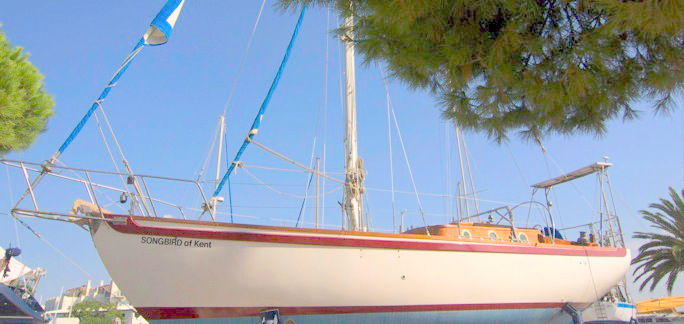
Nevertheless, my adult life really was (is!) a wonderful journey for me. It included a period working as a freelance journalist out in Australia in the late 1960s, becoming an Office Products salesman for IBM UK after returning from Australia to England and then in 1978 starting my own company, Dataview Ltd., in the early days of the personal computer revolution. Then after eight whirlwind years with Dataview growing in leaps and bounds each year, being approached in 1986 by a group of investors who wished to buy me out: I said “Yes”. That resulted in me going to live on a yacht, Songbird of Kent, a Tradewind 33, out in Cyprus (Larnaca Marina).

Tradewind 33 – Songbird of Kent. My home for five years.

While in Cyprus I got to know really well the wonderful, inspiring Les Powells, a three-times solo circumnavigator on his yacht Solitaire, and that thanks directly to Les offering me some very good advice, me experiencing the beauty, and the fear, of solo sailing out in The Atlantic and returning to Plymouth, in Devon, England, via Horta in The Azores, on the 16th June, 1994.

But! But! But!

But there was another part of my adult life that wasn’t such a wonderful journey. My relationships with the opposite sex! Culminating in my third wife, Julie, announcing on the day of the 50th anniversary of my father’s death, as in December 20th, 2006, that she was leaving me. (The reality of what she did to me was not pretty but I will spare you the details.)

Let me explain a little more.

After I had returned to England, sailing into Plymouth, in 1994, I subsequently sold Songbird of Kent and purchased a small house in the little village of Harberton, just a few miles out of Totnes, in South Devon. An easy decision to stay in South Devon because both Rhona and Corinne had their family homes close to Totnes.

Upper Barn, My home in Harberton.

I quickly became involved in the local business community undertaking a variety of coaching roles under the umbrella of Sales and Marketing; I was then a Chartered Member of the Institute of Marketing. In turn, Julie and I met each other and we became married.

In the Autumn of 2006, a Core Process Psychotherapist came to me seeking some business advice.  ‘J’ had had many years of coaching individuals one-to-one but had the idea, the good idea to my mind, of coaching the directors of companies in the whole process of listening to their employees and offering advice and guidance whenever there was the potential of conflict. If the employees worked more effectively together then ‘J’ believed the company as a whole would be more effective in reaching their goals.

‘J’ had no idea how companies worked, for want of a better term, and my role was teach ‘J’ the  fundamentals of operating the sort of company that was common to South Devon.

That’s what I was doing up to that fateful day of December 20th, 2006.

Because upon hearing the news that my then wife was leaving me, I simply blew apart emotionally. In the most terrible manner that I had never experienced before.

Very early on in January, 2007 I felt that I was descending into some bottomless pit of despair. In desperation I rang ‘J’ and explained what had happened on the 20th. ‘J’ listened and then said, quite properly, that he couldn’t see me as his client because we already had a working relationship. I pleaded and pleaded with ‘J’ to allow me to be his psychotherapy client. Finally, ‘J’ agreed but on the very strict condition that if he thought the counselling relationship wasn’t working then we would terminate it. He asked, and received, my understanding and agreement to that condition.

It wasn’t long thereafter before ‘J’ was asking me a little of my early experiences and I recounted that night of December 19th-20th and how I had not been able to say ‘Goodbye’ to my father.

‘J’ was quiet for a few minutes and then said:

“Paul, you have a son don’t you?”

I silently nodded.

“How do you think Alex would react if your death was handled for him in the same manner as your mother handled it for you?”

I gasped, conscious of how much I loved Alex, and Maija my daughter, and could hardly get the words out of my mouth: “He, he, … he would think he had been emotionally rejected ….”, continuing, “Oh my goodness! Oh! Oh! Oh! Oh, my sainted aunt! That’s it! I interpreted what happened back then when father died as rejection. That I wasn’t important to my father. So that’s what I have been experiencing all my adult life – a fear of rejection! But until now that fear has been completely submerged in my subconscious! Wow!”

That is the reason why, not to sound too immodest, I have been successful in all matters to do with my working life: I did everything to be accepted by my customers, my managers, my associates, and so on.

But it was also the reason why I had been so unsuccessful in my many, many relationships with women. Why I was unfaithful to my first wife. Why I could never say “No” to an emotional relationship with a woman, whether or not that woman had the potential to be a good long-term companion. Because I behaved in ways that minimised the chances of that woman rejecting me. That was why my last wife, Julie, before I met Jean, so gravely affected me when she chose, quite deliberately, to tell me she was leaving me on the 50th anniversary of my father’s death.

So that’s how ‘J’ held my hand, metaphorically speaking, and walked me into the light of how the past had affected me.

Dear, dear reader of Learning from Dogs, I do hope this makes sense and possibly in some small way this post holds out a hand to you.

I will close with this. Heard on a film that Jean and I recently watched.

Unless you understand yourself, can you be truthful to yourself?

The journey inwards is the most important and rewarding journey we can take!