Category: Spirituality

Being wrong can be right!

Another very interesting post courtesy of The Conversation.

First of all, let me quote the opening two paragraphs from the WikiPedia entry on ‘intellectual humility’:

Intellectual humility is the acceptance that one’s beliefs and opinions could be wrong. Other characteristics that may accompany intellectual humility include a low concern for status and an acceptance of one’s intellectual limitations.

Intellectual humility (IH) is often described as an intellectual virtue. It is considered along with other perceived virtues and vices such as open-mindednessintellectual couragearrogance, vanity, and servility. It can be understood as lying between the opposite extremes of intellectual arrogance/dogmatism and intellectual servility/diffidence/timidity.

Now to the article that was published by The Conversation.

ooOOoo

The curious joy of being wrong – intellectual humility means being open to new information and willing to change your mind
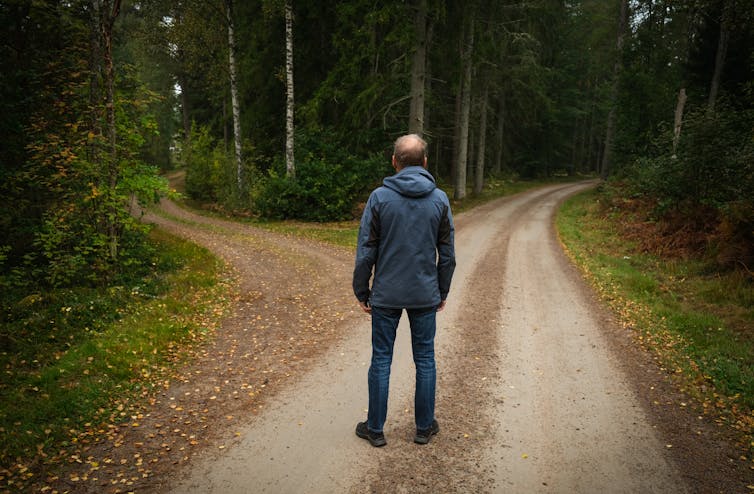
Sometimes the evidence points you in a new direction. Schon/Moment via Getty Images

Daryl Van Tongeren, Hope College

Mark Twain apocryphally said, “I’m in favor of progress; it’s change I don’t like.” This quote pithily underscores the human tendency to desire growth while also harboring strong resistance to the hard work that comes with it. I can certainly resonate with this sentiment.

I was raised in a conservative evangelical home. Like many who grew up in a similar environment, I learned a set of religious beliefs that framed how I understood myself and the world around me. I was taught that God is loving and powerful, and God’s faithful followers are protected. I was taught that the world is fair and that God is good. The world seemed simple and predictable – and most of all, safe.

These beliefs were shattered when my brother unexpectedly passed away when I was 27 years old. His death at 34 with three young children shocked our family and community. In addition to reeling with grief, some of my deepest assumptions were challenged. Was God not good or not powerful? Why didn’t God save my brother, who was a kind and loving father and husband? And how unfair, uncaring and random is the universe?

This deep loss started a period where I questioned all of my beliefs in light of the evidence of my own experiences. Over a considerable amount of time, and thanks to an exemplary therapist, I was able to revise my worldview in a way that felt authentic. I changed my mind, about a lot things. The process sure wasn’t pleasant. It took more sleepless nights than I care to recall, but I was able to revise some of my core beliefs.

I didn’t realize it then, but this experience falls under what social science researchers call intellectual humility. And honestly, it is probably a large part of why, as a psychology professor, I am so interested in studying it. Intellectual humility has been gaining more attention, and it seems critically important for our cultural moment, when it’s more common to defend your position than change your mind.

What it means to be intellectually humble

Intellectual humility is a particular kind of humility that has to do with beliefs, ideas or worldviews. This is not only about religious beliefs; it can show up in political views, various social attitudes, areas of knowledge or expertise or any other strong convictions. It has both internal- and external-facing dimensions.

Within yourself, intellectual humility involves awareness and ownership of the limitations and biases in what you know and how you know it. It requires a willingness to revise your views in light of strong evidence.

Interpersonally, it means keeping your ego in check so you can present your ideas in a modest and respectful manner. It calls for presenting your beliefs in ways that are not defensive and admitting when you’re wrong. It involves showing that you care more about learning and preserving relationships than about being “right” or demonstrating intellectual superiority.

Another way of thinking about humility, intellectual or otherwise, is being the right size in any given situation: not too big (which is arrogance), but also not too small (which is self-deprecation).

male standing with mic, seated audience, in a casual business seminar
Having confidence in your area of expertise is different than thinking you know it all about everything. Morsa Images/DigitalVision via Getty Images

I know a fair amount about psychology, but not much about opera. When I’m in professional settings, I can embrace the expertise that I’ve earned over the years. But when visiting the opera house with more cultured friends, I should listen and ask more questions, rather than confidently assert my highly uninformed opinion.

Four main aspects of intellectual humility include being:

  • Open-minded, avoiding dogmatism and being willing to revise your beliefs.
  • Curious, seeking new ideas, ways to expand and grow, and changing your mind to align with strong evidence.
  • Realistic, owning and admitting your flaws and limitations, seeing the world as it is rather than as you wish it to be.
  • Teachable, responding nondefensively and changing your behavior to align with new knowledge.

Intellectual humility is often hard work, especially when the stakes are high.

Starting with the admission that you, like everyone else, have cognitive biases and flaws that limit how much you know, intellectual humility might look like taking genuine interest in learning about your relative’s beliefs during a conversation at a family get-together, rather than waiting for them to finish so you can prove them wrong by sharing your – superior – opinion.

It could look like considering the merits of an alternative viewpoint on a hot-button political issue and why respectable, intelligent people might disagree with you. When you approach these challenging discussions with curiosity and humility, they become opportunities to learn and grow.

Why intellectual humility is an asset

Though I’ve been studying humility for years, I’ve not yet mastered it personally. It’s hard to swim against cultural norms that reward being right and punish mistakes. It takes constant work to develop, but psychological science has documented numerous benefits.

First, there are social, cultural and technological advances to consider. Any significant breakthrough in medicine, technology or culture has come from someone admitting they didn’t know something – and then passionately pursuing knowledge with curiosity and humility. Progress requires admitting what you don’t know and seeking to learn something new.

animated people talking over a meal
Intellectual humility can make conversations less adversarial. Compassionate Eye Foundation/Gary Burchell/DigitalVision via Getty Images

Relationships improve when people are intellectually humble. Research has found that intellectual humility is associated with greater tolerance toward people with whom you disagree.

For example, intellectually humble people are more accepting of people who hold differing religious and political views. A central part of it is an openness to new ideas, so folks are less defensive to potentially challenging perspectives. They’re more likely to forgive, which can help repair and maintain relationships.

Finally, humility helps facilitate personal growth. Being intellectually humble allows you to have a more accurate view of yourself.

When you can admit and take ownership of your limitations, you can seek help in areas where you have room to grow, and you’re more responsive to information. When you limit yourself to only doing things the way you’ve always done them, you miss out on countless opportunities for growth, expansion and novelty – things that strike you with awe, fill you with wonder and make life worth living.

Humility can unlock authenticity and personal development.

Humility doesn’t mean being a pushover

Despite these benefits, sometimes humility gets a bad rap. People can have misconceptions about intellectual humility, so it’s important to dispel some myths.

Intellectual humility isn’t lacking conviction; you can believe something strongly until your mind is changed and you believe something else. It also isn’t being wishy-washy. You should have a high bar for what evidence you require to change your mind. It also doesn’t mean being self-deprecating or always agreeing with others. Remember, it’s being the right size, not too small.

Researchers are working hard to validate reliable ways to cultivate intellectual humility. I’m part of a team that is overseeing a set of projects designed to test different interventions to develop intellectual humility.

Some scholars are examining different ways to engage in discussions, and some are exploring the role of enhancing listening. Others are testing educational programs, and still others are looking at whether different kinds of feedback and exposure to diverse social networks might boost intellectual humility.

Prior work in this area suggests that humility can be cultivated, so we’re excited to see what emerges as the most promising avenues from this new endeavor.

There was one other thing that religion taught me that was slightly askew. I was told that too much learning could be ruinous; after all, you wouldn’t want to learn so much that you might lose your faith.

But in my experience, what I learned through loss may have salvaged a version of my faith that I can genuinely endorse and feels authentic to my experiences. The sooner we can open our minds and stop resisting change, the sooner we’ll find the freedom offered by humility.

Daryl Van Tongeren, Associate Professor of Psychology, Hope College

This article is republished from The Conversation under a Creative Commons license. Read the original article.

ooOOoo

Nothing more to add to this most interesting article.

A calmer mind – Wood

Concluding the series from BBC Radio 4

If you have not registered with the BBC then you will need to do so before the link at the bottom works.

This last time it is wood. Here it is:

In this episode – Wood – we visit the Woodwork for Wellbeing Workshop in Bethnal Green, London where every Tuesday people with mental health issues spend time making things with wood. They find it to be very therapeutic and fun. And Professor Miles Richardson of the University of Derby shares research from Japan which shows that simply touching wood is calming.

Produced and Presented by Helen Needham

Research by Anna Miles and Maud Start

Original Music by Anthony Cowie

Mixed by Ron McCaskill

BBC Radio 4

https://www.bbc.co.uk/sounds/play/m001np8k

This is the last one of this series from the Beeb and if any of you have noticed I chose to present these programmes in a different order to that presented by the BBC.

chose‘ is only slightly accurate – the true reason is that I screwed up!

A calmer mind – Earth

Another broadcast from BBC Radio 4 in this series!

As I said before, so far this has been a fascinating series of programmes and, hopefully, some of you have listened to the episodes.

In Episode 5 – Earth – we visit the Horticultural Therapy Trust allotment in Plymouth and discover how gardening can be soothing for people with severe mental illnesses. We also hear about how putting our hands in the earth can be good for our gut microbiome and potentially our mental health.

Produced and Presented by Helen Needham
Research by Anna Miles and Maud Start
Original Music by Anthony Cowie
Mixed by Ron McCaskill and Malcolm Torrie

A BBC Scotland Production made in Aberdeen for BBC Radio 4

BBC Radio 4

https://www.bbc.co.uk/programmes/m001p6vt

Tomorrow we publish another programme in this series.

A calmer mind – Air

The choice is now air.

This is about breathing and is something I know about. Because Bruce at our local ClubNorthwest has a session with me when I spend five minutes or so taking in through the nose the deepest breath that I can.

If you have not registered with the BBC then you will need to do so before the link at the bottom works.

In Episode 4 – Air – we visit an infant school in Nottingham where young children regularly learn breathing techniques to reduce stress and anxiety. We also hear about research from Italy showing how slowing our breathing impacts positively on brain activity. Plus breath coach and founder of School Breathe, Aimee Hartley, shares her experience of learning to breathe well.

Produced and Presented by Helen Needham
Research by Anna Miles and Maud Start
Original Music by Anthony Cowie
Mixed by Ron McCaskill and Malcolm Torrie

A BBC Scotland Production made in Aberdeen for BBC Radio 4

BBC Radio 4

https://www.bbc.co.uk/programmes/m001p1pg

Another programme tomorrow!

A calmer mind – Water

Continuing this fascinating series from BBC Radio 4.

Last week the BBC chose to present a programme called An Almanac for Anxiety. There were five episodes: Fire; Wood: Water: Air; Earth.

If you have not registered with the BBC then you will need to do so before the link below works.

The details of each episode were presented on the BBC website:

In Episode 3 – Water – we join a group of socially prescribed outdoor swimmers on Teignmouth Beach in Devon who find joy in immersing themselves in cold water. We also hear why spending time around blue spaces is so effective at promoting a sense of calm from Dr Catherine Kelly of the University of Brighton.

Produced and Presented by Helen Needham
Research by Anna Miles and Maud Start
Original Music by Anthony Cowie
Mixed by Ron McCaskill and Malcolm Torrie

A BBC Scotland Production made in Aberdeen for BBC Radio 4

BBC Radio 4

https://www.bbc.co.uk/programmes/m001nvp1

Tomorrow we present the episode on Air.

Trust you are enjoying these!

A calmer mind – Fire

A fascinating series from BBC Radio 4

Last week the BBC chose to present a programme called An Almanac for Anxiety. There were five episodes: Fire; Wood: Water: Air; Earth.

If you have not registered with the BBC then you will need to do so before the link below works.

The details of each episode were presented on the BBC website:

Anxiety is the most common form of mental illness in the UK, with nearly a fifth of people experiencing it over the course of a year. Although it is often treated through medication, there are many alternative ways which are proving to be very effective in reducing anxiety amongst some people. In this series, we explore how connecting with the elemental forces of nature helps people with a range of mental illnesses to feel better. We also learn about the current academic research behind these methods.

In Episode 1 – Fire – we visit an overnight camp on the banks of the River Spey near Aviemore in the Scottish Highlands run by the charity Fire and Peace. According to the participants, – who have a range of mental ill health and addiction issues – the experience of spending time around the fire in nature is transformative when it comes to promoting feelings of connection and wellbeing. We also hear new research which shows how being around a campfire can be calming.

BBC Radio 4

I am going to share the link to the BBC each day this week with a new episode each day. The programmes are 15 minutes long and in my opinion well worth listening to.

So here’s the first one:

https://www.bbc.co.uk/sounds/play/m001ng75

Tomorrow, it is the turn of wood!

Now above we were told: ‘Anxiety is the most common form of mental illness in the UK’ but of course we all know that anxiety affects many millions across the world. That is why I intend to share with you all five programmes.

Managing eco-anxiety.

Republishing a recent article published by The Conversation.

Before I go to this article I want to talk briefly about the book the Myth of Normal or as the subtitle explains TRAUMA, ILLNESS & HEALING IN A TOXIC CULTURE.

Let me pick this closing paragraph of Chapter 20, on page 296:

Disconnection in all its guises – alienation, loneliness, loss of meaning and dislocation – is becoming our culture’s most plentiful product. No wonder we are more addicted, chronically ill, and mentally disordered than ever before, enfeebled as we are by such malnourishment of mind, body, and soul.

the Myth of Normal, Dr Gabor Maté with Daniel Maté

It is a very powerful book albeit not the easiest read in the world but still highly recommended.

Plus there is a YouTube video of Dr. Maté being interviewed in July, 2023 by Tara Westover (also a long video!).

Now to the main purpose of today’s post.

ooOOoo

Keeping your cool in a warming world: 8 steps to help manage eco-anxiety

Karen Magruder, University of Texas at Arlington

In a world facing environmental challenges unprecedented in human history, it’s no surprise that eco-anxiety – a pervasive worry about the current and future state of our planet – has become an increasingly prevalent mental health issue.

As people witness the devastating impacts of climate change, deforestation and loss of biodiversity, it’s only natural to feel overwhelmed and disheartened. I happen to live in Phoenix, Arizona, a “heat apocalypse” city with dwindling water supplies, so I have some skin in the game.

But amid doom-and-gloom predictions, there is hope. As a therapist and clinical social work professor, I have seen firsthand how paralyzing eco-anxiety can be, and I’m dedicated to finding solutions. Here are a few evidence-based tips to tackle your climate woes.

What is eco-anxiety?

Eco-anxiety is a broad term that encompasses dread about environmental issues like pollution and disposal of toxic waste, as well as climate-specific fears, such as increasing rates of extreme weather events and sea-level rise.

Common symptoms of eco-anxiety include worry about future generations, trouble sleeping or concentrating, feelings of frustration and a sense of helplessness. These feelings can range from mild and fleeting concerns to deep despair, panic attacks and obsessive-compulsive behaviors.

Sound like you or someone you know? There are a number of tools that can help people cope with these feelings, summed up with the acronym UPSTREAM.

Understanding and self-compassion

Be kind to yourself and know that you are not alone in these feelings.

Caring about the world you live in does not make you a “crazy” alarmist. In fact, growing numbers of people across the globe feel the same way, with two-thirds of Americans reporting being at least somewhat worried about climate change in recent polls.

It makes sense that people would feel nervous when basic needs like safety and shelter are threatened. Give yourself grace, because beating yourself up for these very valid feelings will only make you feel worse.

Participate in the solution

It can be hard to feel empowered when environmental harms are taking a toll on your mental health, but the escalating global crisis still demands urgent attention. Instead of burying your head in the sand, use that mental discomfort as a catalyst for action.

Individual efforts to reduce your carbon footprint matter. Joining larger movements has the potential for even move significant impacts, as well as the potential to buffer anxiety, research shows. Volunteer your own unique passions, talents and skills to advocate for systemic changes that will benefit the planet and humanity.

When you feel anxious, use that energy as fuel for the fight. Harnessing eco-anxiety in this way can reduce your sense of powerlessness.

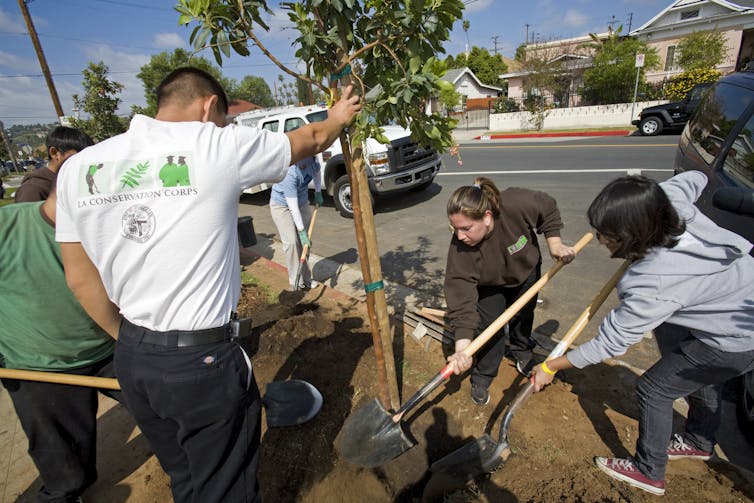
A group of young people plant trees along a street in Los Angeles. One is wearing an LA Conservation Corps T-shirt.
Local groups can take action in many ways, including helping to plant trees, educating residents or pressuring lawmakers to take action. Citizen of the Planet/Education Images/Universal Images Group via Getty Images

Self-talk

The weight of the climate crisis is heavy enough as it is – don’t let your brain make you feel even worse.

When it comes to thinking about climate change, a realistic mindset puts us in a “just right” psychological Goldilocks zone. Don’t numb your psychic wounds, but also don’t over-catastrophize.

As a therapist, I often help clients identify and reframe unhelpful thinking patterns. For example, while it is true that there are many environmental problems to grapple with, there is also positive news, so don’t discount it. Recognize and celebrate victories big and small.

Trauma: Process it so you can heal

The climate crisis has been conceptualized as a collective trauma, and many individuals are struggling with eco-grief from climate impacts that have already happened. Processing past trauma from events like weather disasters is a crucial step in enhancing your ability to cope with new experiences.

Even people who have not yet experienced significant climate impacts directly may have signs of pre-traumatic stress, a clinical term for the distress experienced in anticipation of a high-stress situation. A licensed mental health professional can help you process these emotions.

Reduce isolation

It’s no secret that having a strong social support network is a key ingredient for happiness. Surrounding yourself with compassionate, like-minded friends is also key to sustained efforts in doing your part to make a difference.

Consider joining or starting a Climate Cafe or similar group to talk about climate concerns. Visit a 10-step climate grief meeting. Join a local environmental organization. Or simply call up a friend when you need a listening ear.

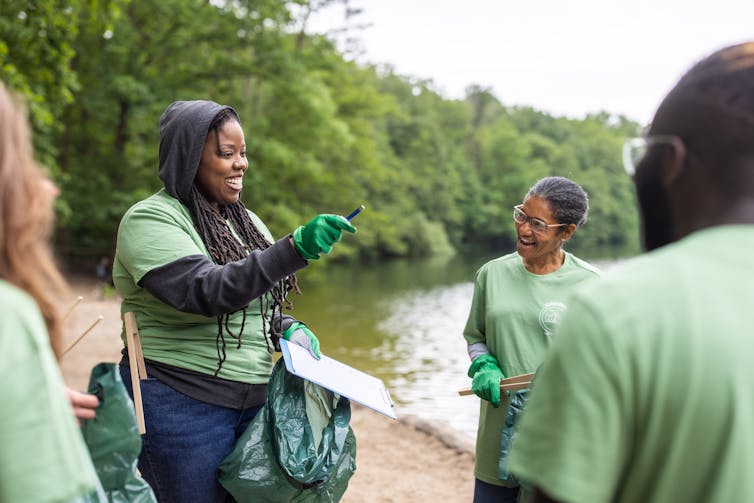
A woman holds a trash bag and directs others in a lakeshore clean up effort.
Community cleanup days can help reduce isolation and help you feel involved in making the world a better place. Luis Alvarez/DigitalVision via Getty Images

Ecotherapy

Get outdoors and enjoy nature.

Go for a quiet walk in the woods and observe nature all around you – it’s a Japanese practice for relaxation known as forest bathing. Spend time gardening. Exercise outdoors or otherwise spend time outdoors in a place that is relaxing and restorative for you.

Gardening can relax the mind and put you in touch with nature. If you don’t have a yard, find a community garden. Compassionate Eye Foundation/Natasha Alipour Faridani via Getty Images

Acts of self-care

Self-care is paramount when it comes to managing the emotional toll of eco-anxiety.

Engaging in self-care practices, such as getting adequate sleep, eating healthy and having fun, helps us maintain a sense of balance in the face of overwhelming environmental concerns.

Remember what they teach you on airplanes – you should always put on your own oxygen mask before helping other passengers. Likewise, when we come from a place of wellness, we are better equipped to handle the stresses of eco-anxiety and make a difference in this area.

Mindfulness

Because eco-grief is focused on the past and eco-anxiety is future-oriented, reconnecting to the present moment is a powerful way to combat both.

By cultivating mindfulness – a nonjudgmental awareness of the present moment – people can become more attuned to their thoughts, feelings and bodily sensations in response to eco-anxiety triggers. This heightened self-awareness helps people to acknowledge worries without becoming consumed by them.

Mindfulness practices, such as meditation and deep breathing, provide a calming and grounding effect, helping to reduce stress and alleviate feelings of helplessness. Moreover, mindfulness fosters a deeper connection to nature and an appreciation for the present moment, which can counteract the sense of despair associated with future environmental uncertainties.

In the face of eco-anxiety, these strategies can build resilience, reminding everyone that they have the power to shape a more sustainable and hopeful future.

Karen Magruder, Assistant Professor of Practice in Social Work, University of Texas at Arlington

This article is republished from The Conversation under a Creative Commons license. Read the original article.

ooOOoo

There’s a powerful reminder that we have the power to stay in the present, or to put it another way by cultivating mindfulness. There are quite a few websites on Mindfulness including this description of what Mindfulness is on the Mayo Clinic website.

Mindfulness is a type of meditation in which you focus on being intensely aware of what you’re sensing and feeling in the moment, without interpretation or judgment. Practicing mindfulness involves breathing methods, guided imagery, and other practices to relax the body and mind and help reduce stress.

Mayo Clinic

Now that is something I should really focus on as I am terrible at being in the moment and nowhere else.

The Southern Ring Nebula

Just had to share this incredible vista with you!

The James Webb Space Telescope is amazing. Wikipedia have a long article on the telescope from which one reads (in part):

The James Webb Space Telescope (JWST) is a space telescope specifically designed to conduct infrared astronomy. Its high-resolution and high-sensitivity instruments allow it to view objects too old, distant, or faint for the Hubble Space Telescope. This enables investigations across many fields of astronomy and cosmology, such as observation of the first stars and the formation of the first galaxies, and detailed atmospheric characterization of potentially habitable exoplanets.

But I want to share with you this video, please watch it now it is just a minute long:

Time to forget about our earthly challenges for just a short time.

And for those that want more here is the home page of the Webb Telescope.

An insight into religious leaders who do not have a religion.

I would not have believed this had I not read it with my own eyes.

I have been an atheist all my life. My mother and father were all those years ago when being an atheist was not something one promoted.

But a recent article from The Conversation told a very surprising account: “These spiritual caregivers can be found working in hospitals, universities, prisons and many other secular settings, serving people of all faiths and those with no faith tradition at all.

Here’s the full article.

ooOOoo

Religious leaders without religion: How humanist, atheist and spiritual-but-not-religious chaplains tend to patients’ needs

Chaplains talk with anyone, regardless of whether or not the patient has a religious affiliation – and some chaplains themselves are not religious. Jacob Wackerhausen/iStock via Getty Images Plus

Amy Lawton, Brandeis University

Published: September 7th, 2023

In times of loss, change or other challenges, chaplains can listen, provide comfort and discuss spiritual needs. These spiritual caregivers can be found working in hospitals, universities, prisons and many other secular settings, serving people of all faiths and those with no faith tradition at all.

Yet a common assumption is that chaplains themselves must be grounded in a religious tradition. After all, how can you be a religious leader without religion?

In reality, a growing number of chaplains are nonreligious: people who identify as atheist, agnostic, humanist or “spiritual but not religious.” I am a sociologist and research manager at Brandeis University’s Chaplaincy Innovation Lab, where our team researches and supports chaplains of all faiths, including those from nonreligious backgrounds. Our current research has focused on learning from 21 nonreligious chaplains about their experiences.

A changing society

Thirty percent of Americans are religiously unaffiliated. Research suggests that people who are atheists or otherwise nonreligious sometimes reject a chaplain out of wariness, or shut down a conversation if they feel judged for their beliefs. But this research has not accounted for a new, increasingly likely situation – that the chaplain might also be nonreligious.

No national survey has been done, so the number of nonreligious chaplains is unknown. But there is plenty of reason to think that as more Americans choose not to affiliate with any particular religion, so too do more chaplains.

Nonreligious chaplains have been a part of hospital systems and universities for years, but they came into the national spotlight in August 2021 when Harvard University’s organization of chaplains unanimously elected humanist and atheist Greg Epstein as president. Humanists believe in the potential and goodness of human beings without reference to the supernatural.

Other recent reporting on humanist chaplains has also focused on school campuses, but nonreligious chaplains are not limited to colleges and universities. Eighteen of the 21 nonreligious chaplains we spoke with in our study work in health care, including hospice. The Federal Bureau of Prisons allows nonreligious chaplains, but we were unable to find any of them to participate in the current study.

A middle-aged man and woman seated in a row of chairs turn around to talk with a handful of college-age kids.
Humanist chaplain Bart Campolo, center, and his wife, Marty, right, mingle with students at the University of Southern California in 2015. AP Photo/Jae C. Hong

Not all settings allow nonreligious chaplains, however, including the U.S. military.

Authentic calling

The idea of a “call” from God is central to many religious vocations: a strong impulse toward religious leadership, which many people attribute to the divine.

Chaplains who are atheists, agnostics, humanists or who consider themselves spiritual but not religious also can feel called. But they do not believe that their calls come from a deity.

Joe, for example, an atheist and a humanist whom we interviewed, has worked as a chaplain in hospitals and hospices. He says that his “light bulb moment” came after a history professor told him that beliefs are the source of a community’s power. While atheists do not believe in God or gods, many do have strong beliefs about ethics and morality, and American atheists are more likely than American Christians to say they often feel a sense of wonder about the universe. Joe’s call was not “from a divine source,” but nonetheless, he says this experience “kind of filled me with a sense of control, and confidence, and presence” in his life that grounded his sense of a calling.

Sunil, another chaplain our team interviewed, was inspired by his college chaplain, whom he calls “a really influential presence.” The chaplain helped Sunil answer questions about identity and values without “necessarily having any religious or spiritual leanings to it,” and encouraged him to go to divinity school.

Today, Sunil tries to help others answer those same questions in his work as a health care chaplain – and to offer deeply thoughtful, meaningful spiritual care to people who aren’t religious.

Education and training

Most chaplaincy jobs require a theological degree. Along with coursework in sacred scriptures and religious leadership, chaplaincy training usually involves clinical pastoral education, where students learn about hands-on, care-oriented aspects of their profession. This involves learning to provide care to everyone, regardless of their religious background.

Although coursework is broadly the same for all students, religious or nonreligious, the actual experience of earning a degree is very different for nonreligious students. In the United States, Christian students are easily able to enroll in a seminary or divinity school that shares their faith identity and spend their years of study learning about their own tradition.

Chaplaincy programs that focus on non-Christian traditions are available, but scarcer, and our team does not know of an overtly nonreligious chaplaincy program. In recent years, more seminaries have welcomed nonreligious students, but nonetheless, nonreligious students often find themselves focusing their study on traditions to which they have no personal connection.

Yet there is a surprising bright side.

‘I am here to support you’

Being deeply immersed in traditions that are not one’s own is one of the reasons that nonreligious chaplains can be so effective.

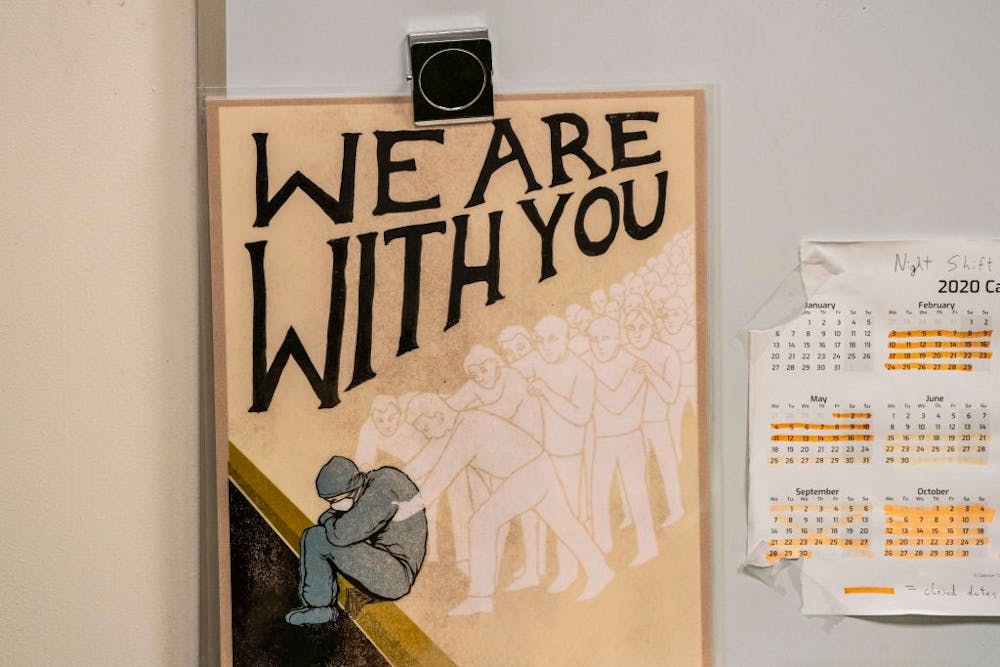
A poster that says 'We are with you,' with an illustration of someone sitting in scrubs as dozens of ghostly figures hold them.
Artwork posted by a chaplain in a break room in the trauma surgery ICU at Harborview Medical Center in Seattle. David Ryder/Getty Images

For example, our team asked Kathy, a health care chaplain, how she approaches prayer with religious and nonreligious patients. “My goal is to try to meet that person where they are and pray in a way that’s helpful and comforting for them, or meets whatever the need is that’s arisen during the conversation that we’ve had,” she said. Like all chaplains, Kathy is there to accompany, not proselytize. While she herself prays to the “great mystery,” she is comfortable facilitating whatever prayer is needed.

Claire, a chaplaincy student, agreed with Kathy and described her own first experience meeting an evangelical Christian patient. It was easy, she said, because “you’re not trying to fix anything. You’re just trying to meet them where they are. So that’s it.”

Nonreligious chaplains are used to thinking outside the box. Having learned about major world religions, many of them can find overlapping values and beliefs with their patients, such as finding beauty and meaning in the natural world or finding strength in their conviction that human beings are inherently good.

Cynthia works in the palliative care department in a hospital and tells her patients, “I am here to support you in whatever is meaningful to you right now and whatever is most important in your life in this moment.” She asks patients: “What are you struggling with right now? What are your goals? What do you hope for? What are you afraid of?” – trying to “unpack that with a spiritual lens rather than a medical lens.”

Cynthia is an example of why spiritual care by nonreligious chaplains may be surprising, but is likely here to stay. Based on our research, nonreligious chaplains are as capable as religious chaplains of meeting a person in their darkest hour and taking them by the hand.

Amy Lawton, Research Manager, Chaplaincy Innovation Lab, Brandeis University

This article is republished from The Conversation under a Creative Commons license. Read the original article.

ooOOoo

That last sentence may be opened up even more. In that the article speaks of chaplains, both religious and nonreligious. But as someone who was a counsellor with the Prince’s Youth Business Trust some years ago, now The Prince’s Trust, it is my opinion that anyone who is an active listener can undertake the role.

The article has many fine points including one that I had not considered before. “That American atheists are more likely than American Christians to say they often feel a sense of wonder about the universe.” I am certain that this isn’t confined to Americans.

The incredible story of Diablo

Just watch this after the introduction.

Countless numbers of people have dreamt that they can communicate with animals and I would imagine an enormous percentage of those would have dreamt that they can communicate with dogs.

Certainly of the three dogs we have alive still here at home (we had in the past some fifteen dogs) Oliver below appears to understand much of what is said to him by me and Jean

If one goes to the YouTube website then one is introduced to Anna Breytenbach who has made it her life’s passion to better communicate with animals. Here’s a small piece from the extensive WikiPedia entry:

In her twenties she decided to pursue her passion for wildlife (big cats in particular) by becoming a cheetah handler at a conservation education project. On moving to America, she explored wolf and other predator conservation. She has also served on committees for wolf, snow leopard, cheetah and mountain lion conservation.

Anna Breytenbach and friend

So now we come to this video of Anna and Diablo, more properly called Spirit, (and the video will make that clear).

Arjan Postma explains the background to the film:

I just want to share this message as much as possible without any commercial intent, personal benefit or whatsoever. All used materials and therefore copyrights do not belong to me. I hope you enjoy discovering and watching this story and skill as much as I did: What if you could talk to animals and have them talk back to you? Anna Breytenbach has dedicated her life to what she calls interspecies communication. She sends detailed messages to animals through pictures and thoughts. She then receives messages of remarkable clarity back from the animals. In this section, Anna transforms a deadly snarling leopard into a relaxed content cat. The amazing story of how leopard Diabolo became Spirit… I found the source of this amazing documentary here: http://www.cultureunplugged.com/docum… This is the first full length documentary film on the art of animal communication. Nominated for Best Long Documentary, Best Director of “Jade Kunlun” Awards of 2012 World Mountain Documentary Festival of Qinghai China. Director: Craig Foster | Producer: Vyv Simson | Narrator: Swati Thiyagarajan Genre: Documentary | Produced In: 2012.

P.S. Happy Thanksgiving to everyone!