Category: Spirituality

The magic of gratitude

A fascinating article!

Nothing more to add from me!

ooOOoo

Gratitude comes with benefits − a social psychologist explains how to practice it when times are stressful

If the concept of journaling feels daunting, perhaps just call it a gratitude list. Karl Tapales/Moment via Getty Images

Monica Y. Bartlett, Gonzaga University

A lot has been written about gratitude over the past two decades and how we ought to be feeling it. There is advice for journaling and a plethora of purchasing options for gratitude notebooks and diaries. And research has consistently pointed to the health and relationship benefits of the fairly simple and cost-effective practice of cultivating gratitude.

Yet, Americans are living in a very stressful time, worried about their financial situation and the current political upheaval.

How then do we practice gratitude during such times?

I am a social psychologist who runs the Positive Emotion and Social Behavior Lab at Gonzaga University. I teach courses focused on resilience and human flourishing. I have researched and taught about gratitude for 18 years.

At the best of times, awareness of the positive may require more effort than noticing the negative, let alone in times of heightened distress. There are, however, two simple ways to work on this.

A team of soccer players lift their coach into the air, as she smiles and high fives the air.
Expressions of gratitude can take many different forms. Lighthouse Films/DigitalVision via Getty Images

Gratitude doesn’t always come easily

Generally, negative information captures attention more readily than the positive. This disparity is so potent that it’s called the negativity bias. Researchers argue that this is an evolutionary adaptation: Being vigilant for life’s harms was essential for survival.

Yet, this means that noticing the kindnesses of others or the beauty the world has to offer may go unnoticed or forgotten by the end of the day. That is to our detriment.

Gratitude is experienced as a positive emotion. It results from noticing that others − including friends and family certainly, but also strangers, a higher power or the planet − have provided assistance or given something of value such as friendship or financial support. By definition, gratitude is focused on others’ care or on entities outside of oneself. It is not about one’s own accomplishments or luck.

When we feel gratitude toward something or someone, it can increase well-being and happiness and relationship satisfaction, as well as lower depression.

Thus, it may assist in counteracting the negativity bias by helping us find and remember the good that others are doing for us every day − the good that we may lose sight of in the best of times, let alone in times when Americans are deeply stressed.

A middle-aged woman sits at a kitchen table between two older women, all of whom are laughing joyously.
We feel gratitude more easily when we notice the good that others have brought into our lives. Catherine Falls Commercial/Moment via Getty Images

How to practice gratitude

Research has shown that some people are naturally more grateful than others.

But it’s also clear that gratitude can be cultivated through practice. People can improve their ability to notice and feel this positive emotion.

One way to do this is to try a gratitude journal. Or, if the idea of journaling is daunting or annoying, perhaps call it a daily list instead. If you have given this a try and dislike it, skip to the second method below.

Gratitude lists are designed to create a habit in which you scan your day looking for the positive outcomes that others have brought into your life, no matter how small. Writing down several experiences each day that went well because of others may make these positive events more visible to you and more memorable by the end of the day − thus, boosting gratitude and its accompanying benefits.

While the negative news − “The stock market is down again!” “How are tariffs going to affect my financial security?” − is clearly drawing attention, a gratitude list is meant to help highlight the positive so that it doesn’t go overlooked.

The negative doesn’t need help gaining attention, but the positive might.

A second method for practicing gratitude is expressing that gratitude to others. This can look like writing a letter of gratitude and delivering it to someone who has made a positive impact in your life.

When my students do this exercise, it often results in touching interactions. For instance, my college students often write to high school mentors, and those adults are regularly moved to tears to learn of the positive impact they had. Expressing gratitude in work settings can boost employees’ sense of social worth.

In a world that may currently feel bleak, a letter of gratitude may not only help the writer recognize the good of others but also let others know that they are making a beautiful difference in the world.

Monica Y. Bartlett, Professor of Psychology, Gonzaga University

This article is republished from The Conversation under a Creative Commons license. Read the original article.

ooOOoo

I like the suggestions for practicing gratitude and I am going to reproduce that last sentence from Monica, namely: ‘In a world that may currently feel bleak, a letter of gratitude may not only help the writer recognize the good of others but also let others know that they are making a beautiful difference in the world.

I would add sending an email to that person as well is a good move.

Venus and Valentine’s Day

The role of the planet today!

From that post: Venus, named for the Roman goddess of love, reaches its greatest brilliancy on Valentine’s Day, February 14. Venus is currently blazing, low in the west after sunset, with Saturn below.

Wherever you are, try spotting Venus.

This article is so beautiful!

I subscribe to The Dodo and read this article last Wednesday!

This may be Columbia and a long way from where a great number of people live but it is still a most beautiful story.

ooOOoo

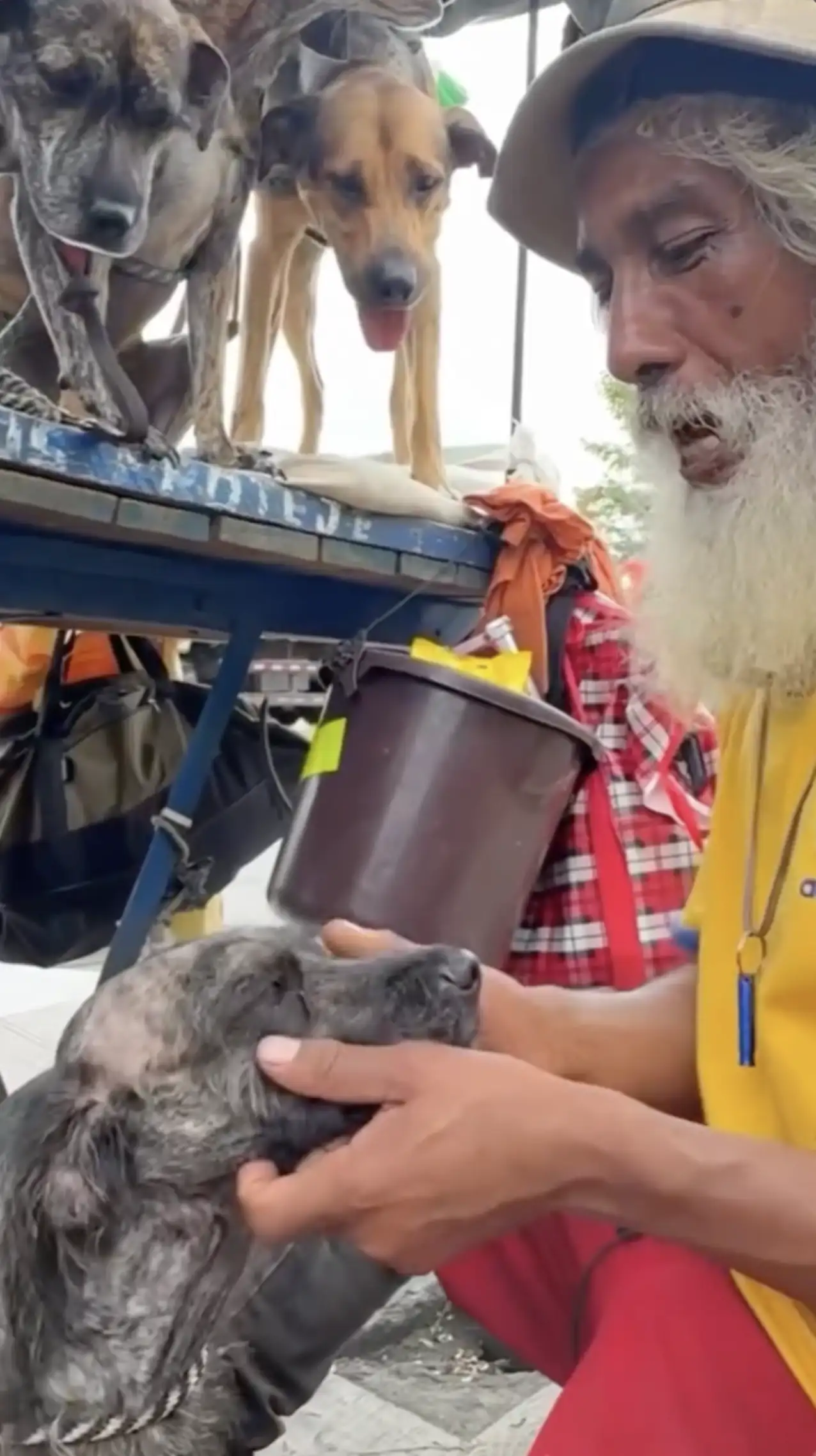
Kind Man Living On Streets Adopts Every Stray Dog He Comes Across

“They’re everything to me” 💕

By Ashley Ortiz, Published on Dec 27, 2024.

They say that home is where the heart is, and that couldn’t be more true for a man named Rubén and his pack of rescued dogs.

Despite not having a home of his own, Rubén, who goes by Noé, is dedicated to sharing his space and resources with every homeless dog in his Colombian city. Whether they’ve been left behind at a stop light or abandoned in an apartment, Noé believes in giving each dog he meets a second chance at love.

“They are living beings,” Noé said in an interview with IguanaTV. “They are everything to me.”

Noé’s pack is ever-growing, as he readily collects abandoned dogs of all ages and sizes. While it all started with just one dog, his furry family is now large enough to require a double-decker push cart.

Each dog has their own unique backstory, but they’re all loved by Noé just the same.

“This is Rocky. They left him tied up there at that traffic light,” Noé said. “These two girls are named Ears and Cheeks. I’ve had them since they were little. They were also abandoned.”

Rocky, Ears and Cheeks ride on the top level of the push cart with their siblings, a pit bull named Tyson and a German shepherd named Shakira. Below them, senior pups Tembleque, Parkinson and Morochito happily take in the world around them.

“These dogs down below are the oldest,” Noé said. “Little Morochito here was left for me while I was sleeping outside of [the store].”

The pups may have heartbreaking pasts, but their sadness has faded since being adopted by Noé. When they’re not actively traveling around the city with their beloved dad, the pack of dogs can usually be found enjoying a fresh meal made by Noé.

“I buy them milk, carrots and oats, and I combine them with ground meat and seeds,” Noé said. “I make them a hearty meal so that they eat well.”

Seeing the pups lap up their meals brings joy to Noé, even when he hasn’t eaten yet.

“They eat first,” Noé said. “My food is less important to me.”

Once the pups have finished eating, Noé usually snacks on an arepa and some coffee before heading off with his pack again. With his dogs by his side, Noé feels a sense of purpose and peace.

“The dogs keep me busy and give me a reason to wake up every day,” Noé said. “They don’t care if I’m bearded, toothless, dirty or clean. They only care that I’m by their side.”

This growing companionship is beyond fulfilling for Noé. Even on his most challenging days, Noé knows he can always lean on his beloved pack of rescued dogs for unconditional support.

“A dog’s love is the best there is,” Noé said.

ooOOoo

The two photographs are presented by INSTAGRAM/@IGUANATV. (And the article is published with the kind permission of The Dodo.)

One can’t do better than repeat that last sentence: “A dog’s love is the best there is,”.

Well said, Rubén!

Another rescue story

Saving a large dog!

What is it about people who discard dogs? And not in a caring manner but just dumped!

This article from The Dodo tells the story of a wonderful rescue.

ooOOoo

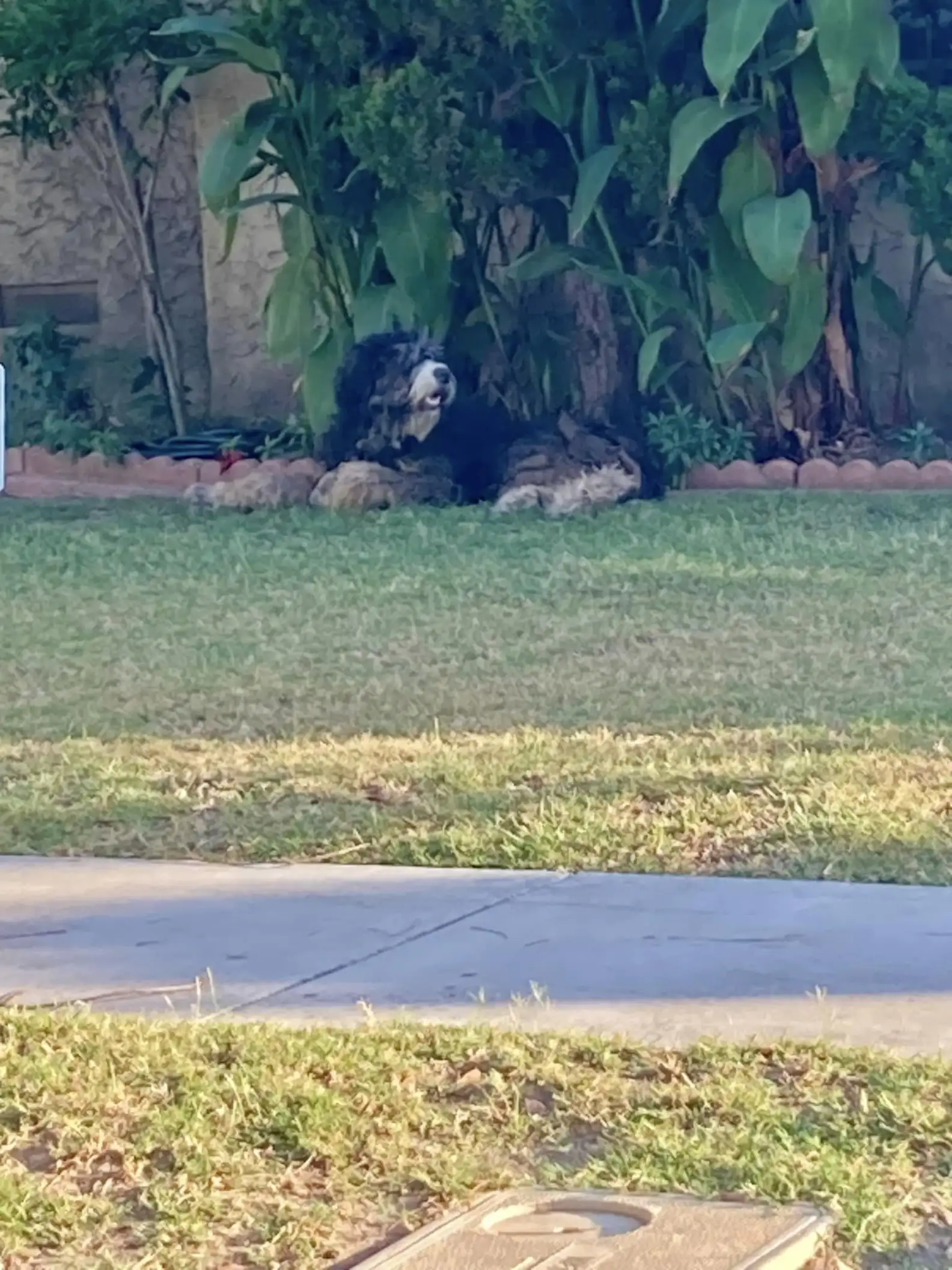
Neighbors Band Together To Save Stray Giant With ‘Dreadlocks’

Then they gave him a stunning makeover

By Ashley Ortiz, Published on Oct 25, 2024

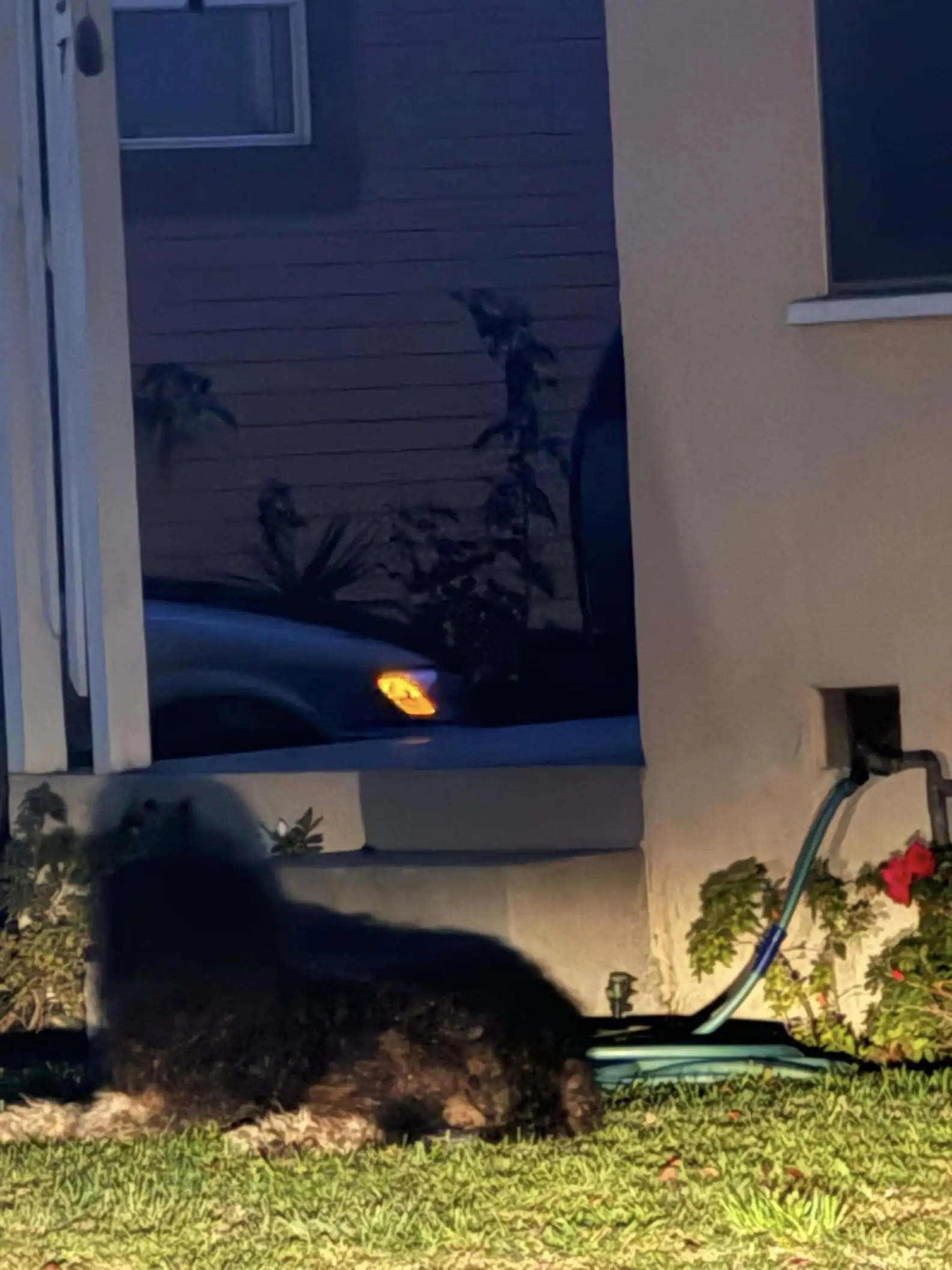
The other day, volunteer dog rescuer Mary Nakiso was driving through California’s Orange County when she passed someone cowering on the side of the street. The creature was large, hairy and alone. With a sinking feeling in her stomach, Nakiso slammed on her brakes to investigate.

As she approached the animal, Nakiso realized just how massive and afraid he was.

“He is literally 75 pounds and so big but so scared,” Suzette Hall, founder of Logan’s Legacy 29, wrote on Facebook.

Suzette Hall

The giant dog was petrified, which Nakiso soon learned was the result of being “thrown out” by his family a few minutes earlier.

“When he first got thrown out, he was so confused [and] running in circles in traffic,” Hall wrote. “A huge jeep with huge tires literally went over him …”

Suzette Hall

The pup, later named Benji, had no idea where his family had gone. He roamed the busy streets frantically, hoping to find his way home. After a while of running around in circles and dodging cars, Benji eventually disappeared.

Nakiso called Hall to notify her about Benji, and the two started monitoring local social media groups for any sightings of him. Later that day, someone posted about seeing a giant matted dog in their neighborhood.

Suzette Hall

Hall couldn’t make it back to the neighborhood fast enough due to traffic, so she messaged three more of her trusted friends who lived nearby.

The group of volunteers immediately agreed to help.

“I sent a message to Nuñez Aky, Yamileth and Karla,” Hall wrote. “When they got there, he was running back and forth so fast. So they waited for him to settle down.”

Suzette Hall

Hall stayed glued to her phone for updates while the team of volunteer rescuers hatched a plan to corner the flighty dog once and for all.

Then, she finally received the news she’d been hoping to hear all day.

“[B]ecause they are so amazing, they got him into a yard and shut the gate,” Hall wrote. “My heart was so happy. The fear and terror he had been through was over, and this big hunk of pure love was finally safe.”

Suzette Hall

The rescuers showered Benji with love and praise before carrying him to their car. They drove him straight to Camino Pet Hospital, where the shaggy pup received a long-overdue makeover.

“All the layers of his past [have] been shaved away,” Hall wrote in a Facebook update. “He literally had dreadlocks.”

Suzette Hall

Benji’s makeover was just the first of many steps to get him the home of his dreams. He’s since been neutered, and after a few more days of healing, he’ll finally be able to meet his new foster family next week.

It’s hard to know what Benji’s life was like before he was rescued, but his future is certain thanks to Hall and her team of volunteers. As Hall sees it, Benji will soon receive all the love and attention he’s always deserved.

“Benji is the sweetest, most loving dog I have ever met,” Hall told The Dodo. “[He’s] truly a miracle.”

—-

You can inquire about adopting Benji by emailing Suzette Hall at Info@loganslegacy29.com.

To help pups like Benji get the care they need, you can donate to Logan’s Legacy 29 here.

ooOOoo

That is a most beautiful story and one that should inspire many readers to look after, and care for, dogs where ever they are.

Many congratulations to Suzette for rescuing Benji.

The death of Quincy Jones.

A musical legend is dead.

Back in the late 1950s when my mother remarried after my father’s death, ‘Dad’, as he was called when he came to live at Toley Avenue, Preston Road, London, taught me how to construct a radio receiver made from a crystal, a crystal set. I have this memory of listening to Quincy Jones on my crystal set and loving the rhythm.

The BBC have a great tribute to the star, and I republish just a small part of that tribute:

“Music is sacred to me,” Quincy Jones once said. “Melody is God’s voice.”

He certainly had the divine touch. 

Jones, who had died at the age of 91, was the right-hand man to both Frank Sinatra and Michael Jackson, and helped to shape the sound of jazz and pop over more than 60 years.

His recordings revolutionised music by crossing genres, promoting unlikely collaborations and shaping modern production techniques.

How well do dogs understand humans?

How well do dogs understand humans?

Another guest post; this time from Lorna D.

Dogs are so close to humans, as has been reported many times in many places. This guest post from Lorna explores the very latest in scientific thinking.

ooOOoo

Busting Myths: Do Dogs Really Understand Human Language?

By Lorna Dikoff

Dogs are often seen as more than pets. They are companions, loyal protectors, and, for many like me, family members.

Many people think dogs understand our words like we do. This idea has been around for a long time. But is it true?

Let’s look at what science tells us about how dogs communicate. Also, let’s think about what our bonds with dogs teach us. These bonds teach us about trust and loyalty. They also reveal a deeper form of connection.

The Science of Canine Communication

Dogs have been our companions for thousands of years. During this time, they have become very good at understanding human behavior.

In 2016, researchers in Hungary made an interesting discovery. They found that dogs process words and tone similarly to humans. Dogs use different parts of their brains to recognize words and emotional sounds.

But, this doesn’t mean dogs understand language like we do. Instead, they learn to connect certain sounds (words) with specific actions or results. For example, a dog might know that the sound of a leash means a walk is coming. They recognize patterns rather than understanding language.

So while dogs are good at figuring out what we do and say, they don’t understand language the same way humans do. They’ve learned to pick up on our signs, but in their own special way.

But does this mean they understand the full meaning behind those words? The answer is no.

Dogs are great at reading people. They watch our body language, listen to our tone, and look at our faces. Dogs pay more attention to these signs than to our words.

This doesn’t mean dogs are less smart. It shows that they excel in a different type of communication.

The Myth of Full Language Comprehension

People often think dogs understand human language. We want to believe our pets understand us like other people do. It’s a nice idea, but it’s not quite true.

Dogs can learn some words and follow orders. But they don’t understand language. They remember patterns and connect words with actions. It’s not the same as how we understand each other when we talk.

This myth doesn’t make our bond with dogs any less special. It actually shows something even more extraordinary. Dogs are great at connecting with us without words. They tune into our feelings and pick up on how we act. This makes our relationship with them pretty amazing.

Dogs don’t need words to sense when we are sad, anxious, or excited. Their ability to “read” our emotions is what makes their companionship so special.

Trust and Loyalty: The Real Language of Dogs

Dogs and humans have a special bond that is far more profound than language. It’s about trust and loyalty.

These things are at the heart of what we can learn from dogs. Dogs show us how to be honest and true. They teach us about connecting with feelings, not only with words.

Dogs don’t need a large vocabulary to express their loyalty or unconditional love. Instead, they show it through actions. They sit with us when we’re sad and guard us when we’re weak. And they always get super happy to see us, even if we’ve only been gone for a bit.

This speaks to a deeper truth that dogs teach us: communication isn’t only about words. It’s about the trust we build through consistent, reliable actions.

In a world where words can sometimes mislead or fall short, dogs show us a better way. Dogs remind us of the importance of honesty and integrity in our interactions.

The Lesson from Dogs

So, do dogs understand human language? The answer is no, at least not in the way we hope. But their understanding of us is something far more profound.

Dogs teach us that we don’t always need words to talk. They teach us that our actions often speak louder than language. Their loyalty, intuition, and emotional intelligence. makes our bond with them special, more than words can explain.

We often overcomplicate communication, but dogs keep it simple. They show up and act the same way every day.

This teaches us that real connections come from trust and love. Dogs prove that understanding each other is about more than using words.

About the Author:

Lorna is the founder of Furry Friends Advisor. She is a passionate and experienced long-time dog owner with a deep love for animals. Lorna’s commitment to understanding and caring for dogs led her to spend countless hours researching and learning about canine health, behavior, and care. When not immersed in writing for her site, she is pampering her French Bulldog name Lucy. Her mission is to give advice about dog care and nutrition accessible to everyone. 

ooOOoo

Thank you, Lorna.

There is no question that a dog’s actions speak so much louder than words.

Trust and loyalty; they are the supreme qualities of dogs and it is a pity that in some quarters these qualities are not seen in humans.

An article on loneliness

A surprising find!

I shall be 80 in November and I find myself thinking about death more often than I did a few years ago. As an example of how my mind has changed, yesterday I was contemplating renewing my subscription to the Free Inquiry magazine and wondering if I should renew it for two or three years? In other words will I still be alive in three years time? Silly but it is the truth. And that is not taking into account that I go to the Club Northwest two days a week and try and bike ride another two or three times a week.

Then let us not get into the topic of whether I will die before Jean or the reverse. That is an enormous subject and, thank goodness, where we live in Oregon one has the choice to die: “Two states, Oregon and Washington, currently have statutes providing a procedure for a terminally ill patient to request medication to end his or her life. These laws are sometimes referred to as “death with dignity” or “physician-assisted suicide” laws.

All of which is an introduction to a recent article published in The Conversation that I republish below:

ooOOoo

Loneliness can kill, and new research shows middle-aged Americans are particularly vulnerable

The desire to belong is a fundamental human need. Oliver Rossi/Stone via Getty Images

Frank J. Infurna, Arizona State University

Middle-aged Americans are lonelier than their European counterparts. That’s the key finding of my team’s recent study, published in American Psychologist.

Our study identified a trend that has been evolving for multiple generations, and affects both baby boomers and Gen Xers. Middle-aged adults in England and Mediterranean Europe are not that far behind the U.S. In contrast, middle-aged adults in continental and Nordic Europe reported the lowest levels of loneliness and stability over time.

We used survey data drawn from over 53,000 middle-aged adults from the U.S. and 13 European nations from 2002 to 2020. We tracked their reported changes in loneliness every two years across the midlife years of 45 to 65. This span provided us data from the so-called silent generation of people born between 1937 and 1945; baby boomers, born between 1946 and 1964; and members of Generation X, born between 1965 and 1974.

Our study makes clear that middle-aged Americans today are experiencing more loneliness than their peers in European nations. This coincides with existing evidence that mortality rates are rising for working-age adults in the U.S.

We focused on middle-aged adults for several reasons. Middle-aged adults form the backbone of society by constituting a majority of the workforce. But they also face increasing challenges today, notably greater demands for support from both their aging parents and their children.

Following the Great Recession from late 2007 to 2009, middle-aged adults in the U.S. reported poorer mental and physical health compared to same-aged peers in the 1990s. Compared to several European nations, U.S. middle-aged adults currently report more depressive symptoms and higher rates of chronic illness, pain and disability.

Why it matters

The desire to belong is an innate and fundamental need. When this is lacking, it can have downstream consequences.

Loneliness is bad for your health. Researchers have found that loneliness is as dangerous as smoking. Loneliness increases one’s vulnerability to sickness, depression, chronic illness and premature death.

Loneliness is considered a global public health issue. The U.S. surgeon general released an advisory report in 2023 documenting an epidemic of loneliness and a pressing need to increase social connection. Other nations, such as the U.K. and Japan, have appointed ministers of loneliness to ensure relationships and loneliness are considered in policymaking.

You can be lonely even when surrounded by people.

What still isn’t known

Why are middle-aged Americans exceptional when it comes to loneliness and poorer overall mental and physical health?

We did not directly test this in our study, but in the future we hope to zero in on the factors driving these trends. We think that the loneliness Americans are reporting compared to peer nations comes down to limited social safety nets and to cultural norms that prioritize individualism over community.

Individualization carries psychological costs, such as reductions in social connections and support structures, which are correlates of loneliness. Relative to the other nations in our study, Americans have a higher tendency to relocate, which is associated with weak social and community ties.

One of the reasons why we chose countries from across Europe is that they differ dramatically from the U.S. when it comes to social and economic opportunities and social safety nets. Social and economic inequalities likely increase one’s loneliness through undermining one’s ability to meet basic needs. Generous family and work policies likely lessen midlife loneliness through reducing financial pressures and work-family conflict, as well as addressing health and gender inequities.

Our findings on loneliness in conjunction with previous studies on life expectancy, health, well-being and cognition suggest that being middle-aged in America is a risk factor for poor mental and physical health outcomes.

The Research Brief is a short take on interesting academic work.

Frank J. Infurna, Associate Professor of Psychology, Arizona State University

This article is republished from The Conversation under a Creative Commons license. Read the original article.

ooOOoo

And on yesterday afternoon, the Sunday, I went for a bike ride of 22 miles. I loved the ride especially as I listened to music all the way; I have a portable speaker that clips near the front handlebars and plays tracks from my iPhone.

Then there was an article in March from the University of Bristol: “Happiness can be learnt, but we have to work at it – study finds.

It reads:

Press release issued: 11 March 2024

We can learn to be happy, but only get lasting benefits if we keep practising, a first-of-its-kind study has revealed.

The team behind the University of Bristol’s ‘Science of Happiness’ course had already discovered that teaching students the latest scientific studies on happiness created a marked improvement in their wellbeing.

But their latest study found that these wellbeing boosts are short-lived unless the evidence-informed habits learnt on the course – such as gratitude, exercise, meditation or journaling – are kept up over the long-term.

Senior author Professor Bruce Hood said: “It’s like going to the gym – we can’t expect to do one class and be fit forever. Just as with physical health, we have to continuously work on our mental health, otherwise the improvements are temporary.”

Launched in 2018, the University of Bristol’s Science of Happiness course was the first of its kind in the UK. It involves no exams or coursework, and teaches students what the latest peer-reviewed studies in psychology and neuroscience say really makes us happy.

Students who took the course reported a 10 to 15% improvement in wellbeing. But only those who continued implementing the course learnings maintained that improved wellbeing when they were surveyed again two years on.

Published in the journal Higher Education, it is the first to track wellbeing of students on a happiness course long after they have left the course.

Professor Hood said: “This study shows that just doing a course – be that at the gym, a meditation retreat or on an evidence-based happiness course like ours – is just the start: you must commit to using what you learn on a regular basis.

“Much of what we teach revolves around positive psychology interventions that divert your attention away from yourself, by helping others, being with friends, gratitude or meditating.

“This is the opposite of the current ‘selfcare’ doctrine, but countless studies have shown that getting out of our own heads helps gets us away from negative ruminations which can be the basis of so many mental health problems.”

Professor Hood has distilled the Science of Happiness course into a new book, out on March 10. ‘The Science of Happiness: Seven Lessons for Living Well’ reveals an evidence-informed roadmap to better wellbeing.

The other paper authors are fellow University of Bristol academics Catherine Hobbs and Sarah Jelbert, and Laurie R Santos, a Yale academic whose course inspired Bristol’s Science of Happiness course.

Paper

Long‑term analysis of a psychoeducational course on university students’ mental well‑being‘ by Catherine Hobbs, Sarah Jelbert, Laurie R. Santos and Bruce Hood in Higher Education

Further information
  • Surprising take aways from the Science of Happiness course include:
    • Talking to strangers makes us happier, despite a majority of us shying away from such encounters.
    • Social media is not bad for everyone, but it can be bad for those who focus on their reputation.
    • Loneliness impacts on our health by impairing our immune systems.
    • Optimism increases life expectancy.
    • Giving gifts to others activates the reward centres in our brain – often providing more of a happiness boost than spending money on oneself.
    • Sleep deprivation impacts on how well we are liked by others.
    • Walking in nature deactivates part of the brain related to negative ruminations, which are associated with depression.
    • Kindness and happiness are correlated.

I sincerely hope you find today’s post, a long post, of interest.

Pleasing one’s dog!

Penny Martin delivers another great post!

At first sight, the above title goes without saying. But then one quickly realises that not everyone, by far, has the circumstances that are ideal for dogs.

Thus, it is an important guest post from Penny.

ooOOoo

Explore the world of Learning from Dogs, where the integrity and lessons from our canine friends are celebrated. 

Photograph courtesy of Freepik

Canine Contentment: Effortless Ways to Please Your Pooch

Enhancing your dog’s quality of life goes beyond just fulfilling their basic needs. It’s about creating a fulfilling environment that nurtures both their physical and mental well-being, ensuring they lead a happy and healthy life. By adopting a few straightforward strategies, you can make a significant impact on your furry companion’s daily life. In today’s post on the Learning From Dogs blog, we delve into practices that promise to elevate your dog’s overall happiness and strengthen the bond you share.

Diversify Playtime

Traditional fetch is a classic game, but expanding your play sessions to include interactive toys, agility courses, and the teaching of new tricks can significantly stimulate your dog’s mind and body. These activities are not just fun; they challenge your dog, keeping them mentally sharp and physically fit. An engaged dog is a happy dog, and by incorporating variety into your playtime, you ensure their days are filled with anticipation and excitement.

Upgrade Their Living Space

A nurturing environment for your dog goes beyond daily walks and playtime; it extends into the realm of maintaining a safe and secure home. Leveraging a home maintenance and repair app can be a game-changer for pet owners, offering an efficient way of covering repair and maintenance. These digital tools simplify the process of arranging service appointments. Furthermore, they connect homeowners with skilled professionals, ready to provide estimates for any necessary work, keeping the living space both comfortable and safe for your furry friend.

Plan for Daily Exercise

Tailoring daily exercise to match your dog’s breed and energy level is crucial for their overall well-being. Incorporating at least 30 minutes of brisk walking or running into their routine plays a pivotal role in maintaining physical fitness and mental alertness. This practice acts as a fundamental pillar of health, warding off boredom and potential behavioral problems, thereby securing a state of contentment and optimal health for your pet. Moreover, this commitment to regular physical activity reinforces your bond with your dog, highlighting the shared experiences that enrich your relationship.

Socialize Regularly

Socialization introduces your dog to new experiences and fellow canines, crucial for their emotional development. Visits to dog parks, pet-friendly stores, or arranging doggy playdates offer your dog a chance to develop social skills and enjoy a variety of experiences. Such outings enrich your dog’s life, offering new sights, sounds, and smells to explore, keeping their days interesting and fulfilling.

Consistent Training Sessions

Consistent training sessions are crucial for both teaching your dog new skills and enhancing the bond between you and your pet. By employing positive reinforcement methods, you not only make learning enjoyable for your dog but also significantly strengthen your relationship. Keeping the training sessions regular and brief ensures your dog’s mental stimulation is high and reaffirms their status as a cherished family member. The technique of positive reinforcement turns each training encounter into an anticipated and joyous occasion, underscoring the pleasure found in the learning process.

Mealtime Enrichment

Transforming mealtime into a game satisfies your dog’s natural foraging instincts. Puzzle feeders, snuffle mats, or hiding treats around the house can turn a routine meal into an exciting adventure. This not only enriches their daily routine but also provides mental stimulation, keeping their minds sharp and engaged.

Provide a Cozy Retreat

Ensuring your dog has a comfortable resting area is essential for their sense of security and well-being. Spending time each day on calm interactions, such as petting or grooming, reinforces their feeling of love and security. A dedicated space for rest and the assurance of your love helps them feel safe and cherished, fostering a deep sense of well-being.

Adopting these strategies not only improves your dog’s physical and mental health but also enhances the bond you share, making each moment together richer and more meaningful. Each practice, from diversifying playtime to ensuring a comfortable living space, plays a vital role in your dog’s overall happiness. By investing time and love into your dog’s well-being, you ensure they lead a fulfilling life, full of joy and love. Embrace these strategies and witness the transformation in your dog’s life, knowing you’re providing the best care and affection possible.

ooOOoo

I am very grateful to Penny for sending these posts to me.

Long may it continue!

Another guest post from Penny

Concerning addiction recovery.

Penny Martin is a regular contributor to these pages and I am delighted with that.

So without any more todo, here is Penny’s post.

ooOOoo

Fur-Ever Friends: The Therapeutic Bonds of Pets in Addiction Rehab

By Penny Martin

Image via Pexels

Recovery from addiction is a complex and emotionally taxing process that involves much more than simply abstaining from substance use. It necessitates a holistic approach to healing, which often includes medical treatment, psychotherapy, lifestyle changes, and, for many people, the support of loved ones. 

Another source of support that is increasingly recognized for its therapeutic benefits is the companionship of pets. Whether it’s a dog, a cat, or even a bird, pets offer emotional sustenance, non-judgmental companionship, and numerous practical advantages. In this article from Learning from Dogs, we delve into how the presence of a pet can be a transformative experience.

It’s All About a Good Routine

Establishing a stable routine is a cornerstone of addiction recovery. A routine not only provides structure to the day but also instills a sense of responsibility and purpose. Owning a pet naturally requires a routine for feeding, exercise, and care. 

This routine can help an individual in recovery stay focused and reduce the void or emptiness often cited as a relapse trigger. Technologies like automated pet feeders can further support this routine, ensuring that your responsibilities are met even when you’re dealing with emotional ups and downs.

Pets Just Make You Feel Better

PsychCentral notes that interacting with pets has been scientifically shown to improve emotional health. Simple actions such as petting a dog or cat trigger the release of “feel-good” hormones like oxytocin, reducing stress and elevating mood. 

These emotional benefits are invaluable, especially during the psychologically taxing phases of withdrawal and detoxification. Mental health tracking apps can provide real-time data on your emotional state, often reflecting an improvement correlated with increased time spent with your pet.

Pet-Friendliness and Rehab

Selecting the appropriate rehab facility is an essential step toward a successful recovery journey. An important criterion to consider is the availability of pet-friendly options or the incorporation of pet therapy in the facility’s treatment approach. 

Many centers, including local resources for treatment and recovery, are increasingly acknowledging the multifaceted therapeutic advantages that pets can offer and are thus integrating them into their treatment regimens. Specialized online platforms provide comprehensive data about such pet-amicable facilities, empowering individuals to make a well-informed decision.

Diverting from Destructive Urges

Engaging with pets can provide a crucial distraction from cravings and negative thoughts. Whether it’s going for a walk, playing fetch, or simply cuddling on the sofa, these activities require engagement that diverts attention away from destructive patterns. There are even interactive pet toys available now, controlled via smartphone apps, that can keep both the pet and the owner engaged, further reducing idle time that might otherwise lead to cravings.

Pets Make You Social

HABRI points out that owning a pet often encourages social interaction, which can be particularly beneficial during recovery. Whether it’s through meeting other dog owners during walks or engaging in community pet events, these interactions foster a sense of community and belonging. These newly formed social connections can be a significant supportive element in staying sober. Social platforms and apps for pet owners offer a virtual space to connect, share experiences, and seek advice, contributing to a broader support system.

Enhancing Self-Image

Successfully caring for a pet significantly boosts self-esteem and self-worth. Taking responsibility for the well-being of another life generates a sense of accomplishment and purpose, which are foundational in rebuilding one’s life after addiction. Virtual training modules and online courses offer valuable insights into pet care, further increasing competence and confidence in this area.

The journey through addiction recovery is seldom straightforward. It’s a path fraught with challenges, emotional turbulence, and setbacks. However, the simple act of caring for a pet offers an unmatched emotional and practical support system that aids significantly in the recovery process. From establishing routine and boosting emotional well-being to providing a sense of purpose, the benefits are multi-layered and profound. As you navigate through the trials of addiction recovery, the companionship of a pet can become one of your most significant sources of comfort, strength, and hope.

Learning from Dogs serves as a reminder of the values of life and the power of unconditional love – as so many, many dogs prove each and every day. Read more informative articles today!

ooOOoo

HABRI stands for The Human Animal Bond Research Institute and their website is available if you click on the title. I am going to see if I can republish some of HABRI’s articles.

Anyway, thanks to Penny for another great guest post.

It just goes to show the importance of loving an animal, especially a cat or a dog.