Most dogs in the U.S. don’t have the immunity to fight off the Asian-based dog flu. (Photo: Lindsay Helms/Shutterstock)
As animal experts around the country amplify their warnings about dog flu outbreaks, pet owners are scrambling to understand the illness and learn how they can protect their pets. Here’s what you need to know about this potentially deadly disease.
What is the dog flu?
Dog flu — or canine influenza — is an infection caused by one of two virus strains: H3N2 and H3N8. Of the two, H3N2 is more commonly seen in pets in the U.S. It is thought that the strain came from Asia, possibly originating as an avian flu that was transferred to a dog.
Dog flu symptoms
Like the flu that affects humans, the symptoms of the dog flu hit the respiratory system causing coughing, a runny nose, watery eyes and a sore throat. It’s also usually accompanied by a high fever and loss of appetite. But unlike with humans, your dog won’t be able to tell you how bad she is feeling, and you may not notice the symptoms right away. Animal experts say to watch your dog for changes in behavior. If your normally hyper dog seems lethargic or if your pup who is usually enthusiastic about eating starts skipping meals, it’s time to take a closer look.
Dogs who spend a lot of time around other dogs are more likely to be exposed to the virus. (Photo: Dalibor Sosna/Shutterstock)
How does the dog flu spread?
The dog flu virus spreads just like the human flu virus does — through bodily fluids that are released into the air via a sneeze or cough or by touching objects or surfaces that have been contaminated. The dog flu virus can live in the environment for two days.
Dogs that spend a lot of time around other dogs — in dog parks, kennels, shelters, groomers or veterinary clinics — are the most likely to contract the illness.
What to do if your dog gets the flu
Older dogs, younger dogs and dogs that are already sick are the most vulnerable when it comes to the dog flu, not because of the virus itself, but because these dogs are the most likely to develop complications, like pneumonia, that could be fatal. If you think your dog may have the flu, it’s important to check in with your vet to make sure he isn’t getting any worse.
At home, you can keep track of your dog’s temperature by placing a thermometer under her armpit, or for a more accurate reading, in her backside. According to the American Kennel Club the normal range for a dog’s temperature should be between 101 and 102.5 degrees Fahrenheit (38.3 to 39.2 degrees Celsius.)
Keep the fluids going as much as possible and try to entice your pooch to keep eating. Check with your vet about foods that may prompt him to eat without giving him a stomachache.
More than anything, give your pet plenty of time for R&R. Give her a week or so off from running, walking and other forms of exercise and just let her rest and sleep as much as she needs. Just make sure that she is still drinking, eating a little, and relieving herself.
How you can keep your dog from getting the flu?
The best way to minimize your dog’s risk of getting the flu is to keep her away from other dogs. If you spend time with other dogs, be sure to wash your hands and even change your clothes before interacting with your own dog. While humans can’t contract canine influenza, we can carry the virus on our hands and clothing for up to 24-hours after handling an infected dog.
You could also talk to your vet about a dog flu vaccine, although there is some question about its effectiveness as the vaccine for H3N8 may not offer protection from H3N2 and vice versa.
ooOOoo
If any readers have anything to add to this article, I would love to hear from you.
The way we can reach out to others in these modern times.
A fellow local author, Constance Frankland, who has been mentioned previously here on Learning from Dogs followed up last Sunday’s Picture Parade with a comment on my Facebook page:
You might enjoy the site of Dr. Charles Bergman. I was privileged to take writing classes from him when his features were just breaking into Audubon and National Geographic. He was researching the thought-to-be-extinct Trumpeter Swan when survivors were found. (“Wild Echoes: Encounters With the Most Endangered Animals”) http://www.charlesbergman.com/
It was then the matter of a moment to hop across to that website address and read this on the home page:
Charles Bergman
A writer, photographer and speaker who lives in the beautiful Pacific Northwest and is a prof at Pacific Lutheran University in Tacoma, Washington.
He’s twice been a Fulbright Scholar in Latin America–Mexico and Ecuador–traveled extensively around the world, especially in Latin America from Mexico to Tierra del Fuego. He writes and publishes extensively on animals, nature, and sustainability–with many cover stories in such magazines as Smithsonian, Audubon, All Animals (Humane Society),, Defenders, and many more. His photographs accompany his articles. He has written three books, and has won the Washington State Book Award, Southwest Book Award, and the Benjamin Franklin Book Award. He was a finalist for the PEN USA Literary Award.
He loves animals and wildlife of all kinds, and has developed a new-found love for Antarctica and Africa.
There seemed to be many interesting articles & essays on his site and despite the fact that Mr. Bergman is currently in Uganda, his reply to my request for permission to republish some of his posts came through promptly:
Greetings from Uganda! I’m here working in the Uganda Wildlife Education Center, back shortly. Yes, you may certainly republish my materials. I’ll be very interested to follow the process.
Warmly,
Charles Bergman
You can count on me picking out some of Professor Bergman’s writings to share with you soon.
This reaching to others, friends and strangers, is a wonderful aspect of present times.
Yesterday, a wonderful number of readers ‘Liked’ my set of photographs on the theme of being a wildlife photographer. Thus it was providential, when deliberating on what to write for today’s post, to see that George Monbiot had published an article covering his recent interview with Sir David.
Before republishing that interview, let’s take a look at the man; Sir David that is!
Wikipedia has a comprehensive and fulsome description of him, that opens, thus:
He is best known for writing and presenting the nine Life series, in conjunction with the BBC Natural History Unit, which collectively form a comprehensive survey of animal and plant life on the planet. He is also a former senior manager at the BBC, having served as controller of BBC Two and director of programming for BBC Television in the 1960s and 1970s. He is the only person to have won BAFTAs for programmes in each of black and white, colour, HD, and 3D.
From across YouTube, Twitter and Facebook, we’ve taken your comments during #AttenboroughWeek and made this video as a thank you to everyone who got involved. Click on the annotations to see each of the clips in full.
Now on to the George Monbiot interview, republished here with Mr. Monbiot’s kind and generous permission.
ooOOoo
Rare Specimen
23rd January 2016
My interview, in his 90th year, with Sir David Attenborough
By George Monbiot, published in the Guardian 23rd January 2016
You cannot meet David Attenborough without reflecting on the lottery of life. He bounces into the room unaccompanied, a little stiff in the lower back perhaps, but otherwise breezy and lithe. He is sound in wind and limb, vision and hearing, his eyes sparkle, his face is scarcely rumpled by time. Yet in three months he will celebrate his 90th birthday.
While other people’s worlds tend to shrink with age, his seems to expand. His curiousity ranges as widely as ever. His ability to understand and assimilate new information seems unabated. “Oh, I forget things,” he claims. When I press him for examples, he tells me, “Well, where I put my glasses, I had them about three minutes ago and they have simply evaporated, they’ve dematerialised. Oh yeah, and I forget engagements.”
But these, surely, are afflictions suffered by anyone immersed in the world of ideas. He has no diffulty remembering the things that fascinate him. When I ask him about his new project, his body bundles up with excitement.
“Luminous earthworms! Did you know about luminous earthworms? Aaah, aaah, yes, very interesting. I’m doing a thing on bioluminescence … and with a little research we discovered that there are earthworms in France that are luminous – in the earth! Why? Yes, why?! Well at the moment I am just thinking about it. As you well know there’s a gene for luminosity and it’s very widespread, and so you would like to suppose that it has some antiquity. So maybe luminosity was a by-product of digestive processes or energy processes or something.
“And if it is, the exciting thing is – what about all those graptolites, what if they were luminous?! In which case, now you suddenly realise that trilobites have bloody good eyes, so maybe they were there too! Wow!” (Graptolites and trilobites are long-extinct marine animals).
I mention his latest film, which will air on Sunday, about the excavation and reconstruction of the skeletons of Titanosaurs, the biggest terrestrial animals known to have walked the Earth. Why, I ask, do dinosaurs exert such a grip, especially on the minds of children?
“Partly because nearly all the adults have got it wrong. It’s one of the easiest subjects for a kid – or it was when I was a kid – for you to expose your parents, because you had just read the new cigarette card and there was a name there, a polysyllabic name, your parents had never heard of.”
And there he still was, I realised, the boy with his cigarette cards, his excitement about creatures that lived many millions of years ago undimmed by the passage of mere decades.
So this is what must have happened. On one of his early expeditions through a remote tract of rainforest, he stumbled across the elixir of life. He has been hoarding it ever since and surreptitiously sipping a little every day. Either that, or he is simply the luckiest man alive: fit, bright, relevant, in love with life, the last man standing.
He has the decency to be aware of his luck. “People sitting in corners doing nothing aren’t there because they want to sit in the corner doing nothing. They would much rather be doing [things]. And I am lucky enough to be able to do them. It would be very ungrateful to have that facility and not use it.” He has, of course, no intention of retiring.
There is only one lifeform he is reluctant to discuss, the scientific curiosity known as Sir David Attenborough. He created a powerful sense, when talking, of intimacy and candour, leaning in, holding my gaze, twinkling and gurning, speaking in his confidential whisper. But when I came to read the transcript of our interview I found that what had felt like frank confession was nothing of the kind. What he said with his body bore no relation to what he said with his words.
I pressed him several times on an issue with which I have long been struggling. How do those of us who love the natural world cope with its loss? He must have seen more than his fair share of devastation.
“Oh yes, of course. You go to Borneo and see oil palms everywhere where there was forest. You see people everywhere where there weren’t people.”
“And how does it affect you, seeing those changes?”
“Well you feel apprehensive for the future, of course you do.”
“So how do you cope?”
“I don’t have a rosy view of life, of the future, I look at my grandchildren and think ‘what are they going to have to deal with?’, of course I do. How could you not?”
But what about the emotional impact? Does he not get depressed? Does he have a mechanism for avoiding depression? He answered by bouncing the issue onto someone else.
“I once asked exactly the same question of Peter Scott [the great British conservationist, who died in 1989]. And he said, ‘Well you can only do what you can do.’ So what I do is what I can, but I wish to goodness I had done a tenth of what Peter did.”
While his self-deprecation is charming, it also seems defensive. I pictured those two quintessentially English men stroking their chins and repeating “you can only do what you can do” to each other, and thought of a scene in Monty Python’s The Meaning of Life. An army captain pays a call on one of his men, who is lying in bed, nonchalently reading a book. “What’s all the trouble, then?”. “Bitten, sir. During the night”. “Hmm. Whole leg gone, eh … Any idea how it happened?”. “None whatsoever. Complete mystery to me. Woke up just now, one sock too many.” Monty Python made their television debut on BBC2, commissioned by the controller at the time, a certain David Attenborough.
When talking in general terms, he uses the word “I”. When asked to talk about his feelings, he says “you”. Some of this is perhaps generational: it was once considered vulgar to discuss such matters. But perhaps his great fame has also obliged him to develop a carapace. I asked whether his public life has blurred the boundaries of his private self.
“There has always been the private and the public thing in you, in everybody”, he replies. “You are different things to different people, to your children, to your television producer.”
Can he go anywhere in public without being mobbed?
“I have to confess the ubiquity of the selfie is, er – On occasion when they say ‘do you mind’, I say ‘well, I am off duty at the moment’, and they say ‘oh are you?’, by which time I’m three yards down the road. But I do have to remember that they are the people who … listen to me, you know, and so you try not to be rude.”
I asked him if he ever gets lonely. His wife, Jane Oriel, died almost 20 years ago.
“Hmm? Oh. My daughter lives in the same house as me now and has done for many years. So once a day I see her, she runs my business affairs and, you know, I’m very lucky.”
He is just as discreet about the politics surrounding his work. On the day I met him, the controller of BBC2 and BBC4, Kim Shillinglaw, lost her post. He was plainly delighted, chuckling and winking and grinning when he asked me whether I had read that morning’s news. But he was careful to say nothing quotable. Television producers I know expressed intense frustration at her instant and unexplained dismissal of programmes they proposed on environmental themes.
But the problem, as I perceive it, is much wider than that: has there not been a systemic failure by television to cover the great crisis of our age: the gradual collapse of the Earth’s living systems?
“I am absolutely certain that the general public at large is more aware of the natural world than it was even before the industrial revolution,” he replies, “and that people are well informed about not only what the world contains but the processes that go on. Television has made a contribution to that. … I greatly regret the fact that there are no or very few regular – ”
He stops himself, and plunges into a more general discussion of scheduling. Surely, I persist, there’s a real problem here? Entire years have passed without a single substantial programme on environmental issues.
“Well,” he says, more crisply than at any other time in the interview, “you’ll have to take that up with the controllers.”
I suggest that his own interest in the state of the world appears to have intensified in recent years.
“That’s not an interest. I wish I didn’t have it. I wish there was no need to have it. It’s not an interest, it’s an obligation.”
But he has surely been more prominent as an environmental voice in the past twenty years than he was before?
“Well yeah, and that is very simple in that I have been in the BBC all my working life, practically, and you knew very well … that if you said something, just because you are on the damn box people thought it was true and you’d better be bloody well sure that it is true.”
(I used to curse this reticence, willing him to get off the fence and denounce the destruction of all he loved.)
He explains that his views on climate change crystallised when he attended a lecture – he could tell me when it was if he had his diary to hand – by the president of the US National Academy of Sciences, Ralph Cicerone. After that, he made two programmes, called Are We Changing Planet Earth? and Can We Save Planet Earth?
Attenborough is not just a master of the art of television, but also one of the medium’s pioneers, producing programmes almost from its launch in this country, and guiding the development of some of its treasured strands, first as controller of BBC2 (from 1965 to 1969), and then as the BBC’s director of programmes (until 1973). Has he helped to create a monster?
“Well it depends how you define a monster. And are all monsters malign?”
Has it not encouraged us to be more sedentary, I ask: to spend less time engaging with the world about us? He laughs and winks: “And we gave up sitting in pubs for three or four hours a day! How awful!”. Would he lay any ills at the door of television? “Oh yes, of course. Adipose tissue.” Anything else? “What you might call visual chewing gum, in that it stops you thinking about anything else. But then I feel that about music. I mean I cannot understand how people want to go round with -” he mimes a pair of headphones and shifts the conversation onto a safer subject.
I was packing my things after saying goodbye when suddenly he sprang back into the room, this time wearing his glasses and holding a small leather filofax. “I’ve found the details of that lecture by Ralph Cicerone. I thought you’d want to know.” He showed me the address and the date: 2004. The old scientific habit – record your facts, check your facts – had not deserted him. As I marvelled at his recollection that he had left something hanging, and his determination to resolve it, this remarkable specimen of life on earth skipped away to his next appointment.
So let me continue on a little more by offering a short clip of Sir David as millions will have seen him from the wonderful animal partnerships BBC series.
Then it’s only natural for this blog to offer this item:
Then I am going to close today’s post by presenting a video that was first shown in this place back in September 2012.
If you need a reminder of how beautiful our planet is (and I’m sure the majority of LfD readers don’t require that reminder) then go back and watch David Attenborough’s video and voice-over to the song What a Wonderful World. This short but very compelling video shows why the planet is so worth protecting. Enjoy!
So make a diary note to celebrate Sir David’s 90th birthday on May 8th.
Showing how very easy it is to be drawn into poor advice.
A close friend, who for all the right reasons has to remain nameless, recently sent me the following:
Self-performed C P R
Because we care for you!!!
1. Let’s say it’s 7:25 pm and you’re going home (alone of course) after an unusually hard day on the job.
2. You’re really tired, upset and frustrated.
3. Suddenly you start experiencing severe pain in your chest that starts to drag out into your arm and up in to your jaw. You are only about five km from the hospital nearest your home.
4. Unfortunately, you don’t know if you’ll be able to make it that far.
5. You have been trained in CPR, but the guy that taught the course did not tell you how to perform it on yourself.
6. HOW TO SURVIVE A HEART ATTACK WHEN ALONE?
Since many people are alone when they suffer a heart attack without help, the person whose heart is beating improperly and who begins to feel faint, has only about 10 seconds left before losing consciousness.
7. However, these victims can help themselves by coughing repeatedly and very vigorously. A deep breath should be taken before each cough, and the cough must be deep and prolonged, as when producing sputum from deep inside the chest.
A breath and a cough must be repeated about every two seconds without let-up until help arrives, or until the heart is felt to be beating normally again.
8. Deep breaths get oxygen into the lungs, and coughing movements squeeze the heart and keep the blood circulating. The squeezing pressure on the heart also helps it regain normal rhythm. In this way, heart attack victims can get to a hospital.
9. Tell as many other people as possible about this. It could save their lives!
10. A cardiologist says if everyone who gets this mail, kindly sends it to 10 people, you can bet that we’ll save at least one life.
11. Rather than sending jokes, please..contribute by forwarding this mail which can save a person’s life!
12. If this message comes around to you more than once, please don’t get irritated. You should be happy that you have many friends who care about you and your well-being.
I thought that it would be good to pass this on to all you dear readers; a la Point 11. So I did a quick web search to find a reliable and authentic source for this advice. Very quickly I came to the American Heart Association’s website and read the following:
Cough CPR
Updated:Dec 10,2014
The American Heart Association does not endorse “cough CPR,” a coughing procedure widely publicized on the Internet. As noted in the 2010 American Heart Association Guidelines for Cardiopulmonary Resuscitation and Emergency Cardiovascular Care, “cough CPR” is not useful for unresponsive victims and should not be taught to lay rescuers.During a sudden arrhythmia (abnormal heart rhythm), it may be possible for a conscious, responsive person to cough forcefully and repetitively to maintain enough blood flow to the brain to remain conscious for a few seconds until the arrhythmia is treated. Blood flow is maintained by increased pressure in the chest that occurs during forceful coughs. This has been mislabeled “cough CPR,” although it’s not a form of traditional resuscitation.
Why isn’t “cough CPR” appropriate in CPR training courses? “Cough CPR” should not be taught in lay-rescuer CPR courses because it is generally not useful in the prehospital setting. In virtually all lay-rescuer CPR courses, the finding that signals an emergency is the victim’s unresponsiveness. Unresponsive victims will not be able to perform “cough CPR.”
Are there situations when “cough CPR” is appropriate? “Cough” CPR may be considered in settings such as the cardiac catheterization laboratory where patients are conscious and constantly monitored (for example, with an ECG machine). A nurse or physician is also present who can instruct and coach the patients to cough forcefully every one to three seconds during the initial seconds of a sudden arrhythmia. However, as this is not effective in all patients, it should not delay definitive treatment.
This content was last reviewed on 11/14/2014.
AHA Recommendation
The best strategy is to be aware of the warning signs for cardiac arrest – sudden loss of responsiveness and no normal breathing – and respond to them by calling 9-1-1.
CoughCPR is the subject of a hoax email that began circulating in 1999.[citation needed] It is described as a “resuscitation technique” in which through prolonged coughing and deep breathing every 2 seconds, a person suffering a cardiac dysrhythmia immediately before cardiac arrest can keep conscious until help arrives (or until the person can get to the nearest hospital). Neither the American Heart Association nor the American Red Cross endorses cough CPR during a heart attack.[1].
This confusion appears to revolve primarily over the public’s failure to discriminate between a heart attack, cardiac arrest and cardiac dysrhythmias. A heart attack occurs when an occlusion (e.g. blood clot) of an artery in the heart slowly causes tissue to die. This can result in chest pain and discomfort, and requires immediate medical attention to resolve the occlusion by emergency surgery or cardiac clot-busting drugs. A cardiac dysrhythmia is primarily an electrical problem within the heart, and is sometimes treated with electrolytes, vagal maneuver, or electrical cardioversion. Many dysrhythmias may herald an impending heart attack.[medical citation needed]
So good people, be careful and make a note of the AHA’s recommendation above.
A fascinating new study offering insight into the health of our gut!
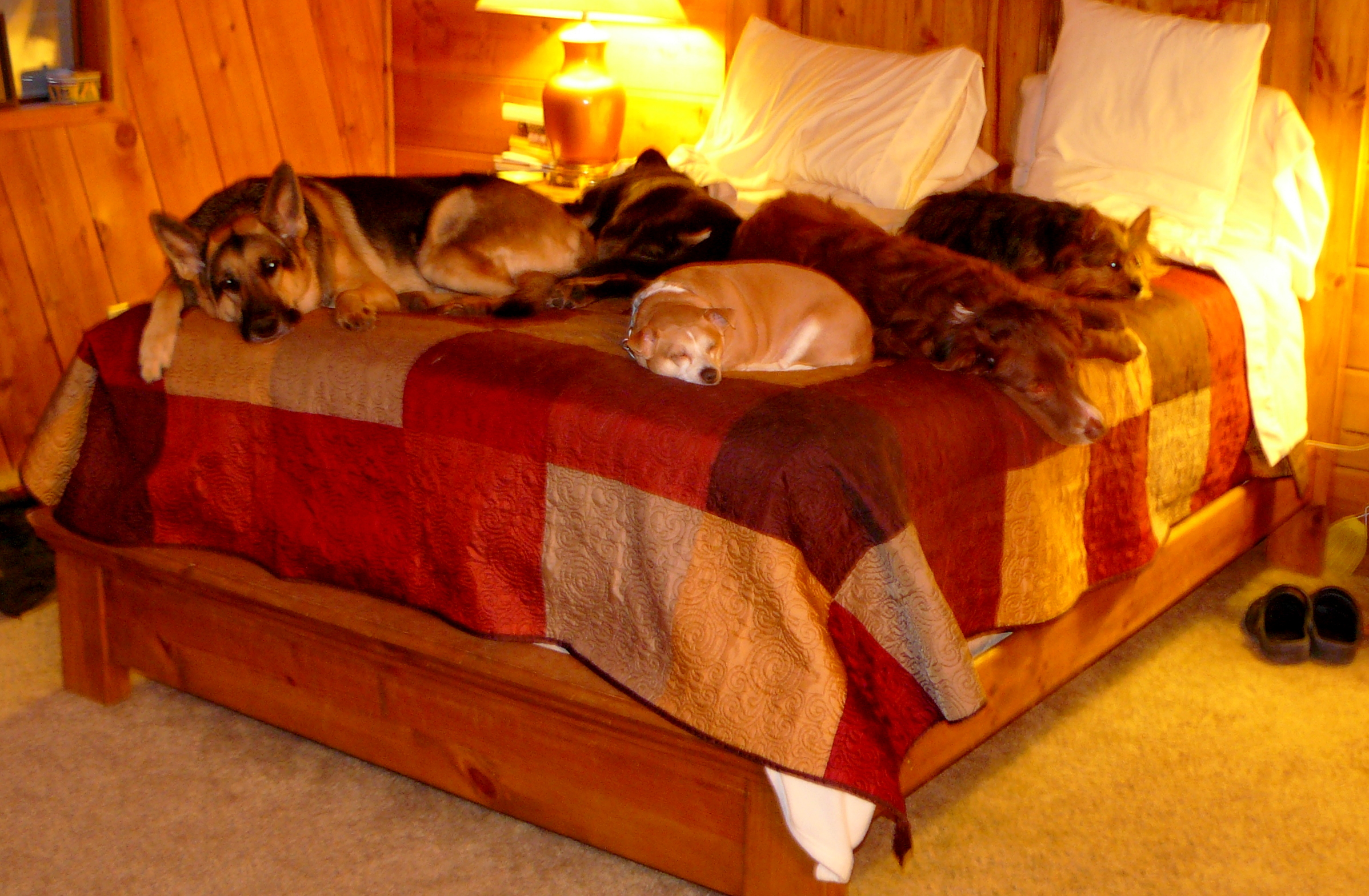
It doesn’t take too much imagination to appreciate that living in a house and sharing it with nine dogs and four cats doesn’t lend itself to perfect hygiene! Indeed, just yesterday morning we found evidence of mice in one of our bedroom cabinets. Plus both the bedroom and the main living room are never completely free of fleas, as my skin attests to. Then let’s not even speak of the hair and dust around the house!
Plus we live in a very rural location and the dog traffic in and out of the house is a consequence of our lifestyle choices that we do accept (99% of the time! 😉 ).
But possibly living a healthier life as a consequence of our ‘dirty’ animals was not something that would have ever crossed my mind until now, thanks to a recent essay published over on The Conversation site.
Read it and come to your own conclusion. It is republished within the generous terms of The Conversation; viz:
We believe in the free flow of information. We use a Creative Commons Attribution NoDerivatives licence, so you can republish our articles for free, online or in print.
ooOOoo
If being too clean makes us sick, why isn’t getting dirty the solution?
January 13, 2016 5.59am EST
Author: William Parker, Associate Professor of Surgery, Duke UniversityWash up. Riccardo Meneghini/Flickr, CC BY-NC-ND.
Today rates of allergic, autoimmune and other inflammatory diseases are rising dramatically in Western societies. If that weren’t bad enough, we are beginning to understand that many psychiatric disorders, including depression, migraine headaches and anxiety disorders, are associated with inflammation. Perhaps the most startling observation is that our children are afflicted with the same inflammatory problems, contributing to the fact that over 40 percent of US children are on medications for some chronic condition.
And the cause, according to the “hygiene hypothesis,” is that being too clean causes a malformation of the immune system, leading to a wide range of inflammatory diseases. The original idea was that decreased infections in childhood due to hygiene led to a weak immune system, prone to become allergic and inflamed.
If the problem is that we are too clean, then, hypothetically, the issue can be easily resolved. We just need to get dirty, right? Wrong.
Getting dirty doesn’t help our immune system and generally makes inflammation worse. Much worse. That means there is something very wrong with the hygiene hypothesis.
Biodiversity is the real issue
What we actually have is a biodiversity problem. Our clean, indoor-centered lives and a Western diet rich in processed foods have depleted our biomes – the bacteria and worms that naturally live in our bodies, our guts in particular. These organisms play a role in the development and regulation of our immune systems, and scientists have identified the loss of biodiversity as being central to the high rates of inflammatory disease in the developed world.
An increase in inflammatory disorders, like allergies, was first observed about 150 years ago among the aristocracy in Europe, then reached the entire population of the industrialized world by the 1960s, and seems only to have climbed steadily since then.
But times change. After generations of living with toilets and water treatment facilities, some of the wildlife in our bodies has been driven to the point of extinction. Our loss of contact with the soil due to indoor working environments has further depleted the wildlife of our bodies. And the typical Western diet doesn’t help either.
Even if you were to never use soap again for the rest of your life, you would not recover the wildlife your body is missing. Many of the lost organisms of our body don’t exist in North America in the wild, and others you simply won’t come across in your daily life.
On top of tremendous social difficulties imposed by a lack of soap, you’d likely increase your exposure to a lot of aggravating and even dangerous germs. The bacteria and viruses deposited on your shopping cart handle or the light switch at a hotel are generally not good. Those are often the germs of modern society that cause infection and inflammation. Your immune system would remain inflamed, and perhaps be even more agitated than before.
So what exactly are we missing? For practical purposes, it’s important to divide the wildlife of our bodies into two groups: microbes and more complex organisms such as worms. Microbes and worms affect our immune systems in different ways and both are important to be healthy. Biodiversity is the key.
A healthy crop of microbes and a few good worms
What would the gut biomes in our hunter-gatherer ancestors have looked like? A study by Jeffrey Gordon at Washington University in St. Louis showed that people living in modern preindustrial societies had more diverse micriobiome compositions than people living in the United States today. Seventy bacterial species Gordon found in preindustrial people’s biomes were present in very different amounts from those found in the modern U.S. participants.
While each group may have been exposed to different kinds of bacteria in their day-to-day life, the primary reason for the difference in diversity was attributed to diet. The preindustrial folks ate a diet rich in corn and cassava, compared to a U.S. diet rich in animal fat and protein.
And you might think that antibiotics are an issue, but they are usually less of a long-term problem for biodiversity. They can deplete bacteria in the gut microbiome, but the dangerous and disease-inducing tailspin is generally temporary. The microbiome usually recovers quite nicely, for the most part, although some lingering effects can remain.
The second group of organisms that we need are intestinal worms called helminths. These worms are called mutualists, because they benefit from us and we benefit from having them hanging around in our intestines. They used to naturally live in our gut. In fact, only 150 years ago most people in the West had intestinal worms that helped regulate immune function and prevent inflammatory disease. The culprit here isn’t diet, but cleanliness and sanitation.
Eat some fiber. Ali Karimian/Flickr, CC BY-SA.
If getting dirty won’t help your biome, what can you do?
When it comes to bacteria, a healthy diet is the critical ingredient. We can actually achieve a good mixture of gut bacteria very similar to that of our hunter-gatherer ancestors by adopting a good diet high in fiber and low in processed foods. The right diet helps the good bacteria in your gut flourish, and might make it easier for new varieties of good bacteria to take root.
In addition, there are some products that might, in theory, support a more hunter-gatherer-like bacterial flora, by exposing us to the kind of bacteria we don’t encounter anymore, but they haven’t been tested in clinical trials.
Worms are a bit more challenging. There are two schools of thought on how to help helminth-less guts: one is to figure out what makes good worms good for us, and develop a drug that can do the same thing. The other is just to have these good worms living in your intestines.
Personally, I don’t think we can replicate complex biological relationships using a drug. My view is that modern medicine will eventually embrace the actual worm or maybe complex single-celled organisms called protozoans that work the same way, but research in this field is still in the early stages of development.
In the meantime, some intrepid people are going straight for the worm. As in actually acquiring worms in their gut. The challenge for these adventurers is to find a worm that has more benefits than disadvantages.
For instance, the same species of worm can have different effects in different people. The human hookworm, for instance, is commercially available and easily cultured at home. It has been found to treat multiple sclerosis and severe airway hypersensitivity but can also cause severe gastrointestinal distress in many patients.
For now, most individuals interested in immune health will focus on those factors that are risk-free, like avoiding chronic psychological stress, eating well and exercising, and watching out for vitamin D deficiency. These factors, all within our control, are important for avoiding a wide range of inflammation-related diseases, including allergy, autoimmunity, depression and cancer.
ooOOoo
It seems to me that another solution is having more and more dogs and fully embracing them into our lives.
Anyone who has more than a single dog around them knows how a group of dogs, even just a couple, are fantastic companions. Extending that line of thought brings one immediately to the realisation that a person who lives on their own yet has a dog never experiences the loneliness of a person who lives on their own ‘sans chien’.
So hold that notion in your mind as I introduce an item that was recently published on the Care 2 Living Healthy blogsite. It was called, in part, What really makes us happy and is republished here within the terms of Care 2.
ooOOoo
A 75-Year Study Reveals What Really Makes Us Happy
Robert Waldinger directed a 75-year study looking at what makes us happy. It boils down to three things, and they’re not the things we tend to think are going to make us happy. His TED Talk about the study findings challenges our most common life goals.
When you ask most people what would make them happy, their answers tend to cluster around achievement. Maybe they think they’d be happier if they were rich or famous. Or maybe they feel like success in their careers would bring them true happiness.
Unlike many studies on happiness, the Harvard Study of Health Development happened in real time. The researchers didn’t rely on memories of past events. Instead, this project—passed down from research team to research team for 75 years—followed a group of 724 men through their lives. They were interviewed every two years, and got complete physicals at every check-in.
When the project began, 268 of the men were sophomores at Harvard University, where the study took place. The other 456 men were inner-city Boston high school students.
Waldinger was the study’s fourth director and in his talk he explains some of the interesting findings about happiness. He says happiness boils down to three things, but if you wanted to sum it up even more succinctly, you could say this: What really makes us happy is social connection.
Waldinger says there are three main lessons about what really makes us happy that come from this study:
Social connections are critical to our mental and physical health. Whether it’s relationships with family, friends or neighbors, people who have social connection are happier and healthier. In fact, he says, loneliness is toxic. People who want these relationships but lack them are not only not as happy but they experience worse health.
Your number of friends doesn’t matter. What matters most is the quality of your relationships, not the quantity. People with loving relationships in their lives, not just from spouses, but friends or other family members, had overall better health. Quality of relationships was a better predictor of later-life health than markers we tend to focus on, like cholesterol levels.
Quality relationships are good for brain health. People who have quality relationships in their lives have better memory as they age. People without quality relationships were more likely to experience cognitive decline as they grew older.
He defines a quality relationship as one where you feel like you can count on the other person. He says that doesn’t mean never fighting. It means an overall sense of security.
When you hear these results, they sort of seem like a no-brainer, right? But when the study began, 80 percent of participants said being rich would make them happy. We know on some level that relationships are a key to happiness, but we tend to discount their full importance. Why? Waldinger gets into that in his talk, as well (at around 12:15, if you want to skip ahead). You can watch it in full right here:
Published on Nov 30, 2015
What makes us happy and healthy as we go through life?
If you want to invest in “the good life,” where should you put your time and energy? Robert Waldinger answers these questions with lessons learned from a 75-year-long study of adult life that started in the late 1930s and continues to this day.
Robert Waldinger is a psychiatrist, psychoanalyst, and Zen priest. He directs the Harvard Study of Adult Development at Massachusetts General Hospital in Boston and teaches at Harvard Medical School.
ooOOoo
Thus while this study does not refer to dogs, nonetheless a dog or two (or nine!) does provide a wonderful social connection, as all those who know and love dogs will attest to.
Please read, digest and share as widely as you can!
Fellow author, Deborah Taylor-French, recently posted a stark warning for all dog owners. Deborah wrote on her blog, Dog Leader Mysteries, the following:
1 thing more toxic than chocolate for dogs
More toxic than chocolate?
Yes, and it’s everywhere.
Please visit my guest blog post on 4Knines blog “One common thing that is more toxic than chocolate for dogs” Then please comment! Of course, after you comment, I’d love it if you would share far and wide for the love and lives of dogs. After working on this post for about a month I shared it as a guest post so that it may reach a larger audience of dog lovers, beyond my WordPress blog.
(I also can’t resist including the following photograph of Deborah and Syd that was in that post!)
Syd the kid!
So the balance of my post today is a full republication of Deborah’s guest post as it appeared over on 4knines blog.
ooOOoo
One Common Thing That is More Toxic Than Chocolate for Dogs!
Actually, I didn’t know the answer until I did the research. The startling fact that thousands of products contain this substance stymied me. There are no warning labels for pet owners. Because these products are made for people, hundreds of dogs and cats suffer when adults or children leave these foods and productswhere pets can ingest them.
This substance naturally develops in grapes and onions. Is also an ingredient often added to gum, candy, mouthwash, toothpaste, and ear medications for children, plus it is added to many prepared foods.
Gum, candy, peanut butter all harmless, right?
WRONG! What is okay for people to eat, proves toxic for pets. Chocolate and nuts are two examples of what people can eat, yet can be lethal for pets. Xylitol damages dogs’ livers. In both people and canines liver failure often means the end of life.
A Tiny Bit Could Kill Your Dog…
In an article in The Wall Street Journal, Mark Maremont reported that,“Besides gum, xylitol is used by manufacturers in products including mints, gummy vitamins, toothpaste, specialty peanut butter and melatonin sleep aids—in part because it has about two-thirds the calories of sugar and is safer than sugar for diabetics. Some gum makers cite studies showing dental-health benefits.”
“A type of sugar alcohol extracted from plants, xylitol is well-tolerated by humans, but in dogs causes a sudden release of insulin, resulting in low blood sugar and potentially leading to seizures and brain damage. It also can cause liver failure.” Xylitol has been added to literally thousands of products. It is safe in these many products for people, but it kills dogs and cats.”
Toxin Levels for Pets in Xylitol Products
Hershey’s Ice Breakers contain 10 times the pet toxic Xylitol level per piece
“Xylitol makes up more than half the weight in certain Ice Breakers flavors, about 1.2 grams of xylitol per piece, according to Hershey’s consumer helpline. That’s about 8 to 10 times the amount of xylitol in some other popular gums. A pack of the brand, introduced in 2006, contains 40 pieces.”
Hard candies, breath mints, toothpaste, tooth whiteners, mouthwash, some jams and jellies all contain xylitol. The U.S.A. Federal Drug Administration does not require warning labels on any of these sweet treats.
As reported in the Wall Street Journal article, “A toxic dose of xylitol—enough to potentially cause low blood sugar or other symptoms—is 0.1 grams per kilogram of the dog’s weight.”
one piece of Xylitol could be toxic for a 26-pound dog
one piece is 12 times as toxic as a piece of dark chocolate the same weight
“Xylitol is extracted from plant material and is available as an ingredient (additiive) in more and more foods, but the amount naturally occurring in foods is very small. In addition to gum, xylitol can now be found in some hard candies, chocolate, table syrup, jams, and jellies.”WebMD.com/ supplements/xylitol
What other health risks does xylitol pose for pets?
“…some animal studies have shown tumor growth resulting from high doses of xylitol over long periods.…” – WebMD Warning for Dog Owners
“If you are a dog owner, be aware that xylitol can be toxic to dogs, even in small amounts”
chewable vitamins
Nicorette Gum
IceBreakers
Peanut Butter (some brands)
chocolate
tooth paste
Xlear Nasal Spray
Note: This list is far from complete.
Please read the labels on anything you put on pet level in your car and home. Dogs love sweets.
Keep these foods containing xylitol away from pets:
onions
garlic
onion like shallots, green onions, etc.
peanut butter
grapes
raisins
chocolate
anything baked with xylitol
Xylitol Poisoning Affects Canine and Feline Livers
Xylitol may kill pets that ingest it. If you suspect your dog of eating any items made with this toxin, immediately rush your pet to a veterinarian.
Symptoms of Poisoning
loss of balance
difficulty breathing
difficulty walking
refusal to drink
refusal to eat
unconsciousness
Please help dog lovers and cat lovers by sharing.
Here’s hoping all dog lovers will receive benefit from my second guest post on 4Knines’ blog. Ready to save pets’ lives? Please share this with dog and cat lovers everywhere. Spread the word about this natural substance, artificially introduced to our homes in dozens of products. Please share and discuss the threat to pets’ health and lives from ingesting even a small amount of xylitol.
Have you had a pet that ingested xylitol? Add to our discussion in the comment section.
ooOOoo
As has been said, please share this as far and wide as you can!
Any experiences or other details that you have please make them known as a comment to this post.
So here we are on the last day of 2015, the cusp of a new year and who knows what the next twelve months have in store.
All I am going to do is to reflect on the huge potential our modern ‘wired-up’ world offers for learning.
Most will know the saying, “You can’t teach an old dog new tricks.”
But it is wrong!
Here at home, where a number of the dogs are in their old age (Pharaoh is the equivalent in age of 100 human years; one dog year being approximately the same as eight human years) Jean and I see no difficulty in these elderly dogs learning new tricks. Staying with Pharaoh, as an example, his hearing is pretty poor now but he has learnt a whole range of hand signals in recent months and he still communicates very well with us.
There is much in this new world that concerns me and I know I am not alone with this view. But the rewards of reading the thoughts of others right across the world are wonderful beyond measure.
Here’s a tiny dip into some fascinating items and articles that have graced my in-box in just the last twenty-four hours.
Eckhart Tolle’s Moment Reminder: “As far as inner transformation is concerned, there is nothing you can do about it. You cannot transform yourself, and you certainly cannot transform your partner or anybody else. All you can do is create a space for transformation to happen, for grace and love to enter.”
Val Boyco, “Everything comes to us that belongs to us, if we create the capacity to receive it.” ~ Rabindranath Tagore
John Zande in his Sketches on Atheism, “Theism’s most potent, pervasive, irresistibly enchanting gift to frightened but otherwise sane individuals is a belief—a promise—that upon their death they will go home.”
Mother Nature Network, “7 ways to meditate while you move – If you don’t have time for sitting meditation, give one of these active meditations a try.”
George Monbiot, (on the UK floods), “These floods were not just predictable. They were predicted. There were clear and specific warnings that the management of land upstream of the towns now featuring in the news would lead to disaster.”
and my final selection:
Patrice Ayme: (from an essay on Brain & Consciousness) “The best microprocessors you can buy in a store now can do 10 to the power 11 (10^11; one hundred billions) operations per second and use a few hundred watts,” says Wilfred van der Wiel of the University of Twente in the Netherlands, a leader of the gold circuitry effort. “The human brain can do orders of magnitude more and uses only 10 to 20 watts. That’s a huge gap in efficiency.”
So here’s to a new year of wonderful new learnings. And let me leave you with this additional message for 2016.
Namely that The Nation weekly journal are celebrating their 150 years of publishing the magazine. They recently published a 150th Anniversary edition and the front editorial is written by Katrina Vanden Heuval. There is a ‘break out’ to one side on Page 2 of that editorial that reads:
Change is inevitable, but the one constant in The Nation‘s history has been a faith in what can happen if you tell people the truth.
Finding out the truth and sharing it so we can all see what can happen is my wish for 2016.
Happy New Year to all of you, and to all of your friends and loved ones.
According to the National Anti-Vivisection Society, dogs taking part in scientific experiments are made to inhale toxic substances through masks, force feed through tubes, and are strapped in harnesses while being injected with drugs.
The facility is owned by a US firm and would be Britain’s second facility for breeding beagles specifically to be cut open and experimented on while still alive.
The other facility breeds 3,000 beagles for animal testing each year.
As at 09:30 PST yesterday, the target of 310,000 supporters of the petition was just short by 761 persons. Fingers and toes crossed that by the time this post is published the target will have been met. I know there are many caring readers of this blog who wouldn’t hesitate for a moment to sign the petition.
John left an intriguing question as a comment to yesterday’s post.
Oh to have a time machine!
Tell me, Paul, if you did have one, a time machine, what three moments in history would you visit?
It really grabbed Jean and me and we spent quite a few minutes during the day kicking around ideas. At first, it was easy just to do a web search on epic moments in history and see if any of them related to me. But that seemed too easy. So I have picked three that do connect with my life.
May 8th, 1945
I was born on November 8th, 1944. I was born in North London (Acton). It was the period of the Second World War when the V2 rockets were landing all around. Take, for example, the incident just eleven days after my birth, when on the 19th November, 1944 a V2 landed in Wandsworth causing much damage and many fatalities around Hazlehurst Road and Garratt Lane. Spend a moment reviewing who died, and their ages, in that bombing.
So I was precisely six months old when the armistice was announced on May 8th, 1945. As Wikipedia describes it:
Victory in Europe Day, generally known as V-E Day, VE Day or simply V Day was the public holiday celebrated on 8 May 1945 (7 May in Commonwealth realms) to mark the formal acceptance by the Allies of World War II of Nazi Germany’s unconditional surrender of its armed forces.[1] It thus marked the end of World War II in Europe.
On 30 April, Adolf Hitler, the Nazi leader, committed suicide during the Battle of Berlin. Germany’s surrender, therefore, was authorised by his successor, Reichspräsident Karl Dönitz. The administration headed by Dönitz was known as the Flensburg Government. The act of military surrender was signed on 7 May in Reims, France and on 8 May in Berlin, Germany.
I would have loved to witness, by being in the crowd that day, the King and Queen acknowledging the end of the war in Europe.
May 8, 1945: King George VI and Queen Elizabeth, with Princess Elizabeth and Princess Margaret, are joined by Prime Minister Winston Churchill.
Nevertheless, that day in May, 1945 has been memorable for me for all of my life. Because my mother, who is still alive today, aged 96, (still living in London but spending Christmas with my sister in Cape Town, by the way), held me in her arms and said aloud: “My dear Paul, you are going to live!” I grew up with those loving words deeply rooted within me.
2. Stonehenge – too many moons ago!
For reasons that I am not entirely clear about, I have always been fascinated by the stars. From the point of view of using the stars to help me navigate strange parts of the world, both on land and at sea. I grew up regarding Polaris, the North Star, almost as a companion. Later in my life when sailing solo from Gibraltar to The Azores, a distance of just under 1,150 nautical miles, on a Tradewind 33 yacht, despite having an early GPS unit it was backup to me using a sextant to maintain (some) awareness of my position.
Tradewind 33 – Songbird of Kent. My home for five years.
(Reminds me of a anecdote when I was crewing on a privately-owned East Coast Essex fishing smack. I was asking Bill, the owner, why he always laid his thumb on the position on the chart in response to the question, “Where are we?” Bill’s reply: “That’s as accurate as anyone can be!”)
In 1969, when I was driving across the desert plains of Australia, often with inhabited places more than a 150-mile radius away (the Simpson Desert especially coming to mind) the Southern Cross seemed to keep me grounded and remind me that I was making progress.
Back when I was living just outside Totnes in South Devon, my frequent drives up to London along the A303 took me past Stonehenge in Wiltshire.
The December solstice happens at the same instant for all of us, everywhere on Earth. This year the solstice occurs on Tuesday December 22nd at 04:49 GMT (Universal time) with the sun rising over Stonehenge in Wiltshire at 08:04.
THE EARLIEST MONUMENT
It is possible that features such as the Heel Stone and the low mound known as the North Barrow were early components of Stonehenge,[3] but the earliest known major event was the construction of a circular ditch with an inner and outer bank, built about 3000 BC. This enclosed an area about 100 metres in diameter, and had two entrances. It was an early form of henge monument.[4]
Within the bank and ditch were possibly some timber structures and set just inside the bank were 56 pits, known as the Aubrey Holes. There has been much debate about what stood in these holes: the consensus for many years has been that they held upright timber posts, but recently the idea has re-emerged that some of them may have held stones.[5]
Within and around the Aubrey Holes, and also in the ditch, people buried cremations. About 64 cremations have been found, and perhaps as many as 150 individuals were originally buried at Stonehenge, making it the largest late Neolithic cemetery in the British Isles.[6]
I would have loved being present at Stonehenge when the builders finally were able to stand back and see the Sun “speak” to them at the first Solstice after that point in its construction.
It seems to me to be a most magical place yet Stonehenge offers a mathematical and rhythmic foundation to that magic.
3. First man into space – 12th April, 1961
It was, of course, Yuri Gagarin, who made the first complete orbit of Planet Earth in space.
Yuri Alekseyevich Gagarin
I would have given anything to be in his seat (and suit). For to look out and see our planet as a small object in an enormous outer space would have to change one’s perception of almost everything; for evermore.
My wish for the New Year is that we recognise our place both in history and on our Planet Earth, and care for it as the sole, beautiful home that we have.
Now that global recognition would be a moment in history that I would want to experience before I die!
(Thanks John for inspiring me to jot down these thoughts!)













 Learning from Dogs