Category: Science

And Another Saturday Smile

Enjoy your weekend, and don’t miss the Harvest Moon!

Another fabulous reposting of an article that first was seen on the Care2 site.

ooOOoo

This Man May Wear a Hard Hat, But He Sure Has a Soft Spot for Dogs
3188741-largeBy: Laura S. September 11, 2016

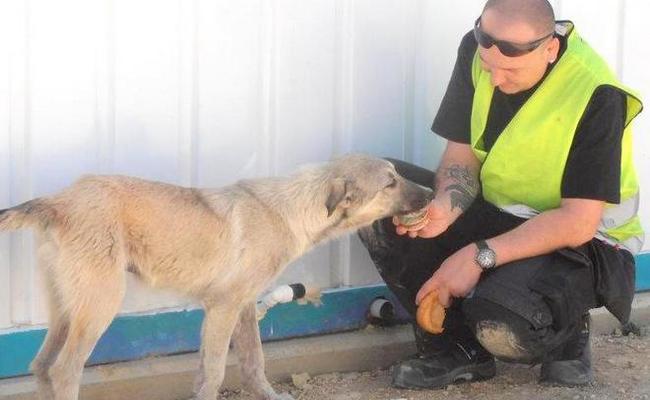
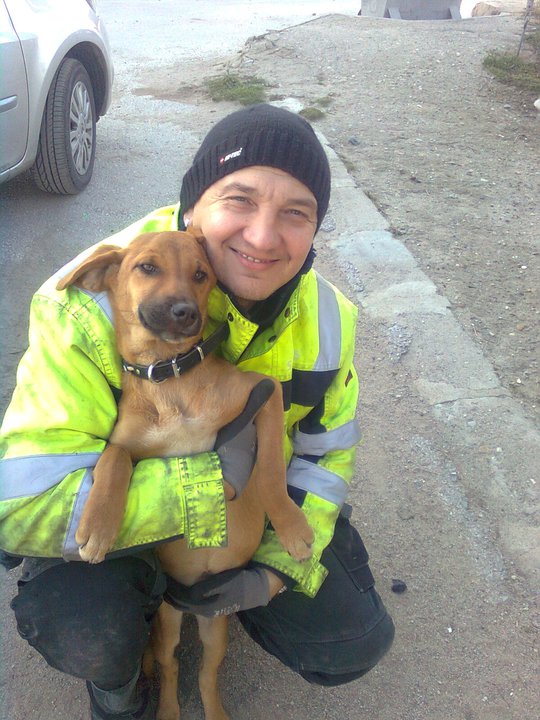
Max Kahrimanovic lives in his hard hat. It’s covered in the dust of three continents where he programs wind turbines, often at a dangerous height. But some may say Max’s greatest accomplishments unfold in the far less intricate scenarios down on the ground where he feeds hungry, and often very thirsty, stray dogs. This is the story of how Max won the trust of one of those dogs and the remarkable new life she is now beginning.

my-work1
So close he could kiss the clouds, Max programs wind turbines internationally.

“I saw her the very first day I came to the construction site,” Max said of the shy sweetheart he encountered during his latest assignment in Turkey. “She was scared and wouldn’t approach no matter what. I would leave food and would have to walk away. Then, from the far, I would see her eating and drinking what I left for her. Slowly she started to trust me and one day she finally let me pet her on the head.”

From that day forward Karis (as Max named her) decided that she had adopted Max. She would keep watch outside his office door and she would be waiting for him when he arrived at work each morning.

Although she was once so afraid of human touch, Karis soon learned that Max was different than the others she’d encountered.

“She can be naughty at times,” Max laughs, thinking of the occasions Karis dumped over the trash cans. “She wasn’t hungry, I know that much. I was feeding her three times a day. But I guess the leftovers smelled delicious to her and she had to check it out.”

And one day, when Max arrived, Karis had a surprise for him. Overnight, she had delivered seven puppies.

“My first thought was devastation,” Max said candidly. “I know, you’ll think how can I be devastated seeing so much cuteness. But in all these years of traveling through Europe, Morocco, New Zealand, etc. I’ve seen so much misery involving these animals, that I couldn’t feel anything else at that moment.”

At this point, Max had already found a home for Karis in the U.S. and was making arrangements to transport her there. But with seven more lives to worry about, now what?

“How are we gonna manage 7 pups too?” Max wondered. “Knowing what will happen to them after I leave was devastating. I knew they will either die under car wheels, die of starvation, diseases or they will get killed by other bigger dogs that wander around there.”

So, despite the enormity of the costs and challenging logistics, Max and his wife Neli – back in Sweden – began making arrangements to transport the entire family of dogs to the U.S. for adoption. They turned to the Harmony Fund international animal rescue charity for help with the costs of the rescue.

The whole family will be coming to the U.S. soon, and Karis already has a permanent home with one of Max’s friends who has adopted internationally before. Max has no doubt that Karis will be very good to her pups during the transition as she has always been such an excellent mother.
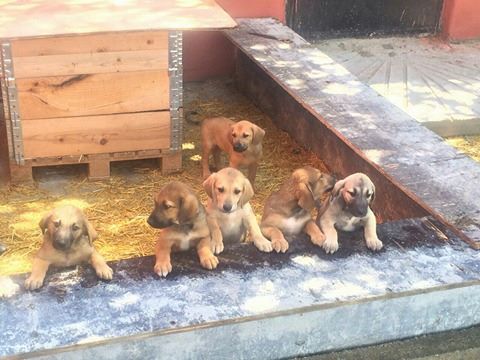
Karis and her pups were moved to a safe location where they await travel to the U.S.

“When she had the puppies, I admired how she never went to eat their food that I gave them,” Max said. “She waited for me to get hers ready. One time I left 6 hard boiled eggs on the table for her lunch. I just stepped out to wash my hands and when I got back eggs were gone. She ate them like that, not peeled or anything.”

Max isn’t always admired for his devotion however. He said he’s known by management as “the guy who feeds strays” and that he has received warnings not to do so. But he simply can’t go against his own moral compass.

Max always makes time to offer food and water to strays like this one in Turkey.

“This is much stronger than me,” Max explains. “I can’t eat my lunch knowing there is a being, not far from me, starving and hasn’t had a piece of bread for days…. We usually work in small villages far from civilization or any bigger cities. If it is possible to buy it, then I always have one or two huge bags of dry food and some cans in the trunk of my car. And on my way from the site to my hotel, I stop and feed strays that I see. If it isn’t possible to buy dog food, then I improvise with our food by either taking extra breakfast from the hotel or just by buying extra food when I go shopping for myself. I know I can’t save them all. But for that day or that time when I meet that dog I can feed him at least and give him some water.”
joy-turkey1ooOOoo

I am so pleased to promote what Max Kahrimanovic is doing and to thank Laura for writing this up in the first place.

Max’s admission in that last paragraph uses words that I have heard Jean using when I first met her back in December, 2006 when she was living in Mexico and rescuing so many street dogs and finding loving homes for them in the USA.

Exit one polyp!

It’s your fault this is being published! 😉

I couldn’t resist showing my appreciation for the interest and best wishes from so many of you regarding the removal of my polyp.

Jean and I arrived at Three Rivers Hospital locally in Grants Pass a little before 10am and were quickly admitted to the pre-op room. Once I had been connected to all the various devices it was but a short wait before Dr. Nelson came in to check that all was ready for the procedure.

Amazingly, I was then back in the pre-op room after the 45-minute procedure had been carried out by 11:40am. Dr. Nelson then briefed me that everything had gone well and passed me the photos below.

I couldn’t resist sharing the photographs showing the polyp before removal on the left-hand side and the ‘crater on the moon’, as Dr. Nelson described, on the right-hand side it where the polyp once was!

scan-16The photograph on the right was taken before it was sewn over to prevent any subsequent infection.

Once again, thanks for all your best wishes. As Marina and Sue and others implied it was a very straightforward operation.

Listening to our pets in more difficult times.

Loving owners want so much to know when their pets may be in pain.

Our dear Pharaoh (born June, 2003) is getting very weak in his rear hip joints and Jean and I are very sensitive to understanding whether or not he is in pain. Any loving owner of a cat or a dog would be the same; and it doesn’t stop with our cats and dogs.

Care 2 Healthy Living recently had an article on just this subject: Trying to know when our pets are in pain.

Here it is shared with you good, caring people.

ooOOoo

6 Ways Your Pet Tells You They’re In Pain

1390100-largeBy: Lisa Spector September 11, 2016

September is Animal Pain Awareness Month. My Lab, Sanchez, is 13-years-old. I still sometimes have a hard time identifying the difference between a behavior problem and a physical ailment. Our dogs are so adaptable and want to please us so much, it’s sometimes challenging to detect their pain.

These often subtle signs will help you determine when your pet may be showing signs of pain. Some require a veterinary visit, but other times there are simple things you can do to help. When Sanchez had a slipped neck disc at age 9, I thought he was in so much pain that he’d never recover. A few acupuncture sessions later, and he turned into a puppy!

1. Mouth Fluttering

It wasn’t until I made a video with Sanchez in it that I noticed he was making all sorts of mouth movements. (He starts the mouth movement at :28 seconds.) I knew he wasn’t stressed and his lip licking was not a calming signal. It sparked enough curiosity that I had my vet look at this mouth. Sure enough, he needed his molars pulled. As hesitant as I was to have this operation on a 13-year-old dog, he came through it just fine and started acting much younger post-surgery. I didn’t realize he was in pain for months.

Little dog maltese refusing eating his food from a bowl in home

2.  Decreased Appetite

A change in desire to eat is not always a sign of illness. It sometimes can also be about mouth pain. If you give Fido or Fluffy hard food, try some soft food and see if they want to eat. Experiment with different textures. Decreased appetite is a good reason to visit your vet.

sanchezupcar-443x3323. Reluctance to Get In The Car

While this might happen throughout a cat’s entire life, dogs may show hesitancy getting in a car when it causes them pain to jump up (or down). Try using a ramp so that they can easily get in and out without adding any pressure to their joints.

thinkstockphotos-589434262-405x4434. Difficulty Standing Up

Older pets tend to sleep a lot and they can be slow at getting up. Give them plenty of time to stretch as they know how to listen to their own bodies. But, if Fido or Fluffy is hesitant to stand up, they may be feeling pain. Personally with Sanchez, this is one of the areas where it’s hard to tell the difference between behavior and pain. But, I can usually find out the answer quickly when I entice him with a yummy treat.

thinkstockphotos-530496846-443x2955. Decreased Activity and Engagement

When pets are in pain, they often want to be left alone. Watch for any signs of social behavior changes. Is Fido engaging with his dog buddies? Is Fluffy getting in more cat fights? Senior pets have a taxed nervous system in general and aren’t as curious as their puppy or kitty playmates. But notice if there has been any drastic change in their activity level. It may be a reason for a vet call.

The International Veterinary Academy of Pain Management (IVAPM) also offers this downloadable chart that helps you determine when you’ll need to make a vet visit.

ooOOoo

That downloadable chart is a graphical version, as in a pdf, of this post. Nonetheless, IVAPM are to be congratulated on producing the chart and for highlighting the important indicators when trying to decide whether or not to take your loved pet to see a vet.

Eating human food?

For our precious dogs, that is!

Dog Food Selector recently published a post about whether or not dogs can eat human foods.

As one might anticipate the answer is neither an unqualified yes nor a no. The article included a detailed list of human foods and an analysis of their potential risks as well as a useful graphical summary.

But first to the article.

ooOOoo

Can Dogs Eat Human Foods?

The most important recommendation for introducing new foods to your dog’s diet is to do so progressively.

Because introducing new foods into your dog’s diet may lead to digestive problems.

Our advice is to introduce only one new food at a time, in small amounts at first and observe your dog for any reactions to the change.

Keep in mind that every dog is different, so if you have any doubts please check with your veterinarian to see which ingredients are appropriate for your dog.

But how about foods you eat?

We’re sure you sometimes wonder yourself: Can my dog eat this? Is this food bad for him? Are human foods for dogs OK?

The following list includes numerous foods organized by alphabetical order.

Every food is marked with the potential risk to induce gastrointestinal or toxicity problems in dogs.

The risk is classified as:

0: Minimal risk if given in controlled amounts
1: Low risk
2: Moderate risk
3: High Risk
We advise you not to give your dog foods marked with risk 2 and 3.

Anyhow, you should always consult a vet to get a specific overview of the human foods’ risks on your dog.

ooOOoo

Then follows an extensive list of foods in alphabetical order. Here’s an example:

Food: Apricot Risk: 2 Comments: The seeds, leaves, and stems contain cyanide. Additionally, the pits can be a potential choking hazard or cause an intestinal obstruction.

But as well as the detailed list of foods with their associated Risk factor and additional comments, the article included the following ‘infographic’.

Produced by DogFoodSelector.com

I think that’s a most useful reference.

What are your thoughts as to how useful this chart is?

Senior Smiles

Adopting dogs who are no longer young animals.

A trip to your local animal shelter reveals that dogs of all types, backgrounds, and ages may usually be seen. Inevitably, those dogs that are no longer in ‘the first flush of youth’ are frequently seen as less adoptable than younger animals. While that is understandable from a prospective owner’s point of view there’s no reason at all to disfavor the older dog.

Both Casey and Pedy were dogs that Jean and I adopted when they were well into their middle years, or six-years-old to put a number to it.

Casey, shown above, had been in the animal shelter for over a year and on top of being six had the added burden of being a Pit Bull breed.

Hi Pedy, I'm the bossman around here. Name's Pharaoh and you'll be OK.
Hi Pedy, I’m the bossman around here. Name’s Pharaoh and you’ll be OK.

So when the Care2 blogsite published a post about adopting senior dogs I thought that this was most certainly something to be shared with you.

Here it is.

ooOOoo

What Advice Would You Offer Someone Adopting a Senior Dog?

1388615.large

By: Vetstreet.com August 18, 2016

About Vetstreet.com
Those of us who have been fortunate enough to share our hearts and homes with a senior dog know just how special those gray-muzzled darlings can be. Earning the love of an aging pup who truly needs you creates a special bond that’s hard to put into words.

True, they may have some age-related health issues (like arthritis, dental disease or failing vision or hearing) that require attention or treatment. But older dogs have lots of pros, too, like the fact that they’re likely to be better trained than a puppy and they’re probably game to lounge around with you and take it easy. And when it comes to adopting a senior dog, you have the benefit of knowing what you’re getting in terms of size and in most cases, personality.

Our readers recently shared some great tips for people getting their first dog or cat — and in fact, we know that many of you have opened your homes to adult dogs. So when we wanted to offer tips to people looking to welcome an older canine into the family, we turned to our Vetstreet Facebook followers and asked: What’s the one piece of advice you’d give someone adopting a senior dog? And, as we suspected, our readers came through with some excellent — and touching — words of wisdom.

Advice for Someone Adopting a Senior Dog

Many readers expressed the importance of showering your senior dog with love. “Love them unconditionally, as you don’t know how long you will have them,” said Peggy Lowe-Brooks. “Enjoy each day they are in your life.”

Rich Dunn agreed, saying, “Love them, love them. Treat them like family, be there to the end and hope someday to see them on the other side!” Dee Davis added, “Make sure you’re committed to love, care and cater to them for them the rest of their lives.”

Mike Carroll suggested remembering that, for some dogs, age might be just a number: “Have fun with them; they still have a lot of energy and the desire to do most anything they ever did before. Baby them big time and be ready to be on the receiving end of some serious love and affection from them. Just let them enjoy the rest of their life like never before.”

William West Patience’s experience backs up Carroll’s suggestion. “I have had dogs that lived until 15, then I adopted one that was 16 because no one else would,” he said. “It has been a rewarding experience and has taught me so much. Except for some mobility issues he doesn’t know he’s an old dog.”

Of course, it’s important to remember that taking on a dog during his golden years can be a big responsibility, and potential owners should be ready for that. “…Remember they may have expensive medical bills; be prepared to give them the medical care they will need,” said Priscilla Leuliette.

Susan Holt Stanley was of a similar mind, saying, “Love them with your heart, care for them medically and tell them a million times how special they are!”

And Sarah Vaughn reminded us of the golden rule: “Be patient! One day you’re going to be elderly and you don’t want someone yelling at or getting frustrated with you because you move so slowly and have accidents because you can’t make it outside (or to the facilities) in time.”

If you’re considering bringing a senior dog into your home, there are numerous things you can do to help him enjoy his senior years. You might take steps to pet-proof your home in a way that makes it easier for him to get around. And believe it or not, teaching your old dog new tricks isn’t only possible, it’s a great way to help your new-old pup stay mentally and physically sharp! Getting him to the vet for regular exams and keeping an eye out for any physical or behavioral changes is important for dogs of all ages, but becomes perhaps even more important as he ages.

Care2 readers, what advice do you have for people adopting senior dogs? Tell us below in the comments. [Ed: as comments left on this post.]

By Kristen Seymour | Vetstreet.com

ooOOoo

Keeping an eye out for any physical or behavioral changes doesn’t just apply to aging dogs! 😉

Welsh Sheepdogs

Congratulations to the BBC for a fascinating documentary.

Recently the BBC aired a documentary about Kate Humble and her journey to have her dog, Teg, registered as a Welsh sheepdog by the Welsh Sheepdog Society. It was fascinating and a ‘must see’ for all dog lovers irrespective of their residency in Wales or not! The programme, that is no longer available (still on BBC iPlayer at the time of writing), was described on the BBC website, thus:

When Kate Humble decides she wants to breed from her dog Teg, she finds out that her beloved pet is a Welsh sheepdog. She sets out to learn more about this little-known and endangered breed, and discovers that a true Welsh sheepdog is a working dog. Kate wants Teg and her future puppies to be certifiably Welsh, and sets out to train Teg to work in the traditional Welsh way. Teg shows willing, and Kate works on her own shepherding skills, but will the demanding experts from the Welsh Sheepdog Society be impressed by the pair’s performance?

However, some smart soul has uploaded the episode to YouTube so if you want to watch it do so quickly before it is removed.

Published on Aug 15, 2016

Kate Humble sets out to breed Welsh sheepdog puppies from her beloved pet Teg, and learns about the threat facing British herding dogs. A true Welsh sheepdog is a working dog, and so Kate sets out to train Teg to work in the traditional Welsh way. Along the way, she meets a team of researchers at the University of Aberystwyth, whose groundbreaking DNA research reveals some remarkable facts about the Welsh sheepdog. If Teg can produce a litter of healthy Welsh sheepdog puppies, she can play a big part in helping one of Britain’s unique herding dogs survive for generations to come.

I’m going to continue this item tomorrow for there’s more information that I think you will find interesting.

But for now, watch the documentary – you’ll love it!

Life’s Lottery!

A traumatic accident to Casey is very professionally dealt with.

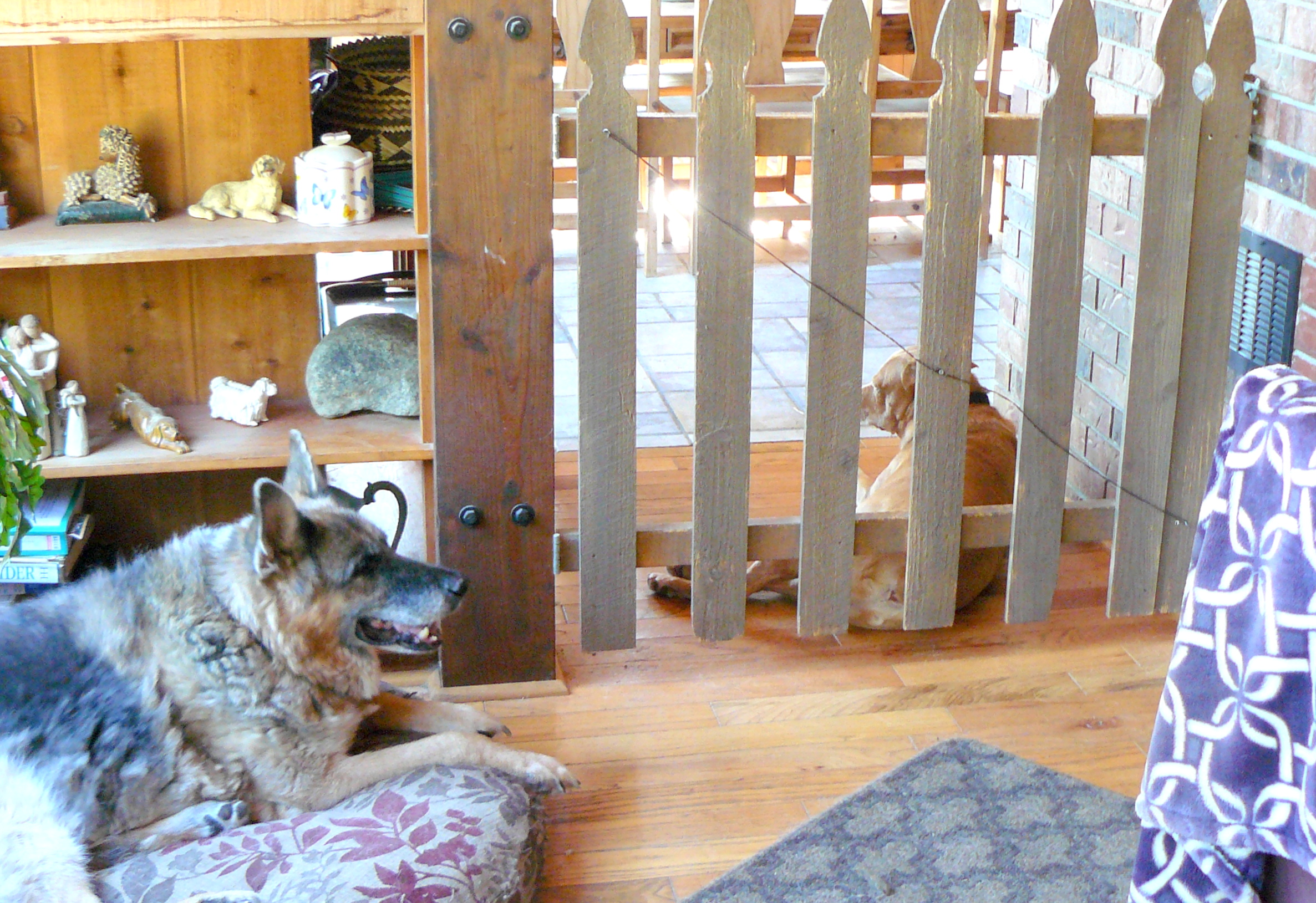
Our nine dogs are divided into two groups. One group lives in the kitchen/dining-room area (Casey, Paloma and Ruby) and the other dogs in the living-room/bedroom area (Pharaoh, Sweeny, Pedy, Oliver, Cleo and Brandy).

These two groups are separated by a gate, as seen here with Pharaoh resting on his bed and Casey at ease just on the other ‘kitchen’ side.

P1160402Both Jean and I go between the two areas via the gate many times daily.

Last Sunday evening, as Jean was going to the kitchen, Casey stuck his head through one of the vertical spaces in the gate and must have become stuck albeit what then happened was upon us in a flash. For Brandy grabbed the left-hand side of Casey’s face with his own jaw and the two dogs were locked together. It was a bit of a struggle to separate Brandy from Casey and when we took a look at Casey’s face it was clear that there was a laceration along his lower, left-hand lip. However, he did not appear to be in pain and we all proceeded to bed.

On the Monday morning after I had returned from my bike ride with a local group of neighbours I queried with Jean whether or not we should just check that Casey wasn’t too badly injured despite the fact that Casey was showing no signs of discomfort. Nevertheless, his wound was not a pretty sight and a quick call to our neighbour Jim Goodbrod, who is also a Doctor of Veterinary Medicine (DVM), resulted in Jim saying to bring Casey round to his place then and there.

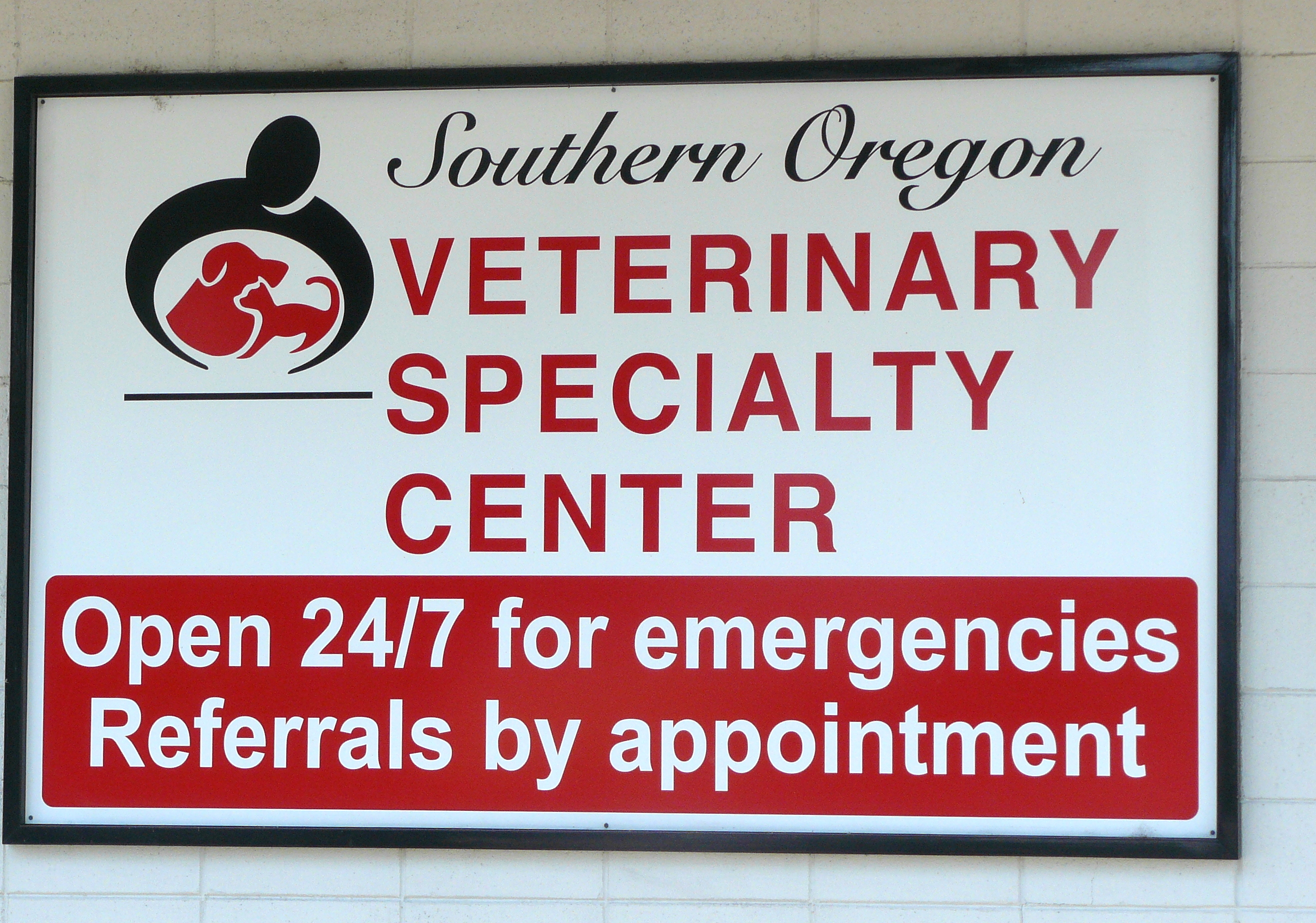
We are glad that we did for Jim quickly discovered that the laceration was not only to Casey’s lower lip but that much of his gum below the gum line along Casey’s teeth had been torn away exposing the jaw bone. Jim said that this required specialist attention and had no hesitation in recommending Southern Oregon Veterinary Speciality Center (SOVSC) in Medford, about 40 miles to the South. Jim went inside his house and made an appointment for us to take Casey to SOVSC for 2pm that afternoon.

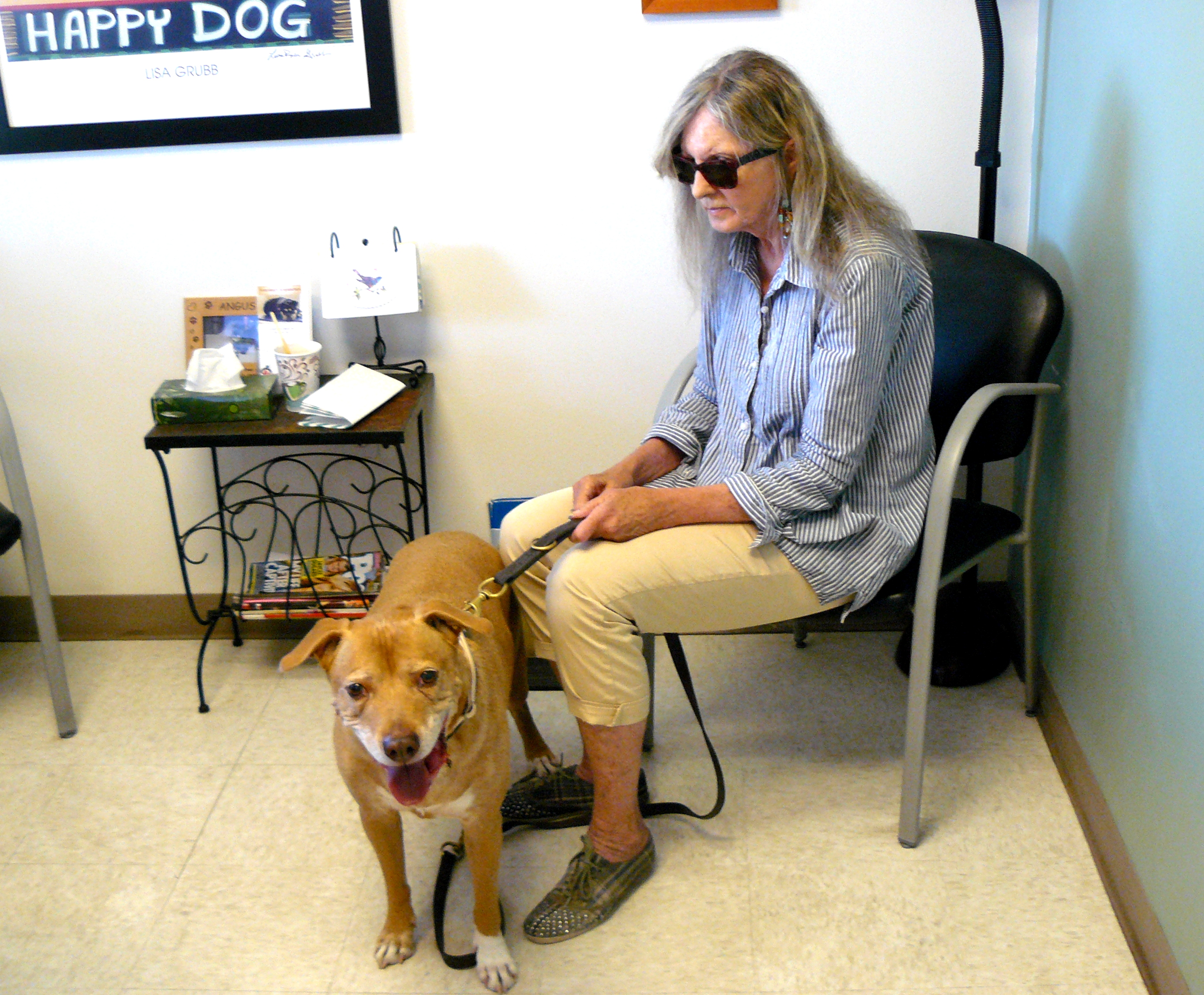
P1160385We had previously been to SOVSC with Hazel and were impressed with their level of expertise and experience and the fact that they were open twenty-four hours every day of the week!

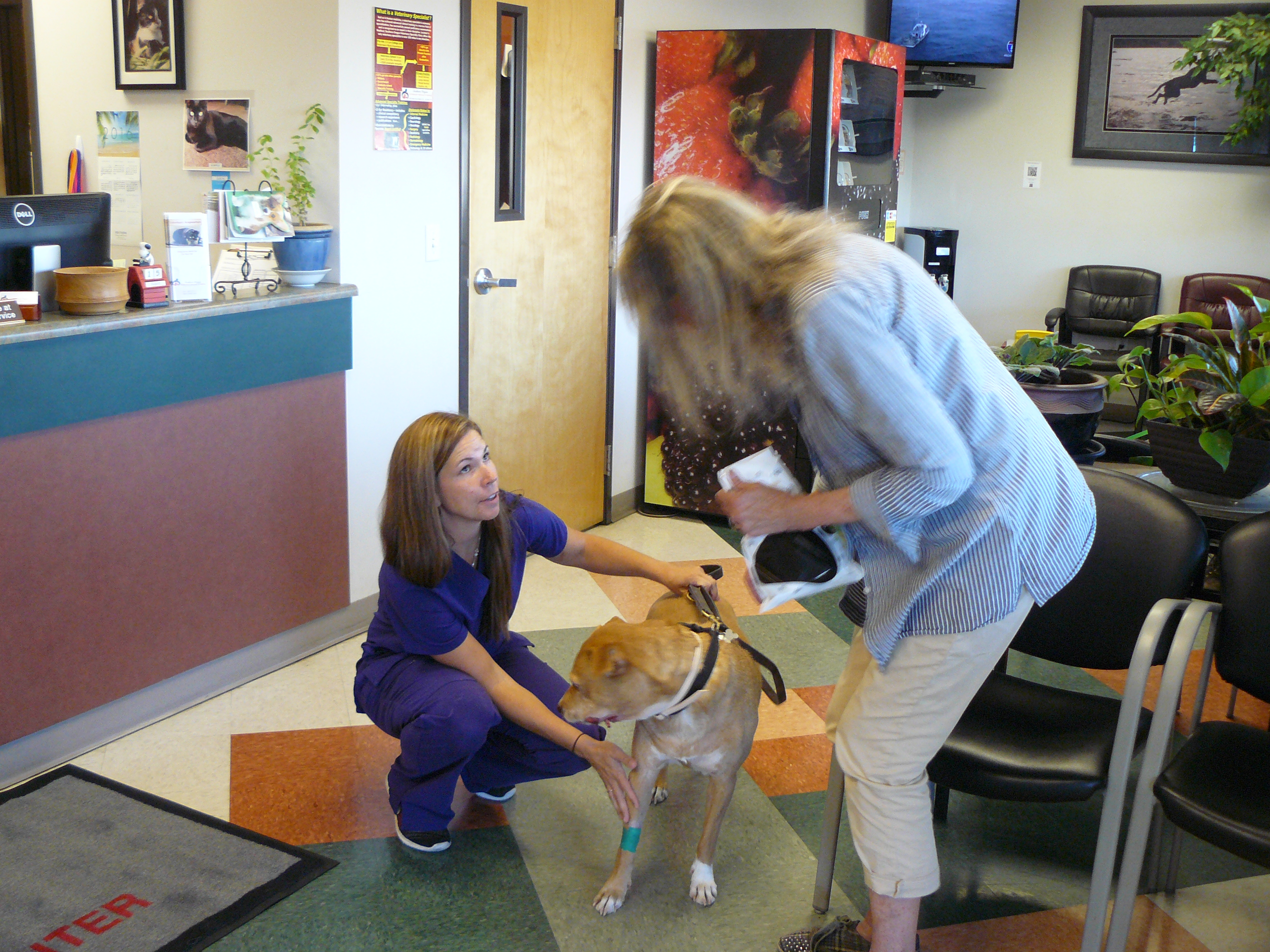
By the time we arrived Casey had been allocated to be seen by Dr. Adam Reiss, DVM, and very soon after arrival we were shown into a side room awaiting Dr. Reiss’s medical assistant.

P1160382Dr. Reiss then arrived and explained that Casey’s lip and gum would require suturing under a general anesthetic but that they could fit it in that afternoon albeit Casey would not be ‘back on his feet’ until 6pm at the earliest. Of course, we agreed and shortly thereafter Casey quietly and calmly was led away by Dr. Reiss’s assistant.

Jean and I then went the short distance to the centre of Medford, did a bit of shopping, had an early dinner and returned to SOVSC shortly before 6pm.

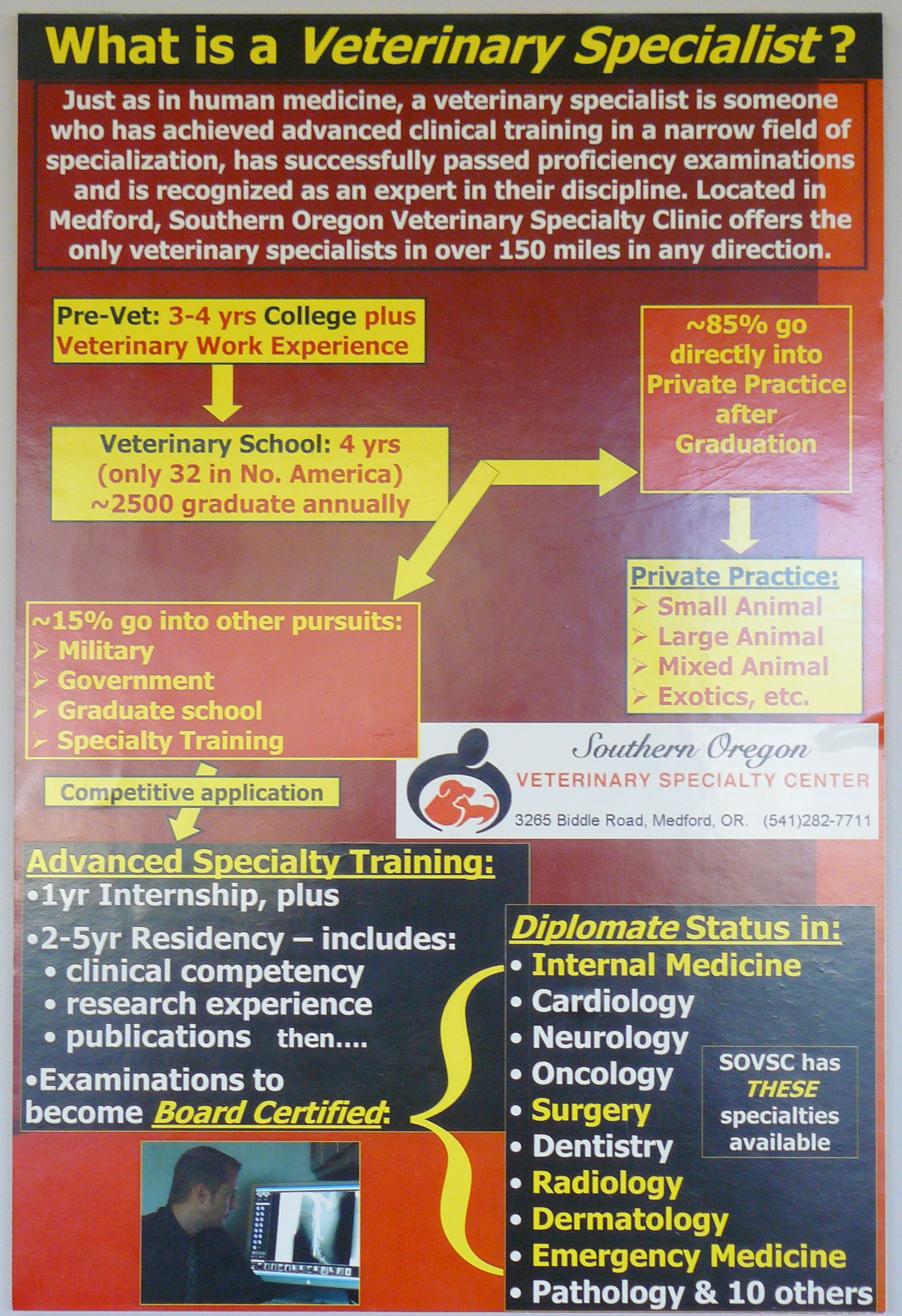
While we were waiting for news I was interested to read a prominently displayed sign setting out what constituted a veterinary specialist. (I’ve included the image at a larger size to make it easier for you to read it.)

P1160388Clearly there is more to caring for one’s pet than meets the eye.

Indeed, SOVSC’s web site introduces readers in this fashion:

At Southern Oregon Veterinary Specialty Center, we understand the special bond between a pet and their human family. Our team of highly trained doctors, certified technicians and support staff partner with your family veterinarian to provide specialized diagnostics, surgery and emergency care for your pet upon a referral or emergency basis. Our clinic is staffed 24 hours-a-day, 7 days a week, to receive emergency cases and to monitor our critical care patients. The clinic’s board-certified veterinary specialists and staff are committed to providing exceptional compassionate care utilizing state-of-the-art technology and treatments.

The relationships we have with partner veterinarians are vital to the success of treating your pet. We will keep them apprised of the patient’s status to provide a smooth and cohesive experience.

Jim Goodbrod speaks highly of the Center.

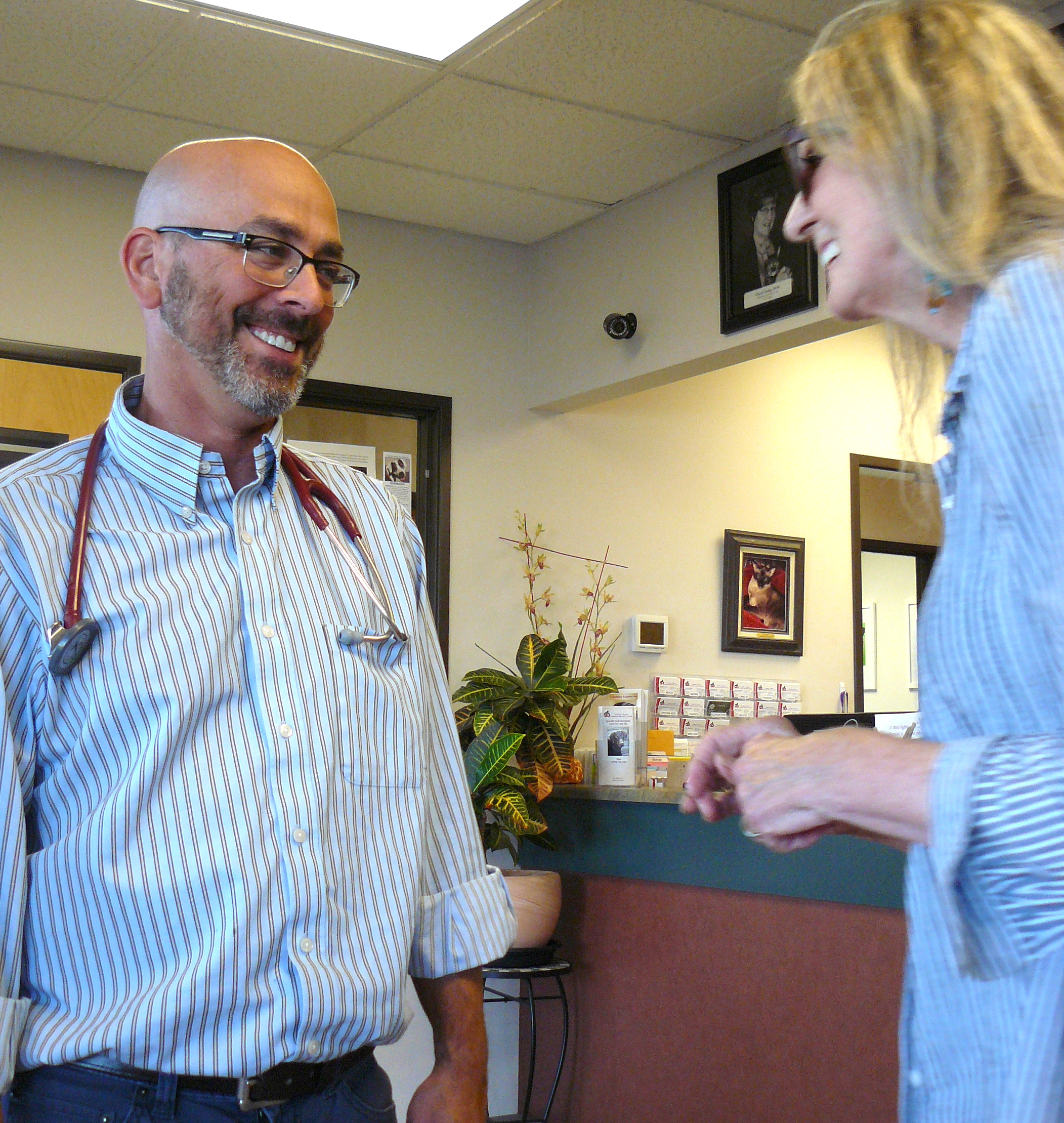
P1160387Dr. Reiss duly came out to speak with us and explained that all had gone well although Casey was still groggy but back on his feet. Despite the smiling face Dr. Reiss looked pretty tired. Not surprising when one reflects that the time was well past 6pm.

In an earlier conversation with some of the staff it was reported that, on average, some thirty animals were seen every day!

That’s commitment to the cause in any language!

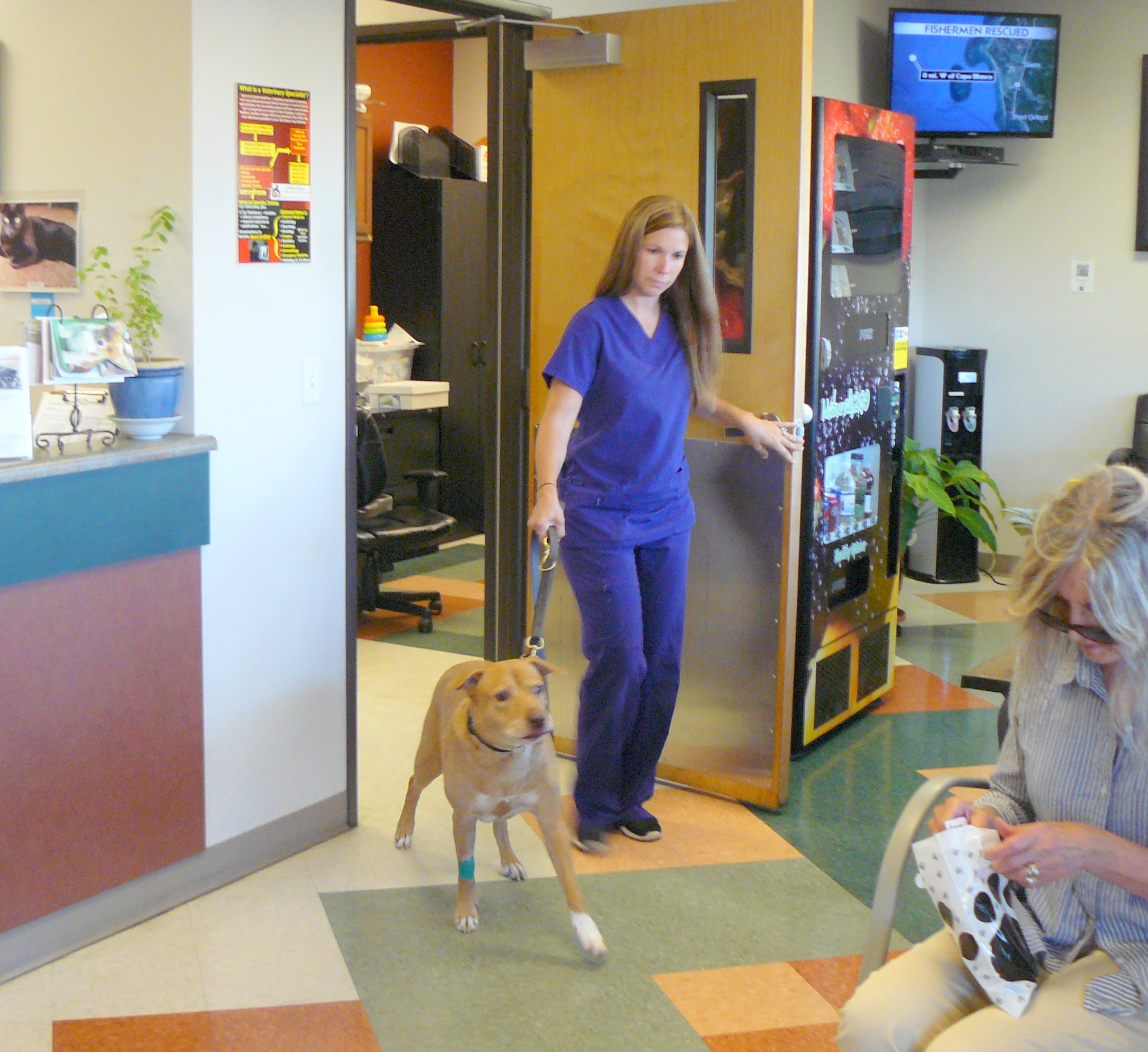
Then it wasn’t long before our dear Casey was being led back into the front waiting area.

P1160389To be followed moments later by the assistant (apologies for not making a note of her name) setting out the details of how Casey had to be cared for over the coming hours and days.

P1160391The verbal guidance was supported by extensive notes.

Then it was a case of yours truly paying for all the services that had been provided for Casey and time to go home.

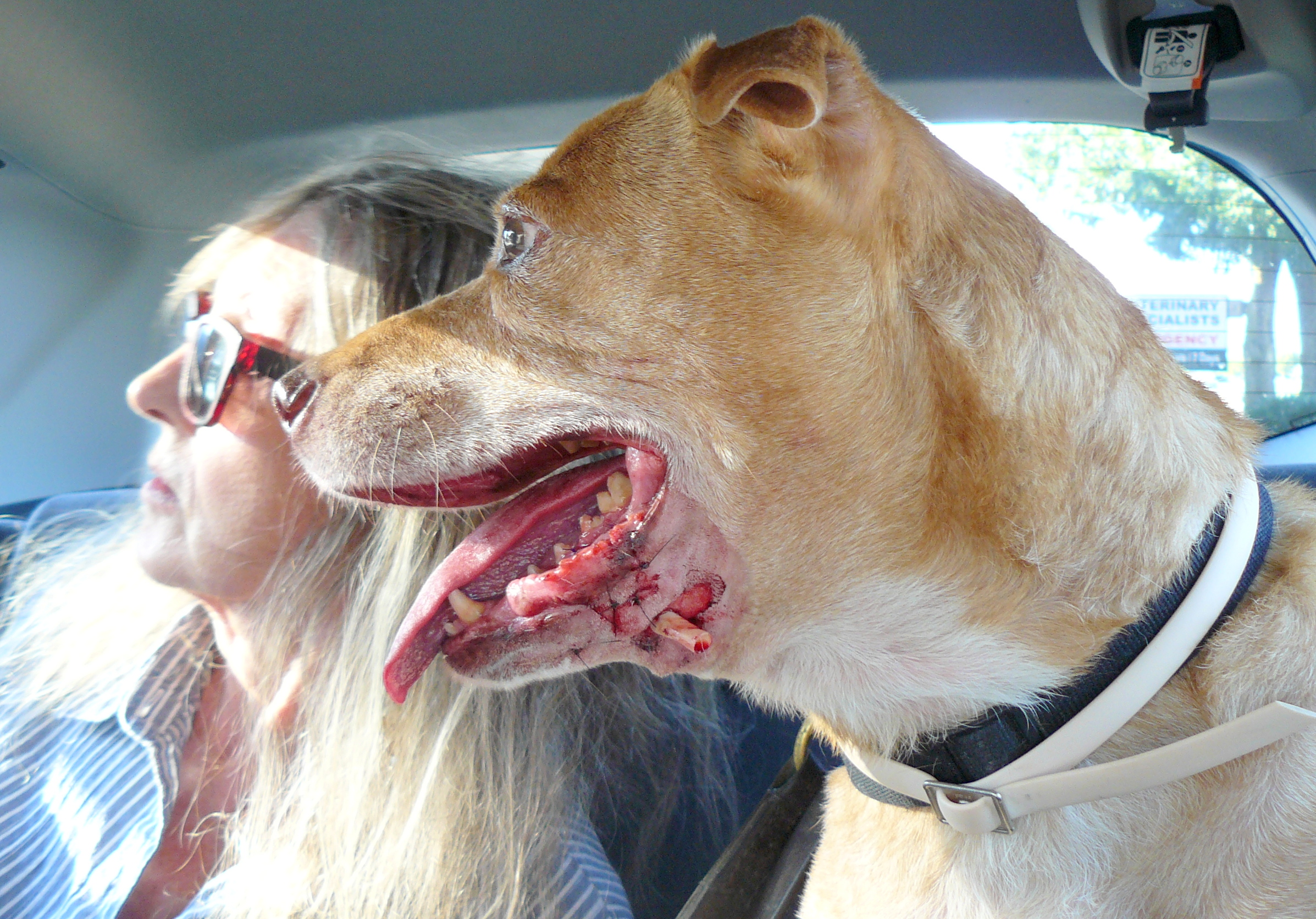
The car was rearranged to give room for Casey to sit on the rear seats with Jean next to him. I took the opportunity to take a photograph of the two of them that showed clearly the extent of the suture and the drain that had been inserted into Casey’s mouth.

P1160394It was beyond me to comprehend how Casey was so nonchalent to what in any human’s experience would have been hurting big time.

An hour later we were all home and getting dogs, cats and horses fed a lot later than normal.

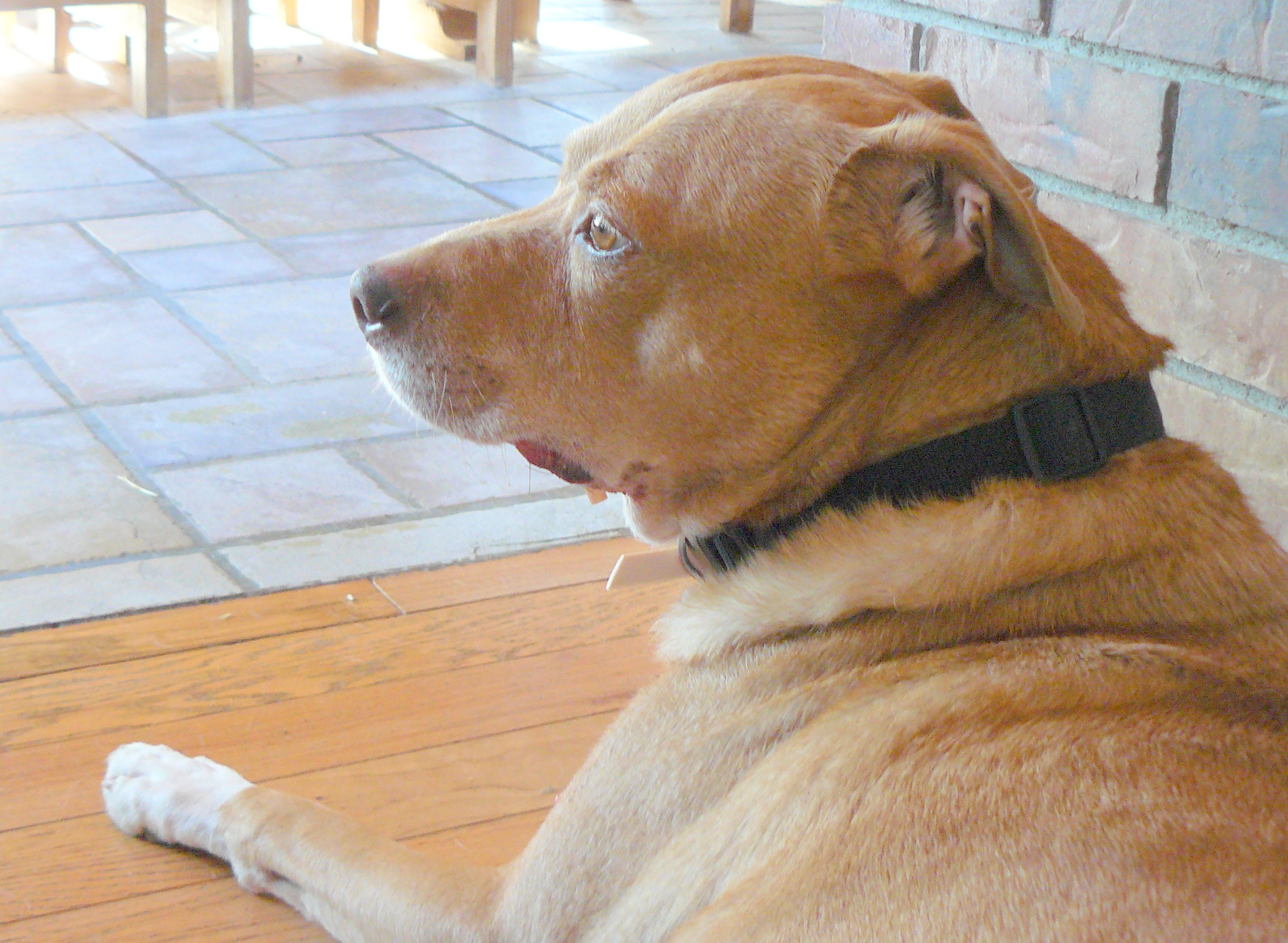
Miracle of miracles Casey made it comfortably through the night and the following photograph was taken a little after 9:30 am yesterday morning.P1160400Well done all involved!

Thank you to Jim and all the doctors and staff at SOVSC but the biggest thank you of them all must go to Casey!!

Life’s Lottery: For humans and animals alike!

Returning to happy dogs!

A republication of a post from exactly one year ago.

Yesterday, I was at our local Three Rivers Hospital having a colonoscopy. The procedure was a breeze but I wouldn’t recommend the bowel prep one has to take before the procedure! 😦

However, it ran on much longer than we expected and, consequently, there wasn’t sufficient time to do a new post for you good people for today.

So as I do in these situations, I republish the post that came out exactly a year ago: on the 12th August, 2015. As it happens it seemed a wonderful follow-on to yesterday’s post: Have A Lovely Day.

ooOOoo

More on those happy dogs.

Indebted, again, to Chris Gomez.

Jean and I were out for much of yesterday resulting in me not sitting down to compose today’s post until nearly 5pm (PDT) in the afternoon. I must admit I didn’t have a clue as to what to write about. Then sitting in my email inbox was another email from Chris Gomez with this short but valuable sentence, “Love is real….Check this out! (via ABC7 Los Angeles local news iOS app) Study reveals scientific reason your dog is happy to see you.” Chris included a link to the ABC7 news item. I’m republishing it here.

ooOOoo

STUDY REVEALS SCIENTIFIC REASON YOUR DOG IS HAPPY TO SEE YOU

A new study explains why your dog gets so happy to see you. (Shutterstock)

Tuesday, August 11, 2015 11:04AM

Is your dog overwhelmed with joy anytime you walk through the door? There’s a scientific reason behind their excitement, a new study shows, and it’s not just because you feed them.

Researchers at Emory University used functional magnetic resonance imaging (fMRI) to scan dogs’ brains for activity when they were shown images of dog faces, human faces and ordinary objects.

The dogs’ temporal lobes lit up “significantly more” when presented with the faces than with the objects. These findings suggest that dogs may recognize both human and dog faces.

Facial recognition causes dog brains to activate in the same areas as in monkey and human brains, the study found. This is separate from the “reward areas” that would be triggered by anticipation of food.

“What we’re finding with the imaging work is that dogs love their humans-and not just for food,” researcher Gregory Berns told io9. “They love the company of humans simply for its own sake.”

“The existence of a face-selective region in the temporal dog cortex opens up a whole range of new questions to be answered about their social intelligence,” the researchers explained, such as whether dogs can understand different facial expressions and whether they can read body language.

This isn’t the first time scientists have explored what makes dogs’ tails wag with excitement when reunited with their owners. A January study that Berns was also involved in found that dogs have a positive reaction to the scent of familiar humans compared with other smells, even those of other dogs.

The results of that study “suggested that not only did the dogs discriminate that scent [of familiar humans] from the others, they had a positive association with it.”

A 2013 behavioral study found that dogs can show when they’re happy to see their owners by lifting their eyebrows. Their left eyebrow went up when they saw their respective owners, the study found. They didn’t have this reaction for other things that may excite them, such as attractive toys.

….

Granted there was some overlap with Monday’s post but there was more than enough in the ABC7 article to warrant sharing it with you.

Thanks again, Chris.

ooOOoo

You all stay happy with your dogs!


We are what we think of most!

A republication of a recent post from Val Boyko.

Yesterday, Val published a post over on her blog Find Your Middle Ground that really ‘spoke’ to me. That’s not to imply, by the way, that her other posts don’t very often reach out to me and, undoubtedly, to many others.

Val’s post was called The Depths of our Relationships and explored the different levels of relationships that we have with others in and around our lives.

Instinctively most people would regard us humans as far more complex than our animal companions. As the old Devon (South-West England) expression goes, “There’s now’t so queer as folk.”

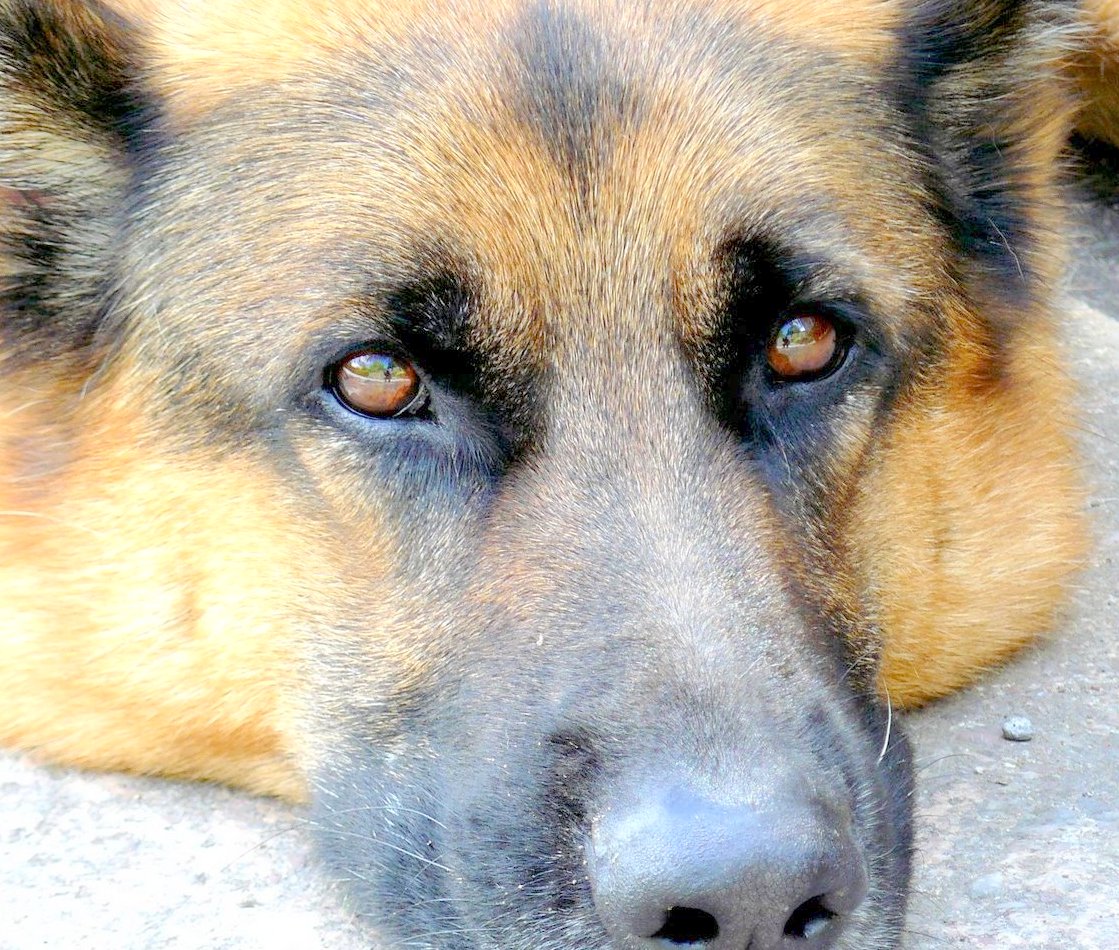
Yet, once we have really got to know a dog there will be many who will see behind those fabulous eyes a sense of a depth of character, a soul comes to mind, that suggests that the brain of the dog offers a canine psychological complexity most of us don’t allow for.

To support that proposition just look at the eyes of Pharaoh in this photograph going back to June, 2007.

Pharaohjun2007However, today I am  republishing Val’s recent post and I do so with great pleasure.

ooOOoo

The Depths of our Relationships

The ways our dogs speak to the world.

Dogs are very vocal creatures.

Anyone who has been close to dogs in their lives knows that they are frequently very vocal creatures. Likewise, anyone who has been close to a dog or two quickly learns to understand the basic emotions being conveyed by a dog’s vocal sounds.

But, nonethless, there was an item over on the Care2.com site recently that provided a comprehensive tutorial on listening and interpreting the sounds from our dogs. I wanted to share it with you today.

ooOOoo

How to Interpret Your Dog’s Growls

1387750.large By: Vetstreet.com August 3, 2016