Category: Science

The Cave of Crystal Giants

This will take us away from the daily beat of life!

On the 18th. February the BBC News website carried an article that I found incredible. It was the story of Naica’s crystal caves in Mexico.

oooo

Naica’s crystal caves hold long-dormant life

By Jonathan Amos, BBC Science Correspondent, Boston, 18 February 2017.

 The caves were discovered by miners 100 years ago
The caves were discovered by miners 100 years ago. Picture credit: Penelope J. Boston

It is a remarkable discovery in an amazing place.

Scientists have extracted long-dormant microbes from inside the famous giant crystals of the Naica mountain caves in Mexico – and revived them. [Ed: my emphasis]

The organisms were likely to have been encased in the striking shafts of gypsum at least 10,000 years ago, and possibly up to 50,000 years ago.

It is another demonstration of the ability of life to adapt and cope in the most hostile of environments.

“Other people have made longer-term claims for the antiquity of organisms that were still alive, but in this case these organisms are all very extraordinary – they are not very closely related to anything in the known genetic databases,” said Dr Penelope Boston.

The new director of Nasa’s Astrobiology Institute in Moffett Field, California, described her findings here at the annual meeting of the American Association for the Advancement of Science (AAAS).

oooo

I was delighted to find more details in many other places on the ‘web’.

Such as this one on the National Geographic website:

By Victoria Jaggard

PUBLISHED February 17, 2017

Boston, Massachusetts

Creatures that thrive on iron, sulfur, and other chemicals have been found trapped inside giant crystals deep in a Mexican cave. The microbial life-forms are most likely new to science, and if the researchers who found them are correct, the organisms are still active even though they have been slumbering for tens of thousands of years.

If verified, the discovery adds to evidence that microbial life on Earth can endure harsher conditions in isolated places than scientists previously thought possible. (See “Life Found Deep Under Antarctic Ice for First Time?”)

“These organisms have been dormant but viable for geologically significant periods of time, and they can be released due to other geological processes,” says NASA Astrobiology Institute director Penelope Boston, who announced the find today at a meeting of the American Association for the Advancement of Science. “This has profound effects on how we try to understand the evolutionary history of microbial life on this planet.”

Then there’s another article on that NatGeo website: (Apologies for some duplication in the message.)

By Neil Shea, National Geographic Staff
In a nearly empty cantina in a dark desert town, the short, drunk man makes his pitch. Beside him on the billiards table sits a chunk of rock the size of home plate. Dozens of purple and white crystals push up from it like shards of glass. “Yours for $300,” he says. “No? One hundred. A steal!” The three or four other patrons glance past their beers, thinking it over: Should they offer their crystals too? Rock dust on the green felt, cowboy ballads on the jukebox. Above the bar, a sign reads, “Happy Hour: 8 a.m. to 9 p.m.”

This remote part of northern Mexico, an hour or so south of Chihuahua, is famous for crystals, and paychecks at the local lead and silver mine, where almost everyone works, are meager enough to inspire a black market. “Thirty dollars.” He leans in. “Ten.” It’s hard to take him seriously. Earlier in the day, in a cave deep below the bar, I crawled among the world’s largest crystals, a forest of them, broad and thick, some more than 30 feet long and half a million years old. So clear, so luminous, they seemed extraterrestrial. They make the chunk on the pool table seem dull as a paperweight.

Nothing compares with the giants found in Cueva de los Cristales, or Cave of Crystals. The limestone cavern and its glittering beams were discovered in 2000 by a pair of brothers drilling nearly a thousand feet below ground in the Naica mine, one of Mexico’s most productive, yielding tons of lead and silver each year. The brothers were astonished by their find, but it was not without precedent. The geologic processes that create lead and silver also provide raw materials for crystals, and at Naica, miners had hammered into chambers of impressive, though much smaller, crystals before. But as news spread of the massive crystals’ discovery, the question confronting scientists became: How did they grow so big?

It takes 20 minutes to get to the cave entrance by van through a winding mine shaft. A screen drops from the van’s ceiling and Michael Jackson videos play, a feature designed to entertain visitors as they descend into darkness and heat. In many caves and mines the temperature remains constant and cool, but the Naica mine gets hotter with depth because it lies above an intrusion of magma about a mile below the surface. Within the cave itself, the temperature leaps to 112 degrees Fahrenheit with 90 to 100 percent humidity—hot enough that each visit carries the risk of heatstroke. By the time we reach the entrance, everyone glistens with sweat.

That article continues here.
Finally, lose yourself in this video. (If the voice doesn’t get to you!)

How to close today’s post?

Both by embracing the power of the natural order of things, life and death, and by reminding us all that there are in the order of over two billion stars in this universe.

That universe must be teeming with life, current and dormant, and the day when we truly confirm that will put everything into perspective!

oooo

Talk about synchronicity!

For yesterday, around 10am PST, the BBC News website carried this big news item: Earliest evidence of life on Earth ‘found’.

Here’s how that article opens:

Earliest evidence of life on Earth ‘found’

By Pallab Ghosh Science correspondent, BBC News
Scientists have discovered what they say could be fossils of some of the earliest living organisms on Earth.
They are represented by tiny filaments, knobs and tubes in Canadian rocks dated to be up to 4.28 billion years old.
That is a time not long after the planet’s formation and hundreds of millions of years before what is currently accepted as evidence for the most ancient life yet found on Earth.

The researchers report their investigation in the journal Nature.

As with all such claims about ancient life, the study is contentious. But the team believes it can answer any doubts.

The scientists’ putative microbes from Quebec are one-tenth the width of a human hair and contain significant quantities of haematite – a form of iron oxide or “rust”.

Matthew Dodd, who analysed the structures at University College London, UK, claimed the discovery would shed new light on the origins of life.

Do read the full article including viewing some wonderful photographs.

Latest on Casey

The ebb and flow of events.

As many of you have gathered from my post on the 22nd. Casey was in a relatively stable situation. From that post:

For dear, sweet Casey he is facing a very long haul. Dr. Jim, our vet neighbour and close friend, recommended that Casey start taking a steroid and he is now on Prednisone.
p1160892

Indeed, Dr. Jim came by last Friday evening and said that even though there was little sign of a positive change in Casey’s condition it was still very early days.

Then on Saturday morning, when Jean went into the kitchen where Casey is with Ruby and Paloma, there had been an unexpected and sudden turn for the worse. For Casey could not adequately stand because his neck pain was too great and his front legs were giving way.

We rang immediately Southern Oregon Vet Specialty Center (SOVC) and they recommended that we take Casey straight there. SOVC operate 24-hours a day. Or in their words:

At Southern Oregon Veterinary Specialty Center, we understand the special bond between a pet and their human family. Our team of highly trained doctors, certified technicians and support staff partner with your family veterinarian to provide specialized diagnostics, surgery and emergency care for your pet upon a referral or emergency basis. Our clinic is staffed 24 hours-a-day, 7 days a week, to receive emergency cases and to monitor our critical care patients. The clinic’s board-certified veterinary specialists and staff are committed to providing exceptional compassionate care utilizing state-of-the-art technology and treatments.

The relationships we have with partner veterinarians are vital to the success of treating your pet. We will keep them apprised of the patient’s status to provide a smooth and cohesive experience.

SOVC had no doubt that we had done the right thing and that the pain meds we  were giving Casey Tramadol and two muscle-relaxers, just were not strong enough. Their prognosis was that Casey be admitted to SOVC so he could be given more appropriate pain control, via an IV, and that as soon as possible he be scanned using an MRI.
Luckily, not too far away from where SOVC are located, near Medford, there is a specialist animal imaging unit: Sage Veterinary Imaging:

About SVI

Sage Veterinary Imaging was founded in 2007 to provide the highest quality diagnostic imaging services to animals in the Southern Oregon area.  When I moved to the Rogue Valley, I was saddened to hear that animals needing advanced diagnostic imaging had to be driven hundreds of miles to get the care they needed.  Now we provide the only ACVR board-certified veterinary imaging services right here in Southern Oregon, serving patients from Redding, to Eugene.  Our administrative offices are located in Jacksonville and diagnostic services, including MRI, are provided in partnership with imaging centers in communities throughout Southern Oregon.

Even better, Dr. Jim knows Jamie Sage and speaks highly of her.

1505482Jaime Sage, is a veterinarian who is board-certified by the American College of Veterinary Radiology.  She holds a DVM from Texas A&M, an MS from The Ohio State University, and is licensed to practice in Oregon and California. Dr. Sage has issued reports for over 1,000 MRI studies in her career, and has personally performed nearly 100 onsite MRI procedures in Southern Oregon in just the past three years. Dr. Sage also works as a radiologist for MR Vets, founded by WSU Professor Emeritus Patrick R. Gavin, DVM, PhD, DACVR/RO, author of Practical Small Animal MRI, and one of the early pioneers in veterinary MRI.

Thus this morning, as in Monday morning Oregon time, SOVC will have the analysis from Jaime Sage followed by the surgical analysis by Dr. Steve Ferreira, the SOVC surgeon, who would conduct the surgery.

So more news just as soon as we have it.

Thank you all for your care and concern.

ooOOoo

UPDATE as at 12:40 PST

The surgeon, Steve Ferreira, called us to pass on the findings:

  • The MRI showed there to be several lesions that are not disc related,
  • There is an area of large compression, 50%-70% in some spots, in the lower cervical chord,
  • Separately, changes were noted in the C2 vertebra that suggested localised bone inflammation,
  • Lastly, there was an increased density pattern in the muscles associated with the cervix.

Dr. Steve said that the next step was to use a spinal tap to withdraw some spinal fluid. If it was cloudy that might indicate infection that could be treated with antibiotics. If the fluid was clear then it would be sent to an external lab for analysis. Possibilities include infection or cancer or an auto-immune issue, even possibly meningitis.

Apparently, surgery in that lower part of the spine would be very difficult to undertake. Likewise, removing a tumour that would simply regrow.

The cost of the anesthesia for the spinal tap, the insertion of the tap and the analysis would be in the order of several hundred dollars.

(Please accept that my understanding of what Dr. Steve said might not be 100% accurate. So use caution if any of this is relevant for your animal.)

ooOOoo

 UPDATE as at 17:20 PST

Steve Ferreira rang following the drawing of a sample of Casey’s spinal fluid.

  • The fluid “didn’t look too bad”, as in it was clear,
  • In other words, it was not immediately indicating an infectious disease, that would cause the fluid to appear cloudy,
  • Dr. F. will await further results from an external laboratory later this evening,
  • If both the white-cell count and proteins are more-or-less normal, then,
  • It will suggest that the problem is not an infection,
  • And, therefore, most probably related to a tumour on or around C6 where the MRI recorded the excessive compression,
  • Casey is comfortable owing to the strong pain medication being given to him via an IV.

Jean and I will be speaking with Dr. F. in the morning but it is more likely than not that Casey is terminally ill.

This post will, therefore, be updated in the morning.

UPDATE as at 08:40 Tuesday, 28th

Dr. Steve rang us at 08:30 this morning.

  • He started Casey on antibiotics yesterday evening in case the lab came back with evidence of infection in the spinal fluid, but,
  • The lab reported that the fluid was normal in terms of blood-cell counts and protein levels, therefore,
  • the probability is that Casey has a tumour,
  • or possibly an infection  inside the spinal column but outside the spinal fluid.
  • If such an infection, called an “empyema” then the degree of compression to the spine suggests it could be 3 to 4 weeks before Casey would be walking again.
  • More probable is that it is a tumour.
  • Casey is most definitely suffering and very miserable.

Jean and I then quickly, and very sadly, were of the opinion that Casey’s quality of life was too low for it to be fair to Casey for his life to be prolonged. We rang Dr. Steve back and asked that Casey be euthanised, cremated and that the ashes be returned to us.

In that return call, Dr. Steve quietly confirmed his support for our decision.

Casey will be very badly missed. I will be publishing an obituary tomorrow.

Thank you all for your friendship, love and caring!

Roads to recovery.

For Casey and Yours Truly!

At 1pm yesterday, I had an appointment with the medical assistant at the Department of Urology, Three Rivers Hospital, in Grants Pass, following my ten days of ‘wearing’ a catheter.  The good news was that the catheter was removed (and I must now remember I can’t pee anytime I like!).

The more sobering news was that for at least until the end of March, I must not engage in any lifting, pulling or pushing, or any exercise that would run the risk of another bleeding episode. I have an appointment with Dr. Mayer, the urologist, at the end of March and really want to be signed off as fully fit at that time.

So far: so good!

For dear, sweet Casey he is facing a very long haul. Dr. Jim, our vet neighbour and close friend, recommended that Casey start taking a steroid and he is now on Prednisone.

p1160892This has the effect of making Casey very lethargic. No bad thing because the only chance of his spinal disc and pad healing up is that he takes very little exercise. In the picture above you can see Casey avoids lifting his head up when he looks at you.

p1160889Jean has also paced Casey’s food bowl on a small stool because Casey found it painful to lower his mouth down to floor level.

Dr. Jim says that there is a very good chance that Casey will heal himself but that we are all looking at quite a few weeks.

So for Casey and me we sincerely hope that the end of March has us both firmly down that road to full recovery.

Paloma cruising past a resting Casey!

Who pulls the strings?

Or, more specifically, do we believe we have free will?

One of the endless benefits of this wired-up, digital world is how easy it is to have one’s mind opened and stretched a little.

Take this, for instance, as an intriguing start to a new day.

Do we have free will?

This isn’t a question I can answer, but what I am interested in is “what happens if we do (or do not) believe in free will?” In other words, does believing in free will matter in your daily life?

Just let one’s mind float around that idea, not only as it applies to us humans but also to the animals that share our human intuition, such as dogs and horses.

So what’s got me bubbling along today? Nothing less than an article that appeared on The Conversation blog-site back last September.

I found it fascinating and hope you do as well. It is republished within the terms of The Conversation site.

ooOOoo

Believing in free will makes you feel more like your true self

September 1, 2016

By Elizabeth Seto, Ph.D. Candidate in Social and Personality Psychology, Texas A&M University .

image-20160830-28235-1xkam7s
Believing in free will makes us feel more like ourselves. Man walking via http://www.shutterstock.com

Do we have free will? This is a question that scholars have debated for centuries and will probably continue to debate for centuries to come.

This isn’t a question I can answer, but what I am interested in is “what happens if we do (or do not) believe in free will?” In other words, does believing in free will matter in your daily life?

My colleagues and I at the Existential Psychology Lab at Texas A&M University study the psychological outcomes of belief in free will. While contemplating my next research project, I realized at some point in our lives, we all want to understand who we are – it’s human nature. So, we decided to explore how believing in free will influences our sense of self and identity.

 One way or another? Feet image via www.shutterstock.com.
One way or another? Feet image via http://www.shutterstock.com.

What is free will?

Free will is generally understood as the ability to freely choose our own actions and determine our own outcomes. For example, when you wake up in the morning, do you hit snooze? Do you put on your workout gear and go for a run? Do you grab a hot cup of coffee? While those are simple examples, if you believe in free will, you believe there are a limitless number of actions you can engage in when you wake up in the morning, and they are all within your control.

Believing in free will helps people exert control over their actions. This is particularly important in helping people make better decisions and behave more virtuously.

For instance, research has found that promoting the idea that a person doesn’t have free will makes people become more dishonest, behave aggressively and even conform to others’ thoughts and opinions. And how can we hold people morally responsible for their actions if we don’t believe they have the free will to act any differently? Belief in free will allows us to punish people for their immoral behaviors.

So, not only is there a value to believing in free will, but those beliefs have profound effects on our thoughts and behaviors. It stands to reason that believing in free will influences how we perceive ourselves.

You might be thinking, “Of course believing in free will influences how I feel about myself.” Even though this seems obvious, surprisingly little research has examined this question. So, I conducted two studies to suss out more about how believing in free will makes us feel.

What believing in free will makes us feel about ourselves

In the first study, I recruited 304 participants from Amazon Mechanical Turk and randomly assigned them to write about either personal experiences reflecting a high belief in free will, like changing career paths or resisting drugs or alcohol, or experiences reflecting a low belief in free will, such as growing up in poverty or working under an authoritative boss. Then, they were all asked to evaluate their sense of self.

Participants who wrote about experiences reflecting low belief in free will reported feeling less “in touch” with their true selves. In other words, they felt like they did not know themselves as well as the participants who wrote about experiences reflecting high belief in free will.

Then, I conducted a follow-up study testing one’s sense of authenticity, the feeling that one is behaving according to their own beliefs, desires and values.

I recruited another group of participants from Amazon Mechnical Turk, and like the first experiment, randomly assigned them to write about personal experiences demonstrating high belief in free will or low belief in free will. Then, they all completed a decision-making task where they had to make a series of choices about whether to donate money to charity or to keep the money for themselves.

Afterwards, participants were asked how authentic they felt while making their decisions. Participants in the low free will group reported feeling less authentic than participants in the high free will group.

 Up and at it. Female runner image via www.shutterstock.com.
Up and at it. Female runner image via http://www.shutterstock.com.

So, what does this all mean?

Ultimately, when people feel they have little control over their actions and outcomes in life, they feel more distant from their true, authentic selves. They are less in touch with who they are and do not believe their actions reflect their core beliefs and values.

We believe this is because belief in free will is linked to feelings of agency, the sense that we are the authors of our actions and are actively engaged with the world. As you can imagine, this sense of agency is an important part of a person’s identity.

The importance of feeling like you are in charge of your life applies to significant actions like moving or getting a new job or pondering the big questions in life. But it also applies to the minor decisions we make throughout the day.

Here’s one simple, though relatable, decision I am faced with every morning. When I wake up in the morning and decide to put on my workout gear and go for a run instead of hitting snooze, I might feel like I am the primary decision-maker for this morning routine. Additionally, I am most likely acting on the part of me that values physical health.

But what if I wake up, and I feel like I can’t exercise because I have to go to work or some other external factor is making it difficult to go? I might feel as if someone or something else is controlling my behavior, and perhaps, less like my true self.

So, do you have free will? Do any of us? Remember, the question isn’t whether it exists or not, but whether you believe it does.

ooOOoo

Now thinking of dogs having their own free will might seem a little bizarre, but I do not intend it to be seen as such. Many of you will have dogs (and horses) that have ‘minds of their own’.

For our family here at home, if there’s one of our dogs that exhibits free will it is our Brandy.

Our Brandy is a Pyrenean Mastiff!

Without warning or any other indication, he will suddenly decide it is time to go ‘walk-about’. Mainly during the day but sometimes at night, whatever the weather, he will disappear. He will always return but can be wandering around our thirteen acres for up to an hour.

Does he have free will?

Does he believe he has free will?

Do we believe he has free will?

What, dear reader, do you think?

Stupendous!

From the sublime to the amazing!

First, the sublime.

As in this stunning picture from the latest Cloud Appreciation Society newsletter.

A cap cloud at sunrise over Mount Rainier, spotted from Seattle, Washington, US, by Elaine Thompson (Member 41974).

“Though outwardly a gloomy shroud,
The inner half of every cloud
Is bright and shining:
I therefore turn my clouds about,
And always wear them inside out
To show the lining.”

[From ‘The Wisdom of Folly’ by Ellen Thorneycroft Fowler in Verses, Wise or Otherwise (1895)]

Then to the amazing!

It’s hard to comprehend the sheer size of objects in space, but take 2 minutes and give it a try!

This video is from the European Southern Observatory (ESO) comparing the sizes of Earth, our sun and stars.

Yet another recall

This time concerning Against the Grain Pet Foods

Against the Grain Dog Food Recall of February 2017

February 14, 2017 — Against the Grain Pet Food is voluntarily recalling one lot of Against the Grain Pulled Beef with Gravy Dinner for Dogs because it may be contaminated with pentobarbital.

against-the-grain-pulled-beef-dog-food

What’s Recalled?

  • Against the Grain Pulled Beef with Gravy Dinner for Dogs
  • 12 ounce can
  • Lot Number: 2415E01ATB12
  • UPC Code (second half): 80001
  • Expiration Date: December 2019

About Pentobarbital

Oral exposure to pentobarbital can cause side effects such as drowsiness, dizziness, excitement, loss of balance, nausea nystagmus (eyes moving back and forth in a jerky manner), inability to stand and coma.

To date, no complaints have been reported to Against the Grain for this single lot number nor any of Against the Grain’s pet foods.

Where Was It Distributed?

The recalled product was distributed (in 2015) to independent pet retail stores in the following states:

  • Maryland
  • Washington

The company has verified that the affected lot is no longer on any store shelves.

What to Do?

Consumers may return any can with the relevant lot number to their place of purchase and receive a full case of Against the Grain food for the inconvenience.

Customers with questions may contact the company at 800-288-6796 between 11 AM and 4 PM Central Time, Monday through Friday.

U.S. citizens can report complaints about FDA-regulated pet food products by calling the consumer complaint coordinator in your area.

Or go to http://www.fda.gov/petfoodcomplaints.

Canadians can report any health or safety incidents related to the use of this product by filling out the Consumer Product Incident Report Form.

Get Dog Food Recall Alerts by Email

Get free dog food recall alerts sent to you by email. Subscribe to The Dog Food Advisor’s emergency recall notification system.

ooOOoo

As ever, do share this important alert.

The history of dogs and humans

The secret life of the dog.

No, that subtitle is wrong. It should be: Science brings to light the wonderful history of dogs and humans!

Approximately seven years ago I published a series of posts. Each post was a segment of a BBC Horizon documentary entitled: The Secret Life of the Dog. Inevitably as so often happens when BBC programmes unofficially find their way on to YouTube those videos have long disappeared from sight.

So imagine the joy when Jean and I were browsing the web site Top Documentary Films to find that the full BBC Horizon episode was available.

The documentary is an hour long and is unmissable viewing for anyone who is interested in the history of mankind back in the days of hunting and gathering. If you are also a lover of dogs and you haven’t seen the programme then, in two words WATCH IT!

Here’s a clip from the Horizon episode. A deeply emotional and moving clip.

Now I can’t insert the Top Documentary video as I can with a YouTube video.

But I can link to it, and republish the written introduction.

Here it is: BBC Horizon: The Secret Life of the Dog

Storyline

secret-life-dogWe have an extraordinary relationship with dogs – closer than with any other animal on the planet. But what makes the bond between us so special?

Research into dogs is gaining momentum, and scientists are investigating them like never before. From the latest fossil evidence, to the sequencing of the canine genome, to cognitive experiments, dogs are fast turning into the new chimps as a window into understanding ourselves.

Where does this relationship come from? In Siberia, a unique breeding experiment reveals the astonishing secret of how dogs evolved from wolves. Swedish scientists demonstrate how the human/dog bond is controlled by a powerful hormone also responsible for bonding mothers to their babies.

Why are dogs so good at reading our emotions? Horizon meets Betsy, reputedly the world’s most intelligent dog, and compares her incredible abilities to those of children. Man’s best friend has recently gone one step further – helping us identify genes responsible for causing human diseases.

Trust me, if you haven’t seen this documentary and you have dogs in your life it will change the way you appreciate and love your wonderful dogs.

I’m going to close this post with a photograph you have seen many times before, via the home page of this blog.

Simply because I know for thousands of you who have dogs in your lives there is nothing more special, nothing more intimate, nothing more magical than the eye-to-eye bond between your dog and you.

Pharaoh - just being a dog!

Pharaoh!

Knowing you is special beyond words!

Our best friend is really here to help

The most incredibly relationship we humans have ever had with an animal.

Tomorrow, I am going to repeat a post that first appeared on Learning from Dogs seven years ago. A beautiful documentary explaining in clear, scientific ways how important has been the relationship between the dog and humans.

But for today, as a ‘warm up’ to tomorrow’s post, I wanted to share an essay that appeared on The Conversation blogsite a little over a week ago and is republished within the terms of The Conversation site.

ooOOoo

How man’s best friend is helping cancer treatment

By    Professor of Veterinary Medicine, Colorado State University

February 2, 2017
The author, center, and Dr. Anna Conti, left, and student Kelsey Parrish with Conti’s Basset hound, Picasso, who had surgery for cancer. Via Colorado State University. William Cotton/CSU Photography, Author provided

“A person can learn a lot from a dog, even a loopy one like ours. Marley taught me about living each day with unbridled exuberance and joy, about seizing the moment and following your heart… Mostly, he taught me about friendship and selflessness and, above all else, unwavering loyalty.”

John Grogan, “Marley and Me: Life and Love With the World’s Worst Dog.”

Isn’t it true? We learn so much from our dogs. But beyond what man’s best friend can teach us about enjoying life, they share something else with us. Cancer diagnoses in dogs are on the rise, as are cancer diagnoses in people. In fact, canine cancer is the leading cause of death in pets over the age of 10 years.

This confluence, it turns out, can be beneficial to cancer research. A field of study known as “comparative oncology” has recently emerged as a promising means to help cure cancer. Comparative oncology researchers study the similarities between naturally occurring cancers in pets and cancers in people in order to provide clues to treat cancer more effectively.

In fact, phase 1 and 2 clinical trials in comparative oncology are underway at 22 sites across the country, including Colorado State University, where I conduct research and am a surgical oncologist for animals.

Research in this field, involving veterinarians, physicians, cancer specialists and basic scientists, is leading to improved human health and more rapid access to effective cancer treatment than has been previously possible through traditional cancer research approaches.

More like your dog than you know

 Man and his best friend. From www.shutterstock.com
Man and his best friend. From http://www.shutterstock.com

As a species, dogs have strong physiologic and genetic similarities to people, much more so than mice, who do not typically live long enough for us to know whether they naturally get cancer. We do know that some rodent species, such as pet rats, can get cancer, but predators typically end a field mouse’s life while it is still young. The laboratory mice typically used by scientists are injected with cancer rather than it occurring naturally in their bodies.

Just as scientists officially mapped the human genome, or the complete set of genetic instructions, in 2003, scientists decoded the canine genome. They discovered that dogs have greater than 80 percent genetic similarity to humans, versus only 67 percent for mice.

In addition, cancers such as bone cancer, lymphoma and bladder cancer that spontaneously arise in pet dogs are microscopically and molecularly identical to cancers in people. Many of the genetic mutations that drive cells to become cancerous in people are the same mutations that cause cancer in dogs. In fact, when viewed under a microscope, it is impossible to distinguish between a tumor from a human and a dog.

In addition, dogs provide a large and varied population to study, important in the study of medicine. Individual dogs who develop cancer are as different from one another as are humans. Whereas laboratory mice are essentially identical twins to each other and live in a highly regulated environment, the variation among different dog breeds, home environments, diet and overall lifestyle translate into a population diversity very similar to that in humans.

Today, most pet dogs receive high-quality health care into old age and dog owners are highly motivated to seek out improved options for the management of cancer in their companions, and are also motivated to minimize side effects.

Similarities in response to treatment, too

 Picasso at the James L. Voss Veterinary Teaching Hospital, Colorado State University. Author provided., Author provided
Picasso at the James L. Voss Veterinary Teaching Hospital, Colorado State University. Author provided., Author provided.

This genetic diversity and sharing of similar DNA, physiology, microscopic structure and molecular features between dogs and humans has presented cancer researchers with a key opportunity. Dogs not only develop similar types of cancers as humans, but their cancer responds to treatments in similar ways.

This means that new cancer treatments first shown to be effective in canine cancers can frequently be predicted to have a similar benefit in human cancer patients. As a result, researchers now recognize that new drug trials in dogs with cancer will result in therapeutic discoveries that are highly “translatable”; that is, more likely to predict “real-life” medical responses in human cancer patients.

By studying how cancer responds in dogs, scientists are gaining a better understanding of how new cancer drugs not only treat the cancer but also influence the patient’s overall quality of life during treatment. This benefits dog owners, by providing access to promising new cancer treatments for their pets with cancer, and benefits human cancer patients by providing a rapid way to collect crucial data needed for FDA approval.

Dogs with cancer are helping kids

For example, a bone cancer known as osteosarcoma is so similar between dogs and people that

 The author performing surgery on a dog. Author provided. Colorado State University., Author provided.
The author performing surgery on a dog. Author provided. Colorado State University., Author provided.

intensive research in canine osteosarcoma has led to several breakthroughs in treating osteosarcoma in children. Limb-saving surgical techniques for safe and effective reconstruction following bone tumor surgery in dogs are now the standard of care in children following bone tumor surgery.

More recently, a form of immunotherapy was shown to drastically improve survival in dogs with bone cancer by delaying or altogether preventing spread of the cancer to the lungs. As a result of the success in dogs, the FDA granted fast-track status to the same treatment for use in humans last April.

Fast-tracking was developed by the FDA to support accelerated approval for promising treatments, especially for serious and life-threatening conditions. A clinical trial in children with osteosarcoma is scheduled to begin this year at multiple pediatric cancer centers throughout the United States.

These types of discoveries demonstrate that our furry companions have a crucial role in teaching us new ways to help all victims in the war against cancer – with two legs or four.

ooOOoo

As I said in my introduction, more on this theme tomorrow.

What a fabulous relationship!

Evanger’s Dog Food Recall Alert

This came in late yesterday afternoon, Pacific Time.

This was the email that was sent out.

Evanger’s Dog and Cat Food Company of Wheeling, Illinois, has announced it is voluntarily recalling specific lots of its pet food due to its potential to be contaminated with pentobarbital.

To learn which products are affected, please visit the following link:

Evanger’s Dog Food Recall of February 2016

Please be sure to share the news of this alert with other pet owners.

Mike Sagman, Editor
The Dog Food Advisor

P.S. Not already on our dog food recall notification list yet? Sign up to get critical dog food recall alerts sent to you by email. There’s no cost for this service.

If one goes to that Evanger’s Recall Link then this is what you will read. It is republished in full.

ooOOoo

Evanger’s Dog Food Recall of February 2017

February 3, 2017 — Evanger’s Dog and Cat Food Company, Inc. of Wheeling, Illinois, is voluntarily recalling specific lots of its Hunk of Beef product due to potential contamination with the deadly drug, pentobarbital.

Pentobarbital can affect animals that ingest it, and possibly cause side effects such as drowsiness, dizziness, excitement, loss of balance or nausea — or in extreme cases, death.

evangers-hunk-of-beef-recall-canWhat’s Being Recalled?

Although pentobarbital was detected in a single lot, the company is recalling all related Hunk of Beef products manufactured the week of June 6 through June 13, 2016.

The affected lots numbers that start with 1816E03HB, 1816E04HB, 1816E06HB, 1816E07HB, and 1816E13HB, and have an expiration date of June 2020.

The second half of the barcode reads 20109, which can be found on the back of the product label.

Where Was the Product Sold?

The affected products were sold both online and also distributed to retail locations only in the following states:

  • California
  • Florida
  • Georgia
  • Illinois
  • Indiana
  • Maryland
  • Massachusetts
  • Michigan
  • Minnesota
  • New York
  • Ohio
  • Pennsylvania
  • South Carolina
  • Washington
  • Wisconsin

About the Recall

The recall affects 5 lots of food that were produced from its supplier’s lot of beef, which is specifically used for the Hunk of Beef product and no other products.

To date, five dogs reportedly became ill. And one of the five dogs died after consuming the product with lot number 1816E06HB13. [Ed: My emphasis]

Evanger’s is proactively issuing a recall so as not to risk potential exposure to pentobarbital in the product.

According to Evanger’s, all suppliers of meat products are USDA approved.

The insists the beef supplier provides the company with beef chunks from cows that are slaughtered in a USDA facility.

Evanger’s continues to investigate how the contaminant entered its raw material supply.

Because it sources its meat products from suppliers that are USDA approved and since no other products have reported any problems, the company is not extending the recall to other supplier lots.

According to Evanger’s, this is the first recall event for the company in its 82 years of manufacturing.

What to Do?

Although it has been verified that little or no product remains on store shelves, consumers are asked to return recalled product to the place of purchase for a full refund.

Consumers with questions may contact the company at 847-537-0102 between 10 AM and 5 PM Central Time, Monday through Friday.

U.S. citizens can report complaints about FDA-regulated pet food products by calling the consumer complaint coordinator in your area.

Or go to http://www.fda.gov/petfoodcomplaints.

Canadians can report any health or safety incidents related to the use of this product by filling out the Consumer Product Incident Report Form.

Get Dog Food Recall Alerts by Email

Get free dog food recall alerts sent to you by email. Subscribe to The Dog Food Advisor’s emergency recall notification system.

ooOOoo

I will, of course, continue to publish every dog food alert that comes into my in-box. But don’t let that stop you from signing up for recall alerts on your own account.

Finally, if any of you are users of Evanger’s Hunk of Beef dog food and want to share your experiences then I shall be very happy to publish them here for the wider benefit of every single person who loves dogs!

The conscious, mathematical brain!

A new week!

As I have frequently mentioned, I so enjoy having guest posts being sent to me.

They give you, dear reader, a break from yours truly and so very often they offer a new and interesting perspective on dogs, on us, and on the world.

This week there are three guest posts, in various guises, lined up and, who knows, there may be a couple more heading in.

But to the first of those guest posts.

Well, technically, more of a reposting today than a pure guest post. That reposting is of a most fascinating post published by Patrice Ayme on the 25th. January. It was called WE ARE MATHEMATICS. But there were parts of Patrice’s post that I struggled with so I am offering it to you with a rather long introduction.

I hope you enjoy it.

ooOOoo

Smack!

The sound of  an object falling to the floor of the shower, suddenly and without warning, nearly caused me to jump out of my skin.

I was washing my hair and had my eyelids tightly closed lest the shampoo suds got into my eyes. Inadvertently, I had felt my right elbow dislodge something from the top of the small corner shelf that held the bar of soap and the bottle of hair shampoo.

I let the flowing warm shower water rinse the suds from my face, opened my eyes and looked down. The object that had made such a sudden, loud noise was a plastic brush maybe three or four inches long. It had fallen to the wet shower floor some five feet below the corner shelf where the brush normally lived.

As I stared down at the brush, the warm water cascading comfortably down my body, I reflected that in the space of a fraction of a second my mind had computed the distance that the unknown object had fallen and offered me a sense of the speed it must have been traveling when it hit the floor.

Now don’t get me wrong! I didn’t come up with a precise answer to that question of how fast the brush was going but in that moment of thought I sensed both the distance the brush had fallen, five feet; plus or minus, and the effect of gravity in accelerating that brush even over such a small distance. (Later I calculated the brush hit the shower base going at around 10 fps.)

Now it would have never occurred to me that my brain was capable of almost instantaneous calculations, as in mathematical calculations, if I hadn’t read in the previous twenty-four hours a recent essay from Patrice Ayme. An essay that convinced me completely that, in Patrice’s words:

The world is not as astonishingly understandable, as Einstein would have it. Neuronal grid cell studies show that we are the world. Understanding the world is understanding ourselves.

The world is not just written in mathematical language, as Galileo found out. We are made mathematically. We think mathematically, because we are made of math. We are mathematics.

Patrice had opened my eyes, more accurately opened my mind, to something that was then immediately clear to me and will be to you, dear reader: Our brains have an intuitive and instinctive sense of space. Not space in some abstract sense of the term but space in the sense of spatial awareness.

Think how easily, how quickly, you understand distance. Whether it is a measure of distance in your own home or assessing how far away that bird is flying towards and setting down on a high branch of a tall pine tree.

Think how even with our eyes closed we can navigate around a familiar part of our lives. Think how the sailors of ancient times (and trust me not so ancient times) used ‘Dead Reckoning’ (DR) to navigate safely and securely across vast oceans.

Our brains could only do this if they were computing these spatial assessments mathematically.

OK, that’s enough from me. Here’s that essay from Patrice.

ooOOoo

WE ARE MATHEMATICS

Mathematically Built Brain: The Example of Grid Cells, Incarnating Algebraic Geometry.

Understanding how the cognitive functions of the brain arise from its basic physiological components has been the final frontier in logic and rational science for thousands of years. (As I tried to explain yesterday, the superstitious religious fanatics tried their best to bury all of science, and the scientific mindset, the essence of humanity; they nearly succeeded!)

The 2014 Nobel was given to John O’Keefe (a “half”!), the rest jointly to May-Britt Moser and Edvard I. Moser “for their discoveries of cells that constitute a positioning system in the brain.” I will develop here the philosophical viewpoint, which is broader (O’Keefe’s career was steered by the influence of Hebb, the famous psychologist, who got the idea of the outside patterns imprinting the neurocircuitry of the brain).

Here is Hebb: “Let us assume that the persistence or repetition of a reverberatory activity (or “trace”) tends to induce lasting cellular changes that add to its stability.[…] When an axon of cell A is near enough to excite a cell B and repeatedly or persistently takes part in firing it, some growth process or metabolic change takes place in one or both cells such that A’s efficiency, as one of the cells firing B, is increased.”

Well it turns out that evolution has had even more imagination than that. I will even propose Patrice’s Neural Theory, a vast generalization.

Galileo famously said the language of nature was written in mathematics. It turns out that it is much more than that. Our brain is mathematically organized. What Descartes consciously discovered, a coordinate frame in which to set-up calculus, is automatically generated in the brain. This is the meaning of grid cells.

Grid cells are neurons that fire when an animal moving of its own free will traverses a set of small regions (firing fields) which are roughly equal in size and arranged in a periodic triangular array that covers all of the available environment. They were discovered in 2005 by a couple (literally) of Norwegian researchers, the Mosers, and rewarded by the Nobel Prize in 2014 (shared with O’Keefe, from London, who invented the basic experimental technique, and discovered “place cells)

Once set, navigation can be done in the dark, blinded. Scientists’ discovery that rodents, bats and nonhuman primates have a system in the brain for so-called “dead reckoning navigation”… “Dead reckoning” refers to the ability to navigate without external cues. The term comes from ship navigation. A crew will “take a sighting” via cues such as the stars or landmarks to determine where the ship is on a map. Then, when the ship moves, ‘dead reckons’ to update location on the map paying attention to speed and direction. The Greco-Romans already had such systems, with little paddled wheels counting the distance covered over the sea. It turns out that ‘dead reckoning’ is enabled by the grid cell system, inside the brain.

Recording Of Grid Cells Activity Inside Rat Brain (Jeffery Lab and others.)

Kate Jeffery, a professor of behavioural neuroscience at University College London puts it this way:

“The importance of grid cells lies in the apparently minor detail that the patches of firing (called ‘firing fields’) produced by the cells are evenly spaced. That this makes a pretty pattern is nice, but not so important in itself – what is startling is that the cell somehow ‘knows’ how far (say) 30 cm is – it must do, or it wouldn’t be able to fire in correctly spaced places. This even spacing of firing fields is something that couldn’t possibly have arisen from building up a web of stimulus associations over the life of the animal, because 30 cm (or whatever) isn’t an intrinsic property of most environments, and therefore can’t come through the senses – it must come from inside the rat, through some distance-measuring capability such as counting footsteps, or measuring the speed with which the world flows past the senses. In other words, metric information is inherent in the brain, wired into the grid cells as it were, regardless of its prior experience. This was a surprising and dramatic discovery. Studies of other animals, including humans, have revealed place, head direction and grid cells in these species too, so this seems to be a general (and thus important) phenomenon and not just a strange quirk of the lab rat.”

We should have looked for Plato’s cave. It turned out that this cave has been built, is being built inside our heads all along! This cave is built-in two ways: automatically (grid cells) and as a response to the environment, by.us, from the outside, from the environment, in.

(So it matters what our brain experienced before to mold afterwards what comes in anew from the outside! No experience is a neutral experience!)

That cave is both a topology (what’s near and what’s not, the logic of place), and a basic geometry (the grid and its grid cells). To have a grid built automatically is the equivalent of having a reference frame in mathematics. It makes sense if one wants to make mathematics!

And not just mathematics, but even Infinitesimal Calculus! It is indeed clear that animals such as dogs have a mastery of calculus: experiences have shown this, and anybody with a dog throwing a stick sideways in water will see the dog running along the shore a bit, and then jump in the water, so as to minimize the time to reach the stick, a typical calculus problem. Dogs can do calculus, because they can make algebraic geometry in their brains, having a reference frame made of these grid cells! (If they had no grid cells, they would not be able to do calculus.)

Thus Descartes rediscovered, consciously, something which had been found, evolved and calculated by evolution half a billion years ago (or more!). The reference frame, also known now as the neuronal grid cell system, is basic to all of mechanics, even Poincare’-Lorentz Relativity.  (An open question: Quantum Physics uses even more general reference systems, Hilbert spaces; I will therefore predict that the brain has also that sort of organization!)

The world is not as astonishingly understandable, as Einstein would have it. Neuronal grid cell studies show that we are the world. Understanding the world is understanding ourselves.

The world is not just written in mathematical language, as Galileo found out. We are made mathematically. We think mathematically, because we are made of math. We are mathematics.

We are not just looking at shadows in a cave, as Plato would have it. And the cave was not given to us by the gods, as Socrates had it. We are the cave, we, and our personal history, built it.

Any new experience, idea or emotion, taught or experienced, is another brick in that wall of perception and analysis, we better consider it carefully, before indulging in it. Call that the Principle of Mental Precaution But that Principle extends also to what we chose NOT to experience, which can be just as bad, if not worse.

You are not just what you think. You mentally are what you were submitted to, and what you decided to submit to. Fate is written in mathematical patterns, one theorem made out of neurons, their axons, dendrites and supporting glial cells, at a time.

Such theorems are written with the physics of minds, just as sturdy as the physics of stars. Just as hopeful, just as ominous.

Plato thought mathematics were “forms”, out there, outside of the physical world. This is not what science is finding. There are not “forms” out there, and physics, nature, somewhere else. Our minds are literally made of math.

So here is my theory:

Whatever exists in mathematics exists in the brain. And reciprocally.”

Patrice Ayme’

ooOOoo

I do so hope that this essay from Patrice fires you up as it did me. If it leaves you with questions, then offer them to me as a comment to this post and I will take it upon myself to have Patrice answer them.

Finally, did you pick up on the fact that it isn’t just our human brains that are mathematical organs, it applies to the brains of dogs as well!

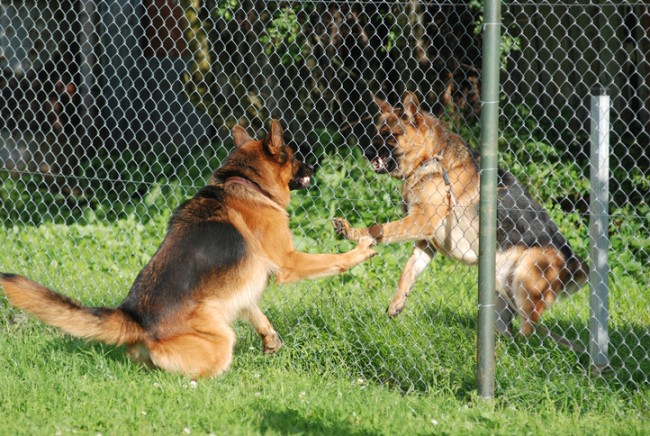
Mathematics in action. (Photo courtesy of Pinterest)