Category: Science

Being a great pet owner

Again and again the connections are wonderful!

On the 21st March, I received an email. It read:

Hello!

According to the ASPCA, animal shelters take in 7.6 million dogs and cats each year. Unfortunately, only 2.7 million animals are adopted each year. I’d love to see that number increase.

I’ve been a pet owner for decades. I know the seemingly infinite joy and love that comes from having a pet. But I also remember how nervous I was when I adopted my first dog.

To ease first-time and potential pet owners’ anxiety about caring for a pet, I would love to offer advice on how to be a great pet parent. Tips will be culled from my own experience and the experience of my blog’s (OurBestFriends.pet) contributors.

Can I write a guest article for your readers? My hope is that the piece will encourage folks to adopt a loving animal. The content will be completely original and free of charge. Please let me know if you’d like to take part.

Hope to hear from you soon!

Jessica

Jessica Brody

Ourbestfriends.pet

What a wonderful email and, of course, I was only too pleased to receive Jessica’s article.

Here it is:

ooOOoo

Survival Guide for First-Time Pet Owners: How to Be a Great Pet Parent

By Jessica Brody, 6th April, 2017

If you’re considering adopting a four-legged friend for the first time, you’re about to embark on an amazing journey. From learning your new pet’s unique personality traits to navigating the demands of providing the best care for your new family member, adopting a pet is a learning experience, but an enriching one. Here are a few essential tips to help you transition your new furry friend seamlessly into your family.

Make Arrangements for Regular Exercise

Dogs, in particular, require regular exercise. They say that a tired dog is a well-behaved dog. If you work long hours, consider hiring a dog walker who can take your pup out for a mid-day potty break and walk. Make sure your new pet – dog or cat – has plenty of toys to keep them occupied while you’re working or otherwise unable to devote your full attention to them while you’re at home.

From bones and dental chews to balls, bells, and feathers, there’s no shortage of unique and intriguing toys on the market to keep your pet entertained and healthy.

If you own your own home, you might also consider installing a fence around a section of your yard. That way your new pet will have a place to run and play without having to be on a leash. You can also use the space for training.

Choose a Veterinarian You Trust

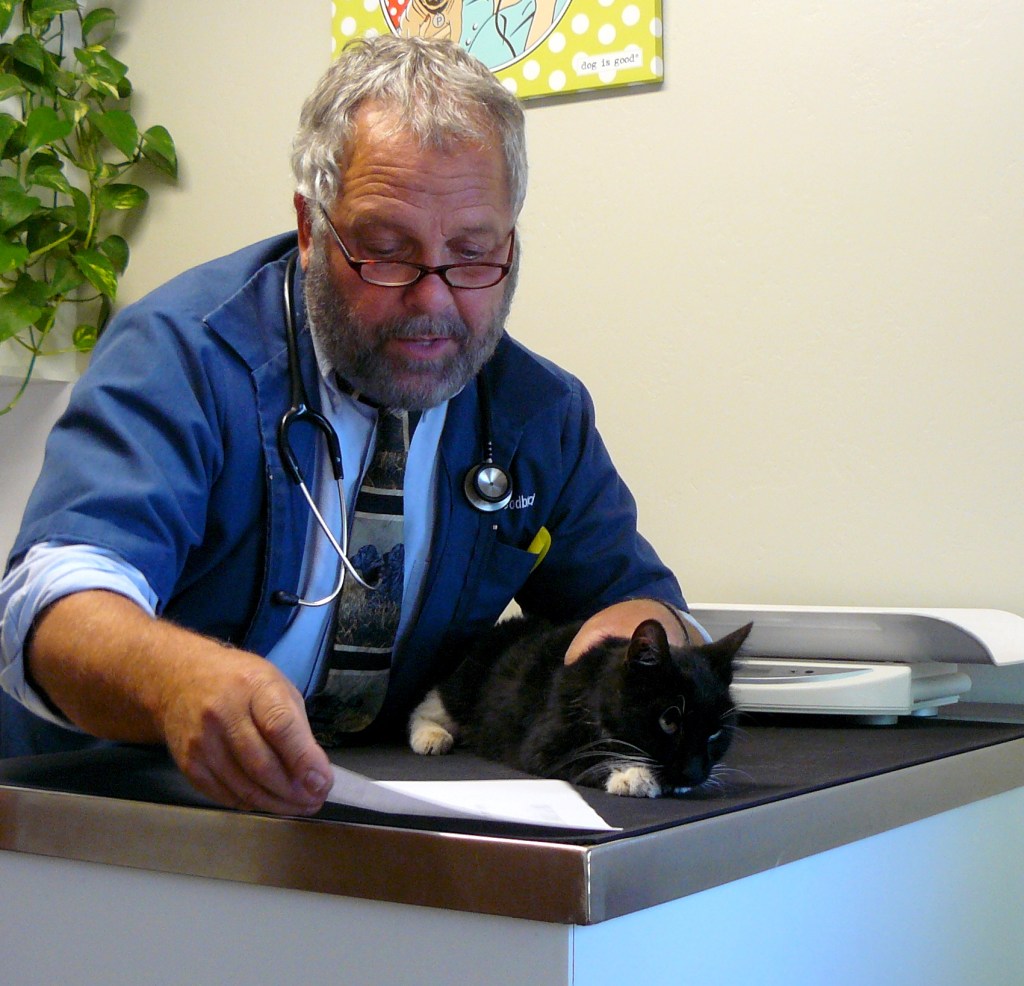
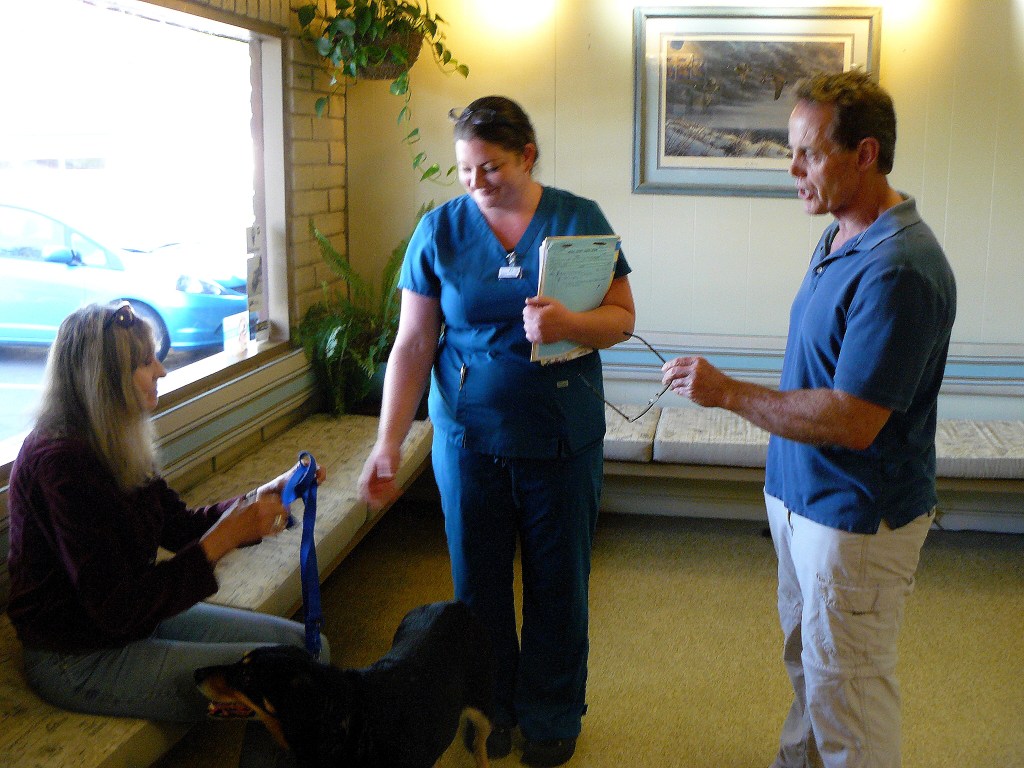
First and foremost, your new pet will need to see a veterinarian. If you’re adopting from a shelter or rescue organization, your pet may come with veterinary records and may already be spayed or neutered. If you’re adopting a new pet from a pet store or breeder, however, you’ll most likely need to take care of initial vetting on your own.

Ask friends and family members for vet recommendations and call around to inquire about office policies and prices to make an informed decision. It’s important that you find a veterinarian that you trust to provide top-notch care for your beloved pet.

Choose a Quality Pet Food

All pet food is not created equal. If you want your pet to live a long, healthy life, you should choose a top-quality pet food that contains healthy ingredients and has a solid track record. There have been many pet food recalls in recent years, with some causing serious illness and even death in pets.

Do your research to determine what foods are the best and safest for your dog’s stage of life and health history. Puppies require different food than older dogs, for instance, and dogs with certain health conditions have special dietary requirements. Talk to your vet if you’re uncertain.

Establish Rules and Routines

Adopting a new pet for the first time requires a bit of playing by ear, as you don’t know exactly what your pet’s quirks will be. However, it’s a good idea to establish some general ground rules from the start. For example, what will you do to keep your pet out of storage areas where dangerous substances, such as yard care chemicals, anti-freeze, or pool chemicals are kept? Will you allow your dog on the furniture? Will your dog or cat sleep in your bed with you? Will you crate your dog while you’re at work?

Your pet will surely have a mind of her own, but knowing what general boundaries you want to set before introducing her to your home will help you be consistent with training.

Give Your Pet Plenty of Affection

While all of these tips are essential steps for being the best pet parent you can be, perhaps the most important is to give your pet plenty of love and affection. Dogs thrive on attention, while cats tend to be quite varied in their preferences. Some are lap cats, hopping on the nearest warm lap they can find; others are loners and generally prefer to be left to their own devices. Get to know your pet’s personality and make sure to shower him with as much love and affection as he wants.

Being a great pet parent isn’t hard, but these important tips will help you integrate your new furry friend into your family with ease. Setting boundaries and rules from the beginning with consistent reinforcement, making sure your pet gets plenty of exercise and has enough toys and activities to keep her engaged, and choosing top-quality pet food and a veterinarian you can trust will ensure that you and your pet can enjoy many joyful years together.

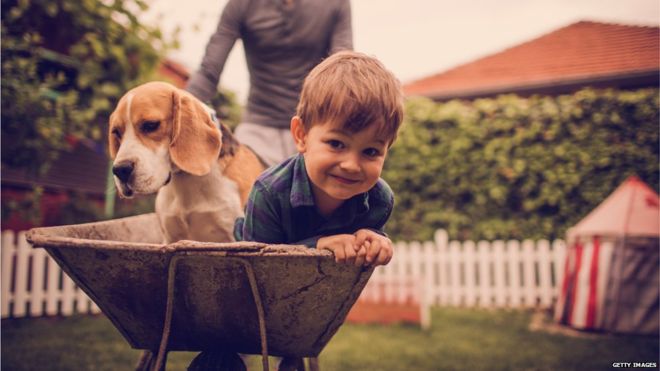
Image via Pixabay by OrsiO

ooOOoo

Naturally, I asked Jessica to write a few words about herself. This is what she sent me.

Jessica is the creator of OurBestFriends.pet. Jessica lives in Dallas, Texas with her loving family (which includes 2 dachshunds and a black lab). She is a certified dog lover, and believes dogs are just about the greatest creatures on earth. She loves collecting and sharing photos of them.

I know many will agree with me when I say that it would be good to receive some more articles from Jessica.

Another life-saving dog!

There’s no end to how dogs protect us!

Last Tuesday, I published a guest post that had been sent to me by my sister, Eleanor, who lives in Johannesburg in South Africa.

Then a day later I read on the Care2 site about a therapy dog that alerted a group of schoolchildren to potentially very unsafe drinking water.  I must share that with you as well.

ooOOoo

Therapy Dog Helps Alert School District to Lead in Water

A therapy dog belonging to a San Diego elementary school teacher proved to be a potential lifesaver – but not for what you might think.

When the teacher filled his bowl with water from the classroom sink on Jan. 26, the dog refused to drink it. The teacher took a good look at the water in his bowl and noticed a sheen on its surface. Concerned, she notified school officials.

After testing samples from around Emerson-Bandini Elementary and the San Diego Co-Operative Charter School 2, which share a campus, results showed the water was contaminated with lead, exceeding the allowable level in the state of California.

School officials contacted the City of San Diego Public Utilities Department, which supplies the water. Because that therapy dog that refused to drink it, the city is now testing the water at each of the school district’s 187 campuses.

The tests, however, won’t begin until April 4, San Diego Unified Chief Operations Officer Drew Rowlands announced last week. In the meantime, students are getting bottled drinking water.

A notice sent to the schools’ staff and parents said the water is safe for handwashing. Since cafeteria meals aren’t prepared on campus, they’re not affected by the contaminants in the water, according to the notice.

The testing of the water, which is expected to be completed by the end of the school year in June, will take place early in the morning, before school starts. At each campus, up to five samples will be taken from water fountains and cafeterias where food is prepared. The test results will be posted online.

If excessive lead is discovered, the contamination source will be determined and school district staff will take “appropriate action on a case-by-case basis,” said San Diego Unified Chief Operations Officer Drew Rowlands. Those appropriate actions could include replacing plumbing fixtures and making repairs.

Making Drinking Water Safe for Schoolchildren

Coincidentally, just one month before the therapy dog refused to drink the San Diego school’s water, the State Water Resources Control Board (SWRCB) Division of Drinking Water launched a program that requires water providers to test for lead in the drinking water at all K-12 schools in California.

“Recent events in the United States have shown that lead in drinking water remains an ongoing public health concern, particularly for children,” the SWRCB stated on its website.

How does lead end up in school water fountains? Although lead rarely occurs naturally in California’s drinking water sources, it can contaminate water that flows through old plumbing fixtures or the solder connecting them. It’s less likely that the water came from a contaminated source, as was the case in Flint, Mich.

Children younger than six are especially susceptible to the effects of lead poisoning. According to the Centers for Disease Control (CDC), about half a million children between the ages of one and five have blood lead levels above 5 micrograms per deciliter, the level at which the CDC recommends the initiation of public health actions – although no “safe” blood lead level in children has been identified.

A problem with lead poisoning is that there are no obvious symptoms. By the time children show the signs, such as weight loss, irritability and lack of appetite, dangerous amounts of lead may have accumulated in their bodies.

This is a compelling reason for more states to follow California’s lead and require water to be tested in schools. Thanks to a teacher’s therapy dog, students at two San Diego schools got a jump start on having safer water available.

Photo credit: Irisdepiris

ooOOoo

 There is no end to the way that dogs love us, protect us and make us better persons!

A Hop, Skip and a Jump!

Actually it’s just about skipping! A dog skipping!!

This was seen on the BBC News website yesterday and I am delighted that the video clip is on YouTube.

Here’s how the story was reported by the BBC.

Devon dog sets skipping world record

3 April 2017 Last updated at 12:17 BST

A skipping Jack Russell and her owner have set a new world record.

Eight-year-old Jessica and her owner Rachael Grylls, from Lewdown in Devon, clocked up 59 skips in one minute.

The owner of a skipping Jack Russell dog says she is “really, really, really pleased” she and her pet have set a new world record.

Rachael said: “It’s quite hard to keep jumping, talking and rewarding her at the same time. I think I’m more unfit than Jessica!”

Lovely to see this news item from my old County of Devon.

You see, I used to live just a few miles out of Totnes in Devon; in the village of Harberton. Lewdown is also in Devon, as the news item reported, but it is the other side of Dartmoor. In other words, North-West of Dartmoor as opposed to Totnes being to the South-East of Dartmoor.

But if any of you dear readers fancy a vacation in the UK you should make a point of going to see Dartmoor. It’s a very beautiful place. (Sue, you have probably been to Dartmoor? Yes?)

Classic Dartmoor view


The Scent Angels

The endless miracles of having dogs in our lives.

I have two sisters: Elizabeth and Eleanor. Elizabeth lives in Tokyo, Japan and Eleanor lives in Johannesburg, South Africa. They are both dear sisters and we all love each other as brothers and sisters should!

Anyway, Eleanor’s husband, Warwick, has a brother and this story is about Warwick’s brother’s step-daughter, Stacey Maguire.

It was Eleanor who sent this story to me to be published in this place.

ooOOoo

My dog saves my life every day

Stacey Maguire’s life is always in danger.

A severe Type 1 Diabetic, her body doesn’t produce the insulin it needs to control her blood sugar, leaving her vulnerable to catastrophic changes in sugar levels. But as long as her dog, Gretchen, is around she has nothing to fear. For Gretchen is a trained Diabetic Assist Dog (DAD).

Gretchen is a Swiss Shepherd who saves her owner’s life on a daily basis by warning her whenever her blood sugar is at a dangerous level. Incredibly, Gretchen does this by smell.

Stacey’s chronic condition is so severe that she’s on the best monitoring technology in South Africa. But before Gretchen came into her life, and even with that monitoring technology, Stacey still experienced hypoglycemic episodes and seizures at least once a week when changes in her blood sugar levels weren’t detected in time.

Thus when Gretchen arrived from America her sole objective was sniffing out the problem as fast as possible. And Gretchen does that – a full hour ahead of that best available technology!

Her method? An urgent paw to the knee, followed by a bark. Gretchen takes no nonsense, delivering the testing kit to Stacey’s hand if her response is sluggish. If anything goes wrong Gretchen, as a trained service animal is taught to so do, sounds an alarm or alerts the nearest person to the danger. Stacey couldn’t ask for better care.

Stacey is the first South African to benefit from a Diabetic Assist Dog. Stacey Maguire’s dream is to start a facility to train more dogs to help diabetics like her. That’s something South Africa can get behind.

ooOOoo

Eleanor also added the following by way of background:

We found a phenomenal lady called Diane Marquette in Minnesota who agreed to train a dog for export – her first time for such an undertaking.

A three-year-old white Swiss Alsatian called Gretchen made the grade for the initial training after which Di started the diabetic training. In preparation, whenever Stacey felt unwell she spat into cotton-wool and put these samples into the freezer. When Stacey had collected a bundle she sent them via courier to Di who then trained Gretchen on Stacey’s scent.

This process took ten months. Then Stacey  flew to Minnesota to meet Gretchen, to be bonded with Gretchen, to be trained and, finally, to sit and pass a very stringent exam before being allowed to bring Gretchen back home. Ten days later we met them at Cape Town International, after twenty-one hours of flying for Stacey with Gretchen at her feet in the aeroplane. SA’s first DAD had landed!

In an email to me, Eleanor included:

Stacey and Gretchen have now been together for several years with their bond just strengthening and strengthening! Gretchen alerts Stacey continuously and in recent times has started alerting at night too. Thus even accounting for the fact that, as with all dogs, Gretchen sleeps at night coinciding, unfortunately, with when Stacey is most vulnerable to shocking lows, this fabulous dog maintains awareness of Stacey’s body scents during the night hours.

Stacey’s wish is to bring trainer Di of Scent Angels to Cape Town to train trainers, and then to roll this life-saving program out to fellow diabetics.

Diane Marquette

Eleanor also included the link to the website for Scent Angels. I shall pass on the link to this post to Diane Marquette with the request that she might allow me to share some more stories of these incredible dogs with you all.

Putting a smile on your dog’s face!

Dogs do suffer from depression.

OK, in many cases I’m sure it is because dogs are watching too much television; especially the news!

OK: Only kidding!

Some may be surprised that dogs can express sadness and suffer from depression but it is true.

Only a few days ago there was a bit of a ‘punch up’ between Brandy and Ruby. Ruby was feeding and Brandy approached her food bowl. Ruby gave a short, throaty “stay away from my food” growl and the next instant Brandy had Ruby’s face in his mouth and it was quickly turning into a Grade A dog fight.

Luckily Jean and I were on hand and had the two of them separated within seconds. But it was still sufficient time for Brandy to have drawn blood from a small bite to the side of Ruby’s face.

However, the point I was coming to was that since that incident Ruby has clearly been very depressed and withdrawn.

So on to today’s topic. Recently published on Mother Nature Network.

ooOOoo

Is my dog depressed? The warning signs and solutions

Find out what causes doggy depression and how to fix it.

Jaymi Heimbuch March 30, 2017.

Dogs can get the doldrums. But there are ways to help them come out of it with a wagging tail. (Photo: Iuliubo/Shutterstock)

Yes, dogs can get depressed. Whether or not it’s the same as what humans experience, we may never know since we can’t ask a dog. But there are signs and symptoms from a dog’s behavior that reveal when a dog is in the doldrums. If you’ve noticed a sudden change in your four-legged friend’s behavior and are worried, you may need to see if the change is a clue that your dog needs some psychological TLC.

Common triggers for dog depression

Dogs are creatures of habit, activity and loyalty. A sudden change that affects their world can cause a dog to have a spat of depression. Triggers include:

  • The addition of a new person or pet to the family
  • A sudden drop in attention from an owner or family members
  • A sudden change in the household schedule
  • The loss of an owner or companion
  • Moving to a new home
  • A traumatic injury

Dogs may also suffer from Seasonal Affective Disorder, or SAD, during the winter months. Stanley Coren reports in Psychology Today: “Do dogs suffer from SAD? Some data comes from a survey conducted by a leading veterinary charity in the UK. PDSA (The People’s Dispensary for Sick Animals) found that approximately 40 percent of dog owners saw a considerable downturn in their pet’s moods during the winter months. In addition, half of the dog owners felt that their dogs slept longer, with around two in five reporting their pets to be less active overall.”

Some dogs may suffer depression simply for not having a job to do. The Guardian notes:

“In the not too distant past, dogs mostly had to work for a living and were probably very often physically and mentally fatigued at the end of the day – which is why we have the expression ‘dog-tired’. Could the stress of being made redundant be the source of this apparent unhappiness? Dog behaviourist Penel Malby told me: ‘Dogs live very differently to the way they used to. Lots more dogs, lots more people, lots more stress for everyone, I think. If you think back even just 50 years, dogs were allowed to roam free every day, socialise with their neighbourhood friends. Now they either go out with a dog walker or go out for an hour if they’re lucky, and the rest of the time is spent at home.'”

The upside is that canine depression usually isn’t permanent, or even necessarily long-lived, and there are ways to combat it to help your dog get back to normal in due time.

What are the warning signs?

Watch for warning signs of depression so you can catch the trouble early and help your dog recover. (Photo: DREIDREIEINS Foto/Shutterstock)

The most common symptoms dogs display when they’re depressed mirror those that humans experience during a depression. They include:

  • Sleeping much more than usual
  • A change in eating habits, including a loss or gain in appetite and in weight
  • A refusal to drink water
  • A lack of interest in usual energetic activities like going for walks or playing
  • Excessive licking of their paws
  • Excessive shedding
  • Become withdrawn or hiding in the house
  • Suddenly showing signs of aggression or anxiety

Unfortunately, these symptoms also occur with a range of other medical issues. A dog might have a change in appetite because of a thyroid or kidney issue, or the dog might not want to go on a walk because of joint pain or arthritis flaring up. So if you notice any changes in your dog’s behavior, the first thing to do is visit the vet to rule out any serious health-related issues before assuming it comes down to depression.

How to help your dog out of a depression

Sometimes time, extra love and a steady routine is all that’s needed. (Photo: Soloviova Liudmyla/Shutterstock)

If you have determined your dog is feeling depressed, there are many things you can do to help them pull out of it.

– Take your dog on more frequent walks during the day to favorite places, allowing them to sniff around and enjoy the scenery. It’s also helpful to do this first thing in the morning to start the day out with a bit of fresh air and energy.

– Try to keep a schedule as much as possible. Dogs are creatures of habit and having a predictable routine can be an enormous source of comfort for a stressed or depressed dog, especially if the trigger for the depression was a sudden change in routine.

– Reward your dog when he shows signs of improved mood or energy. Rather than babying the dog during the down times — which reinforces that behavior — reward him with extra special treats or a favorite toy when he shows a bit of enthusiasm about life to amplify the mood even more.

– Bring home a new toy, such as a squeaker or puzzle toy that stimulates the senses and encourages play.

– If the cause of depression is the loss of a companion, like another household pet, consider adopting another dog that can be a companion. However, only do this if you’ve seriously considered the needs of your household and your depressed dog. It isn’t an option to be taken lightly.

As a last resort, medication could be an option. There are antidepressants for dogs that you can discuss with your veterinarian. However, catching depression early on and trying for behavioral changes first is the best solution. Bonnie Beaver, DVM, notes in a WebMD article, “[I]t can take up to two months for drugs to become effective. But unlike people, who often remain on antidepressants for years, most dogs can get better in six to 12 months and then be taken off the drugs.”

And finally, give it time. As Wag Walking notes, “Be Patient: Sometimes — especially if the issue was a loss of a companion or master — the only thing that will heal a dog’s heart is time. It may be as few as a couple days or as much as a few months, but most dogs will be able to pull themselves out of depression with a little time and understanding.”

ooOOoo

May you, your family and all your wonderful animals have a wall-to-wall happy weekend!

In the land of the blind!

On the Problem of Good: A book review.

As is the way of the Internet and Blogging it is inevitable that connections are made in all four corners of the globe. Some connections are transient, others become long-term. The connection between author John Zande and this blog fits the latter description.

If, dear reader, you have read my posts of the last two days, then that connection between John and me will be clear.

So on to John’s latest book: On the Problem of Good.

Now despite the fact that I awarded the book five stars on Amazon I can’t tell you that it is an easy read. Nor, to that fact, is it a comfortable read.

For John’s book played around with my head in so many ways that I am still far from returning to a settled mind. Indeed, I have a sneaky suspicion that On the Problem of Good represents another one of those turnstiles in life where once through the ‘gate’ there is no returning to the past way of seeing things.

It played with my mind in the sense of forcing me, albeit with a very small ‘f’, to truly comprehend the consequences of unanticipated outcomes. You know that old saying: “Never underestimate the power of unanticipated consequences“.

Here’s an example.

In 1889 a total of 26 road deaths were recorded in the United States. By 2013 that number had exploded to approximately 35,500. Globally, the number stands at 1.24 million and the World Health Organisation  predicts the body of carnage will grow to 1.9 million by 2020. (p.44)

That is just one of the many examples that John uses to support his premise that “good simply does not exist”.

But it goes deeper than that. For John reveals the incalculable, unstoppable force of evolution. Going right back to the very origins of matter. How hydrogen fused into the more complex helium that, in turn, fused into the still heavier and more complex carbon, then along came the fusing of helium and carbon to make oxygen. Then the journey of evolution of atoms. From single atoms to simple compounds, binding to produce double compounds and on to molecules. Then the marriage between molecules to produce amino acids, and on and on to proteins and enzymes and … well, you get the idea!

That continuum from simple to complex organisms and on and on to air-breathing animals (including wolves and then dogs!) and all the way to the likes of yours truly sitting in front of a modern computer writing the review of another person’s book.

All the time, since 13.82 billion years ago, the evolutionary force being a one-way street. A one-way street where John, with some degree of persuasiveness, demonstrates that everything that might, at that time, be seen as a good is not fundamentally a good because it is inextricably connected to a resulting evil.

The Problem of Good is a word problem. It is a lexical glitch, a squabble in temporal, fleshy definitions, and nothing more.

There is no disagreement or antipathy because there is no problem.

Good does not exist. (p.29)

See what I mean about this not being a comfortable book to read!

Nevertheless, you are waiting to hear from me as to whether or not you should read this book?

In answer, here’s a part of what I wrote for my review of the book on Amazon:

If you ever pause for a moment and wonder about the meaning of life, better written as The Meaning of LIFE, then this book is for you. More than that. For if you never ponder about the meaning of life then this really, really is the book for you.

Because for most of us, for most of the time, we live in the land of the blind.

So, thank goodness, that from time to time along comes a person who is the one-eyed King.

Thank you, John Zande.

John Zande

A stirrer of brain cells!

I have just finished reading John’s recently published book On the Problem of Good. I am writing a review of the book that, fingers crossed, I will publish on Friday. But many of you that are recent converts to this blog (you poor, lost souls!) will not remember my review of John’s first book and my reaction to that book when I was only just into it.

So, for both today and tomorrow I am republishing two blog posts. Today, one that was originally published on the 16th September, 2015, and tomorrow the post that was first published on 1st October, 2015.

ooOOoo

Of paradoxes, and headaches!

The interconnectedness of everything – even beyond our wildest imagination.

A while ago John Zande signed up to follow Learning from Dogs. Naturally, I went across to John’s blog to thank him. There I discovered that John is an animal lover and an author. For he states, referring to his book, that, “BUY IT. ALL PROCEEDS GO TO ANIMAL RESCUE AND SHELTER IN BRAZIL”. Fabulous!

John Zande cover_zpsz7wuq9cc

(I did buy the book, am about 20% through it and finding it very stimulating, – if you would like to buy it then click the image of the book on John’s home page.)

Anyway, a few days later we watched the BBC Horizon programme on multiple universes. Here’s how the BBC introduced the programme:

Which Universe Are We In?

Horizon, 2014-2015 Episode 17 of 19

Imagine a world where dinosaurs still walk the earth. A world where the Germans won World War II and you are president of the United States. Imagine a world where the laws of physics no longer apply and where infinite copies of you are playing out every storyline of your life.

It sounds like a plot stolen straight from Hollywood, but far from it. This is the multiverse.

Until very recently the whole idea of the multiverse was dismissed as a fantasy, but now this strangest of ideas is at the cutting edge of science.

And for a growing number of scientists, the multiverse is the only way we will ever truly make sense of the world we are in.

Horizon asks the question: Do multiple universes exist? And if so, which one are we actually in?

Horizon is always great to watch but this episode was incredibly stimulating and interesting. Later, in a exchange of comments to one of John’s posts, where I referred to that programme, John wrote:

The mulitverse is actually the more reasonable explanation for why there is something, and although I don’t understand the maths, the people who do say its simplistically beautiful. Matt Rave is an associate professor of physics and comments here regularly. He has a great book on it all, Why is There Anything?

raveThat lead me to purchasing Matthew Rave’s book that, likewise, is a most fascinating and unusual approach to this topic. His Amazon author’s page reveals that, “Dr. Matthew Rave is an assistant professor of physics at Western Carolina University, in the mountains of North Carolina. His research interests include interpretations of quantum mechanics, the geometric phase, solid state physics, and physics education.” Matthew Rave’s blogsite is here.

Matthew Rave’s book further illustrates the paradox, to my mind, that comes from thinking about why are we here, are we here and, if so, how do we know we are here?

So if that isn’t enough for you and me, then very recently The Conversation blogsite published the following from Geraint Lewis who is Professor of Astrophysics at the University of Sydney. It is republished here within the terms of The Conversation. Did I mention paradoxes and headaches!

ooOOoo

We are lucky to live in a universe made for us

Geraint Lewis, University of Sydney

To a human, the universe might seem like a very inhospitable place. In the vacuum of space, you would rapidly suffocate, while on the surface of a star you would be burnt to a crisp. As far as we know, all life is confined to a sliver of an atmosphere surrounding the rocky planet we inhabit.

But while the origin of life on Earth remains mysterious, there are bigger questions to answer. Namely: why do the laws of physics permit any life at all?

Hang on, the laws of physics? Surely they are a universal given and life just gets on with it?

But remember that the universe is built of fundamental pieces, particles and forces, which are the building blocks of everything we see around us. And we simply don’t know why these pieces have the properties they do.

There are many observational facts about our universe, such as electrons weighing almost nothing, while some of their quark cousins are thousands of times more massive. And gravity being incredibly weak compared to the immense forces that hold atomic nuclei together.

Why is our universe built this way? We just don’t know.

But what if…?

This means we can ask “what if” questions. What if the electron was massive and quarks were fleeting? What if electromagnetism was stronger than the nuclear strong force? If so, what would that universe be like?

Let’s consider carbon, an element forged in the hearts of massive stars, and an element essential to life as we know it.

Initial calculations of such stellar furnaces showed that they were apparently inefficient in making carbon. Then the British astronomer Fred Hoyle realised the carbon nucleus possesses a special property, a resonance, that enhanced the efficiency.

But if the strength of the strong nuclear force was only fractionally different, it would wipe out this property and leave the universe relatively devoid of carbon – and, thus, life.

The story doesn’t end there. Once carbon is made, it is ripe to be transmuted into heavier elements, particularly oxygen. It turns out that oxygen, due to the strength of the strong nuclear force, lacks the particular resonance properties that enhanced the efficiency of carbon creation.

This prevents all of the carbon being quickly consumed. The specific strength of the strong force has thus resulted in a universe with an almost equal mix of carbon and oxygen, a bonus for life on Earth.

Death of a universe

This is but a single example. We can play “what if” games with the properties of all of the fundamental bits of the universe. With each change we can ask, “What would the universe be like?”

The answers are quite stark. Straying just a little from the convivial conditions that we experience in our universe typically leads to a sterile cosmos.

This might be a bland universe, without the complexity required to store and process the information central to life. Or a universe that expands too quickly for matter to condense into stars, galaxies and planets. Or one that completely re-collapses again in a matter of moments after being born. Any complex life would be impossible!

The questions do not end there. In our universe, we live with the comfort of a certain mix of space and time, and a seemingly understandable mathematical framework that underpins science as we know it. Why is the universe so predictable and understandable? Would we be able to ask such a question if it wasn’t?

Our universe appears to balance on a knife-edge of stability. But why?

We appear to be very lucky to live in a universe that accommodates life. Zdenko Zivkovic/Flickr, CC BY

One of a multiverse

To some, science will simply fix it all. Perhaps, if we discover the “Theory of Everything”, uniting quantum mechanics with Einstein’s relativity, all of the relative masses and strengths of the fundamental pieces will be absolutely defined, with no mysteries remaining. To others, this is little more than wishful thinking.

Some seek solace in a creator, an omnipotent being that finely-tuned the properties of the universe to allow us to be here. But the move from the scientific into the supernatural leaves many uncomfortable.

There is, however, another possible solution, one guided by the murky and confused musings at the edge of science. Super-strings or M-theory (or whatever these will evolve into) suggest that the fundamental properties of the universe are not unique, but are somehow chosen by some cosmic roll of the dice when it was born.

This gives us a possible explanation of the seemingly special properties of the universe in which we live.

We are not the only universe, but just one in a semi-infinite sea of universes, each with their own peculiar set of physical properties, laws and particles, lifetimes and ultimately mathematical frameworks. As we have seen, the vast majority of these other universes in the overall multiverse are dead and sterile.

They only way we can exist to ask the question “why are we here?” is that we happen to find ourselves in a universe conducive to our very existence. In any other universe, we simply wouldn’t be around to wonder why we didn’t exist.

If the multiverse picture is correct, we have to accept that the fundamental properties of the universe were ultimately dished out in a game of cosmic roulette, a spin of the wheel that we appear to have won.

Thus we truly live in a fortunate universe.

The ConversationGeraint Lewis, Professor of Astrophysics, University of Sydney

This article was originally published on The Conversation. Read the original article.

ooOOoo

12963392-An-image-of-a-man-with-a-headache--Stock-Vector-headache-earache-cartoonooOOoo

How to follow that, eh?

Let me give way to Hariod Brawn and part of an extensive comment she left back then:

John Zande is most certainly one of the most thoughtful, perceptive, well-informed and sharp-witted bloggers I have ever come across, and I wish him well with his book, which by the way, appears so far to have been met only with a deluge of 5-star reviews on Amazon. I daresay that you and I will both lengthen that list.

Here! Here!

This is the dog!

Perhaps the loss of a loved dog explains so much!

The posts for the last two days have carried separate and very different stories of terrible cruelty to dogs, the second one involving terrible cruelty to a dog and a bull! As a tradition! Ouch!!

Readers of this place know what they feel about dogs. It is felt deep within their hearts. Those feelings are poured out when, either from me or someone else, there’s a post lamenting the loss of their dog.

Just as a tiny example of that love we all have for our dogs, here’s a response from Marina Kanavaki and, trust me, Marina is far from being alone in this regard.

Oh, no, Paul!!! I’m so sorry my friend! It is hard to believe and not so long ago, Casey. I know words can’t take away the pain but you have my thoughts and I’m sending you both my love and hugs.

So a recent essay published on The Conversation site is a must to share with you today. As usual, it is republished within the terms of The Conversation.

ooOOoo

Why losing a dog can be harder than losing a relative or friend

March 9, 2017
Frank T. McAndrew,   Cornelia H. Dudley Professor of Psychology, Knox College.

Recently, my wife and I went through one of the more excruciating experiences of our lives – the euthanasia of our beloved dog, Murphy. I remember making eye contact with Murphy moments before she took her last breath – she flashed me a look that was an endearing blend of confusion and the reassurance that everyone was ok because we were both by her side.

When people who have never had a dog see their dog-owning friends mourn the loss of a pet, they probably think it’s all a bit of an overreaction; after all, it’s “just a dog.”

However, those who have loved a dog know the truth: Your own pet is never “just a dog.”

Many times, I’ve had friends guiltily confide to me that they grieved more over the loss of a dog than over the loss of friends or relatives. Research has confirmed that for most people, the loss of a dog is, in almost every way, comparable to the loss of a human loved one. Unfortunately, there’s little in our cultural playbook – no grief rituals, no obituary in the local newspaper, no religious service – to help us get through the loss of a pet, which can make us feel more than a bit embarrassed to show too much public grief over our dead dogs.

Perhaps if people realized just how strong and intense the bond is between people and their dogs, such grief would become more widely accepted. This would greatly help dog owners to integrate the death into their lives and help them move forward.

An interspecies bond like no other

What is it about dogs, exactly, that make humans bond so closely with them?

For starters, dogs have had to adapt to living with humans over the past 10,000 years. And they’ve done it very well: They’re the only animal to have evolved specifically to be our companions and friends. Anthropologist Brian Hare has developed the “Domestication Hypothesis” to explain how dogs morphed from their grey wolf ancestors into the socially skilled animals that we now interact with in very much the same way as we interact with other people.

Perhaps one reason our relationships with dogs can be even more satisfying than our human relationships is that dogs provide us with such unconditional, uncritical positive feedback. (As the old saying goes, “May I become the kind of person that my dog thinks I already am.”)

This is no accident. They have been selectively bred through generations to pay attention to people, and MRI scans show that dog brains respond to praise from their owners just as strongly as they do to food (and for some dogs, praise is an even more effective incentive than food). Dogs recognize people and can learn to interpret human emotional states from facial expression alone. Scientific studies also indicate that dogs can understand human intentions, try to help their owners and even avoid people who don’t cooperate with their owners or treat them well.

Not surprisingly, humans respond positively to such unrequited affection, assistance and loyalty. Just looking at dogs can make people smile. Dog owners score higher on measures of well-being and they are happier, on average, than people who own cats or no pets at all.

Like a member of the family

Our strong attachment to dogs was subtly revealed in a recent study of “misnaming.” Misnaming happens when you call someone by the wrong name, like when parents mistakenly calls one of their kids by a sibling’s name. It turns out that the name of the family dog also gets confused with human family members, indicating that the dog’s name is being pulled from the same cognitive pool that contains other members of the family. (Curiously, the same thing rarely happens with cat names.)

It’s no wonder dog owners miss them so much when they’re gone.

Psychologist Julie Axelrod has pointed out that the loss of a dog is so painful because owners aren’t just losing the pet. It could mean the loss of a source of unconditional love, a primary companion who provides security and comfort, and maybe even a protégé that’s been mentored like a child.

The loss of a dog can also seriously disrupt an owner’s daily routine more profoundly than the loss of most friends and relatives. For owners, their daily schedules – even their vacation plans – can revolve around the needs of their pets. Changes in lifestyle and routine are some of the primary sources of stress.

According to a recent survey, many bereaved pet owners will even mistakenly interpret ambiguous sights and sounds as the movements, pants and whimpers of the deceased pet. This is most likely to happen shortly after the death of the pet, especially among owners who had very high levels of attachment to their pets.

While the death of a dog is horrible, dog owners have become so accustomed to the reassuring and nonjudgmental presence of their canine companions that, more often than not, they’ll eventually get a new one.

So yes, I miss my dog. But I’m sure that I’ll be putting myself through this ordeal again in the years to come.

ooOOoo

Just let the messages of this essay reverberate around your heart. I’ll say no more!

Dogs: Aren’t They Incredible!

The love and admiration for this beautiful animal goes on and on!

It seems as though it is almost on a weekly basis that new and incredible facts about our dear, dear dogs come to the surface.

So what prompted this from me today!

Only a wonderful article that was originally published in New Scientist but then was carried by The Smithsonian. I am hoping that by fully linking this post to both the New Scientist article and the essay in The Smithsonian I am at liberty to republish it for all you good people.

ooOOoo

Dogs Use Deception to Get Treats, Study Shows

When a human partner withheld tasty snacks, the dogs got sneaky

Would these eyes deceive you? New study says yes. (johan63/iStock)

By Brigit Katz     smithsonian.com
March 10, 2017
There is plenty of evidence to suggest that dogs, in addition to looking adorable in sweaters, possess fairly sophisticated cognitive abilities. They recognize emotion, for example, and respond negatively to antisocial behavior between humans. Man’s best friend can also get pretty tricksy when it comes to scoring snacks. As Brian Owens reports for New Scientist, a recent study found that dogs are capable of using deceptive tactics to get their favorite treats.

The study, published in the journal Animal Cognition, was led by Marianne Heberlein of the Department of Evolutionary Biology and Experimental Studies at the University of Zürich. Heberlein told Owens that the idea for the study was born when she observed her pet pooches engaging in deceptive behavior; one sometimes pretends to see something interesting outside, prompting the other to give up his sleeping spot.

To find out if dogs engage in similar shenanigans with humans, Heberlein and a team of researchers paired 27 dogs with two different partners, Stanley Coren explains in Psychology Today. One of these partners would repeatedly go to the bowl of a given dog, fish out a treat, and give it to the pup. The other would show the treat to the dog, and then put it in her pocket. Perhaps unsurprisingly, the dogs began to show a preference for the more generous partners, and would approach them spontaneously.

Once one partner had been established as co-operative, the other as competitive, the dogs were taught to lead their partners to one of two boxes, both containing food, with the command “Show me the food.” And the same pattern was repeated: when the dogs led the co-operative partner to a treat, they got to eat it. The competitive partner withheld the treat.

Researchers then showed the dogs three covered boxes. One contained a sausage, the second contained a less-yummy dry biscuit, and the third was empty. Once again, the process of treat giving and withholding was repeated, but this time with a twist: when the dog was reunited with its owner, the owner asked it to choose one of the boxes. If there was a treat inside the box, the dog was allowed to eat it. But “if the dog chose the box which had been opened before,” Coren explains, “the owner just showed the empty box to the dog.”

Over the course of a two-day testing period, the dogs were repeatedly presented with this conundrum. They had been trained to lead both partners to boxes containing food, but they knew that the competitive partner would not let them eat the snacks. They also knew that if any snacks remained inside the boxes once they were reunited with their owners, they would get a chance to eat them. So the dogs got a little devious.

Researchers observed the pooches leading the co-operative partner to the box containing the sausage more often than expected by chance. They led the competitive partner to the sausage less often than expected by chance. And here’s where things get really interesting: the dogs took the competitive partner to the empty box more frequently than the co-operative partner, suggesting that they were working through their options and engaging in deliberate deception to maximize their chances of getting both treats.

“It is as though the dog is thinking, ‘Why should I tell that selfish person where the best treat [is] if it means that I will never get it?’,” writes Coren.

“These results show that dogs distinguished between the co-operative and the competitive partner,” the authors of the study write, “and indicate the flexibility of dogs to adjust their behaviour and that they are able to use tactical deception.”

Rest assured, dog lovers: your pooches may be sneaky, but they still love you more than cats.

Read more: http://www.smithsonianmag.com/smart-news/dogs-use-deception-get-treats-study-shows-180962492/#5r1vc6gkyLQoIQaL.99
Give the gift of Smithsonian magazine for only $12! http://bit.ly/1cGUiGv
Follow us: @SmithsonianMag on Twitter

ooOOoo

 The article from Brigit opened up with a picture of a pair of eyes; a pair of dog’s eyes.

I don’t know about you but some dogs have eyes that reach out and seem to illuminate one’s soul.

Our Oliver has just that set of eyes. I will close today’s post with a photograph of Oliver’s eyes that was taken yesterday afternoon.

Talk about the power of non-verbal communication!


Smoke and Mirrors

Let me start with a quotation:

I’m not a pessimist, even though I do think awful things are going to happen.

James Lovelock

The author of that quote is fellow Englishman, albeit a tad older than yours truly, Mr. James Lovelock. WikiPedia describes him, thus (in part):

James Ephraim Lovelock CHCBEFRS[2] (born 26 July 1919) is an independent scientist, environmentalist and futurist who lives in Devon, England. He is best known for proposing the Gaia hypothesis, which postulates that the Earth functions as a self-regulating system.[5]

Moving on.

These times in this fine country, The United States of America, are troubling as Rebecca Gordon set out so compellingly in yesterday’s post.

But what is so terrible about these times is the failure to put integrity at the heart of every pronouncement that comes from a Government. And it would be grossly unfair to pick on the present US Government as the only example of this failure.

Because just a few mouse clicks can inform millions of us as to the real issues. Such as the effect that Climate Change is having on our health, as this recent Grist article so aptly put it in the opening paragraphs:

Here are 4 ways climate change is messing with our brains — for the worse.

We might think of climate change as purely physical: wildfires blazing through forests, rising seas lapping at the doors of coastal homes.

But those brutal conditions also affect our mental health, changing how we think and act. Mental health professionals are paying attention to the link between climate change and emotional health — and health insurance companies are, too.

Or take the issue of the state of America’s water. Recently the subject of an important essay just presented by Naked Capitalism:

America’s Hidden Water Affordability Crisis

Yves here. Grist has been doing an admirable job of keeping on top of this important yet oddly still-under-the-radar story. In the US, the big driver of rising water costs is the need to invest in aging, neglected water works. But water is going to become an issue in many places for differing reasons. As we have been saying for years, the natural resource that is projected to come under pressure first is potable water. And please don’t push desalination as a magic bullet. That costs money (both the plants and new transportation infrastructure, uses energy, plus has the not-trivial problem of how to dispose of the salt residues.

By Ciara O’Rourke, a freelance writer and 2015-16 Ted Scripps Fellow in Environmental Journalism at the University of Colorado Boulder. Originally published by Fusion and reproduced at Grist as part of the Climate Desk collaboration

When Elizabeth Mack wondered about a future in which Americans wouldn’t be able to pay for water, a couple of colleagues waved her off. “Don’t be ridiculous,” they said. But the idea niggled at Mack, an assistant professor at the Department of Geography, Environment, and Spatial Sciences at Michigan State University. And in January, in an article published in the science journal PLOS ONE, she asked a new question: Is there a burgeoning water affordability crisis in the United States?

Mack, along with research assistant Sarah Wrase, determined that if water rates increase at projected amounts over the next five years, the percentage of households that can’t pay their water bills could triple from 11.9 percent to more than a third. Nearly 14 million households nationwide already struggle to afford water services. An additional 27.18 million — or 8.5 percent of the country’s population — could soon face the same challenges.

Yes, integrity in politics is more, so much more, than a nice idea from this silly old Brit now living in Oregon. Here’s a post I published some four years ago that says it as clearly as it needs to be said.

ooOOoo

Reflections on Integrity.

Going back to basics.

Many will know the origins of this blog; a chance comment by Jon Lavin back in England in early 2007 that dogs were integrous, (a score of 210 as defined by Dr David Hawkins).

Way back in 2009, I wrote this:

“There is nothing to fear except the persistent refusal to find out the truth, the persistent refusal to analyse the causes of happenings.” Dorothy Thompson.

When I started Learning from Dogs I was initially rather vague but knew that the Blog should reflect the growing need for greater integrity and mindfulness in our planetary civilisation. Here are some early musings,

Show that integrity delivers better results … integrity doesn’t require force … networking power of a group … demonstrate the power of intention … cut through the power of propaganda and media distortion …

Promulgate the idea that integrity is the glue that holds a just society together … urgent need as society under huge pressures …. want a decent world for my grandchildren … for all our grandchildren …. feels like the 11th hour….

But as the initial, rather hesitant, start to the Blog settled into a reliable, daily posting, and as the minuscule number of readers steadily grew to the present level of many hundreds each day, the clarity of the purpose of Learning from Dogs also improved.

Because, while it may sound a tad grandiose and pompous, if society doesn’t eschew the games, half-truths and selfish attitudes of the last, say, 30 years or more, then civilisation, as we know it, could be under threat.

Or, possibly, it’s more accurate to say that our civilisation is under threat and the time left to change our ways, to embrace those qualities of integrity, truth and consciousness for the very planet we all live on, is running out.

Time left to change our ways is running out.

So what’s rattled my cage, so to speak, that prompted today’s reflection? I’ll tell you! (You knew I was going to anyway, didn’t you!)

I’m drafting these thoughts around noon Pacific Standard Time on Sunday, 17th. At the same time, tens of thousands of ordinary good folk (40,000 plus at the latest estimate) are gathering by the Washington Monument ready to march past the White House demanding that President Obama block the Keystone XL pipeline and move forward toward climate action.

Do I trust the US Government to take this action? On balance, no! That hurts me terribly to write that. I really want to trust and believe what the President of my new home country says.

State of the Union speech 2013. AP photo.

Here’s a snippet of what the President did say in his State of the Union speech on February 12th.

Now, it’s true that no single event makes a trend. But the fact is, the 12 hottest years on record have all come in the last 15. Heat waves, droughts, wildfires, floods, all are now more frequent and more intense.

We can choose to believe that Superstorm Sandy, and the most severe drought in decades, and the worst wildfires some states have ever seen were all just a freak coincidence. Or we can choose to believe in the overwhelming judgment of science and act before it’s too late.

A frank admission that the climate is changing in dramatic ways; the overwhelming judgment of science – fantastic!

The evidence that burning carbon-based fuels (coal, oil, gas) is the primary cause of today’s high CO2 levels is overwhelming. As a recent BBC radio programme reveals (being featured tomorrow) huge climate changes going back millions of years are a natural part of Earth’s history. However, as one of the scientists explains at the end of that radio programme, the present CO2 level, 395.55 ppm as of January, is now way above the safe, stable limit for the majority of life species on the planet.

But say you are reading this and are not yet convinced?

Let me borrow an old pilot’s saying from the world of aviation: If there’s any doubt, there’s no doubt!

That embracing, cautious attitude is part of the reason why commercial air transport is among the most safest forms of transport. If you had the slightest doubt about the safety of a flight, you wouldn’t board the aircraft.

If you had the slightest doubt about the future for civilisation on this planet likewise you would do something! Remember, that dry word civilisation means family, children, grandchildren, friends and loved ones. The last thing you would do is to carry on as before!

Which is where my lack of trust of leaders comes from!

Back to that State of the Union speech. Just 210 words after the spoken words “act before it’s too late” (I counted them!) Pres. Obama says, “That’s why my administration will keep cutting red tape and speeding up new oil and gas permits.

Here’s the relevant section:

I will direct my cabinet to come up with executive actions we can take, now and in the future, to reduce pollution, prepare our communities for the consequences of climate change, and speed the transition to more sustainable sources of energy.

Now, four years ago, other countries dominated the clean-energy market and the jobs that came with it. And we’ve begun to change that. Last year, wind energy added nearly half of all new power capacity in America. So let’s generate even more. Solar energy gets cheaper by the year. Let’s drive down costs even further. As long as countries like China keep going all-in on clean energy, so must we.

Now, in the meantime, the natural gas boom has led to cleaner power and greater energy independence. We need to encourage that. That’s why my administration will keep cutting red tape and speeding up new oil and gas permits.

We don’t require any more oil to be used. We are already using a staggering amount of it. Let me refer you to an essay on Nature Bats Last called Math. The scary kind, not the fuzzy kind. Prof. McPherson wrote:

I performed a little rudimentary math last week. A little because even a little pushes my limit for math, these days. And rudimentary for the same reason. The outcome was staggering: We’re using oil at the rate of 5,500 cubic feet per second (cfs).

5,500 cubic feet per second” Don’t know about you but I have some trouble in visualising that flow rate. Try this from later in the essay:

Here’s another shot of perspective: We burn a cubic mile of crude oil every year. The Empire State Building, the world’s ninth-tallest building, towers above New York at 1,250 feet. The world’s tallest building, Taipei 101, is 1,667 feet from ground to tip.

Put those buildings together, end to end, and you have one side of a cube. Do it again, and you have the second side. Once more, but this time straight up, and you have one big cube. Filling that cube with oil takes nearly 200 billion gallons … which is about one-sixth the size of the cube of oil we’re burning every year.

Burning a cubic mile every year! Yes, Mr. President, more oil permits is a wonderful way of taking action before it’s too late!

cubic mile
Image taken from http://www.flashevap.com/bigthings.htm

So let’s see what transpires? Let’s see if integrity is given the highest political focus. As in “adherence to moral and ethical principles; soundness of moral character; honesty.” Because if there’s ever been a time when all of us, from every spectrum of society need honesty about what we are doing to the planet, it’s now!

As the tag on the home page of this blog says, “Dogs are integrous animals. We have much to learn from them.

ooOOoo

Going to close with two more quotations from Mr. Lovelock.

The first:

You never know with politicians what they are really saying. And I don’t say that in a negative way-they have an appalling job.

And the second one to close today’s post:

If you start any large theory, such as quantum mechanics, plate tectonics, evolution, it takes about 40 years for mainstream science to come around. Gaia has been going for only 30 years or so.