I can’t remember when I first came to know Patrice Ayme; it was quite a few years ago. I followed him for years and then had to take a break simply because there weren’t enough hours in the day! Not because I disliked what he was writing – no siree!
Anyway, Patrice recently forwarded me an article that rightly deserved much attention. Here it is:
ooOOoo
Saving The Animals, Thus Ourselves
Animals die in great numbers trying to cross human transportation systems.
When one provides the animals with crossings, they rush to use them (so are used even before they are finished, by a Noah’s ark of species).
Respecting nature is not just about the beauty and naturalness it provides us with, it is about respecting how we became who we are, at our best. We have to learn to share the planet with animals. Not just because we are smart, but also because they are smart and our smarts evolved from interacting with their smarts. So interacting with wild animals is smart all around… and it has made our species smarter! Wildlife interaction is how we evolved our smarts.
Not book smarts, but the deepest smarts.
Hence by respecting animals, we respect how we became human… and it keeps on being human to do so. Economy means managing the house, in particular, managing earth, which is our common house. As the greenhouse heating proceeds at an accelerating pace, we then have to reserve an increasing part of our economic activity to save the animals by helping them to cope with the changes we have brought.
Morality comes from the mores, the old ways, the ways which perdured, and thus, insure survival. Having a natural environment, full of animals, is the ultimate morality. If we can’t save them, how can we learn to save ourselves?
So it is not just smart and economic to save the animals, but also moral. The money engaged so far is quite small. But the price of an unbalanced environment tottering towards ruin, is incomparably higher. For a nice article with nice videos of animals using their smarts crossing freeways and roads, consider:
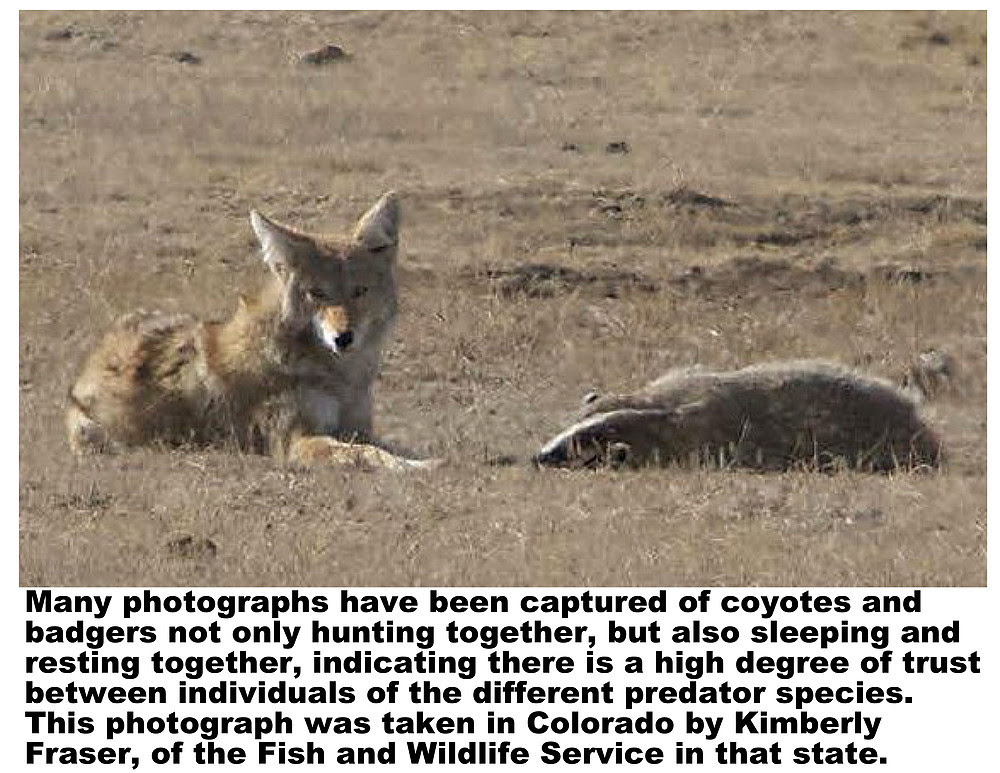
As a badger digs, say for ground squirrels whose burrows have many exits, could not it be that the coyote would seize a fleeing squirrel, and share the meal? This is basic economics and strategy, and it turns out that coyotes and badgers have figured out that behavior, and cooperate together.
The next question would be this: do the individuals concerned figure it out by themselves, as cephalopods do, or is the behavior culturally instigated, namely both badgers and coyotes learn elements of interspecific cooperation from teaching by their elders? I believe the latter.
After all, I trained the (wild) nesting birds on my balcony to benignantly ignore my weird and intrusive ways … which thus had to learn to be a bit more respectful than they usually are. But of course these ways tend to incite the red tail hawks to not land on this particular balcony on a determined culinary mission (as they have been seen doing…) And the birds know this [1].
Saving the animals is first of all about saving us… Not just our sense of beauty.
Patrice Ayme
[1] Hummingbirds set their nests below hawks’ nests, as this protects them from gays. Local hawks do attack nests of birds who are big enough (like gays, crows, etc). And I have seen them pass 10 feet from me, eyeing me suspiciously… Their feathers can be two feet long…
We are all connected as I said in the title to today’s post.
The only way we are going to survive as a species on this planet is for all of us to recognise this fundamental law of nature. Or should I say this fundamental law of Nature!
It is a little over fifty years since the inaugural celebration of the first Earth Day; on the 22nd April, 1970. In other words we are just over halfway through if one imagines the celebration of the one hundredth Earth Day: 22nd April, 2070. In 1970 the planet was home to 3.7 billion people. Today there are nearly 8 billion people. But more than that these 8 billion people are living to an average of 72 years, up from 59 years in 50 years.
Our failure to address climate change is harming the planet and all the species, including us humans, who live on Planet Earth. I shall be dead by 2070 and also a great many of my fellow humans. But for all those born in the year 2000 and later it is increasingly going to become the number one priority: Saving the planet from a total catastrophe!
This stunning photograph was taken by Roger Barnett who describes himself as a former semi-pro ski photographer now shooting wildlife, landscapes and astro….. Retired, mostly..arborist/tree service owner.
It is republished with Roger’s permission.
It was seen on the blog site Ugly Hedgehog and I also include this text from ‘kenpic’:
Often called the “flower moon,” the May full moon is nearly upon us. Earth’s nearest neighbor will reach the full stage early May 26, meaning it will appear full both Tuesday and Wednesday nights. The moon’s closest monthly approach to Earth happens at the same time, making the flower moon a supermoon, as well.
For early risers, there’s another astronomical treat in store: This year’s only total lunar eclipse happens in the hours before sunrise May 26. When Earth’s shadow begins to cover it, Luna often takes on a reddish tint, leading to the name “blood moon” for those rare times when a lunar eclipse aligns with a full moon.
Plus, two photographs to close with. Firstly, this image from Unsplash!
We live on a very beautiful planet.
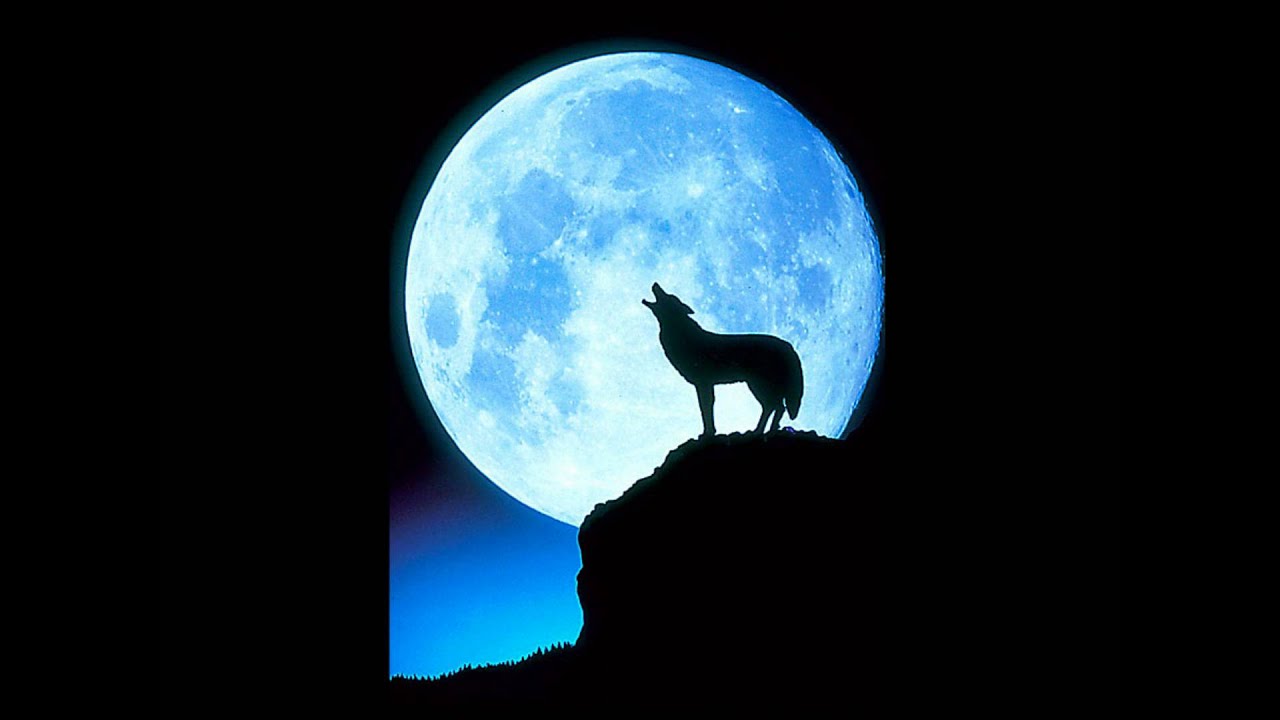
Lastly, this photograph of a dog howling at the moon. Taken from DogWalls! (And hopefully I’m alright with the copyright!)
Sometimes realisation comes in a blinding flash. Blurred outlines snap into shape and suddenly it all makes sense. Underneath such revelations is typically a much slower-dawning process. Doubts at the back of the mind grow. The sense of confusion that things cannot be made to fit together increases until something clicks. Or perhaps snaps.
Collectively we three authors of this article must have spent more than 80 years thinking about climate change. Why has it taken us so long to speak out about the obvious dangers of the concept of net zero? In our defence, the premise of net zero is deceptively simple – and we admit that it deceived us.
The threats of climate change are the direct result of there being too much carbon dioxide in the atmosphere. So it follows that we must stop emitting more and even remove some of it. This idea is central to the world’s current plan to avoid catastrophe. In fact, there are many suggestions as to how to actually do this, from mass tree planting, to high tech direct air capture devices that suck out carbon dioxide from the air.
The current consensus is that if we deploy these and other so-called “carbon dioxide removal” techniques at the same time as reducing our burning of fossil fuels, we can more rapidly halt global warming. Hopefully around the middle of this century we will achieve “net zero”. This is the point at which any residual emissions of greenhouse gases are balanced by technologies removing them from the atmosphere.
This is a great idea, in principle. Unfortunately, in practice it helps perpetuate a belief in technological salvation and diminishes the sense of urgency surrounding the need to curb emissions now.
We have arrived at the painful realisation that the idea of net zero has licensed a recklessly cavalier “burn now, pay later” approach which has seen carbon emissions continue to soar. It has also hastened the destruction of the natural world by increasing deforestation today, and greatly increases the risk of further devastation in the future.
To understand how this has happened, how humanity has gambled its civilisation on no more than promises of future solutions, we must return to the late 1980s, when climate change broke out onto the international stage.
Steps towards net zero
On June 22 1988, James Hansen was the administrator of Nasa’s Goddard Institute for Space Studies, a prestigious appointment but someone largely unknown outside of academia.
By the afternoon of the 23rd he was well on the way to becoming the world’s most famous climate scientist. This was as a direct result of his testimony to the US congress, when he forensically presented the evidence that the Earth’s climate was warming and that humans were the primary cause: “The greenhouse effect has been detected, and it is changing our climate now.”
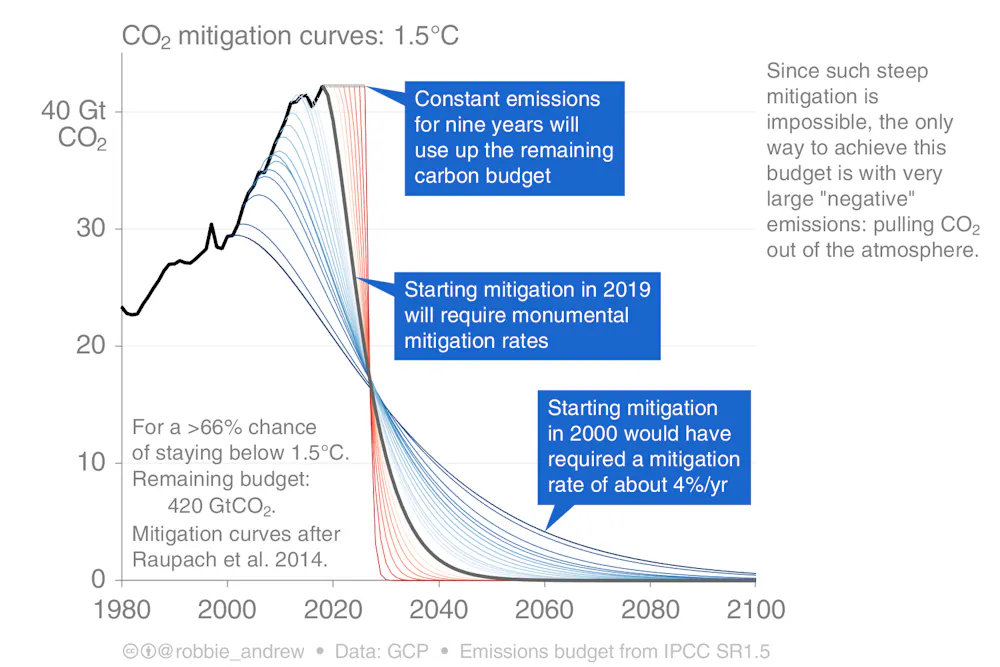
If we had acted on Hansen’s testimony at the time, we would have been able to decarbonise our societies at a rate of around 2% a year in order to give us about a two-in-three chance of limiting warming to no more than 1.5°C. It would have been a huge challenge, but the main task at that time would have been to simply stop the accelerating use of fossil fuels while fairly sharing out future emissions.
Four years later, there were glimmers of hope that this would be possible. During the 1992 Earth Summit in Rio, all nations agreed to stabilise concentrations of greenhouse gases to ensure that they did not produce dangerous interference with the climate. The 1997 Kyoto Summit attempted to start to put that goal into practice. But as the years passed, the initial task of keeping us safe became increasingly harder given the continual increase in fossil fuel use.
It was around that time that the first computer models linking greenhouse gas emissions to impacts on different sectors of the economy were developed. These hybrid climate-economic models are known as Integrated Assessment Models. They allowed modellers to link economic activity to the climate by, for example, exploring how changes in investments and technology could lead to changes in greenhouse gas emissions.
They seemed like a miracle: you could try out policies on a computer screen before implementing them, saving humanity costly experimentation. They rapidly emerged to become key guidance for climate policy. A primacy they maintain to this day.
Unfortunately, they also removed the need for deep critical thinking. Such models represent society as a web of idealised, emotionless buyers and sellers and thus ignore complex social and political realities, or even the impacts of climate change itself. Their implicit promise is that market-based approaches will always work. This meant that discussions about policies were limited to those most convenient to politicians: incremental changes to legislation and taxes.
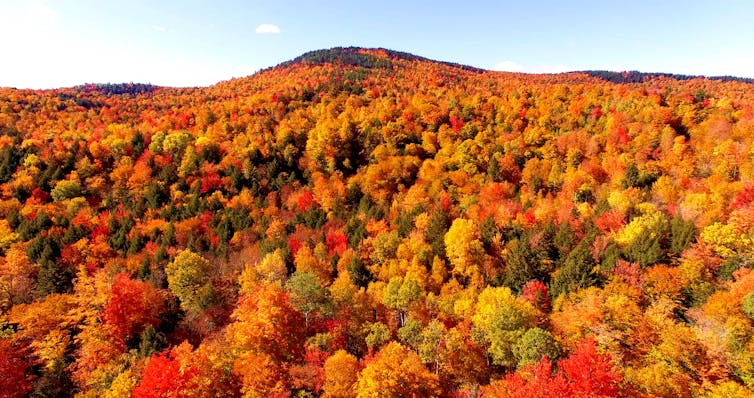
Around the time they were first developed, efforts were being made to secure US action on the climate by allowing it to count carbon sinks of the country’s forests. The US argued that if it managed its forests well, it would be able to store a large amount of carbon in trees and soil which should be subtracted from its obligations to limit the burning of coal, oil and gas. In the end, the US largely got its way. Ironically, the concessions were all in vain, since the US senate never ratified the agreement.
Forests such as this one in Maine, US, were suddenly counted in the carbon budget as an incentive for the US to join the Kyoto Agreement. Inbound Horizons/Shutterstock
Postulating a future with more trees could in effect offset the burning of coal, oil and gas now. As models could easily churn out numbers that saw atmospheric carbon dioxide go as low as one wanted, ever more sophisticated scenarios could be explored which reduced the perceived urgency to reduce fossil fuel use. By including carbon sinks in climate-economic models, a Pandora’s box had been opened.
It’s here we find the genesis of today’s net zero policies.
That said, most attention in the mid-1990s was focused on increasing energy efficiency and energy switching (such as the UK’s move from coal to gas) and the potential of nuclear energy to deliver large amounts of carbon-free electricity. The hope was that such innovations would quickly reverse increases in fossil fuel emissions.
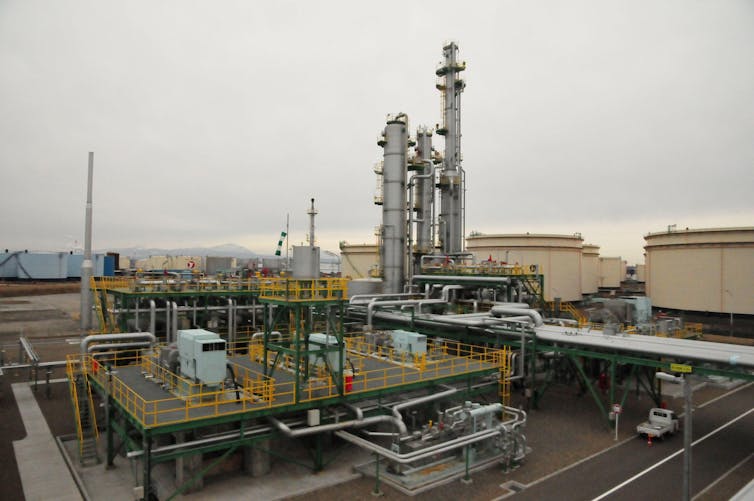
But by around the turn of the new millennium it was clear that such hopes were unfounded. Given their core assumption of incremental change, it was becoming more and more difficult for economic-climate models to find viable pathways to avoid dangerous climate change. In response, the models began to include more and more examples of carbon capture and storage, a technology that could remove the carbon dioxide from coal-fired power stations and then store the captured carbon deep underground indefinitely.
The Tomakomai carbon, capture and storage test site, Hokkaido, Japan, March 2018. Over its three-year lifetime, it’s hoped that this demonstrator project will capture an amount of carbon approximately 1/100,000 of current global annual emissions. The captured carbon will be piped into geological deposits deep under the sea bed where it will need to remain for centuries. REUTERS/Aaron Sheldrick
This had been shown to be possible in principle: compressed carbon dioxide had been separated from fossil gas and then injected underground in a number of projects since the 1970s. These Enhanced Oil Recovery schemes were designed to force gases into oil wells in order to push oil towards drilling rigs and so allow more to be recovered – oil that would later be burnt, releasing even more carbon dioxide into the atmosphere.
Carbon capture and storage offered the twist that instead of using the carbon dioxide to extract more oil, the gas would instead be left underground and removed from the atmosphere. This promised breakthrough technology would allow climate friendly coal and so the continued use of this fossil fuel. But long before the world would witness any such schemes, the hypothetical process had been included in climate-economic models. In the end, the mere prospect of carbon capture and storage gave policy makers a way out of making the much needed cuts to greenhouse gas emissions.
The rise of net zero
When the international climate change community convened in Copenhagen in 2009 it was clear that carbon capture and storage was not going to be sufficient for two reasons.
First, it still did not exist. There were no carbon capture and storage facilities in operation on any coal fired power station and no prospect the technology was going to have any impact on rising emissions from increased coal use in the foreseeable future.
The biggest barrier to implementation was essentially cost. The motivation to burn vast amounts of coal is to generate relatively cheap electricity. Retrofitting carbon scrubbers on existing power stations, building the infrastructure to pipe captured carbon, and developing suitable geological storage sites required huge sums of money. Consequently the only application of carbon capture in actual operation then – and now – is to use the trapped gas in enhanced oil recovery schemes. Beyond a single demonstrator, there has never been any capture of carbon dioxide from a coal fired power station chimney with that captured carbon then being stored underground.
Just as important, by 2009 it was becoming increasingly clear that it would not be possible to make even the gradual reductions that policy makers demanded. That was the case even if carbon capture and storage was up and running. The amount of carbon dioxide that was being pumped into the air each year meant humanity was rapidly running out of time.
With hopes for a solution to the climate crisis fading again, another magic bullet was required. A technology was needed not only to slow down the increasing concentrations of carbon dioxide in the atmosphere, but actually reverse it. In response, the climate-economic modelling community – already able to include plant-based carbon sinks and geological carbon storage in their models – increasingly adopted the “solution” of combining the two.
So it was that Bioenergy Carbon Capture and Storage, or BECCS, rapidly emerged as the new saviour technology. By burning “replaceable” biomass such as wood, crops, and agricultural waste instead of coal in power stations, and then capturing the carbon dioxide from the power station chimney and storing it underground, BECCS could produce electricity at the same time as removing carbon dioxide from the atmosphere. That’s because as biomass such as trees grow, they suck in carbon dioxide from the atmosphere. By planting trees and other bioenergy crops and storing carbon dioxide released when they are burnt, more carbon could be removed from the atmosphere.
With this new solution in hand the international community regrouped from repeated failures to mount another attempt at reining in our dangerous interference with the climate. The scene was set for the crucial 2015 climate conference in Paris.
A Parisian false dawn
As its general secretary brought the 21st United Nations conference on climate change to an end, a great roar issued from the crowd. People leaped to their feet, strangers embraced, tears welled up in eyes bloodshot from lack of sleep.
The emotions on display on December 13, 2015 were not just for the cameras. After weeks of gruelling high-level negotiations in Paris a breakthrough had finally been achieved. Against all expectations, after decades of false starts and failures, the international community had finally agreed to do what it took to limit global warming to well below 2°C, preferably to 1.5°C, compared to pre-industrial levels.
But dig a little deeper and you could find another emotion lurking within delegates on December 13. Doubt. We struggle to name any climate scientist who at that time thought the Paris Agreement was feasible. We have since been told by some scientists that the Paris Agreement was “of course important for climate justice but unworkable” and “a complete shock, no one thought limiting to 1.5°C was possible”. Rather than being able to limit warming to 1.5°C, a senior academic involved in the IPCC concluded we were heading beyond 3°C by the end of this century.
Instead of confront our doubts, we scientists decided to construct ever more elaborate fantasy worlds in which we would be safe. The price to pay for our cowardice: having to keep our mouths shut about the ever growing absurdity of the required planetary-scale carbon dioxide removal.
Taking centre stage was BECCS because at the time this was the only way climate-economic models could find scenarios that would be consistent with the Paris Agreement. Rather than stabilise, global emissions of carbon dioxide had increased some 60% since 1992.
Alas, BECCS, just like all the previous solutions, was too good to be true.
Across the scenarios produced by the Intergovernmental Panel on Climate Change (IPCC) with a 66% or better chance of limiting temperature increase to 1.5°C, BECCS would need to remove 12 billion tonnes of carbon dioxide each year. BECCS at this scale would require massive planting schemes for trees and bioenergy crops.
The Earth certainly needs more trees. Humanity has cut down some three trillion since we first started farming some 13,000 years ago. But rather than allow ecosystems to recover from human impacts and forests to regrow, BECCS generally refers to dedicated industrial-scale plantations regularly harvested for bioenergy rather than carbon stored away in forest trunks, roots and soils.
Currently, the two most efficient biofuels are sugarcane for bioethanol and palm oil for biodiesel – both grown in the tropics. Endless rows of such fast growing monoculture trees or other bioenergy crops harvested at frequent intervals devastate biodiversity.
It has been estimated that BECCS would demand between 0.4 and 1.2 billion hectares of land. That’s 25% to 80% of all the land currently under cultivation. How will that be achieved at the same time as feeding 8-10 billion people around the middle of the century or without destroying native vegetation and biodiversity?
Growing billions of trees would consume vast amounts of water – in some places where people are already thirsty. Increasing forest cover in higher latitudes can have an overall warming effect because replacing grassland or fields with forests means the land surface becomes darker. This darker land absorbs more energy from the Sun and so temperatures rise. Focusing on developing vast plantations in poorer tropical nations comes with real risks of people being driven off their lands.
And it is often forgotten that trees and the land in general already soak up and store away vast amounts of carbon through what is called the natural terrestrial carbon sink. Interfering with it could both disrupt the sink and lead to double accounting.
As these impacts are becoming better understood, the sense of optimism around BECCS has diminished.
Pipe dreams
Given the dawning realisation of how difficult Paris would be in the light of ever rising emissions and limited potential of BECCS, a new buzzword emerged in policy circles: the “overshoot scenario”. Temperatures would be allowed to go beyond 1.5°C in the near term, but then be brought down with a range of carbon dioxide removal by the end of the century. This means that net zero actually means carbon negative. Within a few decades, we will need to transform our civilisation from one that currently pumps out 40 billion tons of carbon dioxide into the atmosphere each year, to one that produces a net removal of tens of billions.
Mass tree planting, for bioenergy or as an attempt at offsetting, had been the latest attempt to stall cuts in fossil fuel use. But the ever-increasing need for carbon removal was calling for more. This is why the idea of direct air capture, now being touted by some as the most promising technology out there, has taken hold. It is generally more benign to ecosystems because it requires significantly less land to operate than BECCS, including the land needed to power them using wind or solar panels.
Unfortunately, it is widely believed that direct air capture, because of its exorbitant costs and energy demand, if it ever becomes feasible to be deployed at scale, will not be able to compete with BECCS with its voracious appetite for prime agricultural land.
It should now be getting clear where the journey is heading. As the mirage of each magical technical solution disappears, another equally unworkable alternative pops up to take its place. The next is already on the horizon – and it’s even more ghastly. Once we realise net zero will not happen in time or even at all, geoengineering – the deliberate and large scale intervention in the Earth’s climate system – will probably be invoked as the solution to limit temperature increases.
One of the most researched geoengineering ideas is solar radiation management – the injection of millions of tons of sulphuric acid into the stratosphere that will reflect some of the Sun’s energy away from the Earth. It is a wild idea, but some academics and politicians are deadly serious, despite significant risks. The US National Academies of Sciences, for example, has recommended allocating up to US$200 million over the next five years to explore how geoengineering could be deployed and regulated. Funding and research in this area is sure to significantly increase.
Difficult truths
In principle there is nothing wrong or dangerous about carbon dioxide removal proposals. In fact developing ways of reducing concentrations of carbon dioxide can feel tremendously exciting. You are using science and engineering to save humanity from disaster. What you are doing is important. There is also the realisation that carbon removal will be needed to mop up some of the emissions from sectors such as aviation and cement production. So there will be some small role for a number of different carbon dioxide removal approaches.
The problems come when it is assumed that these can be deployed at vast scale. This effectively serves as a blank cheque for the continued burning of fossil fuels and the acceleration of habitat destruction.
Carbon reduction technologies and geoengineering should be seen as a sort of ejector seat that could propel humanity away from rapid and catastrophic environmental change. Just like an ejector seat in a jet aircraft, it should only be used as the very last resort. However, policymakers and businesses appear to be entirely serious about deploying highly speculative technologies as a way to land our civilisation at a sustainable destination. In fact, these are no more than fairy tales.
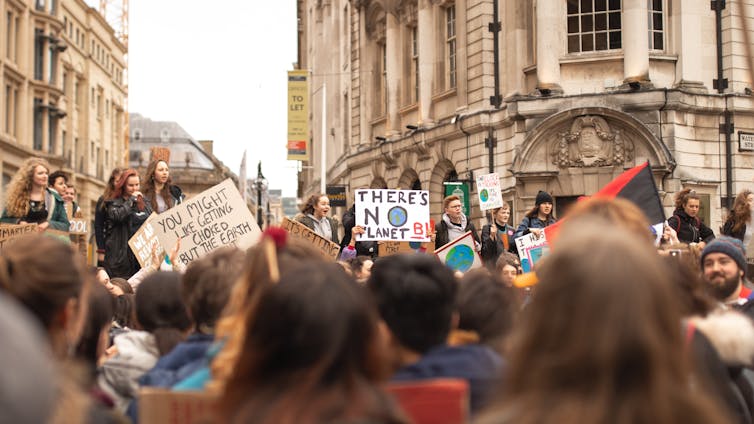
‘There is no Planet B’: children in Birmingham, UK, protest against the climate crisis. Callum Shaw/Unsplash, FAL
The only way to keep humanity safe is the immediate and sustained radical cuts to greenhouse gas emissions in a socially just way.
Academics typically see themselves as servants to society. Indeed, many are employed as civil servants. Those working at the climate science and policy interface desperately wrestle with an increasingly difficult problem. Similarly, those that champion net zero as a way of breaking through barriers holding back effective action on the climate also work with the very best of intentions.
The tragedy is that their collective efforts were never able to mount an effective challenge to a climate policy process that would only allow a narrow range of scenarios to be explored.
Most academics feel distinctly uncomfortable stepping over the invisible line that separates their day job from wider social and political concerns. There are genuine fears that being seen as advocates for or against particular issues could threaten their perceived independence. Scientists are one of the most trusted professions. Trust is very hard to build and easy to destroy.
But there is another invisible line, the one that separates maintaining academic integrity and self-censorship. As scientists, we are taught to be sceptical, to subject hypotheses to rigorous tests and interrogation. But when it comes to perhaps the greatest challenge humanity faces, we often show a dangerous lack of critical analysis.
In private, scientists express significant scepticism about the Paris Agreement, BECCS, offsetting, geoengineering and net zero. Apart from some notable exceptions, in public we quietly go about our work, apply for funding, publish papers and teach. The path to disastrous climate change is paved with feasibility studies and impact assessments.
Rather than acknowledge the seriousness of our situation, we instead continue to participate in the fantasy of net zero. What will we do when reality bites? What will we say to our friends and loved ones about our failure to speak out now?
The time has come to voice our fears and be honest with wider society. Current net zero policies will not keep warming to within 1.5°C because they were never intended to. They were and still are driven by a need to protect business as usual, not the climate. If we want to keep people safe then large and sustained cuts to carbon emissions need to happen now. That is the very simple acid test that must be applied to all climate policies. The time for wishful thinking is over.
To hear about new Insights articles, join the hundreds of thousands of people who value The Conversation’s evidence-based news. Subscribe to our newsletter.
I can’t add anything to this article because it is written by scientists and that is one thing that I know I am not!
But I can comment as a very concerned adult and really can do more that repeat what I said in yesterday’s post:
Thank goodness for our younger generation. Because these young people are coming together to fight for change. May they have universal encouragement from those of us who will never see our younger days again!
This is one of the most important posts since I started blogging!
I was born in 1944 and that makes me 76. I am reasonably engaged in the issues facing us but, in a sense, protected from the realities of the modern world because I have a loving wife, two loving young people, as in my son Alex and my daughter Maija, and a special grandson, Morten.
We are also very lucky in that my wife, Jean, and I are both retired and we live on 13 rural acres in a beautiful part of Southern Oregon and enjoy immensely our six dogs, two horses, two parakeets and feeding the wild birds and deer.
But it can’t stay that way because of the encroaching elephant in the room.
I am speaking of climate change that if not dealt with in the near future, say in the next 10 years, will lead to an unimaginable state of affairs.
Now one could argue that you come to Learning from Dogs to get away from climate change and the like. But this is too important and, also, involves all of us including our gorgeous dogs.
First, I want to include an extract from a recent Scientists Warning newsletter (and please read this extract carefully).
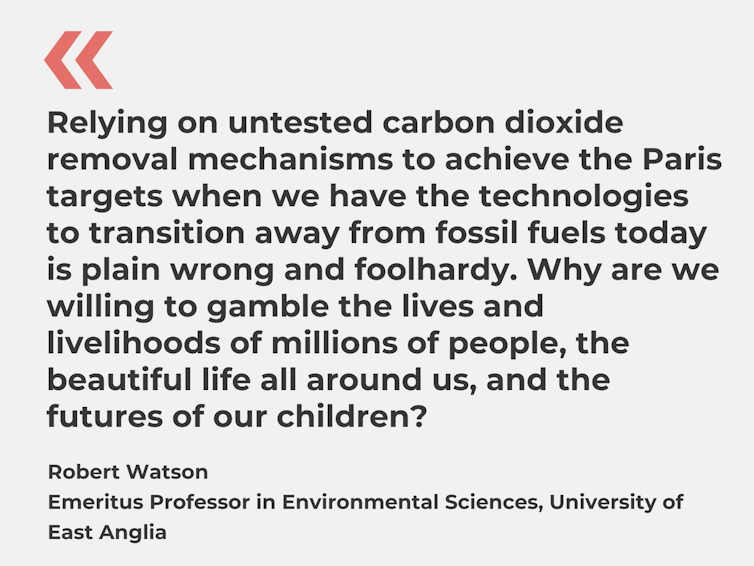
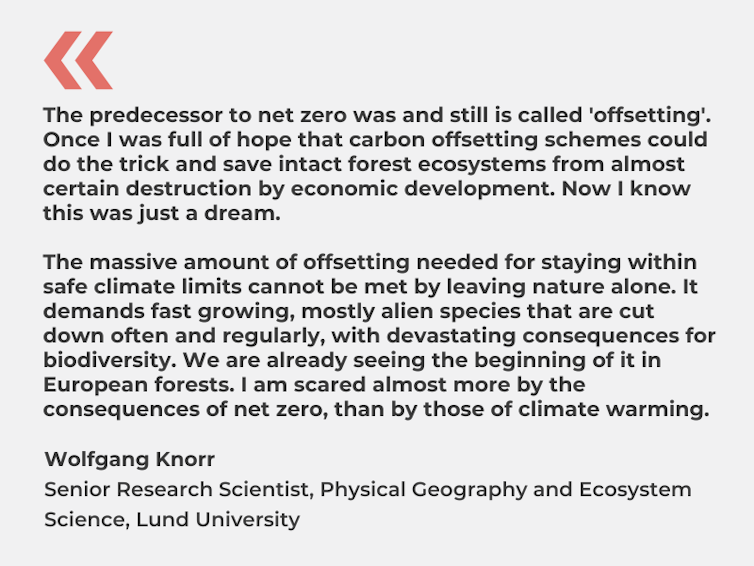
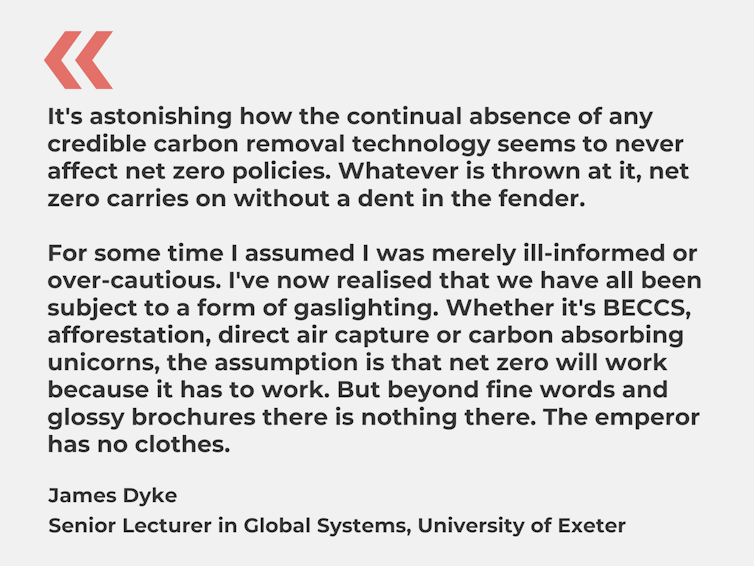
Recently, one article on the climate emergency above all others has cut through – with over ONE MILLION views, “Climate scientists: concept of net zero is a dangerous trap” published in The Conversation is being talked about by many thousands, and led Greta Thunberg to tweet: “This is one of the most important and informative texts I have ever read on the climate- and ecological crises.”
So why is this article so very important?
In our latest interview, I talk with two of the authors – Dr. James Dyke, global systems scientist at the University of Exeter and Dr. Wolfgang Knorr, climate scientist at Lund University. And the conversation does not make for comfortable viewing. We discuss what led James, Wolfgang and Professor Bob Watson to write an article that they have described as being one of the hardest they have ever written. The article is *not* an attack on net zero, nor does it advocate a fatalistic position. Instead, as you will hear, the interview reveals the heartfelt concerns of two scientists who are profoundly worried about the failure of a climate policy system that suppresses the voice of science and is fundamentally flawed. A climate policy system that year after year has failed.
But it is not just the climate policy system that has failed. Academia has failed too, and continues to fail Greta and young people like her. And this *must* stop. Young people have become the adults in the room. We cannot place this burden on their shoulders. They have shown their courage and bravery. Now it’s time for academia to step up to the challenge and to critically examine why we are failing.
Secondly, I want to share that interview with you. This is a 36-minute interview. Please, please watch it. If it is not a convenient time just now then bookmark the post and watch it when you can sit down and be fully engaged. You will understand then and agree with me that this is one of the most important videos ever!
Lastly, I would like you to read the article published in The Conversation. I have included a link to it but I am also going to republish it on Friday.
Because we have to listen to the scientists without delay and press for change now.
Thank goodness for our younger generation. Because these young people are coming together to fight for change. May they have universal encouragement from those of us who will never see our younger days again!
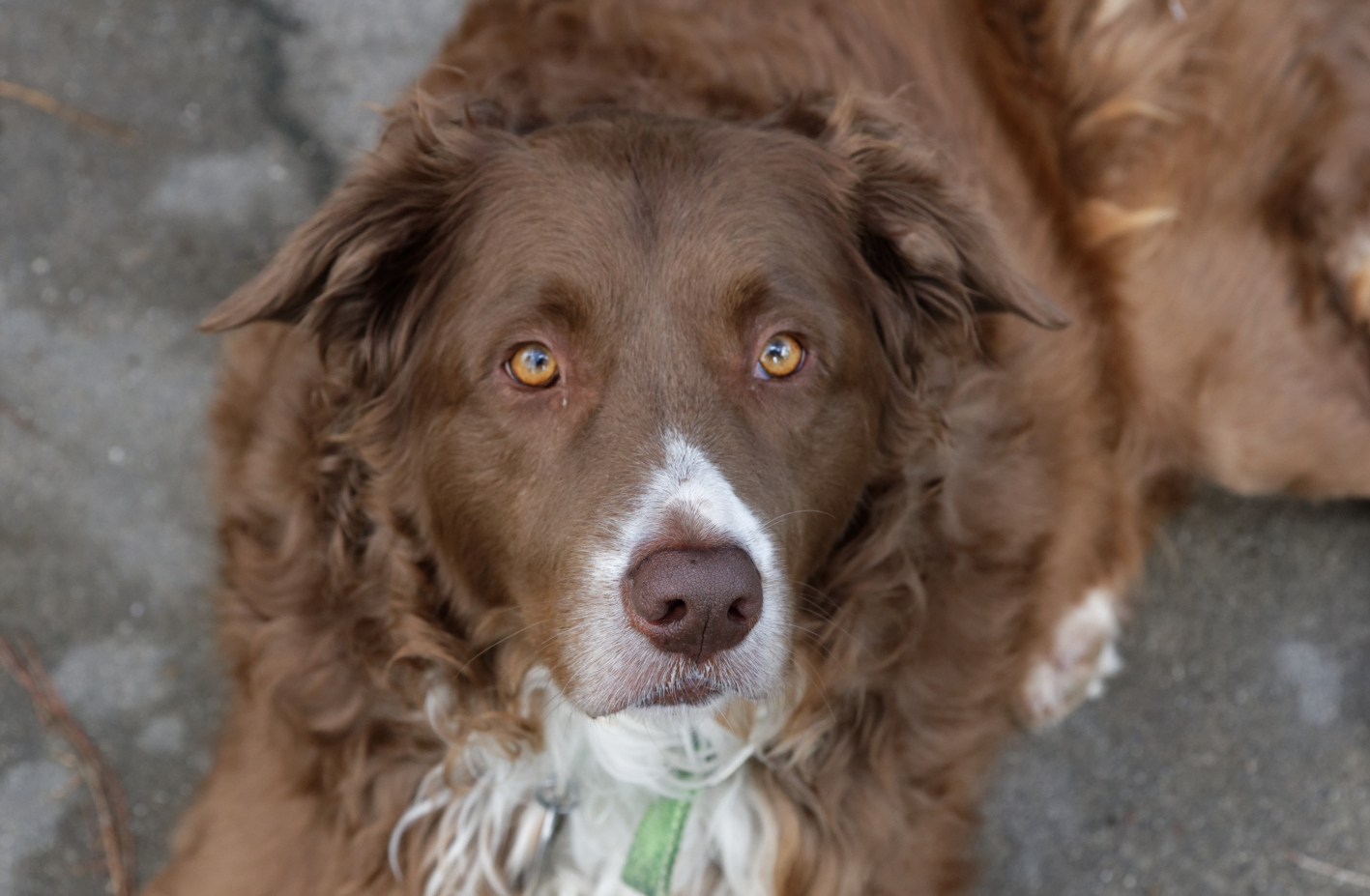
Of all the wonderful dogs we have at home Oliver is the one who has perfected his eye contact. Oliver holds one’s eyes forever and they are full of love.
As this photograph, taken in May, 2020, shows.
But there’s more to this than meets the eye (pardon the pun) as this article recently presented by Treehugger reveals.
ooOOoo
Want Eye Contact With Your Dog? These 4 Factors Play a Role
Head shape and playfulness can play a part, study finds.
Short-nosed dogs are more likely to make eye contact, study finds. LWA/Dann Tardif / Getty Images
How much time does your dog spend looking into your eyes? It could depend on the shape of their head, among other factors.
Making eye contact is an important part of human relationships and it can be key in person-canine bonding too. But all dogs aren’t equal when it comes to eye gazing, finds a new study, published in the journal Scientific Reports.1
“Eye contact is an important non-verbal signal in humans. We use it in conversations to show that we are paying attention to each other,” study first author Zsófia Bognár, a Ph.D. candidate in the Department of Ethology at Eötvös Loránd University in Budapest, Hungary, tells Treehugger. “Also, the oxytocin levels in both parties rise, which plays a role in the development of social bonding.”
This social connection is easily observed when a bond is formed between a mother and a baby, she points out.
But eye contact is not so important for dog relationships. They don’t look into each other’s eyes very often, and when they do, it’s antagonistic and challenging behavior.1
“Dogs tend to make eye contact with humans, and research found that oxytocin levels also rose in both parties when owners and dogs formed eye contact,” Bognár says. “It is also known that dogs do not behave the same, differences can be found between them.”
Earlier studies found that shorter-headed dogs were more successful at following pointing gestures from humans and watched pictures of faces for longer periods of time.21
Snub-nosed dogs have a more pronounced area in the retina of the eye responsible for central vision, so they can better respond to things happening right in front of them.1 Longer-nosed dogs have a more panoramic vision, so they’re more easily distracted by things going on all around them.1
The researchers decided to see how head shape and other factors also influenced eye contact.
Why Head Shape Matters
Researchers worked with 130 family dogs for the study. First, they measured the length and width of their heads to determine what’s called the cephalic index—the ratio of the maximum length and width of the head.
Short-headed or brachycephalic dog breeds include boxers, bulldogs, and pugs.
Long-headed or dolichocephalic dog breeds include greyhounds, Great Danes, and German shepherds.
Medium-headed or mesocephalic dog breeds include Labrador retrievers, Cocker spaniels, and border collies.
Then, on to the testing.
First, the experimenter would call the dog’s name and reward the dog with a treat. Then the experimenter would stay silent and motionless, waiting for the dog to establish eye contact. They then rewarded the dog with a treat each time eye contact was made.
The experiment ended after five minutes or after 15 episodes of eye contact were made. During this test, the dog’s owner remained in the room (silent, motionless, and not looking at the dog) so the dog wouldn’t be stressed due to separation.
They measured how many times the dog made eye contact as well as how much time elapsed between eating the treat and the next time the dog made eye contact. The team found that the shorter the dog’s nose, the more quickly it made eye contact with the researcher.1
“We assumed that due to this, snub-nosed dogs could focus their attention better to their communication partner because other visual stimuli coming from the periphery could disturb them less,” Bognár says.
But there’s also the chance that pugs, bulldogs, and other similar dogs just get more of a chance to interact with people because of the baby-like way they look.1
“We couldn’t exclude the possibility that these dogs have more opportunity to learn to engage with humans and make eye contact with them,” Bognár says. “Because humans have a preference for ‘baby schema’ features, and the characteristics of snub-nosed dogs’ heads are in accordance with these features, thus the owners of these dogs may pay more attention towards them and are more likely to engage in mutual gaze with their animals.”
Age, Playfulness, and Breed Characteristics
But the head shape wasn’t the only factor that came into play. Researchers found that a dog’s age, playfulness, and general cooperative nature due to breed characteristics all played a role in how much eye contact they made with the experimenter.1
They found dogs that were originally bred to take visual cues made more eye contact. For example, herding dogs who follow directions from the owner to work livestock, are “visually cooperative” breeds that are more likely to make eye contact. Sled dogs that run in front of a musher or dachshunds that are bred to chase prey underground are “visually non-cooperative” breeds that rely on vocal cues and don’t have to see their owners.1
Interestingly, dogs that were mixed breeds performed just as well as cooperative breeds. About 70% of the mixed breed dogs in the study were adopted from a shelter. Maybe their eagerness to make eye contact helped get them adopted in the first place, the researchers suggest.1
The researchers also found that older dogs made less eye contact. They had a harder time controlling their attention and were slower switching from the treat to the experimenter.1
A dog’s playfulness was another factor that impacted eye contact. To measure a dog’s playfulness, the off-leash dog was in a room with the owner. The experimenter walked in with a ball and a rope and offered them to the dog. If the dog chose one, they played with the toy for a minute. If the dog didn’t choose a toy, the experimenter tried to initiate a social interaction.
A dog was given a high playfulness score if it played enthusiastically with the experimenter, brought the ball back at least once, or tugged on the rope. It was given a low playfulness score if it didn’t touch the toys, ran after the ball but didn’t bring it back, or took the rope but didn’t tug on it. Researchers found that dogs with high playfulness were quicker to establish eye contact than dogs with low playfulness.1
The research uncovers a key understanding of what impacts dog-person eye contact, which can affect canine-human communication.
“Eye contact can help dogs to decide whether the message/command what the human says/shows are directed to them. They are more likely to execute a command if the human looks at them than shows its back or looks at another human/dog,” Bognár says.
“Dogs also use their gaze to communicate with humans, for example, gaze alternation can be a way to direct humans’ attention to different objects like an unreachable piece of food or a ball,” adds Bognár. “And it can also play a role in social bonding through oxytocin hormone.”
ooOOoo
Interesting! No, it is more than that. It is science at work.
Zsófia Bognár, the study’s first author, makes the point that: “Eye contact is an important non-verbal signal in humans. We use it in conversations to show that we are paying attention to each other. Also, the oxytocin levels in both parties rise, which plays a role in the development of social bonding.“
So returning to our dear Oliver we can see that the levels of oxytocin rise in Oliver and in Jean or me depending on who Oliver has engaged with.
Speaking of Oxytocin let’s go across to an article in Psychology Today that explains a little more about this important hormone.
Oxytocin is a powerful hormone that acts as a neurotransmitter in the brain. It plays an important role in reproduction, initiating contractions before birth as well as milk release. And it is thought to be involved in broader social cognition and behavior, potentially ranging from mother-infant bonding and romantic connection to group-related attitudes and prejudice. The hormone is produced in the hypothalamus and released into the bloodstream by the pituitary gland.
Why Is Oxytocin Called the “Love Hormone?”
Oxytocin has been called “the cuddle hormone” or “the love hormone” due to its association with pair bonding. It appears to help reinforce the early attachment between mothers and their infants, as well as the bonds between romantic partners. Animal research has connected oxytocin (along with another hormone, vasopressin) with the lifelong pair-bonding of prairie voles, and scientists have reported increases in oxytocin levels following orgasm in humans. There is also evidence that increases in oxytocin may encourage prosocial behavior, though not all studies have found these positive results, and some experts have undercut the idea that the hormone is a “trust molecule.”
The Chernobyl disaster was a nuclear accident that occurred on Saturday 26 April 1986, at the No. 4 reactor in the Chernobyl Nuclear Power Plant, near the city of Pripyat in the north of the Ukrainian SSR in the Soviet Union. It is considered the worst nuclear disaster in history both in terms of cost and casualties, and is one of only two nuclear energy accidents rated at seven—the maximum severity—on the International Nuclear Event Scale, the other being the 2011 Fukushima Daiichi nuclear disaster in Japan. The initial emergency response, together with later decontamination of the environment, ultimately involved more than 500,000 personnel and cost an estimated 18 billion Soviet rubles—roughly US$68 billion in 2019, adjusted for inflation.
But recently BBC Future spoke of the bond that the guards and the abandoned dogs made.
Read it below: (Unfortunately you will have to go here to view the stunning photographs because the BBC prevents them being republished!But it is still a very interesting article.)
ooOOoo
The guards caring for Chernobyl’s abandoned dogs
The descendants of pets abandoned by those fleeing the Chernobyl disaster are now striking up a curious relationship with humans charged with guarding the contaminated area.
It wasn’t long after he arrived in the irradiated landscape of the Chernobyl Exclusion Zone that Bogdan realised his new job came with some unexpected companions. From his first days as a checkpoint guard in Chernobyl, he has shared the place with a pack of dogs.
Bogdan (not his real name) is now in his second year of working in the zone and has got to know the dogs well. Some have names, some don’t. Some stay nearby, others remain detached – they come and go as they please. Bogdan and the other guards feed them, offer them shelter, and occasionally give them medical care. They bury them when they die.
All the dogs are, in a sense, refugees of the 1986 disaster in which Reactor No. 4 at the Chernobyl Nuclear Power Plant exploded. In the aftermath, tens of thousands of people were evacuated from the Ukrainian city of Pripyat. They were told to leave their pets behind. (Read more about the long-term toll of the Chernobyl disaster.)
Soviet soldiers shot many of the abandoned animals in an effort to prevent the spread of contamination. But, undoubtedly, some of the animals hid and survived. Thirty-five years later, hundreds of stray dogs now roam the 2,600km (1,000 sq mile) Exclusion Zone put in place to restrict human traffic in and out of the area. Nobody knows which of the dogs are directly descended from stranded pets, and which may have wandered into the zone from elsewhere. But they are all dogs of the zone now.
Their lives are perilous. They are at risk from radioactive contamination, wolf attacks, wildfires and starvation, among other threats. The dogs’ average lifespan is just five years, according to the Clean Futures Fund, a non-governmental organisation that monitors and provides care for dogs living within the Exclusion Zone.
That dogs inhabit this ruined place is well known – some of them have even become minor celebrities on social media. Clean Futures Fund co-founder Lucas Hixson, who gave up a research career to look after the animals, offers virtual tours of the Exclusion Zone featuring the dogs.
But less is known about the local workers who interact with these canines on a daily basis.
Jonathon Turnbull, a PhD candidate in geography at the University of Cambridge, realised it might be worth collecting these people’s stories.
“If I wanted to know the dogs,” he says, “I needed to go to the people who know them best – and that was the guards.”
What he discovered is a heart-warming story of the guards’ relationship with the animals they encounter in this abandoned environment – a tale that provides insights into the deep bond between humans and dogs.
The guards sometimes go to the trouble of helping the dogs by pulling out ticks embedded in their skin, or by giving them rabies injections
For instance, the guards have given several of the dogs nicknames. According to Turnbull, there’s Alpha, whose name refers to a type of radiation, and Tarzan, a dog well-known to Chernobyl tourists, who can do tricks on command and who lives near the famous Duga radar installation built by the Soviets. Then there is Sausage – a short, fat dog that likes to warm herself in the winter by lying on heating pipes. These pipes serve one of the buildings used by workers in the Exclusion Zone who are part of ongoing efforts to decommission and decontaminate the ruined power plant.
Access to the Chernobyl Exclusion Zone requires a permit, so guards are tasked with controlling checkpoints on roads in and out of the area. People who dodge these checkpoints to trespass in the Exclusion Zone are known as “stalkers”. Guards report them to the police.
When Turnbull, who lives in Ukraine’s capital Kyiv, started making regular visits to the zone, he met Bogdan, and other checkpoint guards. They were reluctant to talk at first so he had to win them over. Then he offered them to chance to take part in his research, which he says was a “turning point”. His idea was to give the guards disposable cameras and ask them to take pictures of the dogs – not posed portraits but scenes of everyday life. The guards only had one other request – “please, please – bring food for the dogs”. So Turnbull did.
The photos taken by the guards revealed how much they had developed companionships with the wandering dogs of the Exclusion Zone.
Turnbull published some of the resulting images and material from interviews with the guards in a paper in December. More recently, he interviewed one of the study participants again on behalf of BBC Future. The guard in question has asked not to be identified to avoid disciplinary action at work, so we refer to him here by the pseudonym “Bogdan”.
When Bogdan walks around the abandoned streets of the zone to check for stalkers, the dogs happily accompany him, he says. They always appear eager to see whether he, or a passing tourist, might be carrying food. Should a companion dog get distracted or run off to chase an animal, it always eventually returns to Bogdan, he adds.
The loyalty goes both ways. Turnbull says the guards sometimes go to the trouble of helping the dogs by pulling out ticks embedded in their skin, or by giving them rabies injections.
Wolves, dogs and other animals could in theory carry radioactive contamination, or genetic mutations potentially passed on by breeding, to places outside the Exclusion Zone
Monitoring who comes and goes from the Exclusion Zone sometimes makes for a dull occupation. But there are always dogs nearby.
At some checkpoints, the guards have more or less adopted some of the animals. They feed them and give them shelter. But not all are so tame. During his research, one guard told Turnbull, “We can’t inject Arka because she bites.”
Another participant spoke of one dog that was even more difficult to approach. It refuses to be touched at all. “You should just give her a pan [of food] and go. She waits until you leave and then she eats,” the guard explained.
The dogs sometimes bark at strangers on first sight, that’s their nature, says Bogdan. But so long as they don’t feel threatened, they sometimes calm down and wag their tails. Occasionally it even seems as though they’re smiling, he adds.
Generally, visitors to Chernobyl are advised not to touch the dogs, for fear that the animals may be carrying radioactive dust. It’s impossible to know where the dogs roam and some parts of the Exclusion Zone are more contaminated than others.
There is wildlife living in the Chernobyl Exclusion Zone besides dogs. In 2016, Sarah Webster, a US government wildlife biologist who was working at the University of Georgia at the time, and colleagues published a paper in which they revealed how mammals, from wolves to boars and red foxes, had colonised the Exclusion Zone. Camera trap data showed that the animals’ numbers were not noticeably lower in those areas where radioactive contamination is higher.
Animals living in the Exclusion Zone are not necessarily confined there. A later studyby Webster and colleagues, published in 2018, detailed the movements of a wolf tagged with a GPS device. It travelled 369km (229 miles) from its home range in the zone, taking a long arc to the south-east, then north-east again, eventually entering Russia.
Wolves, dogs and other animals could in theory carry radioactive contamination, or genetic mutations potentially passed on by breeding, to places outside the Exclusion Zone.
“We know it’s happening but we don’t understand the extent or the magnitude,” says Webster.
Turnbull says the guards do not generally worry about radiation, though they might occasionally use dosimeters to check a dog over.
It actually seems as though the dogs, through the companionship they offer, end up reassuring those who interact with them regularly, says Greger Larson, an archaeologist who studies animal domestication at the University of Oxford and who was not involved in Turnbull’s research.
“They’re kind of putting themselves in the shoes of the dogs,” he suggests, referring to the guards. “If the dog is fine, that means you’re fine.”
But in truth, this may only be a false sense of security.
“It’s an uncanny environment,” notes Turnbull. “You can’t see the danger. You’re constantly aware that it might be there but everything looks normal.”
Despite the fact that the dogs could pose a risk in terms of radioactivity, guards like Bogdan instead emphasise the benefits of having them around. For example, he claims to know dogs that bark in noticeably different ways depending on what they have spotted in the distance – a human stranger, a vehicle, a wild animal. Because of these helpful warning signals, Bogdan thinks of the dogs as “assistants”.
What’s happening in the Exclusion Zone is an echo of interactions with dogs that are known to have occurred within human civilisations for thousands of years, says Larson.
“We find this for the last 15,000 years or more, this is what people do, they make very close associations with not just dogs but a lot of domestic animals […] to sort of say, ‘this is our attachment to the landscape’,” he explains.
All over the world, there are dogs that inhabit a similar, in-between state – not quite fully domesticated, not quite fully wild. These are the feral dogs that roam cities and industrial areas looking for food, the ones that may become to some extent adopted by people but still wouldn’t be considered pets.
Chernobyl’s dogs also live in this sort of space, on the edge of domestication, but there is a difference argues Webster, who has participated in a separate study of Turnbull’s in the past.
“The Exclusion Zone is very different in that it’s abandoned by humans,” she says. “The only people in that landscape on a day-to-day basis, really, are the guards.” As such, the dogs’ opportunities for befriending humans are very limited.
While the outside world remains fascinated by the dogs, and their story, for many guards the connection runs much deeper. Bogdan says he is often asked why the dogs ought to be allowed to stay in the Exclusion Zone. “They give us joy,” he replies. “For me personally, this is a kind of symbol of the continuation of life in this radioactive, post-apocalyptic world.”
ooOOoo
What is so fascinating is that this interaction between the dogs and the people is an echo of the first interaction between hunter/gatherers and wolves of, perhaps, 25,000 years ago or more. And the guards of today and the dogs, whom Larson calls his assistants, are perfectly bonded.
It just goes to show that ‘what goes around comes around’!
Professor of Biochemistry and Molecular Biology & Microbiology and Molecular Genetics; Interim Assistant Vice President of Research & Innovation, Michigan State University.
As a species, humans are wired to collaborate. That’s why lockdowns and remote work have felt difficult for many of us during the COVID-19 pandemic.
For other living organisms, social distancing comes more naturally. I am a plant scientist and have spent years studying how light cues affect plants, from the very beginning of a plant’s life cycle – the germination of seeds – all the way through to leaf drop or death. In my new book, “Lessons from Plants,” I explore what we can learn from the environmental tuning of plant behaviors.
One key takeaway is that plants have the ability to develop interdependence, but also to avoid it when being connected could be damaging. Generally, plants are constantly communicating and engaged with other organisms in their ecosystems. But when these ongoing connections threaten to cause more harm than good, plants can exhibit a form of social distancing.
The power of connection and interdependence
When conditions are good, most plants are networkers. The vast majority of plants have fungi that live on or within their roots. Together, the fungi and roots form structures known as mycorrhizae, which resemble a netlike web.
Mycorrhizae increase their host plants’ ability to absorb water and nutrients, such as nitrogen and phosphate, through their roots. In return, the plants share sugars that they produce through photosynthesis with their fungal partners. Thus, the fungi and host plants are powerfully interconnected, and depend on one another to survive and thrive.
Mycorrhizal connections can link multiple plants in a functioning network. When plants produce more sugars than they need, they can share them via this interconnected root-fungal network. By doing so, they ensure that all plants in the community have access to the energy they need to support their growth.
Put another way, these connections extend beyond a single host plant and its fungal partner. They create communitywide relationships and interdependent networks of plants and fungi. Factors in the external environment, such as the amount of light available for photosynthesis and the composition of soil around the plants, fine-tune the connections in these networks.
Mycorrhizhae also serve as communication channels. Scientists have documented that plants pass defensive chemicals, such as substances that promote resistance against insect pests, to other plants via fungal networks. These connections also allow a plant that has been attacked by aphids or other such pests to signal to neighboring plants to preemptively activate their own defense responses.
Mycorrhizhae are living communities of plant roots and fungi that benefit mutually from their relationship.
When it’s safer to keep your distance
Sharing resources or information that helps other plants ward off danger is a valuable example of the power of connectedness and interdependence in plant ecosystems. Sometimes, however, surviving requires plants to disconnect.
When environmental cues such as light or nutrients become scarce enough that a host plant can produce enough sugars through photosynthesis to support only its own growth, staying actively interconnected in a larger community network could be dangerous. Under such conditions, the host plant would lose more from sharing limited sugar supplies than it would gain from the network in water and nutrients.
At times like these, plants can limit mycorrhizal connections and development by restricting how many materials they exchange with their fungal partners and avoiding making new connections. This is a form of physical distancing that protects the plants’ ability to support themselves when they have limited energy supplies so they can survive for the long term.
When conditions improve, plants can resume sharing with their fungal partners and establish additional connections and interdependence. Once again, they can benefit from sharing resources and information about the ecosystem with their extended plant and fungal communities.
Recognizing kin and collaboration
Social distancing isn’t the only trick plants use to make their way in the world. They also recognize related plants and tune their abilities to share or compete accordingly. When the plants that are interconnected by a fungal network are close genetic relatives, they share more sugars with the fungi in that network than they do when the other plants are more distantly related.
Prioritizing kin may feel highly familiar to us. Humans, like other biological organisms, often actively contribute to help our kin survive. People sometimes speak of this as working to ensure that the “family name” will live on. For plants, supporting relatives is a way to ensure they carry on their genes.
Plants can also transform aspects of their environment to better support their growth. Sometimes essential nutrients that are present in soil are “locked up” in a form that plants can’t absorb: For example, iron can become bound up with other chemicals in forms very similar to rust. When this happens, plants can excrete compounds from their roots that essentially dissolve these nutrients into a form that the plants can readily use.
Plants can transform their environments in this way either individually or collectively. Plant roots can grow in the same direction, in a collaborative process known as swarming that is similar to bee swarms or bird flocks. Such swarming of roots enables the plants to release a lot of chemicals in a particular soil region, which frees up more nutrients for the plants’ use.
Trees use fungal networks to send one another messages – and some species hijack the system to sabotage their rivals.
Better together
Behaviors like mycorrhizal symbiosis, kin recognition and collaborative environmental transformation suggest that overall, plants are better together. By staying in tune with their external environment, plants can determine when working together and fostering interdependence is better than going it alone.
When I reflect on these tunable connections and interdependence between plants and fungi, I draw constant inspiration – especially during this pandemic year. As we make our way in a constantly changing world, plants offer all kinds of lessons for humans about independence, interdependence and supporting each other.
ooOOoo
I agree with Professor Montgomery. Who would have though it! Plants do indeed offer strong social lessons for us humans. Maybe that explains why trees, especially trees, have such a profound, beautiful appeal to yours truly as well as many other people.
Going to close with a photograph taken of our trees and pond here at home.
Dog owners recognize jealousy when they see it. Edoma / Getty Images
To the surprise of no dog owner anywhere, a new study finds that dogs get jealous.
You may know the feeling when you’re out on a walk and stop to pet another pooch. Your dog may bark or whine, or even come in between you and the offending canine.
New research published in the journal Psychological Science finds that dogs exhibit these types of jealous behaviors even when they only imagine their owner is interacting with another dog.1 In the case of this study, the perceived rival was an artificial dog.
In the past, some scientists have insisted jealousy is strictly a human trait and people are merely projecting emotions on their pets.1
“I think it is natural for dog owners to project a range of human thoughts and emotions onto their pets,” lead author Amalia Bastos, a Ph.D. candidate at the University of Auckland in New Zealand, tells Treehugger.
Bastos cites a study published in 2008 in the journal Cognition and Emotion where 81% of dog owners said their pets get jealous. But as much as pet owners love their animals, they are sometimes wrong about them, she says.2
That same study found that 74% of dog owners reported their pets feel guilty after misbehaving.2 But several studies have found that what people see as a “guilty look” is merely dogs responding to getting in trouble from their owners, whether they actually misbehaved or not.3,4
“Anecdotes from dog owners are interesting and can inspire fascinating research into dog intelligence and behavior, but it is important that this is taken only as a starting point for rigorous science before we can make such claims,” Bastos says.
She adds: “Work on dog jealousy to date is more promising than for guilt: our study shows that dogs exhibit three signatures of human jealous behavior. However, we caution that the fact that dogs display jealous behavior does not necessarily mean that they experience jealousy as we do.”
For the study, researchers set up an experiment where 18 dogs imagined their owners interacting with either a realistic-looking stuffed dog or a similarly sized fleece-covered cylinder that looked nothing like a dog. The fake dog played the role of a potential rival while the cylinder was a control.1
First, the dogs watched the stuffed dog next to their owner. Then, a barrier was placed between the dog and the stuffed animal so they could no longer see the potential rival. The dogs pulled strongly on their leashes when their owners appeared to be petting the fake dog behind the barrier. In a second experiment, the dogs pulled on the leashes with less force when the owners appeared to be petting the fleece cylinder.1
“We developed a novel methodology whereby we could directly measure the amount of force a dog used to pull on its lead,” Bastos explains. “This provided the first easily quantifiable, objective measure of how strongly dogs attempt to approach a jealousy-inducing interaction between their owner and a social rival.”
This is called the “approach response” as the dog tries to get closer to the owner and the potential rival. It’s also how babies and kids respond when they are jealous, Bastos says.
“The approach response is a straight-forward and clean measure which happens to be the single most universal reaction to jealousy-inducing situations in human infants and children,” she says. “Although infants and children show a range of behaviors when observing their mothers interact with another infant — including but not limited to attacking the rival, crying, seeking physical contact with the mother, throwing a tantrum, or screaming — almost all react primarily by approaching the jealousy-inducing interaction.”
Researchers were able to measure the actual strength of the approach response rather than relying on inconsistent behaviors like barking, whining, growling, or attempting to bite, which would vary among dogs.1
The Canine Subjects Showcased Jealousy Signatures
The researchers found the dogs exhibited three human-like signatures of jealous behavior.1
These findings were different from earlier research because it’s the first to show dogs can mentally represent — or imagine — social interactions that they can’t directly see, Bastos says.
“We know this because when their owners appeared to pet a fake dog the dogs could not see behind an opaque barrier, they reacted with an approach response, which is a common jealous behaviour in humans. This suggests that dogs could mentally simulate what their owners must have been doing out of their direct line of sight,” she says.
It also showed that, like humans, dogs reacted more strongly when their owners interacted with a potential rival than with an inanimate object. And the reactions happened due to the interaction, and not when the owner and the rival were in the same room but not interacting.1
“Previous studies confounded jealous behavior with play, interest, or aggression because they never tested dogs’ reactions to the owner and the social rival being present in the same room but not interacting,” Bastos says.
“In our control condition, where owners petted a fleece cylinder, the fake dog was still present nearby,” she adds. “Dogs did not try to approach it as they did when they were being petted by the owner, showing that the interaction itself triggered their approach response, and therefore this is caused by jealous behaviour.”
Although this research is the first step, more research is necessary to figure out if dogs experience jealousy the same way people do.1
“There is still much work to be done to establish what dogs subjectively experience while exhibiting jealous behaviours, and this is a very difficult question to answer scientifically,” Bastos says. “We may never have an answer!”
ooOOoo
The researchers went to some lengths to show that the dogs were able to detect real interaction with another dog rather than a fake dog. The video is very interesting and I hope you are able to watch it.
Alfie has had his operation and all is well! I don’t know more than that at the moment but I do want to share the journey from New York to Minneapolis with you. Because it is such a story of love and devotion.
(And I have just heard that Prince Phillip, Duke of Edinburgh, has died – oh, dear.)
The week we travelled to the US, the East Coast was experiencing one of its winter storms. Snow threatening our progress overland to our destination. With this in mind, we worked with James Gallagher at Enterprise close to Westhampton Private Airport near Maine just outside NY, we arranged for a Jeep Gladiator to be waiting on the tarmac for us. The plan was to land, walk down the steps and into the Jeep, then drive around 20 hours across 9 States (New York, New Jersey, Pennsylvania, Ohio, Michigan, Indiana, Illinois, Wisconsin, and Minnesota) taking it in turns, and stopping only when tiredness took hold to sleep. When I say drive around 20 hours, that’s just driving, not stopping to fuel, use a bathroom, eat, rest. Over 1,300 miles. A mammoth task.
At this point I’d already not slept in almost 24 hours
The plan hit the rocks as the jet approached Westhampton and were told the runway closed due to snow. We were diverted to JFK, and then Ubëred two hours back to our original airport. We could have tried to get a four wheel drive from JFK but we already knew getting something in the middle of a bad storm would be near impossible. Trying to fly internally from JFK to Minneapolis was off the table too as we had bought a lot of luggage with us, which we intended to leave in the US. Trying to get this through JFK, with all of this and a dog, a dog that potentially could have been turned away at the gate for being too big, was not worth trying to modify our plan.
Somehow our route through the Bronx is the Mayor of London’s fault
Snow on the ground we got our Jeep, and just had James had said when he sourced it for us – it looked unstoppable. He’d kindly shovelled out most of the snow from the pick-up bed. We headed out through rush hour NYC traffic towards Minnesota following the quickest route on Google Maps. Surprisingly through the Bronx. We made it through the other side and eventually stopped somewhere on the outskirts in search of a toilet and food. A Gladiator sits high off the ground, and we were already tired. As we pulled up outside a potential watering hole Renée opened the door and fell out, hitting the ground audibly so. Alfie was in her arms but had the foresight to recognise trouble and jump to safety. We went inside, one of us limping, to check ourselves over and eat. Luckily just bruising; limbs and pride. We were there a couple of hours, much longer than we intended, but the food and rest needed. It was a big, clean hotel and would have been a good place to stop, at the expense of making the next day even harder. We pushed on. Before doing so I looked at Google maps and realised I’d made a schoolboy error. Living in London and owning old cars is a constant maze avoiding paying the Congestion Charge and ULEZ (Ultra Low Emission Zone). My phone was still set to avoid these tolls, hence our route through the the centre on New York. Worse, the fastest route would now see us backtrack some of the way we’d just driven.
Enjoying a meal after avoiding disaster falling from the truck
The Gladiator proved its worth as the elevation climbed and snowfall increased. We kept going until tiredness eventually became too dangerous to ignore and we stopped somewhere, somewhere being my best guess at where as I was so tired. A room at a Holiday Inn. Alfie making friends with the front desk saw the $80 dog fee waved. We didn’t sleep long, maybe three hours and returned to the Jeep early around sunrise. Throughout the entire trip Alfie had sat up front on Renée’s lap as the rear seats of our crew cab style truck full of luggage (the pick up bed empty so our stuff remained dry and safe). I’d read that these Jeeps were not great over long distances, and my previous longest time in one, a Rubicon, was between Fargo and Minneapolis on roads closed due to snow. It was cold and as a passenger I got leg ache. From the driver’s seat it wasn’t too bad. I’m sure most people buy slab sided trucks like this, original Land Rover Defenders and G Wagons simply because they look good, but there is no denying when the conditions get tough they are incredibly capable. Well, maybe not the G Wagon as that’s simply a fashion accessory.
Moments before a face plant. Ouch
“Watching a sleeping poorly dog, all of us crammed up front with the heater blowing full pelt to keep warm, hour after hour, made me question my original judgement of travelling this way
Watching Alfred, a poorly dog, asleep on Renée’s lap, all of us crammed up front with the heater blowing full pelt to keep warm, hour after hour, made me question my original judgement of travelling this way. My thinking was to have Alfred in the air for the minimum time and then get him the rest of the way by road where he would not be squashed in a bag, could go pee whenever he needed, and I could deal easily with any seizures. The whole private jet decision happened very fast and I hadn’t really adjusted to the revised plan. Also the plan had been to land at Westhampton, not JFK where we could have easily boarded a domestic flight to Minneapolis. Hindsight always great, and beating yourself up over something already done when tired completely pointless. The important think was we were in the USA, and on our way to get Alfred the help he needed. Given the obstacles in our way just two days ago we really should be patting ourselves n the back.
Give us all ya got. Nothing could stop the Gladiator
Eventually, around three hours out from our destination, I could drive no more and we stopped in one of the fantastic US rest areas. These places are free from gas stations, usually have vending machines, and clean toilet facilities. They feel safe and good places to stop for a snooze. It was cold though, with a lot of snow and ice on the ground. We slept a while with the engine running and heater keeping us warm. When it is this cold, global warming is the last thing on your agenda.
Errrr, drive through donuts? I LOVE America guysWhy is there a sportsman on this packaging? Is it a race to get diabetes?
“We slept a while with the engine running and heater keeping us warm. When it is this cold, global warming is the last thing on your agenda.
I’ve been in this situation before. Driving while tired is super dangerous. I suspect more so than alcohol (within reason) and up there with texting. As a pilot once said over the tannoy of a flight to Bahrain years ago: better to get there late than not at all. But before long, Renée woke me and wanted to carry on. I managed the next hour before handing over the driving to her to get us the rest of the way. The two of us had dug really deep to make it.
Not the most economical, but fuel is cheap so we don’t care
Arriving at the Canopy in Minneapolis was a welcome sight. Alfred’s surgery was scheduled 10 days from now but we had an option to bring it forward should he deteriorate rapidly. We were where we needed to be. A huge victory and I could literally feel the stress lifting from me.
Of course, we were only actually part way there, the real challenge was to come.
ooOOoo
And of course, as I mentioned at the beginning of this post, little Alfie has arrived in Minneapolis and has had his operation. In due coarse I will bring you the latest.
My son, Alex, recently sent me a link to a blog he had come across. It was to a website called https://aircooledbug.co.uk
It was about Andrew Coyne who with his wife, Renée, had come across to America in order to have an operation on his dog, Alfred. It was very moving. I then made contact with Andrew and asked him if I could have permission to republish. It was granted. Furthermore, Andrew went on to say:
Hi Paul,
The only place we could find to perform surgery and give him immunotherapy was the US. Getting to the US a massive challenge as the lock down restrictions and freedom of movement issues implemented by governments here and in the EU stopped us being able to travel. Hence chartering a private jet direct to New York.
Alfred is currently doing well with us here in the US and will not return to the UK. We will move here with him permanently and make our home in the one place that gave him a chance.
Kind regards, Anthony
So I am going to devote my next two posts to republishing two posts from Andrew’s blog. The first today is Coming to America.
The relief that knowing we would travel brought was unmeasurable. Private jets don’t come cheap, even discounted empty legs, but in this instance it didn’t matter. It was a welcome solution.
Up until the world was introduced to Covid-19, I had been a regular traveller to the US both with Renée who’s American, and on business as thinkerdoer work with a lot of US companies. I had an ESTA in place and checked it was still valid on Monday after we decided to take the flight to NYC. On Tuesday morning it was pulled! I’m still not sure why but it would seem to be a response from the Biden Administration to control the recently announced ‘UK variant’. Mark at Charter-A and his team scrambled to get clearance for me from the US using our marriage certificate from Cornwall to prove I was a spouse of a US citizen and this initially appeared to satisfy them and clearance given.
The most unusual thing I have ever seen at airport security
On Wednesday morning we set off to Stansted. Somewhere on the M11 the phone rang, it was Mark saying the US had pulled my clearance again due to me visiting ‘red list’ countries in the last few months. Utter nonsense, and I explained the last place I had travelled was the US just prior to the lockdown when I visited North Dakota and Arizona. I even volunteered my bank statements to prove my case. We waited at the Inflite Executive Jet Centre at Stansted with our luggage already loaded for clearance. Eventually the US backed down and removed their marker, but this now meant reapplying for entry. The decision was made to leave the jet on the tarmac overnight and return the following day to give us time to organise it. Partly this was because the crew had already started logging hours and by the time a clear to fly issued we’d need a new crew. Not that it would have mattered, but I thought I would not be flying and the one time in my life I have paid for a private jet it would be the dog flying on it, not me. And Renée of course.
America, we are coming in hot!
“The best part was we were truly on our way to get Alfred some help, a chance to save him
Thursday went smoothly. We turned up, parked the car, got on the jet, flew to NYC. On a commercial flight there are little increments of comfort between Economy, Premium Economy, Business and First. Compared to flying private those classes of travel are all the same. No difference. It’s all cattle class. The whole aircraft to ourselves, big luxurious seats, a sofa, your own bathroom with Diptyque toiletries. Want a lay flat bed? Just tell your own crew and they make you one up. And Alfred was free to sit where he wanted, roam around, was fed a chicken dinner off a china plate, and was even able to chase a ball along the aisle. The best part was we were truly on our way to get Alfred some help, a chance to save him.
We were arriving just in time
We didn’t need reminding of the difficulties ahead. The novelty of traveling like rock stars soon faded when mid flight he suffered a seizure. By now I am well versed in how to deal with this, and Renée is able to spot the warning signs with incredible accuracy. I got him to the bathroom with a soft towel and comforted him just as his little body went into a full grand mal seizure. Since his diagnosis Alfie had been on strong barbiturate and steroid medication which had suppressed the seizures. Something that would only last so long. We were 10 days without a seizure and this a clear indication the efficacy of the medication was reducing, and the tumour growing. We were arriving just in time.
I LOVE this!
Carry on allowance an improvement over commercial.
ooOOoo
I am going to reproduce the contents of an email that I sent Anthony yesterday morning. It sums up how we feel about what Anthony and Renée are doing.
Dear Anthony,
I have now read very carefully your blog especially your posts of the last few weeks.
They are beautiful. In the sense of describing what you feel towards Alfred. Dogs bond to humans unconditionally. You love Alfred unconditionally.
It’s a little after 5am here in Southern Oregon. Jean and I are sitting back on top of our bed having had recently our first morning coffees. On the bed is also Oliver, an ex-rescue Labrador crossed with a Border Collie. Oliver’s bond with me is so precious. Beyond words but not beyond feelings!
I am going to write a couple of posts that essentially republish your posts about you getting Alfred to Minneapolis. But beyond that Jean and I want to wish you every success in Alfred’s treatment. Is there anything more practical that we can do to help? We are in our 70s. We are both English. We met in Mexico in December, 2007. Jean was rescuing dogs, spay or neutering them, then finding homes for them mainly in Arizona. I flew with my GSD, Pharaoh, to LAX from London, in 2008. Then down to Mexico. We came to the USA in 2010 to be married and to live with our then 16 dogs. Subsequently we came to Oregon in 2012.
I am so grateful for my son highlighting your blog.



:max_bytes(150000):strip_icc()/mary-jo-dilionardo-bw-22fe0236b1764918a4a0fa2cd2cd0108.jpg)
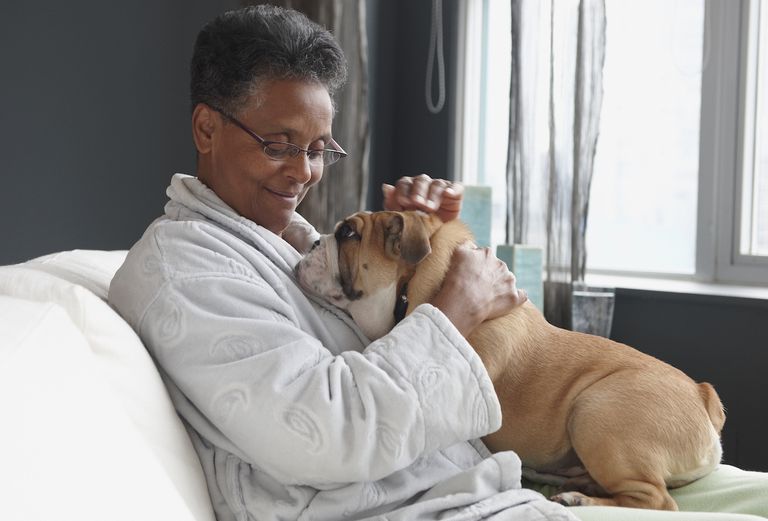
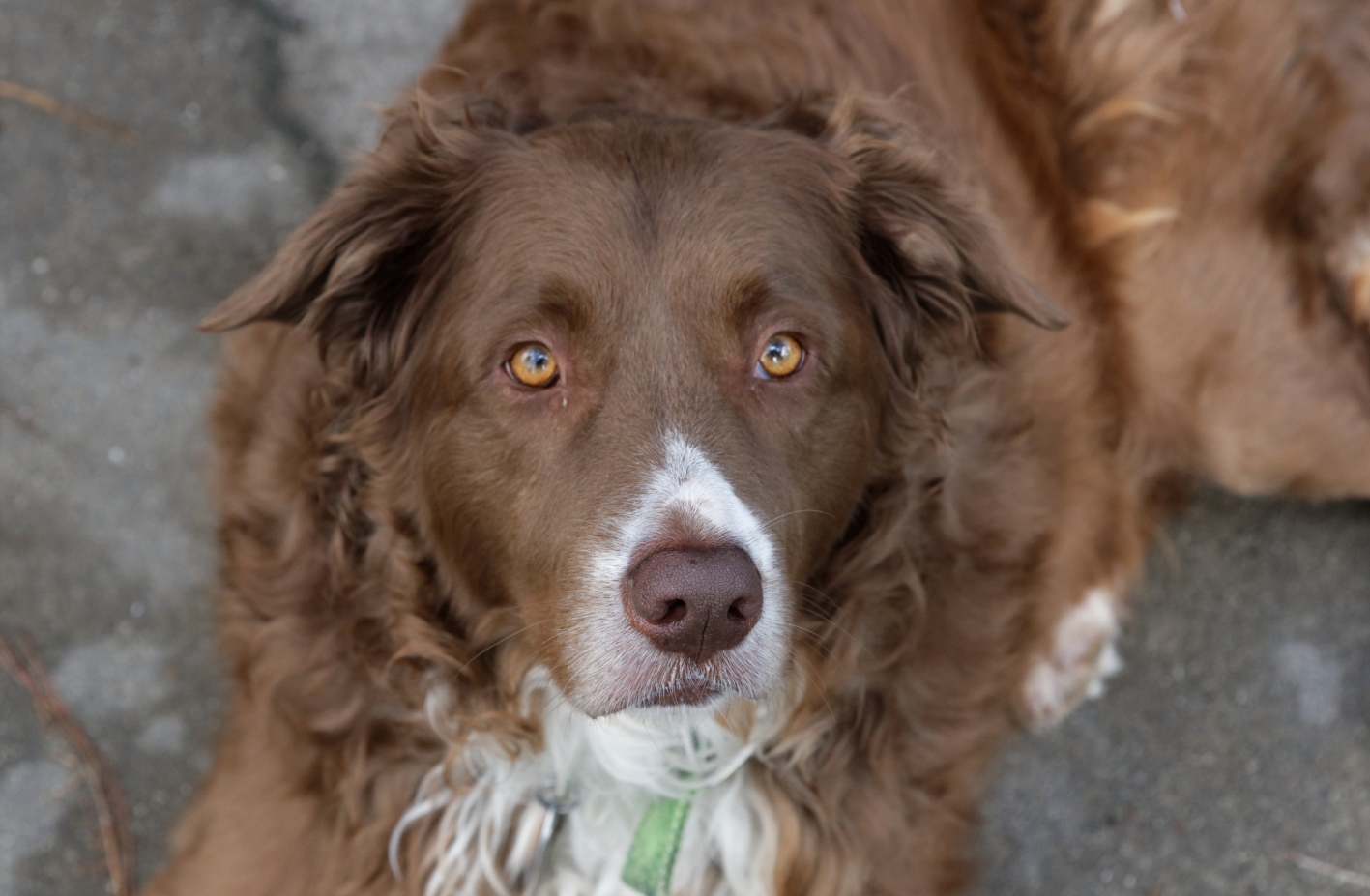





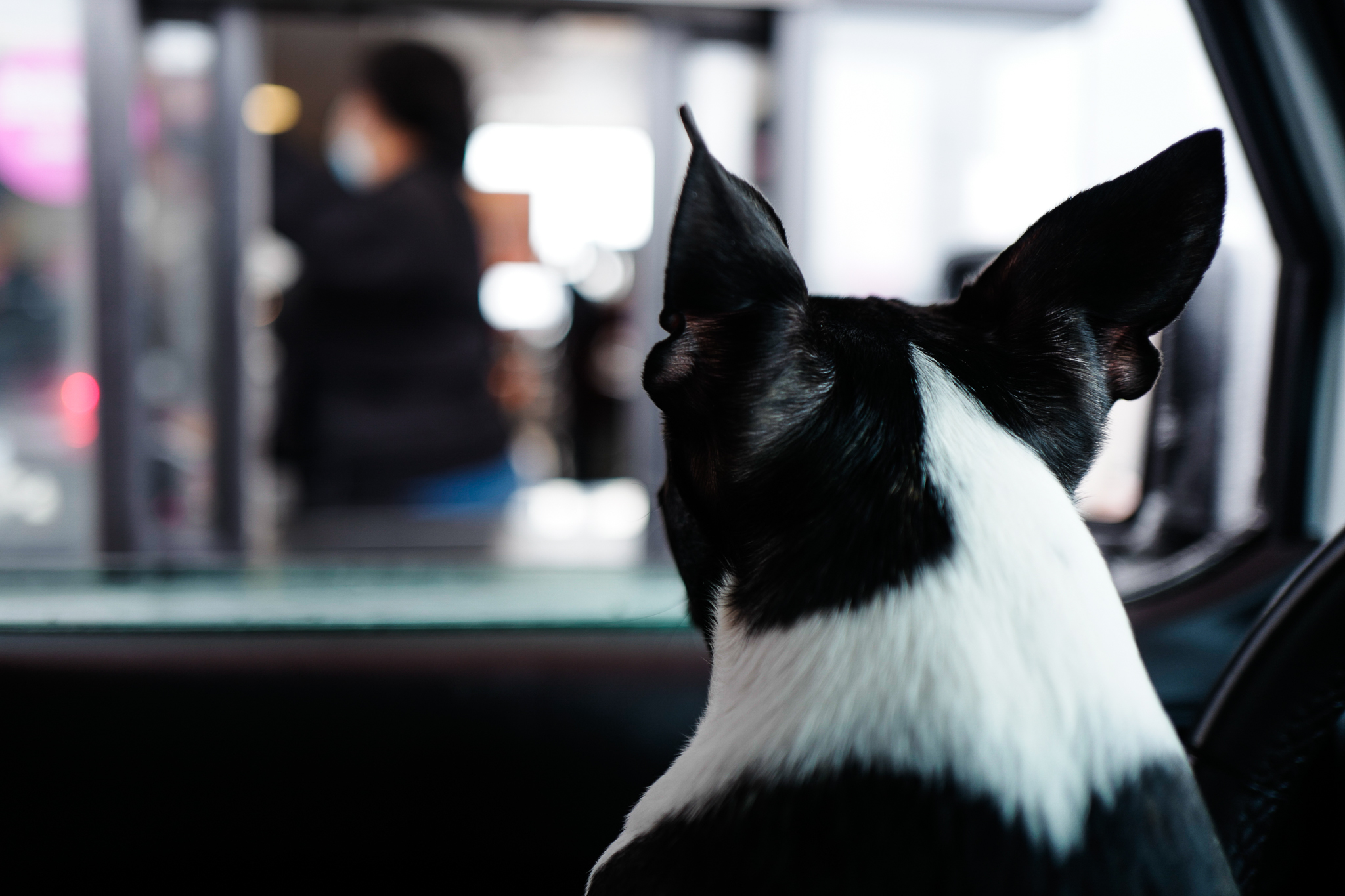
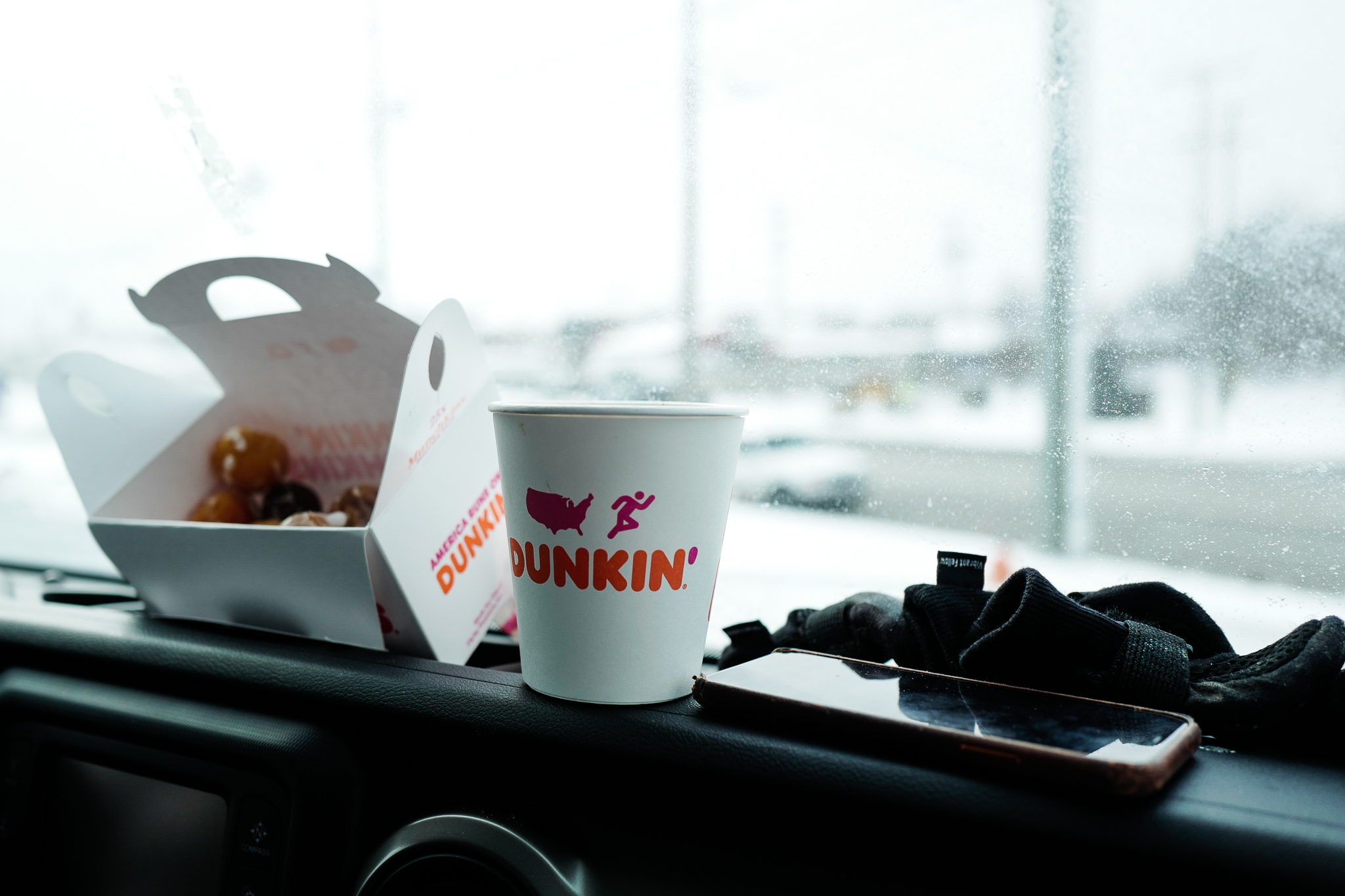

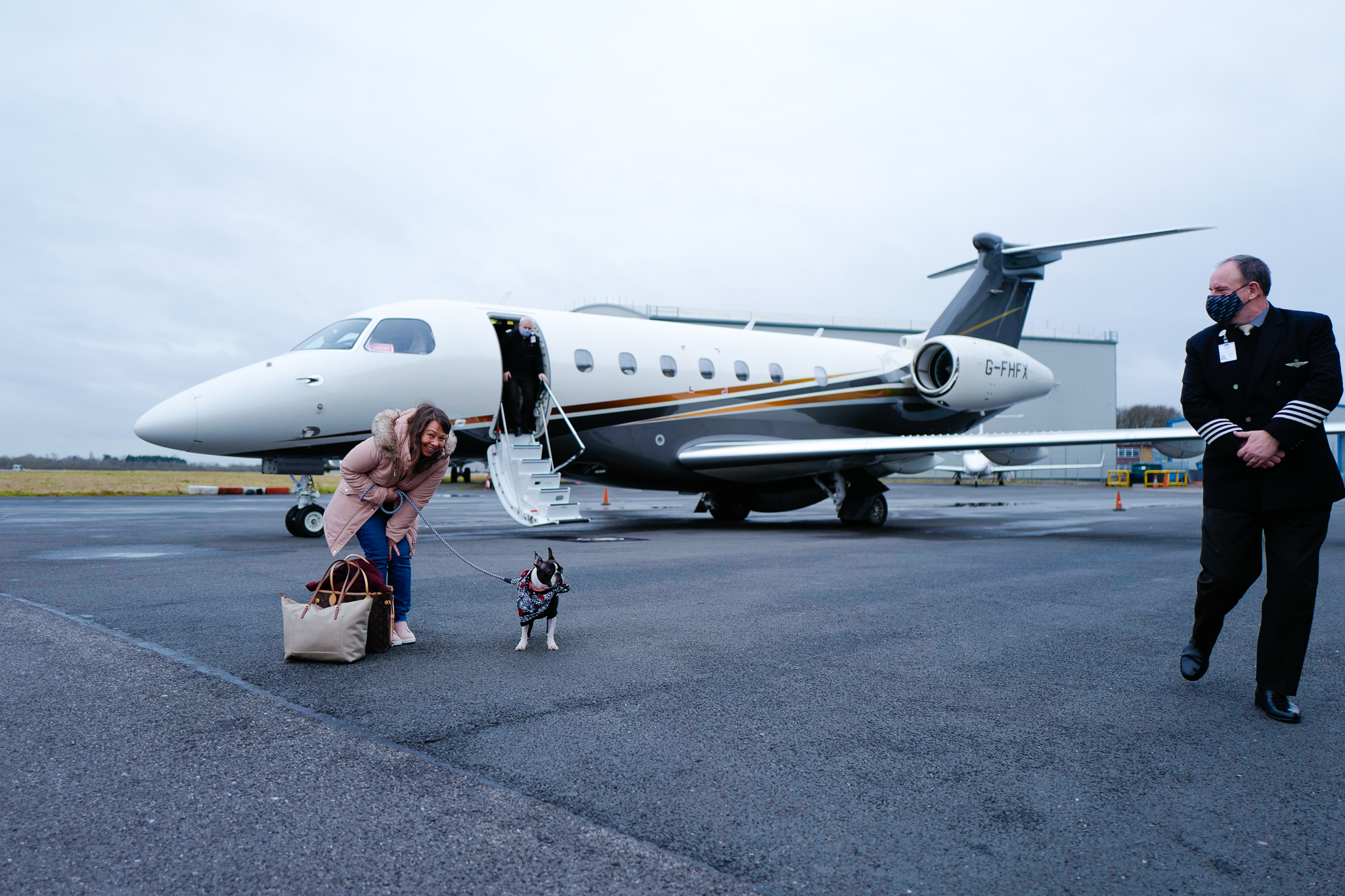
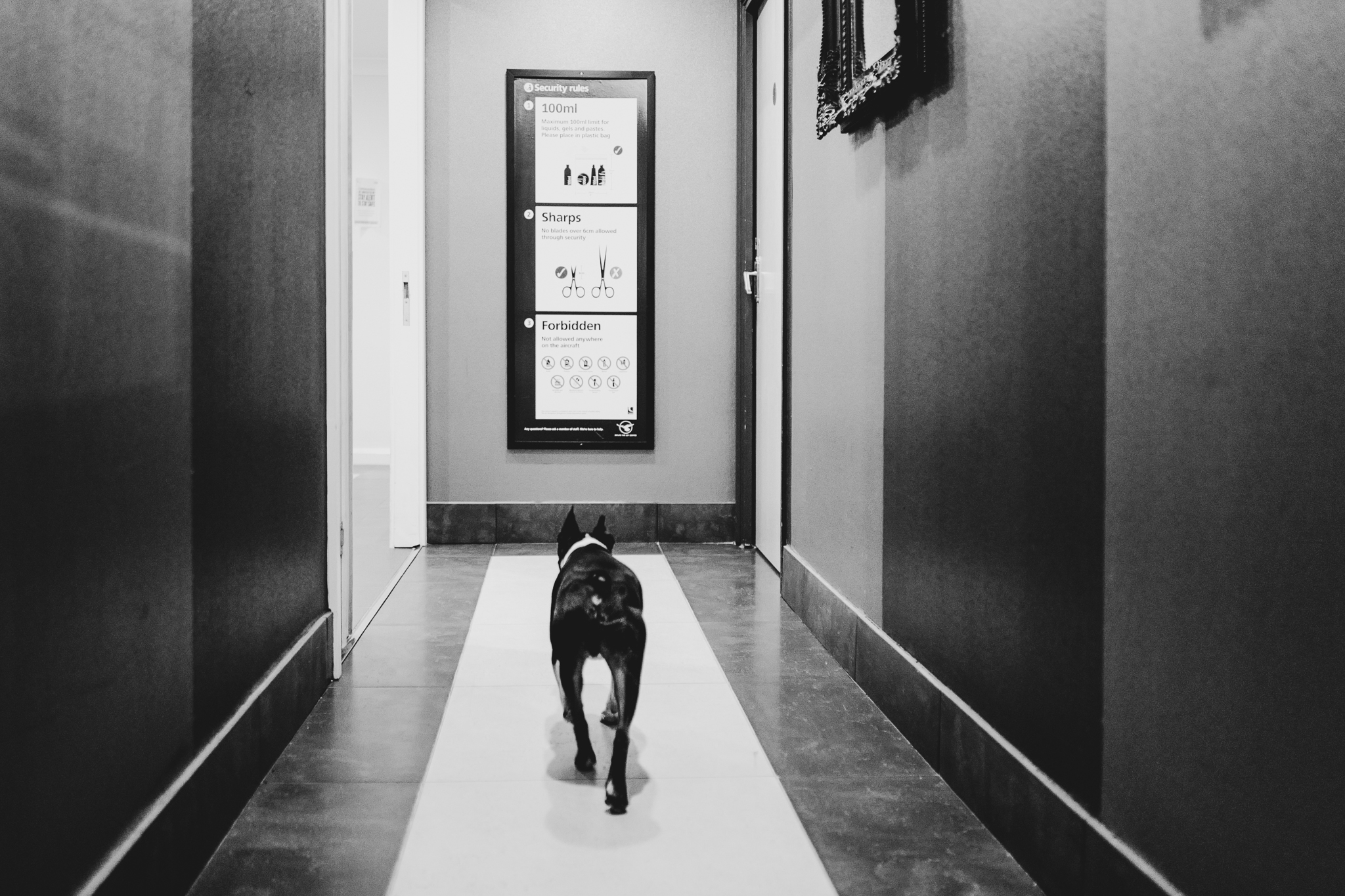
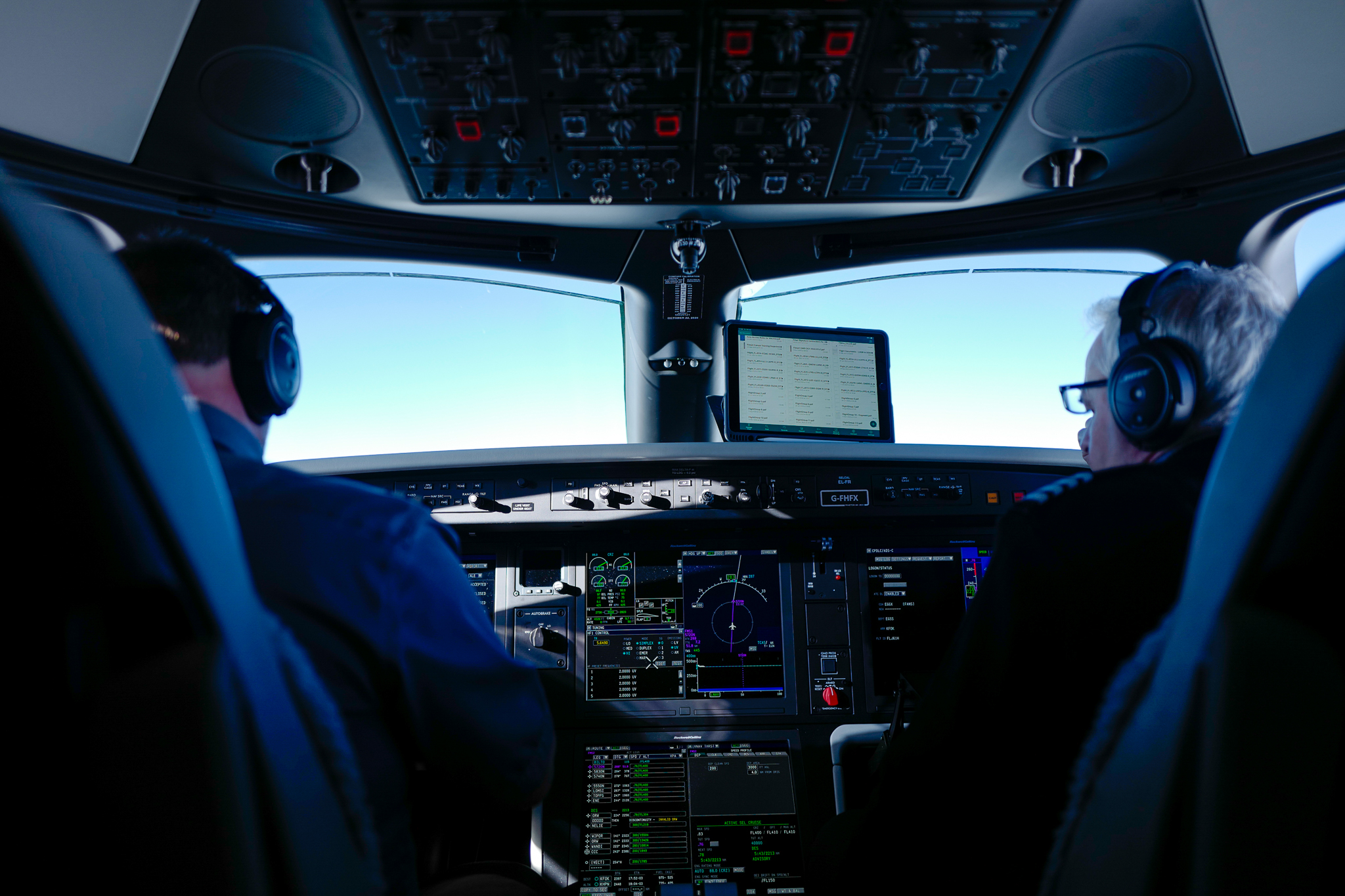
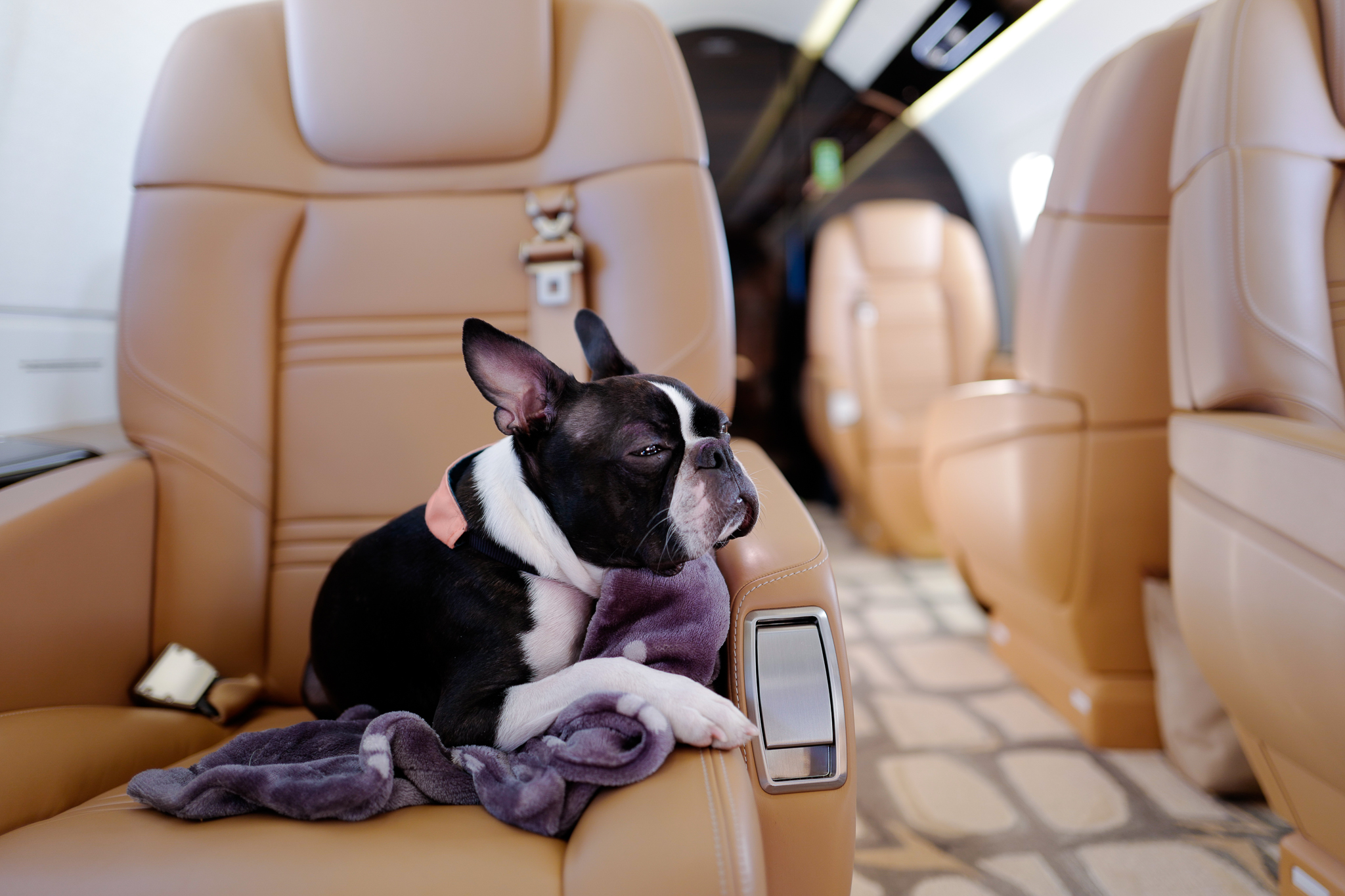
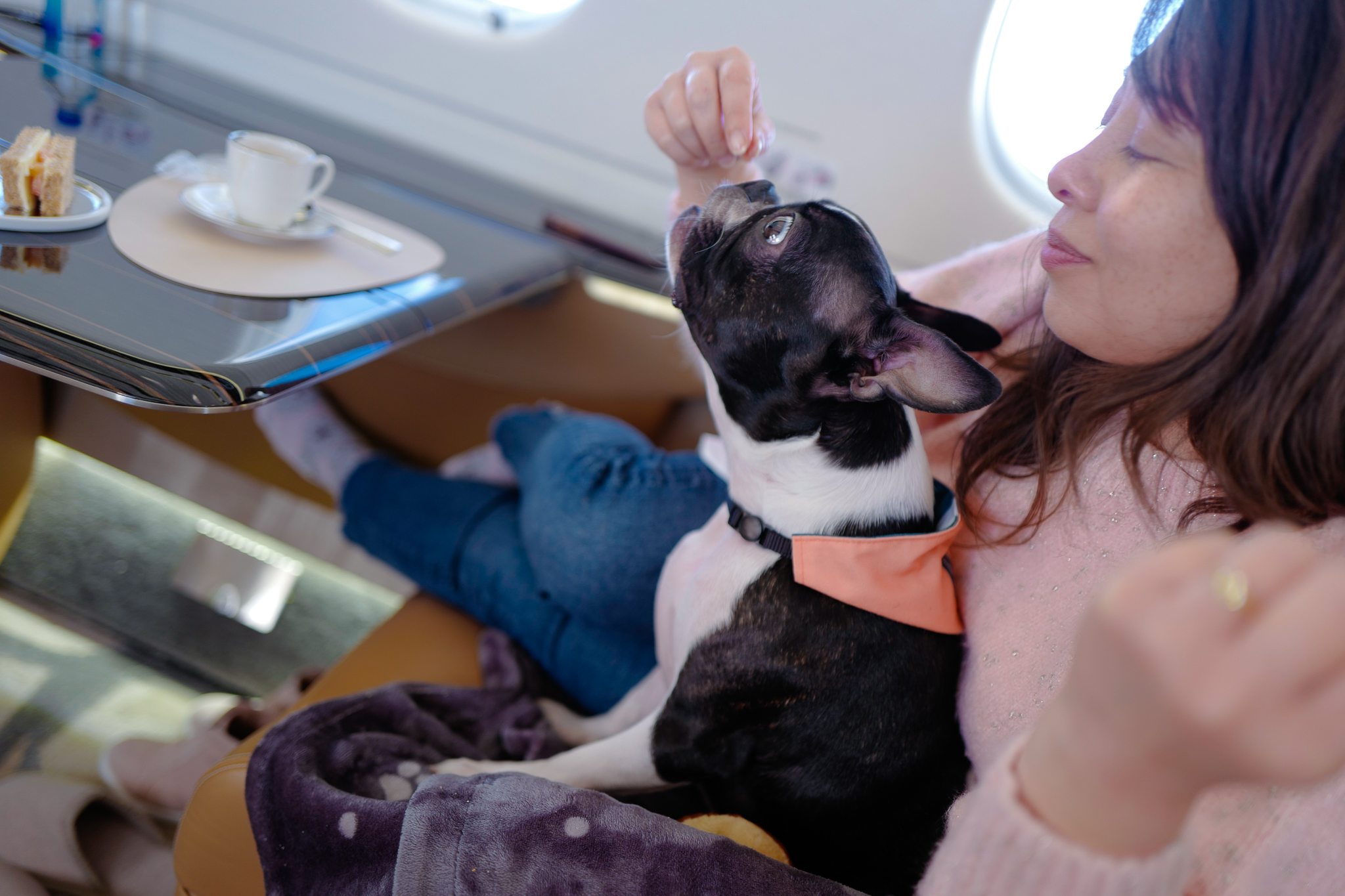
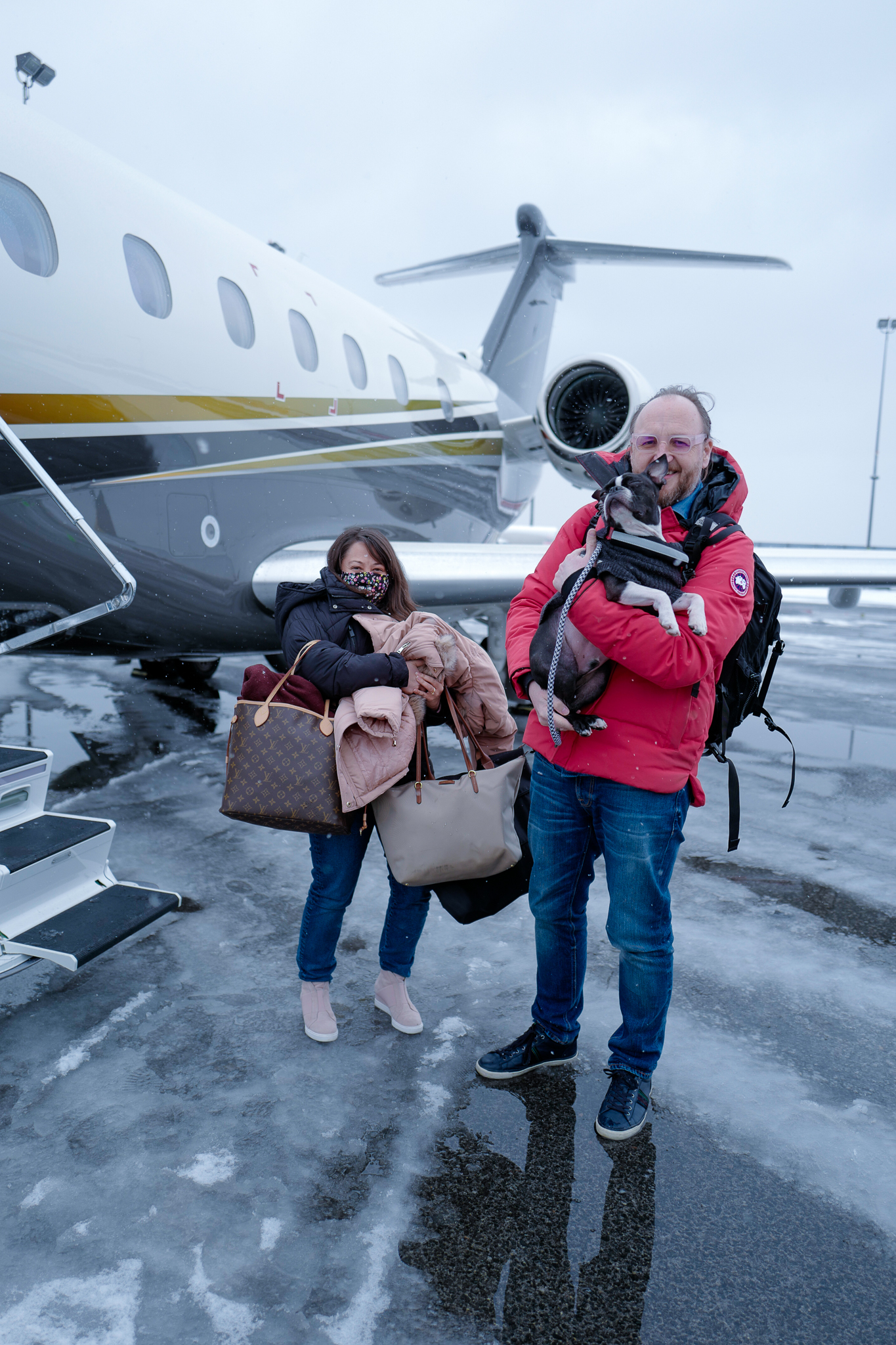
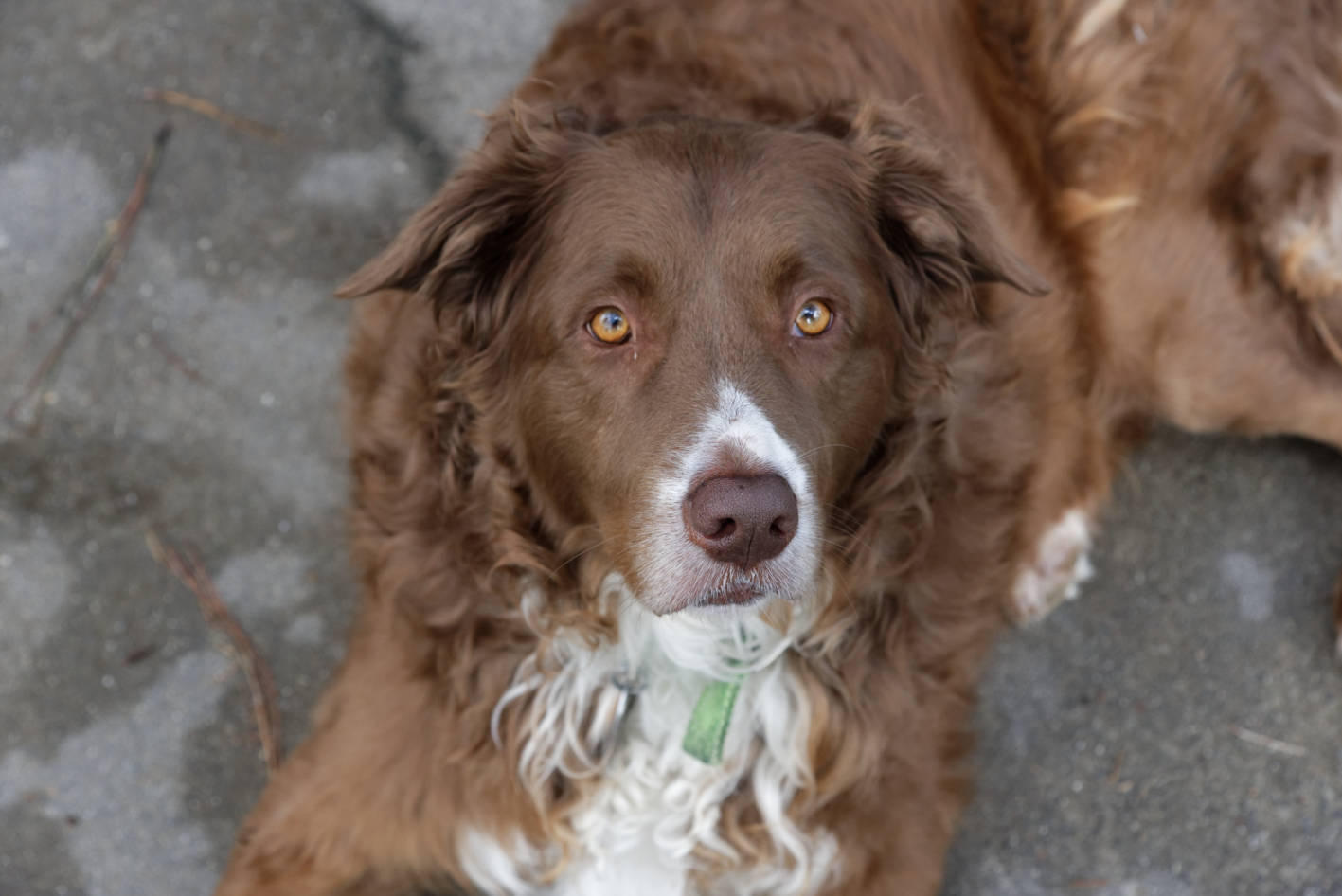
 Learning from Dogs
