Category: Science

Listening to ancient folk

Returning to climate change.

We think that climate change is a relatively recent phenomenon. Wrong! And I am not going to say any more because this post from The Conversation covers it beautifully.

ooOOoo

What ancient farmers can really teach us about adapting to climate change – and how political power influences success or failure

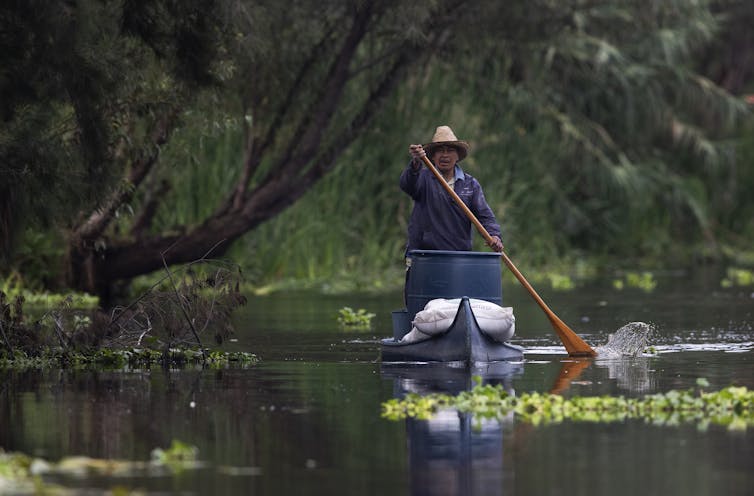
A farmer paddles to his fields on an artificial island among canals, part of an ancient Aztec system known as chinampas, in 2021. AP Photo /Marco Ugarte

Chelsea Fisher, University of South Carolina

Published February, 26th, 2024

In dozens of archaeological discoveries around the world, from the once-successful reservoirs and canals of Angkor Wat in Cambodia to the deserted Viking colonies of Greenland, new evidence paints pictures of civilizations struggling with unforeseen climate changes and the reality that their farming practices had become unsustainable.

Among these discoveries are also success stories, where ancient farming practices helped civilizations survive the hard times.

Zuni farmers in the southwestern United States made it through long stretches of extremely low rainfall between A.D. 1200 and 1400 by embracing small-scale, decentralized irrigation systems. Farmers in Ghana coped with severe droughts from 1450 to 1650 by planting indigenous African grains, like drought-tolerant pearl millet.

Ancient practices like these are gaining new interest today. As countries face unprecedented heat waves, storms and melting glaciers, some farmers and international development organizations are reaching deep into the agricultural archives to revive these ancient solutions.

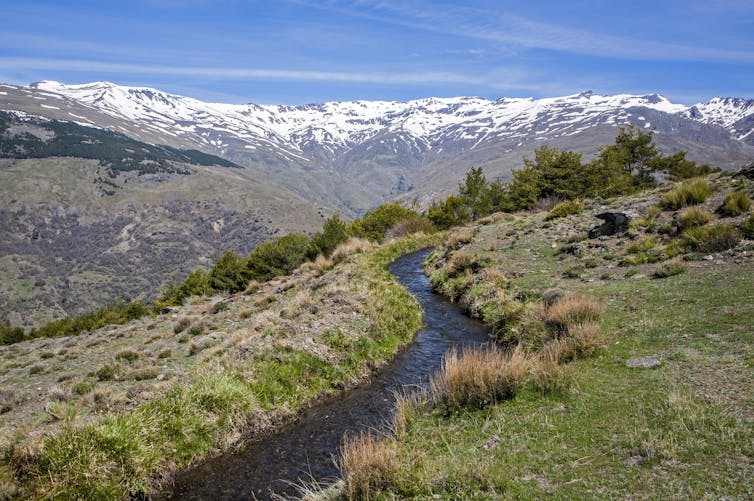
A canal running through a mountain side with snowy peaks in the background.
An ancient irrigation method used by the Moors involving water channels is being revisited in Spain. Geography Photos/Universal Images Group via Getty Images

Drought-stricken farmers in Spain have reclaimed medieval Moorish irrigation technology. International companies hungry for carbon offsets have paid big money for biochar made using pre-Columbian Amazonian production techniques. Texas ranchers have turned to ancient cover cropping methods to buffer against unpredictable weather patterns.

But grasping for ancient technologies and techniques without paying attention to historical context misses one of the most important lessons ancient farmers can reveal: Agricultural sustainability is as much about power and sovereignty as it is about soil, water and crops.

I’m an archaeologist who studies agricultural sustainability in the past. Discoveries in recent years have shown how the human past is full of people who dealt with climate change in both sustainable and unsustainable ways. Archaeologists are finding that ancient sustainability was tethered closely to politics. However, these dynamics are often forgotten in discussions of sustainability today.

Maya milpa farming: Forest access is essential

In the tropical lowlands of Mexico and Central America, Indigenous Maya farmers have been practicing milpa agriculture for thousands of years. Milpa farmers adapted to drought by gently steering forest ecology through controlled burns and careful woodland conservation.

The knowledge of milpa farming empowered many rural farmers to navigate climate changes during the notorious Maya Collapse – two centuries of political disintegration and urban depopulation between A.D. 800 to 1000. Importantly, later Maya political leaders worked with farmers to keep this flexibility. Their light-handed approach is still legible in the artifacts and settlement patterns of post-Collapse farming communities and preserved in the flexible tribute schedules for Maya farmers documented by 16th century Spanish monks.

Maya farmers and researchers explain milpa farming.

In my book, “Rooting in a Useless Land: Ancient Farmers, Celebrity Chefs, and Environmental Justice in Yucatán,” I trace the deep history of the Maya milpa. Using archaeology, I show how ancient farmers adapted milpa agriculture in response to centuries of drought and political upheaval.

Modern Maya milpa practices began drawing public attention a few years ago as international development organizations partnered with celebrity chefs, like Noma’s René Redzepi, and embraced the concept.

However, these groups condemned the traditional milpa practice of burning new areas of forest as unsustainable. They instead promoted a “no-burn” version to grow certified organic maize for high-end restaurants. Their no-burn version of milpa relies on fertilizers to grow maize in a fixed location, rather than using controlled fire ecology to manage soil fertility across vast forests.

The result restricted the traditional practices Maya farmers have used for centuries. It also fed into a modern political threat to traditional Maya milpa farming: land grabs.

Traditional milpa agriculture requires a lot of forested land, since farmers need to relocate their fields every couple of years. But that need for forest is at odds with hotel companies, industrial cattle ranches and green energy developers who want cheap land and see Maya milpa forest management practices as inefficient. No-burn milpa eases this conflict by locking maize agriculture into one small space indefinitely, instead of spreading it out through the forest over generations. But it also changes tradition.

Maya milpa farmers are now fighting to practice their ancient agricultural techniques, not because they’ve forgotten or lost those techniques, but because neocolonial land privatization policies actively undermine farmers’ ability to manage woodlands as their ancestors did.

Milpa farmers are increasingly left to either adopt a rebranded version of their heritage or quit farming all together – as many have done.

Mexico’s fragile artificial islands: Threats from development

When I look to the work of other archaeologists investigating ancient agricultural practices, I see these same entanglements of power and sustainability.

In central Mexico, chinampas are ancient systems of artificial islands and canals. They have enabled farmers to cultivate food in wetlands for centuries.

The continuing existence of chinampas is a legacy of deep ecological knowledge and a resource enabling communities to feed themselves.

Chinampa techniques use canals and artificial islands. This photo shows one in 1912. Karl Weule, Leitfaden der Voelkerkunde via Wikimedia
A well-maintained farming island among canals near Mexico City.
The chinampas of Xochimilco are a UNESCO world heritage site today, but development expanding from Mexico City has put their survival in danger. Sergei Saint via Flickr, CC BY-ND

But archaeology has revealed that generations of sustainable chinampa management could be overturned almost overnight. That happened when the expansionist Aztec Empire decided to re-engineer Lake Xaltocan for salt production in the 14th century and rendered its chinampas unusable.

Today, the future of chinampa agriculture hinges on a pocket of protected fields stewarded by local farmers in the marshy outskirts of Mexico City. These fields are now at risk as demand for housing drives informal settlements into the chinampa zone.

Andean raised fields: A story of labor exploitation

Traditional Andean agriculture in South America incorporates a diverse range of ancient cultivation techniques. One in particular has a complicated history of attracting revival efforts.

In the 1980s, government agencies, archaeologists and development organizations spent a fortune trying to persuade Andean farmers to revive raised field farming. Ancient raised fields had been found around Lake Titicaca, on the border of Peru and Bolivia. These groups became convinced that this relic technology could curb hunger in the Andes by enabling back-to-back potato harvests with no need for fallowing.

But Andean farmers had no connection to the labor-intensive raised fields. The practice had been abandoned even before the rise of Inca civilization in the 13th century. The effort to revive ancient raised field agriculture collapsed.

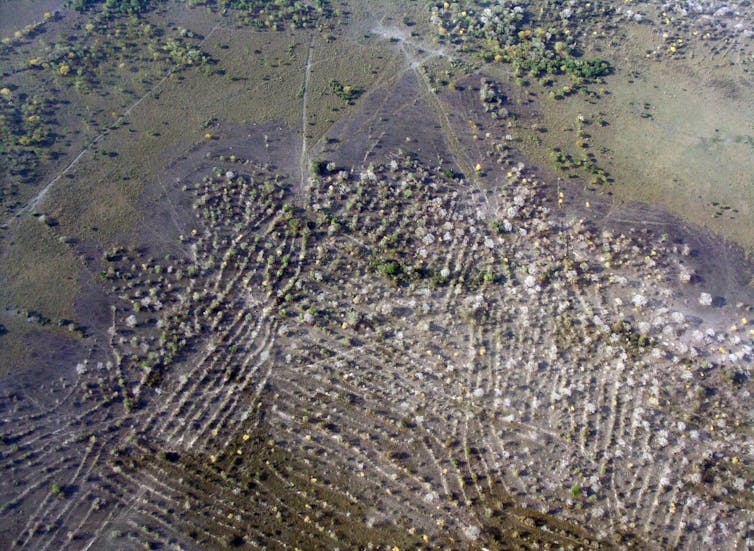
A view from a plane shows the outlines where fields were raised.
An aerial photograph shows pre-Colombian raised fields in Bolivia. Umberto Lombardo, University of Bern, Switzerland, CC BY-NC

Since then, more archaeological discoveries around Lake Titicaca have suggested that ancient farmers were forced to work the raised fields by the expansionist Tiwanaku empire during its peak between AD 500 and 1100. Far from the politically neutral narrative promoted by development organizations, the raised fields were not there to help farmers feed themselves. They were a technology for exploiting labor and extracting surplus crops from ancient Andean farmers.

Respecting ancient practices’ histories

Reclaiming ancestral farming techniques can be a step toward sustainable food systems, especially when descendant communities lead their reclamation. The world can, and I think should, reach back to recover agricultural practices from our collective past.

But we can’t pretend that those practices are apolitical.

The Maya milpa farmers who continue to practice controlled burns in defiance of land privatizers understand the value of ancient techniques and the threat posed by political power. So do the Mexican chinampa farmers working to restore local food to disenfranchised urban communities. And so do the Andean farmers refusing to participate in once-exploitive raised field rehabilitation projects.

Depending on how they are used, ancient agricultural practices can either reinforce social inequalities or create more equitable food systems. Ancient practices aren’t inherently good – it takes a deeper commitment to just and equitable food systems to make them sustainable.

Chelsea Fisher, Assistant Professor of Anthropology, University of South Carolina

This article is republished from The Conversation under a Creative Commons license. Read the original article.

ooOOoo

We like to think that the changing climate is a modern phenomenon but this article shows it is not. That sentence by Chelsea Fisher offers a route out of the present situation: “The world can, and I think should, reach back to recover agricultural practices from our collective past.”

The imminent climate change crisis

But a positive TED Talk on the situation.

There have been so many disastrous activities on climate change, and I am not belittling them, but it was amazing to come across a TED Talk last Saturday that I watched. But first the speaker, Asmeret Asefaw Berhe, who was born in Asmara, Eritrea. Her bio (in part):

From WikiPedia:

ooOOoo

Asmeret Asefaw Berhe is a soil biogeochemist and political ecologist who is the current Director of the Office of Science at the US Department of Energy. She was previously the Professor of Soil Biogeochemistry and the Ted and Jan Falasco Chair in Earth Sciences and Geology in the Department of Life and Environmental Sciences; University of California, Merced.[1] Her research group worked to understand how soil helps regulate the Earth’s climate.

Advocacy and global impact work

Berhe’s work at the intersection of soil, climate change, and political ecology lends itself well to a number of global issues. During her graduate career, she was a member of the working group that produced the Millennium Ecosystem Assessment, which was called for by the United Nations Secretary Kofi Annan to assess the impact of humans on the environment. She was one of the lead authors on the 2005 report’s chapter on “Drivers of Change in Ecosystem Condition and Services.”[19] The Assessment received the Zayed International Prize for the Environment in 2005.[20]

In 2018, Berhe was selected as part of the inaugural National Academies of Sciences, Engineering, and Medicine New Voices in Sciences, Engineering, and Medicine cohort, as an early career leader working to advance the conversation around key emerging global issues and communicate the evidence base around those challenges.[21]

An advocate for women in science, Berhe is currently a co-Principal Investigator of ADVANCEGeo, which is working to transform the workplace climate of the geosciences to increase retention of women in the field and develop a sustainable model that can be transferred to other scientific domains. Currently, the Earth Science Women’s Network (ESWN), the Association for Women Geoscientists, and the American Geophysical Union (AGU) have partnered to address the issue of sexual harassment in the earth, space and environmental sciences.[22] The program led by Erika Marín-Spiotta and is run with support from a four-year $1.1 million grant from the National Science Foundation.[23]

She currently serves as an advisory board member of 500 Women Scientists, a grassroots organization working to make science open, inclusive, and accessible, and is on the leadership board of the Earth Science Women’s Network.

ooOOoo

Now from the TED Talk, firstly the description:

Part 3 of the TED Radio Hour episode What Lies Beneath.

Earth’s soil can store vast amounts of carbon. Biogeochemist Asmeret Asefaw Berhe says soil could be a powerful tool for fighting climate change – if only we stopped treating it like dirt.

About Asmeret Asefaw Berhe

Asmeret Asefaw Berhe is a soil biogeochemist and President Biden’s nominee to lead the Department of Energy Office of Science. She is a professor of soil biogeochemistry at University of California, Merced. Her research group works to understand how soil helps regulate the earth’s climate.

Berhe’s work exists at the intersection of soil, climate change, and political ecology. During her graduate career, she was a member of the working group that produced the Millennium Ecosystem Assessment, which was called for by the United Nations to assess the impact of humans on the environment.

Berhe received a B.Sc. in Soil and Water Conservation at the University of Asmara in Eritrea. She has an M.Sc. in Political Ecology from Michigan State University and a Ph.D. in Biogeochemistry from University of California, Berkeley.

This segment of the TED Radio Hour was produced by Matthew Cloutier and Sylvie Douglis and edited by Rachel Faulkner and Katie Simon. You can follow us on Facebook @TEDRadioHour and email us at TEDRadioHour@npr.org.

Now that positive TED Talk:

We wish Asmeret the very best of fortune in bringing about these changes.

Looking after our dogs in Winter

Erik Oltad has some great advice.

In our case our (remaining) dogs, Oliver and Cleopatra, are able to go outside but still remain on our land. But plenty of dog owners are not in such a privileged position and need to take their dogs on public pavements and the like.

Thus for all you dog owners in that position then Erik’s advice is for you.

ooOOoo

Dog care below freezing − how to keep your pet warm and safe from cold weather, road salt and more this winter

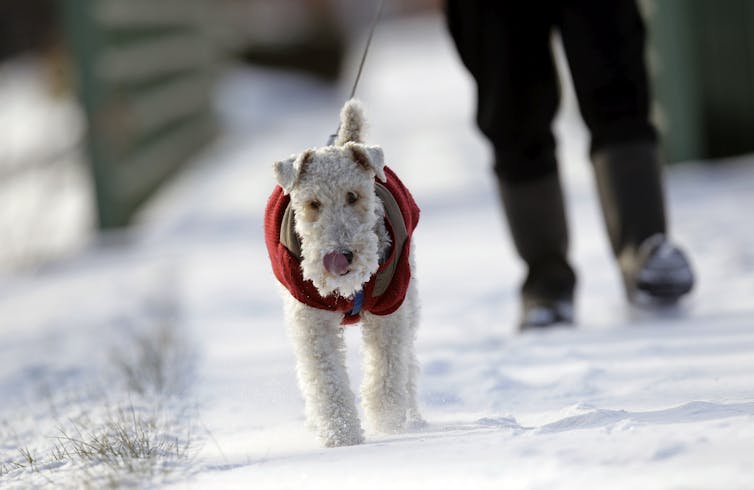
Dogs get cold in the winter too, but there are things pet owners can do to help them feel comfortable. AP Photo/David Duprey

Erik Christian Olstad, University of California, Davis

Time outside with your dog in the spring, summer and fall can be lovely. Visiting your favorite downtown café on a cool spring morning, going to a favorite dog park on a clear summer evening or going on walks along a river when the leaves are changing color are all wonderful when the weather is favorable. But in much of the country, when winter rolls around, previously hospitable conditions can quickly turn chilly and dangerous for people and pups alike.

Winter brings some unique challenges for dog owners, since dogs still need activity and socialization during colder seasons. Studies have shown that dog owners are almost 50% less likely to walk their dogs when the weather gets cold. Knowing the basics of winter safety is critical to maintaining a healthy lifestyle for your dog.

I am an assistant professor at the University of California Davis School of Veterinary Medicine who weathered polar vortexes with my dog while living in Michigan early in my career. While I’ve since moved to sunny California, I’ve seen how quickly frigid temperatures can turn dangerous for pets.

Breed and age differences

Not all dogs have the same abilities to deal with cold weather. A short-coated dog like a Chihuahua is much more susceptible to the dangers of cold weather than a thick-coated husky. When the weather dips below 40 degrees Fahrenheit (4 degrees Celsius), the well-acclimated husky may be comfortable, whereas the Chihuahua would shiver and be at risk of hypothermia.

Additionally, if your dog is used to warm weather, but you decide to move to a colder region, the dog will need time to acclimate to that colder weather, even if they have a thick coat.

Age also affects cold-weather resilience. Puppies and elderly dogs can’t withstand the chill as well as other dogs, but every dog is unique – each may have individual health conditions or physical attributes that make them more or less resilient to cold weather.

When is my dog too cold?

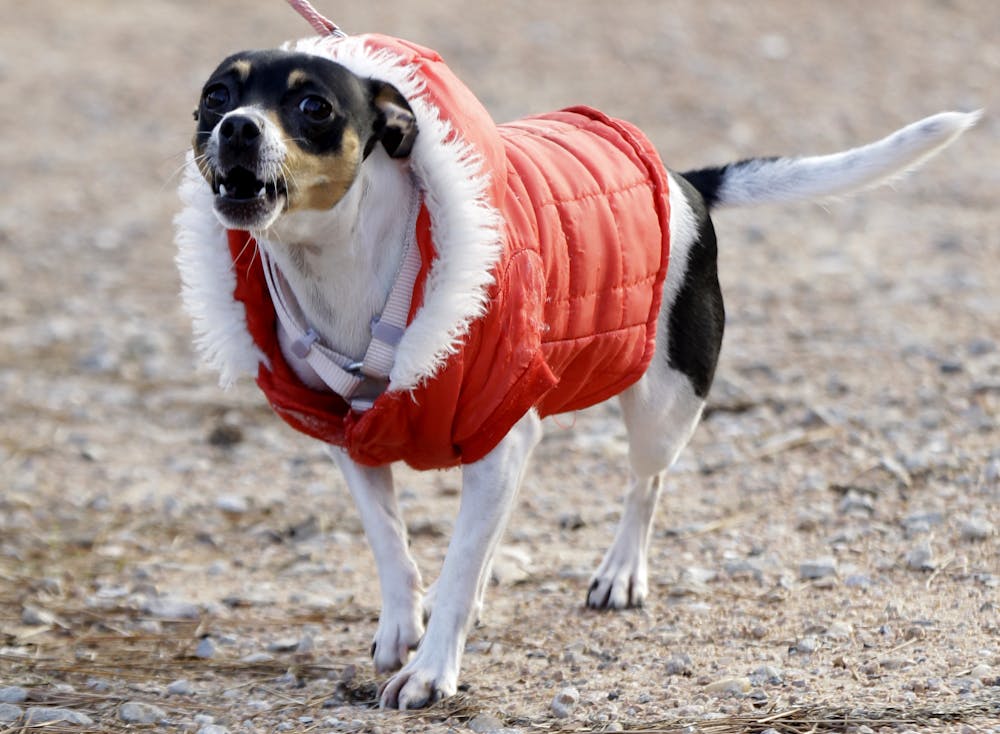
A small dog wearing a thick, fluffy red coat.
Dog jackets can keep pets warm in the cold. AP Photo/David J. Phillip

Pet owners should be able to recognize the symptoms of a dog that is getting too cold. Dogs will shiver, and some may vocalize or whine. Dogs may resist putting their feet down on the cold ground, or burrow, or try to find warmth in their environment when they are uncomfortable.

Just like people, dogs can get frostbite. And just like people, the signs can take days to appear, making it hard to assess them in the moment. The most common sites for frostbite in dogs are their ears and the tips of their tails. Some of the initial signs of frostbite are skin discoloring, turning paler than normal, or purple, gray or even black; red, blistered skin; swelling; pain at the site; or ulceration.

Other serious signs of hypothermia include sluggishness or lethargy, and if you observe them, please visit your veterinarian immediately. A good rule to live by is if it is too cold for you, it is too cold for your dog.

Getting your dog a sweater or jacket and paw covers can provide them with protection from the elements and keep them comfortable. Veterinarians also recommend closely monitoring your dog and limiting their time outside when the temperature nears the freezing point or drops below it.

Road salt dangers

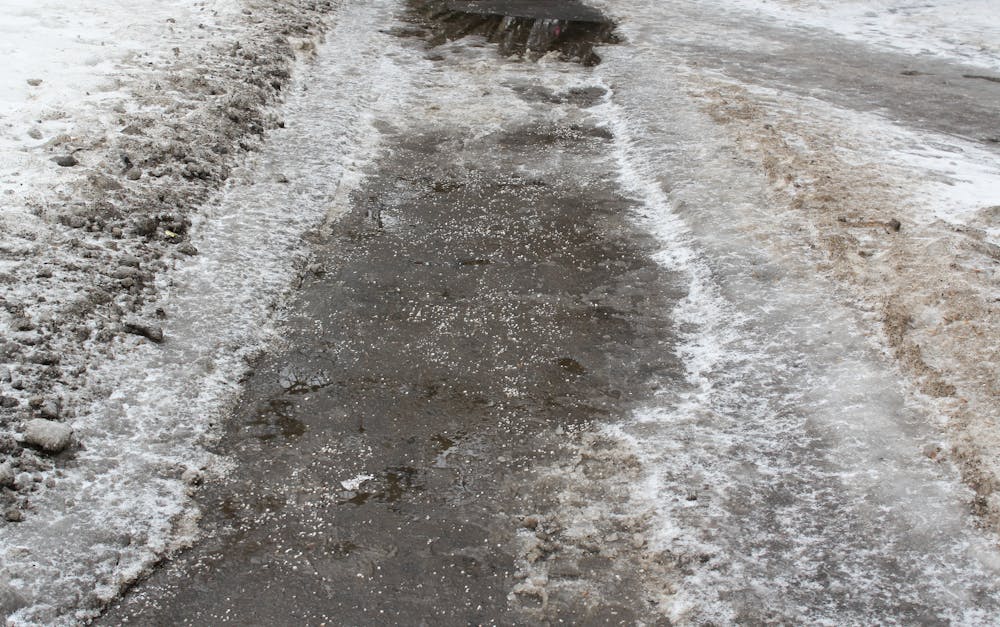
Road salt that treats ice on streets and sidewalks can also harm dogs. When dogs walk on the salt, the sharp, rough edges of the salt crystals can irritate the sensitive skin on their paws.

A fluffy dog sits in the snow wearing two cloth, polka dot paw covers.
Paw covers for dogs can keep their feet warm and protected from road salt. AP Photo/Jim Cole

Dogs will often lick their feet when they’re dirty, wet or irritated, and if they ingest any salt doing that, they may face GI upset, dehydration, kidney failure, seizures or even death. Even small amounts of pure salt can disrupt critical body functions in dogs.

Some companies make pet-safe salt, but in public it can be hard to tell what type of salt is on the ground. After walking your dog, wash off their feet or boots. You can also keep their paw fur trimmed to prevent snow from balling up or salt collecting in the fur. Applying a thin layer of petroleum jelly or paw pad balm to the skin of the paw pads can also help protect your pet’s paws from irritation.

A snowy sidewalk covered in tiny chunks of salt.
Road salt can be harmful to dogs’ sensitive paws. Stolbovsky/Wikimedia Commons, CC BY-SA

Antifreeze risks

Antifreeze, or ethylene glycol, is in most vehicles to prevent the fluids from freezing when it gets cold out. Some people pour antifreeze into their toilets when away from their home to prevent the water in the toilet from freezing.

Antifreeze is an exceptionally dangerous chemical to dogs and cats, as it tastes sweet but can be deadly when ingested. If a pet ingests even a small amount of antifreeze, the substance causes a chemical cascade in their body that results in severe kidney damage. If left untreated, the pet may have permanent kidney damage or die.

There are safer antifreeze options on the market that use ingredients other than ethylene glycol. If your dog ingests antifreeze, please see your veterinarian immediately for treatment.

When temperatures dip below freezing, the best thing pet owners can do is keep the time spent outside as minimal as possible. Try some indoor activities, like hide-and-seek with low-calorie treats, fetch or even an interactive obstacle course. Food puzzles can also keep your dog mentally engaged during indoor time.

Although winter presents some unique challenges, it can still be an enjoyable and healthy time for you and your canine companion.

Erik Christian Olstad, Health Sciences Assistant Professor of Clinical Veterinary Medicine, University of California, Davis

This article is republished from The Conversation under a Creative Commons license. Read the original article.

ooOOoo

Erik’s comments about ethylene glycol (EG), or antifreeze as it more commonly known, and the incredible dangers to dogs EG possesses are vital to understand.

Please, please keep your dogs very safe in Winter! If Erik’s advice helps save even a single dog then me republishing this will have been worthwhile.

Hollywood movie to reality?

Where is the global climate going?

The challenge with writing posts, albeit not so often, about the global environment, especially when I am a non-scientist, is that one relies entirely on the words of others. In the case of a recent article, published by The Conversation, the authors are claimed to be specialists, and I do not doubt their credentials.

The three authors are René van Westen who is a Postdoctoral Researcher in Climate Physics, at Utrecht University, Henk A. Dijkstra who is a Professor of Physics, also at Utrecht University, and Michael Kliphuis, a Climate Model Specialist, again at Utrecht University.

So, here is their article:

ooOOoo

Atlantic Ocean is headed for a tipping point − once melting glaciers shut down the Gulf Stream, we would see extreme climate change within decades, study shows

Too much fresh water from Greenland’s ice sheet can slow the Atlantic Ocean’s circulation. Paul Souders/Stone via Getty Images

René van Westen, Utrecht University; Henk A. Dijkstra, Utrecht University, and Michael Kliphuis, Utrecht University

Superstorms, abrupt climate shifts and New York City frozen in ice. That’s how the blockbuster Hollywood movie “The Day After Tomorrow” depicted an abrupt shutdown of the Atlantic Ocean’s circulation and the catastrophic consequences.

While Hollywood’s vision was over the top, the 2004 movie raised a serious question: If global warming shuts down the Atlantic Meridional Overturning Circulation, which is crucial for carrying heat from the tropics to the northern latitudes, how abrupt and severe would the climate changes be?

Twenty years after the movie’s release, we know a lot more about the Atlantic Ocean’s circulation. Instruments deployed in the ocean starting in 2004 show that the Atlantic Ocean circulation has observably slowed over the past two decades, possibly to its weakest state in almost a millennium. Studies also suggest that the circulation has reached a dangerous tipping point in the past that sent it into a precipitous, unstoppable decline, and that it could hit that tipping point again as the planet warms and glaciers and ice sheets melt.

In a new study using the latest generation of Earth’s climate models, we simulated the flow of fresh water until the ocean circulation reached that tipping point.

The results showed that the circulation could fully shut down within a century of hitting the tipping point, and that it’s headed in that direction. If that happened, average temperatures would drop by several degrees in North America, parts of Asia and Europe, and people would see severe and cascading consequences around the world.

We also discovered a physics-based early warning signal that can alert the world when the Atlantic Ocean circulation is nearing its tipping point.

The ocean’s conveyor belt

Ocean currents are driven by winds, tides and water density differences.

In the Atlantic Ocean circulation, the relatively warm and salty surface water near the equator flows toward Greenland. During its journey it crosses the Caribbean Sea, loops up into the Gulf of Mexico, and then flows along the U.S. East Coast before crossing the Atlantic.

Two illustrations show how the AMOC looks today and its weaker state in the future
How the Atlantic Ocean circulation changes as it slows. IPCC 6th Assessment Report

This current, also known as the Gulf Stream, brings heat to Europe. As it flows northward and cools, the water mass becomes heavier. By the time it reaches Greenland, it starts to sink and flow southward. The sinking of water near Greenland pulls water from elsewhere in the Atlantic Ocean and the cycle repeats, like a conveyor belt.

Too much fresh water from melting glaciers and the Greenland ice sheet can dilute the saltiness of the water, preventing it from sinking, and weaken this ocean conveyor belt. A weaker conveyor belt transports less heat northward and also enables less heavy water to reach Greenland, which further weakens the conveyor belt’s strength. Once it reaches the tipping point, it shuts down quickly.

What happens to the climate at the tipping point?

The existence of a tipping point was first noticed in an overly simplified model of the Atlantic Ocean circulation in the early 1960s. Today’s more detailed climate models indicate a continued slowing of the conveyor belt’s strength under climate change. However, an abrupt shutdown of the Atlantic Ocean circulation appeared to be absent in these climate models. https://www.youtube.com/embed/p4pWafuvdrY?wmode=transparent&start=0 How the ocean conveyor belt works.

This is where our study comes in. We performed an experiment with a detailed climate model to find the tipping point for an abrupt shutdown by slowly increasing the input of fresh water.

We found that once it reaches the tipping point, the conveyor belt shuts down within 100 years. The heat transport toward the north is strongly reduced, leading to abrupt climate shifts.

The result: Dangerous cold in the North

Regions that are influenced by the Gulf Stream receive substantially less heat when the circulation stops. This cools the North American and European continents by a few degrees.

The European climate is much more influenced by the Gulf Stream than other regions. In our experiment, that meant parts of the continent changed at more than 5 degrees Fahrenheit (3 degrees Celsius) per decade – far faster than today’s global warming of about 0.36 F (0.2 C) per decade. We found that parts of Norway would experience temperature drops of more than 36 F (20 C). On the other hand, regions in the Southern Hemisphere would warm by a few degrees.

Two maps show US and Europe both cooling by several degrees if the AMOC stops.
The annual mean temperature changes after the conveyor belt stops reflect an extreme temperature drop in northern Europe in particular. René M. van Westen

These temperature changes develop over about 100 years. That might seem like a long time, but on typical climate time scales, it is abrupt.

The conveyor belt shutting down would also affect sea level and precipitation patterns, which can push other ecosystems closer to their tipping points. For example, the Amazon rainforest is vulnerable to declining precipitation. If its forest ecosystem turned to grassland, the transition would release carbon to the atmosphere and result in the loss of a valuable carbon sink, further accelerating climate change.

The Atlantic circulation has slowed significantly in the distant past. During glacial periods when ice sheets that covered large parts of the planet were melting, the influx of fresh water slowed the Atlantic circulation, triggering huge climate fluctuations.

So, when will we see this tipping point?

The big question – when will the Atlantic circulation reach a tipping point – remains unanswered. Observations don’t go back far enough to provide a clear result. While a recent study suggested that the conveyor belt is rapidly approaching its tipping point, possibly within a few years, these statistical analyses made several assumptions that give rise to uncertainty.

Instead, we were able to develop a physics-based and observable early warning signal involving the salinity transport at the southern boundary of the Atlantic Ocean. Once a threshold is reached, the tipping point is likely to follow in one to four decades.

A line chart of circulation strength shows a quick drop-off after the amount of freshwater in the ocean hits a tipping point.
A climate model experiment shows how quickly the AMOC slows once it reaches a tipping point with a threshold of fresh water entering the ocean. How soon that will happen remains an open question. René M. van Westen

The climate impacts from our study underline the severity of such an abrupt conveyor belt collapse. The temperature, sea level and precipitation changes will severely affect society, and the climate shifts are unstoppable on human time scales.

It might seem counterintuitive to worry about extreme cold as the planet warms, but if the main Atlantic Ocean circulation shuts down from too much meltwater pouring in, that’s the risk ahead.

This article was updated to Feb. 11, 2024, to fix a typo: The experiment found temperatures in parts of Europe changed by more than 5 F per decade.

René van Westen, Postdoctoral Researcher in Climate Physics, Utrecht University; Henk A. Dijkstra, Professor of Physics, Utrecht University, and Michael Kliphuis, Climate Model Specialist, Utrecht University

This article is republished from The Conversation under a Creative Commons license. Read the original article.

ooOOoo

I am 79! I like to think that whatever is coming down the wires, so to speak, will be after my death. But that is a cop out for a) I have a son and a daughter who are in their early fifties, b) I have a grandson, my daughter and son-in-law’s young man, who is a teenager, with his birthday next month, and c) I could possibly live for another twenty years.

The challenge is how to bring this imminent catastrophic global change in temperature to the fore. We need a global solution now enforced by a globally respected group of scientists and leaders, and, frankly, I do not see that happening.

All one can do is to hope. Hope that the global community will eschew the present-day extremes of warring behaviour and see the need for change. That is NOW!

So that the Hollywood movie, The Day After Tomorrow, remains a fictional story. And for those that have forgotten the film or who have never seen it, here is a small slice of a Wikipedia report:

The Day After Tomorrow is a 2004 American science fiction disaster film conceived, co-writtendirected, co-produced by Roland Emmerich, based on the 1999 book The Coming Global Superstorm by Art Bell and Whitley Strieber, and starring Dennis QuaidJake GyllenhaalSela WardEmmy Rossum, and Ian Holm. The film depicts catastrophic climatic effects following the disruption of the North Atlantic Ocean circulation, in which a series of extreme weather events usher in climate change and lead to a new ice age.

Wikipedia

And here is a YouTube video:

There we go, folks!

Atmospheric river hitting us in Merlin

The atmospheric river in California is reaching up to Southern Oregon

After we had the thick end of twelve inches of rain in January, February has kept up the downpours; as of yesterday morning we had had 0.52 inches (1.32 cm) for the month and it was still raining. (And 0.8 in at 08:00 this morning.)

Here’s an item from yesterday about the situation in California.

Plus the BBC News had an item on the California flood.

So it seemed opportune to present this article on atmospheric rivers.

ooOOoo

What is an atmospheric river? A hydrologist explains the good and bad of these flood-prone storms and how they’re changing

A satellite image shows a powerful atmospheric river hitting the Pacific Northwest in December 2023. Darker greens are more water vapor. Lauren Dauphin/NASA Earth Observatory

By Qian Cao, University of California, San Diego

A series of atmospheric rivers is bringing the threat of heavy downpours, flooding, mudslides and avalanches to the Pacific Northwest and California this week. While these storms are dreaded for the damage they can cause, they are also essential to the region’s water supply, particularly in California, as Qian Cao, a hydrologist at the University of California, San Diego, explains.

What are atmospheric rivers?

An atmospheric river is a narrow corridor or filament of concentrated water vapor transported in the atmosphere. It’s like a river in the sky that can be 1,000 miles long. On average, atmospheric rivers have about twice the regular flow of the Amazon River.

When atmospheric rivers run up against mountains or run into local atmospheric dynamics and are forced to ascend, the moisture they carry cools and condenses, so they can produce intense rainfall or snowfall. https://www.youtube.com/embed/w3rtYM0HtIM?wmode=transparent&start=0 A satellite view of atmospheric rivers.

Atmospheric rivers occur all over the world, most commonly in the mid-latitudes. They form when large-scale weather patterns align to create narrow channels, or filaments, of intense moisture transport. These start over warm water, typically tropical oceans, and are guided toward the coast by low-level jet streams ahead of cold fronts of extratropical cyclones.

Along the U.S. West Coast, the Pacific Ocean serves as the reservoir of moisture for the storm, and the mountain ranges act as barriers, which is why the western sides of the coastal ranges and Sierra Nevada see so much rain and snow.

Why are back-to-back atmospheric rivers a high flood risk?

Consecutive atmospheric rivers, known as AR families, can cause significant flooding.

The first heavy downpours saturate the ground. As consecutive storms arrive, their precipitation falls on soil that can’t absorb more water. That contributes to more runoff. Rivers and streams fill up. In the meantime, there may be snowmelt due to warm temperatures, further adding to the runoff and flood risk.

California experienced a historic run of nine consecutive atmospheric rivers in the span of three weeks in December 2022 and January 2023. The storms helped bring most reservoirs back to historical averages in 2023 after several drought years, but they also produced damaging floods and debris flows.

An animation shows filaments of water heading toward the coast.
Atmospheric rivers forming over the tropical Pacific Ocean head for the U.S. West Coast. NOAA

The cause of AR families is an active area of research. Compared with single atmospheric river events, AR families tend to be associated with lower atmospheric pressure heights across the North Pacific, higher pressure heights over the subtropics, a stronger and more zonally elongated jet stream and warmer tropical air temperatures.

Large-scale weather patterns and climate phenomena such as the Madden-Julian Oscillation, or MJO, also play an important role in the generation of AR families. An active MJO shift occurred during the early 2023 events, tilting the odds toward increased atmospheric river activity over California.

A truck drives through muddy streets that fill a large section of town. People stand on one small patch of pavement not flooded.
An aerial view shows a flooded neighborhood in the community of Pajaro in central California on March 11, 2023, after a series of atmospheric rivers. Josh Edelson/AFP via Getty Images

A recent study by scientists at Stanford and the University of Florida found that storms within AR families cause three to four times more economic damage when the storms arrive back to back than they would have caused by themselves.

How important are atmospheric rivers to the West Coast’s water supply?

I’m a research hydrologist, so I focus on hydrological impacts of atmospheric rivers. Although they can lead to flood hazards, atmospheric rivers are also essential to the Western water supply. Atmospheric rivers have been responsible for ending more than a third of the region’s major droughts, including the severe California drought of 2012-16.

Atmospheric rivers provide an average of 30% to 50% of the West Coast’s annual precipitation.

They also contribute to the snowpack, which provides a significant portion of California’s year-round water supply.

In an average year, one to two extreme atmospheric rivers with snow will be the dominant contributors to the snowpack in the Sierra Nevada. Together, atmospheric rivers will contribute about 30% to 40% of an average season’s total snow accumulation there.

A dam spillway with a full reservoir behind it.
After several winter storms brought record snowfall to California’s Sierra Nevada in early 2023, Lake Oroville, California’s second-largest reservoir, was at 100% capacity. The previous year, much of the state had faced water restrictions. Justin Sullivan/Getty Images

That’s why my colleagues at the Center for Western Weather and Water Extremes at the Scripps Institution of Oceanography, part of the University of California, San Diego, work on improving atmospheric river forecasts and predictions. Water managers need to be able to regulate reservoirs and figure out how much water they can save for the dry season while still leaving room in the reservoirs to manage flood risk from future storms.

How is global warming affecting atmospheric rivers?

As global temperatures rise in the future, we can expect more intense atmospheric rivers, leading to an increase in heavy and extreme precipitation events.

My research also shows that more atmospheric rivers are likely to occur concurrently during already wet conditions. So, the chance of extreme flooding also increases. Another study, by scientists from the University of Washington, suggests that there will be a seasonal shift to more atmospheric rivers earlier in the rainy season.

There will likely also be more year-to-year variability in the total annual precipitation, particularly in California, as a study by my colleagues at the Center for Western Weather and Water Extremes projects.

Qian Cao, Hydrologist, Center For Western Weather and Water Extremes, University of California, San Diego

This article is republished from The Conversation under a Creative Commons license. Read the original article.

ooOOoo

PBS have also presented an item on what is an atmospheric river. Their article starts:

Forecasters warned of dangerous flooding, heavy mountain snow and a heightened risk of mudslides and avalanches Feb. 4-6, 2024, as a powerful atmospheric river took aim at California. It’s the latest in a series of atmospheric rivers to bring extreme rainfall to the West Coast.

Qian Cao

I sense many things are changing and the challenge is not to let one’s imagination go into overdrive.

A study on dog aging

It is very likely to lose funding.

I am reading the latest issue of Science, the magazine put out by AAAS – the American Academy for the Advancement of Science. One of the news items in that issue is entitled Massive study of dog aging likely to lose funding.

One reads, in part, a remark by biogerontologist, Steve Austed of the University of Alabama at Birmingham: “It was going to be the most informative study of aging that was not done in humans.

The project has a website, Dog Aging Project, from which one finds, under Project Details:

Science’s Best Friend

DOGS & HUMANS

Studying aging in humans is challenging and expensive, but dogs truly are science’s best friends. Even though they age more rapidly than humans, they experience the same diseases of aging, they are genetically diverse, and they share our environment. By studying aging in dogs, we can more quickly expand our knowledge of the aging process not just in dogs but in humans too!

It is a great shame that the likelihood is that the project will cease.

Photo by Hannah Lim on Unsplash

Artificial intelligence to the rescue

The colonisation of space.

Patrice Ayme is a writer who lives in France and is a person of extreme breadth of knowledge, and very clever to boot.

He writes blog posts on a variety of topics. His latest post is breathtakingly powerful and could be the way we all go over the future years. Read it for yourself online or as follows:

ooOOoo

How Solar System Colonization Will Save Earth

By Patrice Ayme

Saving Earth and colonizing the Solar System are basically the same problem and have the same solution: much more advanced technology [1]. There is no contradiction, far from it. There is complementarity, as technology that will have to be developed for space will be found to be useful for Earth. For psycho-political reasons those technologies won’t be developed directly for Earth. So those who complain about space, while claiming we should focus on Earth, get it only half right.

Colonizing Mars with present technology is not going to happen anymore than the technology of the 1960s enabled to colonize the Moon. A visit from a human crew on Mars with the technology SpaceX wants to develop is imaginable… Barely.  And those will just be visits, multi-year commitments full of lethal radiation and worse living accommodations than the highest maximum security prison: basically what was done on the Moon in the 1960s, but much more daunting.

It’s much more feasible to establish bases on the Moon. First, there is plenty of oxygen and hydrogen (so water) on the Moon, imprisoned in rocks: one only needs energy to extract them, and the Moon has plenty of that (solar panels!) Second, the gravity well of the Moon is also half that of Mars. Third, the Moon is close by and one can go there all the time (whereas Mars can be visited with present fossil fuel tech only every two years, when the planets align; serious commuting of goods and people between Earth and Mars will require nuclear propulsion).Monitoring robots on the Moon is possible, whereas on Mars, with up to twenty minutes delay, one will have to use advanced, autonomous AI. Fixing problems caused by dust in robots on the Moon with roaming human crews… A solution that won’t exist on Mars, for decades. 

Thus AI is the first order solution: AI just needs energy, not shelter, air, water and food. AI colonies on the Moon, and then, later, Mars could build environments that humans could then inhabit. Say pressurized lava tubes… 

Skeptics could object that I didn’t roll out specific techs. But space colonization, especially if robot and AI driven, will require much higher tech. For example solar energy, which works wonderfully, was led by its usage in space… where it has long worked splendidly. The solar cells used in space have an efficiency more than twice that of the ones used on the ground… from using more advanced (but expensive) materials, like Gallium… That has invited researchers and companies to boost the efficiency of the silicon and now perovskites cells used on the ground. SpaceX uses Reliable Reusable Rockets (RRR), lowering the cost of space access… That is revolutionary, but actually follows the tech used to land on the Moon in the first place. But the first landing rockets, the LEMS, were Lunar Exploration Modules… They showed the way…

Technology is impossible without wisdom, and wisdom impossible without technology. One can’t grow without the other. The quest for tech is a quest for wisdom.

We don’t need AI on Earth, at least so many “leaders” will think (and they would be very wrong)… However, for space colonization, clearly, we need AI. Space AI will then bring in the Earth AI we need to solve countless problems, including the ones we didn’t think we had. 

NASA picture from Curiosity rover on a rather barren, poisonous, irradiated, dusty and dry Mars

P/S: Scifi novels are an old genre: The Birds of Aristophanes, making fun of the colonies Athens established everywhere, by establishing one in the sky, preceded the space colonization of Lucian by seven centuries… 

***

[1] The European solution to the Earth Crisis has been Mathusianism: use less energy. This weakens Europe and encourages its dictatorial enemies. Actually the best solution is rather the opposite: to use more ABSOLUTE WORTH ENERGY. Use, much more EFFICIENT energy. In particular, we have to leverage fossil fuels to get out of them… using the energy they provide to invent new science and tech….

ooOOoo

Yet another masterpiece from Mr. Ayme. I cannot add anything to this post except to applaud it.

Another guest post from Penny

Concerning addiction recovery.

Penny Martin is a regular contributor to these pages and I am delighted with that.

So without any more todo, here is Penny’s post.

ooOOoo

Fur-Ever Friends: The Therapeutic Bonds of Pets in Addiction Rehab

By Penny Martin

Image via Pexels

Recovery from addiction is a complex and emotionally taxing process that involves much more than simply abstaining from substance use. It necessitates a holistic approach to healing, which often includes medical treatment, psychotherapy, lifestyle changes, and, for many people, the support of loved ones. 

Another source of support that is increasingly recognized for its therapeutic benefits is the companionship of pets. Whether it’s a dog, a cat, or even a bird, pets offer emotional sustenance, non-judgmental companionship, and numerous practical advantages. In this article from Learning from Dogs, we delve into how the presence of a pet can be a transformative experience.

It’s All About a Good Routine

Establishing a stable routine is a cornerstone of addiction recovery. A routine not only provides structure to the day but also instills a sense of responsibility and purpose. Owning a pet naturally requires a routine for feeding, exercise, and care. 

This routine can help an individual in recovery stay focused and reduce the void or emptiness often cited as a relapse trigger. Technologies like automated pet feeders can further support this routine, ensuring that your responsibilities are met even when you’re dealing with emotional ups and downs.

Pets Just Make You Feel Better

PsychCentral notes that interacting with pets has been scientifically shown to improve emotional health. Simple actions such as petting a dog or cat trigger the release of “feel-good” hormones like oxytocin, reducing stress and elevating mood. 

These emotional benefits are invaluable, especially during the psychologically taxing phases of withdrawal and detoxification. Mental health tracking apps can provide real-time data on your emotional state, often reflecting an improvement correlated with increased time spent with your pet.

Pet-Friendliness and Rehab

Selecting the appropriate rehab facility is an essential step toward a successful recovery journey. An important criterion to consider is the availability of pet-friendly options or the incorporation of pet therapy in the facility’s treatment approach. 

Many centers, including local resources for treatment and recovery, are increasingly acknowledging the multifaceted therapeutic advantages that pets can offer and are thus integrating them into their treatment regimens. Specialized online platforms provide comprehensive data about such pet-amicable facilities, empowering individuals to make a well-informed decision.

Diverting from Destructive Urges

Engaging with pets can provide a crucial distraction from cravings and negative thoughts. Whether it’s going for a walk, playing fetch, or simply cuddling on the sofa, these activities require engagement that diverts attention away from destructive patterns. There are even interactive pet toys available now, controlled via smartphone apps, that can keep both the pet and the owner engaged, further reducing idle time that might otherwise lead to cravings.

Pets Make You Social

HABRI points out that owning a pet often encourages social interaction, which can be particularly beneficial during recovery. Whether it’s through meeting other dog owners during walks or engaging in community pet events, these interactions foster a sense of community and belonging. These newly formed social connections can be a significant supportive element in staying sober. Social platforms and apps for pet owners offer a virtual space to connect, share experiences, and seek advice, contributing to a broader support system.

Enhancing Self-Image

Successfully caring for a pet significantly boosts self-esteem and self-worth. Taking responsibility for the well-being of another life generates a sense of accomplishment and purpose, which are foundational in rebuilding one’s life after addiction. Virtual training modules and online courses offer valuable insights into pet care, further increasing competence and confidence in this area.

The journey through addiction recovery is seldom straightforward. It’s a path fraught with challenges, emotional turbulence, and setbacks. However, the simple act of caring for a pet offers an unmatched emotional and practical support system that aids significantly in the recovery process. From establishing routine and boosting emotional well-being to providing a sense of purpose, the benefits are multi-layered and profound. As you navigate through the trials of addiction recovery, the companionship of a pet can become one of your most significant sources of comfort, strength, and hope.

Learning from Dogs serves as a reminder of the values of life and the power of unconditional love – as so many, many dogs prove each and every day. Read more informative articles today!

ooOOoo

HABRI stands for The Human Animal Bond Research Institute and their website is available if you click on the title. I am going to see if I can republish some of HABRI’s articles.

Anyway, thanks to Penny for another great guest post.

It just goes to show the importance of loving an animal, especially a cat or a dog.

An inspiring TED Talk

Hannah Ritchie raises a very important question.

I was born in London before the end of World War II and to a great extent my upbringing was in the times of yesterday. But the world has moved on in many, many ways. It is too easy to say that we live in very strange times.

Thus it was enlightening to come across this talk, under the TED Talks banner, quite recently. I have great pleasure in sharing it with you. Plus, Hannah’s website is here. (From which I have taken the following words!)

(P.S. The YouTube video is just over thirteen minutes long. It automatically runs into the next video so you will have to stop it yourself.)

ooOOoo

The word “sustainability” gets thrown around a lot these days. But what does it actually mean for humanity to be sustainable? Environmental data scientist Hannah Ritchie digs into the numbers behind human progress across centuries, unpacking why the conventional understanding of sustainability is misleading and showing how we can be the first generation of humans to actually achieve it.

Why you should listen

Hannah Ritchie is deputy editor and research lead at Our World in Data, an online publication making data and research on the world’s largest problems accessible and understandable for non-experts. She is a senior researcher at the University of Oxford, where she studies how environmental issues intersect with others like poverty, global health and education. She has also done extensive research into the question of how to feed everyone in the world a nutritious diet without wrecking the planet. Her work has appeared in The New York TimesThe Washington PostVoxWired, BBCAl JazeeraThe Economist and New Scientist.

In 2022, Ritchie was named Scotland’s Youth Climate Champion. She is also an honorary fellow at the University of Edinburgh and Edinburgh Centre for Carbon Innovation, and a fellow at the Energy for Growth Hub, focused on ending global energy poverty. Her forthcoming book, The First Generation, makes an evidence-based case for why we have a meaningful chance to solve global environmental problems for the first time in human history.

ooOOoo

It is a very inspiring talk; please watch it!

The expansion of the Universe

I am reproducing a recent article published by The Conversation.

It is a reflection of the latest research undertaken by NASA, it is beyond fascinating!

ooOOoo

The universe is expanding faster than theory predicts – physicists are searching for new ideas that might explain the mismatch

The James Webb Space Telescope’s deep field image shows a universe full of sparkling galaxies. NASA/STScI

Ryan Keeley, University of California, Merced

Astronomers have known for decades that the universe is expanding. When they use telescopes to observe faraway galaxies, they see that these galaxies are moving away from Earth.

To astronomers, the wavelength of light a galaxy emits is longer the faster the galaxy is moving away from us. The farther away the galaxy is, the more its light has shifted toward the longer wavelengths on the red side of the spectrum – so the higher the “redshift.”

Because the speed of light is finite, fast, but not infinitely fast, seeing something far away means we’re looking at the thing how it looked in the past. With distant, high-redshift galaxies, we’re seeing the galaxy when the universe was in a younger state. So “high redshift” corresponds to the early times in the universe, and “low redshift” corresponds to the late times in the universe.

But as astronomers have studied these distances, they’ve learned that the universe is not just expanding – its rate of expansion is accelerating. And that expansion rate is even faster than the leading theory predicts it should be, leaving cosmologists like me puzzled and looking for new explanations.

Dark energy and a cosmological constant

Scientists call the source of this acceleration dark energy. We’re not quite sure what drives dark energy or how it works, but we think its behavior could be explained by a cosmological constant, which is a property of spacetime that contributes to the expansion of the universe.

Albert Einstein originally came up with this constant – he marked it with a lambda in his theory of general relativity. With a cosmological constant, as the universe expands, the energy density of the cosmological constant stays the same.

Imagine a box full of particles. If the volume of the box increases, the density of particles would decrease as they spread out to take up all the space in the box. Now imagine the same box, but as the volume increases, the density of the particles stays the same.

It doesn’t seem intuitive, right? That the energy density of the cosmological constant does not decrease as the universe expands is, of course, very weird, but this property helps explain the accelerating universe.

A standard model of cosmology

Right now, the leading theory, or standard model, of cosmology is called “Lambda CDM.” Lambda denotes the cosmological constant describing dark energy, and CDM stands for cold dark matter. This model describes both the acceleration of the universe in its late stages as well as the expansion rate in its early days.

Specifically, the Lambda CDM explains observations of the cosmic microwave background, which is the afterglow of microwave radiation from when the universe was in a “hot, dense state” about 300,000 years after the Big Bang. Observations using the Planck satellite, which measures the cosmic microwave background, led scientists to create the Lambda CDM model.

Fitting the Lambda CDM model to the cosmic microwave background allows physicists to predict the value of the Hubble constant, which isn’t actually a constant but a measurement describing the universe’s current expansion rate.

But the Lambda CDM model isn’t perfect. The expansion rate scientists have calculated by measuring distances to galaxies, and the expansion rate as described in Lambda CDM using observations of the cosmic microwave background, don’t line up. Astrophysicists call that disagreement the Hubble tension.

An illustration showing the progression of the Universe's expansion after the Big Bang. The Universe is depicted as a cylindrical funnel with labels along the bottom showing the first stars, the development of planets, and now the dark energy acceleration
The universe is expanding faster than predicted by popular models in cosmology. NASA

The Hubble tension

Over the past few years, I’ve been researching ways to explain this Hubble tension. The tension may be indicating that the Lambda CDM model is incomplete and physicists should modify their model, or it could indicate that it’s time for researchers to come up with new ideas about how the universe works. And new ideas are always the most exciting things for a physicist.

One way to explain the Hubble tension is to modify the Lambda CDM model by changing the expansion rate at low redshift, at late times in the universe. Modifying the model like this can help physicists predict what sort of physical phenomena might be causing the Hubble tension.

For instance, maybe dark energy is not a cosmological constant but instead the result of gravity working in new ways. If this is the case, dark energy would evolve as the universe expands – and the cosmic microwave background, which shows what the universe looked like only a few years after its creation, would have a different prediction for the Hubble constant.

But, my team’s latest research has found that physicists can’t explain the Hubble tension just by changing the expansion rate in the late universe – this whole class of solutions falls short.

Developing new models

To study what types of solutions could explain the Hubble tension, we developed statistical tools that enabled us to test the viability of the entire class of models that change the expansion rate in the late universe. These statistical tools are very flexible, and we used them to match or mimic different models that could potentially fit observations of the universe’s expansion rate and might offer a solution to the Hubble tension.

The models we tested include evolving dark energy models, where dark energy acts differently at different times in the universe. We also tested interacting dark energy-dark matter models, where dark energy interacts with dark matter, and modified gravity models, where gravity acts differently at different times in the universe.

But none of these could fully explain the Hubble tension. These results suggest that physicists should study the early universe to understand the source of the tension.

Ryan Keeley, Postdoctoral Scholar in Physics, University of California, Merced

This article is republished from The Conversation under a Creative Commons license. Read the original article.

ooOOoo

Ryan Keeley explains it above. Hopefully most of you who read this understand the physics involved. Ryan has a website here.

As I said at the start it is beyond fascinating! In the truest sense, out of this world!