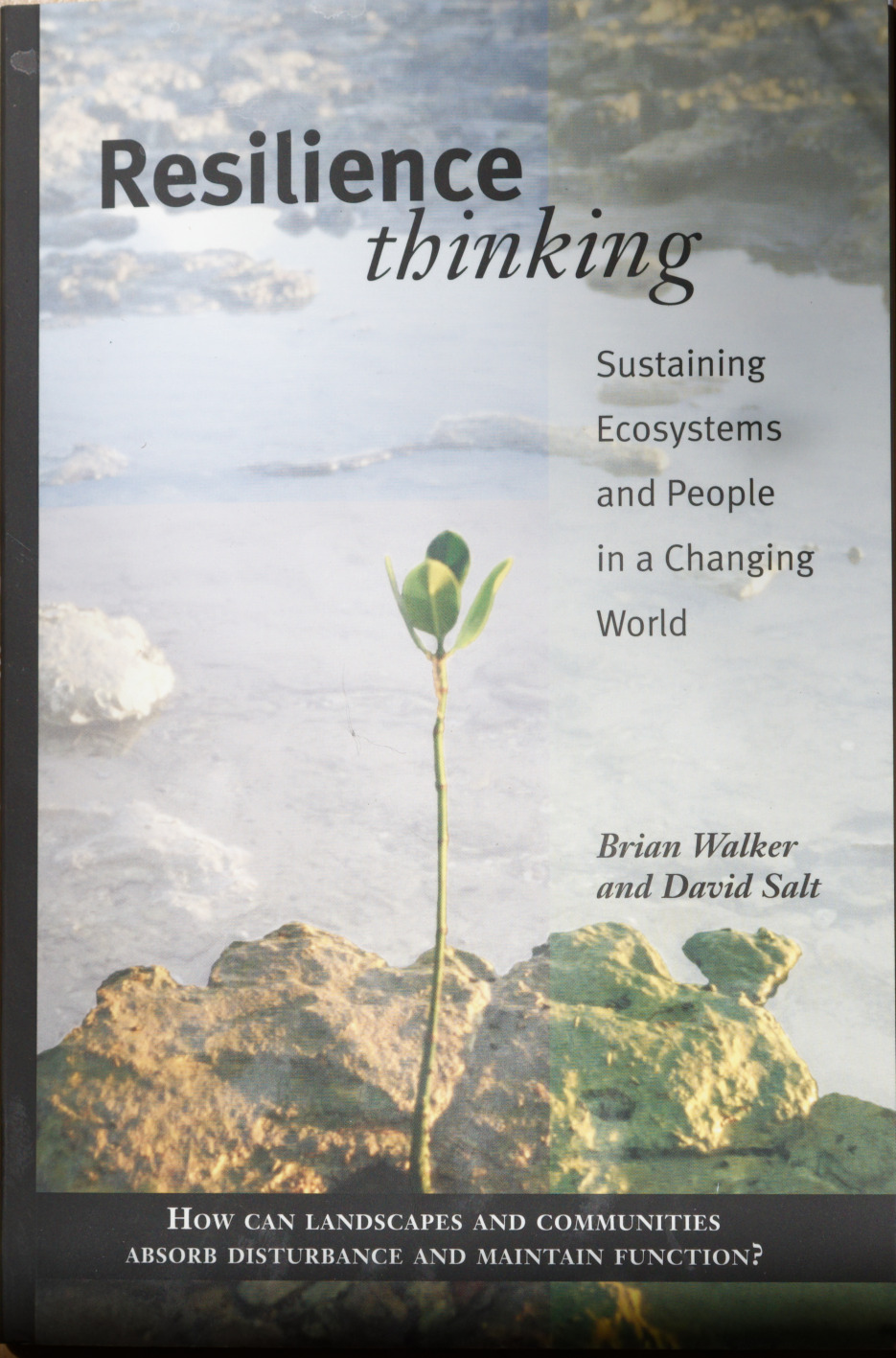
Let me make myself absolutely clear about this book, indeed I can do no better than to publish part of an email that I sent to the authors last Saturday:
To say that I was inspired by what you wrote is an understatement. More accurately it has changed my whole understanding of this planet, of the natural order of things, of the politics of the Western world, of vast numbers of us humans, and how precarious is our world just now. It has opened my eyes radically, and I thought before that I was fairly in touch with things.
Resilience is a simple idea but in its application has proved to be anything such. On page 2 the authors set out as they saw it The Drivers of Unsustainable Development. Here’s how that section develops:
Our world is facing a broad range of serious and growing resource issues. Human-induced soil degradation has been getting worse since the 1950s. About 85 percent of agriculture land contains areas degraded by erosion, rising salt, soil compaction, and various other factors. It has been estimated (Wood et al. 2000) that soil degradation has already reduced global agricultural productivity by around 15 percent in the last fifty years. In the last three hundred years, topsoil has been lost at a rate of 200 million tons per year; in the last fifty years it has more than doubled to 760 million tons per year.
As we move deeper into the twenty-first century we cannot afford to lose more of our resource base. The global population is now expanding by about 75 million people each year. Population growth rates are declining, but the world’s population will still be expanding by almost 60 million per year in 2030. The United Nations projections put the global population at nearly 8 billion in 2025. In addition, if current water consumption patterns continue unabated, half the world’s population will live in water-stressed river basins by 2025.
The Food and Agriculture Organization of the United Nations (FAO) 2004 Annual Hunger Report estimates that over 850 million people suffer from chronic hunger. Hunger kills 5 million children every year.
It goes on ….!
Now I want to quote from the end of the book, from their section on Resilience Thinking.
In our opening chapter we observed that there were many pathways into resilience thinking and suggested readers not worry too much if the finer details of a resilience framework are a bit obscure. We emphasized that what is of much more importance is an appreciation of the broader themes that underpin such a framework. Those broader themes revolve around humans existing within linked social and ecological systems. These are complex adaptive systems, and attempts to control or optimize parts of such systems without consideration of the responses that this creates in the broader system are fraught with risk. Much of this book has been spent on attempting to explore the consequences of such an approach.
In the broadest sense, optimizing and controlling components of a system in isolation of the broader system results in a decline in resilience, a reduction in options, and the shrinkage of the space in which we can safely operate. Resilience thinking moves us the other way.
It is our hope that readers who are persuaded of this basic premise will be encouraged to explore the inevitable consequences of such thinking. Even if you are not completely clear on the basins of attractions, thresholds, and adaptive cycles, if the concepts of ecological resilience and dynamic social-ecological systems have any resonance then you are in a better position to appreciate what is happening to the world around you.
The phrase complex adaptive system was new to me but intuitively I got what the authors meant. As they state on page 35: The three requirements for a complex adaptive system are:
That it has components that are independent and interacting,
There is some selection process at work on those components (and on the results of local interactions),
Variation and novelty are constantly being added to the system (through components changing over time or new ones coming in),
This was my eye-opener. It was now obvious that many processes, especially in nature, that I had hitherto regarded as constant were changing albeit usually on a timescale of many decades sometimes centuries.
And the other conclusion that was inescapable was that we humans were largely responsible for those changes because we couldn’t see the longterm consequences of what we were doing.
David writes that firstly carbon dioxide is not like other pollutants, for example like air particulants. Then later goes on to say:
The second difference is that climate change is irreversible.
As Joe Romm notes in a recent post, New York Times columnist Joe Nocera slipped up in his latest column and referred to technology that would “help reverse climate change.” I don’t know whether that reflects Nocera’s ignorance or just a slip of the pen, but I do think it captures the way many people subconsciously think about climate change. If we heat the planet up too much, we’ll just fix it! We’ll turn the temperature back down. We’ll get around to it once the market has delivered economically ideal solutions.
This paper shows that the climate change that takes place due to increases in carbon dioxide concentration is largely irreversible for 1,000 years after emissions stop. Following cessation of emissions, removal of atmospheric carbon dioxide decreases radiative forcing, but is largely compensated by slower loss of heat to the ocean, so that atmospheric temperatures do not drop significantly for at least 1,000 years. [my emphasis]
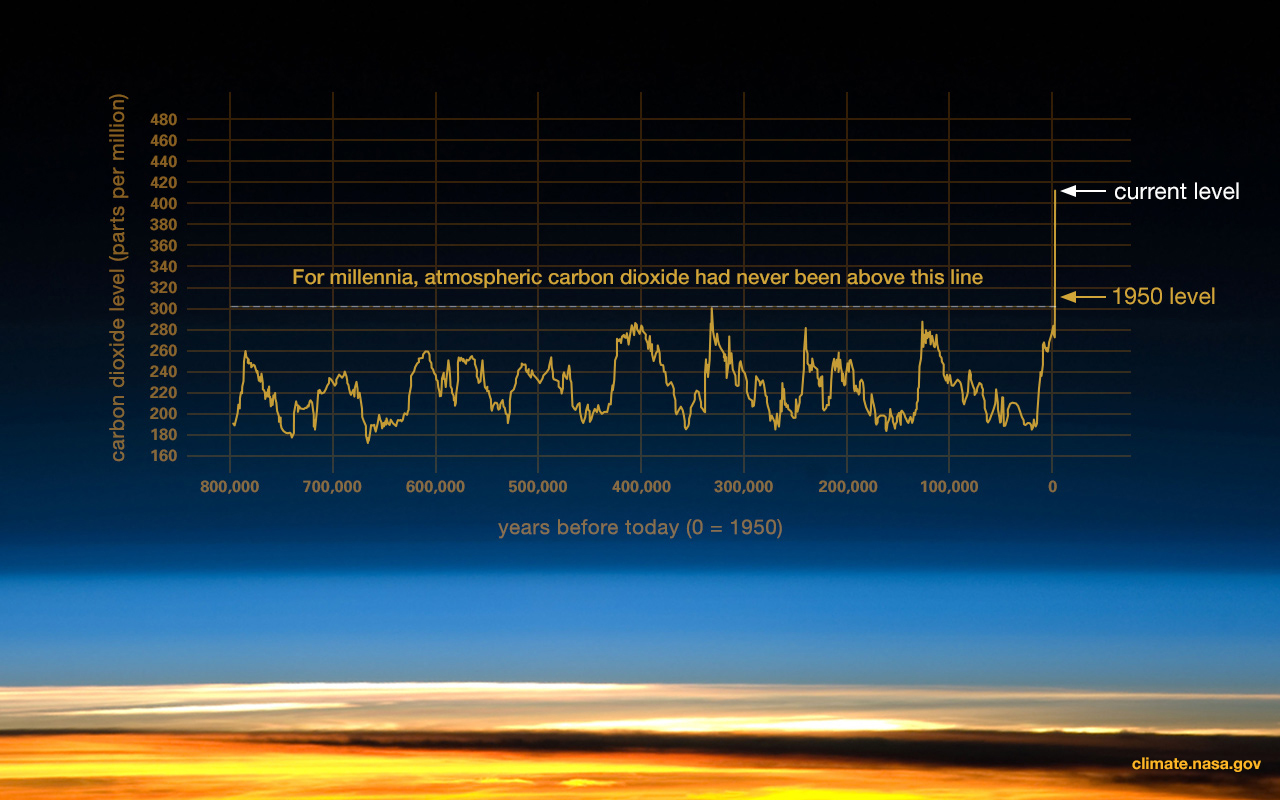
My last piece in this review is to republish a graph that is shown on the NASA Global Climate Changewebsite:
For all our sakes, dogs and humans and many other species, let us all please change our behaviours! Soon!
Back to the book: It is a remarkable book!
I will close with quoting one of the praises shown on the back cover. This one by Thomas Homer-Dixon, professor of political science, University of Toronto, and director of the Trudeau Centre for Peace and Conflict Studies.
Resilience Thinking is an essential guidebook to a powerful new way of understanding our world – and of living resiliently with it – developed in recent decades by an international team of ecologists. With five clear and compelling case studies drawn from regions as diverse as Florida, Sweden, and Australia, this book shows how all highly adaptive systems – from ecologies to economics – go through regular cycles of growth, reorganization, and renewal and how our failures to understand the basic principles of resilience have often led to disaster. Resilience Thinking gives us the conceptual tools to help us cope with the bewildering surprises and challenges of our new century.
This came in yesterday and I thought for some time that I wouldn’t be able to publish it quickly owing to me getting my knickers in a twist.
But all was resolved and therefore I am delighted to republish it.
ooOOoo
Donate to fund the dogs saving elephants
Ever heard of dogs saving elephants?
In the Serengeti, a small, specially trained team of rescue dogs sniff out poachers and sound the alarm. Just 4 dogs have helped arrest hundreds of poachers, saving countless elephants being murdered for their ivory.
Almost a quarter of the elephants in the park now live in the tiny area they protect — but poaching is on the rise everywhere else and there are thousands more elephants that still need protection.
That’s why the team behind this amazing project are asking for your help to train up more of these sniffer dogs — and save double the number of elephants.
With 96 of these gentle giants killed each day, every moment counts.
Can you chip in to help?
ooOOoo
Whatever you can spare please contribute to the donation request.
Alok Sharma on why COP26 is our best chance for a greener future.
I wanted to share the eight-minute video that appeared on TED Talks. But it hasn’t appeared on YouTube as yet.
But the link is embedded above so if you don’t want to watch the slightly longer version (just 22 minutes) then that is fine.
I will share the words that came with the TED Talks video.
Something powerful is happening around the world. The issue of climate change has moved from the margins to the mainstream, says Alok Sharma, the President-Designate of COP26, the United Nations climate conference set to take place in November 2021 in Glasgow, Scotland. He unpacks what this shift means for the world economy and the accelerating “green industrial revolution” — and lays out the urgent actions that need to happen in order to limit global temperature rise.
Plus on the speaker, Alok Sharma.
Alok Sharma is a British politician, Cabinet Minister and President-Designate of COP26, the United Nations Climate Change Conference being held in Glasgow from 31 October until 12 November.
Sharma was previously UK Secretary of State for Business, Energy and Industrial Strategy. Before that, he was UK Secretary of State for International Development. He has also served in ministerial roles in the Department of Work and Pensions, Department for Communities and Local Government, and at the Foreign and Commonwealth Office. Prior to politics, he worked in finance.
Please watch the video for all our sakes.
For the sake of our dogs, and for the sake of everyone on this planet.
I can’t remember when I first came to know Patrice Ayme; it was quite a few years ago. I followed him for years and then had to take a break simply because there weren’t enough hours in the day! Not because I disliked what he was writing – no siree!
Anyway, Patrice recently forwarded me an article that rightly deserved much attention. Here it is:
ooOOoo
Saving The Animals, Thus Ourselves
Animals die in great numbers trying to cross human transportation systems.
When one provides the animals with crossings, they rush to use them (so are used even before they are finished, by a Noah’s ark of species).
Respecting nature is not just about the beauty and naturalness it provides us with, it is about respecting how we became who we are, at our best. We have to learn to share the planet with animals. Not just because we are smart, but also because they are smart and our smarts evolved from interacting with their smarts. So interacting with wild animals is smart all around… and it has made our species smarter! Wildlife interaction is how we evolved our smarts.
Not book smarts, but the deepest smarts.
Hence by respecting animals, we respect how we became human… and it keeps on being human to do so. Economy means managing the house, in particular, managing earth, which is our common house. As the greenhouse heating proceeds at an accelerating pace, we then have to reserve an increasing part of our economic activity to save the animals by helping them to cope with the changes we have brought.
Morality comes from the mores, the old ways, the ways which perdured, and thus, insure survival. Having a natural environment, full of animals, is the ultimate morality. If we can’t save them, how can we learn to save ourselves?
So it is not just smart and economic to save the animals, but also moral. The money engaged so far is quite small. But the price of an unbalanced environment tottering towards ruin, is incomparably higher. For a nice article with nice videos of animals using their smarts crossing freeways and roads, consider:
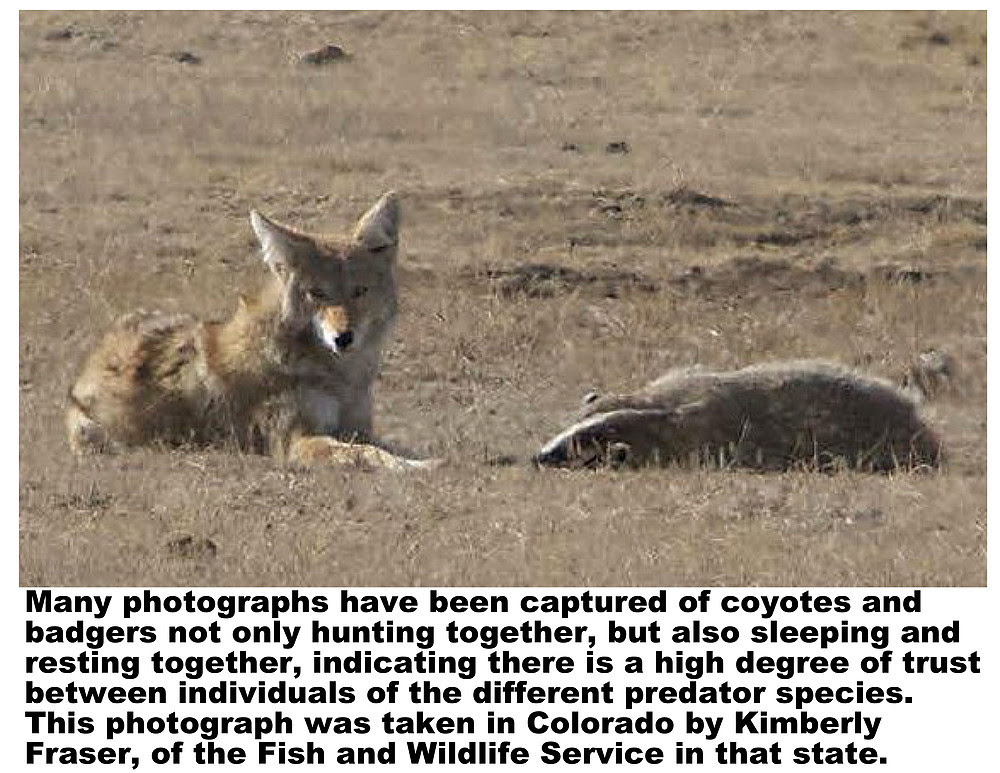
As a badger digs, say for ground squirrels whose burrows have many exits, could not it be that the coyote would seize a fleeing squirrel, and share the meal? This is basic economics and strategy, and it turns out that coyotes and badgers have figured out that behavior, and cooperate together.
The next question would be this: do the individuals concerned figure it out by themselves, as cephalopods do, or is the behavior culturally instigated, namely both badgers and coyotes learn elements of interspecific cooperation from teaching by their elders? I believe the latter.
After all, I trained the (wild) nesting birds on my balcony to benignantly ignore my weird and intrusive ways … which thus had to learn to be a bit more respectful than they usually are. But of course these ways tend to incite the red tail hawks to not land on this particular balcony on a determined culinary mission (as they have been seen doing…) And the birds know this [1].
Saving the animals is first of all about saving us… Not just our sense of beauty.
Patrice Ayme
[1] Hummingbirds set their nests below hawks’ nests, as this protects them from gays. Local hawks do attack nests of birds who are big enough (like gays, crows, etc). And I have seen them pass 10 feet from me, eyeing me suspiciously… Their feathers can be two feet long…
We are all connected as I said in the title to today’s post.
The only way we are going to survive as a species on this planet is for all of us to recognise this fundamental law of nature. Or should I say this fundamental law of Nature!
It is a little over fifty years since the inaugural celebration of the first Earth Day; on the 22nd April, 1970. In other words we are just over halfway through if one imagines the celebration of the one hundredth Earth Day: 22nd April, 2070. In 1970 the planet was home to 3.7 billion people. Today there are nearly 8 billion people. But more than that these 8 billion people are living to an average of 72 years, up from 59 years in 50 years.
Our failure to address climate change is harming the planet and all the species, including us humans, who live on Planet Earth. I shall be dead by 2070 and also a great many of my fellow humans. But for all those born in the year 2000 and later it is increasingly going to become the number one priority: Saving the planet from a total catastrophe!
Sometimes realisation comes in a blinding flash. Blurred outlines snap into shape and suddenly it all makes sense. Underneath such revelations is typically a much slower-dawning process. Doubts at the back of the mind grow. The sense of confusion that things cannot be made to fit together increases until something clicks. Or perhaps snaps.
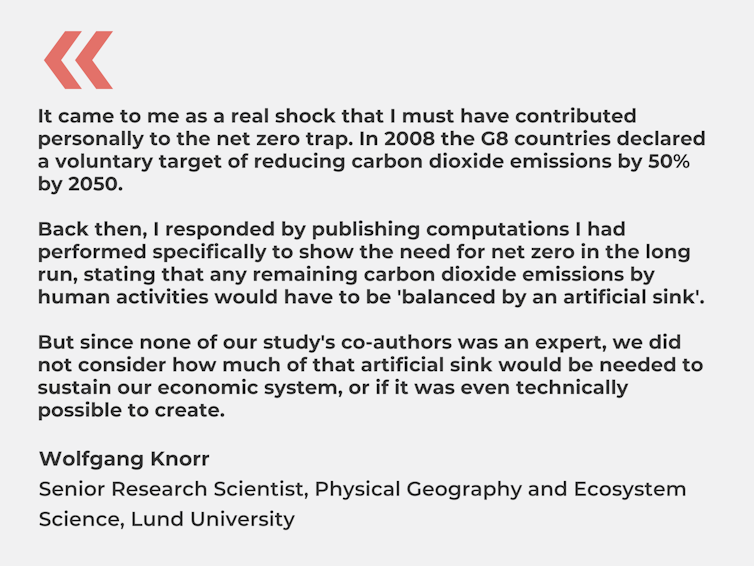
Collectively we three authors of this article must have spent more than 80 years thinking about climate change. Why has it taken us so long to speak out about the obvious dangers of the concept of net zero? In our defence, the premise of net zero is deceptively simple – and we admit that it deceived us.
The threats of climate change are the direct result of there being too much carbon dioxide in the atmosphere. So it follows that we must stop emitting more and even remove some of it. This idea is central to the world’s current plan to avoid catastrophe. In fact, there are many suggestions as to how to actually do this, from mass tree planting, to high tech direct air capture devices that suck out carbon dioxide from the air.
The current consensus is that if we deploy these and other so-called “carbon dioxide removal” techniques at the same time as reducing our burning of fossil fuels, we can more rapidly halt global warming. Hopefully around the middle of this century we will achieve “net zero”. This is the point at which any residual emissions of greenhouse gases are balanced by technologies removing them from the atmosphere.
This is a great idea, in principle. Unfortunately, in practice it helps perpetuate a belief in technological salvation and diminishes the sense of urgency surrounding the need to curb emissions now.
We have arrived at the painful realisation that the idea of net zero has licensed a recklessly cavalier “burn now, pay later” approach which has seen carbon emissions continue to soar. It has also hastened the destruction of the natural world by increasing deforestation today, and greatly increases the risk of further devastation in the future.
To understand how this has happened, how humanity has gambled its civilisation on no more than promises of future solutions, we must return to the late 1980s, when climate change broke out onto the international stage.
Steps towards net zero
On June 22 1988, James Hansen was the administrator of Nasa’s Goddard Institute for Space Studies, a prestigious appointment but someone largely unknown outside of academia.
By the afternoon of the 23rd he was well on the way to becoming the world’s most famous climate scientist. This was as a direct result of his testimony to the US congress, when he forensically presented the evidence that the Earth’s climate was warming and that humans were the primary cause: “The greenhouse effect has been detected, and it is changing our climate now.”
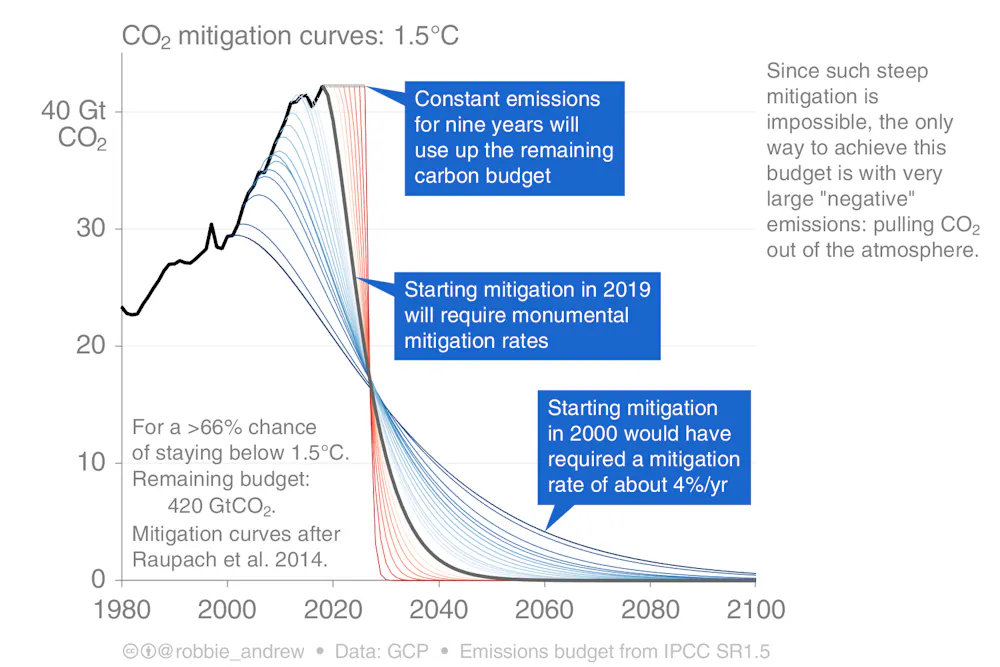
If we had acted on Hansen’s testimony at the time, we would have been able to decarbonise our societies at a rate of around 2% a year in order to give us about a two-in-three chance of limiting warming to no more than 1.5°C. It would have been a huge challenge, but the main task at that time would have been to simply stop the accelerating use of fossil fuels while fairly sharing out future emissions.
Four years later, there were glimmers of hope that this would be possible. During the 1992 Earth Summit in Rio, all nations agreed to stabilise concentrations of greenhouse gases to ensure that they did not produce dangerous interference with the climate. The 1997 Kyoto Summit attempted to start to put that goal into practice. But as the years passed, the initial task of keeping us safe became increasingly harder given the continual increase in fossil fuel use.
It was around that time that the first computer models linking greenhouse gas emissions to impacts on different sectors of the economy were developed. These hybrid climate-economic models are known as Integrated Assessment Models. They allowed modellers to link economic activity to the climate by, for example, exploring how changes in investments and technology could lead to changes in greenhouse gas emissions.
They seemed like a miracle: you could try out policies on a computer screen before implementing them, saving humanity costly experimentation. They rapidly emerged to become key guidance for climate policy. A primacy they maintain to this day.
Unfortunately, they also removed the need for deep critical thinking. Such models represent society as a web of idealised, emotionless buyers and sellers and thus ignore complex social and political realities, or even the impacts of climate change itself. Their implicit promise is that market-based approaches will always work. This meant that discussions about policies were limited to those most convenient to politicians: incremental changes to legislation and taxes.
Around the time they were first developed, efforts were being made to secure US action on the climate by allowing it to count carbon sinks of the country’s forests. The US argued that if it managed its forests well, it would be able to store a large amount of carbon in trees and soil which should be subtracted from its obligations to limit the burning of coal, oil and gas. In the end, the US largely got its way. Ironically, the concessions were all in vain, since the US senate never ratified the agreement.
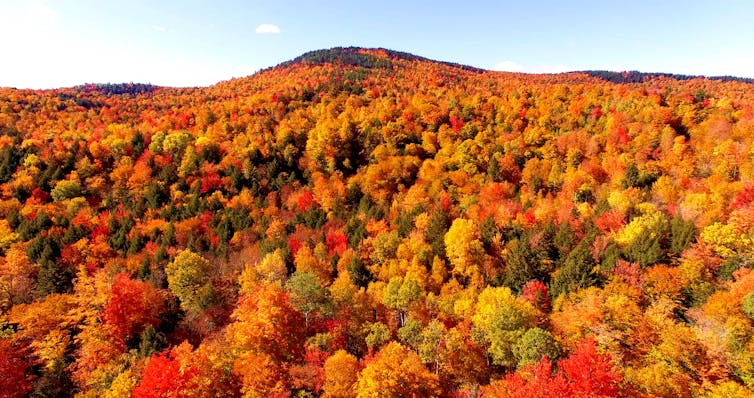
Forests such as this one in Maine, US, were suddenly counted in the carbon budget as an incentive for the US to join the Kyoto Agreement. Inbound Horizons/Shutterstock
Postulating a future with more trees could in effect offset the burning of coal, oil and gas now. As models could easily churn out numbers that saw atmospheric carbon dioxide go as low as one wanted, ever more sophisticated scenarios could be explored which reduced the perceived urgency to reduce fossil fuel use. By including carbon sinks in climate-economic models, a Pandora’s box had been opened.
It’s here we find the genesis of today’s net zero policies.
That said, most attention in the mid-1990s was focused on increasing energy efficiency and energy switching (such as the UK’s move from coal to gas) and the potential of nuclear energy to deliver large amounts of carbon-free electricity. The hope was that such innovations would quickly reverse increases in fossil fuel emissions.
But by around the turn of the new millennium it was clear that such hopes were unfounded. Given their core assumption of incremental change, it was becoming more and more difficult for economic-climate models to find viable pathways to avoid dangerous climate change. In response, the models began to include more and more examples of carbon capture and storage, a technology that could remove the carbon dioxide from coal-fired power stations and then store the captured carbon deep underground indefinitely.
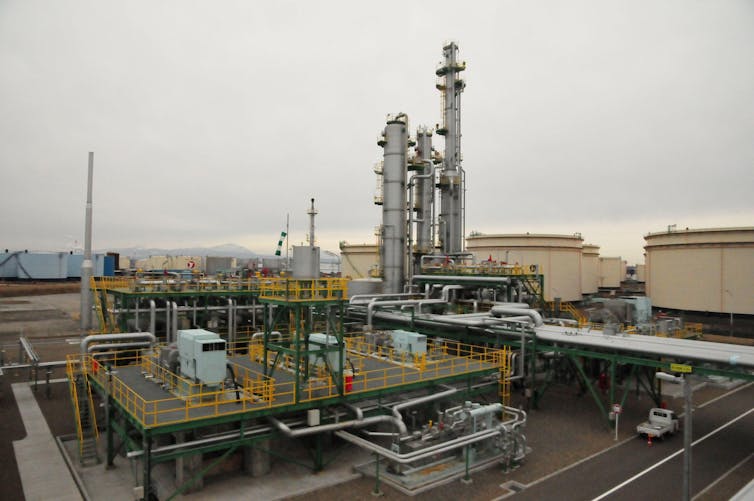
The Tomakomai carbon, capture and storage test site, Hokkaido, Japan, March 2018. Over its three-year lifetime, it’s hoped that this demonstrator project will capture an amount of carbon approximately 1/100,000 of current global annual emissions. The captured carbon will be piped into geological deposits deep under the sea bed where it will need to remain for centuries. REUTERS/Aaron Sheldrick
This had been shown to be possible in principle: compressed carbon dioxide had been separated from fossil gas and then injected underground in a number of projects since the 1970s. These Enhanced Oil Recovery schemes were designed to force gases into oil wells in order to push oil towards drilling rigs and so allow more to be recovered – oil that would later be burnt, releasing even more carbon dioxide into the atmosphere.
Carbon capture and storage offered the twist that instead of using the carbon dioxide to extract more oil, the gas would instead be left underground and removed from the atmosphere. This promised breakthrough technology would allow climate friendly coal and so the continued use of this fossil fuel. But long before the world would witness any such schemes, the hypothetical process had been included in climate-economic models. In the end, the mere prospect of carbon capture and storage gave policy makers a way out of making the much needed cuts to greenhouse gas emissions.
The rise of net zero
When the international climate change community convened in Copenhagen in 2009 it was clear that carbon capture and storage was not going to be sufficient for two reasons.
First, it still did not exist. There were no carbon capture and storage facilities in operation on any coal fired power station and no prospect the technology was going to have any impact on rising emissions from increased coal use in the foreseeable future.
The biggest barrier to implementation was essentially cost. The motivation to burn vast amounts of coal is to generate relatively cheap electricity. Retrofitting carbon scrubbers on existing power stations, building the infrastructure to pipe captured carbon, and developing suitable geological storage sites required huge sums of money. Consequently the only application of carbon capture in actual operation then – and now – is to use the trapped gas in enhanced oil recovery schemes. Beyond a single demonstrator, there has never been any capture of carbon dioxide from a coal fired power station chimney with that captured carbon then being stored underground.
Just as important, by 2009 it was becoming increasingly clear that it would not be possible to make even the gradual reductions that policy makers demanded. That was the case even if carbon capture and storage was up and running. The amount of carbon dioxide that was being pumped into the air each year meant humanity was rapidly running out of time.
With hopes for a solution to the climate crisis fading again, another magic bullet was required. A technology was needed not only to slow down the increasing concentrations of carbon dioxide in the atmosphere, but actually reverse it. In response, the climate-economic modelling community – already able to include plant-based carbon sinks and geological carbon storage in their models – increasingly adopted the “solution” of combining the two.
So it was that Bioenergy Carbon Capture and Storage, or BECCS, rapidly emerged as the new saviour technology. By burning “replaceable” biomass such as wood, crops, and agricultural waste instead of coal in power stations, and then capturing the carbon dioxide from the power station chimney and storing it underground, BECCS could produce electricity at the same time as removing carbon dioxide from the atmosphere. That’s because as biomass such as trees grow, they suck in carbon dioxide from the atmosphere. By planting trees and other bioenergy crops and storing carbon dioxide released when they are burnt, more carbon could be removed from the atmosphere.
With this new solution in hand the international community regrouped from repeated failures to mount another attempt at reining in our dangerous interference with the climate. The scene was set for the crucial 2015 climate conference in Paris.
A Parisian false dawn
As its general secretary brought the 21st United Nations conference on climate change to an end, a great roar issued from the crowd. People leaped to their feet, strangers embraced, tears welled up in eyes bloodshot from lack of sleep.
The emotions on display on December 13, 2015 were not just for the cameras. After weeks of gruelling high-level negotiations in Paris a breakthrough had finally been achieved. Against all expectations, after decades of false starts and failures, the international community had finally agreed to do what it took to limit global warming to well below 2°C, preferably to 1.5°C, compared to pre-industrial levels.
But dig a little deeper and you could find another emotion lurking within delegates on December 13. Doubt. We struggle to name any climate scientist who at that time thought the Paris Agreement was feasible. We have since been told by some scientists that the Paris Agreement was “of course important for climate justice but unworkable” and “a complete shock, no one thought limiting to 1.5°C was possible”. Rather than being able to limit warming to 1.5°C, a senior academic involved in the IPCC concluded we were heading beyond 3°C by the end of this century.
Instead of confront our doubts, we scientists decided to construct ever more elaborate fantasy worlds in which we would be safe. The price to pay for our cowardice: having to keep our mouths shut about the ever growing absurdity of the required planetary-scale carbon dioxide removal.
Taking centre stage was BECCS because at the time this was the only way climate-economic models could find scenarios that would be consistent with the Paris Agreement. Rather than stabilise, global emissions of carbon dioxide had increased some 60% since 1992.
Alas, BECCS, just like all the previous solutions, was too good to be true.
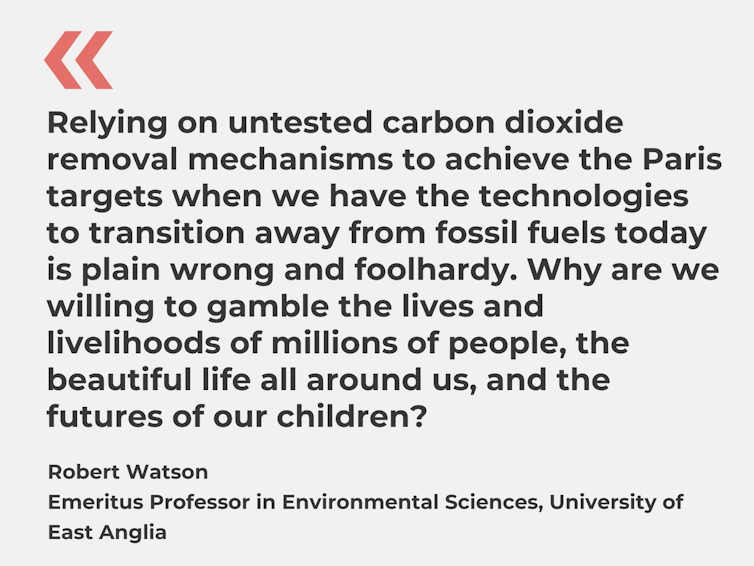
Across the scenarios produced by the Intergovernmental Panel on Climate Change (IPCC) with a 66% or better chance of limiting temperature increase to 1.5°C, BECCS would need to remove 12 billion tonnes of carbon dioxide each year. BECCS at this scale would require massive planting schemes for trees and bioenergy crops.
The Earth certainly needs more trees. Humanity has cut down some three trillion since we first started farming some 13,000 years ago. But rather than allow ecosystems to recover from human impacts and forests to regrow, BECCS generally refers to dedicated industrial-scale plantations regularly harvested for bioenergy rather than carbon stored away in forest trunks, roots and soils.
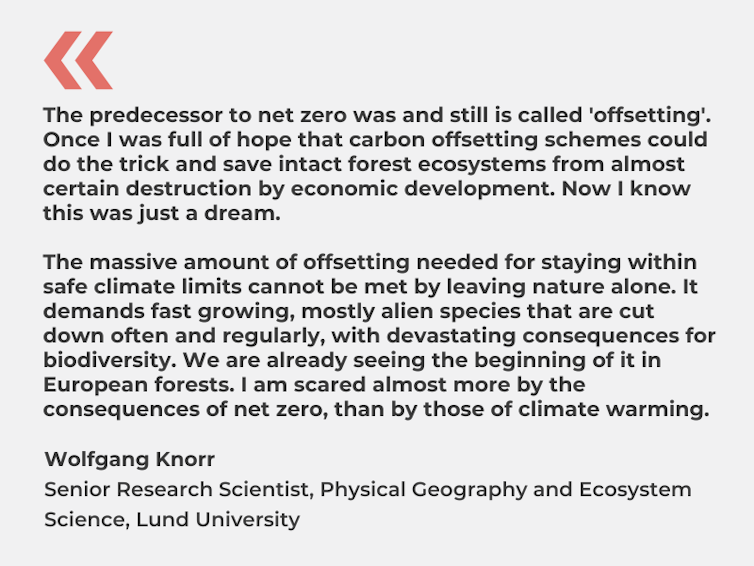
Currently, the two most efficient biofuels are sugarcane for bioethanol and palm oil for biodiesel – both grown in the tropics. Endless rows of such fast growing monoculture trees or other bioenergy crops harvested at frequent intervals devastate biodiversity.
It has been estimated that BECCS would demand between 0.4 and 1.2 billion hectares of land. That’s 25% to 80% of all the land currently under cultivation. How will that be achieved at the same time as feeding 8-10 billion people around the middle of the century or without destroying native vegetation and biodiversity?
Growing billions of trees would consume vast amounts of water – in some places where people are already thirsty. Increasing forest cover in higher latitudes can have an overall warming effect because replacing grassland or fields with forests means the land surface becomes darker. This darker land absorbs more energy from the Sun and so temperatures rise. Focusing on developing vast plantations in poorer tropical nations comes with real risks of people being driven off their lands.
And it is often forgotten that trees and the land in general already soak up and store away vast amounts of carbon through what is called the natural terrestrial carbon sink. Interfering with it could both disrupt the sink and lead to double accounting.
As these impacts are becoming better understood, the sense of optimism around BECCS has diminished.
Pipe dreams
Given the dawning realisation of how difficult Paris would be in the light of ever rising emissions and limited potential of BECCS, a new buzzword emerged in policy circles: the “overshoot scenario”. Temperatures would be allowed to go beyond 1.5°C in the near term, but then be brought down with a range of carbon dioxide removal by the end of the century. This means that net zero actually means carbon negative. Within a few decades, we will need to transform our civilisation from one that currently pumps out 40 billion tons of carbon dioxide into the atmosphere each year, to one that produces a net removal of tens of billions.
Mass tree planting, for bioenergy or as an attempt at offsetting, had been the latest attempt to stall cuts in fossil fuel use. But the ever-increasing need for carbon removal was calling for more. This is why the idea of direct air capture, now being touted by some as the most promising technology out there, has taken hold. It is generally more benign to ecosystems because it requires significantly less land to operate than BECCS, including the land needed to power them using wind or solar panels.
Unfortunately, it is widely believed that direct air capture, because of its exorbitant costs and energy demand, if it ever becomes feasible to be deployed at scale, will not be able to compete with BECCS with its voracious appetite for prime agricultural land.
It should now be getting clear where the journey is heading. As the mirage of each magical technical solution disappears, another equally unworkable alternative pops up to take its place. The next is already on the horizon – and it’s even more ghastly. Once we realise net zero will not happen in time or even at all, geoengineering – the deliberate and large scale intervention in the Earth’s climate system – will probably be invoked as the solution to limit temperature increases.
One of the most researched geoengineering ideas is solar radiation management – the injection of millions of tons of sulphuric acid into the stratosphere that will reflect some of the Sun’s energy away from the Earth. It is a wild idea, but some academics and politicians are deadly serious, despite significant risks. The US National Academies of Sciences, for example, has recommended allocating up to US$200 million over the next five years to explore how geoengineering could be deployed and regulated. Funding and research in this area is sure to significantly increase.
Difficult truths
In principle there is nothing wrong or dangerous about carbon dioxide removal proposals. In fact developing ways of reducing concentrations of carbon dioxide can feel tremendously exciting. You are using science and engineering to save humanity from disaster. What you are doing is important. There is also the realisation that carbon removal will be needed to mop up some of the emissions from sectors such as aviation and cement production. So there will be some small role for a number of different carbon dioxide removal approaches.
The problems come when it is assumed that these can be deployed at vast scale. This effectively serves as a blank cheque for the continued burning of fossil fuels and the acceleration of habitat destruction.
Carbon reduction technologies and geoengineering should be seen as a sort of ejector seat that could propel humanity away from rapid and catastrophic environmental change. Just like an ejector seat in a jet aircraft, it should only be used as the very last resort. However, policymakers and businesses appear to be entirely serious about deploying highly speculative technologies as a way to land our civilisation at a sustainable destination. In fact, these are no more than fairy tales.
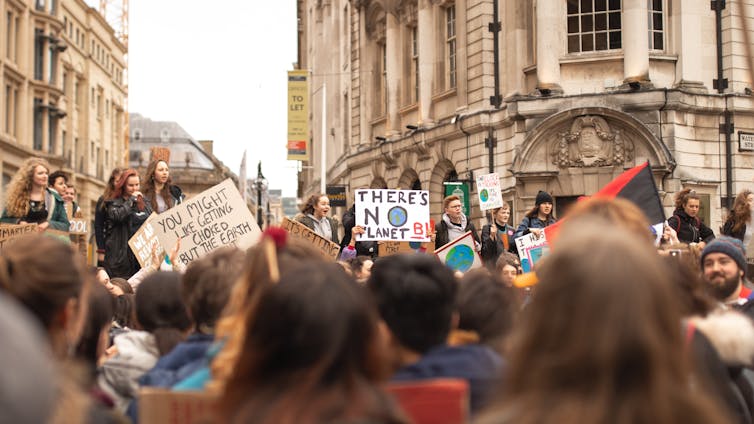
‘There is no Planet B’: children in Birmingham, UK, protest against the climate crisis. Callum Shaw/Unsplash, FAL
The only way to keep humanity safe is the immediate and sustained radical cuts to greenhouse gas emissions in a socially just way.
Academics typically see themselves as servants to society. Indeed, many are employed as civil servants. Those working at the climate science and policy interface desperately wrestle with an increasingly difficult problem. Similarly, those that champion net zero as a way of breaking through barriers holding back effective action on the climate also work with the very best of intentions.
The tragedy is that their collective efforts were never able to mount an effective challenge to a climate policy process that would only allow a narrow range of scenarios to be explored.
Most academics feel distinctly uncomfortable stepping over the invisible line that separates their day job from wider social and political concerns. There are genuine fears that being seen as advocates for or against particular issues could threaten their perceived independence. Scientists are one of the most trusted professions. Trust is very hard to build and easy to destroy.
But there is another invisible line, the one that separates maintaining academic integrity and self-censorship. As scientists, we are taught to be sceptical, to subject hypotheses to rigorous tests and interrogation. But when it comes to perhaps the greatest challenge humanity faces, we often show a dangerous lack of critical analysis.
In private, scientists express significant scepticism about the Paris Agreement, BECCS, offsetting, geoengineering and net zero. Apart from some notable exceptions, in public we quietly go about our work, apply for funding, publish papers and teach. The path to disastrous climate change is paved with feasibility studies and impact assessments.
Rather than acknowledge the seriousness of our situation, we instead continue to participate in the fantasy of net zero. What will we do when reality bites? What will we say to our friends and loved ones about our failure to speak out now?
The time has come to voice our fears and be honest with wider society. Current net zero policies will not keep warming to within 1.5°C because they were never intended to. They were and still are driven by a need to protect business as usual, not the climate. If we want to keep people safe then large and sustained cuts to carbon emissions need to happen now. That is the very simple acid test that must be applied to all climate policies. The time for wishful thinking is over.
To hear about new Insights articles, join the hundreds of thousands of people who value The Conversation’s evidence-based news. Subscribe to our newsletter.
I can’t add anything to this article because it is written by scientists and that is one thing that I know I am not!
But I can comment as a very concerned adult and really can do more that repeat what I said in yesterday’s post:
Thank goodness for our younger generation. Because these young people are coming together to fight for change. May they have universal encouragement from those of us who will never see our younger days again!
This is one of the most important posts since I started blogging!
I was born in 1944 and that makes me 76. I am reasonably engaged in the issues facing us but, in a sense, protected from the realities of the modern world because I have a loving wife, two loving young people, as in my son Alex and my daughter Maija, and a special grandson, Morten.
We are also very lucky in that my wife, Jean, and I are both retired and we live on 13 rural acres in a beautiful part of Southern Oregon and enjoy immensely our six dogs, two horses, two parakeets and feeding the wild birds and deer.
But it can’t stay that way because of the encroaching elephant in the room.
I am speaking of climate change that if not dealt with in the near future, say in the next 10 years, will lead to an unimaginable state of affairs.
Now one could argue that you come to Learning from Dogs to get away from climate change and the like. But this is too important and, also, involves all of us including our gorgeous dogs.
First, I want to include an extract from a recent Scientists Warning newsletter (and please read this extract carefully).
Recently, one article on the climate emergency above all others has cut through – with over ONE MILLION views, “Climate scientists: concept of net zero is a dangerous trap” published in The Conversation is being talked about by many thousands, and led Greta Thunberg to tweet: “This is one of the most important and informative texts I have ever read on the climate- and ecological crises.”
So why is this article so very important?
In our latest interview, I talk with two of the authors – Dr. James Dyke, global systems scientist at the University of Exeter and Dr. Wolfgang Knorr, climate scientist at Lund University. And the conversation does not make for comfortable viewing. We discuss what led James, Wolfgang and Professor Bob Watson to write an article that they have described as being one of the hardest they have ever written. The article is *not* an attack on net zero, nor does it advocate a fatalistic position. Instead, as you will hear, the interview reveals the heartfelt concerns of two scientists who are profoundly worried about the failure of a climate policy system that suppresses the voice of science and is fundamentally flawed. A climate policy system that year after year has failed.
But it is not just the climate policy system that has failed. Academia has failed too, and continues to fail Greta and young people like her. And this *must* stop. Young people have become the adults in the room. We cannot place this burden on their shoulders. They have shown their courage and bravery. Now it’s time for academia to step up to the challenge and to critically examine why we are failing.
Secondly, I want to share that interview with you. This is a 36-minute interview. Please, please watch it. If it is not a convenient time just now then bookmark the post and watch it when you can sit down and be fully engaged. You will understand then and agree with me that this is one of the most important videos ever!
Lastly, I would like you to read the article published in The Conversation. I have included a link to it but I am also going to republish it on Friday.
Because we have to listen to the scientists without delay and press for change now.
Thank goodness for our younger generation. Because these young people are coming together to fight for change. May they have universal encouragement from those of us who will never see our younger days again!
The Chernobyl disaster was a nuclear accident that occurred on Saturday 26 April 1986, at the No. 4 reactor in the Chernobyl Nuclear Power Plant, near the city of Pripyat in the north of the Ukrainian SSR in the Soviet Union. It is considered the worst nuclear disaster in history both in terms of cost and casualties, and is one of only two nuclear energy accidents rated at seven—the maximum severity—on the International Nuclear Event Scale, the other being the 2011 Fukushima Daiichi nuclear disaster in Japan. The initial emergency response, together with later decontamination of the environment, ultimately involved more than 500,000 personnel and cost an estimated 18 billion Soviet rubles—roughly US$68 billion in 2019, adjusted for inflation.
But recently BBC Future spoke of the bond that the guards and the abandoned dogs made.
Read it below: (Unfortunately you will have to go here to view the stunning photographs because the BBC prevents them being republished!But it is still a very interesting article.)
ooOOoo
The guards caring for Chernobyl’s abandoned dogs
The descendants of pets abandoned by those fleeing the Chernobyl disaster are now striking up a curious relationship with humans charged with guarding the contaminated area.
It wasn’t long after he arrived in the irradiated landscape of the Chernobyl Exclusion Zone that Bogdan realised his new job came with some unexpected companions. From his first days as a checkpoint guard in Chernobyl, he has shared the place with a pack of dogs.
Bogdan (not his real name) is now in his second year of working in the zone and has got to know the dogs well. Some have names, some don’t. Some stay nearby, others remain detached – they come and go as they please. Bogdan and the other guards feed them, offer them shelter, and occasionally give them medical care. They bury them when they die.
All the dogs are, in a sense, refugees of the 1986 disaster in which Reactor No. 4 at the Chernobyl Nuclear Power Plant exploded. In the aftermath, tens of thousands of people were evacuated from the Ukrainian city of Pripyat. They were told to leave their pets behind. (Read more about the long-term toll of the Chernobyl disaster.)
Soviet soldiers shot many of the abandoned animals in an effort to prevent the spread of contamination. But, undoubtedly, some of the animals hid and survived. Thirty-five years later, hundreds of stray dogs now roam the 2,600km (1,000 sq mile) Exclusion Zone put in place to restrict human traffic in and out of the area. Nobody knows which of the dogs are directly descended from stranded pets, and which may have wandered into the zone from elsewhere. But they are all dogs of the zone now.
Their lives are perilous. They are at risk from radioactive contamination, wolf attacks, wildfires and starvation, among other threats. The dogs’ average lifespan is just five years, according to the Clean Futures Fund, a non-governmental organisation that monitors and provides care for dogs living within the Exclusion Zone.
That dogs inhabit this ruined place is well known – some of them have even become minor celebrities on social media. Clean Futures Fund co-founder Lucas Hixson, who gave up a research career to look after the animals, offers virtual tours of the Exclusion Zone featuring the dogs.
But less is known about the local workers who interact with these canines on a daily basis.
Jonathon Turnbull, a PhD candidate in geography at the University of Cambridge, realised it might be worth collecting these people’s stories.
“If I wanted to know the dogs,” he says, “I needed to go to the people who know them best – and that was the guards.”
What he discovered is a heart-warming story of the guards’ relationship with the animals they encounter in this abandoned environment – a tale that provides insights into the deep bond between humans and dogs.
The guards sometimes go to the trouble of helping the dogs by pulling out ticks embedded in their skin, or by giving them rabies injections
For instance, the guards have given several of the dogs nicknames. According to Turnbull, there’s Alpha, whose name refers to a type of radiation, and Tarzan, a dog well-known to Chernobyl tourists, who can do tricks on command and who lives near the famous Duga radar installation built by the Soviets. Then there is Sausage – a short, fat dog that likes to warm herself in the winter by lying on heating pipes. These pipes serve one of the buildings used by workers in the Exclusion Zone who are part of ongoing efforts to decommission and decontaminate the ruined power plant.
Access to the Chernobyl Exclusion Zone requires a permit, so guards are tasked with controlling checkpoints on roads in and out of the area. People who dodge these checkpoints to trespass in the Exclusion Zone are known as “stalkers”. Guards report them to the police.
When Turnbull, who lives in Ukraine’s capital Kyiv, started making regular visits to the zone, he met Bogdan, and other checkpoint guards. They were reluctant to talk at first so he had to win them over. Then he offered them to chance to take part in his research, which he says was a “turning point”. His idea was to give the guards disposable cameras and ask them to take pictures of the dogs – not posed portraits but scenes of everyday life. The guards only had one other request – “please, please – bring food for the dogs”. So Turnbull did.
The photos taken by the guards revealed how much they had developed companionships with the wandering dogs of the Exclusion Zone.
Turnbull published some of the resulting images and material from interviews with the guards in a paper in December. More recently, he interviewed one of the study participants again on behalf of BBC Future. The guard in question has asked not to be identified to avoid disciplinary action at work, so we refer to him here by the pseudonym “Bogdan”.
When Bogdan walks around the abandoned streets of the zone to check for stalkers, the dogs happily accompany him, he says. They always appear eager to see whether he, or a passing tourist, might be carrying food. Should a companion dog get distracted or run off to chase an animal, it always eventually returns to Bogdan, he adds.
The loyalty goes both ways. Turnbull says the guards sometimes go to the trouble of helping the dogs by pulling out ticks embedded in their skin, or by giving them rabies injections.
Wolves, dogs and other animals could in theory carry radioactive contamination, or genetic mutations potentially passed on by breeding, to places outside the Exclusion Zone
Monitoring who comes and goes from the Exclusion Zone sometimes makes for a dull occupation. But there are always dogs nearby.
At some checkpoints, the guards have more or less adopted some of the animals. They feed them and give them shelter. But not all are so tame. During his research, one guard told Turnbull, “We can’t inject Arka because she bites.”
Another participant spoke of one dog that was even more difficult to approach. It refuses to be touched at all. “You should just give her a pan [of food] and go. She waits until you leave and then she eats,” the guard explained.
The dogs sometimes bark at strangers on first sight, that’s their nature, says Bogdan. But so long as they don’t feel threatened, they sometimes calm down and wag their tails. Occasionally it even seems as though they’re smiling, he adds.
Generally, visitors to Chernobyl are advised not to touch the dogs, for fear that the animals may be carrying radioactive dust. It’s impossible to know where the dogs roam and some parts of the Exclusion Zone are more contaminated than others.
There is wildlife living in the Chernobyl Exclusion Zone besides dogs. In 2016, Sarah Webster, a US government wildlife biologist who was working at the University of Georgia at the time, and colleagues published a paper in which they revealed how mammals, from wolves to boars and red foxes, had colonised the Exclusion Zone. Camera trap data showed that the animals’ numbers were not noticeably lower in those areas where radioactive contamination is higher.
Animals living in the Exclusion Zone are not necessarily confined there. A later studyby Webster and colleagues, published in 2018, detailed the movements of a wolf tagged with a GPS device. It travelled 369km (229 miles) from its home range in the zone, taking a long arc to the south-east, then north-east again, eventually entering Russia.
Wolves, dogs and other animals could in theory carry radioactive contamination, or genetic mutations potentially passed on by breeding, to places outside the Exclusion Zone.
“We know it’s happening but we don’t understand the extent or the magnitude,” says Webster.
Turnbull says the guards do not generally worry about radiation, though they might occasionally use dosimeters to check a dog over.
It actually seems as though the dogs, through the companionship they offer, end up reassuring those who interact with them regularly, says Greger Larson, an archaeologist who studies animal domestication at the University of Oxford and who was not involved in Turnbull’s research.
“They’re kind of putting themselves in the shoes of the dogs,” he suggests, referring to the guards. “If the dog is fine, that means you’re fine.”
But in truth, this may only be a false sense of security.
“It’s an uncanny environment,” notes Turnbull. “You can’t see the danger. You’re constantly aware that it might be there but everything looks normal.”
Despite the fact that the dogs could pose a risk in terms of radioactivity, guards like Bogdan instead emphasise the benefits of having them around. For example, he claims to know dogs that bark in noticeably different ways depending on what they have spotted in the distance – a human stranger, a vehicle, a wild animal. Because of these helpful warning signals, Bogdan thinks of the dogs as “assistants”.
What’s happening in the Exclusion Zone is an echo of interactions with dogs that are known to have occurred within human civilisations for thousands of years, says Larson.
“We find this for the last 15,000 years or more, this is what people do, they make very close associations with not just dogs but a lot of domestic animals […] to sort of say, ‘this is our attachment to the landscape’,” he explains.
All over the world, there are dogs that inhabit a similar, in-between state – not quite fully domesticated, not quite fully wild. These are the feral dogs that roam cities and industrial areas looking for food, the ones that may become to some extent adopted by people but still wouldn’t be considered pets.
Chernobyl’s dogs also live in this sort of space, on the edge of domestication, but there is a difference argues Webster, who has participated in a separate study of Turnbull’s in the past.
“The Exclusion Zone is very different in that it’s abandoned by humans,” she says. “The only people in that landscape on a day-to-day basis, really, are the guards.” As such, the dogs’ opportunities for befriending humans are very limited.
While the outside world remains fascinated by the dogs, and their story, for many guards the connection runs much deeper. Bogdan says he is often asked why the dogs ought to be allowed to stay in the Exclusion Zone. “They give us joy,” he replies. “For me personally, this is a kind of symbol of the continuation of life in this radioactive, post-apocalyptic world.”
ooOOoo
What is so fascinating is that this interaction between the dogs and the people is an echo of the first interaction between hunter/gatherers and wolves of, perhaps, 25,000 years ago or more. And the guards of today and the dogs, whom Larson calls his assistants, are perfectly bonded.
It just goes to show that ‘what goes around comes around’!
It will be of no surprise that dogs have been regular pets of Presidents over the years. Apart from the fact that they provide companionship and love the dogs are also never left alone unlike many adults in normal life who often have difficult decisions to make.
So here’s an article in The Conversation that I am republishing.
ooOOoo
How Biden’s dogs could make the Oval Office a workplace with less stress and better decision-making
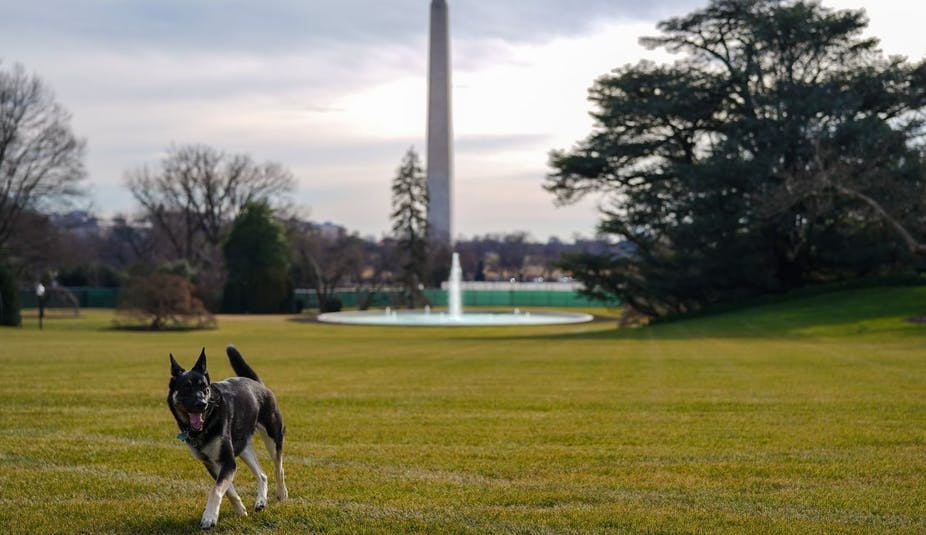
Presidential pup Major Biden stretches his legs on the White House lawn. The Official White House photo/Adam Schultz via Twitter, CC BY
On Jan. 24 the White House welcomed two new residents: Champ and Major, the newly minted first dogs of the United States. The first dogs are poised to offer special benefits to workers in the White House.
The first ‘Indoguration’ hosted by the Delaware Humane Association. Delaware Humane Association
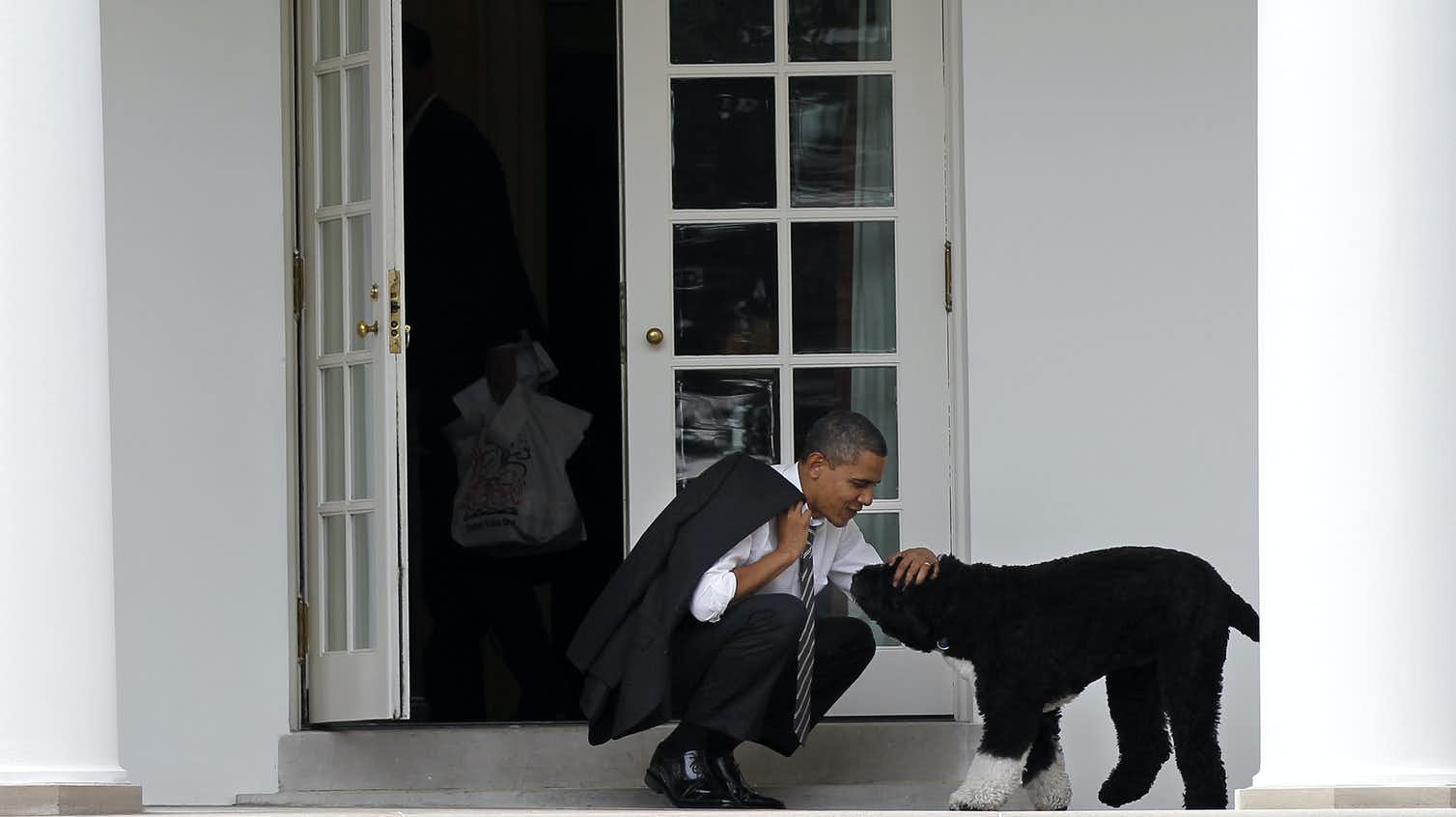
President Barack Obama takes a break outside the Oval Office with Bo in 2012. AP Photo/Pablo Martinez Monsivais
The Oval Office, the site of momentous decisions, enormous stress and complex social dynamics, may benefit from dogs even more than typical workplaces. After all, stress can compromise decision-making and problem-solving abilities. Pets can alleviate stress, however, dampening these effects and leading to improved performance on difficult tasks.
Given dogs’ skill at providing these supports and boosting mood, it may not surprise you to learn they work their magic not only one on one, but also in group settings. In the presence of a dog, people in groups have better social interactions, engage in more conversations and are more likely to form long-term friendships with one another.
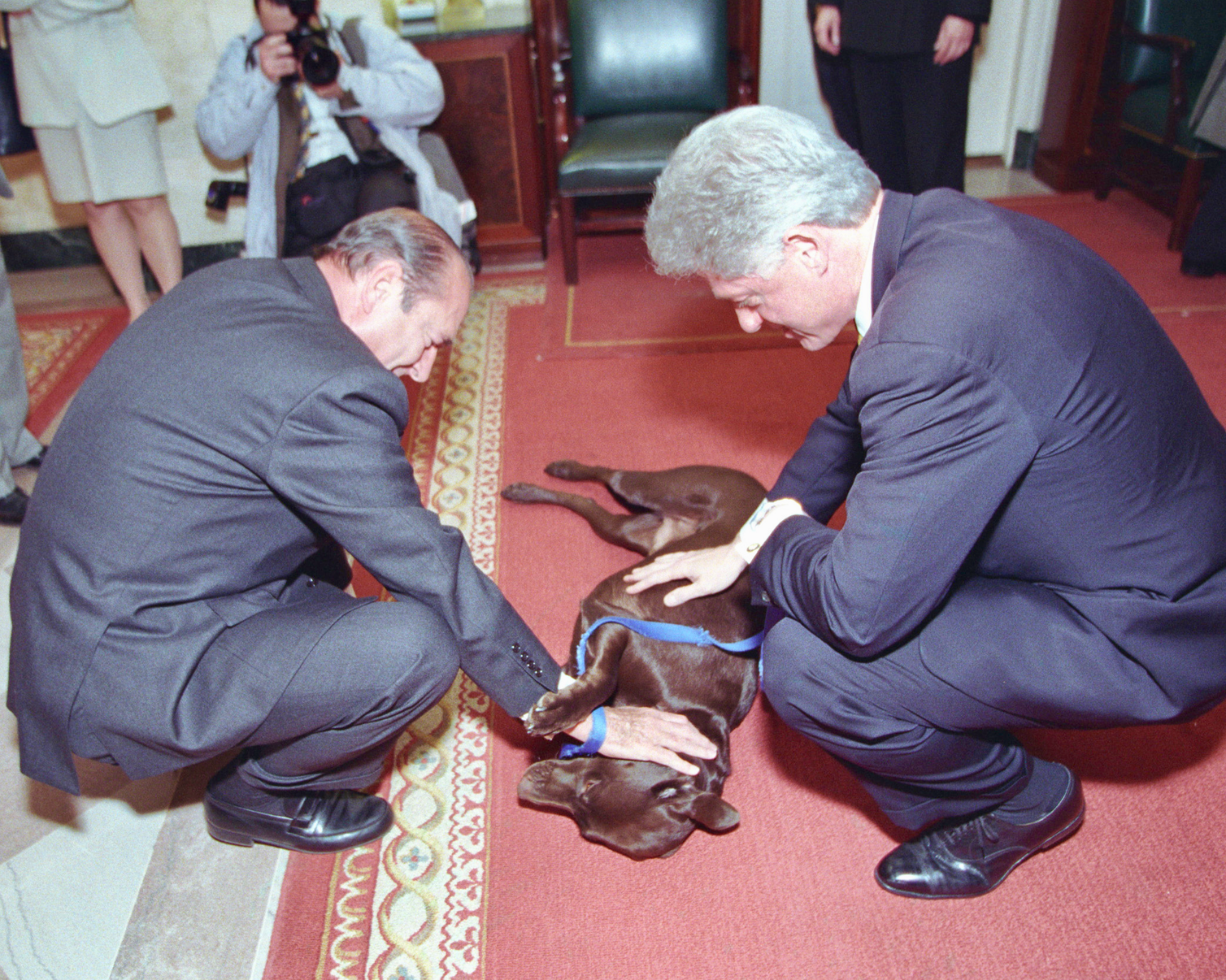
President Clinton and President Chirac of France showing Buddy some love in 1999. National Archives and Records Administration
The effects of dogs as social lubricants can go further: Dogs even foster development of social support networks among their humans, leading to a sense of community, and more social interactions between people in their vicinity. These engagements offer opportunities for even more social support in high-stress environments. And perhaps most importantly, people are more likely to offer help when a dog is present.
Having Champ and Major in the White House may help President Biden and his staff navigate the stresses and tensions of the current political landscape. Beyond “indogurations,” tweets and cute photo ops, Champ and Major will offer physical, psychological and social benefits in the Oval Office.
In short, pets (yes, cats too!) improve the quality of life in almost every context – including presidential ones. Perhaps they can, even in a small way, play a role in uniting a divided country. After all, personal politics aside, isn’t it comforting to know there will be paws pattering around the White House again?
ooOOoo
As was said in the article: “In the presence of a dog, people in groups have better social interactions, engage in more conversations and are more likely to form long-term friendships with one another.”
Dogs are miracle creatures and if you think of the benefits that dogs provide in crucial groupings and discussions that go on the White House then, frankly, they should be a non-negotiable addition to any White House incumbent!
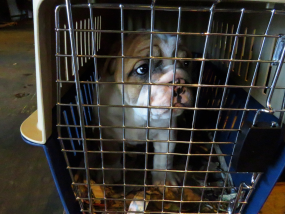
Jean and I had the radio on, BBC Radio 4, yesterday morning and were listening to You and Yours. They had an item on puppies and the fact that at this time of the year, and especially this year, the number of puppies being brought in was very high.
There’s been a surge in puppies coming into the UK from oversees and animal welfare charities are worried about it. The Eurotunnel has put limits on the amount of dogs that can come through in one vehicle. We look at how puppies are advertised on social media and bred in countries like Russia and the Ukraine.
The former boss of Skybet, Richard Flint, reacts to the government announcement of a review of gambling laws. What can online betting companies do to make gambling fairer and safer?
We’ve been hearing how students have been struggling with their courses and accomodation in the pandemic – we hear from a father worried about his daughter in her first year, and she joins us too.
And, the number of house sales falling through because mortgage companies have downgraded valuations is rising. Are buyers just offering too much in the housing market boom?
The rules for bringing your dog into the United States depend on where you are coming from. Written or oral statements and any documents must be in English or have an English translation.
Different types of rabies exist in many mammals, but CDC focuses on importing dog rabies into the United States from certain high-risk countries. CDC experts collect and analyze rabies information around the world to determine a country’s risk for rabies.
Dog rabies was eliminated in the United States in 2007 and is under control in some other countries. However, many others do not have it controlled, and dogs coming from these countries can import this disease into the United States.
Dogs coming from a high-risk country will need a rabies vaccine certificate. High-risk countries have the greatest chance of importing dog rabies into the United States.
Photo credit: Audilis Sánchez, CDC
Example: Your adult dog lived in the United States (no-known–risk country) and visited Ghana (high-risk country) for any period of time. Before returning to the United States, your dog must have a valid rabies vaccine certificate. Be sure to get your dog vaccinated before you travel and take the papers with you.
Example: You are purchasing a puppy from Russia (high-risk country) on the Internet. Before entering the United States, your puppy must have a valid rabies vaccine certificate.
Dogs coming from a low-risk or no-known rabies risk (free of dog rabies) are NOT required to have a rabies vaccination certificate to enter the United States. However, when you enter the United States, you must provide written or oral statements that the dogs lived in a country with low or no risk for at least 6 months or since birth.
Photo credit: Michelle Decenteceo, CDC
Example: Your adult dog lived in the United States (no-known–risk country) and visited Mexico (low-risk country). This dog does NOT require a rabies certificate, because Mexico is low risk for dog rabies.
Example: Your puppy has lived in Germany since birth and is coming to the United States. This dog does NOT require a rabies certificate, because Germany has no-known risk for dog rabies.
Going back to that item on BBC Radio there was reference to a YouTube video of an illegal import from Russia.
Here it is:
Last week Love Island’s Molly Mae and Tommy Fury posted photos of their new pomeranian puppy from Russia, Mr Chai. But just a few days later they announced the devastating news that Mr Chai had died following health complications and it’s an all too common problem, when dogs from puppy farms are sold to unsuspecting families. Vet Dr Scott Miller joins us to make sure you know how to spot the signs of a reputable breeder if you’re thinking of getting a pet, alongside Sadee Slater – the victim of an irresponsible breeder.
Staying safe is more than luck; it requires research and care, and a whole lot more!
Fences have big effects on land and wildlife around the world that are rarely measured
November 30, 2020
By Alex McInturff, Postdoctoral Researcher, University of California Santa Barbara,
and
Christine Wilkinson, Ph.D. Candidate in Environmental Science, Policy and Management, University of California, Berkeley,
and
Wenjing Xu, PhD Candidate in Environmental Science, Policy and Management, University of California, Berkeley.
What is the most common form of human infrastructure in the world? It may well be the fence. Recent estimates suggest that the total length of all fencing around the globe is 10 times greater than the total length of roads. If our planet’s fences were stretched end to end, they would likely bridge the distance from Earth to the Sun multiple times.
On every continent, from cities to rural areas and from ancient to modern times, humans have built fences. But we know almost nothing about their ecological effects. Border fences are often in the news, but other fences are so ubiquitous that they disappear into the landscape, becoming scenery rather than subject.
In a recently published study, our team sought to change this situation by offering a set of findings, frameworks and questions that can form the basis of a new discipline: fence ecology. By compiling studies from ecosystems around the world, our research shows that fences produce a complex range of ecological effects.
If fences seem like an odd thing for ecologists to study, consider that until recently no one thought much about how roads affected the places around them. Then, in a burst of research in the 1990s, scientists showed that roads – which also have been part of human civilization for millennia – had narrow footprints but produced enormous environmental effects.
Our research team became interested in fences by watching animals. In California, Kenya, China and Mongolia, we had all observed animals behaving oddly around fences – gazelles taking long detours around them, for example, or predators following “highways” along fence lines.
We reviewed a large body of academic literature looking for explanations. There were many studies of individual species, but each of them told us only a little on its own. Research had not yet connected the dots between many disparate findings. By linking all these studies together, we uncovered important new discoveries about our fenced world.
Early advertisement for barbed wire fencing, 1880-1889. The advent of barbed wire dramatically changed ranching and land use in the American West by ending the open range system. Kansas Historical Society, CC BY-ND
Remaking ecosystems
Perhaps the most striking pattern we found was that fences rarely are unambiguously good or bad for an ecosystem. Instead, they have myriad ecological effects that produce winners and losers, helping to dictate the rules of the ecosystems where they occur.
Even “good” fences that are designed to protect threatened species or restore sensitive habitats can still fragment and isolate ecosystems. For example, fences constructed in Botswana to prevent disease transmission between wildlife and livestock have stopped migrating wildebeests in their tracks, producing haunting images of injured and dead animals strewn along fencelines.
One finding that we believe is critical is that for every winner, fences typically produce multiple losers. As a result, they can create ecological “no man’s lands” where only species and ecosystems with a narrow range of traits can survive and thrive.
Altering regions and continents
Examples from around the world demonstrate fences’ powerful and often unintended consequences. The U.S.-Mexico border wall – most of which fits our definition of a fence – has genetically isolated populations of large mammals such as bighorn sheep, leading to population declines and genetic isolation. It has even had surprising effects on birds, like ferruginous pygmy owls, that fly low to the ground.
Australia’s dingo fences, built to protect livestock from the nation’s iconic canines, are among the world’s longest man-made structures, stretching thousands of kilometers each. These fences have started ecological chain reactions called trophic cascades that have affected an entire continent’s ecology.
The absence of dingoes, a top predator, from one side of the fence means that populations of prey species like kangaroos can explode, causing categorical shifts in plant composition and even depleting the soil of nutrients. On either side of the fence there now are two distinct “ecological universes.”
Our review shows that fences affect ecosystems at every scale, leading to cascades of change that may, in the worst cases, culminate in what some conservation biologists have described as total “ecological meltdown.” But this peril often is overlooked.
The authors assembled a conservative data set of potential fence lines across the U.S. West. They calculated the nearest distance to any given fence to be less than 31 miles (50 kilometers), with a mean of about 2 miles (3.1 kilometers). McInturff et al,. 2020, CC BY-ND
To demonstrate this point, we looked more closely at the western U.S., which is known for huge open spaces but also is the homeland of barbed wire fencing. Our analysis shows that vast areas viewed by researchers as relatively untrodden by the human footprint are silently entangled in dense networks of fences.
Do less harm
Fences clearly are here to stay. As fence ecology develops into a discipline, its practitioners should consider the complex roles fences play in human social, economic and political systems. Even now, however, there is enough evidence to identify actions that could reduce their harmful impacts.
There are many ways to change fence design and construction without affecting their functionality. For example, in Wyoming and Montana, federal land managers have experimented with wildlife-friendly designs that allow species like pronghorn antelope to pass through fences with fewer obstacles and injuries. This kind of modification shows great promise for wildlife and may produce broader ecological benefits.
Another option is aligning fences along natural ecological boundaries, like watercourses or topographical features. This approach can help minimize their effects on ecosystems at low cost. And land agencies or nonprofit organizations could offer incentives for land owners to remove fences that are derelict and no longer serve a purpose.
Knowing this, we believe that policymakers and landowners should be more cautious about installing fences in the first place. Instead of considering only a fence’s short-term purpose and the landscape nearby, we would like to see people view a new fence as yet another permanent link in a chain encircling the planet many times over.
ooOOoo
This is something that I hadn’t hitherto thought about. I suspect that I am not alone.
There are many aspects of the fence that warrant more careful thought. I will close by repeating what was said just a few paragraphs above:
There are many ways to change fence design and construction without affecting their functionality. For example, in Wyoming and Montana, federal land managers have experimented with wildlife-friendly designs that allow species like pronghorn antelope to pass through fences with fewer obstacles and injuries. This kind of modification shows great promise for wildlife and may produce broader ecological benefits.
Another option is aligning fences along natural ecological boundaries, like watercourses or topographical features. This approach can help minimize their effects on ecosystems at low cost. And land agencies or nonprofit organizations could offer incentives for land owners to remove fences that are derelict and no longer serve a purpose.

 Ellen Furlong