Category: Politics

Defending the world we love!

Mr. George Monbiot offers a deeply personal, deeply powerful reason to change!

I have long followed George Monbiot’s writings. Both for his writing skills and the many times he really spells it out. As in spelling out the madness of our present ways! Frequently I find him very inspiring. However, his latest essay In Memoriam is one of the best ones that I have read. It is a plea from George Monbiot to see what we are doing to our wildlife and our ecosystems.

It is republished here with George Monbiot’s very kind permission. I have taken the liberty of including a few recent photographs of the wildlife that graces our acres here in Oregon.

ooOOoo

In Memoriam

As our wildlife and ecosystems collapse, remembering is a radical act.

By George Monbiot, published in the Guardian 29th June 2018

It felt as disorientating as forgetting my pin number. I stared at the caterpillar, unable to attach a name to it. I don’t think my mental powers are fading: I still possess an eerie capacity to recall facts and figures and memorise long screeds of text. This is a specific loss. As a child and young adult, I delighted in being able to identify almost any wild plant or animal. And now it has gone. This ability has shrivelled from disuse: I can no longer identify them because I can no longer find them.

Perhaps this forgetfulness is protective. I have been averting my eyes. Because I cannot bear to see what we have done to nature, I no longer see nature itself. Otherwise, the speed of loss would be unendurable. The collapse can be witnessed from one year to the next. The swift decline of the swift (down 25% in five years) is marked by the loss of the wild screams that, until very recently, filled the skies above my house. My ambition to see the seabird colonies of the Shetlands and St Kilda has been replaced by the intention never to visit those islands during the breeding season: I could not bear to see the empty cliffs, whose populations have crashed by some 90% this century.
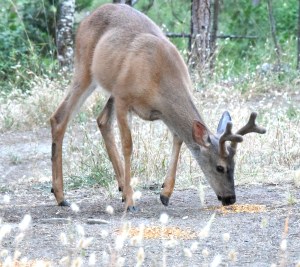
I have lived long enough to witness the vanishing of wild mammals, butterflies, mayflies, songbirds and fish that I once feared my grandchildren would experience: it has all happened faster than even the pessimists predicted. Walking in the countryside or snorkelling in the sea is now as painful to me as an art lover would find her visits to a gallery, if on every occasion another Old Master had been cut from its frame.

The cause of this acceleration is no mystery. The United Nations reports that our use of natural resources has tripled in 40 years. The great expansion of mining, logging, meat production and industrial fishing is cleansing the planet of its wild places and natural wonders. What economists proclaim as progress, ecologists recognise as ruin.

This is what has driven the quadrupling of oceanic dead zones since 1950; the “biological annihilation” represented by the astonishing collapse of vertebrate populations; the rush to carve up the last intact forests; the vanishing of coral reefs, glaciers and sea ice; the shrinkage of lakes, the drainage of wetlands. The living world is dying of consumption.

We have a fatal weakness: a failure to perceive incremental change. As natural systems shift from one state to another, we almost immediately forget what we have lost. I have to make a determined effort to remember what I saw in my youth. Could it really be true that every patch of nettles, at this time of year, was reamed with caterpillar holes? That flycatchers were so common I scarcely gave them a second glance? That the rivers, around the autumn equinox, were almost black with eels?

Others seem oblivious. When I have criticised current practice, farmers have sent me images of verdant monocultures of perennial rye grass, with the message “look at this and try telling me we don’t look after nature”. It’s green, but it’s about as ecologically rich as an airport runway. One of my readers, Michael Groves, records the shift he has seen in the field beside his house, where the grass, that used to be cut for hay, is now cut for silage. Watching the cutters being driven at great speed across the field, he realised that any remaining wildlife would be shredded. Soon afterwards, he saw a roe deer standing in the mown grass. She stayed throughout the day and the following night. When he went to investigate, he found her fawn, its legs amputated. “I felt sickened, angry and powerless … how long had it taken to die?”. That “grass-fed meat” the magazines and restaurants fetishise? This is the reality.

When our memories are wiped as clean as the land, we fail to demand its restoration. Our forgetting is a gift to industrial lobby groups and the governments that serve them. Over the past few months, I have been told repeatedly that the environment secretary, Michael Gove, gets it. I have said so myself: he genuinely seems to understand what the problems are and what needs to be done. Unfortunately, he doesn’t do it.

He cannot be blamed for all of the fiascos to which he has put his name. The 25-year plan for nature was, it seems, gutted by the Prime Minister’s office. The environmental watchdog he proposed was defanged by the Treasury (it has subsequently been lent some dentures by Parliament). Other failures are all his own work. In response to lobbying from sheep farmers, he has allowed ravens, a highly intelligent and long-lived species just beginning to recover from centuries of persecution, to be killed once more. There are 24 million sheep in this country and 7400 pairs of ravens. Why must all other species give way to the white plague?

Responding to complaints that most of our national parks are wildlife deserts, Gove set up a commission to review them. But governments choose their conclusions in advance, through the appointments they make. A more dismal, backward-looking and uninspiring panel would be hard to find: not one of its members, as far as I can tell, has expressed a desire for significant change in our national parks, and most of them, if their past statements are anything to go by, are determined to keep them in their sheepwrecked and grouse-trashed state.

Now the lobbyists demand a New Zealand settlement for farming after Brexit: deregulated, upscaled, hostile to both wildlife and the human eye. If they get their way, no landscape, however treasured, will be safe from broiler sheds and mega-dairy units, no river protected from run-off and pollution, no songbird saved from local extinction. The merger between Bayer and Monsanto brings together the manufacturer of the world’s most lethal pesticides with the manufacturer of the world’s most lethal herbicides. Already the concentrated power of these behemoths is a hazard to democracy; together they threaten both political and ecological disaster. Labour’s environment team have scarcely a word to say about any of it. Similarly, the big conservation groups, as usual, have gone missing in inaction.

We forget even our own histories. We fail to recall, for example, that the Dower report, published in 1945, envisaged wilder national parks than we now possess, and that the conservation white paper the government issued in 1947 called for the kind of large-scale protection that is considered edgy and innovative today. Remembering is a radical act.

That caterpillar, by the way, was a six spot burnet: the larva of a stunning iridescent black and pink moth that once populated my neighbourhood and my mind. I will not allow myself to forget again: I will work to recover the knowledge I have lost. For I now see that without the power of memory, we cannot hope to defend the world we love.

http://www.monbiot.com

ooOOoo

“… the world we love.”

No better illustrated each morning as my world reaches out to me with love and trust.

Thank you, George, for speaking out so powerfully!

Going Vegan!

More evidence that supports the sense, the very great sense, in going vegan!

Some three weeks ago, on June 15th to be exact, I published a post called On Veganism. Jean and I had just watched a film What The Health and what it presented in terms of eating chicken and fish convinced us to immediately go the final step, as in going from being vegetarians to vegans.

Many of you offered kind words and encouragement. Colette Bytes included a link to a blog post that she published in April, 2017. It is called Vegan Future and with her kind permission that post is republished today.

It is chock full of information and videos so do settle down and let all the information provided by Colette ‘speak’ to you! This is really worthy of an evening spent watching all the videos!

ooOOoo

Vegan Future

by Colette Bytes, April 21st 2017

Seventeen percent of human caused greenhouse gases,  come from meat and dairy production. It is actually a greater figure than all CO2 produced by global transportation!

Posted by The Daily Conversation

But is it enough, just to reduce our animal consumption, or should we look at the compelling evidence that we need a Vegan future!

Animal and Environmental Ethics

On a previous blog, I mention the documentary ‘Earthlings’ narrated by Hollywood actor, and lifelong Vegan, Joachim Phoenix. ‘Earthlings’ is the definitive Vegan film on exposing the meat and dairy industry in the US. And while other countries may not have factory farming on such a broad scale, many of the same procedures occur on a smaller scale. No member of the general public is allowed into the kill sections of slaughter houses for a very good reason. It is horrendous to watch a fear-ridden animal that wants to live, face its painful death.

This filmed reaction of a viewer watching ‘Earthlings’ is an average reaction. It is a moving experience for anyone with compassion. Posted by Raw Vegan, Fruitarian, Michael Lanfield, it is worth watching if you cannot bring yourself to actually watch the devastating, but common images of the meat, dairy and egg industry.

Switching your food intake to a plant-based Vegan diet, (eliminating all meat, dairy, egg and seafood), is the biggest change with the most impact that you can possibly make to reduce climate warming, land and water degradation, extinction rates, deforestation, pollution, human and animal suffering, and war (often over lack of food and water resources). And It is the number one thing you can do to improve your own health. It can also cut the cost of your food bill while you continue to eat a healthy diet.

There is no downside to this change if you keep your diet healthy and balanced. You can even eat processed plant-based, meat-like products if you want, but they may cost a similar amount to having meat in your diet.

The United Nations has already stated that we need to switch to a plant based diet if we are to survive.

http://www.un.org/apps/news/story.asp?NewsID=53984

So what is holding you back?

Australian, James Aspey, a survivor of thyroid cancer, has become a Vegan Speaker (on ending animal cruelty) with his own Youtube channel, but he is also one of an exponentially growing number of people who have improved their own health through a plant based diet switch.

James Aspey interview posted by Plant Based News

Find out more about James Aspey on his YouTube channel, Facebook, and on his website:
http://www.jamesaspey.com.au/

Healthy Eating

AllPlants interview on Plant Based News

Lots of new Ethical, Healthy Vegan Ready Made meals like this brand are appearing now on Super market shelves. So even if you don’t ‘do cooking’ you can still find nutritious Vegan options. And Vegan restaurants, holidays and lifestyles are all available now.

And new research is beginning to show that meat and dairy are actually toxic to our body.

Meat is a neurotoxin, Posted by 8/10/10 in London

And for when you have time, do listen to this amazing and life changing Cardiologist’s 1:20:00 hrs talk…on your likelihood of developing heart disease, diabetes, and other life threatening diseases on a meat based diet…and also look at doctor Greger’s work and videos too (links below)

Robert Ostfeld, Cardiologist and Director of a US Cardiology Centre. Posted by Jeanne Schumacher, ‘Plant Power’ YouTube channel

More on Dr Ostfeld is available on The Forks over Knives (film) website https://www.forksoverknives.com/contributors/robert-ostfeld/

Elite Athletes and Hollywood Icons
You’d be surprised how many top athletes eat a vegan diet just to be at the top of their sport…Names like Serena and Venus Williams, Novak Djokovic, and Andy Murray, are all Vegans. Winner of the world Strongman competition is Vegan. Many top boxers eat vegan. Look at PlantBased News on YouTube for lots of informative videos on who is Vegan. And see their 100 countdown of awesome Vegan celebrities.

Top 2017 Vegans posted by PlantBased News

Making the change to Vegan

Eating junk plant-based foods is not advisable as it will lead to nutrient deficiencies…and ultimately a disease state, so you can’t survive on potato crisps, popcorn, and bread….there is a responsibility to eat a balanced fresh food diet to be healthy.

You do need to eat proteins (nuts, legumes, grains, beans, some veggies). You will need to supplement with Vitamin B12, a soil- based, active nutrient essential for our brain & nervous system which we do not get in our diet as we no longer forage and eat unwashed food like our ape ancestors. And you may need to supplement Vit D3 for bone health as we no longer spend enough time outside in the sunshine. Essential oil, Omega 3 can be obtained from flax and hemp seeds. The rest, you should be able to get from a ‘good’ Vegan diet with lots of vegetables, fruits, legumes, beans, grains and nuts. Just 15 grams of nuts per day will give you enough protein to be healthy. Eating Kale and other dark leafy plants, beans, whole grain rice, legumes and some nuts, sweet potatoes are all sources of Calcium. The key to health is to have a full, varied selection of whole plant-based food!

Meat and Dairy Industry  Scare Tactics

The Meat and Dairy industry packers are worried that they will lose their industry and are fighting back with their political power and disinformation campaigns designed to scare us, but the smart companies will begin to think about how they can profit from exponential growth in the Vegan food industry.

Corporate Panick, posted by PlantBased News
Research

There are so many online sources to help you buy, and cook a healthy plant-based diet. Just type ‘Vegan Recipies’ into a search engine and you will find fantastic yummy recipes. You will love the variety and the taste of your new diet. And if you are not into cooking,  mainstream supermarkets are now starting to stock a growing variety of vegan ready made meals, and starting to label Vegan choices.

https://plantbasednews.org/

An all round informative website on Vegan trends, news headlines, and increasing popularity of healthy lifestyles including a plant- based diet.
Medical based RESOURCES on how to stay healthy on a Vegan diet

https://nutritionfacts.org/

Dr Michael Greger, MD, author of Best Seller, ‘How Not to Die’ and distributer of free videos and research on how plant based diets affect us. I have followed his work for years and he backs it all up with science based studies…his short videos and reports are packed with hundreds of supportive reports for a plant based diet.

https://www.drmcdougall.com/

Dr McDougal, Author of ‘A Starch Based Diet’ and follower of Nathan Pritikin, one of the forerunners promoting plant based nutrition.

http://www.theveganjunction.com/top-20-plant-based-health-professionals-to-follow/

Vegan Junction list of Plant-Based Diet health professionals
More Videos

Open Your Eyes – Toronto Pig Save posted by Bite-Size-Vegan

How not To Die – plant based diet by Dr Michael Greger
Latest documentaries to look up

Carnage (only on BBC iPlayer)

The Game Changers

Eating our way to Extinction

What the Health!

Plant Pure Nutrition

And there are so many more resources out there ! Join the growing trend to make this a better world for everyone, by making the biggest difference you can when you shop for food. Pick whole, plant-based, foods and kick the ‘animal eating’ habit to be healthy, stop animal cruelty, and save the environment and reduce global greenhouse gases. What could be a more worthy goal?

Why not check out my blog here on ‘Why do We Hurt Animals?

ooOOoo

This is so much more than just a blog post from Colette. It is a fantastic source of information, from a variety of sources, about why it makes such good sense to become a vegan.

I shall include it as a link from the home page of Learning from Dogs so it may serve as a reference long after it was republished today.

Then what about dogs eating a vegan diet? Sounds a bit strange? Maybe not! I shall be exploring that option with Halo, a company based in Florida, who claim:

Can dogs be vegan? Unlike cats, who are obligate carnivores, dogs can be fed a vegan diet as long as it’s high quality and nutritionally balanced like Halo® Garden of Vegan® dog food.

More on this next week.

In the meantime, I’m taking a day off tomorrow but please do read George Monbiot’s latest post, being republished here on Friday, 6th July.

The slippery food slope.

The second in this three-part focus on food; both for us and our dogs!

A republication, within the terms of The Conversation site, of an article that was originally published on June 26th, 2018.

ooOOoo

Why it’s time to curb widespread use of neonicotinoid pesticides

By  Associate Professor of Entomology and Extension Specialist, Pennsylvania State University

Planting season for corn and soybeans across the U.S. corn belt is drawing to a close. As they plant, farmers are participating in what is likely to be one of the largest deployments of insecticides in United States history.

Almost every field corn seed planted this year in the United States – approximately 90 million acres’ worth – will be coated with neonicotinoid insecticides, the most widely used class of insecticides in the world. The same is true for seeds in about half of U.S. soybeans – roughly 45 million acres and nearly all cotton – about 14 million acres. In total, by my estimate, these insecticides will be used across at least 150 million acres of cropland, an area about the size the Texas.

Neonicotinoids are very good at killing insects. In many cases they require only parts per billion, equivalent to a few drops of insecticide in a swimming pool of water.

In recent years, concerns have been raised about the influence of neonicotinoids on bee populations. As an applied insect ecologist and extension specialist who works with farmers on pest control, I believe the focus on bees has obscured larger concerns. In my view, U.S. farmers are using these pesticides far more heavily than necessary, with potential negative impacts on ecosystems that are poorly understood.

Pesticides on seeds 

Most neonicotinoids in the United States are used to coat field crop seeds. Their role is to protect against a relatively small suite of secondary insect pests – that is, not the main pests that tend to cause yield loss. National companies or seed suppliers apply these coatings, so that when farmers buy seed, they just have to plant it.

The percentage of corn and soybean acreage planted with neonicotinoid seed coatings has increased dramatically since 2004. By 2011, over 90 percent of field corn and 40 percent of soybeans planted were treated with a neonicotinoid. Between 2011 and 2014, the area treated crept toward 100 percent for corn and 50 percent for soybeans. And the mass of neonicotinoids deployed in each crop doubled, indicating that seed suppliers applied about twice as much insecticide per seed. Unfortunately, many farmers are unaware of what is coated on their seeds, while others like the peace of mind that comes from an apparently better protected seed.

Unlike most insecticides, neonicotinoids are water soluble. This means that when a seedling grows from a treated seed, its roots can absorb some of the insecticide that coated the seed. This can protect the seedling for a limited time from insects. But only a small fraction of the insecticide applied to seeds is actually taken up by seedlings. For example, corn seedlings only take up about 2 percent, and it only persists in the plant for two to three weeks. The critical question is where the rest goes.

Clothianidin is a neonicotinoid used almost exclusively as a coating on seed corn. Maps from USGS.

Pervading the environment

Because neonicotinoids are water soluble, the leftover insecticide not taken up by plants can easily wash into nearby waterways. Neonicotinoids from seed coatings are now routinely found polluting streams and rivers around the country.

Here it is likely that they are poisoning and killing off some of the aquatic insects that are vital food sources for fishes, birds and other wildlife. In the Netherlands, neonicotinoids in surface waters have been associated with widespread declines in insectivorous bird populations – a sign that concentrations of these insecticides are having strong effects on food webs.

Neonicotinoids also can strongly influence pest and predator populations in crop fields. My lab’s research has revealed that use of coated seeds can indirectly reduce crop yield by poisoning insect predators that usually kill slugs, which are important crop pests in mid-Atlantic corn and soybeans fields.

More broadly, planting coated seeds generally decreases populations of insect predators in crop fields by 15 to 20 percent. These predatory insects can eat insect pests, such as black cutworm and armyworm, that can reduce yield. Crop fields with fewer resident predators are more vulnerable to pest infestations.

Slugs, shown here on a soybean plant, are unaffected by neonicotinoids, but can transmit the insecticides to beetles that are important slug predators. Nick Sloff/Penn State University, CC BY-ND

An exaggerated need

Neonicotinoid advocates point to reports – often funded by industry – which argue that these products provide value to field crop agriculture and farmers. However, these sources typically assume that insecticides of some type are needed on every acre of corn and soybeans. Therefore, their value calculations rest on comparing neonicotinoid seed coatings to the cost of other available insecticides.

History shows that this assumption is clearly faulty. In the decade before neonicotinoid seed coatings entered the market, only about 35 percent of U.S. corn acres and 5 percent of soybean acres were treated with insecticides. In other words, pest populations did not cause economically significant harm very often.

Importantly, the pest complex attacking corn today is more or less the same as it was in the 1990s. This suggests that it is not necessary to treat hundreds of millions of acres of crops with neonicotinoid seed coatings.

Neonicotinoids can harm birds via multiple pathways, sometimes in very small quantities.

From overkill to moderation

Should the United States follow the European Union’s lead and pass a broad ban on neonicotinoids? In my view, action this drastic is not necessary. Neonicotinoids provide good value in controlling critical pest species, particularly in vegetable and fruit production. However, their use on field crops needs to be reined in.

In the Canadian province of Ontario, growers can only use neonicotinoid seed treatments on 20 percent of their acres. This seems like a good start, but does not accommodate farmers’ needs very well.

Integrated Pest Management (IPM), a control strategy based on using pesticides only when they are economically justified, offers valuable guidelines. It was introduced in the late 1950s in response to issues stemming from overuse of insecticides, including environmental damage and pest populations that had evolved resistance. Field-crop growers have a good history of using IPM, but current use of neonicotinoids ignores pest risk and conflicts with this approach.

To implement IPM in field crops with neonicotinoids, seed companies need to acknowledge that the current approach is overkill and poses serious environmental hazards. Extension entomologists will then need to provide growers with unbiased information on strengths and limitations of neonicotinoids, and help farmers identify crop acres that will benefit from their use. Finally, the agricultural industry needs to eliminate practices that encourage unnecessary use of seed coatings, such as bundling together various seed-based pest management products, and provide more uncoated seeds in their catalogs.

These steps could end the ongoing escalation of neonicotinoid use and change the goal from “wherever possible” to “just enough.”

ooOOoo

It’s enough to make one give up!!

Never jump to a quick (and incorrect) conclusion

Delighted to welcome another guest post from Colette Bytes.

Back on June 5th, I published the first of three parts of a guest post from Colette. It was called Spot and Me and was a gorgeous (true) account of how Colette trained little Spot when she was dog-sitting for a week. If you missed it then go no further than dropping across to the first part of Colette’s story.

It was beautifully written as well as offering real, solid advice as to how to train a dog that is being a tad challenging. You all loved it!

Well, speaking of beautifully written stories from Colette, here’s another one!

ooOOoo

Always Think Twice

by Colette Bytes, June 15th, 2018.

We all have the ability to make snap ‘first impressions.’
For instance, we say things like, ‘ I knew right from the moment I met him/her…

But are we correct?

Experience often makes us callous and judgemental. Let’s face it, we all have a tendency to think negatively in certain conditions.

Such is the case with Spain’s numerous beggars. They camp out where they are likely to encounter the most foot-traffic, so one can expect two or three of them outside most supermarket entrances. They are not allowed to harass people but they do often intimidate store visitors with looks, gestures, and often cardboard signs in English (to capture the attention and guilty consciences of tourists).

If I gave to every beggar that I see, (and I have occasionally been accosted physically in car-parking lots), I would feel duped by professionals run by the Mafia. There are such people. But once in a while, I do a double-take and think again.

Such was the case one morning. The beggar was an elderly gentleman, unshaved, unkempt and sitting with a young Italian Greyhound tied with a rope. Dogs are often present with beggars, some misused for the purpose.

As my husband and I drew level, the unkempt man said: “Good morning to you!” in a very eloquent manner, and in perfect English. I smiled and thanked him. My husband whispered as we went through the door, “Don’t encourage them!” But I felt different about the man and wanted to do something.

While my husband went in search of the items he wanted, I went to the pet aisle and chose a ring-pull opening tin of dog food and a packet of dental sticks. It amounted to about five euros. I put them in my husband’s shopping basket so he could pay for them as I had no money on me. “What are those for?” He said, (frowning because he already knew). “I’m going to give them to the man outside.” My hubby was angry, but didn’t argue, he knows that it was useless to try and intimidate me. “You are too soft,” he muttered to the air.

I took the doggy stuff out while my hubby packed up our groceries. I handed them over to the grateful man, who thanked me kindly. He opened up a bag next to him to put my gifts into it. The bag held a bowl (for the dog), a big bottle of water and other foodstuffs for them both as well as a towel. He closed it again saying, “I just fed her, so she can have these later!”

The dog sat quietly. I held out my hand and asked her name. She was still a puppy and bounced up to my hand, licking it and dancing around, tangling herself up in the rope the man was using to restrain her. “I have named her Bella. She’s still young; ’bout six months I think. I found her a few days ago on a building site – stray, like most of them. Very hungry.”

The dog was thin, thinner than even her breed dictated. She had the most gorgeous eyes. “She’s still learning how to behave with people, sorry!” His apology wasn’t necessary.

“How long have you been in Spain? ” I asked. “Forty years,” came his reply.
“Goodness, how did you end up here?” I was a bit shocked!

As he fussed the little dog, the man proceeded to tell me a sorry tale. He had lived here with his wife in a nice (if illegally built) house with a thriving business moving residents belongings between Spain and the UK. His business was doing so well that he took on a partner to manage the financial side, and travel and storage arrangements.

Unbeknownst to him, the partner funnelled all the assets to an offshore account, and then suddenly disappeared after a couple of months. The next thing he knew, debt collectors started pounding on his door, often with nasty threats. He lost everything, including his home. His wife borrowed money from her family to return to the UK. He was left here, relying on the kindness of friends to help him along.

“I volunteer a bit at a local dog shelter in return for food, and a bit of company from the other volunteers,” he said. He went on to say that he befriends stray dogs, keeps them for a little while so as to socialise them and then gives them to the dog shelter so that they can be adopted out to good homes.

“Gives me a bit of company, and well, we (he pats Bella on her head) can commiserate on our similar circumstances.” He winked.

As we talked, a few people offered food donations, with sincere thanks from the man that I now knew as ‘Nick.’

One woman approached and gave Nick a reproachful look. Ignoring him (and me) she held out her hand to Bella, who got up from her seated position. The hand opened and held a small pile of dry cat food. Bella sniffed it and then without further interaction, returned to her corner of safety looking wary. Nick explained. “Thank you, but she isn’t hungry. She had her breakfast only half an hour ago.” The woman scowled and dropped the pile of unappetising bits on the ground. Without a word, she walked off!

I smiled at Nick. ” Takes all sorts.” Nick shook his head. “Get a lot of that…” His voice trailed off.

“I’m sorry I don’t have any money to help, my husband has it all,” I said, a bit helplessly.
” Your donation is more than generous,” he said kindly. I always take the excess donations to the dog shelter…they give me some food in return. And little ladies like this one, get a new chance at life!”
I smiled.

“Your husband is waiting for you, I think.” Nick pointed behind me, where my husband was drumming the steering wheel of our car, rather impatiently.
“I better go, it was lovely chatting with you. I hope things work out!”
Nick smiled back and wished me a lovely day.

As I walked away, Nick was smiling, and saying a pleasant “Good Morning,” to a couple walking through the store entrance. They ignored him.

I waved goodbye as we drove away and Nick waved back, smiling!

I told my husband all about Nick, and his attitude changed a bit. But that judgemental side of him still took over… “He probably did everything illegally and that’s why he’s in a mess now.”

Whether Nick brought his circumstances on himself or not, is not really relevant. He was kind to me, and kind to Bella. And kindness always attracts kindness!

ooOOoo

Colette’s story didn’t come with a photograph. So I thought I would do a quick web search and find a picture that fitted Colette’s story well.

In fact, the article that included this photograph may be republished and I will be doing that tomorrow!

On plant-based diets!

Serendipity!

Last Friday I published a post under the title of On Veganism. Earlier that same day I opened up an email promoting the latest essay from George Monbiot. It had been published in The Guardian newspaper two days previously.

I am delighted to republish it here with George Monbiot’s kind permission.

ooOOoo

Butchery of the Planet

Defending the living world and its people requires a shift from meat to a plant-based diet

By George Monbiot, published in the Guardian 8th June 2018

Whether human beings survive this century and the next, whether other lifeforms can live alongside us: above all this depends on the way we eat. We can cut our consumption of everything else close to zero and still drive living systems to collapse, unless we change our diets.

All the evidence now points in one direction: the crucial shift is from an animal to a plant-based diet. A paper published last week in Science reveals that while some kinds of meat and dairy production are more damaging than others, all are more harmful to the living world than growing plant protein. It shows that animal farming takes up 83% of the world’s agricultural land, but delivers only 18% of our calories. A plant-based diet cuts the use of land by 76% and halves the greenhouse gases and other pollution caused by food production.

Part of the reason is the extreme inefficiency of feeding livestock on grain: most of its nutritional value is lost in conversion from plant protein to animal protein. This reinforces my contention that if you want to eat less soya, you should eat soya: most of the world’s production of this crop, and the accompanying destruction of forest, savannah and marshland, is driven by the wasteful practice of feeding animals on food that humans can eat.

More damaging still is free range meat: the environmental impacts of converting grass into flesh, the paper remarks, “are immense under any production method practiced today”. This is because so much land is required to produce every grass-fed steak or lamb chop. Though roughly twice as much land is used for grazing worldwide than for crop production, it provides just 1.2% of the protein we eat. While much of this pastureland cannot be used to grow crops, it can be used for rewilding: allowing the many rich ecosystems destroyed by livestock farming to recover, absorbing carbon from the atmosphere, protecting watersheds and halting the sixth great extinction in its tracks. The land that should be devoted to the preservation of human life and the rest of the living world is used instead to produce a tiny amount of meat.

Whenever I raise the crucial issue of yield per hectare, I receive a barrage of vituperation and abuse. But I’m not having a go at farmers, just pointing out that the figures don’t add up. We can neither feed the world’s growing population nor protect its living systems through animal farming. Meat and dairy are an extravagance we can no longer afford.

There is no way out of this. Those who claim that “regenerative” or “holistic” ranching mimics nature deceive themselves. It relies on fencing, while in nature wild herbivores roam freely, often across vast distances. It excludes or eradicates predators, crucial to the healthy functioning of all living systems. It tends to eliminate tree seedlings, ensuring that the complex mosaics of woody vegetation found in many natural systems – essential to support a wide range of wildlife – are absent.

The animal industry demands ever greater assaults on the living world. Witness the badger slaughter in the UK, now spreading across the country in response to the misguided requests of dairy farmers. People ask how I would justify the return of wolves, knowing that they will kill some sheep. I ask how they justify the eradication of wolves and a vast range of other wildlife to make way for sheep. The most important environmental action we can take is to reduce the amount of land used by farming.

Unless you can cook well – and many people have neither the skills nor the space – a plant-based diet can be either boring or expensive. We need better and cheaper vegan ready meals and quick and easy meat substitutes. The big shift will come with the mass production of cultured meat. There are three main objections. The first is that the idea of artificial meat is disgusting. If you feel this way, I invite you to look at how your sausages, burgers and chicken nuggets are currently raised, slaughtered and processed. Having worked on an intensive pig farm, I’m more aware than most of what disgusting looks like.

The second objection is that cultured meat undermines local food production. Perhaps those who make this claim are unaware of where animal feed comes from. Passing Argentinian soya through a nearby pig before it reaches you does not make it any more local than turning it directly into food for humans. The third objection has greater merit: cultured meat lends itself to corporate concentration. Again, the animal feed industry (and, increasingly, livestock production) has been captured by giant conglomerates. But we should fight to ensure that cultured meat does not go the same way: in this sector as in all others, we need strong anti-trust laws.

This could also be a chance to break our complete dependence on artificial nitrogen. Traditionally, animal and plant farming were integrated through the use of manure. Losses from this system led to a gradual decline in soil fertility. The development of industrial fertilisers saved us from starvation, but at a high environmental cost. Today, the link between livestock and crops has mostly been broken: crops are grown with industrial chemicals while animal slurry stacks up, unused, in stinking lagoons, wipes out rivers and creates dead zones at sea. When it is applied to the land, it threatens to accelerate antibiotic resistance.

In switching to a plant-based diet, we could make use of a neat synergy. Most protein crops – peas and beans – capture nitrogen from the air, fertilising themselves and raising nitrate levels in the soil that subsequent crops, such as cereals and oilseeds, can use. While the transition to plant protein is unlikely to eliminate the global system’s need for artificial fertiliser, the pioneering work of vegan organic growers, using only plant-based composts and importing as little fertility as possible from elsewhere, should be supported by research, that governments have so far conspicuously failed to fund.

Understandably, the livestock industry will resist all this, using the bucolic images and pastoral fantasies that have beguiled us for so long. But they can’t force us to eat meat. The shift is ours to make. It becomes easier every year.

http://www.monbiot.com

ooOOoo

Thus, along with the argument presented last Friday that a vegan diet is critically important for one’s health and long-term fitness, Mr. Monbiot presents another argument: “Whether human beings survive this century and the next, whether other lifeforms can live alongside us: above all this depends on the way we eat.

Please sign this petition!

S. Korea is the only country in the world with large-scale, commercial dog meat farms.

Frankly, I wasn’t planning to publish a post today. But then in came an email from John Zande, he of the blog The Superstitious Naked Ape, and this is what I read: “Paul, hi… Really good news. The following email links to a petition supporting a bill that will end the dog meat trade in Korea. I know you’ll want to sign it. Share it around, too.”

John then linked to a petition over on the Lady Freethinkers blog.

Jean and I have signed the petition and now I am republishing in full what you can read if you go across to that petition page.

ooOOoo

SIGN: PASS NEW BILL TO BAN HORRIFIC DOG MEAT FARMS IN S. KOREA


That new EU law regarding data compliance!

Sorry but I need to join the crowd!

That is the crowd of emails that you and I have been receiving regarding the new GDPR law. The new law that is effective from today.

As a recent BBC video explains:

What is GDPR? Technology explained

A new EU law that changes how companies use our personal information kicks in on 25 May.

The BBC’s Chris Foxx explains what GDPR is and how it will affect you.

Then there is this YouTube video:

Finally, here’s an extract from a recent Firefox blog post:

1. The General Data Protection Regulation gives the European Union the power to hold businesses and organizations accountable for how they collect and handle personal data — your data.

Businesses and organizations have had two years to get ready. This wasn’t a sneak attack by the European institutions. The GDPR went on the books in May 2016, giving anyone who collects customer data plenty of time to prepare.

2. Even though it’s driven out of Europe, the GDPR impacts the whole world.

If you live outside of Europe, you’re probably wondering what a European law has to do with you. Thanks to something called “territorial scope,” any organization that deals with data of EU residents must comply with the GDPR for those individuals, which impacts global organizations like Apple and Facebook. Even though they are not strictly required, some organizations are taking a principled (and perhaps easier) approach, providing the same set of controls and protections to non-EU residents.

3. It’s filling up in your inbox.

We’ve all been bombarded with emails about updated privacy policies and terms of service. It’s (mostly) not fallout from the Cambridge Analytica scandal, it’s because organizations are getting their policies and practices into GDPR compliance. Bonus points: All those emails are a hint to disconnect from services you’ve forgotten about.

Now this is where it gets complicated.

For while there is a WordPress plugin that is supposed to ensure that this WordPress blog conforms, whatever that implies, to the requirements of the new law I am not able to download it without upgrading the blog to Business Plan. As I am already paying to be a Premium WordPress user I object to shelling out more money just now.

So if there is any aspect of being a subscriber to Learning from Dogs that you do not like then please unsubscribe.

As I learn how other blog authors are dealing with the issue then I will let you know if there are any changes that I need to make.

Any advice or suggestions regarding this new law would be most welcome!

The continuing fallout from Chernobyl

Will you, please, consider taking one of these puppies!

I closed last Saturday’s post with this plea: “If only there wasn’t a single dog in need of adoption in the world!

That plea is being used to introduce today’s post. An article that was recently read on the Smart News section from The Smithsonian magazine website.

I have republished it, hopefully without infringing copyrights, because it’s a story that needs to be circulated as far and wide as possible.

ooOOoo

Chernobyl Puppies Going Up for Adoption in the U.S.

Now in quarantine, the pups are expected to come to the U.S. this summer in search of their forever homes.

Please for to adopt us, Comrade. (Chernobyl Exclusion Zone Authority)
By Jason Daley smithsonian.com , May 16, 2018

In 1986, the Chernobyl nuclear power plant melted down, sending nearby residents fleeing the disaster zone. And sadly, most pets got left behind. Over the last 32 years, the surviving pups have multiplied, creating a community of hundreds that live in the Chernobyl Exclusion Zone and another 250 that live on the grounds of the former power plant itself.

Now, a dozen of those homeless puppies will head to the United States for adoption, reports Matt Novak at Gizmodo.

According to the Russian website Meduza, Ukrainian authorities have captured 200 of the stray Chernobyl puppies. They are currently keeping them in a 45-day quarantine in the city of Slavutych, and then a dozen will be shipped to the United States.

“We have rescued the first puppies, they are now in our adoption shelter going through the quarantine and decontamination process,” Lucas Hixson, co-founder of the U.S.-based Clean Futures Fund, a non-profit created to take care of Chernobyl clean-up workers, their families and the dogs tells Novak. “The goal is 200 dogs but will likely be more in the long run. My hope is to get 200 dogs rescued and adopted in the next 18 months and then go from there.”

The pups have a heartbreaking story, as The Guardian’s Julie McDowell detailed earlier this year. During the evacuation, more than 120,000 people were herded onto buses to escape the meltdown of the Unit 4 reactor, leaving most of their valuables and their pets behind. Many dogs tried to follow their owners onto the buses but were kicked off. People left notes on their doors asking authorities not to kill their animals, but Soviet Army squads were dispatched to put down as many contaminated animals as they could find.

Some of the dogs survived the army and the radiation, rebuilding their community as a pack. The Clean Futures Fund reports that the 250 dogs living on the grounds of the former power plant were likely driven out of the surrounding forests by wolves and a lack of food. Another 225 dogs roam Chernobyl City and hundreds of others live and scrounge at security checkpoints and throughout the woods and abandoned communities in the Exclusion Zone. Most of the dogs around the plant are under the age of 4 or 5, and clean-up workers at the site sometimes feed and tend to sick animals.

But last year, after becoming aware of the animals, The Clean Futures Fund decided the pups needed a more permanent solution. That’s why they’ve implemented a three-year program in the Exclusion Zone to spay and neuter 1,000 animals and vaccinate them against rabies. At their first clinic last August, the Fund spayed and neutered 350 dogs and cats in the area. Each animal was tested for radiation, given antibiotics, vaccinated for rabies and microchipped. Each dog’s vital data was also recorded.

For the next clinic scheduled for June, the Fund has also partnered with researchers from the University of South Carolina. The team will study the dogs for signs of radiation poisoning as well as genetic damage and disruptions to the dogs’ microbiomes, reports Mary Katherine Wildeman at The Post and Courier. The team will sedate the dogs and look for tumors and cataracts, which can signal radiation poisoning.

Understanding the impacts of radiation exposure is becoming increasingly important, says Timothy Mousseau, a researcher who has studied radiation in the birds, insects and small animals of Chernobyl and will lead the project. Exposure rates in daily life from medical treatments and other sources are on the rise, with the average yearly dose Americans receive doubling in the last 20 years alone.

There is no word when or where the dozen Chernobyl pups will go up for adoption. But even if you’re not lucky enough to have one of the reminders of Soviet-era nuclear power at the foot of your bed, it’s still possible to see the place for yourself and hand out treats to some of the remaining pups. There’s a booming tourism industry in the area to visit the eerie ghost towns and surprisingly quiet and beautiful green space that has overtaken the Zone.

ooOOoo

I am going to contact The Clean Futures Fund to see how one can register a potential interest in taking one of these puppies.

In the meantime, is there any reader who would be interested in having a puppy? Send me an email if so.

Consuming the living planet.

The eating habits of us humans have to change!

Funny how things go!

For just two days ago I published a post under the heading of Meat is Heat. It featured an essay by Michael Greger. He of the website NutritionFacts.org. That essay promoted the message:

What we eat may have more of an impact on global warming than what we drive.

Just cutting out animal protein intake one day of the week could have a powerful effect. Meatless Mondays alone could beat out a whole week of working from home and not commuting.

Many of you read that post.

On the same day that I published that post, George Monbiot published an article in The Guardian newspaper that offered the same message, albeit coming at it from a different place but nonetheless just as critically important.

Here it is republished with Mr. Monbiot’s very kind permission.

ooOOoo

We Can’t Keep Eating Like This

This is the question everyone should be attending to – where is the food going to come from?

By George Monbiot, published in the Guardian 11th December 2017

Brexit; the crushing of democracy by billionaires; the next financial crash; a rogue US president: none of them keeps me awake at night. This is not because I don’t care – I care very much. It’s only because I have a bigger question on my mind. Where is the food going to come from?

By mid-century there will be two or three billion more people on Earth. Any one of the issues I am about to list could help precipitate mass starvation. And this is before you consider how they might interact.

The trouble begins where everything begins: with soil. The UN’s famous projection that, at current rates of soil loss, the world has 60 years of harvests left, appears to be supported by a new set of figures. Partly as a result of soil degradation, yields are already declining on 20% of the world’s croplands.

Now consider water loss. In places such as the North China Plain, the central United States, California and north-western India – among the world’s critical growing regions – levels of the groundwater used to irrigate crops are already reaching crisis point. Water in the Upper Ganges aquifer, for example, is being withdrawn at 50 times its recharge rate. But, to keep pace with food demand, farmers in South Asia expect to use between 80 and 200% more water by 2050. Where will it come from?

The next constraint is temperature. One study suggests that, all else being equal, with each degree Celsius of warming the global yield of rice drops by 3%, wheat by 6% and maize by 7%. This could be optimistic. Research published in the journal Agricultural & Environmental Letters finds that 4°C of warming in the US Corn Belt could reduce maize yields by between 84 and 100%.

The reason is that high temperatures at night disrupt the pollination process. But this describes just one component of the likely pollination crisis. Insectageddon, caused by the global deployment of scarcely-tested pesticides, will account for the rest. Already, in some parts of the world, workers are now pollinating plants by hand. But that’s viable only for the most expensive crops.

Then there are the structural factors. Because they tend to use more labour, grow a wider range of crops and work the land more carefully, small farmers, as a rule, grow more food per hectare than large ones. In the poorer regions of the world, people with less than 5 hectares own 30% of the farmland but produce 70% of the food. Since 2000, an area of fertile ground roughly twice the size of the United Kingdom has been seized by land grabbers and consolidated into large farms, generally growing crops for export rather than the food needed by the poor.

While these multiple disasters unfold on land, the seas are being sieved of everything but plastic. Despite a massive increase in effort (bigger boats, bigger engines, more gear), the worldwide fish catch is declining by roughly 1% a year, as populations collapse. The global land grab is mirrored by a global seagrab: small fishers are displaced by big corporations, exporting fish to those who need it less but pay more. Around 3 billion people depend to a large extent on fish and shellfish protein. Where will it come from?

All this would be hard enough. But as people’s incomes increase, their diet tends to shift from plant protein to animal protein. World meat production has quadrupled in 50 years, but global average consumption is still only half that of the UK – where we eat roughly our bodyweight in meat every year – and just over a third of the US level. Because of the way we eat, the UK’s farmland footprint (the land required to meet our demand) is 2.4 times the size of its agricultural area. If everyone aspires to this diet, how do we accommodate it?

The profligacy of livestock farming is astonishing. Already, 36% of the calories grown in the form of grain and pulses – and 53% of the protein – are used to feed farm animals. Two-thirds of this food is lost in conversion from plant to animal. A graph produced last week by Our World in Data suggests that, on average, you need 0.01m2 of land to produce a gram of protein from beans or peas, but 1m2 to produce it from beef cattle or sheep: a difference of 100-fold.

It’s true that much of the grazing land occupied by cattle and sheep cannot be used to grow crops. But it would otherwise have sustained wildlife and ecosystems. Instead, marshes are drained, trees are felled and their seedlings grazed out, predators are exterminated, wild herbivores fenced out and other lifeforms gradually erased as grazing systems intensify. Astonishing places – such as the rainforests of Madagascar and Brazil – are laid waste to make room for yet more cattle.

Because there is not enough land to meet both need and greed, a global transition to eating animals means snatching food from the mouths of the poor. It also means the ecological cleansing of almost every corner of the planet.

The shift in diets would be impossible to sustain even if there were no growth in the human population. But the greater the number of people, the greater the hunger meat eating will cause. From a baseline of 2010, the UN expects meat consumption to rise by 70% by 2030 (this is three times the rate of human population growth). Partly as a result, the global demand for crops could double (from the 2005 baseline) by 2050. The land required to grow them does not exist.

When I say this keeps me up at night, I mean it. I am plagued by visions of starving people seeking to escape from grey wastes, being beaten back by armed police. I see the last rich ecosystems snuffed out, the last of the global megafauna – lions, elephants, whales and tuna – vanishing. And when I wake, I cannot assure myself that it was just a nightmare.

Other people have different dreams: the fantasy of a feeding frenzy that need never end, the fairytale of reconciling continued economic growth with a living world. If humankind spirals into societal collapse, these dreams will be the cause.

There are no easy answers, but the crucial change is a shift from an animal to a plant-based diet. All else being equal, stopping both meat production and the use of farmland to grow biofuels could provide enough calories for another 4 billion people and double the protein available for human consumption. Artificial meat will help: one paper suggests it reduces water use by at least 82% and land use by 99%.

The next Green Revolution will not be like the last one. It will rely not on flogging the land to death, but on reconsidering how we use it and why. Can we do this, or do we – the richer people now consuming the living planet – find mass death easier to contemplate than changing our diet?

http://www.monbiot.com

ooOOoo

As many of you know Jeannie and I changed our diet to a vegan diet some four weeks ago. It was done more for personal health reasons than from an awareness of the difference that it made to the future of the planet. But over the last few weeks we have had our eyes opened to the broader benefits of not eating meat. George Monbiot spells out the urgency of change for all of us, especially the richer people in the richer countries.

Am I hopeful that there will be a mass awareness of the need to change? I truly just don’t know. I will close be repeating Mr. Monbiot’s closing sentence.

Can we do this, or do we – the richer people now consuming the living planet – find mass death easier to contemplate than changing our diet?

Interesting times!

A plea for this planet!

I feel compelled to ‘bang the drum’!

The recent news that many scientists have signed an open letter warning about how soon it will be too late to “save Earth” has been widely broadcast; not that this stops me from republishing the version of the news story that I read on the EarthSky blog site.

Here it is.

oooooh

Scientists warn: Soon it will be too late to save Earth

By Eleanor Imster in EARTH | HUMAN WORLD | November 16, 2017
More than 15,000 scientists in 184 countries have signed a letter urging the world to address major environmental concerns. “Soon it will be too late to shift course away from our failing trajectory, and time is running out.”

A letter to all of us, signed by more than 15,000 scientists (and counting) in 184 countries, warns that human well-being will be severely jeopardized by continuing trends in environmental harm, including our changing climate, deforestation, loss of access to fresh water, species extinctions and human population growth.

Entitled World Scientists’ Warning to Humanity: A Second Notice, it was published in the international journal Bioscience on November 13, 2017.

In 1992, more than 1,700 scientists signed a World Scientists’ Warning to Humanity published by the Union of Concerned Scientists. But global trends have worsened since 1992, the authors wrote in the new letter. In the last 25 years, trends in nine environmental issues suggest that humanity is continuing to risk its future.

Read the letter here.

The scientists wrote:

Soon it will be too late to shift course away from our failing trajectory, and time is running out. We must recognize, in our day-to-day lives and in our governing institutions, that Earth with all its life is our only home.

The letter also says …

By failing to adequately limit population growth, reassess the role of an economy rooted in growth, reduce greenhouse gases, incentivize renewable energy, protect habitat, restore ecosystems, curb pollution, halt defaunation, and constrain invasive alien species, humanity is not taking the urgent steps needed to safeguard our imperiled biosphere.

The article was written by an international team led by William Ripple of Oregon State University led the international team of scientists who created the letter. Ripple said in a statement:

Some people might be tempted to dismiss this evidence and think we are just being alarmist. Scientists are in the business of analyzing data and looking at the long-term consequences. Those who signed this second warning aren’t just raising a false alarm. They are acknowledging the obvious signs that we are heading down an unsustainable path. We are hoping that our paper will ignite a wide-spread public debate about the global environment and climate.

Progress in some areas — such as a reduction in ozone-depleting chemicals and an increase in energy generated from renewable sources — shows that positive changes can be made, the authors wrote. There has been a rapid decline in fertility rates in some regions, which can be attributed to investments in education for women, they added. The rate of deforestation in some regions has also slowed.

The warning came with steps that can be taken to reverse negative trends, but the authors suggested that it may take a groundswell of public pressure to convince political leaders to take the right corrective actions. Such activities could include establishing more terrestrial and marine reserves, strengthening enforcement of anti-poaching laws and restraints on wildlife trade, expanding family planning and educational programs for women, promoting a dietary shift toward plant-based foods and massively adopting renewable energy and other “green” technologies.

Scientists who did not sign the warning prior to publication can endorse the published warning here.

Bottom line: A letter entitled World Scientists’ Warning to Humanity: A Second Notice, urging the world to address major environmental concerns. was signed by more than 15,000 scientists in 184 countries.

Read more from Oregon State University

ooOOoo

As is the way with this modern inter-connected world it was but a moment to track down said William Ripple, find his email address and ask him what he recommended as the top things that you and I should be doing now.

Not just for you and me but for all the animals as well on this very beautiful planet.

Bill’s reply is part of tomorrow’ post. See you then!