We see instinct as common across all species including man, so why is so little known about it.
There was an item seen on the BBC Capital website. It was an article about intuition:
Trusting your gut: Smart management or a fool’s errand?
by Eric Barton*
Photographer Mindy Véissid woke up one winter morning in 2010 with a simple idea: dogs running in the snow.
“That’s all I had,” she recalled.
The Manhattan resident followed her gut and went across town to Central Park. There, Véissid found three dogs jumping around in a couple of inches of new snow covering the famed park’s Great Lawn. She plopped down in the field and waited. That’s when the dogs headed right for her. She snapped off a shot just before they barrelled over her.
The picture she took that morning, of happy-looking pups charging through a cloud of snow with the New York City skyline behind them, has become one of Véissid’s calling cards, maybe her most recognisable shot. It’s a photo she would have missed if she had not trusted her gut.
“What I realised is that if I follow my heart, if I follow my feelings, I get good photographs,” Véissid said. “We try to control everything in our lives, and sometimes you have to let go.”
It wasn’t long ago that decision-by-intuition would have been regarded as little more than magical thinking or a try at luck. But research has changed that and intuition has been embraced as a key component to business decision making.
There is, however, an inherent danger to it, and blindly following your gut can be worse than ignoring it altogether. For managers, that means learning how to trust your own instincts and encouraging employees to do the same. But it also means learning to recognise when careful planning trumps sudden inspiration.
Perhaps the thing that most changed the way businesses think about inspiration was a 2008 study co-authored by Gerard Hodgkinson, professor at Leeds University Business School in the United Kingdom. Hodgkinson found that intuition can be beneficial in specific circumstances. First, it’s best to rely on a gut feeling when you need to make a quick decision. Second, and this is the important part, trust your intuition only when you have extensive knowledge on the subject. In other words, the best intuition is pulled from a well of deep knowledge and expertise.
“A lot of people think intuition is general purpose, but intuition is actually domain specific,” said Massimo Pigliucci, a philosophy professor at City University of New York, and author of Answers for Aristotle: How Science and Philosophy Can Lead Us to A More Meaningful Life. “Intuition is the result of your subconscious brain picking up on clues and hints and calculating the situation for you, and that’s based solely on experience.”
Wrong to republish the whole piece, however I do want to republish the closing paragraphs as they are so relevant to today’s post.
Western cultures began to embrace intuition only recently, Pigliucci said, while research suggests Southeast Asian countries have long given credit to gut feelings being a good guide to decision making. Eastern managers, for instance, are more likely to rely on hunches and give them credit for successes afterward.
After photographer Véissid learned to rely on her gut feelings, she wanted to teach others how to do it. Her class, the Art of Intuitive Photography, teaches the photography basics, but her instruction is more about following hunches.
“You can get a good photograph and it will be technically correct,” she said. “But if you follow your heart, you can take photos that can be wonderful.”
Follow BBC Capital on Twitter @BBC_Capital or follow us and join the conversation about this or any other Capital story on Facebook: BBC Capital on Facebook.
—-
* Eric is a freelance journalist who lives in Fort Lauderdale, Florida. He is formerly a writer and editor at New Times in Fort Lauderdale and The Pitch in Kansas City, Missouri. His work has been featured by the Florida Center for Investigative Reporting.
To my mind, what Eric Barton has written about is not instinctive. That is if one believes that instinct is something that is ‘hard-wired’, so to speak, into our psyche at birth, a function of our genetic heritage.
When one reflects on the start of life, ergo for all warm-blooded species that are the result of a successful copulation between the two genders of that species, then one realises that there is little functioning at birth beyond those bodily functions vital to that new life.
But if we mean by instinctive those behaviours that are subconsciously acted out while the mind is engaged on other mental processes, then that’s different.
Read that last opening paragraph again [my emphasis]:
“A lot of people think intuition is general purpose, but intuition is actually domain specific,” said Massimo Pigliucci, a philosophy professor at City University of New York, and author of Answers for Aristotle: How Science and Philosophy Can Lead Us to A More Meaningful Life. “Intuition is the result of your subconscious brain picking up on clues and hints and calculating the situation for you, and that’s based solely on experience.”
Think of when we drive a car how much of what we are doing in the ‘hand-eye’ department is being managed by our subconscious brain. Think about the way we use a language, especially the language of our birth country. One will immediately recognise that the brain is on auto-pilot. Yet we were born unable to speak, or to drive a car!
Abstract: “Innate Knowledge” is a stupid idea. The truth is the exact opposite: KNOWLEDGE IS EVERYWHERE, OUT THERE.Knowledge is the opposite of innate. This insight has tremendous consequences on our entire prehension of the world.
(It will not escape the cognoscenti that Socrates, Plato, and Aristotle, were partisans of innateness. And that believing in the superiority of inheritance is a necessary condition for racism, fascism, slavery, and hereditary plutocracy as fairness. That makes the likes of Chomsky and Dawkins self contradictory)
Subjective time slows down in smaller brains.
Fastest Wings, Fastest Brains. Anna Hummingbird California
Those wings go at 100 Hertz, four time the human perception limit.
Thus time is relative; just as light-clock time slows down in a fast reference frame, or in a heavy gravitational field, neurological timeslows down in a small neurology.
(Interestingly, the deepest reason for the slowing of time… boils down to the same in the Relativity case as in the Neurological one! It’s all about energy.)
A lot of ideas on instinct came from studying insects: insects seem to know all, without having studied anything. However, if insect time flows slowly, insects actually have time to learn.
And that’s rendered easier by having brains adapted to their environment. If they have only a few tricks to learn, and what looks like ten seconds for us is an hour for them, no wonder they learn lots. Thus slow in small explains how “instinct” works.
Hence behaviors one describes as “instinctive” are just fast studies. A lot of the silliness about “genes” is thus dispelled, and the mind comes on top.
It’s an essay that deserves the full reading. This is how it closes:
Conclusion:
Instinct As Fast Learning solves the nature-nurture problem. It also shows something else, even more important. It shows that the force of nature makes not just the force, but even the very geometry, of our minds.
(The construction of neuromorphology itself being forced by feedback from nature.)
The minds of sentient species, from bees to hummingbirds, are exquisitely tuned to be programmed by the (part of) nature they are made to respond to, all the way to the speed of time they need.
If we kill the environment, we kill out instruction set. The usual reason given to save the environment is that we would not want our descendants to live in a bad world. But what we see now is that a poor world gives poor minds, and that even time may go askew. Another, deeper than ever, reason to be a fanatical ecologist. Nature is not just our temple. Nature is where, and how, time itself is built, one neurological impulse at a time.
***
Patrice Ayme
On Monday, I have a sequel to this post. It’s an insight into the conscious and unconscious skills that come from flying a glider, or sailplane in American speak! Plus something that could just possibly be the key to mankind having a long-term sustainable future on this planet: The Power of Thinking.
But back to today.
You will recall that the item from the BBC website opened with photographer Mindy Véissid waking up one winter morning in 2010 with a simple idea: dogs running in the snow. Too good not to miss for a blog called Learning from Dogs.
Mindy’s website is here and do go across there and browse. You will quickly discover, for example:
we teach small sized group and private digital photography classes and workshops in fun locations throughout nyc, focusing on how to use your camera, how intuition can help guide you to images, and compositional improvement
So having given Mindy that small, but well-deserved, plug, I don’t feel too bad closing today with Mindy’s picture of those dogs running in the snow.
I’ve always felt great wildlife photography mapped well to the Chinese proverb “the journey is the reward.” While I obviously enjoy seeing the end result of my wildlife photography outings I get a great deal of satisfaction in the crafting of those images. My best images often rise to the top because of one of the following maxims: –
1. Backgrounds are Equally Important as Your Subject
Pronghorn Antelope (Antilocapra americana) Portrait. Canon EOS 1Ds III, Canon 70-200mm f/2.8 IS USM + 2x teleconverter, 1/250 sec, f/8, ISO 400
It has loads of fabulous advice plus some pretty neat pictures.
Take a look at the last tip:
7. Utilize Negative Space
Alert Sea Otter and Pup. Canon EOS 1Ds III, Canon 600mm + 1.4x teleconverter, 1/1000 sec, f/8, ISO 400
Don’t have a long lens? Fear not as images taken with shorter focal length lenses can help capture areas of negative space. By employing negative space you can enhance your subject by highlighting its place/scale, its environment and/or leverage contrasting color and textures to make your subject stand out.
Finally, having ‘borrowed’ these couple of images, it seems only proper to close the post with the last two paragraphs of the article promoting both the NWF and the guest author, Jim Goldstein. If you own a camera and enjoy the great outdoors then do read the article in full.
Enter the National Wildlife Photo Contest
Be sure to read Jim’s previous post about selecting the right gear for spectacular landscape photography. And, after you’ve rented your gear, planned your trip, and taken your wonderful nature photos, remember to enter the National Wildlife Photo Contest. You could win part of $6,000 in prizes, including a Grand Prize trip for two to Churchill, Canada where you can see and photograph polar bears. There are wildlife and landscape categories, but the deadline to enter is July 15, so enter soon!
About Jim Goldstein
Jim Goldstein is a San Francisco-based professional photographer and author who has been in numerous publications, including Outdoor Photographer, Digital Photo Pro, Popular Photography and has self-published a PDF eBook Photographing the 4th Dimension – Time covering numerous slow shutter techniques. Follow Jim Goldstein on Google+ | Twitter | Facebook | 500px
And let me close with a favourite of mine – a dog photograph, of course!
As is the way of things, my post yesterday, The growth of empathy, unwittingly set the scene for today’s post. Here’s why!
In yesterday’s post I mentioned Fukushima and the power of blogging in connecting so many all across the world. Maurice Barry, who writes his own blog, left a comment:
Regarding Fukashima I’m still left wondering whether the real problem is the lack of social conscience in the top level leaders or the apathy of ordinary people like you and I who let them carry out their plans.
To which I replied, “Maybe just the power of 20:20 hindsight?”
So to today’s post.
One of the items in yesterday’s Naked Capitalism Links was the headline: Is there a media blackout on the fracking flood disaster in Colorado?That caught my eye and in a moment I had gone across to the blogsite: Bluedaze Drilling Reform.
This is what I read:
Is there a media blackout on the fracking flood disaster in Colorado?
I will update this post as residents send me pictures and video.
We need the national news stations to go cover the environmental disaster that’s happening in Colorado right now.
This picture taken by a resident is from yesterday.
From an email.
I see you’ve noticed the underwater wells in Weld County, Colorado. Amazing; we’ve emailed the Denver TV stations, other media, and state and local politicians. We’ve sent pictures that our members have taken. It’s like the media and politicians have been TOLD not to say anything about it. There has been no mention of the gas wells on the Denver newscasts either last night or this evening although all stations have had extensive and extended flood coverage. You can see underwater wells in the background of some of the newscast videos, and yet the reporters say absolutely nothing.
Here’s a picture one of our members took yesterday in Weld County, Colorado. We’ve got tons more on our website. Check it out. The tanks are tipping and, in some cases, have fallen over. They have to be leaking toxins into the flood waters. There have to be hundreds if not thousands of underwater well pads in Weld County as a result of the flooding.
Please publicize this in Texas since our media people and politicians have gone silent!
The reason I called today’s post ‘Questions without answers’ was because there are so many complex issues today. So many issues that cannot be understood in simple ‘question and answer’ ways. But one hope of finding answers to the complex questions of these times is through the sharing, caring ways of communicating that so many can access. No more passionately demonstrated than by TXSharon in her About section of her blog.
Finally, I shall leave you with another great dog picture from Chris Snuggs. So beautifully appropriate to the complex world we live in.
Can’t recall how, but recently I came across a wonderful collection of photographs of waterfalls presented by MNN – Mother Nature Network. There are 16 photographs; I took the liberty of sharing just a few of them with you today.
Dettifoss
Located in Northeast Iceland, the massive Dettifoss is generally recognized as the largest and most powerful waterfall in Europe. It is protected within the Vatnajökull National Park and remains untapped as an energy source. Plans to build a hydroelectric plant at the site have proven to be an engineering risk.
Gocta Cataracts
Well-known to locals for centuries, this towering waterfall remained a secret from the rest of the world until as recently as 2005, when German explorer Stefan Ziemendorff became the first outsider to witness it. Located in a remote Amazonian province in Peru, the Gocta Cataracts is one of the world’s tallest waterfalls. Though accurate measurements of its height have yet to be taken, an initial estimate placed it as the third highest in the world.
Locals kept the location secret because they feared that revealing its whereabouts would release the curse of a beautiful blond mermaid who is rumored to live in the waters.
Havasu Falls
Plunging over majestic red rocks and pooling into milky, turquoise water, it’s easy to see why Havasu Falls is one of the most photographed waterfalls in the world. It helps that the location is deep within breathtaking Grand Canyon National Park, where the waters eventually converge with the mighty Colorado River.
Kaieteur Falls
Located in Guyana’s Kaieteur National Park, this waterfall is reputed to pour more water over a great height than any other waterfall in the world. According to the World Waterfalls Database, Kaieteur Falls is the world’s 123rd tallest (single and multi-drop waterfall) and the 19th largest waterfall in terms of volume. In other words, this site has a rare combination of height and water volume, which helps to quantify its spectacular beauty.
Niagara Falls
The most powerful and most famous waterfall in North America, Niagara Falls pours more than 6 million cubic feet of water over its crest line every minute during high flow. Located on the border between the state of New York and the province of Ontario, Canada, the falls are an important source of hydroelectric power for both countries. The site has inspired its share of daredevils who have attempted to plummet over the falls in barrels, or who have tiptoed over them on a high wire.
Nature’s Power
Few natural wonders encapsulate the sublime power and impermanence of the wild better than roaring waterfalls. The force of a waterfall can carve a valley out of mountains, shape the world’s grandest canyons and even power our electrical grids.
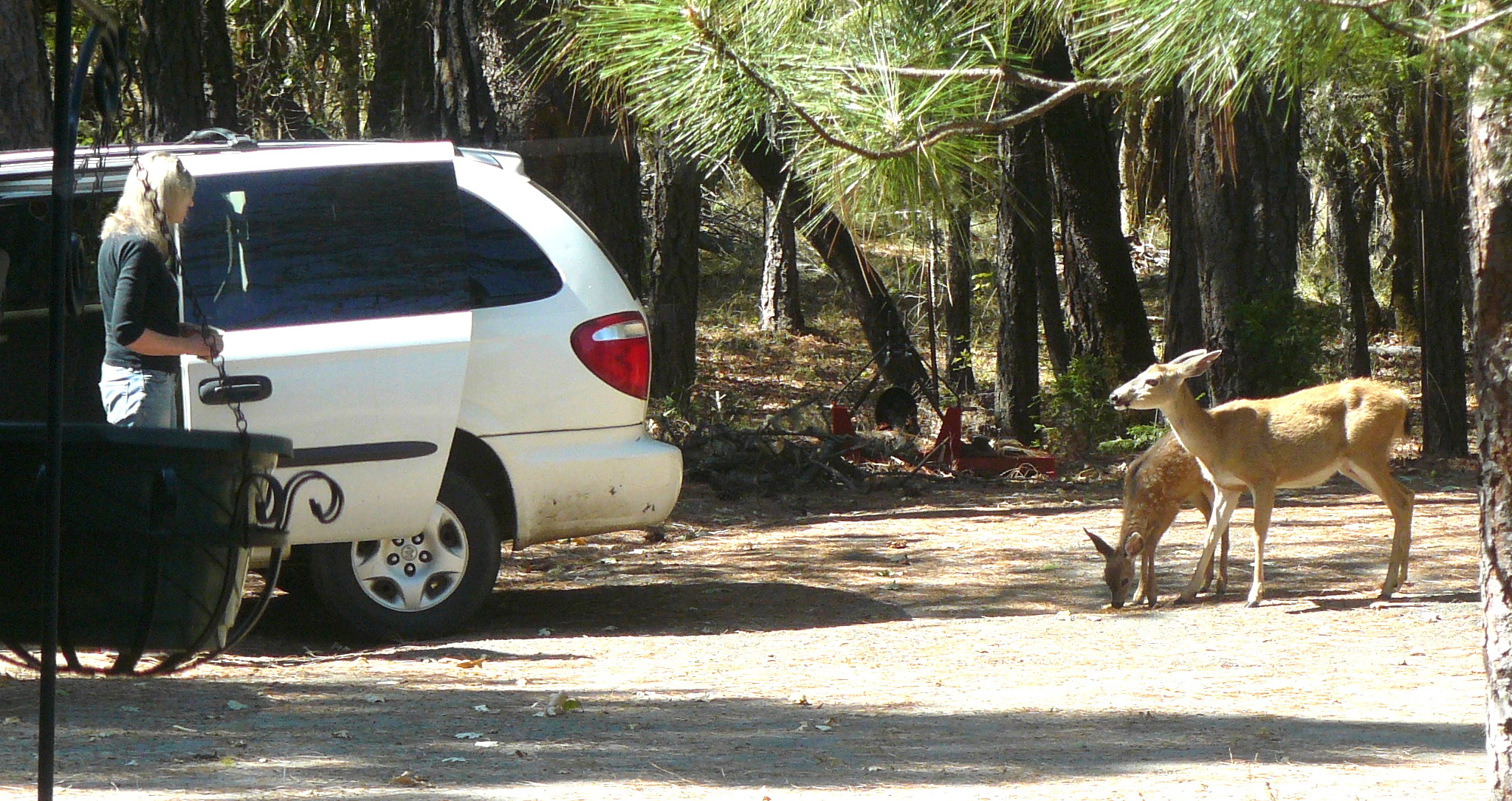
Here are two photographs taken on Friday when a mother deer and her young fawn overcame shyness of Jean in order to feed on some grains that Jean had placed near her car.
Trust between deer and Jean.
Later the young fawn was nibbling the grass in front of the tractor, allowing the following picture to be taken.
Magical moment.
We sincerely hope we can set up some regular pattern of feeding the deer, especially during the coming Winter.
What with spending too much time getting the new Apple set up, plus other domestic demands, I ran out of time to write a post for today.
Dan Gomez recently forwarded me an email that contained an amazing collection of historical photographs.
So going to leave you with these.
Black physicians treating in the ER a member of the Klu Klux Klan.
oooo
Recording the MGM Lion.
oooo
Charlie Chaplin meets Hellen Keller.
oooo
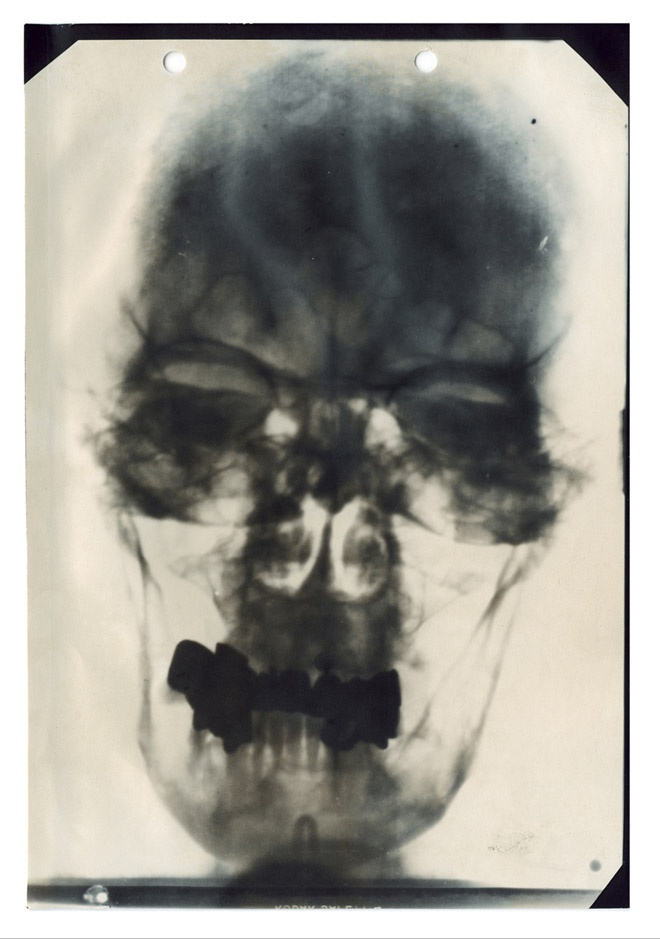
This is one of five known X-rays of Hitler’s head, part of his medical records compiled by American military intelligence after the German’s surrendered and declassified in 1958. The records also include doctor’s reports, diagrams of his teeth and nose and electrocardiograms. He had bad teeth, lots of fillings and crowns.
oooo
Market Street, San Francisco after the earthquake, 1906.
oooo
Leather gloves worn by Lincoln to Ford’s Theater on the night of his assassination. Blood stains are visible at the cuffs.
oooo
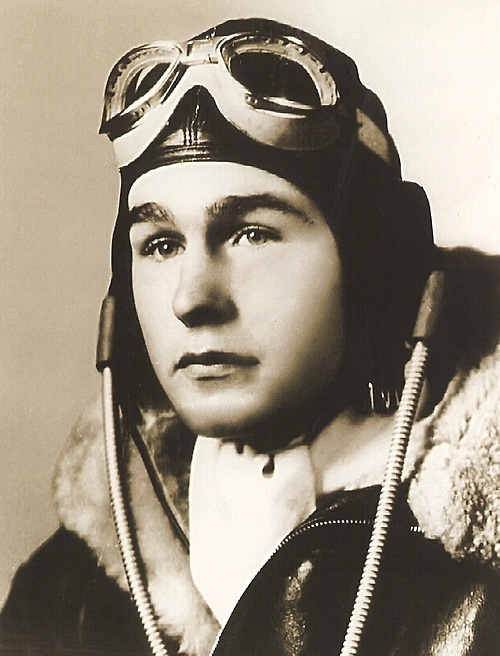
Three days before his 19th birthday, George H.W. Bush became the youngest aviator in the US Navy.
oooo
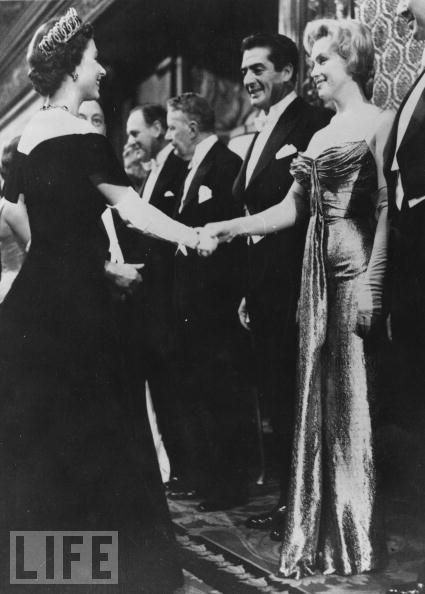
Marilyn Monroe meets Queen Elizabeth II, London, 1956 Both women are 30 years old. (And yours truly was 12!)
oooo
Sergeant Stubby (1916 or 1917 – April 4, 1926), was the most decorated war dog of World War I and the only dog to be promoted to sergeant through combat. America’s first war dog, Stubby, served 18 months ‘over there’ and participated in seventeen battles on the Western Front. He saved his regiment from surprise mustard gas attacks, found and comforted the wounded, and even once caught a German spy by the seat of his pants (holding him there until American Soldiers found him).
We have a visit to our property in a little over 2 hours time from the other students, Rhianna, our teacher, and mentors from the Land Stewardship course that Jean and I undertook at Oregon State University in the Spring.
I seemed to have picked up a Summer head cold that is making me more grumpy than usual!
Plus I have to focus on an interesting ‘project’ that I will write about early next week.
So there!
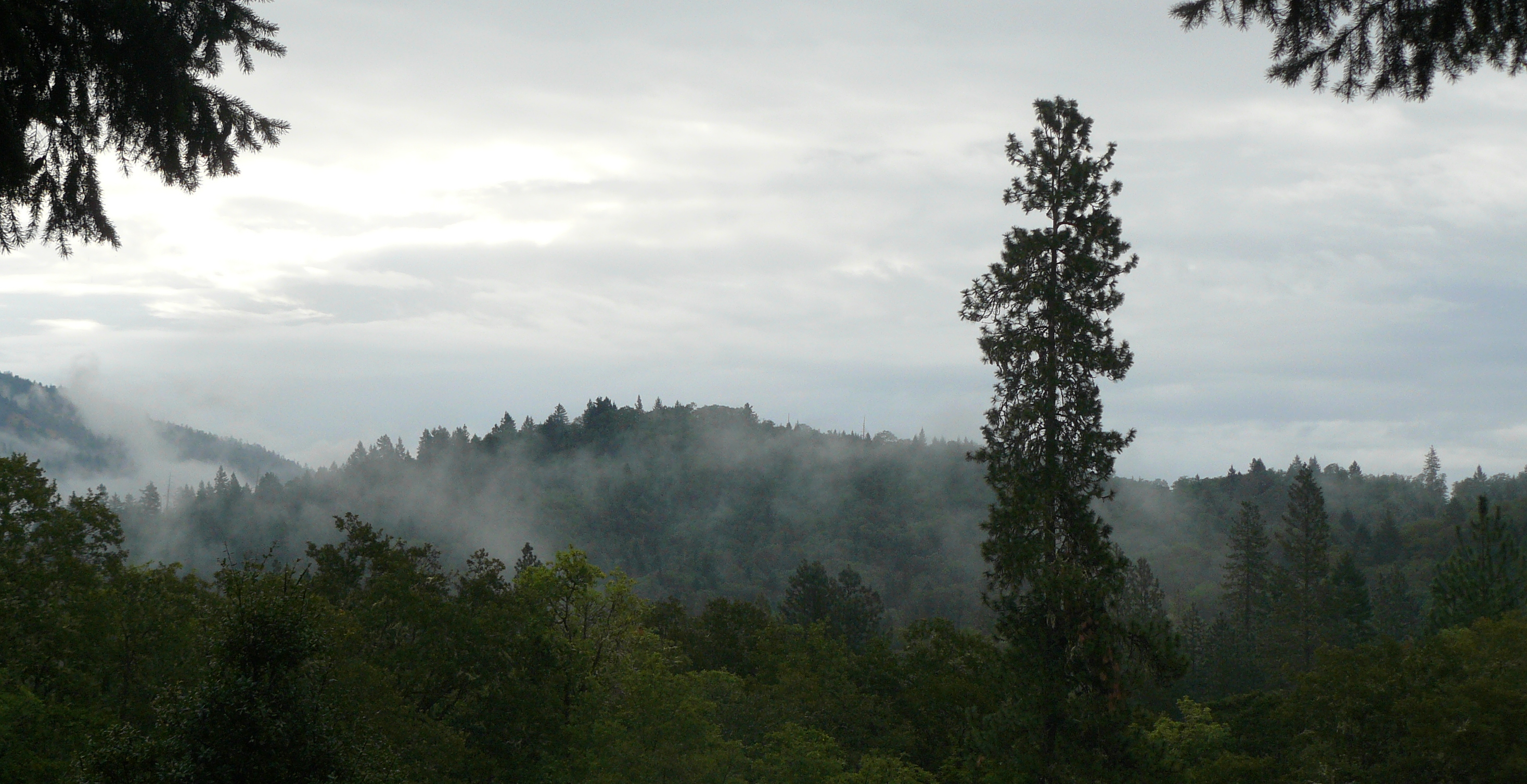
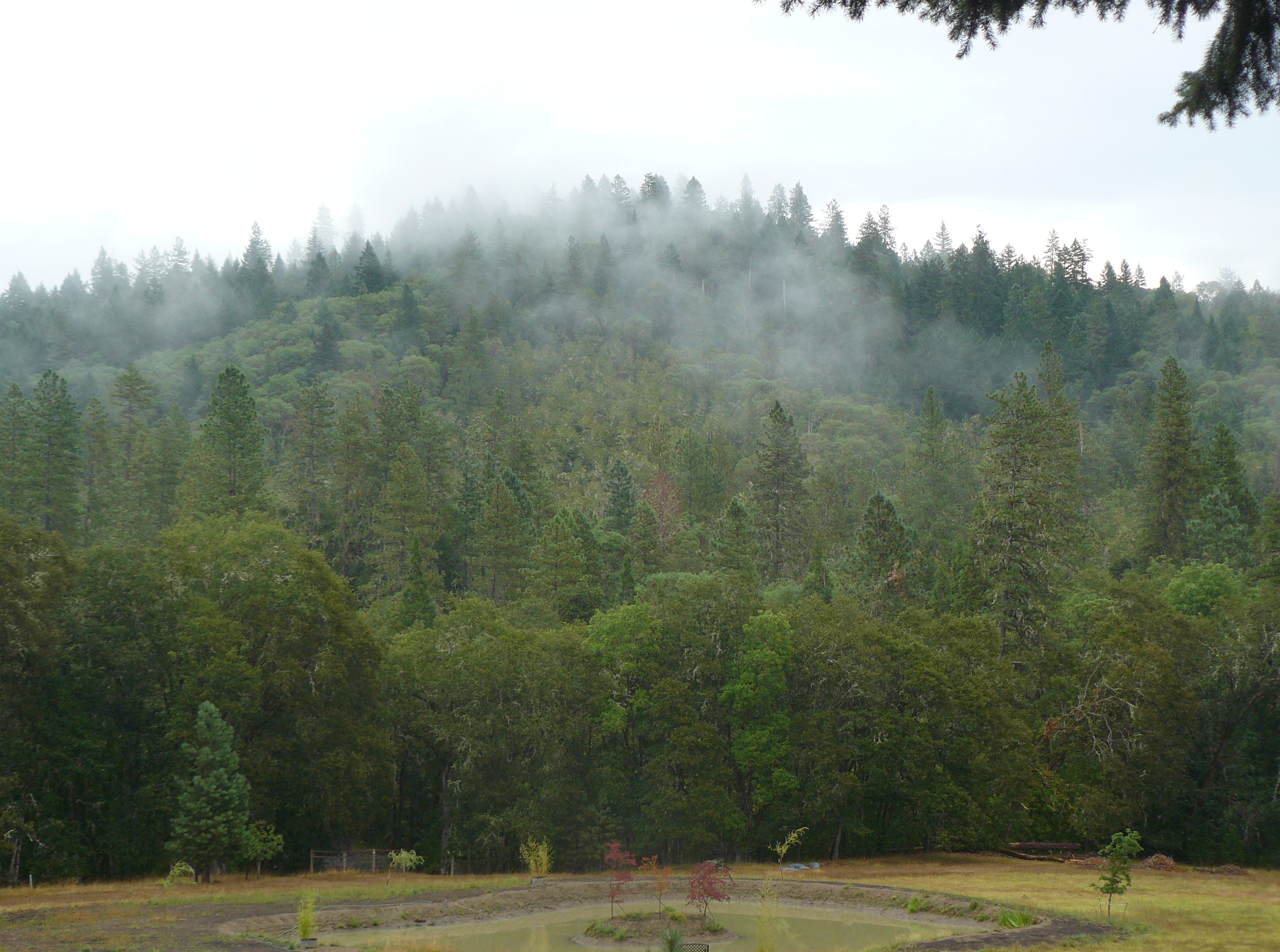
Let me leave you with these two pictures of the softness of cloud and low mist that brought some much-needed rain to us a few days ago.
Looking out to the North-East with Sexton Mountain, some 5 miles away, just off picture to the left.
oooo
Looking East across our fields to the forest beyond.
If anyone wants to put these pictures into context, there was a property map published in the LfD post of the 22nd, Sing for the trees.




















 Learning from Dogs