Category: Philosophy

Seeds of thought.

Two very different perspectives.

solstice

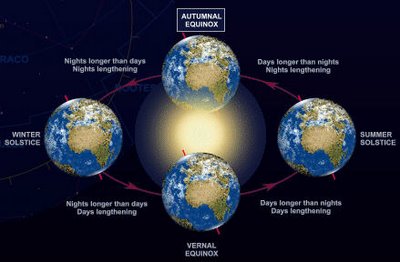
I’m writing this post a short while after midnight (UTC) on the morning of Tuesday, 23rd September.  In other words, 00:00 UTC 23/9/2014. (I hasten to add that the local time in Oregon is late afternoon Monday!)

In approximately three hours time it will be the moment of the September Equinox, or 02:29 UTC on the 23rd to be precise. The planet Earth has been in orbit around the sun for a very long time!  It’s almost beyond comprehension how long the Solar System has been the way it is.

All of which constitutes my introduction to a recent beautiful post over at Sue Dreamwalker.  Kindly republished with her gracious permission.

ooOOoo

Planting a Seed … A Thought!

William Blake, said:

that everything that now exists was once imagined,

Wayne Dyer said:

So, if you want something to exist, you must first be able to imagine it.

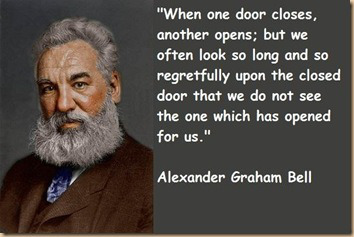
Each of us have a chance of planting new seeds.. Yet we so often never have the courage to pick them out of our minds to plant them with intention into our reality… Those alexander-graham-bell_thumbwho do have the courage may see how from their tentative thoughts ideas grew beyond their wildest dreams… I bet Alexander Graham Bell never in his wildest dreams would have thought how his invention would now be in everyone’s pocket!.

But we need to have the courage to take those first steps and plant them..

Like all seeds they take time to germinate, so too with our ideas we often wonder why our wishes are not fulfilled.. All too often we sabotage them before they even begin to grow roots. How?, because we doubt our own capabilities and we say we are far from worthy of success. Telling ourselves we are never lucky.. and its bound to fail.. So we poison the very idea, so the seed withers even before it gets a chance to grow..

Our subconscious mind is an incredible tool, it possess the power to manifest from our thoughts to bring them into our physical reality. You only have to take a look around the room you are now in, and see that every thing in it was once someone’s thought, even the paint upon the walls… An idea born, brought into reality from that first seed of an idea..

I have just finished a book the second time in reading it, I think this time its message really hit home. As I see how I have sabotaged many such seeds in the past. The Book is called Wishes Fulfilled By Wayne Dyer, listen to his talk HERE upon the subject of Wishes Fulfilled.

‘Thoughts become things when you Feel them’ says Wayne Dyer, In the past I have often experienced frustration, Anger, worry, stress. These I have amplified with my ‘Feelings’ as the frustration of helplessness, or horror at how brutal we can be to one another have overshadowed my thoughts..

We need to reprogrammed ourselves to think differently about ourselves and the World..

dr-wayne-dyer-quote_thumb

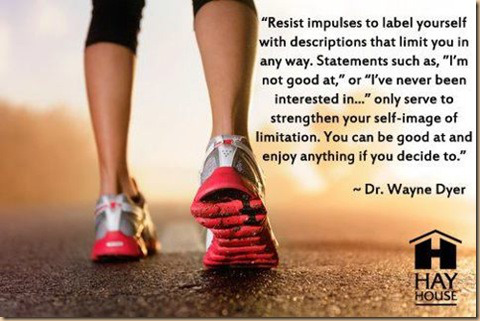
Seeds are sown, every day within our minds.. What sort of seeds are you sowing within your own mind? Which type of thoughts are you cultivating?

wayne-dyer-quote_thumb2

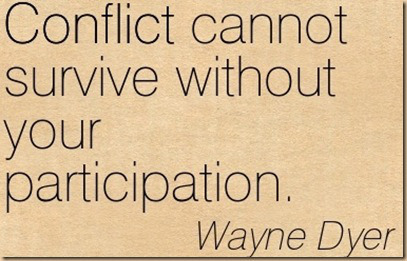
My last simple post World Peace! Just Imagine got reblogged 6 times!. I got more traffic today than for a long while.. People Do want Peace, and yet how many of us are being manipulated into getting caught up in Conflict? We are part of it every time we read a Newspaper, every time we watch the Media News, Every time we join in Gossip, every time we Judge another. Every time we argue, even with ourselves, We are creating yet more Conflict , more Negative Energy in the World.

Our very thoughts Create…

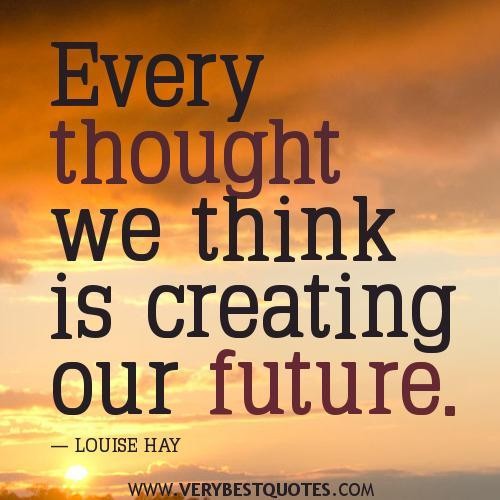
32108-Positive+thoughts+quotes+every

Let us Create the Future we each wish to Live in..

Have a Brilliant Thought Provoking and Harmonious Week!

Blessings

~Sue~

ooOOoo

So wherever you are in the world, take a moment to look up into the sky and marvel at it all.  As one of Sue’s followers remarked, “ ….. Equinox is an excellent time to focus on the seed ideas for the future.

Finally, the link that Sue included in the sentence, “The Book is called Wishes Fulfilled By Wayne Dyer, listen to his talk HERE upon the subject of Wishes Fulfilled.” took you to a YouTube video.  It is below because I know many will want to listen to Wayne Dyer’s important words.

3D-Autumn-1680x1050

From seeds grow great futures.

A welcome and understandable distraction.

We have family guests with us for the next seven days.

Jean’s brother, Reg, and his lady are arriving today so for a while blogging will be less of a priority than usual.

Although I have spoken to Reg over the telephone on numerous occasions, this will be the first time we have met and I am looking forward to better knowing him.

Thus, as in previous times when we have had friends and family staying with us, I will be reposting popular items from previous times on Learning from Dogs, or republishing things that have caught my eye in recent days.

As with today’s post.

Reg, shares the same birth year as me: 1944!

Thus we are staring over the edge of our eightieth decade!

So this short talk by Isabel Allende seems like a worthwhile topic for today!

Published on Sep 3, 2014
Author Isabel Allende is 71. Yes, she has a few wrinkles—but she has incredible perspective too. In this candid talk, meant for viewers of all ages, she talks about her fears as she gets older and shares how she plans to keep on living passionately.

Want to know more about Isabel Allende?  Her website is here.

Yet another thing we can learn from dogs! Living passionately right up to the last days.

Pharaoh, age 88 years in human equivalent, passing on his wisdom to Oliver, age 3 in human terms.
Pharaoh, age 88 in human equivalent years, passing on his wisdom to Oliver, age 3 in human terms. Makes being 70 look a doddle!

A world at peace.

Never say never!

Next Monday, the 21st September, is going to be the most important day this year.  No! The most important day ever!

Because next Monday is the date of the People’s Climate March in New York.  It is predicted to be the largest climate march in history. Well over 100,000 are expected to attend.  I shall write more about this event during the coming week.

But also the 21st September will be International Day of Peace. That coincidence strikes me as highly significant. For a world at peace would cause the most massive reduction in our use of carbon-based fuels.

Thus without any embarrassment, I intend to republish in full [Ed: but see my comment] a recent item on the Permaculture News website: Seven Reasons Why World Peace is Possible.

Do I mention dogs?  Read through to the end to find out! (Probably not difficult to guess the answer!)

ooOOoo

Seven Reasons Why World Peace is Possible

Introduction

The 21st of September will be International Day of Peace. It may seem a little premature to declare that world peace is due to break out by the end this month. I do not deny that the amount of killing and death and war and torture and death and coercion and abuse and death all over everywhere can be overwhelming. Nor do I deny that considering this, it is a natural assumption to believe people are sinners, destined for extinction. However, I do argue that compassion is as much a part of human nature as cruelty.

There is evidence that humankind did not always live violent lives. In fact, I assume most people reading this article are not habitually violent, and do not desire to watch someone suffer. All animals have the capacity to enrich the lives of others. We have the capacity to be both selfish and kind. What matters is which quality we chose to focus on; bringing that quality into focus within ourselves, the world, and our children.

Here I have collected an array of research demonstrating that there is a positive potential within each social group and person. I argue that humans can learn to build societies which are not founded on the expectation of organised violence. Here are seven reasons why world peace is possible. You won’t believe your own strength of belief: There is at least some hope.

aadsdas
National Peace Academy’s Peace Spheres

Experimental prototypes

The balance of this powerful and fascinating article may be read here.

ooOOoo

How many links did you follow?  Most of them are wonderful links to organisations that many readers, including me, may not have come across before.

So to close.

I was about half-way through arranging today’s post when I realised that dogs have evolved without the need to have their own police forces or armies.  It’s not as silly as it first sounds. Of course, dogs fight and some fights can be brutal and, occasionally, fatal to one or more of the participants.  But they have a keen sense of their locality, of their tribal space; so to speak.  Even as domestic animals, they are fiercely protective of what is their own place.  Before dogs were domesticated, like the wolves from whence dogs evolved, the pack size was around fifty animals with just three animals having any form of status; something that has been mentioned many times before in this place.

The point is that dogs are creatures that have evolved to live in a local community and to live peacefully; by and large.  My sense is that ancient man also evolved to be most complete within a community environment.

This is the end of the era of huge federal and national social constructions.

We must return to locally run and managed communities, which is the pathway to peace across this planet.

Inspiring transformation everywhere.

The second of George Monbiot’s essays on Scotland.

In yesterday’s post Alba an Aigh or Scotland the Brave, I closed it by saying, “Since preparing this post, I see that George Monbiot has published a second essay on the subject of the Scottish referendum. I’m pondering republishing that second essay next Monday.”

Upon further reflection, it struck me that Mr. Monbiot’s second essay was better appreciated being republished in this place the following day; i.e. today.

Thus with no further ado, here it is.

ooOOoo

England the Brave

September 9, 2014

The rest of the UK doesn’t need to be rescued by Scottish votes: independence could inspire transformation everywhere.

By George Monbiot, published in the Guardian 9th September 2014

Of all the bad arguments urging the Scots to vote no – and there are plenty – perhaps the worst is the demand that Scotland should remain in the Union to save England from itself. Responses to last week’s column suggest that this wretched, snivelling, apron-strings argument has some traction among people who claim to belong to the left.

Consider what it entails: it asks a nation of 5.3 million to forgo independence to exempt a nation of 53 million from having to fight its own battles. In return for this self-denial, the five million must remain yoked to the dismal politics of cowardice and triangulation which have caused the problems from which we ask them to save us.

“A UK without Scotland would be much less likely to elect any government of a progressive hue”, the former Labour minister Brian Wilson claimed in the Guardian last week(1). We must combine against the “forces of privilege and reaction” (as he lines up with the Conservatives, UKIP, the LibDems, the banks, the corporations, almost all the rightwing columnists in Britain and every UK newspaper except the Sunday Herald) – in the cause of “solidarity”.

There’s another New Labour weasel word to add to its dreary lexicon (other examples include reform, which now means privatisation, and partnership, which means selling out to big business). Once solidarity meant making common cause with the exploited, the underpaid, the excluded. Now, to these cyborgs in suits, it means keeping faith with the banks, the corporate press, cuts, a tollbooth economy and market fundamentalism.

Here, to Wilson and his fellow flinchers, is what solidarity meant while they were in office. It meant voting for the Iraq war, for Trident, for identity cards, for 3,500 new criminal offences(2), including the criminalisation of most forms of peaceful protest(3). It meant being drafted in as political mercenaries to impose on the English policies to which the Scots were not subject, such as university top-up fees and foundation hospitals(4,5). It meant supporting every destructive and injust proposition advanced by their leaders: the brood parasites who hatched in the Labour nest then flicked its dearest principles over the edge. It’s no surprise that the more the Scots see of their former Labour ministers, the more inclined they are to vote for independence.

So now Better Together has brought in Gordon Brown, scattering bribes in a desperate, last-ditch effort at containment. They must hope the Scots have forgotten that he boasted of setting “the lowest rate in the history of British corporation tax, the lowest rate of any major country in Europe and the lowest rate of any major industrialised country anywhere”(6). That he pledged to the City of London “in budget after budget I want us to do even more to encourage the risk takers”(7). That, after 13 years of Labour government, the UK had higher levels of inequality than after 18 years of Tory government(8). That his government colluded in kidnapping and torture(9). That he helped cause the deaths of hundreds of thousands through his support for the illegal war on Iraq.

He roams through Scotland, still badged with blood, promising what he never delivered when he had the chance, this man who helped unravel the social safety net his predecessors wove; who marketised and dismembered public services; who enriched the wealthy and shafted the poor; who pledged money for Trident but failed to reverse the loss of social housing(10); whose private finance initiative planted a series of timebombs now exploding throughout the NHS and other public services(11); who greased and wheedled and slavered his way into the company of bankers and oligarchs while trampling over the working people he was elected to represent. This is the progressive Prester John who will ride to the rescue of the No campaign?

Where, in Scotland’s Labour party, are the Keir Hardies and Jimmy Reids of our time? Where is the vision, the inspiration, the hope? The shuffling, spineless little men with whom these titans have been replaced offer nothing but fear. Through fear they seek to shove Scotland back into its box, as its people rebel against the dreary, closed future mapped out for them – and the rest of us – by the three main Westminster parties.

Sure, if Scotland becomes independent, all else being equal, Labour would lose 41 seats at Westminster and Tory majorities would become more likely(12). But all else need not be equal. Scottish independence can galvanise progressive movements across the rest of the United Kingdom. We’ll watch as the Scots engage in the transformative process of writing a constitution. We’ll see that a nation of these islands can live and – I hope – flourish with a fully elected legislature (no House of Lords), with a fair electoral system (proportional representation), and with a parliament in which only representatives of that nation can vote (no cross-border mercenaries).

Already, the myth of political apathy has been scotched by the tumultuous movement north of the border. As soon as something is worth voting for, people will queue into the night to add their names to the register(13). The low turn-outs in Westminster elections reflect not an absence of interest but an absence of hope.

If Scotland becomes independent, it will be despite the efforts of almost the entire UK establishment. It will be because social media has defeated the corporate media. It will be a victory for citizens over the Westminster machine, for shoes over helicopters. It will show that a sufficiently inspiring idea can cut through bribes and blackmail, through threats and fearmongering. That hope, marginalised at first, can spread across a nation, defying all attempts to suppress it. That you can be hated by the Daily Mail and still have a chance of winning.

If Labour has any political nous, any remaining flicker of courage, it will understand what this moment means. Instead of suppressing the forces of hope and inspiration, it would mobilise them. It would, for example, pledge, in its manifesto, a referendum on drafting a written constitution for the rest of the United Kingdom.

It would understand that hope is the most dangerous of all political reagents. That it can transform what appears to be a fixed polity, a fixed outcome, into something entirely different. That it can summon up passion and purpose we never knew we possessed. If Scotland becomes independent, England – if only the potential were recognised – could also be transformed.

www.monbiot.com

References:

1. http://www.theguardian.com/commentisfree/2014/sep/04/scottish-independence-nationalism-progressive-george-monbiot-uk

2. http://www.dailymail.co.uk/debate/article-1205676/Paranoid-suspicion-obsessive-surveillance–land-liberty-destroyed-stealth.html

3. http://www.legislation.gov.uk/ukpga/2005/15/contents#pt4-pb1-l1g125

4. http://news.bbc.co.uk/1/hi/scotland/3432767.stm

5. http://news.bbc.co.uk/1/hi/scotland/3054562.stm

6. http://www.parliament.the-stationery-office.co.uk/pa/cm199899/cmhansrd/vo990309/debtext/90309-06.htm

7. http://www.theguardian.com/politics/2004/jun/17/economy.uk

8. http://www.poverty.org.uk/09/index.shtml

9. http://www.theguardian.com/politics/2013/dec/19/mi5-mi6-questions-torture-terrorism-rendition

10. http://data.gov.uk/dataset/house-building-dwellings-completed-total

11. http://www.theguardian.com/news/datablog/interactive/2012/jun/26/health-nhs-trusts-pfi-interactive-map

12. http://www.bbc.co.uk/news/uk-politics-27129813

13. http://www.bbc.co.uk/news/uk-scotland-scotland-politics-29024311

ooOOoo

By this day next week, we shall know the outcome.

Wisdom, nature and philosophy.

The hidden gifts of nature.

I have been a follower of Alex Jones’ blog The Liberated Way for many months; possibly much longer. Frequently, I republish one of Alex’s posts here.

Nearly six months ago, I read a lovely essay of his and made a mental note to republish that in the next few days.  Then the world overtook me and now April 30th, when Alex published this piece, has become September 8th!

Yet it hasn’t lost a heartbeat of meaning.

Read on and you will agree.

ooOOoo

The hidden gifts of nature.

The western education system ignores nature.

Nature is all around us with its gifts of philosophy, wisdom and creativity; qualities the West devalues at its loss.

The holidays are over in the UK, the students return to school, some to their exams. I reflect upon the sad treatment of creativity, wisdom, nature and natural philosophy in education, and in Western society as a whole, treated as worthless and unworthy of consideration.

On most days I walk past the former home of William Gilbert, some consider the father of electricity and magnetism. Born to a wealthy merchant family in my town of Colchester, Gilbert invested his personal wealth in an extensive study of magnetism with view to assisting the explorers of the Elizabethan age when Britain was building an empire in a period of great prosperity and confidence. Gilbert invented the term electricity. Gilbert wrote De Magnete, considered possibly the first work using the scientific method. In addition to being a scientist, a doctor to Elizabeth I, Gilbert was also a natural philosopher who used the empirical method of observation, demonstration and experience of nature to form his theories.

Each day I watch and interact with nature, like Gilbert I am a natural philosopher, and this forms the basis of my business ideas, my scientific understanding and my personal philosophies. Rather than a worthless study nature opens the door to the philosophy of the understanding of self, the world, and the relationship of self to the world. Wisdom is born of action and experience, the interactions with nature gives birth to wisdom. Nature encourages people to do new things in new ways, so rerouting electric signals in the brain causing new connections to form of creativity. The philosophy emerges from nature by causing the mind to question, observe and experiment, the basis of science and success in any discipline.

ooOOoo

Colchester, in the English county of Essex, goes way back to Roman times when the town was called Camulodunon (which was latinised as Camulodunum). That name is believed to date back to the Celtic fortress of “Camulodunon”, meaning Stronghold of Camulos. It served as the first capital of Roman Britain making a claim to be the oldest town in Britain.

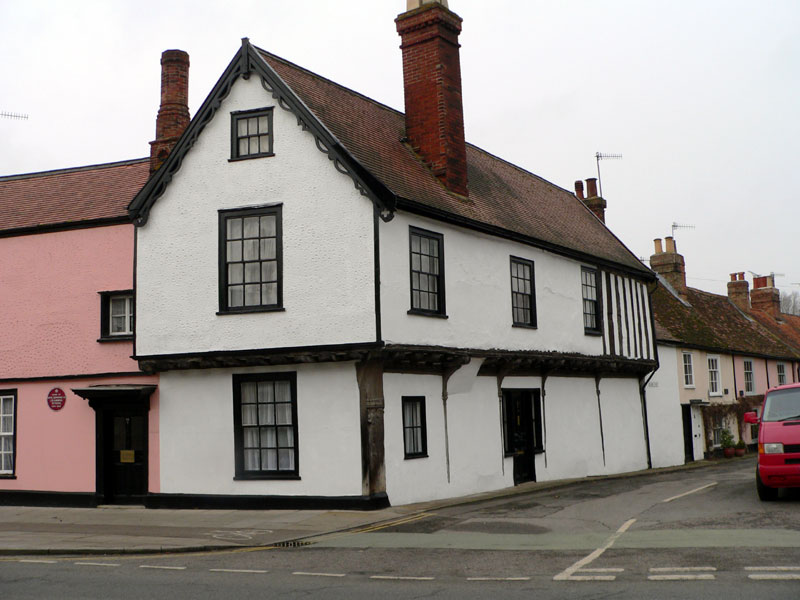
It is where Alex Jones lives, the author of The Liberated Way, and where during the 1980’s I ran a business under the name of Dataview Ltd.  In fact, the business was located in a very old, listed building known as The Portreeve’s House.  It was at the bottom of town near Hythe Quay on the River Colne and the name “Portreeve” is old English for harbour master, i.e. it was originally the harbour master’s house.

The timber-framed building at 1–2 East Bay, Colchester, known as the Portreeve’s House (TM00552525), is situated on the main eastern approach to the town centre. The building is on the junction of Brook Street and East Bay (FIG. 1) and is 375 metres east of the former position of East Gate and 150 metres west of East Bridge, the river Colne and East Mill.
The timber-framed building at 1–2 East Bay, Colchester, known as the Portreeve’s House is situated on the main eastern approach to the town centre. The building is on the junction of Brook Street and East Bay and is 375 metres east of the former position of East Gate and 150 metres west of East Bridge, the river Colne and East Mill.  The building is believed to date back to the 16th Century.

All seems a long way from Southern Oregon!

The real you!

I am delighted to present the following guest post from Ruth Nina Welsh.

We seem to be on a bit of a roll in terms of seeking a better self-understanding.

Last Thursday I offered up some thoughts and reflections on meditation Quietening one’s self down and then the following day presented the film Inner worlds, Outer worlds, the wonderful film by Canadian film maker, musician and meditation teacher Daniel Schmidt. Daniel described his film “as the external reflection of his own adventures in meditation.” (And did you read the fascinating comments by ‘R’?)

Anyway, to today.

I forget how Ruth and I made contact with each other but that’s immaterial to today’s guest post. What is material is that we did make contact and through Ruth’s website I became aware of her talents. In her own words:

BE YOUR OWN COUNSELLOR & COACH shares psychology, memoirs and creativity to help and inspire you to live a happier, more fulfilling and purposeful life.

****

WHO AM I? – I’m a freelance writer, specialising in lifestyle, wellbeing and self-help; a former counsellor & coach and an erstwhile musician. I have a diverse educational Ruth-Profile-Photobackground – with degrees in arts and law – but psychology is my passion. You can find out more about me on my personal site.

  • As a singer-songwriter, I released my debut acoustic album – As I Breathe – in 2000.
  • As a counsellor and coach, I was in private practice from 2008-2011.
  • As a freelancer in the publishing field, I’ve been involved as an editor, formatter, copy-editor, proofreader and I’ve also managed book projects and manuscript submissions.
  • Now, as a freelance writer, I write articles and guest posts, and continue to build this free online self-help resource.

So back to the connection between Ruth and me.

A couple of weeks ago, Ruth asked me if I would like to publish an essay from her.

I read it and replied without hesitation that I would be honoured to publish said essay.

Thus with no further ado here it is. (And do read to the end to be informed about a very generous free offer from Ruth.)

ooOOoo

The Struggle To Be Authentic

Introduction

Of all the challenges we face in life, the struggle to be authentic is a vital one. It’s not always recognised that being authentic – being true to ourselves – is essential for our own wellbeing and happiness. We struggle with authenticity because it’s often hard to reveal the truth about how we feel. And, as strange as it may seem, sometimes we don’t even know how we truly feel. It can be painful and difficult to begin to speak from a place of truth and to unmask hidden feelings which may be covered over by years of denial, trauma and people pleasing.

How we learn to be authentic in childhood

Being authentic and true to ourselves is not innate; it’s something we learn how to do. We learn from those close to us as we grow up. As children we observe our parents, or others who care for us. We notice how truthful and genuine they are. We also learn that there is power in the gap between how we feel and what we actually reveal to others. During our childhood we sometimes find that it can be unwise to say what we honestly feel or think, it can get us into trouble. Bruising judgements from our parents can mean we stay quiet rather than speak up. If a parent constantly criticises and mocks us it’s likely that we’ll modify our behaviour around them. We’ll try to please them and avoid unnecessary pain by saying what they want to hear – even if this is not our own truth. Not being true to ourselves can also follow a traumatic event where we may feel the need to hide our feelings or bury painful grief. All of these things and more mean that, piece by piece, we can lose connection with ourselves and how we truly feel.

The struggle to be authentic in adulthood

As we leave childhood behind us we take the lessons we learn from it into our adult lives. If we felt unable to speak up truthfully when younger then this usually doesn’t change when we become an adult. We can find ourselves unable to speak up within an intimate relationship, downtrodden in our work life and unable to fully connect in our friendships. Over time, if we keep speaking the words only others want to hear – words that are not our own truth – we can lose touch with what we actually feel. We can lose touch with our true selves, our true desires and our true needs and wants. Having been a spokesperson for others for so long we can find ourselves lost and adrift, not knowing how we truly feel about anything, not knowing who we really are. And this can lead us to a treacherous place – living behind a mask, fearing disapproval, and not connecting at a genuine level with anyone. This damaging cycle will continue unless, or until, we see the need for change and realise that being authentic is vital for our own happiness and wellbeing.

Learning to be authentic

It’s difficult to be authentic when this has not been our normal way of being. We may have been used to white lies, outright untruths, or just unconsciously denying our own thoughts and feelings. We may have lived in a family where half-truths and masks were the norm. We may have had to hide our own feelings to survive. This is then our problem: without a template of truth-telling and speaking out in a genuine way, we often struggle to be authentic. We may even have to learn how to be honest and authentic from the bottom up.

Two steps to authenticity

As a starting point, our task is two-fold and can be seen in two distinct steps. Firstly, to find out how we actually feel about things and, secondly, to begin to reveal how we feel to others. This sounds straightforward but doing these two things can be intensely challenging. We are often beaten down by life, our words may have been ridiculed, our self-esteem may be low. We can feel worthless and feel that what we have to say doesn’t matter. If you are in this place, then the most important thing to understand, as a given, is that what you have to say does matter and you have a right to say it. Whatever you have learned in the past and whatever you have been told, know these vital, universal truths:

Each of us has value, has a voice, and we are entitled to speak out and have our own precious, individual opinions heard.

First Step: How do you feel?

With that as your starting point – that your true, individual voice matters – you can begin the first step: to find out how you actually feel. This can be easier said than done. You’ve spoken the words others wanted to hear for so long now that you may not actually know how you genuinely feel. To begin to make inroads into this takes time, an effort of will, and an increase in your own self-awareness. One of the easiest ways to begin this process is to record your thoughts, feelings and opinions down on paper. In a private way, in your own journal, you can start to look and search inside yourself for how you actually feel about things – what you believe, what your opinions are, what you want from life. You can uncover what your own personal likes and dislikes are – not to please others, but to please yourself. With time and patience your awareness will increase and you’ll begin to hear your own inner voice speak out. It may be a whisper at first, but, if nurtured, this will develop. Gradually you will begin to connect with your true self and start to know how you truly feel.

Second Step: Share how you feel

As you begin to know how you feel you can start to embark on the second step on the road to being authentic and true to yourself – revealing and sharing how you feel. You can begin to speak up for yourself and share your own beliefs and opinions. Your voice does not need to be loud or demanding, but with calm authority you can learn to speak out. This can be a difficult process at the beginning but try starting this process by speaking out in safe emotional surroundings. Find friends who are supportive and then begin to honestly and truthfully share your thoughts and feelings with them. As you begin to know how you feel, and start to voice your own opinions, you can create more meaningful relationships. You can connect at a deeper emotional level – from a place of truth and honesty.

Conclusion

It sounds simple, being true to ourselves, but it is a continual struggle and it is fraught with difficulty. Fraught with judgement, disapproval and fear. But the courageous speak out from a place of truth and in doing this they make deep, meaningful and honest connections. This impacts on all parts of a person’s life: from choices made to the quality of relationships enjoyed. Being authentic becomes a way of being, a way of life. With the voice of authenticity comes true connection and it is well worth the struggle it costs us. For if we are just a spokesperson for others, or a mouthpiece for others – fake, in other words – then what value and meaning can we attach to our own lives and to our relationships? And if we are not being true to ourselves and genuinely authentic in our words and deeds then who are we in this world and what is the point of our life?

© 2014 Ruth Nina Welsh

ooOOoo

So to that special offer.

Ruth asked me to include this invitation for all readers of Learning from Dogs.

Simply if you go across to Ruth’s website Be Your Own Counsellor & Coach and sign up as an email subscriber, you will get the free ebook when it becomes available in the autumn!!  The sign-up box is to the top right-hand corner of the home page, just above the following:

Free Ebook For Subscribers – Coming Autumn 2014

RNW ebook

FREE to Subscribers. The first book in my series will be free to subscribers of this site and also available on Amazon as an ebook.

Subscribe above to receive this free book when it becomes available.

oooo

Being authentic?

Do you share your life with a dog?  Learn!

Being proud to be a deviant!

A powerful essay from George Monbiot.

Many will be aware that on a fairly regular basis, I repost essays here from George Monbiot, the last being Monbiot Unmasked on the 6th August.

I do so because in a world where much of the media is ‘bought’, and do understand that I use the term loosely, solid and trustworthy correspondents are to be applauded and, in turn, their views shared.  Mr. Monbiot is a classic example of someone who adheres to a truthful perspective. I am more than grateful for the blanket permission given to me by GM for the republication of his essays.

Thus with no further ado, here is George Monbiot’s essay Deviant and Proud published in the UK’s Guardian newspaper on the 6th August, 2014.

ooOOoo

Deviant and Proud

August 5, 2014

Do you feel left out? Perhaps it’s because you refuse to succumb to the competition, envy and fear neoliberalism breeds.

By George Monbiot, published in the Guardian 6th August 2014

To be at peace with a troubled world: this is not a reasonable aim. It can be achieved only through a disavowal of what surrounds you. To be at peace with yourself within a troubled world: that, by contrast, is an honourable aspiration. This column is for those who feel at odds with life. It calls on you not to be ashamed.

I was prompted to write it by a remarkable book, just published in English, by a Belgian professor of psychoanalysis, Paul Verhaeghe (1). What About Me?: The Struggle for Identity in a Market-Based Society is one of those books that, by making connections between apparently distinct phenomena, permits sudden new insights into what is happening to us and why.

We are social animals, Verhaeghe argues, and our identity is shaped by the norms and values we absorb from other people. Every society defines and shapes its own normality – and its own abnormality – according to dominant narratives, and seeks either to make people comply or to exclude them if they don’t.

Today the dominant narrative is that of market fundamentalism, widely known in Europe as neoliberalism. The story it tells is that the market can resolve almost all social, economic and political problems. The less the state regulates and taxes us, the better off we will be. Public services should be privatised, public spending should be cut and business should be freed from social control. In countries such as the UK and the US, this story has shaped our norms and values for around 35 years: since Thatcher and Reagan came to power (2). It’s rapidly colonising the rest of the world.

Verhaeghe points out that neoliberalism draws on the ancient Greek idea that our ethics are innate (and governed by a state of nature it calls the market) and on the Christian idea that humankind is inherently selfish and acquisitive. Rather than seeking to suppress these characteristics, neoliberalism celebrates them: it claims that unrestricted competition, driven by self-interest, leads to innovation and economic growth, enhancing the welfare of all.

At the heart of this story is the notion of merit. Untrammelled competition rewards people who have talent, who work hard and who innovate. It breaks down hierarchies and creates a world of opportunity and mobility. The reality is rather different. Even at the beginning of the process, when markets are first deregulated, we do not start with equal opportunities. Some people are a long way down the track before the starting gun is fired. This is how the Russian oligarchs managed to acquire such wealth when the Soviet Union broke up. They weren’t, on the whole, the most talented, hard-working or innovative people, but those with the fewest scruples, the most thugs and the best contacts, often in the KGB.

Even when outcomes are based on talent and hard work, they don’t stay that way for long. Once the first generation of liberated entrepreneurs has made its money, the initial meritocracy is replaced by a new elite, which insulates its children from competition by inheritance and the best education money can buy. Where market fundamentalism has been most fiercely applied – in countries like the US and UK – social mobility has greatly declined (3).

If neoliberalism were anything other than a self-serving con, whose gurus and think tanks were financed from the beginning by some of the richest people on earth (the American tycoons Coors, Olin, Scaife, Pew and others) (4), its apostles would have demanded, as a precondition for a society based on merit, that no one should start life with the unfair advantage of inherited wealth or economically-determined education. But they never believed in their own doctrine. Enterprise, as a result, quickly gave way to rent.

All this is ignored, and success or failure in the market economy are ascribed solely to the efforts of the individual. The rich are the new righteous, the poor are the new deviants, who have failed both economically and morally, and are now classified as social parasites.

The market was meant to emancipate us, offering autonomy and freedom. Instead it has delivered atomisation and loneliness. The workplace has been overwhelmed by a mad, Kafka-esque infrastructure of assessments, monitoring, measuring, surveillance and audits, centrally directed and rigidly planned, whose purpose is to reward the winners and punish the losers. It destroys autonomy, enterprise, innovation and loyalty and breeds frustration, envy and fear. Through a magnificent paradox, it has led to the revival of a grand old Soviet tradition, known in Russian as tufta. It means the falsification of statistics to meet the diktats of unaccountable power.

The same forces afflict those who can’t find work. They must now contend, alongside the other humiliations of unemployment, with a whole new level of snooping and monitoring. All this, Verhaeghe points out, is fundamental to the neoliberal model, which everywhere insists on comparison, evaluation and quantification. We find ourselves technically free but powerless. Whether in work or out of work, we must live by the same rules or perish. All the major political parties promote them, so we have no political power either. In the name of autonomy and freedom we have ended up controlled by a grinding, faceless bureaucracy.

These shifts have been accompanied, Verhaeghe writes, by a spectacular rise in certain psychiatric conditions: self-harm, eating disorders, depression and personality disorders. Of the personality disorders, the most common are performance anxiety and social phobia; both of which reflect a fear of other people, who are perceived as both evaluators and competitors, the only roles for society that market fundamentalism admits. Depression and loneliness plague us. The infantilising diktats of the workplace destroy our self-respect. Those who end up at the bottom of the pile are assailed by guilt and shame. The self-attribution fallacy cuts both ways (5): just as we congratulate ourselves for our successes,we blame ourselves for our failures, even if we had little to do with it.

So if you don’t fit in; if you feel at odds with the world; if your identity is troubled and frayed; if you feel lost and ashamed, it could be because you have retained the human values you were supposed to have discarded. You are a deviant. Be proud.

www.monbiot.com

References:

1. Paul Verhaeghe, 2014. What About Me?: The struggle for identity in a market-based society. Scribe. Brunswick, Australia and London.

2. http://www.theguardian.com/commentisfree/2010/oct/18/conservative-financial-crisis-opportunity

3. http://www.theguardian.com/news/datablog/2012/may/22/social-mobility-data-charts

4. http://www.theguardian.com/commentisfree/2007/aug/28/comment.businesscomment

5. http://www.theguardian.com/commentisfree/2011/nov/07/one-per-cent-wealth-destroyers

ooOOoo

What powerful observations; what common-sense written by Paul Verhaeghe, and beautifully reported by Mr. Monbiot in an incredible essay.

You have probably guessed where I stand! 😉

The power of hope.

Funny how things happen.

Yesterday evening we had close friend Don Reeve staying with us.  To put this into context, it was Don and his wife, Suzann, who in 2007 invited me to spend Christmas with them at their Winter home down in San Carlos, Mexico. That, in turn, led me to meeting Jean, Suzann’s best friend, and look where that got me! 🙂

(Can’t resist adding that Jean and I were born in London, some 23 miles from each other!)

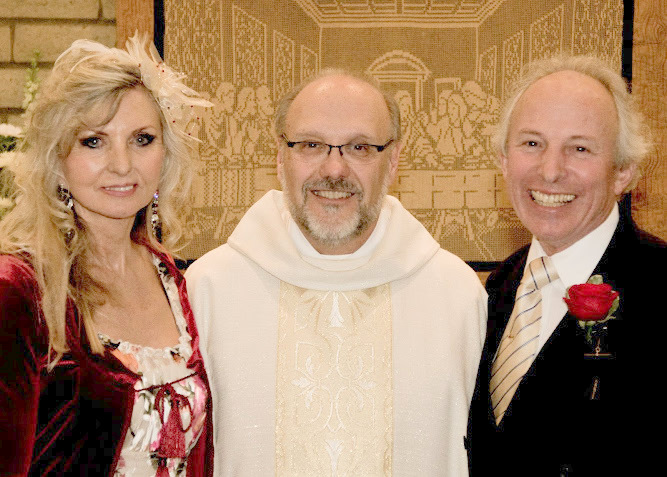
Fr. Dan Tantimonaco with the newly weds!
Fr. Dan Tantimonaco with the newly weds! Payson, AZ. November 20th., 2010.

Thus you can understand the pleasure it was for Jean and me again to see Don; albeit for a brief overnight stay.

What was an extra, unanticipated pleasure was meeting a young, rescue dog that Don had adopted in recent weeks.  Her name is Margarita and she was found and rescued by Suzann from the streets in San Carlos.  What was so glorious was to see the love and hope for a better future that flowed between Don and the sweet, young Margarita.  It resonated so perfectly well with Suzan’s post published here on Monday: Rescued dogs are life-savers.

By the time I sat down at my desk yesterday, I was conscious of a) not having a clue as to what to write, and b) inspired by the sense of hope that dogs offer us humans.  Serendipitously, the theme of hope led me to a post written by Jennifer Broudy de Hernandez over on her Transition Times blog.  It was called Warriors for the Planet and was the most beautiful essay.

I’m delighted to reblog that here with Jennifer’s approval.

ooOOoo

Warriors for the Planet

Another summer, another war. I wonder how many summers there have been in the last 5,000 years when human beings were not occupied with killing each other?

Correction: not “human beings,” “men.”

Let’s be frank: even though there may be women in the armed forces of many countries now, war still remains a masculine activity and preoccupation. The women who serve as soldiers must adhere to the masculine warrior code and become honorary “bros,” for whom the worst insult is still be called a “girl” or a “pussy.”

annebaring_a_lgI have been reading Anne Baring’s magisterial book The Dream of the Cosmos, in which she gives a detailed account of the shift, around the time of Gilgamesh, from the ancient, goddess- and nature-worshipping “lunar cultures” to the contemporary era of solar, monotheistic, warrior-worshipping cultures.

In her elaboration of this shift, I read the tragedy of our time, enacted over and over again all over the planet, and not just by humans against humans, but also by humans against the other living beings with whom we share our world. I quote at length from Baring’s remarkable book:

gilgamesh-187x300“The archetype of the solar hero as warrior still exerts immense unconscious influence on the modern male psyche, in the battlefield of politics as well as that of corporate business and even the world of science and academia: the primary aim of the male is to achieve, to win and, if necessary, to defeat other males. The ideal of the warrior has become an unconscious part of every man’s identity from the time he is a small child.

“With the mythic theme of the cosmic battle between good and evil and the indoctrination of the warrior went the focus on war and territorial conquest. War has been endemic throughout the 4000 years of the solar era. The glorification of war and conquest and the exaltation of the warrior is a major theme of the solar era—still with us today in George W. Bush’s words in 2005: ‘We will accept no outcome except victory.’ This call to victory echoes down the centuries, ensuring that hecatombs of young warriors were sacrificed to the god of war, countless millions led into captivity and slavery, countless women raped and widows left destitute. It has sanctioned an ethos that strives for victory at no matter what cost in human lives and even today glorifies war and admires the warrior leader. This archaic model of tribal dominance and conquest has inflicted untold suffering on humanity and now threatens our very survival as a species.

2014-06-15-mission
“The cosmic battle between light and darkness was increasingly projected into the world and a fascination with territorial conquest gripped the imagination and led to the creation of vast empires. It is as if the heroic human ego, identified with the solar hero, had to seek out new territories to conquer, had to embody the myth in a literal sense and as it did so, channel the primitive territorial drives of the psyche into a Dionysian orgy of unbridled conquest, slaughter and destruction. We hear very little about the suffering generated by these conquests: the weeping widows, the mothers who lost sons, the orphaned children and the crops and patterns of sowing and harvesting devastated and disrupted by the foraging armies passing over them, the exquisite works of art pillaged and looted….The long chronicle of conquest and human sacrifice, of exultation in power and the subjugation of enemies might truly be named the dark shadow of the solar age” (118;124).

Like Baring, I see our time as a critical era in the long history of homo sapiens on the planet. There is still hope that enough of us will be able to detach ourselves from the pressures and busyness of our lives—will become conscious of what is happening to the planet and human civilization writ large—will understand that there are other ways to relate to each other and to the Earth, ways that will seem increasingly possible and obvious once we focus on them and begin to put our energies into manifesting our visions of a creative, collaborative, respectful mode of being.

Baring ends her disturbing chapter on the ascendancy of the solar warrior culture with a hopeful quote from The Passion of the Western Mind by Richard Tarnas, from which she springs into her own positive vision of the potential of our time.

“’We stand at the threshold of a revelation of the nature of reality that could shatter our most established beliefs about ourselves and the world. The very constriction we are experiencing is part of the dynamic of our imminent release. For the deepest passion of the Western mind has been to reunite with the ground of its being. The driving impulse of the West’s masculine consciousness has been its quest not only to realize itself, to forge its own autonomy, but also, finally, to recover its connection with the whole, to come to terms with the great feminine principle in life; to differentiate itself from but then rediscover and reunite with the feminine, with the mystery of life, of nature, of soul. And that reunion can now occur on a new and profoundly different level from that of the primordial unconscious unity, for the long evolution of human consciousness has prepared it to be capable at last of embracing the ground and matrix of its own being freely and consciously.’

“As this deep soul-impulse gathers momentum, the ‘marriage’ of the re-emerging lunar consciousness with the dominant solar one is beginning to change our perception of reality. This gives us hope for the future. If we can recover the values intrinsic to the ancient participatory way of knowing without losing the priceless evolutionary attainment of a strong and focused ego, together with all the discoveries we have made and the skills we have developed, we could heal both the fissure in our soul and our raped and vandalized planet” (130-131).

My heart aches for the suffering of the innocent civilians trapped in the crossfire in Gaza this summer, and for the grieving families of the passenger plane heinously shot down by warriors who were either poorly trained or just plain evil.

I am heartsick when I think about the holocaust that is overtaking living beings on every quadrant of our planet as humans continue to ravage the forests and seas, to melt the poles with our greenhouse gases, and to poison the aquifers and soil with our chemicals.

The last Polar Bear

This is where the solar cultures, with their “great” warrior kings, have led us. And yet, as Baring says, they have also presided over the most amazing advances in science and technology that humans have ever known in our long history on the planet.

We don’t need or want to go back to the simple innocence of ancient lunar societies. We don’t have to bomb ourselves back into the Stone Age.

What we need is to go forward, wisely and joyously, into a new phase of consciousness, in which the masculine warrior spirit is used for protection and stewardship rather than destruction, and the Earth is honored as the Mother of all that she is.

Never let anyone tell you it can’t be done. It is already happening.

ooOOoo

May I tempt you to go back and re-read that penultimate paragraph.  A sentence that I cannot resist emphasising:

What we need is to go forward, wisely and joyously, into a new phase of consciousness, in which the masculine warrior spirit is used for protection and stewardship rather than destruction, and the Earth is honored as the Mother of all that she is.

 The power of hope!

Vive la différence.

It is the differences between us that are to be praised.

On the 10th August, Alex Jones, he of The Liberated Way, published a post under the title of Wisdom comes out of calm.  I read it and approved of the sentiments expressed.  Here’s a flavour of what Alex wrote:

My attitude towards dogs, and everything I do, is it is better to act in harmony with my world than impose violent control upon it. Nature is my teacher, and calm is one of its teachings. Calm is the sister of patience and tolerance, letting nature flow at its own pace and in its own way. When I planted acorns, I was unable to force them to grow, they acted in their own timing, at their own pace. I am like a parent rather than the master of eight strong oak saplings. I provide my saplings with opportunity through water, sun and good soil; protecting them from caterpillar and fungus; they follow their own nature in becoming fast growing little trees.

Then dear Patrice, he (or is it she?) of the blog Patrice Ayme’s Thoughts went on to write his own essay Calmly Thinking Up A Storm reflecting on Alex’s musings. One of the comments to me was:

Well, Paul, the entire essay answered why it’s wrong to equate calm with wisdom, as Alex does. If it was only him, it would be an interesting quirk. However, it’s pretty much a mass mood.

That philosophy of boiled vegetable leaves the plutocrats free to do a home run, home being, for them, hell. Part of the program is biospheric annihilation.

I didn’t agree with Patrice and my immediate reaction was try and take sides. Yet both writers were the authors of many fine essays. What to do?  As I expressed to Alex:

I have read both posts and, frankly, are bemused. It feels as though each is describing something utterly different to the other. I have a number of hours of electrical work today but will also give the matter a ‘coating of thought’ while working and offer my humble conclusions later on.

Serendipitously, the answered then arrived.

I’m about a third of the way through an audio course on Building Great Sentences delivered by Professor Brooks Landon, Professor at the University of Iowa English Department. Professor Landon talks about style and how difficult it is to define a particular author’s style.

It was at that moment that a flashbulb went off in my mind.  Wouldn’t literature be incredibly plain and boring if there were no real differences in the styles of all the many authors; past and present!

It brought me back to Patrice and Alex and, by default, hundreds of other authors of blogs right across the ‘blogosphere’.  Of course they express themselves differently! Of course they hold different opinions! It is those differences that are critical, utterly so, to each and every reader coming to their own conclusions; conclusions to a wide range of subjects and topics.

This was hammered home to me as I watched our dogs playing so well together.  The differences in each dog’s backgrounds and experiences contributed to the wonderful, unconditional way that they played and lived together.  The power of their unconditional love.

It is those differences that offer us insight into our own beliefs and prejudices.  It is those differences that allow us, and dogs, to make sense of ourselves. One might argue that it is the differences that deliver truth.

That feels much better! 🙂

Interconnected conscious life: A postscript.

A sense of unity.

A short film by Alan Watts and Terence McKenna.  A film that makes a perfect postscript to yesterday’s post: The tracks we leave.

Published on Mar 3, 2013
Alan Watts and Terence McKenna talk about our need for a sense of unity as our global problems are getting worse and we have become enemies of our planet and each other.

Music: Carbon Based Lifeforms – Comsat (Hydroponic Garden – 2003 [Ultimae Records])

There is a website in memory of the late Alan Watts here.