My son, Alex, recently shared on Facebook a video posted by Rik Christiansen who is the son of my elder sister, Rhona, now dead unfortunately.
This is what Alex said:
Anybody who needs Drone survey’s, my cousin has a business in Devon
Please go across to Rik’s website, Ahead4Heights, and also watch his promotional video; luckily on YouTube so it may be shared.
This is a short promotional film that showcases Ahead4Heights abilities within the drone industry as well as our production and editing skills. All footage, music, sound design, editing and production was created in-house. We are a complete solution.
Who knows!
It is not the first time I have written about Rik! Here is a previous post.
I subscribe to Ugly Hedgehog, a forum about all things photographic.
It is a mine of information, people share incredible photographs, and much more.
On February 17th this year Photolady2014 published a set of photographs of wolves that were just gorgeous.
This is how she introduced the pictures:
So I am still on cloud 9 seeing wolfs rather close. They were about 150 feet away. Not the quality that the pros were getting who were there. I have seen their photos and well I still have a lot to learn. But, for someone who just started wildlife a couple of years ago, I will take these! If you do the download you will see they are not all bad. I have had to do some sharpening and noise reduction. The pros were all using the 600mm F4 with 2x extenders.
Me: Canon R5, 100-500 & 1.4 extender. All are at 700mm.
I asked if I could share them on Learning from Dogs and said Photolady2014 of South West Colorado said ‘Yes’.
Here they are:
oooo
oooo
oooo
oooo
oooo
oooo
Photolady went on to report:
This is the Wapiti pack in Yellowstone.
We sat in below 0 weather for about 4 hours watching them and the coyotes who were patiently waiting their turn to eat!
Fabulous pictures and one can’t help thinking that some 23,000 years ago there started the long journey of domestication, and the bonding between humans and wolves brought about the dog.
Mission Duration: At least one Mars year (about 687 Earth days)
Main Job: The Perseverance rover will seek signs of ancient life and collect rock and soil samples for possible return to Earth.
As someone who watched the television non-stop in 1969 to see man’s remarkable achievement, NASA has been an organisation of considerable interest all my life.
At 10:56 p.m. EDT Armstrong is ready to plant the first human foot on another world. With more than half a billion people watching on television, he climbs down the ladder and proclaims: “That’s one small step for a man, one giant leap for mankind.“
I make no apologies for republishing this further article about the health of one’s gut. Apart from the relevance at this time in terms of defeating Covid-19 the health of one’s digestive system is key and, essentially, the digestive system is the gut.
Read it and if you need to adjust your diet, DO IT!
ooOOoo
A healthy microbiome builds a strong immune system that could help defeat COVID-19
By Ana Maldonado-Contreras
Assistant Professor of Microbiology and Physiological Systems, University of Massachusetts Medical School
The microbes living in the gut are key to good health. Dr_Microbe/iStock/Getty Images Plus Ana Maldonado-Contreras, University of Massachusetts Medical School
Takeaways
Your gut is home to trillions of bacteria that are vital for keeping you healthy.
Some of these microbes help to regulate the immune system.
New research, which has not yet been peer-reviewed, shows the presence of certain bacteria in the gut may reveal which people are more vulnerable to a more severe case of COVID-19.
You may not know it, but you have an army of microbes living inside of you that are essential for fighting off threats, including the virus that causes COVID-19.
In the past two decades scientists have learned our bodies are home to more bacterial cells than human ones. This community of bacteria that lives in and on us – called the microbiome – resembles a company, with each microbe species performing specialized jobs but all working to keep us healthy. In the gut, the bacteria balance the immune response against pathogens. These bacteria ensure the immune response is effective but not so violent that it causes collateral damage to the host.
Bacteria in our guts can elicit an effective immune response against viruses that not only infect the gut, such as norovirusand rotavirus, but also those infecting the lungs, such as the flu virus. The beneficial gut microbes do this by ordering specialized immune cells to produce potent antiviral proteins that ultimately eliminate viral infections. And the body of a person lacking these beneficial gut bacteria won’t have as strong an immune response to invading viruses. As a result, infections might go unchecked, taking a toll on health.
I am a microbiologist fascinated by the ways bacteria shape human health. An important focus of my research is figuring out how the beneficial bacteria populating our guts combat disease and infection. My most recent work focuses on the link between a particular microbe and the severity of COVID-19 in patients. My ultimate goal is to figure out out how to enhance the gut microbiome with diet to evoke a strong immune response – for not just SARS-CoV-2 but all pathogens.
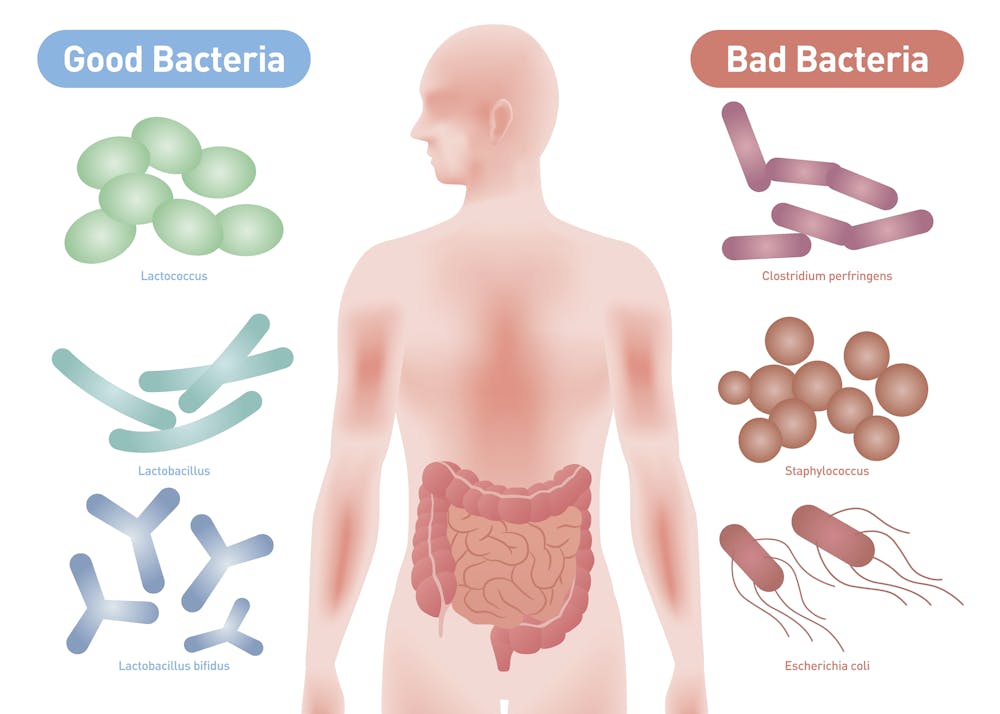
Good bacteria help the immune system ward off harmful microbes. chombosan/iStock/Getty Images Plus
How do resident bacteria keep you healthy?
Our immune defense is part of a complex biological response against harmful pathogens, such as viruses or bacteria. However, because our bodies are inhabited by trillions of mostly beneficial bacteria, virus and fungi, activation of our immune response is tightly regulated to distinguish between harmful and helpful microbes.
Our bacteria are spectacular companions diligently helping prime our immune system defenses to combat infections. A seminal study found that mice treated with antibiotics that eliminate bacteria in the gut exhibited an impaired immune response. These animals had low counts of virus-fighting white blood cells, weak antibody responses and poor production of a protein that is vital for combating viral infection and modulating the immune response.
In another study, mice were fed Lactobacillus bacteria, commonly used as probiotic in fermented food. These microbes reduced the severity of influenza infection. The Lactobacillus-treated mice did not lose weight and had only mild lung damage compared with untreated mice. Similarly, others have found that treatment of mice with Lactobacillus protects against different subtypes ofinfluenzavirus and human respiratory syncytial virus – the major cause of viral bronchiolitis and pneumonia in children.
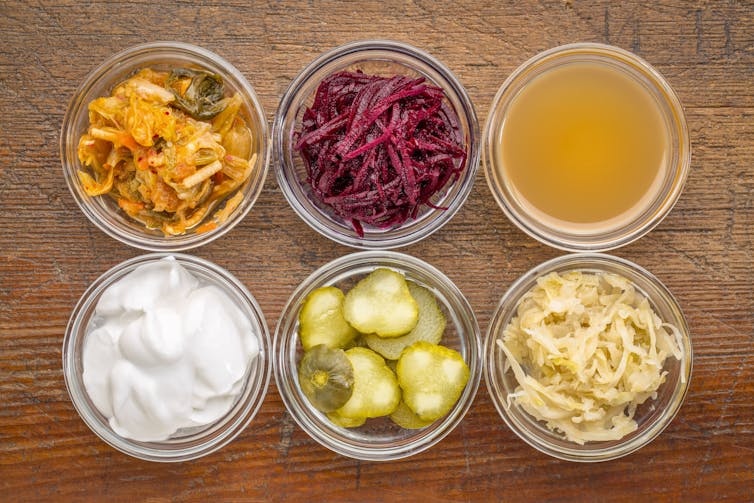
Fermented foods like kimchi, red beets, apple cider vinegar, coconut milk yogurt, cucumber pickles and sauerkraut can help provide beneficial bacteria. marekuliasz/iStock/Getty Images PlusChronic disease and microbes
Patients with chronic illnesses including Type 2 diabetes, obesity and cardiovascular disease exhibit a hyperactive immune system that fails to recognize a harmless stimulus and is linked to an altered gut microbiome.
In these chronic diseases, the gut microbiome lacks bacteria that activate immune cells that block the response against harmless bacteria in our guts. Such alteration of the gut microbiome is also observed in babies delivered by cesarean section, individuals consuming a poor diet and the elderly.
Research in my laboratory focuses on identifying gut bacteria that are critical for creating a balanced immune system, which fights life-threatening bacterial and viral infections, while tolerating the beneficial bacteria in and on us.
Given that diet affects the diversity of bacteria in the gut, my lab studies show how diet can be used as a therapy for chronic diseases. Using different foods, people can shift their gut microbiome to one that boosts a healthy immune response.
A fraction of patients infected with SARS-CoV-2, the virus that causes COVID-19 disease, develop severe complications that require hospitalization in intensive care units. What do many of those patients have in common? Old age and chronic diet-related diseases like obesity, Type 2 diabetes and cardiovascular disease.
Minority communities continue to bear the brunt of the pandemic. Blake Nissen for The Boston Globe via Getty Images
Discovering microbes that predict COVID-19 severity
The COVID-19 pandemic has inspired me to shift my research and explore the role of the gut microbiome in the overly aggressive immune response against SARS-CoV-2 infection.
My colleagues and I have hypothesized that critically ill SARS-CoV-2 patients with conditions like obesity, Type 2 diabetes and cardiovascular disease exhibit an altered gut microbiome that aggravates acute respiratory distress syndrome.
Several studies described in one recent review have identified an altered gut microbiome in patients with COVID-19. However, identification of specific bacteria within the microbiome that could predict COVID-19 severity is lacking.
To address this question, my colleagues and I recruited COVID-19 hospitalized patients with severe and moderate symptoms. We collected stool and saliva samples to determine whether bacteria within the gut and oral microbiome could predict COVID-19 severity. The identification of microbiome markers that can predict the clinical outcomes of COVID-19 disease is key to help prioritize patients needing urgent treatment.
We demonstrated, in a paper which has not yet been peer reviewed, that the composition of the gut microbiome is the strongest predictor of COVID-19 severity compared to patient’s clinical characteristics commonly used to do so. Specifically, we identified that the presence of a bacterium in the stool – called Enterococcus faecalis– was a robust predictor of COVID-19 severity. Not surprisingly, Enterococcus faecalis has been associated with chronicinflammation.
Enterococcus faecalis collected from feces can be grown outside of the body in clinical laboratories. Thus, an E. faecalis test might be a cost-effective, rapid and relatively easy way to identify patients who are likely to require more supportive care and therapeutic interventions to improve their chances of survival.
Bacteria from the gut microbiome are responsible for the proper activationof those T-regulatorycells. Thus, researchers like me need to take repeated patient stool, saliva and blood samples over a longer time frame to learn how the altered microbiome observed in COVID-19 patients can modulate COVID-19 disease severity, perhaps by altering the development of the T-regulatory cells.
As a Latina scientist investigating interactions between diet, microbiome and immunity, I must stress the importance of better policies to improve access to healthy foods, which lead to a healthier microbiome. It is also important to design culturally sensitive dietary interventions for Black and Latinx communities. While a good-quality diet might not prevent SARS-CoV-2 infection, it can treat the underlying conditions related to its severity.
Please note that obesity is regarded as a chronic illness.
Let me reprint a paragraph from the article:
In the U.S., 117 million individuals – about half the adult population – suffer from Type 2 diabetes, obesity, cardiovascular disease or a combination of them. That suggests that half of American adults carry a faulty microbiome army.
This is not funny. Good eating, typically the Mediterranean diet, is not difficult.
But to get you in the mood, I am going to start with this video about small dog breeds for young persons.
Right, now to the essence of today’s post.
My son, Alex, recently sent me details of a new teaching programme introduced by his partner, Lisa. It is called Learning with Lisa.
It consists of 32 videos each one being published at 0700 British time (presently GMT). In other words one new video each working day; i.e. Monday to Friday.
Here is the background to this new service.
Learning with Lisa.
I am a qualified primary school teacher of 26 years now teaching a series of early phase phonics lessons designed for children in the Early Years Foundation Stage (pre-school and reception).
The first series – “Preparing for reading and writing in the Early Years” aims to give children, aged 3 to 4, the best possible start with early literacy skills by providing fun yet challenging activities 5 days a week. Some of the later sections are also suitable for children aged 4 to 5.
These videos are suitable for parents, carers and their children, trainee teachers and other early-years practitioners.
Preparing for reading and writing in the Early years.
The video gives an outline of the lessons included in the series and discusses the teacher’s philosophy. The video is aimed at parents, carers and early-years practitioners and gives an understanding of the processes involved in early phonics, reading and writing.
It will help viewers to navigate their way through the series so their child can participate in a fun and challenging experience. The series aims to give pre-school children the best possible start to early literacy.
Below, this is the first teaching video in the series.
If there are any readers willing to share and subscribe to Lisa’s channel please do.
Especially those that have 3-4 year old children and/or grandchildren, that would be great.
Have a think as to your friends who have young children and send them this link: Please!
For the life of me I can’t recall how the connection between Rick and me was made; sign of the times! But Rick asked for a link to his website to go onto my blogroll and then offered this guest post.
So without any further ado here it is!
ooOOoo
Origin of Shih Tzu Breed
The shih tzu has enjoyed a long history, starting in its country of origin, Tibet. Although the exact date of the breed being recognized is not known, what is known is that a short, rather squat dog which fits the general description of the shih tzu was first recorded around 1000 BC. This means that it is possible to record the history of the shih tzu from that point forward, although it is believed that the dog was around for centuries before that time.
Tibet & China
While the exact origin point is not known, the shih tzu does appear to be from Tibet. You can see evidence of their presence with the famous statues of Tibetan “Lion Dogs” which are part of Buddhism. It appears that the shih tzu was bred to resemble lions, albeit in small form. In fact, the very name “shih tzu” means “lion”. Of the holy dogs that were part of Tibetan culture, the shih tzu quickly became the most famous.
It was not long before the breed spread from its origin point from the mountains of Tibet and into China itself. The fierce looking dog with the gentle nature quickly became a favorite at the royal courts of Chinese rulers. However, they would not gain their current appearance until a millennium later when trade was opened to another part of the world far away from China.
Change from Europe
Contact between China and Europe dates to the Roman Empire. And from such countries as Malta, Persia, Greece, and Turkey small dogs were provided as gifts to the Chinese rulers which in turn were bred to the “lion dogs”. The Pug and Pekingese were intermixed with other breeds and the shih tzu as we know it came about.
Although a favorite in the courts of China, their original purpose was as guard dogs that would warn the Emperor of people or animals that approached their presence. When they became smaller in size, the shih tzu was adapted to becoming a companion dog. When this occurred, it became rare for a shih tzu to leave China as they were so revered.
Explosion of Popularity
The shih tzu that we see today can be credited to Dowager Empress Cixi who had a kennel that included Pugs and Pekingese as well. However, when she died in 1908, the breed was seemingly lost as the kennels were dispersed.
But in 1930, a pair of shih tzus arrived in England. Over the next three decades, more shih tzus arrived which helped expand the breeding population. As this was happening, soldiers returning from the China theater during World War II brought the dog to America where it was quickly bred. Soon, the dog became extinct in China as they were expanding around the world.
While the breed was recognized in England in 1949, it would take another two decades before being officially recognized in the US. Today, the shih tzu is one of the most famous breeds in the world. A stark contrast to its near-extinction 80 years earlier.
ooOOoo
Rick clearly knows the history of the Shih Tzus as this fascinating account reveals. Fancy the history going back to 1000 BC! But of course the history of dogs being associated with humans goes back much beyond 3,000 years ago; to at least 20,000 years ago and there are reliable accounts of dogs going back, perhaps, another 20,000 years for a total of 40,000 years ago. What beautiful creatures!
Anyway, this was a lovely guest post as I am sure you will all agree.
This is the company that my daughter helps to run. She is Maija and together with Polly and Chloe they run Sound UK. This is what Maija said in her recent email:
ooOOoo
20 years of extraordinary music
We hope the New Year finds you and your family well.
2021 is special for Sound UK as we celebrate 20 years of bringing you extraordinary music. We’re marking this milestone throughout the year. This includes 20 Artists for 20 Years, which shines a spotlight on key artists in Sound UK’s life. First up is the incredible Elaine Mitchener later this month…
To kick off our 20th birthday celebrations, we hope you enjoy this 60 second film about our work. You can watch it on the link below.
Keep well,
Polly, Maija and Chloe
20 years of extraordinary music. sounduk.net
Music credit: Landing – Collectress
Film edit by: Lee Matthews, iconic image
ooOOoo
I find it a brilliant short video and I hope some of you out there will also watch it.
I wasn’t going to post anything today but then in response to Val Boyco’s comment: “Good stuff Paul. Thank you! Please do more research and share here 💛 My gut will thank you!” I did do some more research and quickly came upon another article that was published recently and is worth of a read!
ooOOoo
How to prepare and protect your gut health over Christmas and the silly season
Disclosure statement
Claus T. Christophersen receives funding from NHMRC and WA Department of Health. He is a co-author of The Gut Feeling Cookbook linked in this article – all proceeds from sales of this cookbook go directly back into supporting our research, no personal financial interest.It’s that time of year again, with Christmas parties, end-of-year get-togethers and holiday catch-ups on the horizon for many of us — all COVID-safe, of course. All that party food and takeaway, however, can have consequences for your gut health.
Gut health matters. Your gut is a crucial part your immune system. In fact, 70% of your entire immune system sits around your gut, and an important part of that is what’s known as the gut-associated lymphoid tissue (GALT), which houses a host of immune cells in your gut.
Good gut health means looking after your gut microbiome — the bacteria, fungi, viruses and tiny organisms that live inside you and help break down your food — but also the cells and function of your gastrointestinal system.
We know gut health can affect mood, thanks to what’s known as the gut-brain axis. But there’s also a gut-lung axis and a gut-liver axis, meaning what happens in your gut can affect your respiratory system or liver, too.
Here’s what you can do to bolster your gut microbiome in the coming weeks and months.
How do silly season indulgences affect our gut health?
You can change your gut microbiome within a couple of days by changing your diet. And over a longer period of time, such as the Christmas-New Year season, your diet pattern can change significantly, often without you really noticing.
That means we may be changing the organisms that make up our microbiome during this time. Whatever you put in will favour certain bacteria in your microbiome over others.
We know fatty, sugary foods promote bacteria that are not as beneficial for gut health. And if you indulge over days or weeks, you are pushing your microbiome towards an imbalance.
For many of us, Christmas is a time of indulgence. Shutterstock
Is there anything I can do to prepare my gut health for the coming onslaught?
Yes! If your gut is healthy to begin with, it will take more to knock it out of whack. Prepare yourself now by making choices that feed the beneficial organisms in your gut microbiome and enhance gut health.
That means:
eating prebiotic foods such as jerusalem artichokes, garlic, onions and a variety of grains and inulin-enhanced yoghurts (inulin is a prebiotic carbohydrate shown to have broad benefits to gut health)
eating resistant starches, which are starches that pass undigested through the small intestine and feed the bacteria in the large intestine. That includes grainy wholemeal bread, legumes such as beans and lentils, firm bananas, starchy vegetables like potatoes and some pasta and rice. The trick to increasing resistant starches in potato, pasta and rice is to cook them but eat them cold. So consider serving a cold potato or pasta salad over Christmas
choosing fresh, unprocessed fruits and vegetables
steering clear of added sugar where possible. Excessive amounts of added sugar (or fruit sugar from high consumption of fruit) flows quickly to the large intestine, where it gets gobbled up by bacteria. That can cause higher gas production, diarrhoea and potentially upset the balance of the microbiome
remembering that if you increase the amount of fibre in your diet (or via a supplement), you’ll need to drink more water — or you can get constipated.
For inspiration on how to increase resistant starch in your diet for improved gut health, you might consider checking out a cookbook I coauthored (all proceeds fund research and I have no personal interest).
Good gut health is hard won and easily lost. Shutterstock
What can I do to limit the damage?
If Christmas and New Year means a higher intake of red meat or processed meat for you, remember some studies have shown that diets higher in red meat can introduce DNA damage in the colon, which makes you more susceptible to colorectal cancer.
The good news is other research suggests if you include a certain amount of resistant starch in a higher red meat diet, you can reduce or even eliminate that damage. So consider a helping of cold potato salad along with a steak or sausage from the barbie.
Don’t forget to exercise over your Christmas break. Even going for a brisk walk can get things moving and keep your bowel movements regular, which helps improve your gut health.
Have a look at the Australian Guide to Healthy Eating and remember what foods are in the “sometimes” category. Try to keep track of whether you really are only having these foods “sometimes” or if you have slipped into a habit of having them much more frequently.
The best and easiest way to check your gut health is to use the Bristol stool chart. If you’re hitting around a 4, you should be good.
If you’re hitting around a 4, you should be good. Shutterstock
Remember, there are no quick fixes. Your gut health is like a garden or an ecosystem. If you want the good plants to grow, you need to tend to them — otherwise, the weeds can take over.
I know you’re probably sick of hearing the basics — eat fruits and vegetables, exercise and don’t make the treats too frequent — but the fact is good gut health is hard won and easily lost. It’s worth putting in the effort.
A preventative mindset helps. If you do the right thing most of the time and indulge just now and then, your gut health will be OK in the end.
ooOOoo
That book that Claus refers to, the one on the gut Gut feeling: Mindful menus for the microbiomeis here. It looks a very good book.
Well Val (and many others), did you find this interesting? It was a rhetorical question because I know that you did.
I will continue to republish these posts and, especially, the one on exercise. Because as I have often said: Diet and exercise are key!
Now this has nothing to do with dogs. Well not directly but the longer we humans live the longer we can have dogs as pets.
I was having an email ‘conversation’ with Jon over in England and he pointed me to Professor Tim Spector. Prof. Spector writes on his website that he:
Tim Spector is a Professor of Genetic Epidemiology and Director of the TwinsUK Registry at Kings College, London and has recently been elected to the prestigious Fellowship of the Academy of Medical Sciences. He trained originally in rheumatology and epidemiology.
In 1992 he moved into genetic epidemiology and founded the UK Twins Registry, of 13,000 twins, which is the richest collection of genotypic and phenotypic information worldwide. He is past President of the International Society of Twin Studies, directs the European Twin Registry Consortium (Discotwin) and collaborates with over 120 centres worldwide.
He has demonstrated the genetic basis of a wide range of common complex traits, many previously thought to be mainly due to ageing and environment. Through genetic association studies (GWAS), his group have found over 500 novel gene loci in over 50 disease areas. He has published over 800 research articles and is ranked as being in the top 1% of the world’s most cited scientists by Thomson-Reuters.
He held a prestigious European Research Council senior investigator award in epigenetics and is a NIHR Senior Investigator. His current work focuses on omics and the microbiome and directs the crowdfunded British Gut microbiome project.
Together with an international team of leading scientists including researchers from King’s College London, Massachusetts General Hospital, Tufts University, Stanford University and nutritional science company ZOE he is conducting the largest scientific nutrition research project, showing that individual responses to the same foods are unique, even between identical twins.
You can find more on https://joinzoe.com/ He is a prolific writer with several popular science books and a regular blog, focusing on genetics, epigenetics and most recently microbiome and diet (The Diet Myth). He is in demand as a public speaker and features regularly in the media.
That is quite a CV!
Then I came across an essay on The Conversation website about being healthier in one’s old age.
Read it!
ooOOoo
Keen to be healthier in old age? Tend your inner garden
Professor of Genetic Epidemiology, King’s College London
January 29, 2016
Grub’s up. Lunch by Shutterstock
The world’s oldest man, Yasutaro Koide recently died at the age of 112. Commentators as usual, focused on his reported “secret to longevity”: not smoking, drinking or overdoing it. No surprises there. But speculation on the basis of one individual is not necessarily the most helpful way of addressing this human quest for the Philosopher’s Stone.
The “very old” do spark our interest – but is our search for a secret to longevity actually misguided? Wouldn’t you rather live healthier than live longer in poor health? Surely, what we really want to know is how do we live well in old age.
Clearly as scientists we try to illuminate these questions using populations of people not just odd individuals. Many previous attempts have approached this question by looking for differences between young and old people, but this approach is often biased by the many social and cultural developments that happen between generations, including diet changes. Time itself should not be the focus – at least, in part, because time is one thing we are unlikely to be able to stop.
Yasutaro Koide made 112. Kyodo/Reuters
The real question behind our interest in people who survive into old age is how some manage to stay robust and fit while others become debilitated and dependent. To this end, recent scientific interest has turned to investigating the predictors of frailty within populations of roughly the same age. Frailty is a measure of how physically and mentally healthy an individual is. Studies show frailer older adults have an increased levels of low grade inflammation – so-called “inflammaging”.
New research published in Genome Medicine by Matt Jackson, from our group at King’s College London, investigated this question in an unlikely place – poo. Recent evidence indicates that our immune and inflammatory systems are trained and educated in our gut, through key interactionswith gut bacteria. So we asked if changes in our gut bacteria could be part of the process of inflammation driving frailty.
Our recent work found that the frailer an individual, the lower the diversity of gut bacteria they have. We looked at stool samples from more than 700 healthy British twins and found that a group of bacteria belonging to the species with a tricky and slightly unpleasant name, Faecalibacterium prausnitzii, were found in higher amounts in the healthier twins. This is a particularly interesting microbe as it has been linked with good health in many other diseases such as inflammatory bowel disease and is believed to reduce inflammation of the gut. Could this bug help protect against frailty?
Putting in the research. Paper by Shutterstock
There were other microbes seen in increased amounts within the frailer twins. One was Eubacterium dolichum, which has been seen to increase in unhealthy Western diets. We found the same picture when comparing frailer, more elderly, individuals from the ELDERMET study, by the University of Cork. This suggests that dietary changes might be an easy way to encourage healthy ageing.
Our study does not yet clarify whether the changes to the gut bacteria are a cause of poor ageing itself or are just a consequence of frailty – longitudinal studies that follow people over several years will be needed to sort this out. But these results are exciting for researchers in the ageing field and suggest that if you want to age well you should perhaps do fewer crosswords and spend more time looking after your microbial garden, for example by eating plenty of plant fibre, for example in a Mediterranean-type diet.
ooOOoo
Well this essay was published nearly 5 years ago and one wonders if more information has come to light.
Certainly Jeannie and me are heavily into a plant-based diet with a small selection of fish from time to time.
I will do more research and see if there are any updates that may be published.
In the meantime stay as healthy and as happy as you can be!
Senior Lecturer in Politics and International Relations, Aston University
At 3pm UK time on Christmas day, the Queen’s Christmas message is broadcast across the Commonwealth. Each year the format is largely the same, with the Queen giving her own account of the main personal, national and international events of the year and reflecting on the meaning of Christmas. As such, it has become an important part of the festivities for many families in the UK and beyond.
With the COVID-19 pandemic still raging, fresh restrictions imposed and Brexit rapidly approaching, this year’s broadcast has taken on new significance as a source of stability and comfort, a constant in these difficult and uncertain times. Therefore, it is worth examining how the language used in the broadcast creates this sense of reassurance.
Since 1952, the Queen’s Christmas message has performed three ideological functions through rhetorical appeals based on faith and family.
Identification
The Queen shares personal anecdotes, which she often links to ordinary people’s experiences through the pronouns “we” and “us”.
On Christmas Day 1964, for instance, she told viewers that: “All of us who have been blessed with young families know from long experience that when one’s house is at its noisiest, there is often less cause for anxiety”. As most new parents would recognise this truism, it conveys the message that – in this respect at least – the royals are like any other family.
The first televised Royal Christmas message, 1957. The Royal Family/YouTube
The Queen is also aware that some families will be separated during the festive season and regularly expresses empathy for them. As she said in 1956: “I would like to send a special message of hope and encouragement to all who […] cannot be with those they love today: to the sick who cannot be at home”.
This message is made more poignant because of COVID-19, as the Queen recognised in her special address on April 5 2020. Indeed, it is almost inevitable that this year’s Christmas broadcast will include similar words of consolation for those who have been separated from their loved ones during the pandemic.
Continuity
Uncertainty is another recurring theme in the Queen’s Christmas broadcast, as she tries to make sense of the year’s events for the benefit of her audience. She gives her personal responses to national and global problems, which frequently involve the enactment of supposedly timeless (but predominantly Christian) values. On Christmas Day 1980, amid issues such as the Soviet-Afghanistan war and UK unemployment, she said:
We know that the world can never be free from conflict and pain, but Christmas also draws our attention to all that is hopeful and good in this changing world; it speaks of values and qualities that are true and permanent and it reminds us that the world we would like to see can only come from the goodness of the heart.
Among these values are faith, charity and compassion and, by praising them as a source of stability and the means for creating a better world, the Queen is perhaps seeking to strengthen adherence to them. Not only that, her appeals to Christian values and her emphasis on the family provide a sense of security for those who are disoriented by the rapid pace of social change. In turn, this sustains the monarchy by establishing the Queen as “a permanent anchor, bracing against the storms and grounding us in certainty”, as former British prime minister David Cameron said in 2012, marking her Diamond Jubilee.
Unity
The Queen’s rhetoric of unity is based primarily on the metaphor of the Commonwealth as a family, which recurs throughout the Christmas broadcasts. In 1956, for instance, she observed that:
We talk of ourselves as a “family of nations”, and perhaps our relations with one another are not so very different from those which exist between members of any family. We all know that these are not always easy, for there is no law within a family which binds its members to think, or act, or be alike.
Despite these differences, in 2011 the Queen described the Commonwealth as “a family of 53 nations, all with a common bond, shared beliefs, mutual values and goals”. As the head of the Commonwealth, it is perhaps no exaggeration to say that the Queen is the matriarch of this family of nations, whose primary role is to keep the unit together and uphold its values. Indeed, the Christmas broadcast has been an important source of soft power since the end of Empire. As Sonny Ramphal, a former Commonwealth secretary general, put it: “without her presence, the Commonwealth will feel it is missing the captain from the bridge”.
With the UK government having tightened Christmas COVID-19 restrictions, as well as the introduction of bans on UK travel in numerous countries, this festive season will be very different. Perhaps more than ever, as families face separation or the disruption of their traditional plans, people will seek solace in the ritual of the Queen’s Christmas broadcast.
ooOOoo
I can’t find a copyright-free photograph of the Queen’s Corgis but this one will do. It is from Pexels.
Photo by Nataliya Vaitkevich from Pexels
So her Majesty The Queen is 94! Wow!
That makes her the oldest monarch to have reigned in Britain. Ever!
Queen Victoria was Queen of the United Kingdom and Ireland from 20 June 1837 until her death, in 1901. That makes Queen Victoria the second longest monarch to have reigned.







 Ana Maldonado-Contreras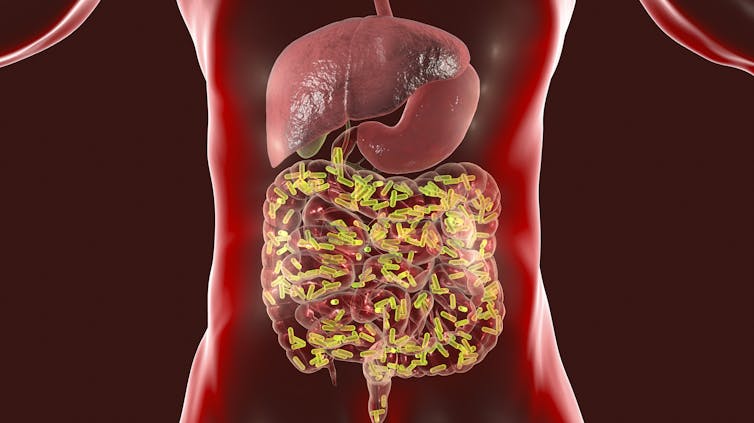
















 Learning from Dogs