On the 21st., I published a post Be in peace this day! It was noting this year’s International Peace Day. One of the comments left by Patrice Ayme, in response to an earlier comment from Alex Jones, was this:
Alex: I read your message, and I approve it. Very well put. As Lord Keynes said: ”In the end, we are all dead.” Death seems pretty violent to me. Yet, one can live with it, and embrace it, because, as there is no choice, we may as well.
War is not anymore a problem than peace is. What matters most is the harmony of the society with the environment, not strife within. Plutocrats have unbalanced the environment, so they should be reduced, and that means war, because peace certainly will not reduce them.
Force is the truth of man. Everything else is delusion, even the vegetarian style.
To which I replied:
Patrice, as much as I deeply respect your intellect, I fundamentally am at odds with the sentiments you express. But rather than hide behind a short reply that few will read and even fewer take notice of, I’m going to write a post exploring my reactions in detail. As always, your comments are welcomed.
This, then, is that post.
But where oh where to start? Perhaps by me setting out this general premise.
Wherever one looks, it seems there are examples of madness bordering on the criminally insane.
In so many ways and at so many levels we are running the very real risk that by 2050 the end of this present era of human civilisation by the end of the century will be unavoidable. Ergo: Born after 1980? Then brace yourself for the end times.
The only solution is to adopt the core values of humanity. Very soon!
So on to a few examples of the present madness (and I would be the first to admit that I am, perhaps prejudicially, inclined to see the darkness of our present times).
First: Climate Change
The recent IPCC report made it clear that climate change is most likely a result of man’s activities on this planet. As the summary for policy makers says (selected extracts):
Warming of the climate system is unequivocal, and since the 1950s, many of the observed changes are unprecedented over decades to millennia. The atmosphere and ocean have warmed, the amounts of snow and ice have diminished, sea level has risen, and the concentrations of greenhouse gases have increased.
and
Human influence on the climate system is clear. This is evident from the increasing greenhouse gas concentrations in the atmosphere, positive radiative forcing, observed warming, and understanding of the climate system.
and [my emboldening]
Human influence has been detected in warming of the atmosphere and the ocean, in changes in the global water cycle, in reductions in snow and ice, in global mean sea level rise, and in changes in some climate extremes (Figure SPM.6 and Table SPM.1). This evidence for human influence has grown since AR4. It is extremely likely that human influence has been the dominant cause of the observed warming since the mid-20th century.
But denial is only part of the problem. More significant is the behaviour of powerful people who claim to accept the evidence. This week the former Irish president Mary Robinson added her voice to a call that some of us have been making for years: the only effective means of preventing climate breakdown is to leave fossil fuels in the ground. Press any minister on this matter in private and, in one way or another, they will concede the point. Yet no government will act on it.
As if to mark the publication of the new report, the Department for Business, Innovation and Skills has now plastered a giant poster across its ground-floor windows: “UK oil and gas: Energising Britain. £13.5bn is being invested in recovering UK oil and gas this year, more than any other industrial sector.”
The message couldn’t have been clearer if it had said “up yours”. It is an example of the way in which all governments collaborate in the disaster they publicly bemoan. They sagely agree with the need to do something to avert the catastrophe the panel foresees, while promoting the industries that cause it.
It doesn’t matter how many windmills or solar panels or nuclear plants you build if you are not simultaneously retiring fossil fuel production. We need a global programme whose purpose is to leave most coal and oil and gas reserves in the ground, while developing new sources of power and reducing the amazing amount of energy we waste.
But, far from doing so, governments everywhere are still seeking to squeeze every drop out of their own reserves, while trying to secure access to other people’s. As more accessible reservoirs are emptied, energy companies exploit the remotest parts of the planet, bribing and bullying governments to allow them to break open unexploited places: from the deep ocean to the melting Arctic.
And the governments who let them do it weep sticky black tears over the state of the planet.
Kevin Anderson, professor of energy and climate change at the University of Manchester
What has changed significantly since the last report is that we have pumped an additional 200 billion tonnes of CO2 into the atmosphere. Annual emissions are now 60% higher than at the time of the first report in 1990 and atmospheric CO2 levels are the highest they have been for over two million years.
So what are we doing in the UK to help reverse this reckless growth in emissions? Record levels of investment in North Sea oil, tax breaks for shale gas, investment in oil from tar sands and companies preparing to drill beneath the Arctic.
Against this backdrop, the UK Treasury is pushing for over 30 new gas power stations, whilst the government supports further airport expansion and has dropped its 2030 decarbonisation target – all this alongside beleaguered plans for a few wind farms and weak energy efficiency measures. Governments, businesses and high-emitting individuals around the world now face a stark choice: to reduce emissions in line with the clear message of the IPCC report, or continue with their carbon-profligate behaviour at the expense of both climate-vulnerable communities and future generations.
OK, let’s move to another example of our collective madness.
Second: The way we treat the natural wildlife.
Last Thursday, the New York Times published an item about a recent report confirming the terrible cost to our wildlife of fragmenting their habitat. Here are the opening paragraphs, including the leading photograph in that NYT piece.
In Fragmented Forests, Rapid Mammal Extinctions
An isolated forest in the Chiew Larn reservoir. A Thai government project to supply hydroelectric power to the area transformed 150 forested hilltops into islands. ANTONY LYNAM
By CARL ZIMMER
September 26, 2013
In 1987, the government of Thailand launched a huge, unplanned experiment. They built a dam across the Khlong Saeng river, creating a 60-square-mile reservoir. As the Chiew Larn reservoir rose, it drowned the river valley, transforming 150 forested hilltops into islands, each with its own isolated menagerie of wildlife.
Conservation biologists have long known that fragmenting wilderness can put species at risk of extinction. But it’s been hard to gauge how long it takes for those species to disappear. Chiew Larn has given biologists the opportunity to measure the speed of mammal extinctions. “It’s a rare thing to come by in ecological studies,” said Luke Gibson, a biologist at the National University of Singapore.
Over two decades, Dr. Gibson and his colleagues have tracked the diversity of mammals on the islands. In Friday’s issue of the journal Science, they report that the extinctions have turned out to be distressingly fast.
“Our results should be a warning,” said Dr. Gibson. “This is the trend that the world is going in.”
On a similar theme, many will recall my post back on the 19th, Pity the bees; pity us when I drew attention to the drastic reduction in the numbers of wild bees, including the quote “the vanishing honeybee could be the herald of a permanently diminished planet.“
Guard their future – and ours!
Third: Money and power.
Again from The New York Times but this time an essay by Paul Krugman.
Robert Benmosche, the chief executive of the American International Group, said something stupid the other day. And we should be glad, because his comments help highlight an important but rarely discussed cost of extreme income inequality — namely, the rise of a small but powerful group of what can only be called sociopaths.
For those who don’t recall, A.I.G. is a giant insurance company that played a crucial role in creating the global economic crisis, exploiting loopholes in financial regulation to sell vast numbers of debt guarantees that it had no way to honor. Five years ago, U.S. authorities, fearing that A.I.G.’s collapse might destabilize the whole financial system, stepped in with a huge bailout. But even the policy makers felt ill used — for example, Ben Bernanke, the chairman of the Federal Reserve, later testified that no other episode in the crisis made him so angry.
And it got worse. For a time, A.I.G. was essentially a ward of the federal government, which owned the bulk of its stock, yet it continued paying large executive bonuses. There was, understandably, much public furor.
So here’s what Mr. Benmosche did in an interview with The Wall Street Journal: He compared the uproar over bonuses to lynchings in the Deep South — the real kind, involving murder — and declared that the bonus backlash was “just as bad and just as wrong.”
OK, that’s enough ‘copying’ from me so please go and read more about the plight of those poor billionaires. But if the NYT and Paul Krugman will forgive me, here’s the paragraph towards the end of the Krugman essay that makes me sick [my emboldening]:
The thing is, by and large, the wealthy have gotten their wish. Wall Street was bailed out, while workers and homeowners weren’t. Our so-called recovery has done nothing much for ordinary workers, but incomes at the top have soared, with almost all the gains from 2009 to 2012 going to the top 1 percent, and almost a third going to the top 0.01 percent — that is, people with incomes over $10 million.
Staying with the struggles of our billionaires for a moment longer, try the recent report on Bloomberg about the recent Monaco Yacht Show that included this:
As the yacht size has stretched — this year saw the launch of a record-holding 590-footer called the Azzam — so has the list of distractions onboard. Soaking in a jacuzzi, shooting hoops on a floating court or playing a baby grand Steinway piano no longer cut it.
“There is a change in attitude of super-yacht owners,” said Bert Houtman, founder and chairman of the Netherlands-based U-Boat Worx, surveying two of his submarine models on display quai-side in Monaco. “They’re fed up with drinking white wine and riding jet skis so they’re looking for another thrill.”
later including:
“A lot of guys who are billionaires have profound financial accomplishments and are now concerned about their legacy,” said Deppe. (Marc Deppe, Triton Subs vice-president of sales and marketing.)
It’s enough to make one weep!
Fourth: Politicians and governments not serving their peoples.
Making this my last example. Simply because a recent item published on Naked Capitalism had so much detail on what is wrong with our leaders; in this particular case regarding the American Affordable Care Act (ACA). This is how the article opens:
Many people, and especially Obama supporters, characterize the ACA (ObamaCare) as “just starting” or a “work in progress” and then go on to urge that the program will have “glitches,” needs to be “tweaked,” isn’t yet “fully implemented,” and so forth. We think it’s a mistake to see the ACA as just starting. We also think it’s a mistake not to weigh the costs of ObamaCare’s stately three-year progress toward partial coverage for the the American people, and just as important to weigh the opportunity costs.
The ACA was passed in March 2010, incorporating many features designed to meet Republican objections to the Bill. Yet, in the end, Democrats never put Medicare for All on the table, abandoned the public option and many other features, and did not get a single Republican vote in either chamber.
The Democrats even saw to it that the bill was fiscally neutral over a 10 year projection at a time when the tanked economy needed more deficit spending and the jobs that would have brought. And to do that, they postponed implementation of most of the bill for more than three years, until now, allowing people to go without care, to die, to divorce, and to lose their homes or go bankrupt due to medical bills, just so they could argue that the bill was fiscally neutral. In gauging the record of the bill, these 3 to 3.5 years of waiting for its implementation and their real costs to the people of the United States must be taken into account.
It also must be taken into account that in the year before the ACA was passed there were some 45 million Americans uninsured, and they were dying at the rate of 1,000 more for every million than in the general population. That is, lack of insurance was causing more than 45,000 fatalities per year. (The cost of those deaths in money terms: $1.38 trillion).
That’s what we’ve lost by not trying to pass HR 676 and by trying instead to take a bipartisan insurance company conciliation approach to passing the ACA. This post, gives the total for the anticipated opportunity cost by comparing Romney’s 2012 alternative to the ACA, the baseline of no reform at all, the ACA, and Medicare for All over the period 2010 – 2022. Bottom line: the ACA is projected to cost 286,500 lives through 2022, assuming no change. That’s a lot better than the baseline and a lot better than Romney’s 2012 alternative. But it’s still terrible compared to what we might have had if we had a President who really represented people rather than Wall Street.
What if an effort to pass HR 676 had failed in 2009 because too many Democrats in the Senate defected to pass it? Well, I think this would have been very unlikely with the very large Democratic majority and the popularity of the president at its height, but even if it would have failed, then the Democrats could still have compromised with members of their party to pass enhanced Medicare for All for everyone under 26 and over 45, or under 26 and over 50, or whatever compromise would have moved those wayward Democrats up to the 50 vote mark. Such a compromise bill would still have lowered the fatalities substantially by providing insurance for those who needed it most and by enhancing the Medicare program for seniors (full coverage and no co-pays). It would also have been something Democrats could have run on and built upon in each successive election year, rather than having to defend the sorry ACA with its package of inadequate goodies, silly mandate, IRS enforcement, high cost for lousy coverage, and Rube Goldberg eligibility determination. Again there would have been no Tea Party, because Tea Partiers like Medicare, and there would have been no Republican nationwide sweep in 2010, no gerrymandering, no voter suppression, no anti-woman bills, and none of all the rest of the nonsense we’ve seen because the Democrats did what they did.
Earlier in the post I offered a general premise that included, “Wherever one seems to look there are examples of madness bordering on the criminally insane.”
To my mind, these examples support that premise. Trust me, there are countless more examples.
So what to do? Because I am fundamentally at odds with the sentiment expressed by Patrice Ayme; “Force is the truth of man. Everything else is delusion, even the vegetarian style.”
The answer takes us to tomorrow’s post, A return to integrity.
And, yes, it does mention dogs! Rather a lot as it happens!
Tour de France 2013: Spectre of Lance Armstrong could prevent Chris Froome reaping sponsorship deals
The spectre of Lance Armstrong could hurt Chris Froome’s ability to fully exploit his Tour de France triumph, leading sponsorship experts warned last night.
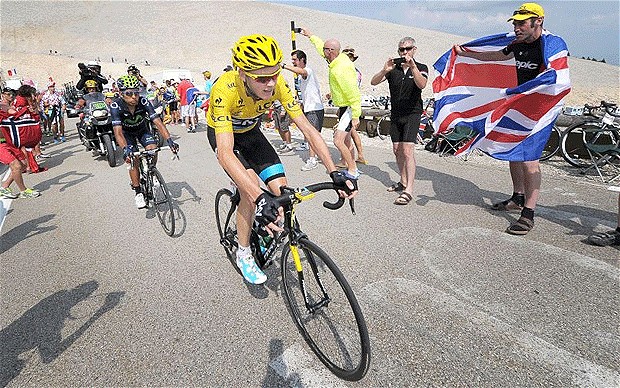
Heading for glory: Chris Froome is cheered on by a British fan Photo: PA
Brands might have been expected to flock to Britain’s latest cycling star after he became the country’s second successive winner of the world’s most famous bike race yesterday.
However, Froome was also the first man to secure the yellow jersey since Armstrong confessed to doping his way to all seven of his Tour de France victories, a scandal from which the sport has yet to fully recover.
A slightly different thought from Willie Nelson brought to you courtesy of Bob Derham:
“I think it is just terrible and disgusting how everyone has treated Lance Armstrong, especially after what he achieved, winning seven Tour de France races while on drugs.
When I was on drugs, I couldn’t even find my bike ….”
I ran out of time and inspiration for today’s post; was going to republish something from earlier blogging days.
Then Suzann came to the rescue in sending me an email with a link to the following. Guess Su wanted me to keep up with some of the strange ideas of us Brits.
Published on Apr 2, 2013
Sacla’ served up a great surprise at John Lewis Foodhall from Waitrose and staged an impromptu Opera in the food aisles.
They planted five secret opera singers who were disguised as casual shoppers and store staff amongst the groceries who broke into song bringing the foodhall to a standstill with a rousing rendition of the Italian classic Funiculì, Funiculà.
I know it was an advertising stunt, but it was very well done! More please!
Last Monday, the post on Learning from Dogs was called Growing old!!
The essence of that post was to report on the following:
That’s why a recent item on the BBC News website jumped off the page at me. It was an article called: Health kick ‘reverses cell ageing’ written by Michelle Roberts, Health editor, BBC News online. Here is how the article opened:
Going on a health kick reverses ageing at the cellular level, researchers say.
The University of California team says it has found the first evidence a strict regime of exercise, diet and meditation can have such an effect.
But experts say although the study in Lancet Oncology is intriguing, it is too early to draw any firm conclusions.
The study looked at just 35 men with prostate cancer. Those who changed their lifestyle had demonstrably younger cells in genetic terms.
The full article should be read, by the way, because it covers much more than this opening paragraph.
Anyway, one of the comments to that post was left by Sue, of Sue Dreamwalker, Here is what she wrote:
Great information and learning to Meditate even for a few minutes helps heal and relax.. Dogs have it right…. No stress!
I wrote a complete exercise I used a lot both for myself and within my circle I used to run… Hope you enjoy as you take your roots down into the earth after bringing in the Light….
you can find it here http://wp.me/p16xW7-37
Namaste!
I then asked Sue if I could republish her guidance on meditation as a guest post. Sue kindly agreed. Here it is.
oooOOOooo
A Meditation For My Friends
by Sue Dreamwalker
Meditation.
Some Friends have been asking about Meditation and relaxation techniques, so I have put you a very simple little meditation here for starters.
You can buy books on meditation and read different techniques until your eyes pop out of your head, and you can find plenty about meditation on web sites too. I always say there is no right or wrong way to Meditate. To meditate means finding that quiet place within your own mind, finding that peace and space to be at one with yourself.
When people say empty your mind, this is near enough impossible, as you will always have a train of thought that will pop in at times. So this is why we use the Breath.
The breath is used to bring your concentration back, so focusing on your breath may be one way in which you can stop the hum-drum of your thoughts that chatter away inside your head.
First you need to ensure you’re not going to be disturbed, so switch of the phone, find a comfortable chair, in a quiet room, and relax. If you lie down you may find that you drift asleep, that’s ok also for that shows you have relaxed. But preferably sit upright with your feet slightly apart and have them touching the ground. Take deep breaths breathing in and out through the nose, and close your eyes.
This is one of the meditations I do regularly. It may seem long to read, but once you have it in your mind it will only take you 10 minutes to do. Read it through a couple of times until you have it clear in your mind, and then have a go.
Relax and take some nice deep breaths breathing deeply and evenly, try to breath in to the count of five, hold for a few seconds and then breath out long and slow, Feel your breath rise from your solar plexus your stomach and feel your diaphragm rise and fall.
Do this for a few minutes until you feel comfortable with breathing this way. (Many of us do not breathe deep enough, so this may at first feel uncomfortable, but try not to force it, just try to get your breath into a natural rhythm).
One your breath is comfortable I want you to imagine a beautiful White light coming down in a column from up above your head. Almost like a search light in a darkened room.
As you breath in, I want you to breathe in this light. Imagine that it is flowing down inside your head through your crown, and it passes behind your eyes, relaxing your eyes. It then passes down over your throat, relaxing your throat.
You feel this Light which has healing properties cascading across your shoulders, relaxing your shoulders, taking all the burdens of the day with it. You now see and feel this warm Light travel down your arms into your forearms relaxing your muscles as it goes, now it’s travelling into your finger tips, and your arms now feel heavy and relaxed.
You see the Light now travel through from your throat, down into your heart centre, feel the beat of your heart, and see the light now filling your heart and as it beats see the light dispersing throughout your veins into your whole being,
See the light travelling into your stomach relaxing your stomach muscles, down your thighs relaxing your thighs into your calves, relaxing your calves, and see the light now going into your feet relaxing your toes and feet.
And all the while you are breathing deeply and evenly, relaxing more and more.
Now you are relaxed and are full of healing light, I want you to now see that light coming out of the soles of your feet, as if they were roots from a tree. See these roots going down from your feet into Mother Earth, going down through the rocks, twisting and turning as they go deeper and deeper, and as they travel deeper so too you are feeling more and more relaxed.
You now see an underground cavern, with an underground pool, your roots of light emerge in the ceiling of this cavern, and illuminate it like the lights of a chandelier.
And as the light illuminates the Cavern you now see you are stood in a beautiful Crystal Cavern, The Light reflects the many luminous rainbow colours from the hundreds of giant crystals.. See the rainbow of pastel colours dance around the cavern reflection on the underground pool.
Now you can choose any colour you see, for whatever colour you choose this colour will intuitively be the right healing colour for your needs at this moment in time.
So once you see the colour you are attracted to, allow your roots to wrap themselves around that crystal, and as you breathe deeply in, see now that your roots have now turned into hollow straws, for you will now be able to breathe up that colour through your roots and as you do so, retract your roots back up through Mother Earth, breathe that colour into your feet, feel the warmth of the healing.
Now draw it back up through your calves, up through your thighs, into your solar plexus. Breathing deeply and evenly. Feel the warmth of healing relax and heal all your worries and anxieties, breath it up into your lungs, into your heart, down your arms and into your fingers, see how relaxed and refreshed you now feel, see this colour cleansing your entire being taking with it all the debris that you have collected, all the negative thoughts, flushing you clean.
See this colour now rise and come up through your throat, see it helping you release all the words you have spoken in haste, and all the words you hold back, see them all now flow up past your eyes, helping you see that you are a Being of Light and whole and free, see that colour now rise out through the top of your head, see it cascading out into the Universe Like a fountain, and as it does so see it explode into a thousand stars, taking all your problems and negative debris with it, and know that God and the Universe will disperse this energy as it sees fit,
Give thanks to Mother Earth for her healing energy, and see the top of your head close and seal in your new vibration, and feel yourself glowing from within,
Slowly bring your awareness back to yourself sat in the chair, and open your eyes.
Sit for a moment or two and take a sip of water.
Know that you can go to your crystal cavern at any time for healing.
Hope you relax and Enjoy.
x Dreamwalker x
oooOOOooo
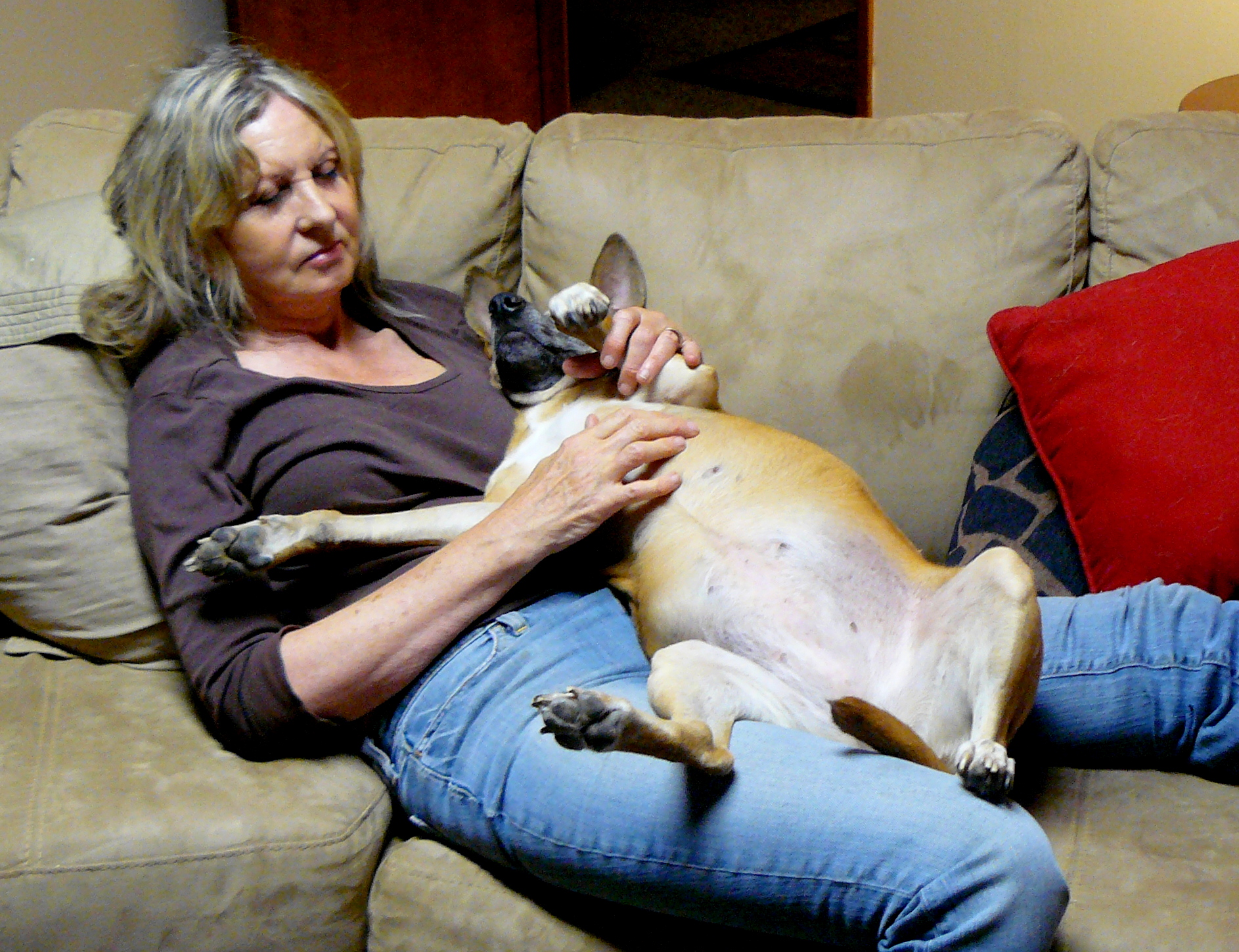
And if you want any encouragement to find that deep, peaceful place, then just breath in this picture of young Cleo letting the world go by!
Regular readers of this place may well recall my decision to ditch Windows OS and buy a new Apple Mac Mini articulated in a post earlier in the month, Closing my Windows. Here’s a brief extract from that post.
Muttering about this to friends who know a lot more about computing than I raised my awareness that the privacy and security of one’s computer was no longer to be assumed. Then just recently, I read online,
“A Special Surveillance Chip”
According to leaked internal documents from the German Federal Office for Security in Information Technology (BSI) that Die Zeit obtained, IT experts figured out that Windows 8, the touch-screen enabled, super-duper, but sales-challenged Microsoft operating system is outright dangerous for data security. It allows Microsoft to control the computer remotely through a built-in backdoor. Keys to that backdoor are likely accessible to the NSA – and in an unintended ironic twist, perhaps even to the Chinese.
Then a few paragraphs later:
It would be easy for Microsoft or chip manufacturers to pass the backdoor keys to the NSA and allow it to control those computers. NO, Microsoft would never do that, we protest. Alas, Microsoft, as we have learned from the constant flow of revelations, informs the US government of security holes in its products well before it issues fixes so that government agencies can take advantage of the holes and get what they’re looking for.
Now I’m using Windows 7 so imagine my angst when I then read:
Another document claims that Windows 8 with TPM 2.0 is “already” no longer usable. But Windows 7 can “be operated safely until 2020.” After that other solutions would have to be found for the IT systems of the Administration.
That did it for me – time to move on from Windows.
So you think no one can access your data because your computer is turned off. Heck it’s more than turned off, you even took the main hard drive out, and only the backup disk is inside. There is no operating system installed at all. So you KNOW you are safe.
Frank from across the street is an alternative operating systems hobbyist, and he has tons of computers. He has Free BSD on a couple, his own compilation of Linux on another, a Mac for the wife, and even has Solaris on yet another. Frank knows systems security, so he cannot be hacked . . . or so he thinks.
The government does not like Frank much, because they LOVE to look at everything. Privacy is a crime don’t you know, and it looks like Frank’s luck with privacy is about to run out.
The new Intel Core vPro processors contain a new remote access feature which allows 100 percent remote access to a PC 100 percent of the time, even if the computer is turned off. Core vPro processors contain a second physical processor embedded within the main processor which has it’s own operating system embedded on the chip itself. As long as the power supply is available and and in working condition, it can be woken up by the Core vPro processor, which runs on the system’s phantom power and is able to quietly turn individual hardware components on and access anything on them.
The author of the article, Jim Stone, later describing:
Accessing any PC anywhere, no matter what operating system is installed, even if it is physically disconnected from the internet. You see, Core vPro processors work in conjunction with Intel’s new Anti Theft 3.0, which put 3g connectivity into every Intel CPU after the Sandy Bridge version of the I3/5/7 processors. Users do not get to know about that 3g connection, but it IS there.
Naturally, I huffed and puffed as I read the article. However, later on came the thought that maybe this is a great journey of ‘ever-diminishing-returns’, as in this journey of ‘us’ versus ‘The State’. A journey that misses something very fundamental.
This is what I mean.
I’m proposing that the drive for privacy is an inevitable by-product of the country that we live in being seeing as one huge society. That in that huge society, we can only maintain our own unique individuality through a degree of privacy. Otherwise, we are nothing more than an irrelevant tiny part in the big scheme of things.
But if one reflects on how smaller societies function; from local communities down to families, then that need for privacy is greatly reduced. Because in those smaller communities, we are seen as an individual with all the associated hues of our own individual personality. We get to know others, and those others get to know us, as individuals – that’s how communities function. Then a much more important value comes into play; that of trust. It’s my impression that we only properly engage with those that we trust. Again, how communities function!
I continued to play with these thoughts. Even putting the issue of privacy to one side, the range of benefits that flow from our local communities is over-whelming. All the big issues facing humanity today can only be dealt with effectively at the local level; the community level.
Coincidentally, echoed in an email from long-standing friend, Dan Gomez, in connection with a completely different topic. He said:
Federal government is primarily for defense. Most other government can be pushed to local politicians.
…..
People need to be free and think free. They need to hope. In too many countries around the world, there is little hope for a better life. People need to learn to be accountable and solve their own problems, first at local levels.
So, perhaps, worrying about our privacy and the increasing invasion of that privacy misses the point.
Because if in the next few years, a couple of decades at most, we do not adopt the core principles of a caring, sharing world; the lessening of a greedy, materialistic, me-me-me world, then I fear greatly for not only all of humanity but for the very future of the planet as an oasis of life circling a rather insignificant star in a very lonely cosmos.
So park privacy to one side. See it as a symptom of these broken ‘focus-on-self’ times and look forward to a new caring, sharing world made up of countless conscious and mindful societies. Embracing the values of animal societies, even to embrace the most successful species of animal ever; the dog. (As measured from the perspective of the dog’s association with man.) Not only far back into ancient history but right now in these strange and troubling times. Embracing what millions of dog lovers across the world experience every day; the integrity of the dog.
Local societies and local communities are the only social structures where integrity makes sense, and can be seen to make sense. Where the values of that society bring people together. Where these qualities that we see in our dogs are mutually reinforcing. I’m speaking of unconditional love, loyalty, stillness, play, openness, faithfulness, valuing the present, forgiveness, happiness, meditation, and sensitivity; all in that wrapper of integrity.
Think about it! Do you ever see a dog worrying about privacy!
Are there options? Are there decisions to be made?
Of the two certainties in life, one of them is pretty stark: death! (The other certainty is taxes, by the way!)
So one could legitimately argue that if death is ‘non-negotiable’ then it’s not even worth spending a moment dwelling on it. And certainly not worth the time and effort in writing about it!
But, of course, this misses a very big point. That is that doing all we can to improve our quality of life, especially in the Autumn of our lives, is very important.
That’s why a recent item on the BBC News website jumped off the page at me. It was an article called: Health kick ‘reverses cell ageing’ written by Michelle Roberts, Health editor, BBC News online. Here is how the article opened:
Going on a health kick reverses ageing at the cellular level, researchers say.
The University of California team says it has found the first evidence a strict regime of exercise, diet and meditation can have such an effect.
But experts say although the study in Lancet Oncology is intriguing, it is too early to draw any firm conclusions.
The study looked at just 35 men with prostate cancer. Those who changed their lifestyle had demonstrably younger cells in genetic terms.
“Reverses ageing”! How on earth can that work?
The researchers saw visible cellular changes in the group of 10 men who switched to a vegetarian diet and stuck to a recommended timetable of exercise and stress-busting meditation and yoga.
The changes related to protective caps at the end of our chromosomes, called telomeres.
Their role is to safeguard the end of the chromosome and to prevent the loss of genetic information during cell division.
As we age and our cells divide, our telomeres get shorter – their structural integrity weakens, which can tell cells to stop dividing and die.
Researchers have been questioning whether this process might be inevitable or something that could be halted or even reversed.
The latest work by Prof Dean Ornish and colleagues suggests telomeres can be lengthened, given the right encouragement.
Now if you, like me, are noticing some of the rather frustrating aspects of ageing, then this one piece of science research could turn out to be invaluable. But best not to get too carried away just now, as the BBC article underlines:
Prof Ornish said: “The implications of this relatively small pilot study may go beyond men with prostate cancer. If validated by large-scale randomised controlled trials, these comprehensive lifestyle changes may significantly reduce the risk of a wide variety of diseases and premature mortality.
“Our genes, and our telomeres, are a predisposition, but they are not necessarily our fate.”
Dr Lyn Cox, a biochemistry expert at Oxford University in the UK, said it was not possible to draw any conclusions from the research, but added: “Overall, though, the findings of this paper that changes in lifestyle can have a positive effect on markers of ageing support the calls for adoption of and adherence to healthier lifestyles.”
Dr Tom Vulliamy, senior lecturer in Molecular Biology at Queen Mary University of London, said: “It is really important to highlight that this is a small pilot study.
Nevertheless, here’s how the article ends:
But past work has shown that people who lead a sedentary lifestyle can experience accelerated cellular ageing in the form of more rapid shortening of their telomeres.
All of which rather embarrassingly reminds me that back on the 6th August, in a post called The habit of doing nothing, I set out Leo Babauta’s ‘How To Meditate‘ guide. Then, frankly, ignored it! So to me and all you other readers who would like to chill out like your dog, here’s that guide again.
How to Do It Daily
There are lots and lots of ways to meditate. But our concern is not to find a perfect form of meditation — it’s to form the daily habit of meditation. And so our method will be as simple as possible.
1. Commit to just 2 minutes a day. Start simply if you want the habit to stick. You can do it for 5 minutes if you feel good about it, but all you’re committing to is 2 minutes each day.
2. Pick a time and trigger. Not an exact time of day, but a general time, like morning when you wake up, or during your lunch hour. The trigger should be something you already do regularly, like drink your first cup of coffee, brush your teeth, have lunch, or arrive home from work.
3. Find a quiet spot. Sometimes early morning is best, before others in your house might be awake and making lots of noise. Others might find a spot in a park or on the beach or some other soothing setting. It really doesn’t matter where — as long as you can sit without being bothered for a few minutes. A few people walking by your park bench is fine.
4. Sit comfortably. Don’t fuss too much about how you sit, what you wear, what you sit on, etc. I personally like to sit on a pillow on the floor, with my back leaning against a wall, because I’m very inflexible. Others who can sit cross-legged comfortably might do that instead. Still others can sit on a chair or couch if sitting on the floor is uncomfortable. Zen practitioners often use a zafu, a round cushion filled with kapok or buckwheat. Don’t go out and buy one if you don’t already have one. Any cushion or pillow will do, and some people can sit on a bare floor comfortably.
5. Start with just 2 minutes. This is really important. Most people will think they can meditate for 15-30 minutes, and they can. But this is not a test of how strong you are at staying in meditation — we are trying to form a longer-lasting habit. And to do that, we want to start with just a two minutes. You’ll find it much easier to start this way, and forming a habit with a small start like this is a method much more likely to succeed. You can expand to 5-7 minutes if you can do it for 7 straight days, then 10 minutes if you can do it for 14 straight days, then 15 minutes if you can stick to it for 21 straight days, and 20 if you can do a full month.
6. Focus on your breath. As you breathe in, follow your breath in through your nostrils, then into your throat, then into your lungs and belly. Sit straight, keep your eyes open but looking at the ground and with a soft focus. If you want to close your eyes, that’s fine. As you breathe out, follow your breath out back into the world. If it helps, count … one breath in, two breath out, three breath in, four breath out … when you get to 10, start over. If you lose track, start over. If you find your mind wandering (and you will), just pay attention to your mind wandering, then bring it gently back to your breath. Repeat this process for the few minutes you meditate. You won’t be very good at it at first, most likely, but you’ll get better with practice.
And that’s it. It’s a very simple practice, but you want to do it for 2 minutes, every day, after the same trigger each day. Do this for a month and you’ll have a daily meditation habit.
Yet again, dogs offer us a great example.
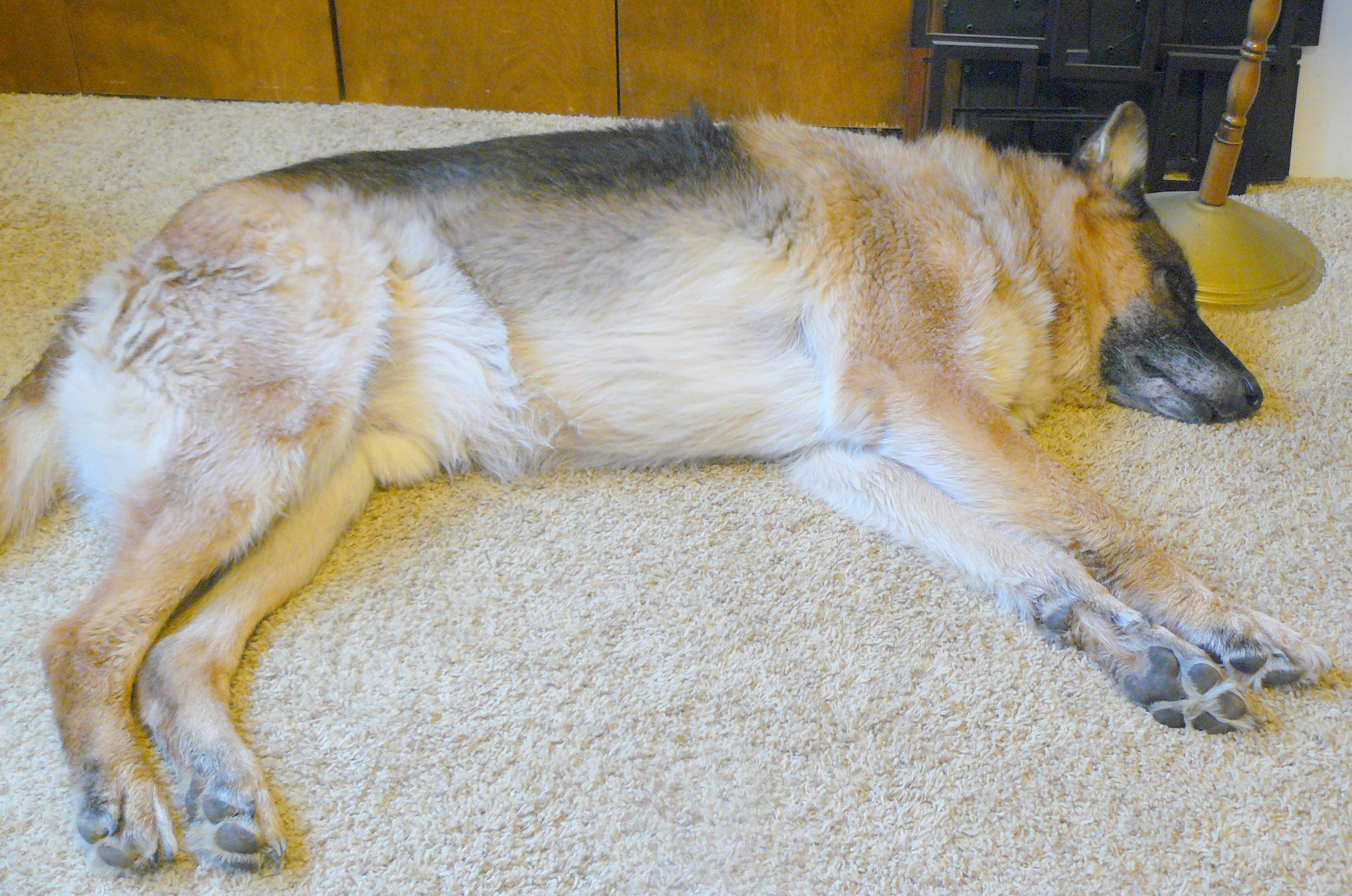
For here’s a photograph of Pharaoh that I took just a few moments ago showing him deep in meditation behind my chair!
Anyone, anywhere can celebrate Peace Day. It can be as simple as lighting a candle at noon, sitting in silent meditation, or doing a good deed for someone you do not know. Or it can involve getting your co-workers, organization, community or government engaged in a large event.
The impact if millions of people in all parts of the world, coming together for one day of peace, is immense, and does make a difference.
International Day of Peace is also a Day of Ceasefire – personal or political. Take this opportunity to make peace in your own relationships as well as impact the larger conflicts of our time. Imagine what a whole Day of Ceasefire would mean to humankind.
Can’t argue with that or with this year’s UN Secretary-General Ban Ki-moon’s message for today’s International Day of Peace.
So don’t forget!
Wherever you are in the world, take a minute off at mid-day and be at peace.
Conclusive evidence that mankind is part of nature!
Subtext = There are times when our arrogance and mindlessness beggars belief.
Sorry, if you pick up on a degree of emotion in today’s post. It’s impossible to hide!
Here’s what has fed that.
A few days ago, I came across some stunning images of bees, over on the Flickr website. Particularly, I was here and offer below a small sample of what was seen:
Chrysidid Wasp, U, Side, UT, Utah Co_2013-08-07-17.51.41 ZS PMax
Much more may be learned about bees by going to the USGS Bee Inventory and Monitoring Lab (BIML). The BIML website is here.
Then coincidentally (seems to be happening much of this week!) Jean and I watched the latest TED Talk by Marla Spivak. It was called: Why bees are disappearing.
Marla’s talk is just 15-minutes long, and I beg of you to watch it because the ramifications for all of warm-blooded life on this planet are frightening if we don’t amend our ways – and amend them pretty damn soon!
Honeybees have thrived for 50 million years, each colony 40 to 50,000 individuals coordinated in amazing harmony. So why, seven years ago, did colonies start dying en masse? Marla Spivak reveals four reasons which are interacting with tragic consequences. This is not simply a problem because bees pollinate a third of the world’s crops. Could this incredible species be holding up a mirror for us?
Marla Spivak researches bees’ behavior and biology in an effort to preserve this threatened, but ecologically essential, insect. Full bio »
You may also want to go across to the University of Minnesota‘s Bee Lab website, where there is much more from Marla about our bees.
Washington — The Centers for Disease Control on Monday confirmed a link between routine use of antibiotics in livestock and growing bacterial resistance that is killing at least 23,000 people a year.
The report is the first by the government to estimate how many people die annually of infections that no longer respond to antibiotics because of overuse in people and animals.
CDC Director Thomas Frieden called for urgent steps to scale back and monitor use, or risk reverting to an era when common bacterial infections of the urinary tract, bloodstream, respiratory system and skin routinely killed and maimed.
“We will soon be in a post-antibiotic era if we’re not careful,” Frieden said. “For some patients and some microbes, we are already there.”
The SFC report later goes on to say:
At least 70 percent of all antibiotics in the United States are used to speed growth of farm animals or to prevent diseases among animals raised in feedlots. Routine low doses administered to large numbers of animals provide ideal conditions for microbes to develop resistance.
“Widespread use of antibiotics in agriculture has resulted in increased resistance in infections in humans,” Frieden said.
It concludes, thus:
Legislation goes nowhere
Organic certification prohibits antibiotic use, but raising such animals is costly, he said.
Rep. Henry Waxman, D-Los Angeles, first introduced legislation in 1980 to restrict antibiotic use in livestock. For the past decade, Rep. Louise Slaughter, D-N.Y., has introduced similar bills, joined in recent years by Sens. Dianne Feinstein, D-Calif., and Kirsten Gillibrand, D-N.Y., but the measures have gone nowhere.
“We constantly hear from the pharmaceutical and livestock industry that antibiotic use in livestock is not a problem and we should focus on human use,” said Avinash Kar, a staff attorney at the San Francisco office of the Natural Resources Defense Council, an environmental group that has sued the FDA to force it to ban using antibiotics to promote growth in livestock. The case is now pending before the 2nd U.S. Circuit Court of Appeals.
Americans Are 110 Times More Likely to Die from Contaminated Food Than Terrorism
September 17, 2013 – This article first appeared on Truth-Out.org.
One of the most important revelations from the international drama over Edward Snowden’s NSA leaks in May is the exposure of a nearly lunatic disproportion in threat assessment and spending by the US government. This disproportion has been spawned by a fear-based politics of terror that mandates unlimited money and media attention for even the most tendentious terrorism threats, while lethal domestic risks such as contaminated food from our industrialized agribusiness system are all but ignored. A comparison of federal spending on food safety intelligence versus antiterrorism intelligence brings the irrationality of the threat assessment process into stark relief.
In 2011, the year of Osama bin Laden’s death, the State Department reported that 17 Americans were killed in all terrorist incidents worldwide. The same year, a single outbreak of listeriosis from tainted cantaloupe killed 33 people in the United States. Foodborne pathogens also sickened 48.7 million, hospitalized 127,839 and caused a total of 3,037 deaths. This is a typical year, not an aberration.
See what I mean about our mindlessness! That article continues:
We have more to fear from contaminated cantaloupe than from al-Qaeda, yet the United States spends $75 billion per year spread across 15 intelligence agencies in a scattershot attempt to prevent terrorism, illegally spying on its own citizens in the process. By comparison, the Food and Drug Administration (FDA) is struggling to secure $1.1 billion in the 2014 federal budget for its food inspection program, while tougher food processing and inspection regulations passed in 2011 are held up by agribusiness lobbying in Congress. The situation is so dire that Jensen Farms, the company that produced the toxic cantaloupe that killed 33 people in 2011, had never been inspected by the FDA.
I can’t stomach any more (whoops, pardon the pun!) so if you want to read to the end, it’s here.
OK, sufficient for today! Need to find a dog to curl up with.
As is the way of things, my post yesterday, The growth of empathy, unwittingly set the scene for today’s post. Here’s why!
In yesterday’s post I mentioned Fukushima and the power of blogging in connecting so many all across the world. Maurice Barry, who writes his own blog, left a comment:
Regarding Fukashima I’m still left wondering whether the real problem is the lack of social conscience in the top level leaders or the apathy of ordinary people like you and I who let them carry out their plans.
To which I replied, “Maybe just the power of 20:20 hindsight?”
So to today’s post.
One of the items in yesterday’s Naked Capitalism Links was the headline: Is there a media blackout on the fracking flood disaster in Colorado?That caught my eye and in a moment I had gone across to the blogsite: Bluedaze Drilling Reform.
This is what I read:
Is there a media blackout on the fracking flood disaster in Colorado?
I will update this post as residents send me pictures and video.
We need the national news stations to go cover the environmental disaster that’s happening in Colorado right now.
This picture taken by a resident is from yesterday.
From an email.
I see you’ve noticed the underwater wells in Weld County, Colorado. Amazing; we’ve emailed the Denver TV stations, other media, and state and local politicians. We’ve sent pictures that our members have taken. It’s like the media and politicians have been TOLD not to say anything about it. There has been no mention of the gas wells on the Denver newscasts either last night or this evening although all stations have had extensive and extended flood coverage. You can see underwater wells in the background of some of the newscast videos, and yet the reporters say absolutely nothing.
Here’s a picture one of our members took yesterday in Weld County, Colorado. We’ve got tons more on our website. Check it out. The tanks are tipping and, in some cases, have fallen over. They have to be leaking toxins into the flood waters. There have to be hundreds if not thousands of underwater well pads in Weld County as a result of the flooding.
Please publicize this in Texas since our media people and politicians have gone silent!
The reason I called today’s post ‘Questions without answers’ was because there are so many complex issues today. So many issues that cannot be understood in simple ‘question and answer’ ways. But one hope of finding answers to the complex questions of these times is through the sharing, caring ways of communicating that so many can access. No more passionately demonstrated than by TXSharon in her About section of her blog.
Finally, I shall leave you with another great dog picture from Chris Snuggs. So beautifully appropriate to the complex world we live in.
The fact that the Fukushima reactors have been leaking huge amounts of radioactive water ever since the 2011 earthquake is certainly newsworthy. As are the facts that:
If one of the pools collapsed or caught fire, it could have severe adverse impacts not only on Japan … but the rest of the world, including the United States. Indeed, a Senator called it a national security concern for the U.S.:
The radiation caused by the failure of the spent fuel pools in the event of another earthquake could reach the West Coast within days. That absolutely makes the safe containment and protection of this spent fuel a security issue for the United States.
Nuclear expert Arnie Gundersen and physician Helen Caldicott have both said that people should evacuate the Northern Hemisphere if one of the Fukushima fuel pools collapses. Gundersen said:
Move south of the equator if that ever happened, I think that’s probably the lesson there.
Former U.N. adviser Akio Matsumura calls removing the radioactive materials from the Fukushima fuel pools “an issue of human survival”.
So the stakes in decommissioning the fuel pools are high, indeed.
But in 2 months, Tepco – the knuckleheads who caused the accident – are going to start doing this very difficult operation on their own.
Thousands of workers and a small fleet of cranes are preparing for one of the latest efforts to avoid a deepening environmental disaster that has China and other neighbors increasingly worried: removing spent fuel rods from the damaged No. 4 reactor building and storing them in a safer place.
Tom Snitch, a senior professor at the University of Maryland and with more than 30 years’ experience in nuclear issues, said “[Japan officials] need to address the real problems, the spent fuel rods in Unit 4 and the leaking pressure vessels,” he said. “There has been too much work done wiping down walls and duct work in the reactors for any other reason then to do something…. This is a critical global issue and Japan must step up.”
Apologies, that’s more than sufficient to ruin your day! If you really want to read to the end, the item is here.
However, the next item carries a much more positive thread. It was an essay that was highlighted on Linked-In back in June.
The Number One Job Skill in 2020
What’s the crucial career strength that employers everywhere are seeking — even though hardly anyone is talking about it? A great way to find out is by studying this list of fast-growing occupations, as compiled by the U.S. Bureau of Labor Statistics.
Sports coaches and fitness trainers. Massage therapists, registered nurses and physical therapists. School psychologists, music tutors, preschool teachers and speech-language pathologists. Personal financial planners, chauffeurs and private detectives. These are among the fields expected to employ at least 20% more people in the U.S. by 2020.
Did you notice the common thread? Every one of these jobs is all about empathy.
In our fast-paced digital world, there’s lots of hand-wringing about the ways that automation and computer technology are taking away the kinds of jobs that kept our parents and grandparents employed. Walk through a modern factory, and you’ll be stunned by how few humans are needed to tend the machines. Similarly, travel agents, video editors and many other white-collar employees have been pushed to the sidelines by the digital revolution’s faster and cheaper methods.
But there’s no substitute for the magic of a face-to-face interaction with someone else who cares. Even the most ingenious machine-based attempts to mimic human conversation (hello, Siri) can’t match the emotional richness of a real conversation with a real person.
Coincidentally, that thought about the ‘magic of a face-to-face interaction’ really echoed in me. Why? Because, I was ruminating on the wonderful world of human interaction this world of blogging delivers. It seems to combine all the benefits of meeting real people with a global consciousness of those same real people spread way beyond our own local domains.
Hence the reason why I offer the next seemingly unrelated item. The recent post from Sue Dreamwallker that I am republishing in full.
This is just a short post to say a Big thank you to all of my readers and to those who visit regular and comment upon my posts. You Bring with you such light and encouragement, and I often at a loss to say how much your kind support means.
I logged onto my Blog today and discover that my readership has swelled to 400 followers and so I just want to say a Big thank you for all of my oldest friends who have been with me since my beginnings of Windows Live Spaces days when I started in 2007, My first real post after transferring was called Finding Answers here on WordPress. And I remember well spending the best part of a Day getting to know and personalise my header and Blog back then as everything was alien that day was in Oct 2010. A move I am so pleased to have made, as I just love the W.P. Community of friends we have gathered here and whom I have got to know and love.
And I just want to say a big thank you to all of my newest arrivals who have clicked the follow button.. I hope to get around to discovering your blogs as soon as time allows.And to say thank you to my email subscribers also.. And Welcome, I hope you enjoy my thoughts and if not please don’t be shy to air your opinions for that’s how we grow and learn by sharing knowledge and understanding.
Today I just want to post what I have been up to in recent days besides the ‘Day-job’ in picture format.. So if you click the photos, you should be able to read more in the caption headings.. [Photos available on Sue’s blogsite.]
Take care all of you and I have a busy week a head in my Day Job, so I will catch you when I can…
Love and Blessings
~Sue~
Still the resonances continued. For Rebecca Solnit published yesterday an incredibly powerful essay over on TomDispatch. It was called Victories Come in All Sizes. As always, Tom writes a wonderful introduction. Let me skip to Rebecca’s opening paragraphs.
Joy Arises, Rules Fall Apart Thoughts for the Second Anniversary of Occupy Wall Street
By Rebecca Solnit
I would have liked to know what the drummer hoped and what she expected. We’ll never know why she decided to take a drum to the central markets of Paris on October 5, 1789, and why, that day, the tinder was so ready to catch fire and a drumbeat was one of the sparks.
To the beat of that drum, the working women of the marketplace marched all the way to the Palace of Versailles, a dozen miles away, occupied the seat of French royal power, forced the king back to Paris, and got the French Revolution rolling. Far more than with the storming of the Bastille almost three months earlier, it was then that the revolution was really launched — though both were mysterious moments when citizens felt impelled to act and acted together, becoming in the process that mystical body, civil society, the colossus who writes history with her feet and crumples governments with her bare hands.
She strode out of the 1985 earthquake in Mexico City during which parts of the central city collapsed, and so did the credibility and power of the Institutional Revolutionary Party, the PRI that had ruled Mexico for 70 years. She woke up almost three years ago in North Africa, in what was called the Arab Spring, and became a succession of revolutions and revolts still unfolding across the region.
Such transformative moments have happened in many times and many places — sometimes as celebratory revolution, sometimes as terrible calamity, sometimes as both, and they are sometimes reenacted as festivals and carnivals. In these moments, the old order is shattered, governments and elites tremble, and in that rupture civil society is born — or reborn.
However, this further extract covering the closing paragraphs explains why it resonated so strongly with me in terms of the rising consciousness of all the millions of ordinary people just trying to leave the world in a better place:
Part of what gave Occupy its particular beauty was the way the movement defined “we” as the 99%. That (and that contagious meme the 1%) entered our language, offering a way of imagining the world so much more inclusive than just about anything that had preceded it. And what an inclusive movement it was: the usual young white suspects, from really privileged to really desperate, but also a range of participants from World War II to Iraq War veterans to former Black Panthers, from libertarians to liberals to anarchist insurrectionists, from the tenured to the homeless to hip-hop moguls and rock stars.
And there was so much brutality, too, from the young women pepper-sprayed at an early Occupy demonstration and the students infamously pepper-sprayed while sitting peacefully on the campus of the University of California, Davis, to the poet laureate Robert Hass clubbed in the ribs at the Berkeley encampment, 84-year-old Dorli Rainey assaulted by police at Occupy Seattle, and the Iraq War veteran Scott Olsen whose skull was fractured by a projectile fired by the Oakland police. And then, of course, there was the massive police presence and violent way that in a number of cities the movement’s occupiers were finally ejected from their places of “occupation.”
Such overwhelming institutional violence couldn’t have made clearer the degree to which the 1% considered Occupy a genuine threat. At the G-20 economic summit in 2011, the Russian Prime Minister, Dmitry Medvedev, said, “The reward system of shareholders and managers of financial institution[s] should be changed step by step. Otherwise the ‘Occupy Wall Street’ slogan will become fashionable in all developed countries.” That was the voice of fear, because the realized dreams of the 99% are guaranteed to be the 1%’s nightmares.
We’ll never know what that drummer girl in Paris was thinking, but thanks to Schneider’s meticulous and elegant book, we know what one witness-participant was thinking all through the first year of Occupy, and what it was like to be warmed for a few months by that beautiful conflagration that spread across the world, to be part of that huge body that wasn’t exactly civil society, but something akin to it, perhaps in conception even larger than it, as Occupy encampments and general assemblies spread from Auckland to Hong Kong, from Oakland to London in the fall of 2011. Some of them lasted well into 2012, and others spawned things that are still with us: coalitions and alliances and senses of possibility and frameworks for understanding what’s wrong and what could be right. It was a sea-change moment, a watershed movement, a dream realized imperfectly (because only unrealized dreams are perfect), a groundswell that remains ground on which to build.
On the second anniversary of that day in lower Manhattan when people first sat down in outrage and then stayed in dedication and solidarity and hope, remember them, remember how unpredictably the world changes, remember those doing heroic work that you might hear little or nothing about but who are all around you, remember to hope, remember to build. Remember that you are 99% likely to be one of them and take up the burden that is also an invitation to change the world and occupy your dreams.
Rebecca Solnit, author most recently of The Faraway Nearby spent time at Occupy San Francisco, Occupy Oakland, and Occupy Wall Street in 2011 and wrote about Occupy often for TomDispatch in 2011-2012. This essay is adapted from her introduction to Nathan Schneider’s new book, Thank You, Anarchy(University of California Press).
Copyright 2013 Rebecca Solnit
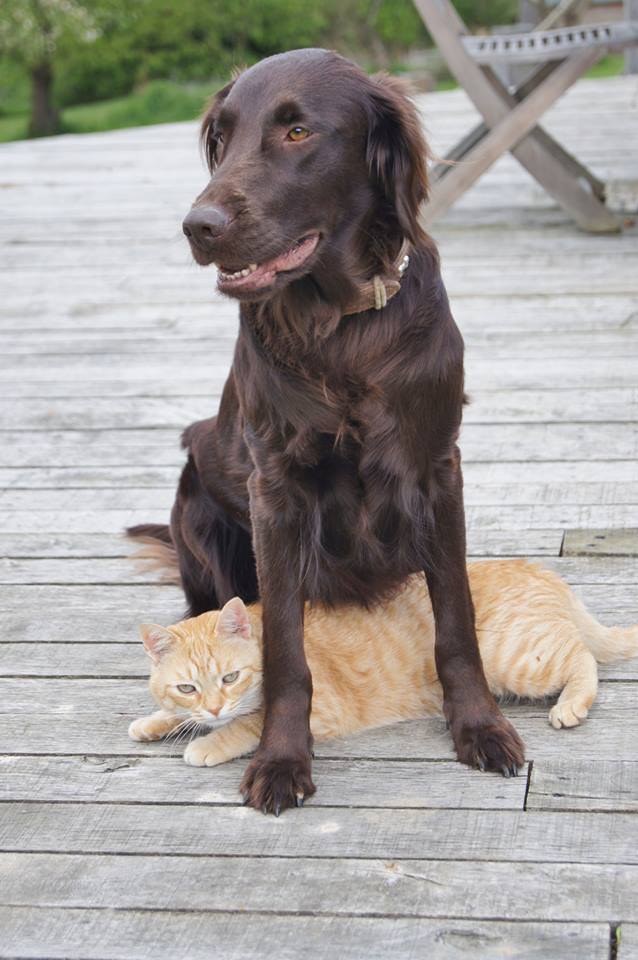
The final element was from an email yesterday in from Chris Snuggs. Chris has previously written guest posts on Learning from Dogs, the last one being In Defence of Politics back on July 8th. In that email was the following photograph.
“You touch my mate and I’ll have ya.”
Let me draw out the thread that I saw in all these items.
That is that the 1% that Rebecca Solnit wrote about are incredibly powerful people, with access to more power, money and control than one can even imagine. But what that 1% cannot control is the growing consciousness, the growing mindfulness and awareness of millions of people across this planet that something as simple and pure and beautiful as unconditional love will conquer all.
The most fundamental lesson that we can learn from dogs!













 Learning from Dogs